Why Printed Art Became the Easiest Fall Swap
Printable art has a reputation as filler — the thing you buy when the budget is gone and the wall is still bare. It earns that reputation about half the time. The other half looks bought, and both halves are often printed from the same file.
Fall printables are digital art files you buy or download once, print at home or at a copy shop, and slide into a frame you already own. Most cost between $0 and $8. The file is the cheap, replaceable half of the purchase. The frame, the mat and the paper are the half that decides whether anyone can tell it came out of a printer.
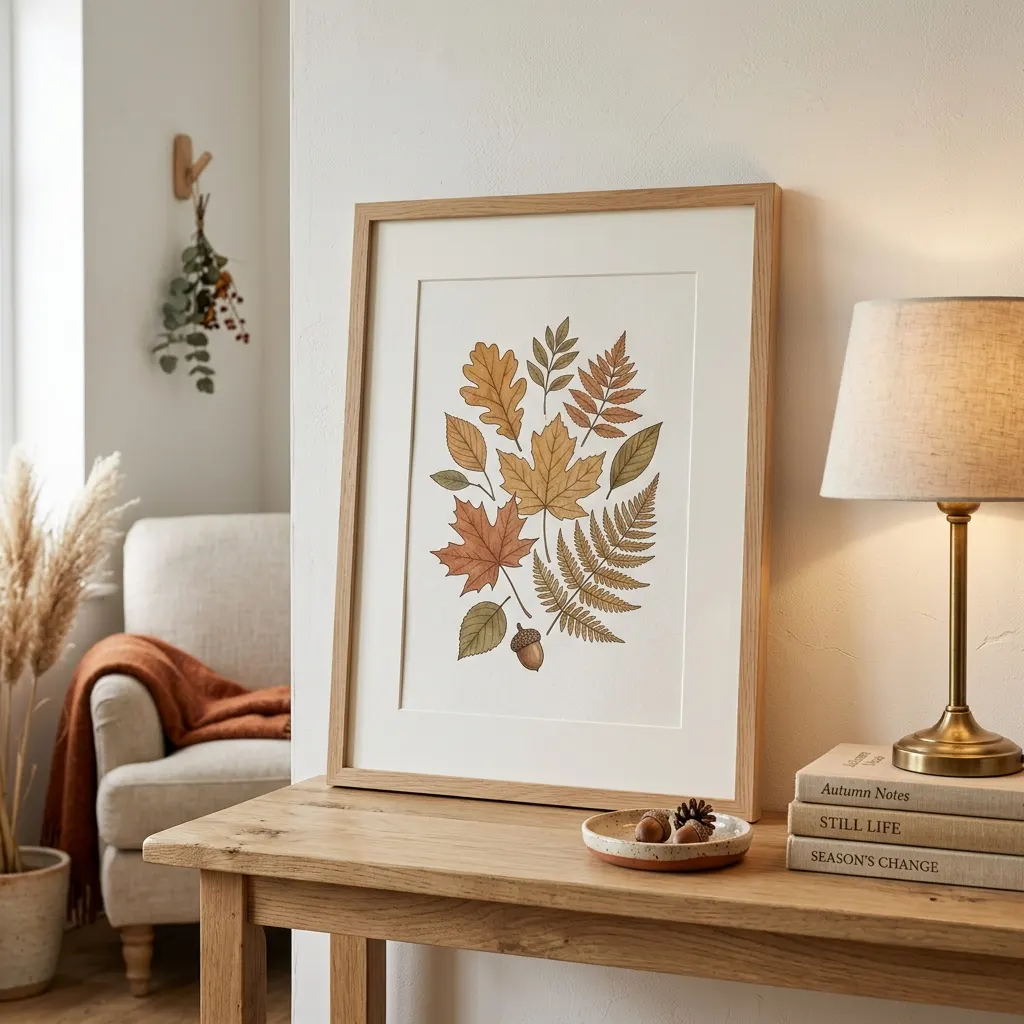
Editorial field note: a $4 download on heavy matte cardstock, set behind a white mat, holds a wall better than a $90 framed canvas hanging two feet away, because the mat gives it the wide empty border the canvas never had. Nothing about the artwork does that work.
Most people print a free autumn file on 20 lb copy paper, push it into a plastic clip frame, and wonder why the corner looks like a classroom. If you downloaded a beautiful print and hated it once it was on the wall, you are not alone. The file was probably fine. Plenty of the framed art across our DIY fall decor ideas is paper, not canvas.
Printed art is also the fastest autumn layer in the house. There is no storage bin, no glue gun, and nothing to unpack next August — only a sheet of paper that changes four times a year. Our wider fall decor ideas for the home cover the rooms; this one covers the walls.
✦ Free for readers
500+ Original Home Decor Images, Yours to Keep.
Curated room by room, high‑resolution and royalty‑free — created in‑house by 101HomeDecor, not stock. No attribution needed.
Free forever · about one email a month
Six Decisions That Come Before the Printer
Two failures waste almost all the paper in this project: a file that prints soft, and a print that does not fit the frame. These six decisions rule out both, and five of them happen while the printer is still switched off.
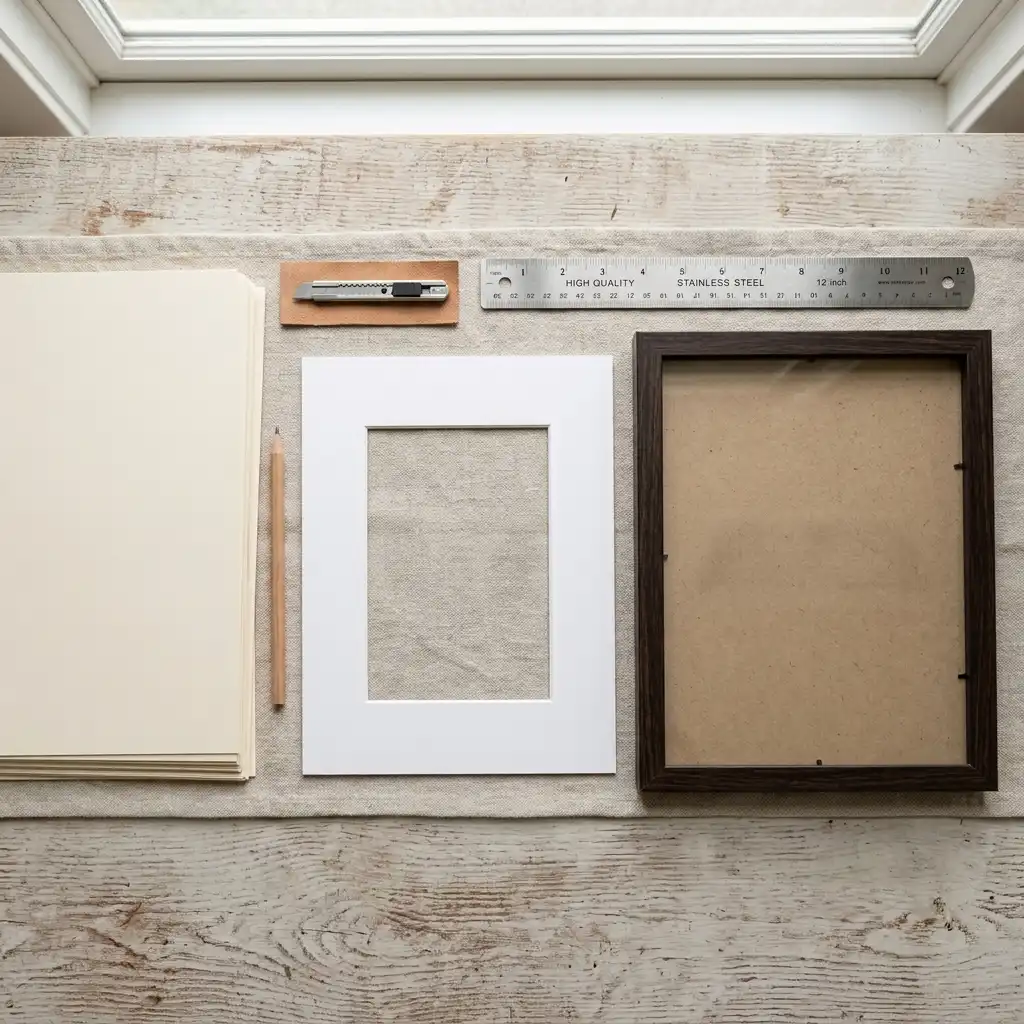
- Measure the mat opening inside a frame you already own, not the frame’s outer size.
- Check the listing for a 300 DPI note and the exact print sizes included in the file.
- Confirm the file offers your paper size, since A4 and US Letter are not the same shape.
- Buy matte cardstock between 58 and 80 lb so warm colors sit flat under lamplight.
- Print one draft-quality test, slide it into the frame, then print the final copy.
- Pick a subject you would still hang in November, not only during the last week of October.
KEY TAKEAWAY: The frame you already own decides the print size, so measure its mat opening before you shop for files.
The Framing Shop Used to Be the Bottleneck
Two things used to hold printed art back, and both of them got cheap. Cut mats meant a framing shop. Heavy cardstock jammed a home printer. Neither is true now, so a seasonal wall change costs the price of a coffee instead of the price of a canvas.
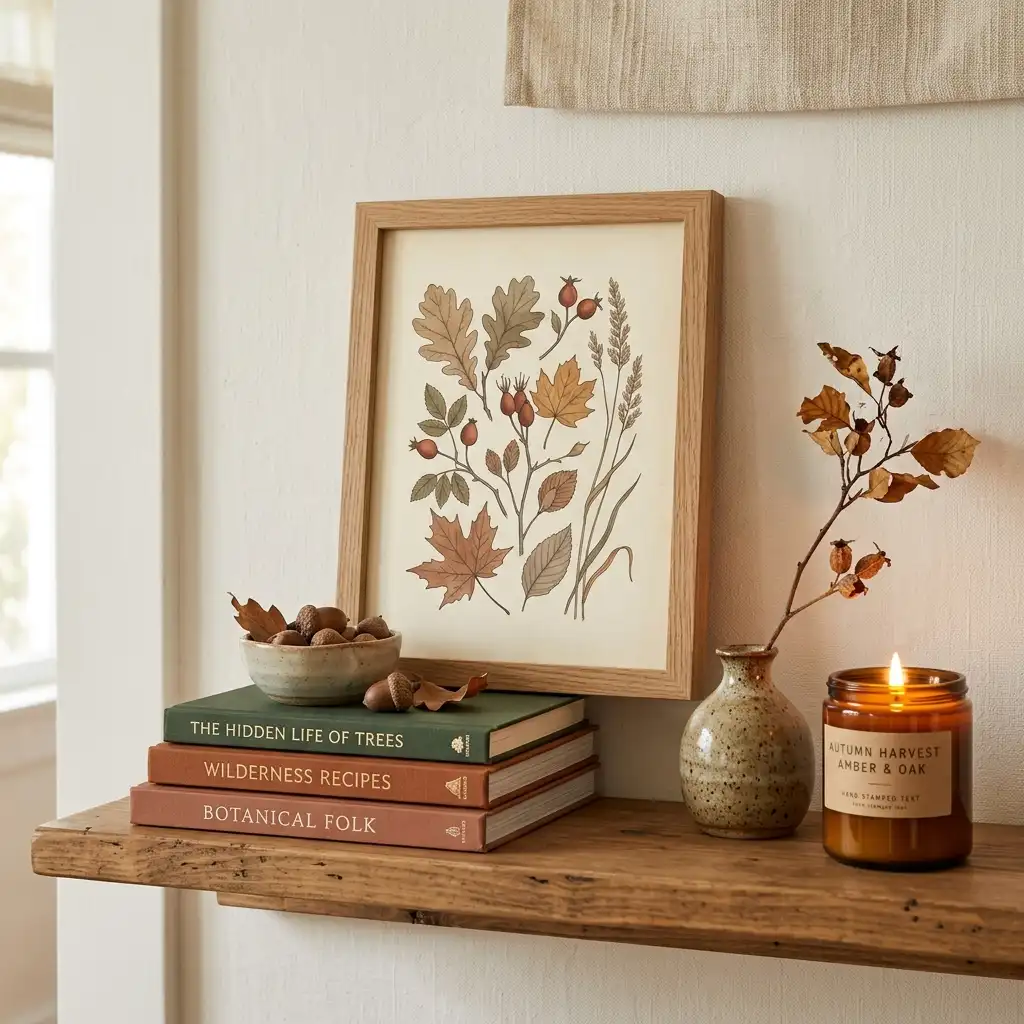
The other driver is storage. A garland takes a bin. A wreath takes a hook and half a closet shelf. Twelve autumn prints live inside one envelope, which matters in a small apartment far more than the price does.
Signs This Is Catching On:
- Big-box frame ranges now stock standard mat openings in every common size, so the mat is no longer a custom order.
- Home printers handle cover-weight cardstock that would have curled or jammed a decade ago.
- Autumn wall images now lean toward one framed print on a ledge instead of a shelf crowded with props.
If you want to see how the rest of the season is being decorated, browse our fall living room decor guide for the room context around the wall.
What Turns a Download Into Art?
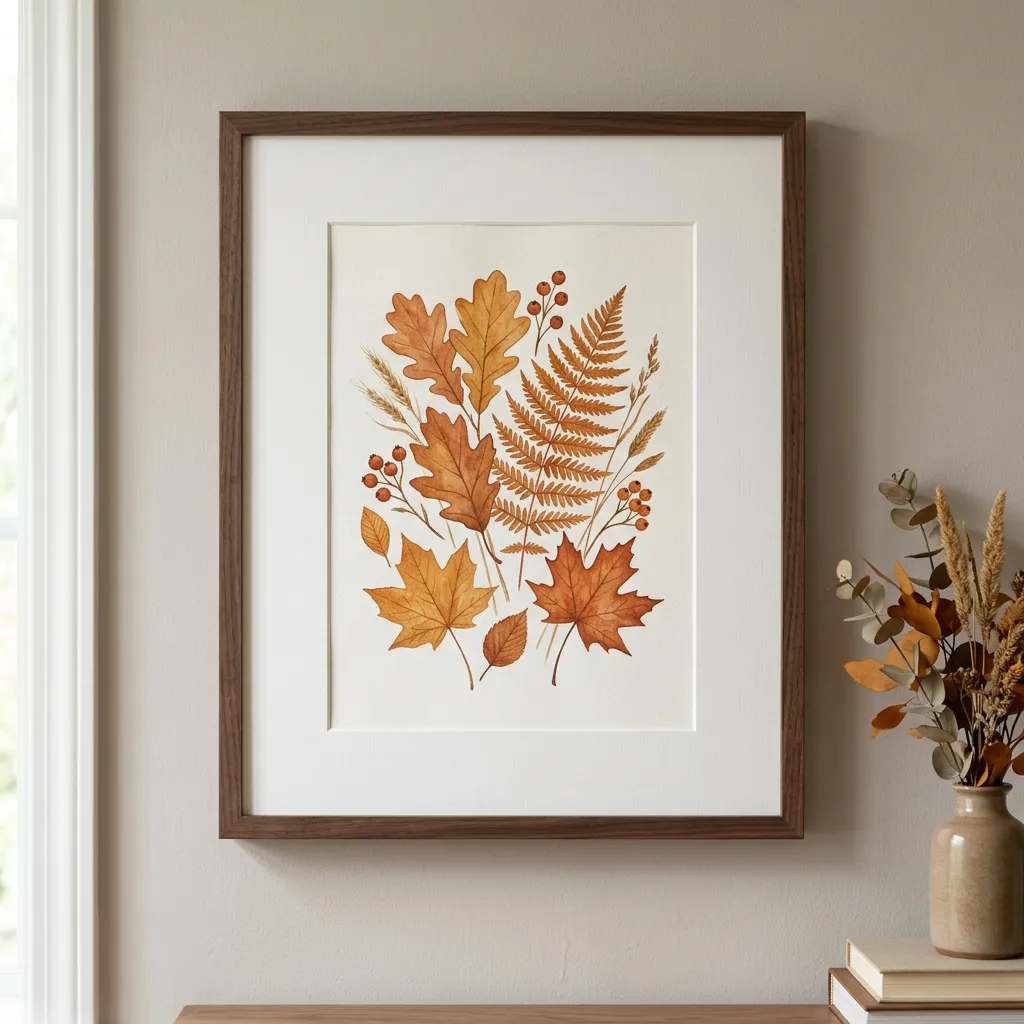
Three variables decide the result, and the artwork is not one of them. Paper weight controls how the sheet sits inside the frame. Resolution controls how sharp the edges look from three feet away. The mat controls how much empty space surrounds the image, which is the single strongest signal that something was framed on purpose.
Change any one of the three and the same file changes price bracket. Print a muted ochre botanical on copy paper and it ripples behind the glass. Print it on cardstock behind a 2-inch white border and it passes for a bought piece. The design did not move.
How Heavy Should the Paper Be?
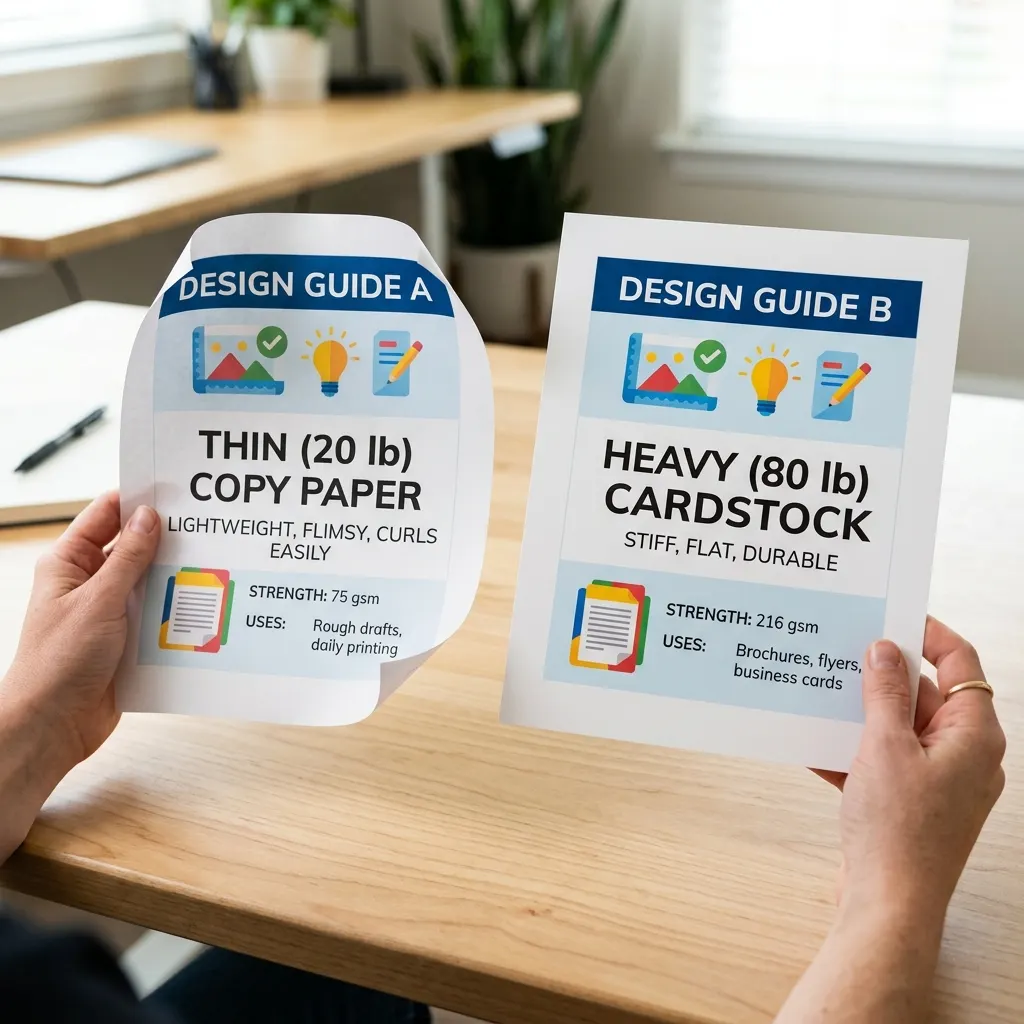
Paper weight is measured two ways in the United States: pounds and gsm. According to PrintingCenterUSA’s paper weight guide, light cardstock runs 58 to 70 lb (157 to 190 gsm), midweight runs 80 to 100 lb (216 to 280 gsm), and heavy cardstock runs 110 to 130 lb (298 to 352 gsm). Standard copy paper sits far below all of it at about 20 lb.
Light cardstock is the sweet spot for home printing. It stays flat behind glass, takes ink without bleeding, and still feeds through a normal desktop printer. Midweight is better if the print will lean on a ledge with nothing behind it.
Material Note: Cardstock takes on moisture from the room, so a sheet framed the day it is printed sits flatter than one left curled on a desk for a week.
Why Does the Color Shift When You Print It?
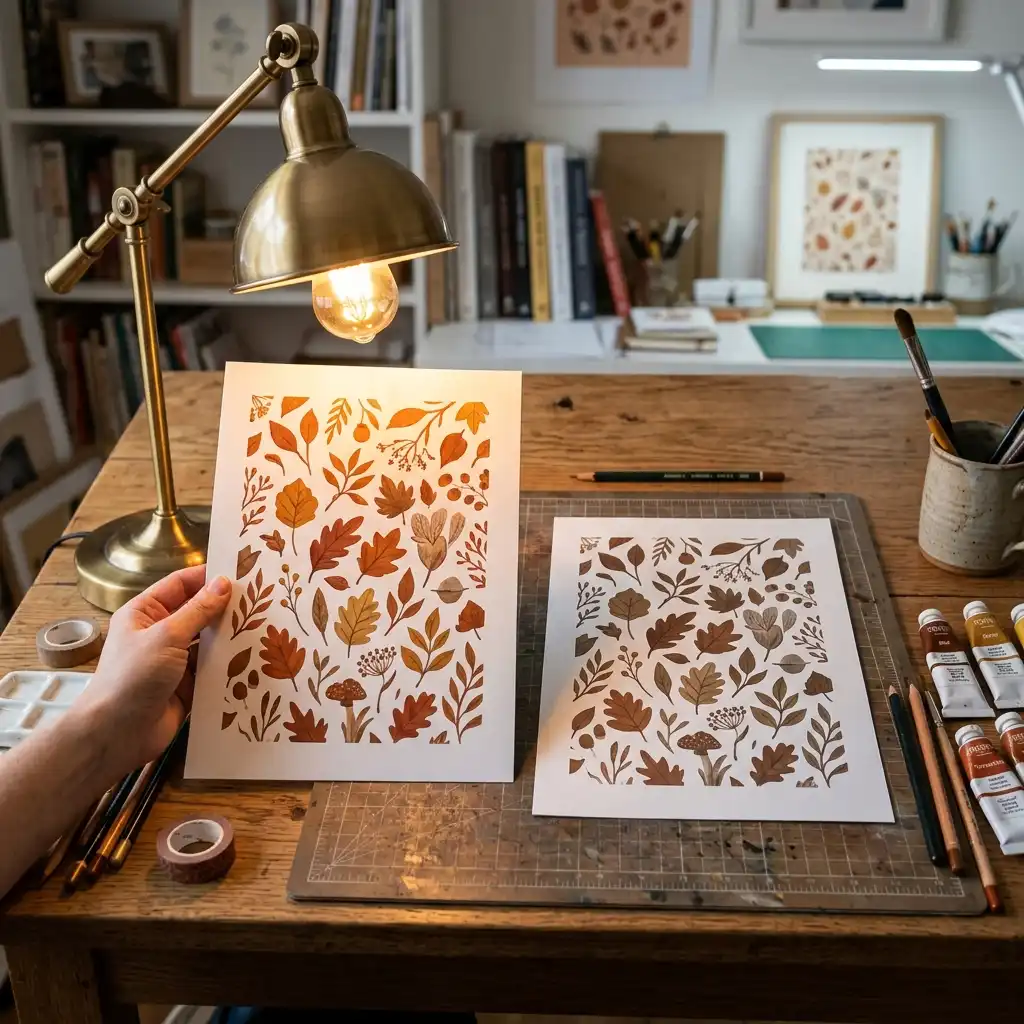
Screens glow and paper does not. A screen mixes light to make color, so warm ochre, rust and terracotta look richer on a phone than any ink can manage. Printed on paper, those same autumn tones usually land a shade darker and flatter than expected.
The fix costs nothing. Print one test copy at draft quality first, then look at it in the room where it will hang — not at your desk. Warm bulbs at 2700K pull printed rust toward brown, and a print that looked muddy in the office often looks right beside a lamp.
Inkjet printers handle soft washes and gradients better than laser printers, which favor sharp lines and flat blocks of color. If your file is a watercolor pumpkin, an inkjet or a copy shop will treat it more kindly.
Big Prints Need Big Files
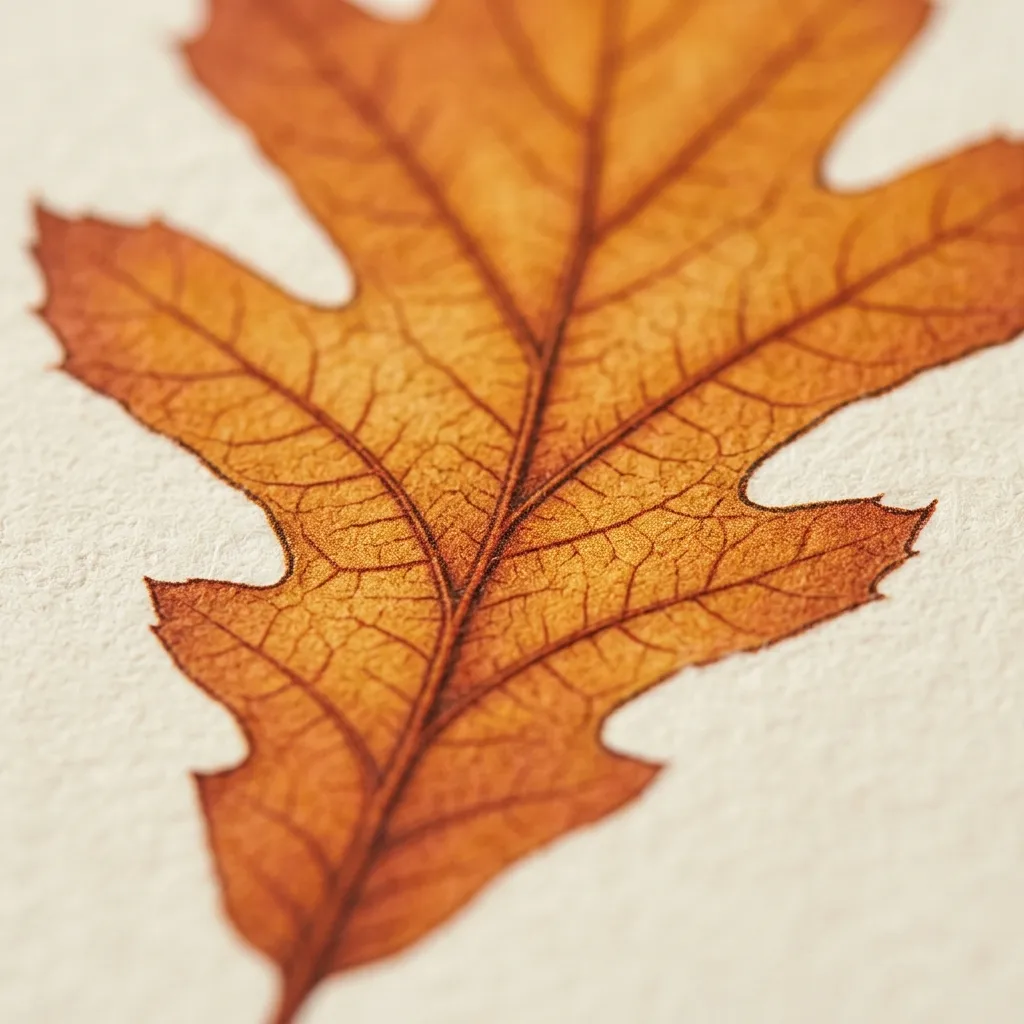
Resolution is measured in pixels per inch, and print work has settled on roughly 300 of them. The number that matters is not the file’s stated DPI but the pixel count divided by the inches you want. An 8×10 print at 300 pixels per inch needs an image around 2,400 by 3,000 pixels.
Designer Rule of Thumb: If a file lists no pixel dimensions and no print sizes, treat it as a small print only — 5×7 at most, where softness disappears.
This is why free files fail more often than paid ones. A free download is frequently sized for a screen or a small square, then stretched to fill a 16×20 frame, where every leaf edge goes fuzzy. The design was never the problem. The pixels ran out.
Which Fall Printables Look Expensive on a Wall?
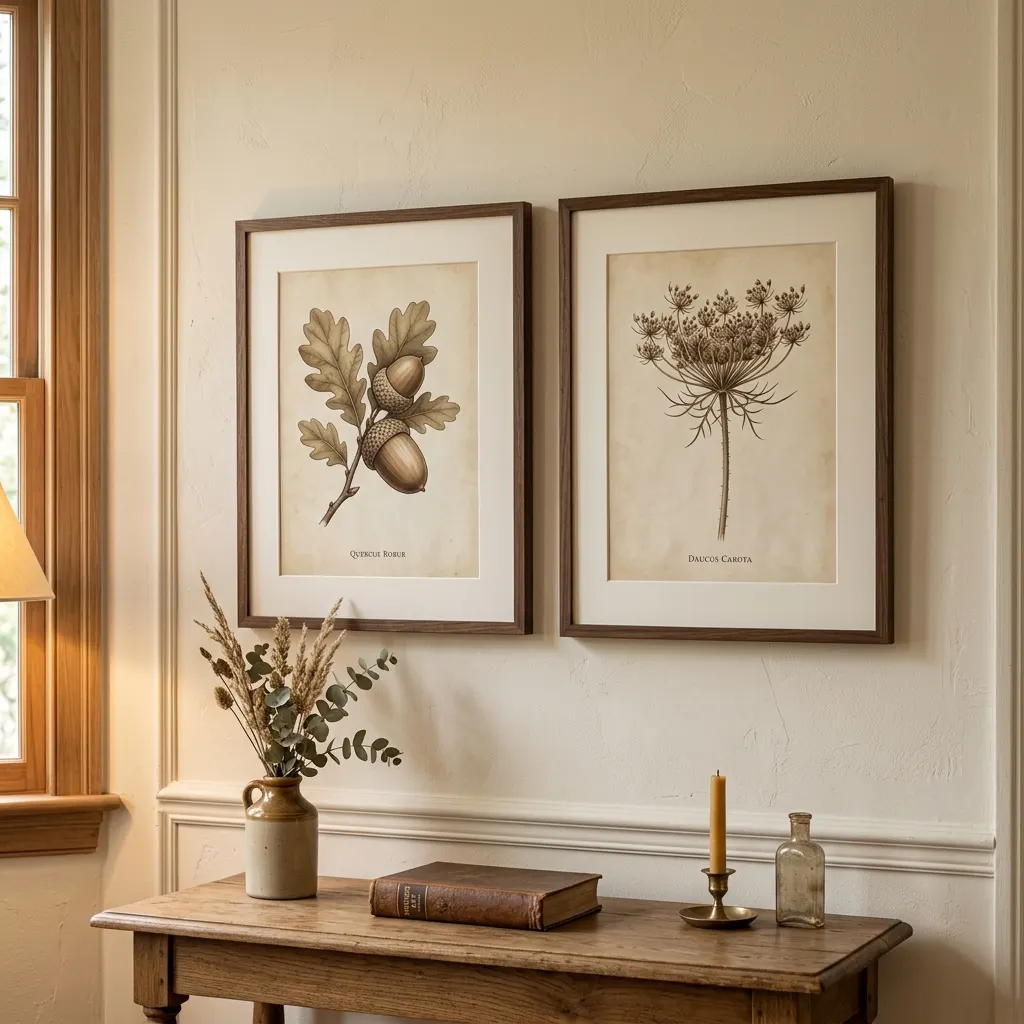
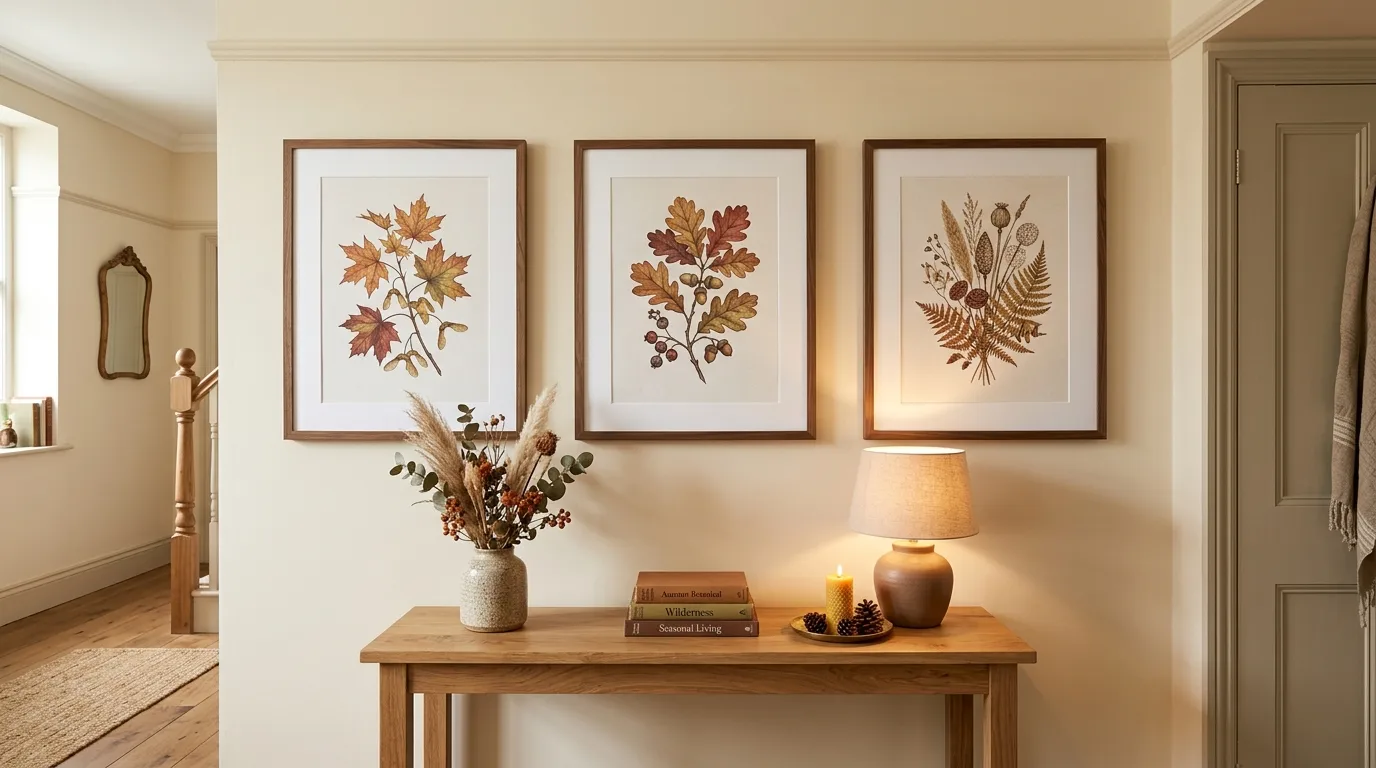
Four subjects hold up year after year. Vintage botanical plates — pressed oak leaves, acorn studies, seed heads — look collected rather than seasonal, which is why they survive into November without looking late. Single-object studies do the same job: one pear, one gourd, one branch, painted loose against cream.
Muted color fields are the third. A plain wash of clay, warm olive or faded ochre with no image at all works as the quiet piece between two busier frames. The fourth is antique text: a page from an old almanac, a harvest calendar, a nursery catalog plate in warm sepia. Pick the three colours before the picture — our fall color palette guide sets the range these prints have to sit inside.
What ages fastest is lettering. A print that says the season out loud has one job and one month. It also competes with every other autumn cue in the room instead of sitting quietly behind them. For the screen version of the same swap, our fall aesthetic wallpaper guide shows how far one image change can carry.
The Frame and Mat Do More Than the Print
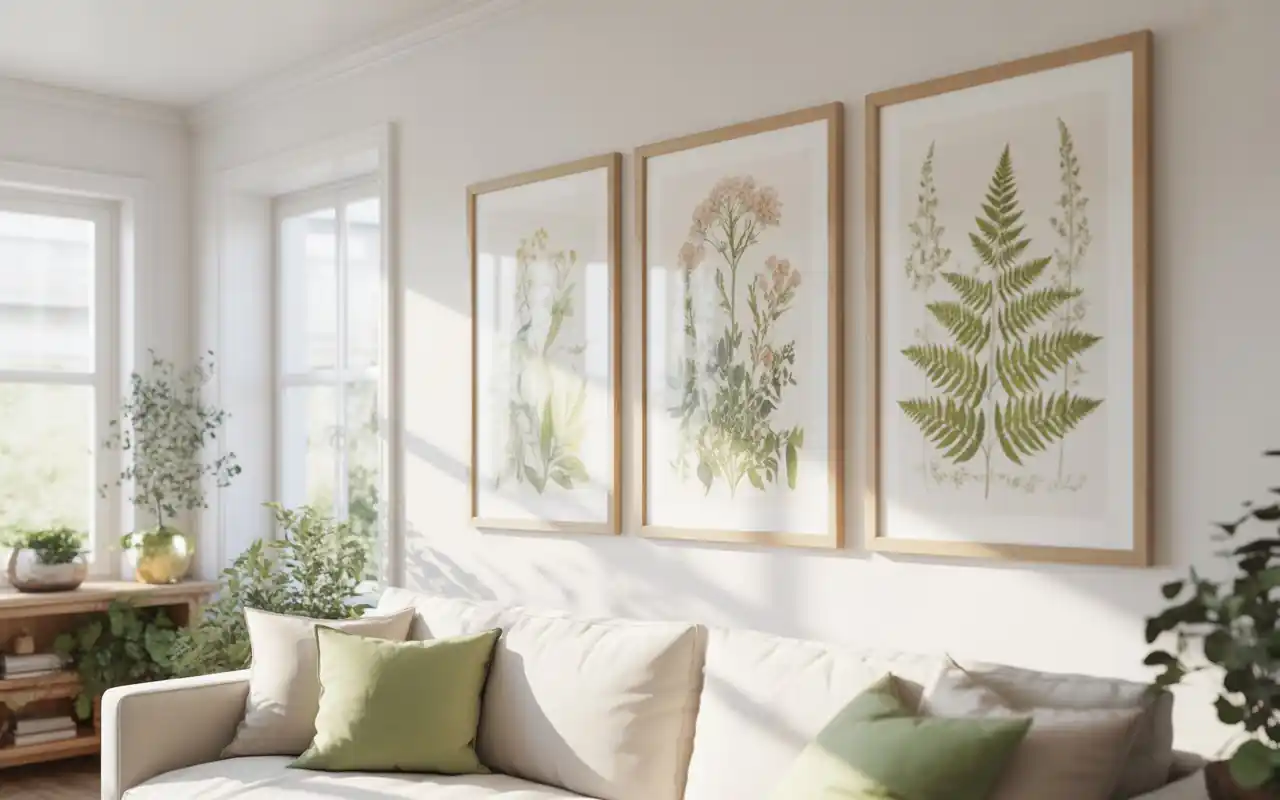
A mat is the cardboard border that sits between the print and the frame, and it is the cheapest upgrade in this whole guide. Frame Destination’s guide to frame and mat dimensions puts an 8×10 print in an 11×14 or 16×20 frame with a mat opening of 7.5 x 9.5 inches, and an 11×14 print in a 16×20 frame with a 10.5 x 13.5 inch opening. The opening is cut slightly smaller than the print so the edges stay hidden.
Paper size is where most downloads come apart. A4 measures 210 by 297 mm, or 8.27 by 11.69 inches, while US Letter measures 216 by 279 mm, or 8.5 by 11 inches — narrower and taller. Send an A4 file to a Letter-loaded printer and it shrinks with uneven borders, or the printer refuses it outright. Neither size drops cleanly into an 8×10 frame either, so buy files that include true 8×10 or 5×7 versions.
DESIGNER TIP: Print one size smaller than the frame and let the mat carry the difference — an 8×10 inside an 11×14 frame looks like gallery art, while an 11×14 filling an 11×14 frame looks like a poster.
How to Get It on the Wall This Week
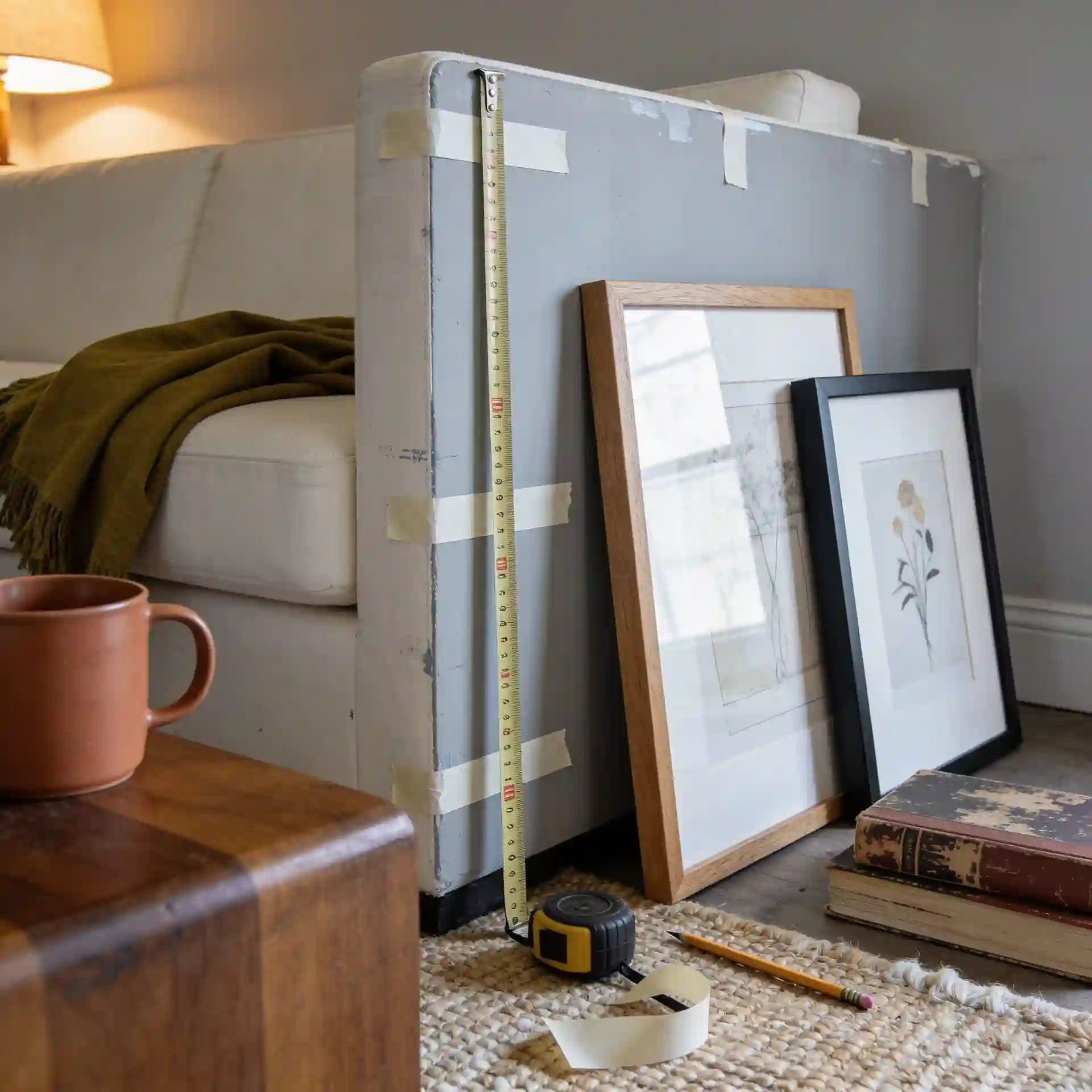
Four moves take this from a file on your laptop to a finished wall, and none of them need a drill or a framing shop.
- Pull one frame you already own off the wall and measure the mat opening in inches. That number, not your taste, decides which files you can buy.
- Buy a single pack of matte cardstock in the paper size your printer actually holds. One pack covers four seasons of swaps.
- Print two copies of your chosen file — a draft to check color, and a final on cardstock once the color looks right.
- Trim nothing unless the file tells you to. Most printable sets include crop marks, and cutting inside them costs you the border the mat needs.
If you would rather make the art than print it, our wall hanging craft ideas cover the textile route. A woven or knotted piece fills a wall that has no good frame size, and it needs no glass at all. For a handmade take on the same botanical idea, the pressed-leaf glass frames in our DIY fall decor projects suit the same spots.
Where Does Seasonal Art Actually Belong?
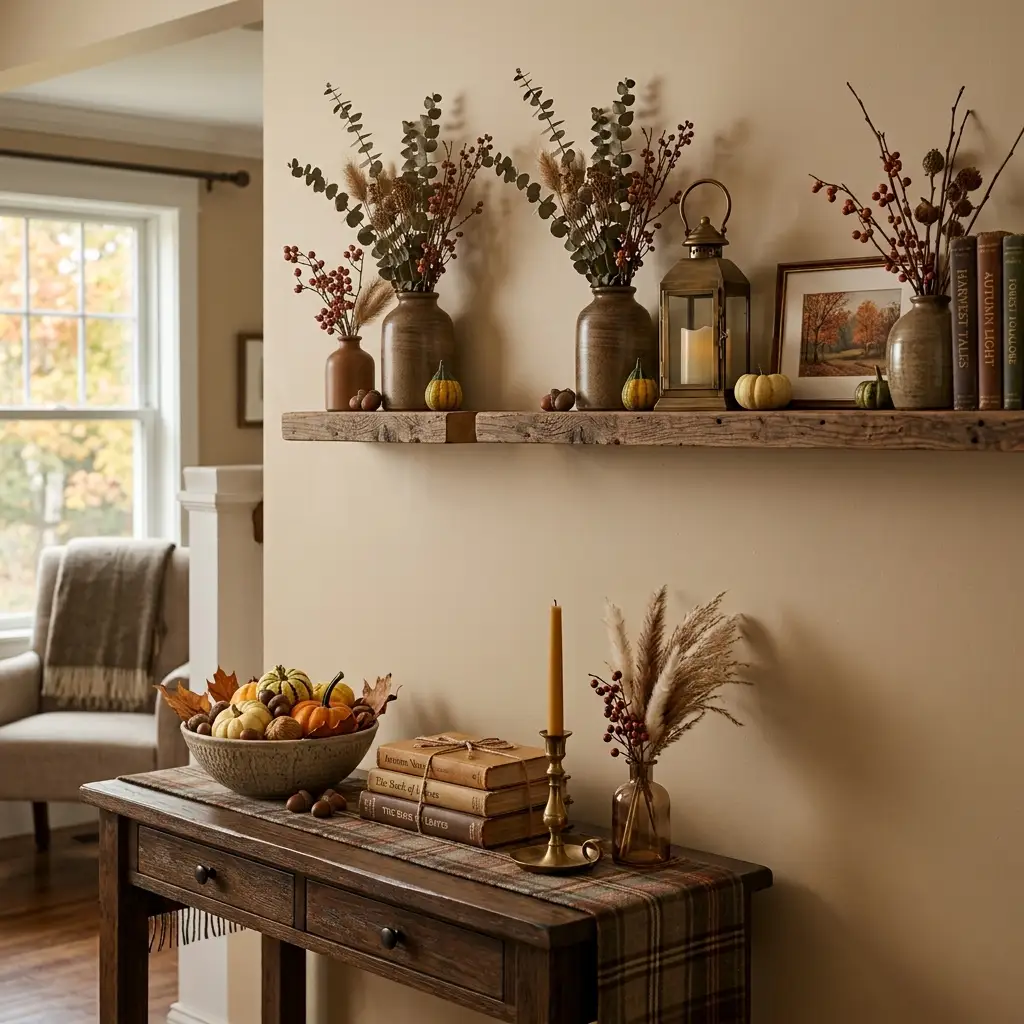
One wall does most of the work. Pick the wall you pass rather than the one you look at from the sofa — a hallway, the top of the stairs, the side of the kitchen doorway — because seasonal art earns its keep by being noticed in passing.
Designer Rule of Thumb: Hang the center of a single print about 57 to 60 inches from the floor, which is roughly average eye level and the height galleries work to.
A picture ledge is the easier version. A shallow shelf 3 to 4 inches deep holds leaning prints in mixed sizes, and swapping one takes three seconds with no nail holes. Rental Note: A ledge fixed with two screws leaves less wall damage than five separate hanging points, and adhesive strips handle frames under about 5 lb. Our living room wall decor ideas show ledge and gallery layouts side by side.
Keep paper out of the bathroom. Steam curls cardstock and lifts mats within a season. Shelf styling is the friendliest home for small 5×7 prints, and our fall mantel decor guide shows how a print leans against books without crowding them.
Six Errors That Only Show Up Behind Glass
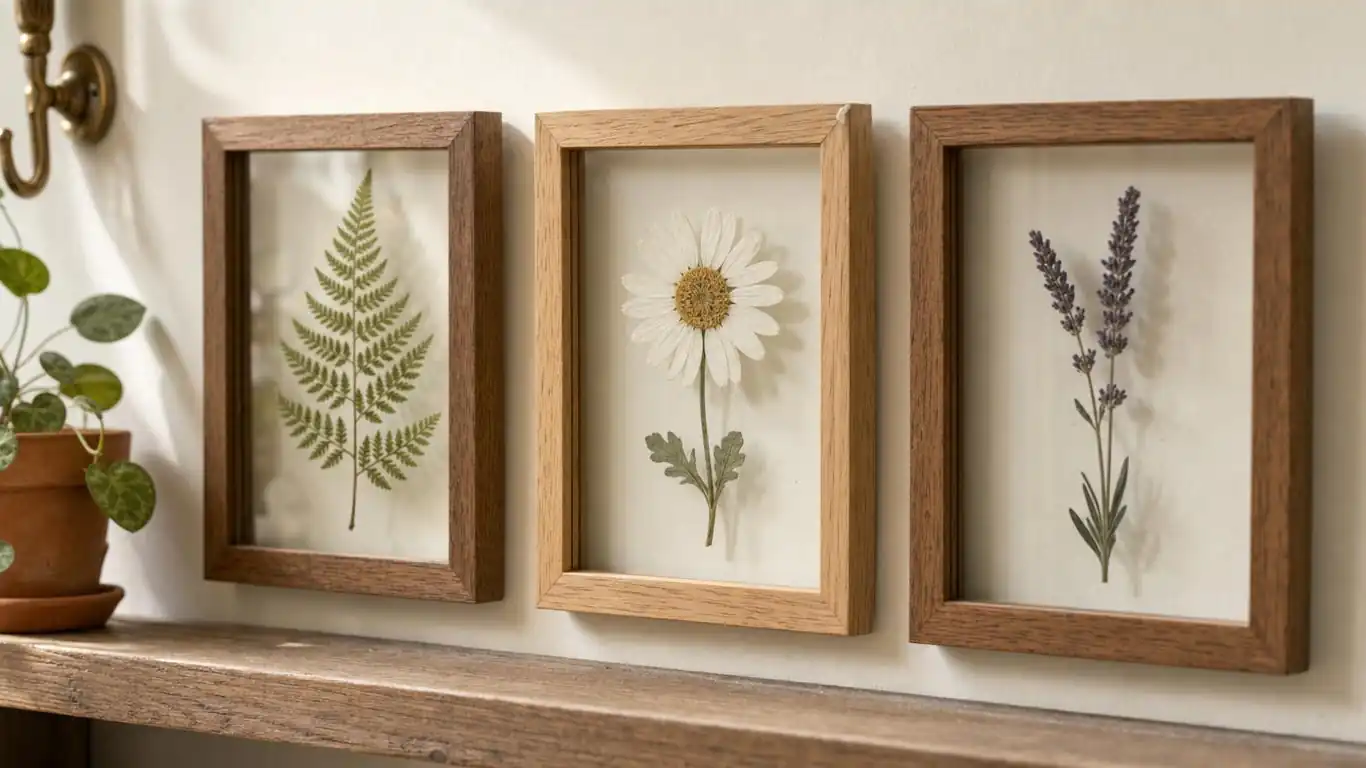
Every one of these is caught before you spend anything, and five of the six are decided at the download stage rather than at the printer.
❌ Sending a Letter or A4 file into an 8×10 frame → ✅ Buy files that list a true 8×10 or 5×7 version.
❌ Printing on 20 lb copy paper and clipping it frameless → ✅ Use 58 to 80 lb matte cardstock behind glass.
❌ Choosing glossy paper for a wall that faces a window → ✅ Matte hides the reflected ceiling light and fingerprints.
❌ Trimming inside the crop marks to force a fit → ✅ Reprint at the right size; the mat needs that margin to grip.
❌ Buying a slogan print that spells out the season → ✅ Pick a botanical or single-object subject that lasts to Thanksgiving.
❌ Turning every frame on a gallery wall autumn at once → ✅ Change two, leave the rest, and the wall keeps its backbone.
The last one is the least obvious and does the most damage. A gallery wall where all nine frames go orange in September stops being a collection and becomes a display. Our Christmas wall decor ideas use the same two-frame rule in December.
Where the Money Goes on a Framed Print
Almost none of the cost is the art. The file is the cheapest part of the project, and the frame is the part you buy once and keep for a decade.
| Project | Estimated Cost | Impact Level |
|---|---|---|
| One home-printed 8×10 in a store-bought 11×14 matted frame | $14-$28 | High |
| Copy-shop 11×14 on 100 lb matte stock, framed and matted | $38-$75 | High |
| A set of three matched 16×20 prints, framed and matted | $130-$260 | Very High |
Best First Upgrade: One 11×14 frame with an 8×10 mat opening, because it carries a new print every season for years.
Skip for Now: Custom framing. A cut-to-order mat costs more than the print, the paper and the frame combined, and standard openings already fit the sizes most files include. If the walls need more than paper this season, our budget fall decor guide covers where the rest of the money should go.
Will This Still Look Good Next Year?
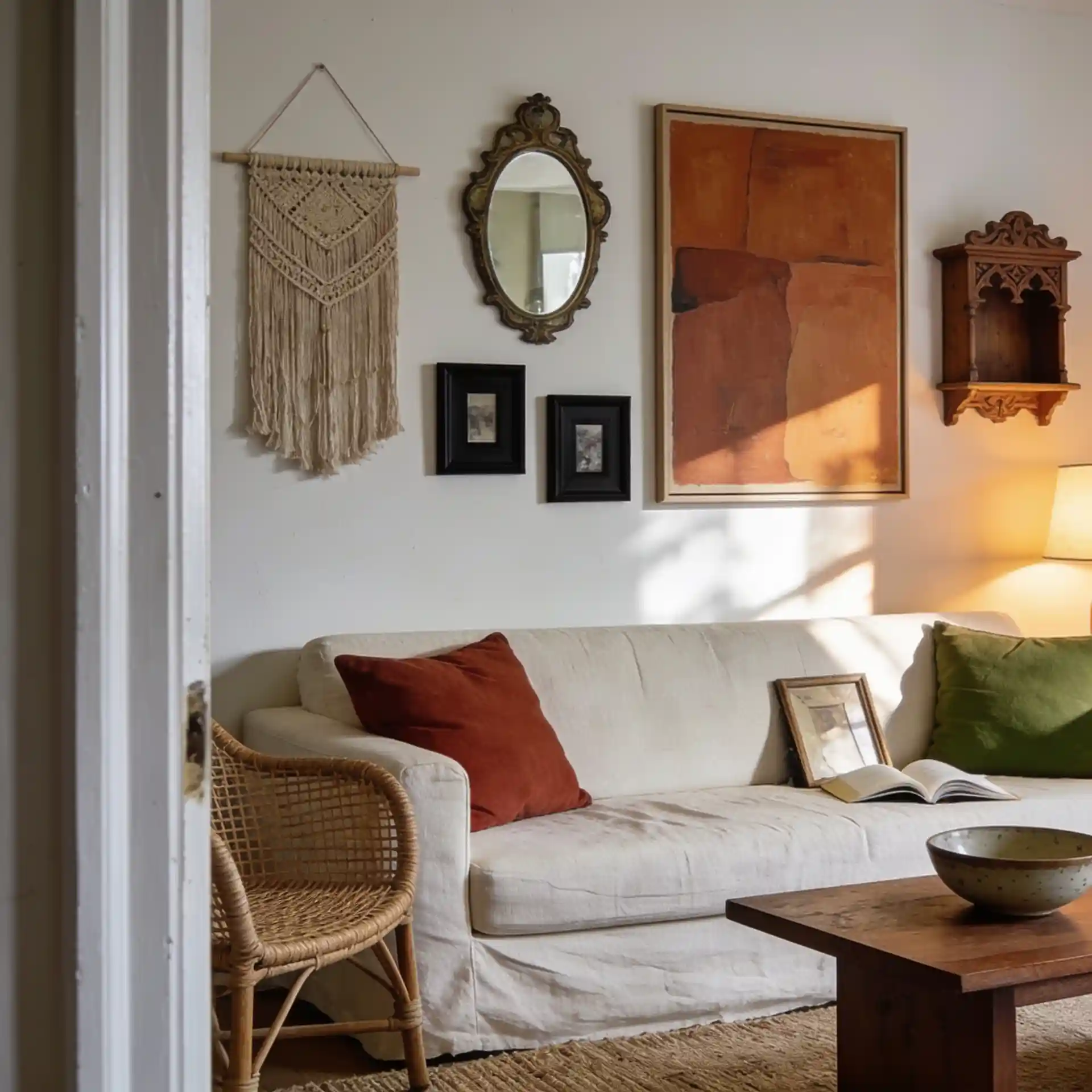
Yes, on one condition: buy the frame like furniture and the print like a magazine. The frame is the durable half of the purchase, so spend there — solid oak, walnut or matte black metal in a standard size, with a real mat rather than a printed cardboard insert. The paper inside it is disposable by design and costs a few dollars to replace.
That split is the real case for printed seasonal art. A decorative object you buy in October has to earn storage space for eleven months. A sheet of paper does not. When the leaves are gone, a winter print goes into the same frame and our cozy winter decor ideas pick up where this leaves off.
For year-round options in the same frames, browse our fall entryway decor guide. One good frame carries a different print in every month of the year, which is the whole argument for buying it properly the first time. Winter, spring and summer files all drop into the same opening.
Frequently Asked Questions
Conclusion
The paper matters more than the picture, and that one idea is what makes fall printables worth the afternoon. Editorial field note: two copies of the same autumn botanical file, one on copy paper in a clip frame and one on 80 lb matte behind a white mat, hang side by side and read as completely different price brackets. Start with the frame you already own, then let our Dollar Tree fall decor finds cover the frame once the paper is behind glass.