Why Does a Fall Living Room Still Feel Like Summer?
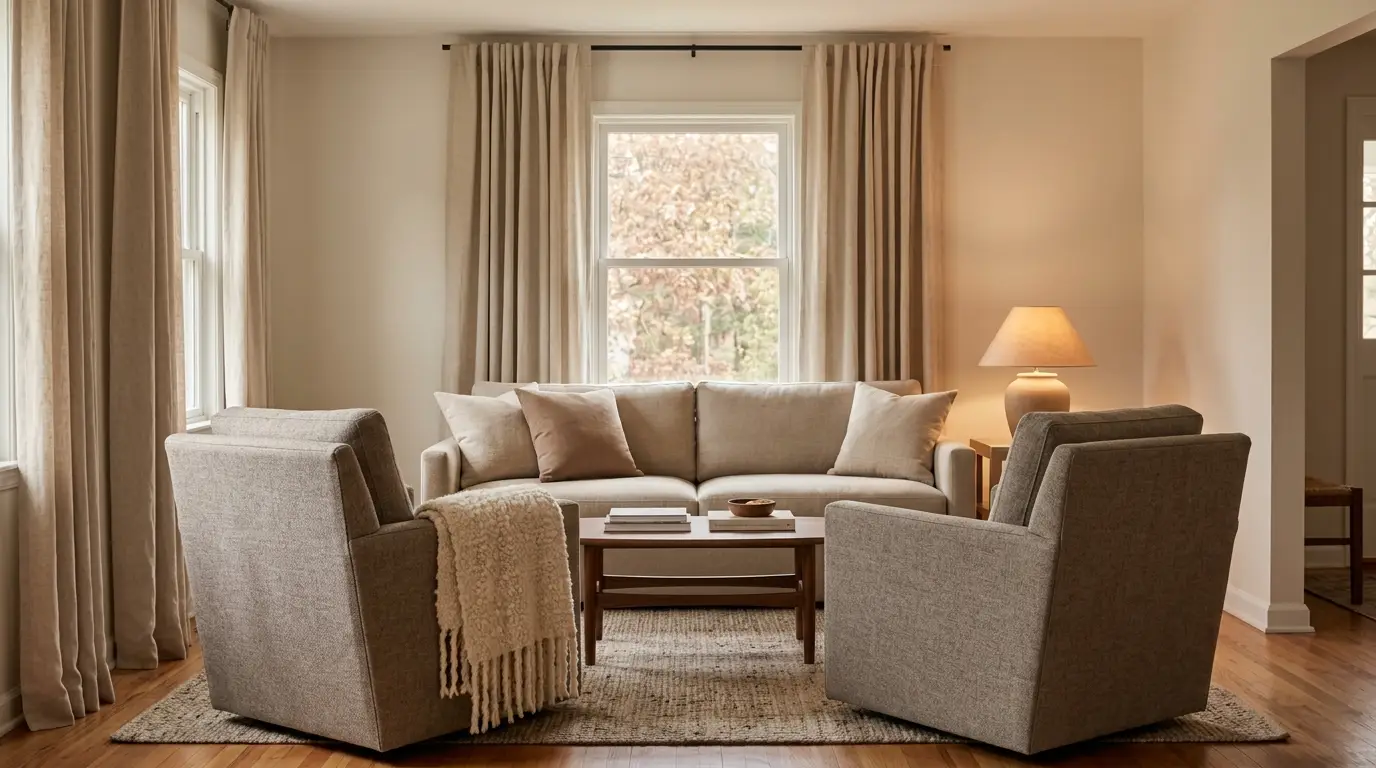
Walk into a living room in early October and you can usually tell what changed. It is rarely the small white pumpkin on the coffee table. It is that the chairs have been turned in toward each other and the curtain rod now runs wide of the window instead of tight against the frame.
Fall living room decor starts with the furniture, not the shopping. Move the seating into a tighter group, hang the rod so the panels clear the glass, and check the rug still sits under what moved. Only then do the seasonal objects go out. Big fixed surfaces carry a season; small objects on an unchanged room do not.
Looking for more ideas? Explore our full guide to Fall Decor by Room.
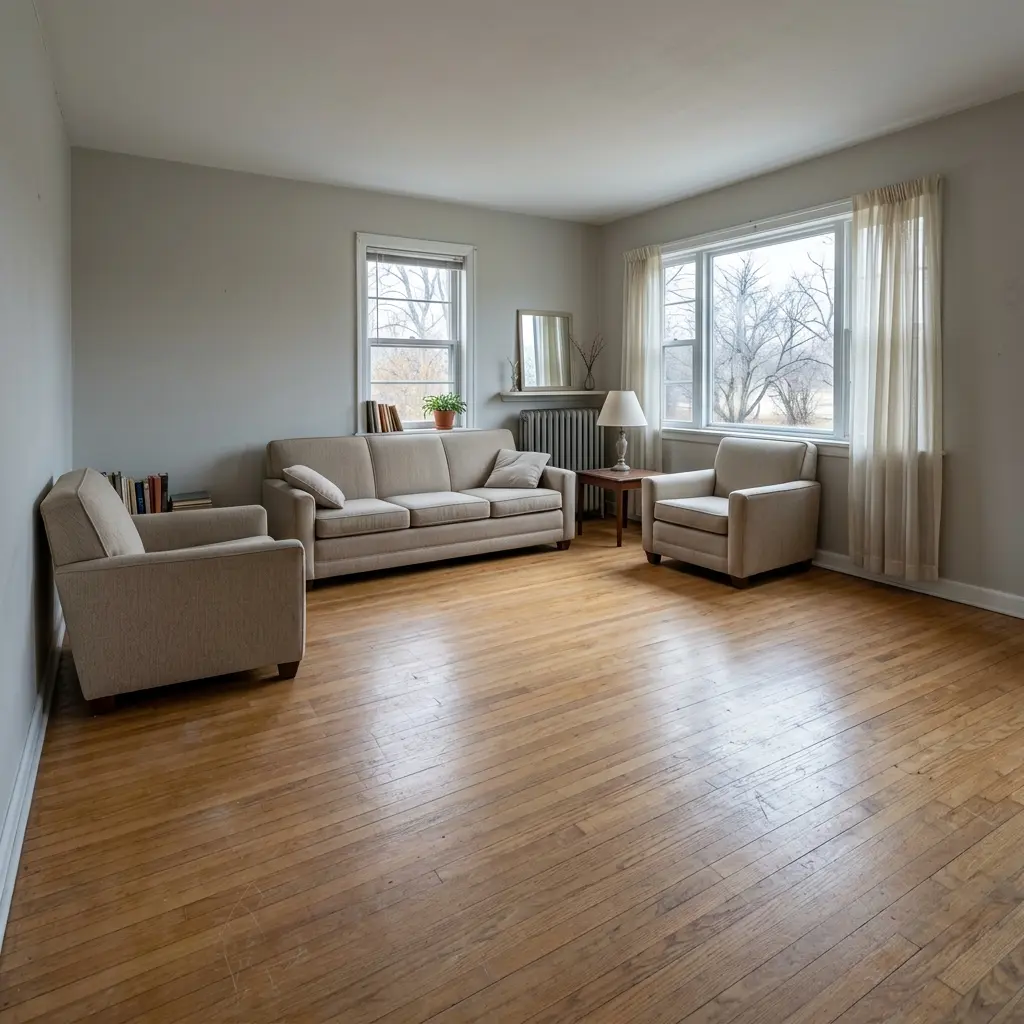
Editorial field note: a summer living room is arranged outward — seats pushed back for airflow, curtains held open, a wide gap in the middle for people crossing through. Leave that in place and no amount of dried wheat will make the room feel like October.
If you are still deciding which rooms earn the effort, this seasonal refresh guide to fall and autumn decorating takes the wider view. The living room usually earns it, since it gets used every evening. Our home decor and styling ideas cover the year-round arrangement underneath it.
The Fall Living Room Checklist
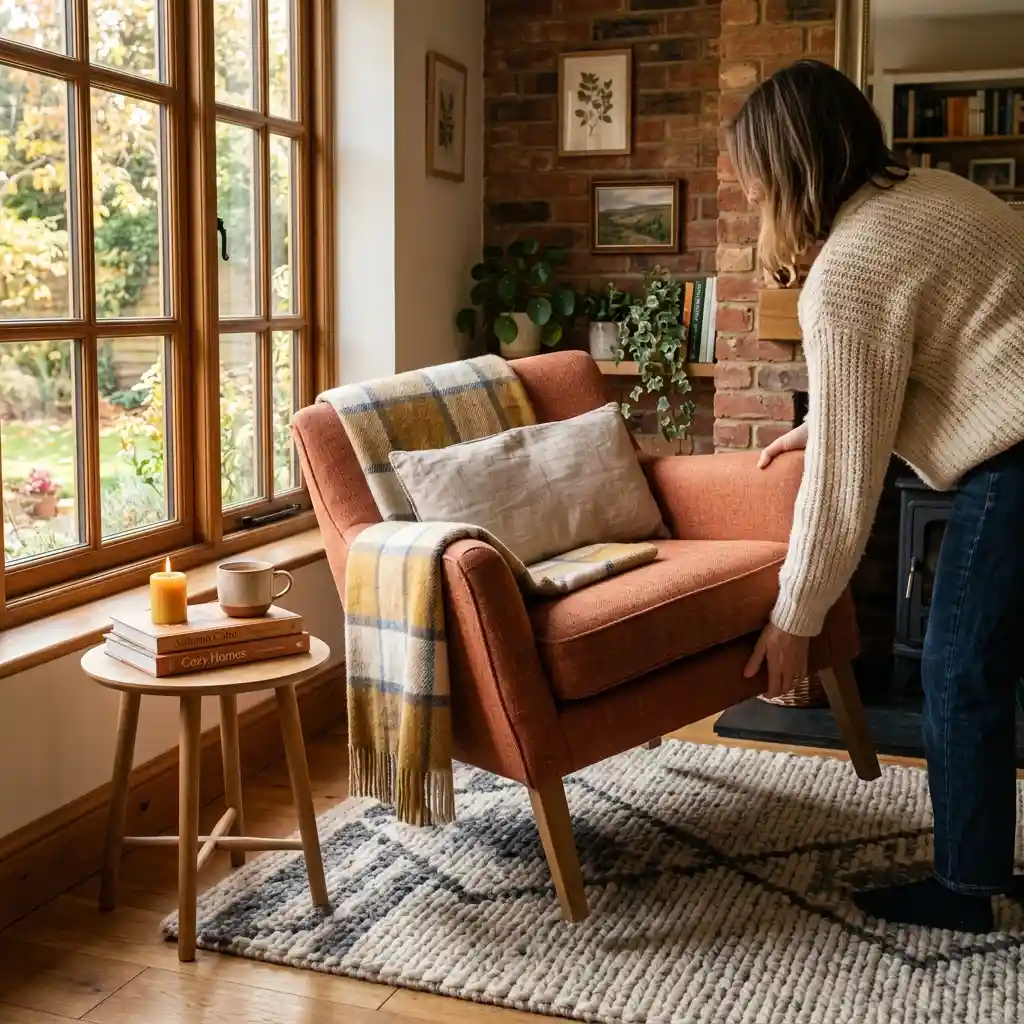
Run this before you buy a single autumn object. Each item takes minutes and none of it needs a store.
- Sit where you actually sit, then note every seat you cannot talk to comfortably from there.
- Pull the sofa 10 to 12 inches off the wall and turn each side chair inward by roughly 30 degrees.
- Check the rug: if any seat’s front legs now sit on bare floor, the rug is too small or badly placed.
- Measure the gap between the sofa edge and the coffee table — 14 to 18 inches keeps the path walkable.
- Count the spots in eyeshot of your own seat; pick three for seasonal pieces and leave the rest alone.
KEY TAKEAWAY: The living room is the one room in the house arranged around conversation and heat, so autumn shows up there as a change in arrangement long before it shows up as a change in objects.
Is Rearranging Really Part of Fall Decorating Now?
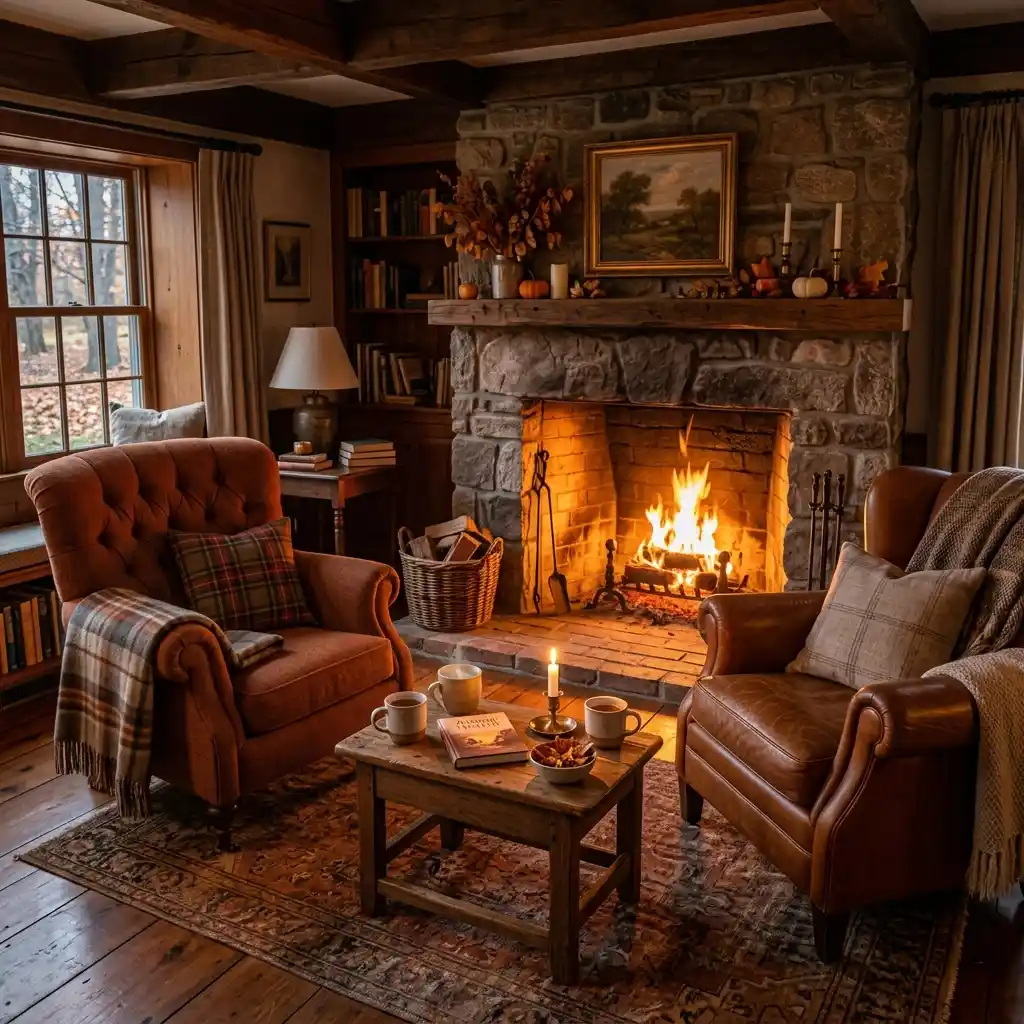
Seasonal furniture moves used to be a practical habit rather than a decorating one. Homes were arranged around the fireplace in cold months and opened toward the windows in warm ones. The habit is quietly coming back, mostly because open-plan rooms have too much floor and too few walls to lean on.
Signs This Is Catching On:
Retail catalog styling has shifted from wall-lined seating toward tighter floating groups photographed around a low table.
Curtain rods are increasingly sold long enough to run past the frame, which only matters if you hang them wide and high.
Autumn shopping lists have moved from orange tabletop accents toward soft goods that stay up past November.
None of that is dramatic, which is why it lasts. The same quiet shift runs through our fall decorating ideas: the pieces that survive the season are the ones attached to something structural.
Source Note: The Department of Energy’s Building America guidance on window attachments notes that most window attachments can reduce nighttime heat losses through windows during the winter.
What Moves First in a Fall Living Room?
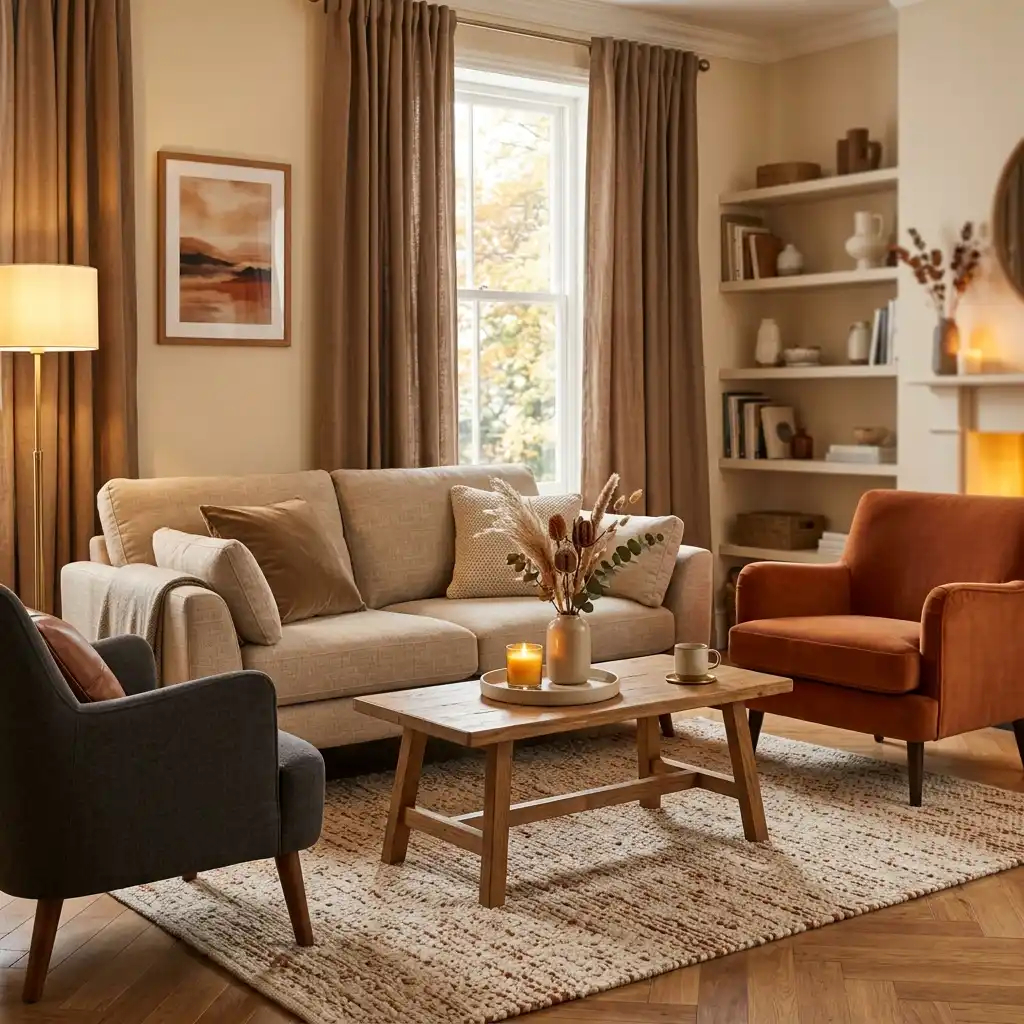
The furniture moves first because it is the only change large enough to alter how the whole room feels. Its positions decide where people sit, how far apart, and what they look at. Autumn pulls that inward: closer seats, a smaller shared centre, a clearer edge around the outside. It is the principle behind most luxurious living room ideas — the arrangement does the work, not the objects on it.
The Distance Between Facing Seats

Two seats facing each other work best within roughly 8 feet. Past that, people raise their voices slightly without noticing, and the room feels like a waiting area rather than a place to stay. In a long room, that usually means two smaller groups instead of one big circle — a main one around the low table, and a two-chair pair near the window.
A simple test: if you can hand someone a mug without either of you standing up, the seats are close enough for autumn.
Pulling the Sofa Off the Wall
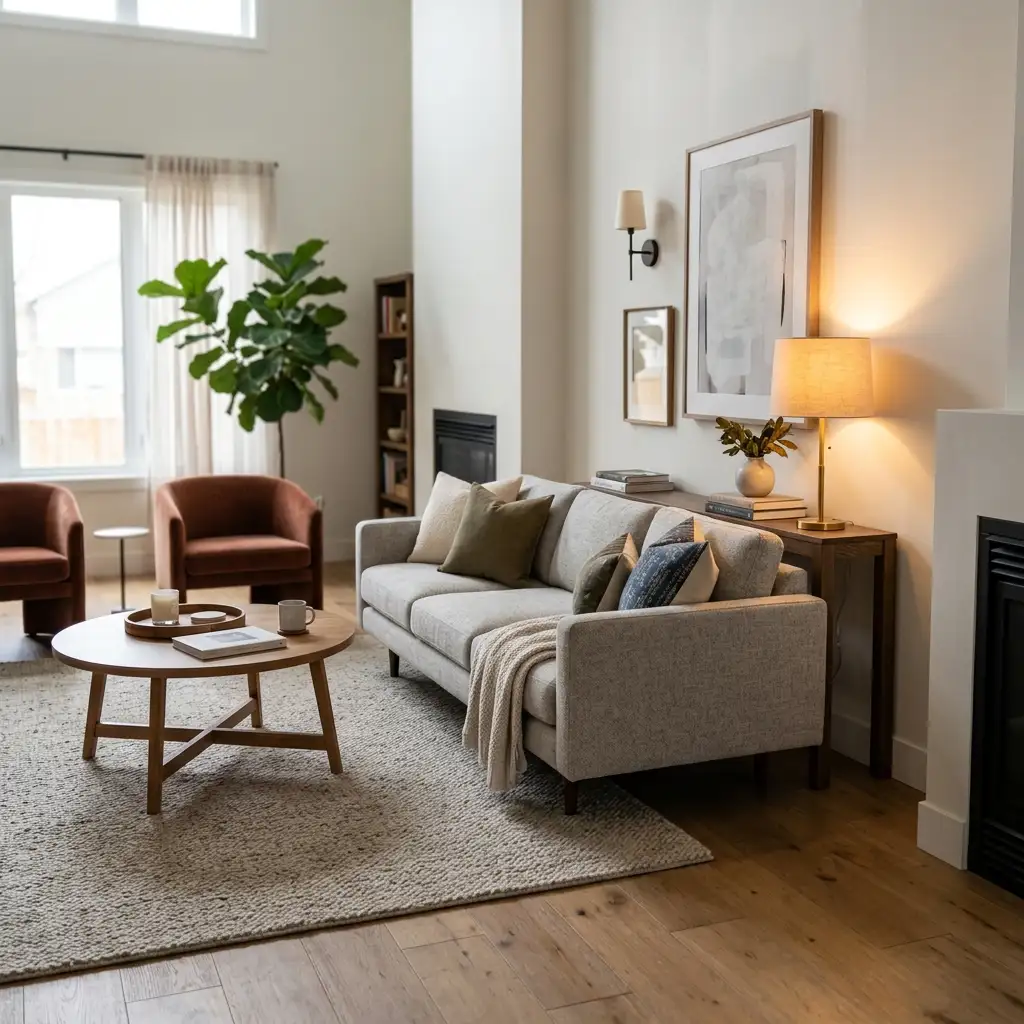
A sofa pushed flat against the wall stretches the room outward and leaves a dead strip of floor in the middle. Moving it forward 10 to 12 inches closes that gap and leaves a narrow shelf of space behind for a slim console. Most rooms can afford it even when they feel tight, because the space you gain in the centre is space people use.
The trade-off is honest: floating furniture eats a little walking room at the perimeter. In a room under about 11 feet wide, float the sofa only. It also moves the seating away from the wall outlets, so check where the plugs land — these living room lighting ideas cover where a second light source belongs once the layout shifts.
The Rug Has to Move Too
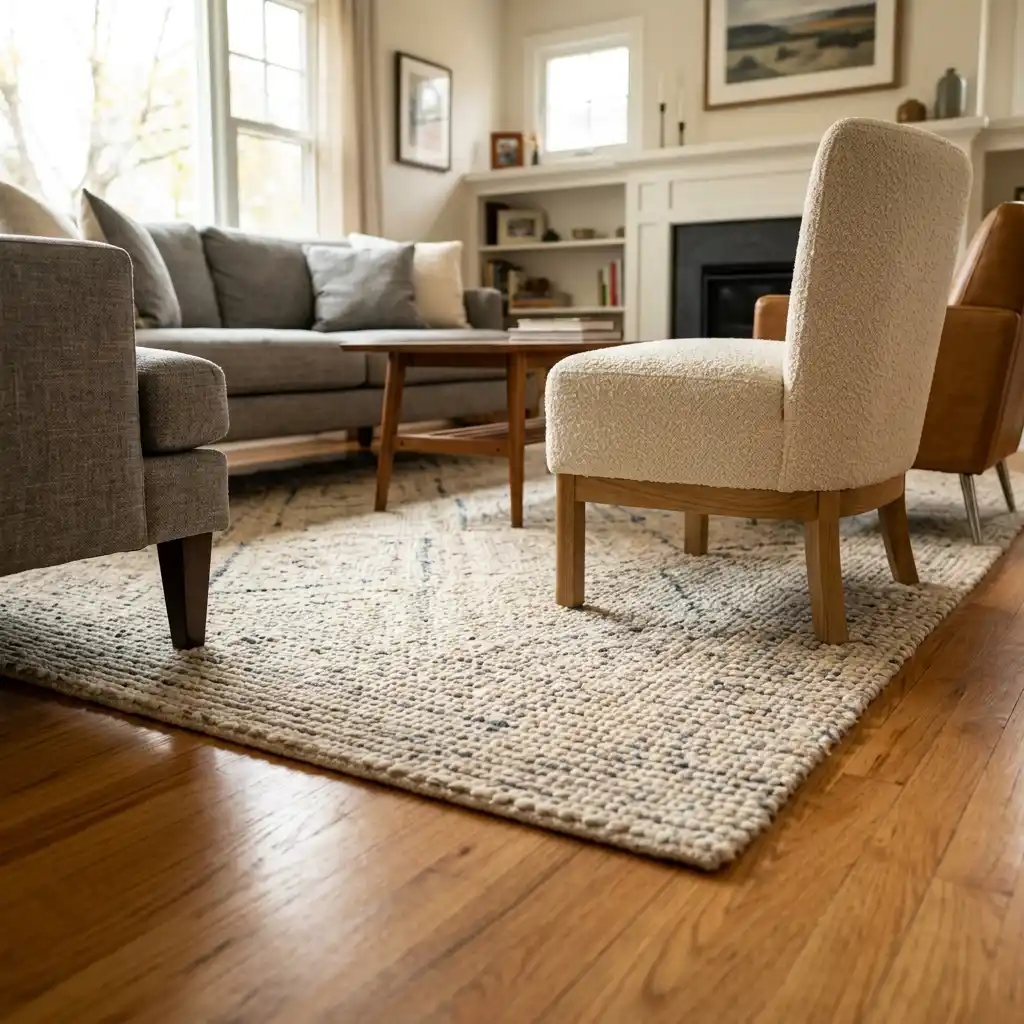
Once seating shifts, the rug underneath it is usually wrong. One rule keeps a moved arrangement looking planned: the front legs of every seat should land on the rug. When one chair drifts off, the group splits into pieces. An 8 by 10 covers most seating groups in a room of 180 to 250 square feet; smaller rooms can drop to 6 by 9 if the front-leg rule still holds.
Add a rug pad before you slide anything back. It stops the rug creeping under moved furniture and stops the edge curling into a trip hazard. Browse all our living room ideas for the sizing that suits your room shape.
What Should Cover the Windows Once the Light Drops?
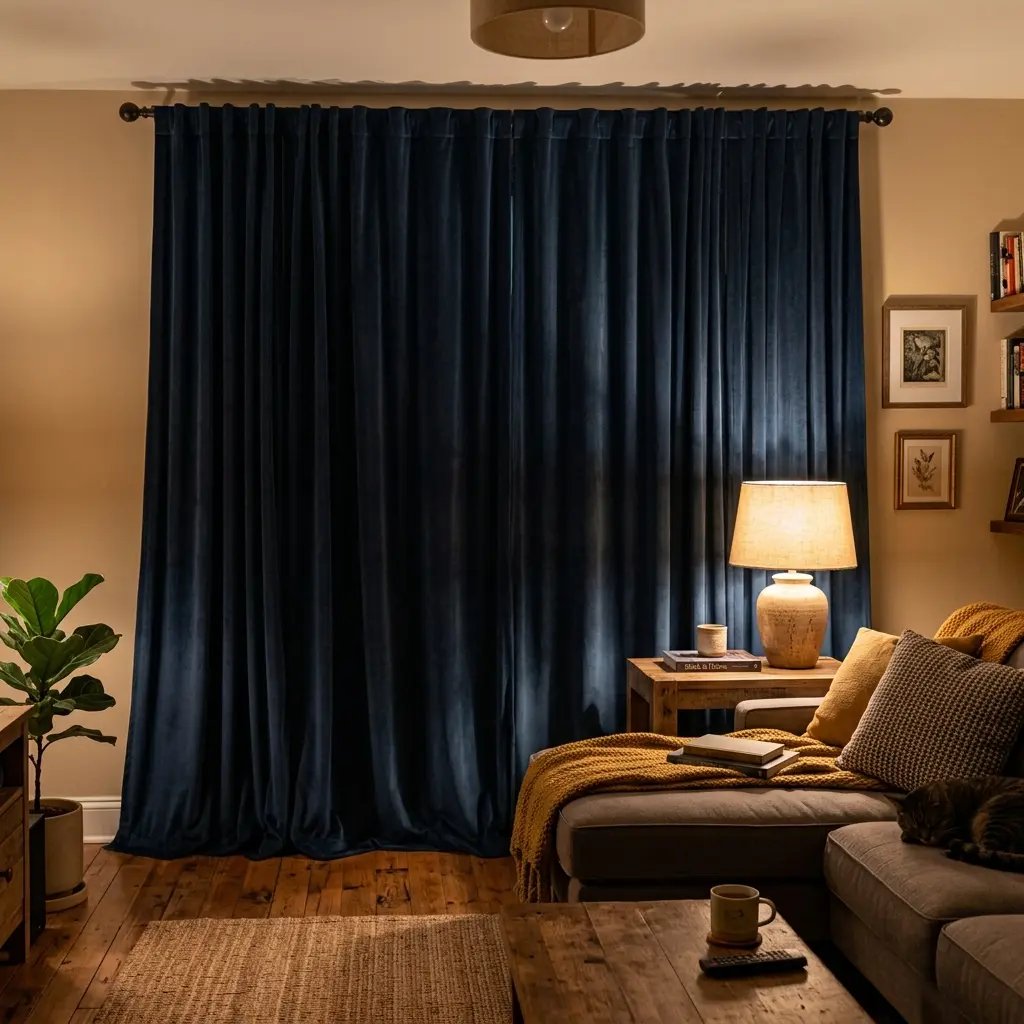
Windows are the second change and the one most people skip. A living room window is one of the largest uninterrupted surfaces in the room, which makes it the cheapest place to put a season. Bare glass in October reflects the room back at you after 6 p.m. and does nothing for the temperature.
How High and How Wide Should the Rod Go?
Rod position matters more than fabric. Mount it 4 to 6 inches above the frame and run it 6 to 10 inches past each side, so open panels stack on wall rather than on glass. A rod cut to the exact width of the frame leaves the panels covering roughly a third of the window all day, costing you daylight in the darkest months of the year. Weight and length matter too, but neither rescues a rod hung tight to the frame.
Does Every Window in the Room Need Panels?
No — and in an open-plan living room, trying gets expensive. Treat the largest window or the one nearest the seating, and leave a small side or stairwell window bare. Two well-hung panels on the main window do more than four skimpy pairs spread across every opening. The exception is a matched pair of windows on one wall, which look wrong when only one is dressed.
Panels are also the autumn purchase with no end date. They stay up through December and hand the room over to cozy winter decor ideas without a single change.
Where Fall Living Room Decor Actually Lands
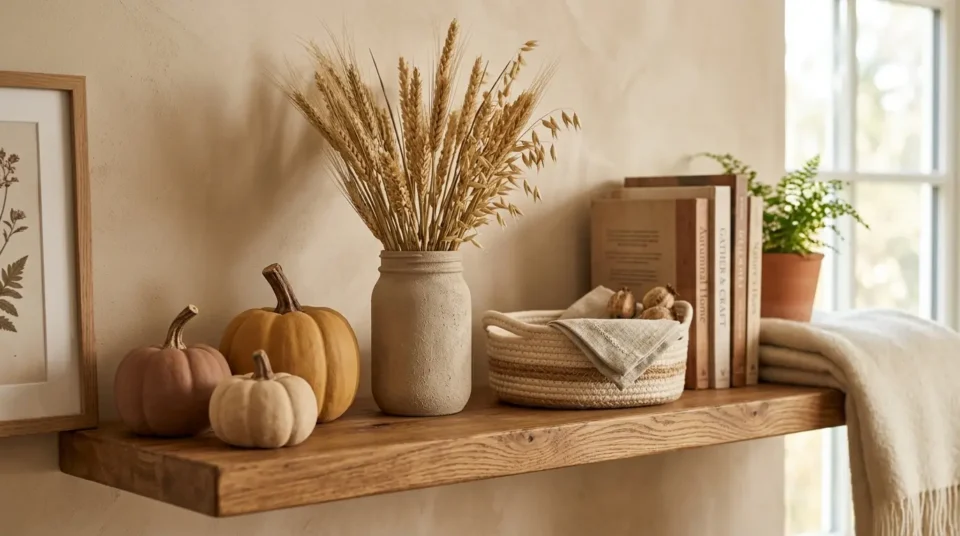
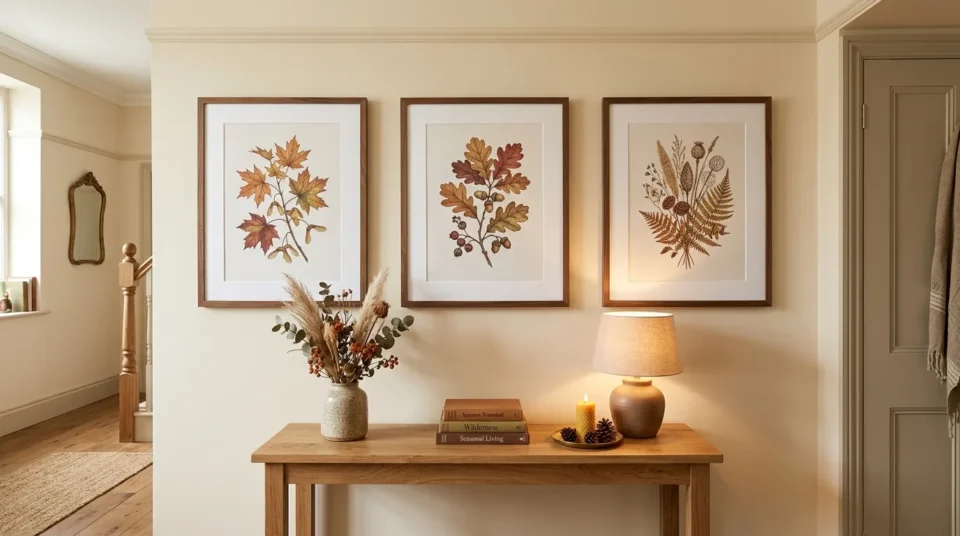
Only now do the seasonal objects come out, and they belong in fewer places than most people use. Pick the spots you look at from the seat you use: the coffee table in front of you, the media unit across from it, and one shelf at eye level. Side tables, windowsills and the floor beside the sofa stay clear so the room still works on a normal Tuesday. The mantel and the entry console are separate decisions with their own rules.
Sightline is what makes this work. A tall vase on a media unit sits at standing height and gets read from the doorway; the same vase on a coffee table blocks the person opposite you. Match the object’s height to how you meet it — standing, or sitting down. Our living room decor ideas cover the year-round styling those seasonal layers sit on.
The same short list works elsewhere, which is why these fall bedroom refresh ideas concentrate on the bed, one nightstand and one chair.
What Stays on the Coffee Table Through an Actual Evening?
A coffee table gets used every night, so anything on it has to survive being moved. One tray holds the arrangement together and gives people a clear edge to set a mug outside of. Keep the tallest piece under about 10 inches so people can see each other across the table, and leave half the surface bare. These coffee table decor ideas for a seasonal refresh use the same tray-and-clear-space logic in a lighter palette.
Safety Note: The U.S. Fire Administration advises keeping anything that can burn at least 3 feet from all heat sources, including fireplaces, radiators, space heaters and candles — worth checking once the seating has moved closer to the fire.
What Undoes the Whole Rearrangement
Four things quietly cancel out a good autumn layout, and all four are fixable in an afternoon.
❌ Pushing every seat back against the wall → ✅ Pull the sofa 10 to 12 inches forward and turn side chairs about 30 degrees inward.
❌ Running the walking route straight through the middle of the seating → ✅ Send the through-path around the outside so nobody crosses between facing seats.
❌ Hanging the rod tight to the window frame → ✅ Mount it 4 to 6 inches high and 6 to 10 inches wide of the frame on each side.
❌ Loading the coffee table until nothing can be set down → ✅ Keep one tray under 10 inches tall and leave half the surface clear.
Five Line Items and What They Run
Autumn in a living room is cheap to do well, because the change with the biggest effect is free. These are realistic US ranges for the pieces worth buying.
| Project | Estimated Cost | Impact Level |
|---|---|---|
| Rearranging seating you already own | $0 | Very High |
| Two cushion covers in autumn tones, 20 inch | $25-$50 | Medium |
| Floor-length curtain panels, pair | $60-$180 | High |
| Second table lamp for the far side of the room | $70-$160 | Medium |
| Larger wool-blend rug plus pad, 8 by 10 | $300-$800 | High |
Best First Upgrade: Move the furniture on a Saturday morning and live with it for a week before spending anything — it costs nothing and it changes what you actually need.
Skip for Now: Skip the small orange tabletop objects. Spread across a year of seasonal decorating ideas, those small buys quietly outspend the panels and the rug.
The Verdict on Seasonal Rearranging
This has staying power, because it is not really a trend — it is how rooms were used before central heating made every arrangement viable year-round. A living room that pulls in for autumn and opens back up in spring stays interesting without a new object each season.
The renter’s version is the whole post minus the rug: move what you own, use a tension rod if drilling is off the table, and put the season into two cushion covers. Where floating furniture will not fit, work with what a small living room layout allows and turn one chair instead of moving the sofa. Turning beats moving in a tight room, because an angle costs no floor. Our furniture styling ideas go further on scale and spacing.
Frequently Asked Questions
Conclusion
The free step in fall living room decor is also the biggest one: seats pulled together, the rod hung wide of the window, and seasonal pieces kept to the spots you see from your own chair. A room that gets moved for the season feels different in a way shopping alone never manages — and our home decor and styling ideas cover the layout underneath it.