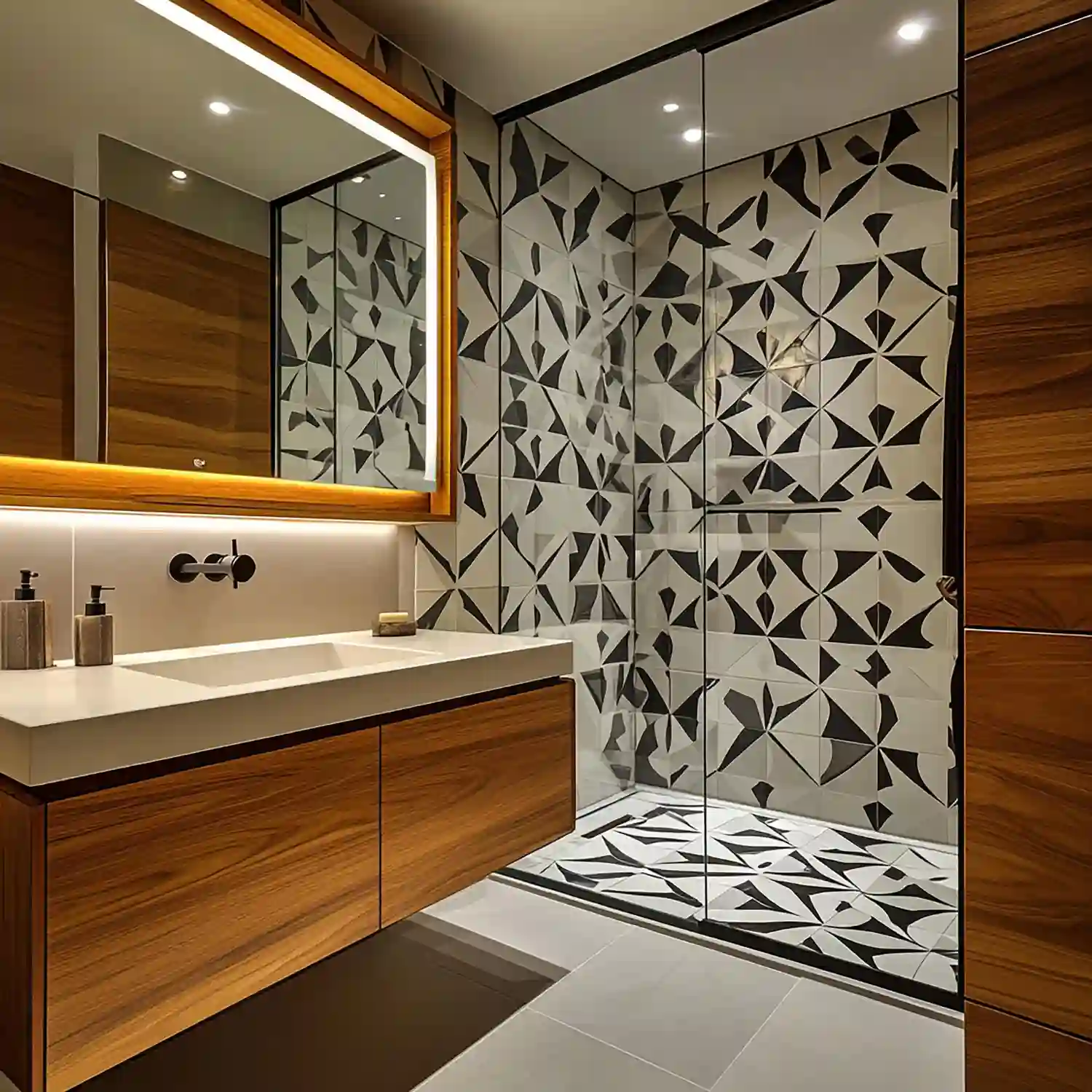
One Wall Is Doing All the Work Now
Most bathroom makeovers start with an expensive question. Retile everything, or leave it plain? Both answers tend to disappoint. A full retile drains the budget fast. Doing nothing leaves the room flat and forgettable. If you have stared at four beige walls and felt stuck, you are not alone.
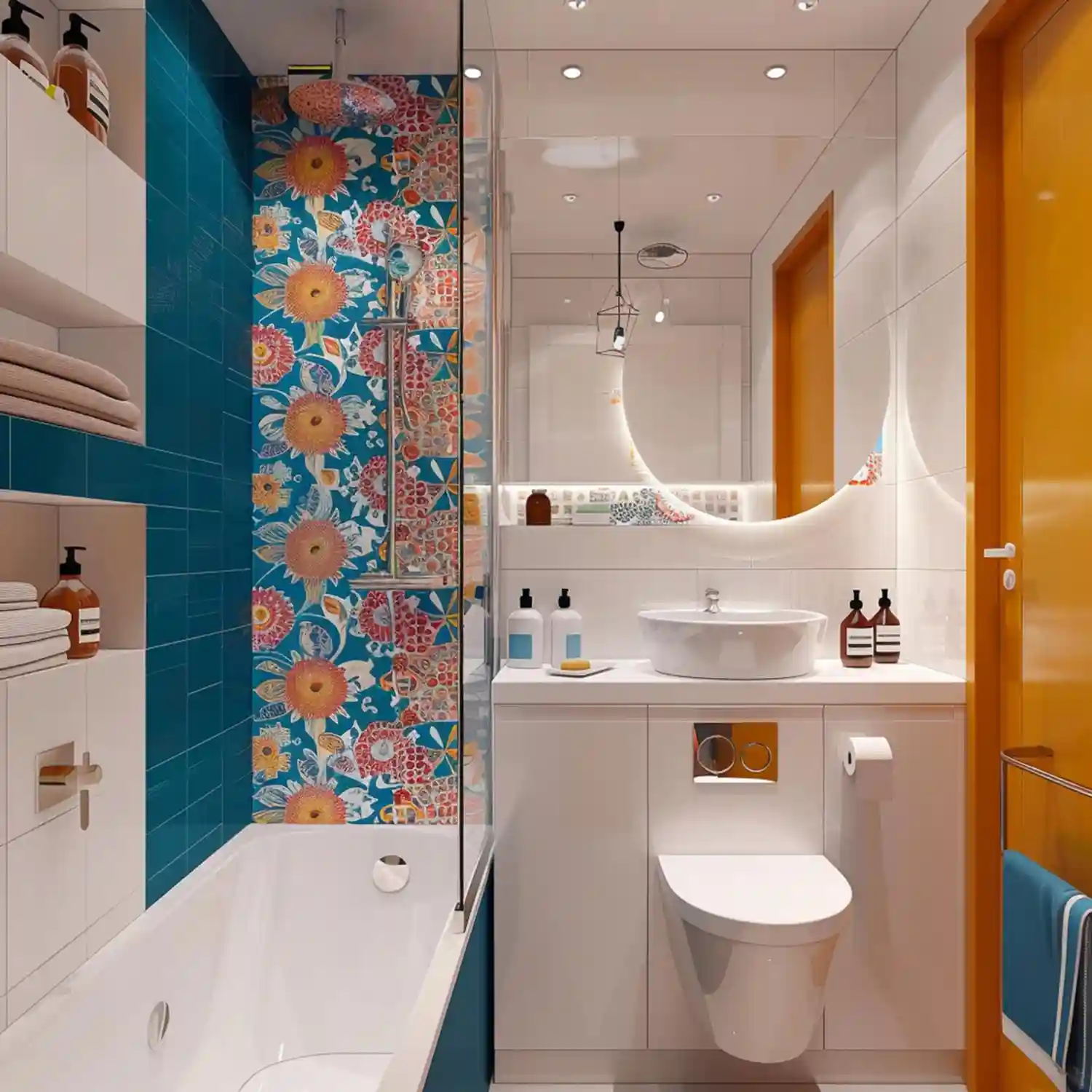
Looking for more ideas? Explore our full guide to Bathroom Wall Ideas.
A bathroom accent wall solves this the smart way. You finish one wall in something with color or texture and let the other three stay simple. That single move gives the room a clear focal point for a fraction of a full remodel. The 2026 bathroom design trends all lean the same way: one bold, tactile wall instead of busy surfaces everywhere.
A plain guest bathroom can go from builder-basic to finished with a single wall of deep green zellige behind the vanity, and nothing else in the room changes. That is the whole idea. This guide covers which wall to choose, the best materials for a bathroom accent wall, what each option costs, and where people go wrong. For more room-by-room ideas, our home decor inspiration is a good place to start. Bookmark this guide for quick reference.
Why One Bathroom Accent Wall Beats an All-Over Redo
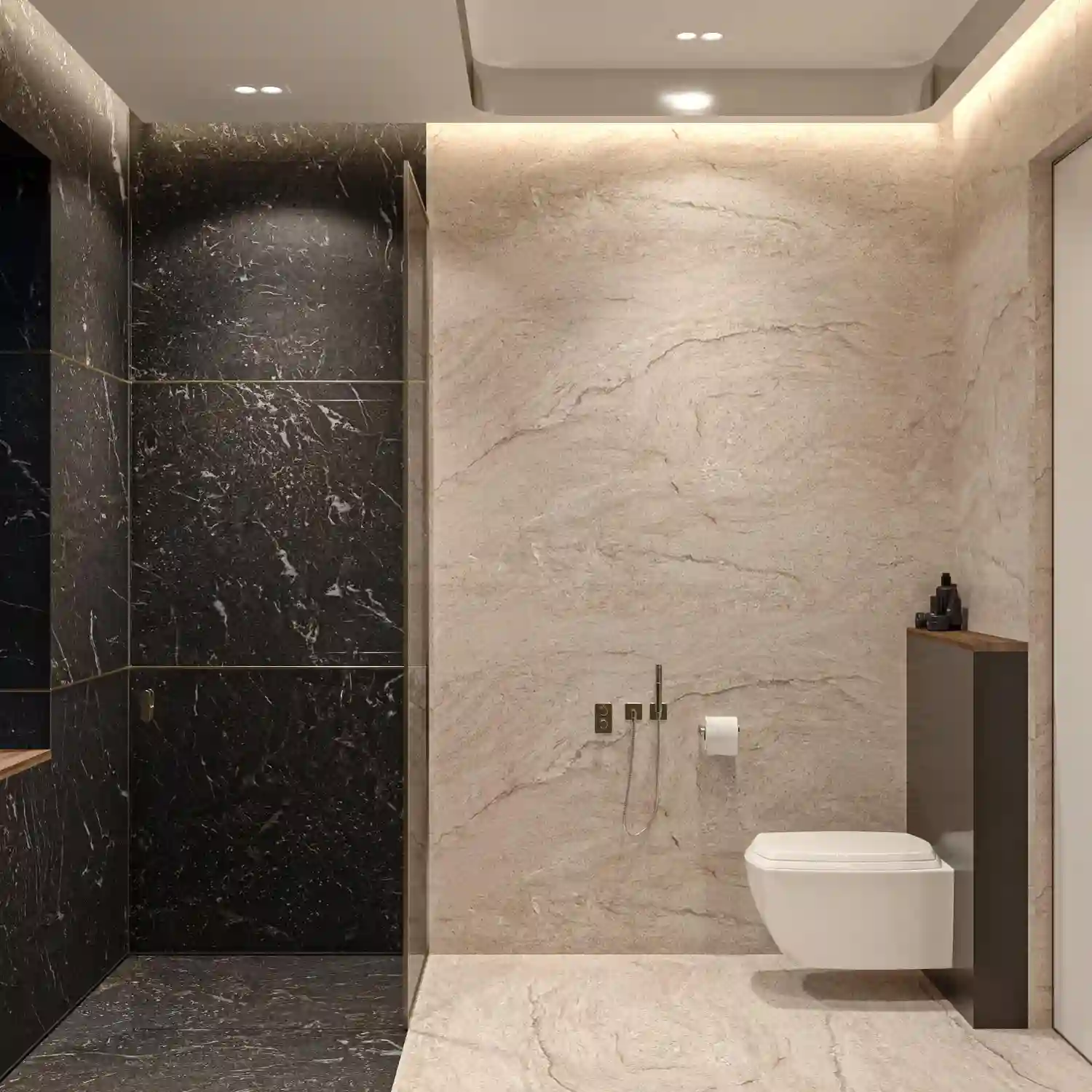
An accent wall is the highest-return change in most bathrooms. It concentrates money, color, and pattern on the one surface people look at first. The other three walls stay quiet, so the room feels planned instead of busy.
A full retile spreads the same budget thin across every wall. The result often looks flat, because nothing leads the eye. One finished wall does the opposite. It creates contrast, and contrast is what makes a small room feel considered rather than cheap. You can see how different finishes play out across our bathroom design ideas archive.
The wall behind the vanity or the tub is where your eye lands anyway. Put your best material there and the rest of the room can be simple white paint. This is also why a feature wall works differently from a full-height bathroom backsplash, which runs a short band above the counter. The accent wall commits the whole surface, floor to ceiling, to one look.
KEY TAKEAWAY: Spend your budget on one wall people already look at, and let the other three stay plain.
What a Bathroom Accent Wall Actually Looks Like in 2026
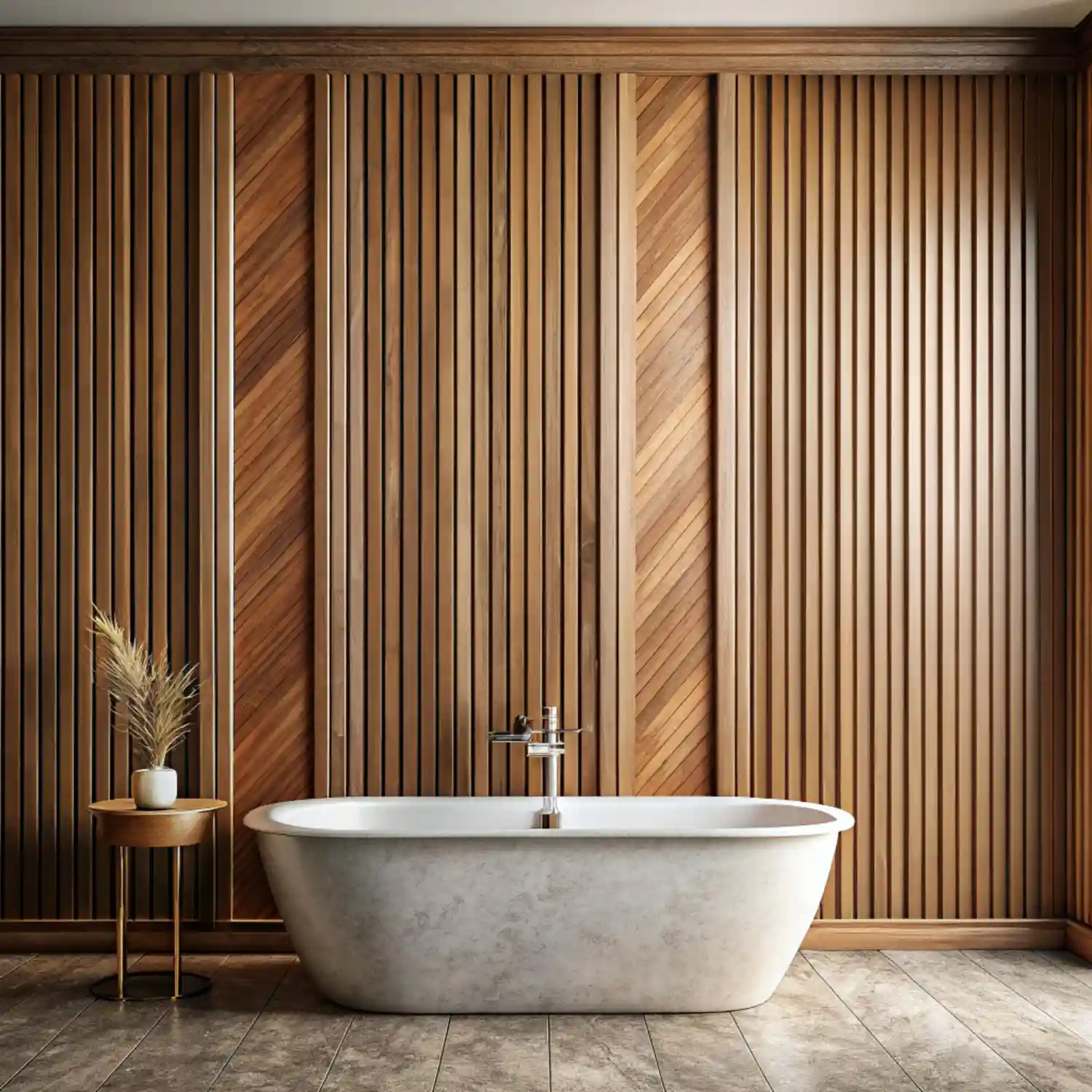
The 2026 version of this trend is about texture, not just a stripe of paint. Fluted wood, stone slabs, and handmade tile are replacing the flat colored wall of a few years ago. Saturated shades still play a big part, but they now show up on material with depth.
Think one wall of glossy sage zellige, a run of vertical oak slats behind a freestanding tub, or a single slab of veined marble climbing the shower wall. Each look leans on one hero material and one clear color story. Warm brass or matte black fixtures usually finish it off.
The palette has moved warm and moody. Forest green, oxblood, warm clay, deep navy, and soft charcoal all work well on a single wall. These same shades anchor our black and white bathroom looks and pair with warm brass or matte black fixtures. Testing a bold color on one wall first is the low-risk way in. The same one-wall move carries other rooms too, from living room accent wall ideas to the bedroom.
Which Wall Should Be Your Accent Wall?
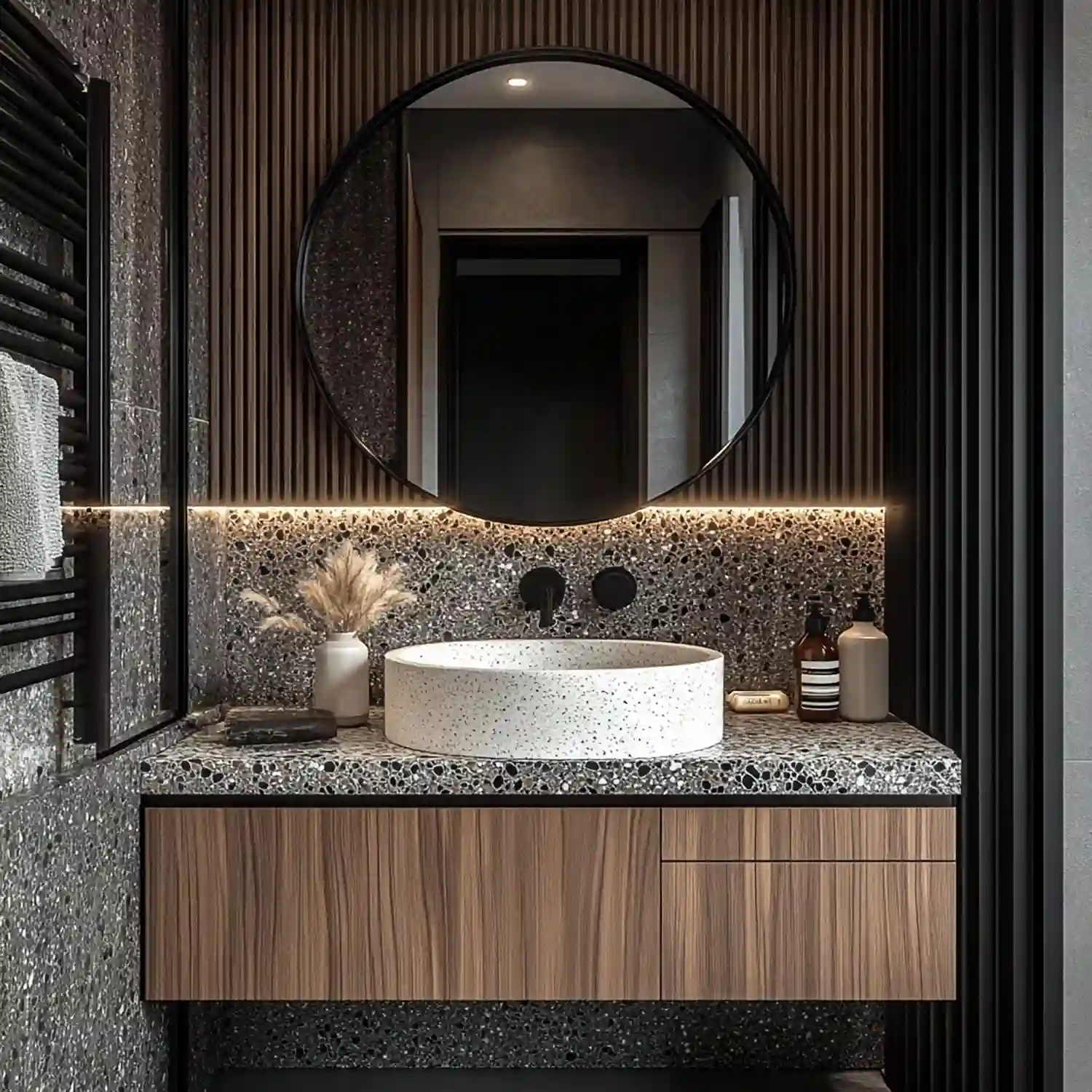
Pick the wall your eye hits first when you open the door. In most bathrooms that is the vanity wall or the wall behind the tub. Finishing a side wall you barely see wastes the effect.
The vanity wall is the safest choice. It frames the mirror and sits away from direct spray, so almost any material works there. The tub wall comes second, and it gives you a dramatic backdrop for a soaking tub. The shower wall is the boldest option, but it limits you to fully waterproof finishes like tile, stone, or sealed plaster.
Avoid the wall broken up by a window or a door. Fragments of an accent finish around a frame look accidental, not planned. One clean, unbroken wall always looks better. In a small bathroom, the wall you face from the doorway also makes the room feel deeper when it carries the darker, richer finish.
The Best Materials for a Bathroom Accent Wall
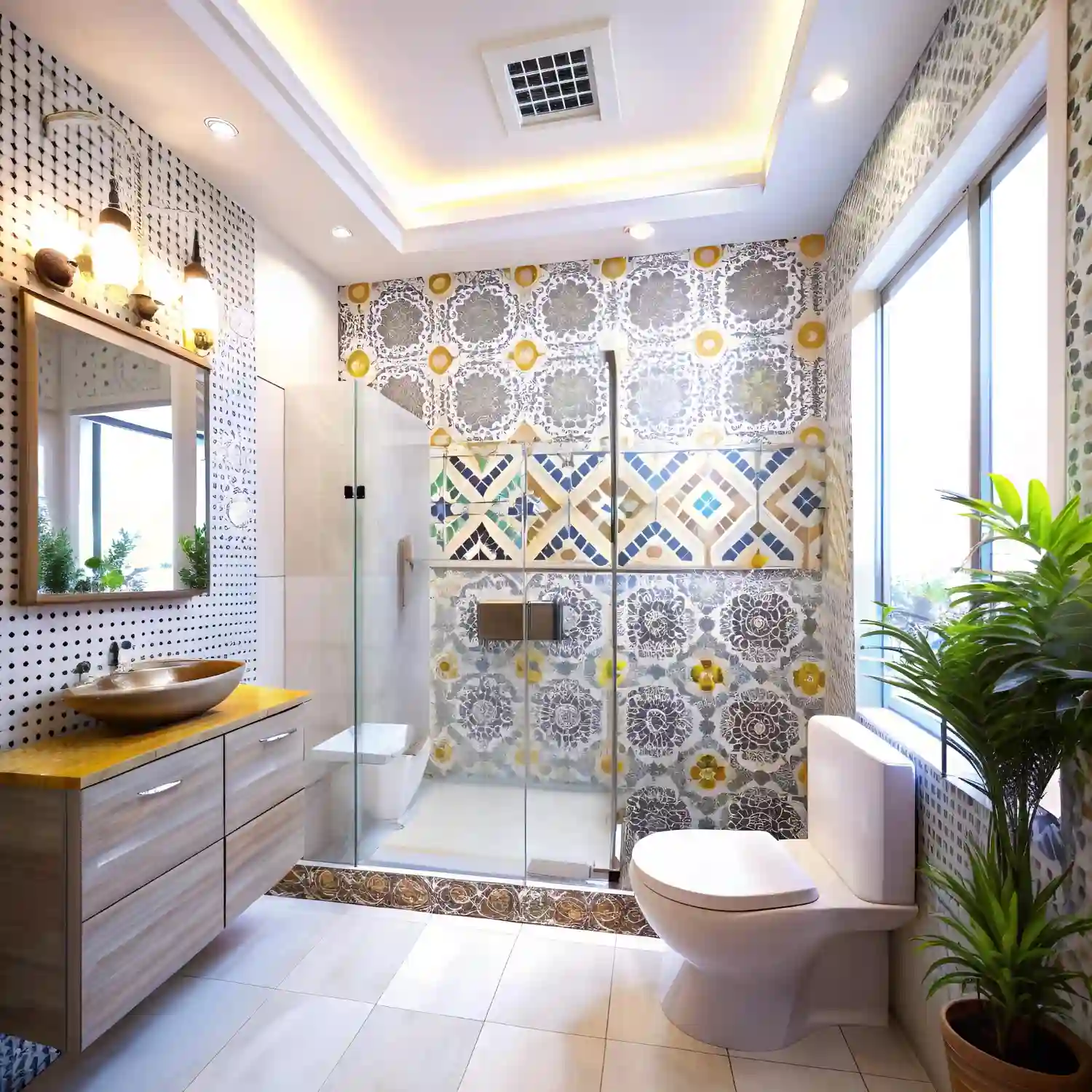
The material you choose sets the whole mood. Some options are renter-friendly and cheap. Others need a pro and a bigger budget. Here are the six routes worth considering, from the wall behind the vanity to a full waterproof shower surround.
Handmade Zellige or Glossy Tile
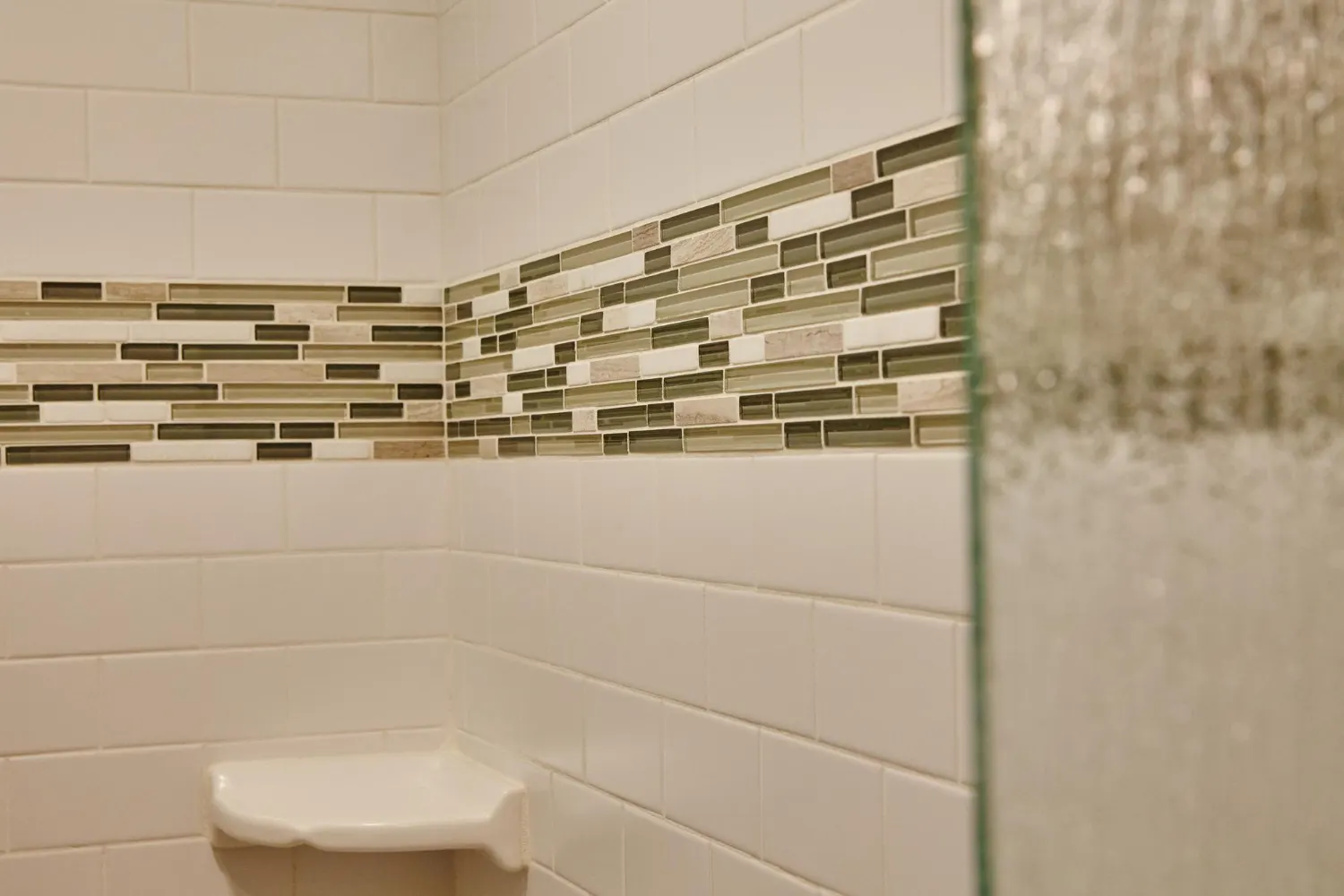
Zellige is handmade Moroccan clay tile with a glossy, uneven glaze. Each piece catches the light a little differently, so a single wall of it shifts tone all day. Sage green, warm white, and clay are the most popular shades right now.
Tile is the most durable accent-wall material and the only one safe in a wet shower. Large-format marble-look porcelain and small hex mosaics give the same effect with less grout. A tiled feature wall pairs well with minimalist bathroom decor, where one textured wall carries a plain room. Expect handmade zellige to cost more than machine-made tile and to need a skilled setter.
A Color-Drenched Painted Wall
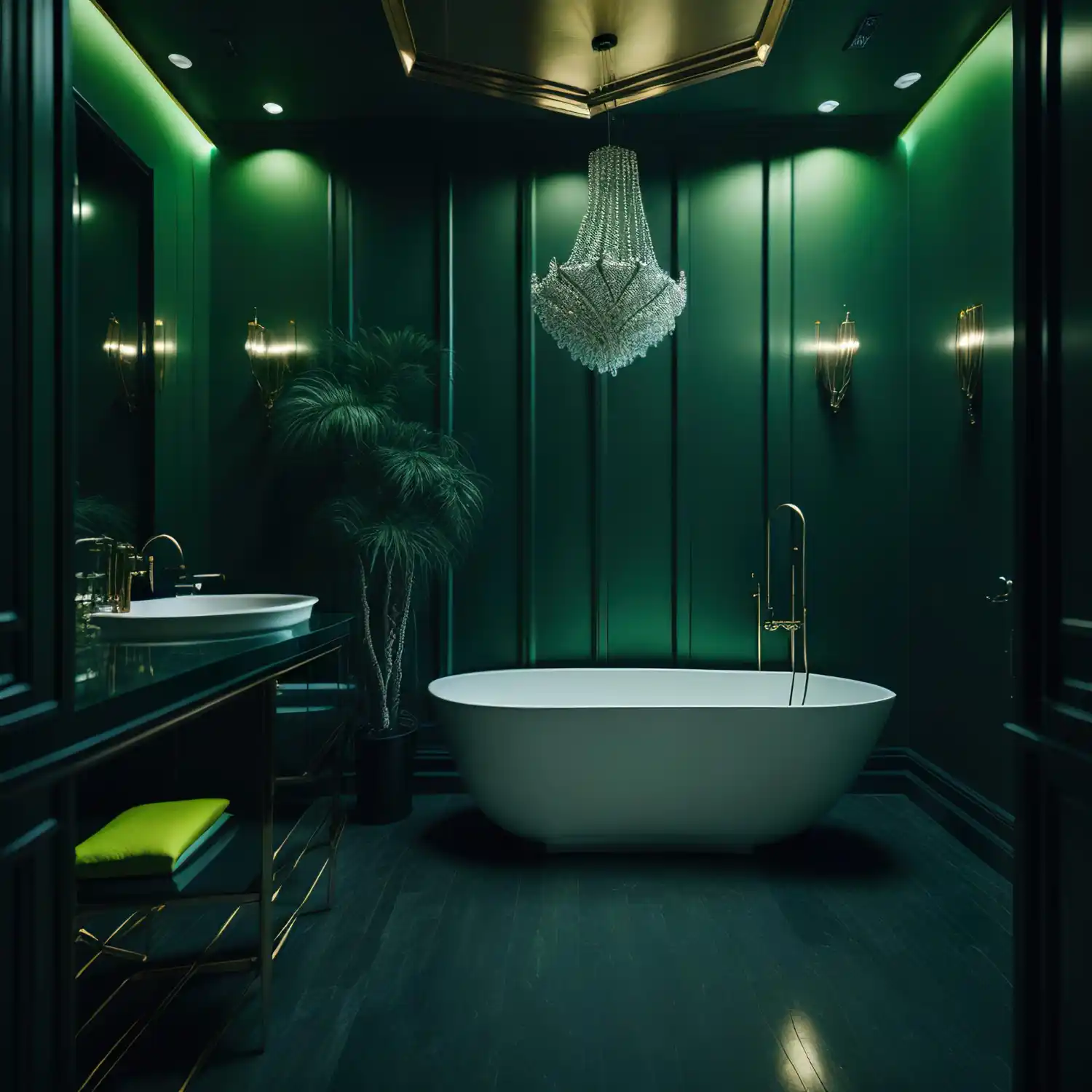
Paint is the cheapest and fastest way to make a bathroom accent wall. One gallon covers a single wall, and you can change it later. Deep, dramatic shades work best here because the small surface can handle a heavy color.
Benjamin Moore Hale Navy HC-154 is a classic pick, with a low light reflectance value of 8.36 that looks rich without going fully black. Forest green and warm charcoal do the same job. Use a bathroom-grade paint with mildew resistance, since even a dry wall meets steam. This trick also drives our warm green bathroom ideas, where one saturated wall sets the tone for the room.
Fluted or Slatted Wood
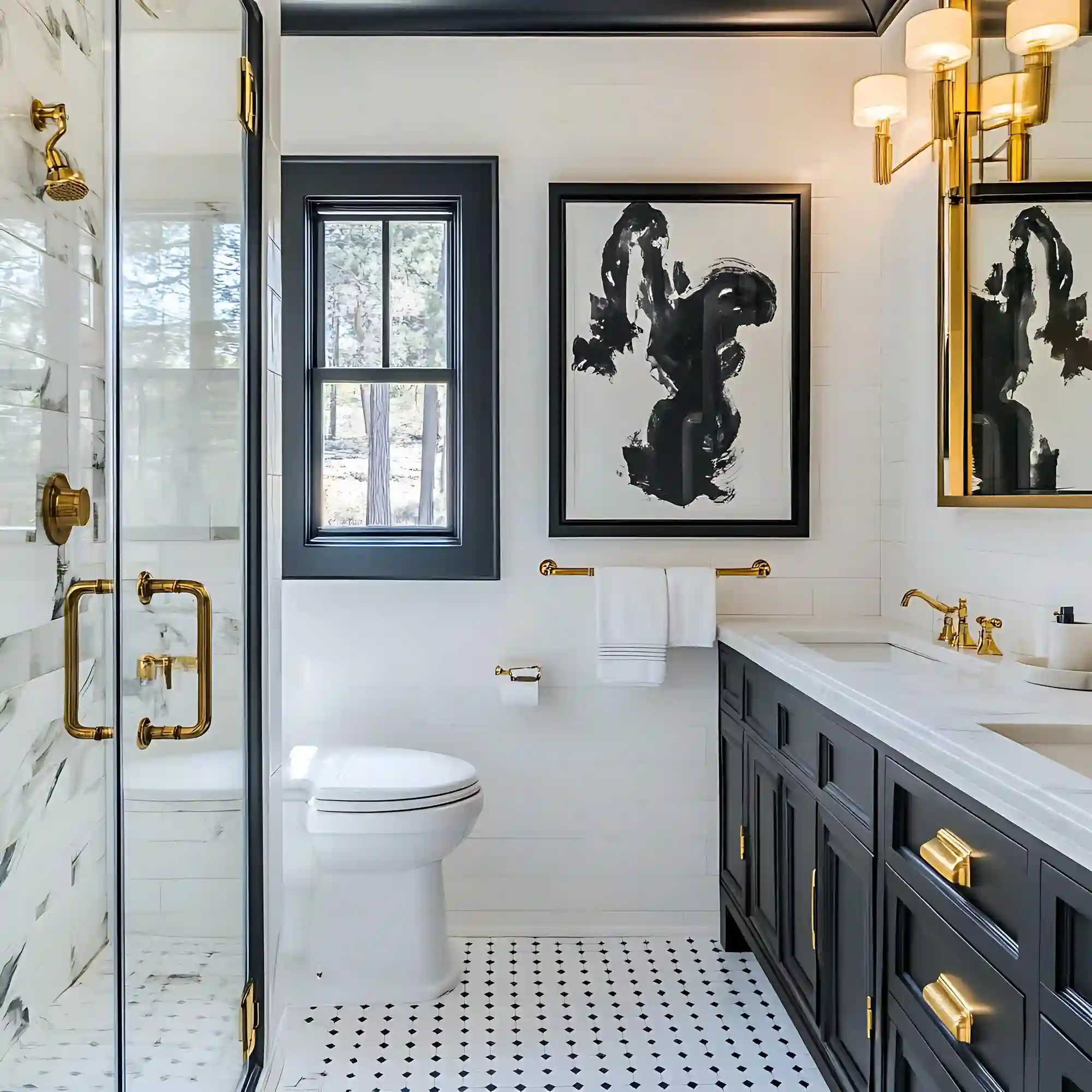
Fluted panels are vertical grooved boards that add height and soft shadow. The vertical lines pull the eye up, which makes a low bathroom ceiling feel taller. Warm oak and walnut are the go-to species for a spa-like feel.
Wood belongs on dry walls, not inside the shower. Keep slatted wood behind the vanity or over a freestanding tub, away from direct spray, and seal it well. This warm, natural texture sits at the heart of farmhouse bathroom and modern-organic looks alike. Peel-and-ready panel kits have made this look far easier than custom millwork.
A Natural Stone or Marble Slab
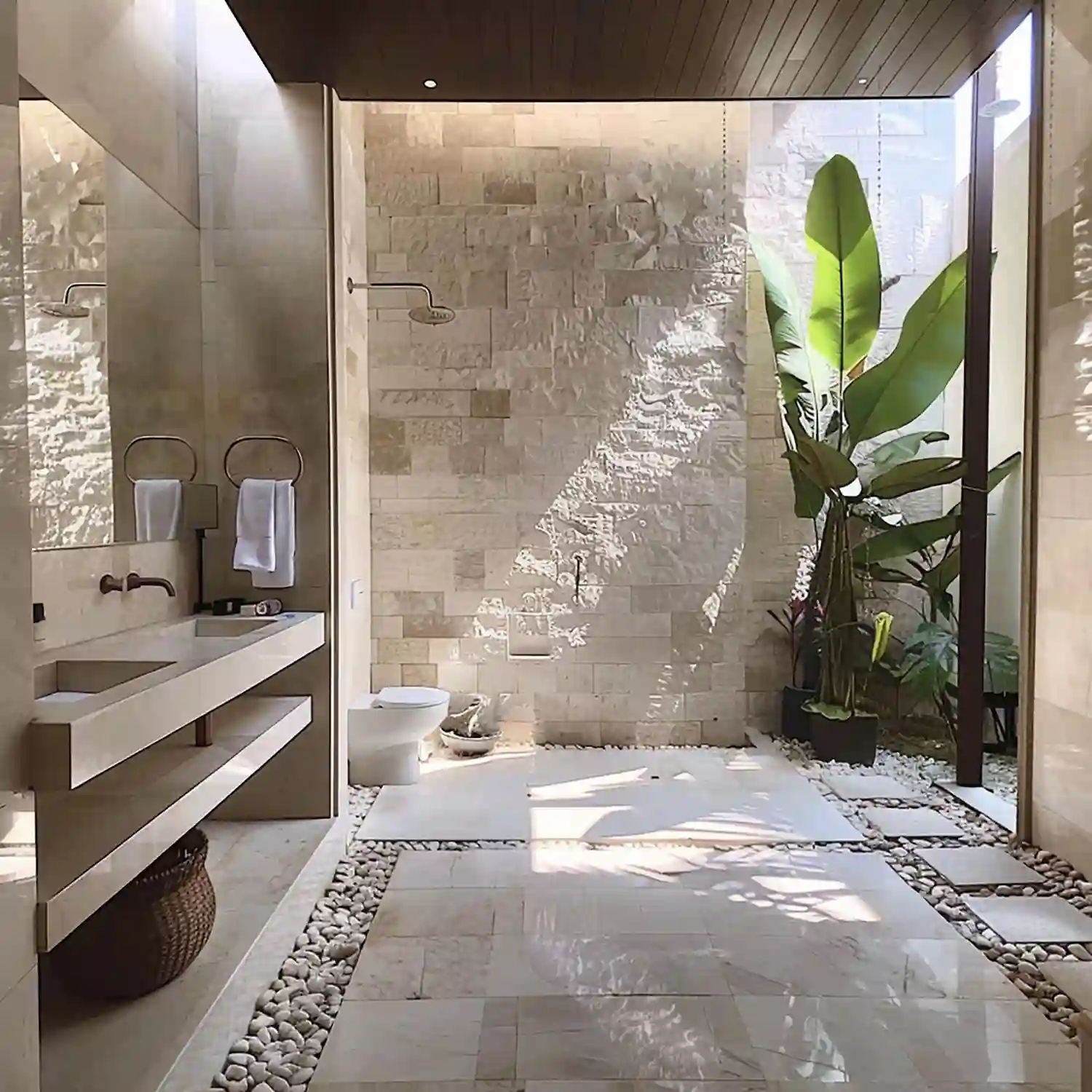
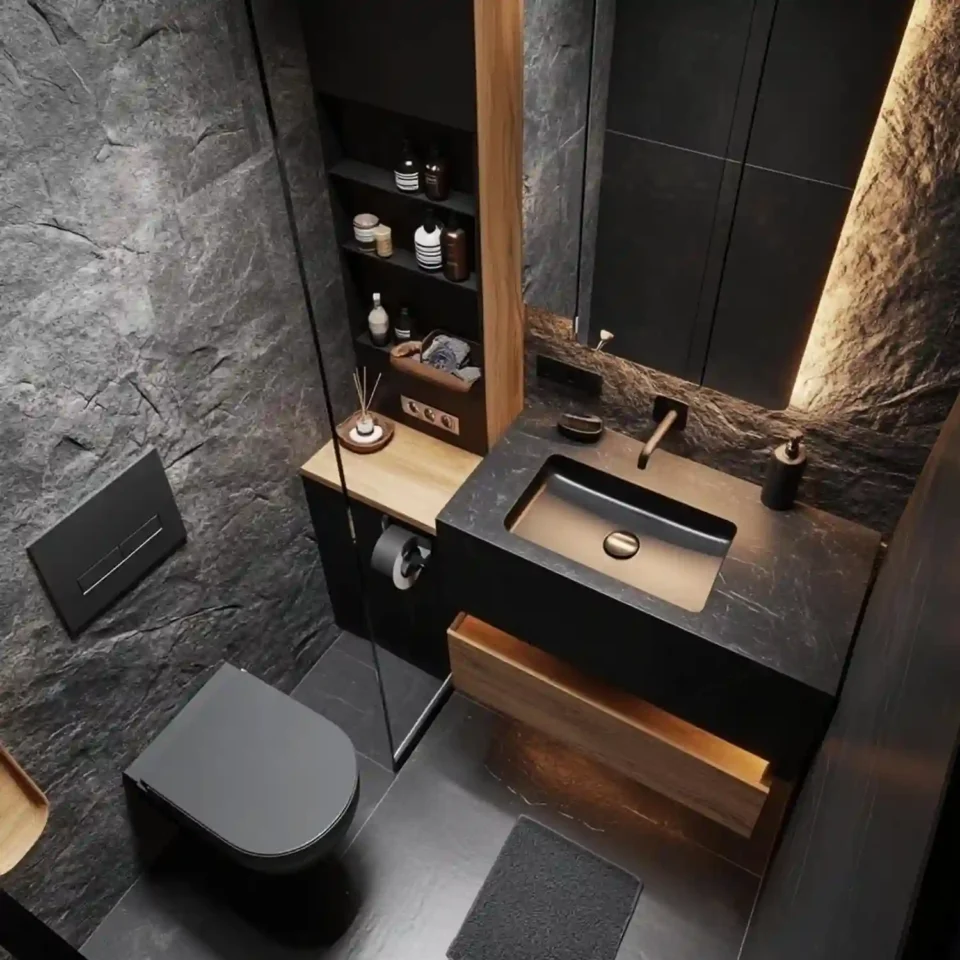
A single slab of veined marble or travertine is the luxury version of an accent wall. Stone drenching, where one slab runs up the wall and sometimes onto the ceiling, is a signature 2026 look. The veining does all the decorating for you.
Stone is fully waterproof once sealed, so it works behind a tub or inside a shower. It is the priciest route and needs professional cutting and mounting. Large-format porcelain that mimics marble gives a close look for less money and less weight. One dramatic slab wall can carry an otherwise plain, pale room.
Board and Batten or Picture-Frame Molding
Board and batten is a grid of flat trim over drywall, painted one solid color. It adds structure and a quiet, tailored texture without any pattern. Half-wall paneling with a painted top is a classic take that suits older homes.
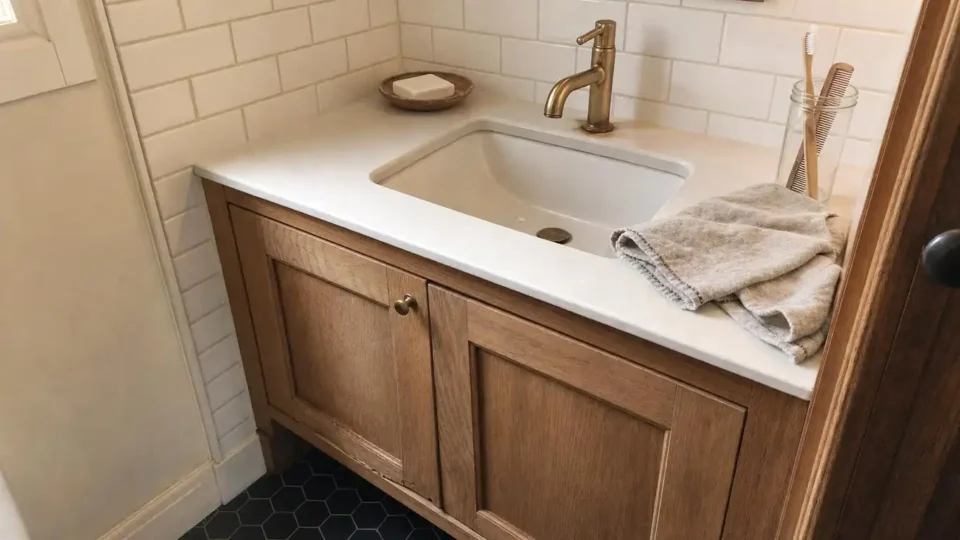
This route is budget-friendly and beginner-friendly, since it is mostly trim, caulk, and paint. Painted the same deep shade as the wall behind it, board and batten looks modern, not fussy. It shines in a powder room or on the vanity wall of a period home. Keep the battens evenly spaced so the grid looks planned.
Removable Wallpaper
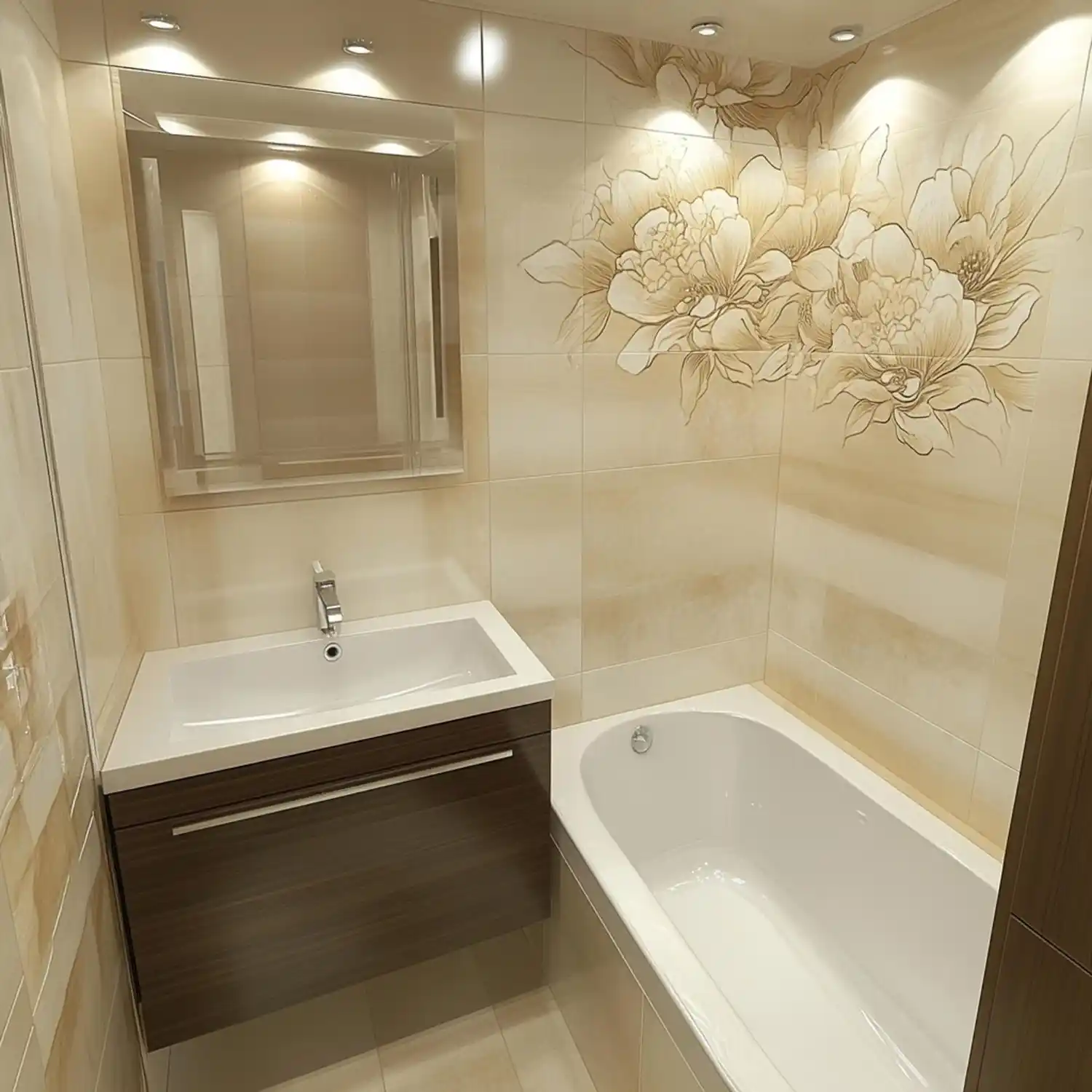
Peel-and-stick wallpaper is the renter’s accent wall. It goes up in an afternoon and comes down without damage. Bold botanicals, grasscloth-look vinyl, and small geometric prints all suit one bathroom wall.
Wallpaper needs a dry, well-ventilated wall, so keep it away from the shower and run a fan during showers. Match the paper type to the room, since vinyl handles humidity far better than paper stock. An eclectic patterned wall fits right into a boho bathroom scheme. For a low-commitment start, one papered wall behind the toilet or vanity is the easiest test.
Tadelakt or Microcement Plaster
Tadelakt is a lime-based Moroccan plaster that is naturally waterproof, seamless, and slightly glossy. Microcement is a cement-and-polymer coating that seals into a waterproof skin over almost any surface. Both give a smooth, hand-troweled wall with no grout lines at all.
These are premium, pro-installed finishes with real upkeep. Material Note: according to plaster specialists, tadelakt needs resealing with olive-oil soap about once a year in wet areas, while microcement sealer is refreshed every two to three years. The payoff is a continuous, spa-like wall that works even inside a shower.
Bathroom Accent Wall Checklist
Use this quick list before you commit to one wall and one material.
- Choose the wall your eye hits first from the doorway, usually the vanity or tub wall.
- Skip any wall broken up by a window or door frame.
- Match the material to the zone: tile, stone, or sealed plaster for wet walls, anything for dry walls.
- Pick one hero color, then keep the other three walls plain white or soft greige.
- Repeat that accent color once more in a towel, mirror frame, or fixture finish.
- Run an exhaust fan to protect wood, wallpaper, and paint from steam.
- Test any deep paint shade on the actual wall before buying gallons.
What You’ll Spend
A bathroom accent wall costs far less than a full remodel because you finish one wall, not four. Prices below are material-only estimates for a single wall and vary by size, brand, and whether you hire out the install.
| Project | Estimated Cost | Impact Level |
|---|---|---|
| Accent paint, color-drench one wall (1 gallon) | $50-$75 | High |
| Peel-and-stick wallpaper or board and batten trim | $80-$250 | High |
| Fluted wood slat panels (material, per sq ft) | $6-$20 | High |
| Zellige, marble slab, or tadelakt (material, per sq ft) | $10-$100+ | Very High |
Best First Upgrade: Paint one wall a deep, moody shade. It is the cheapest change with the biggest visible payoff.
Skip for Now: Do not retile all four walls to get one feature. It costs the most and delivers the least contrast.
Where People Go Wrong
The most common mistake is putting the accent wall in the wrong spot. A rich finish on a side wall you rarely see wastes the whole effect. Move that material to the wall you face from the door, and the same budget suddenly does real work.
Another frequent slip is ignoring the wet zone. Wood and standard wallpaper fail fast inside a shower, where they warp, peel, and grow mold. Keep those materials on dry walls behind the vanity, and save tile, stone, or sealed plaster for anywhere water hits directly.
People also over-decorate the other three walls. An accent wall only feels special when the rest of the room stays quiet. Busy tile everywhere plus a bold feature wall cancels the contrast and makes a small bathroom feel cramped. Let the plain walls breathe.
The last trap is a color chosen off a screen. Deep shades like navy and forest green shift a lot under bathroom lighting and low natural light. Paint a test patch on the actual wall, check it morning and night, then buy your gallons.
The Bottom Line
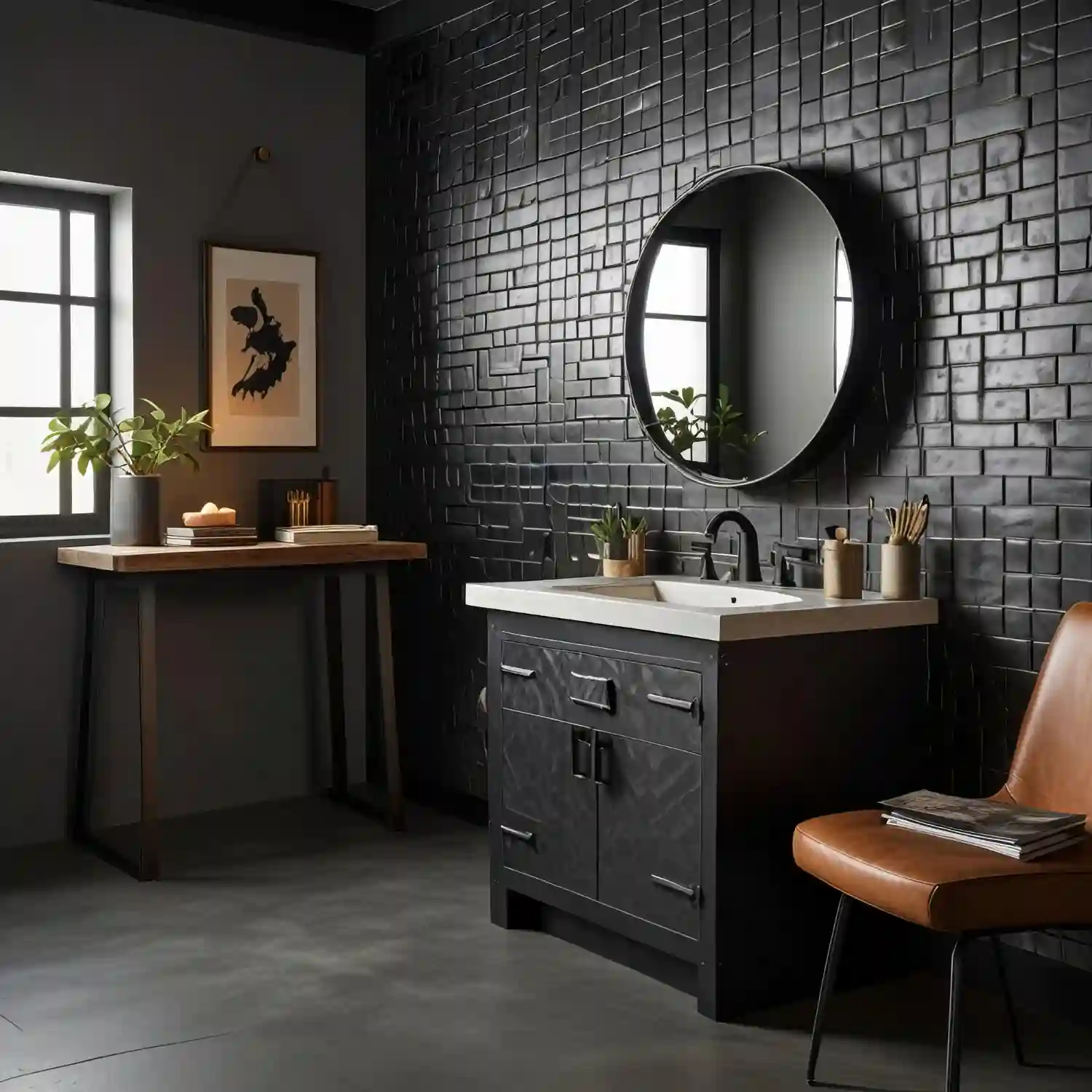
The Pick: For most homes, one color-drenched wall behind the vanity is the smartest first move. It is cheap, reversible, and gives the room a clear focal point in a weekend. Upgrade to zellige, wood, or stone later if you want more texture on that same wall. A bathroom accent wall is the rare change that costs little and shows a lot.
Frequently Asked Questions
Conclusion
A bathroom accent wall is the rare upgrade that costs little and changes how the whole room feels. Pick the wall you see first, commit it to one color or texture, and keep the rest simple. For more ways to refresh your space one smart change at a time, browse our home decor inspiration.
Next Steps
- Stand in your doorway and note which wall your eye hits first.
- Choose one material that suits that wall’s zone, wet or dry.
- Test your paint or tile color on the actual wall before buying in full.
- Explore related looks in our bedroom accent wall ideas.
- Browse all our room-by-room inspiration for more.
More Bathroom Wall Ideas
- Bathroom Wallpaper Ideas: Why One Bold Wall Changes the Whole Room
- Bathroom Tile Ideas: Why Warm, Textured Tile Beats the Cold White Grid
- Bathroom Wall Decor: Why Your Blank Walls Are a Wasted Opportunity
- Shiplap Bathroom Walls Feel Modern and Refined, Not Dated
- Bathroom Floor Tile Ideas: Why the Floor Should Lead the Room