TL;DR
- The problem: A warm neutral bathroom feels boring only when it is missing texture, warm metal, and warm light.
- The fix, in 15 ideas: Build a warm base, layer texture, then add warm finishing details.
- Base: Warm white or greige walls, travertine or limestone tile, and a warm wood vanity.
- Texture: Tone-on-tone shades, zellige tile, fluted wood, limewash, and natural fiber.
- Finishing: Aged brass, warm 2700K light, wood and rattan accessories, greenery, and one earthy accent.
- Start here: Swap to 2700K bulbs first, since it is the cheapest, highest-impact change.
Why Do Some Neutral Bathrooms Feel Warm and Others Feel Flat?
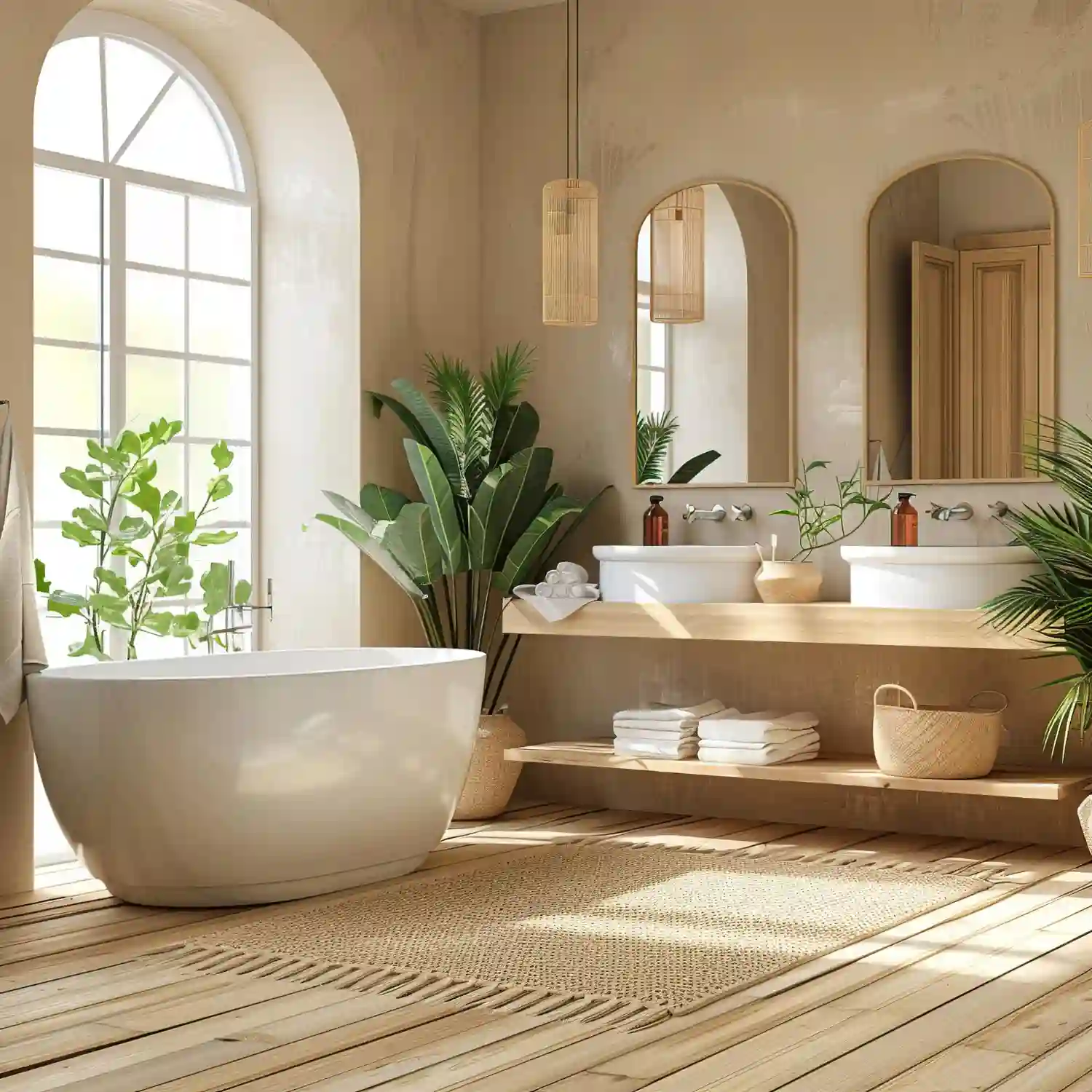
Why does one beige bathroom feel like a warm hotel spa, while another feels flat and a little boring? The color is rarely the problem. Designers have spent the last year moving away from cool gray toward warmer beige, greige, and taupe, a shift Homes & Gardens describes as the year’s new, more welcoming neutrals. But the shade alone will not save a room.
Looking for more ideas? Explore our full guide to Bathroom Color Ideas.
Warm neutral bathroom ideas work best when you layer four things: a warm base color, natural texture, warm metal, and soft 2700K light. Beige, greige, taupe, cream, and sand read cozy instead of cold once you stack tone on tone and add wood, stone, and brass. Skip the layering, and the same neutrals fall flat. Start with the base, then build up.
If you have ever painted a bathroom a soft, warm shade and still felt underwhelmed, you are not alone. Flat is the number-one complaint about neutral rooms.
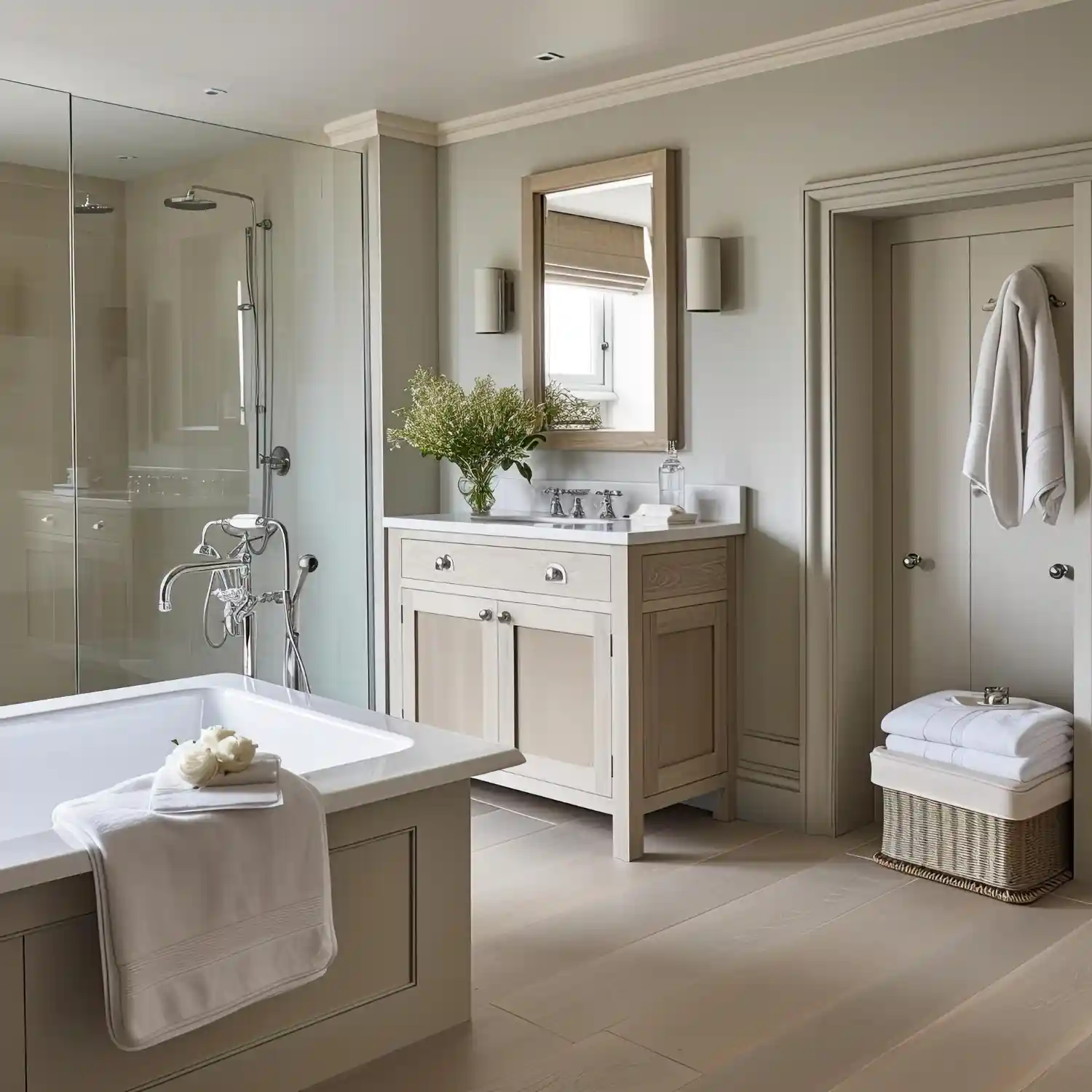
Editorial field note: A cream bathroom with cool chrome fixtures and one bright white bulb often looks clinical, almost like a dentist’s office. Swap the chrome for aged brass, drop in a warm 2700K bulb, and add a jute bath mat, and the same room feels calm and expensive before anything structural changes.
This guide breaks the look into 15 ideas across three simple layers: the base, the texture, and the finishing details. For more calm, cozy spaces across the home, browse our home decor inspiration. You will see where to start on a small budget. You will also learn what quietly makes a room feel warm instead of cold. When your palette is set, you can explore more bathroom design ideas for the rest of the room. Bookmark this guide for quick reference.
| Quick Takeaways | |
|---|---|
| Base | Warm white, greige, and warm stone tile beat cool gray. |
| Texture | Layer tone-on-tone plus zellige, fluted wood, and natural fiber. |
| Metal | Aged brass or bronze warms a room faster than any paint. |
| Light | Warm 2700K bulbs make cream, wood, and brass glow. |
| Accent | Add one earthy hit, like terracotta or clay, for depth. |
Your Warm Neutral Bathroom Checklist
The best warm neutral bathroom ideas all share one habit: they layer. Run through this quick checklist before you shop, and see our minimalist bathroom decor ideas if you want the warm look kept simple and pared back.
- Choose a warm white or greige wall color with a beige or taupe undertone, never a blue-gray.
- Add at least three warm shades, like cream, oatmeal, and taupe, across walls, tile, and towels.
- Swap cold chrome for aged brass or bronze on the faucet, towel bar, and pulls.
- Put warm 2700K bulbs in every fixture and add a dimmer where you can.
- Layer one natural fiber, such as jute, rattan, or linen, plus one warm wood piece.
- Add living or faux greenery and exactly one deeper earthy accent for depth.
Want the bigger picture first? Browse our full collection of room-by-room decorating ideas for the whole home.
KEY TAKEAWAY: A warm neutral bathroom needs four layers working together, a warm base color, texture, warm metal, and warm light, to feel cozy instead of boring.
Build the Warm-Neutral Base
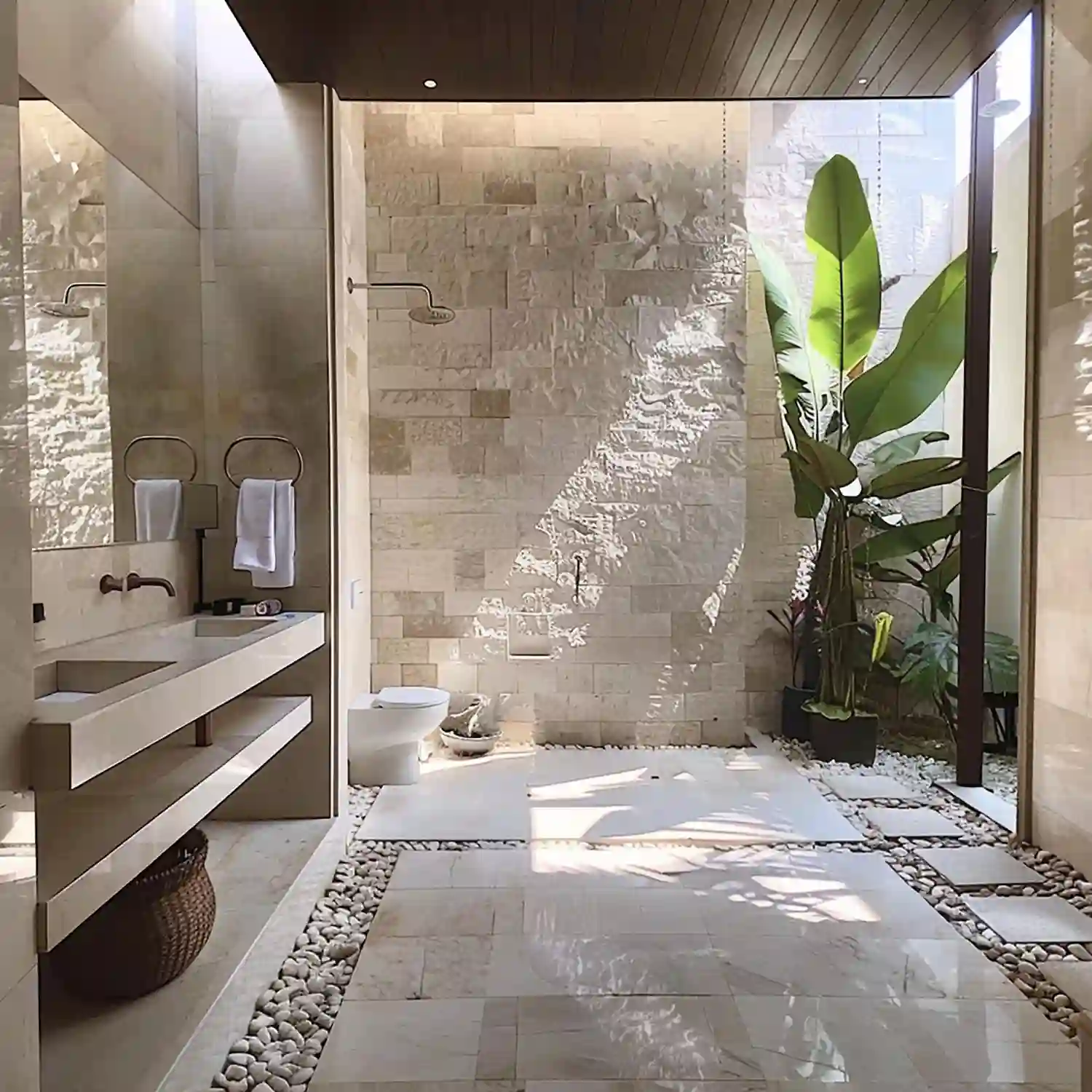
Every warm neutral bathroom starts with the big surfaces: walls, tile, vanity, counter, and floor. Get these warm, not gray, and the rest falls into place. Warm neutrals carry a hint of yellow, red, or brown underneath. Cool neutrals lean blue or gray and can feel chilly under bathroom light. Warm neutrals now lead the bathroom design trends for 2026, and these first five ideas build a base you can layer on top of.
1. Start With Warm White or Greige on the Walls
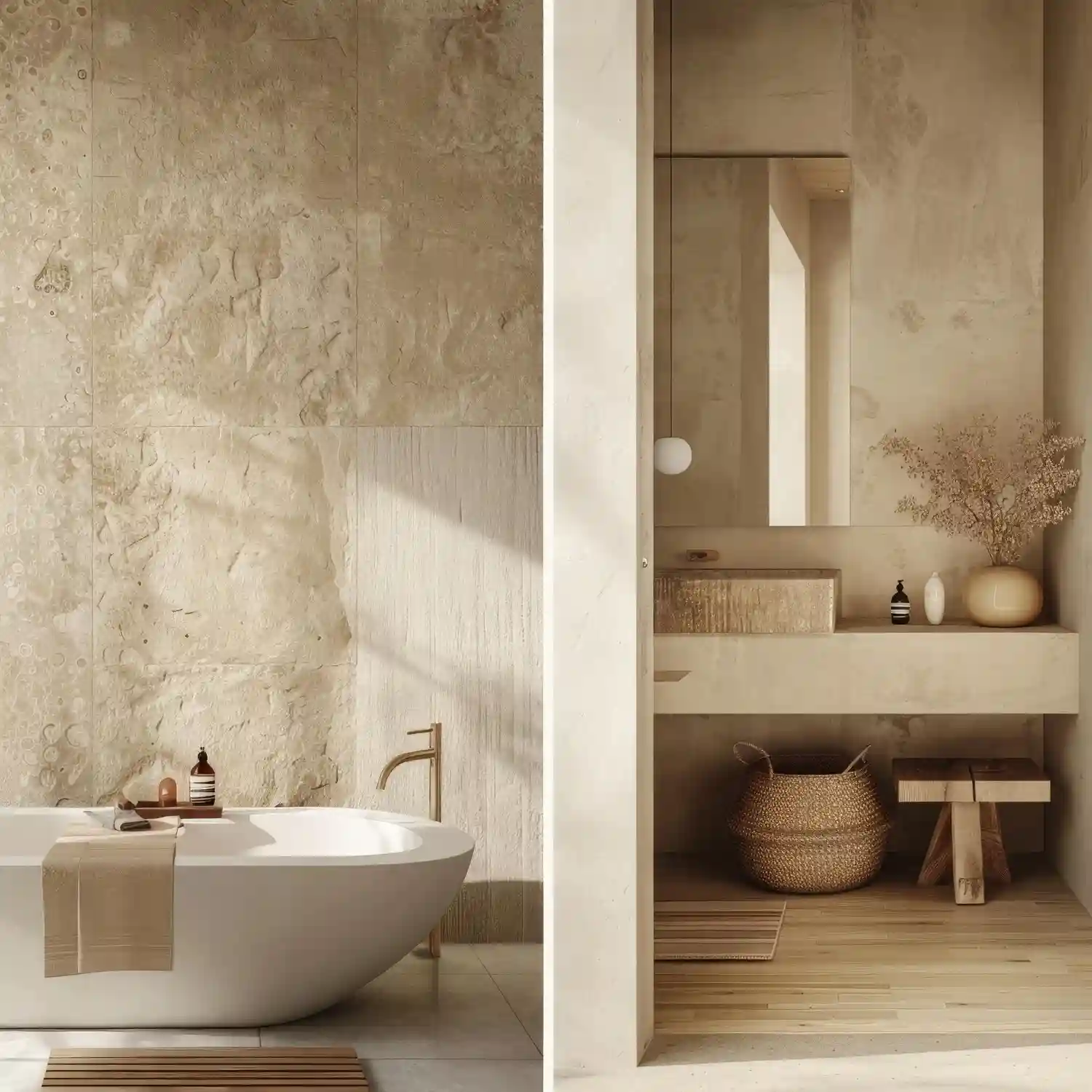
Warm white and greige are the easiest warm base for a bathroom. Both carry a soft beige or taupe undertone, so they feel cozy under daylight and bulb light alike. Skip cool grays with a blue base, since they turn flat and cold on a north-facing wall. Test a swatch beside your tile and towels first, because warm neutrals shift a lot with the light. Not sure neutral is enough? A green bathroom is the warm-leaning color many people choose next.
2. Choose a Warm Stone Tile Like Travertine or Limestone
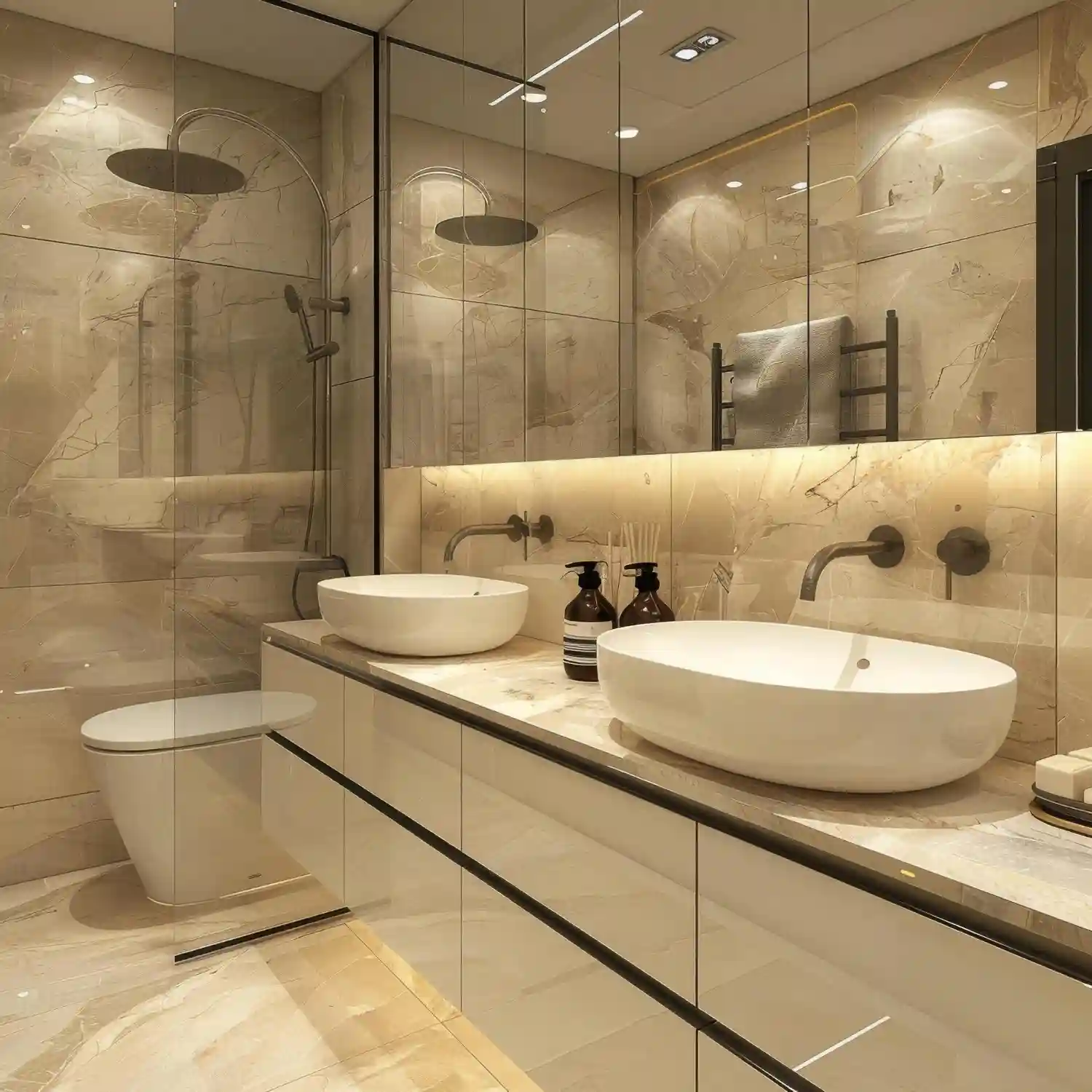
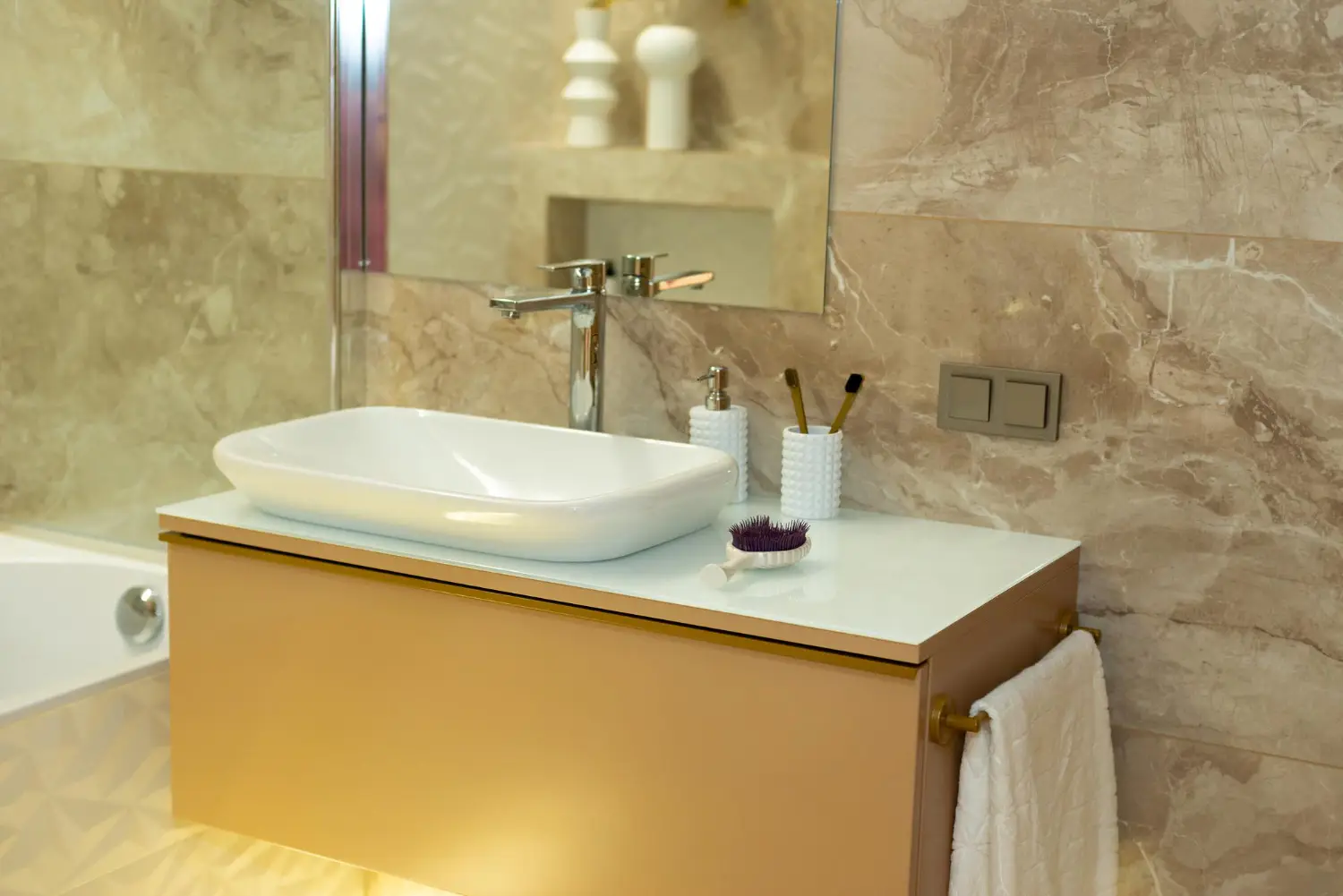
Warm stone tile is the fastest way to add natural warmth. Travertine, limestone, and sand-colored large-format tile all carry creamy, honey, and oatmeal tones that read warm, not gray. Their soft veining adds quiet movement without shouting. A large-format tile also means fewer grout lines, so the surface feels calm and seamless. If you are keeping your existing tile, echo the warmth with a travertine tray, a stone soap dish, or a small marble stool instead.
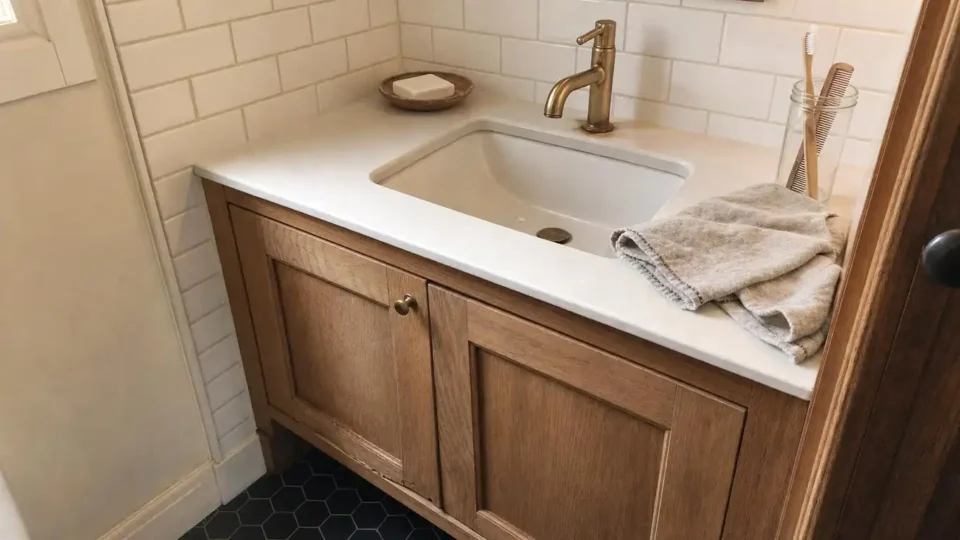
3. Anchor the Room With a Warm Wood Vanity
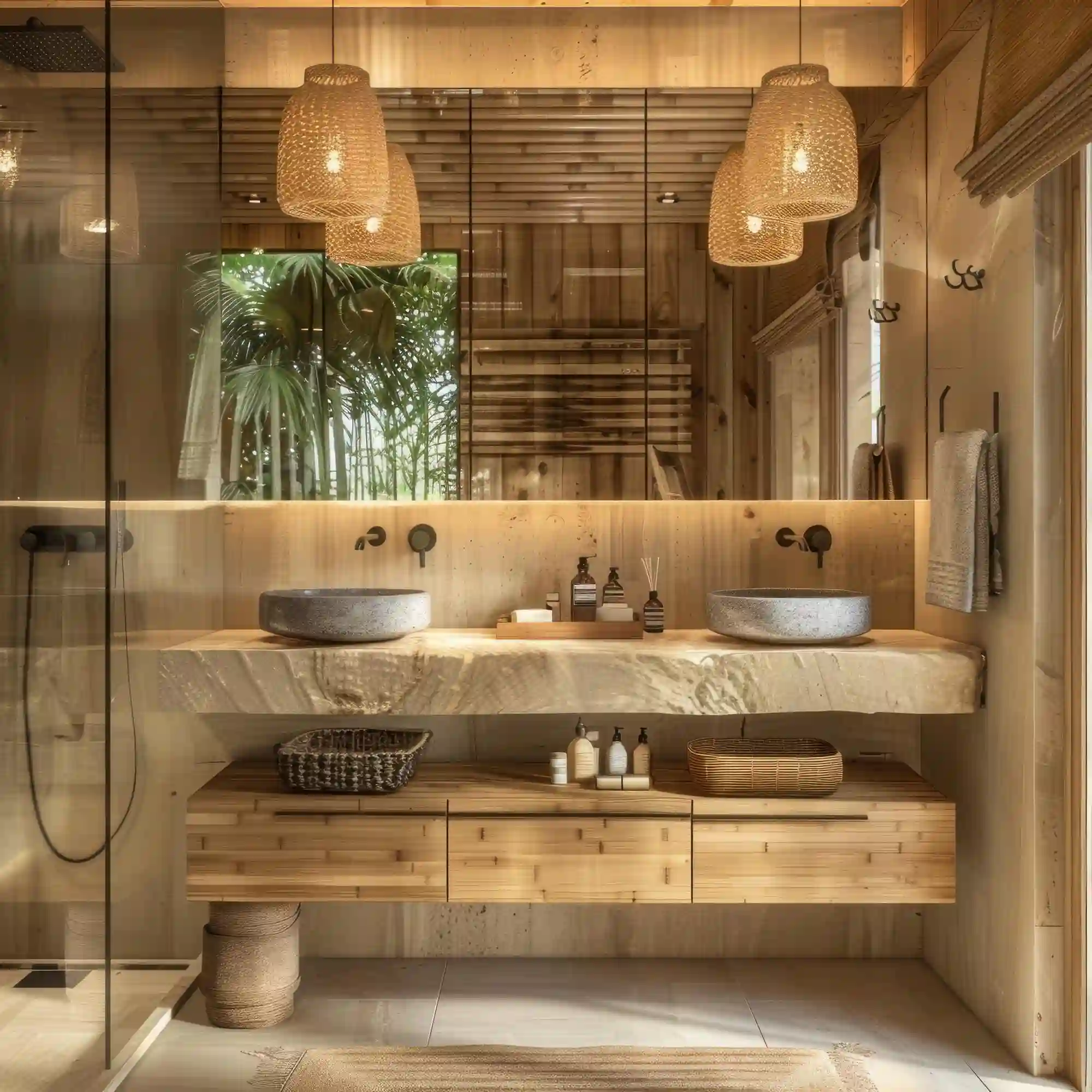
A warm wood bathroom vanity is the anchor piece that pulls the whole palette together. White oak, walnut, and teak bring grain, depth, and a natural glow that painted cabinets rarely match. A wood vanity works because it adds a second warm tone next to your walls, so the room reads layered instead of flat. Choose a honey or caramel stain over an orange one. A wood vanity also sits at the heart of a cozy farmhouse bathroom, so the same piece works across styles.
4. Pick a Creamy, Warm-Veined Countertop
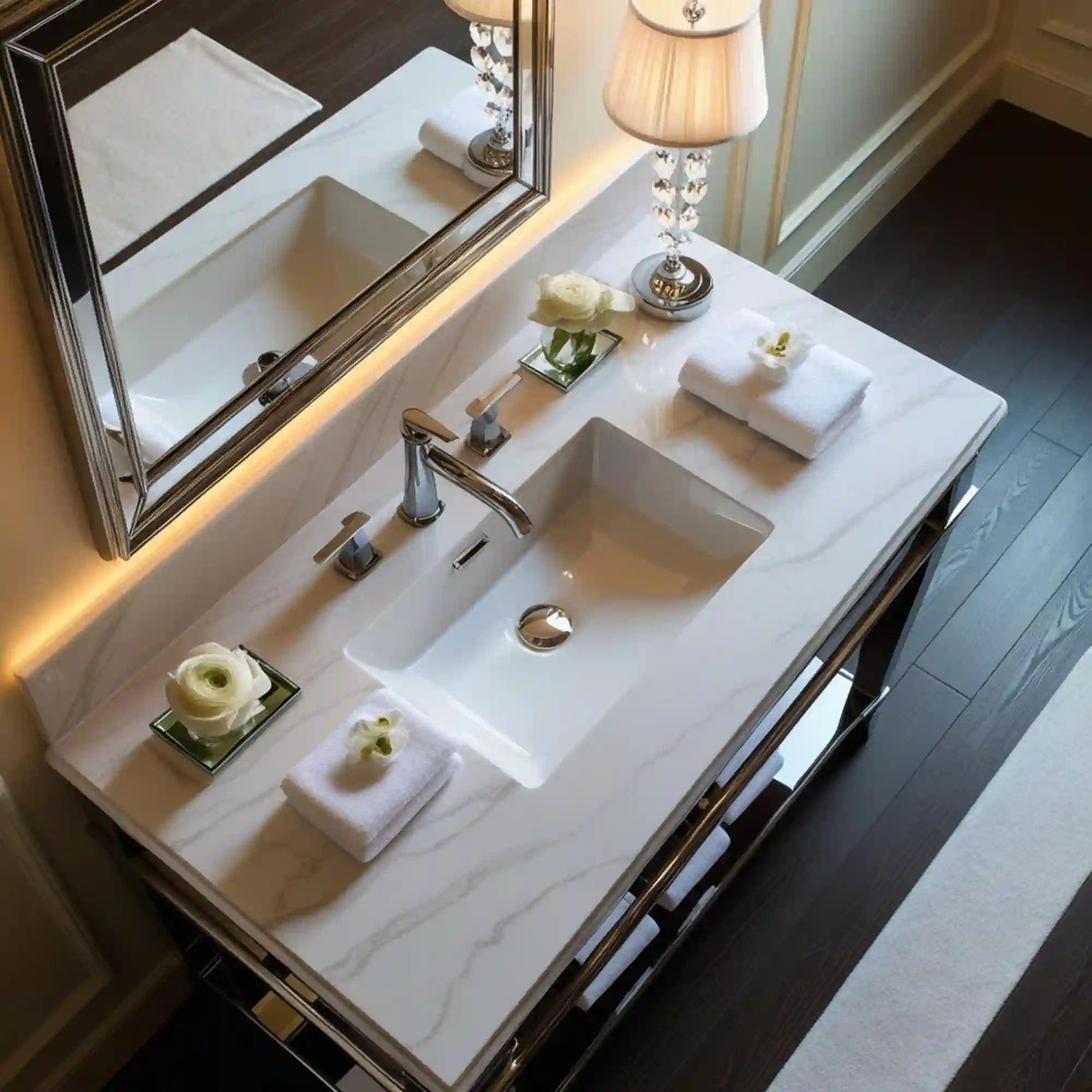
The countertop is a big surface, so keep it warm too. Creamy quartz, honed marble with beige or gold veining, and warm-toned stone all beat cold, blue-gray granite here. A warm counter sits quietly against a wood vanity and keeps the eye moving. Honed and matte finishes feel softer and more spa-like than high-gloss polish. If a full slab is out of budget, a warm stone or wood tray on the counter carries the same tone for a fraction of the cost.
5. Warm Up the Floor and Bath Mat
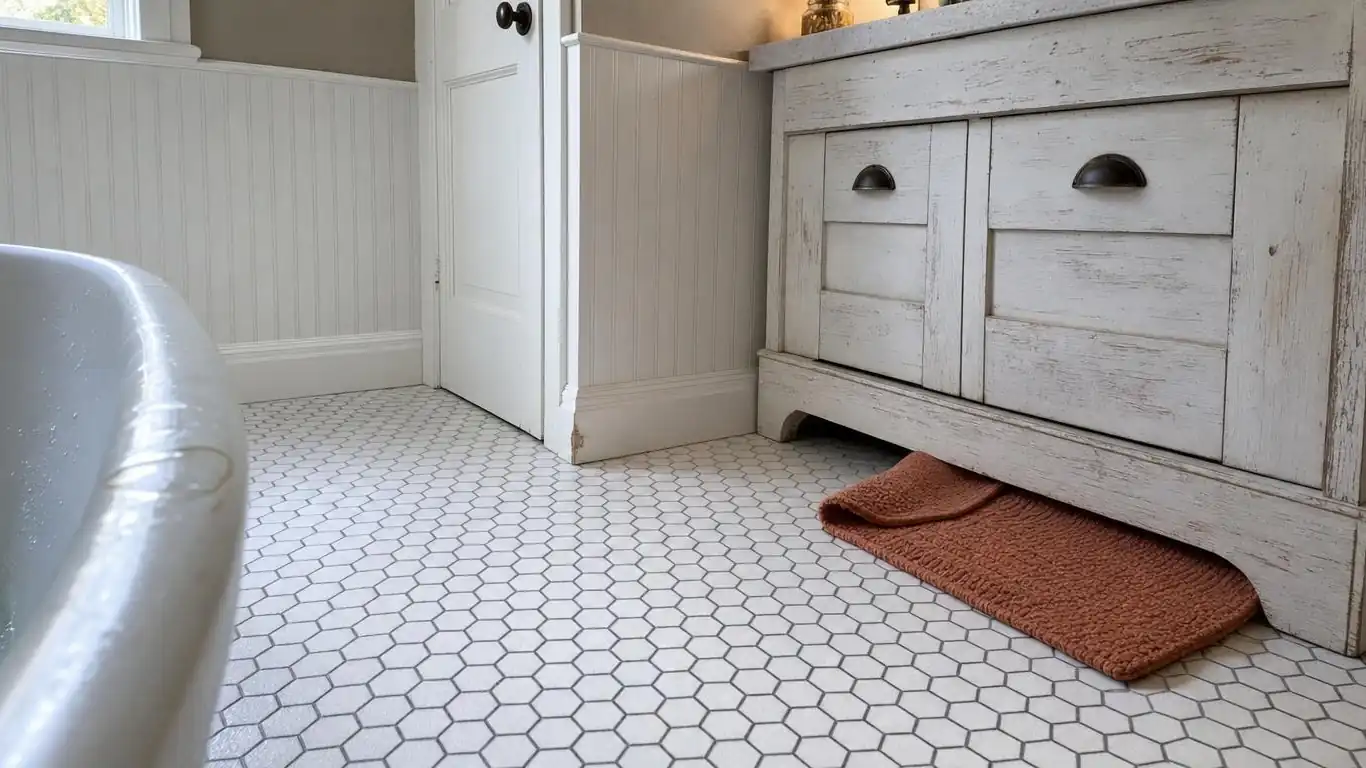
The floor is the last piece of the base. Wood-look porcelain, warm limestone-look tile, or a soft terracotta-toned floor keeps warmth underfoot without the upkeep of real wood. Top it with a chunky jute or cotton bath mat in oatmeal or cream. A natural-fiber mat adds instant texture and softens the cold edge of tile. Layer a small runner by the tub if the room is long. The floor should feel as warm as the walls above it.
How Do You Keep Warm Neutrals From Falling Flat?
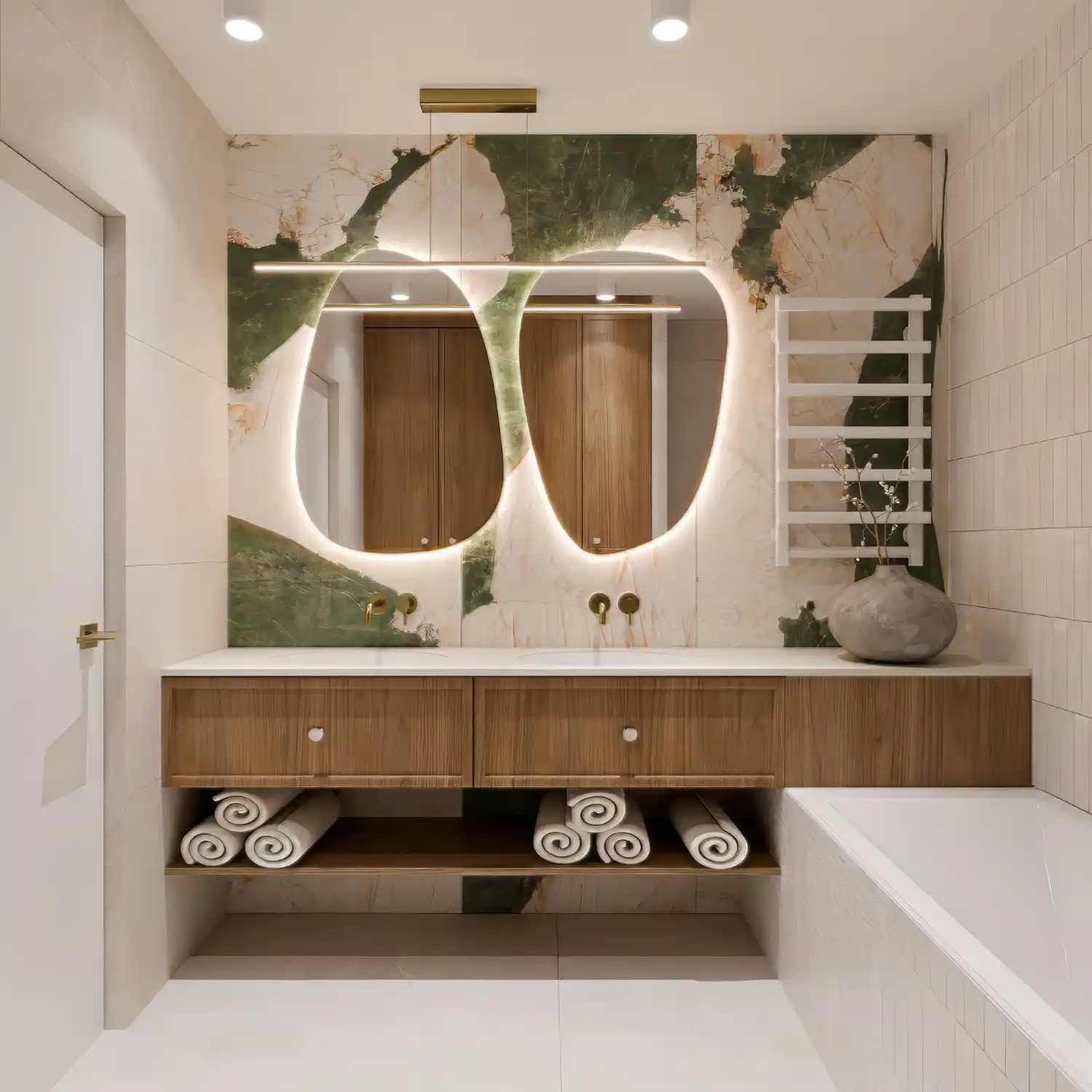
Here is the honest answer: a warm neutral bathroom falls flat when every surface is the same smooth, matte beige. Warmth needs texture to come alive. Light has to catch on something, a ridge, a rough glaze, or a woven basket, or the room looks like a blank wall. These five ideas add depth with tone-on-tone layering and natural materials, so your neutrals feel rich and cozy instead of one-note. Texture is what separates a spa from a plain box.
6. Go Tone-on-Tone With Three Warm Shades
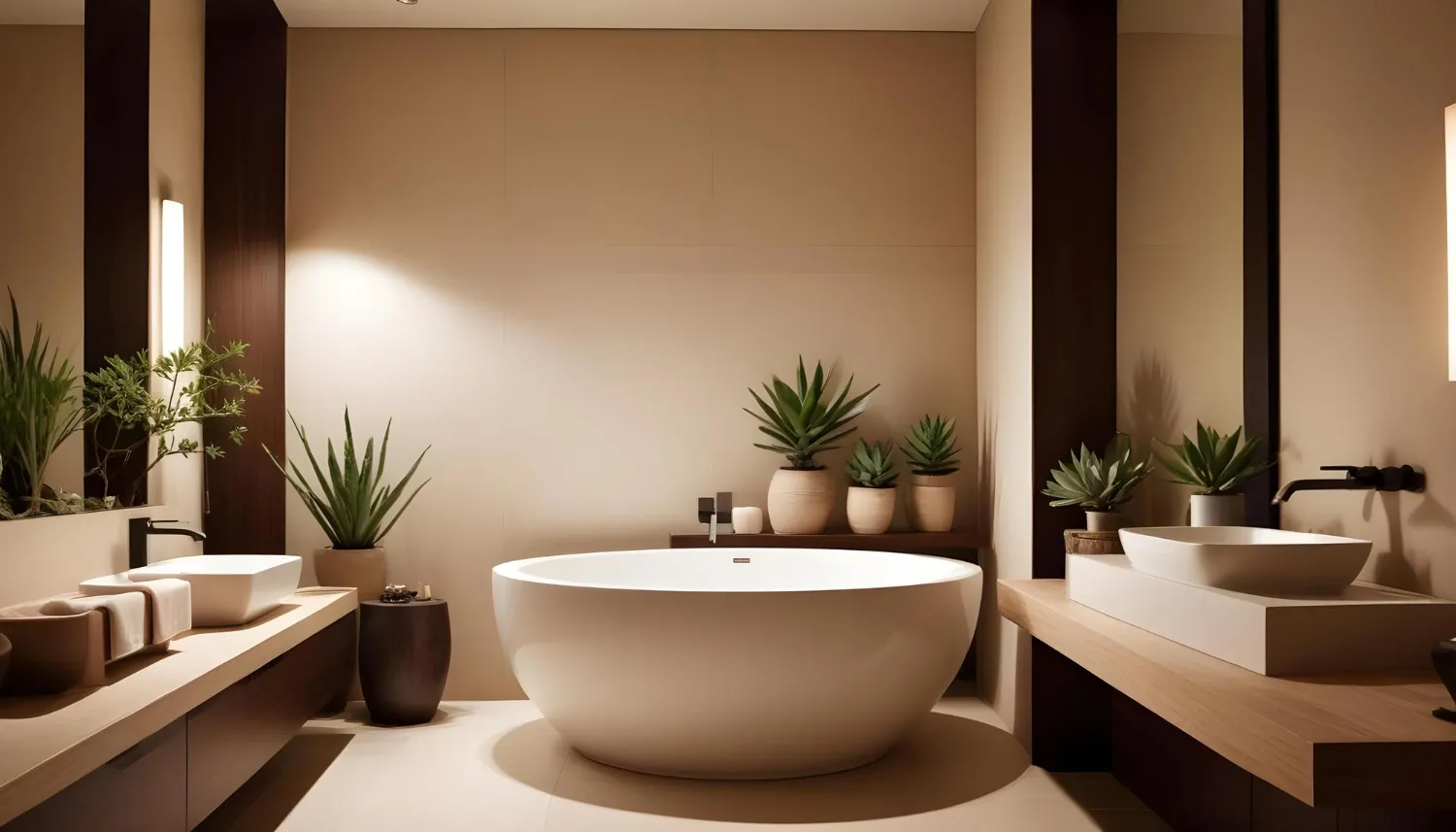
Tone-on-tone layering is the core move here. Pick three or four shades from the same family, like cream, oatmeal, taupe, and mushroom, and repeat them across walls, tile, towels, and stone. The small gaps between shades create depth without adding a single new color. This works because the eye reads layers, not flatness. Keep the shades close, not high-contrast. One family of warm neutrals, stacked in layers, always looks more expensive than a single flat beige.
7. Add Handmade or Zellige Tile for Movement
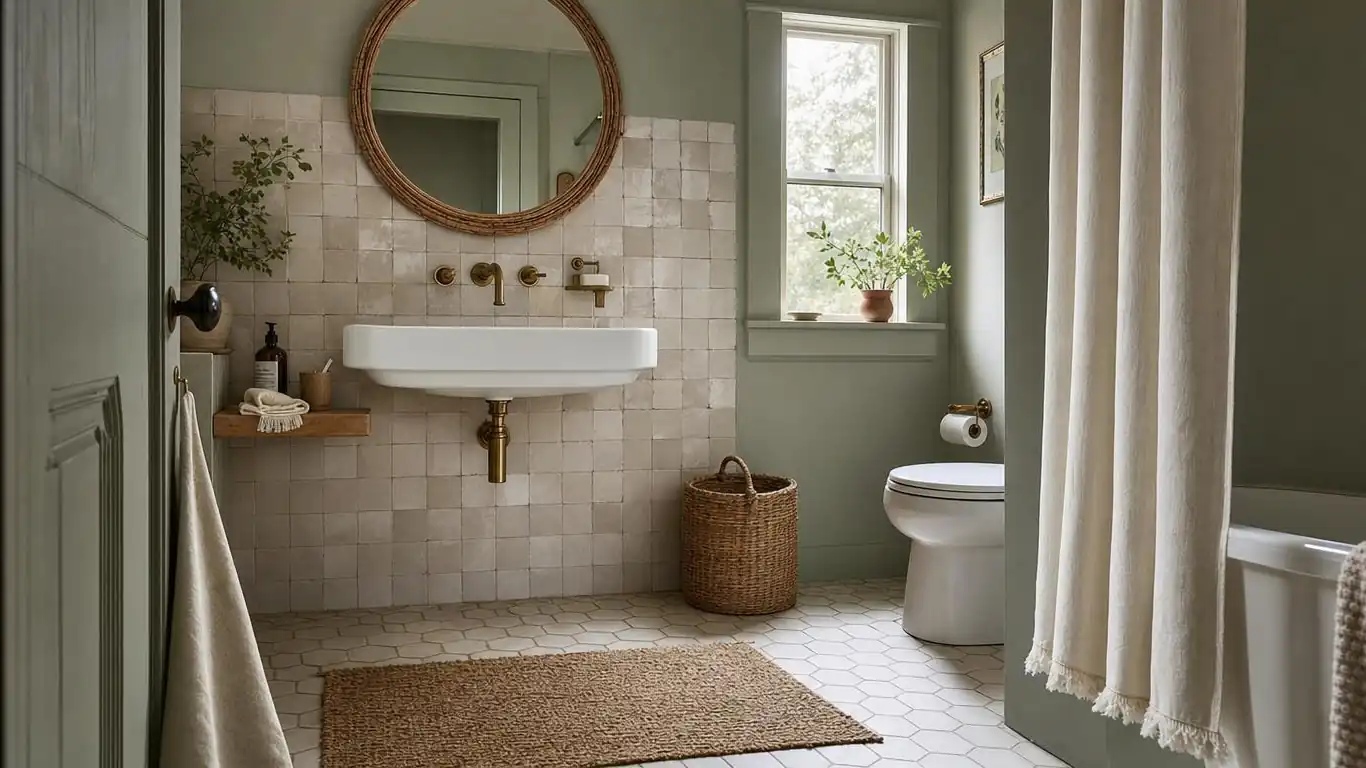
Zellige and handmade tile are the anti-flat secret weapon. Each piece is slightly uneven, so the glaze catches light differently across the wall. That built-in variation gives a plain cream or clay wall real life. Use it on a shower wall, a vanity backsplash, or a niche. Even a small run of glossy handmade tile against matte walls adds the shine and shadow that flat beige is missing. For placement ideas, see our bathroom backsplash ideas.
8. Bring In Fluted and Reeded Surfaces
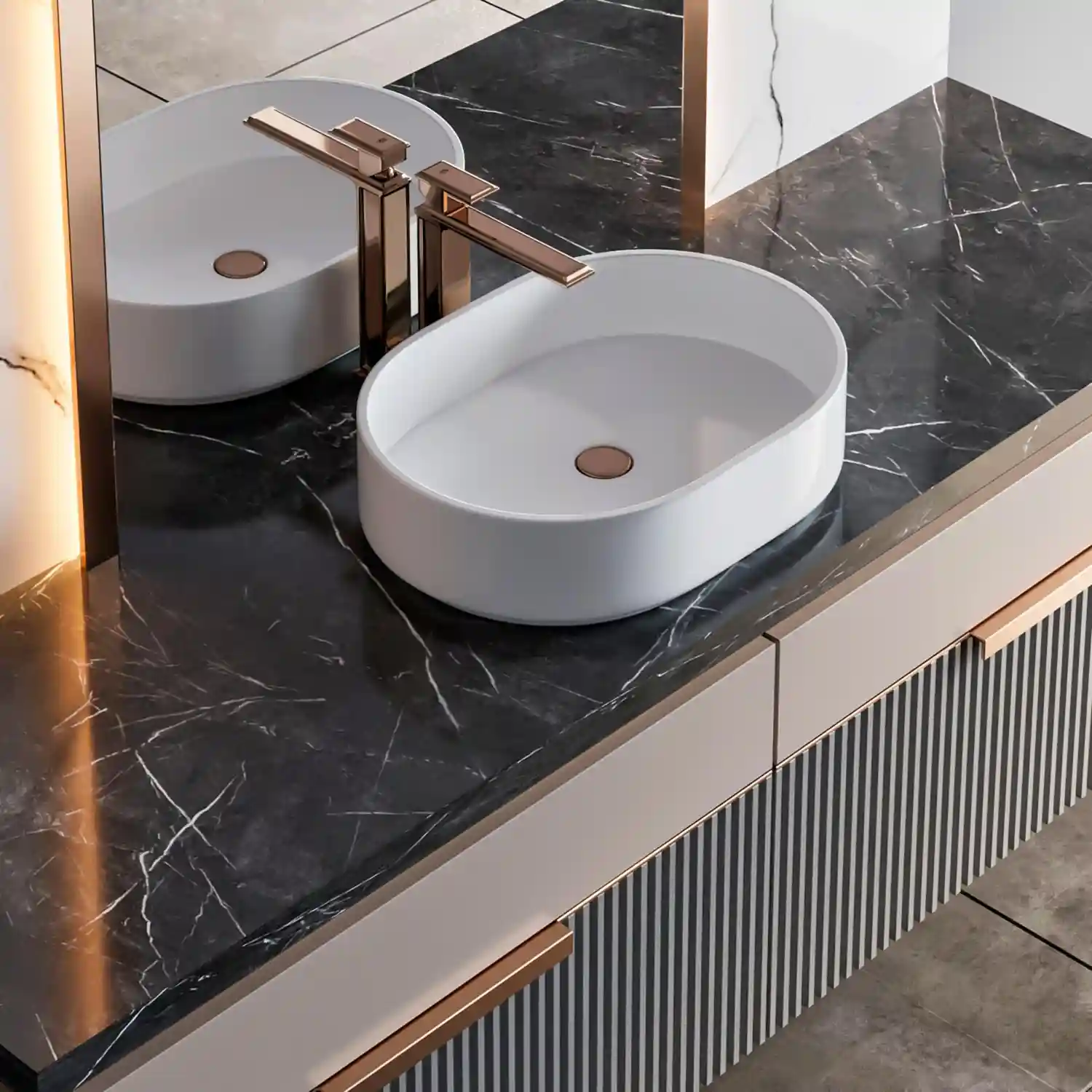
Fluted and reeded surfaces add shadow lines that make a neutral room feel custom. Look for a fluted wood vanity, a reeded cabinet door, or slatted wall paneling in warm oak. The narrow grooves catch light and drop soft shadows, so the surface never reads flat. This detail feels current without chasing a trend that will date fast. Pair one fluted piece with smooth surfaces around it, so the texture stands out instead of competing for attention.
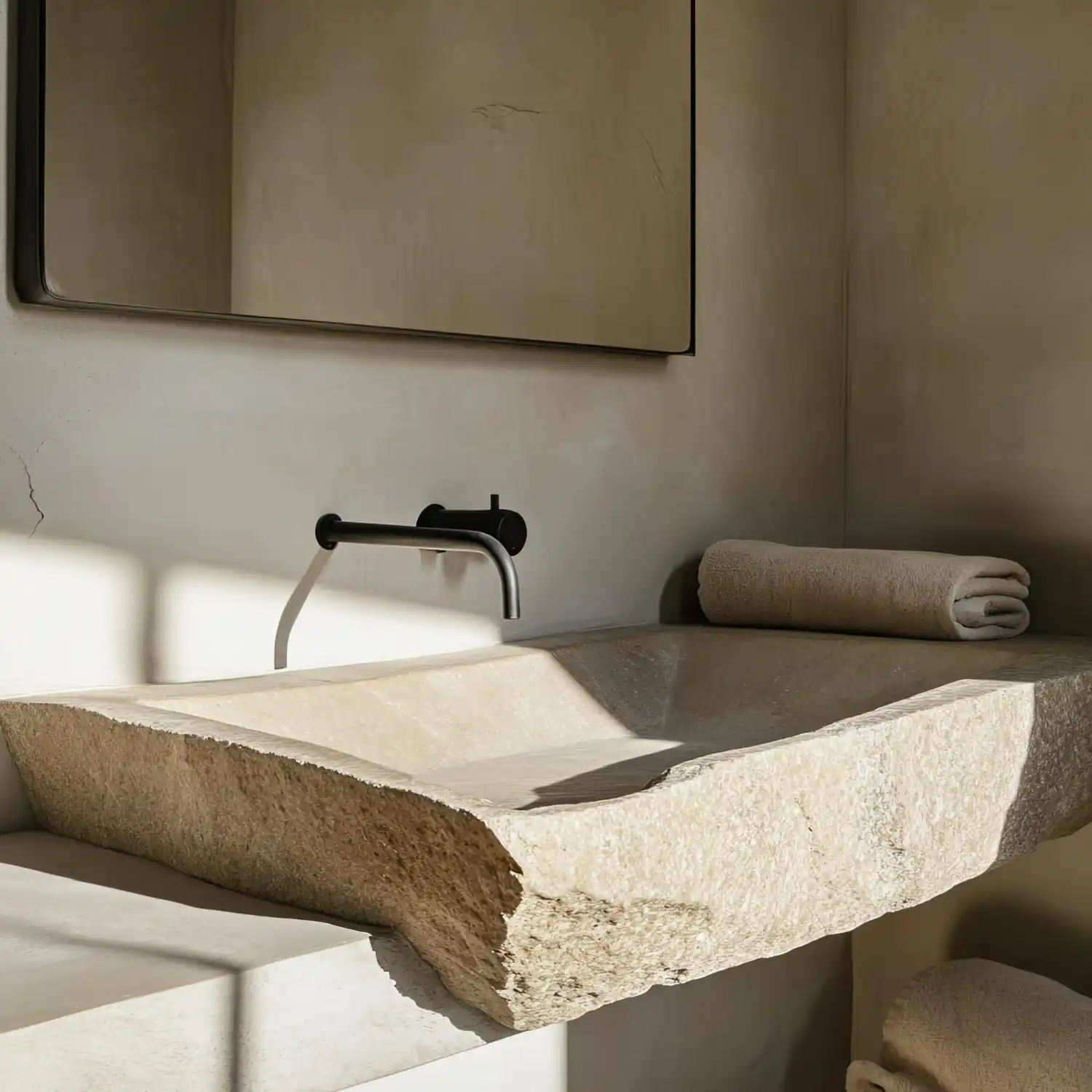
9. Try Limewash or Plaster Walls for Depth
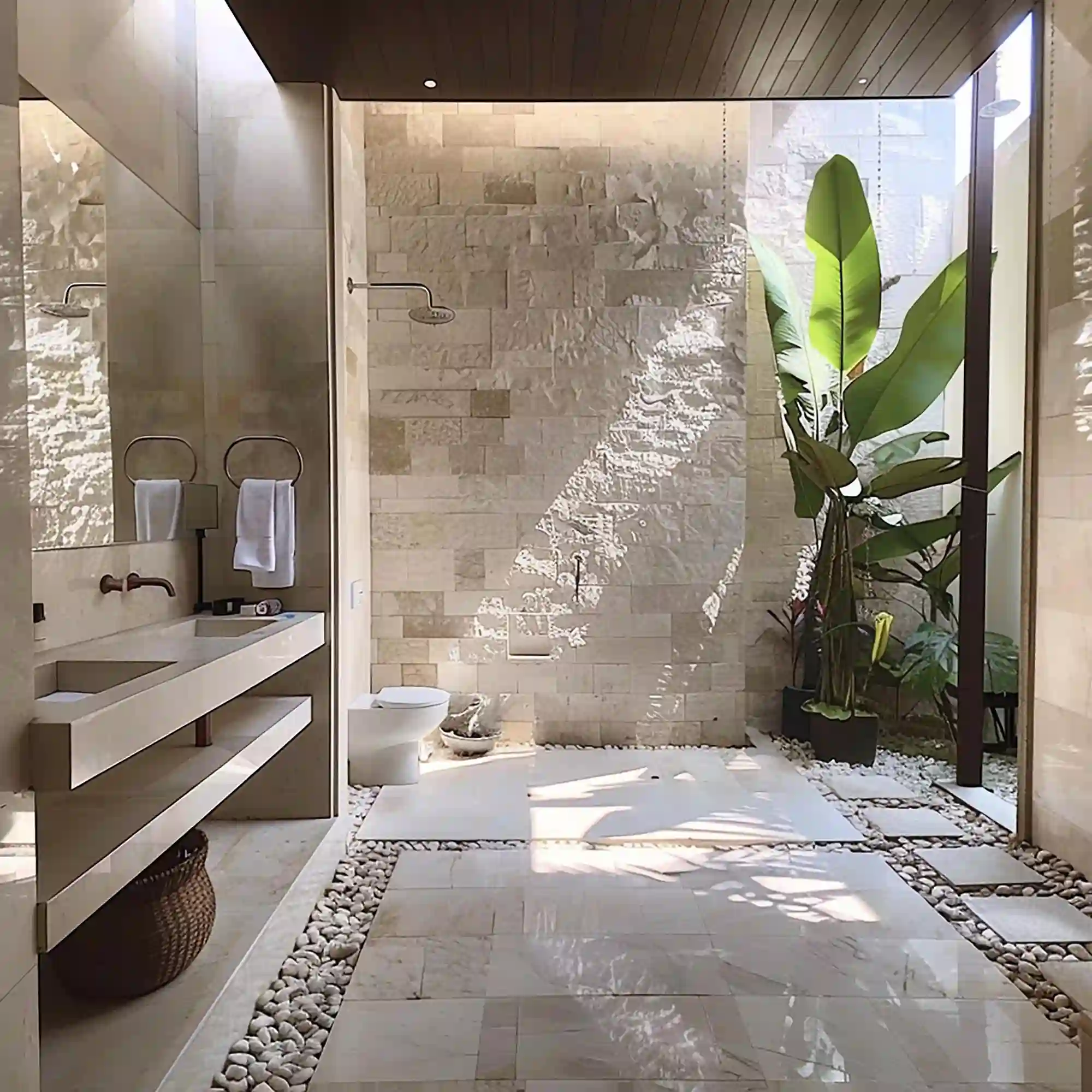
Limewash and plaster give warm neutrals a soft, cloudy depth that flat paint cannot. The finish shifts slightly across the wall, so cream and greige look alive rather than uniform. Material Note: limewash is breathable and handles bathroom humidity well, but Bauwerk Colour advises keeping it out of the shower and the splash zone right by the tub, per its limewash bathroom guidance. Rental Note: renters can get a similar cloudy look with removable limewash-effect wallpaper instead.
10. Layer Natural Fibers Like Rattan, Jute, and Linen
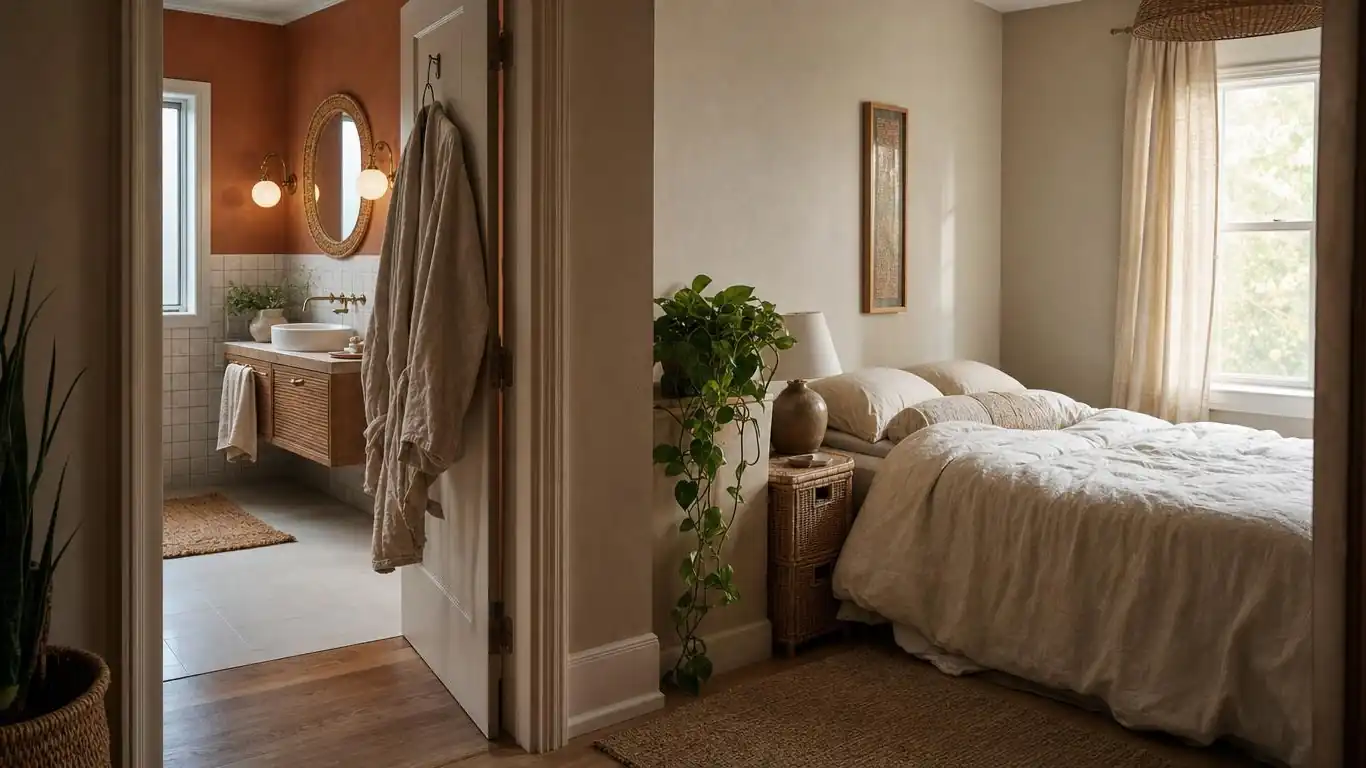
Natural fibers are the cozy layer most bathrooms miss. Add a rattan stool, a jute basket for towels, a woven pendant shade, or a linen shower curtain in oatmeal. Each material brings a rough, handmade texture that plays off smooth tile and stone. Linen also softens hard bathroom acoustics, so the room feels calmer. If you love this layered, natural look, our boho bathroom inspiration leans into the same rattan and linen textures.
Warm It Up With the Finishing Details
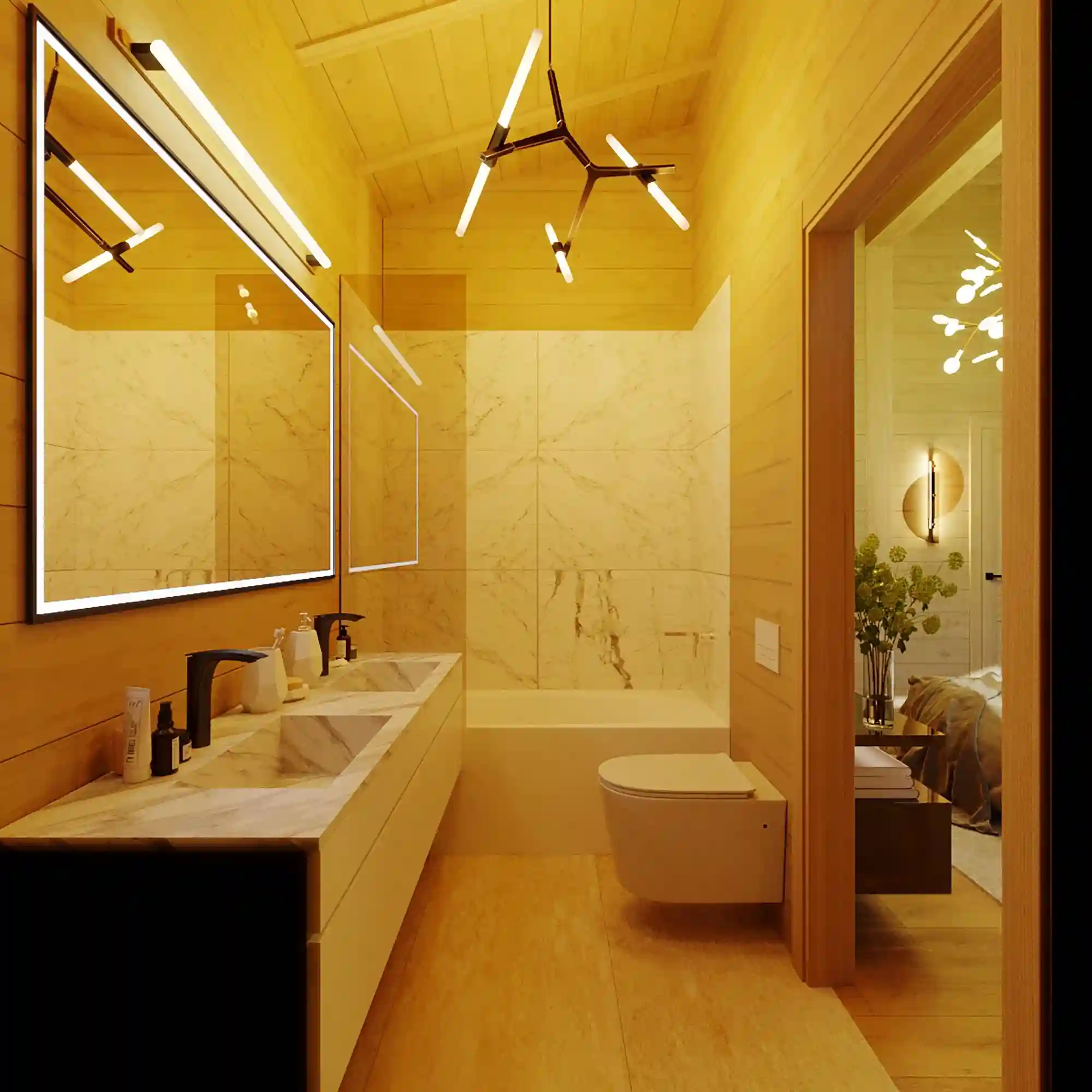
The base and texture do the heavy lifting. The finishing details are what make people say a room feels warm without knowing why. Metal, light, wood accessories, greenery, and textiles are all quick to change, even in a rental. This is also where the cheapest, highest-impact swaps live. These last five ideas warm the room in an afternoon, and they are the best place to start if you only change a few things.
11. Switch Chrome for Warm Brass or Bronze
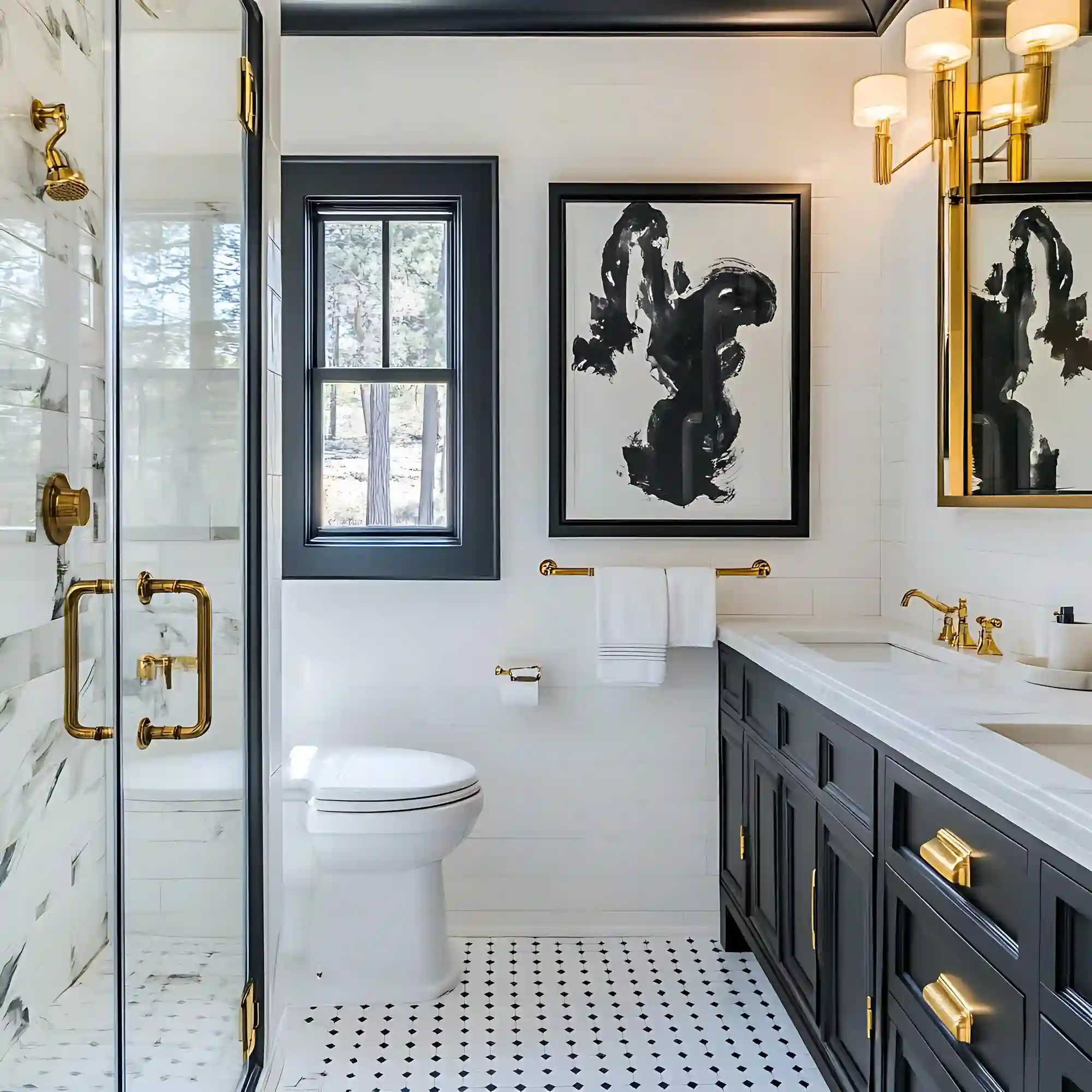
Warm metal is the single biggest warmth lever in a bathroom. Swap cold chrome or polished nickel for aged brass, unlacquered brass, or oil-rubbed bronze on your faucet, towel bar, and cabinet pulls. Warm metal reflects a golden tone instead of a blue one, so the whole room warms up at once. Material Note: unlacquered brass is a living finish that darkens into honey and amber tones over months, and a quick weekly wipe keeps the change even. The patina is a feature, not a flaw.
DESIGNER TIP: Mix no more than two warm metals, say aged brass and oil-rubbed bronze, and repeat each at least twice around the room so the pairing looks planned, not accidental.
12. Use Warm 2700K Lighting Everywhere
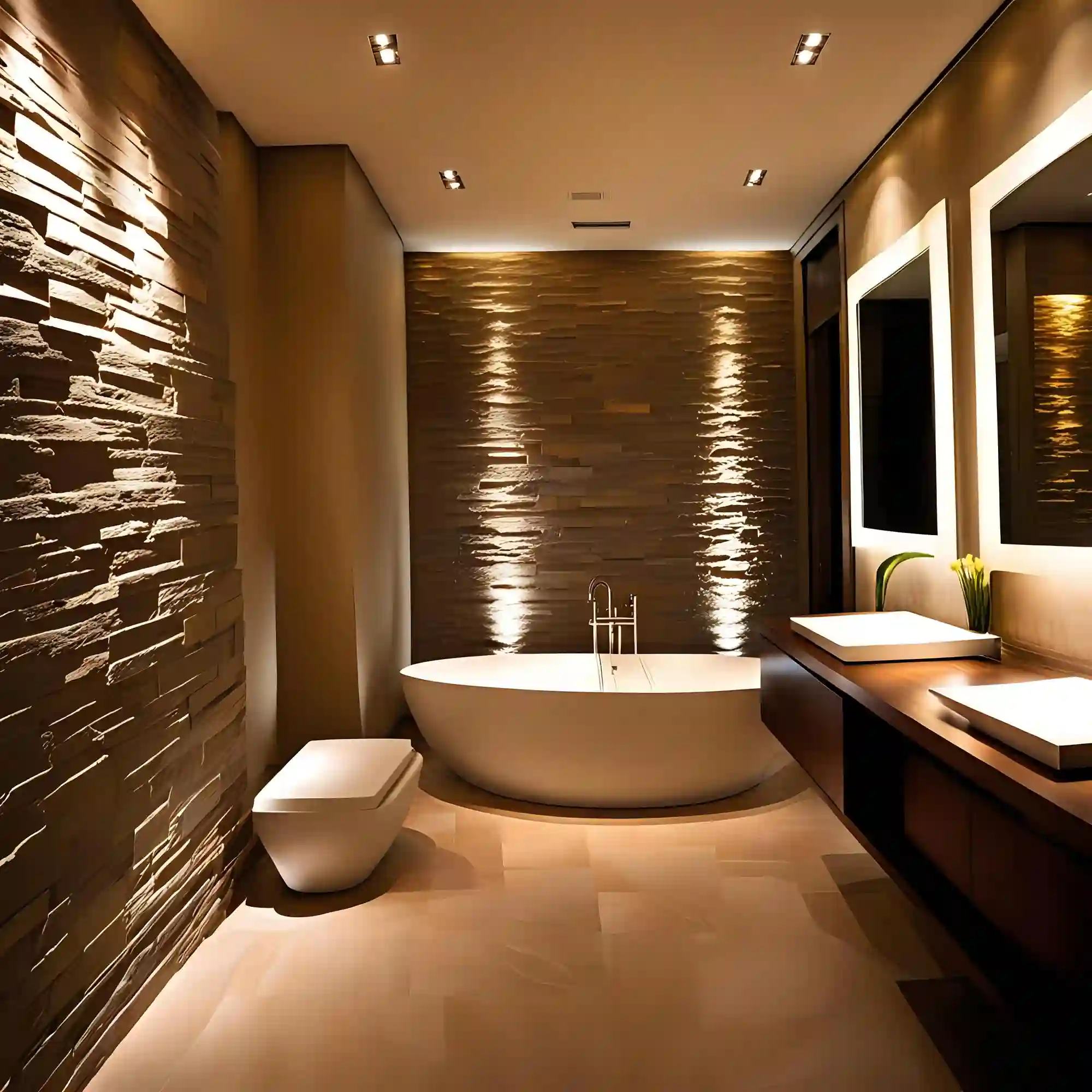
Light color is the cheapest fix on this list. Warm bulbs rated 2700K throw a soft, golden glow that makes cream, wood, and brass look their best. Source Note: Feit Electric places 2700K in the warm white range, ideal for a cozy, spa-like bathroom with warm wood or beige tile, per its color temperature guide. Cool 4000K to 5000K bulbs undo every warm layer, so start here. For new wiring or hardwired sconces, bring in a licensed electrician; everything else is a simple bulb swap.
DESIGNER TIP: Put the warm bulbs on a dimmer and pull the vanity light to about 40% at night, but keep one CRI 90+ bulb by the mirror so makeup and shaving still read true.
13. Style With Wood and Rattan Accessories
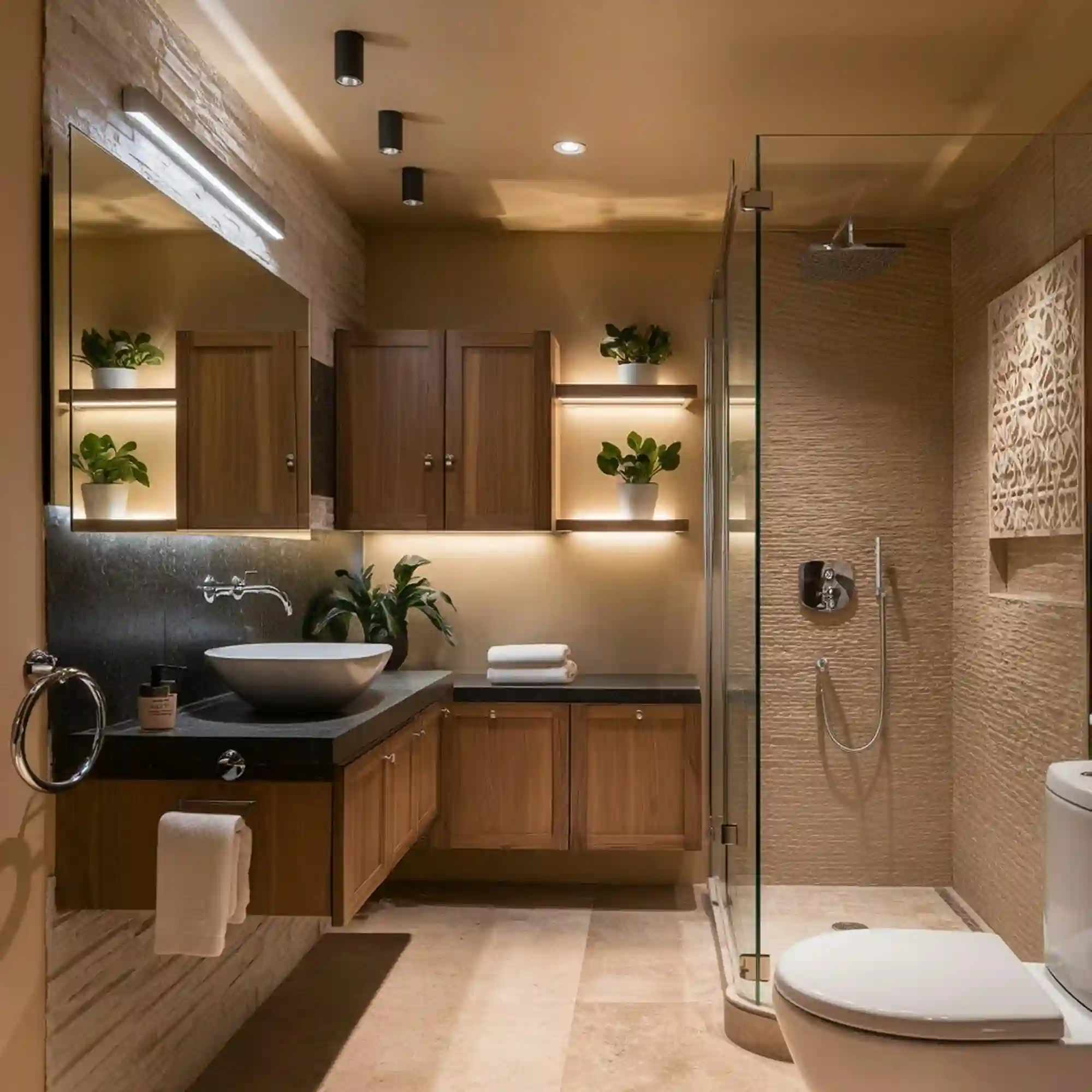
Small wood and rattan accessories spread warmth around the room. Think a teak bath tray, a wood-framed mirror, a rattan basket, or a small stool beside the tub. These pieces repeat the wood tone from your vanity, so the warmth feels planned rather than random. Odd-numbered groupings of three look more natural than pairs. Keep the counter mostly clear and let two or three warm accessories do the work. Repeating one warm material is what ties the room together.
14. Add Living Greenery for Instant Warmth
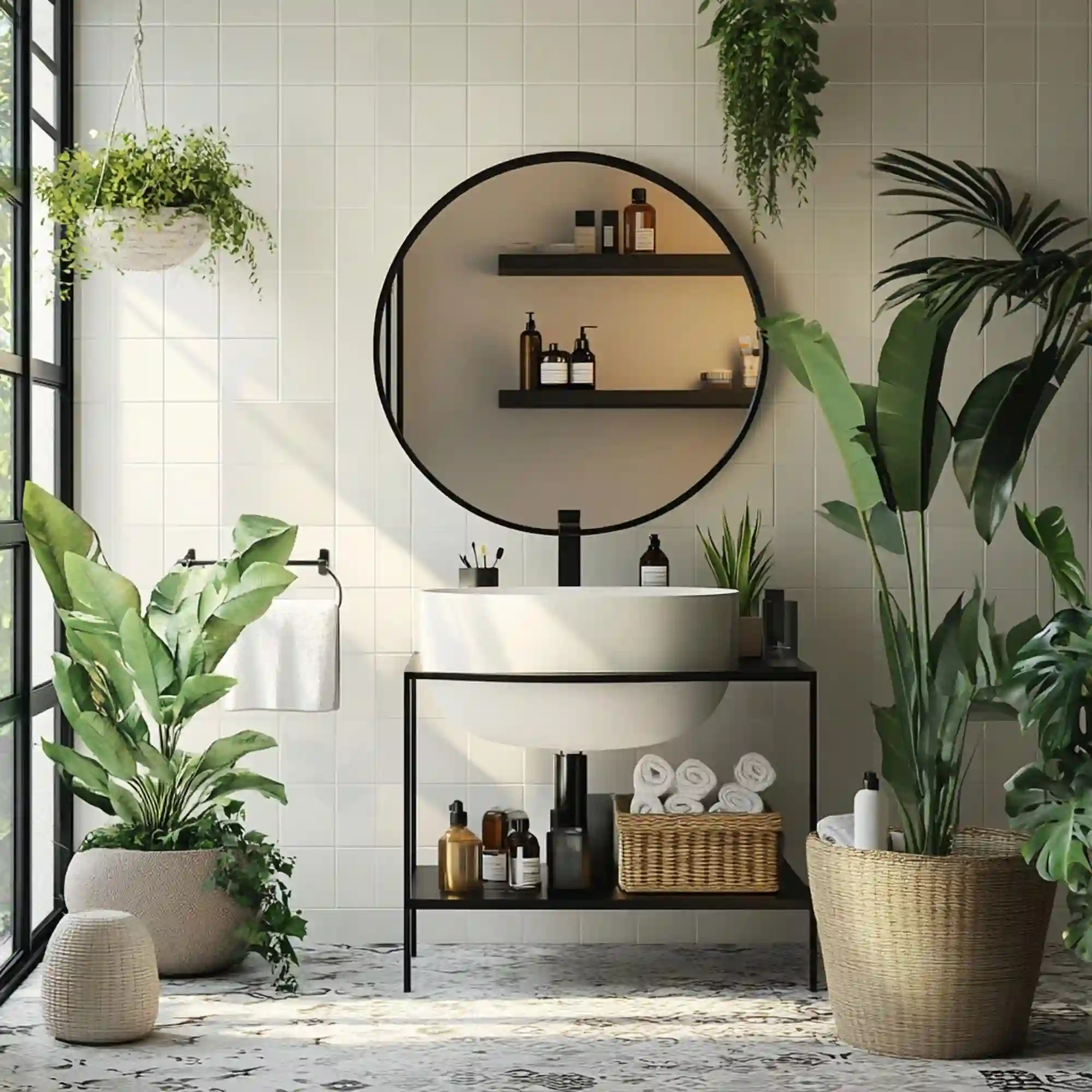
Greenery is the fastest way to soften a hard, tiled room. A eucalyptus bunch, an olive branch in a stoneware vase, or a trailing pothos on a shelf adds living warmth and a little color. Plants break up straight lines and make the space feel cared for. Choose humidity-loving, low-light plants like pothos, ferns, or snake plants for a bathroom with a small window. No window at all? A good faux eucalyptus stem gives the same soft, warm shape.
15. Finish With Cream Textiles and One Earthy Accent
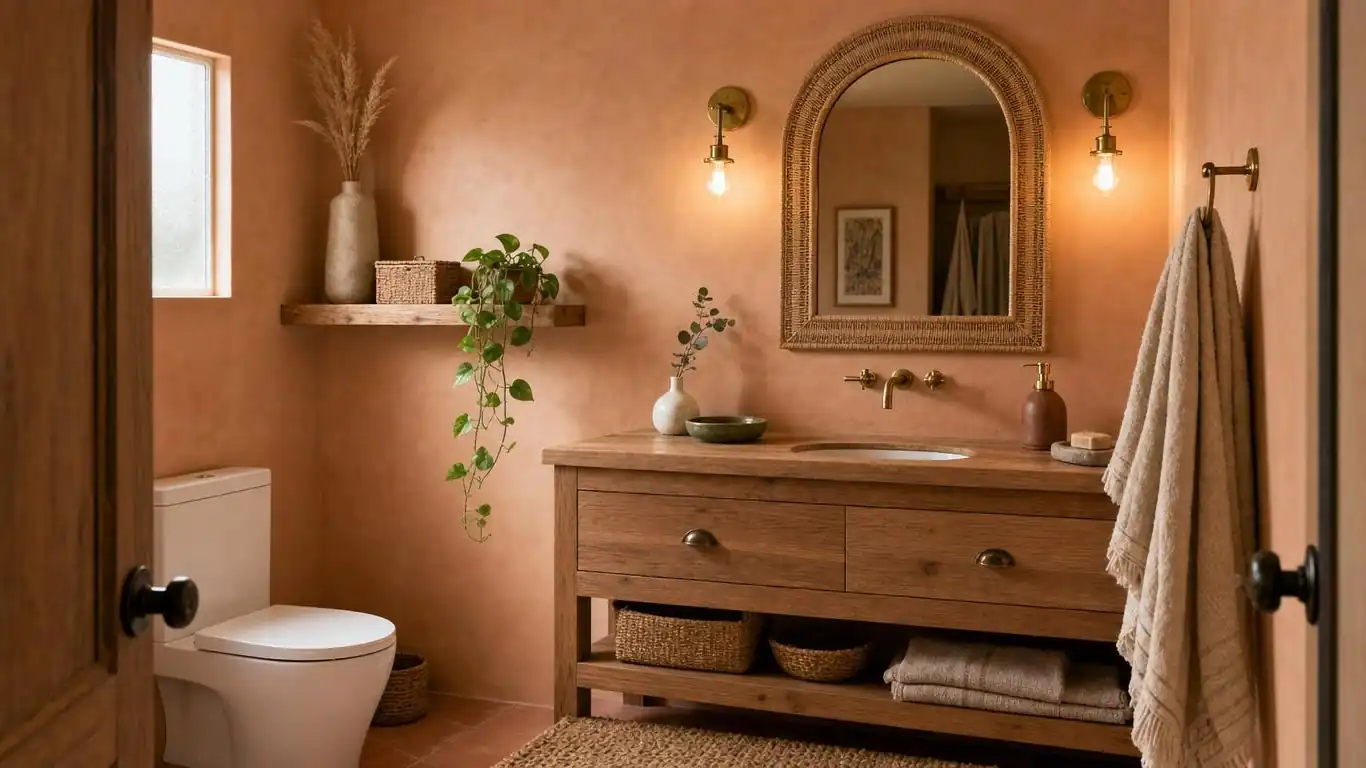
Finish with soft textiles and one deeper accent. Layer cream, oatmeal, and warm-white towels, a waffle robe, and a linen curtain for a quiet, cozy base. Then add exactly one earthy accent, a terracotta pot, a mushroom-toned towel, or a clay vase, to give the neutrals depth. That single warm hit keeps the room from feeling washed out. Swap in fresh cream and oatmeal towels each season with our spring bathroom decor ideas if you like to change things.
This same warm neutral palette carries beautifully into the rest of the house. Our organic modern living room ideas use the same tone, texture, and natural-material mix for a calm, connected look.
What Makes a Warm Neutral Bathroom Feel Flat?
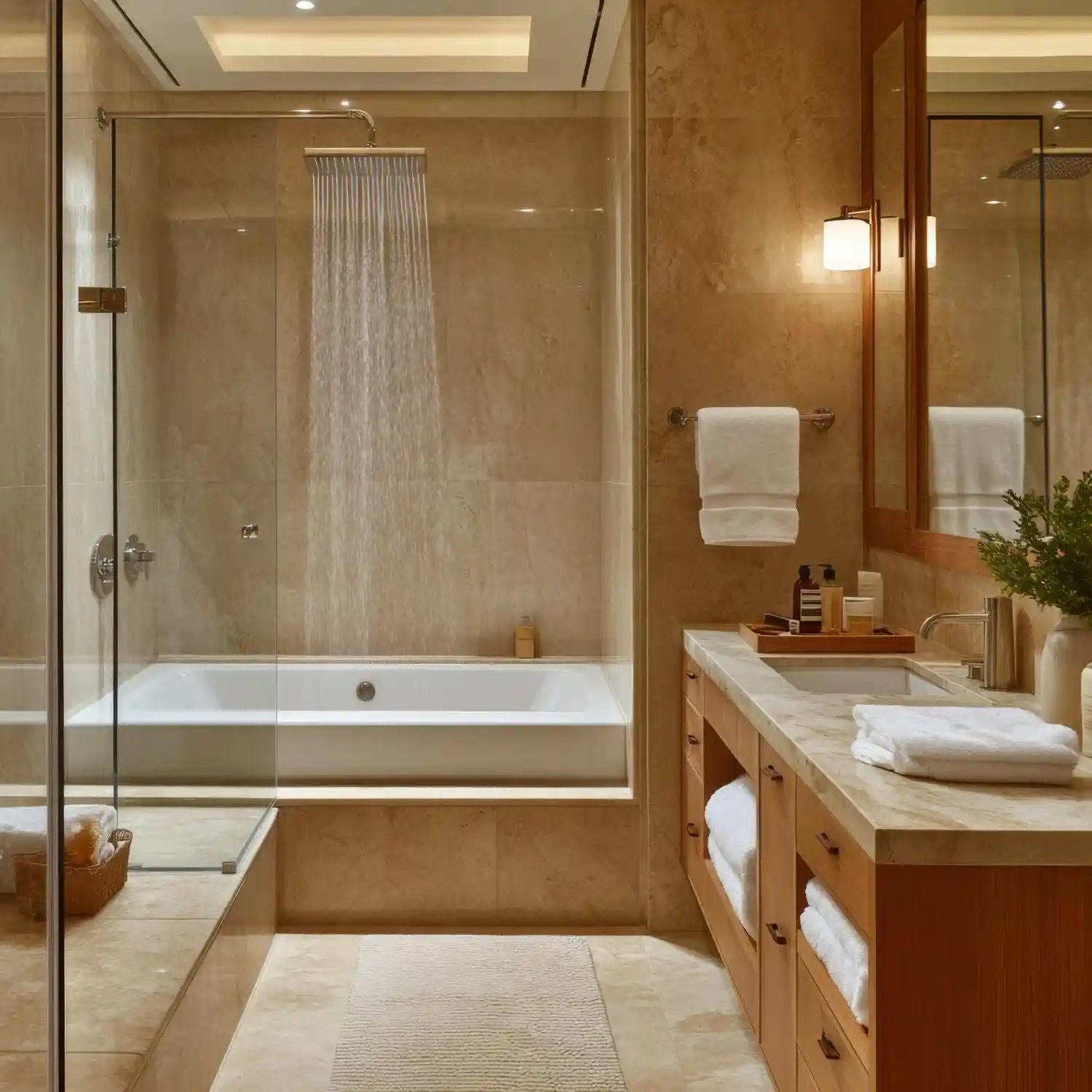
The biggest mistake is using cool gray where you meant warm. A blue-gray tile or paint reads cold under bathroom light and cancels the cozy look, so check undertones against a warm white sheet of paper first.
Matching every surface to one flat beige is the second trap. Without three or four close shades and some texture, the room looks like a blank wall, so layer tone on tone instead.
Keeping cold chrome fixtures undoes the rest. One set of shiny silver fixtures pulls the whole palette cool, so swap at least the faucet and towel bar for warm brass or bronze.
Leaving a bright 4000K bulb in place is the quiet mistake most people miss. Warm 2700K light makes everything on this list look better, and the wrong bulb makes it all look gray. If your neutrals still feel too quiet after all this, crisp contrast is a fair alternative, and our black and white bathroom designs show how to add edge without losing warmth.
Budget Breakdown by Layer
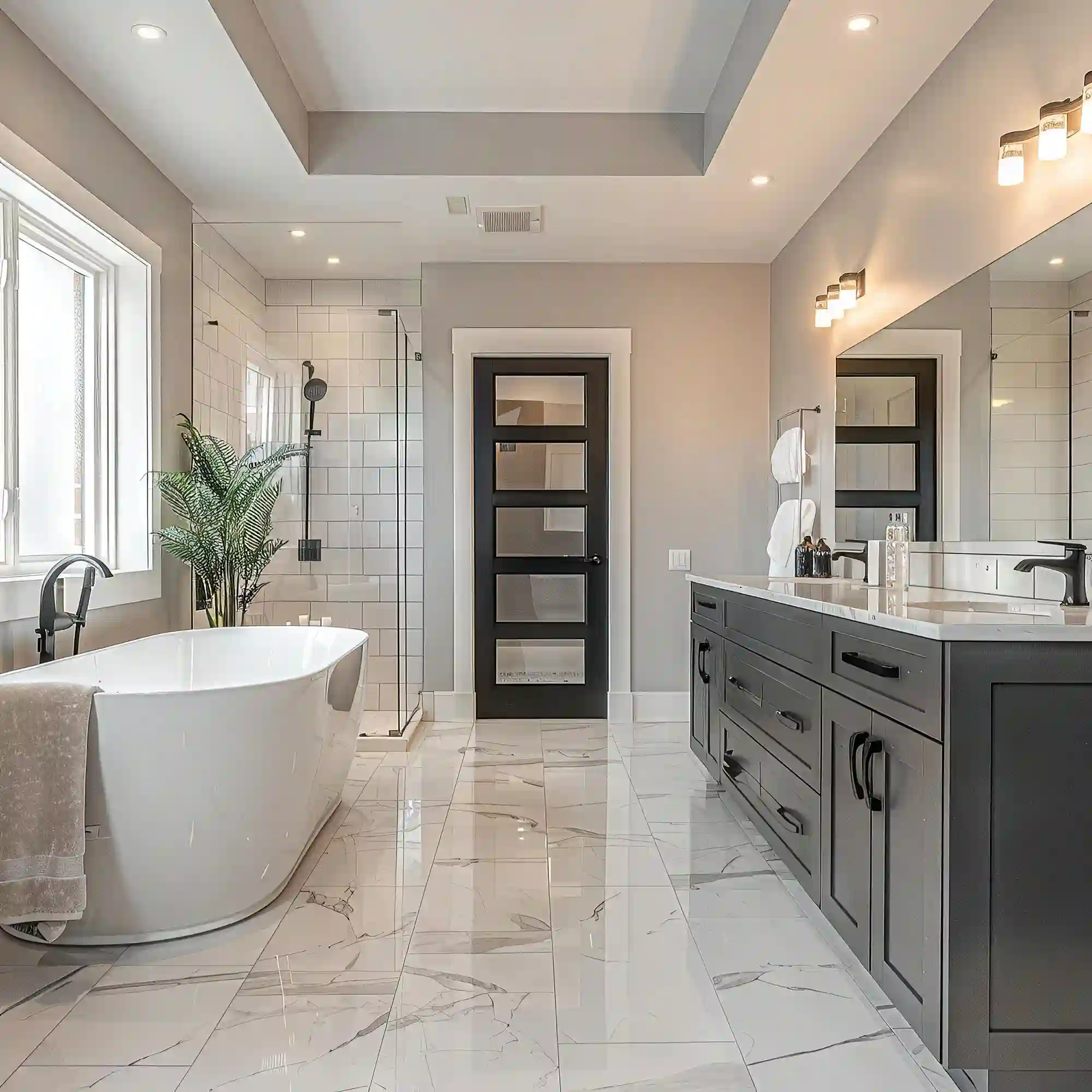
You do not need a full remodel to warm up a bathroom. Most of this look comes from small decor swaps, and the numbers below are typical product ranges, not renovation costs.
| Project | Estimated Cost | Impact Level |
|---|---|---|
| Warm 2700K LED bulbs (whole bathroom) | $15–$60 | Very High |
| Cream and oatmeal textiles (towels, linen curtain, jute mat) | $80–$220 | High |
| Aged brass hardware (pulls, towel bar; faucet costs more) | $120–$600 | High |
| Warm wood vanity or limewash walls | $600–$2,500 | Very High |
Best First Upgrade: Change every bulb to 2700K. It is the cheapest swap, and it warms up every other layer at once.
Skip for Now: Hold off on a full stone re-tile. A travertine tray, a warm mat, and brass hardware get you most of the look for far less.
Frequently Asked Questions
Conclusion
The color was never the problem; the best warm neutral bathroom ideas are really about layering, not the shade itself. Editorial field note: the clearest proof is a bathroom where nothing changes but the bulbs and the towels, since a warm 2700K bulb and a stack of oatmeal linen can make flat beige look layered and calm overnight. Start with one warm layer this week, add another next month, and browse more home decor inspiration when you are ready for the rest of the house.
Next Steps
- Replace every bathroom bulb with a warm 2700K LED and add a dimmer where you can.
- Swap the faucet, towel bar, and cabinet pulls to aged brass or bronze.
- Layer three warm neutral towels plus one earthy accent, like a terracotta pot or clay vase.
- Add one natural-fiber piece, such as a jute mat or rattan stool, and one small plant.