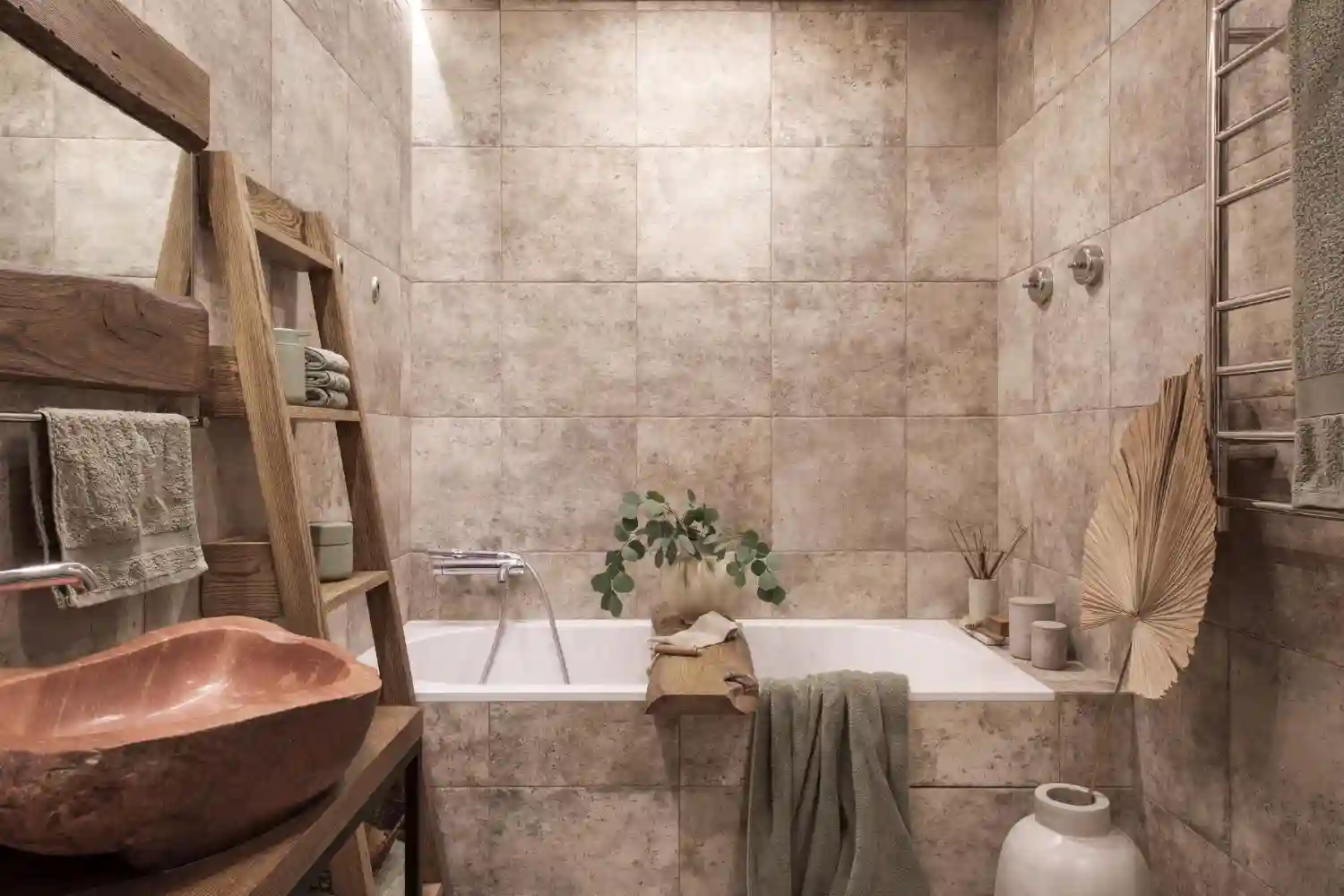
Why Are Bathroom Paint Colors Finally Getting Warmer?
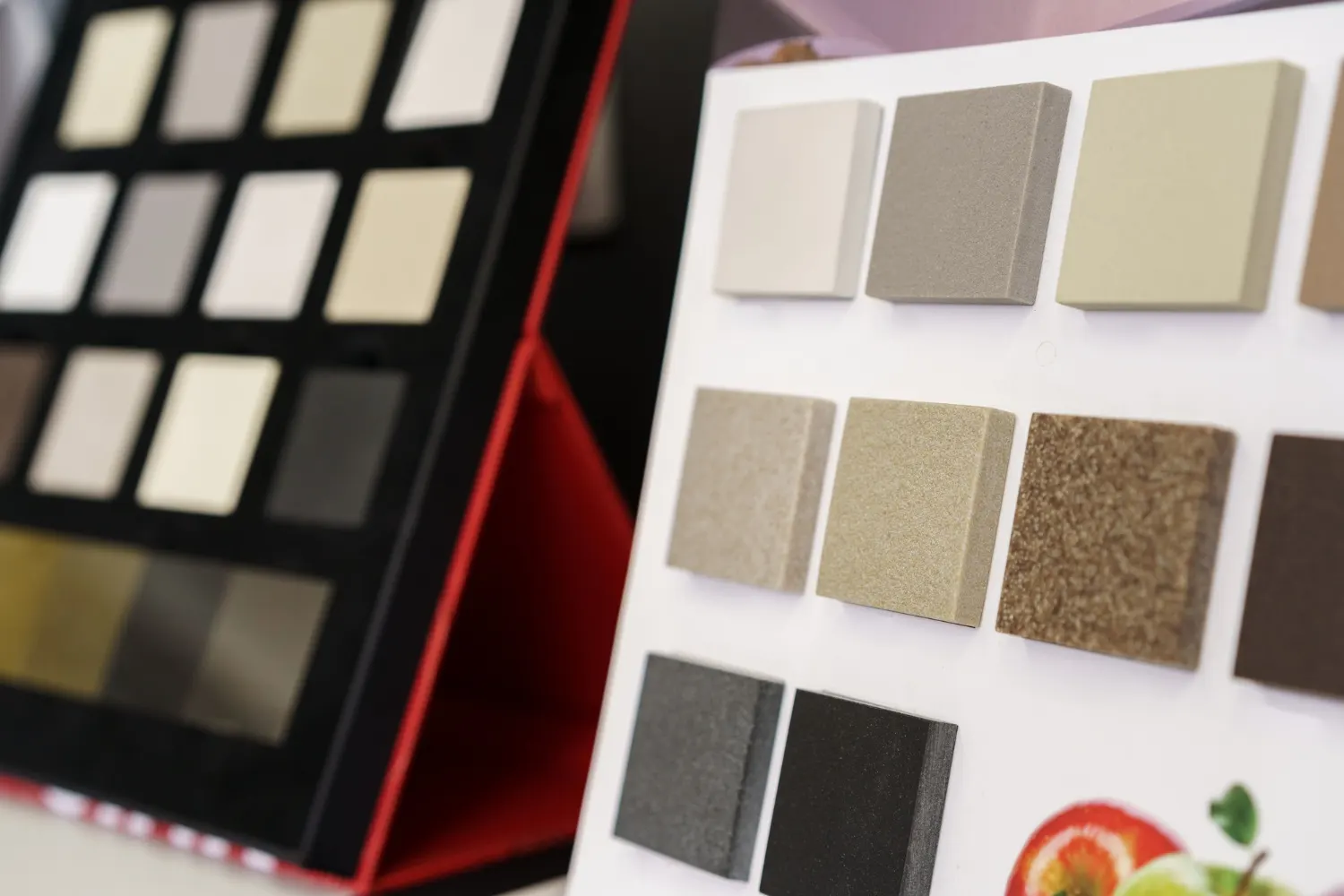
Walk into a bathroom right after sunrise and watch the wall color change. A stark white wall often turns flat and blue-grey in that early light. A warm greige wall stays soft and welcoming instead. That one difference explains why bathroom paint colors are shifting away from cold white and harsh black-and-white schemes this year, toward shades that feel calm the moment you step in.
Looking for more ideas? Explore our full guide to Bathroom Color Ideas.
If you have ever repainted a bathroom crisp white expecting a spa feel and gotten a cold, clinical box instead, you are not alone.
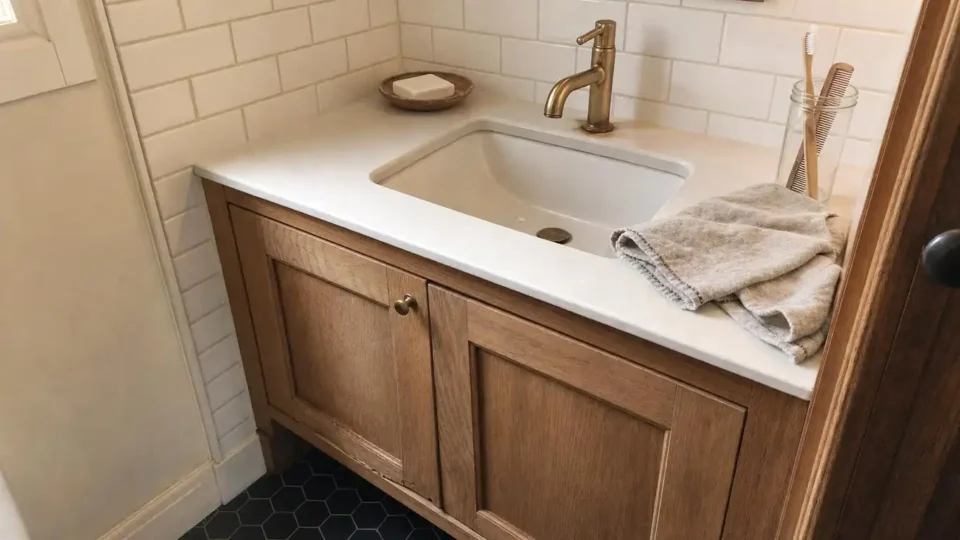
Editorial field note: A guest bathroom with all-white walls and chrome fixtures often feels sterile under a single overhead light. Swapping the wall color for a warm greige and adding one brass sconce made the same room feel finished in an afternoon, with no new fixtures added.
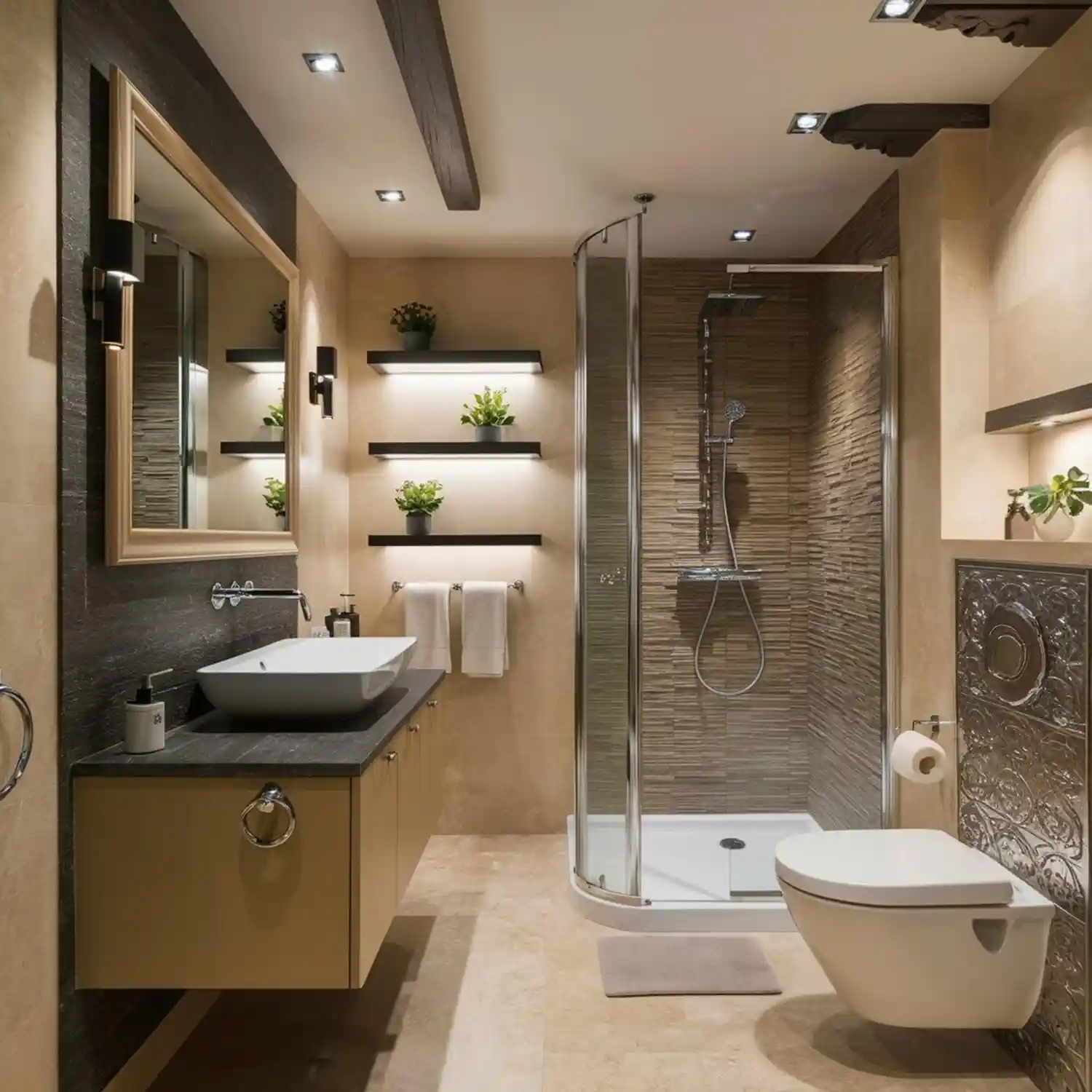
This guide breaks down the bathroom paint colors moving into calmer, warmer territory, why they work with your tile and lighting, and how to pick one without a repaint do-over. For more color and paint inspiration across every room, browse our home decor inspiration. Bookmark this guide for quick reference.
Bathroom paint colors are moving away from stark white and high-contrast black-and-white toward warmer, calmer shades: soft sage, warm greige, gentle blue-grey, and warm taupe. These colors work because their undertones match warm tile, brass, and wood more easily than a cool white does. The right choice depends on your room’s light, tile color, and fixture finish, not just what looks good on a paint chip.
| Quick Takeaways | |
|---|---|
| Trend | Warm, muted colors are replacing stark white and harsh black-and-white schemes. |
| Undertone | Match paint undertone to your tile, countertop, and hardware finish first. |
| LRV | Pick a light reflectance value of 65 or higher for a small or dark bathroom. |
| Sheen | Satin or semi-gloss holds up better than flat paint near a shower or tub. |
| Accent rule | One deeper accent color works better than an all-over dark wall in a small room. |
| Cost | A gallon of quality paint runs $45-$80, plus $10-$12 per tester sample. |
Bathroom Paint Color Checklist
Run through this list before you buy a full gallon. For more foundational updates beyond the wall color, browse our bathroom decorating ideas.
- Test 2-3 sample swatches directly on the wall, not on paper, and check them morning, midday, and night.
- Match your paint’s undertone to your tile, countertop, and hardware finish before buying a full gallon.
- Choose a light reflectance value (LRV) of 65 or higher for a small or windowless bathroom.
- Pick a satin or semi-gloss sheen for walls near a shower, tub, or sink splash zone.
- Limit the palette to one wall color plus one deeper accent, such as the vanity or a single wall.
- Budget $45-$80 for a gallon of quality paint and $10-$12 per tester can.
- Repeat any metal finish, like brass or matte black, at least twice in the room.
KEY TAKEAWAY: A calm, modern bathroom color choice starts with undertone and light, not just whichever shade is trending this year.
Why Bathroom Color Choices Are Shifting Toward Warmth
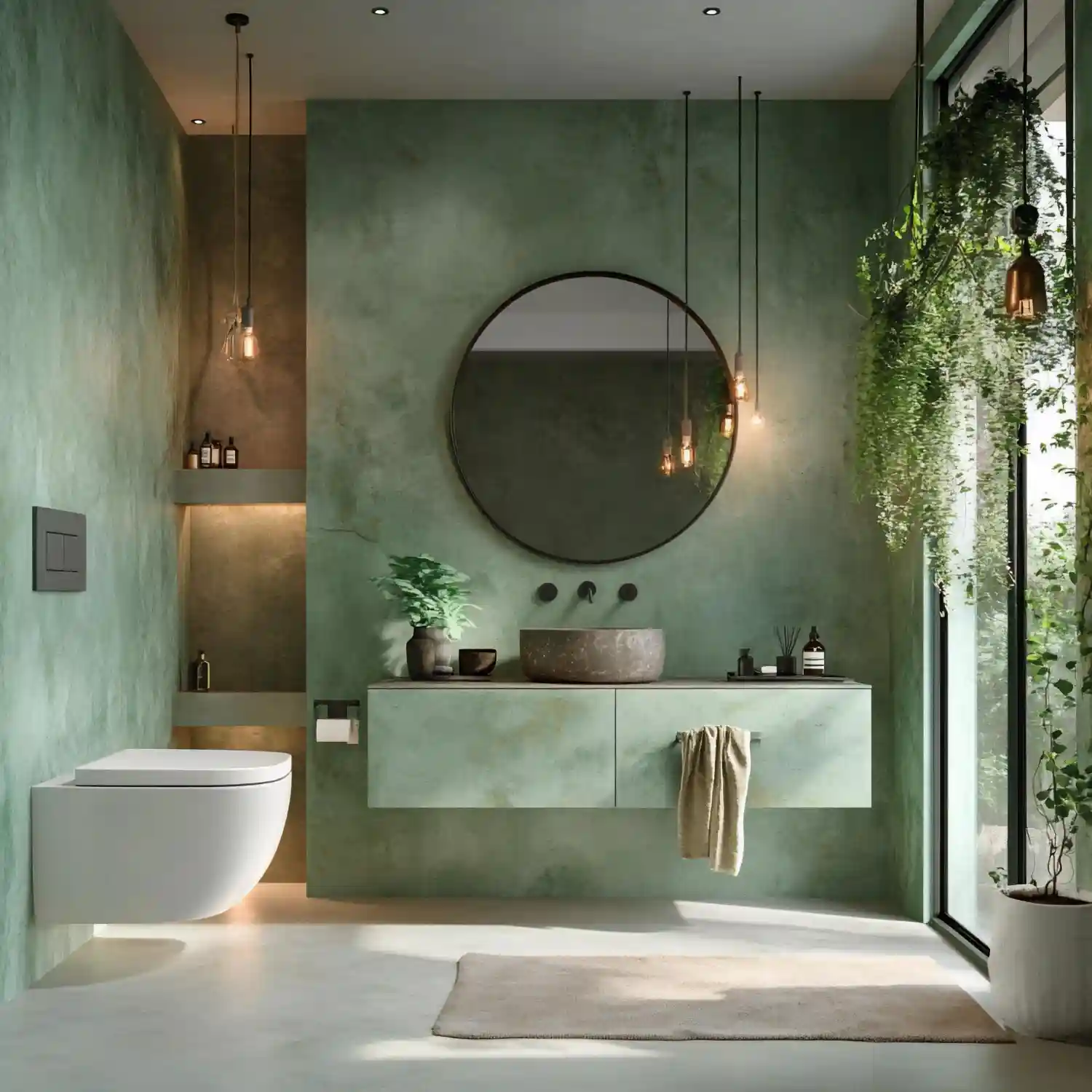
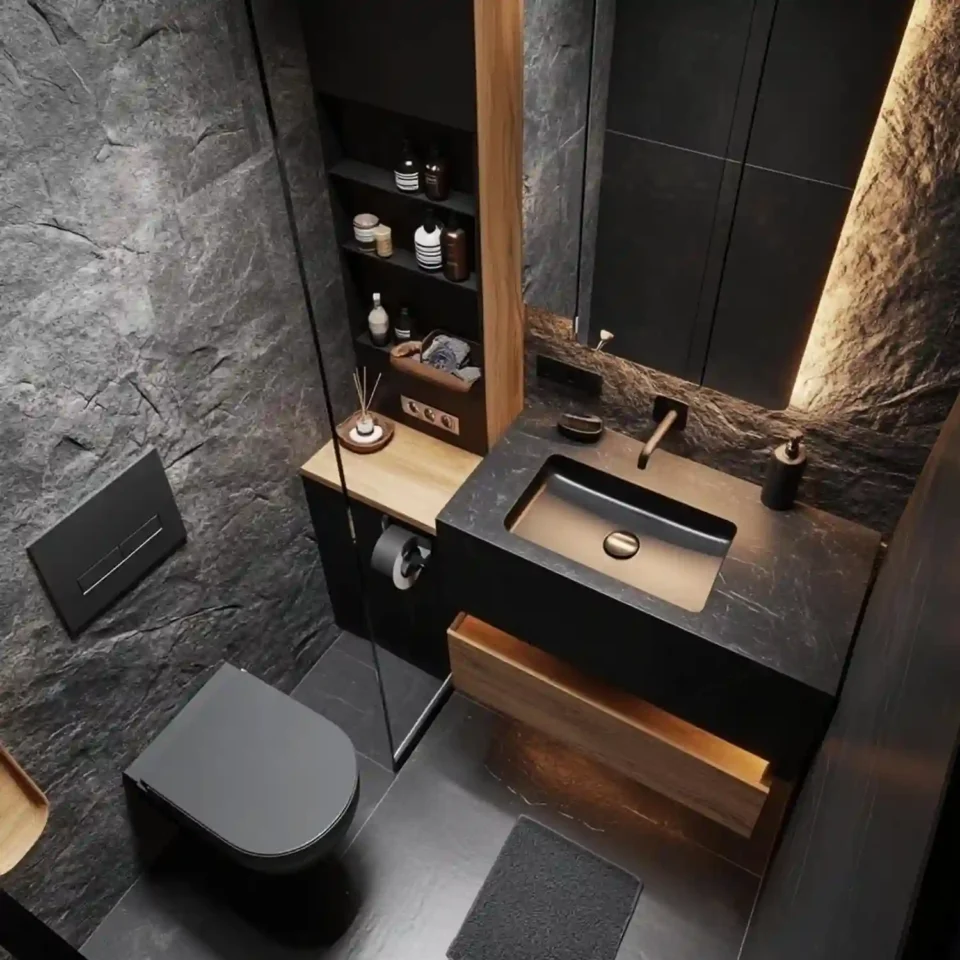
For years, a “clean” bathroom meant all-white walls or a stark black-and-white scheme. Both looks photograph well. Neither one feels warm to stand in every morning. That gap between how a bathroom photographs and how it actually feels is driving the current shift.
Homeowners and designers are choosing muted greens, warm greiges, and gentle blues instead of cool white or harsh contrast. Natural materials like oak, stone, and rattan are moving into bathrooms too, and a cool white or icy grey wall fights those warm materials instead of supporting them. A warmer wall color lets stone, wood, and brass sit together without one of them looking out of place.
Signs this is catching on:
- Both Benjamin Moore and Sherwin-Williams now group their bathroom-specific color picks around warm neutrals and soft greens rather than cool white or stark grey.
- Design coverage increasingly describes all-white bathrooms as cold rather than clean, a real change from just a few years ago.
- Terracotta, warm taupe, and soft sage now appear across far more bathroom color roundups than pure white or true black.
This shift is not only about paint. Our bathroom design trends for 2026 roundup covers the other ways bathrooms are changing this year, from fixtures to layout, if you are planning a fuller refresh and not just a paint change.
What a Calm, Modern Bathroom Palette Actually Looks Like
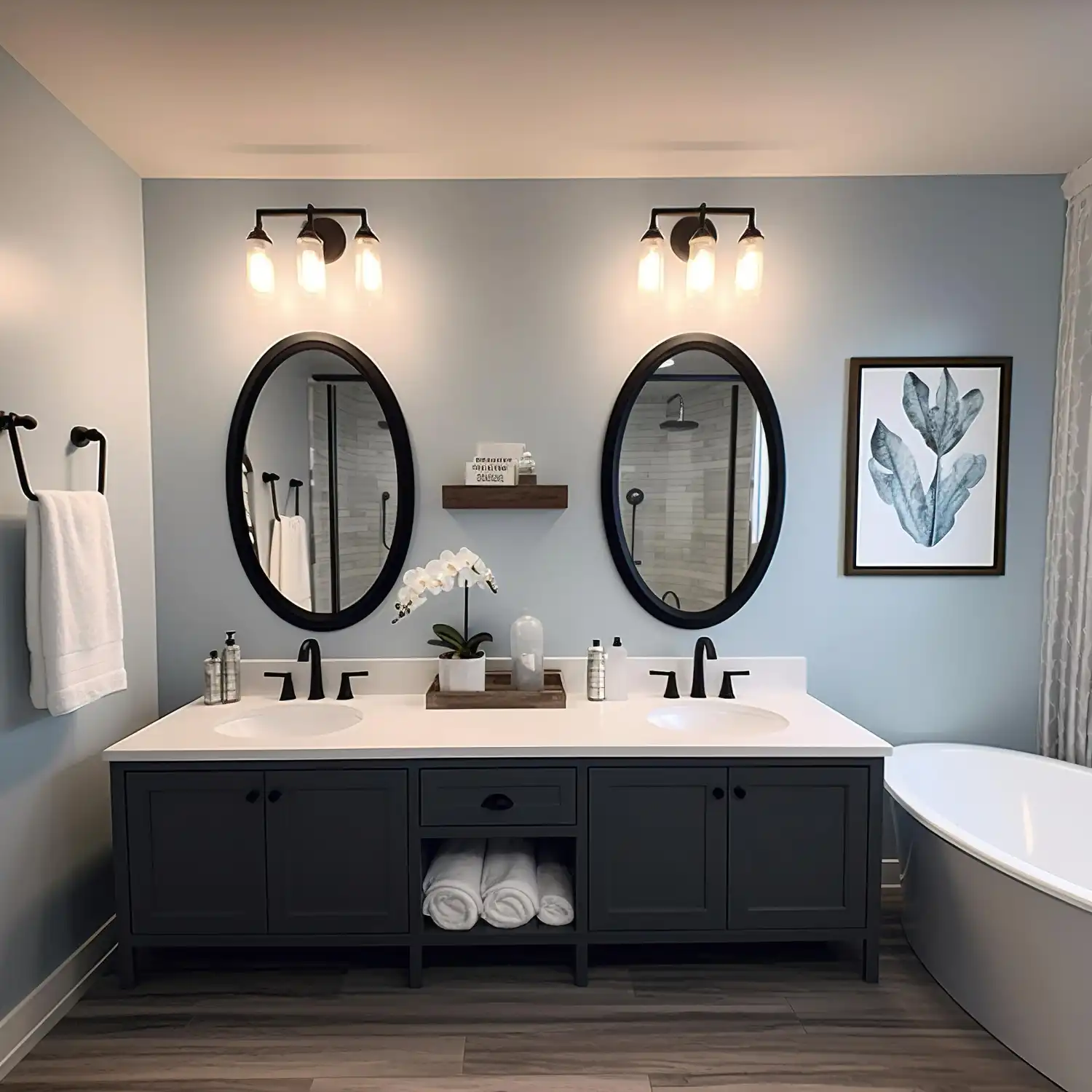
A calm, modern bathroom palette leans on a handful of proven color directions. Each one solves a different problem, whether that is a windowless powder room, a small guest bath, or a sunny primary suite. If harsh contrast is still more your style than a neutral base, our black-and-white bathroom guide shows how to keep that look feeling polished rather than stark.
A Warm White Base for Small or Dark Bathrooms
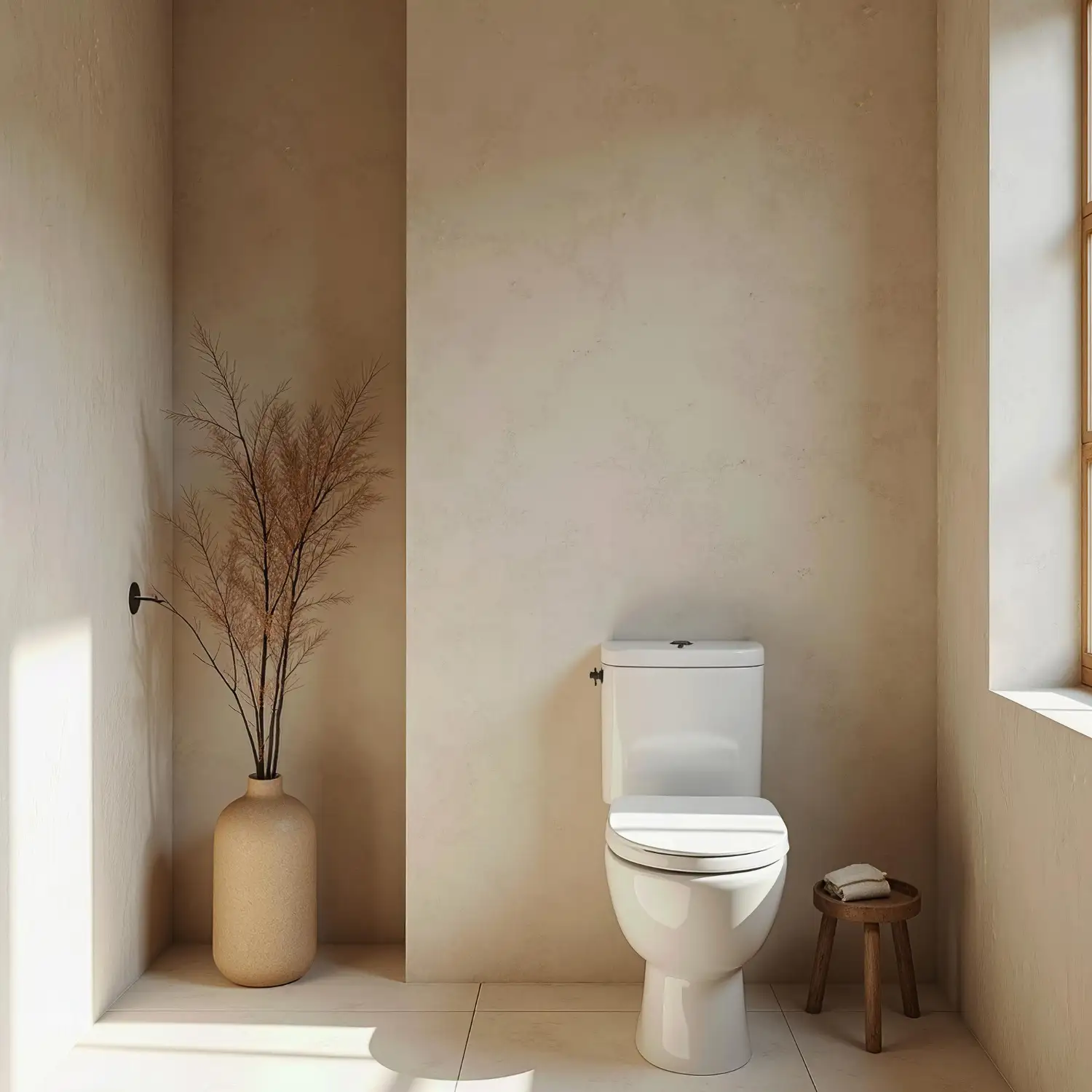
Benjamin Moore Simply White OC-117 has a light reflectance value near 92, high enough to brighten a windowless bathroom without feeling sterile. Its undertone leans warm and slightly yellow, with no grey or blue mixed in, so it stays soft rather than clinical under a bathroom vanity bulb. This is the direction to pick when a bathroom gets little daylight and needs every bit of brightness it can get. If you want the rest of the room pared back to match, our minimalist bathroom decor ideas guide covers the styling side of that same warm-white approach.
A Warm Greige Alternative for a Grounded, Softer Neutral
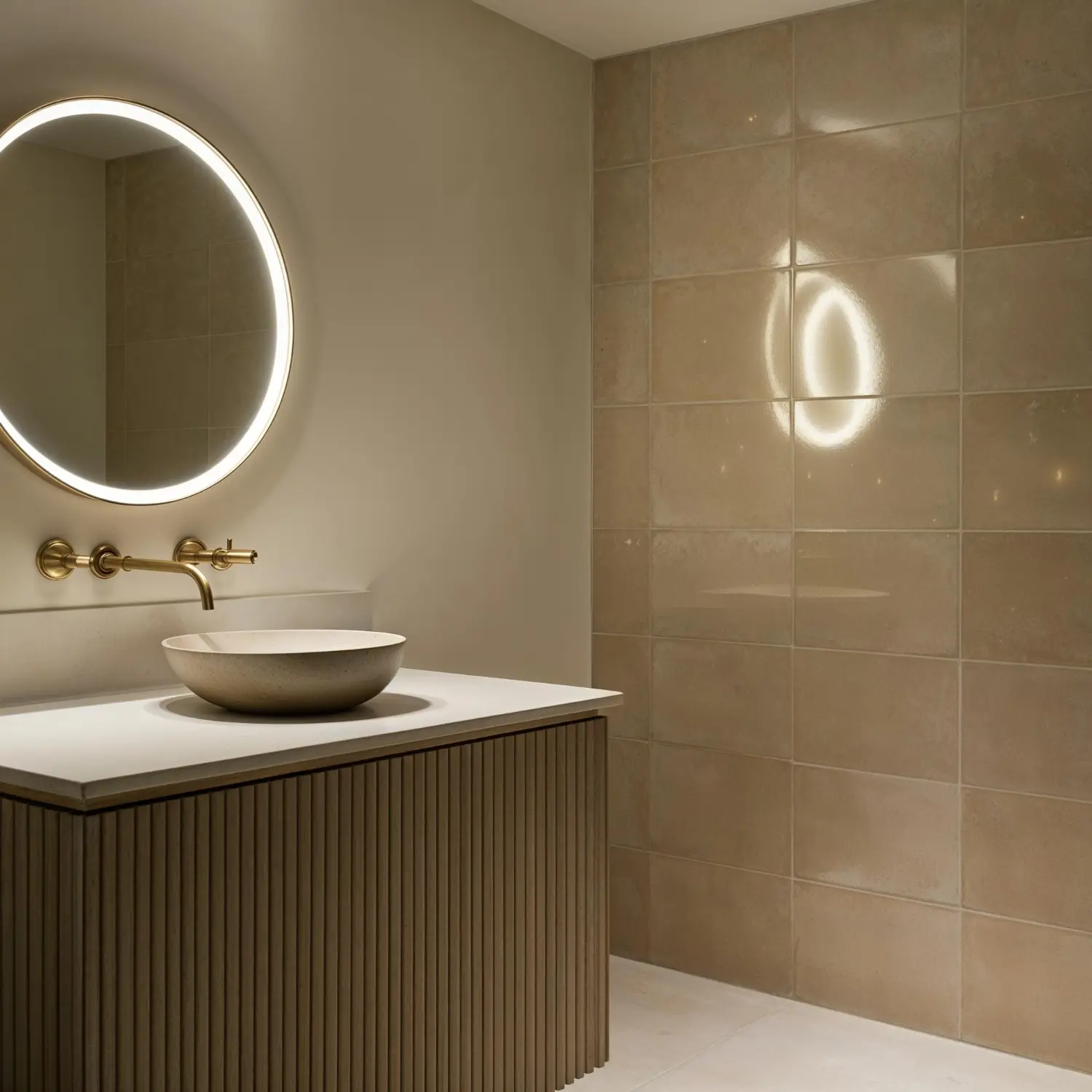
Benjamin Moore Revere Pewter HC-172 works as a warm greige with a light reflectance value around 55, giving it enough depth to feel grounded without going dark. Its main undertone is a warm taupe, though a faint green undertone can surface in low or north-facing light. Revere Pewter suits a bathroom vanity or full wall when a plain white feels too stark but a full color feels like too much of a commitment. Prefer a bolder single hue over a neutral like this one? Our pink bathroom guide shows how a saturated color can still feel sophisticated rather than juvenile.
Soft Sage and Warm Olive for a Spa-Like Feel
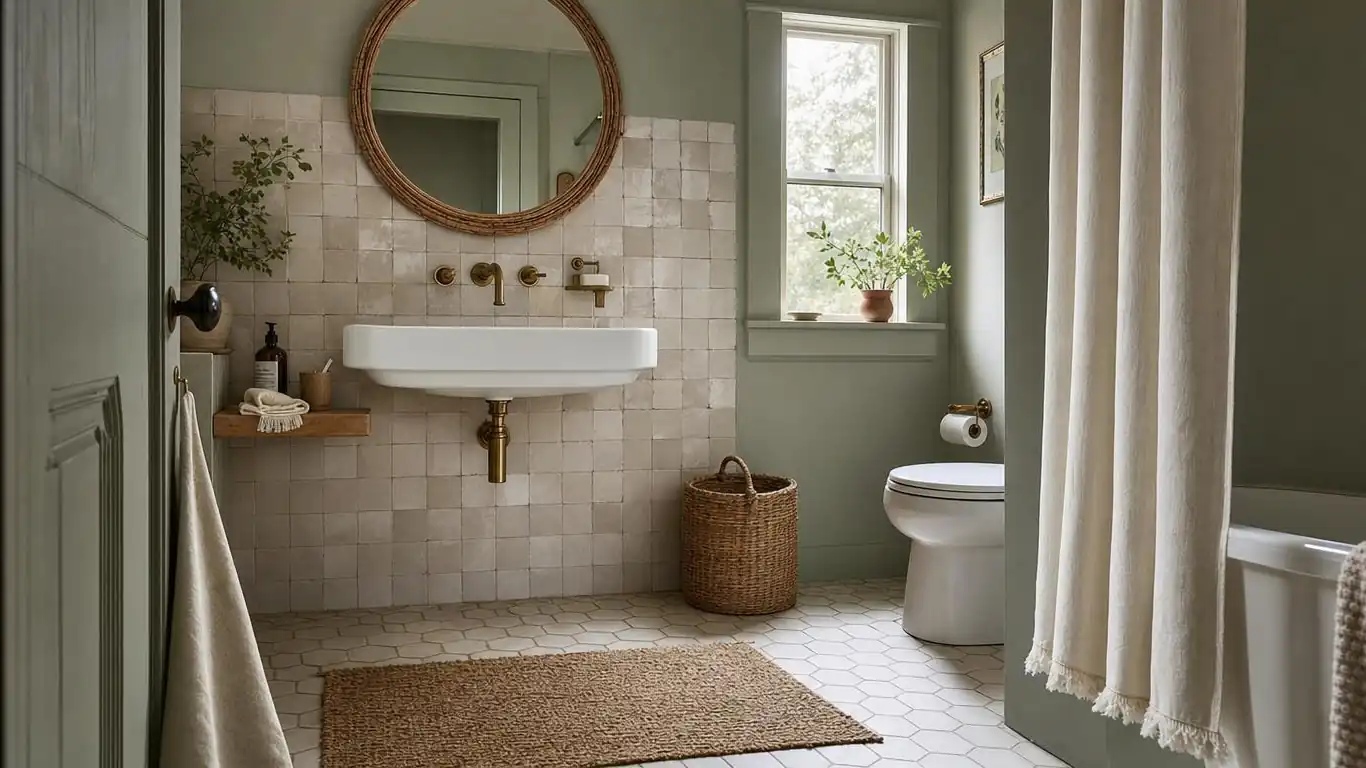
Benjamin Moore October Mist 1495 carries a warm yellow undertone that keeps this sage green from tipping into a cold, minty shade. Its light reflectance value sits near 47, a light-medium range that still works in a bathroom with decent daylight. It pairs well with white tile and chrome or brushed nickel fixtures, and it is one reason soft sage and warm olive keep showing up in 2026 bathroom color roundups. If green is the one color decision you have already made, our sage green versus forest green bathroom guide compares the two shades side by side.
A Blue-Grey, Color-Shifting Option for Variety
Sherwin-Williams Sea Salt SW 6204 has an LRV of 63 and shifts between soft green, blue, and grey depending on the time of day and the bulb overhead. Morning light can read it as a calm spa green, afternoon light can push it closer to blue, and lamplight can settle it into a quiet grey. That range makes it a flexible pick for a bathroom with mixed natural and artificial light, and it pairs easily with white tile, natural stone, and soft neutrals.
A Confident Deep Accent, Done Right
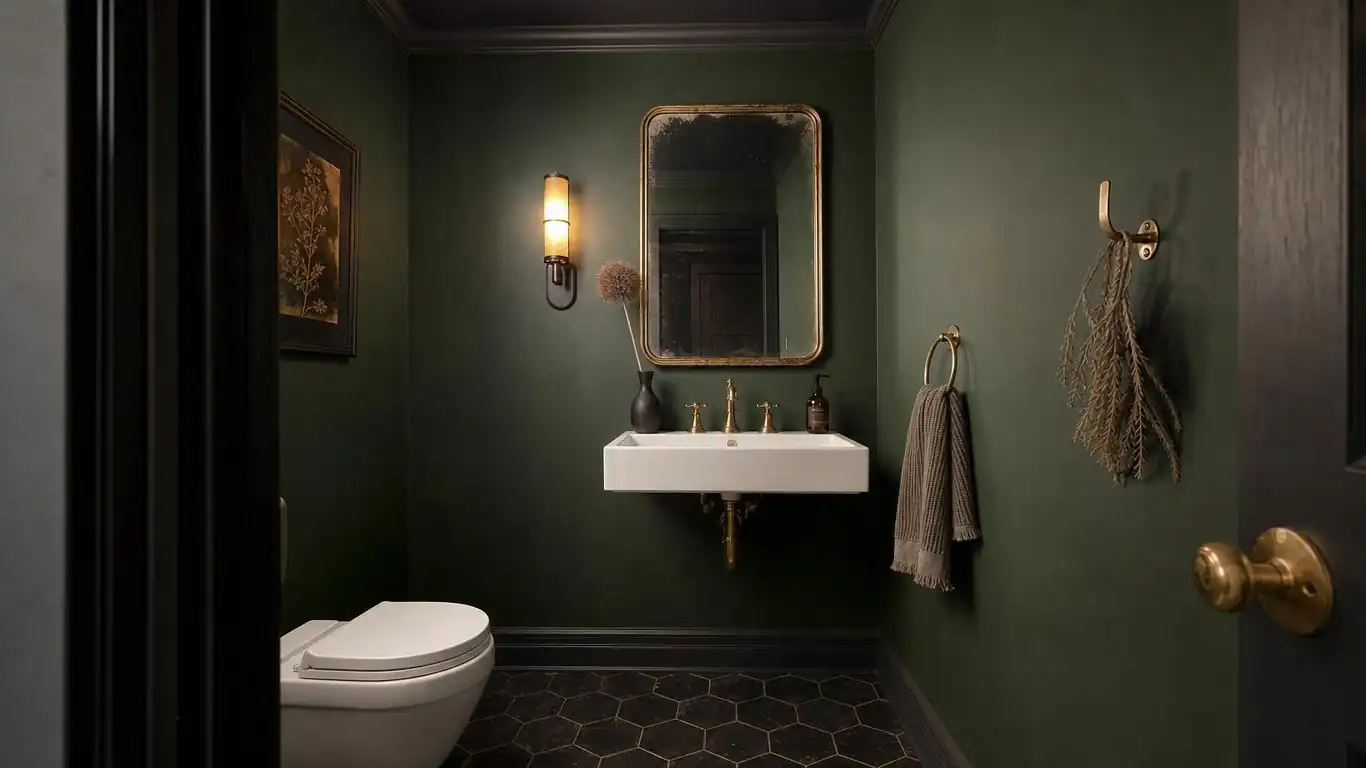
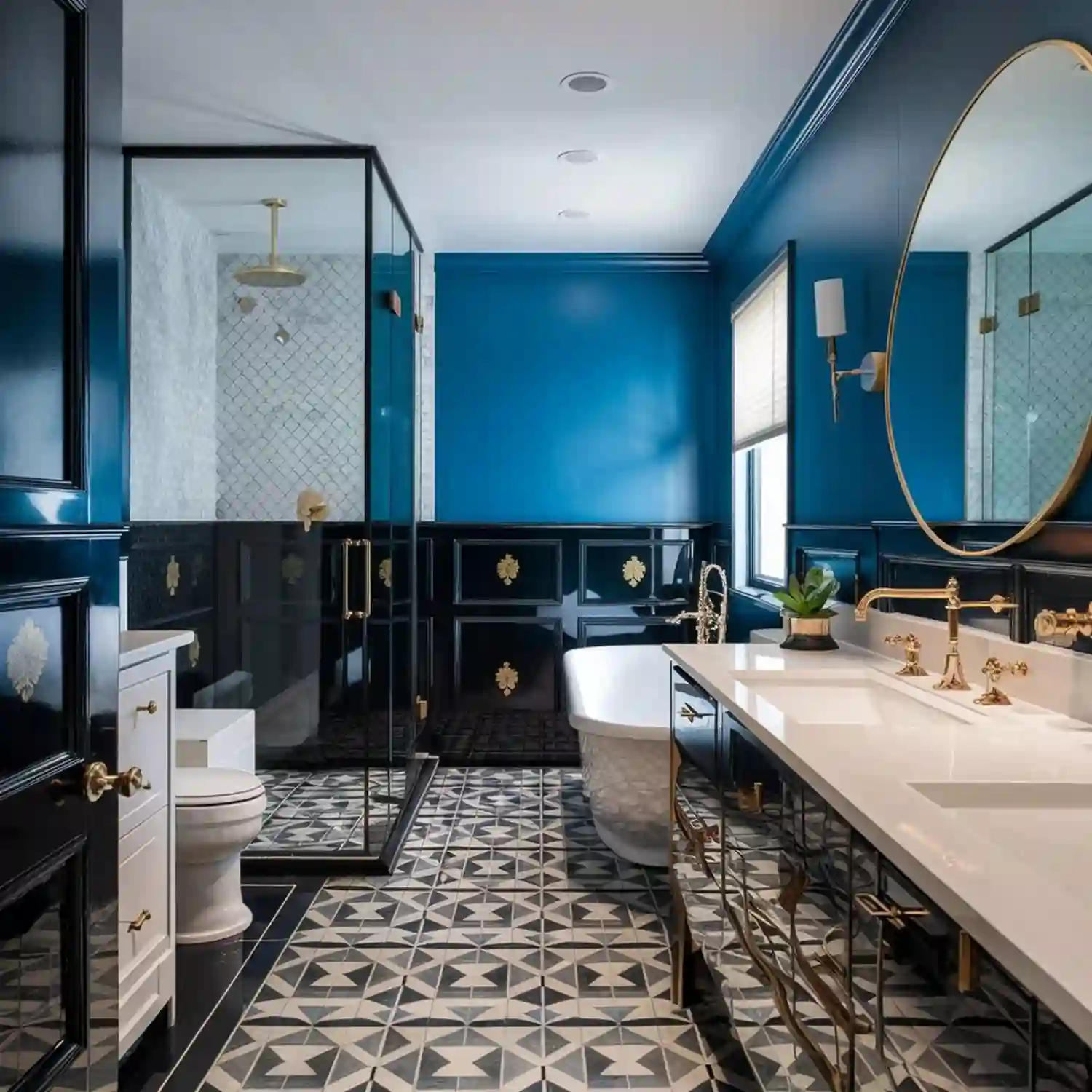
Benjamin Moore Hale Navy HC-154 has a light reflectance value of about 8, low enough to feel heavy in a room with little daylight. Used on a full wall in a bright bathroom, it feels rich rather than gloomy. Used on a vanity or a single accent wall in a dimmer bathroom, it adds contrast without swallowing the whole room. Pair it with white or marble-look tile and brass or matte black fixtures so the dark color has something light to sit against.
How Do You Match Paint Color to Tile, Fixtures, and Light?
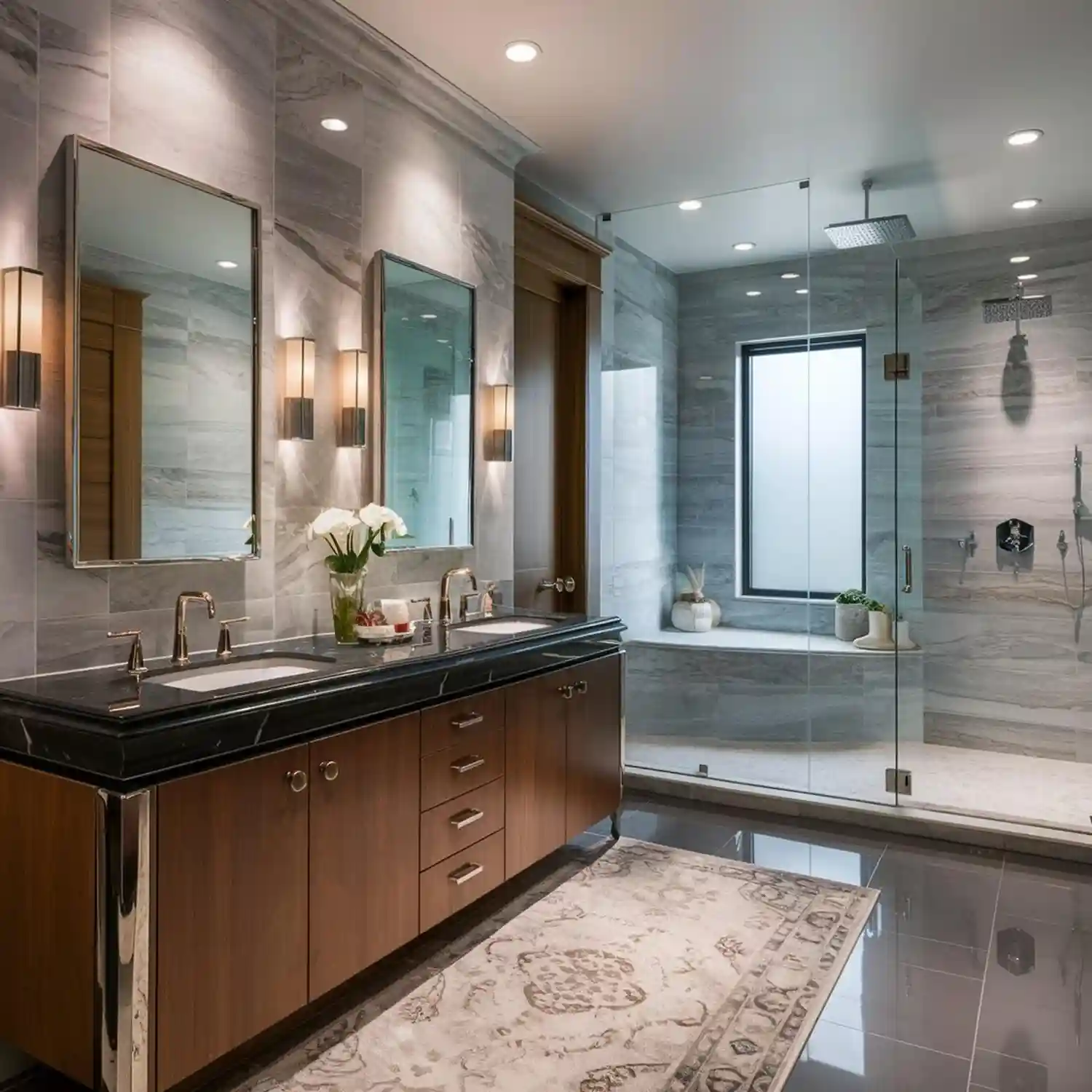
Picking the right bathroom paint colors comes down to three things: undertone, light, and sheen. Undertone is the faint color hiding underneath a paint’s main shade; a “white” can lean warm yellow, cool blue, or true grey depending on this hidden layer. Hold your paint sample next to your tile, countertop, and cabinet hardware before buying a full gallon, since warm tile fights a cool-undertone paint even when both look neutral in isolation. Tile pattern and material affect this pairing too, so our bathroom backsplash ideas guide is worth a look before you commit to a final can.
A light reflectance value (LRV) is a 0-100 scale that shows how much light a paint color bounces back into a room. Designer Rule of Thumb: aim for an LRV of 65 or higher in a small or windowless bathroom, and push 5-10 points higher still in a north-facing room with little natural light. A lower LRV can work beautifully in a bathroom that already gets strong daylight or has a skylight.
Sheen matters as much as color in a room that deals with steam and splash. Source Note: Sherwin-Williams recommends a satin or semi-gloss finish for bathrooms because both resist moisture better than flat or eggshell paint and wipe clean more easily, according to their official paint sheen guide. Material Note: a satin finish repels water well enough for most shower-adjacent walls, while semi-gloss suits trim, cabinets, and any wall that gets direct splash. Climate Note: in a humid climate or a bathroom with weak ventilation, a mold-resistant bath-and-kitchen paint line is worth the extra cost over standard interior paint.
What Should You Avoid When Choosing a Bathroom Paint Color?
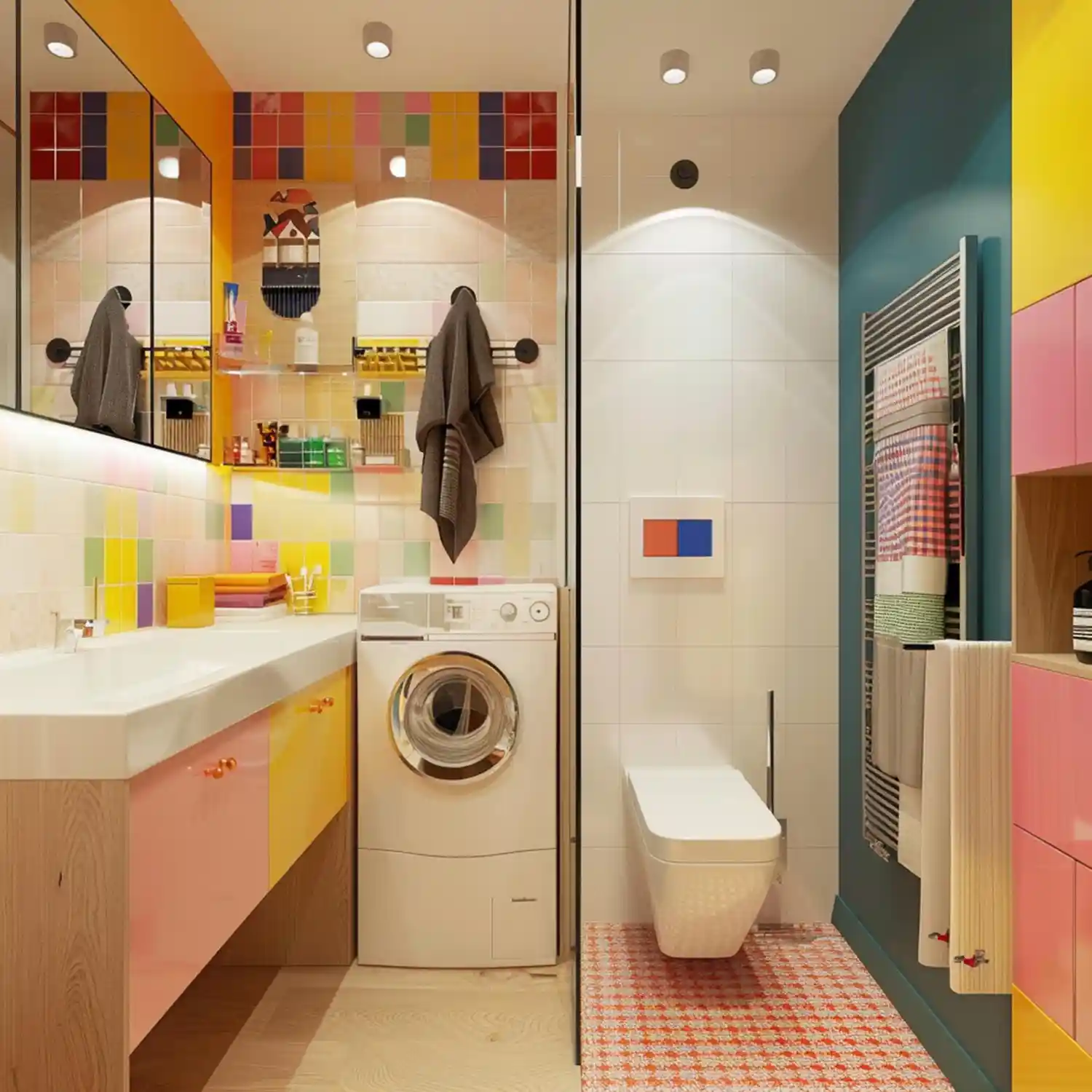
Instead of picking a color straight from a fan deck under store lighting, test it on your actual bathroom wall and view it under your own vanity bulbs, morning light, and evening light.
Instead of matching your wall color to whatever shade is trending online, match it to your tile and hardware undertone first, then look for a trending shade that also fits.
Instead of painting an entire small, windowless bathroom in a deep accent color, save the darker shade for the vanity or a single wall and keep the rest of the room lighter.
Instead of choosing one flat or matte finish for the whole room, save flat for the ceiling only and use satin or semi-gloss on walls near water.
What Does Bathroom Paint Actually Cost?
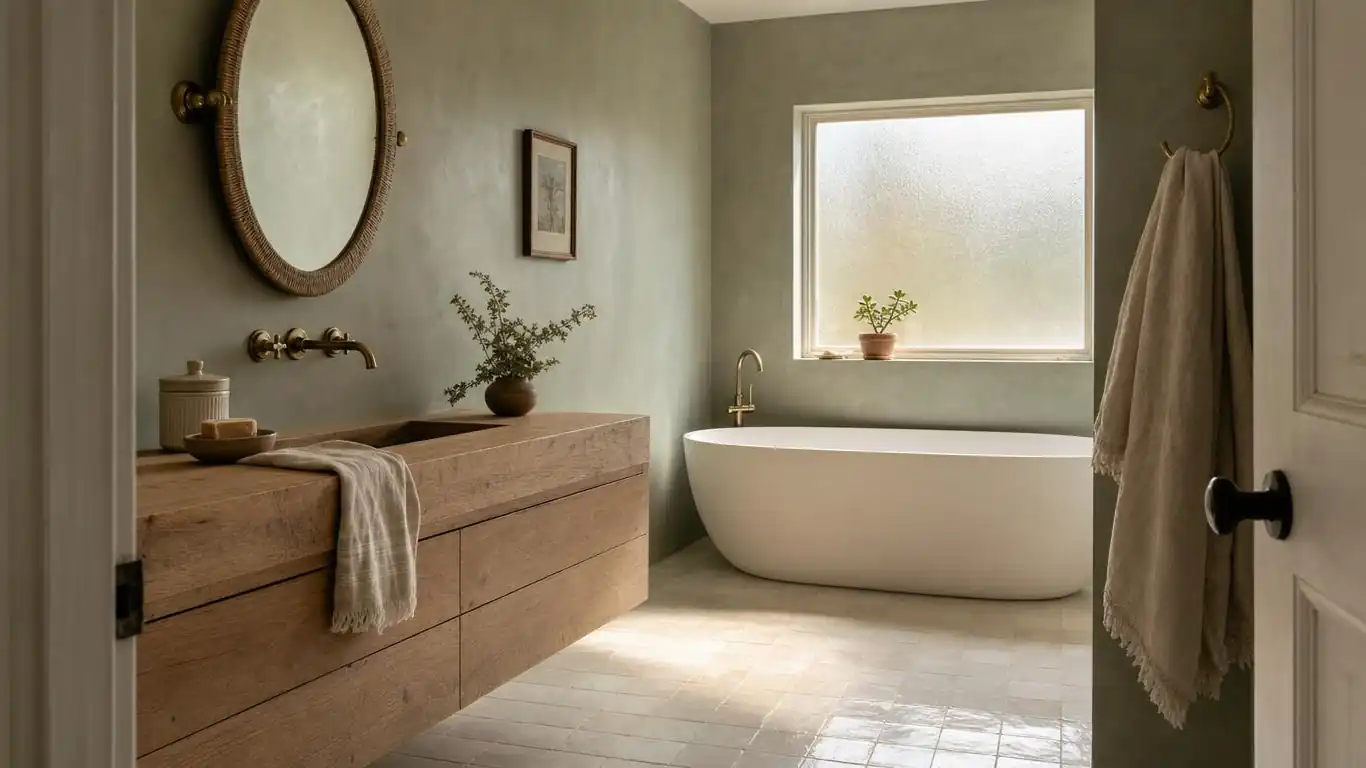
A full repaint is one of the cheapest ways to change how a bathroom feels, and the cost stays modest compared to any other bathroom update.
| Project | Estimated Cost | Impact Level |
|---|---|---|
| Paint tester samples (2-3 colors) | $20-$36 | High |
| One gallon of quality wall paint | $45-$80 | High |
| Mold-resistant bath and kitchen paint | $60-$95 per gallon | Medium |
| New cabinet or drawer hardware to match undertone | $30-$120 | Medium |
Best First Upgrade: Buy testers in your top 2-3 colors before anything else, since a wrong undertone is the single most common reason a bathroom repaint disappoints.
Skip for Now: Skip a premium designer paint line until you have confirmed the undertone and sheen work in your specific light. If a full repaint is not in the budget right now, our spring bathroom decor ideas guide covers lighter, lower-cost swaps that still shift the mood of the room.
The Bottom Line for Your Bathroom Palette
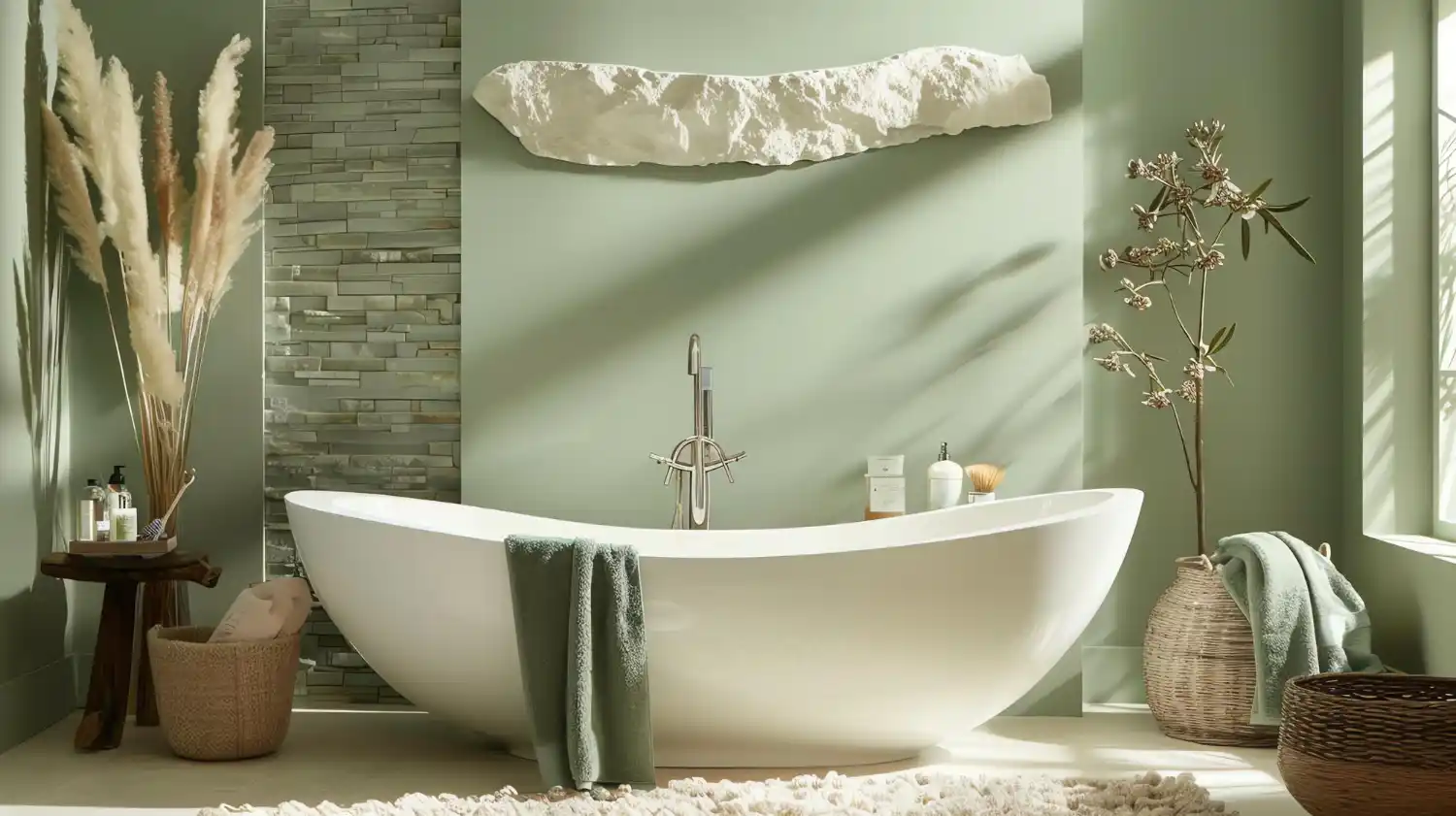
Designer’s Verdict: For most bathrooms, a warm greige like Benjamin Moore Revere Pewter HC-172 wins. It flatters skin tone under a bathroom mirror, pairs with brass and matte black hardware equally well, and never fights with tile the way a true grey or a stark white sometimes does. Whatever direction you pick, test it in your own light before buying a full gallon. For more rooms inspiration beyond this one color decision, our full rooms archive covers every space in the house.
Frequently Asked Questions
Conclusion
The right bathroom paint colors come down to matching undertone and light to your tile and fixtures, not chasing whatever shade is trending this year. Editorial field note: a bathroom repainted in a tested, warm-undertone color almost always feels calmer within a day, even before any other change is made. Start with a few testers, check them under your own light, and let that guide the final can from our home decor inspiration.
Next Steps
- Buy 2-3 paint testers in a warm white, a warm greige, and one deeper accent, then paint them directly on your wall.
- Hold each tester against your tile, countertop, and hardware before checking it under natural and vanity light.
- Confirm the LRV on the paint chip and aim for 65 or higher if your bathroom has little natural light.
- Choose a satin or semi-gloss sheen for walls near water, and save flat paint for the ceiling only.