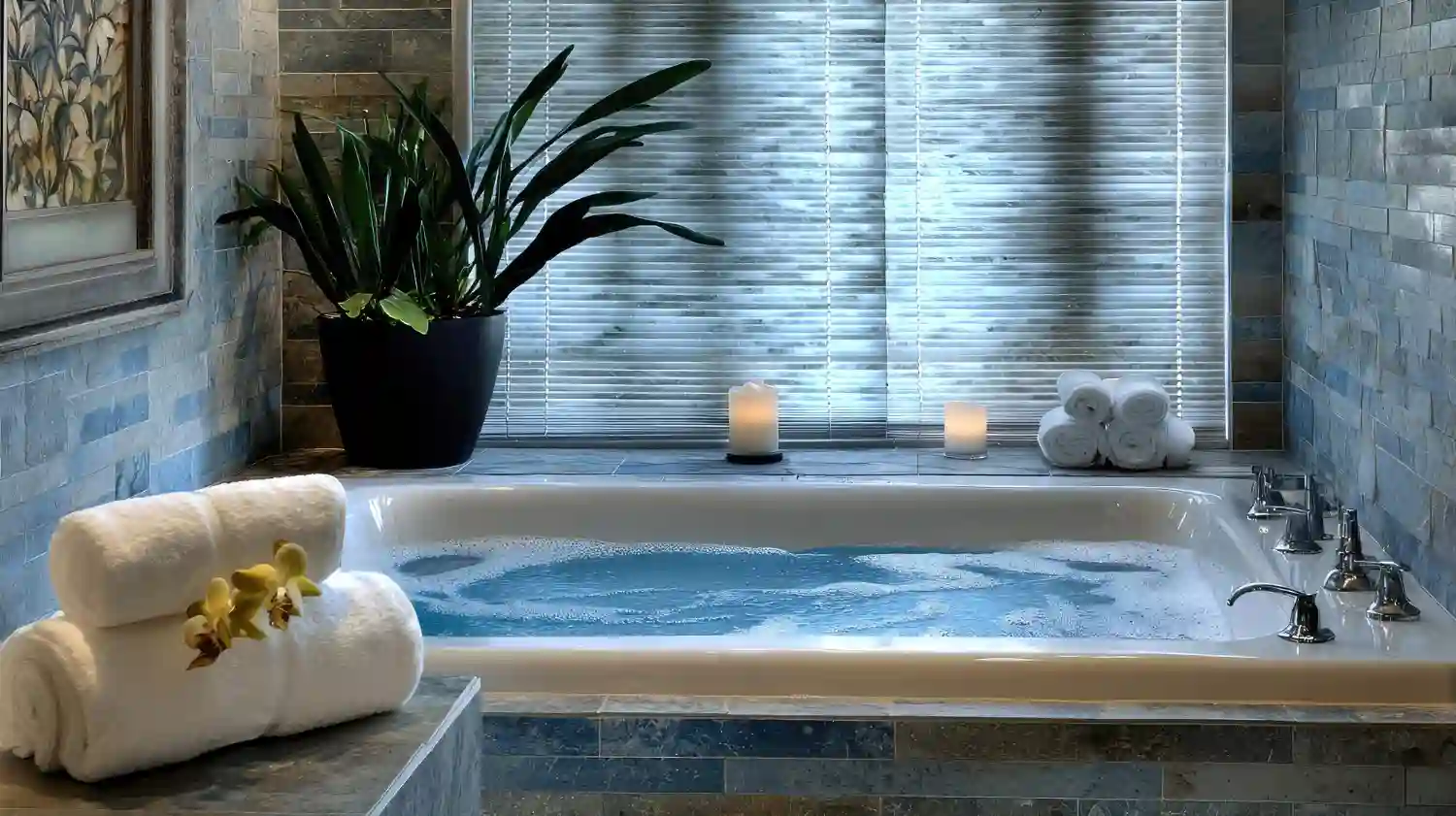
TL;DR
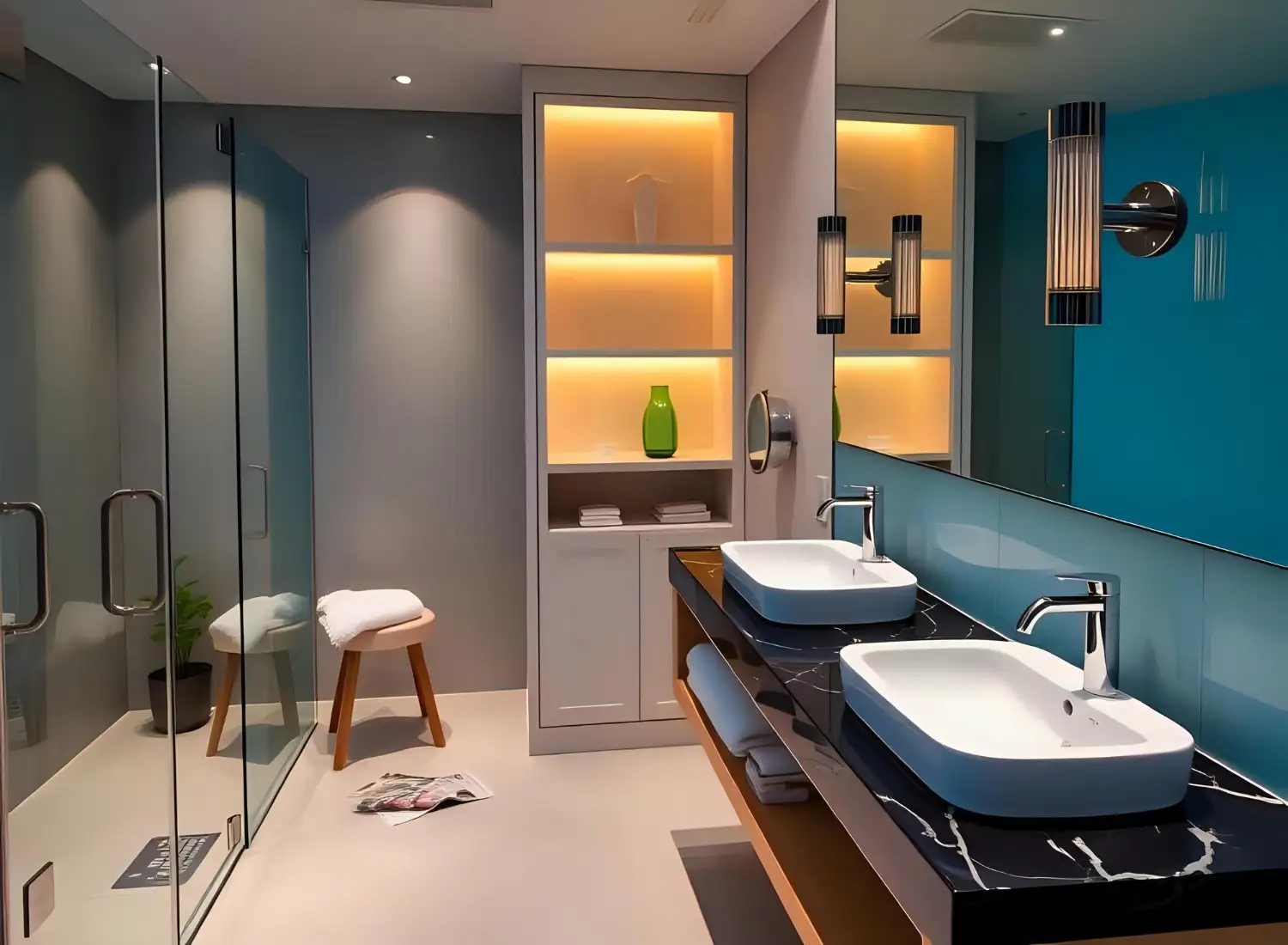
A spa-inspired bathroom feels calming when natural materials, a muted palette, and warm layered light replace the usual mix of bright white paint, chrome fixtures, and one overhead bulb. These 14 ideas cover the tub, shower, materials, lighting, and small hotel-style styling details that turn an ordinary bathroom into a calming retreat, without a full renovation.
Looking for more ideas? Explore our full guide to Bathroom Design Styles.
Why Does a Bathroom Need to Feel Like a Spa?
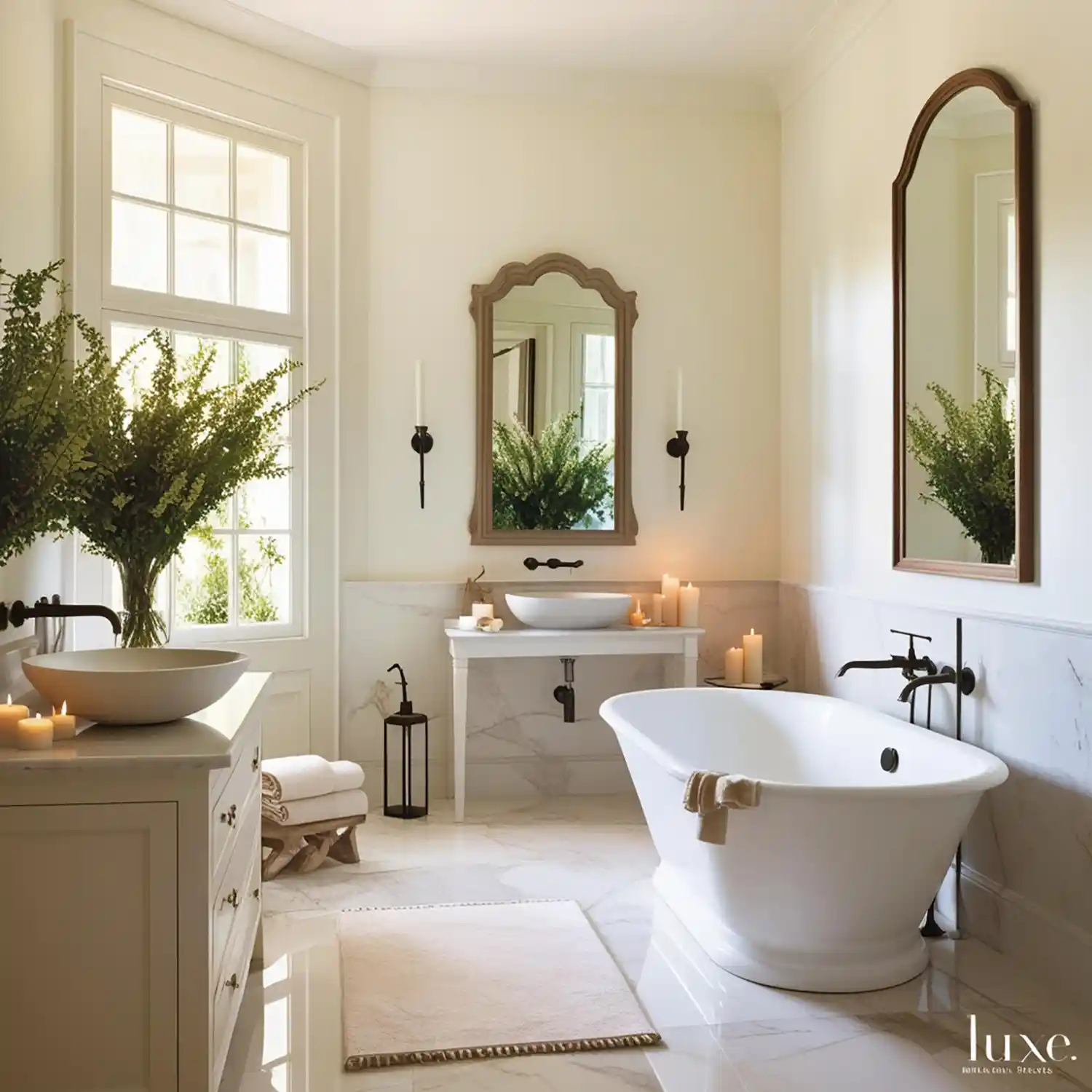
Spa bathroom ideas usually start with one hotel memory: warm light, a soaking tub, a room that smells faintly of something good. Why does that feeling disappear the moment you walk into your own bathroom, even with better fixtures in some cases? The gap rarely comes down to money. Most hotel spa bathrooms and most home bathrooms share the same basic ingredients — a tub, a shower, a mirror, some tile.
If you’ve ever stood in your own bathroom after a long day and felt more rushed than relaxed, you’re not alone. Most bathrooms are built to be functional. Few are built to feel restorative.
Editorial field note: A bathroom with white tile, one overhead light, and a plastic bath mat can have all the right fixtures and still feel clinical. Swapping the overhead bulb for a warm 2700K sconce, adding a teak bath mat, and clearing the counter down to three objects changes the mood without touching a wall.
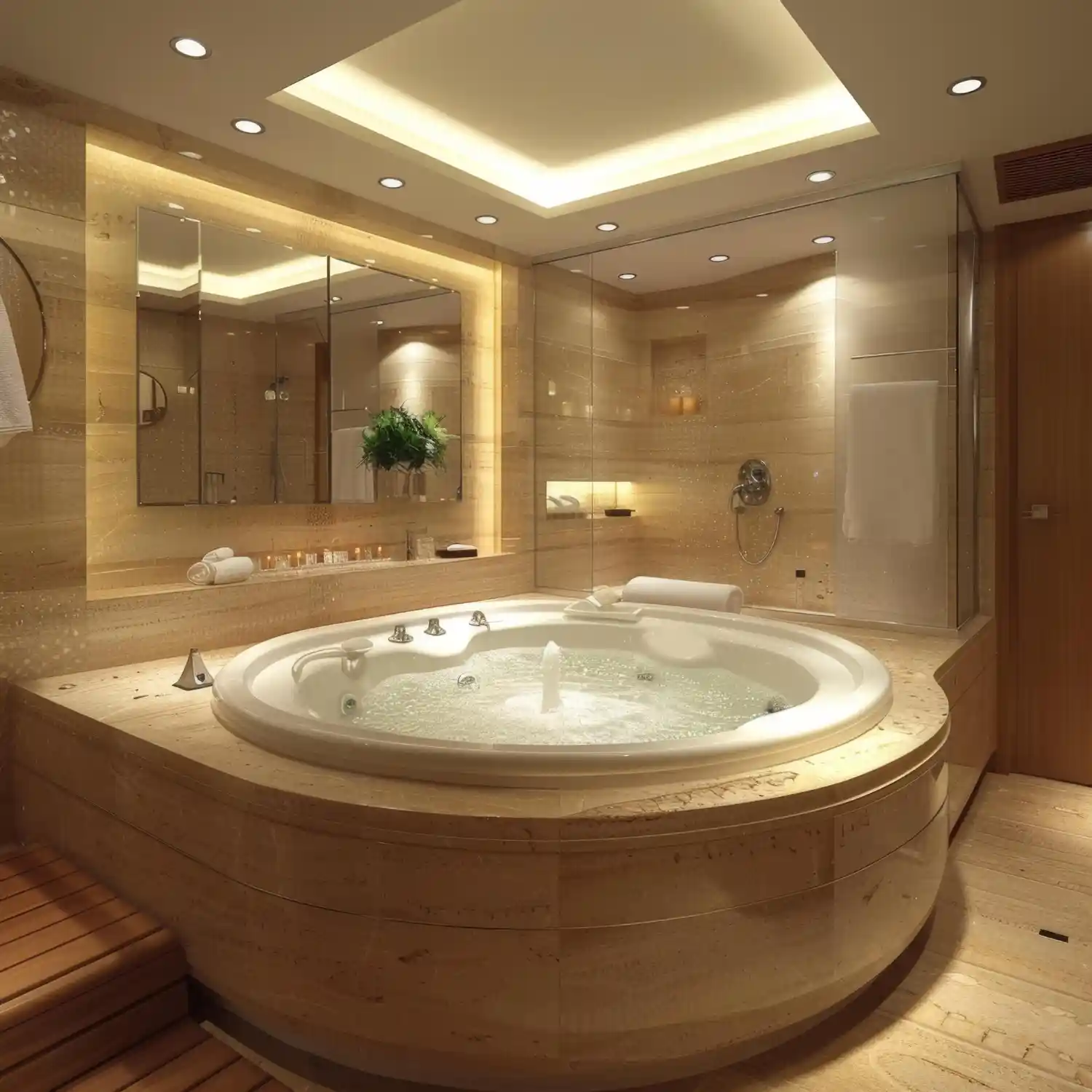
This approach focuses on sensory calm rather than showroom polish. The formula leans on natural materials like stone and wood, a muted palette of warm white, greige, or soft sage, warm layered lighting, and a few hotel-style styling details like rolled towels and a scent ritual corner. The goal is a bathroom that feels like a retreat, not a display case.
This guide covers 14 ways to bring that calm home, from the tub and shower down to the smallest styling details. For more direction across the whole room, browse our bathroom design ideas archive. Bookmark this guide for quick reference, and start with our home decor inspiration for whole-home direction beyond the bathroom too.
| Quick Takeaways | |
|---|---|
| Palette | Warm white, greige, or soft sage grounds the room instead of stark white. |
| Materials | Natural stone, teak, and linen replace polished chrome and glossy tile. |
| Lighting | Warm 2700-3000K bulbs on a dimmer replace one flat overhead light. |
| Scent | A flameless diffuser or fresh eucalyptus replaces open candles near water. |
| Styling | Rolled towels and a small tray vignette read as spa, not laundry. |
Spa Bathroom Ideas Checklist
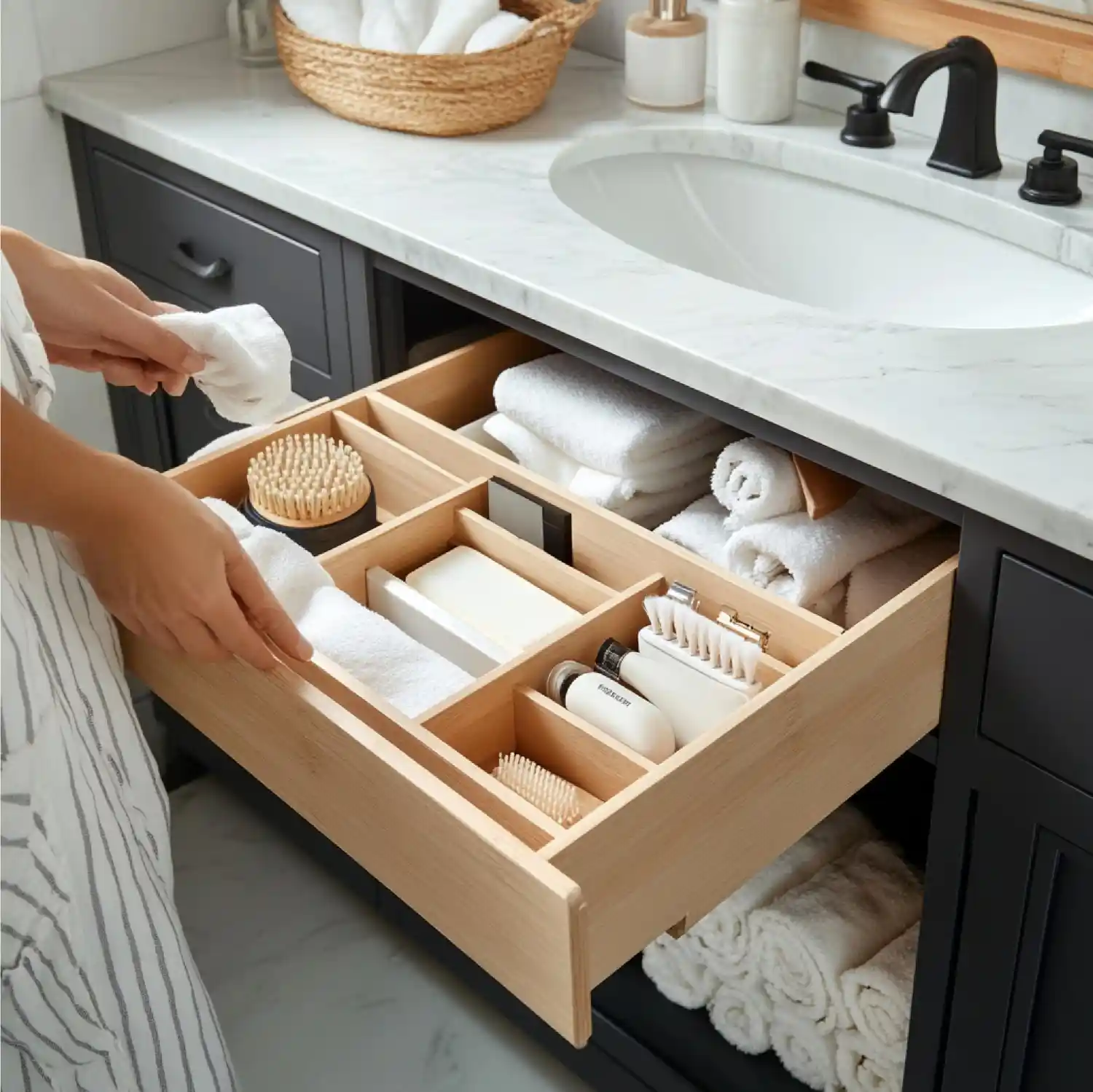
- Pick one muted palette anchor — warm white, greige, or soft sage — and repeat it on walls, textiles, and tile grout.
- Choose warm 2700-3000K bulbs on a dimmer for every fixture, especially the one nearest the tub.
- Add one humidity-tolerant plant, like a pothos or snake plant, for a living, changing layer.
- Swap polished chrome for brushed brass or matte black, repeated on at least two fixtures.
- Layer at least two natural textures — linen, teak, and stone — so the room doesn’t feel flat.
- Keep countertops to three or fewer objects so the space feels calm, not cluttered.
- Choose a flameless reed diffuser instead of open candles near water for a safer scent ritual.
KEY TAKEAWAY: A spa bathroom feels calming when natural materials, warm light, and a muted palette are layered together — swap or add fixtures only after the light and materials are already warm.
The Big Moves: Tub, Shower, and Surfaces
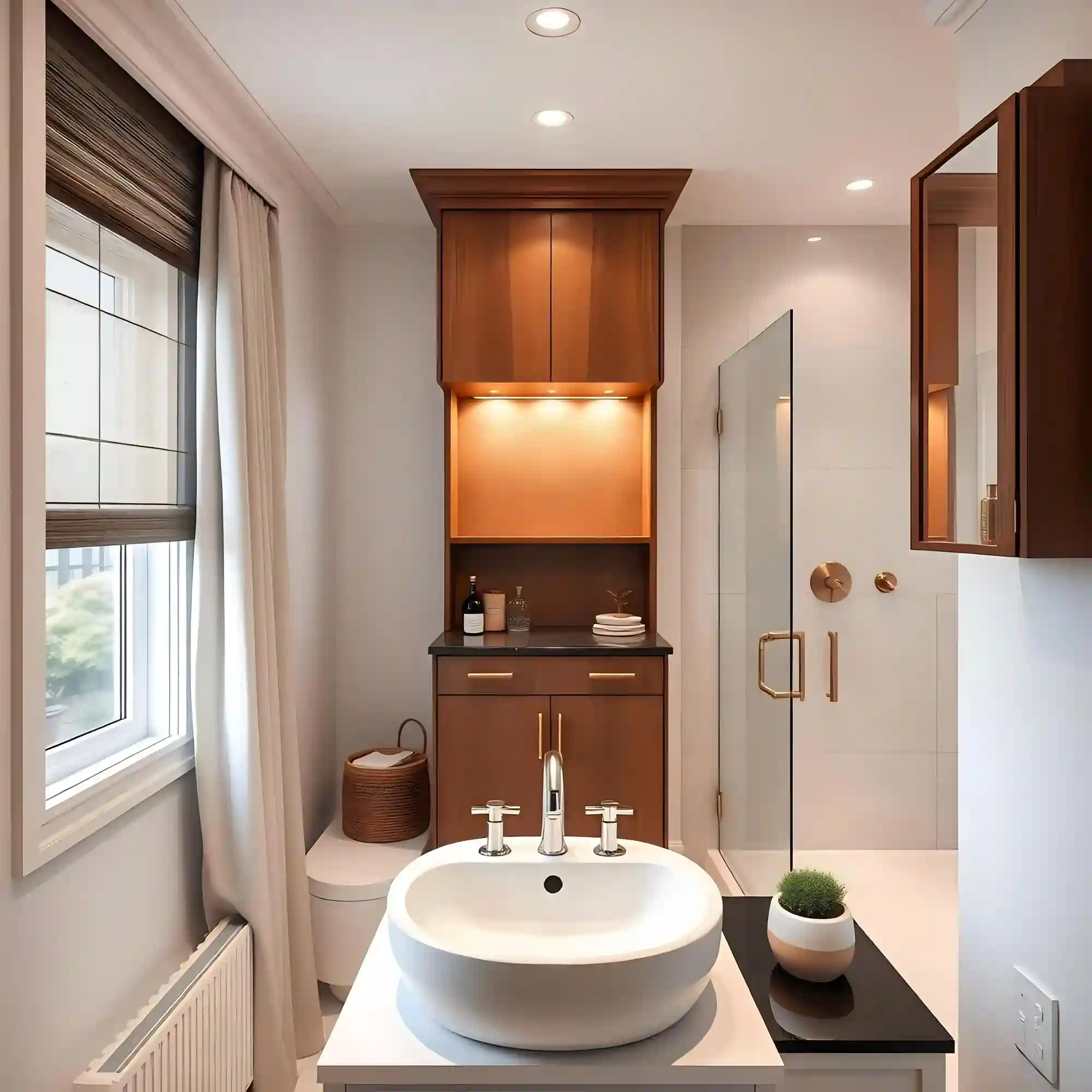
These four spa bathroom ideas cost the most and change the most. A soaking tub, a rain shower, natural stone tile, and a floating vanity form the bones of the room. Everything else layers on top. Start here if you’re planning a fuller refresh, or borrow just one element if your budget or timeline is tighter.
A Freestanding Soaking Tub as the Anchor
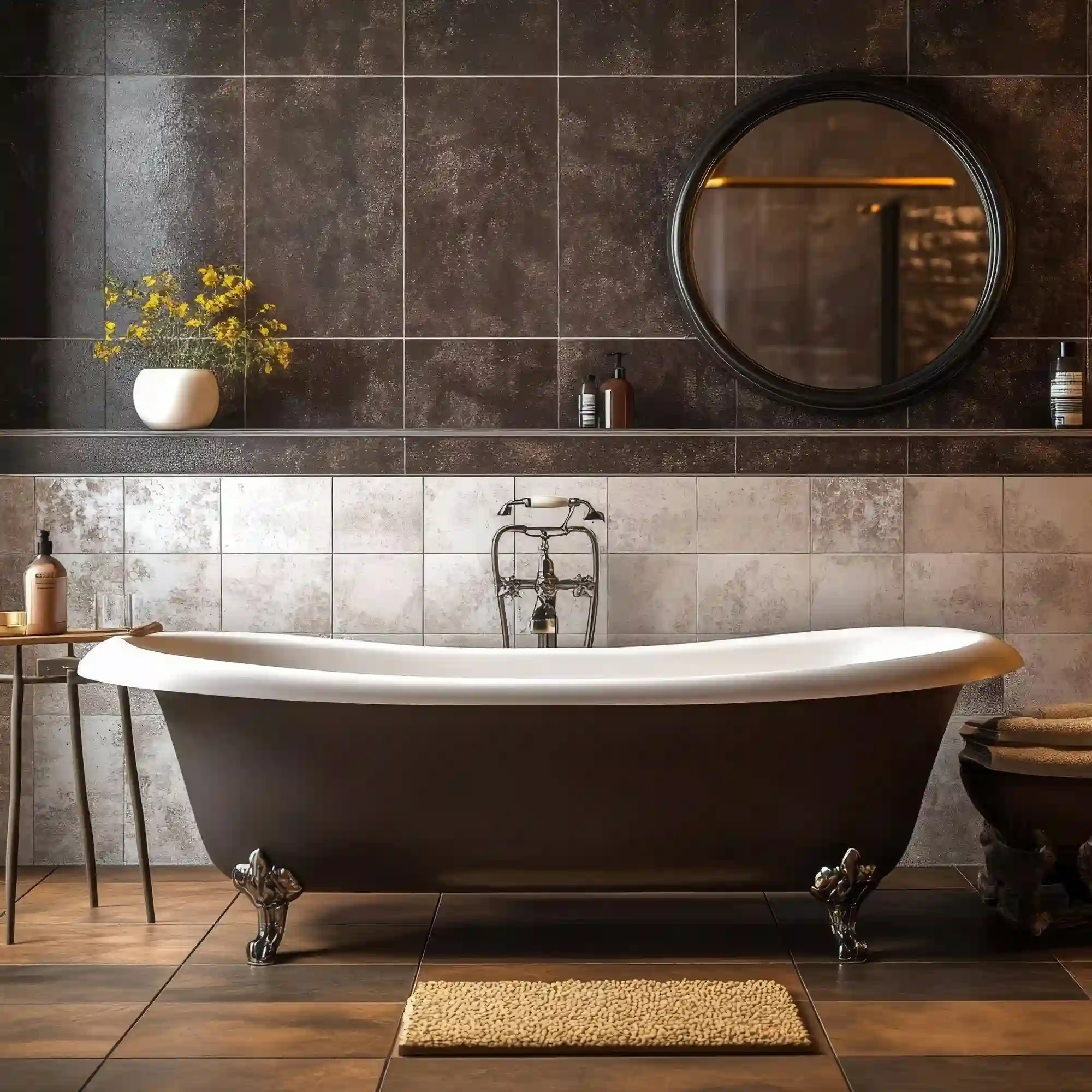
A freestanding soaking tub is the fastest way to make a bathroom read as a retreat instead of a utility room. Unlike a built-in tub-shower combo, a freestanding tub sits away from the wall, so it becomes the room’s clear focal point. Acrylic models start around $800-$1,800, while cast iron or copper versions can run $2,500-$7,000 or more before installation (Angi). An oval or gently curved silhouette feels softer than a sharp-cornered tub. Plumbing changes for a freestanding tub, like a new drain location or a floor-mounted filler, are best left to a licensed plumber rather than treated as a weekend project.
A Spa-Style Walk-In Rain Shower
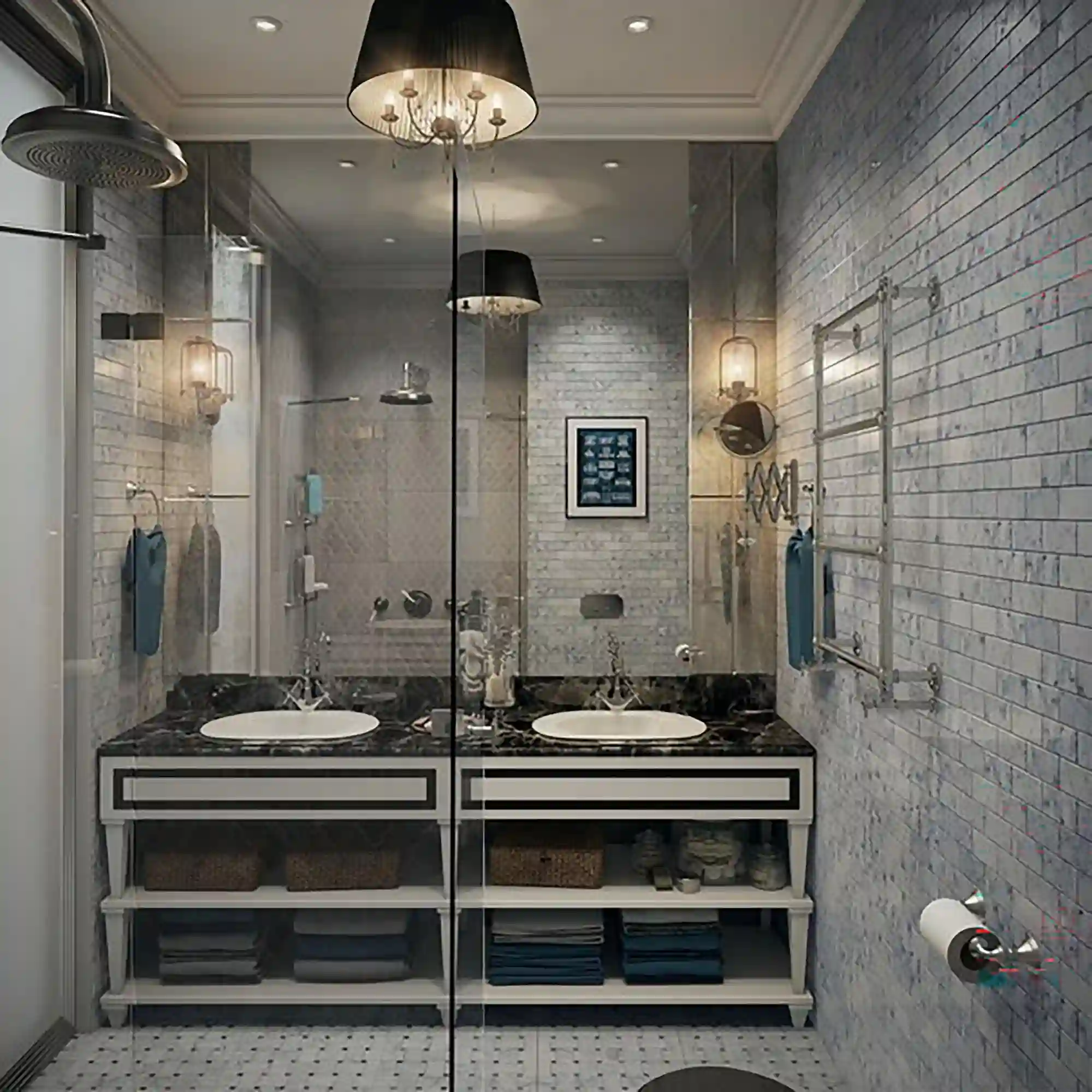
A walk-in rain shower turns a daily routine into the closest thing to a spa treatment your bathroom offers. A ceiling-mounted or shower-arm rain head delivers a wide, gentle stream instead of a narrow jet, and a curbless or low-curb entry keeps the room feeling open. Source Note: federal rules cap shower flow at 2.5 gallons per minute, and EPA WaterSense-labeled heads use 2.0 gallons per minute or less while still meeting spray-coverage standards (EPA), so a rain shower doesn’t have to waste water to feel generous. A curbless entry involves waterproofing work that belongs to a licensed contractor, not a DIY afternoon. Designer Tip: repeat one metal finish — brushed brass or matte black — across the shower fixtures, faucet, and towel rail; three or more finishes in one room looks accidental instead of calm.
Natural Stone Tile in Warm, Muted Tones
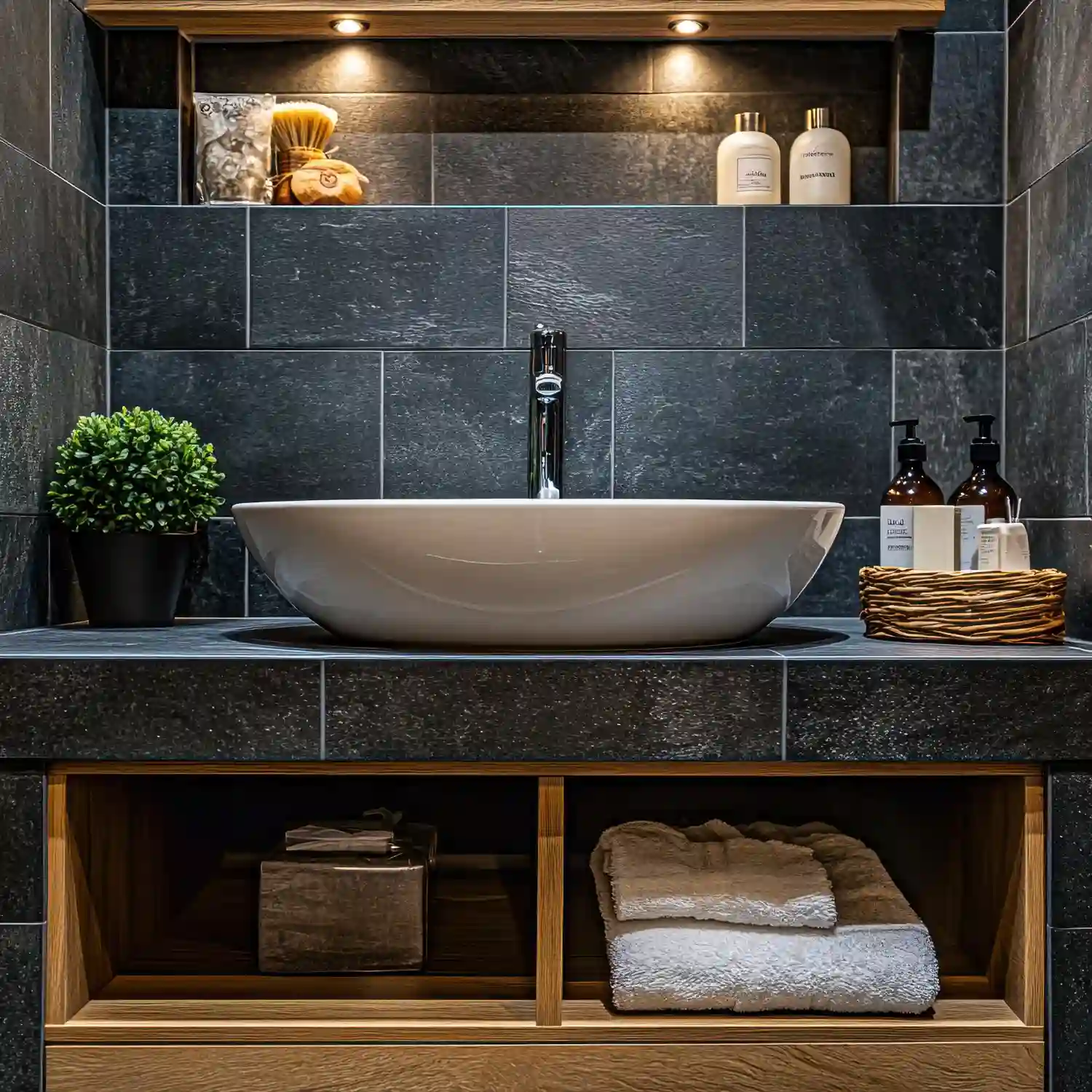
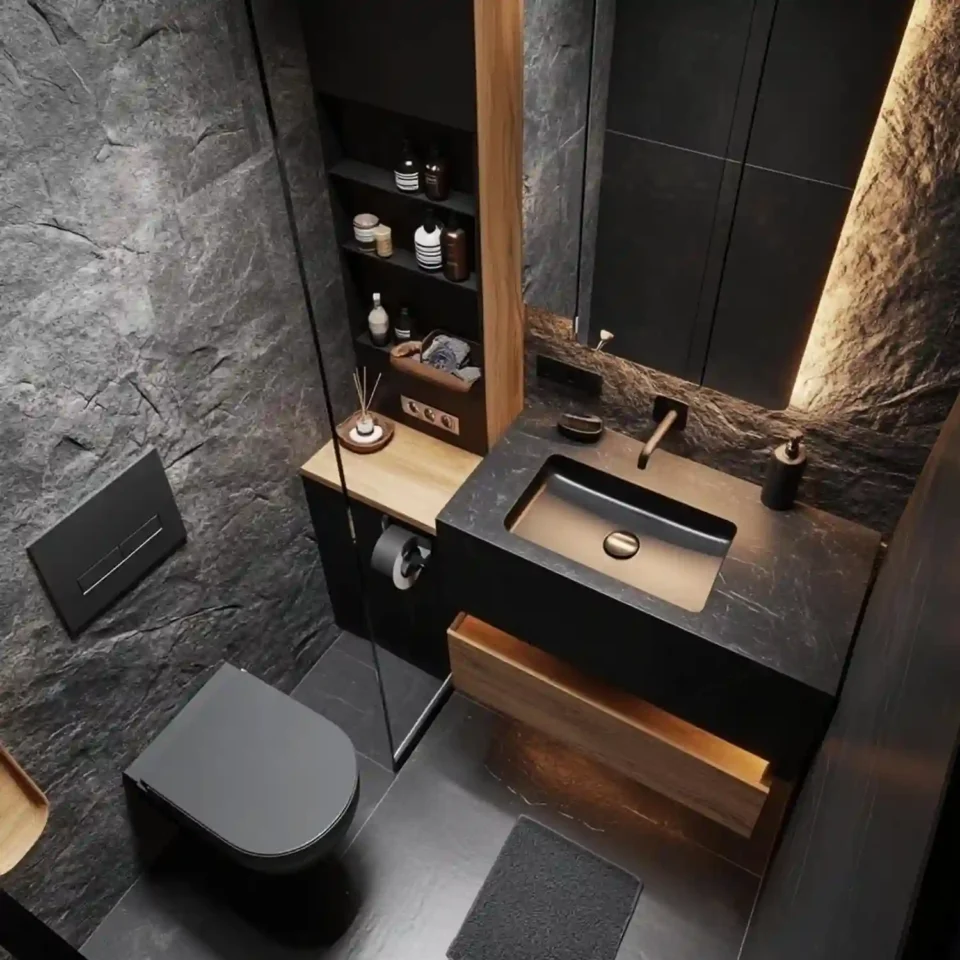
Natural stone — travertine, limestone, or a warm marble-look porcelain — grounds a spa bathroom in a way ceramic subway tile can’t quite match. Choose a honed, matte finish over polished stone; it feels warmer underfoot and hides water spots better. Source Note: for any wet floor, look for a DCOF (dynamic coefficient of friction) rating of at least 0.42, the industry’s wet-slip-resistance standard (Daltile). Stick to one warm, neutral tone across the floor and shower wall so the room feels calm instead of patterned. If real stone is outside the budget, a large-format porcelain slab in a travertine or limestone look gives the same warmth for less upkeep — the same material pairing covered in these bathroom backsplash ideas.
A Floating Wood Vanity With Open Shelving
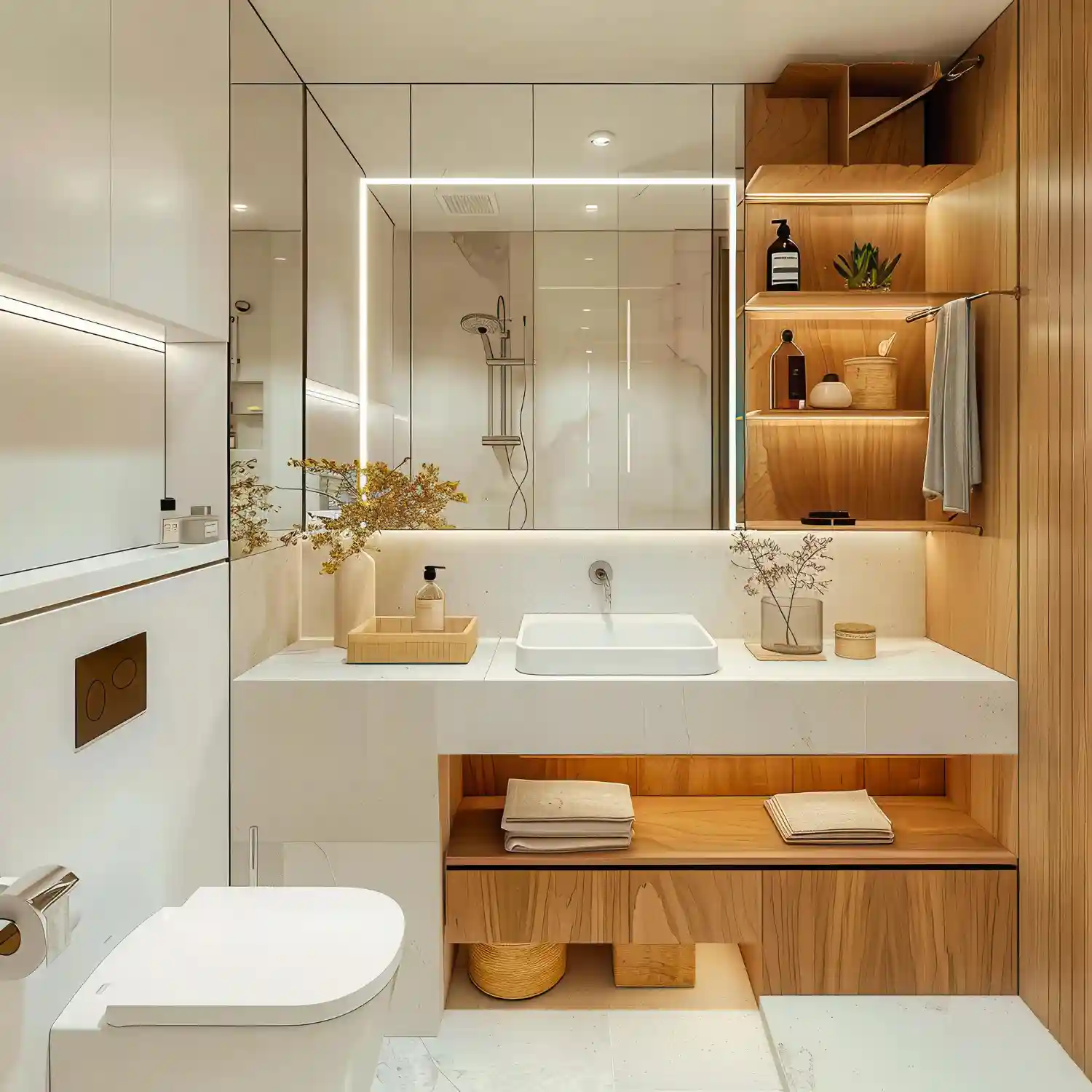
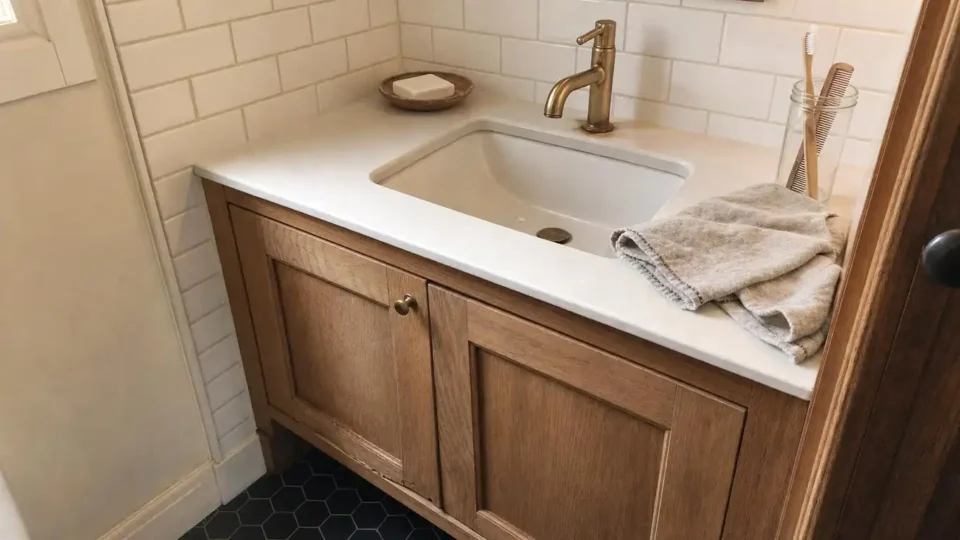
A floating wood vanity — mounted to the wall with no legs touching the floor — keeps the room’s sightlines open, which matters as much for calm as any material choice. Warm oak or teak in a natural or lightly whitewashed finish softens a room built mostly from tile and glass. Open shelving underneath holds folded towels or a woven basket instead of hiding them behind a door, which keeps the daily routine simple. A 30-36 inch single vanity works for most bathrooms, while a 60-72 inch double suits a shared spa-style layout. Material Note: any wood vanity in a bathroom needs a marine-grade sealant on every surface, since humidity attacks unfinished edges first.
A Natural, Muted Spa Palette
Once the big fixtures are set, the palette and materials do the rest of the work. These four ideas layer in the color, wood, and fabric choices that make a spa bathroom feel warm instead of sterile, all without touching plumbing or tile. If a hushed, natural palette is a mood you love throughout the house, these japandi bedroom ideas apply the same quiet approach to a bedroom.
A Muted Spa Color Palette
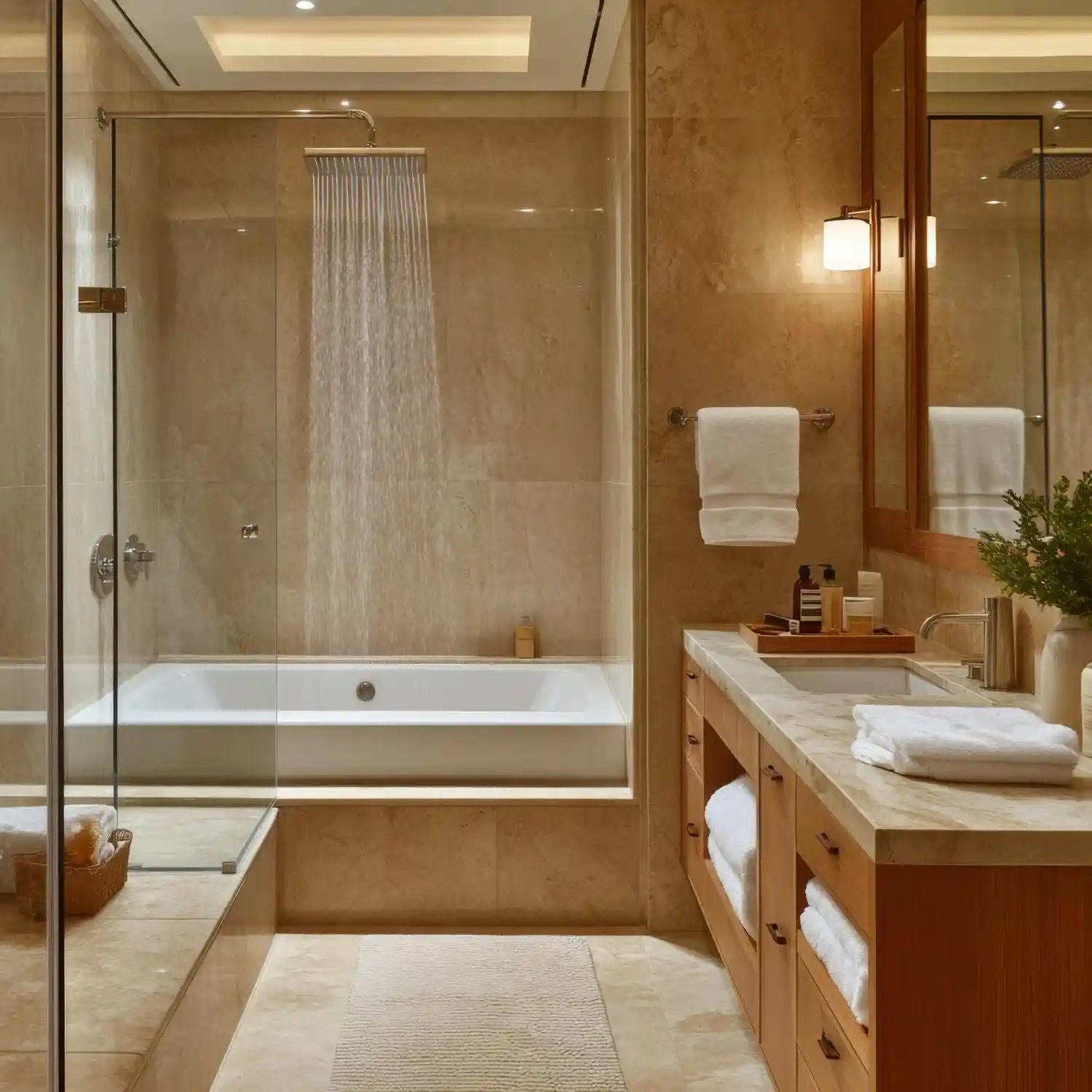
A spa bathroom palette stays narrow on purpose: warm white or soft greige on the walls, one muted accent like sage green or stone grey, and natural wood or stone doing the rest of the color work. Skip bright white and cool grey together — that pairing is what makes a bathroom feel clinical instead of calm. If you already love a soft sage direction, this sage green vs. forest green bathroom guide shows how far that muted palette can stretch. Test any paint color under your bathroom’s actual lighting before committing to a full gallon, since fluorescent and warm LED bulbs shift a color noticeably.
A Warm Teak Bath Mat and Shower Stool
Teak is a naturally rot- and water-resistant hardwood, unlike most other lumber, which is why it’s the wood most associated with spa styling. A slatted teak bath mat lifts feet off a cold or wet floor, while a teak shower stool doubles as a shelf for products or a seat during a longer soak. Material Note: teak develops a silvery-grey patina outdoors, but indoor bathroom teak stays warmer in tone with occasional oiling, roughly twice a year depending on how often it’s used. Wipe it dry between uses so water doesn’t pool in the slats. If this warm-wood direction is one you want to push even further, a farmhouse bathroom leans on it with more texture and pattern.
Linen Robes, Curtains, and Waffle Towels
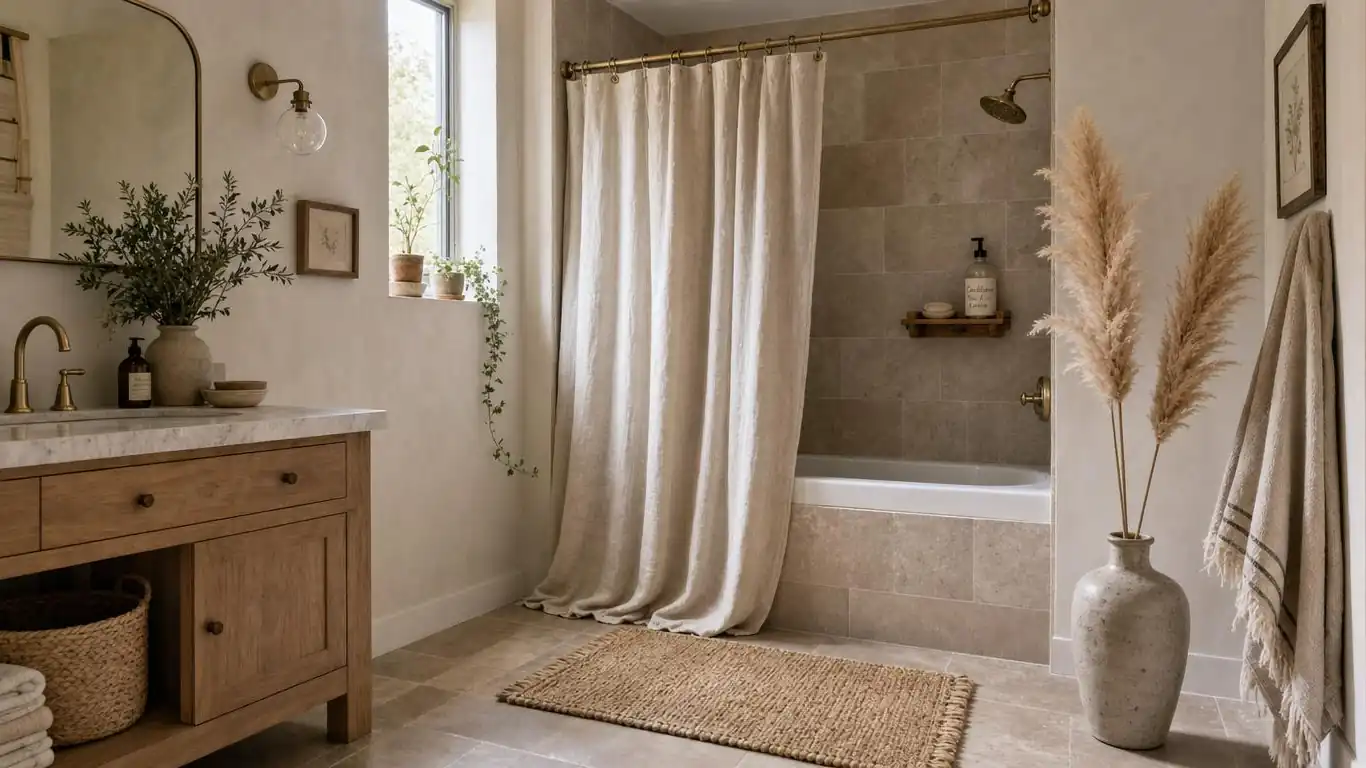
Fabric is the fastest, least expensive way to shift a bathroom’s mood. A linen shower curtain or linen window panel softens hard tile edges, while a waffle-weave or Turkish cotton towel set adds texture that a standard terrycloth towel doesn’t. A robe hook near the tub, holding one linen or waffle robe, finishes the hotel-spa cue without any construction. Choose a warm white or oatmeal tone over stark white, since it looks softer against natural stone and wood.
A Woven Storage Basket to Keep Surfaces Clear
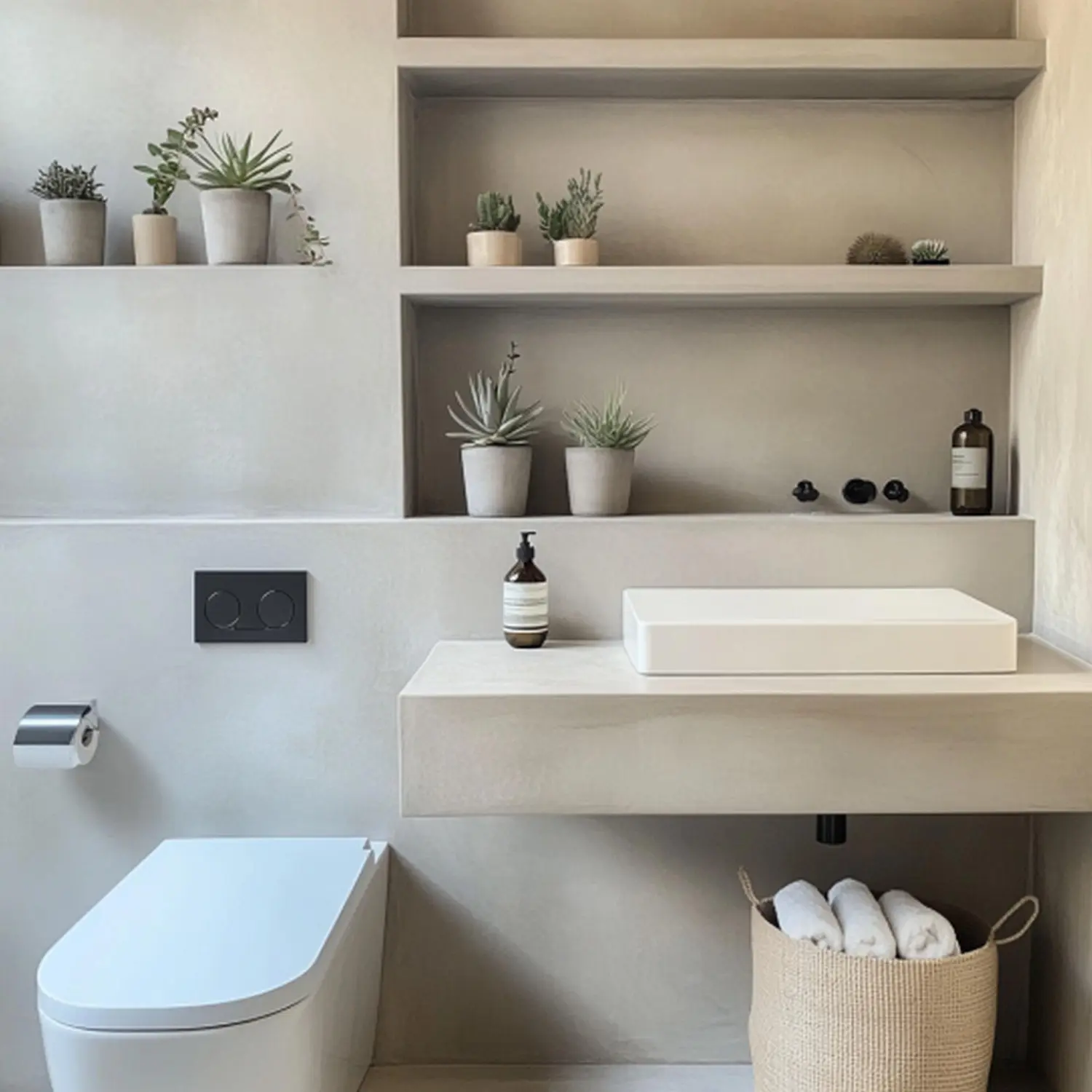
A cluttered counter is one of the fastest ways to undo every other spa bathroom idea on this list. One or two woven rattan or seagrass baskets, tucked on an open shelf or under the vanity, hold everyday products out of sight without a cabinet door. Keep visible counter objects to three or fewer — a soap dish, a small plant, one tray — so the surface still feels calm. This same clutter-clearing habit is one of the few overlaps with a minimalist bathroom, though a spa bathroom keeps more texture and warmth than a true minimalist room.
How Do You Layer Sensory Details Into a Spa Bathroom?
The last six ideas on this list cost the least, but they’re often what makes a room feel finished. Light, scent, plants, and a few styled objects layer on top of the materials and palette you’ve already chosen.
How Warm Should Spa Bathroom Lighting Be?
Warm light does more for a spa bathroom’s mood than almost any material choice. Source Note: a color temperature of 2700-3000K on a dimmer feels relaxing, while anything above 4000K feels closer to a clinic than a retreat. Layer at least two sources: a dimmable sconce or pendant near the mirror, and a separate fixture over or near the tub. This same warm, layered approach to light works well in a cozy bedroom lighting plan too. Any fixture near a tub or shower needs a UL wet- or damp-rated listing, and new wiring belongs to a licensed electrician, not a DIY swap.
Which Plants Handle Bathroom Humidity Best?
A living plant does something no material can — it changes slightly day to day, which keeps a bathroom from feeling like a still life. Pothos and snake plant both tolerate low light and high humidity, making them two of the most forgiving choices for a windowless or low-light bathroom. Climate Note: a bathroom with little natural light and inconsistent humidity favors these two over a fussier tropical plant like a fern. One plant on the vanity or floating shelf is usually enough. If plants and woven texture are a direction you want to push even further, boho bathroom inspiration leans on greenery as the main event instead of a supporting layer.
A Scent Ritual Corner
A small dedicated spot for scent — a wood tray holding a reed diffuser, a few dried eucalyptus stems, or an unscented candle for occasional use — turns a routine into a ritual. Skip open flame near a tub or shower edge where it could tip into water; a flameless reed diffuser or a plug-in warmer gives the same effect with less risk. Eucalyptus, in particular, holds up well hung from the shower head, since steam releases its scent naturally over a few days before it needs replacing. Not every species tolerates a windowless, humid room, so start with bathroom plants that survive low light.
Rolled Towels and a Styled Tray Vignette
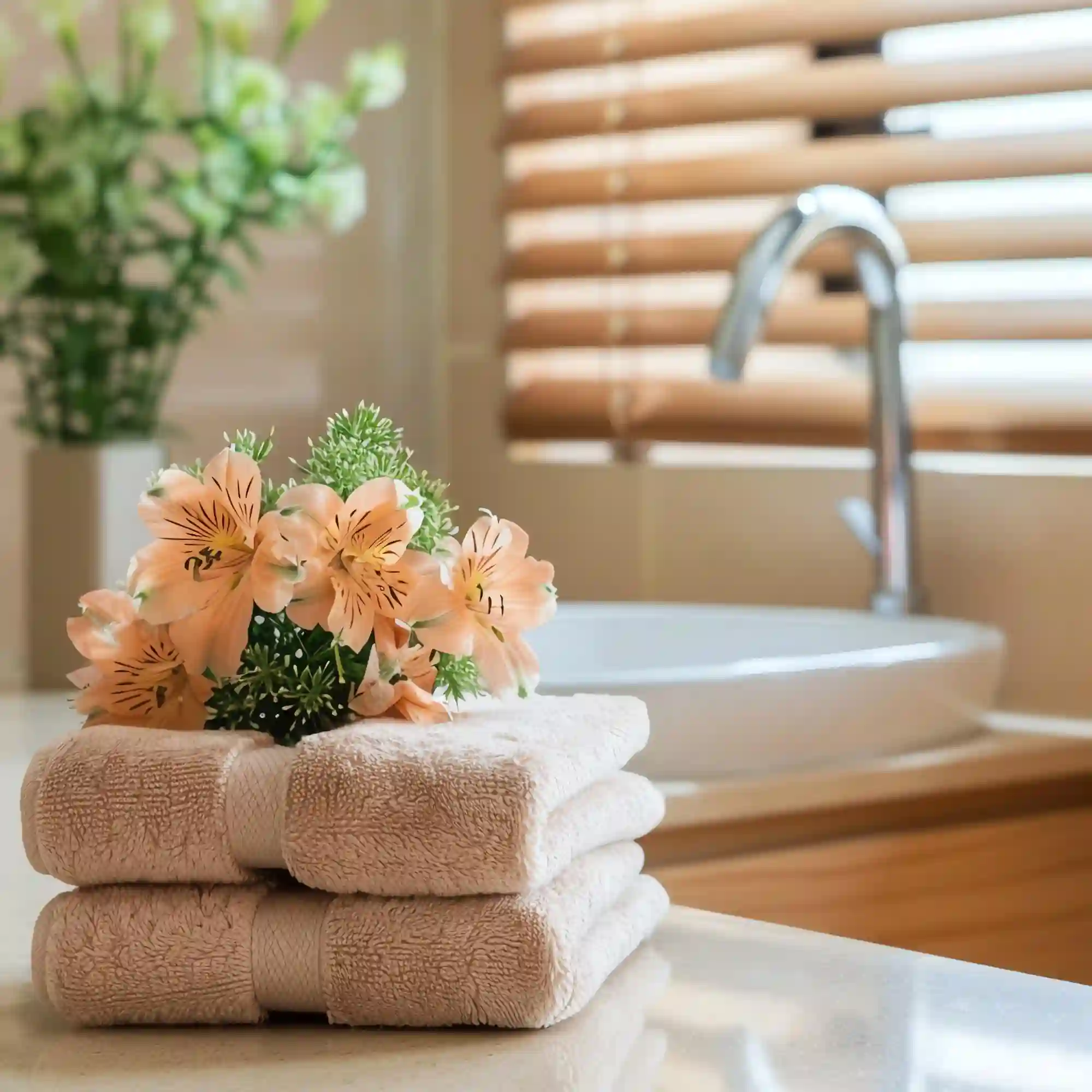
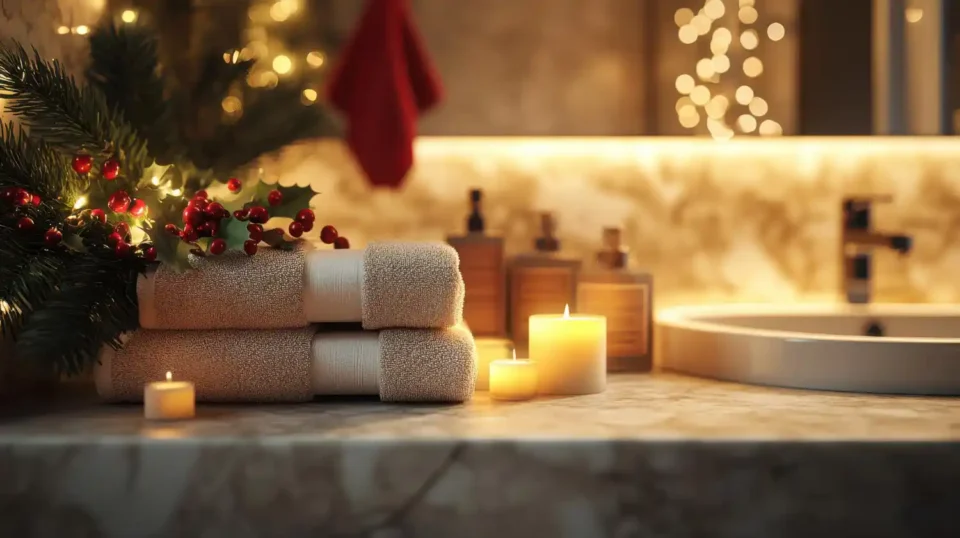
How towels are folded changes how a bathroom reads more than almost any other detail. Rolled towels, stacked in a woven basket or lined on an open shelf, look like spa styling. Flat-folded towels look like laundry. Pair them with a small wood or stone tray holding a soap pump, a rolled washcloth, and one small plant or candle. Designer Tip: roll towels instead of folding them flat — the rounded shape signals spa styling instead of laundry, and it takes the same amount of shelf space.
Is a Heated Towel Rail Worth Adding to a Spa Bathroom?
A heated towel rail is one of the clearest hotel-spa signals a bathroom can borrow, and it’s a smaller project than most people assume. Plug-in electric models run roughly $70-$355, while hardwired versions cost more to install but run for pennies a day, often under $15 a year in electricity for a couple hours of daily use. Mount it within reach of the shower or tub so a towel is warm the moment you step out. Safety Note: a hardwired towel rail needs a licensed electrician for the circuit, especially in a wet location near a tub or sink.
Sheer or Frosted Privacy for Soft Natural Light
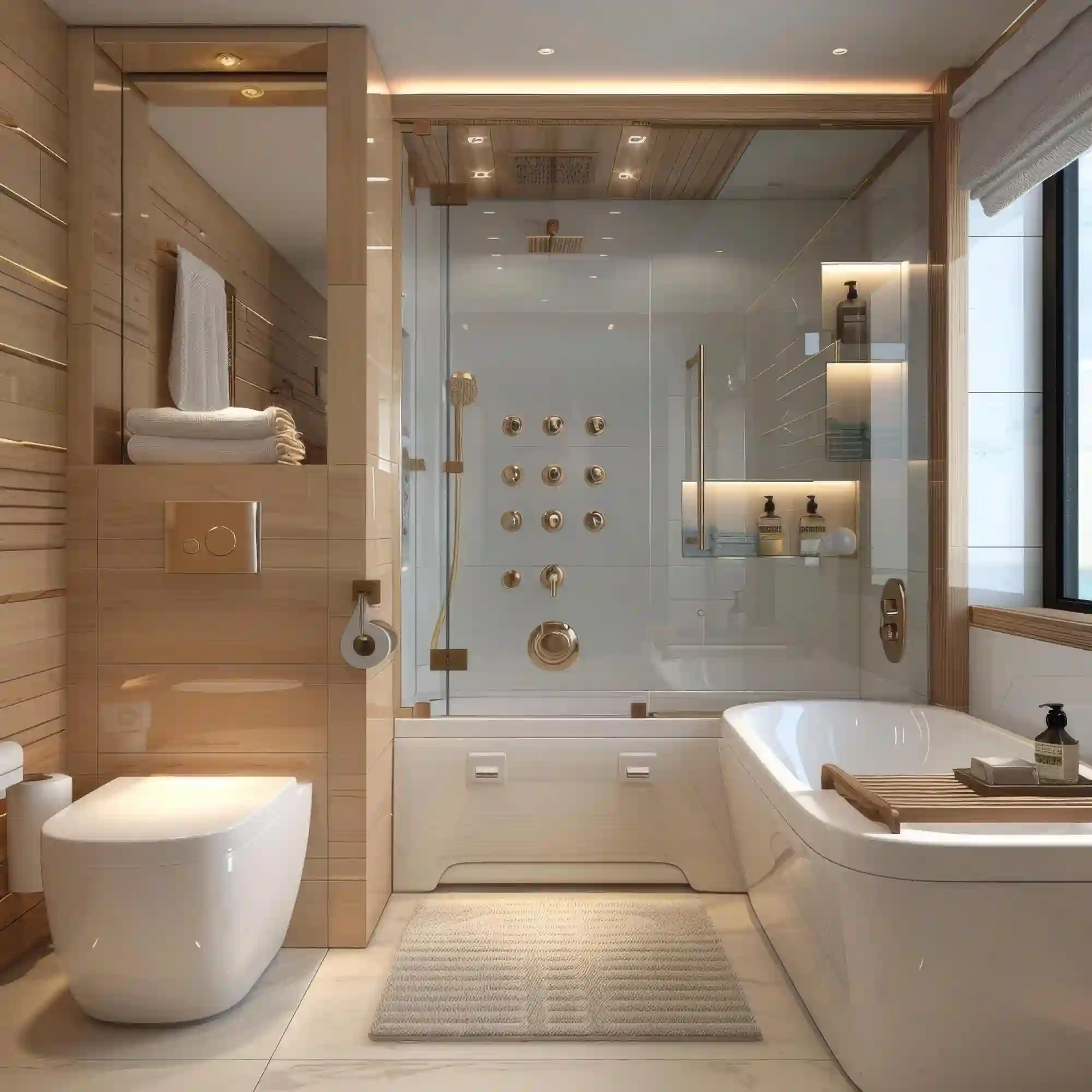
Natural light does more for a calm mood than almost any bulb, but full privacy usually rules it out. Frosted or reeded glass, a sheer linen curtain, or a top-down bottom-up shade all let soft daylight in while keeping the room private. A window near the tub is the best spot for this treatment, since natural light during a soak feels different than a bright artificial source. This same soft, filtered approach to a calm room works well beyond the bathroom too, like in an organic modern living room for a calm sanctuary. If your bathroom has no natural light source at all, a warm 2700K fixture on a dimmer is the closest substitute.
Can a Small or Rental Bathroom Still Feel Like a Spa?
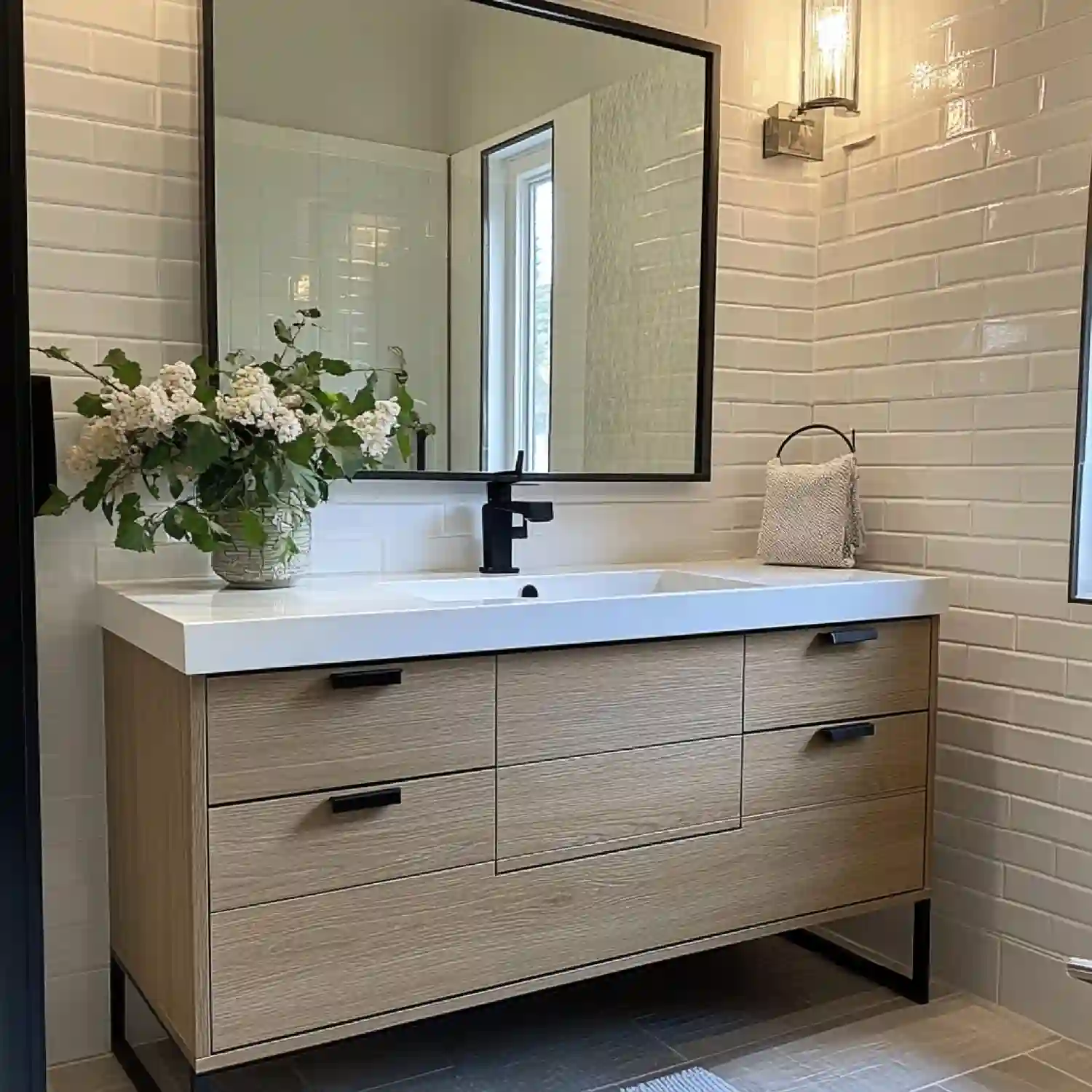
The spa feeling comes from layering, not square footage, so the answer is yes. A small bathroom can borrow the palette, the warm lighting, one plant, and a rolled-towel vignette without any of the bigger fixture changes covered above. Rental Note: skip the vanity swap, tile work, and any tub replacement if your lease restricts permanent changes. A peel-and-stick tile mat, a plug-in warm sconce or table lamp, a teak bath mat, and a removable linen curtain deliver most of the mood without touching a wall or a lease clause.
For more ways to build a self-care corner elsewhere in the house, these meditation chairs for a mindful home sanctuary apply the same calm-first thinking to a reading nook or bedroom corner.
What Turns a Spa Bathroom Sterile Instead of Calming?
Instead of stacking three or more metal finishes — chrome, brass, and black all in one room —, Try picking one warm finish and repeating it on the faucet, hardware, and light fixtures.
Instead of leaving one flat overhead bulb as the only light source, Try adding a second warm source on its own dimmer near the tub or mirror.
Instead of a fully bare, all-white room, Try adding at least two natural textures, like teak, linen, or stone, so the space doesn’t feel cold.
Instead of styling the counter with every product you own, Try clearing it down to three objects and storing the rest in a closed basket.
These same warm-material, warm-metal shifts are showing up across 2026 bathroom design trends more broadly, not just in spa-style bathrooms.
What Does a Spa Bathroom Upgrade Actually Cost?
A spa bathroom refresh can start under $200 or grow into a multi-thousand-dollar tub project, depending on which ideas you choose. The ranges below cover decor, textiles, and fixture-level updates only, not plumbing relocation or structural work, which a licensed contractor should price separately. For more room-specific budget context, browse our full range of room ideas.
| Project | Estimated Cost | Impact Level |
|---|---|---|
| Textiles, Scent & Plant Refresh (linen towels, robe, diffuser, one plant) | $70-$200 | Medium |
| Lighting & Hardware Swap (warm dimmable sconces, brushed brass or matte black fixtures) | $200-$550 | High |
| Heated Towel Rail (plug-in electric to hardwired) | $250-$650 | High |
| Freestanding Soaking Tub (tub only; plumbing and installation priced separately by a licensed pro) | $800-$4,000+ | Very High |
Best First Upgrade: Warm lighting and a linen textile refresh deliver the biggest mood change for the smallest budget, usually under $250 total.
Skip for Now: A full freestanding tub replacement — it’s the most expensive item on this list and the easiest to add later without redoing anything else.
Frequently Asked Questions
Conclusion
A spa bathroom idea works best when it layers natural materials, warm light, and a few hotel-style styling details instead of chasing one expensive fixture. Editorial field note: the bathrooms that feel most like a retreat usually change the light and the textiles first — the tub and tile matter less than most people expect. Start with one or two spa bathroom ideas from this list, and browse more home decor inspiration for the next room on your list.
Next Steps
- Swap your bathroom’s bulbs to a warm 2700-3000K dimmable option before changing anything else.
- Add one teak or linen texture piece — a bath mat, a robe, or a rolled towel set — this week.
- Test a muted paint color (warm white, greige, or soft sage) under your bathroom’s actual lighting.
- Clear your counter down to three objects and store the rest in a woven basket.
More Bathroom Design Styles
- 15 Coastal Bathroom Ideas for a Bright, Airy Retreat
- 15 Luxury Bathroom Ideas for a Five-Star Hotel Feel at Home
- Aesthetic Bathroom Designs for a Clean and Trendy Look
- Modern Bathroom Design Is Trading Cold Minimalism for Warmth
- Timeless Bathroom Ideas: Classic Design That Never Goes Out of Style
- 13 Scandinavian Bathroom Ideas for a Bright, Hygge-Warm Space