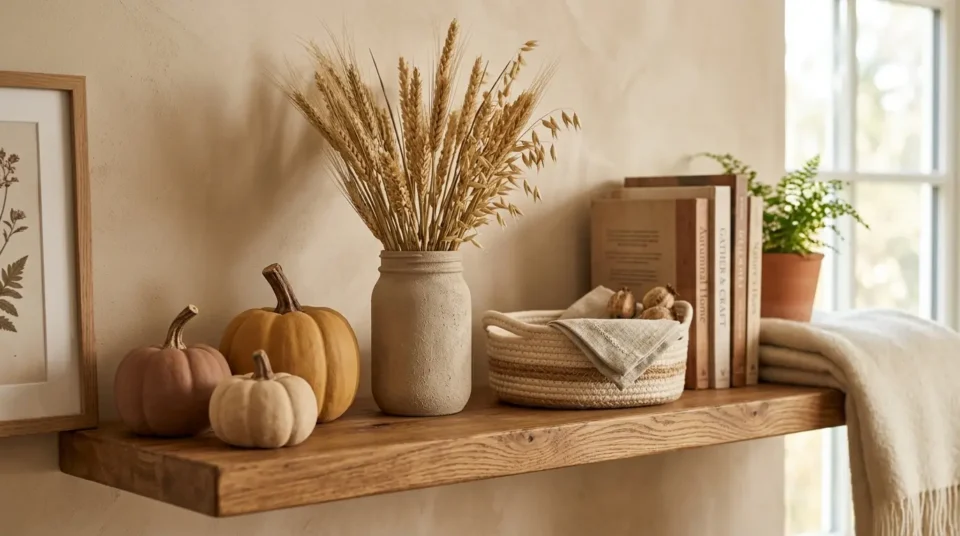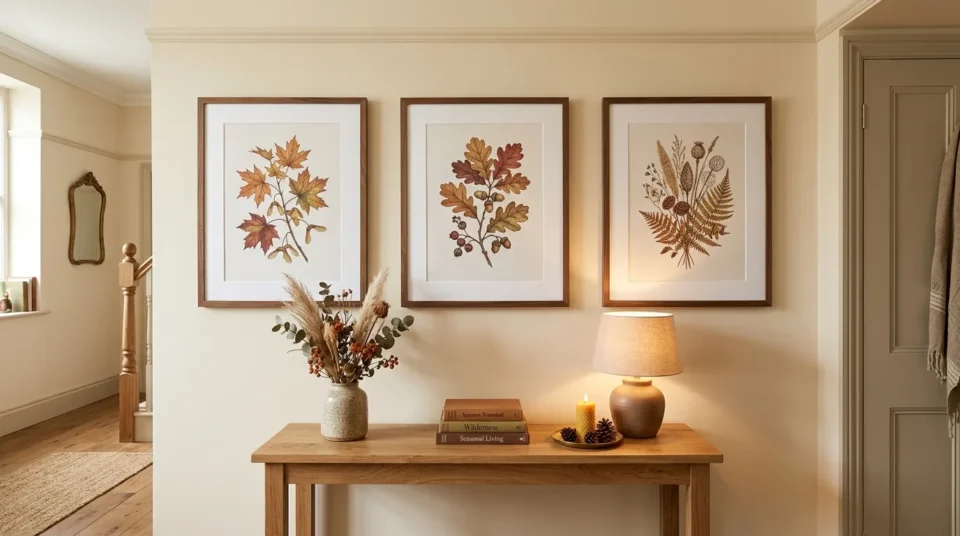
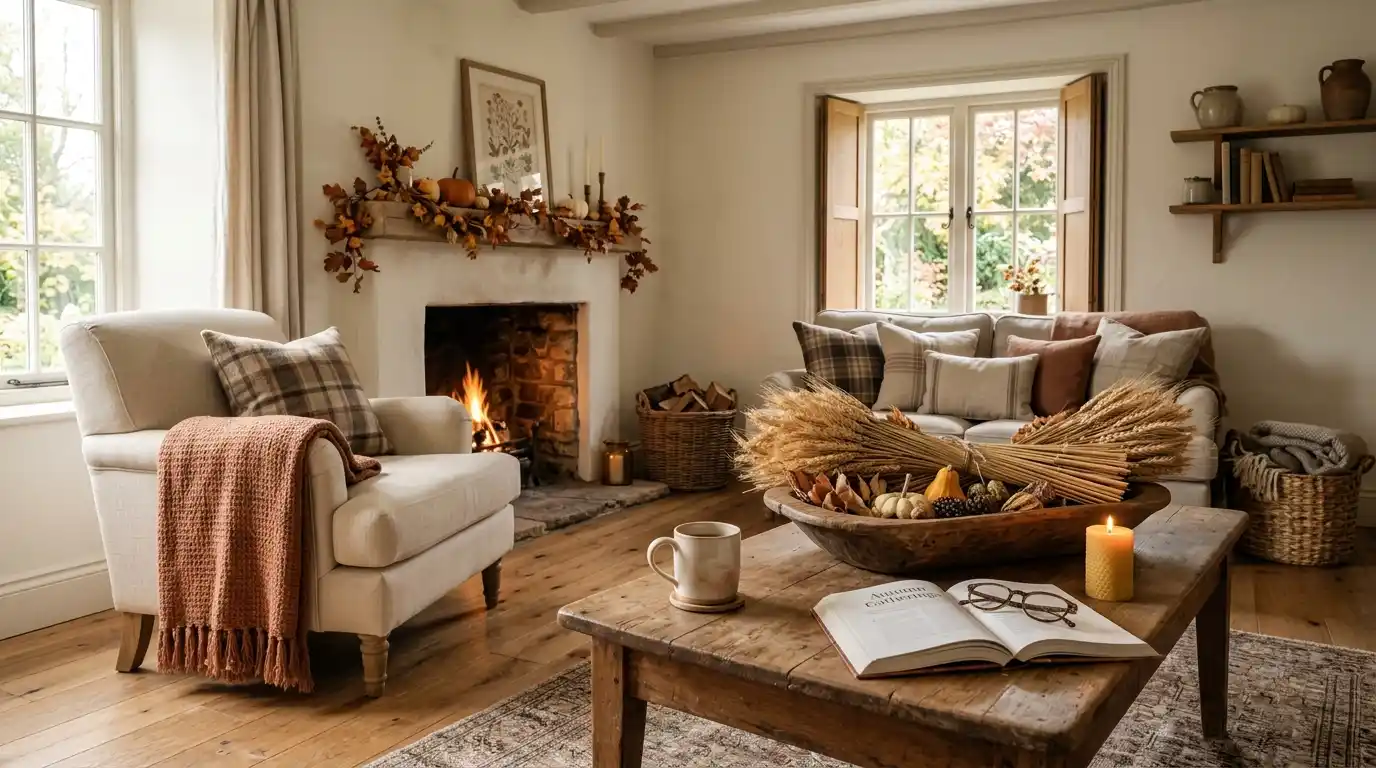
Why Does Fall Farmhouse Decor Date So Quickly?
You pull the fall bin out of the closet in early September and unpack the same things you unpacked last year. A burlap runner. Two chalkboard signs. A galvanized bucket of orange picks. Everything goes back exactly where it went before, and the room looks tired instead of warm. If your setup feels stuck somewhere around 2016, you are not imagining it.
Looking for more ideas? Explore our full guide to Cozy Fall Aesthetic.
Fall farmhouse decor has shifted from printed novelty to real material. The look now runs on a warm white base, one earth tone, one muted green, and objects made of actual wood, stoneware, dried stems and heavy linen. Word signs, burlap and orange plastic gourds are what age it. Change the materials before you change anything else.
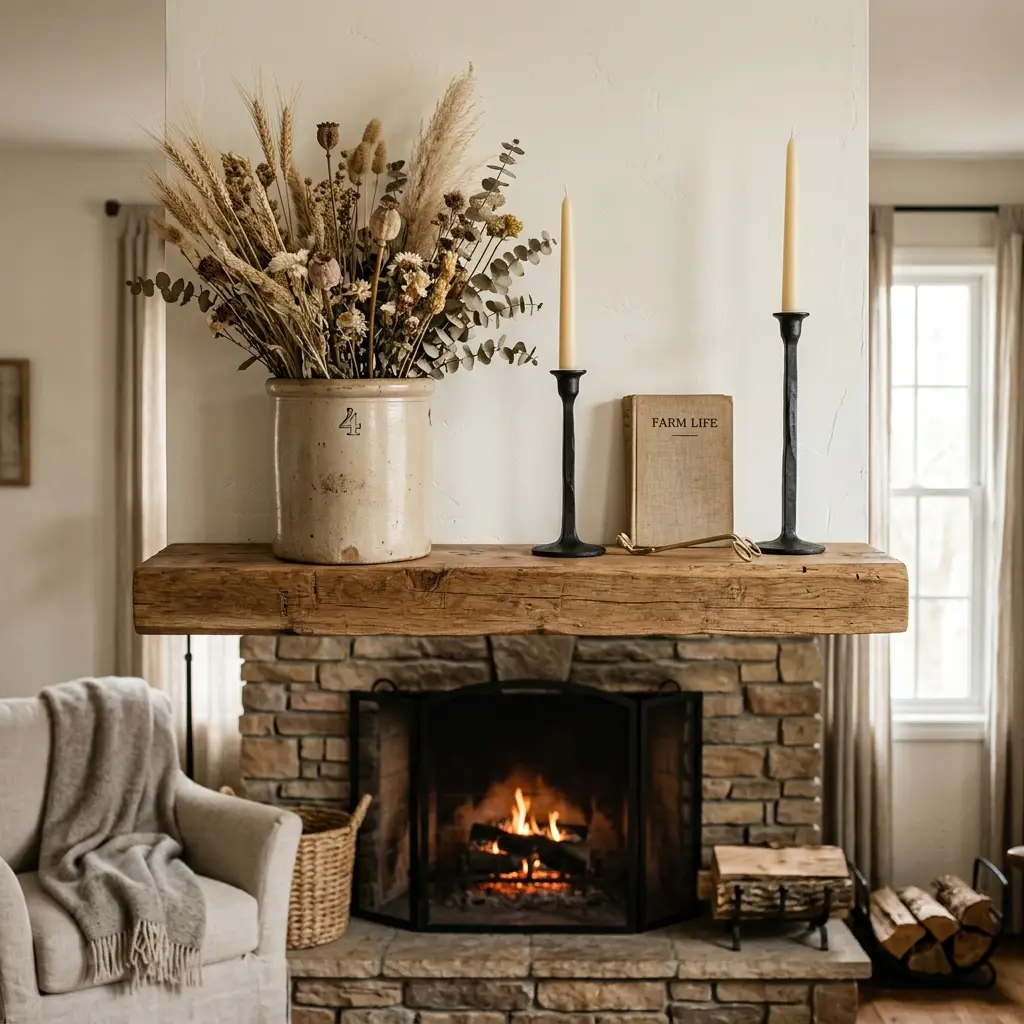
Editorial field note: A white-painted mantel holding two wooden signs, a burlap swag and six small orange gourds looks busier every year, not warmer. Clearing all of it and setting one dough bowl of dried wheat between two black iron candlesticks leaves the same mantel calmer within ten minutes, with nothing new bought.
This guide covers what changed in the farmhouse look, what the updated version actually contains, and five swaps that carry the room from early September through Thanksgiving. For more seasonal styling across every room, our home decor inspiration covers the full range.
The Farmhouse Fall Checklist
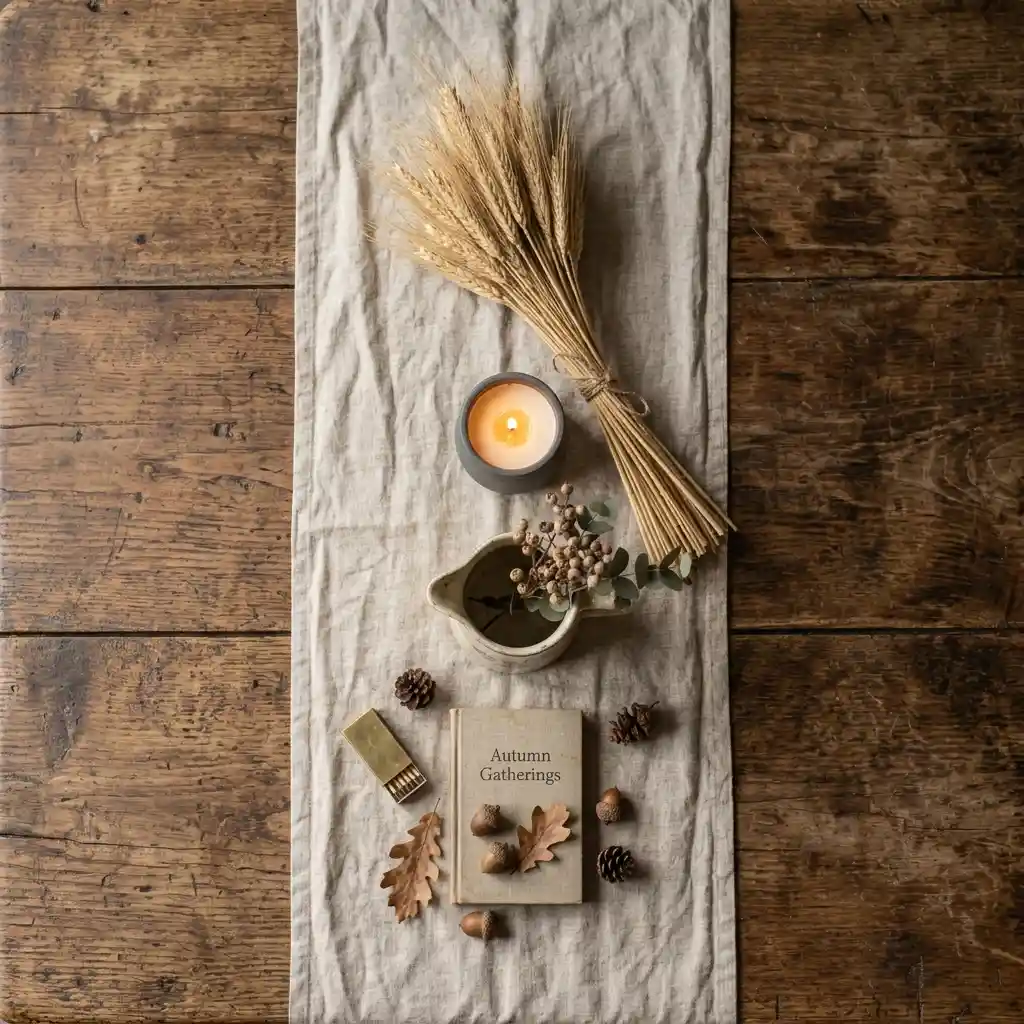
- Empty the fall bin completely before styling, then earn each piece back onto the surface.
- Sort what you own into two piles: made of a real material, and printed to look like one.
- Replace one printed sign with one solid object in wood, stone or ceramic.
- Check that your white surfaces are warm white, not the cool bright white of builder trim.
- Buy dried stems in odd-numbered bunches and store them upright, never bagged.
- Swap the burlap runner for washed linen or a grain-sack stripe before buying anything new.
- Pick one metal for the room and count three places it can repeat.
- Keep every bulb in the room at the same warmth so the tones stay true after dark.
Browse more fall decorating ideas before you shop for anything new.
KEY TAKEAWAY: The farmhouse fall look fails on material quality far more often than on quantity or budget.
What Changed in the Farmhouse Look?
The farmhouse style did not go away. What it is made of changed. Early modern farmhouse ran on printed shortcuts — burlap, galvanized metal, chalkboard paint and adhesive lettering — because those pieces were cheap to mass-produce and easy to read from a shelf. The version that replaced them leans on things that cost more to make and less to look at: turned wood, glazed clay, woven linen and hammered metal. Texture now does the job lettering used to do, which is why the same room can hold half as many pieces and still say autumn.
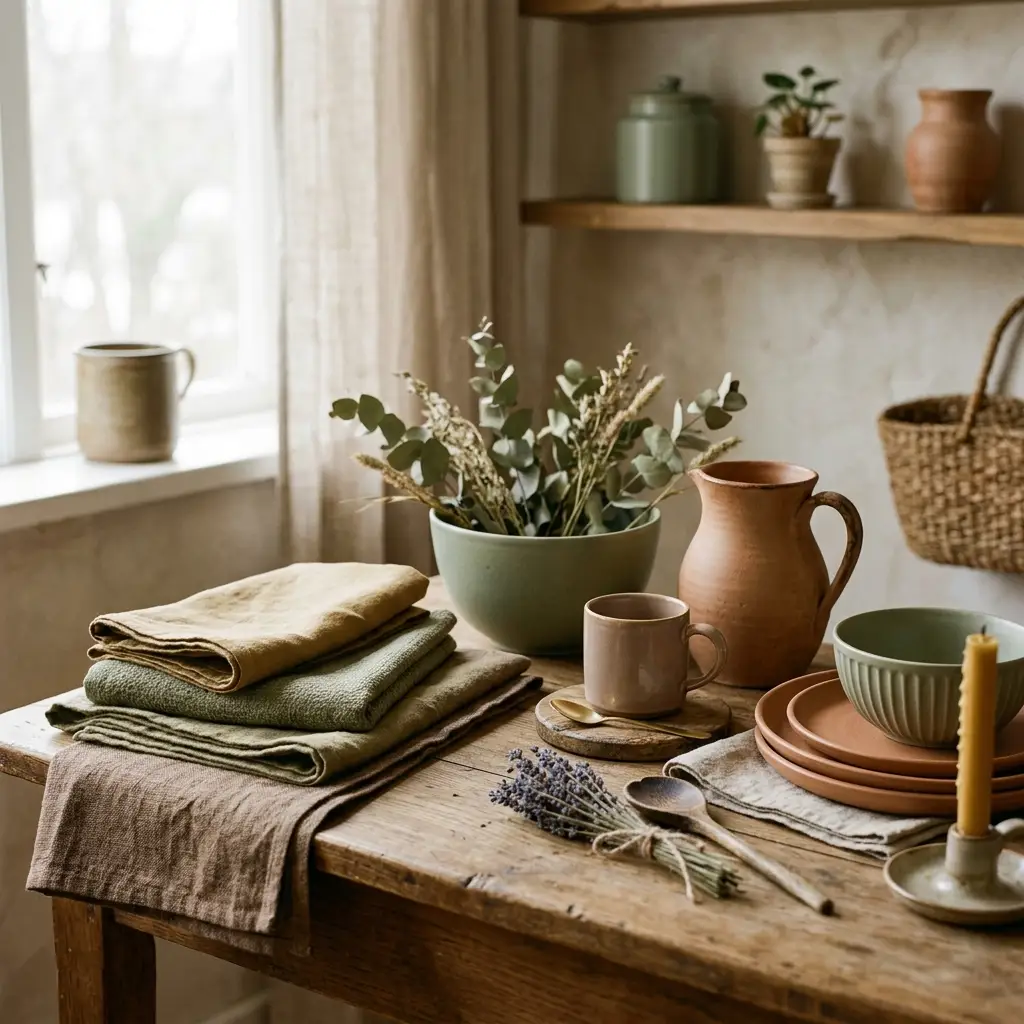
Warmer, lower-saturation color came along with that shift rather than driving it. Source Note: Behr named Taupe its 2026 Exterior Stain Color of the Year, describing it as soft brown blended with gentle gray undertones, and paired it with accent shades including Muted Sage and Baronial Brown. Those are the tones real wood, clay and dried grass already are, so the material swap and the color swap pull in the same direction. Warm pink belongs to that same muted family, which our pink fall aesthetic guide makes the case for.
Signs This Is Catching On:
- Cream and bone-colored ceramic pumpkins now sit at the front of big-box fall aisles, where orange resin ones used to.
- Dried wheat, bunny tails and preserved eucalyptus have moved from the craft aisle to the main display table.
- Chalkboard and lettered signage has thinned out on seasonal shelves it filled a decade ago.
The same shift is running through year-round styling, not just the seasonal bins. Our cozy decor ideas archive tracks the same move toward warm, textured, low-contrast rooms.
What Does Fall Farmhouse Decor Look Like Now?
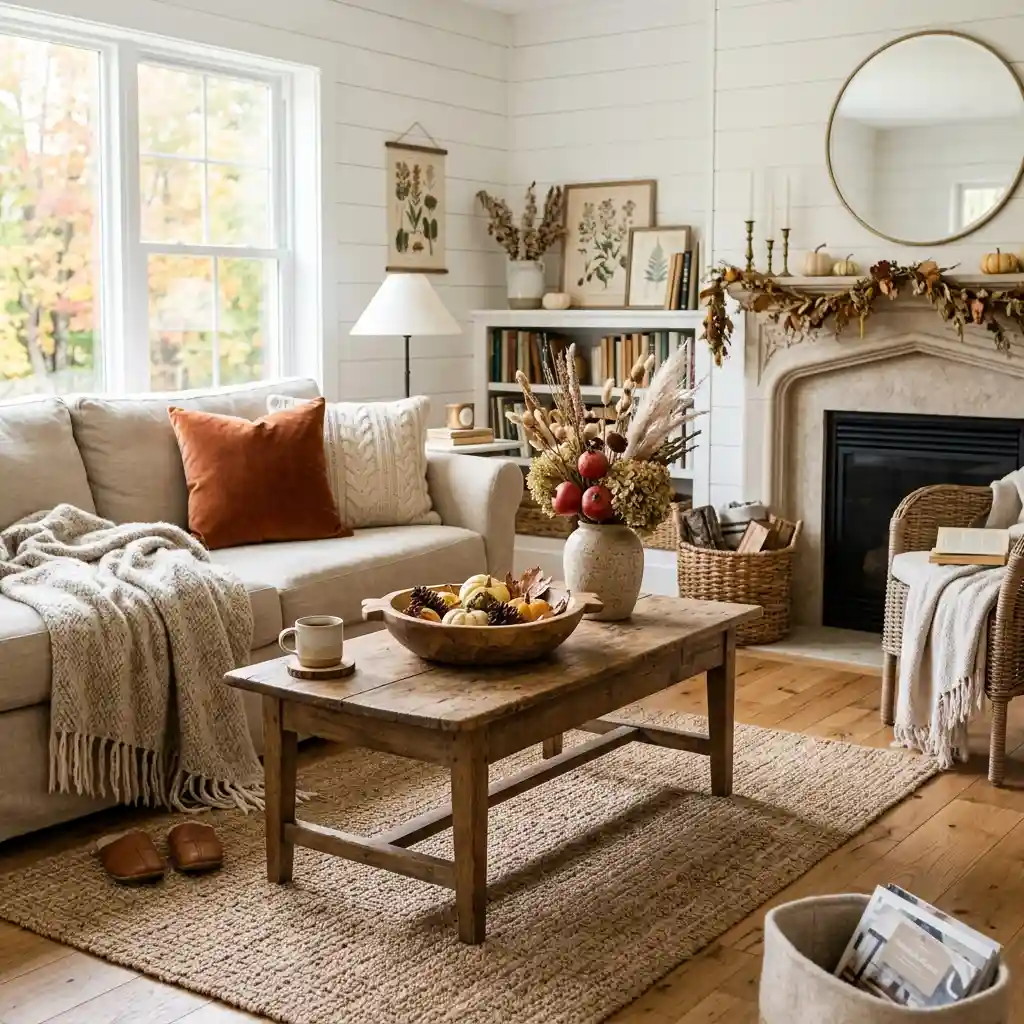
Modern fall farmhouse decor is easier to build than the old version because it needs fewer pieces. Three tones, three materials and one metal will carry a whole room. Below are the three parts that decide whether the look lands. Farmhouse is one named look among several, and committing to a single one is what makes any of them read — our fall aesthetic ideas set them side by side.
Why Warm White Is the Farmhouse Base Color
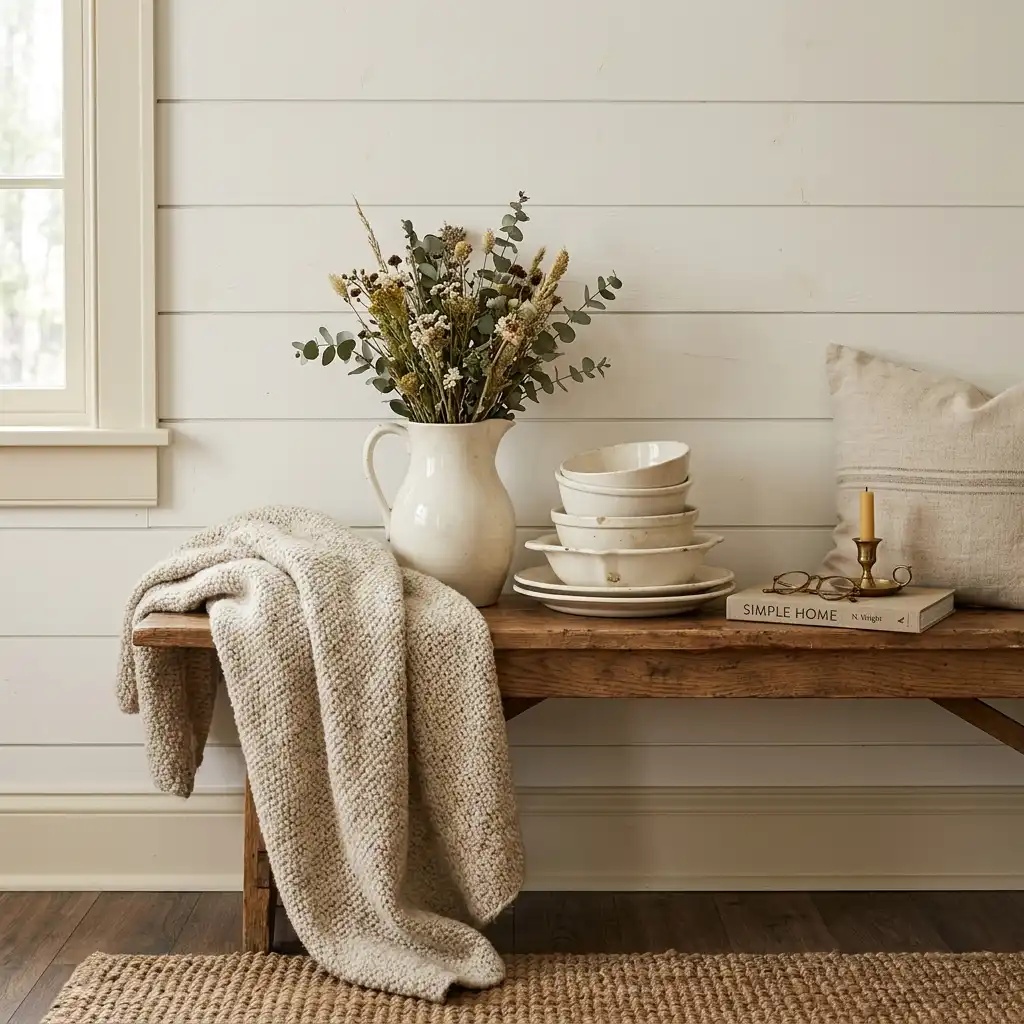
Warm white is the surface farmhouse rooms already own — shiplap, beadboard, painted trim, cabinet fronts, slipcovers and ironstone. Getting that white right matters more here than in any other style, because it covers more square footage than every seasonal object combined. A cool bright white turns grey next to clay and wheat tones and makes the whole room feel like a showroom in November.
Material Note: Warm whites carry a yellow or cream base that keeps a room from going cold under low autumn light. Sherwin-Williams Alabaster SW 7008 is a common farmhouse choice at a light reflectance value of about 82, bright enough to lift a room without the blue cast of a cool white.
You do not need to repaint to fix this. Add cream, bone and oatmeal in the fabrics and ceramics that sit against a cool white wall, and the wall warms up by comparison. Picking the seasonal colors that go on top of that base is its own decision with its own rules, and our fall color palette for the home works through choosing three; this post stays on the material side of it. For the year-round warm base underneath, our modern farmhouse living room ideas build the room you will decorate on.
Why Do Real Materials Beat Printed Ones?
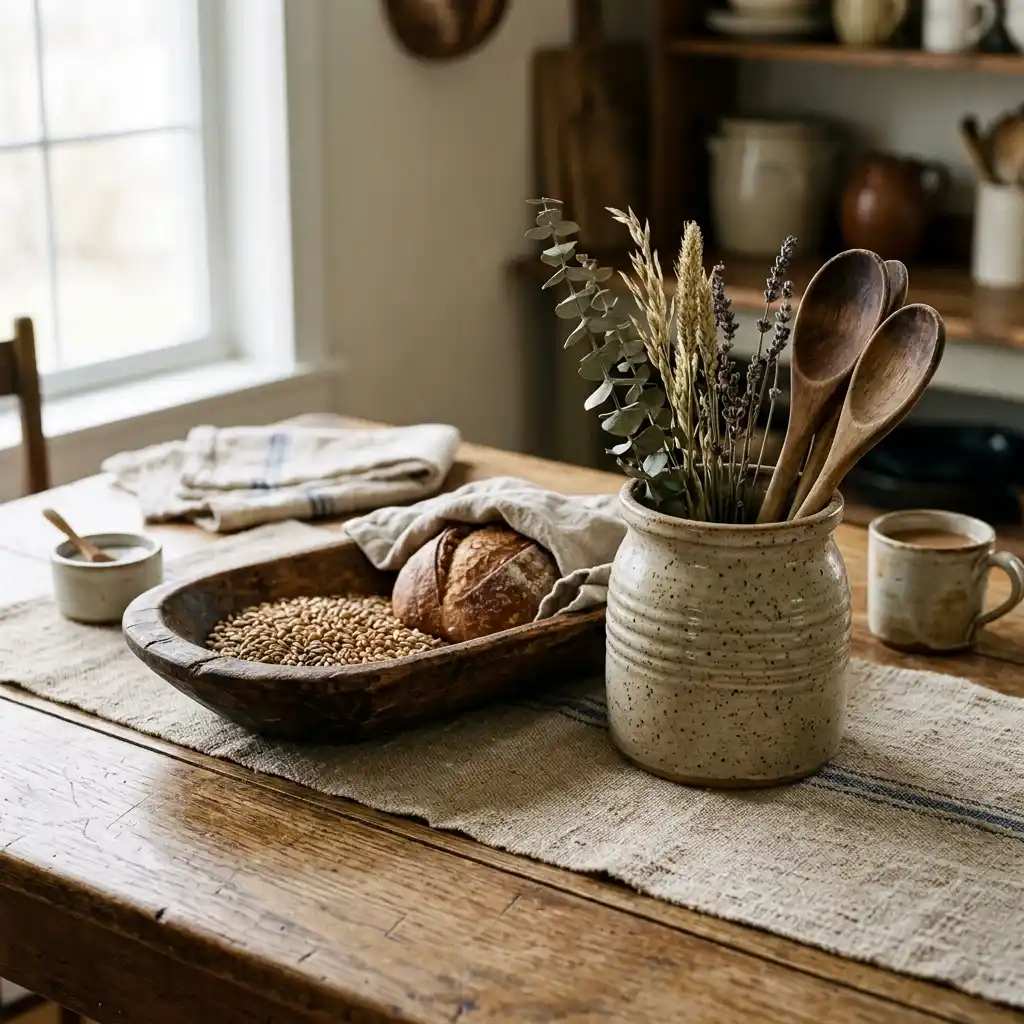
Real material is the single biggest difference between the current look and the dated one. Raw or lightly oiled oak, hand-thrown stoneware, ironstone, heavy linen and aged metal all age well and photograph well. Printed burlap, chalkboard signs, adhesive lettering and thin polyester runners do neither. Ironstone is a white-glazed earthenware first made in England in the early 1800s, and its slightly uneven, off-white surface is exactly what the farmhouse look was copying in the first place.
Grain-sack linen weighs more than cotton muslin and hangs flat instead of bunching, which is why it looks expensive on a table for under $40. A wooden dough bowl — a hand-carved trough originally used for rising bread — works as a single centerpiece that needs almost nothing inside it. One of these pieces does more than five small seasonal accents. Darker, more layered versions of the same idea run through our cozy moody farmhouse living room ideas.
The Case for Dried Stems Over Faux Ones
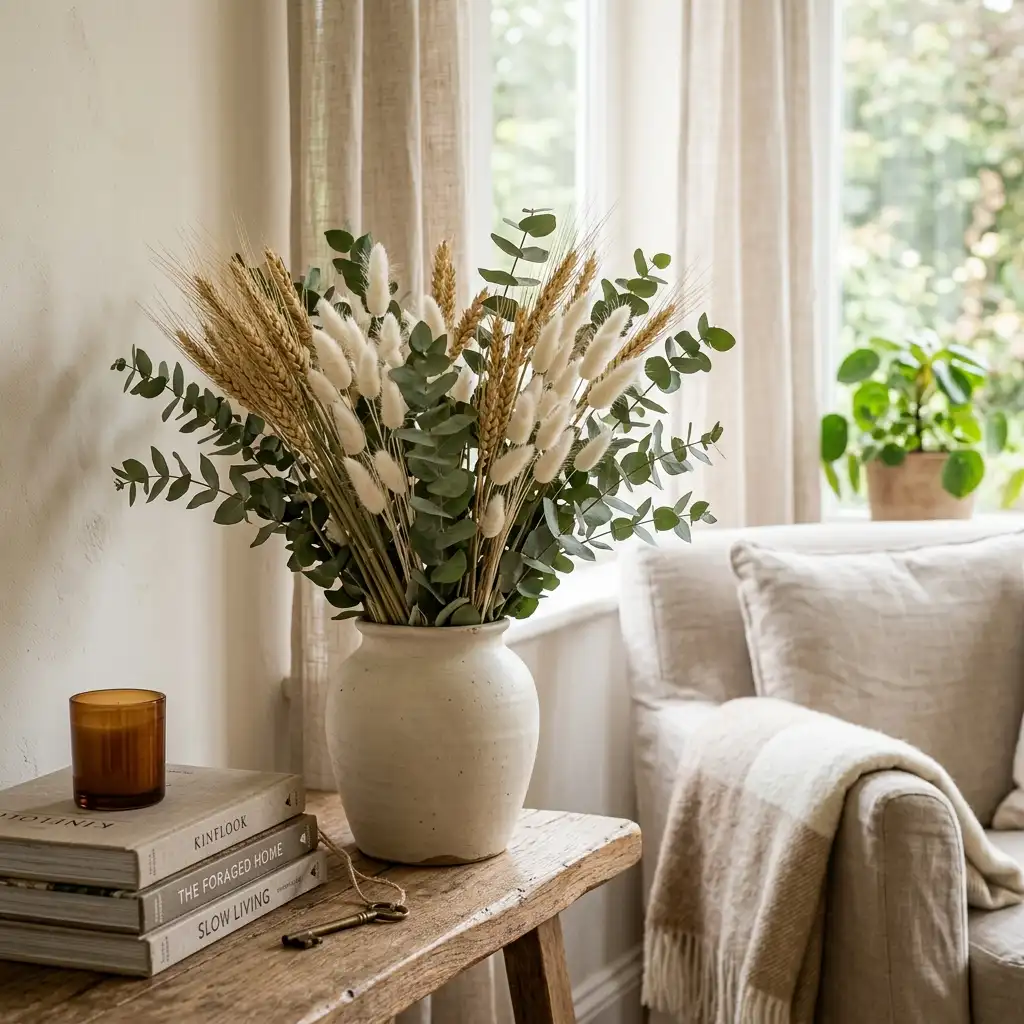
Dried stems are the cheapest upgrade in the whole category. Wheat, oats, bunny tails, broom corn, preserved eucalyptus and hydrangea heads cost roughly $6 to $12 a bunch and hold their color for several seasons if they stay out of direct sun. Faux stems in bright orange and yellow are what make a mantel look cheap from across the room; dried ones catch light unevenly the way real plants do.
Source Note: Iowa State University Extension recommends stripping the foliage from cut stems, tying them into small bunches, and hanging them upside down in a warm, dark, dry, well-ventilated space for two to three weeks — darkness is what keeps the color from fading.
Buy in odd numbers, three or five bunches, and split them across two rooms instead of crowding one vase. Browse our full seasonal decor inspiration for how the same stems carry into November.
How Do You Update a Farmhouse Fall Setup?
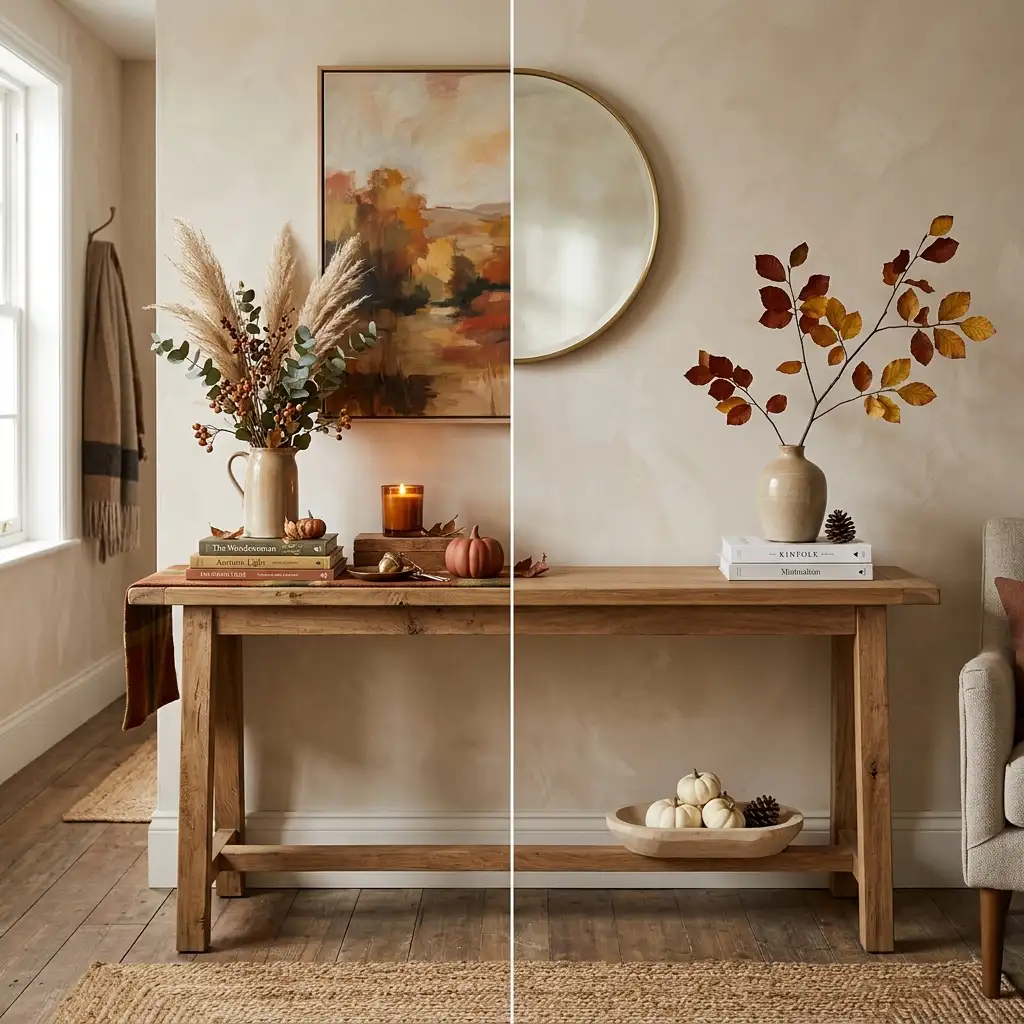
Five swaps handle almost every room. None of them require repainting a wall or buying furniture, and all five work on a mantel, a console table, a dining table or open shelves. The front porch runs on its own rules and its own weather, so treat it separately — our fall and autumn decor ideas cover the whole-home version including the entry.
Replace the Word Sign With One Real Object
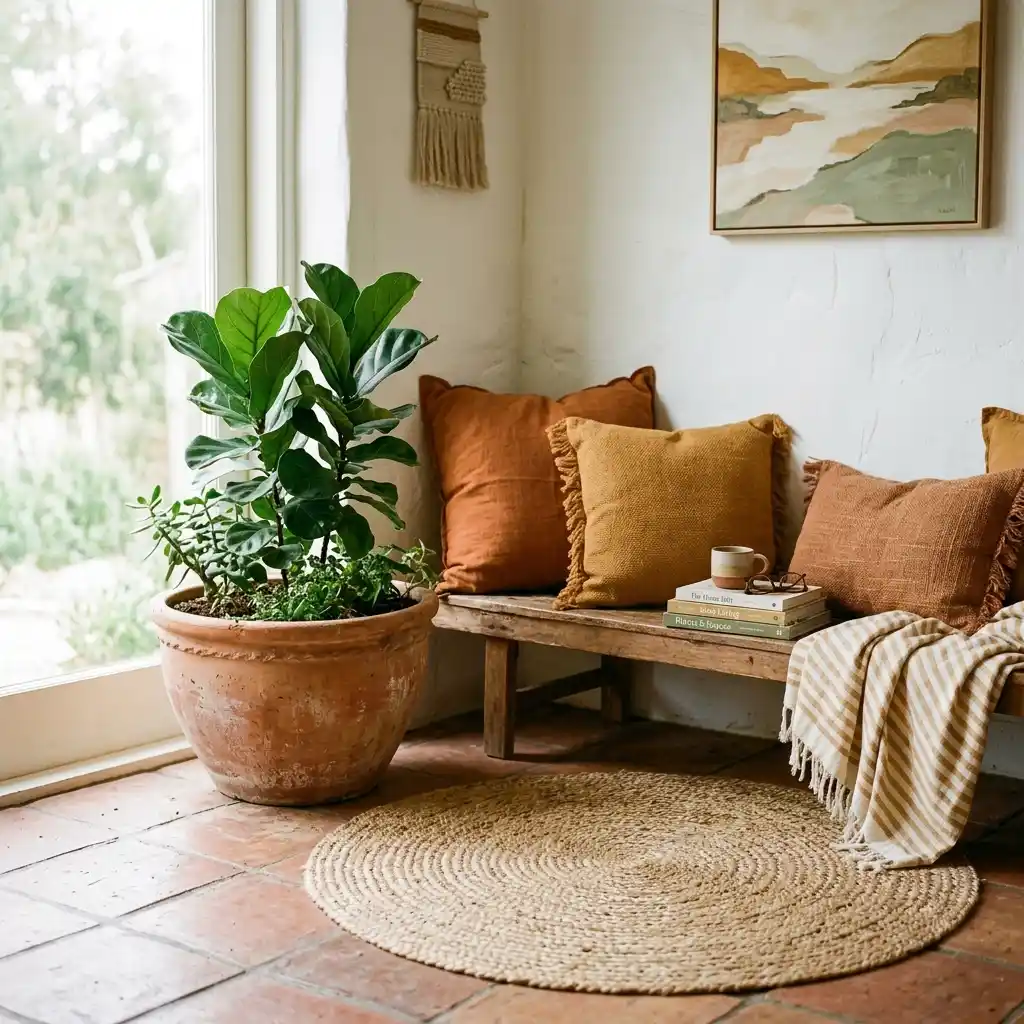
Take down the lettered sign and put one solid object in its place. A stoneware crock, a wooden dough bowl, a stack of two vintage books, an ironstone pitcher or a single white pumpkin all work. The object should be large enough to hold the spot on its own — roughly a third of the width of the surface it sits on. Small pieces scattered across a mantel are what create the cluttered feeling people blame on “too much fall stuff.” Rustic layering of this kind is the through-line in our cozy farmhouse living room ideas.
Start With the Textile, Not the Table Decor

The textile changes the room faster than anything sitting on top of it. Swap a printed cotton runner for washed linen, a grain-sack stripe or a ticking stripe in cream and soft brown, and the table looks seasonal before a single pumpkin lands on it. Do the same on the sofa: one heavy wool or knit throw in oatmeal, clay or olive does more than a set of printed seasonal covers. Fiber choice, pillow sizing and what to buy once versus swap yearly are their own subject, and this post stops at the material swap. Bedrooms respond to the same change, which our fall bedroom refresh ideas walk through layer by layer.
How Many Objects Should a Fall Mantel Hold?
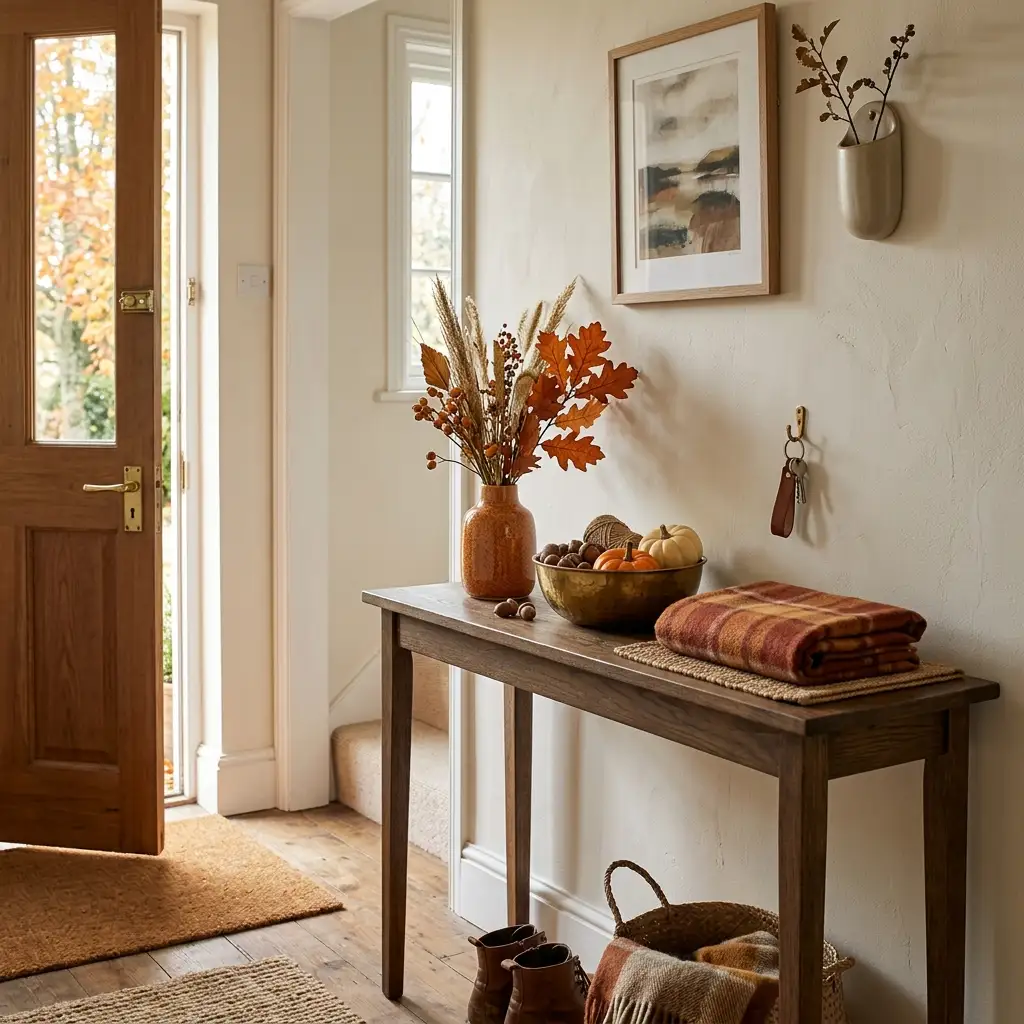
A fall mantel should hold five objects at most, arranged in three clear heights. Count matters far less than height difference. Set one tall element at roughly two-thirds of the way along — a leaning frame, a tall branch arrangement or a mirror behind everything. Add one mid-height piece such as a candlestick pair or a crock. Finish with one low element: a bowl, a run of stems laid flat, or two small white pumpkins. Three heights, five objects maximum. Country versions of this arrangement appear throughout our country farmhouse living room styling.
DESIGNER TIP: Set the tallest mantel object off-center rather than dead middle. A centered tall piece splits the mantel into two matching halves and flattens the whole arrangement.
Repeat One Metal Exactly Three Times
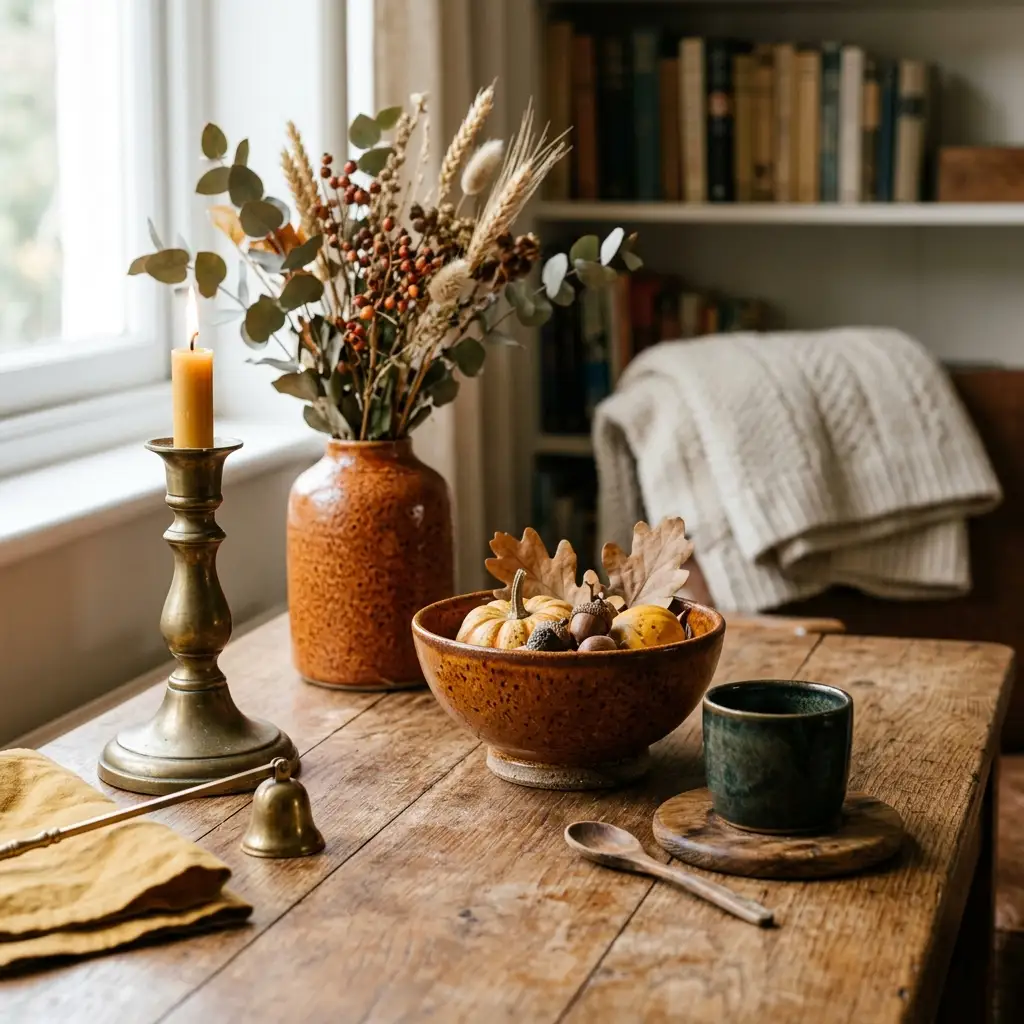
Pick one metal and use it three times in the same sightline. Aged brass, unlacquered brass and black iron all warm up under lamplight. Polished chrome and bright silver go cold against clay and wheat tones, which is why a room with mixed metals never quite settles in autumn. Candlesticks, a lantern, a picture frame, drawer pulls or the base of a lamp are all fair game. The three-repeat rule is the same one running through our modern farmhouse bedroom ideas.
Does Bulb Color Really Change a Fall Room?
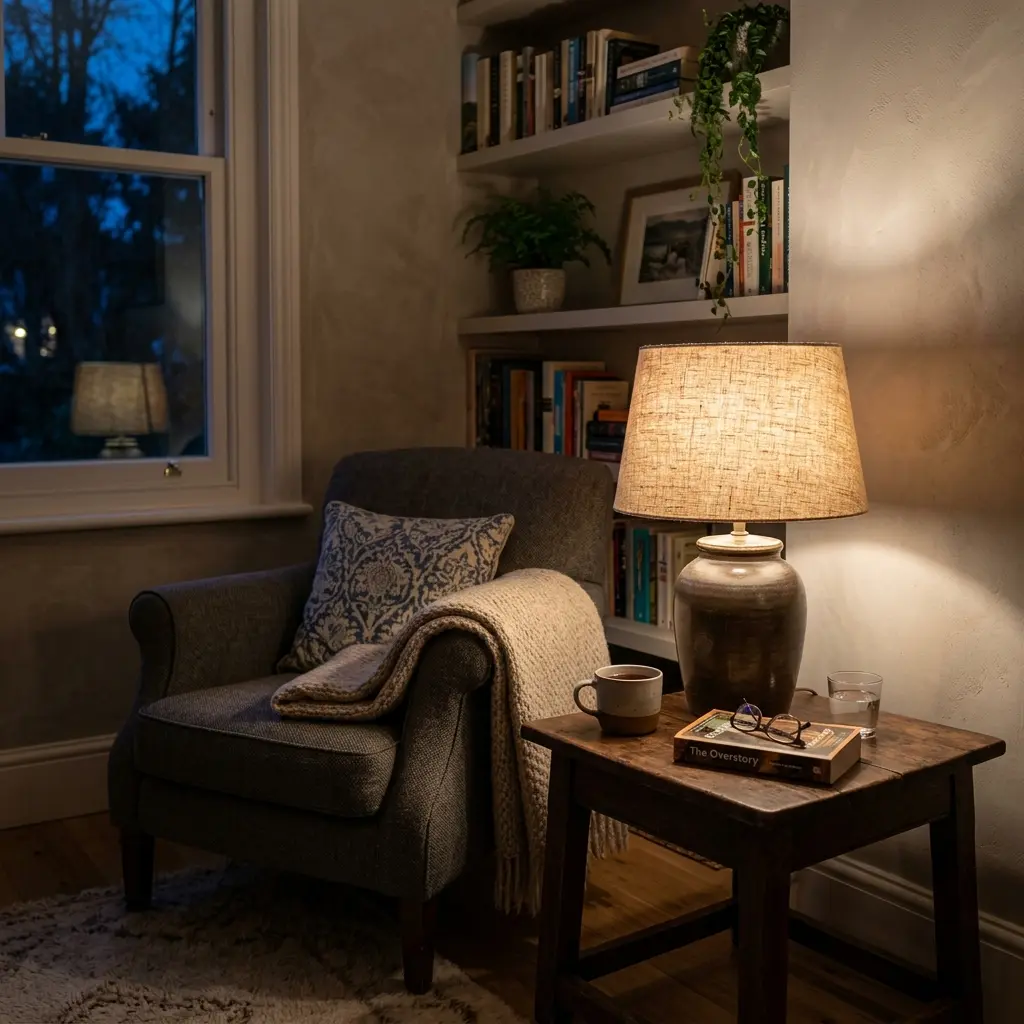
Bulb color changes a fall room more than another trip to the store does. Every bulb in the room should sit at the same warmth, so the cream, clay and wheat tones hold together after dark instead of splitting into two casts. Cool white bulbs turn warm whites grey and make dried stems look dusty. Mixed bulb temperatures are worse than any single wrong one, because the room never settles on a mood. If it still feels flat with the lamps on, the problem is bulb color, not the styling. The same fix works in smaller rooms — see how it plays out in our farmhouse bathroom guide.
Safety Note: Dried wheat, grasses and preserved stems catch fire easily. Keep them well clear of lit candles, the firebox and any heat source, and use battery-operated candles on a mantel you cannot watch.
Three Things That Date the Look
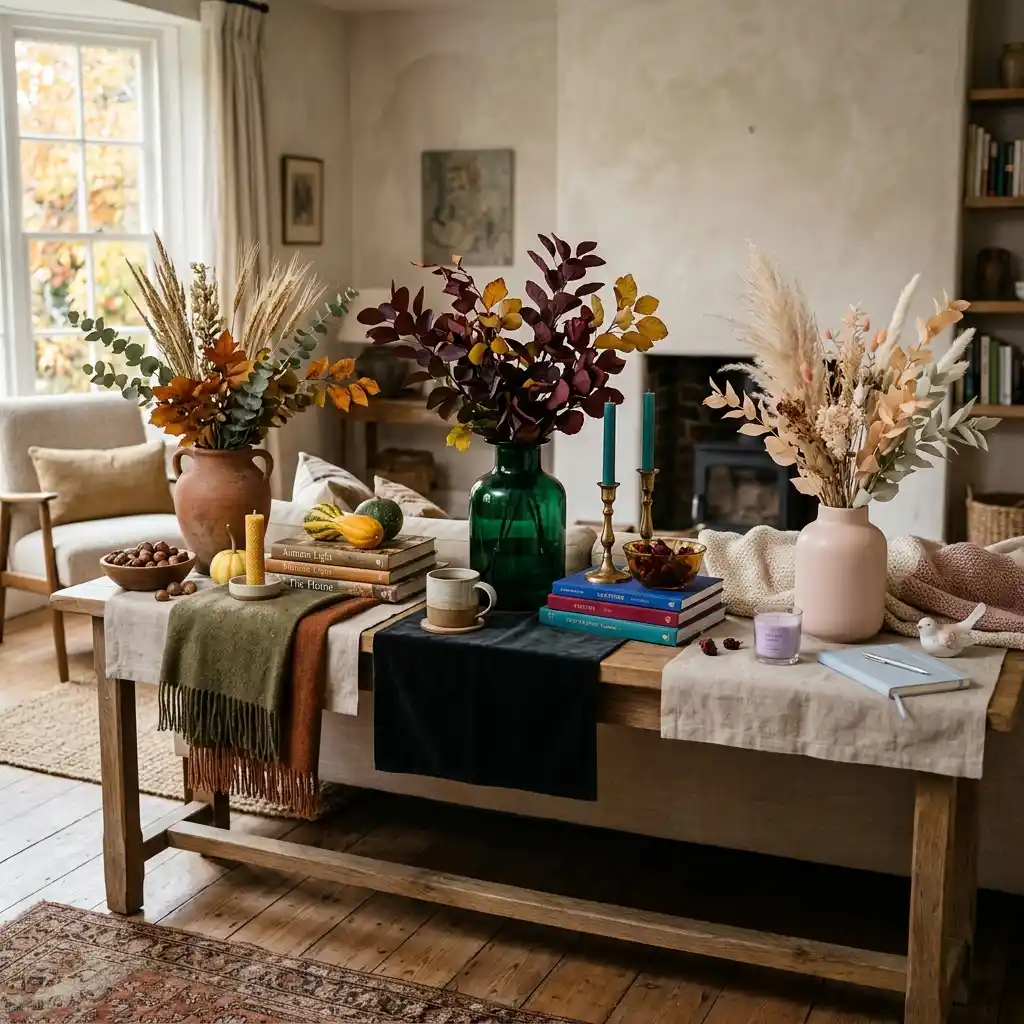
The lettered sign is the first thing to go. A wooden or metal plaque reading Gather, Harvest or Happy Fall was the shorthand of a specific decade, and it now pins the whole surface to that decade no matter how good everything around it is. Take it down and the same shelf immediately looks less styled-by-catalog. One solid object in wood or stone does the same job without dating itself.
Buying a matched seasonal set from one store is the second. Ten pieces designed together, photographed together and shipped together will always look staged rather than collected, because nothing in the group carries a different age or a different maker. Mix one new piece with two things you already own — a mug, a book stack, a bowl from the kitchen — and the surface starts looking like it grew.
Adding more when a room feels unfinished is the third and most expensive. An unfinished-feeling room is usually a lighting problem, not a quantity problem, and another cart of small accents makes it busier without making it warmer. Remove half of what is out, warm the bulbs, and judge the room again at night before you buy anything. Building one warm corner properly does more than spreading the same pieces thin across a room, which is the case our cozy fall decor guide makes in full.
What You’ll Spend to Make the Swap
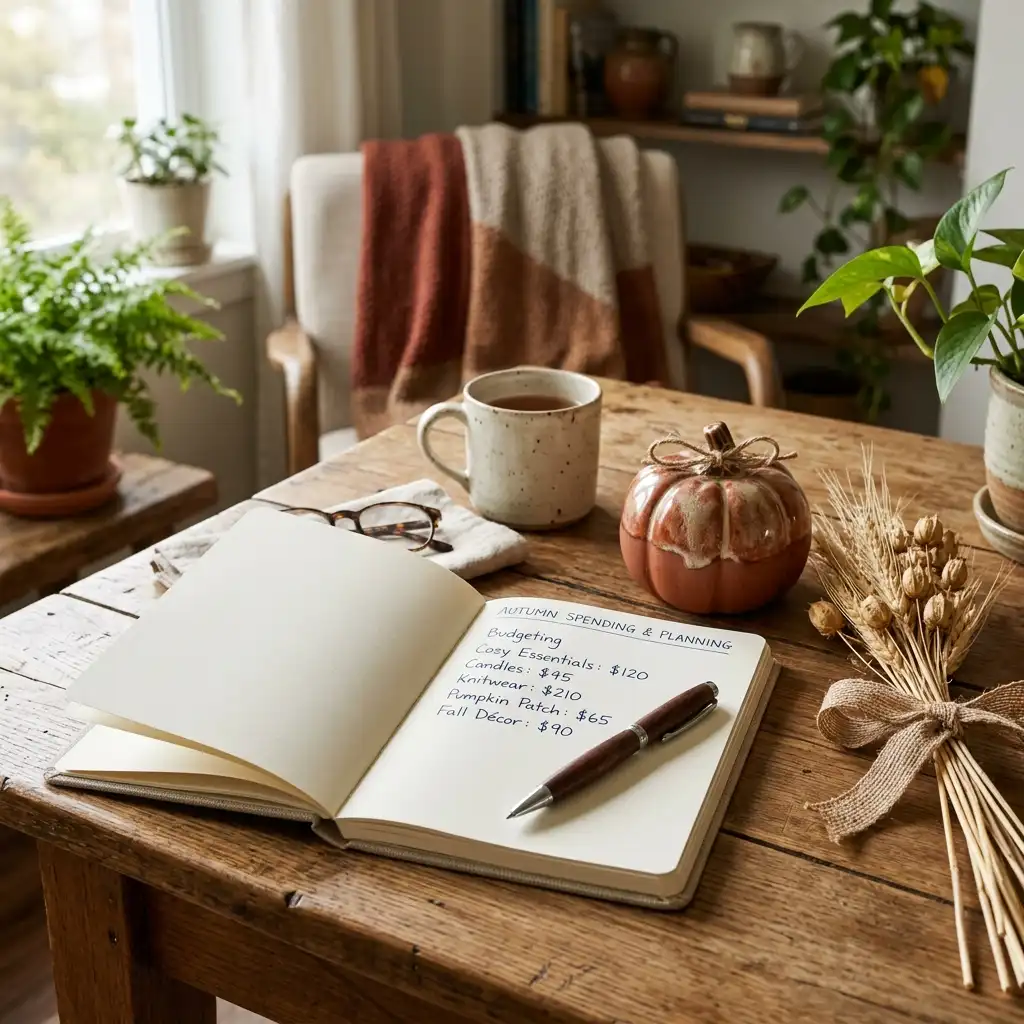
Most of a farmhouse fall refresh is reusable, so the spend lands once and carries for years. On a small budget, three bunches of dried stems and a sample pot of warm white paint come in under $65 and change a table completely. A mid-range round adds a washed linen or grain-sack runner and lands somewhere between $45 and $125 for the set. The premium line item is one real stoneware crock, ironstone pitcher or carved wood dough bowl at $20 to $140, and it earns its price by working year-round rather than sitting in a bin eleven months of the year.
| Project | Estimated Cost | Impact Level |
|---|---|---|
| Dried wheat, oats and eucalyptus, three bunches | $18-$40 | High |
| Warm white sample pot to repaint a tray, frame or old sign | $8-$25 | Medium |
| Washed linen or grain-sack table runner | $25-$60 | High |
| Stoneware crock, ironstone pitcher or carved wood dough bowl | $20-$140 | Very High |
Best First Upgrade: Three bunches of dried stems in a piece you already own — it costs the least and changes the most.
Skip for Now: A full matched seasonal collection from one retailer. Buying it as a set is what makes a room look staged instead of collected.
Seasonal farmhouse layering carries straight into December, and our rustic farmhouse Christmas decor ideas reuse most of the same bases.
The Bottom Line
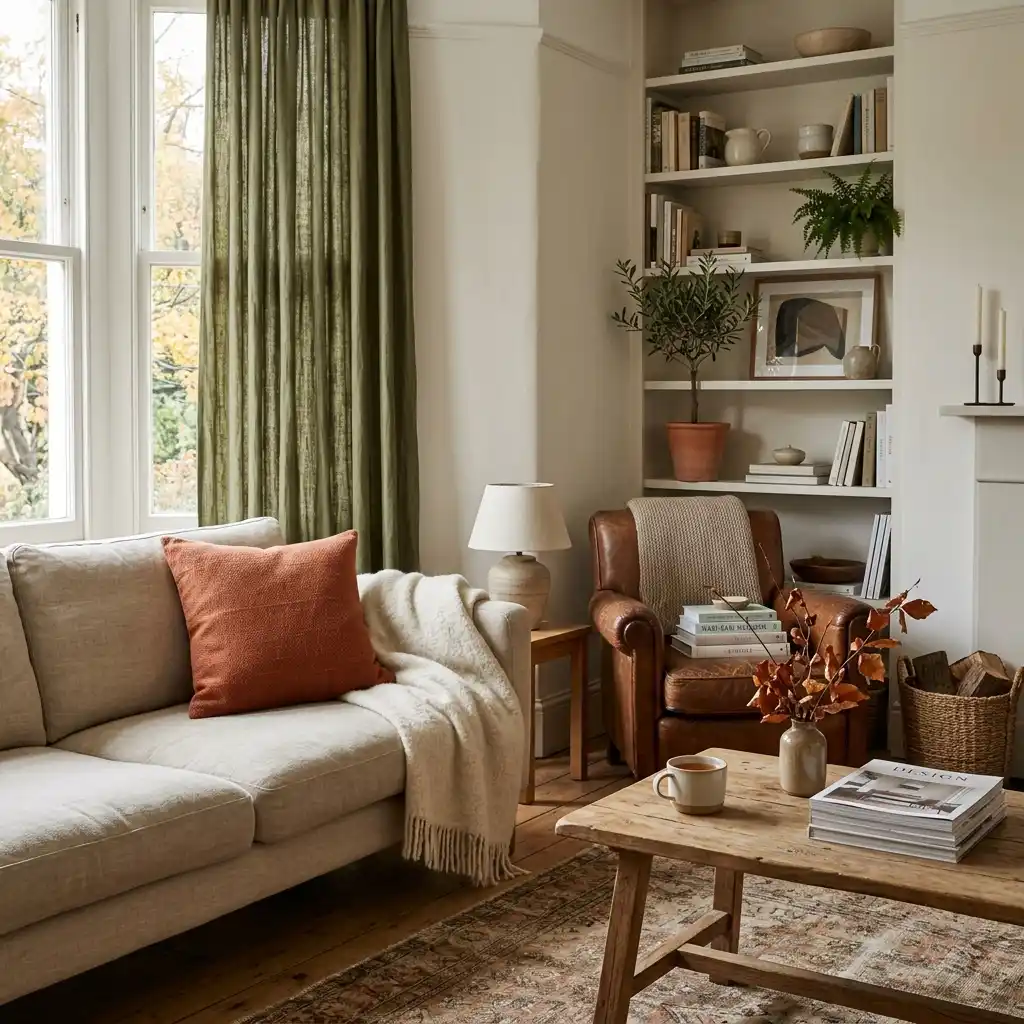
If you change one thing this season, change the material, not the quantity. A single stoneware crock of dried wheat holds a mantel better than a bin of small printed pieces, and it stays useful in January when the stems get swapped for evergreen. That reuse is why the pared-back version is worth the switch — our cozy winter decor ideas run on the same bases once the harvest tones come down.
Frequently Asked Questions
Conclusion
Fall farmhouse decor holds up when the pieces are made of something real — wood, stone, dried stems and heavy linen — and falls apart when it depends on printed lettering and orange filler. A year from now you will still be glad you bought the crock and the linen runner, and you will not miss a single chalkboard sign. Browse more warm seasonal styling in our home decor inspiration.
Next Steps
- Empty the fall bin and set aside anything with a printed word on it.
- Sort what is left into real materials and printed imitations, then put the imitations away.
- Buy three bunches of dried stems and one warm white bulb set before anything else.
- Check the room again after dark with the lamps on, and only then decide what is still missing.