TL;DR
- Two waves, not one haul: The best fall decor ideas start with a warm base in late August, then add the harvest layer in early October.
- Four zones carry the season: The porch, the living room, the bedroom and the table do almost all of the work.
- Light first: Swapping cool bulbs for warm ones changes a room faster than any decoration.
- Three tones only: Pick one warm neutral, one deep earth tone and one muted accent, then repeat them everywhere.
- Naturals have a clock: Uncarved pumpkins and dried stems last for months; mums and cut branches do not.
What Actually Makes a Home Feel Like Fall?
Most fall decorating advice points at objects. Buy the pumpkins, hang the garland, fill the bowl with mini gourds. That is why so many homes look decorated for one weekend in October and flat by the first week of November. The objects are the last ten percent of the job.
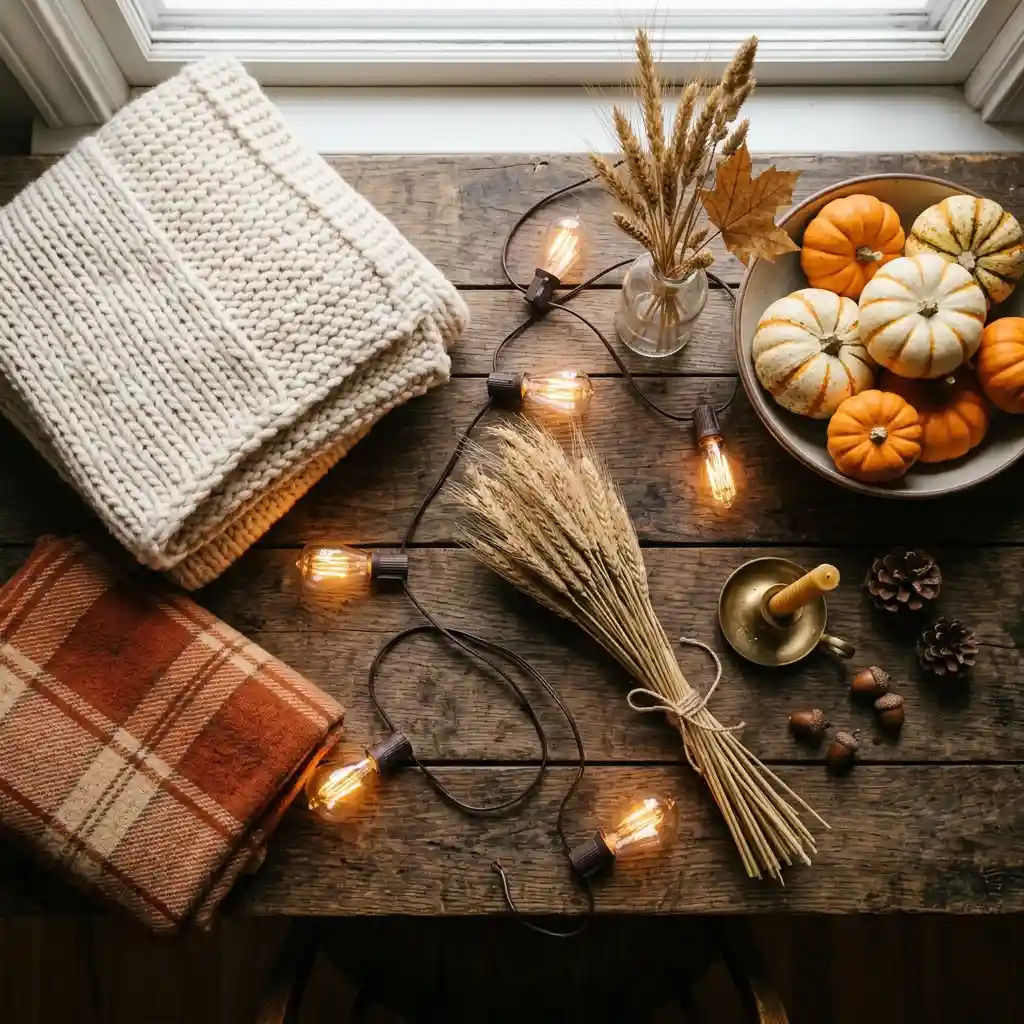
Fall decor ideas work best when you treat autumn as a three-month season with two halves, not a single event. Start with a warm base — soft light, warm-toned textiles and a three-tone palette — in late August. Add the harvest layer of pumpkins, dried stems and table pieces in early October. The base carries the whole season. The layer gets refreshed.
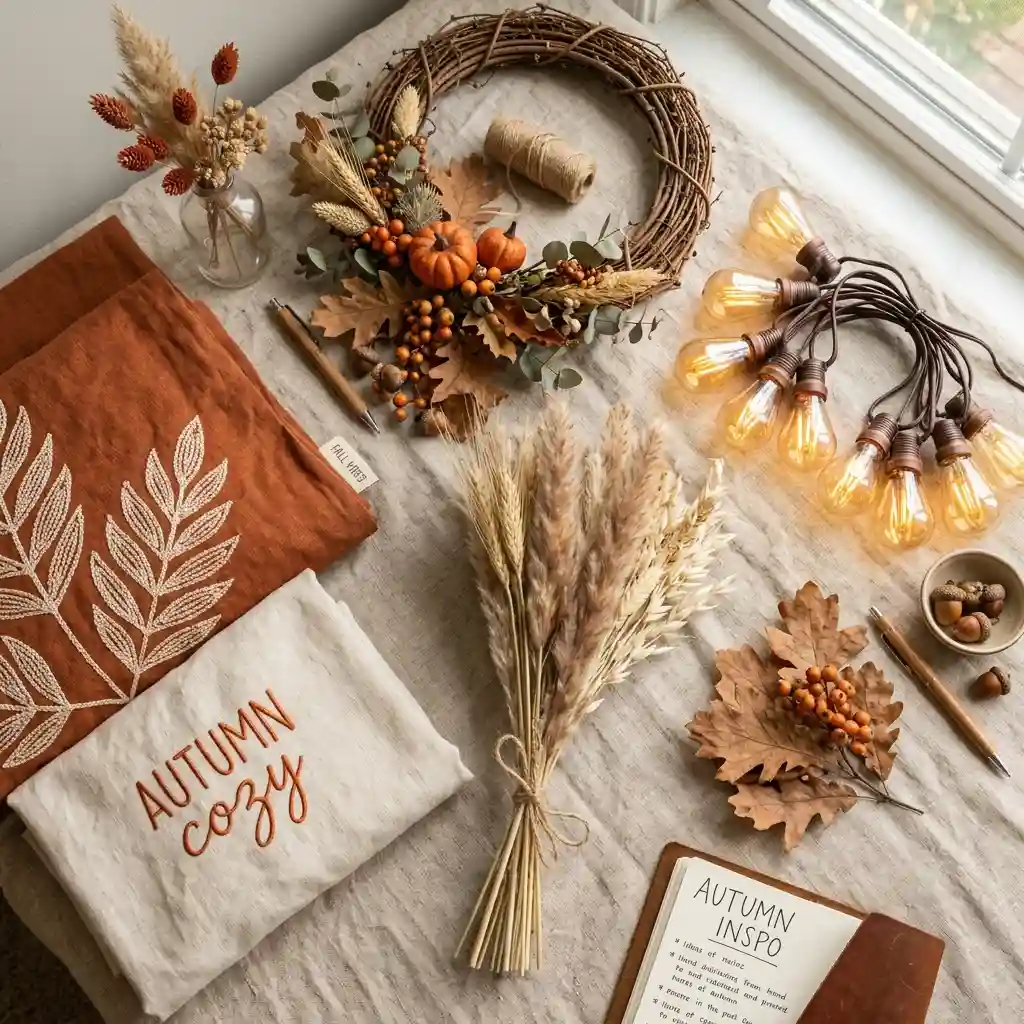
That order is the difference between a house that feels like fall from Labor Day through Thanksgiving and a house that feels like a Halloween aisle for two weeks. It is also cheaper, because the expensive half of the job is reusable and the cheap half is the part that wilts. If you want more ideas for a broad seasonal refresh, our home decor inspiration covers every room in the house.
The rest of this guide walks through both waves, the four zones worth your money, the palette that holds a whole house together, and the timing question almost nobody answers honestly. You can see the approach applied end-to-end in these creative fall and autumn decor ideas. Bookmark this guide for quick reference.
Fall Decor Ideas Checklist
- Swap the bulbs in four to six lamps to warm 2700K before you buy a single decoration.
- Put away white, pastel and sheer summer textiles; bring out wool, linen and knit in warm tones.
- Choose three colors and write them down — one neutral, one deep earth tone, one muted accent.
- Buy one good front door wreath with a reusable base; it is the single most-seen piece you own.
- Add one natural element per room: a dried stem arrangement, a wood bowl, or two uncarved pumpkins.
- Hold the pumpkins, mums and table pieces until the first week of October so they last through Thanksgiving.
- Keep the seasonal filler under a third of your total spend, and store the base pieces in one labeled box.
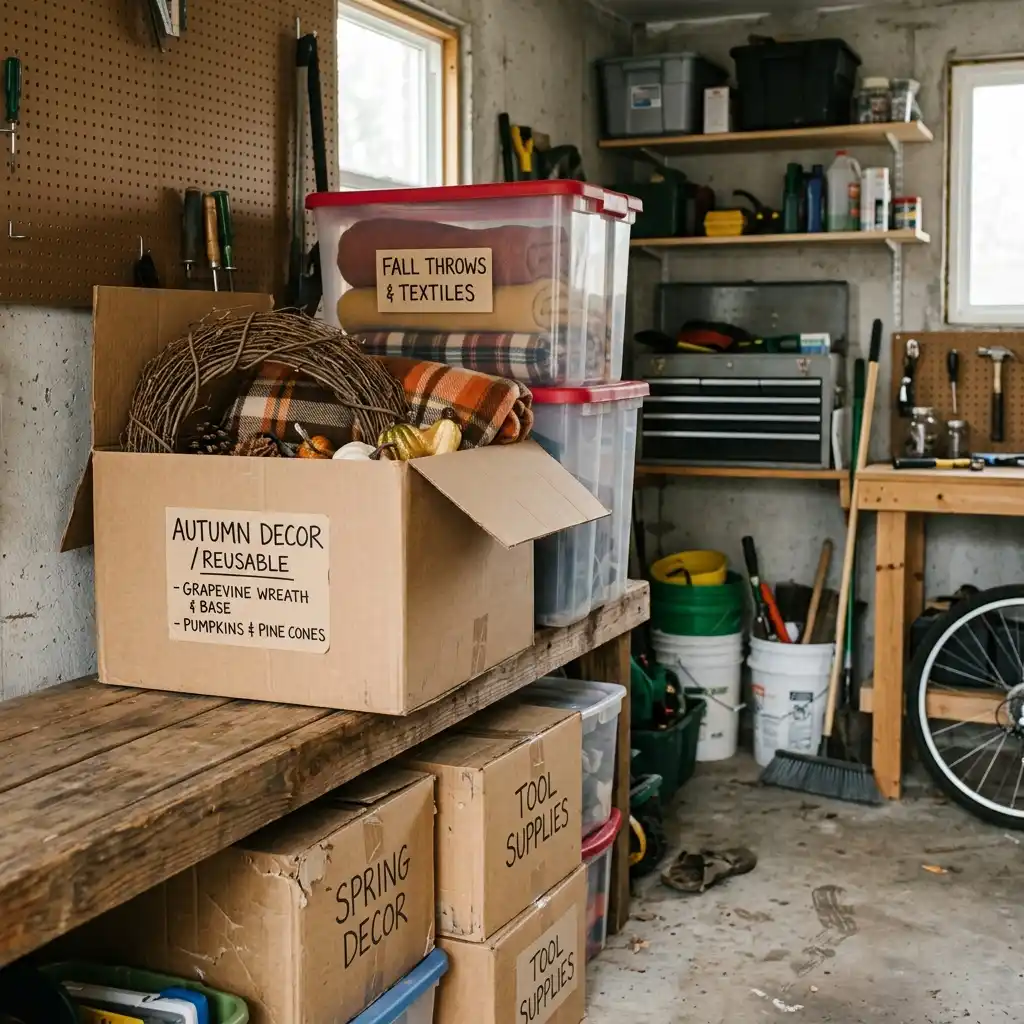
KEY TAKEAWAY: The reusable half of fall decorating goes up first and stays up longest, which is exactly why it deserves the larger share of your budget.
You can browse every seasonal look we have published in our fall decorating ideas archive.
Why Is One Big October Haul the Wrong Way to Decorate?
Most fall decor ideas are sold as a shopping list, and the single October trip is how nearly everyone acts on that list. It fails for a practical reason. Everything arrives at once, at full seasonal price, in the same materials and the same orange. Then it all comes down together on November 1st, weeks before the season is actually over. A home decorated in one trip peaks for about ten days.
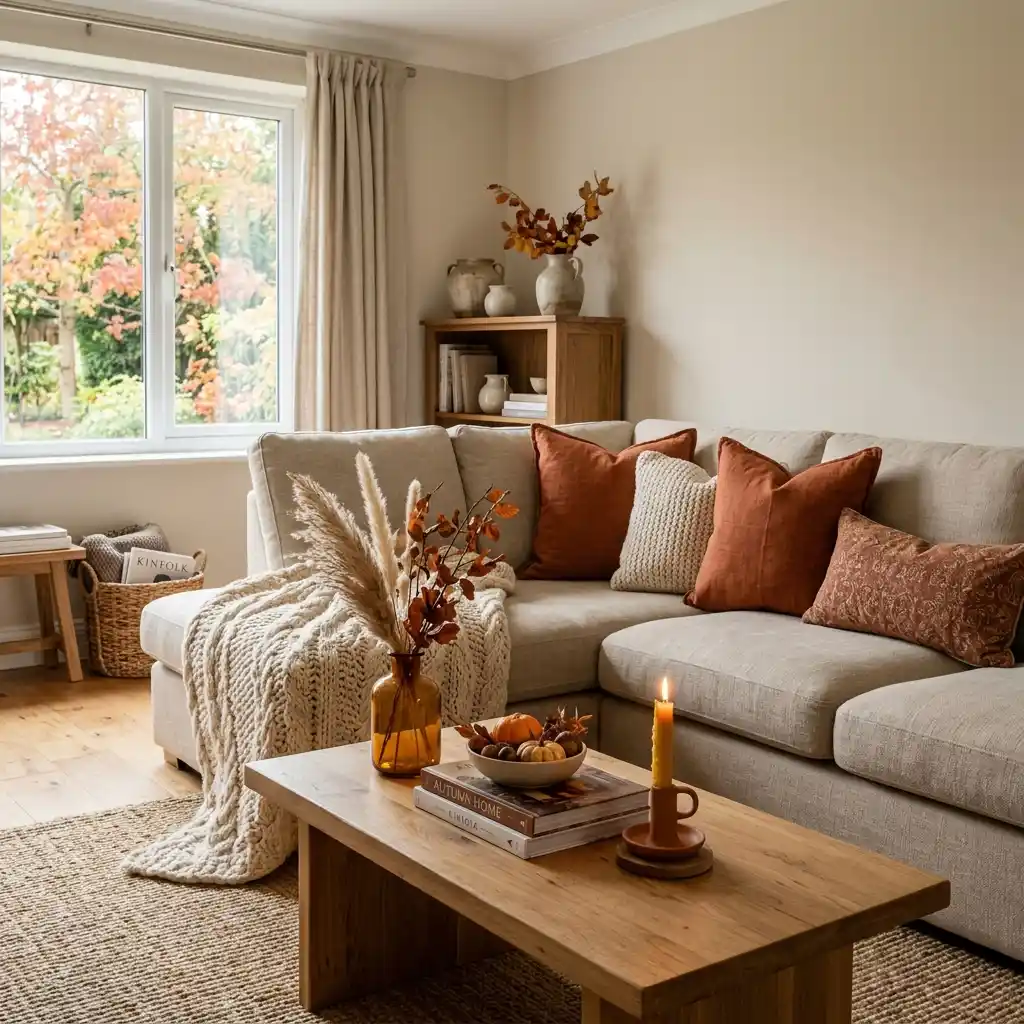
Splitting the season in two fixes the timing and the money at the same time. The warm base — bulbs, throws, pillow covers, a wreath, a rug — is bought once and reused for years. The harvest layer is bought fresh each autumn and costs very little. Most homes end up with roughly two-thirds of their money in pieces that come back every year.
Signs This Is Catching On:
- Both major paint brands went warm and earthy for 2026 rather than cool grey, with Benjamin Moore naming a deep burnt-umber brown and Sherwin-Williams naming a mid-tone khaki.
- Retail fall assortments now open in early August and run through Thanksgiving tableware, rather than ending on October 31st.
- Dried and preserved stems have moved from a craft-store niche to the front of mainstream home floral departments.
- “When to decorate for fall” has become one of the most searched autumn decorating questions, which is a timing problem, not a product problem.
What Are the Two Waves of Fall Decorating?
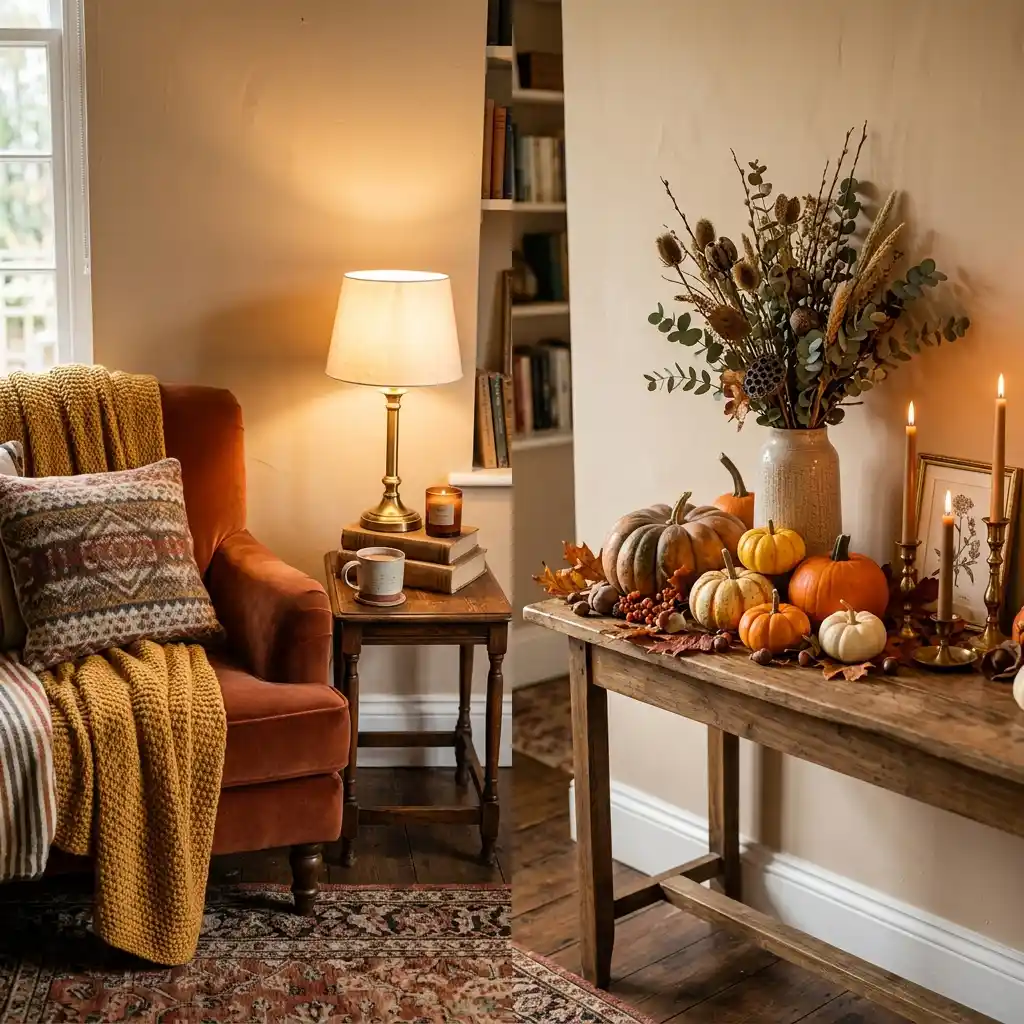
Fall decorating splits cleanly into two waves. Wave one is the warm base: light, textiles and color, put up in late August, kept until December. Wave two is the harvest layer: pumpkins, dried stems, branches and table pieces, added in early October and refreshed as things fade. Wave one is what makes a house feel like autumn. Wave two is what makes it look like autumn.
Wave One — Late August: Build the Warm Base
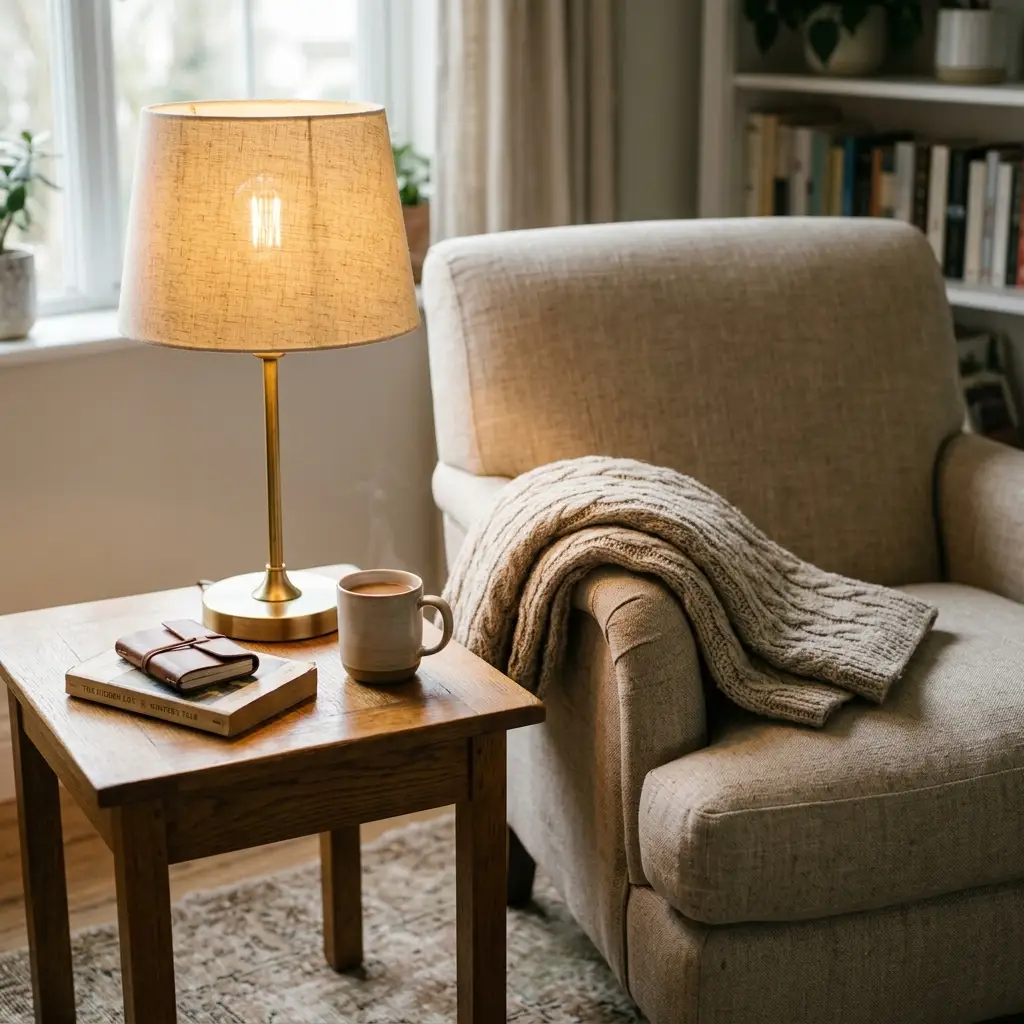
The warm base is four moves and none of them involve a pumpkin. Change the bulbs, change the textiles, edit the palette, and turn off the ceiling light. Done in a weekend, it shifts the whole feel of a house three weeks before anyone else has started.
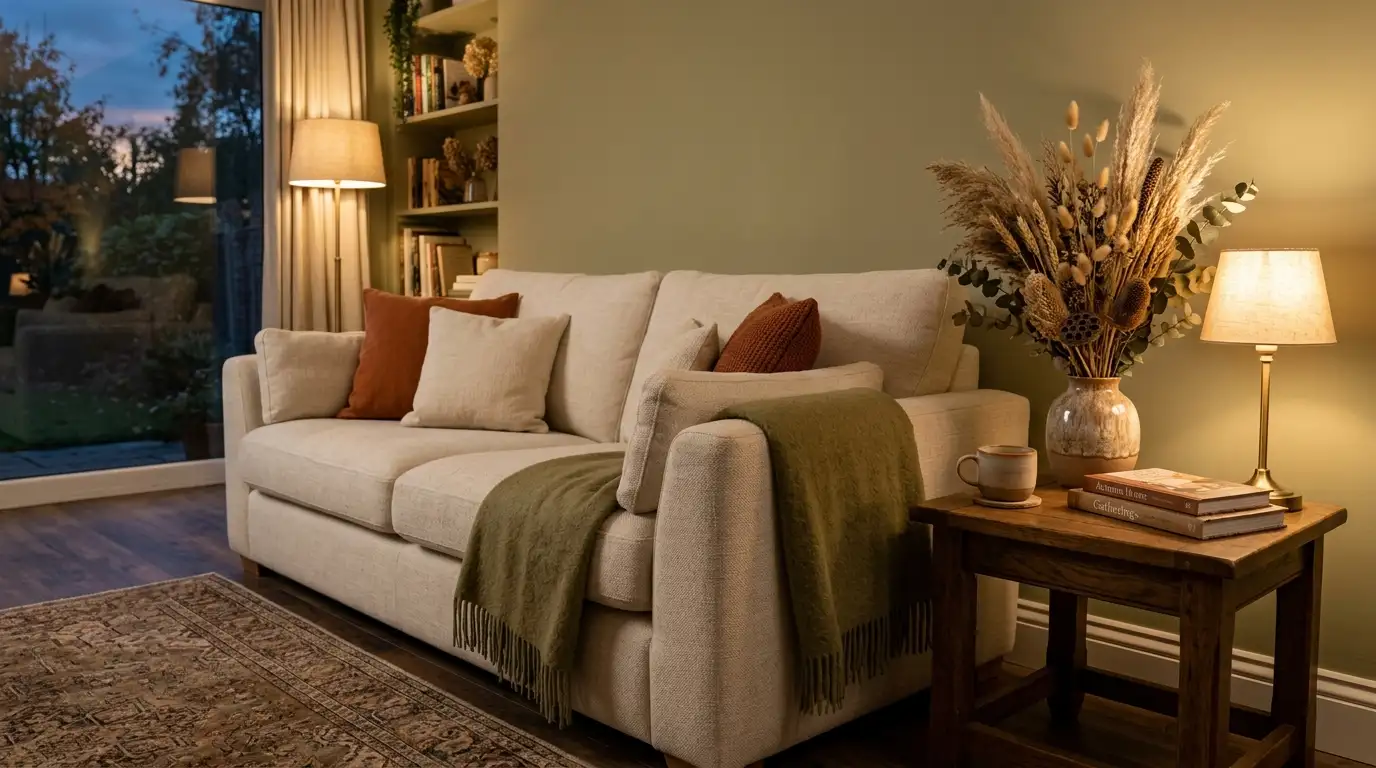
Light comes first because it is the cheapest change with the largest effect. Warm bulbs sit at the low end of the Kelvin scale and throw a yellow, candle-like light; cool bulbs read blue and flatten a room after dark. Most certified LED bulbs are made to match old incandescent warmth at 2700K to 3000K, so check the box before you buy. Four to six warm lamps beat one bright ceiling fixture in every room of the house. The same layering logic applies year-round in our living room lighting ideas.
Textiles come second. Put away the white cotton, the pastels and the sheer panels, and bring out wool, linen, boucle and knit in warm cream, clay and olive. Two throws and four pillow covers will change a living room more than a table full of gourds. Heavier fabric also changes how a room sounds and feels, not just how it looks — that is most of what people mean by a cozy fall aesthetic.
Wave Two — Early October: Add the Harvest Layer
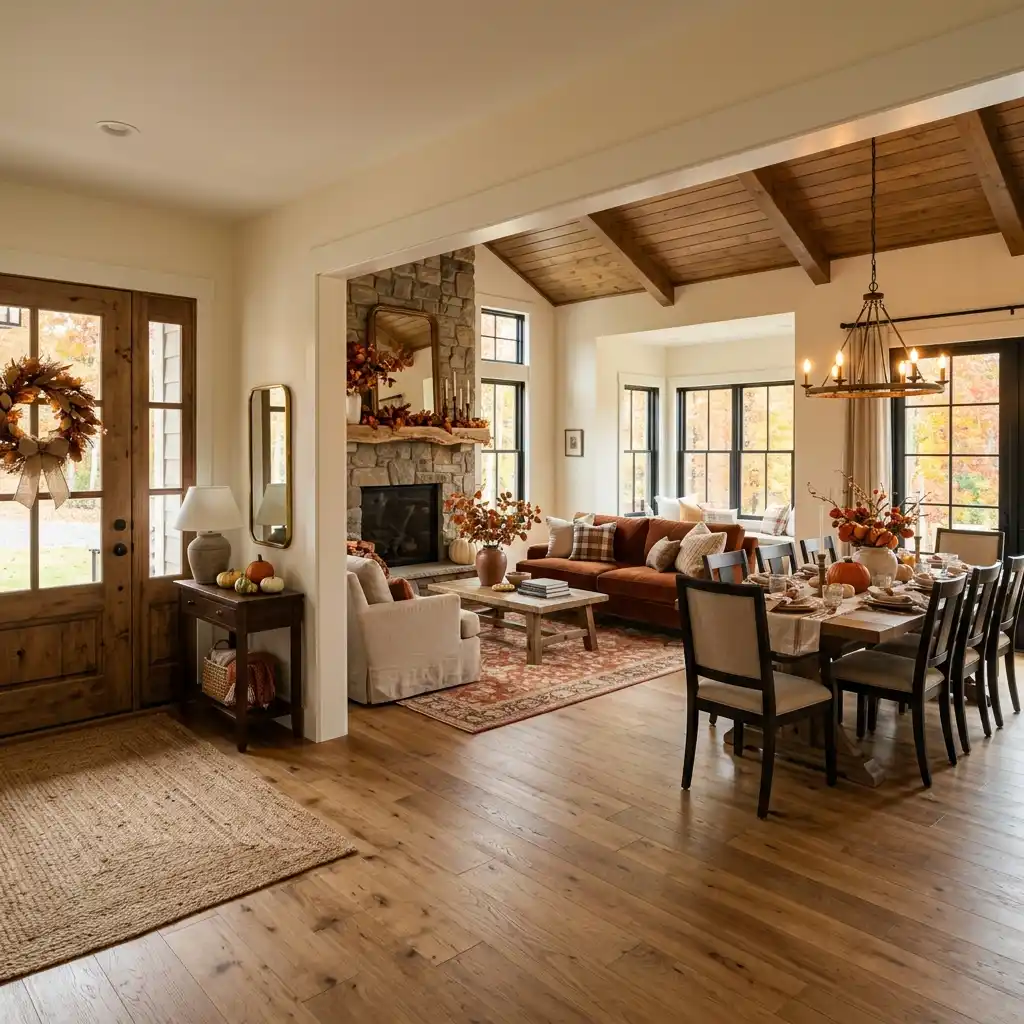
Wave two is the part with a clock on it, which is exactly why it goes up second. Uncarved pumpkins, dried grasses, wheat, seed pods and bare branches are the whole list. Add them the first week of October and they hold their looks through Thanksgiving without a single replacement. On the porch specifically, our pumpkin display guide covers grouping and longevity.
The timing is not arbitrary. Uncarved, well-cured pumpkins can last as long as three months when kept out of direct sun in a dry, cool spot, according to University of Georgia extension horticulturists — and they break down fast once they are cut open. Put them out in late August and they are soft by Halloween. Put them out in October and they carry the table right through the last dinner of November.
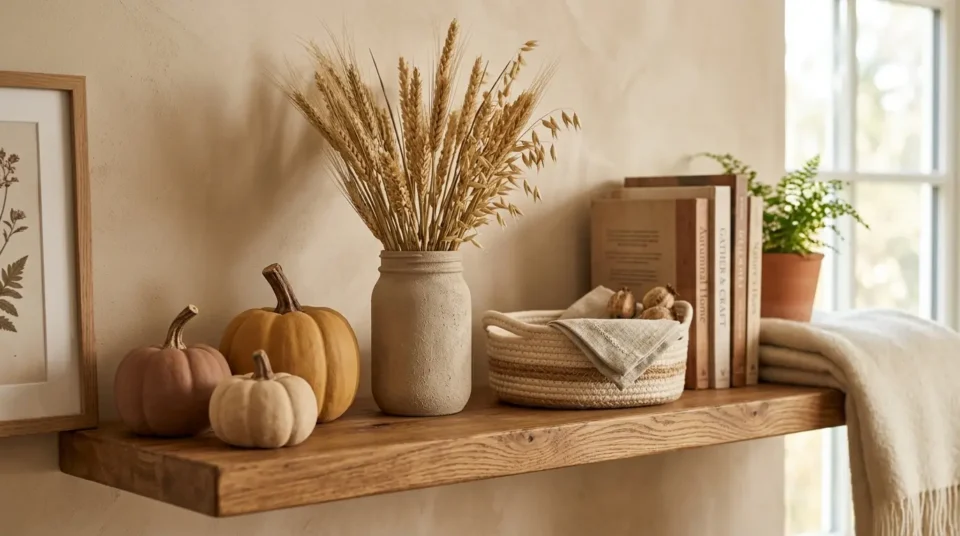
Material Note: Potted mums hold their bloom for a few weeks and stop at the first hard frost, so treat them as the one genuinely disposable piece in your fall decorations. Dried stems, by contrast, are a one-time buy that store flat in a box and come back every year. If you only add one thing indoors, make it a tall arrangement of dried grass in a heavy unglazed vase.
Where Should You Spend First?
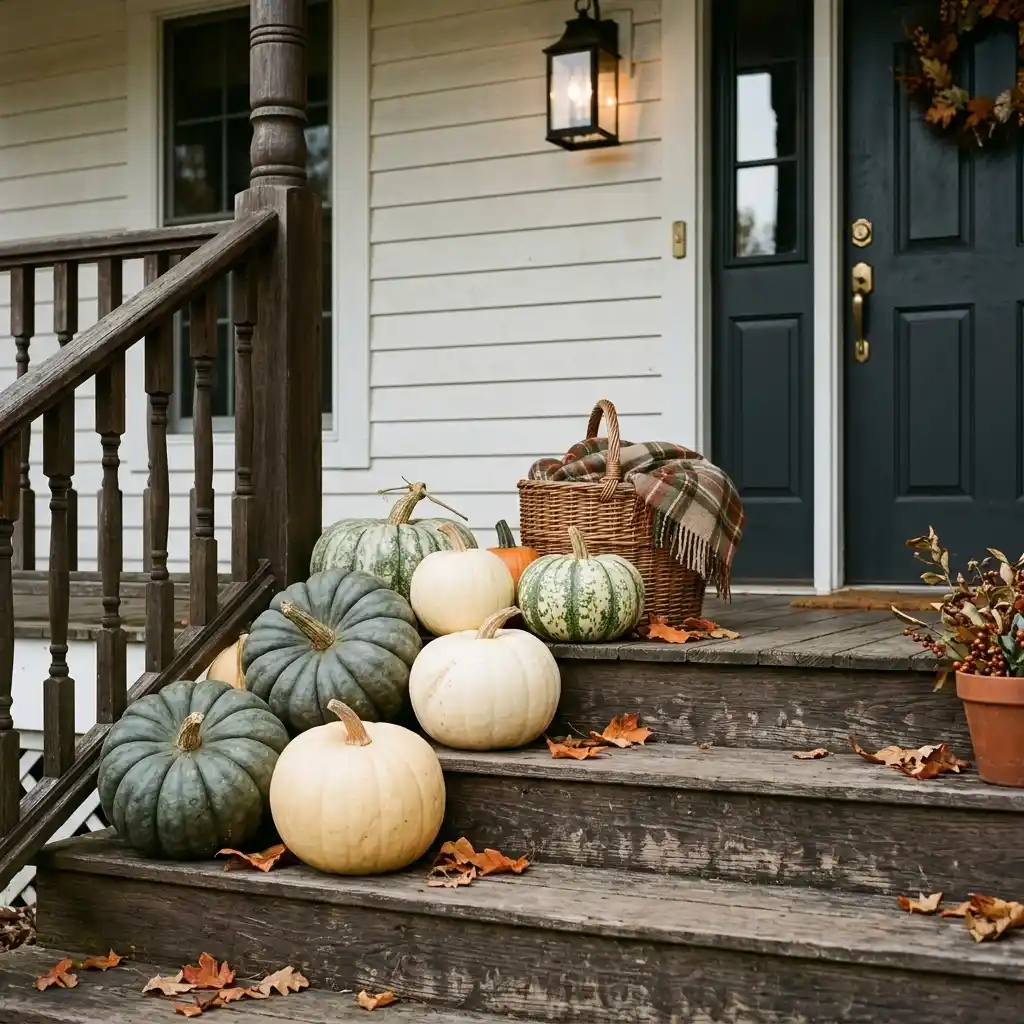
The best fall decor ideas concentrate in four zones: the porch, the living room, the bedroom and the table. Those four do almost all of the work. Decorate those well and a house looks fully done for fall. Spread the same budget across eight rooms and none of them land. The hallway, the laundry room and the guest bathroom are where fall decorating money quietly disappears.
The Porch and Front Door
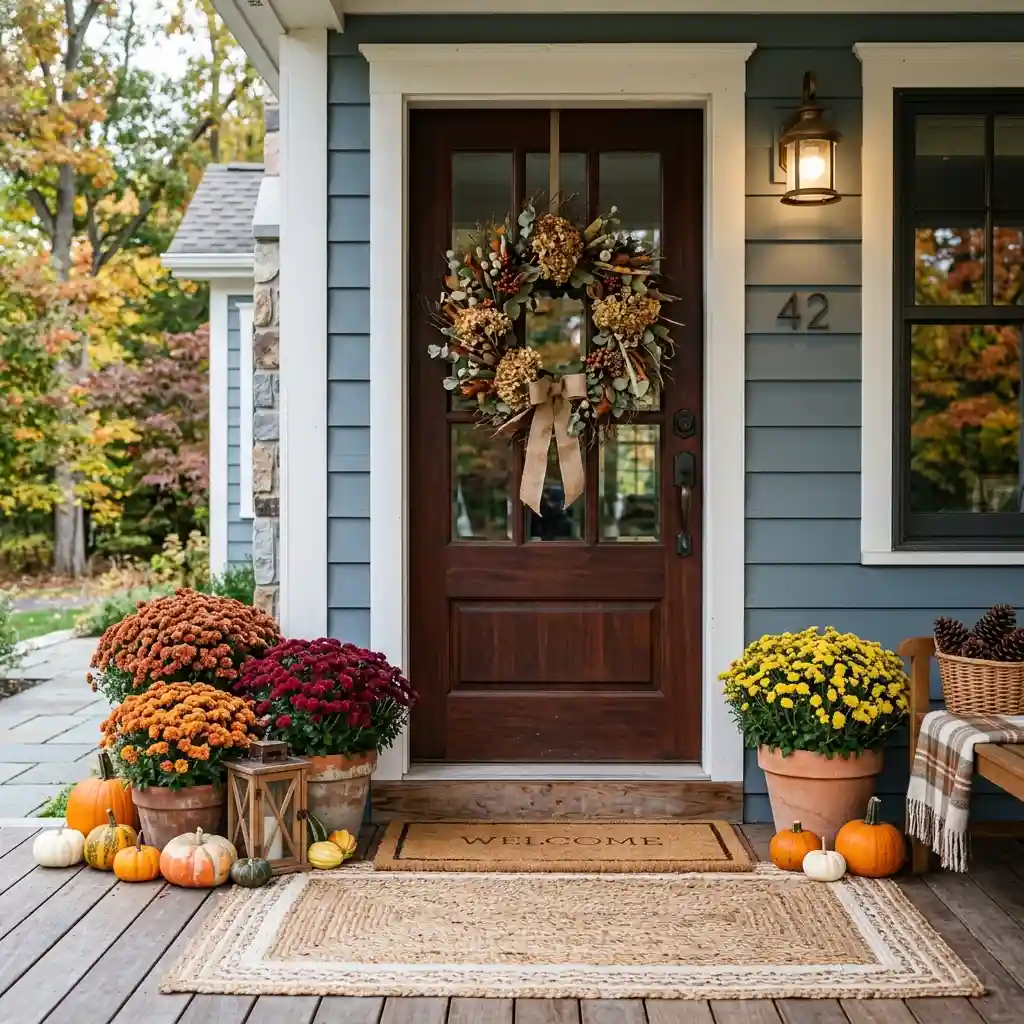
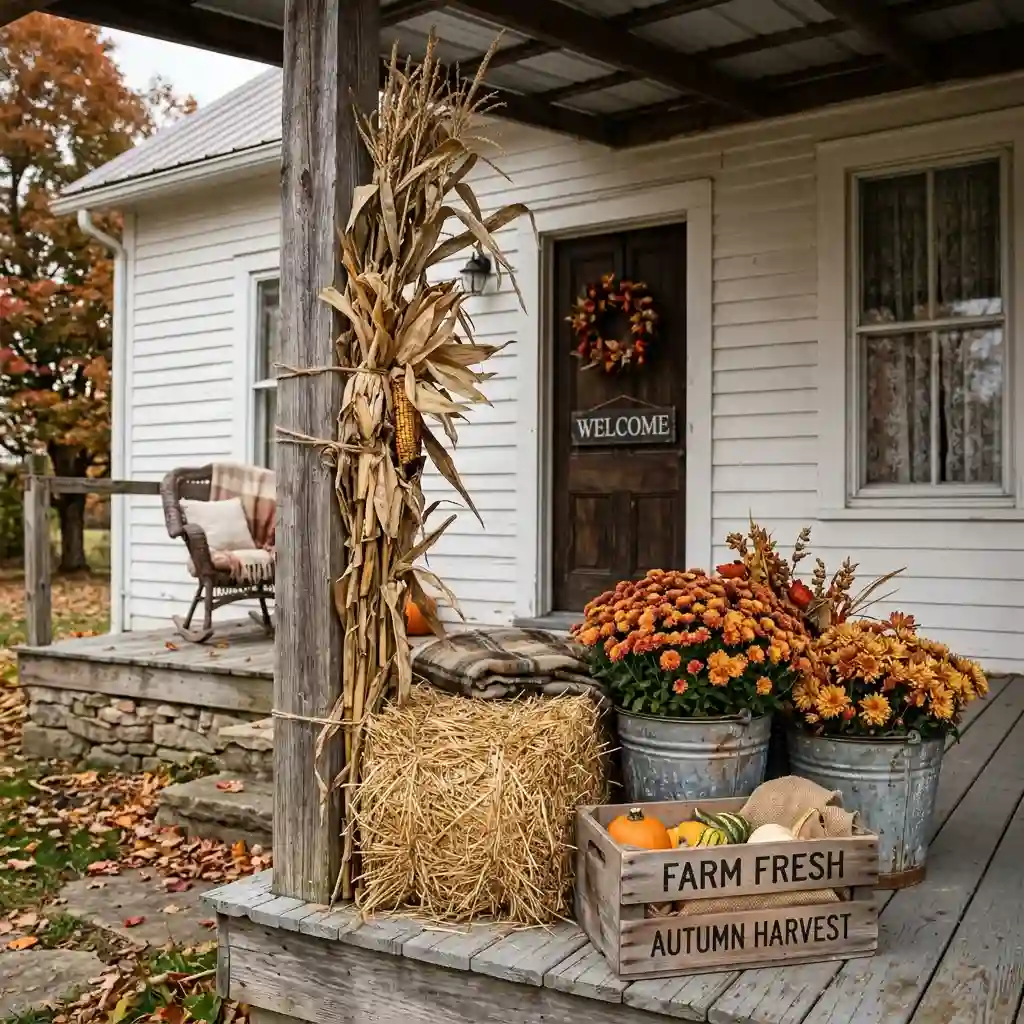
The porch is the highest-return zone in fall decorating, because it is the only part of your home that every neighbor, delivery driver and guest sees. It is also the one place where seasonal decor is expected rather than optional. Build it in three parts: the floor, the door and the living pieces.
The floor is a layered rug and doormat, bought once and reused. The door is a wreath and, if you are painting anyway, a warmer door color. The living pieces — mums, ornamental grasses, uncarved pumpkins — go last and cost least. Our year-round front porch decor ideas cover the layout and furniture side of the same space.
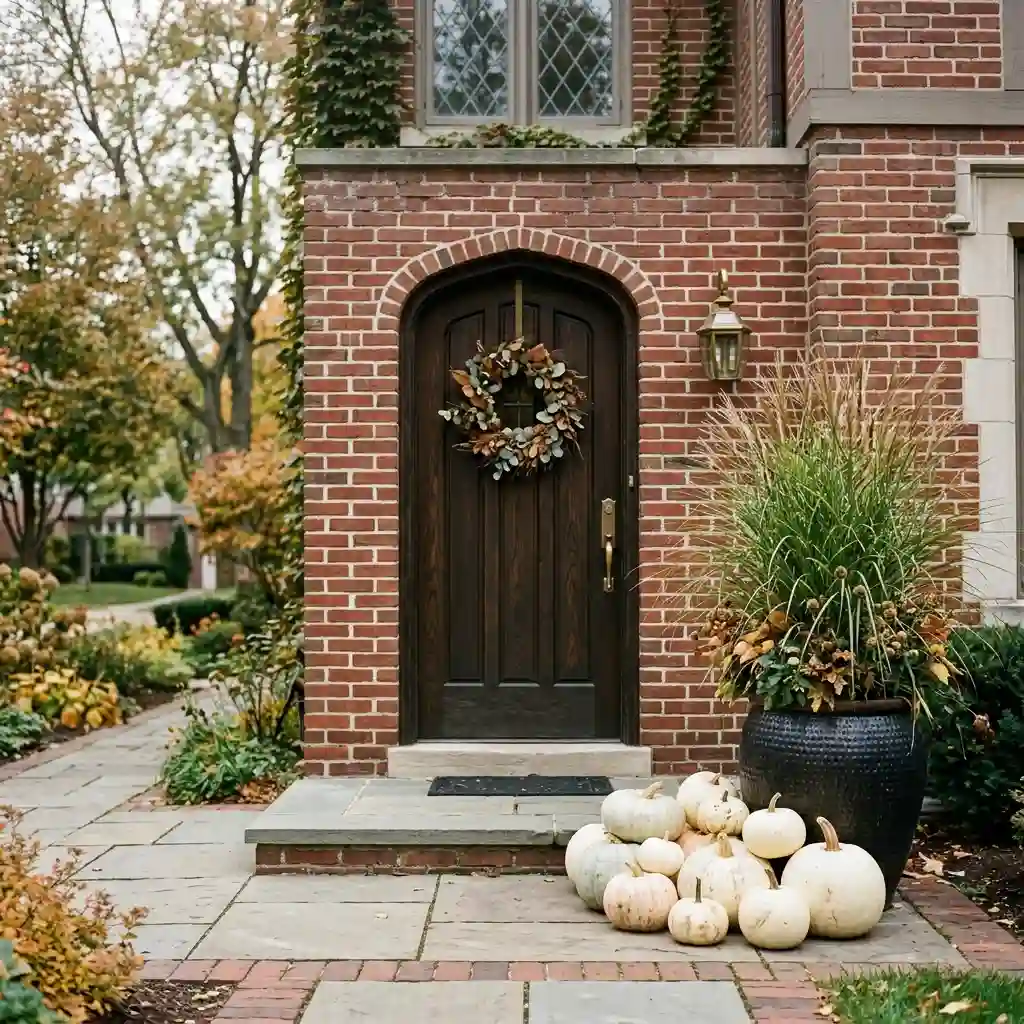
Designer Rule of Thumb: Size a front door wreath to roughly half the width of the door, then hang it so its center sits at eye level rather than dead-center on the door. The same sizing logic works in every season, including these front door wreath ideas for spring.
The Living Room and Mantel
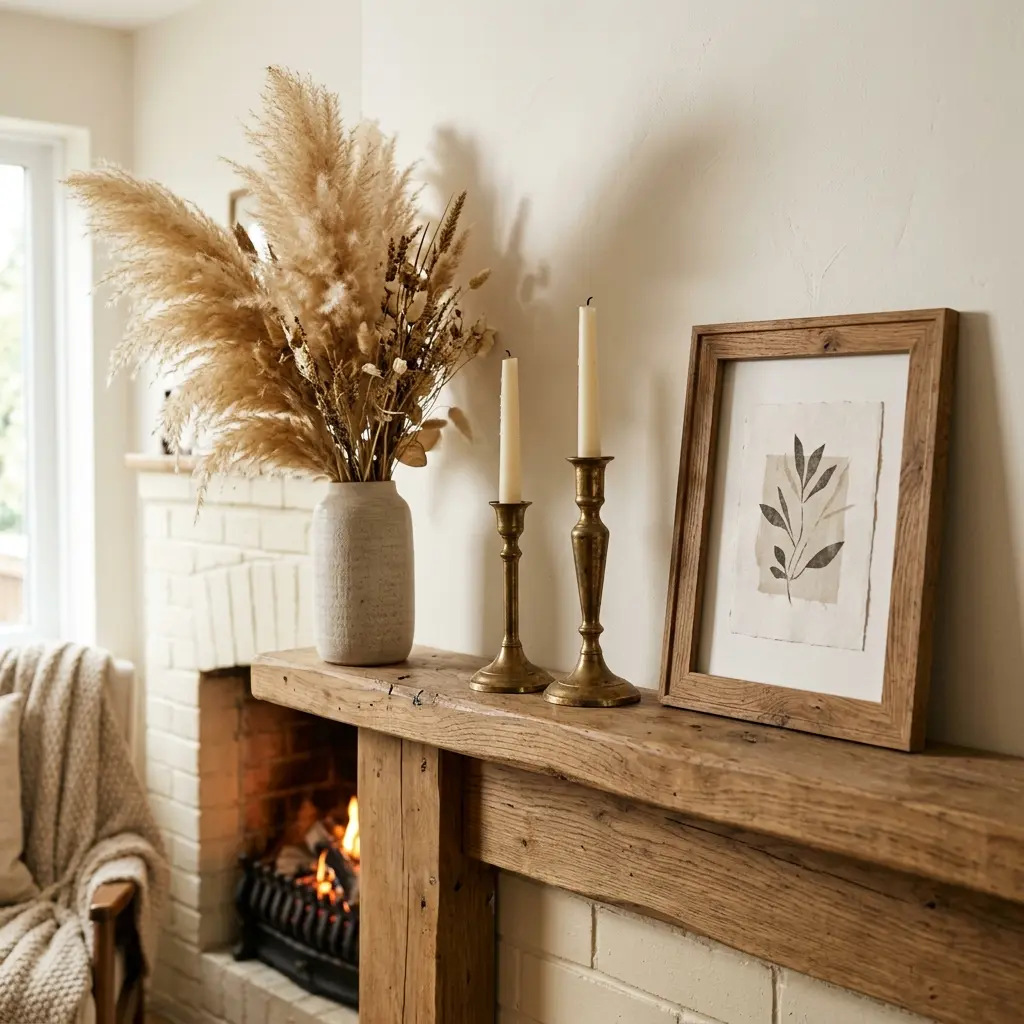
The living room is where people actually sit, so it earns the second-largest share. Three changes cover it: warm lamps instead of the overhead light, warm-toned throws and pillow covers, and one natural element with real height. A mantel or console holds that natural element well.
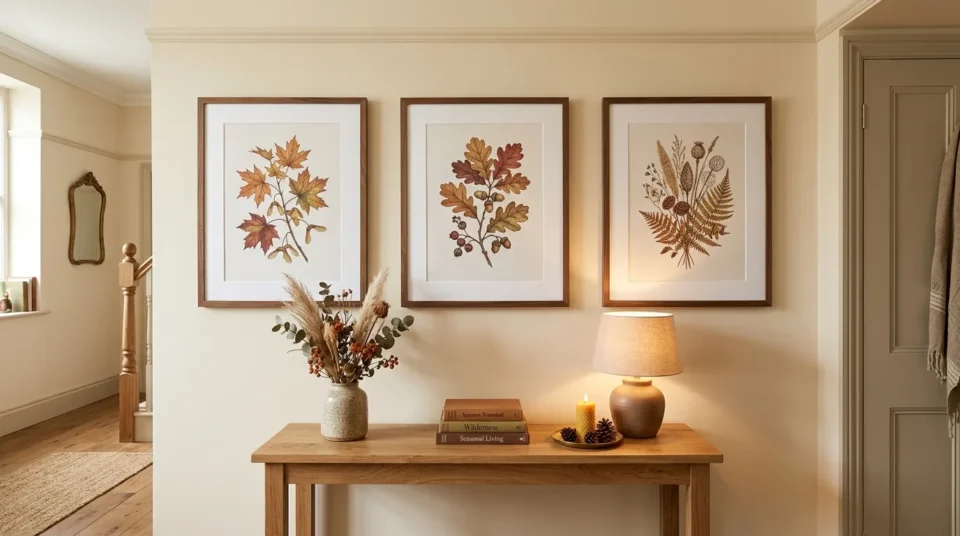
Keep the mantel to three groupings, not a continuous line of objects. A dried arrangement at one end, two candlesticks in the middle, and a leaned frame or wood bowl at the other end is enough. Fall mantel decor fails when it becomes a shelf-length row of small items at the same height.
Safety Note: Keep candles at least twelve inches from dried stems, garland and anything else flammable, and never leave a lit candle unattended.
The Bedroom
The bedroom takes the least effort of the four zones, because bedding does the whole job. Swap white or pastel summer bedding for warm cream, clay or olive, add one heavy knit or wool throw across the bottom of the bed, and put a warm bulb in both bedside lamps. That is a complete fall bedroom.
Skip the pumpkins in here. A bedroom that feels like autumn is doing it through color temperature and fabric weight, not through props. Our fall bedroom refresh ideas go deeper on layering the bed itself.
The same warmth principles apply year-round if you want a room that stays restful — see how to make a bedroom feel cozy without changing the furniture.
The Table, Fall’s Back Half
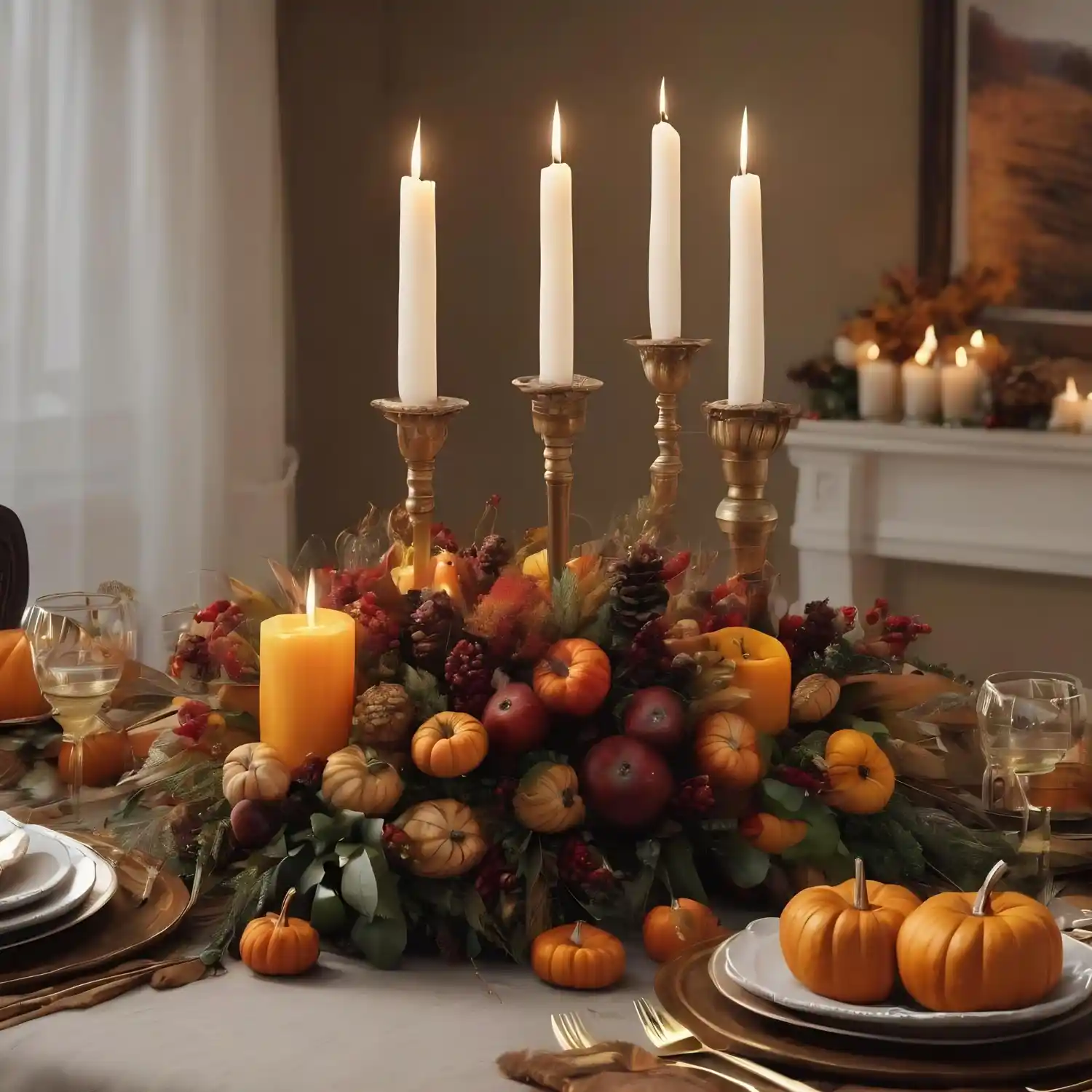
The table is the reason fall decorating pays off in November, long after Halloween has been packed away. Thanksgiving is a fall event, not a separate season, and a table styled in the same three tones as the rest of the house needs almost nothing added for the holiday. The height, spacing and vessel rules behind a good arrangement are covered in our table centerpiece arrangements.
Build it from a linen runner, one low centerpiece under twelve inches so people can see across it, unglazed or wood serving pieces, and warm candlelight. Keep the centerpiece low and long rather than tall and round. The same rule holds in December, as in these winter tablescape ideas.
What Fall Colors Actually Work in a Whole House?
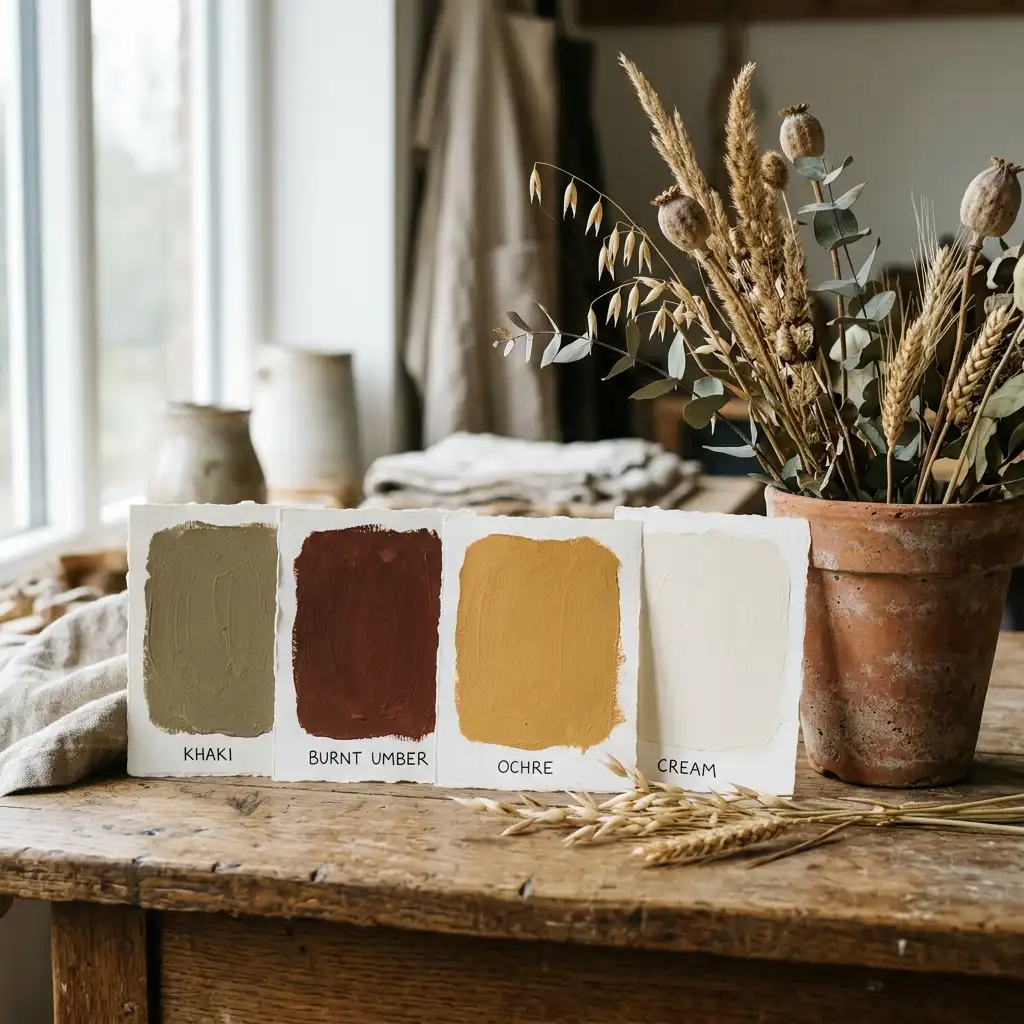
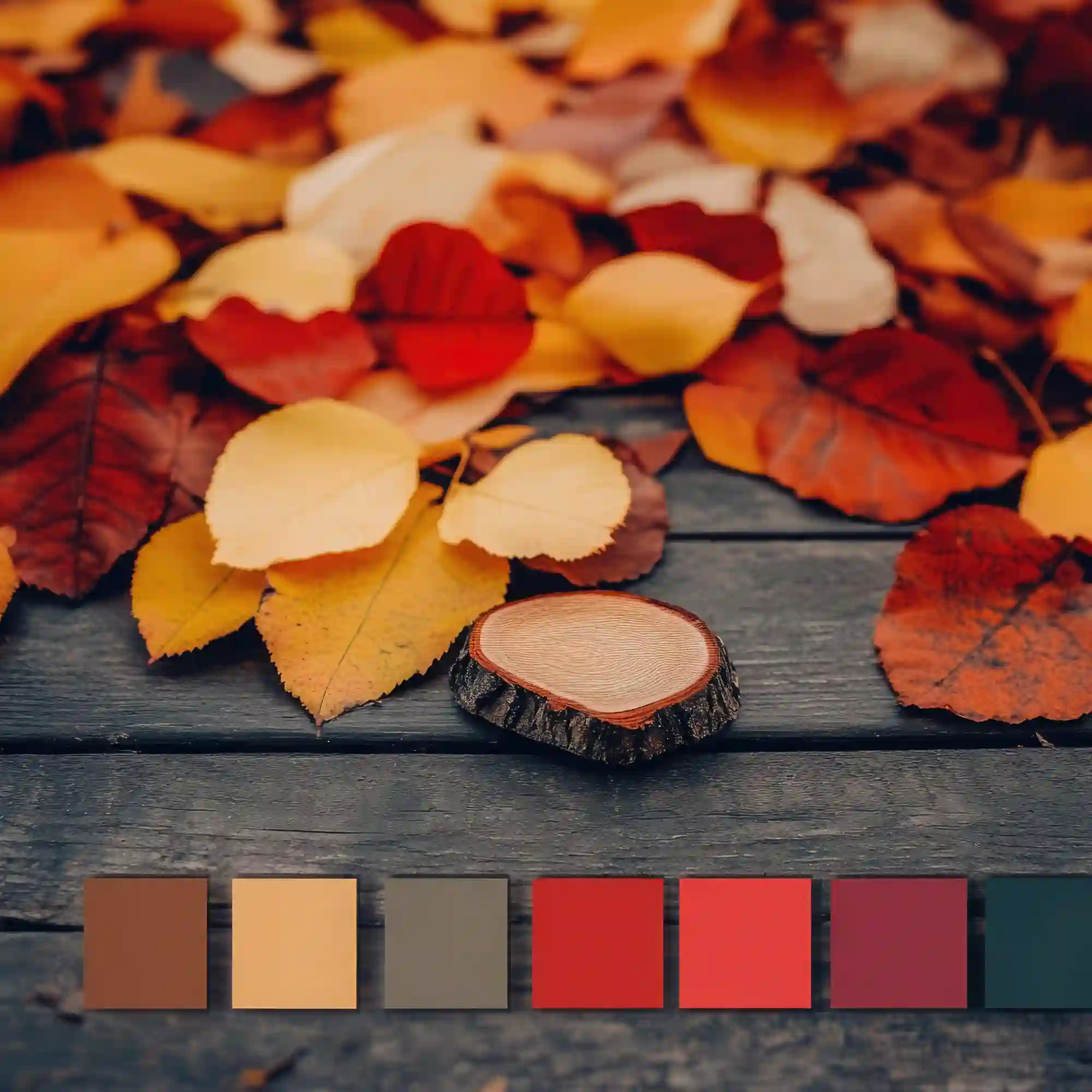
The palette that holds a whole house together is three tones, not five. Pick one warm neutral as the base — cream, oatmeal or warm khaki. Pick one deep earth tone for weight — espresso, burnt umber, forest or charcoal-brown. Pick one muted accent for interest — rust, ochre, olive or dusty clay. Then repeat those three in every zone.
The reason so much fall decor looks cheap is that it uses bright orange as the accent, the base and the weight all at once. Bright orange belongs to Halloween. Autumn in a home is closer to the color of dried grass, wet bark and unglazed pottery than to a traffic cone.
The paint industry moved the same direction for 2026. Benjamin Moore named Silhouette AF-655, a burnt umber with charcoal notes, as its color of the year, and Sherwin-Williams named Universal Khaki SW 6150, a mid-tone neutral with a slight yellow undertone. Both are warm, both are earthy, and both sit comfortably beside dried stems and unglazed ceramic. That is the fall palette, whether or not you ever open a paint can. It is also why a warm, layered look like this cozy cabin interior aesthetic still works months after the leaves are gone.
When Should You Decorate for Fall — and When Should You Take It Down?
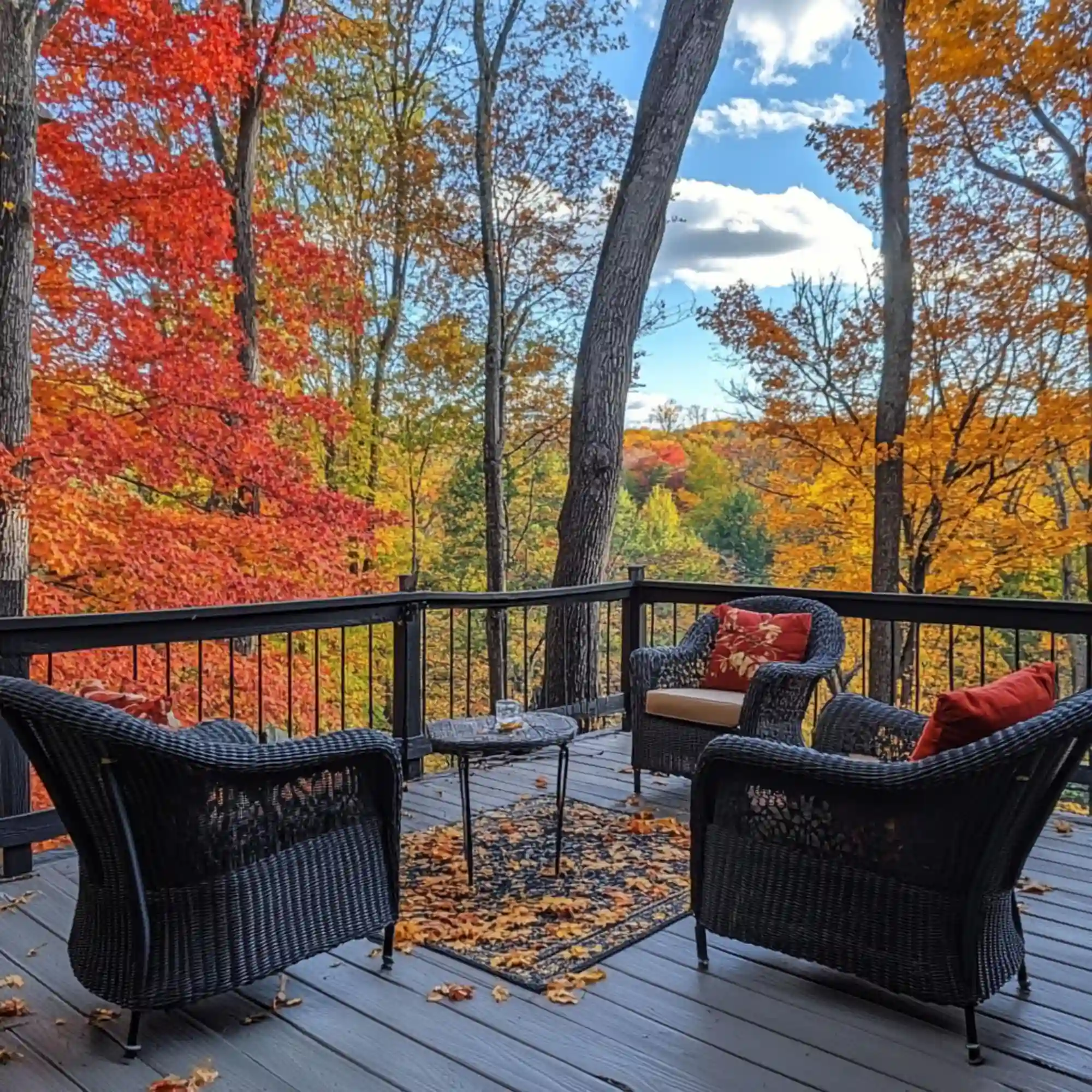
Put wave one up in the last week of August and wave two up in the first week of October. Take the harvest layer down the weekend after Thanksgiving, and leave the warm base — the bulbs, the wool throws, the deeper palette — up until you swap it for winter. Very few people leave the base up long enough.
Late August feels early, and it is the point. The warm base contains nothing that says pumpkin. It is just lamplight and heavier fabric, which look correct on a cool August evening and equally correct in mid-November. Nobody walks in and thinks you decorated early, because there is nothing seasonal to notice yet.
The end of the season is where most homes go wrong in the other direction. Fall decorations get stripped out on November 1st along with the Halloween things, leaving three bare weeks before the holidays start. Keep the pumpkins, dried stems and warm textiles through Thanksgiving instead.
After that, the base rolls straight into winter and only the naturals get swapped. Evergreen replaces dried grass, while the warm bulbs, the wool and the deeper palette stay exactly where they are — the same move behind these cozy winter decor ideas.
The porch follows the same pattern. The rug, doormat and planters stay put while the mums and pumpkins give way to evergreen and bare branches, which is how a cozy winter front porch gets built without starting from nothing in December.
What Most People Get Wrong
- Buying the whole season in one October trip. Everything arrives at peak price, in the same material, and comes down at the same time. Split the buy into a late-August base and an early-October layer instead, and the season stretches from Labor Day to Thanksgiving.
- Using bright orange as the main color. Orange at full saturation belongs to Halloween and makes a room look like a party aisle. Move to muted rust, ochre and clay, and let the deep earth tone do the heavy work.
- Decorating eight rooms instead of four. A little fall decor in every room just looks like clutter; a lot of it in four zones looks finished. The porch, living room, bedroom and table are the four that matter.
- Putting the pumpkins out too early. A pumpkin set on a sunny porch in late August is soft by Halloween. Hold the naturals until October and they carry the table through Thanksgiving.
What Does a Full Fall Refresh Cost?
Most fall decor ideas cost far less than people expect once the base is bought. Decorating a whole home for fall runs from about $80 for a lighting-and-textiles refresh to roughly $700 for a full first-year build including the porch. The base pieces are the ones worth spending on, because they come back every autumn.
| Project | Estimated Cost | Impact Level |
|---|---|---|
| Warm 2700K bulbs for 4-6 lamps | $25-$60 | Very High |
| Two wool throws plus four pillow covers | $60-$180 | High |
| Front door wreath on a reusable base | $35-$90 | High |
| Full porch build: rug, doormat, planters, mums, pumpkins | $150-$400 | Medium |
On a tight budget, the entire first wave can be done for under $100: warm bulbs, one wool throw, and two pillow covers in clay or olive. A mid-range autumn refresh at $200 to $350 adds the wreath, a dried stem arrangement and the porch textiles. Above $500 you are buying a layered outdoor rug, real planters and a heavier wreath — pieces that last five seasons or more. The same base-versus-filler split applies to every holiday in our seasonal decorating archive.
Best First Upgrade: Swap the bulbs in four to six lamps to warm 2700K, which costs less than a single wreath and changes every room after dark.
Skip for Now: Fresh mums, cut branches and anything scented. They cost real money, last a few weeks, and are the easiest pieces to add later.
The Bottom Line
Designer’s Verdict: Buy the warm base first and buy it well — bulbs, wool, linen, a good wreath, a three-tone palette — then keep the harvest layer cheap and late. A home built that way looks right in September, better in October, and still correct on Thanksgiving night, which no single October shopping trip has ever managed.
Frequently Asked Questions
Conclusion
The best fall decor ideas are ordered, not accumulated: warm light and warm fabric in late August, pumpkins and dried stems in October, and four zones instead of eight. Build the base once and it comes back every autumn with almost nothing to buy. For more room-by-room inspiration, browse our home decorating ideas.
Next Steps
- Swap the bulbs in four to six lamps to warm 2700K this week.
- Write down your three fall colors — one neutral, one deep earth tone, one muted accent.
- Pack away white and pastel summer textiles and bring out wool, linen and knit.
- Set an early-October date for the pumpkins, dried stems and table pieces.
Browse Fall Decor Topics
- Cozy Fall Aesthetic: Why Warm Light Beats More Pumpkins
- DIY Fall Decor: Which Projects Are Actually Worth Making?
- Fall Decor by Room: Where to Start and What to Skip
- Fall Porch Decor: How to Build It in Three Layers That Last
- Fall Tablescape Ideas: What Makes a Thanksgiving Table Look Expensive?
- Fall Wallpaper: Why Does Everything Look Brown This Year?
- Fall Wreath Ideas: Front Door, DIY and Autumn Styles Worth Copying