TL;DR
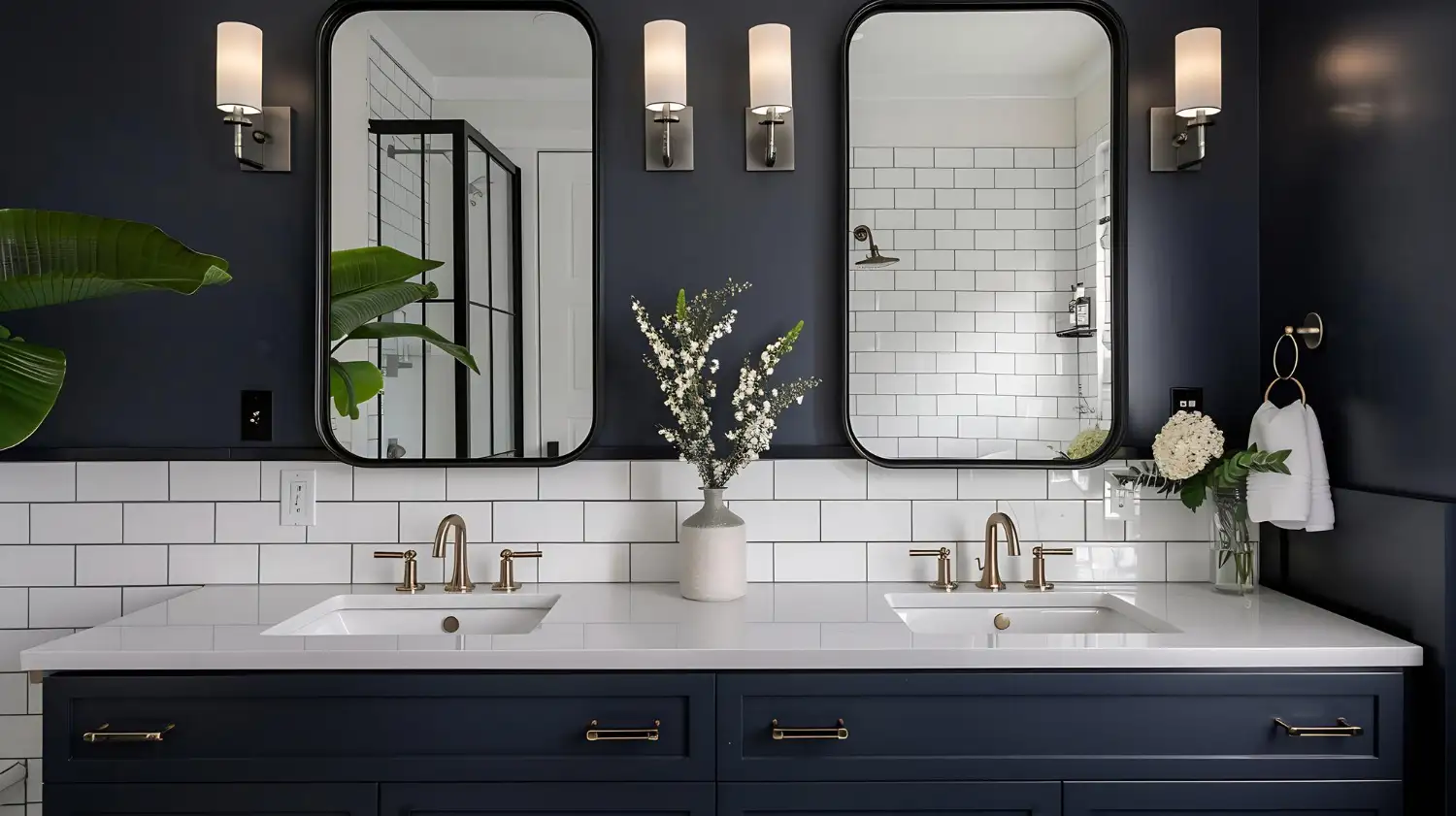
This step-by-step plan for how to decorate a bathroom covers all 10 moves in order: setting a style direction and budget, choosing humidity-rated paint, layering lighting, styling the vanity, adding storage, layering textiles, hanging wall decor, refreshing hardware, bringing in greenery, and doing a final edit — so every choice builds on the last instead of working against it.
Looking for more ideas? Explore our full guide to Bathroom Ideas.
How to Decorate a Bathroom in the Right Order
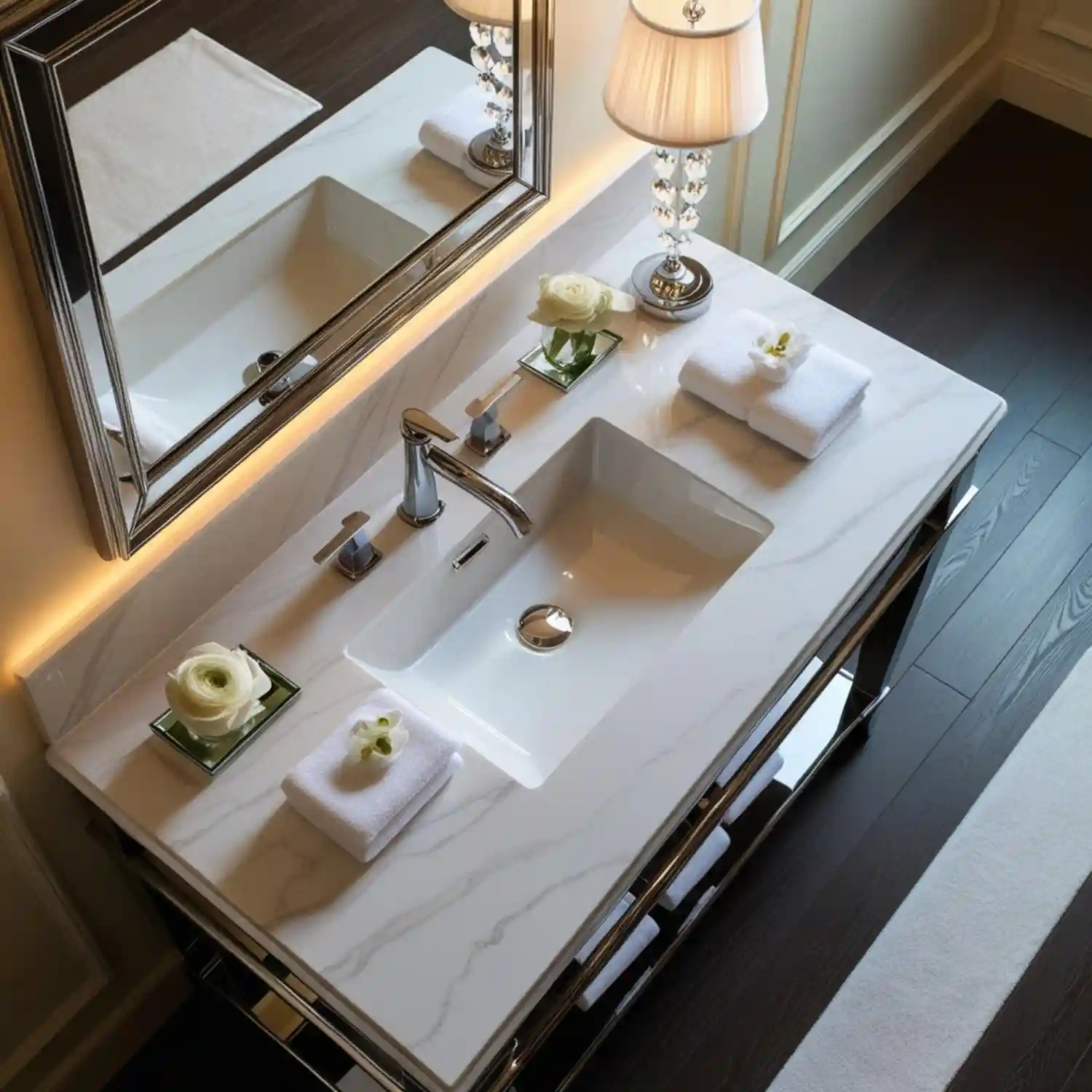
Most bathroom advice starts with “buy new towels first — it’s an easy win.” That advice is backwards. Towels and a bath mat are the last five percent of a finished bathroom, not the first fifty, and buying them too early usually means rebuying them once the real palette is set.
If you’ve ever repainted a bathroom wall only to realize the new towels clash with it, you know the problem. Buying decor before locking in a style direction is the single biggest reason a bathroom refresh feels random instead of pulled together.
Editorial field note: a small guest bathroom with beige tile, one flat white wall, and a single bright overhead bulb looked cold and unfinished for years. Repainting that wall in warm greige, swapping the bulb for a warm 2700K sconce, and adding two woven baskets changed the whole feel in one weekend — no new fixtures, no tile work.
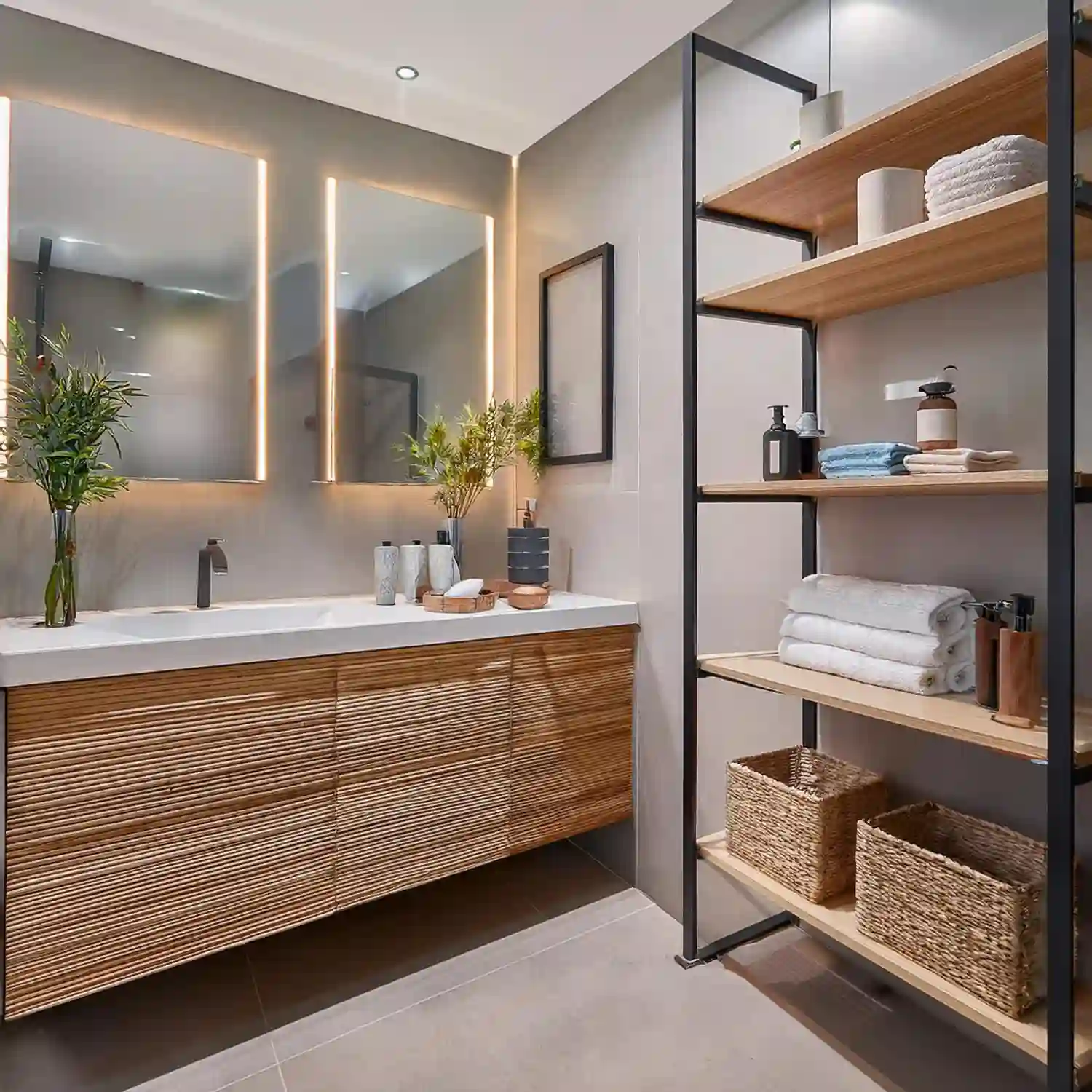
Learning how to decorate a bathroom is mostly about sequence. Start with a style direction and a budget, then paint, then lighting, then the vanity and storage, and finish with textiles, wall decor, hardware, and greenery. Each step sets up the one after it, so working in order prevents the mismatched towels, wrong bulb color, and cluttered counter that make a bathroom refresh feel unfinished.
This guide walks through all 10 steps in the order that actually works, plus a checklist, a budget breakdown, and the mistakes to skip. Browse more of our home decor inspiration for other rooms, or see what’s trending first with these bathroom design trends for 2026 before you commit to a direction. Bookmark this guide for quick reference.
| Quick Takeaways | |
|---|---|
| Paint | Choose a satin or semi-gloss, humidity-rated paint in warm greige, soft white, or sage green. |
| Lighting | Layer ambient, task, and accent light at a warm 2700-3000K glow near the mirror. |
| Vanity | Keep the mirror 2-4 inches narrower than the vanity for the right proportion. |
| Storage | Group loose bottles into 2-3 woven baskets or lidded jars on open shelving. |
| Textiles | Repeat one accent color across the towels, bath mat, and shower curtain. |
| Budget | A full cosmetic refresh with paint, lighting, and textiles runs roughly $150-$700. |
Bathroom Decorating Checklist
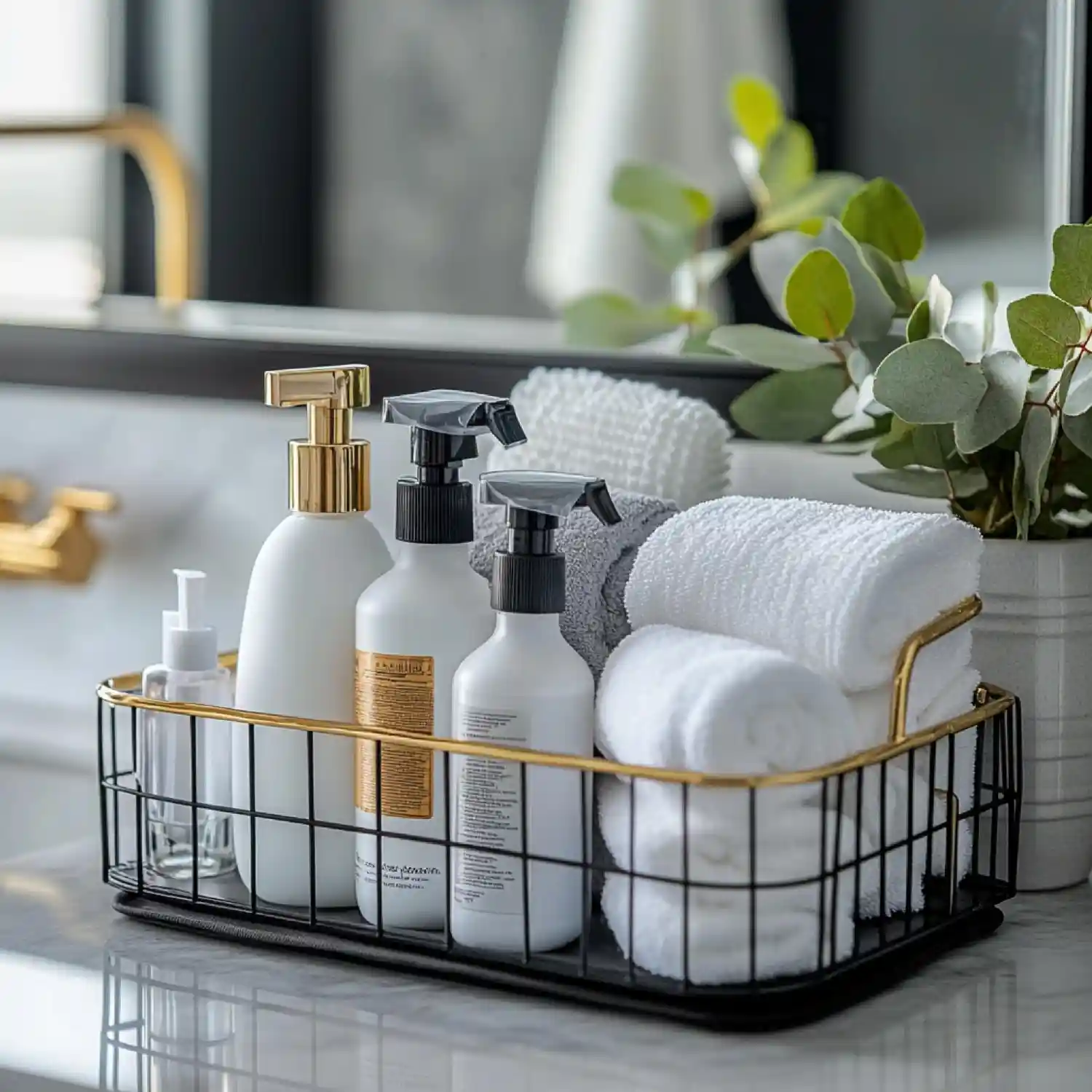
Use this checklist before you buy a single item, so the whole plan stays on one trip instead of five. For more room-specific inspiration, browse our full range of bathroom ideas.
- Pick one style word (spa, modern, coastal, or farmhouse) before shopping.
- Choose a satin or semi-gloss paint rated for humidity, not flat or eggshell.
- Layer 3 light sources: ambient ceiling, task sconces at 2700-3000K, and one accent.
- Keep the mirror 2-4 inches narrower than the vanity for correct proportion.
- Group storage into 2-3 baskets or trays instead of scattering bottles.
- Repeat one accent color across towels, bath mat, and shower curtain.
- Hang wall art at least 12 inches away from any water spray zone.
- Add one humidity-tolerant plant, like pothos or a snake plant.
KEY TAKEAWAY: A bathroom refresh holds together when paint, lighting, and storage are chosen in that order — decor picked before that sequence usually gets replaced within a year.
What You’ll Need Before You Start
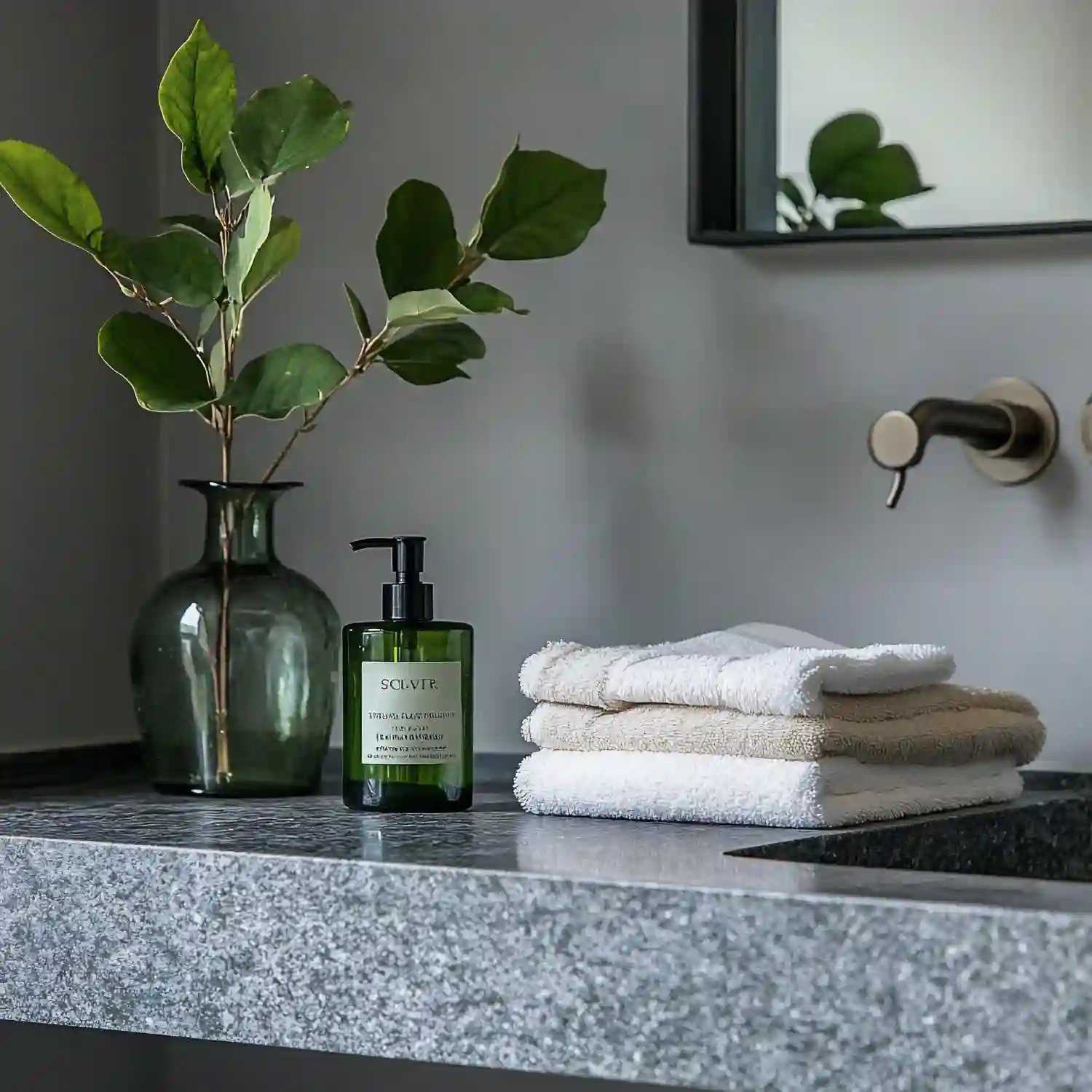
Gather a short materials list first so you are not making four separate store trips. You will want paint swatches and one quart tester of your top 2-3 colors, warm-white bulbs rated 2700-3000K for every fixture, and 2-3 woven baskets or lidded jars for storage.
Add a matching towel and bath mat set in one accent color, plus 2-3 hardware pieces — a knob set, a towel bar, a mirror frame — in one finish, either matte black, brushed brass, or oil-rubbed bronze. Round it out with one or two framed prints and a humidity-tolerant plant such as pothos or a snake plant.
Step 1 — Assess the Space and Set a Style Direction
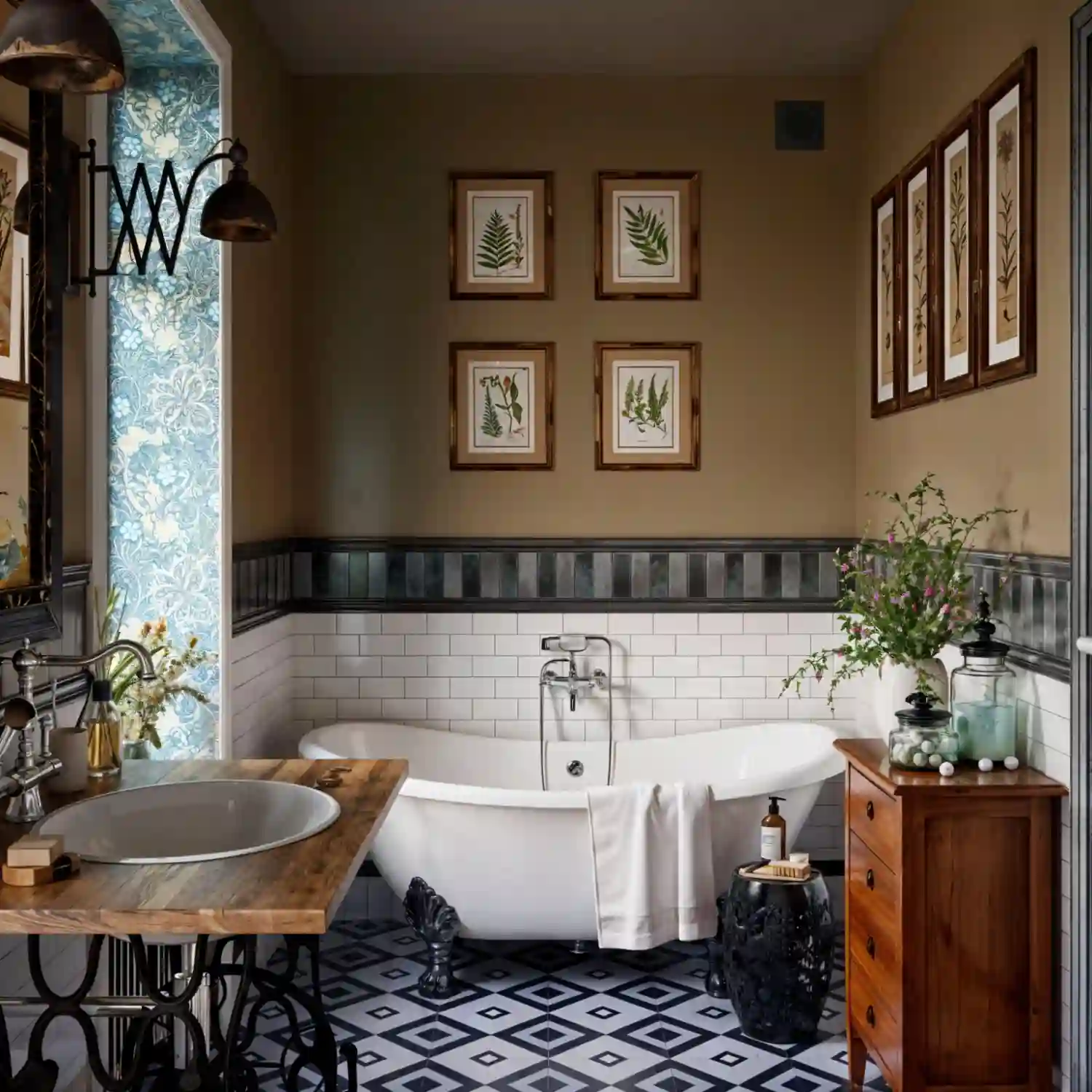
Start by looking at what you cannot change: the tile color, the tub or shower finish, and the vanity material. These fixed elements set the boundaries for every decor choice that follows. Walk the room and note the wall color, floor material, and how much natural light it gets during the day.
Next, pick one style word before you shop — it will guide paint, hardware, and textiles alike. A farmhouse bathroom leans on shiplap, woven baskets, and warm wood tones for a lived-in feel. That warmth comes from mixing matte and worn textures rather than anything polished. Fixed finishes like a white subway tile or a dark vanity can support almost any style word you pick.
A boho bathroom works well instead if your taste runs more relaxed, with rattan, plants, and warm terracotta accents. Every piece earns its spot instead of matching a strict set. A rough budget range matters here too — even a simple $150-$300 plan changes which step you tackle first.
Prefer fewer objects and more quiet? A minimalist bathroom keeps the counter down to 2-3 objects and one calm palette. Choosing one style word now prevents buying decor from three different directions later, which is the fastest way to make a small bathroom look cluttered.
Step 2 — Choose a Color Palette and Humidity-Rated Paint
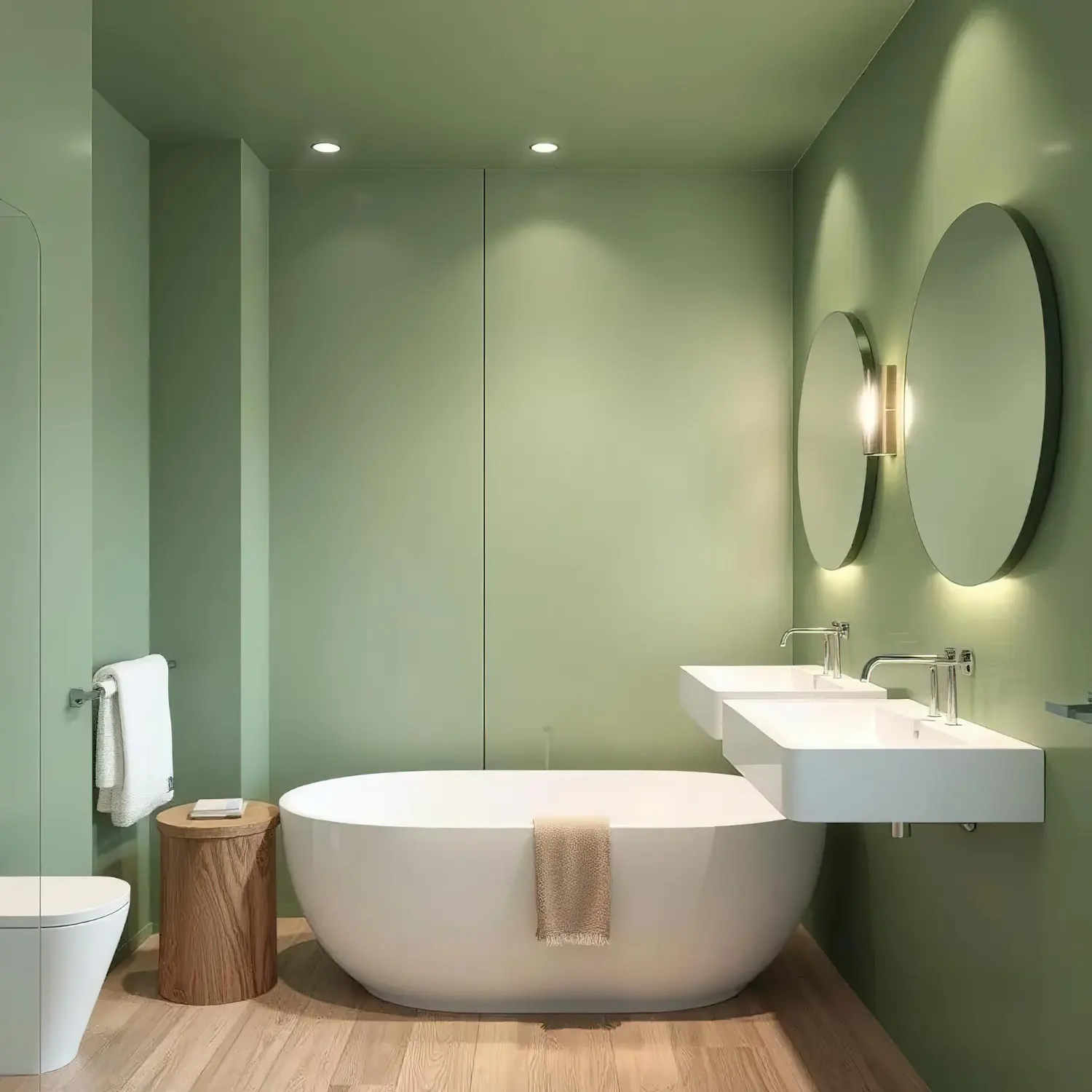
Once you have a style word, narrow it to 2-3 paint colors and test each one under your bathroom’s real lighting, not the store’s fluorescent light. Warm greige, soft white, and sage green are the most forgiving choices in small or low-light bathrooms.
Material Note: choose a satin or semi-gloss sheen. Benjamin Moore’s Aura Bath & Spa line is formulated specifically for humidity and mildew resistance, which flat or eggshell paint cannot match.
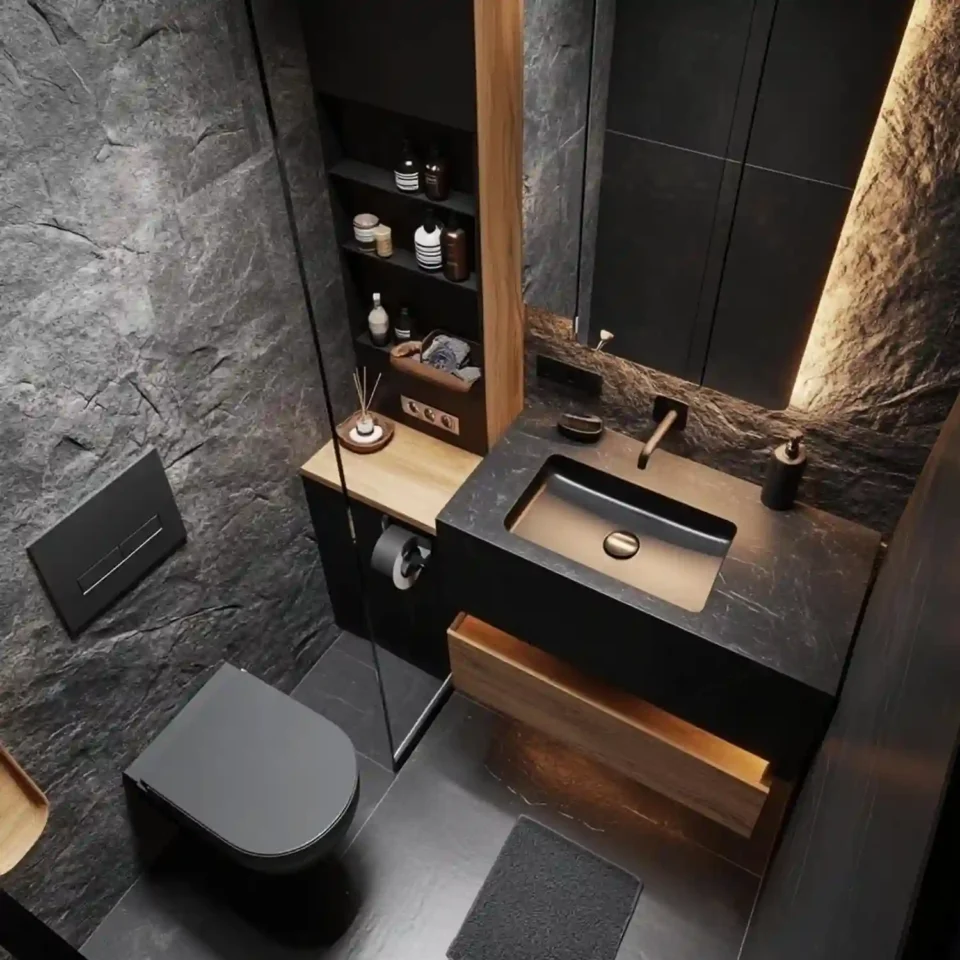
If you want a cooler, more graphic palette, a black and white bathroom leans on high contrast instead of color — think white walls with matte black hardware and one dark accent tile. That approach reads more modern than a full-color wall.
For a bolder route, a sage green vs. forest green bathroom comparison shows how far one color family can stretch across tile, paint, and textiles. Both shades pair well with brass or warm wood accents.
And if you want something softer and more grown-up, a sophisticated pink bathroom proves pink does not have to feel juvenile when paired with warm brass and natural stone.
Step 3 — Layer the Lighting (Ambient, Task, and Accent)
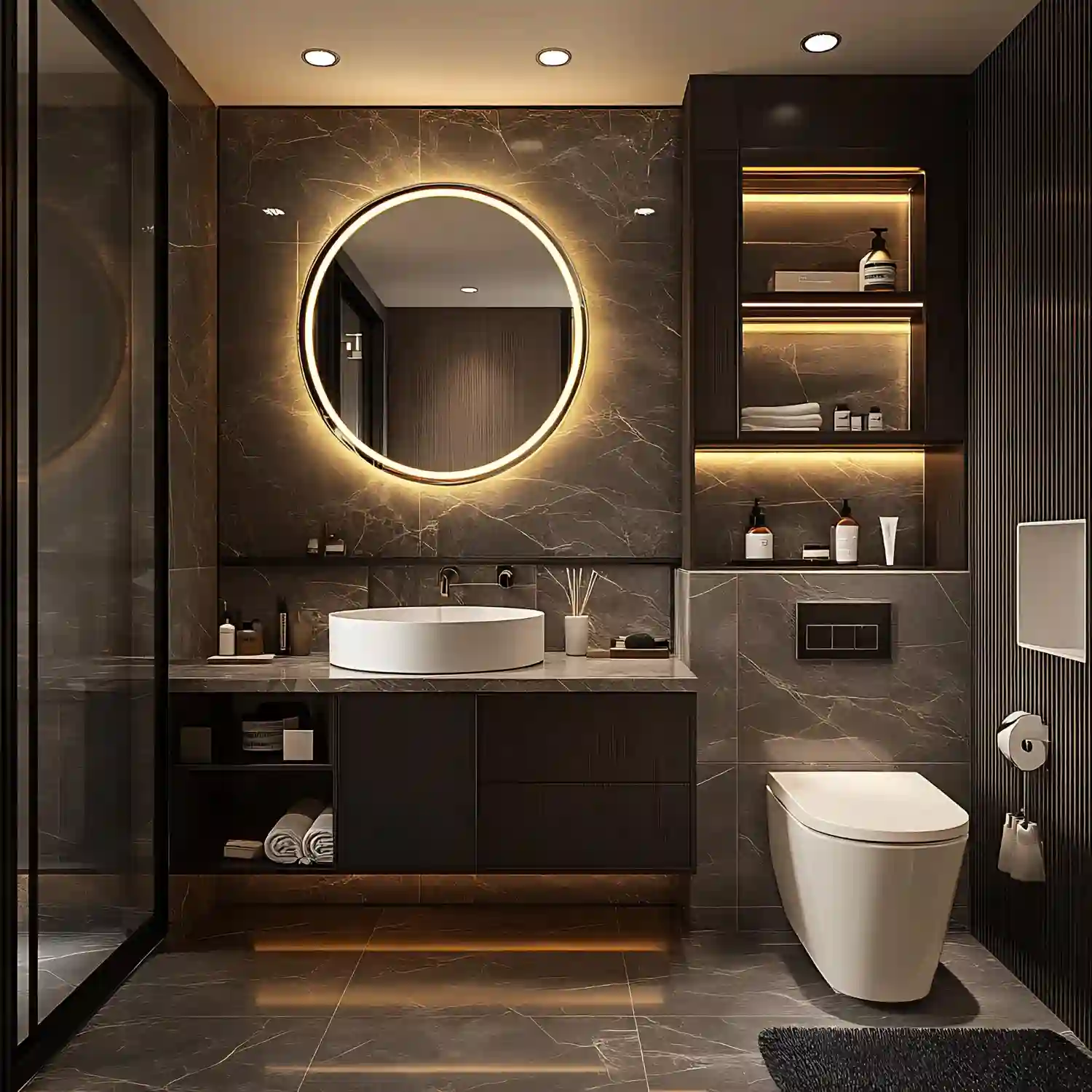
Most bathrooms rely on one overhead light, which is why so many feel flat or clinical. Layer three sources instead: an ambient ceiling fixture, task lighting at the mirror, and one accent, like a plug-in sconce over a tub or a small picture light over art.
Source Note: Lightology’s bathroom lighting guidance recommends a warm 2700-3000K color temperature for most bathrooms, since it renders skin tones better than a cooler 4000K bulb while still giving clear light for grooming. Color temperature is measured in Kelvin (K) — the lower the number, the warmer and more amber the glow.
Mount vanity sconces at eye level, roughly 60-65 inches from the floor, flanking the mirror rather than mounted above it. Light from the side removes the harsh shadows a single overhead bulb creates.
Safety Note: if any of this requires new wiring or a new switch, that work belongs to a licensed electrician. Swapping a fixture cover, a plug-in sconce, or the bulbs themselves stays a simple cosmetic update anyone can make.
Step 4 — Style the Vanity and Mirror
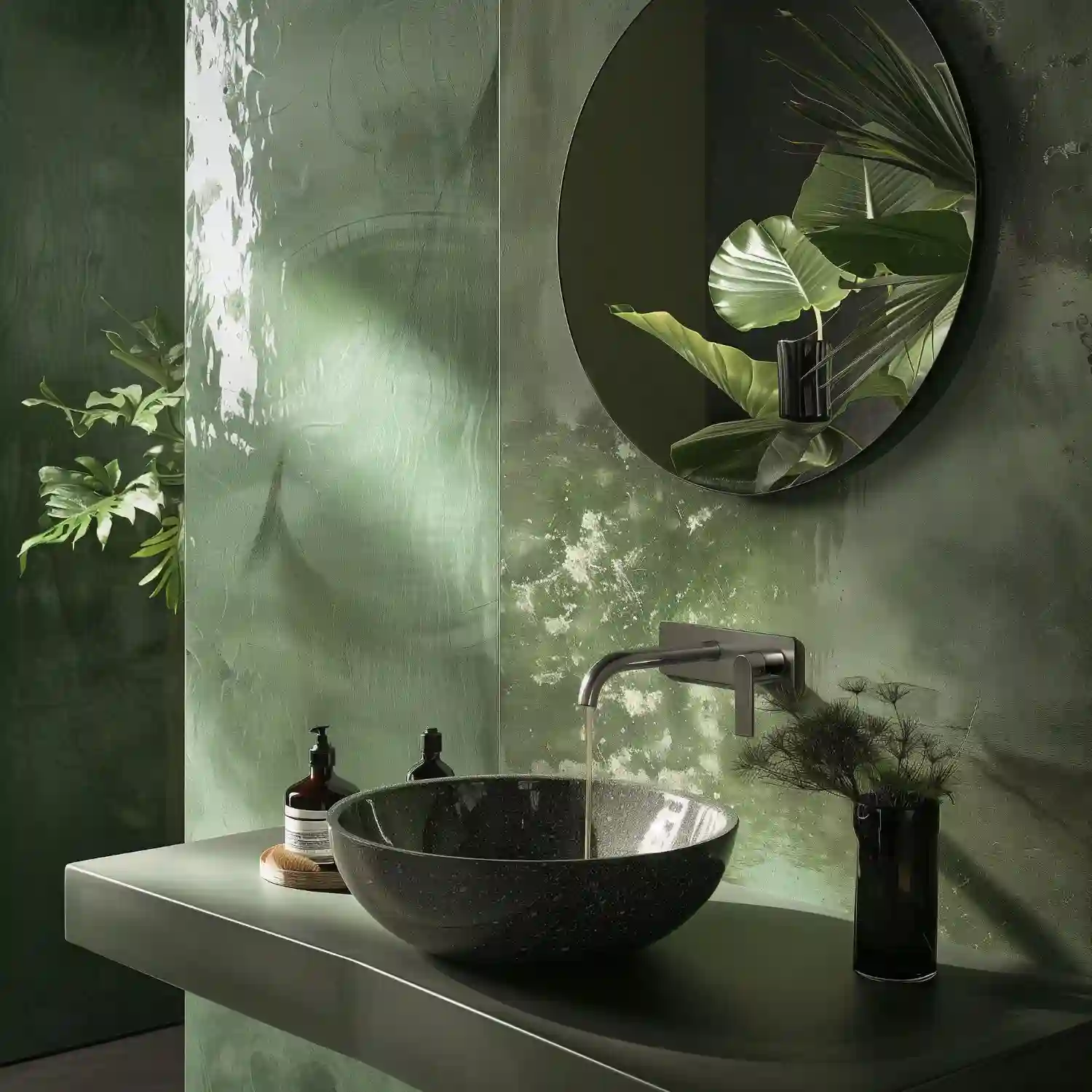
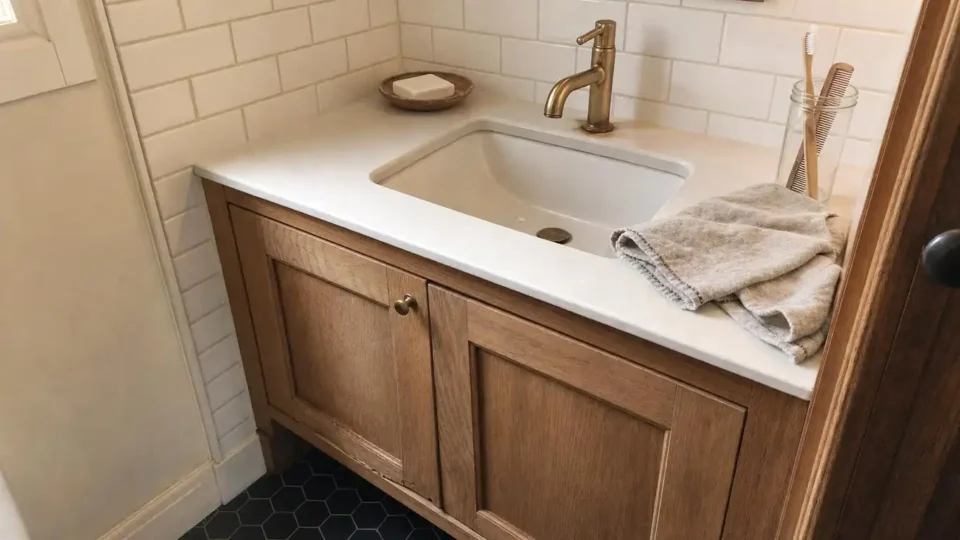
The mirror is the single largest decor decision on the vanity, and getting the proportion wrong is one of the most common mistakes homeowners make. Source Note: Madeli’s bathroom sizing guidance recommends keeping the mirror 2-4 inches narrower than the vanity, or roughly 70-90% of its width, so the wall around it has room to breathe.
For a 36-inch vanity, that means a mirror closer to 30-32 inches wide. For a 60-inch double vanity, either one wide 55-58 inch mirror or two 24-26 inch mirrors side by side both work well.
Once the mirror is right, style the counter itself. One tray with 2-3 objects — a soap pump, a small plant, a ceramic dish — keeps the surface looking curated instead of cluttered.
Step 5 — Add Storage That Looks Intentional
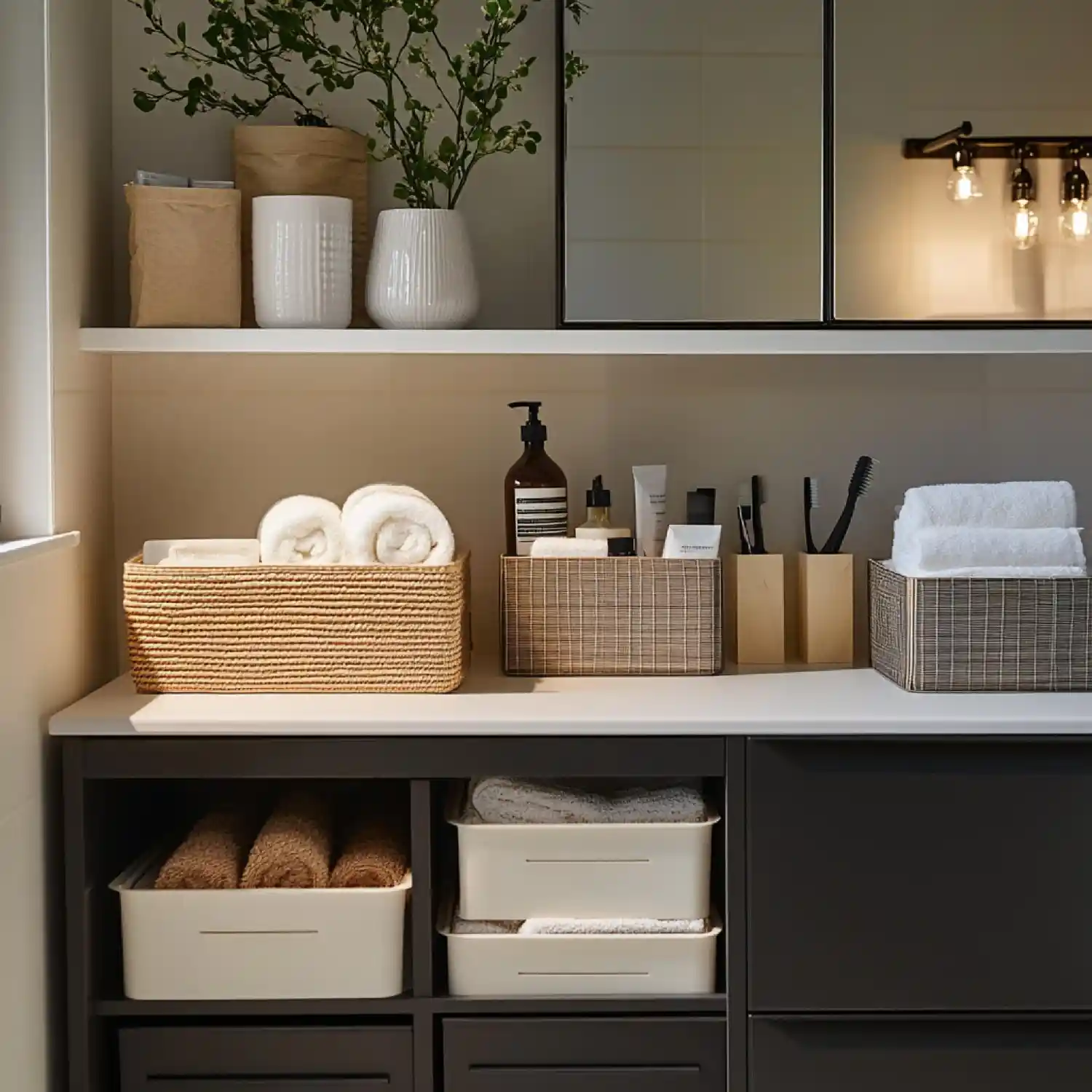
Open storage looks planned when it is grouped, and cluttered when it is not. Swap loose bottles and boxes for 2-3 woven baskets, a lidded canister for cotton balls or bath salts, and one labeled jar for anything you reach for daily.
Floating shelves work well above the toilet or beside the vanity. Mount them at staggered heights, roughly 14-16 inches apart, so the eye has somewhere to land instead of one flat row. Once you know how to decorate a bathroom in the right order, storage stops feeling like an afterthought and starts pulling the whole room together.
Rattan and seagrass baskets pair naturally with a farmhouse or boho direction, while a matte black wire basket suits a more modern bathroom.
Step 6 — Layer In Textiles (Towels, Bath Mat, and Shower Curtain)
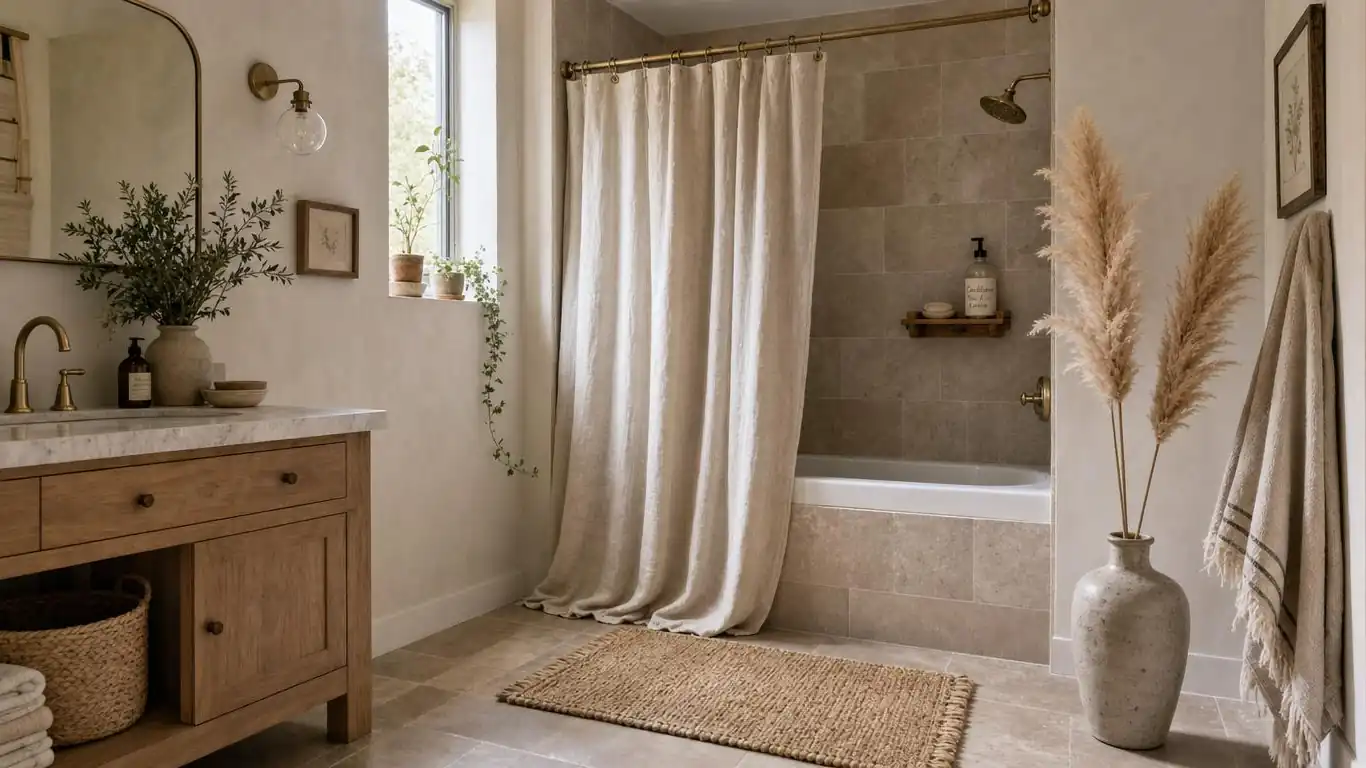
Pick one accent color and repeat it three times: in the towels, the bath mat, and the shower curtain or a window valance. That repetition is what makes a textile layer look chosen instead of grabbed off a shelf.
Material Note: a heavier cotton towel, around 600-700 GSM, feels closer to a hotel and holds its color better wash after wash than a thin 300-400 GSM towel.
A cream or warm white base with one accent — sage green, terracotta, or navy — works in almost any style direction, from farmhouse to modern.
Step 7 — Add Wall Decor and Art the Moisture-Safe Way
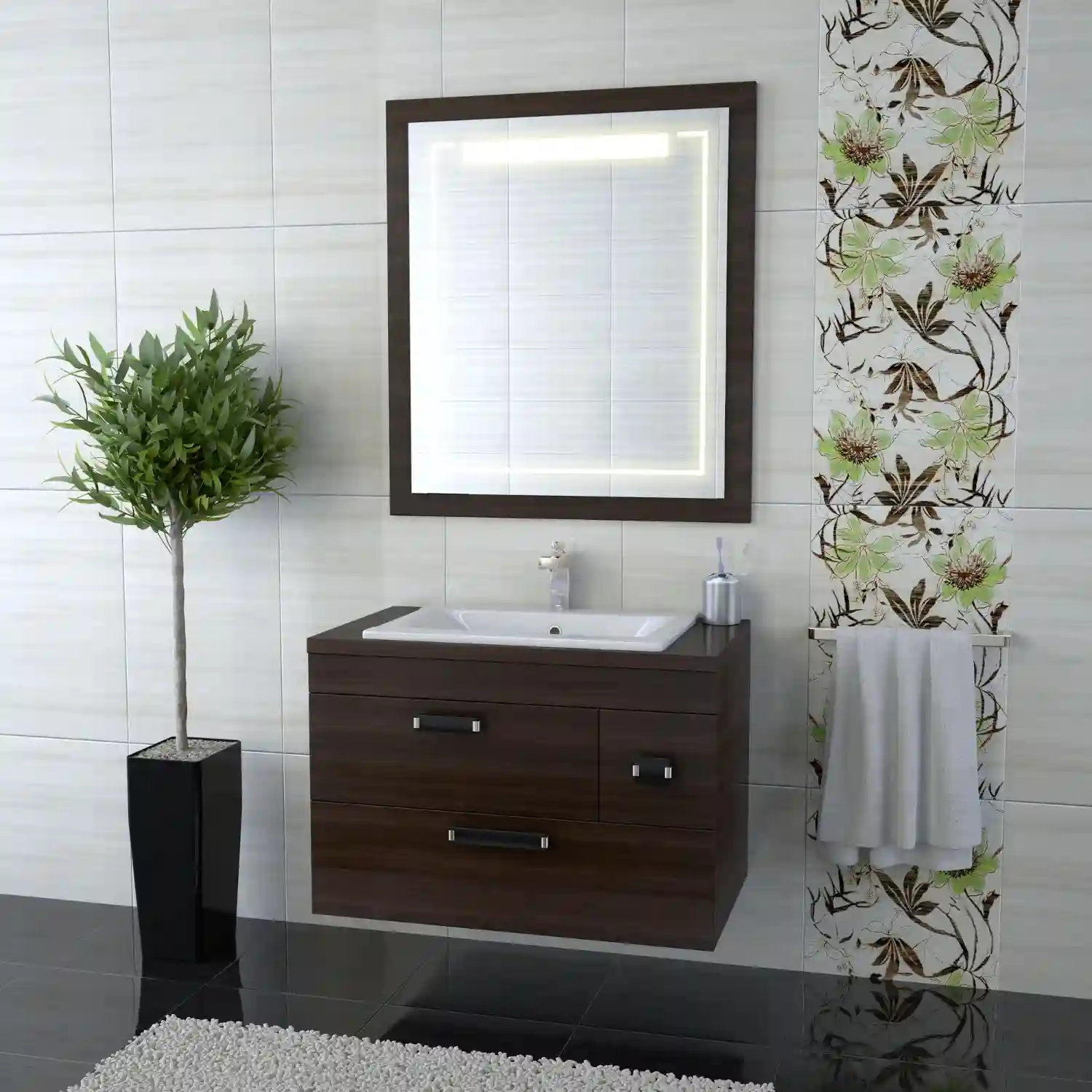
Wall decor in a bathroom has one extra rule: keep it away from direct water spray. Frame prints behind glass or acrylic, and hang them at least 12 inches from a showerhead or tub spout so moisture does not warp the paper over time.
A small gallery of 3-5 framed pieces works well above the toilet or beside the vanity mirror. Stick to one mat color and one frame finish — brushed brass or matte black — so the grouping looks planned rather than assembled piece by piece.
If your walls still feel bare after art, a tile treatment is another route. These bathroom backsplash ideas show how a patterned tile panel behind the vanity can do the same visual work as a framed piece.
Step 8 — Refresh Hardware and Fixtures Cosmetically
Swapping cabinet knobs, drawer pulls, a towel bar, and a faucet handle style is one of the fastest cosmetic upgrades in the whole bathroom, and none of it requires new plumbing or wiring. Pick one finish — matte black, brushed brass, or oil-rubbed bronze — and repeat it across every piece of hardware in the room.
DESIGNER TIP: mismatched metal finishes are one of the fastest ways to make a freshly painted bathroom look unfinished again. Match the faucet, the towel bar, and the cabinet hardware to one finish family before you call the refresh done.
If you are only changing the faucet handle style for a cosmetic update, keep the existing plumbing connections as they are — that swap is a styling decision, not a repair.
Step 9 — Bring In Greenery and Accessories
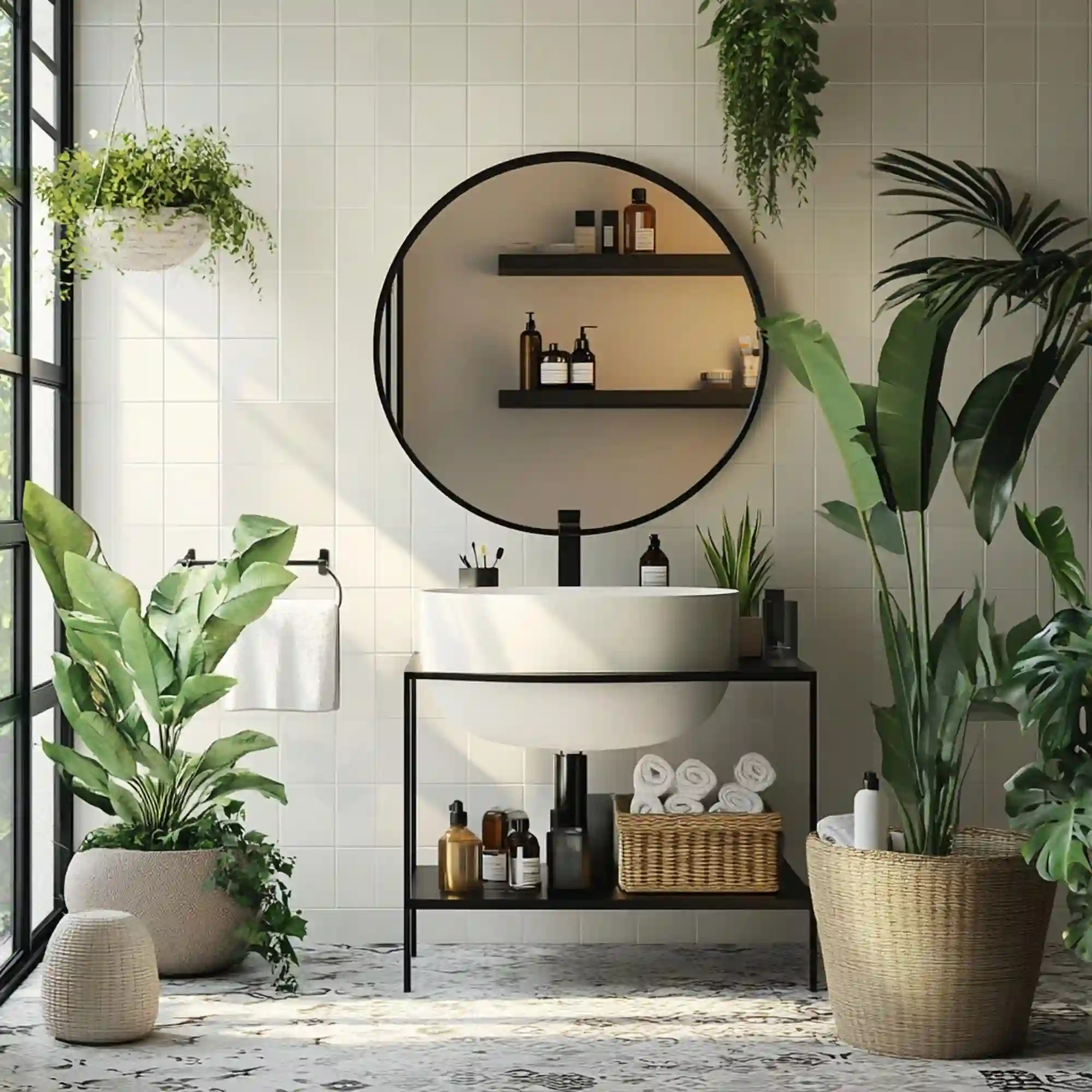
A single humidity-tolerant plant does more for a bathroom than most people expect. Pothos, snake plant, and ZZ plant all tolerate low light and higher humidity, which makes them safer bets than a fern that needs constant misting.
Group the plant with one or two small objects — a candle, a ceramic dish, a small stack of folded washcloths — on the same shelf or corner of the counter.
If you like refreshing small details by season, these spring bathroom decor ideas show how swapping just the greenery and one textile can update the whole room without repainting.
Step 10 — Edit, Declutter, and Do a Final Styling Pass
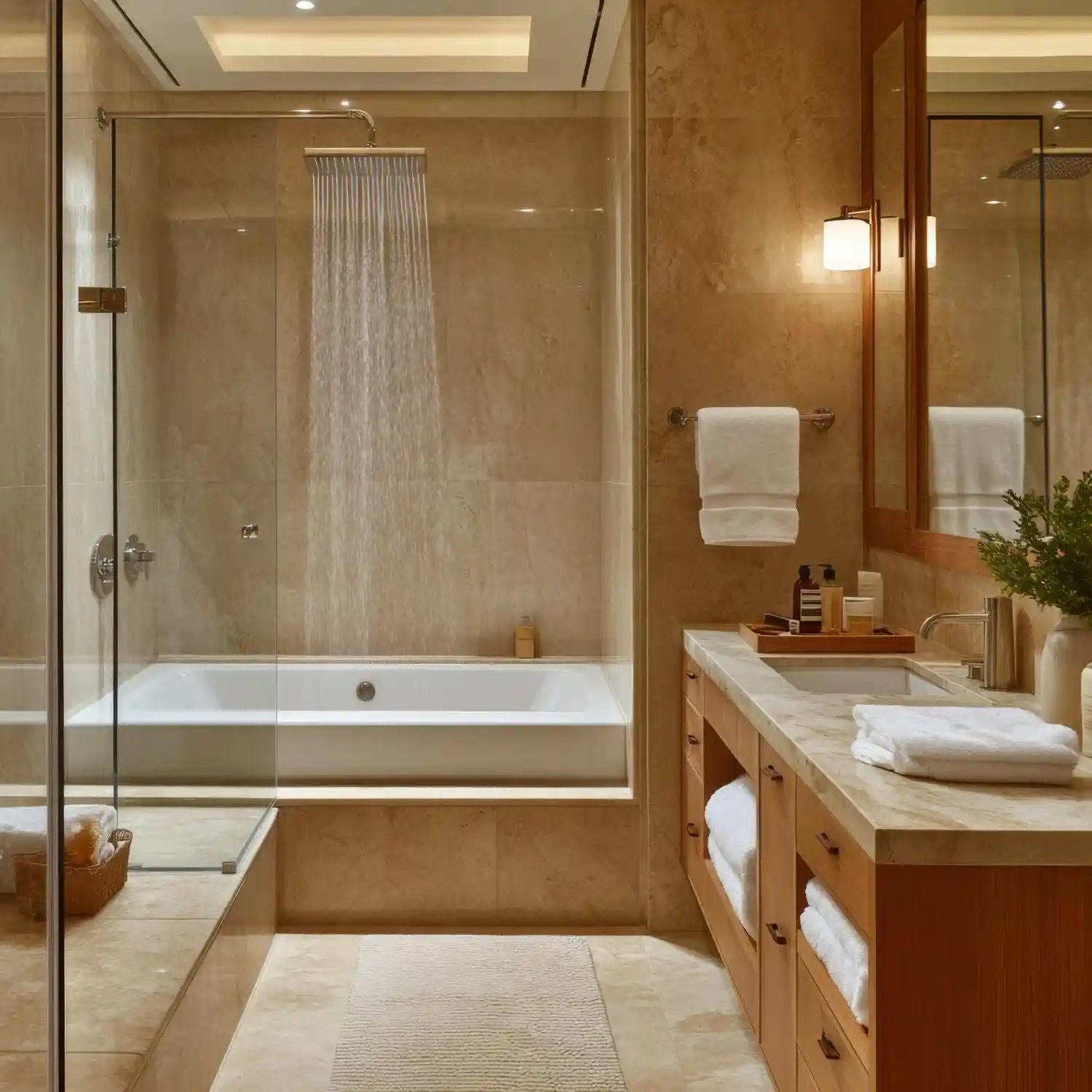
Walk back through the room and remove one item from every surface you styled. A counter with 5 objects usually looks more finished than one with 8, because the eye has room to rest between pieces.
DESIGNER TIP: group remaining objects in odd numbers — three on a tray, three on a shelf. It looks more natural than an even, matched pair.
Stand in the doorway and look at the room as a whole one more time. If any single element pulls your eye first — a mismatched hardware finish, a crooked frame, a wrong-toned towel — that is the one thing left to fix before the refresh is finished.
Bathroom Decorating Mistakes to Avoid
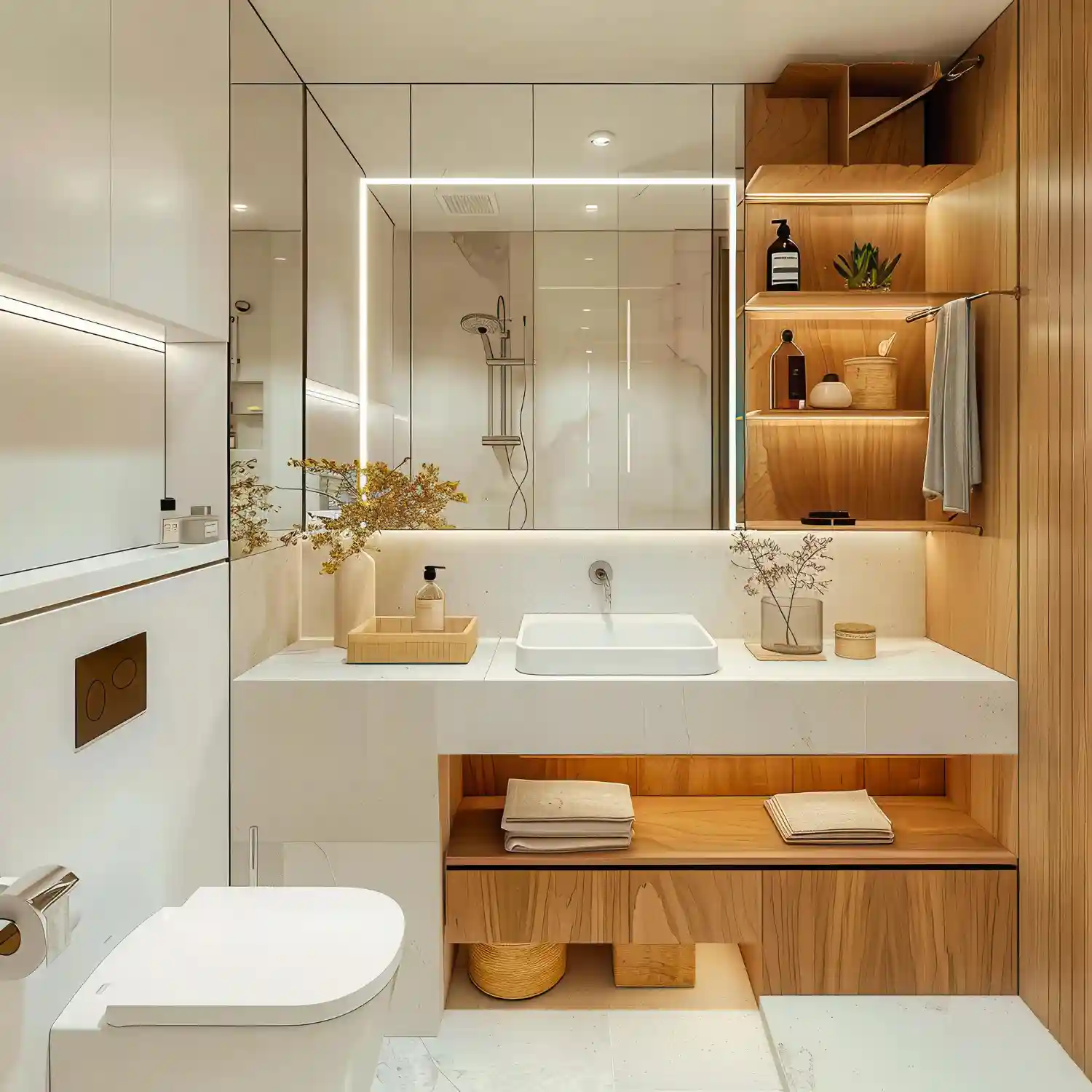
❌ Buying towels, art, and rugs before deciding on a color palette → ✅ Lock in your paint color first, then choose textiles and decor to match it.
❌ Using flat or eggshell paint in a humid bathroom → ✅ Choose a satin or semi-gloss, mold-resistant formula instead.
❌ Relying on a single overhead light for the whole room → ✅ Layer ambient, task, and accent lighting at a warm 2700-3000K temperature.
❌ Mixing four different metal finishes across hardware and fixtures → ✅ Pick one finish — matte black, brushed brass, or oil-rubbed bronze — and repeat it.
What If Your Bathroom Doesn’t Fit the Usual Plan?
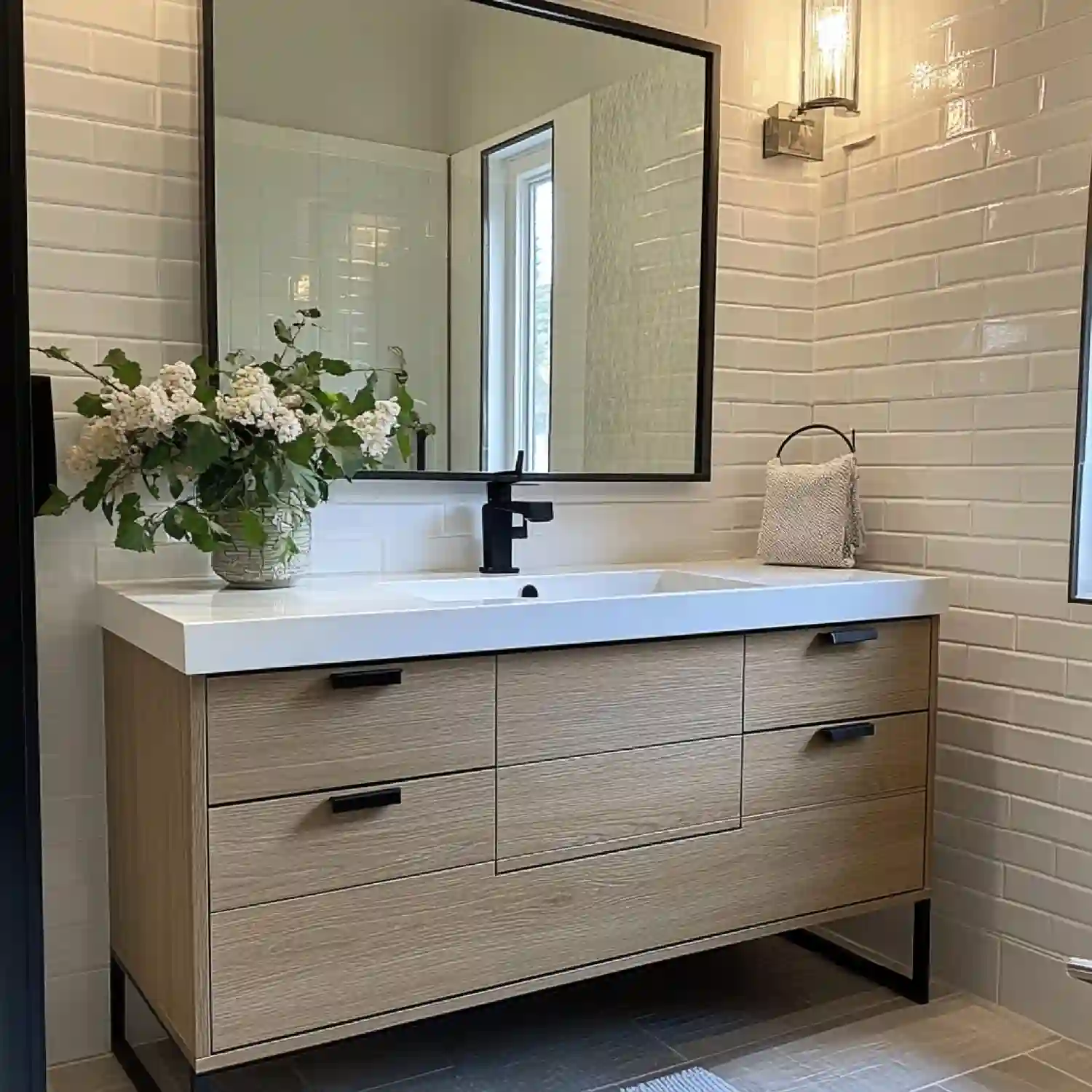
What if my bathroom is very small? Stick to light colors, one large mirror, and wall-mounted storage instead of a floor cabinet. A small bathroom loses space fast to anything that sits on the floor, so keep the footprint clear.
What if I’m renting and can’t paint or drill? Use removable wallpaper, command-strip hooks, and a plug-in sconce instead of a hardwired fixture. A large framed mirror leaned against the wall can replace one that would otherwise need mounting.
What if my bathroom has no window? Lean on warm 2700-3000K bulbs to replace the missing daylight, and choose a pothos or snake plant, both of which tolerate low light better than most houseplants. Run the exhaust fan a few extra minutes after every shower to manage humidity, since a windowless bathroom holds moisture longer.
What if my budget is very tight? Do the paint and textile layer first — it costs the least and changes the most. Lighting and hardware can wait a few months without hurting the overall look.
What a Bathroom Decor Refresh Costs
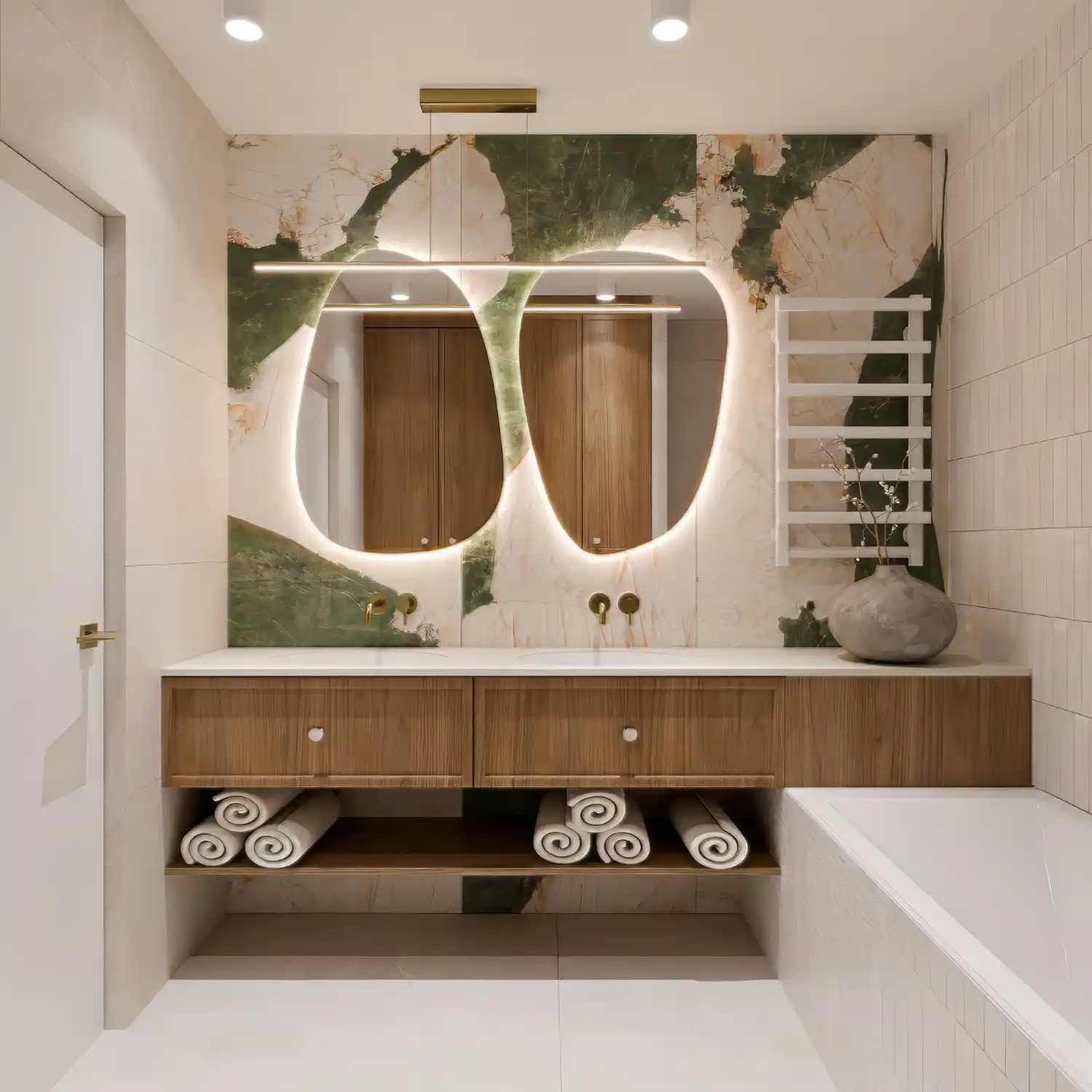
A full cosmetic bathroom refresh can cost as little as $150 or stretch past $700, depending on how many layers you tackle at once. None of the numbers below include renovation, plumbing, or tile work — this is decor and styling only. If you’re budgeting for updates across more than one room, these ranges are a useful starting point beyond the bathroom too — see all rooms inspiration for other spaces.
| Project | Estimated Cost | Impact Level |
|---|---|---|
| Paint Refresh (walls only, 1 gallon) | $50-$120 | Medium |
| Layered Lighting Swap (sconces + warm bulbs) | $80-$250 | High |
| Storage + Textile Layer (baskets, towels, bath mat) | $60-$200 | Medium |
| Full Cosmetic Refresh (paint + lighting + hardware + textiles + art) | $300-$700 | Very High |
Best First Upgrade: Paint plus a warm lighting swap changes how every other color and surface in the room looks, for around $100-$200 combined.
Skip for Now: A premium designer wallpaper or a full vanity replacement — both cost more than the rest of this list combined and are not necessary for a styled, finished look.
Frequently Asked Questions
Conclusion
A bathroom starts to feel finished the moment paint, lighting, and storage stop fighting each other, not when every item matches. Editorial field note: a guest bathroom with mismatched towels and one bright overhead bulb finally looked pulled together after a warm 2700K sconce and a single sage-green wall went in, with no new furniture required. Follow this order once, and how to decorate a bathroom becomes a checklist you can reuse anytime, backed by more home decor inspiration.
Next Steps
- Pick one style word (spa, modern, coastal, or farmhouse) before you buy anything new.
- Test your paint swatch under your bathroom’s real lighting, not daylight alone.
- Buy the lighting layer before the decor layer — it changes how every other color looks.
- Group loose bottles and tools into two or three baskets or trays right away.