TL;DR
- The split: Gothic adds, elegant removes. They share the colour black and almost nothing else.
- Gothic: Runs on ornament and pattern — pointed arches, damask, carved wood, wrought iron. A black room with no pattern in it is not gothic.
- Elegant: Runs on one good material repeated, plus far more empty surface than feels comfortable.
- The test: Look for one pointed arch, piece of tracery or quatrefoil. No arch means you have a dark room, not a gothic one.
Two Styles, One Search Term
Every guide to this corner of Halloween treats gothic and elegant as the same thing with two names. Dark, grown-up, a bit dramatic, definitely black. That framing is the reason so many of these rooms end up looking uncertain, because the two words describe opposite strategies and nobody says so out loud. The other lanes for the season sit across our Halloween decorating archive, and this is the one that most often goes wrong.
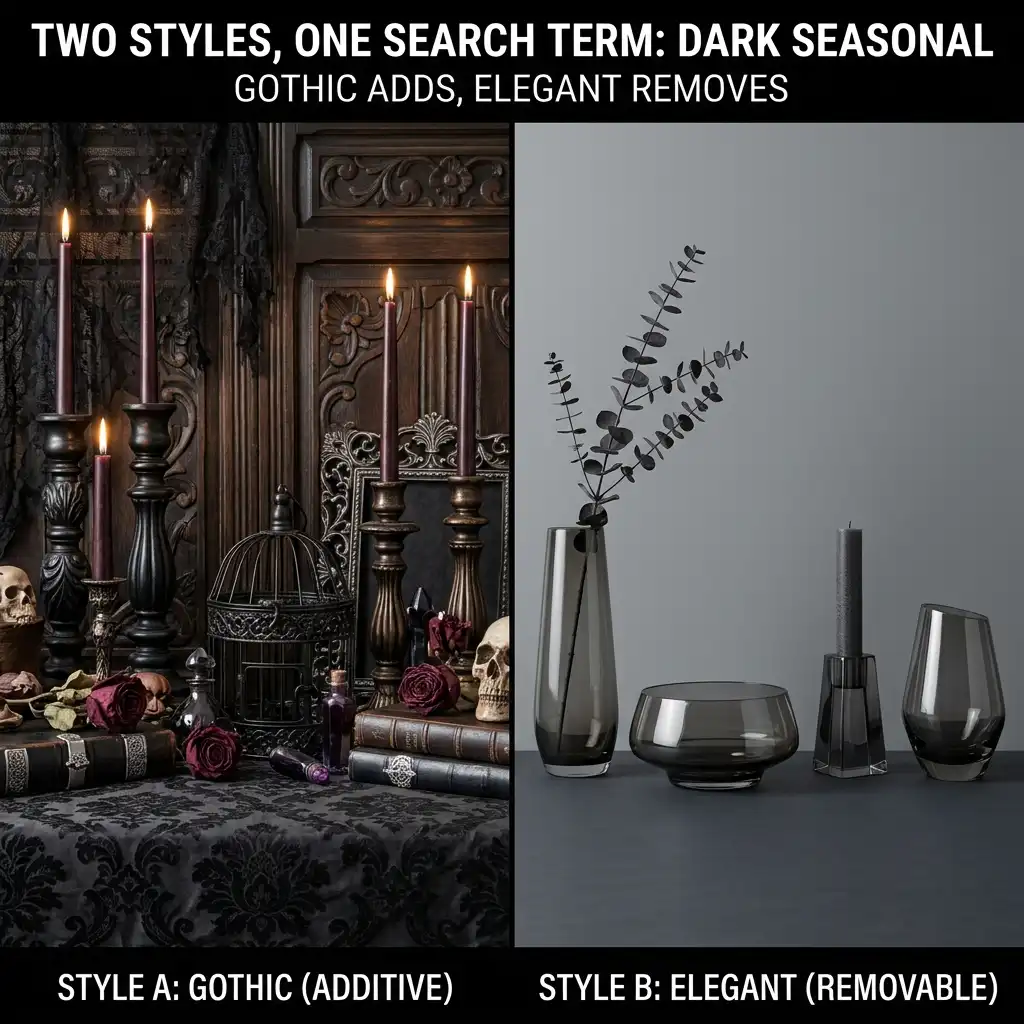
Gothic is a maximalist tradition. It adds — pattern on pattern, carved detail, layered textile, ornament everywhere there is a surface to put it on. Elegant is a minimalist one. It removes, until what is left is a handful of very good objects with a great deal of nothing around them. Run both instructions at once and you get a room where the ornament looks like clutter and the restraint looks unfinished, which is a specific and very common failure rather than bad luck.
Gothic Halloween decor is worth committing to properly, and so is the elegant version, but they are separate projects with separate shopping lists and separate rooms that suit them. If you have been collecting dark seasonal pieces and the result keeps landing as neither one thing nor the other, that is the diagnosis. There is plenty more of our home decor inspiration worth reading, but the split below has to come first.
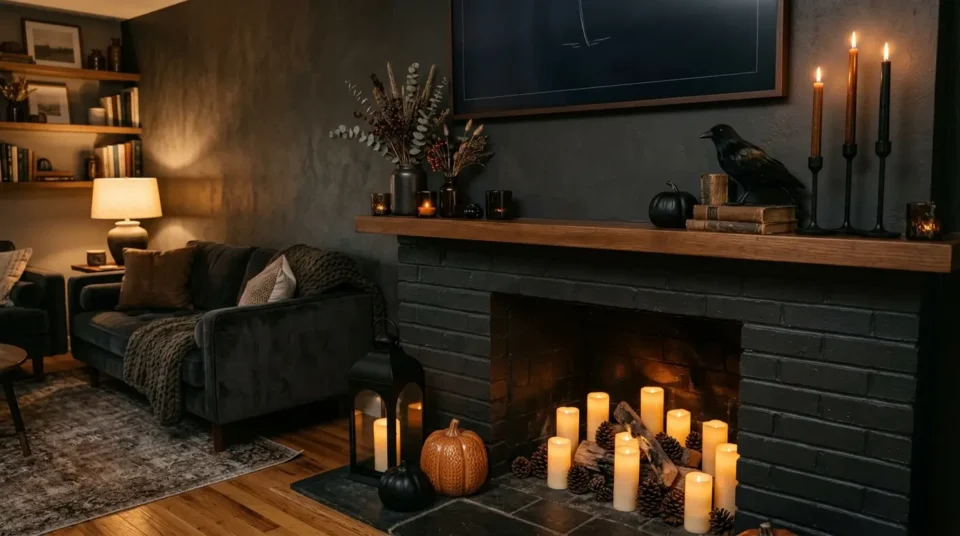
Editorial field note: the fastest fix I have seen in this style was subtraction — pulling two-thirds of the objects off a heavily dressed black mantel and leaving four, which turned a muddled gothic attempt into a convincing elegant one in about a minute.
What’s the Difference Between Gothic and Elegant?
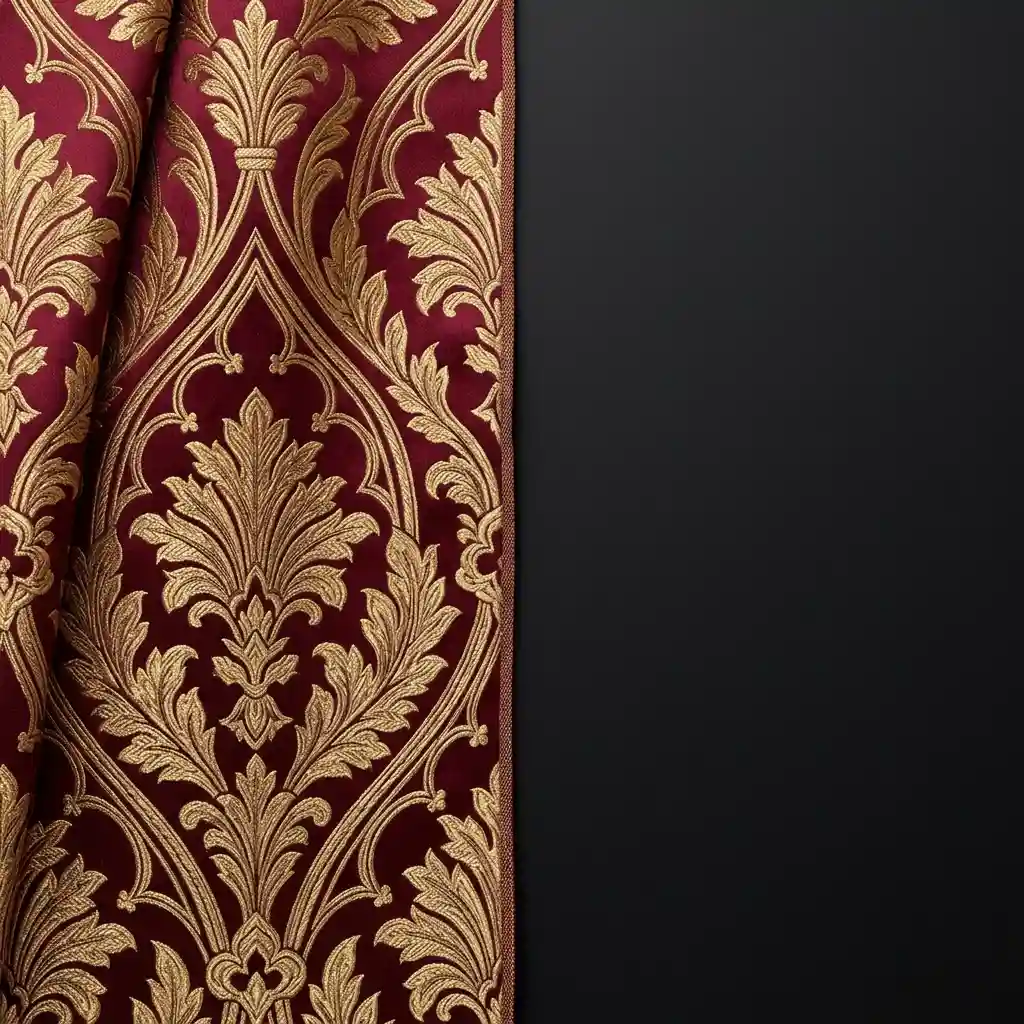
One adds and one subtracts. Everything else follows from that, including which room each one suits, what you spend money on, and how each of them fails. Note this is a different comparison from the witchy-versus-gothic one, which sorts a collected, botanical look against a formal one — here both sides are formal and the argument is about quantity.
Read both descriptions below and pick before you buy anything. The colour question sits outside this decision entirely: black is the shared assumption in both lanes, and which shades sit alongside it is handled in the palette guidance rather than here.
Gothic Adds
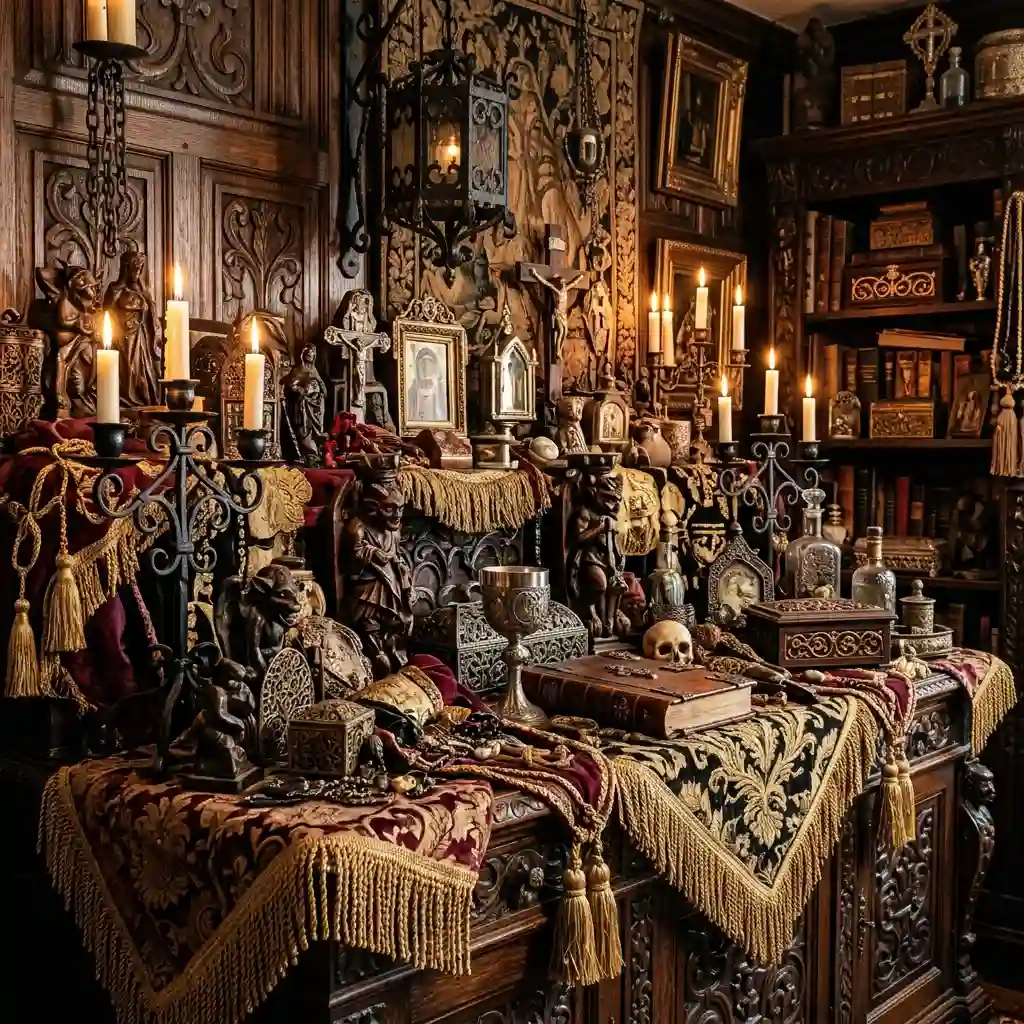
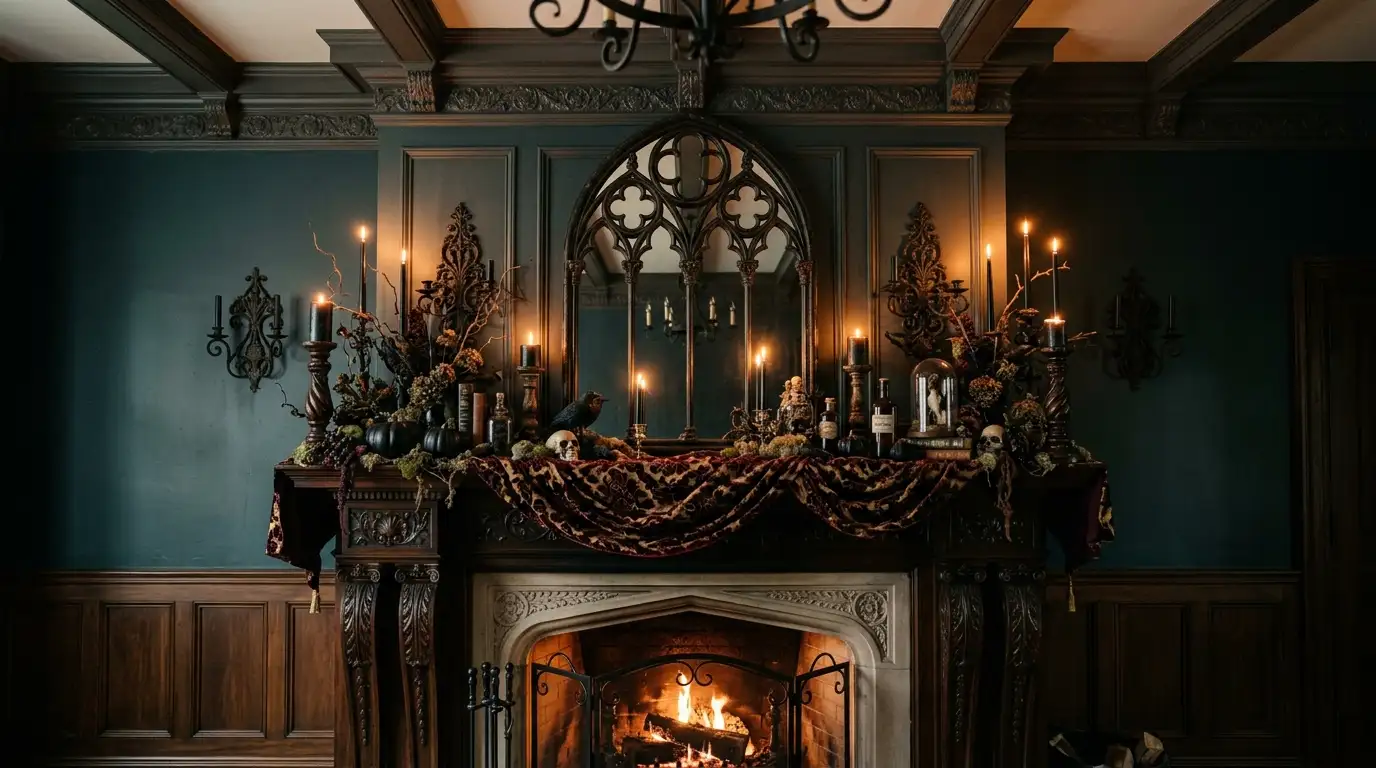
Gothic works by accumulation and by ornament. Pattern on the wall, pattern on the cloth, carved detail on the furniture, worked metal on the fittings, fringe and tassel on the edges. Nothing is plain if it can be worked, and the effect comes from density rather than from any single object.
The historical form is Gothic Revival, the nineteenth-century movement that pulled medieval architectural detail back into furniture and interiors. That is where the vocabulary comes from — arches, tracery, dark oak, wrought iron, ecclesiastical shapes — and it is why the look feels serious rather than spooky. Pattern is the load-bearing element, which our bathroom wallpaper ideas demonstrate in a permanent room.
Elegant Removes
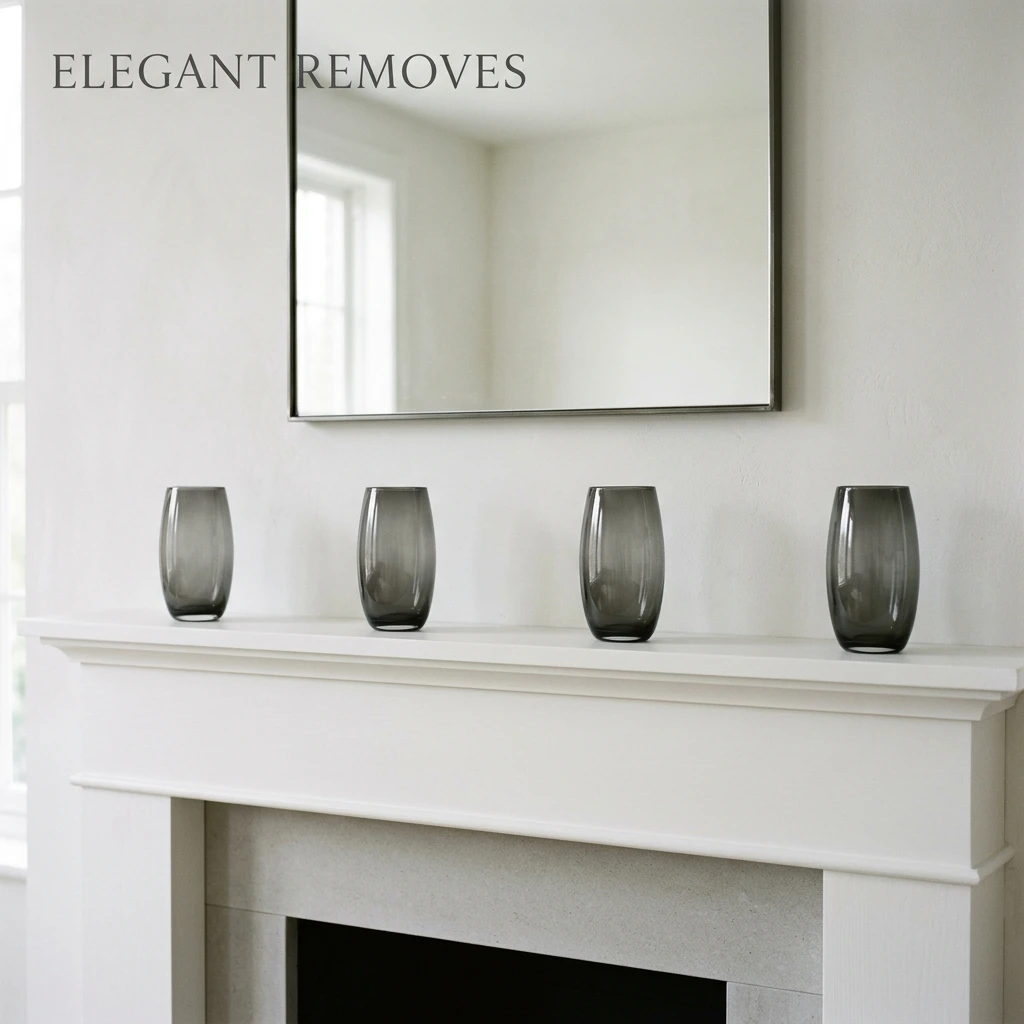
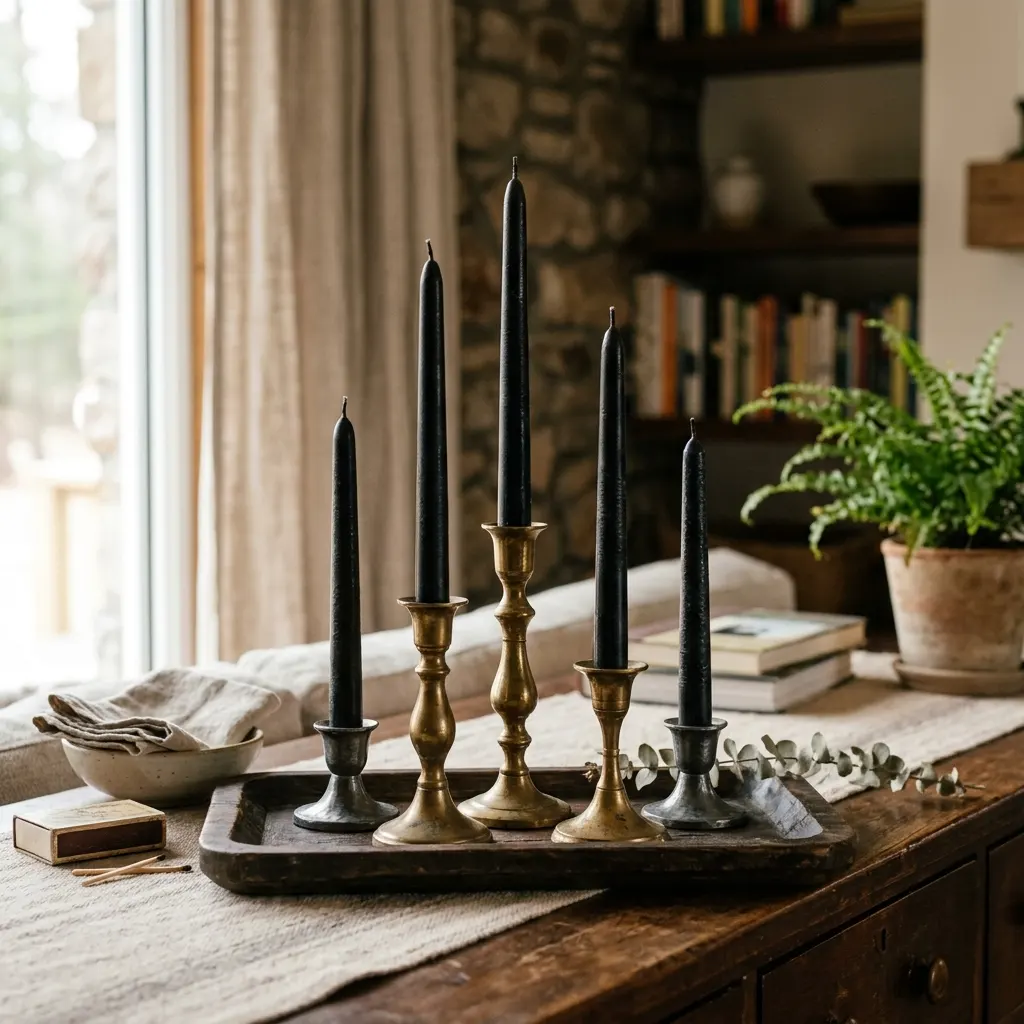
Elegant works by subtraction. Fewer objects than feels right, no pattern at all, one material carried through the whole group, and a great deal of surface left empty. Where gothic fills a mantel, elegant puts four things on it and stops.
The hard part here is quantity, not taste. Most people build an elegant scheme correctly and then add three more pieces over the following fortnight, at which point it is no longer elegant, just sparse and busy at the same time. Restraint-led rooms work the same way year-round, which our minimalist bedroom ideas cover at full scale.
The Pointed Arch Test
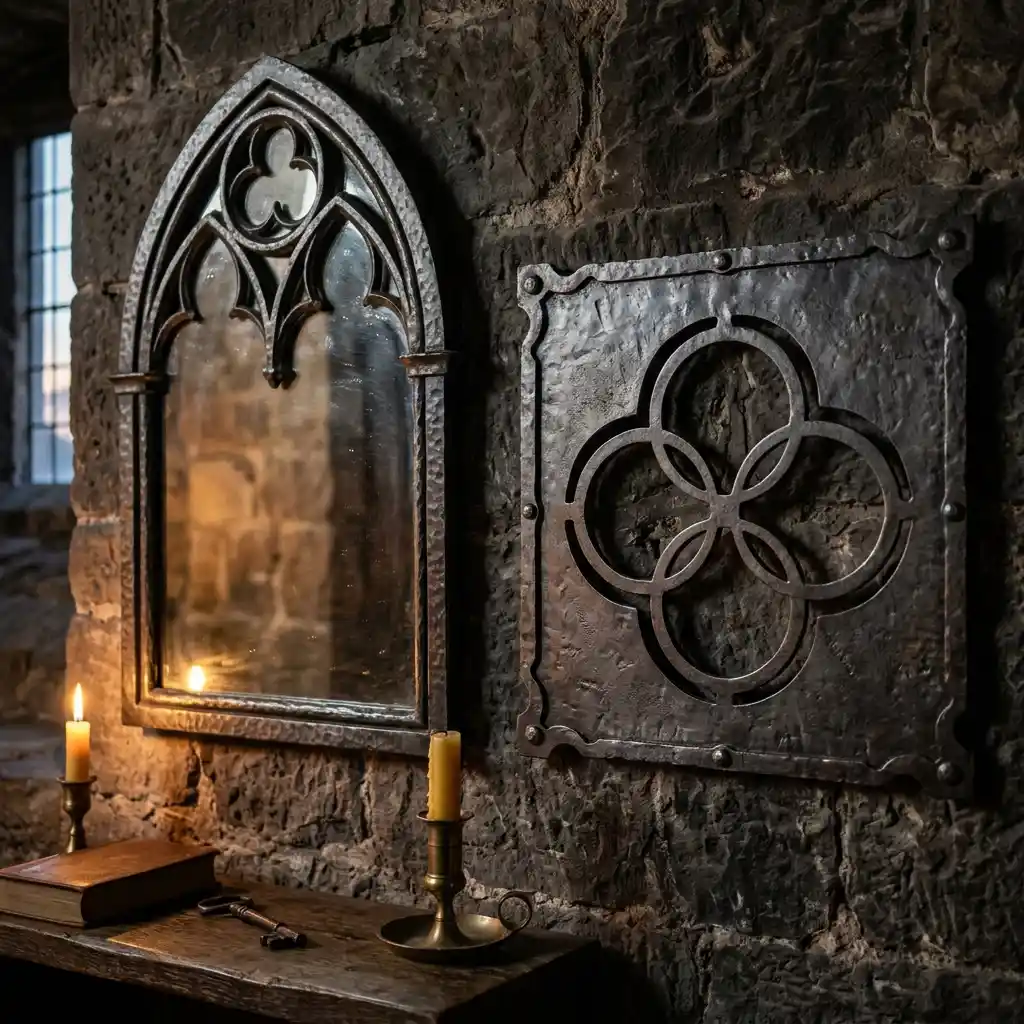
Here is the fastest way to tell whether you are actually building gothic or just buying black things. Look for a pointed arch. If there is no arch, no tracery and no quatrefoil anywhere in the scheme, you have a dark room rather than a gothic one, however much black is in it.
The pointed arch is the defining Gothic form — two arcs meeting at a point rather than a single semicircle — and it is the one shape that reads as gothic instantly and unmistakably. It travels well onto small objects too. The Metropolitan Museum of Art’s overview of Gothic art notes that pointed arches, trefoils and quatrefoils were adopted onto metalwork, vestments, illuminated manuscripts and secular items including furniture, combs and spoons — the ornament left architecture and went onto everyday things, which is exactly the move you are making on a mantel.
In practice you are looking for the shape in: a mirror or picture frame with an arched top, an arched lantern or candle holder, a quatrefoil cut into metal or card, an arched cloche, or a printed panel with tracery on it. One clear arch anchors the whole scheme. Two or three is better. Zero is the thing to fix first.
| Quick Takeaways | |
|---|---|
| The split | Gothic adds ornament. Elegant removes objects. Pick one. |
| Gothic test | Find a pointed arch, tracery or quatrefoil, or it is just a dark room. |
| Gothic rule | Pattern is required. Colour alone will not carry it. |
| Elegant rule | One material, repeated. Then stop adding. |
| The room | Gothic wants architecture. Elegant prefers a plain modern box. |
Why Does Gothic Need a Pattern?
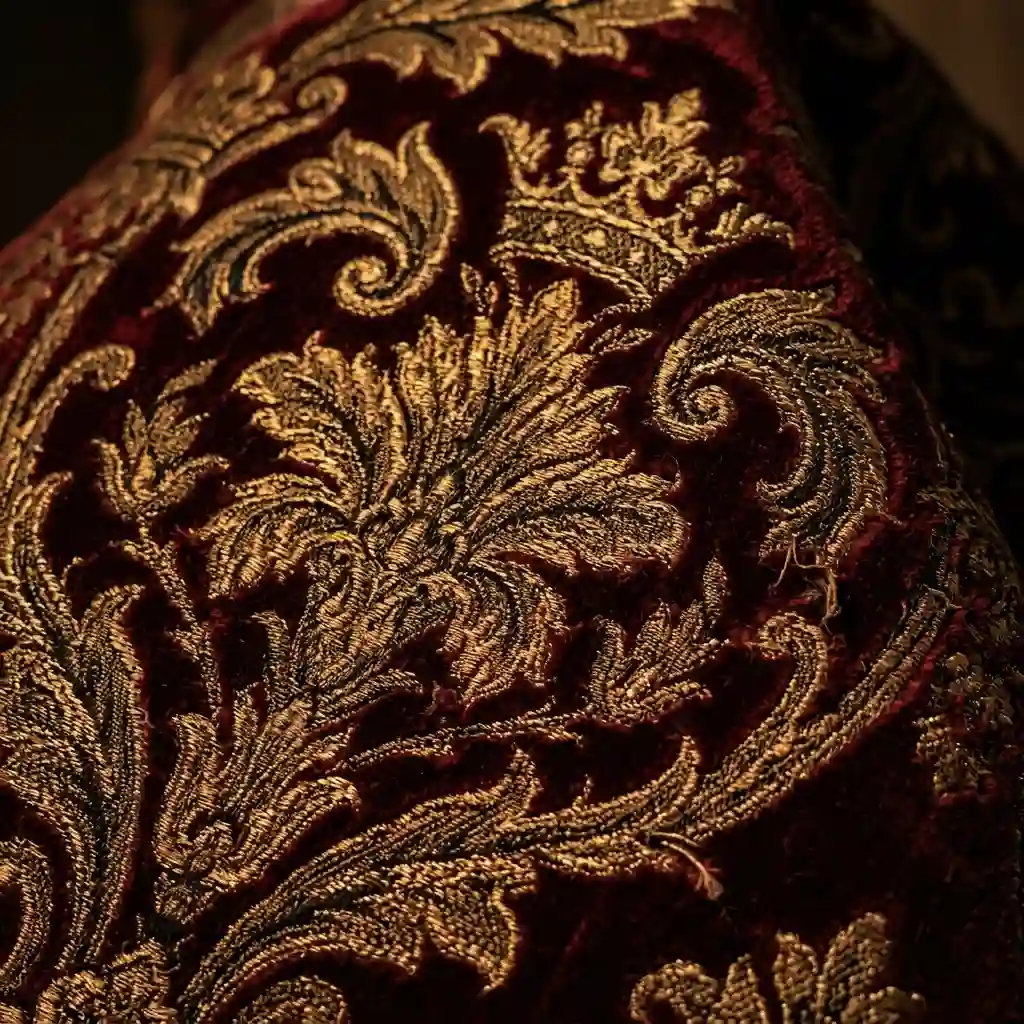
Because without one, a dark room is simply a dark room. Gothic is a decorative tradition rather than a colour scheme, and every version of it that has ever worked has been carrying pattern somewhere — in a damask, a brocade, a carved panel, a worked iron screen or a printed paper. Take the pattern out and you remove the only thing distinguishing the style from plain minimalism in black.
This is the mistake almost everyone makes, and it is expensive because it usually means a lot of black objects that could not fix the problem. The correction rarely needs more objects at all. One patterned surface — a length of damask under a group, a paper panel behind it, an arched screen — turns the same collection from flat to gothic without a single additional purchase.
Texture counts as pattern when the texture is strong enough to read from across the room. Cut velvet, heavy brocade, deeply carved wood and pierced metal all qualify. Flat matte black does not, whatever it costs. Tile and surface work follow the same logic, as our bathroom tile ideas show.
Where the Pattern Goes
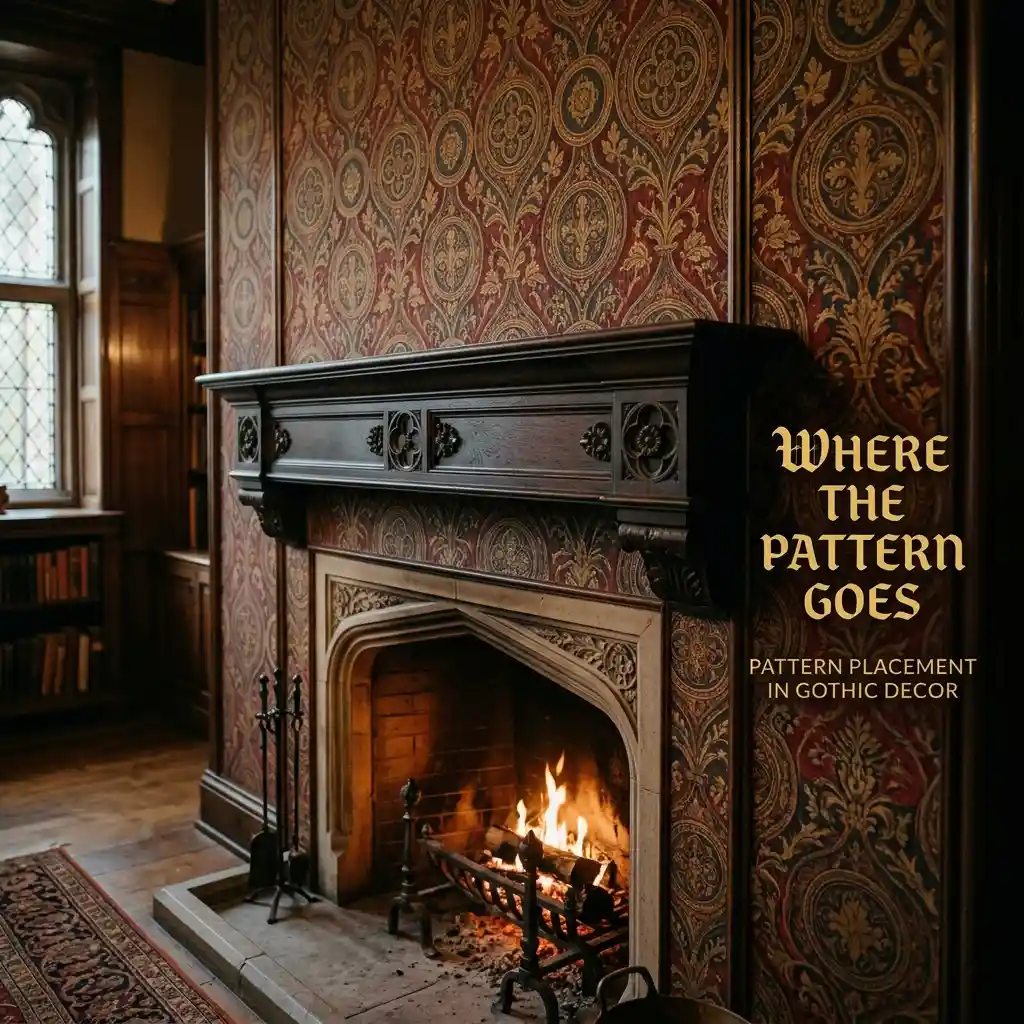
Behind and underneath, not on top. Pattern works best as the field the objects sit against — a wall panel, a cloth, a runner, a screen — rather than as another item competing on the surface. That way it does its job continuously and never fights the pieces standing on it.
A useful sequence is one strong pattern, one plain dark surface, then the objects. The plain surface matters as much as the pattern does, because gothic without a resting point becomes noise very quickly. Designer Tip: put the pattern vertical and keep the horizontal surface plain — a papered or draped wall behind a bare mantel shelf reads far more convincingly than a patterned cloth under a crowded one, and it is easier to reverse afterwards.
Elegant Runs on One Material
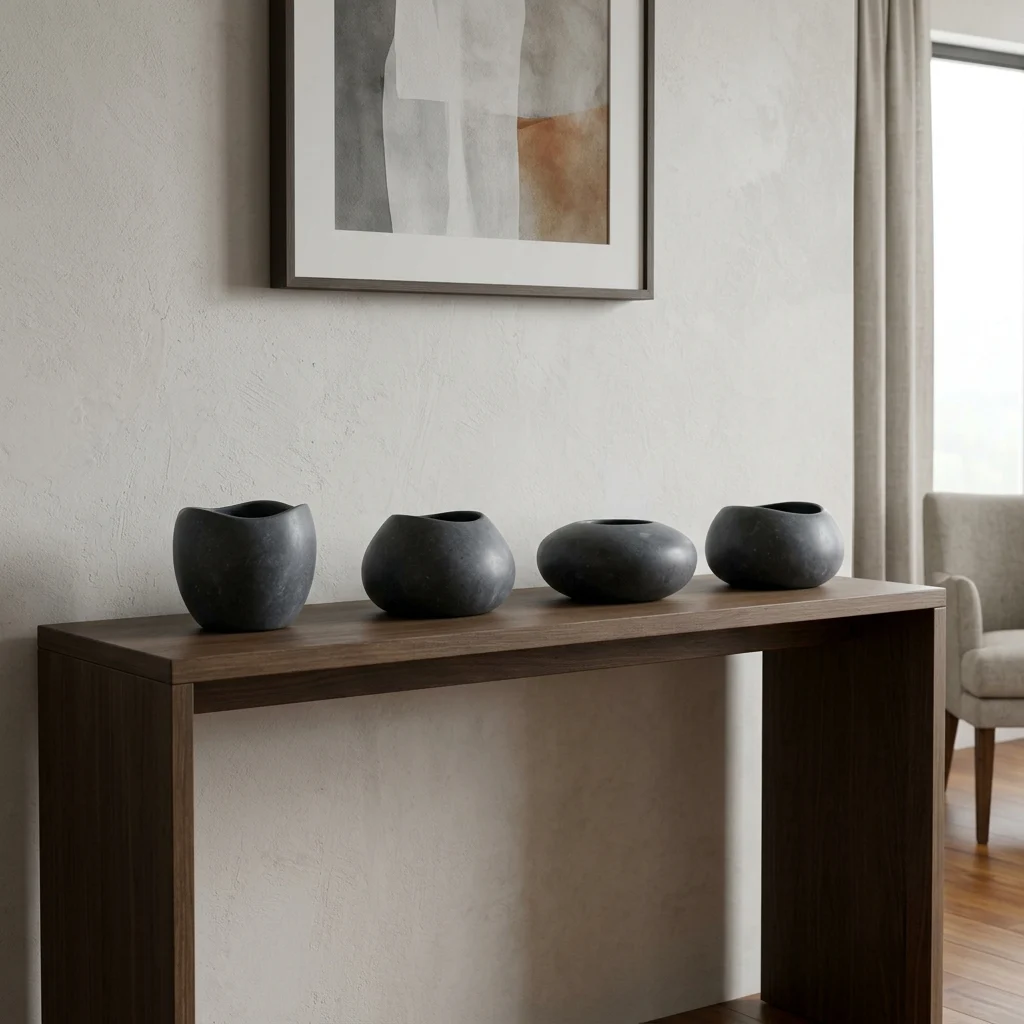
The elegant version has a single rule doing most of the work: pick one good material and repeat it through the whole group. All smoked glass. All matte black ceramic. All aged brass. All honed stone. Repetition is what makes a small number of objects look chosen rather than leftover, and it is the reason four matching pieces beat nine assorted ones.
Real material matters more here than anywhere else in the season, because there is no pattern, no density and no drama to distract from a surface. With only four objects on a mantel, every one of them is being looked at properly. Glass, stone, metal and ceramic all hold up under that attention; printed lookalikes and moulded plastic do not. Our luxury bathroom ideas are built on exactly this trade of fewer, better surfaces.
The second half of the rule is the count, and it is lower than feels natural. On a standard mantel, four to six objects is elegant and nine is a collection. Set the number before you set the objects, then hold it — and if something new arrives, something existing leaves. Monochrome schemes make the count especially visible, which our black and white bathroom designs illustrate well.
Which Room Are You Working With?
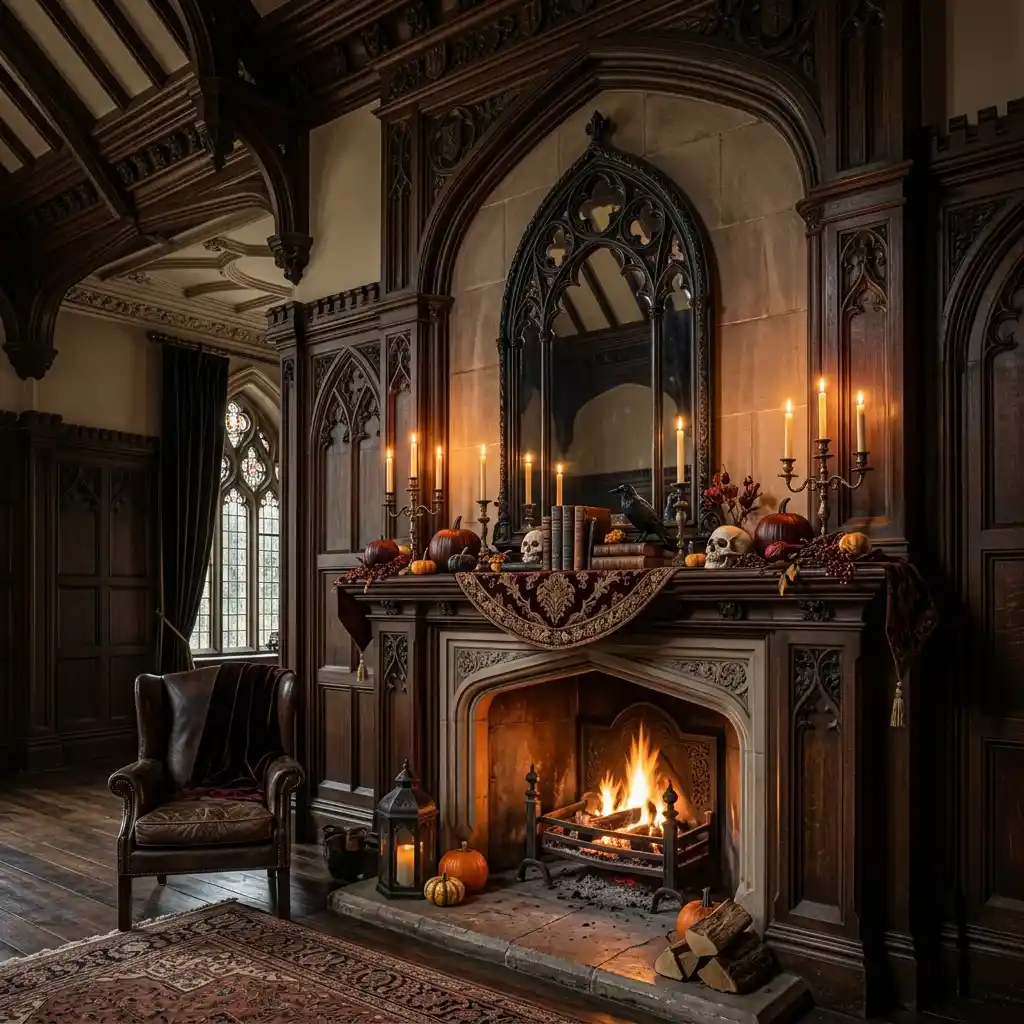
This is the part that decides the argument for most households, and it is not about taste. Gothic needs architecture to hang off. Deep skirting, picture rails, panelling, a real fireplace, a high ceiling, an arched or tall window — the style was born from buildings and it looks borrowed in a room with none of those features, because the ornament has nothing to agree with.
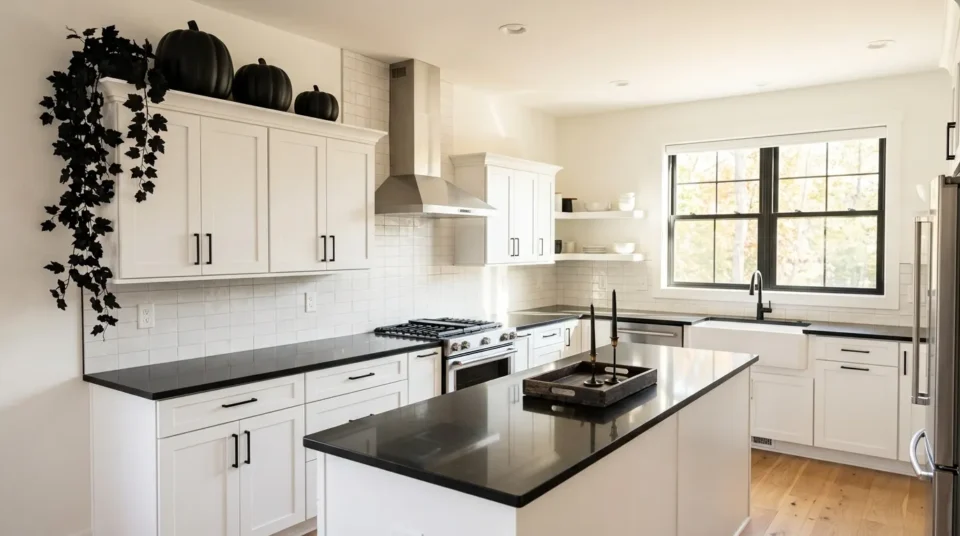
Elegant has the opposite requirement and actively prefers a plain modern room. Flat walls, simple openings and a low-key floor give the few objects nothing to compete with, which is exactly what the style needs. Anyone in a new-build or a plain rental has been handed the elegant lane whether they wanted it or not, and our modern living room ideas show the kind of shell it suits.
Gothic Halloween decor in a plain room is still possible, but the pattern has to supply the architecture that the building did not — which in practice means a papered or draped panel doing the work a carved overmantel would have done in a period house. That is a bigger job than it sounds, and it is worth knowing before committing. Note this is an interior question and separate from reading a house’s exterior for a facade scheme, which the outdoor guidance handles with its own rules.
Why Gothic Tips Into Clutter and Elegant Tips Into Cold
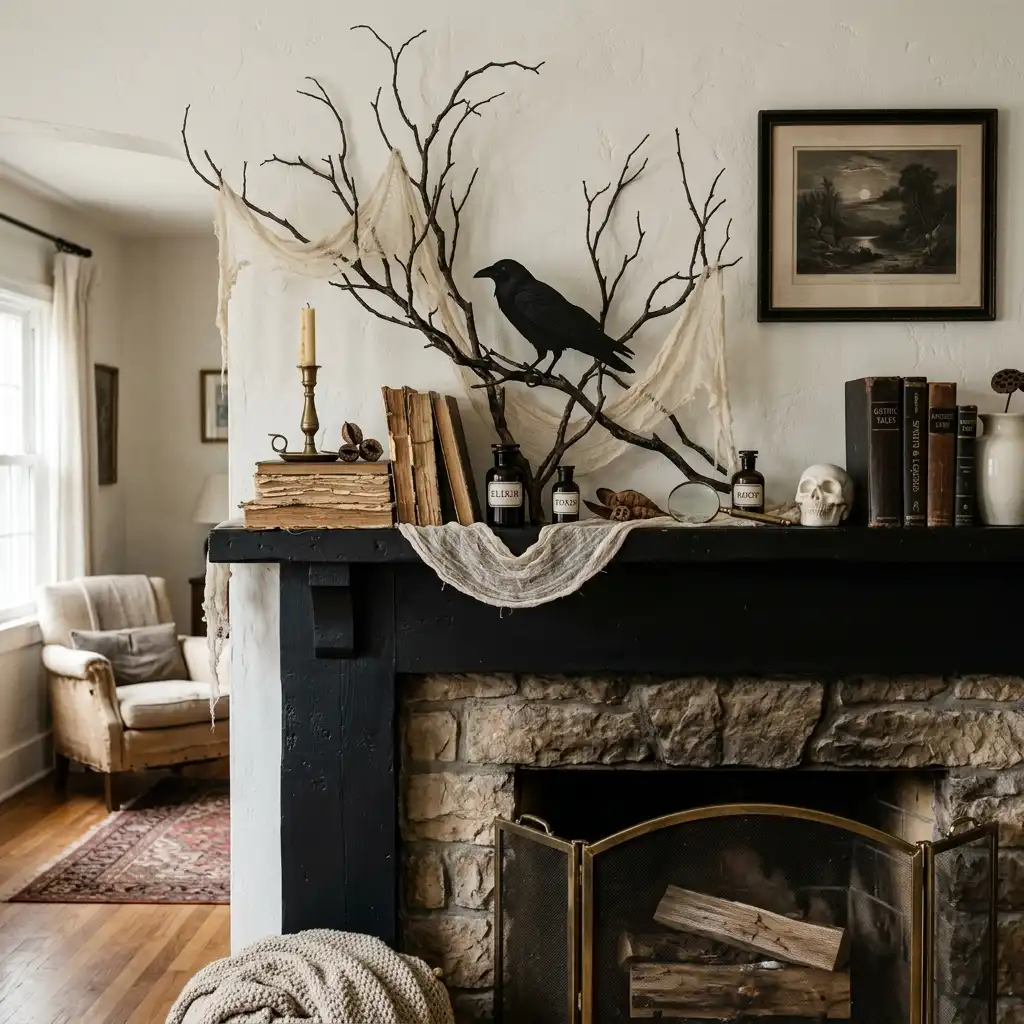
Each style has one failure and they are mirror images, which is useful because the fix for each is the opposite of the other.
Gothic fails as clutter when everything is patterned and nothing is plain. With no resting point the eye cannot find a hierarchy, so a genuinely rich scheme looks like a jumble sale. The correction is one surface left empty on purpose — a bare shelf, a plain panel, a clear stretch of table — kept plain no matter how strong the temptation to dress it.
Elegant fails as cold when there is nothing warm in it. Black, glass, stone and metal are all cool surfaces, and a room built only from those looks like a showroom rather than somewhere anyone lives. The correction is one warm element: candlelight, aged brass, a piece of old wood, or a single textile with some depth to it. One is enough, and how many candles a room actually needs is covered in the props and candles guidance rather than here.
Both corrections are single moves rather than projects, which is worth knowing because the instinct in each case is to buy more. Warmth against restraint is the same balance our Japandi bedroom ideas are built on.
Can You Really Not Mix Them?
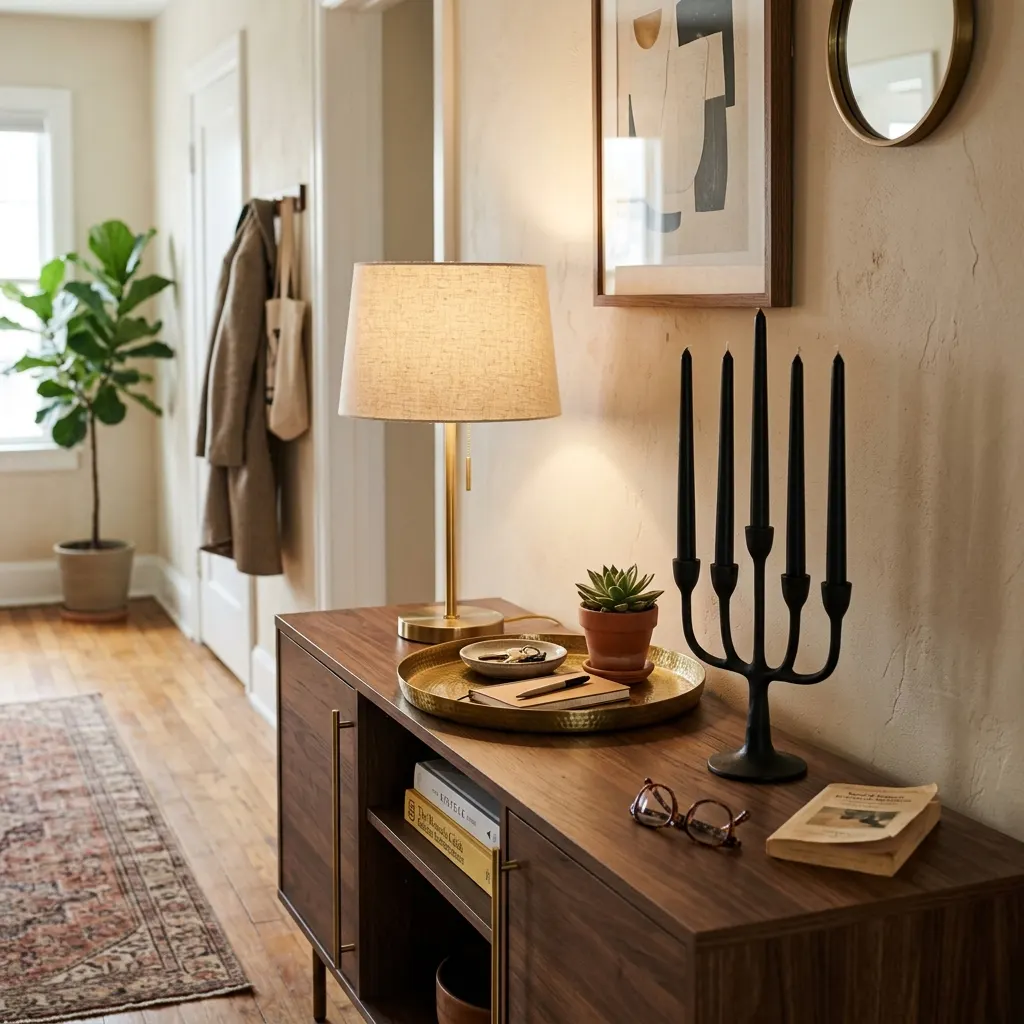
You can, but only in one direction and only in one dose. A gothic ACCENT inside an elegant scheme works: four plain smoked-glass objects on a bare mantel plus one arched mirror above them is a good room, because the elegant structure holds and the arch supplies the reference. The ornament is a guest.
The reverse almost never works. An elegant restraint inside a gothic scheme just reads as a gap — one plain object among twenty worked ones looks like something is missing rather than like a decision. Density is gothic’s whole mechanism, and you cannot puncture it without breaking it.
So the workable rule is that elegant can host gothic, and gothic cannot host elegant. That asymmetry is worth remembering, and it maps onto how heavier styles behave generally — our industrial bathroom guidance makes the same case for treating a strong look as an accent rather than a theme.
Why Are Both Gaining Ground?

Signs This Is Catching On:
- Search interest sits heavily on the elegant and classy phrasings rather than the gore-led ones, which is what happens when an audience wants a season without a theme park.
- Paint and interiors have moved toward richer, more confident dark colour generally, so the shell these schemes need is already going up in a lot of houses for non-seasonal reasons.
- Pattern has returned across permanent decorating after a long flat-and-plain stretch, and gothic is the seasonal style that benefits most from that swing.
- Both lanes look like decor rather than props, which suits households that host and would rather not explain a severed limb over dinner.
- Contemporary rooms take the elegant version without any alteration at all, which our contemporary living room ideas bear out.
What If You Rent, or the Room Is a Plain Modern Box?
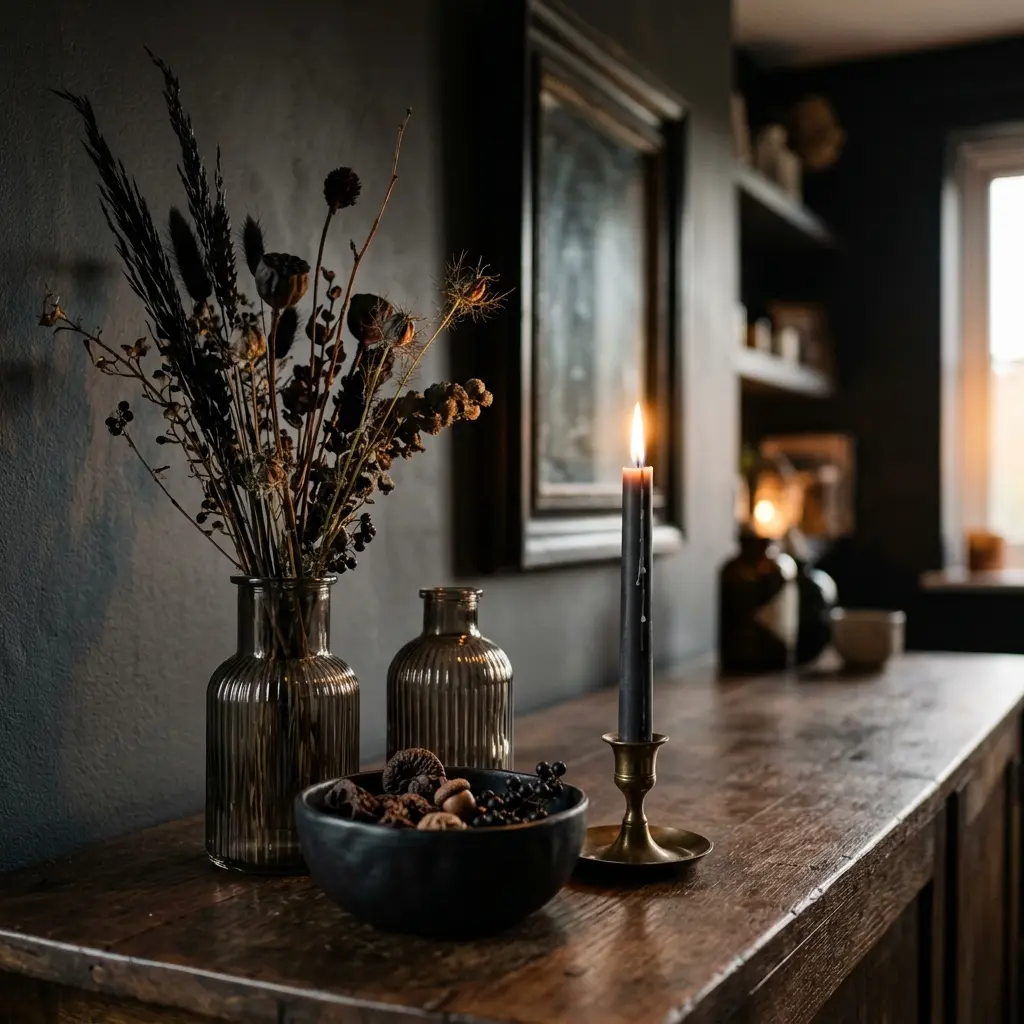
Take the elegant lane, and take it gladly rather than as a consolation. A plain rented room is the ideal shell for it — nothing to compete with, nothing to work around, and no fixed feature that needs matching. Four good objects on a bare surface need no permission from a landlord and no holes in a wall.
If you specifically want gothic in a plain room, the whole job becomes the pattern, and it can be done without damage. A length of damask or heavy brocade hung from a tension rod, a folding screen, or a removable paper panel behind a mantel all supply the vertical ornament the building did not. Keep the objects on top of it few, because a plain room plus a strong pattern plus a crowded surface is where this goes wrong.
Rental Note: hang panels from tension rods or existing picture rails rather than fixing anything to the wall, and test removable adhesive on a hidden patch before trusting it on paint.
Budget is a smaller obstacle than the room. One patterned length and one arched mirror will do more for a gothic scheme than a dozen small black objects, and the elegant version genuinely needs fewer things than most people already own. Timeless, restrained schemes are the cheapest to maintain over years, as our timeless bathroom ideas set out.
Where Both Styles Go Wrong
- Running both instructions at once is the big one, and it accounts for most of the disappointing rooms in this corner of Halloween. Adding ornament while also trying to keep things pared back produces a scheme with too much in it to look restrained and too little pattern to look rich. Decide which lane you are in before a single purchase, and let the other one go.
- Buying black instead of buying pattern is the gothic-specific failure. A dozen matte black objects on a matte black cloth is a minimalist arrangement that happens to be dark, and no further black object will change that. The missing ingredient is a worked or patterned surface, usually vertical, and one is enough.
- Adding three more pieces after finishing is the elegant-specific failure, and it happens quietly over a fortnight rather than all at once. The scheme was correct on the day it was set and nobody notices it stop being correct. Fix the object count in advance and treat it as a hard number, so anything new arriving means something existing leaves.
What Gothic and Elegant Actually Cost
These two have very different spending shapes, which is another reason to decide early. Gothic puts the money into one large patterned surface; elegant puts it into a few good materials and nothing else.
| Project | Estimated Cost | Impact Level |
|---|---|---|
| One arched mirror, lantern or quatrefoil piece to anchor a gothic scheme | $25-$90 | Very High |
| A length of damask, brocade or cut velvet, or a removable paper panel | $30-$120 | Very High |
| Four to six matched objects in one real material for the elegant lane | $60-$220 | High |
Best First Upgrade: for gothic, the patterned length — it fixes the one thing extra objects cannot. For elegant, buy the smallest number of the best material you can afford rather than a larger number of the second-best, since there is nothing else in the room to hide behind.
Skip for Now: assorted small black objects bought individually. They are the default purchase in both lanes and they serve neither, because gothic needs pattern and elegant needs matching. Spend the same money on one worked or arched piece instead, the way our luxurious headboard logic treats a single strong element.
Run This Before You Commit to Either
- Say which lane you are in out loud — adding or removing — before opening a shopping tab.
- Walk the room and list its architecture: skirting, rails, panelling, fireplace, ceiling height, window shape.
- If that list is short, take the elegant lane or budget for a pattern panel to stand in for the architecture.
- For gothic, find one pointed arch, tracery or quatrefoil before buying anything else.
- For elegant, fix the object count first — four to six on a mantel — and treat it as a hard limit.
- Leave one surface completely plain in a gothic scheme, and put one warm element into an elegant one.
KEY TAKEAWAY: the question is never how dark to go, it is whether you are adding or subtracting — and every other decision in both lanes falls out of that one.
Which One Should You Actually Build?
Designer’s Verdict: elegant, for most people and most houses. It needs fewer objects, costs less to do properly, works in a plain rented room without any alteration, and is far more forgiving of a small budget because four good things genuinely are the whole scheme. It is also the version that survives a dinner party and a photograph equally well.
Gothic is the better room when the building earns it. In a house with real mouldings, a proper fireplace and some ceiling height, the full ornamental version is the most impressive thing in this whole pillar and nothing else comes close. It just needs the architecture, the pattern and the willingness to leave one surface alone, and those three conditions are not common together.
The honest limitation on both is that they are the least playful lanes on the map. Neither will delight a six-year-old, neither photographs as a fun street display, and neither does anything at all from a moving car. These are rooms for people who walk into them, which is a real choice rather than a failure. Frame-led and material-led decisions like these are the same ones behind our luxurious headboard ideas in a permanent room.
Frequently Asked Questions
Conclusion
The two words are not interchangeable and never were — gothic Halloween decor is an argument for adding ornament until the room is rich, while elegant is an argument for taking objects away until the few that remain can hold your attention. Editorial field note: almost every dark seasonal room that looks uncertain is running both instructions at once, and the fix is a decision rather than a purchase. Pick your side, then browse the rest of our home decor ideas for the room around it.