TL;DR
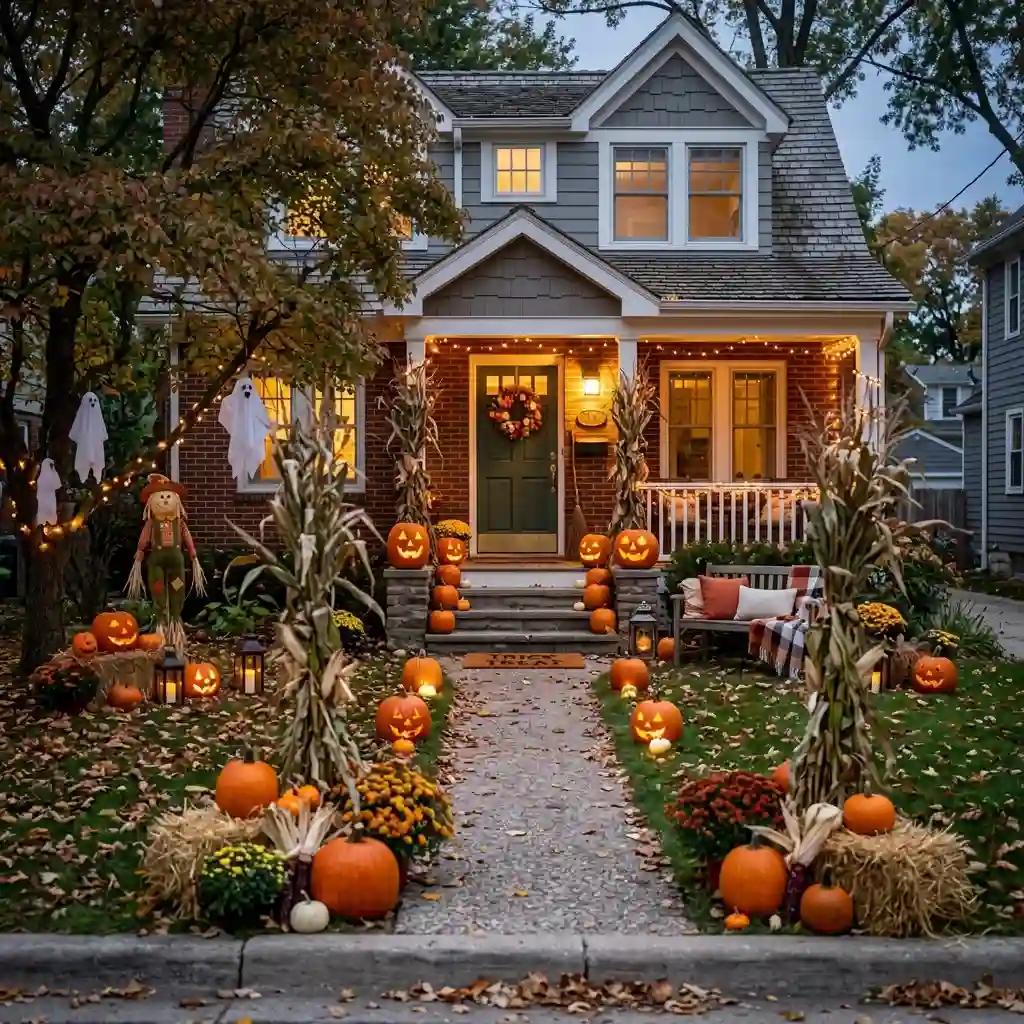
- Decorate two audiences, not one house — the street at roughly thirty feet, and a guest at three feet.
- Outdoor money buys size and light. Indoor money buys fewer, quieter pieces you can live beside for six weeks.
- Start at the front door. It is the only surface both audiences see.
- Keep every outdoor bulb in the 2200K to 3000K warm range. Cool white at 3500K and above turns a spooky house into a parking lot.
- Buy the weatherproof layer once, store it properly on November 1st, and rebuy only the cheap consumables next year.
You Are Decorating for Two Audiences Who Never Meet
Most people buy one pile of Halloween decorations and spread it evenly across the house. The porch gets four small things, the mantel gets four small things, and by the last week of October the outside looks thin and the inside looks cluttered. Nothing is wrong with the objects. They were bought for the wrong distance.
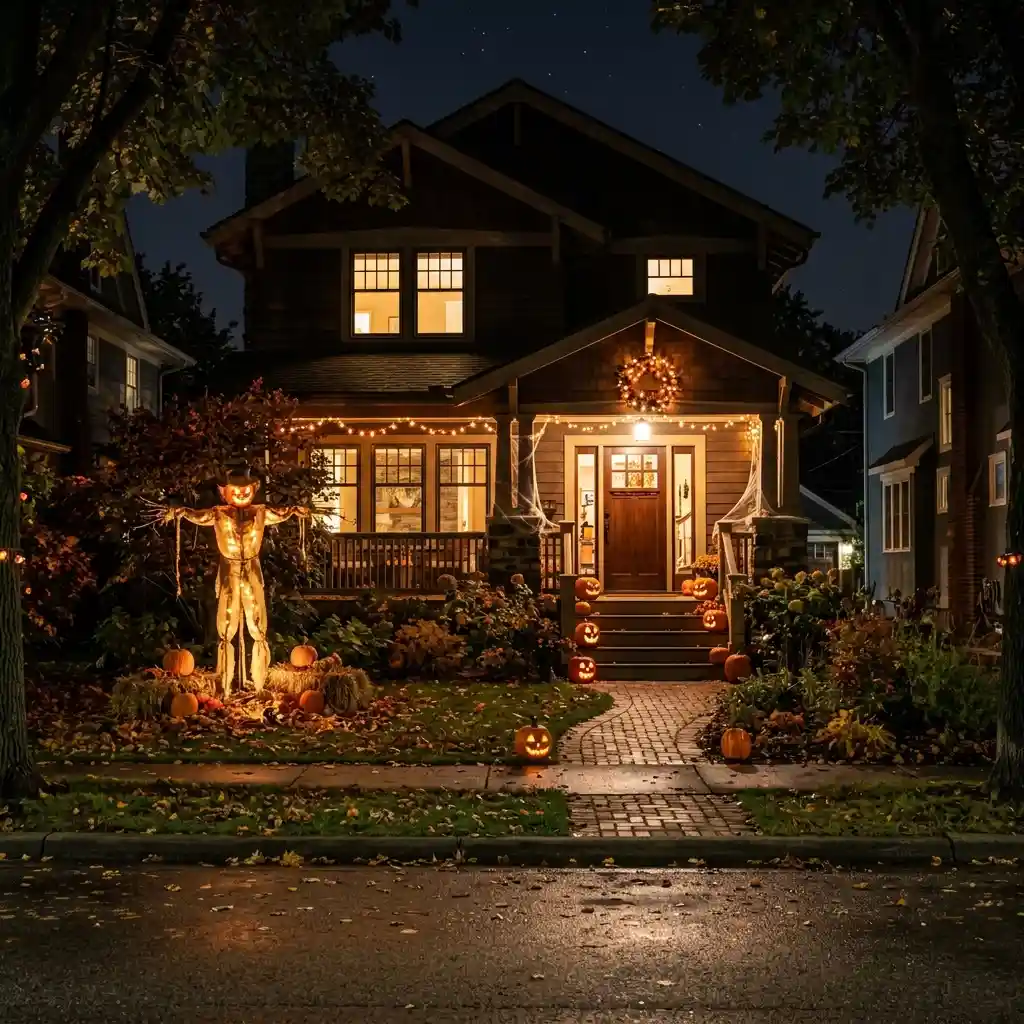
Halloween decor ideas work at two distances, and the same object almost never works at both. A neighbour sees your house from about thirty feet away, in the dark, from a moving car or the sidewalk. A guest stands at your console table three feet away, in a lit room, not moving at all. Size and light are the only things that survive the first distance. Material and craftsmanship are the only things that matter at the second.
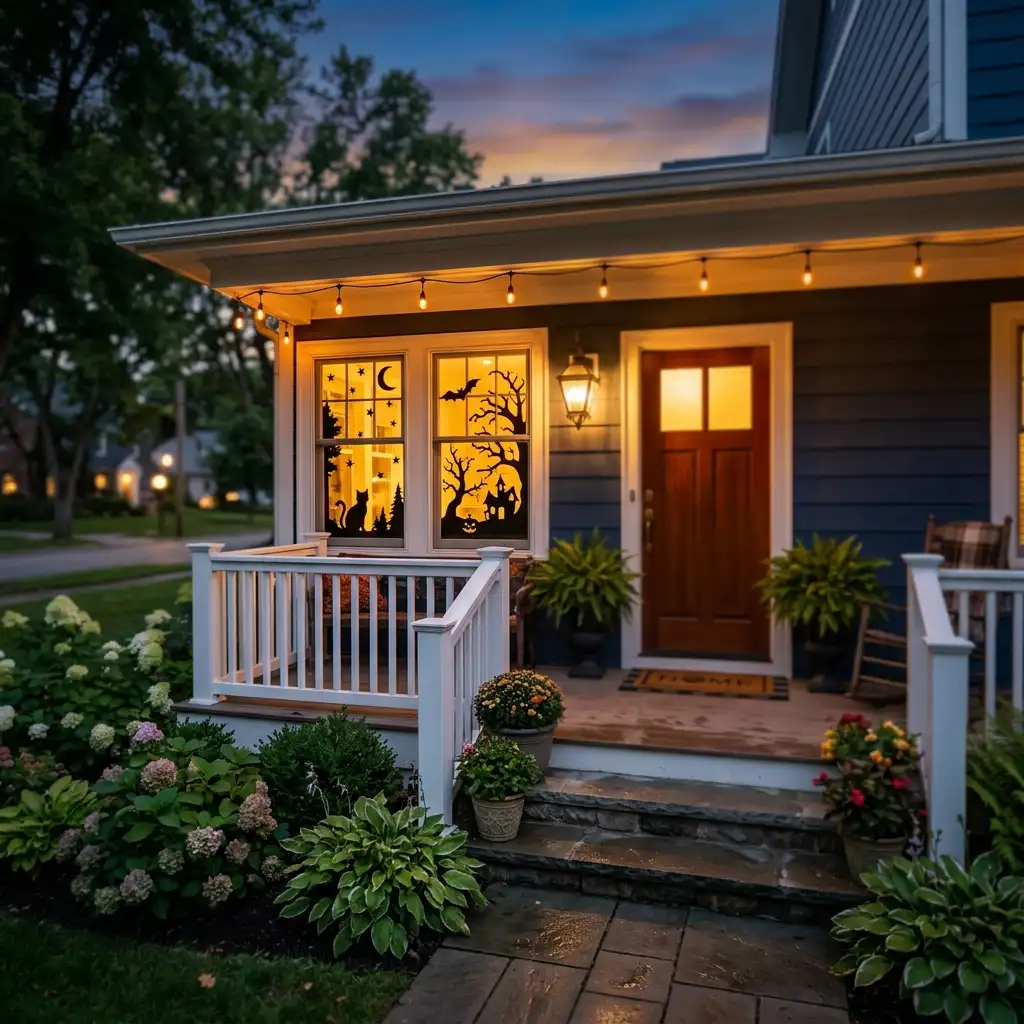
Editorial field note: a porch holding six small resin figures looks empty from the street, because nothing on it clears knee height or catches light. Move four of those figures indoors to a lit shelf and add one waist-high lantern outside, and both ends of the house improve without a single new purchase.
That split is the spine of this whole guide. Once you decide which audience a purchase is for, the budget, the lighting, the timing and the storage all follow from it. It is the same first question worth asking before any seasonal refresh across our home decorating guides, and Halloween is simply the season where getting it wrong shows most.
Six Weeks Is Now the Normal Length of Halloween
Halloween used to be an evening. It is now the longest decorating stretch of the year outside Christmas, and that length is what makes the two-distance split matter. A single night forgives a thin porch. Six weeks does not. You can work through our Halloween decorating archive as each layer of the build goes up.
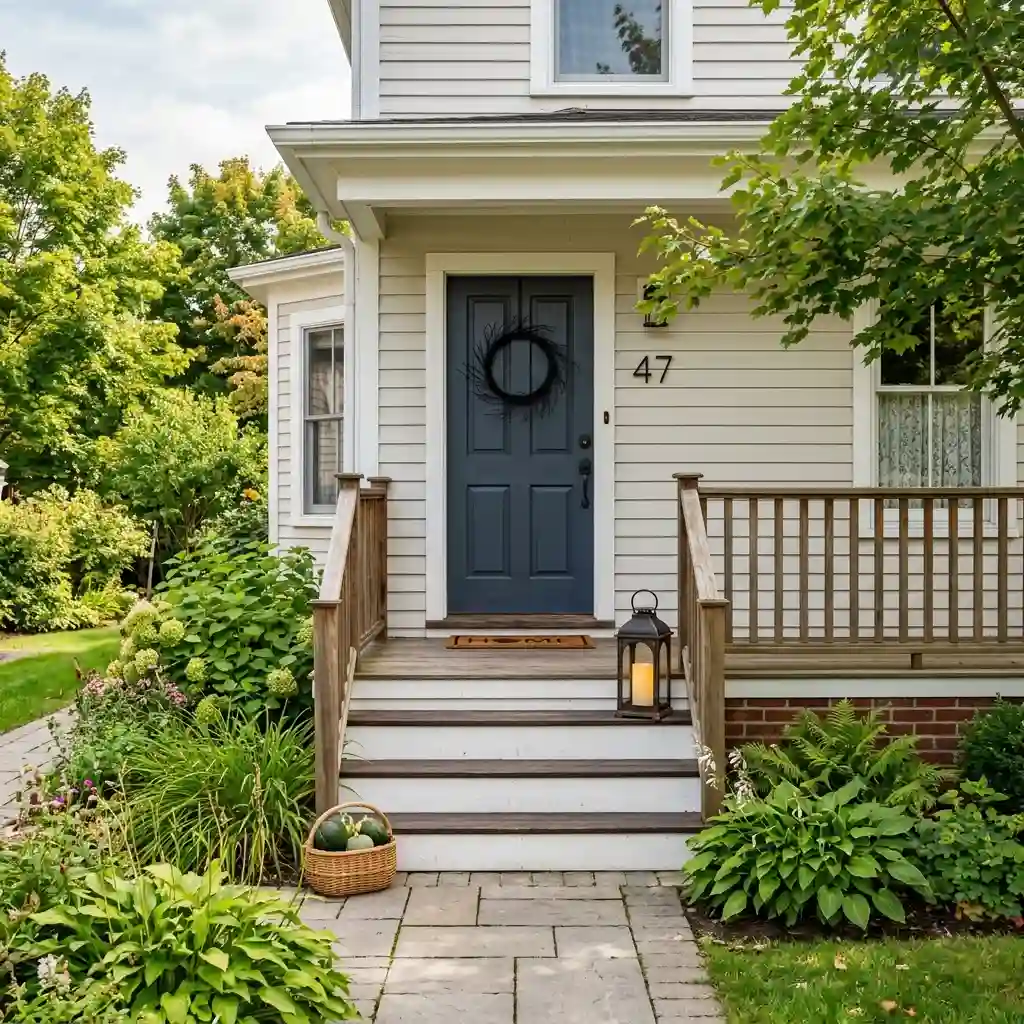
Signs This Is Catching On:
- Big-box garden centres and hardware chains put Halloween aisles out before Labor Day, weeks ahead of the pumpkin displays that used to open the season.
- Oversized figures — the ten and twelve-foot kind — became a mainstream category rather than a specialty item, which only makes sense when a display stands for a month.
- Shoppers report buying decorations in August and early September, well before costumes, because the good pieces sell out first.
- Seasonal search interest has clearly shifted earlier each year, with “halloween decor 2026” style queries appearing while summer is still running.
The practical version: a display that goes up in mid-September has to survive roughly forty days of sun, rain and wind before anyone knocks on the door. That rules out paper outdoors, it rules out anything held together with hot glue, and it makes one good weatherproof piece a better buy than four seasonal ones. It also means the calendar itself is a design tool. You do not need everything up at once.
What Does the Street Actually See From 30 Feet?
From thirty feet in the dark, a decoration has two properties: how big it is and whether light touches it. Colour flattens. Printed detail vanishes. A carefully painted resin figure and a plain black cutout of the same height look identical from the sidewalk. Our guide to outdoor Halloween decorations covers the yard, path and porch layers that carry this distance.

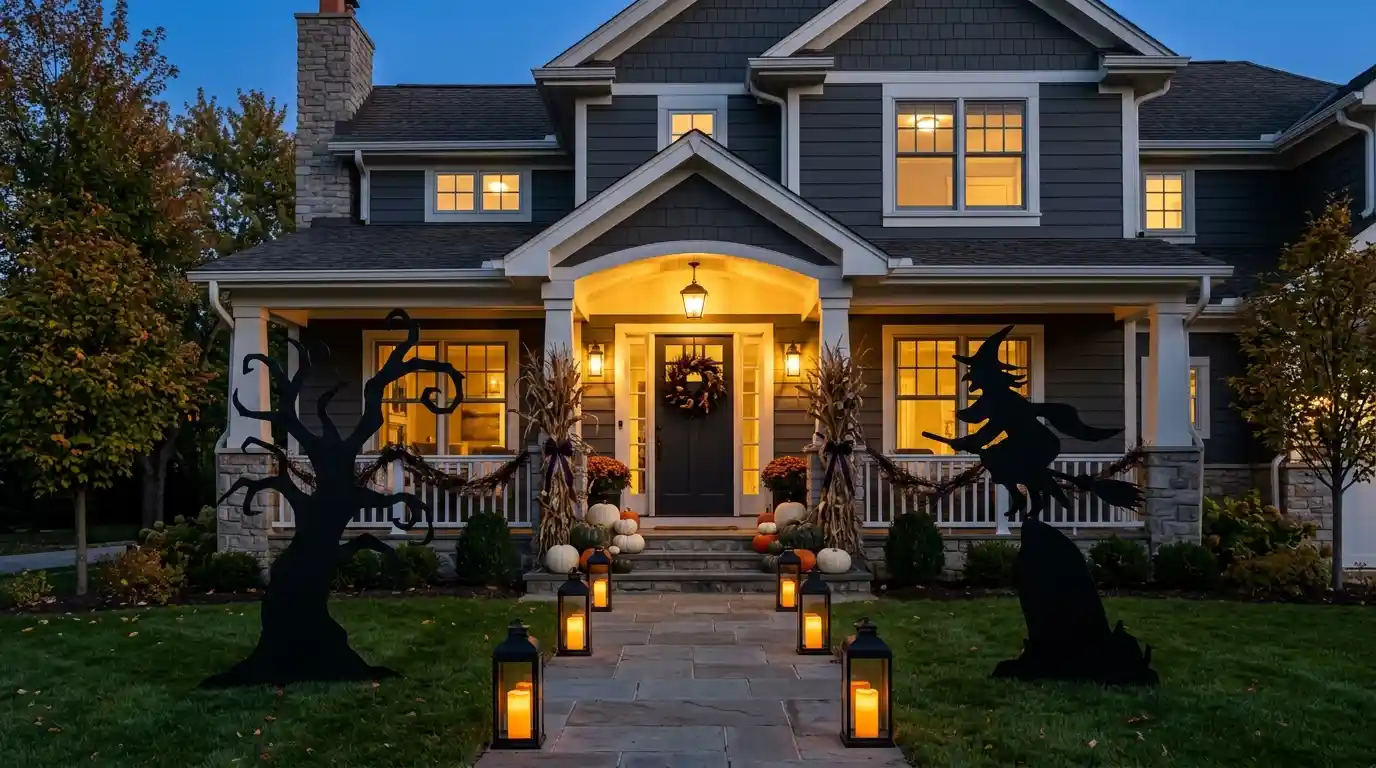
That gives outdoor buying a simple rule. Buy fewer, larger, lit objects. A single waist-high lantern with a warm bulb inside does more from the street than eight small figures spread along a path, because it is the only one of the nine that both clears the ground and produces light. If a piece is under about knee height and nothing shines on it, the street will not register it at all.
Scale also decides value. Two large pieces at $80 each beat sixteen small ones at $10 each, even though the spend is identical. The small pile is the most common way to waste an outdoor budget, and it happens because small things feel like better value in the aisle, where you are standing three feet away.
DESIGNER TIP: photograph the front of your house from across the street at night with your phone, then look at the picture rather than the house. Anything you cannot identify in that photo is not working, and no amount of detail will fix it.
This page decides how much goes outside and what kind of object it buys. Arranging a porch, a lawn or a front door is a level down from here — the groundwork in our front porch decor ideas covers the furniture and layout that any seasonal layer sits on top of.
What Does a Guest See From Three Feet?
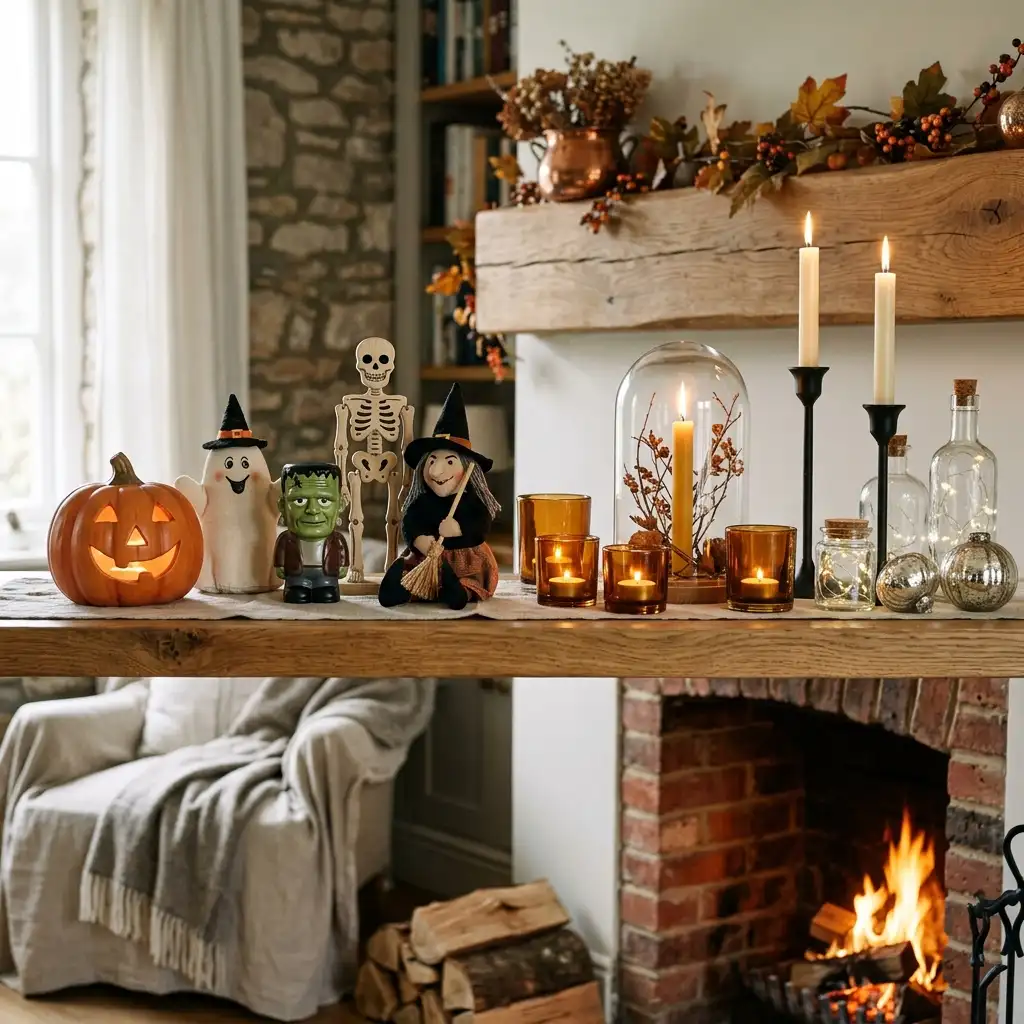
Indoors, the distance collapses and a completely different property takes over. At three feet a guest sees material — whether something is ceramic, glass, cast resin, cotton or printed card. They also see it repeatedly. An indoor piece sits in your sightline while you eat, work and watch television, roughly two hundred times across a six-week season. The room-by-room detail is in our indoor Halloween decor guide.
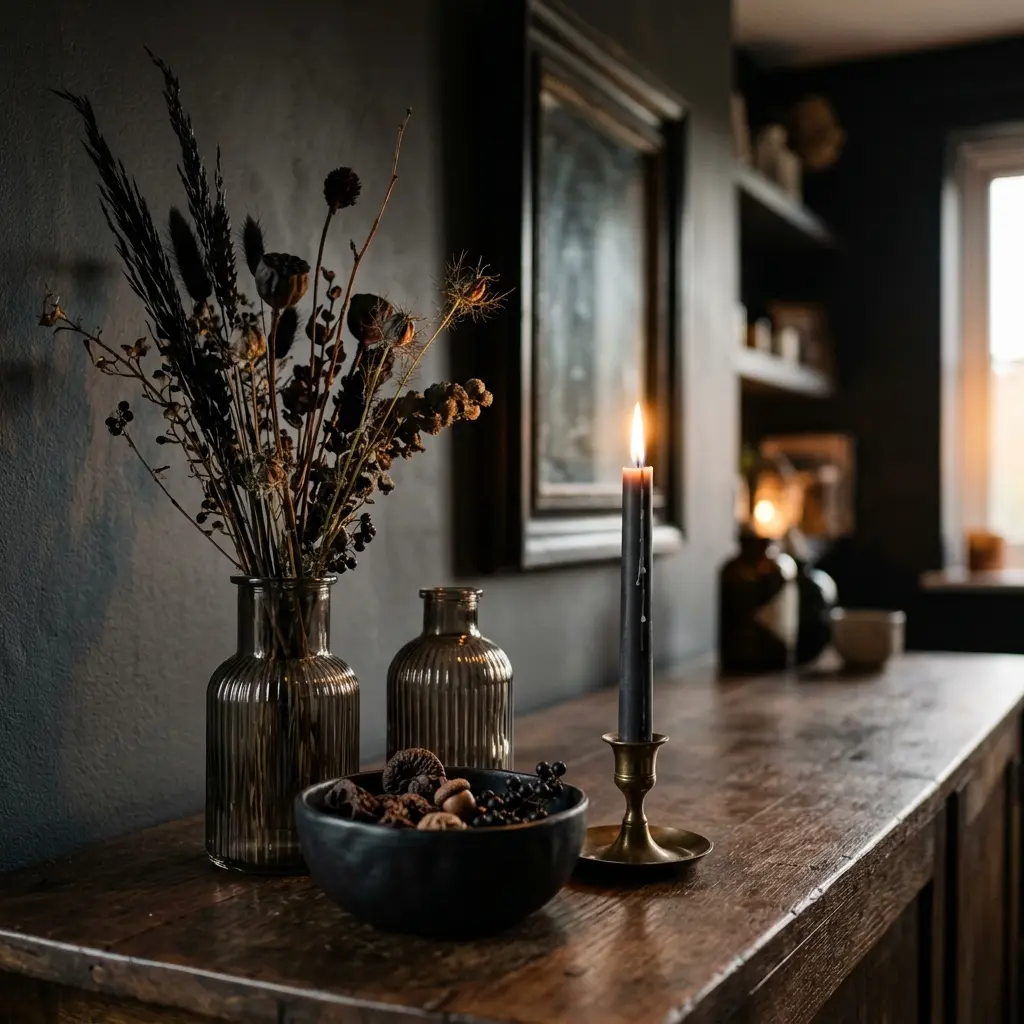
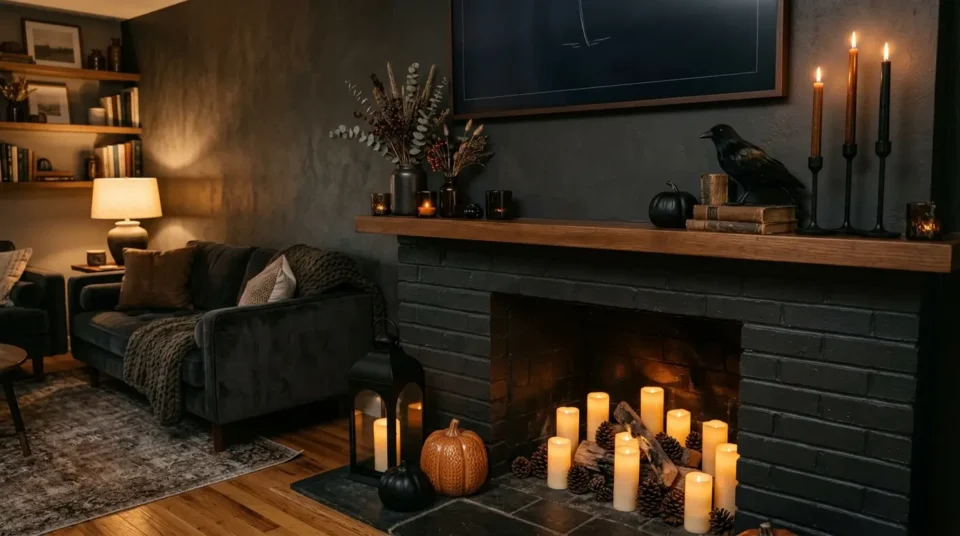
That repetition is the real indoor filter, and it is stricter than taste. The question is not “is this scary enough” but “can I look at this every evening until November”. Loud, gory and novelty pieces fail that test fast. Quieter objects — smoked glass, matte black ceramic, dried stems, aged brass, bone-white bisque — pass it, which is why they cost more per item and why you need far fewer of them.
So indoor money buys quality rather than quantity. One good piece in a room you actually sit in beats a dozen spread across rooms nobody enters. The same logic applies to seasonal wall pieces, where one framed or hung item carries a room better than a scattering of small ones — our Christmas wall decor ideas show that principle working on a different holiday.
KEY TAKEAWAY: outdoors you are buying size and light; indoors you are buying something you can stand looking at two hundred times.
How Should You Split the Budget Between Outside and Inside?
Put roughly two-thirds of a first-year budget outside and one-third inside. Halloween decor ideas rarely fail on taste — they fail on allocation, and this ratio is the correction. The outside is seen by everyone who passes, holds the pieces that have to survive weather, and carries the parts of the display you will reuse for years. The inside is seen by you and by the handful of people who come in.
That ratio flips over time. Once the weatherproof outdoor layer exists — the lanterns, the lit pieces, the wet-rated cords — you stop rebuying it. By year three most of the annual spend moves indoors and into consumables, because the expensive half is already in the garage.
The ratio also flips for a specific kind of home. If you live in an apartment with no front elevation, if your door opens onto an internal corridor, or if you host rather than receive trick-or-treaters, invert it. Spend indoors, where your actual audience is.
Composite example: a $200 first-year budget on a small detached house splits into about $130 outside — two lit anchor pieces, a door layer, warm bulbs — and about $70 inside for three good pieces in the living room and entry. The same $200 in a third-floor flat goes almost entirely indoors and buys noticeably better objects.
Where Do You Start When the House Is Completely Bare?
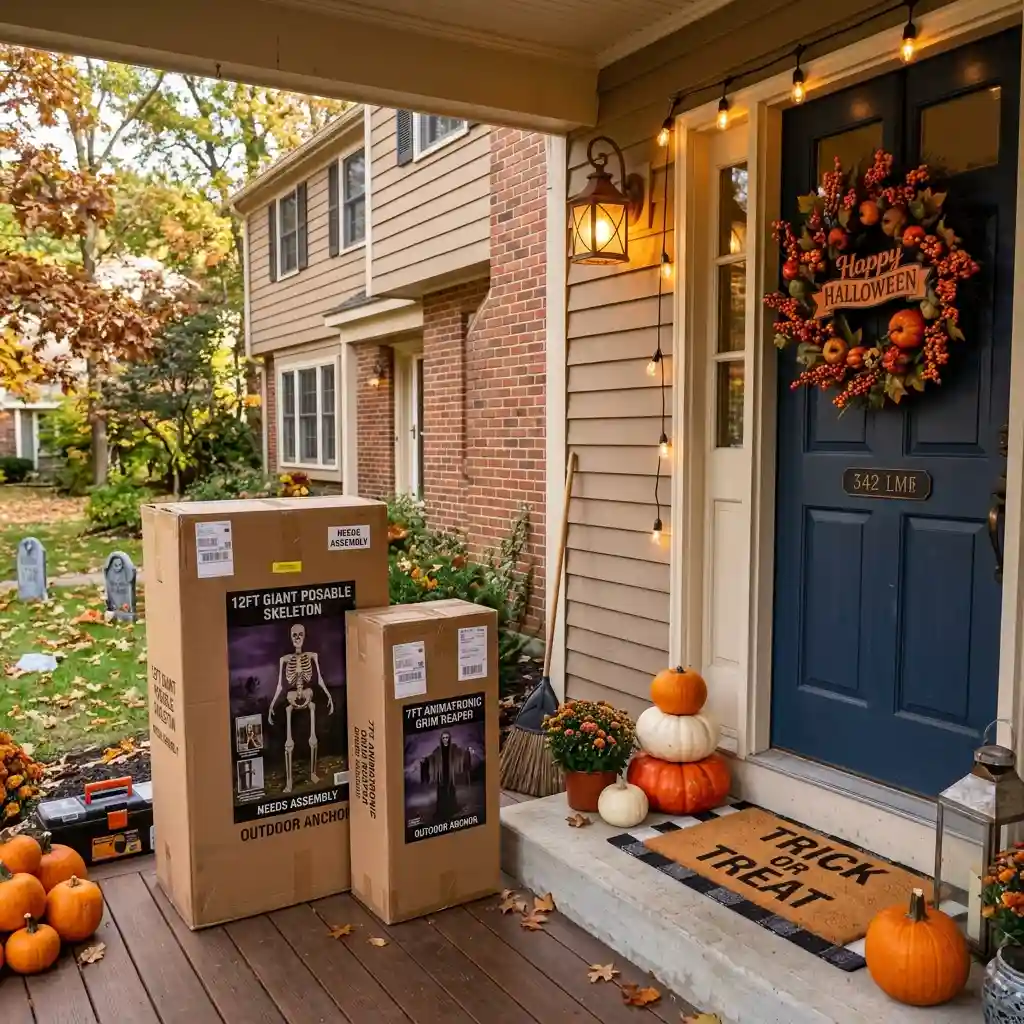
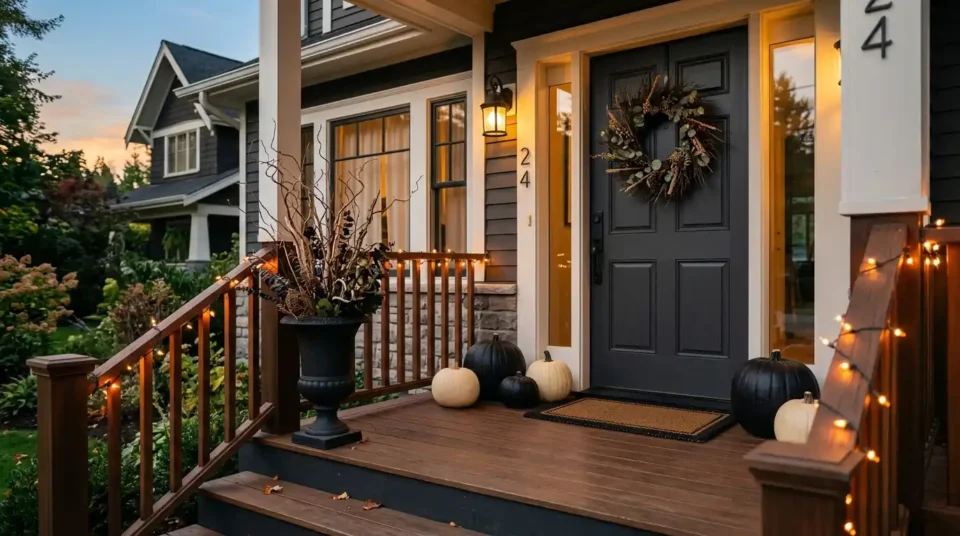
Start at the front door, because it is the only surface both audiences see. The street takes it in as part of the elevation, and a guest studies it from arm’s length. Nothing else in the house does double duty, which makes it the highest-return first purchase and the one place worth spending above your average.
After that, work outward and then inward on a calendar rather than in a single weekend. Spreading the build over six weeks keeps the fragile pieces out of the weather and keeps the effort manageable.
Weeks One and Two — The Door and Nothing Else
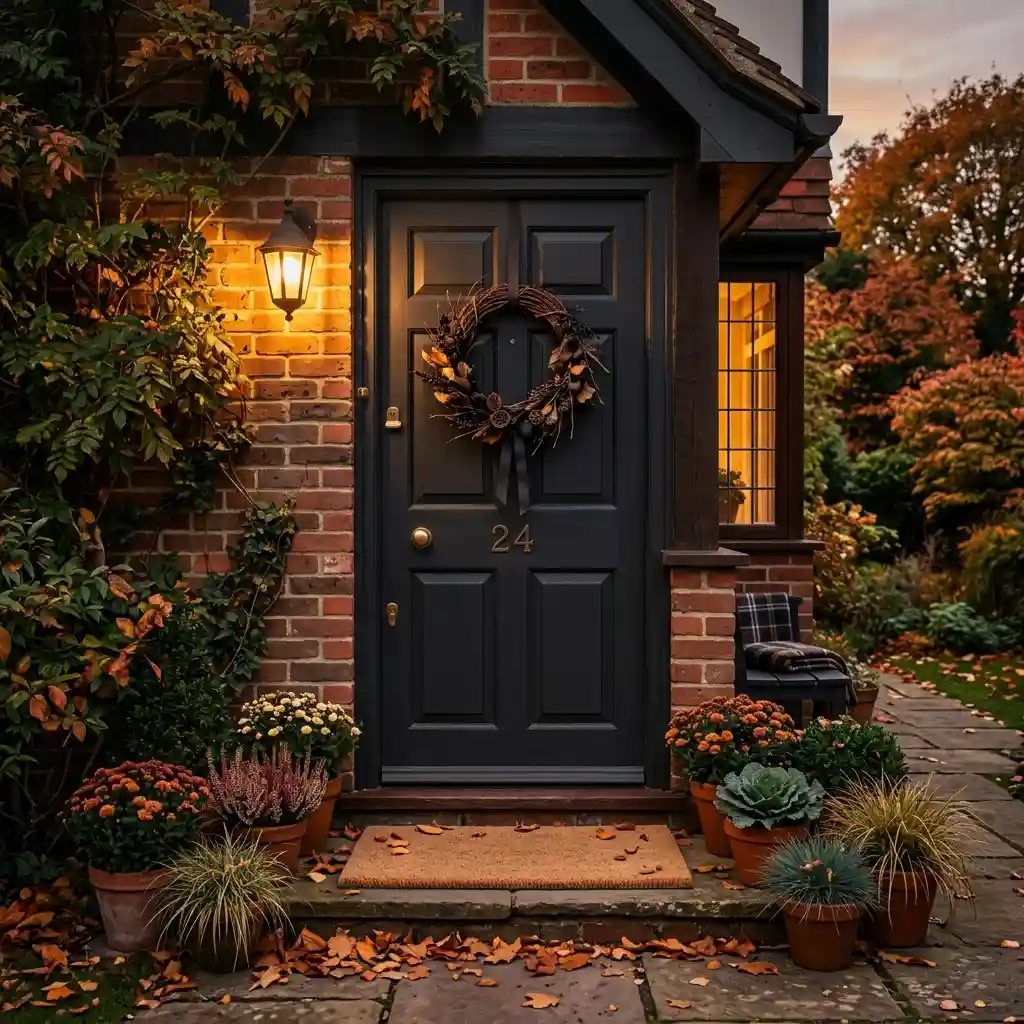
Do the door in early to mid-September and stop there. This early the door can still lean autumnal rather than spooky, so our fall and autumn decor ideas work well as the base layer underneath it. A wreath or hung piece, something at the threshold, and one light that reaches the door face is a complete first stage. Keep the wreath comfortably narrower than the door so the frame still shows on both sides — the proportion rules for wreath and garland sizing sit in our Halloween wreath and garland guide, not here.
At this point the house looks decorated but not committed, which is exactly right for September. Our modern spring wreath ideas cover how a door wreath is hung and balanced in a season with no spooky pressure at all, and the mechanics carry straight over.
Weeks Three and Four — The Approach and the Outdoor Anchors
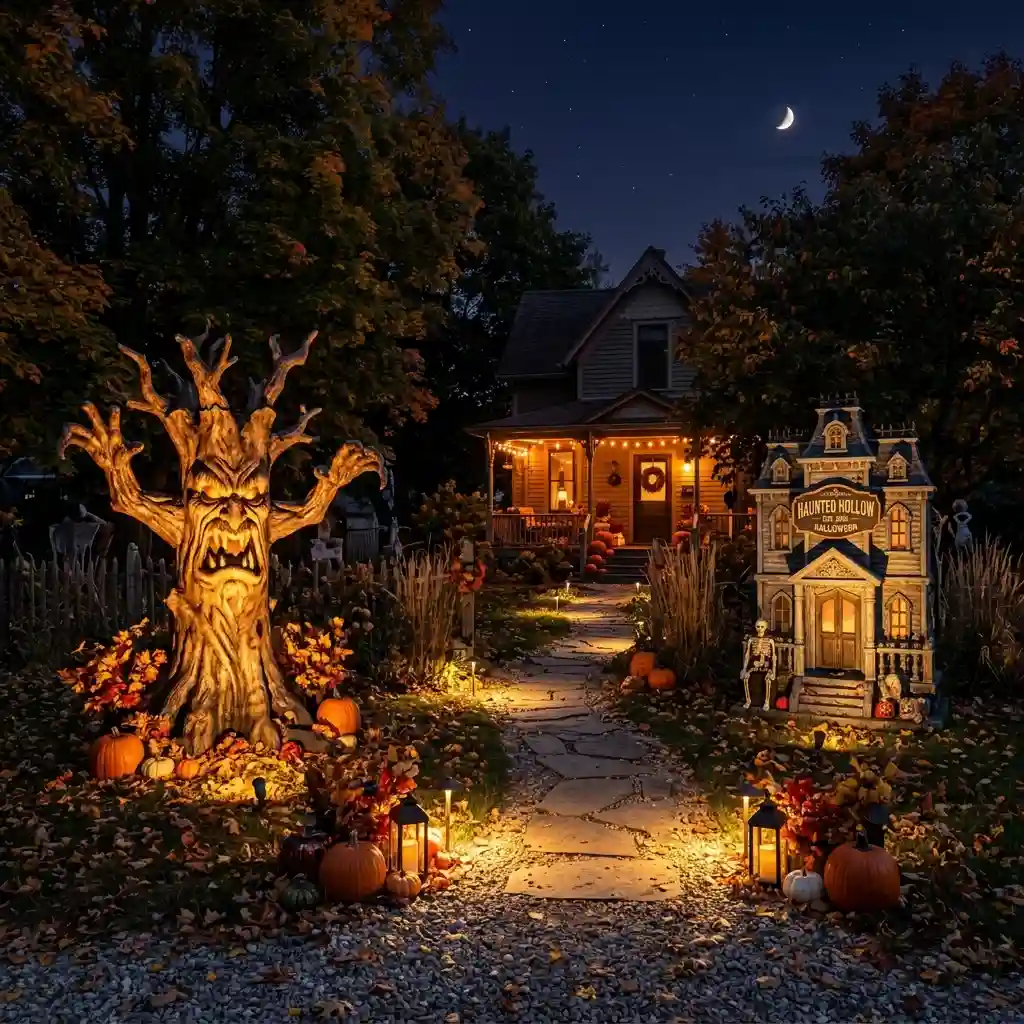
Late September is when the large weatherproof pieces go out. This is the size-and-light layer: the two or three big objects, the lanterns, the wet-rated fixtures and the timer. It is also the layer that has to survive the longest, so it is worth buying properly once.
Leave the ground bare between the anchors. Two well-lit objects with space around them read as a planned display from the street; the same two surrounded by twelve small ones just look messy.
Week Five — The Two Rooms People Stand In
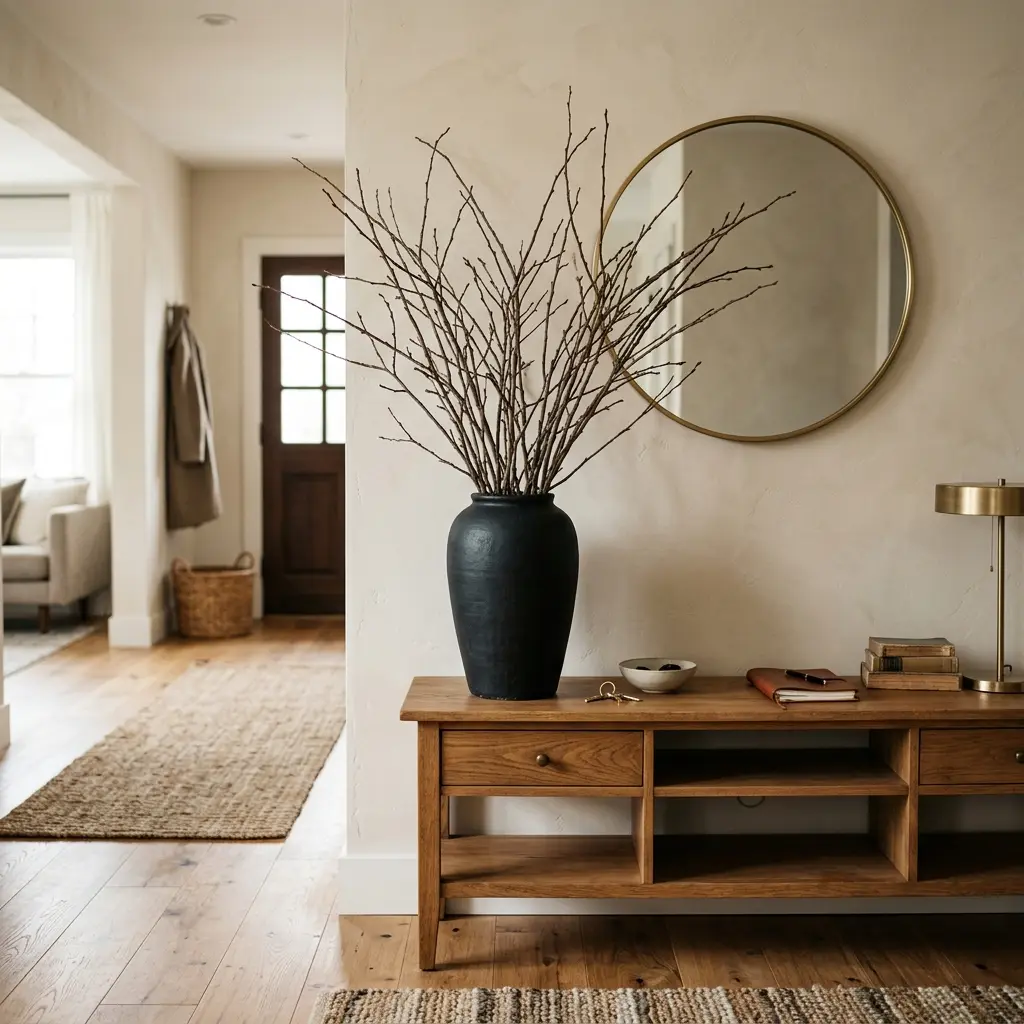
Mid-October is early enough for the indoor layer and late enough that you will not be sick of it. Pick the two rooms where people actually stop — usually the entry and the living room — and put the good pieces there. Everything else in the house can stay ordinary without anyone noticing.
Layered lamplight does more for an indoor Halloween scene than any object, and the approach is the same one that makes a room feel warm the rest of the year. Our cozy bedroom lighting ideas explain how the ambient, task and accent layers stack.
The Last Ten Days — The Pieces That Do Not Last
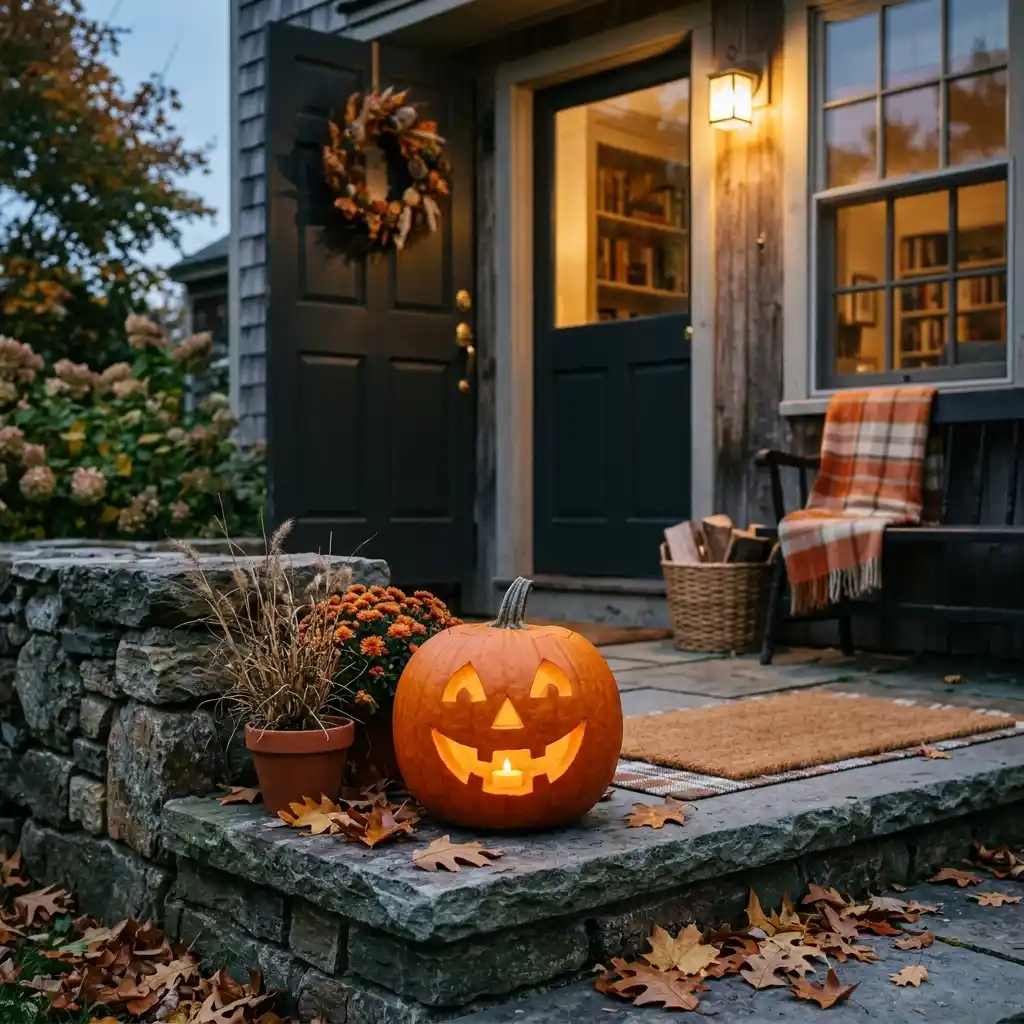
Hold everything perishable and everything fragile until roughly October 21st. Carved pumpkins, fresh stems, paper and anything a strong wind would destroy belong in this final block. Adding them last is also what makes the display peak on the right night instead of two weeks early. If pumpkins are doing that work, our pumpkin decorating ideas compare carving, painting and no-carve on exactly how long each one survives.
If you are hosting, the table layer belongs here too — our Halloween party decorations guide covers the table and the room around it, and our Christmas table settings show how a seasonal table is built in layers rather than bought as a set.
Which Halloween Decor Ideas Fit the Look You Keep Saving?
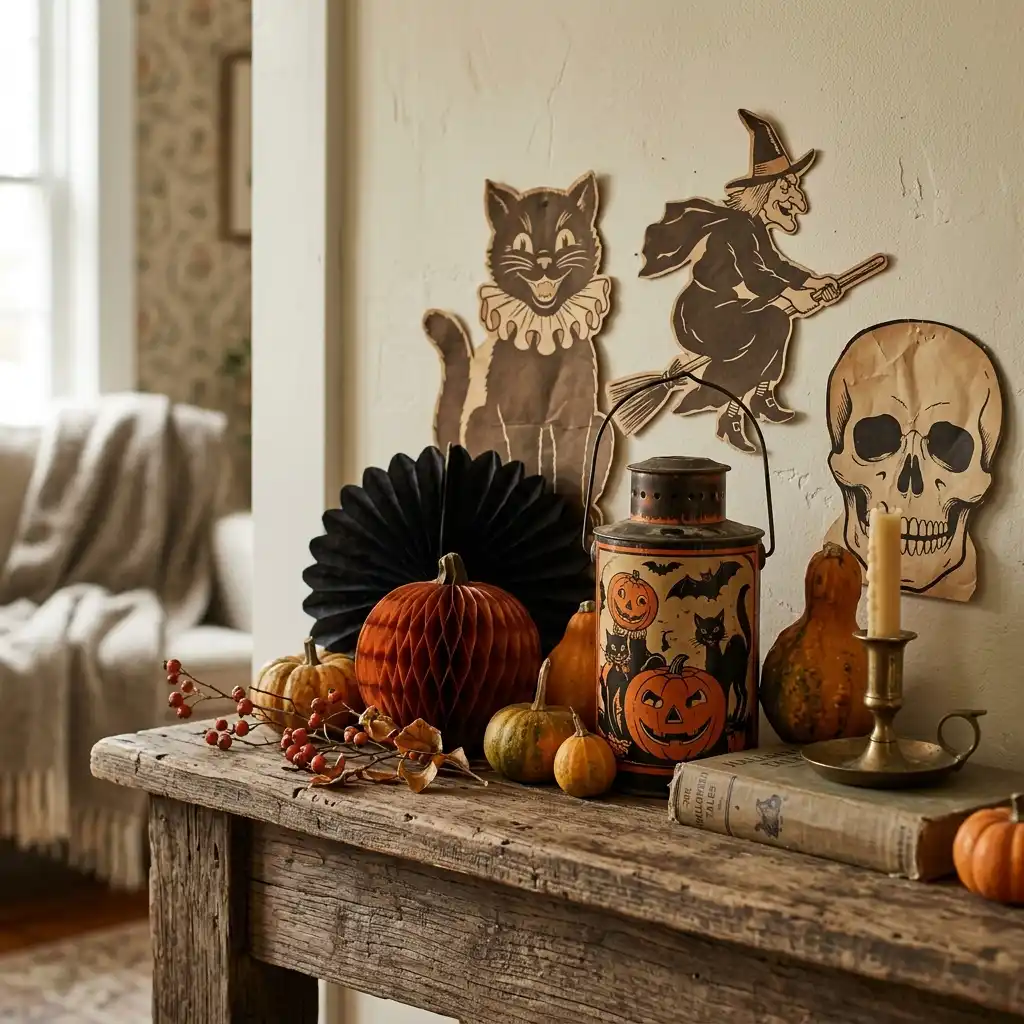
Halloween is the only season people decorate by feeling first and room second, which is why a house full of good objects can still look wrong. Five lanes cover almost all of it, and the useful question is not which is best but which one you keep saving. Each lane is broken down in our guide to Halloween decor styles.
- Spooky — the classic haunted look. Ghosts, cobwebs, silhouettes, low light. Strongest outdoors and after dark.
- Cute — friendly rather than frightening. Rounded shapes, smiling faces, pastels. The safest lane with small children in the house.
- Vintage — mid-century and older printed imagery, aged surfaces, nostalgia. Ages the best indoors and often stays up past Halloween.
- Witchy — herbs, candles, brass, apothecary glass, deep greens and blacks. The one lane that genuinely works year-round.
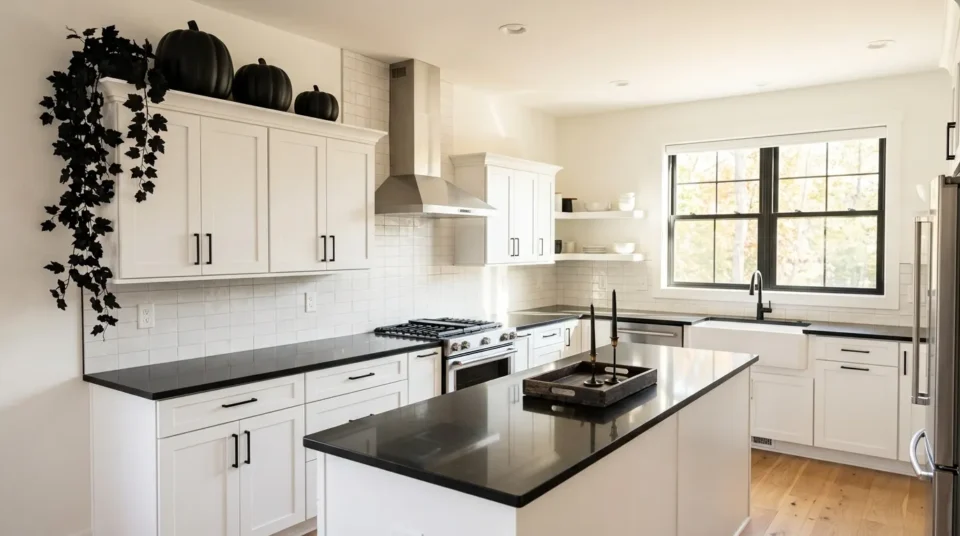
- Elegant — restrained and dark rather than scary. Monochrome, sculptural, more decor than costume.
Pick one before you shop. Two lanes in one house is where most displays start to look accidental, because the objects contradict each other rather than adding up. The full breakdown of what each lane is made of — the palettes, the materials, the way to tell which one is yours — lives in the styles guide one level down from this page. If dark-toned seasonal decorating appeals, our black Christmas decor ideas show the same restrained approach applied to December.
What Colour Should Halloween Lighting Be?
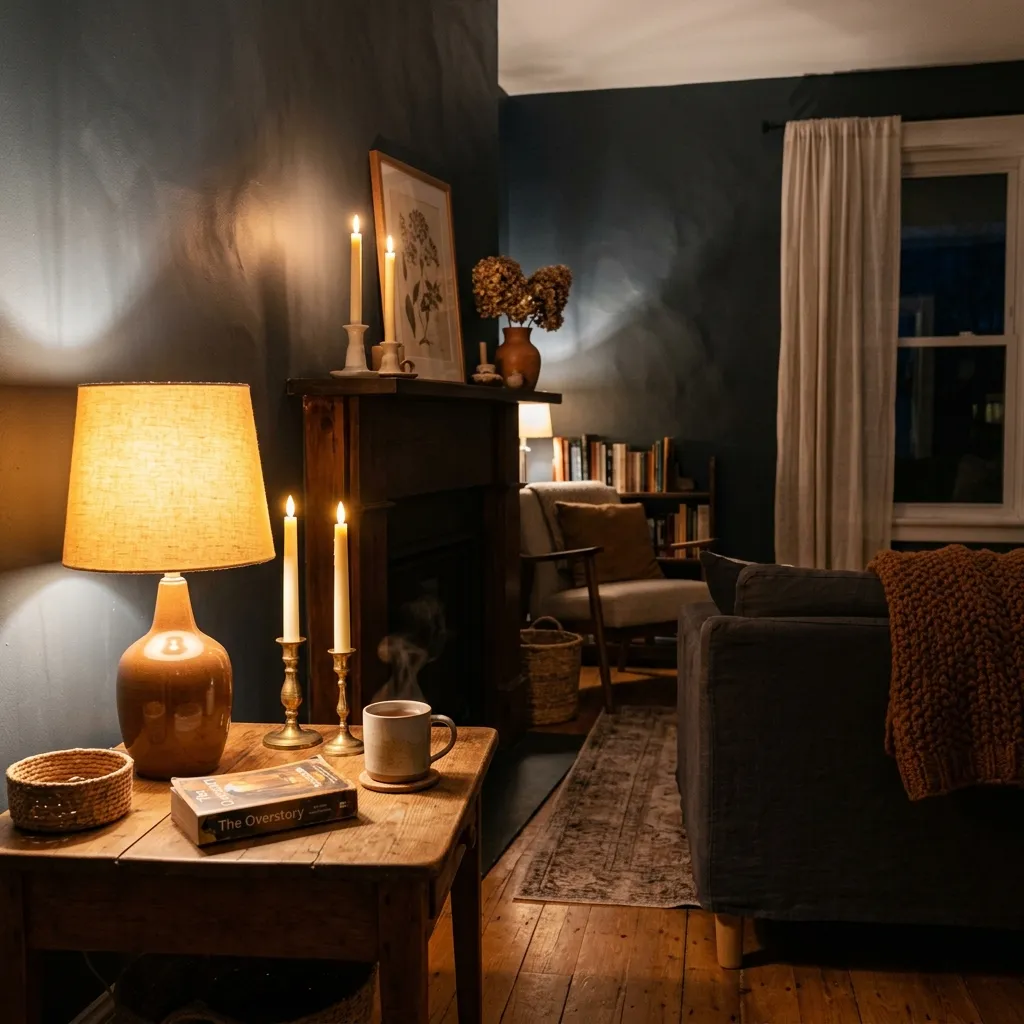
Warm. Every outdoor bulb in a Halloween display should sit between 2200K and 3000K, and the single fastest way to make an expensive display look cheap is to light it with cool white.
Source Note: ENERGY STAR’s guidance on light bulb colour and mood puts the incandescent-matching warm range at 2200K to 3000K, and describes 3500K to 4100K as a whiter light.
That gap is the whole rule. Amber light at 2200K throws long warm shadows and makes matte black objects read as solid shapes. White light at 4000K flattens everything, shows the plastic, and makes a porch look like a car park. It is the same fixture and the same object — only the bulb changed.
Two practical points follow. First, buy bulbs and light strings by their Kelvin number rather than by words like “warm” on the box, because the labelling varies. Second, put the outdoor lighting on a timer set to switch on at dusk, so the display is lit during the hours people are actually walking past rather than at midnight. Indoors, the same warm range applies, and the layered approach in our living room lighting ideas does more for an evening room than any single fixture.
Which Halloween Decorations Are Worth Buying Once?

Buy the structural and electrical layer once and properly; buy everything decorative cheaply and expect to replace it. The dividing line is whether a piece has to survive weather. Our guide to Halloween props and accent decor covers which pieces earn a permanent place in the boxes.
Outdoor fixtures carry a location rating, and it is the specification that actually matters. UL’s outdoor luminaire evaluations under UL 1598, the Standard for Safety of Luminaires, include wet location requirements and assess whether polymer enclosures hold up after ultraviolet and very low temperature exposure. In plain terms: a covered porch is a damp location, an open yard or path is a wet location, and a fixture rated only for damp will not last a season standing in rain.
Safety Note: the U.S. Consumer Product Safety Commission’s holiday decorating guidance advises using lights certified for outdoor use, plugging them into a GFCI-protected outlet, and running no more than three standard light sets per extension cord.
So the buy-once list is short: wet-rated outdoor fixtures, outdoor-rated cords and a timer, two or three large weatherproof anchor pieces, and a good door hanger. Everything else — paper, printed card, dried stems, inexpensive small objects, anything you will be bored of by next October — is a consumable. Budget decorating works best when it is aimed at that second list, the same way our small living room budget ideas put the money where it shows and skip the rest.
Splitting a Halloween Budget Across Six Weeks
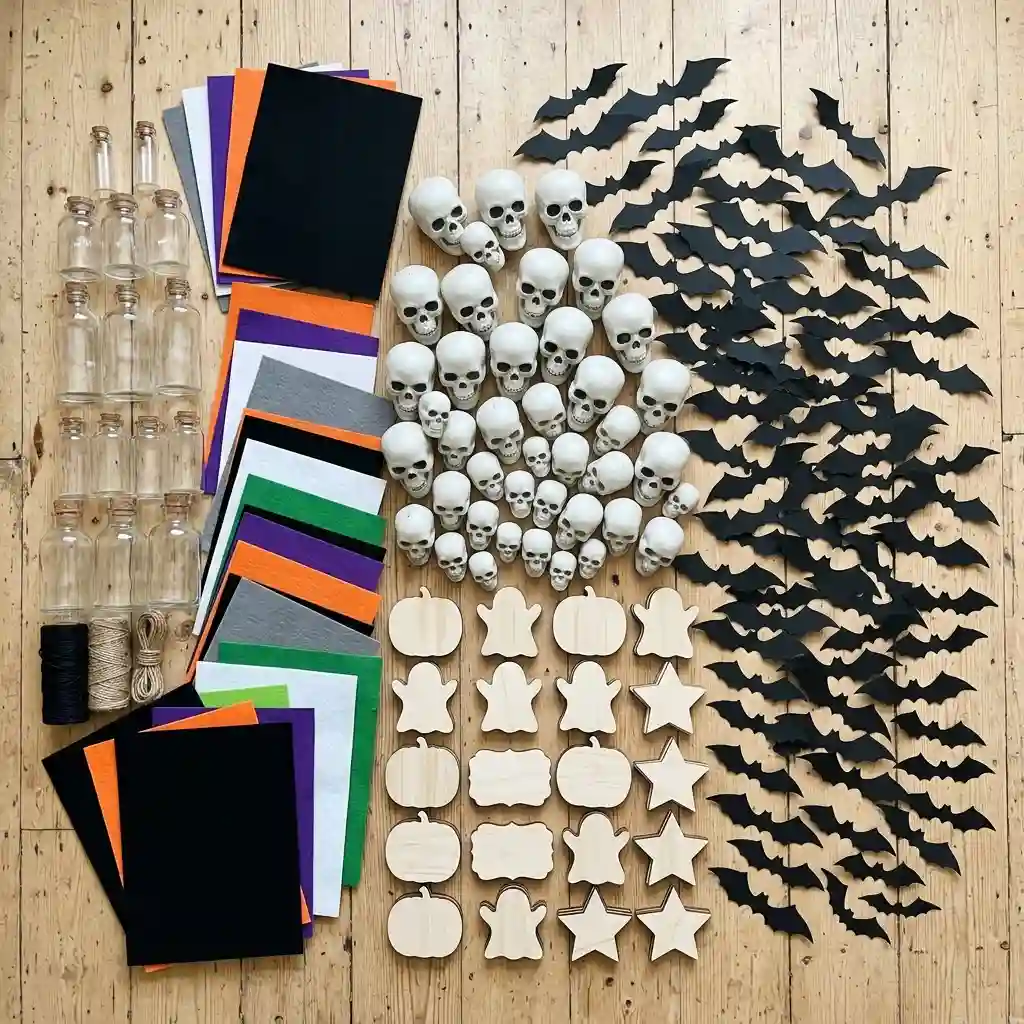
Costs below reflect a mid-size home decorated from nothing, spread across the six-week build rather than spent in one trip. The entry point is genuinely low — a warm bulb swap and a door layer land under $100 together. The middle of the range is the indoor layer at $60 to $180. The premium end is a single oversized or animated outdoor anchor, which can reach $600 on its own and is the one purchase worth delaying until year two.
| Project | Estimated Cost | Impact Level |
|---|---|---|
| Front door layer — hanging piece, threshold mat, one light | $45-$110 | Very High |
| Warm outdoor bulbs, wet-rated cord and a dusk timer | $40-$140 | High |
| Outdoor anchors — two or three large weatherproof pieces | $120-$600 | Very High |
| Indoor layer — a few good pieces in the two rooms you use | $60-$180 | Medium |
Best First Upgrade: the front door layer, because it is the only spend that both the street and your guests see, and it makes an otherwise bare house look decorated.
Skip for Now: the oversized animated prop. It is the most expensive single item in Halloween retail, it needs power and anchoring, and it does nothing for you until the warm lighting and the door are already handled.
The Buying Habits That Waste the Most Money

Instead of filling a cart with small pieces because each one feels affordable, Try setting a minimum size for anything going outdoors and buying half as many objects at twice the height.
Instead of spreading decorations evenly through every room, Try leaving the bedrooms, the hallway and the spare room completely bare and putting the whole indoor budget into the two rooms people stop in.
Instead of reaching for cool white bulbs because they look brighter in the shop, Try buying by Kelvin number and keeping everything outdoors between 2200K and 3000K.
Instead of putting the entire display up on the first weekend of October, Try holding the perishable and fragile pieces back to roughly October 21st so the house peaks on the right night.
Eight Decisions to Make Before the First Box Opens
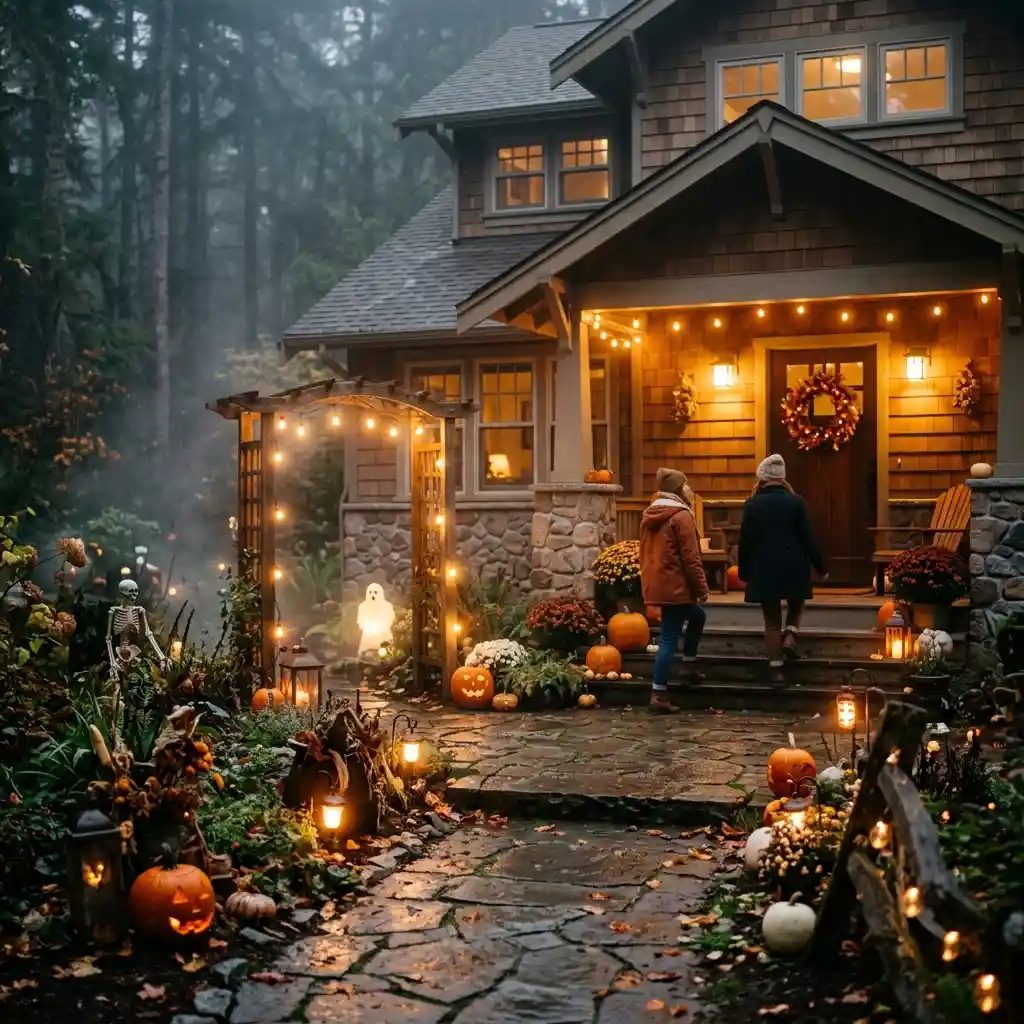
- Choose one of the five lanes and write it down, so every purchase can be checked against it.
- Set the outdoor and indoor split before you shop, not after the first trip.
- Photograph the front of your house at night and mark which surfaces already catch light.
- Name the two indoor rooms getting the budget, and accept that the rest stay ordinary.
- Check the location rating on any outdoor fixture — wet for open ground, damp only under cover.
- Buy bulbs by Kelvin, keeping everything outdoors at 3000K or lower.
- Diarise the four build dates rather than planning one long weekend.
- Measure the storage space you actually have before buying anything oversized.
Every one of these is free to decide and expensive to get wrong once the boxes are open.
What I Would Do With Six Weeks and $200
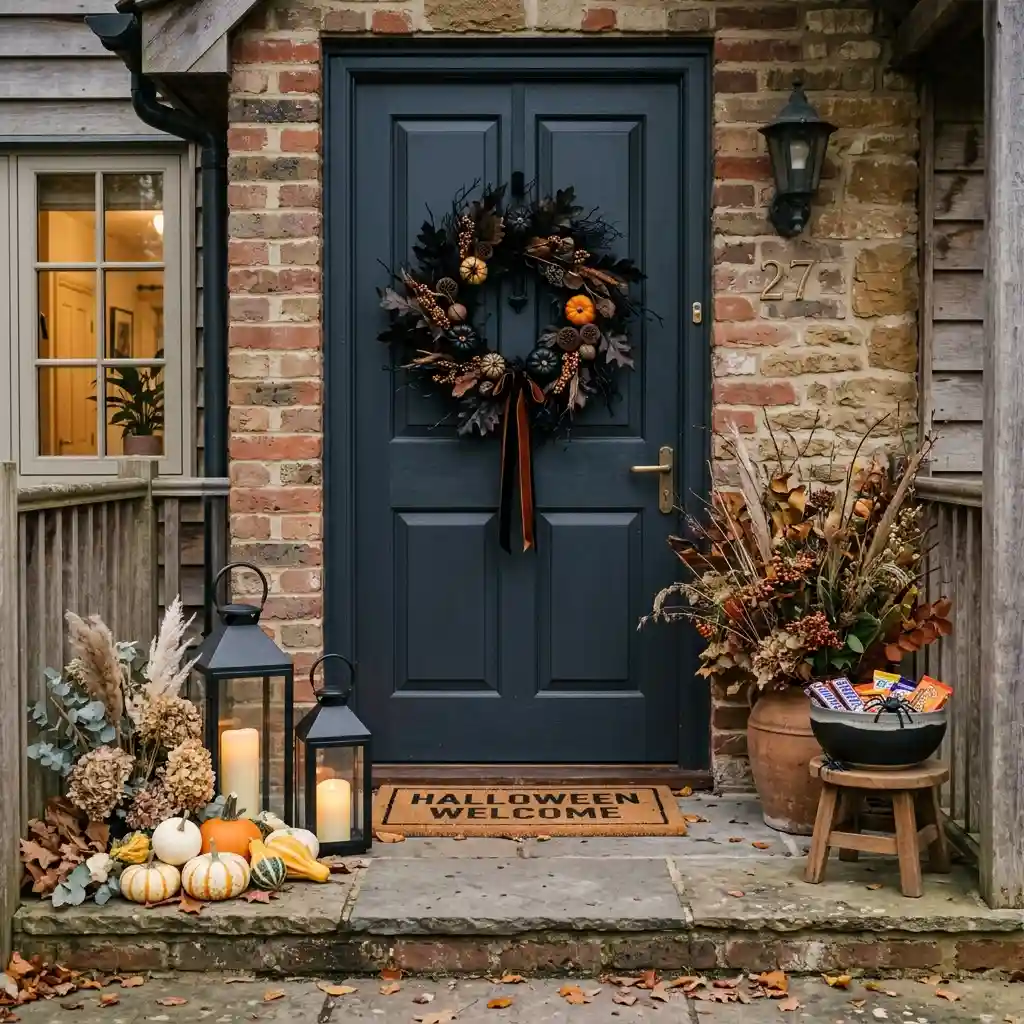
Spend the first $100 on the front door and the warm lighting, and do nothing else for a fortnight. That combination changes how the house looks from the street and from the doorstep at the same time, and it costs less than one large prop.
Put the next $60 into a single outdoor anchor piece tall enough to clear a porch rail, and the last $40 into two good indoor pieces for the room you sit in most. If the budget is tighter than that, our DIY Halloween decorations guide covers what is genuinely worth making rather than buying. That is a complete, coherent Halloween on a modest budget, and it leaves the expensive weatherproof layer to be built up slowly over several seasons rather than panic-bought in one October.
The version to avoid is the even spread — twenty dollars in every room and nothing anywhere that anyone notices. Our seasonal decorating archive covers the rest of the year’s holidays the same way.
Renting, or Working With One Balcony and No Front Door
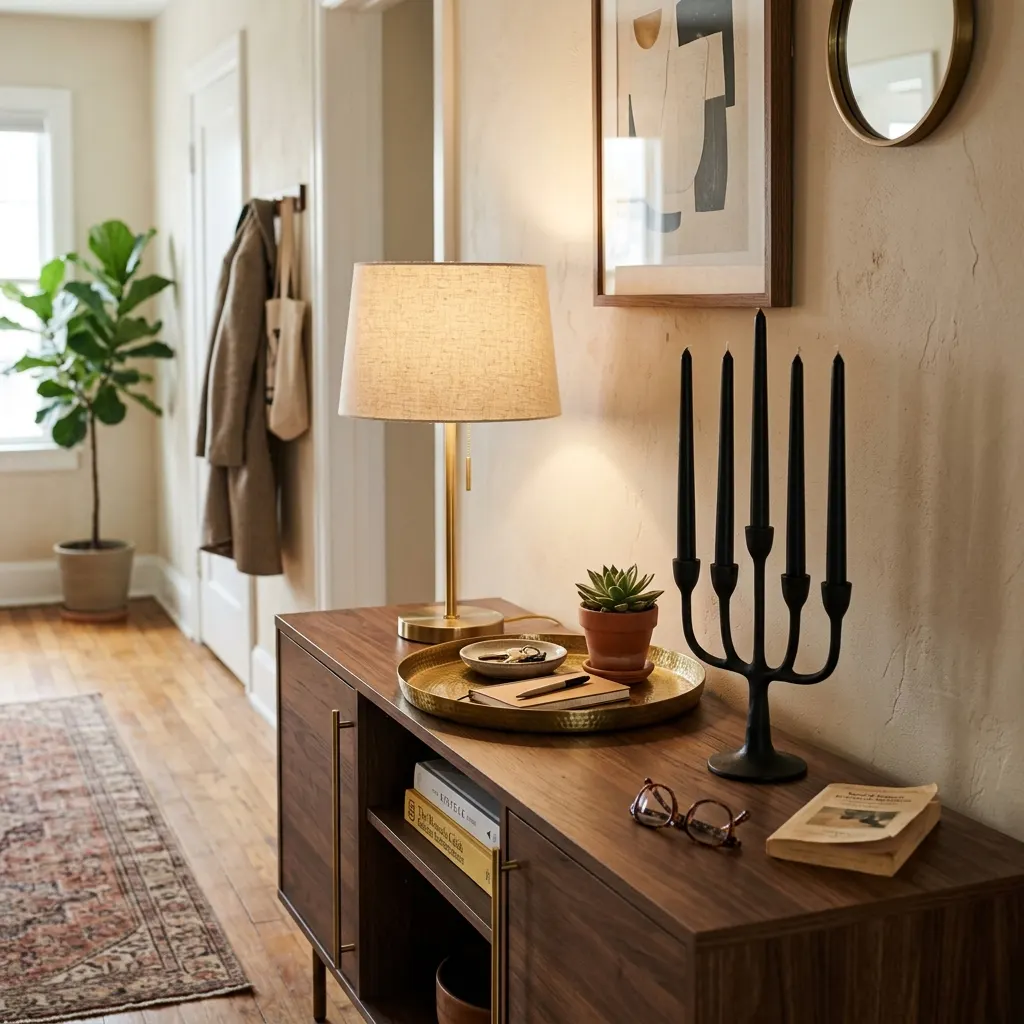
Renters and apartment dwellers get the better half of this deal, because the three-foot audience is the one they actually have. Spend indoors, buy fewer and better pieces, and treat the entry as your door layer. Our rental bedroom ideas cover the same no-damage thinking applied to a room you do not own.
Where there is a balcony, treat it as a miniature version of the thirty-foot job — one lit piece at a decent height rather than several small ones, and everything weighted or tied down. Where there is no outdoor space at all, the whole budget goes to the rooms you use, which usually buys noticeably nicer objects than a house budget stretched across a facade. The tightest version of this is a single room, and our dorm room ideas show how far one well-chosen shelf carries a space that small.
Rental Note: use removable hooks and tension-mounted fittings rather than nails, and keep adhesive off freshly painted walls, where it lifts paint on removal.
What Happens to It All on November 1st
The weatherproof layer is an asset, and how you store it decides whether you rebuy it next August. Take everything down in one pass on the first of November, because leaving outdoor pieces up into mid-November is what turns a good display into a tired one and lets frost get into anything already cracked.
Sort into three boxes as you go: outdoor structural, indoor good pieces, and consumables to bin. Label the boxes by zone rather than by object, so next September you can carry out “front door” and “outdoor anchors” without unpacking anything. Wipe outdoor pieces dry before they go away, since sealed damp is what causes the mould that ruins resin and fabric over a winter in a garage. What stays up once the Halloween pieces are boxed is covered in our fall decor ideas guide, which carries through to Thanksgiving.
Store the indoor pieces somewhere at stable room temperature rather than an attic, where summer heat warps resin and cracks painted finishes. The same thinking behind our stylish bedroom storage ideas applies here — the container matters less than deciding what deserves to be kept at all.
Frequently Asked Questions
Conclusion
The most useful move is also the cheapest one: decide who a purchase is for before you buy it, then send the big lit objects outside and the good quiet ones in. Do the front door and the warm bulbs first, because that single afternoon fixes both distances at once, and every other decision on this page gets easier afterwards. There are plenty more halloween decor ideas to work through across the season, and our home decor inspiration is a good place to keep building once the boxes are back in the garage.