TL;DR
- Most Halloween mantel photos are composed for a bare overmantel wall — tall candlesticks, layered mirrors, bats climbing upward.
- A wall-mounted TV removes that vertical zone, so the display has to run sideways instead of upward.
- Work three surfaces, not one: the shelf edge, the open firebox, and the hearth floor.
- The firebox is the most under-used Halloween spot in the house — it is a free dark box at floor level.
- If you plan to light the fire, soft materials stay above and behind the shelf line and the opening stays clear.
The Mantel in the Photo Has an Empty Wall Above It
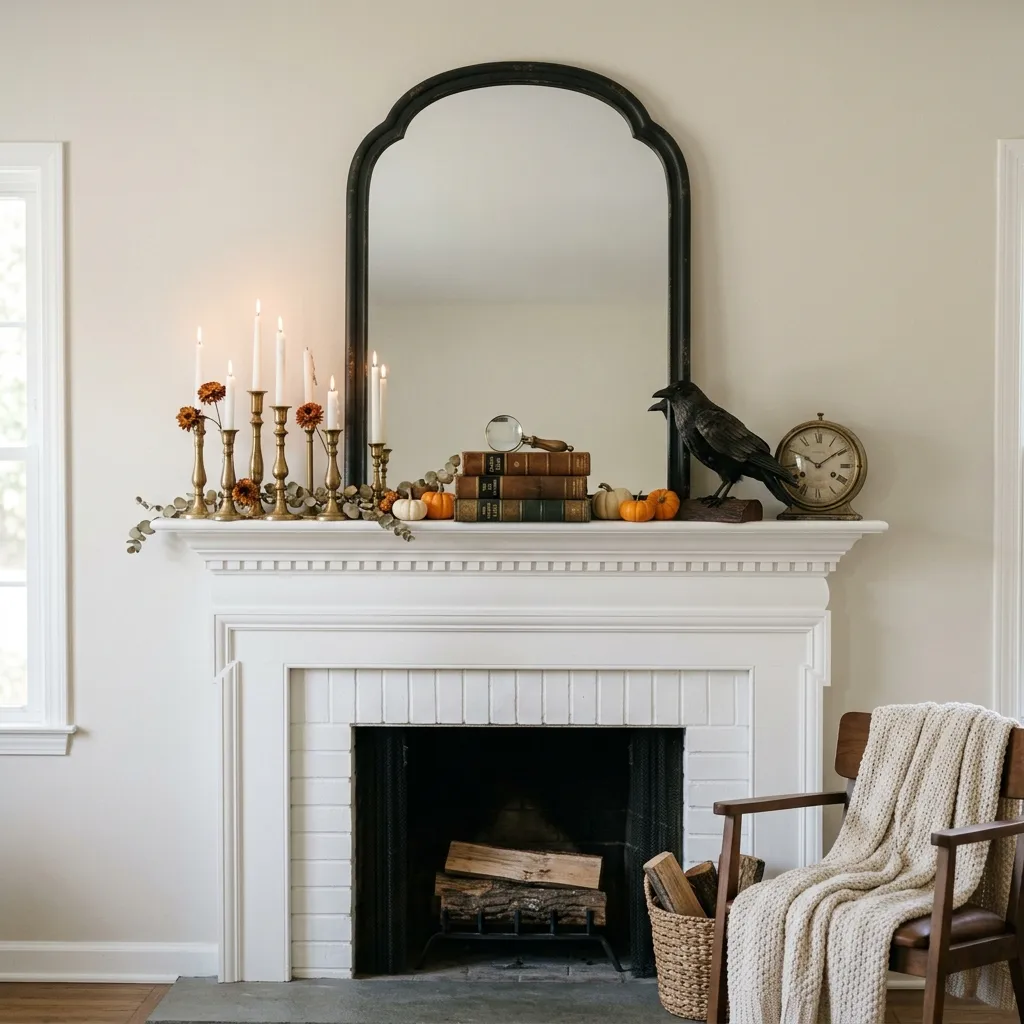
Look at any saved Halloween mantel image. There is usually a huge black mirror or a portrait leaning against the wall, three brass candlesticks climbing to one side, and a crow sitting on top of a stack of old books. Now look at your own fireplace. There is a 65-inch television bolted to that wall, and the styling advice you just saved has nowhere to go.
Good Halloween mantel decor starts by admitting what is above the shelf. A mantel with a bare wall can stack height and win. A mantel with a TV cannot, so it has to spread out instead — along the shelf edge, down into the firebox, and out onto the hearth floor. That single swap fixes more failed mantels than any prop you could buy, and it costs nothing.
Editorial field note: A living room with a mounted TV and a narrow oak mantel usually looks thin at Halloween, because the objects are sized for a wall that is no longer available. Shifting the tallest pieces to the hearth floor and filling the dark firebox with three battery pillars puts the visual weight low. The fireplace reads as a full display again without a single new purchase.
This is a styling problem, not a shopping problem. The rest of our Halloween decorating ideas cover doors, porches and whole rooms. This guide stays on the fireplace, and on why a saved photo so rarely survives contact with a real living room.
What Is Actually Above Your Mantel?
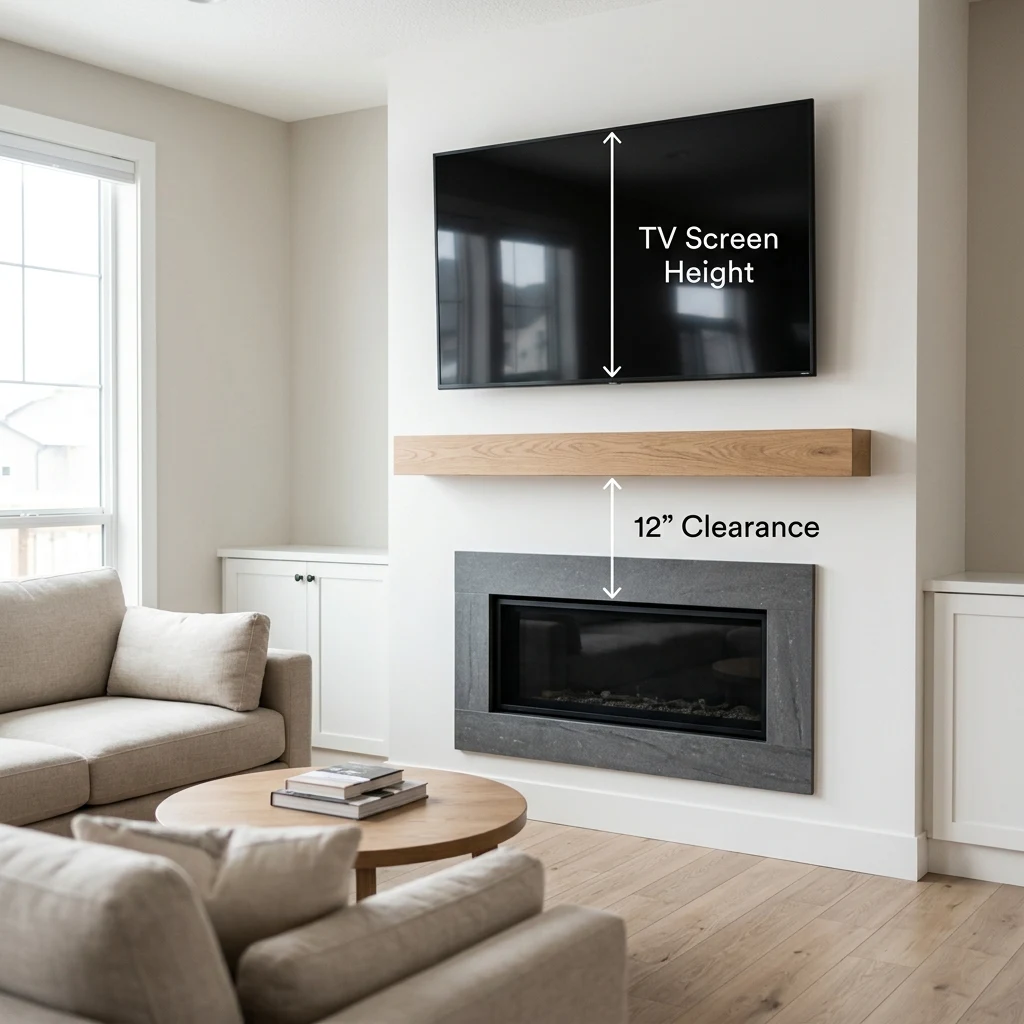
Stand back eight feet and answer one question before you spend anything. The overmantel wall comes in three versions, and each one allows a completely different arrangement. Getting this wrong is why a mantel can be fully decorated and still look empty.
A bare overmantel wall is the rare one, and it is the version every reference photo is built on. You can lean a mirror, hang a paper bat flight, run height upward, and let the shelf carry small detail. If this is your wall, most saved images will work as shown, and the fireplace can carry the whole room the way a proper focal point should in these luxury living room ideas.
A TV wall is the common one. The screen is a heavy black rectangle that already owns the vertical space, so anything you stack in front of it competes and loses. The fix is to stop competing: keep the arrangement below the screen, run it wide, and let the dark screen act as the backdrop rather than the problem.
A fixed wall is the third version — a built-in mirror, mounted art, panelling or stone that is not coming down for October. Here the rule is to work in front of the fixture, not around it. Repeat one material from the fixture in your Halloween pieces so the two read as one arrangement, the same way permanent living room wall decor has to agree with what sits below it.
DESIGNER TIP: Photograph your fireplace on your phone and turn the photo greyscale. Whatever still pulls your eye first is the real focal point, and your Halloween pieces have to work with it rather than against it.
Why Did Halloween Mantels Get Harder?
The mantel used to be the easiest surface in the house to decorate. It sat at chest height, held a mirror, and had a clear wall above it. Two changes made it harder, and neither of them had anything to do with Halloween.
The first change is the screen. Mounting a television over the fireplace became the default layout in open-plan rooms, because it puts both focal points on one wall. Designers have pushed back on it hard — a mantel has to sit around 12 inches above the firebox, which lifts the screen high enough to strain your neck from the sofa. The layout is still everywhere, and Halloween styling advice has not caught up with it.
The second change is the calendar. The mantel is now the one surface in the house that gets fully redecorated three times in about ten weeks — harvest in September, Halloween in October, evergreen in December. That turns mantel buying into a sequence rather than a single purchase, which is why so many boxes of orange-and-black plastic get used once and resented. It is worth planning the shelf against the whole seasonal decorating calendar rather than one holiday at a time.
Signs This Is Catching On:
- Interior designers now name the TV-over-fireplace layout as a dated look for 2026, which pushes styling attention onto the shelf and hearth instead of the wall.
- Seasonal ranges have shifted toward mantel-scale objects — glass cloches, black taper holders, ceramic and mercury-glass pumpkins — rather than wall banners and hanging cutouts.
- Search suggestions now include phrases like “Halloween mantel decor with TV,” a question the classic styling advice never had to answer.
The Three Stages of a Halloween Mantel
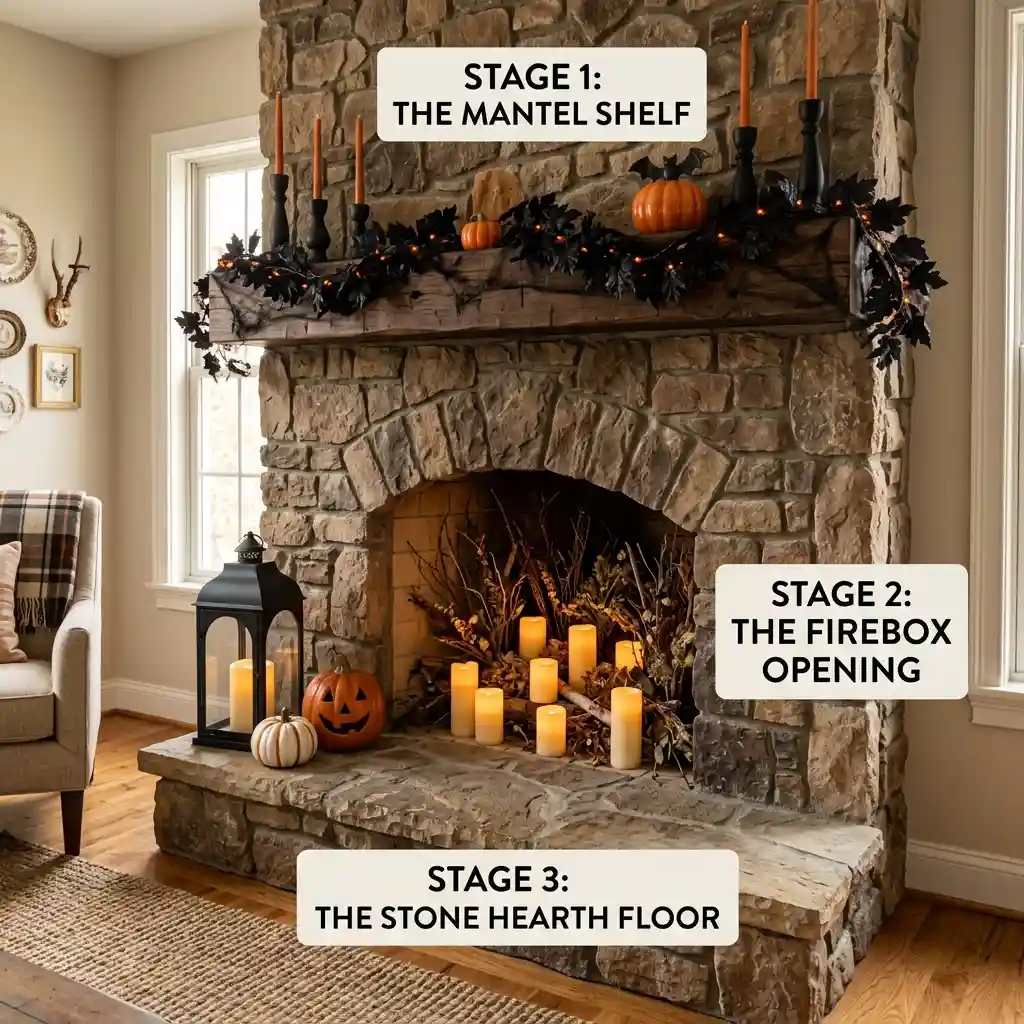
A fireplace is not one surface. It is three, stacked vertically, and a mantel that looks sparse is almost always using only one of them. Treat the shelf edge, the firebox opening and the hearth floor as three separate stages, and a modest set of objects fills the whole fireplace.
The three-stage approach also solves the depth problem. A standard mantel shelf runs about 6 to 8 inches deep, which is barely enough for a candlestick and a small frame. That is shallower than most display shelving, so the grouping rules from shelf styling only half apply. The firebox has real depth. The hearth has real floor.
Stage One — The Shelf Edge
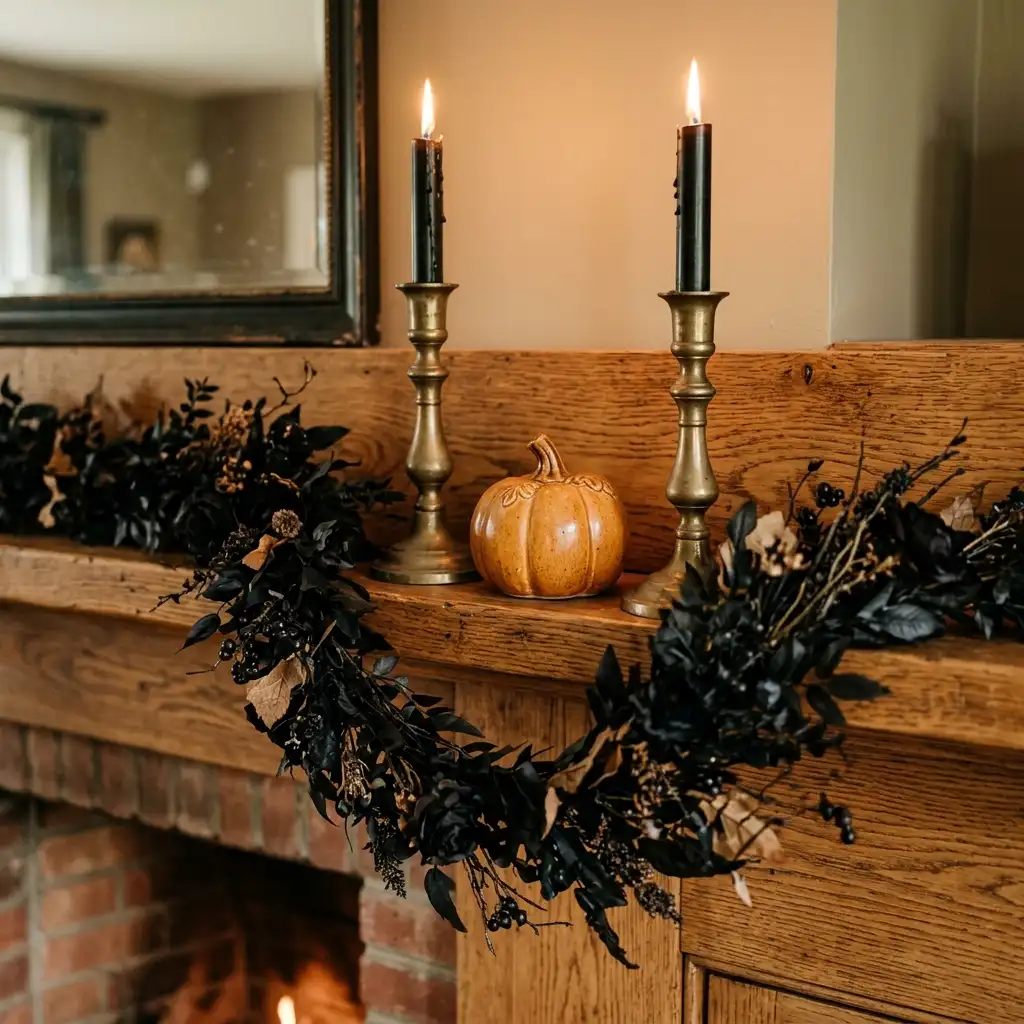
The shelf edge is the eye-level line, and it is the only stage that reads from across the room. Keep the front two inches of the shelf clear so nothing looks like it is about to fall, and set the tallest object toward one end rather than the middle. Step the remaining heights down from there so the group has a shape instead of a row.
Detail is wasted here. A cluster of small pumpkins on a shelf disappears from the sofa, while one black ceramic pumpkin and one brass candlestick still register. Buy fewer, larger pieces for this stage, and let the small things live where people stand close.
Stage Two — The Firebox
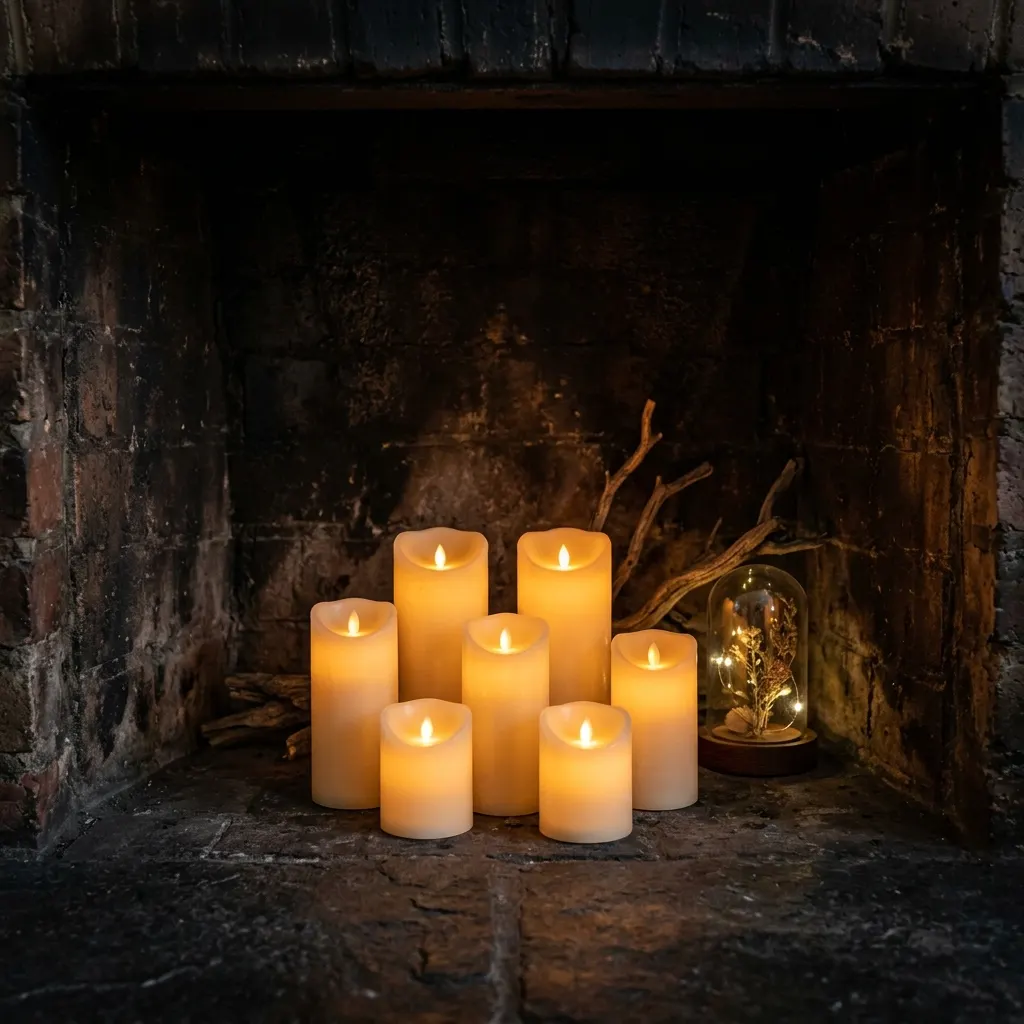
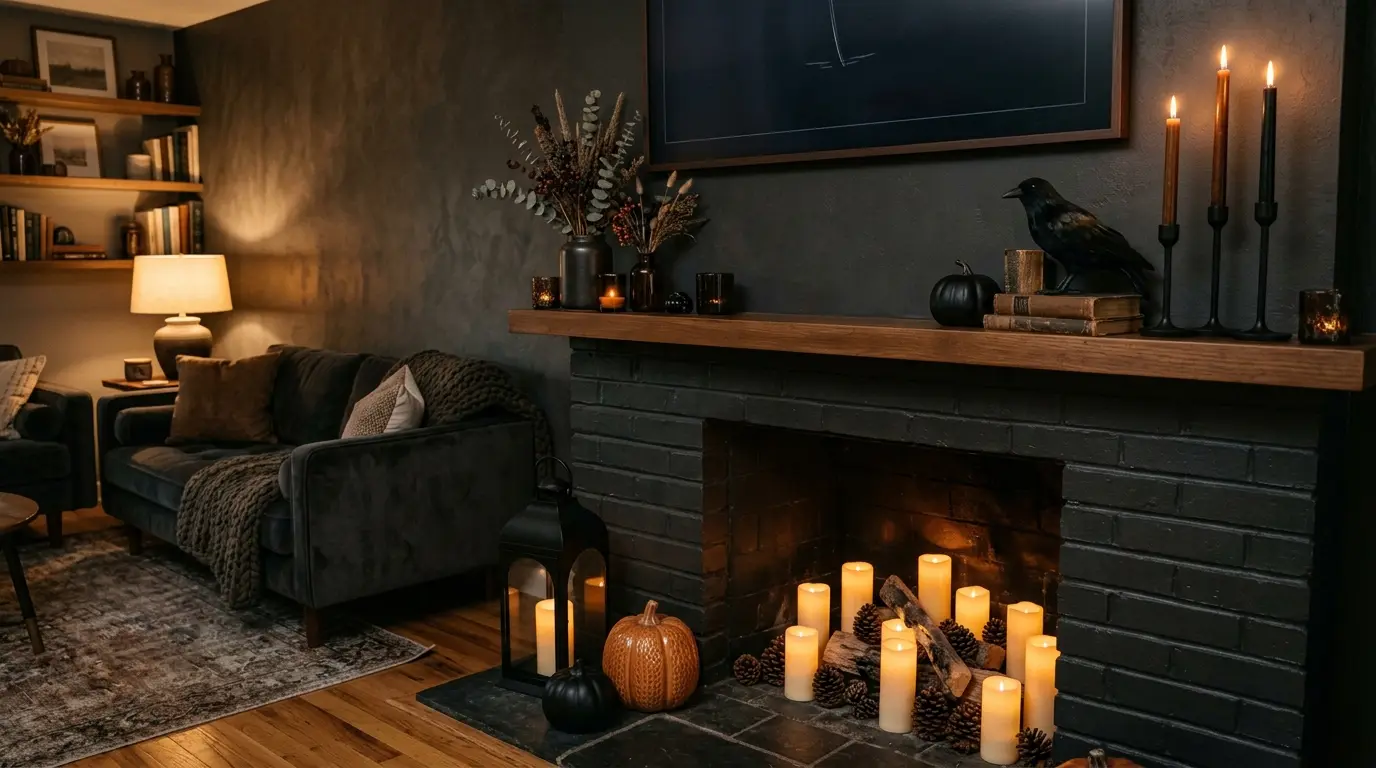
The firebox is the best Halloween asset most homes already own and never use. It is a dark, recessed, floor-level box that swallows light and makes anything inside it look staged. A cluster of five or six battery pillar candles at mixed heights, set on the firebox floor, does more for a spooky Halloween mantel than any object on the shelf.
Fill it with depth rather than a flat row. Push two taller pieces to the back wall of the firebox, set the shorter ones forward, and let the front row break the line of the opening slightly. Dried branches, a stack of weathered books, a glass cloche, or a single white pumpkin all read well against that black background.
Material Note: Sealed or decorative fireboxes take any material, but soot and old ash mark unglazed ceramic and pale fabric quickly — wipe the floor of the opening and lay down a scrap of felt before styling.
Stage Three — The Hearth Floor
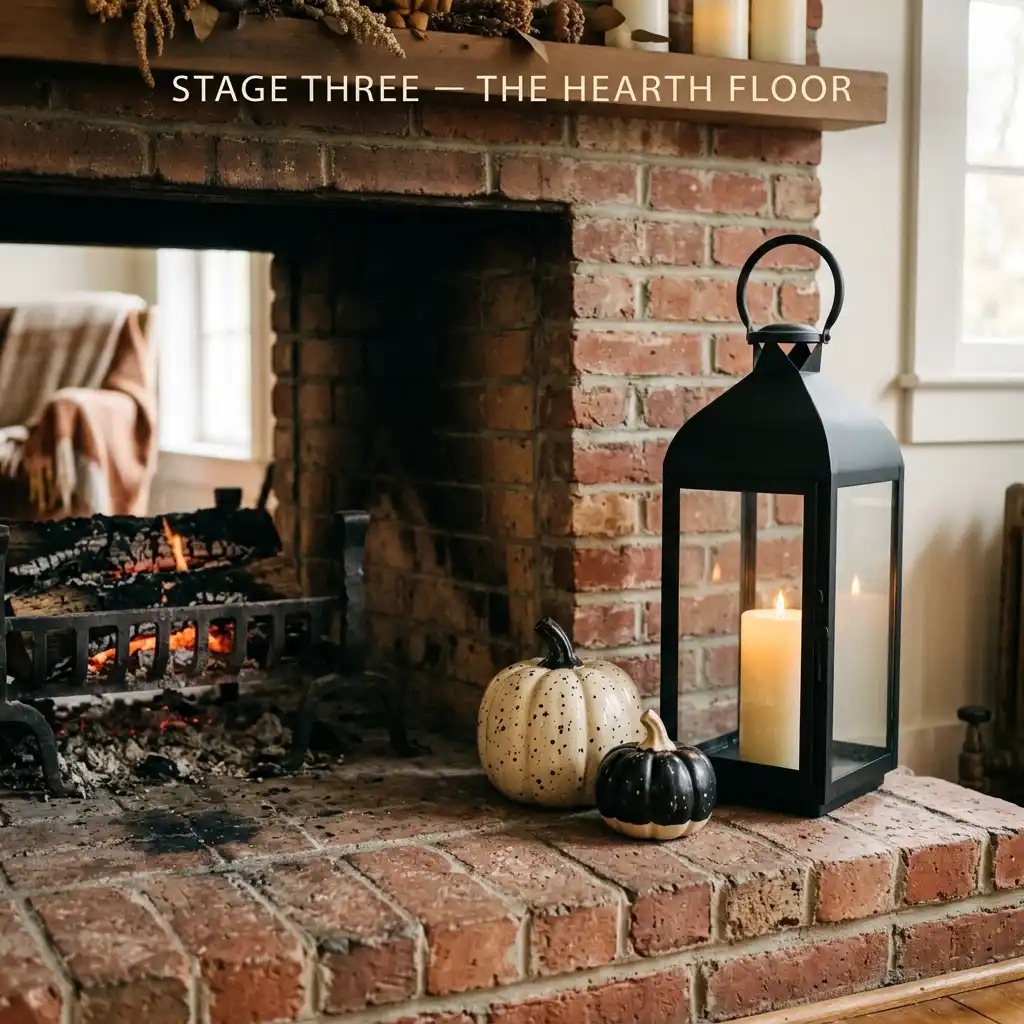
The hearth is the stone, brick or tile apron that runs out in front of the fireplace, and it is the stage almost everyone forgets. It holds the height your shelf cannot, because there is no depth limit and nothing to knock over. This is where the tall lantern, the big carved pumpkin, the stack of logs or the oversized candlestick belongs.
Work the hearth in two uneven groups, one heavier than the other, sitting either side of the opening. Leave the centre clear so the firebox stays visible and the fireplace still looks like a fireplace. If you have flanking built-in shelves in the living room, carry one material from the hearth up into the lowest shelf so the whole wall connects.
Halloween Mantel Checklist
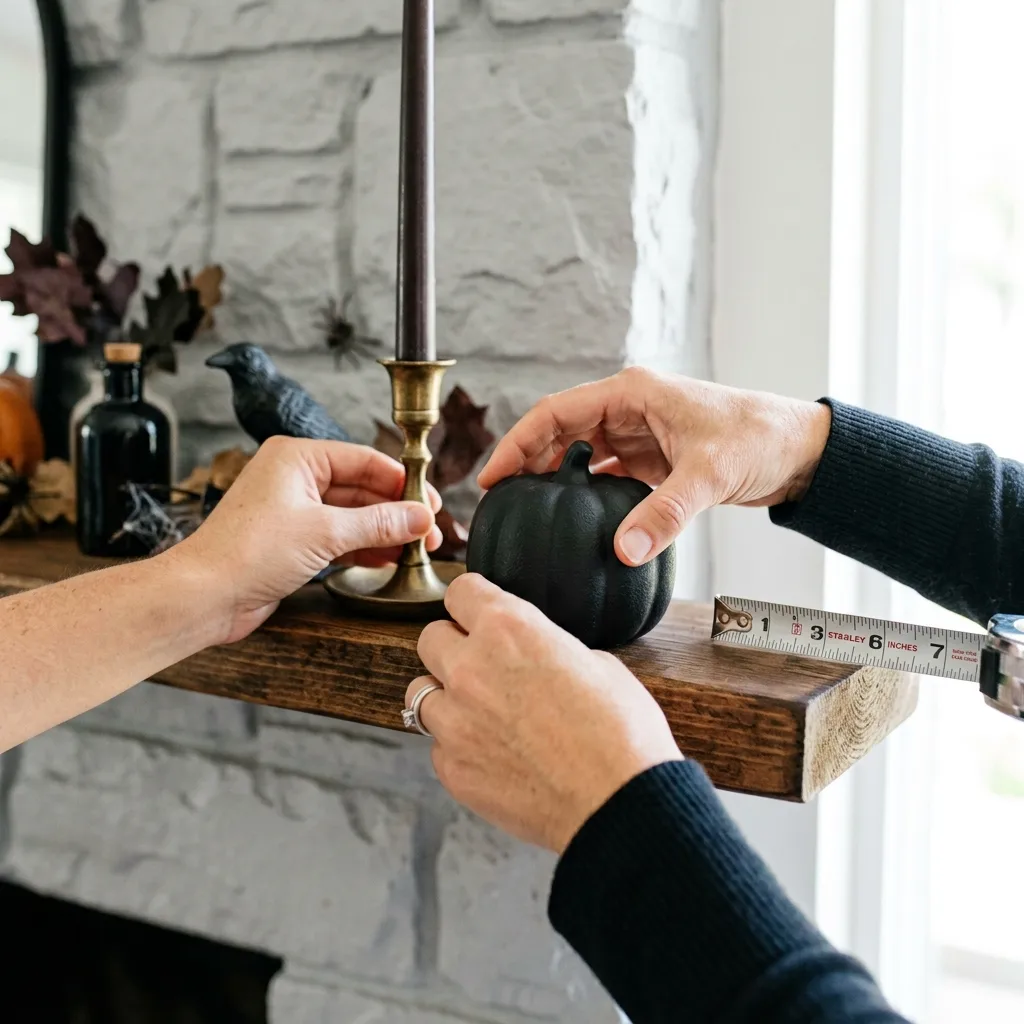
- Measure the shelf depth first — under 7 inches means small, heavy-based objects only.
- Clear the mantel completely before styling, then bring pieces back one at a time.
- Set the tallest shelf object off-centre, and step the rest down from it.
- Fill the firebox before you add anything else to the shelf.
- Put your two biggest pieces on the hearth floor, not on the shelf.
- Keep the palette to three colours, counting brass and black as colours.
- Sit on the sofa and check the arrangement from there before you finish.
KEY TAKEAWAY: A Halloween mantel that looks sparse is usually a depth problem, not a quantity problem — the firebox and hearth carry what a 7-inch shelf never can.
How Do You Style a Halloween Mantel With a TV Above It?
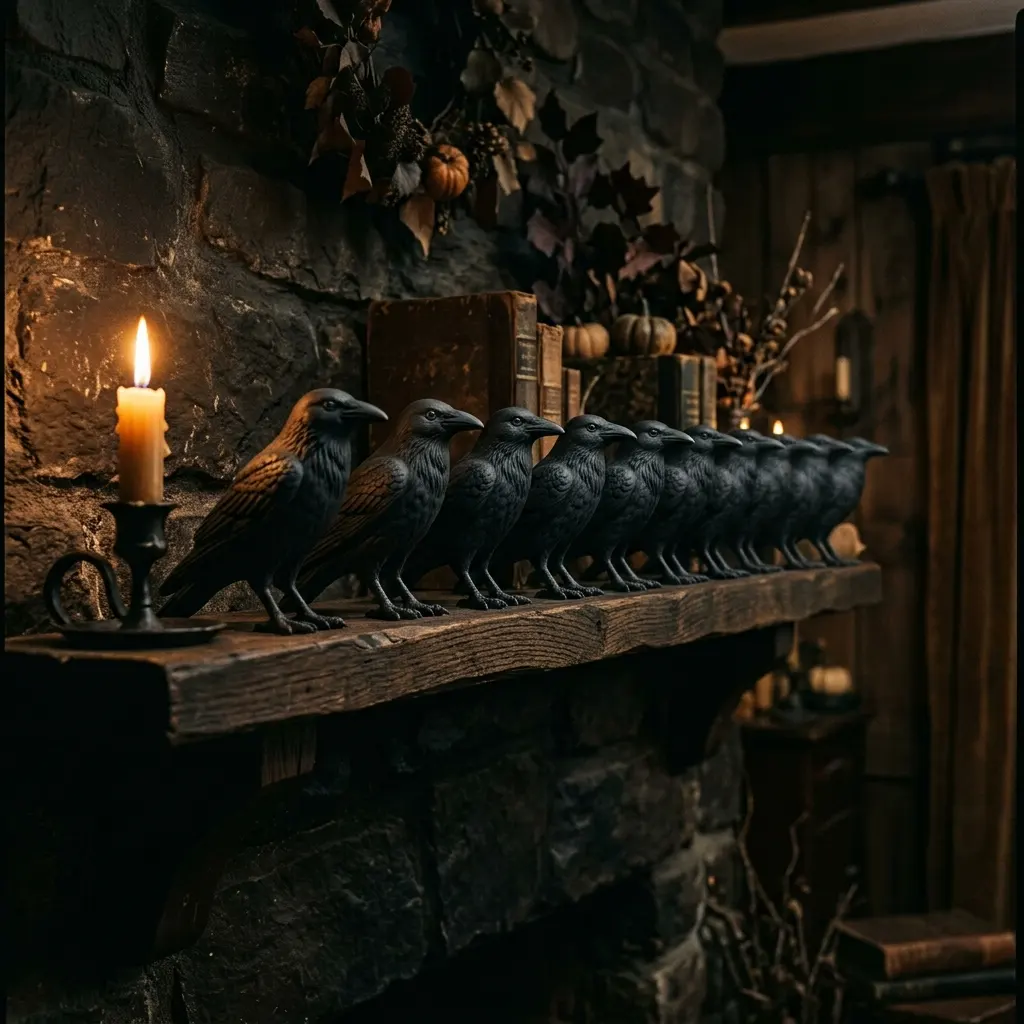
A Halloween mantel with a TV above it works best as a long, low band rather than a tall arrangement. Keep every object on the shelf under about 14 inches so nothing crosses the bottom edge of the screen, run the group the full width of the shelf instead of clustering it in the middle, and move all your height down to the hearth floor. The screen then behaves like a dark backdrop instead of a rival focal point.
Colour matters more than usual here. A black screen surrounded by orange plastic looks like two unrelated objects, while a black screen above black taper holders, dark dried stems and antique brass looks planned. Pick up the screen’s own finish — matte black, dark grey, a hint of chrome — and repeat it at least twice on the shelf.
The one thing not to do is hang anything on the TV itself or drape across its top edge. Cobwebs on a screen bezel look like a cleaning failure rather than a decoration, and warm air rising off the set pulls light fabric and paper straight into the gap behind it. Let the screen stay a screen, and let a dark living room accent wall or the surround do the atmospheric work instead.
Will You Light the Fire This Year?
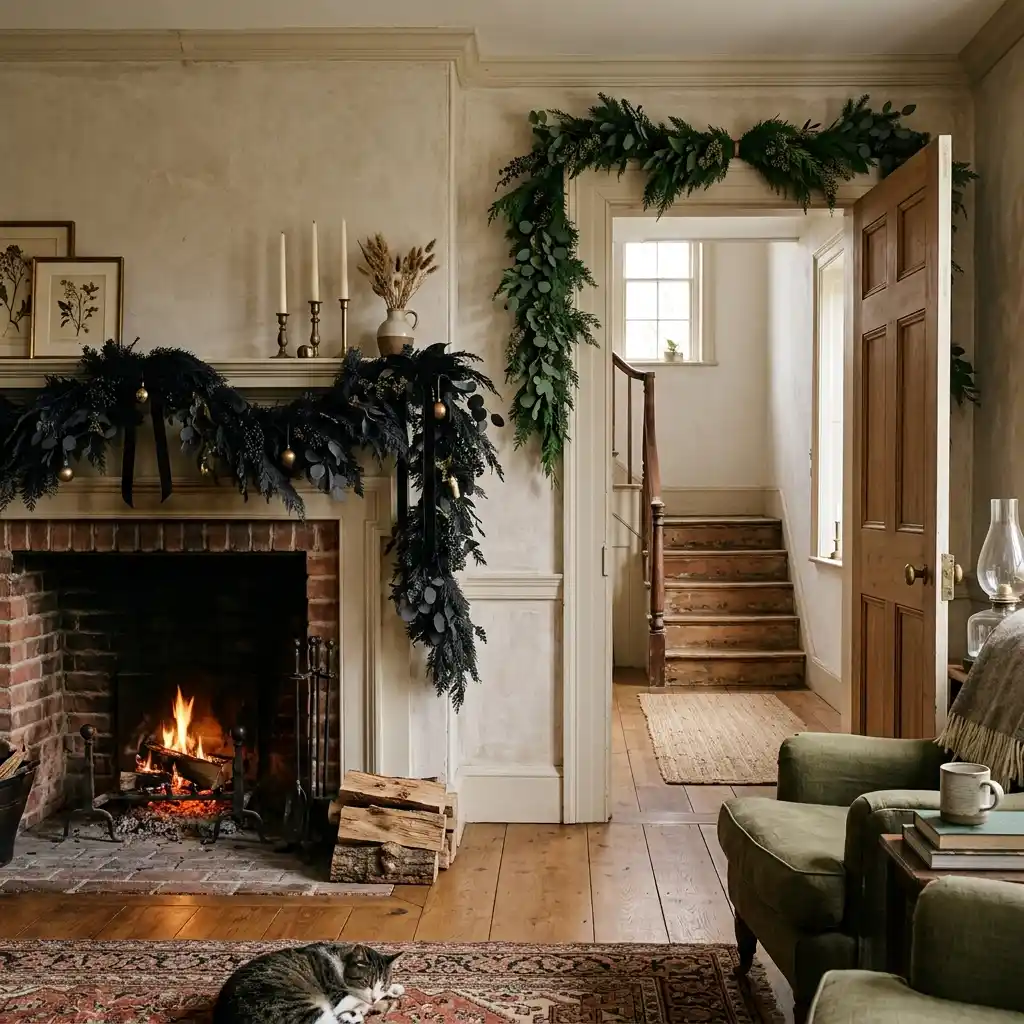
This is the fork that separates a mantel from every other surface in the house. A console table is decor. A fireplace is an appliance, and Halloween lands right at the start of the season when people begin using it again. Decide now, because the answer changes what you are allowed to put where.
If the fire will be lit, keep the opening clear and keep every soft material above and behind the shelf line. Dried florals, cotton spider web, paper bats and faux garland are the fire load — far more so than the candles most people worry about. Building codes already treat the area right above a firebox as a hazard zone: combustible material within 12 inches of the fireplace opening is tightly restricted, and mantel parts that project more than an inch and a half have to sit at least 12 inches above the opening. You can read the specifics in the fireplace clearance code.
Safety Note: Nothing soft should hang below the mantel shelf line on a working fireplace, and the hearth extension in front of the opening stays clear of props while the fire is lit.
If the fire will not be lit — a sealed chimney, a decorative surround, or an electric insert you can simply switch off — the whole firebox opens up as a display cavity, and the three-stage approach reaches its full version. This is the quiet advantage of a non-working fireplace at Halloween, and it is worth knowing before you feel bad about having one.
What Does the Mantel Look Like From the Sofa?
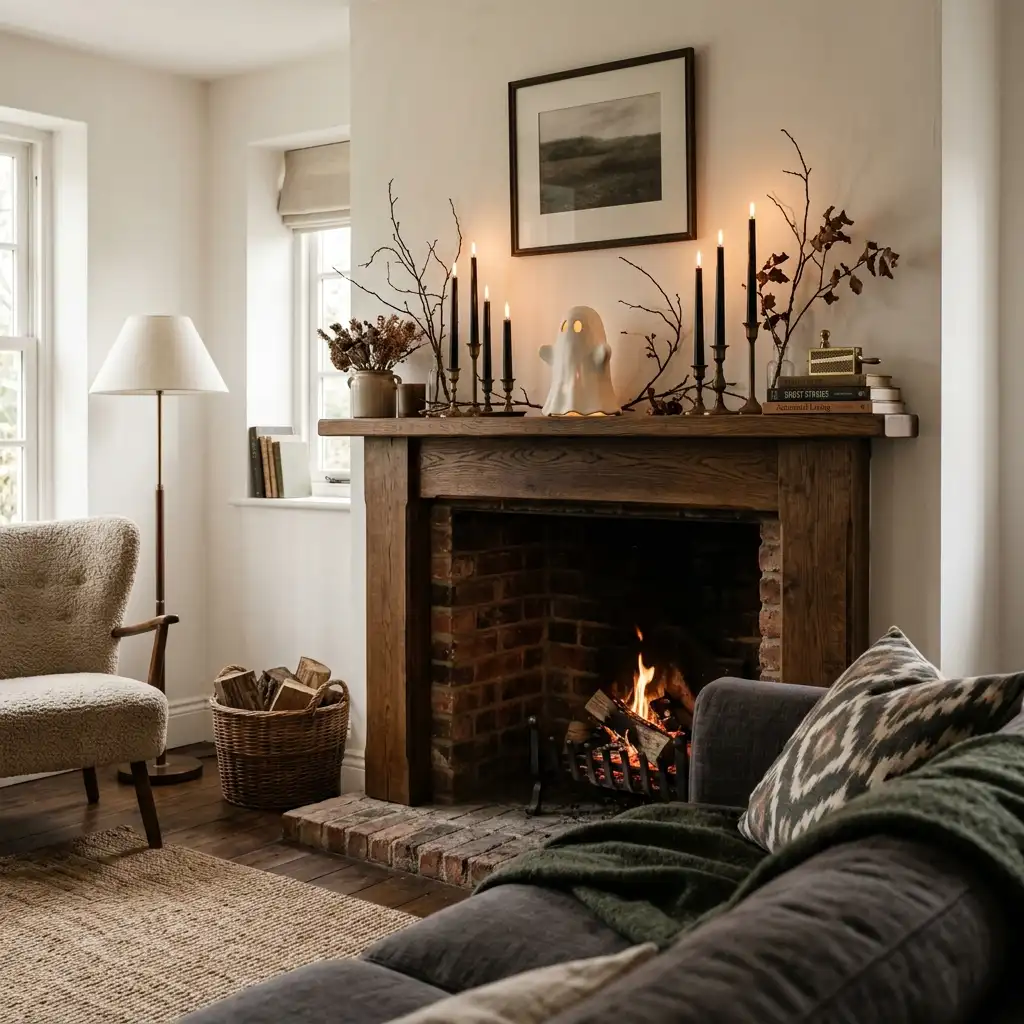
Almost nobody sees a mantel the way it is styled. You arrange it standing up at arm’s length, and every guest sees it seated, from 8 to 14 feet away, with their eye at roughly 40 to 44 inches off the floor. That eye height is about the same as the mantel shelf itself, which is exactly why the surface of the shelf disappears and its front edge does all the work.
Two things follow from that. Small objects lying flat on the shelf — scattered mini pumpkins, loose leaves, a row of little frames — vanish completely at seated height. Objects with a strong outline standing on the shelf edge, or anything sitting in the firebox and on the hearth, land in the sightline perfectly.
So do the check before you finish. Sit down where people actually sit, and remove anything you cannot identify from there. Most mantels lose three or four objects at this stage and look better for it. Warm, low light helps too — a pair of table lamps at 2700K flanking the fireplace flatters a dark arrangement far more than an overhead downlight, which is worth planning alongside the rest of your living room lighting.
Four Moves to Adopt It This Week
- Strip the shelf and photograph the empty fireplace. Decide which of the three wall types you have before a single object goes back. This takes five minutes and prevents the most expensive mistake in the whole project.
- Buy the base layer once, in materials that carry three seasons. Black or bronze faux botanicals, two brass or matte black candle holders, and one dark vessel work in September with dried grasses, in October with a raven or a cloche, and in December with evergreen. Our creative fall and autumn decorating ideas cover the September version of exactly this set.
- Light the firebox before you touch the shelf. Five or six battery pillars at mixed heights, set on the floor of the opening, change the fireplace more than anything you can place at eye level. Turn off the room lights and look at it in the dark before deciding you need anything else.
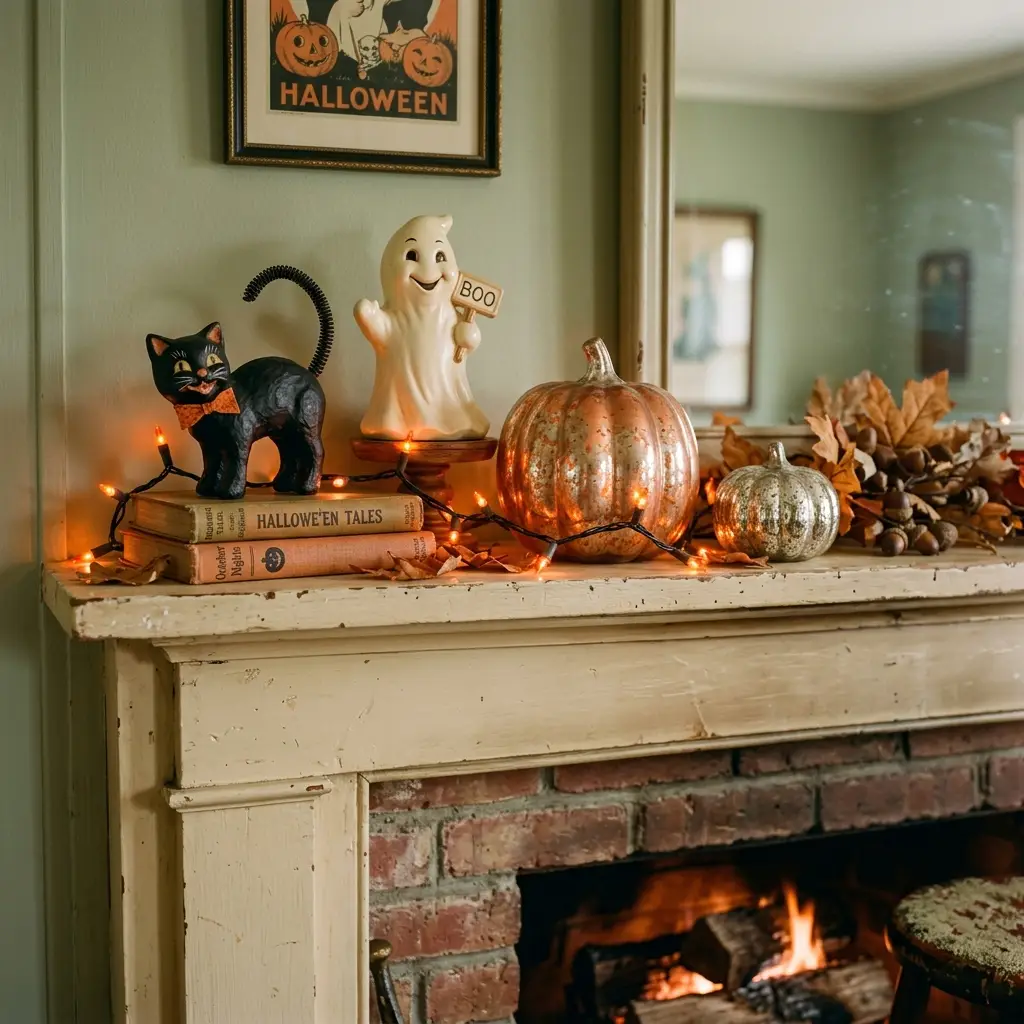
- Add one character piece, not five. A single vintage-style object — an apothecary jar, a black cat figure, a 1950s-style die-cut cat propped against the wall — is what makes it read as Halloween rather than autumn. Vintage Halloween fireplace decor works precisely because there is one of it.
DESIGNER TIP: Buy your character piece in a finish that already exists somewhere in the room — aged brass, matte black, milk glass — and it will look collected rather than bought that week.
Mistakes That Flatten a Halloween Mantel
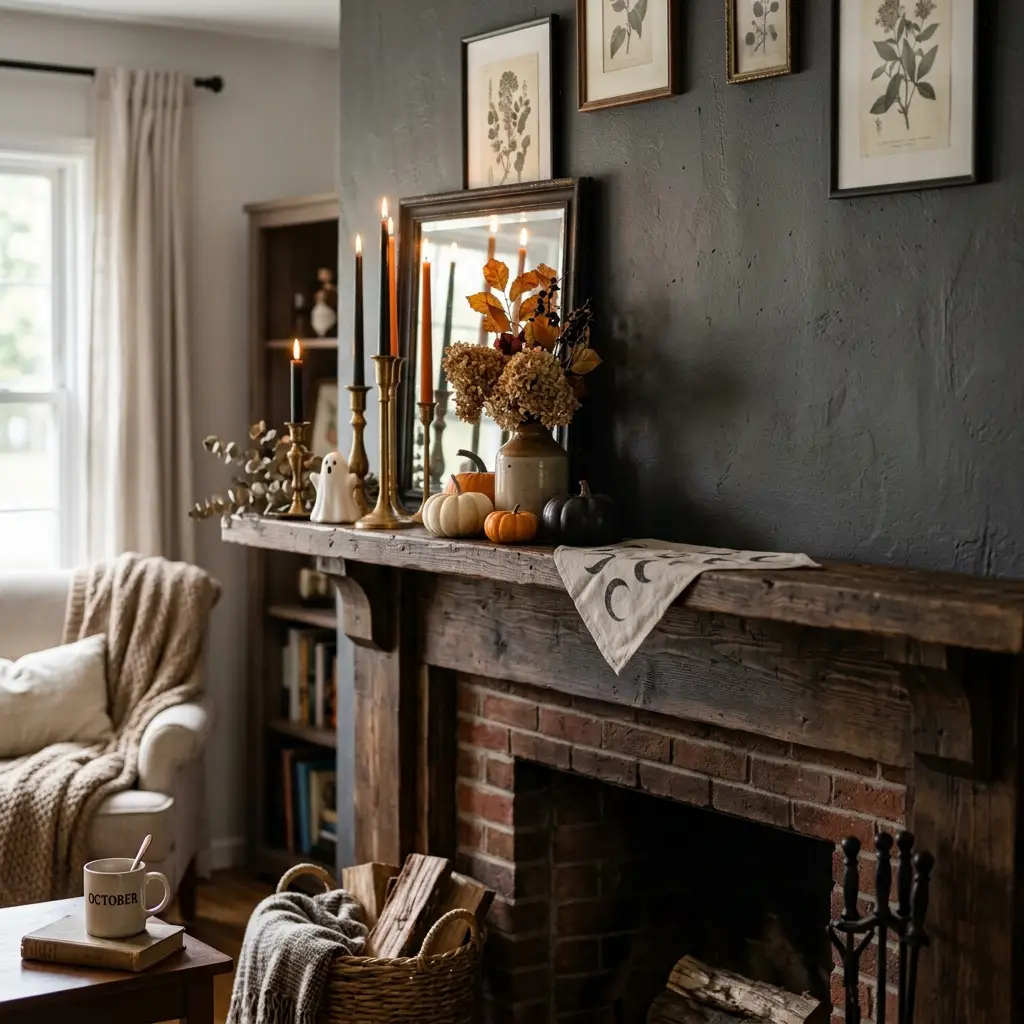
❌ Stacking height against a wall that has a TV on it → ✅ Run the display wide along the shelf edge and use the firebox as the second level.
❌ Standing 18-inch props on a 6-inch shelf → ✅ Keep anything that tall on the hearth floor, where depth and weight are not a problem.
❌ Leaving the firebox empty and dark → ✅ Treat it as the main stage and fill it before you add anything to the shelf.
❌ Buying a full orange-and-black kit for one holiday → ✅ Buy black, brass and dried botanicals as the base, and swap only the character piece between seasons.
Is Low-and-Wide Actually Better Than the Tall Stack?
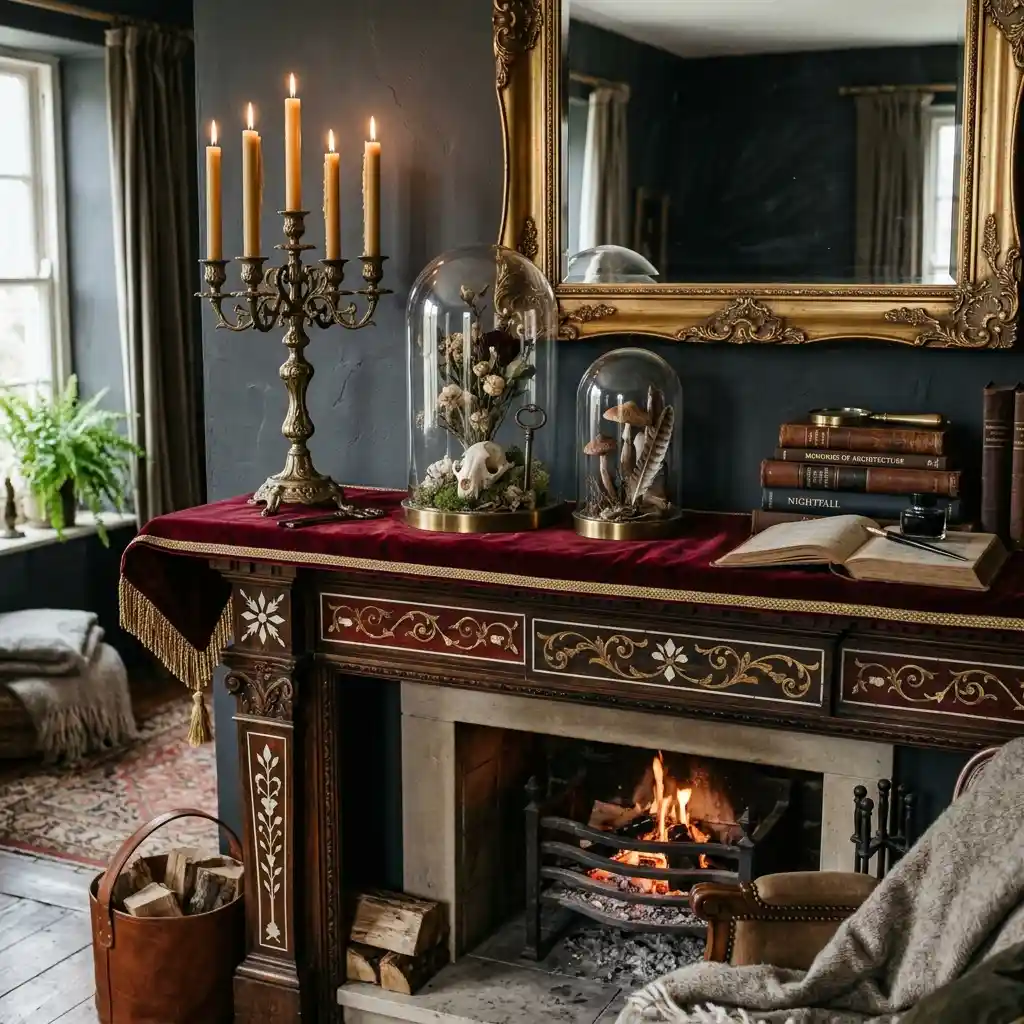
Not always, and it is worth being honest about that. If you have a genuine bare overmantel wall, the tall stacked arrangement is still the more dramatic look, and nothing here beats a big black mirror with candlesticks climbing beside it. That version suits a dark room especially well, which is why it reads so strongly in a cozy moody farmhouse living room.
But the low-and-wide approach wins on how many homes it actually fits, and it wins on staying power. It survives a TV, a fixed mirror, panelling, a rental fireplace and a shallow shelf. It also uses three surfaces instead of one, so a smaller collection of objects covers more fireplace. The same low, wide grouping is what keeps a modern farmhouse living room mantel looking full rather than crowded.
Designer’s Verdict: Build low and wide unless your overmantel wall is genuinely empty — it is the version that works in most real living rooms, and it is the one you can reuse from September through December.
Costing the Mantel, Stage by Stage
A full Halloween fireplace does not need a big budget, because the two most effective stages — the firebox and the hearth — mostly use things you already own plus a handful of battery candles. The costs below assume you are buying new, and split by stage so you can start anywhere. The base-layer pieces are the ones that pay twice, since they carry straight through to Christmas wall decor in December.
| Project | Estimated Cost | Impact Level |
|---|---|---|
| Firebox only — 6 battery pillar candles, mixed heights | $20-$45 | Very High |
| Shelf base layer — dark faux botanicals plus two candle holders | $45-$95 | High |
| Hearth pieces — one large lantern plus two ceramic pumpkins | $50-$120 | High |
| Vintage character piece — apothecary jar, cloche or antique print | $30-$140 | Medium |
Best First Upgrade: Six battery pillar candles in the firebox — the cheapest line on the table and the one that changes the fireplace most after dark.
Skip for Now: Anything that only works in October. Orange-and-black kits, printed banners and character-licensed props cost the most per use and store the worst.
If You Rent, or the Fireplace Isn’t Really a Fireplace
Rented fireplaces come with two limits: you cannot drill the surround, and you often cannot use the chimney. Both are fine here. Nothing in the three-stage approach needs a fixing — the shelf holds objects, the firebox holds objects, and the hearth holds objects. If you want a garland along the shelf edge, removable adhesive hooks under the front lip hold light faux botanicals without touching paint or stone.
Rental Note: Check the mantel material before using adhesive hooks — they lift paint from soft-wood mantels and leave marks on unsealed stone, so tape a test piece somewhere hidden first.
A decorative or non-working fireplace is genuinely the easier version. So is an electric insert, as long as you switch off the heat function while the opening is styled. If you have no fireplace at all, the same three-stage logic transfers to a console table with a lamp behind it and a basket group on the floor beneath — a low band at eye level, depth in the middle, and weight on the ground. That substitution is a standard move in small living room ideas, where a console often stands in for a missing focal point.