TL;DR
- Check your housing contract first — residence halls commonly ban candles, ceiling hangings and anything on a corridor-facing door.
- Assume a wall coverage limit. Many campuses cap combustible decorations at around 10% of wall surface.
- Buy for storage, not for looks: if it does not fold, nest or lie flat, you will resent it in November.
- Use tension rods and over-door hooks before adhesive, and adhesive before anything else.
- Decorate the edges of the room — door, window, one wall band — because a small home has no back half to hide a display in.
The Limit Isn’t Wall Space
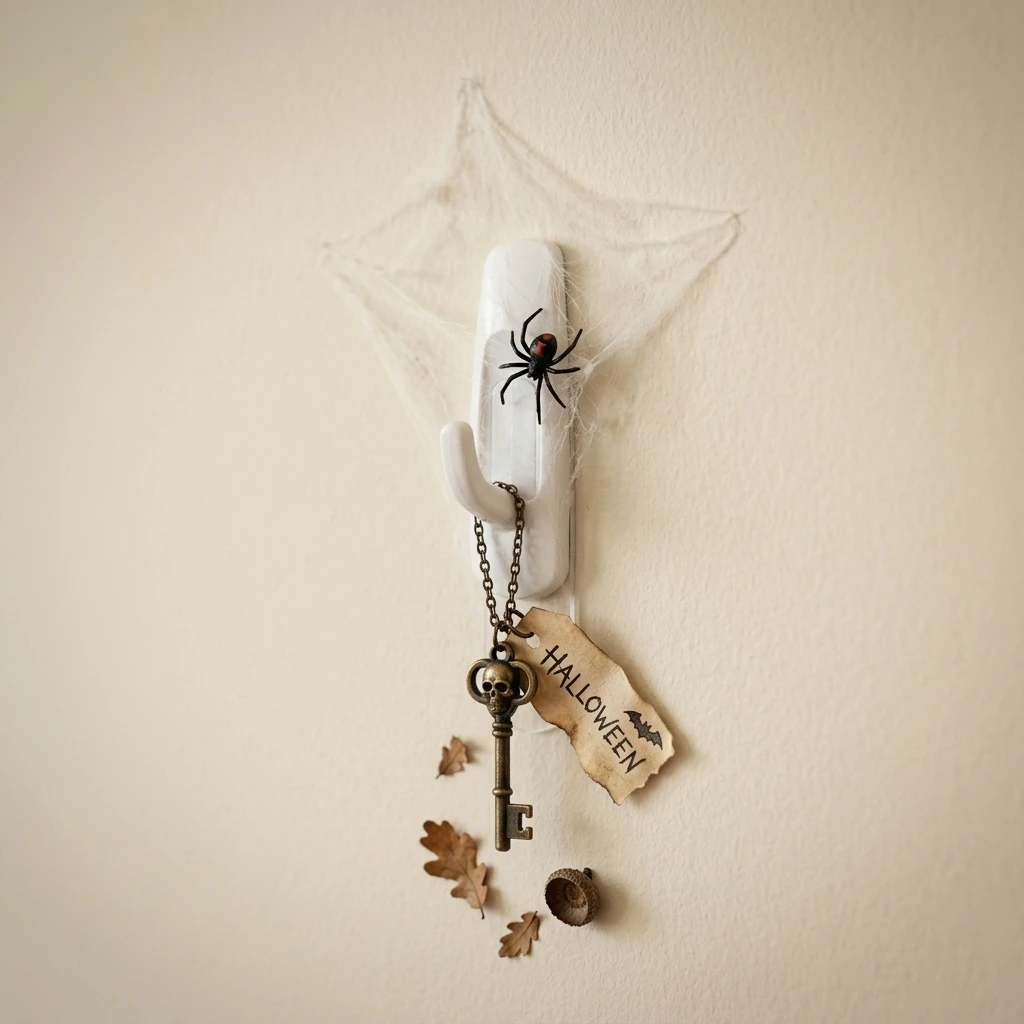
Most apartment Halloween advice starts from the wrong constraint. It assumes the problem is square footage, and answers with smaller versions of house decor. Square footage is rarely what stops a renter. Two other things do, and neither gets mentioned.
Halloween apartment decor is decided by permissions and storage. Permissions means what your lease or housing contract actually allows, which is far more restrictive than most people realise. Storage means where the decor lives for the other eleven months, in a home with one closet shelf and no attic. Get both right and a small space decorates easily. Get either wrong and it costs you money.
Editorial field note: A studio with four ceramic pumpkins and a heavy resin skull looks well decorated in October and becomes a storage problem in November, because rigid objects cannot nest and there is no loft to absorb them. The same budget spent on a fabric garland, vinyl window clings and a collapsible lantern produces a similar room and packs into a single shoebox. Nothing about the styling changed — only whether it could be put away.
That reframe is why the rental version of this holiday is genuinely different rather than just smaller. The rest of our Halloween decorating ideas assume you own the walls. This one does not.
What Are You Actually Allowed to Do?
Three tiers of permission apply, and they are stricter as you go down. A private rental usually restricts permanent changes — holes, paint, and anything leaving adhesive residue — but says nothing about decor itself. A managed building often adds rules about corridors and shared entrances. A residence hall regulates the inside of your own room in detail, because it is governed by fire code rather than by a landlord’s preference.

The dorm tier is the one that surprises people, and it rules out most of a standard Halloween list. Virginia Tech’s residence hall fire policy is typical: candles and open flame are banned outright, no materials of any kind may be suspended from ceilings, combustible decorations cannot go on doors facing hallways, and roughly 10 percent of total wall surface is the cap on combustible decorative material. Curtains and wall hangings have to be flame resistant to NFPA 701 and factory labelled.
Read those four rules against the usual dorm Halloween roundup and most of it disappears. Hanging bats from the ceiling is out. Decorating the corridor door is out. A tapestry backdrop is out unless it is labelled flame resistant. Battery candles are the only candles.
Safety Note: Sprinkler heads need clearance — commonly 18 inches in sprinklered buildings — and nothing decorative should sit near a smoke detector, regardless of what your contract says about walls.
Policies do vary between campuses and buildings, so the specific percentages and distances are worth checking rather than assuming. What does not vary is the shape of the rules: open flame, ceilings, egress routes and total combustible coverage are restricted almost everywhere.
Why Is Apartment Halloween Decor Growing So Fast?
Interest in apartment-specific and college-specific Halloween decorating has climbed faster than the broader category, and the reason is not that renters suddenly started caring. It is that the advice finally started existing. For years the seasonal content assumed a porch, a mantel and a garage full of storage bins, and everyone without those three things translated it themselves or skipped it.
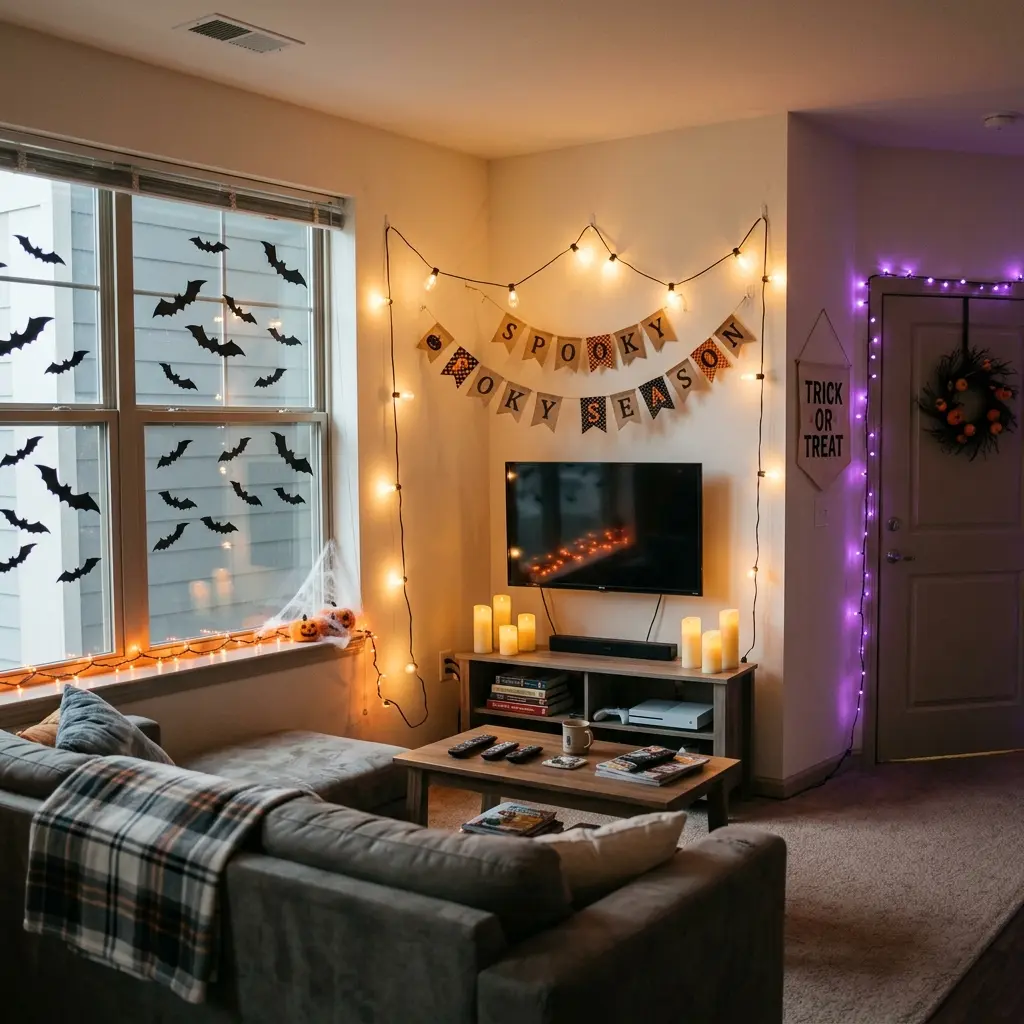
The second driver is renting for longer. People stay in rentals further into their thirties than a decade ago, which means a decade of holidays spent in homes where you cannot drill. That is long enough for a genuine set of renter techniques to develop rather than a set of compromises, and it is why our wider seasonal decorating ideas increasingly carry a rental version.
Signs This Is Catching On:
- Search phrasing has become housing-specific rather than room-specific — “college apartment Halloween decor” and “Halloween decor for apartments” now sit alongside the general terms.
- Seasonal ranges increasingly lead with window clings, fabric banners, collapsible lanterns and battery candles, all of which are storage-friendly and adhesive-free by design.
- Command-style removable hardware has become a standard seasonal purchase rather than a workaround, which is a fair signal that the renter version is now the default rather than the exception.
The Shoebox Rule
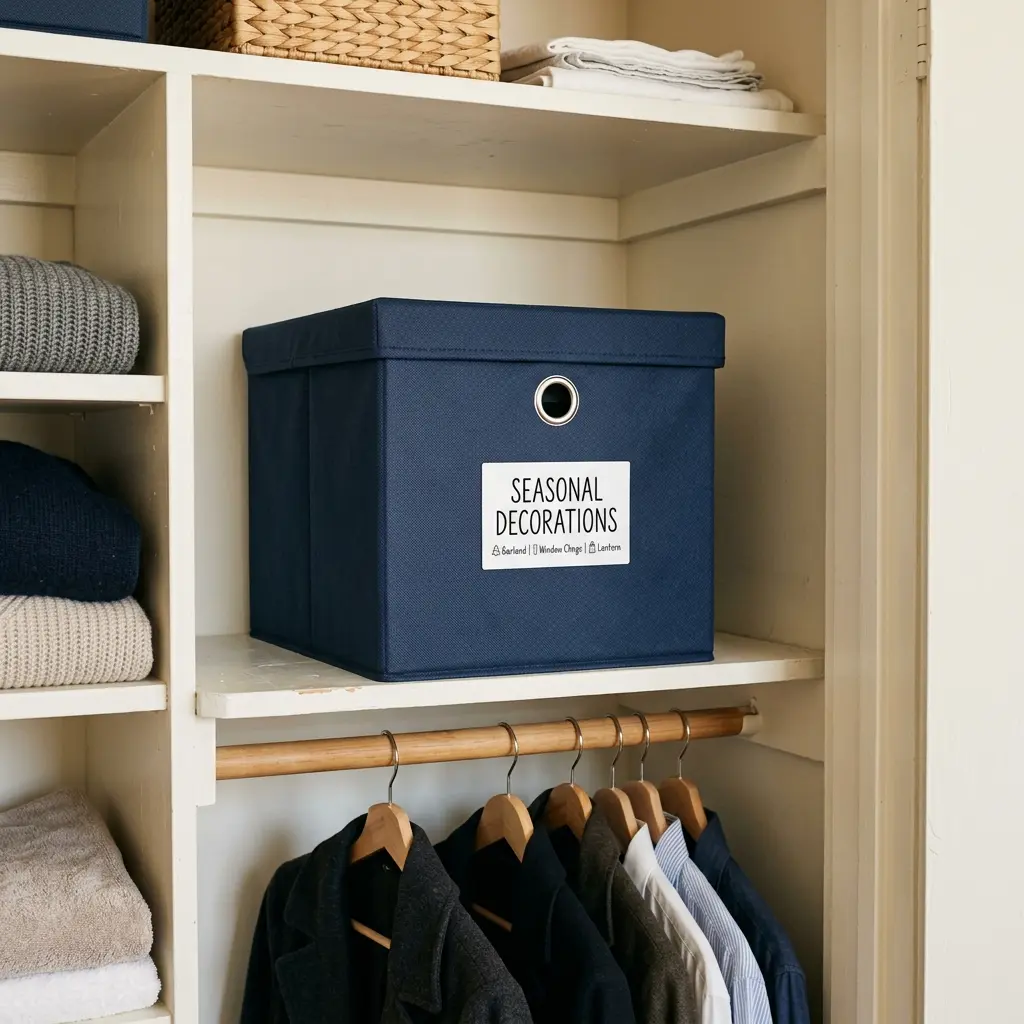
Here is the buying test that decides everything else. Before anything goes in the basket, ask where it lives on November 1st. If the honest answer is “on top of the wardrobe, taking up a third of my only shelf,” it fails. One shoebox or one under-bed bin is a realistic seasonal allowance for a small home, and that limit does more for the room than any styling rule.
The rule sounds restrictive and works out generously, because flat things are not small things. A fabric garland unfolds to eight feet and packs to the size of a paperback. Window clings cover a whole pane and store in an envelope. What the rule actually bans is bulk without flexibility, which is the same trade running through every one of our small space ideas.
What Passes the Shoebox Test
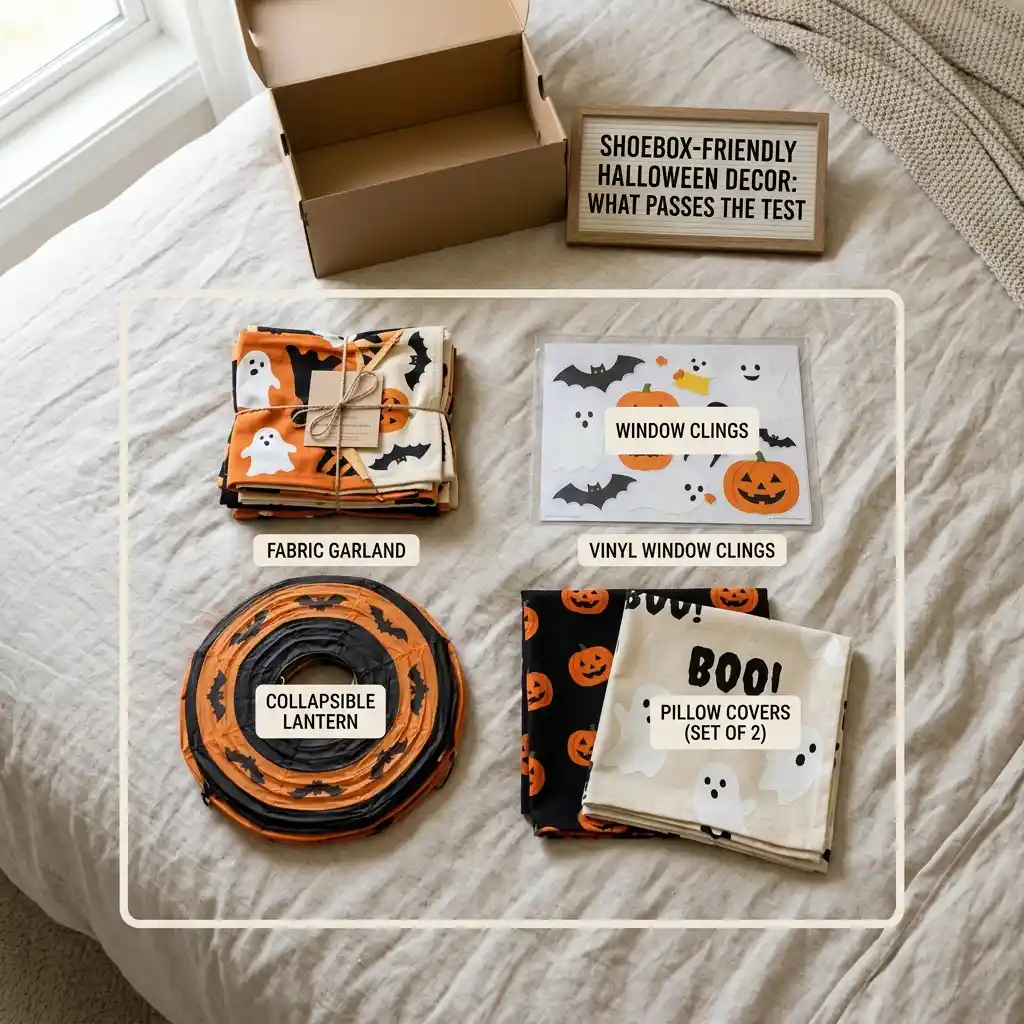
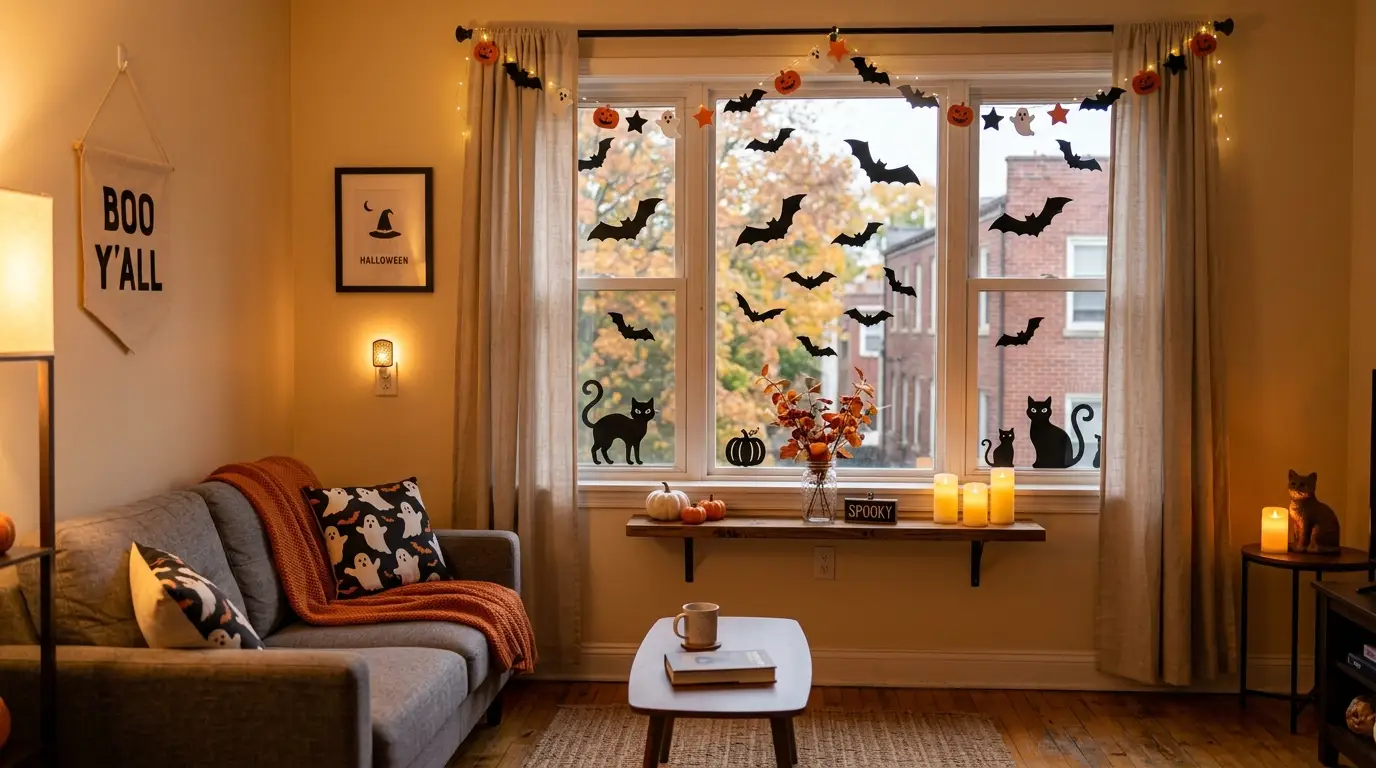
Anything that folds, rolls, nests, deflates or lies flat passes. Vinyl window clings, fabric or felt garlands, paper cut-out silhouettes, flat-pack cardboard props, LED string lights on a reel, collapsible fabric lanterns, and pillow covers rather than whole pillows all belong in this group. Pillow covers are the quiet winner — a set of four slips into a large envelope, while four cushions fill a suitcase.
Buy in this order: window first, then one wall band, then soft furnishings. That sequence puts the highest-impact items in the smallest storage footprint, which matters when your total allowance is one box. The same swap-the-cover logic runs through most apartment bedroom ideas worth copying.
What Fails It, and Why the Kitchen Advice Is Different
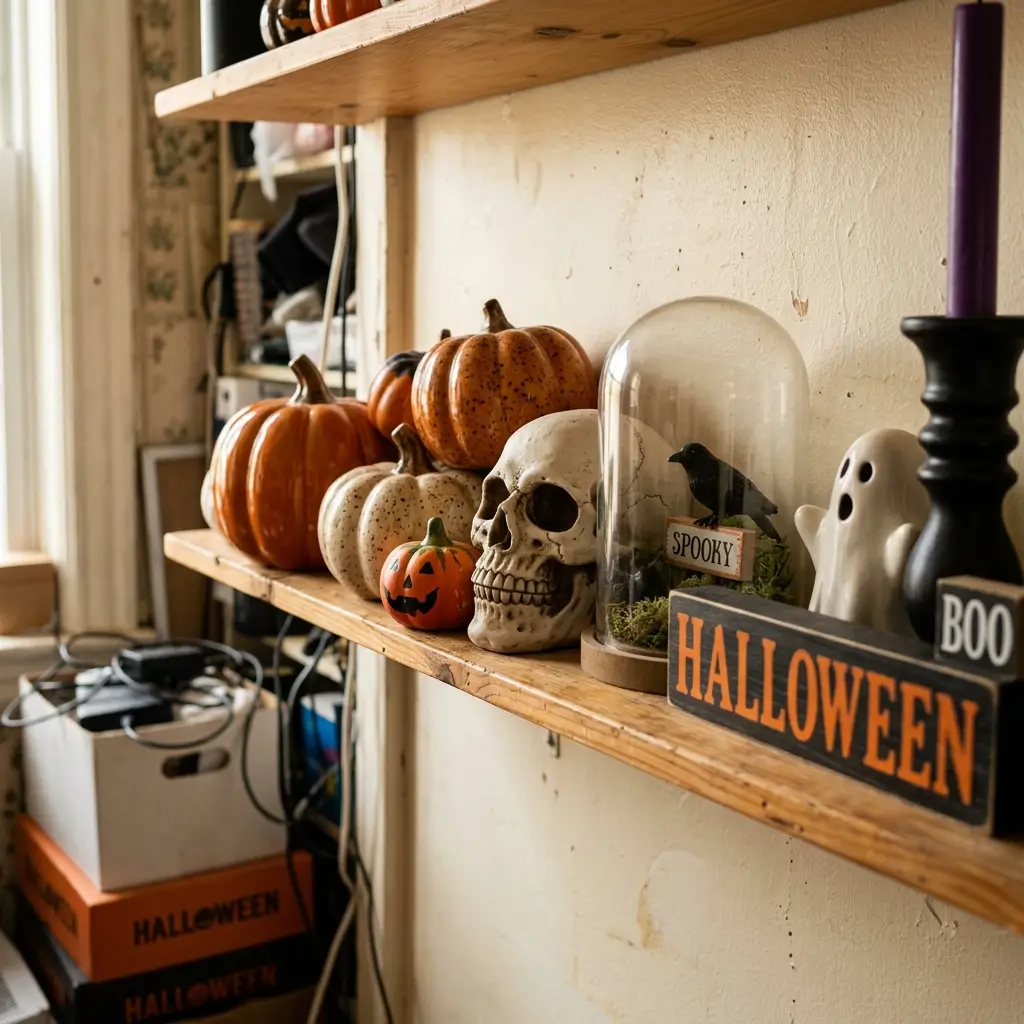
Rigid objects fail: ceramic pumpkins, resin figures, glass cloches, three-dimensional wreaths, and anything over about 12 inches that holds its shape. None of them nest, and each one occupies its full volume for eleven months whether you look at it or not.
This is the opposite of the advice that works in a kitchen, and the reversal is deliberate rather than a contradiction. A kitchen destroys paper and fabric with grease and steam, so durable ceramic wins there over several years. A rental inverts the maths — you may move before you use the object twice, and storage costs you more than replacement does. Short tenancy and no storage make cheap and flat the rational buy. Long tenancy and a garage make durable the rational buy.
DESIGNER TIP: Pick one colour and one material family across everything you buy — matte black paper and fabric, say — and a shoebox of flat items still looks like a scheme rather than leftovers.
Halloween Apartment Decor Checklist
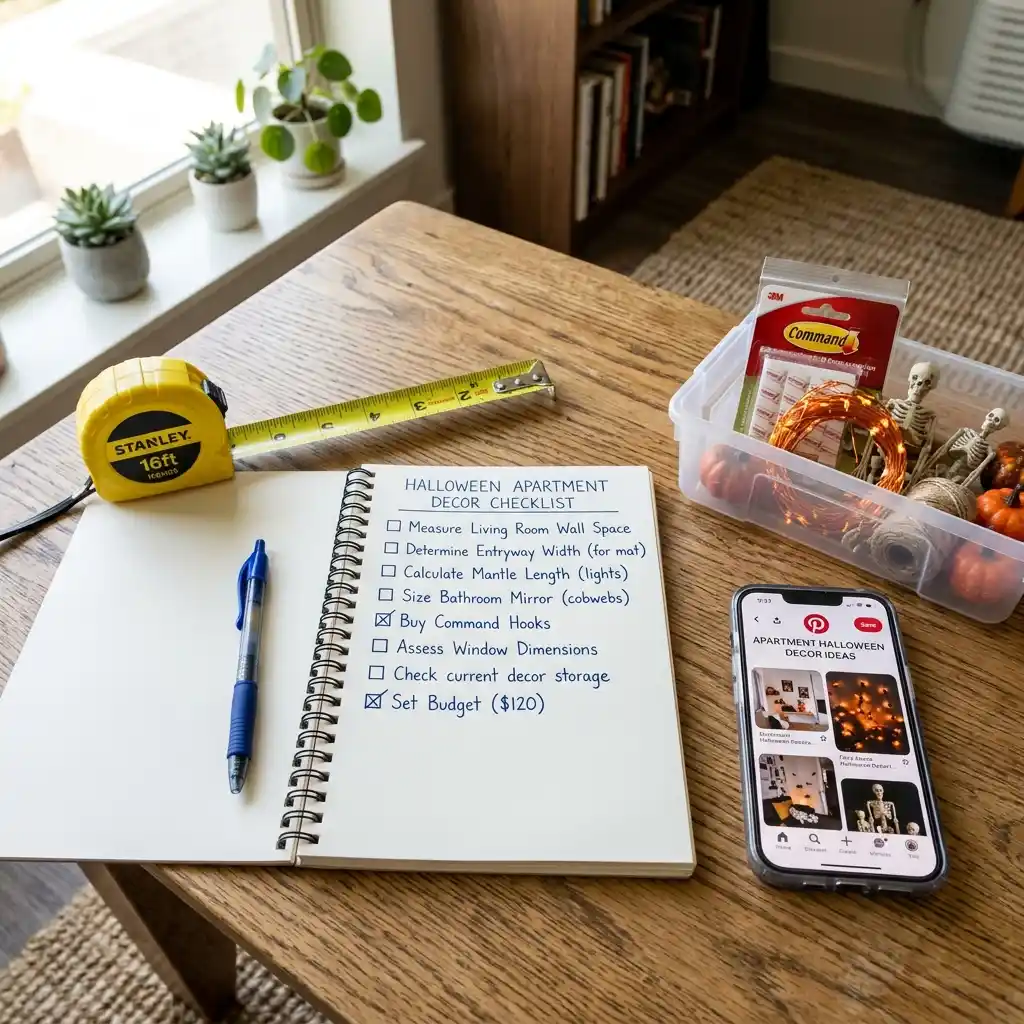
- Read your housing contract’s decoration clause before buying anything at all.
- Measure the one storage space you have, and buy nothing that will not fit inside it.
- Keep 18 inches clear around sprinkler heads and stay away from smoke detectors.
- Test any adhesive hook on a hidden patch of wall for 24 hours first.
- Photograph the walls before you start, so you can prove their condition at move-out.
KEY TAKEAWAY: In a rental or a dorm, the decor that survives the season is the decor you were allowed to put up and are able to put away — style is the third question, not the first.
How Do You Hang It Without Losing Your Deposit?
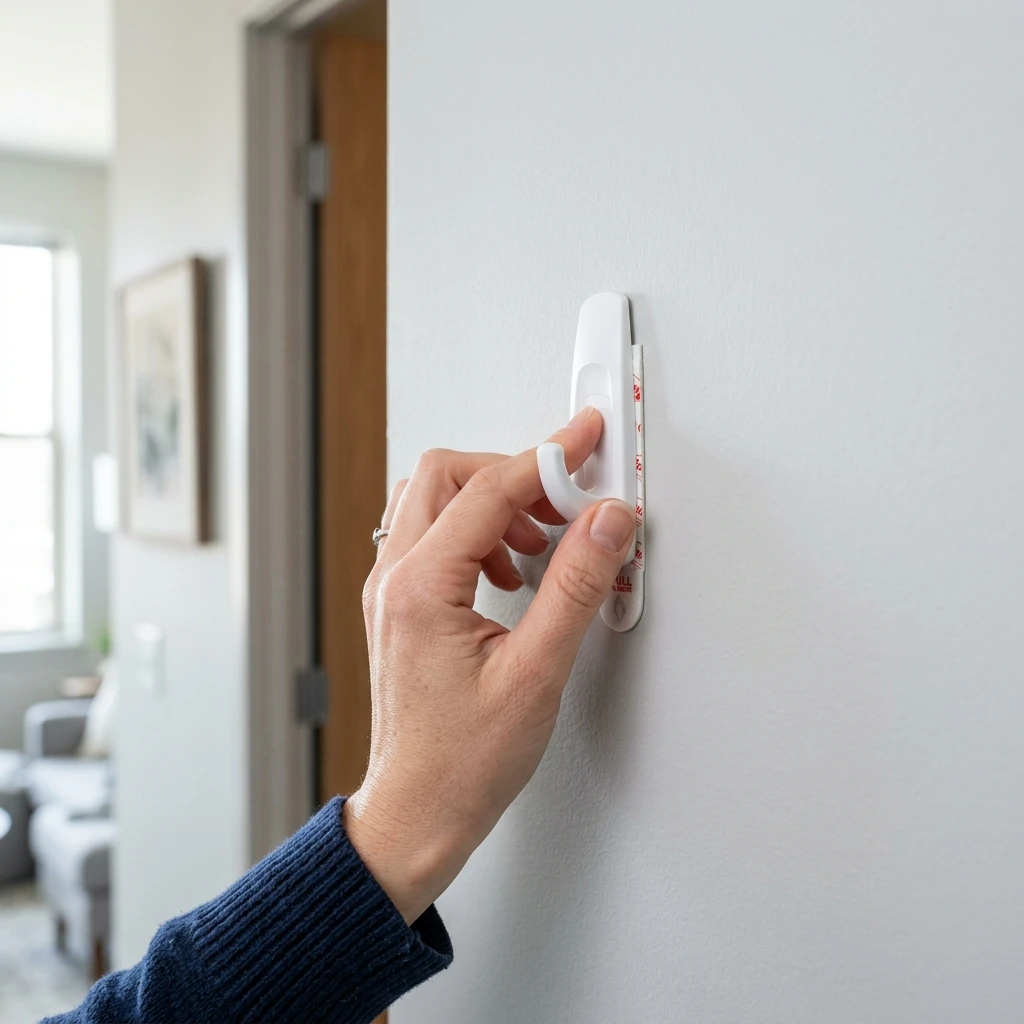
Work down a ladder of risk and stop at the first option that holds. Anything that touches the wall surface with adhesive is further down that ladder than most renters assume, and nails are not on it at all. The ranking matters because damage claims are assessed per surface, and a stripped paint patch the size of a postcard can cost more than the entire decor budget.
The rental habits that protect a deposit are the same ones covered in these rental bedroom ideas, and they apply unchanged to a seasonal display.
Tension Rods and Over-Door Hooks Come First
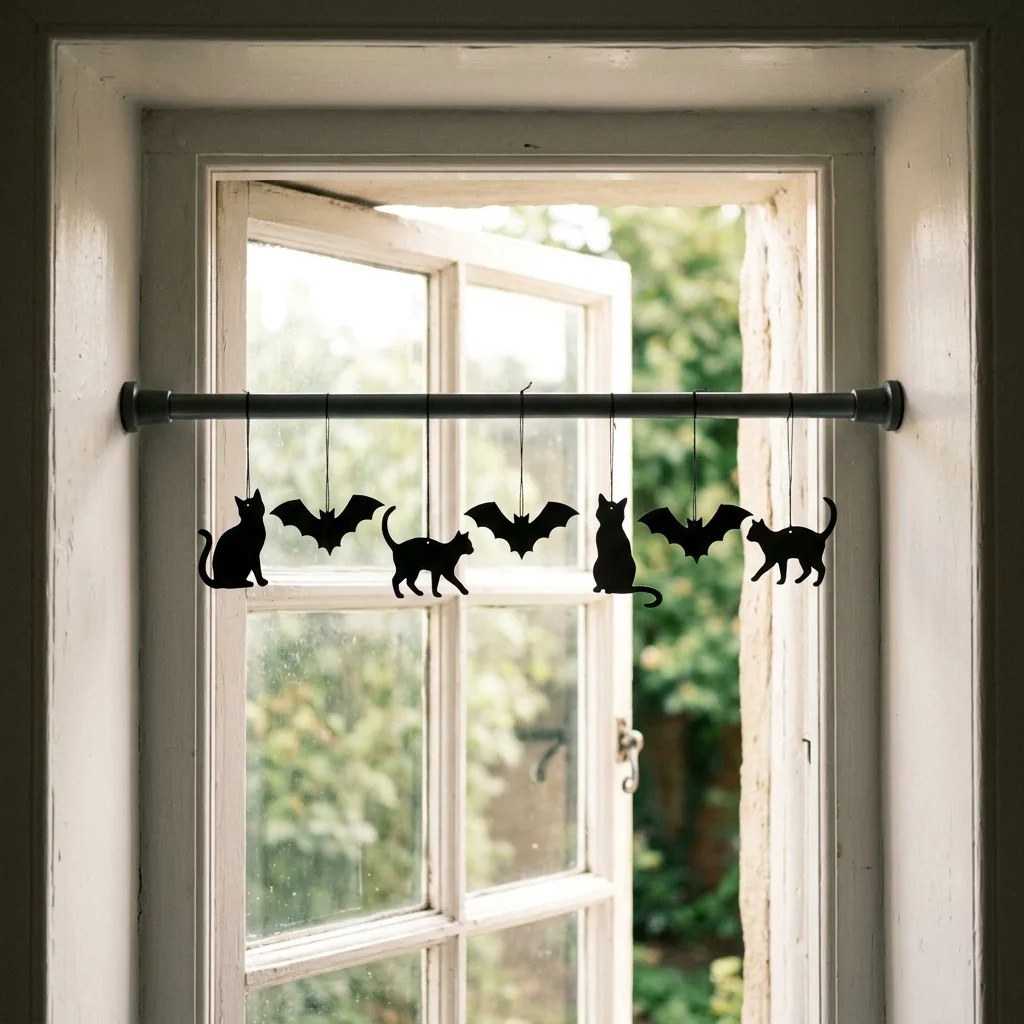
Nothing beats hardware that touches no surface permanently. A tension rod inside a window recess carries a hanging garland, a row of silhouettes or a light string with zero adhesive and zero holes. An over-door hook does the same job on the back of a door, and a freestanding coat rack or shelf carries weight the walls never have to.
This tier also solves the dorm door problem. If combustible decoration on a corridor-facing door is banned, decorate the inside face instead — an over-door hook on your side of the door is outside the rule and still greets you every time you walk in.
Removable Adhesive, Used Properly
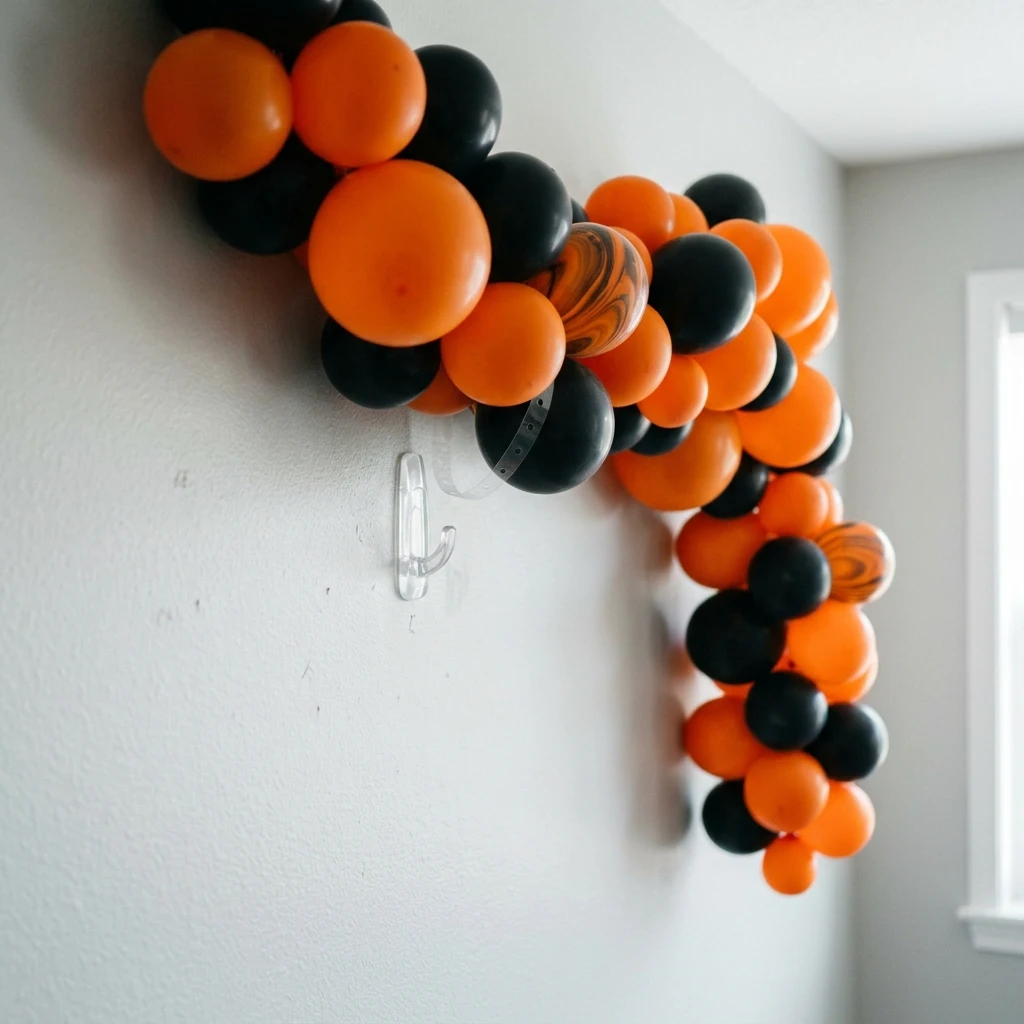
Removable adhesive strips work well and fail predictably, and almost every failure traces to one of three things. Fresh paint is the first: wait at least seven days after painting before applying anything, since the paint film is still curing and will lift. Surface prep is the second — wipe with rubbing alcohol rather than a household cleaner, because cleaning sprays leave a residue that stops the adhesive bonding.
Removal is the third and most expensive. Pull the tab slowly straight down, parallel to the wall, and keep stretching until the strip releases. Pulling outward is what takes the paint with it. Weight ratings are per strip and conservative for a reason, so use more strips than you think and stay under the limit.
Rental Note: Textured, wallpapered and freshly painted walls are where removable adhesive most often takes the finish with it — on those surfaces, use tension-mounted hardware instead and skip the strips entirely.
Where Does It Go When Everything Is Visible at Once?

A house has a back half. You can decorate one room fully and leave the others alone, and nobody sees both at the same time. A studio or a one-room home has no back half — the whole space sits in a single sightline, so a Halloween display cannot be contained in a zone. It either coexists with everyday life or it takes over, which is why the perimeter habit behind most small apartment ideas matters more here than in any house.
Decorate the edges and leave the middle alone. The window, the back of the door, one horizontal band along a single wall, and the area above the bed are all perimeter positions that read clearly without occupying the floor or the surfaces you actually use. The centre of the room stays exactly as it was.
Keeping the middle clear is also what stops a small home reading as cluttered rather than decorated, a point that runs through most studio apartment layout ideas. One more restraint helps: cap the display at three positions. A studio with the window, the door and one wall done looks considered, while the same objects spread across seven spots looks like a shop.
Dorm Rules Are Stricter Than Lease Rules
A dorm is not a small apartment with the same rules. It is a regulated building where the decoration policy exists to keep an egress route clear for several hundred people, which is why the restrictions target ceilings, doors and total combustible coverage rather than aesthetics.
The workable dorm version is narrow but real, and these dorm room ideas cover the year-round version of the same constraints. Battery candles instead of any flame. Window clings and silhouettes on the glass, which is neither a wall nor a ceiling. A flame-resistant labelled fabric on one wall inside the coverage cap. String lights only if your building permits them, plugged straight into the wall or an approved power strip rather than daisy-chained. Everything else goes on the desk, the shelf, or the bed.
Bedding does more work here than decor does, which is why the dorm bedding ideas approach beats buying props for the same money. Swapping a duvet cover and two pillow covers changes the largest visible surface in a dorm room in about four minutes. It breaks no rules at all, and it stores completely flat.
| Quick Takeaways | |
|---|---|
| First step | Read the decoration clause in your lease or housing contract before buying. |
| Dorm bans | Open flame, ceiling hangings, and decor on corridor-facing doors are common. |
| Coverage | Many campuses cap combustible wall decoration near 10% of wall surface. |
| The buy test | If it does not fold, nest or lie flat, it fails the shoebox rule. |
| Hanging | Tension rods first, over-door hooks second, removable adhesive third, nails never. |
| Placement | Decorate the perimeter — window, door, one wall band — and leave the middle clear. |
| Biggest win | Swapping bedding covers changes more surface area than any prop you can buy. |
The Three Failures That Cost Money
Adhesive damage is the expensive one, and it almost always happens at removal rather than at installation. A strip pulled outward instead of straight down takes a coin-sized patch of paint with it, and a wall with six of those patches reads as damage rather than wear at a move-out inspection. The fix costs nothing: pull slowly, straight down, and photograph the walls before you start so the original condition is documented.
Over-buying with nowhere to store it is the quiet one, and it shows up in November rather than October. Rigid props bought in a good mood in early October become a bag on the wardrobe floor that survives one move and then goes in a bin. Setting the storage limit before the budget rather than after it is the whole prevention.
Breaking a housing contract is the one people do not see coming, because the ideas that break it are the most-shared ideas online. Bats suspended from a dorm ceiling, a decorated corridor door and a tapestry without a flame-resistant label are all standard suggestions and all commonly prohibited. Checking the policy takes five minutes, and it is the highest-value five minutes in any Halloween apartment decor project.
Is It Worth Decorating a Place You’re Leaving?
If you move every year, the honest answer is yes but small. A nine-month dorm year or a twelve-month lease still contains the holiday, and the argument against decorating is really an argument against buying badly rather than against decorating at all. Flat, cheap and reusable survives three moves in a way a resin skeleton does not.
The case gets stronger the smaller the home is, not weaker. A studio has one room doing every job, so a seasonal change is felt more than the same change would be in a four-bedroom house where it is confined to a mantel. Renters often under-decorate on the assumption that it is not worth it, when the effect per object is actually higher — the same argument holds for the fall and autumn version that runs before it.
Designer’s Verdict: Decorate, but buy only what packs flat and comes down clean — in a rental the right question is not what looks best in October, it is what you will still be glad you own in three Octobers.
Dorm, Studio or One-Bed: The Spend
Rental Halloween decorating is cheap by nature, because the permission rules and the storage limit both push you toward flat, light and few. The tiers below assume you are starting from nothing, and they scale up through the same housing types covered in our one bedroom apartment ideas.
| Project | Estimated Cost | Impact Level |
|---|---|---|
| Dorm desk and window only — clings, silhouettes, battery candles | $15-$35 | High |
| Bedding swap — one duvet cover plus two pillow covers | $30-$70 | Very High |
| Studio perimeter — window, door and one wall band | $55-$120 | High |
| One-bed apartment — perimeter plus a living area layer | $110-$200 | Medium |
| Removable hardware — tension rods, over-door hooks, adhesive strips | $18-$40 | Medium |
Best First Upgrade: The bedding swap. It changes the largest visible surface in a small home, breaks no rule anywhere, and folds flat into the same drawer it came out of.
Skip for Now: Rigid props and anything three-dimensional. They cost the most per square inch of visible effect and take the most storage per pound of enjoyment.
What If Half the Room Isn’t Yours?
A shared dorm room or a flatshare adds a rule nobody writes down: you own your half, and the shared surfaces need agreement rather than a surprise. That is less limiting than it sounds, because the perimeter approach already concentrates everything on your own wall, your own bed and your own desk.
Handle the shared surfaces by scale rather than by negotiation where you can, a pattern our bedroom ideas by room and who they are for run into constantly. One small object on a shared shelf looks like a gesture and rarely bothers anyone, while a full display on a communal surface is a conversation you should have first. The window is usually the exception worth asking about, since it is shared but carries the highest visual return of anything in the room.
If the answer is no, the bed wall is still entirely yours. A flame-resistant fabric within the coverage cap, a cover swap and a string of permitted lights turn one half of a room into a complete scheme without touching anything communal. That is the same one-side-of-the-room logic that makes studio apartment bedroom ideas work in a single space.