TL;DR
- The living room deserves most of the effort, because it is the only room people sit still in long enough to see detail.
- An entry is read in about four seconds while somebody is walking, so it holds one large object and nothing small.
- Kitchens and guest bathrooms take one wipeable piece each, kept off work surfaces and away from steam.
- Bedrooms, home offices and spare rooms are where whole-house decorating quietly wastes money.
- Swap rather than add: take one object off a surface for every Halloween piece you put on it.
Your House Is Already Full, and That Is the Whole Problem
For years I did what most people do with the Halloween bin: opened it, walked the house, and put something in every room. Nothing looked wrong on its own. The house still looked messy by the second week of October, and I blamed the pieces instead of the plan.
The plan was the problem. Outside, you decorate empty space — a bare lawn, a plain door, a porch floor with nothing on it. Inside, there is no empty space. Your console already holds a lamp, a tray and a set of keys. Every surface you want to decorate is a surface you already finished.
Looking for more ideas? Explore our full guide to Halloween Ideas.
Indoor halloween decor works best in two or three rooms rather than the whole house, and it works by swapping rather than adding. Take one object off a surface before you put a Halloween piece on it, so the object count stays flat. Then spend what is left on the rooms where people actually stand still. Everywhere else can stay exactly as it is.
Most homes are already dressed for autumn by the time October arrives. If your rooms are carrying creative fall and autumn decor ideas, the Halloween layer goes over that base rather than replacing it — you are darkening a room you already styled, not starting again.
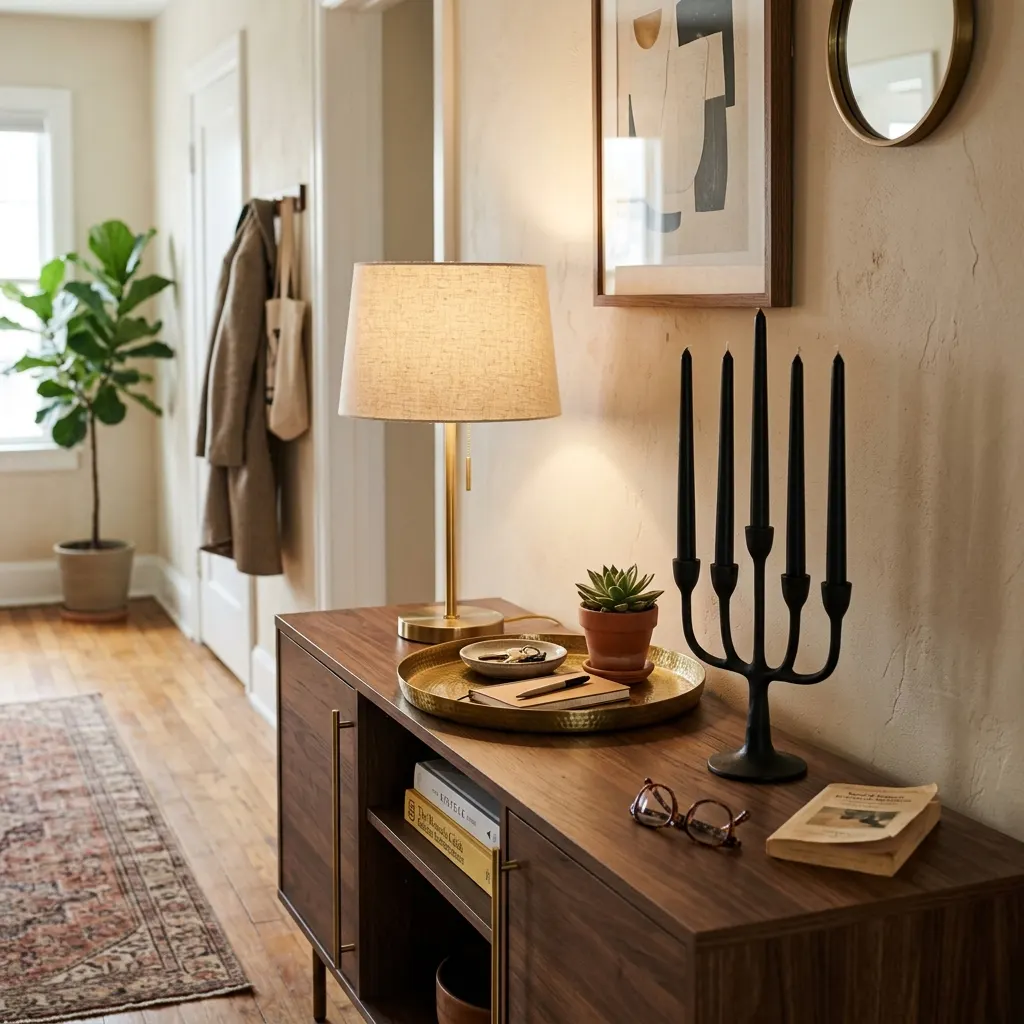
Editorial field note: A console table holding a lamp, a wooden bowl, a small plant and a stack of books has four things on it and looks calm. Add three Halloween pieces and it has seven, and the eye stops finding the lamp. Remove the bowl and the plant, add two pieces instead of three, and the surface still holds four objects — but now one of them is a matte black taper in a brass holder. Nothing was bought and nothing was crowded. That editing habit runs through the rest of our home decor inspiration.
Which Rooms Are Actually Worth Decorating Inside?
Stand on your doormat and count the rooms you can see into. For most homes that is two, sometimes three. Those are the rooms a visitor forms an opinion in, and they are where every dollar of indoor decorating pays back the most. The rooms nobody sees from that spot can wait until you have run out of better ideas.
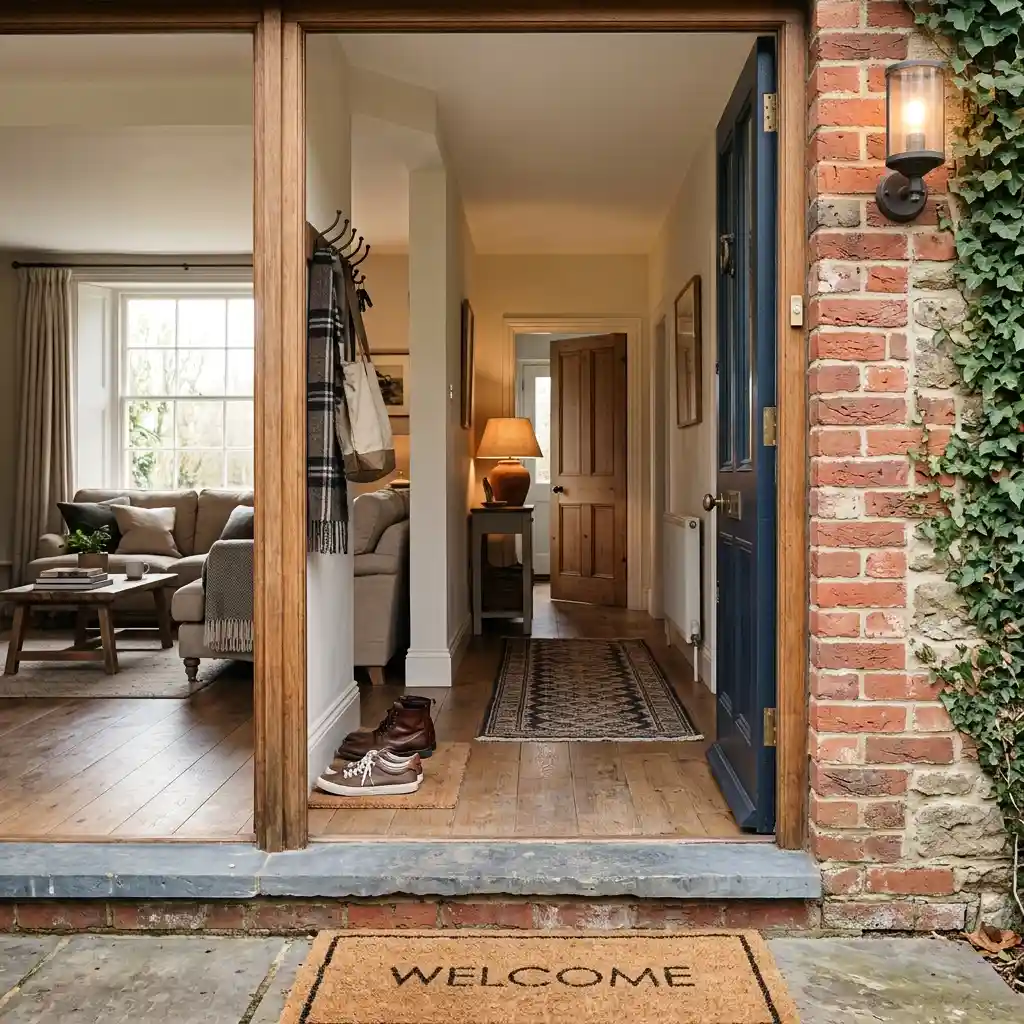
After that, sort by time. A room’s decorating budget should follow how long a person stands still in it, not how big it is. Someone passes through a hallway in four seconds and cannot take in detail, so a hallway needs one large shape. Someone sits in a living room for two hours and looks at the same shelf forty times, so that shelf can carry small things that reward a second glance.
Why Did Halloween Move Inside and Get Quieter?
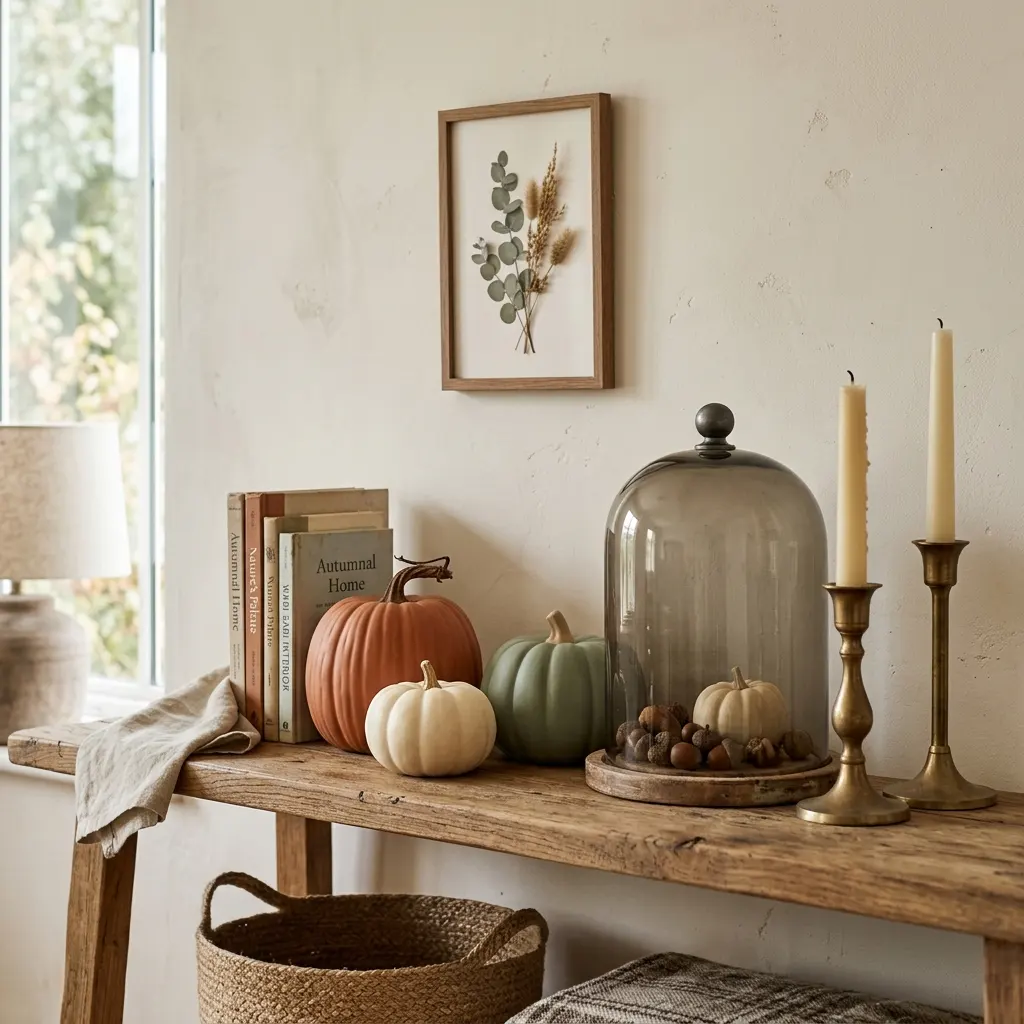
The pieces changed first. A decade ago, decorating inside for Halloween meant plastic — orange string lights, a foam skull, a printed banner taped to a doorway. Those things had to come down on November 1 because they never belonged in the room in the first place. Now the same shelf carries a matte ceramic pumpkin, a smoked glass cloche and a black taper candle, and none of it looks temporary.
That shift is why the whole-house approach fell out of favour. Indoor halloween decor now has to hold its own beside real furniture, and a piece here and there cannot do that. When Halloween pieces looked like novelties, spreading them thin was the point — the fun was in finding them in odd corners. When the pieces look like home decor, thin coverage just reads as an unfinished room. Better objects reward being grouped, not scattered.
Signs This Is Catching On:
- Home retailers now shelve Halloween beside their autumn ranges in matte ceramic, dark glass and unlacquered brass, instead of in a separate novelty aisle.
- Battery taper candles with real wax shells replaced the plastic flicker candle, which is why candlelight moved from the porch to the mantel and the dining shelf.
- The styling format that spreads online is a single shelf or console, photographed close — not a whole-room reveal.
- Dried stems, dark ceramics and bare branches now stay out into late November, so the buying question changed from “is this spooky enough” to “will this still look right in three weeks.”
What Indoor Halloween Decor Looks Like Room by Room
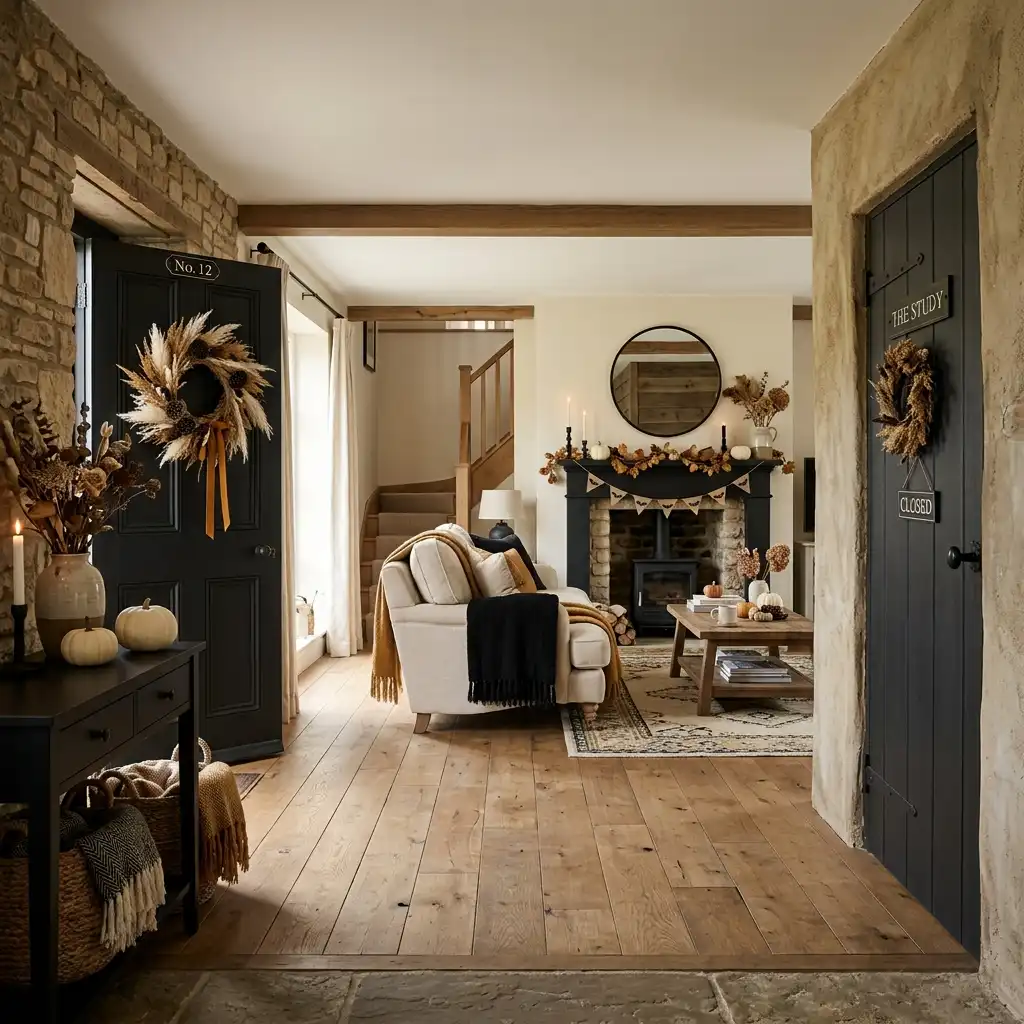
Each room below gets one rule and one starting move, not a full styling recipe. That is on purpose — the deeper room guides handle the arrangements, the shopping and the layouts. What follows is the decision each room asks you to make before any of that matters. Once you know which rooms you are working on, you can browse all our Halloween decorating ideas for the pieces that suit them.
The Entryway: One Object, Four Seconds
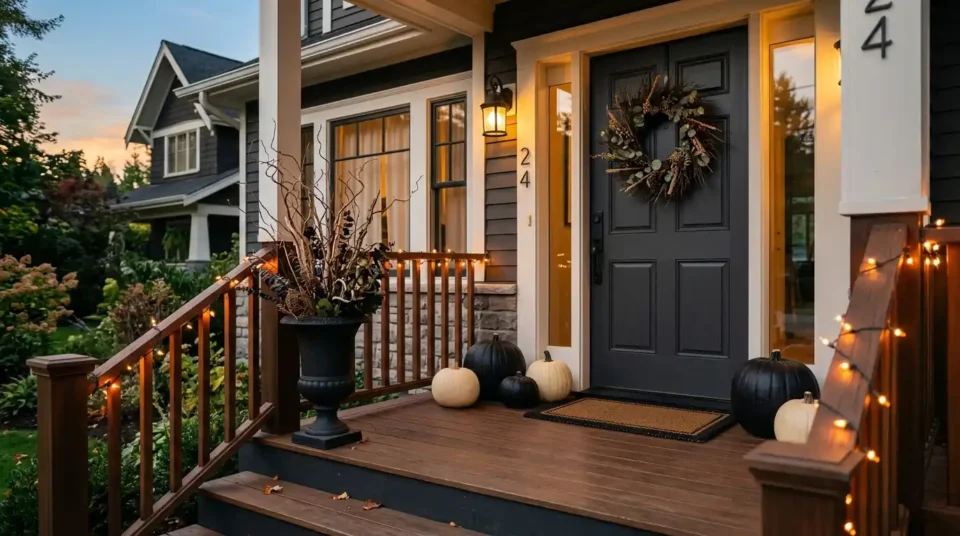
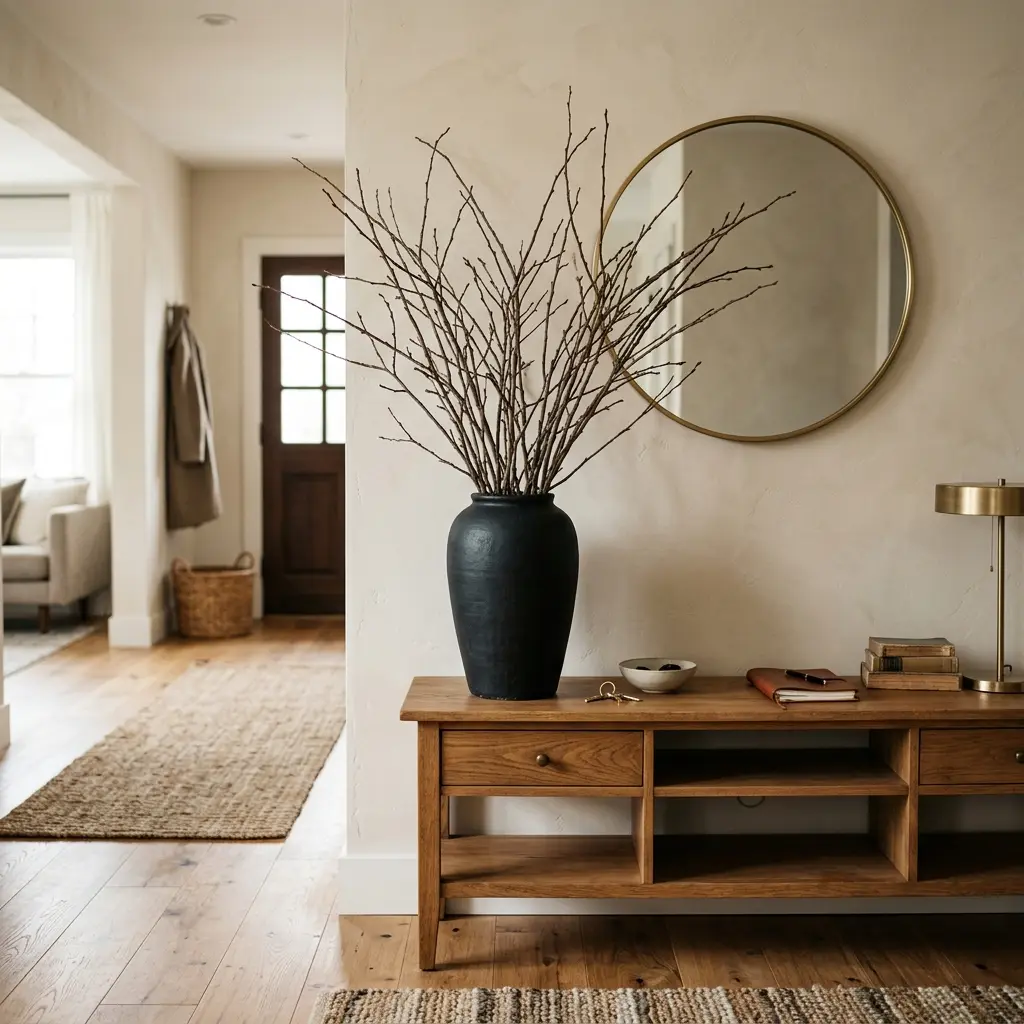
An entry is read while somebody is walking, so it holds exactly one thing. Pick the largest Halloween object you own and put it at eye level — a black urn with dried branches, a cloche over a pale skull, a single tall taper cluster. Then take two existing objects off that console so the surface does not gain mass. Small pieces spread across an entry table are invisible from the door and get knocked over by coats and bags.
Height does the work here, not quantity. A 24-inch arrangement on a 30-inch console reaches roughly eye level for someone standing, which is the only spot a moving person actually looks. The same rules that make spring entryway decor ideas feel welcoming apply in reverse in October — one confident object, and floor space left clear.
Halloween Living Room Decor: The Only Room That Repays Layers
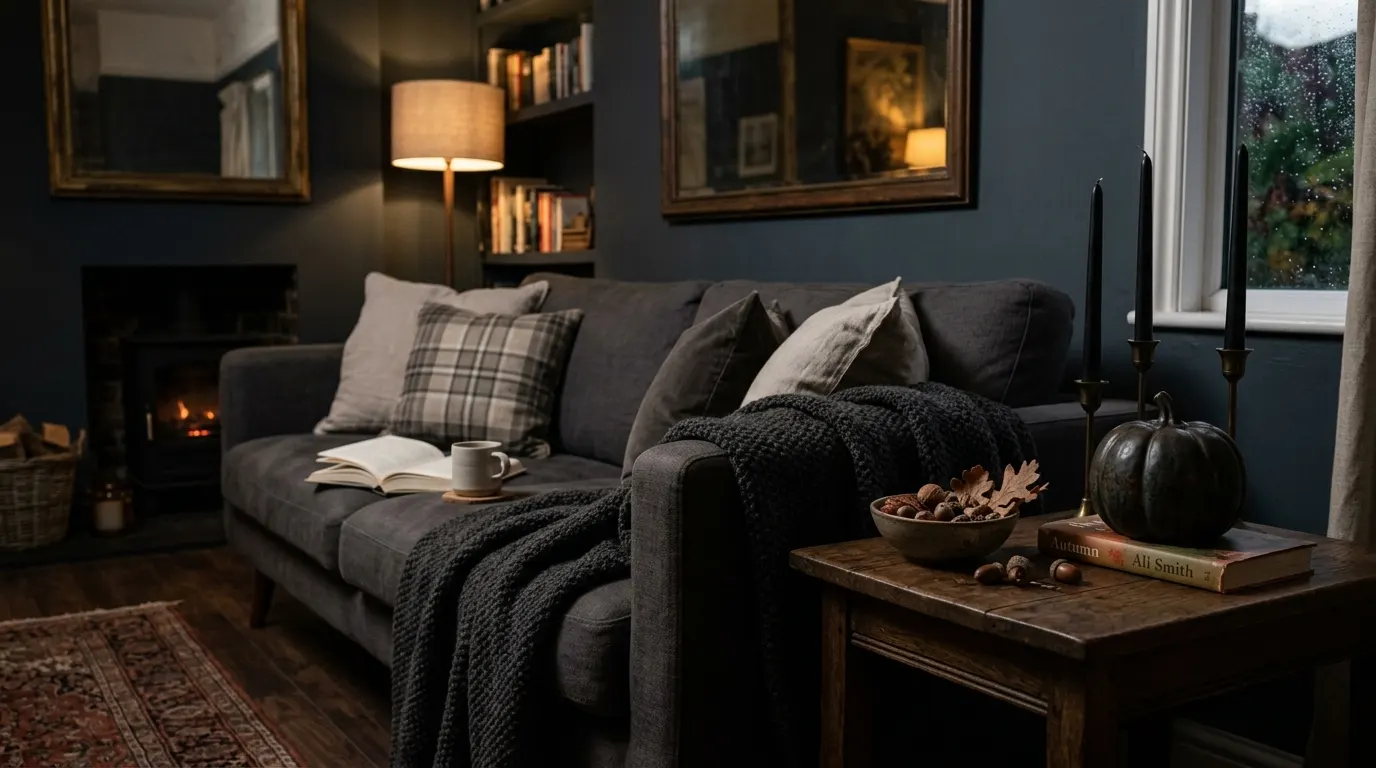
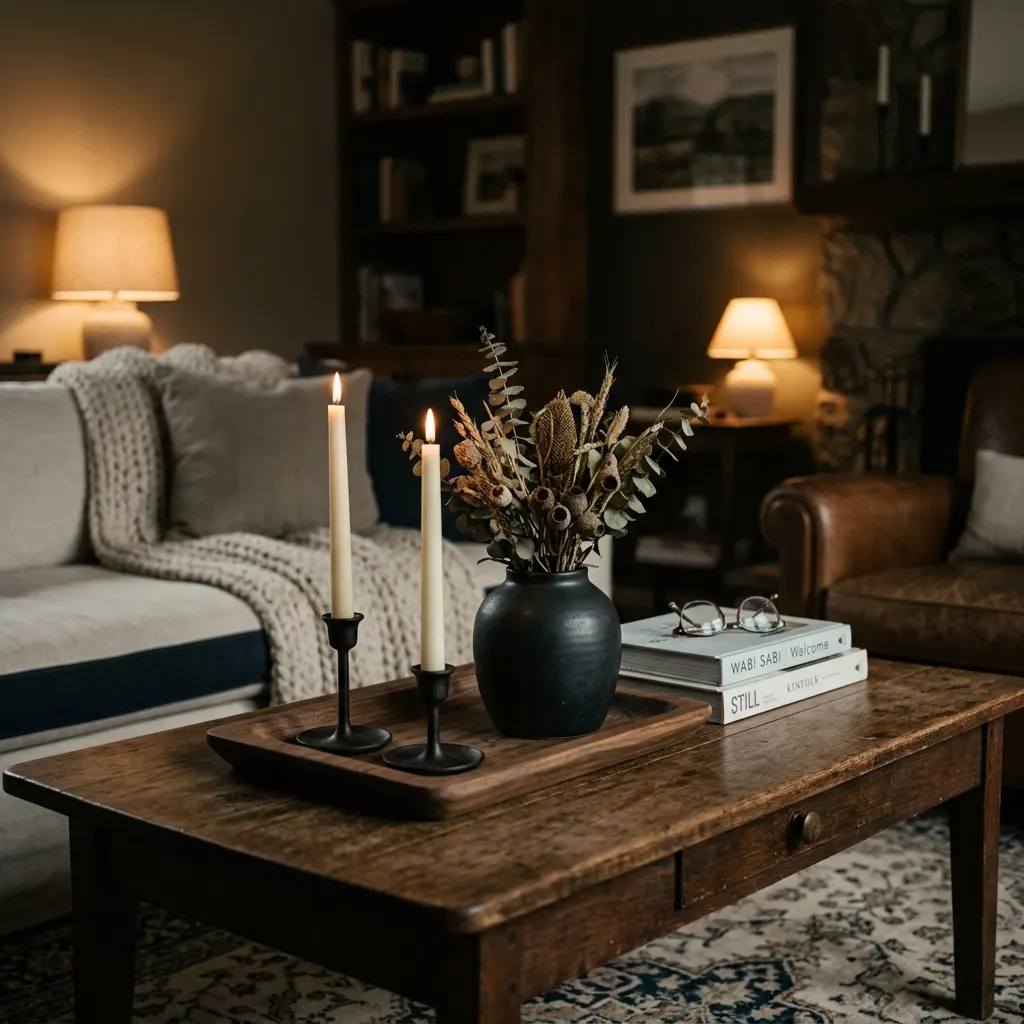
A living room is the one interior space where detail survives, because people sit down. Someone spends two hours on your sofa and looks at the same coffee table dozens of times, so texture, small objects and low light all earn their place. This is where three-quarters of your indoor budget belongs.
Work in three spots, not everywhere: the coffee table, one shelf, and the lighting. Swap a summer throw for charcoal or oxblood wool. Put two battery tapers and one dark ceramic vessel on the coffee table tray. Then drop the room’s light level — turn the overhead off and let two lamps carry the room, because a dim room makes ordinary objects look chosen without buying anything. Layered lamp light does more for a Halloween living room than any prop, and our guide to living room lighting ideas covers the three-lamp setup in full.
Halloween Mantel Decor: The Shelf Everyone Photographs
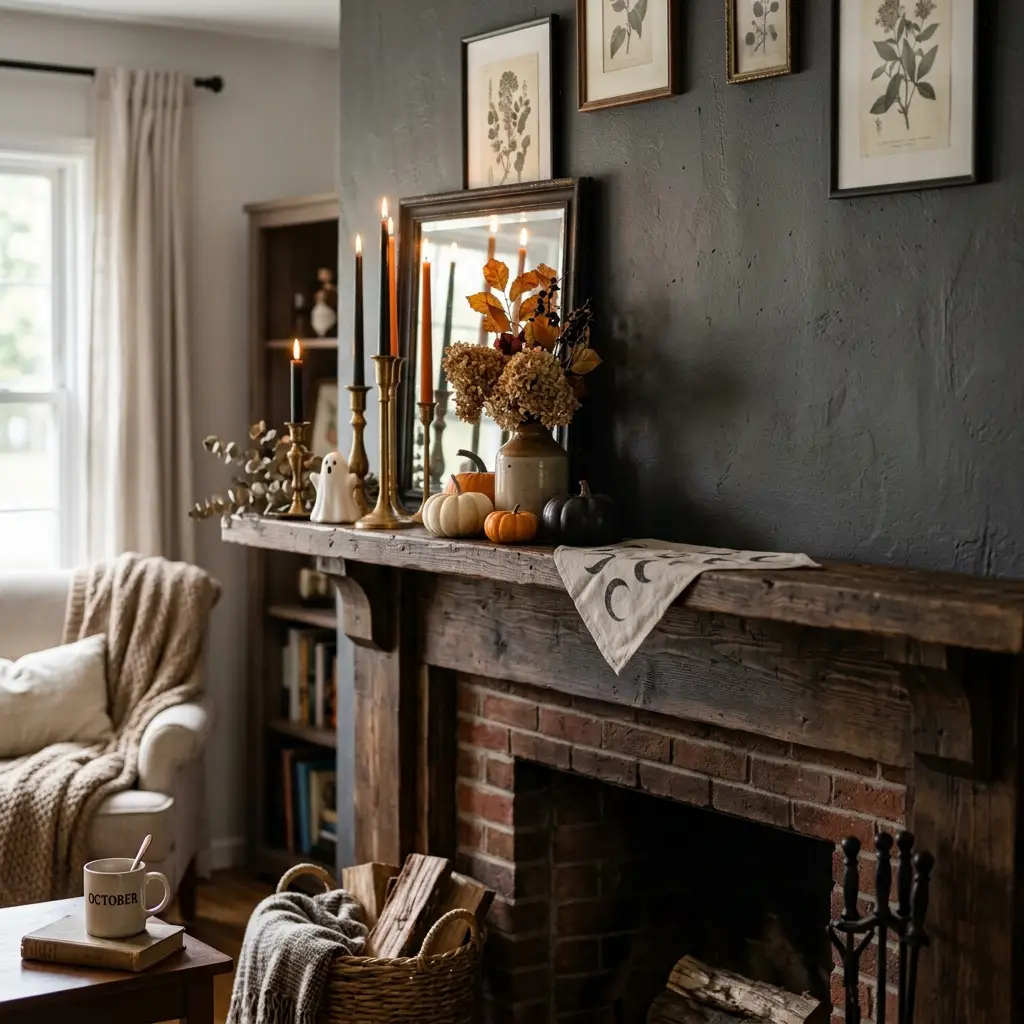
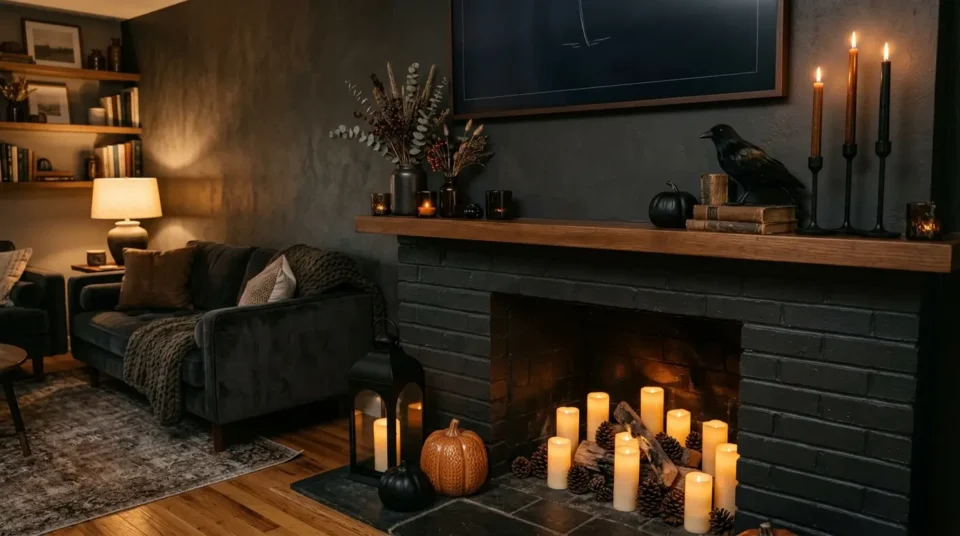
A mantel is a single horizontal line about 48 to 60 inches wide, and it fails when the objects on it are all the same height. Set the tallest piece a third of the way in from one end, not dead centre, then step down in two or three heights across the shelf. Leave a third of the length empty. That empty stretch is what makes the arrangement look finished rather than stacked.
The same shape works on the shelf above a TV, on a bookcase run, or on top of a low cabinet — any long horizontal surface behaves this way. If your living room runs on built-in shelves instead of a fireplace, pick one shelf at eye level and treat it as the mantel. Decorating all five turns a wall into noise.
Safety Note: Use battery tapers on a mantel — the National Fire Protection Association links three of every five home candle fires to something burnable left too close to the flame.
Halloween Kitchen Decor: What Survives Cooking?
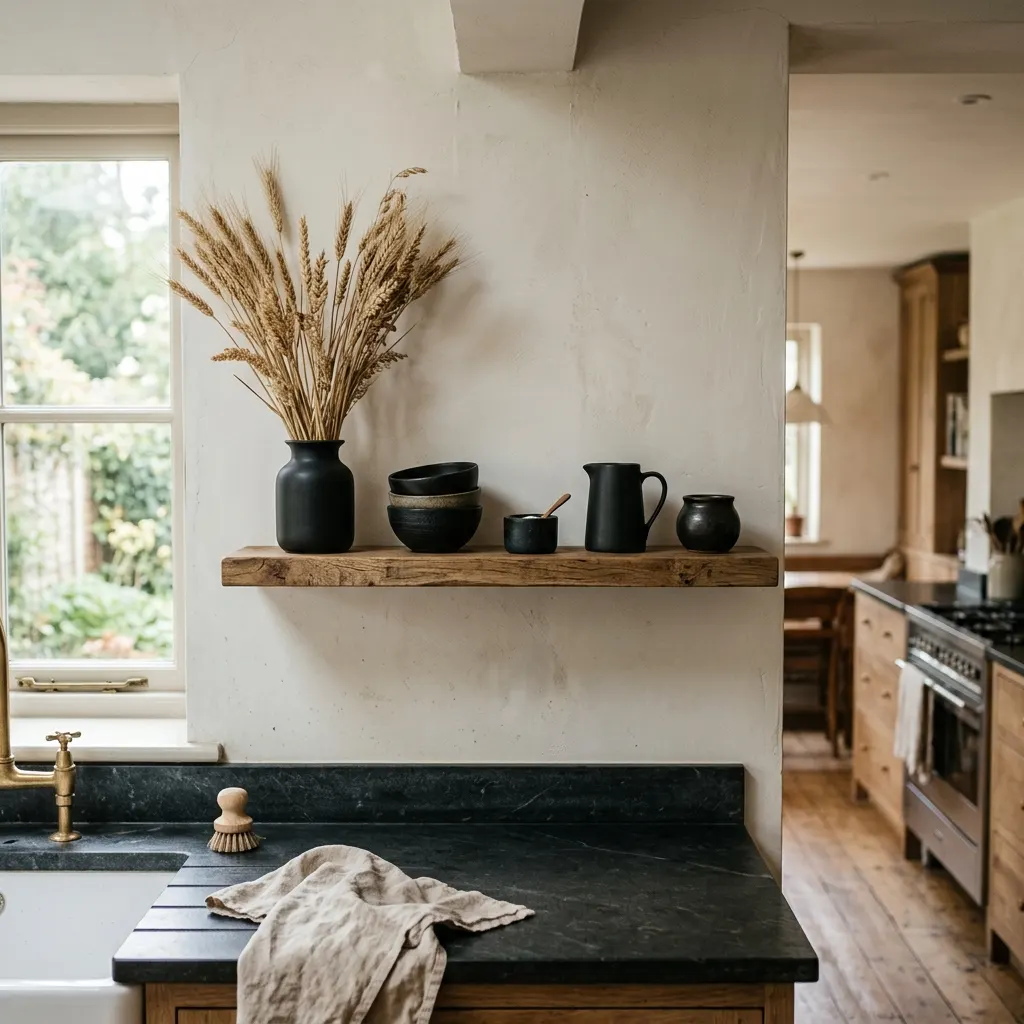
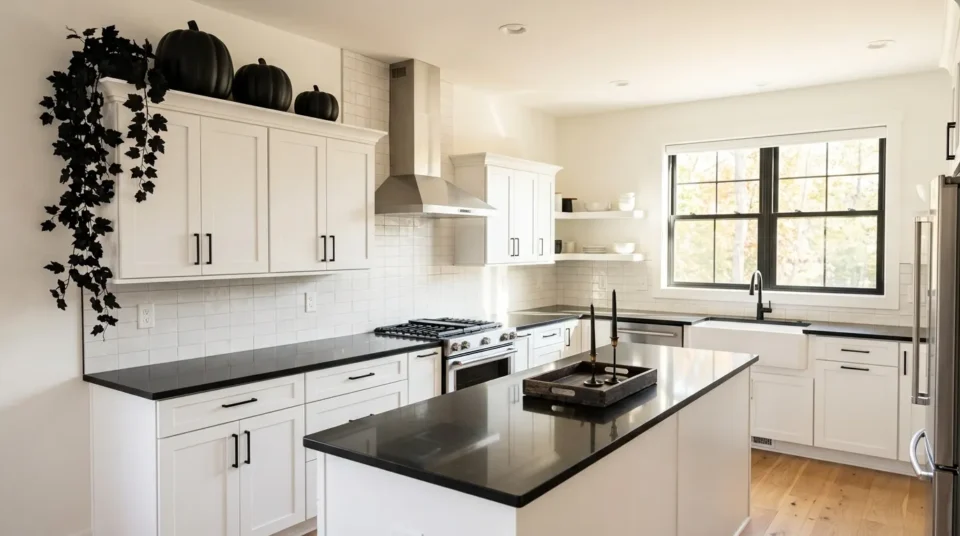
A kitchen is a working room, so anything decorative has to sit outside the work triangle or it will be moved within a day. Use the edges: the top of the cabinets, the far end of an island, a shelf above the window, the inside of a glass-front door. Everything you put there should be wipeable, because kitchens throw grease and steam at their surfaces all month.
Three pieces is the ceiling for most kitchens — a run of small dark ceramics, one dried stem arrangement, and a set of black tea towels. Skip anything paper, and skip anything with a lit flame near a hob. Our guide on what to put on top of kitchen cabinets is the right starting point for that upper edge, since the styling rules do not change with the season — only the palette does.
Halloween Bathroom Decor: The Closest Anyone Looks
A guest bathroom is the only room where a visitor stands alone, two feet from the wall, with nothing to do. It is the closest anyone will look at anything in your house. That makes it the cheapest win on this list: one genuinely good piece — a small framed print, a dark soap dispenser, an antique brass mirror clip with a dried stem behind it — lands harder here than five pieces in a hallway.
Keep it to the counter and the mirror, and keep humidity in mind, because paper and untreated card warp within a week in a bathroom that gets showers. Ceramic, glass and resin all hold up. If the room itself needs work before it can carry anything decorative, start with the fundamentals in our complete bathroom design and decor guide.
Do the Bedroom and Spare Rooms Need Anything?
Mostly, no. A bedroom is private, guests rarely see it, and the pieces that read as fun in a living room read as unsettling above a bed at 2am. If you want the season in there, do it through textiles rather than objects — a charcoal linen duvet cover, a rust throw, one amber glass lamp. That is a bedroom refresh that happens to suit October, and it stays useful through winter. Our fall decor by room guide covers which rooms earn the effort across the longer season.
Spare rooms, home offices and laundry rooms are where whole-house decorating quietly falls apart. Nobody stands still in them, so nothing you place there gets seen, but it all has to be dusted, moved and packed away again. Put the effort into the seasonal layering in our fall bedroom refresh ideas instead, and let the spare rooms sit this one out.
What If You Only Have One Room?
A studio, a dorm or a small apartment removes the room-selection question entirely, which makes it easier rather than harder. One room means one arrangement, and the whole budget goes into it. Students face the sharpest version of this, and the surface-by-surface thinking in our dorm room ideas carries straight into October. Pick the surface you look at most — usually the desk, the shelf above the bed, or the console behind the sofa — and build a single group of five to seven objects with a clear tallest piece.
Everything else stays bare. In a small space, a second Halloween grouping across the room competes with the first and both look weaker. That single restriction is why one-room homes often look better in October than four-bedroom houses do — there is no thin coverage to get wrong.
Rental Note: A dark throw, one warm-bulb lamp and a tray of objects change a rented room without touching a wall, so nothing has to be patched in November.
The layout thinking in our creative small apartment ideas applies here too, because the surfaces you decorate are the same ones already doing three other jobs. Give that single grouping a lamp of its own and the room looks decorated from the doorway.
How Do You Start Without Buying Anything New?
The first hour of indoor decorating costs nothing, and it settles most of what you end up buying. Four things happen before a shopping tab opens.
The doormat pass comes first. Stand there, list the rooms you can see into, and treat every other room in the house as already finished. That list runs to two rooms in most homes, and it is the entire project.
The surface swap comes second. Two objects come off your main console or coffee table and go into a cupboard, which leaves space for two Halloween pieces without the surface gaining anything at all.
The light drop is the move people skip. Turn the overhead off, switch on two lamps, and look at the room again at 7pm — half of what gets bought in October is really an attempt to fix lighting.
The textile edit finishes the free hour. A charcoal throw, a black linen runner and a rust cushion cover pull a whole room toward the season before a single object is bought, which is the same edit behind seasonal shelf styling in every other month of the year.
Only after all four is it worth buying anything, and then only for the best room. One good object in the living room beats six spread across the house, and it will still look right next October.
Where the Extra Objects Come From
Each of these looks harmless on its own, which is why they survive year after year. Together they explain how a house holding plenty of Halloween decor still looks untidy by the middle of October.
Instead of setting new pieces onto a console that already holds four things, Try putting one existing object into a cupboard for every Halloween piece that comes out of the bin — the surface count never grows and the lamp keeps its place.
Instead of giving every room a token piece, Try concentrating the same objects into the two rooms guests actually see. One small pumpkin on the laundry shelf and one bat on the office door do not add up to a decorated house.
Instead of leaving the overhead light at full output all month, Try two lamps at 2700K. Bright ceiling light flattens dark ceramics and kills the shadow the whole season runs on.
Instead of putting paper and printed card in the kitchen or bathroom, Try ceramic, glass, resin or metal. Steam, grease and shower humidity buckle paper within a fortnight, so the display looks tired well before the 31st.
What Two Rooms of Halloween Actually Cost
Indoor decorating is cheaper than the outdoor equivalent because you are working with fewer, smaller objects and no weatherproofing. The numbers below assume you already own basic textiles and lamps.
| Project | Estimated Cost | Impact Level |
|---|---|---|
| Entry console refresh — one tall object plus a pair of battery tapers | $25-$60 | High |
| Living room and mantel layer — dark glass, two ceramic pumpkins, dried stems, one throw | $80-$180 | Very High |
| Whole-house pass across five or six rooms | $250-$450 | Low |
At the budget end, a pair of battery tapers runs about $12 to $18, black tea towels about $10, and a bunch of dried wheat or bare branches about $8 to $15 — enough to change an entry outright. Mid-range means the objects you keep: a matte ceramic pumpkin at $18 to $30, a smoked glass cloche at $22 to $45, a charcoal wool throw at $40 to $70. Premium indoors is rarely a bigger prop; it is one antique brass candelabra or a hand-thrown urn at $120 to $250 that becomes the piece the whole shelf is built around for the next ten years.
Best First Upgrade: Two battery taper candles and one dark vessel for the main room — under $40, and it changes the room the moment the lamps go on.
Skip for Now: Anything printed on paper or card, and any second set of string lights. Both look tired by mid-October and neither survives to next year.
The same swap-first approach keeps costs down in every other month too, and you can see it applied across our seasonal decorating ideas from spring through to Christmas.
Run Through This Before You Open the Bin
- Stand on the doormat and list the rooms you can see into — that list is the whole project.
- Clear two objects off each surface you plan to decorate, before anything goes on it.
- Give the living room three-quarters of your budget and your time.
- Keep the entry to one object at roughly eye level, around 24 inches tall on a standard console.
- Use battery tapers anywhere near dried stems, fabric cobweb or paper.
- Leave a third of every mantel or shelf empty.
- Decide now what comes down on November 1 and what stays into late autumn.
KEY TAKEAWAY: A room looks decorated when its object count stays flat and its light level drops — not when more things arrive.
The Case for Doing Less Inside
Indoor Halloween decorating has quietly become a two-room job, and that is a good thing rather than a compromise. Which objects earn a place on those surfaces is covered in our guide to Halloween props and accent decor. The pieces are better than they were, so they deserve to be grouped where people can see them properly. Concentrating them also solves the takedown problem, because two rooms come apart in twenty minutes while six take an afternoon nobody has on November 1.
The staying power is in the objects, not the theme. Dark ceramics, dried stems, brass and smoked glass all carry straight into November and sit comfortably beside the deeper palettes in our modern black Christmas decor ideas once the season turns. Anything bought purely to be scary gets one October and then a box.
Buy for the surface rather than the holiday and the same shelf keeps working all winter. A brass tray holding tapers in October holds evergreen and candles in December, which is how the cozy winter decor ideas further along the season are built.
Pet Note: Curious cats and dogs treat low candles and chewable decorations as toys, and the ASPCA advises battery-powered candles instead of open flame in homes with pets, along with keeping light cords out of reach.
Frequently Asked Questions
Conclusion
The messy house was never caused by the pieces in the bin — it was caused by carrying that bin into every room. Indoor halloween decor gets better the moment you stop spreading it, swap objects rather than stack them, and give the room people actually sit in the attention the hallway was quietly wasting. The rest of our home decorating ideas work the same way, in every other month of the year.