Why Aren’t Fall Leaf and Grapevine Wreaths the Same Thing?
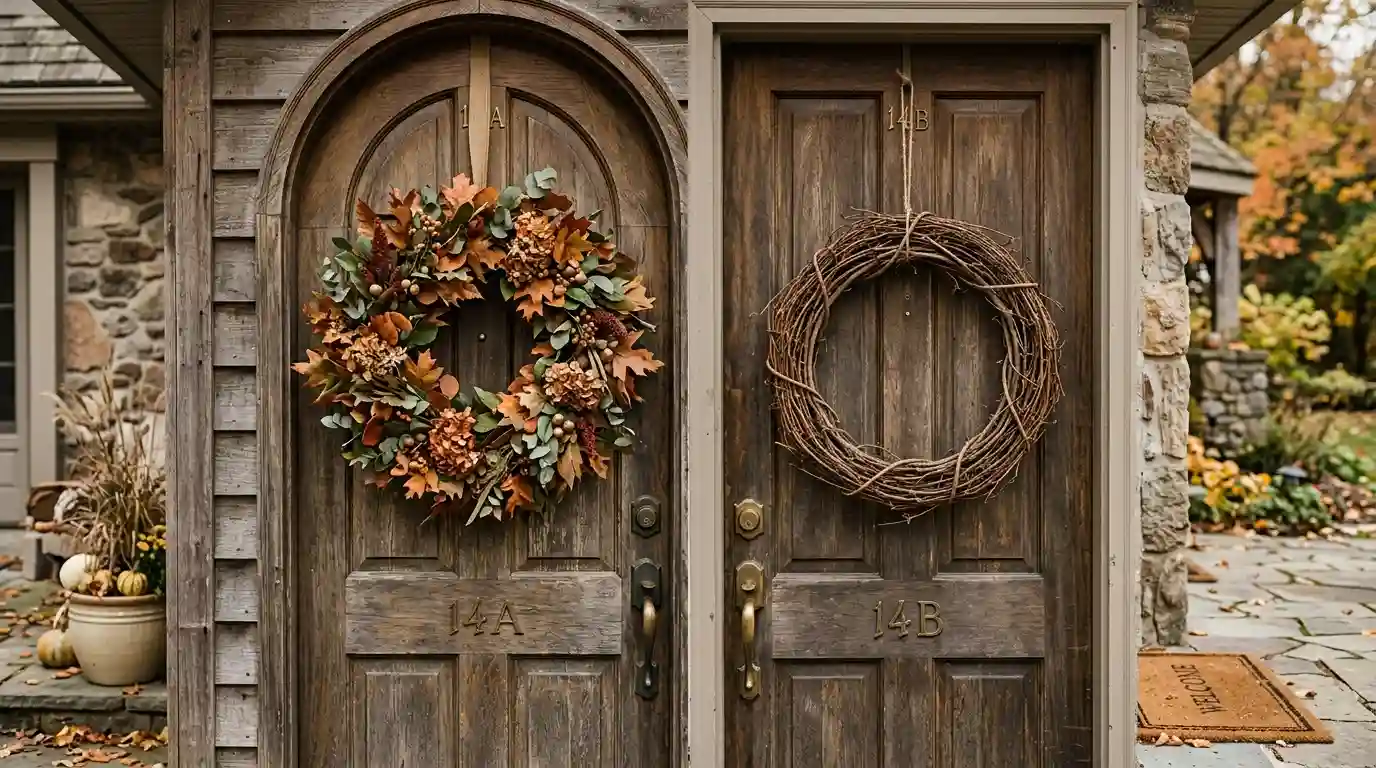
Walk down a block of porches in late September and two wreaths almost never look alike. One is a loose ring of bare vine with a single spray of dried wheat. Three houses down, a dense mat of burgundy and gold leaves hides its frame completely.
Fall leaf and grapevine wreaths are not the same trend in two colors — they are two different builds. A grapevine base gives an airy, natural-texture look for a sparse porch; a fully leaf-covered wreath gives a dense, traditional look that feels finished alone. Editorial field note: a bare grapevine wreath on a narrow porch looks curated in an afternoon — swap it for a dense leaf-covered one, and the same porch suddenly looks busier, not finished.
Looking for more ideas? Explore our full guide to Fall Wreaths.
This piece covers how each style is built, which weathers better outdoors, and which porch style each suits. Our fall and autumn decor ideas cover the porch and table too, and our home decor inspiration has more seasonal styling like it.
| Quick Takeaways | |
|---|---|
| Base | Grapevine bares the ring itself; leaf wreaths hide it under foliage. |
| Look | Grapevine looks airy and rustic; leaf-covered looks dense and traditional. |
| Best For | Grapevine suits farmhouse and coastal; leaf suits traditional and colonial. |
| Durability | Grapevine weathers to grey; preserved leaves need airflow to avoid mold. |
| DIY | A grapevine base is easy to forage; a full leaf wreath takes more time. |
| Cost | A bare grapevine base costs less; a fully leaf-covered wreath costs more. |
Fall Leaf and Grapevine Wreath Checklist

Run through these before you buy or build:
- Decide whether your porch wants an airy woven look or a dense, fully covered wreath.
- Check your door’s sun exposure — full sun favors UV-treated faux leaves over untreated silk.
- Pick real dried grapevine for a rustic base, or a wire form for a fuller leaf wreath.
- Store leaf wreaths flat with airflow, not sealed in plastic, to prevent mold.
- Keep any dried or preserved wreath at least 12 inches from exterior light fixtures that generate heat.
- Reuse a sturdy grapevine base for three or more seasons if you swap only the florals.
KEY TAKEAWAY: A grapevine wreath is a structure you dress up each season; a leaf wreath is a finished look you replace when it fades.
What Makes a Grapevine Wreath a Grapevine Wreath?
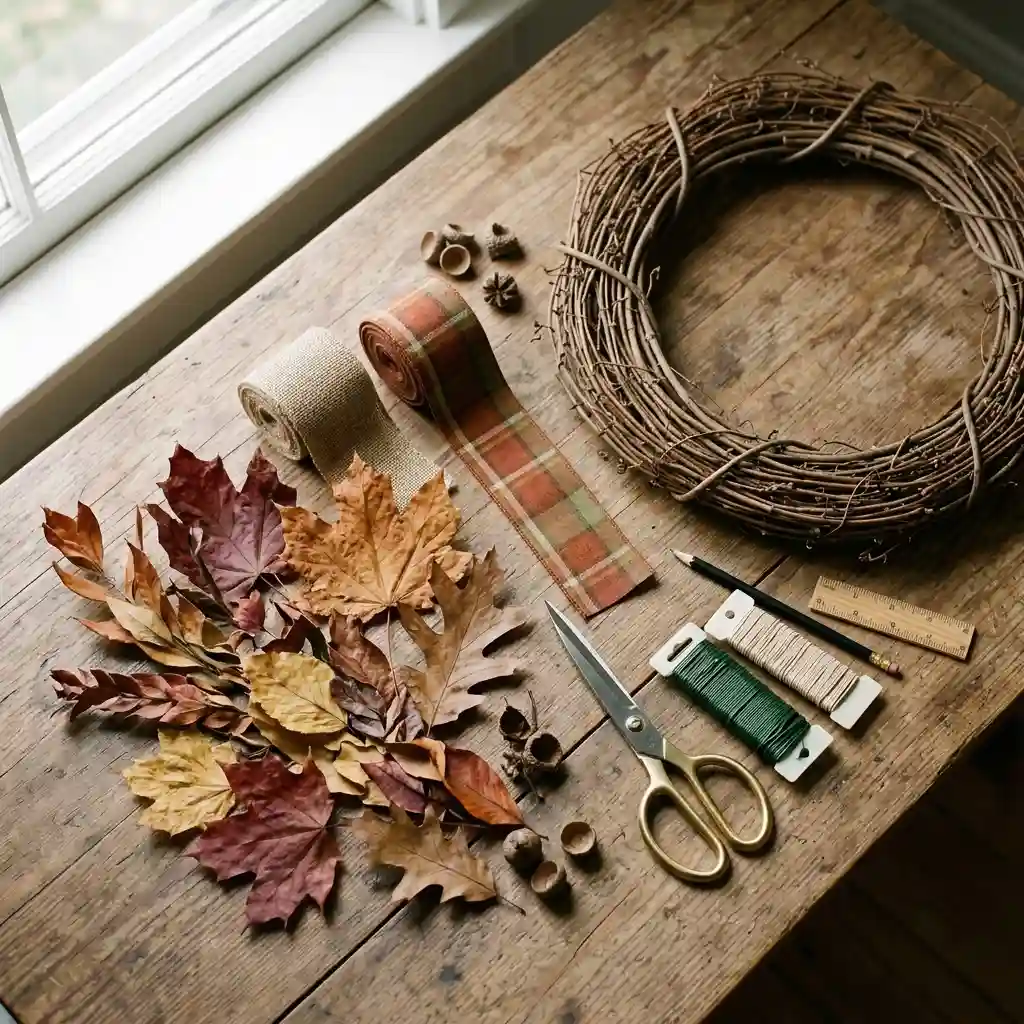
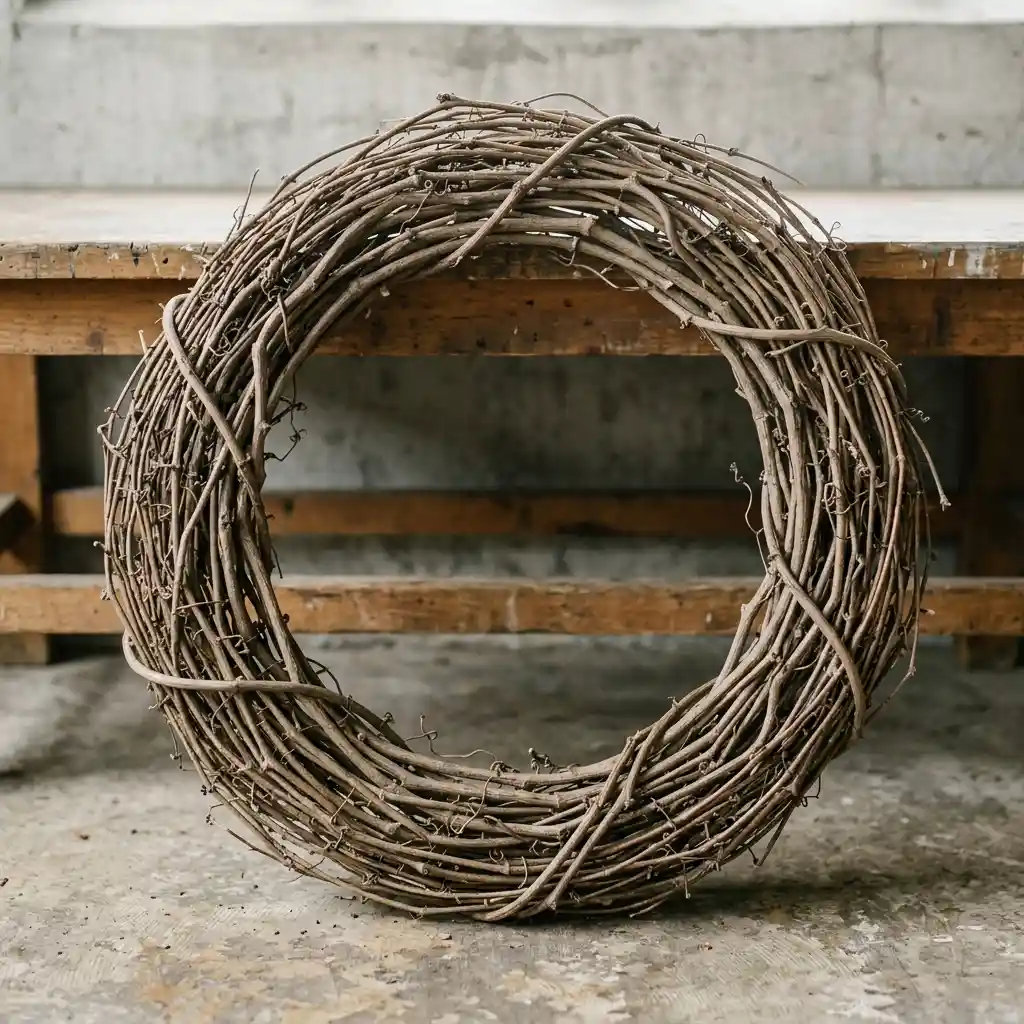
A grapevine wreath starts as a ring of dried vine, not a covered form. Crafters soak fresh grapevine, wisteria, or willow until it bends, coil it into a circle, then air-dry it about a week for the shape to hold. Because the vine itself is the visible surface, very little needs adding — one spray of dried wheat is often enough. Designer Rule of Thumb: a well-cured base can be restyled and reused for three seasons or more, since only the florals change each year.
What Makes a Leaf Wreath a Leaf Wreath?
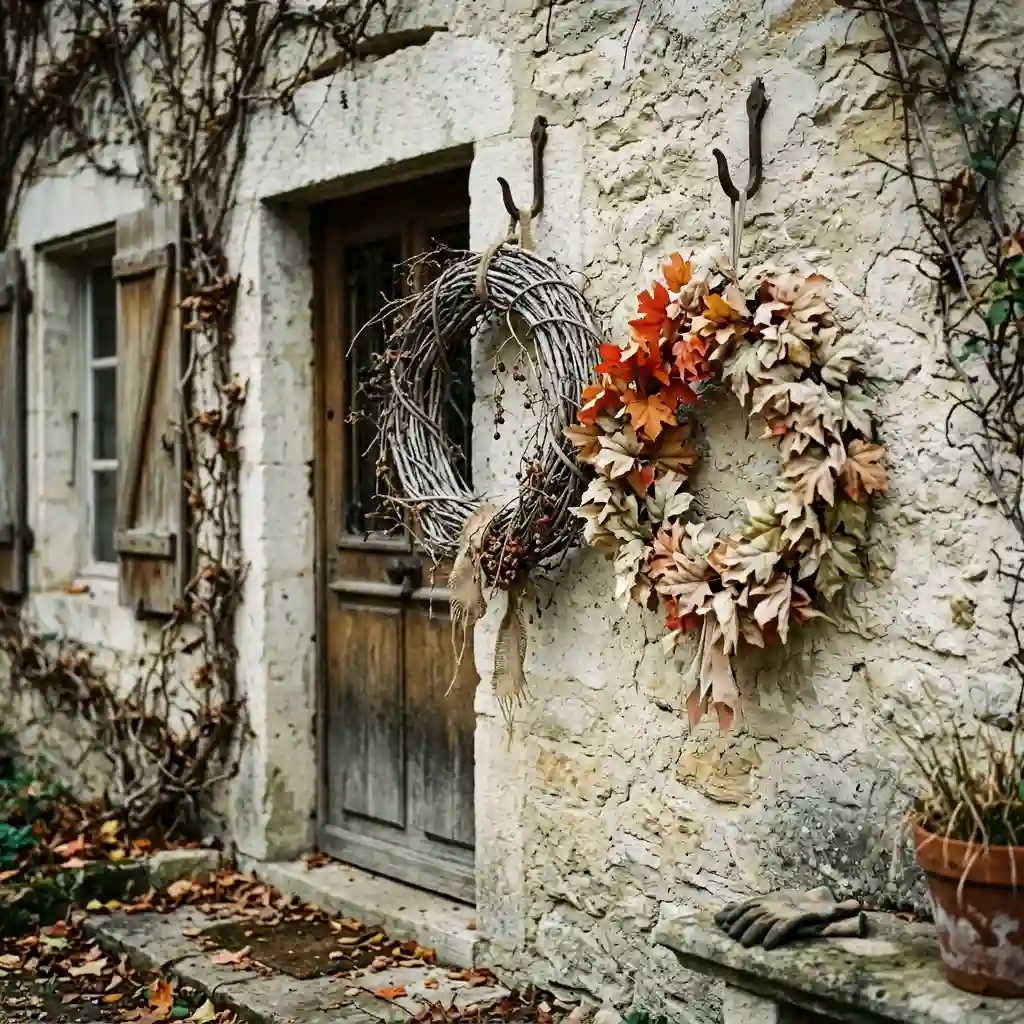
A leaf wreath starts from a plain wire or straw form that disappears completely under the finished piece, with faux or preserved leaves glued or wired on in overlapping rows until nothing underneath shows. Real leaves here are usually glycerin-preserved, not simply dried. Source Note: Mississippi State University Extension explains that glycerin preservation replaces the water in each leaf over one to several weeks, keeping leaves soft instead of brittle — though preserved foliage can weep in humid conditions, so it needs airflow rather than a sealed display. Faux leaves skip that process, using polyester or polyethylene instead.
Why Are Grapevine Bases Showing Up on More Porches This Year?
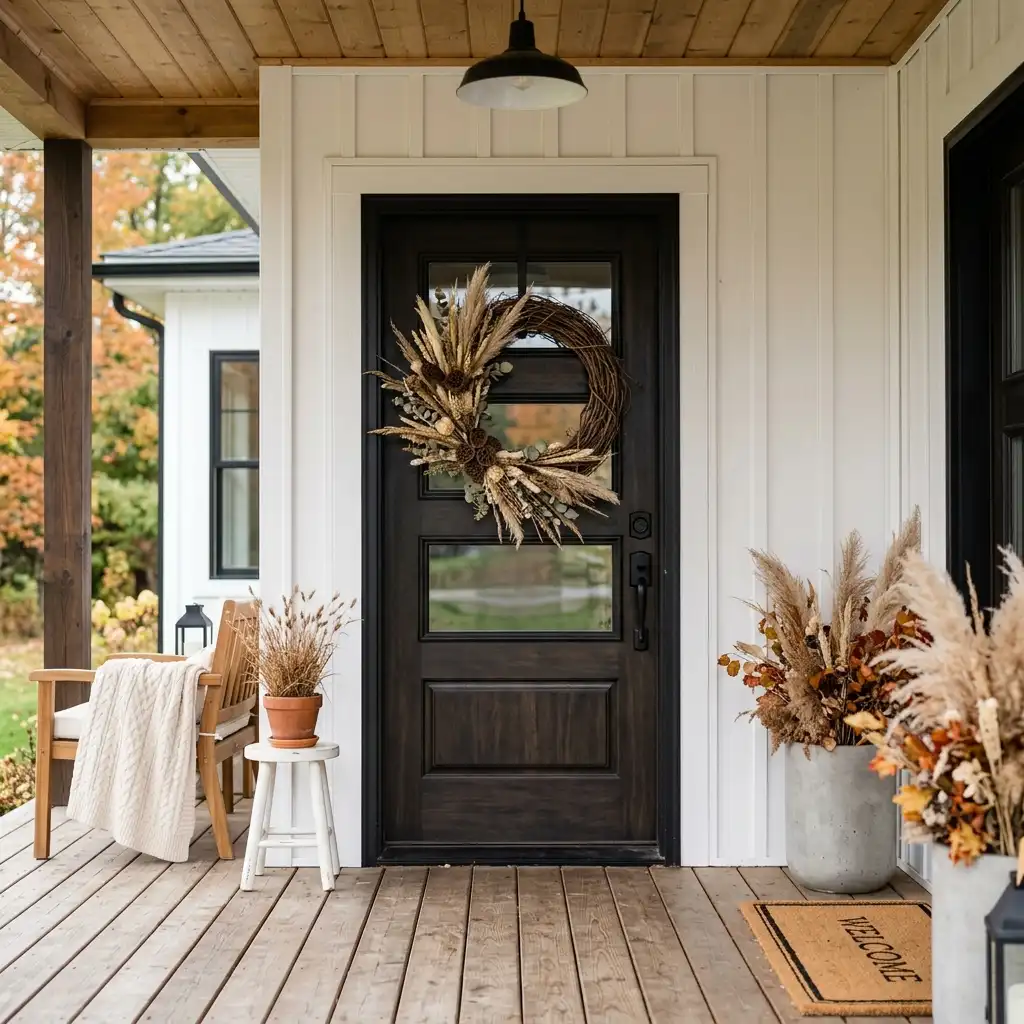
Search interest around fall leaf and grapevine wreaths has shifted from one generic fall wreath query toward specific phrases like fall grapevine wreath and leaf wreath fall, a sign shoppers now search by material. Retailers have followed, selling bare grapevine forms as their own product instead of bundling them only inside a finished wreath.
Signs This Is Catching On:
Craft retailers now stock plain grapevine forms as a standalone category.
Porch styling has leaned toward fewer, more natural materials this year, matching the shift across more fall decorating ideas.
The same bare-structure preference shows up in spring, where modern spring wreath ideas covers a similar shift for a different palette.
Where a Grapevine Wreath Wins
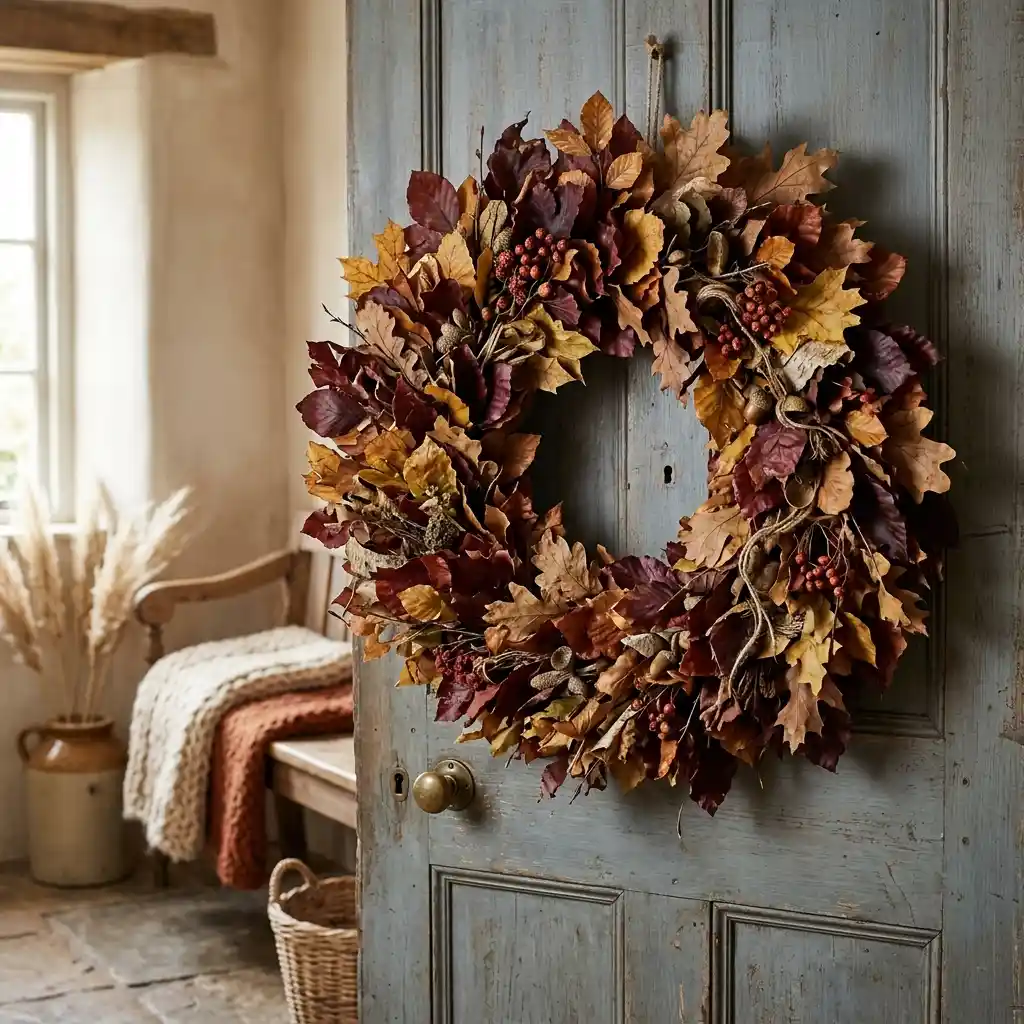
A grapevine wreath wins on porches that already lean rustic, coastal, or modern-farmhouse, where oak tones, rattan furniture, or a jute doormat set the material story — the open weave lets the door color show through instead of getting buried. The same base-first thinking carries into spring, where spring wreath for front door ideas covers lighter bases, and front porch decor ideas covers the rest of the porch.
Where a Leaf Wreath Wins
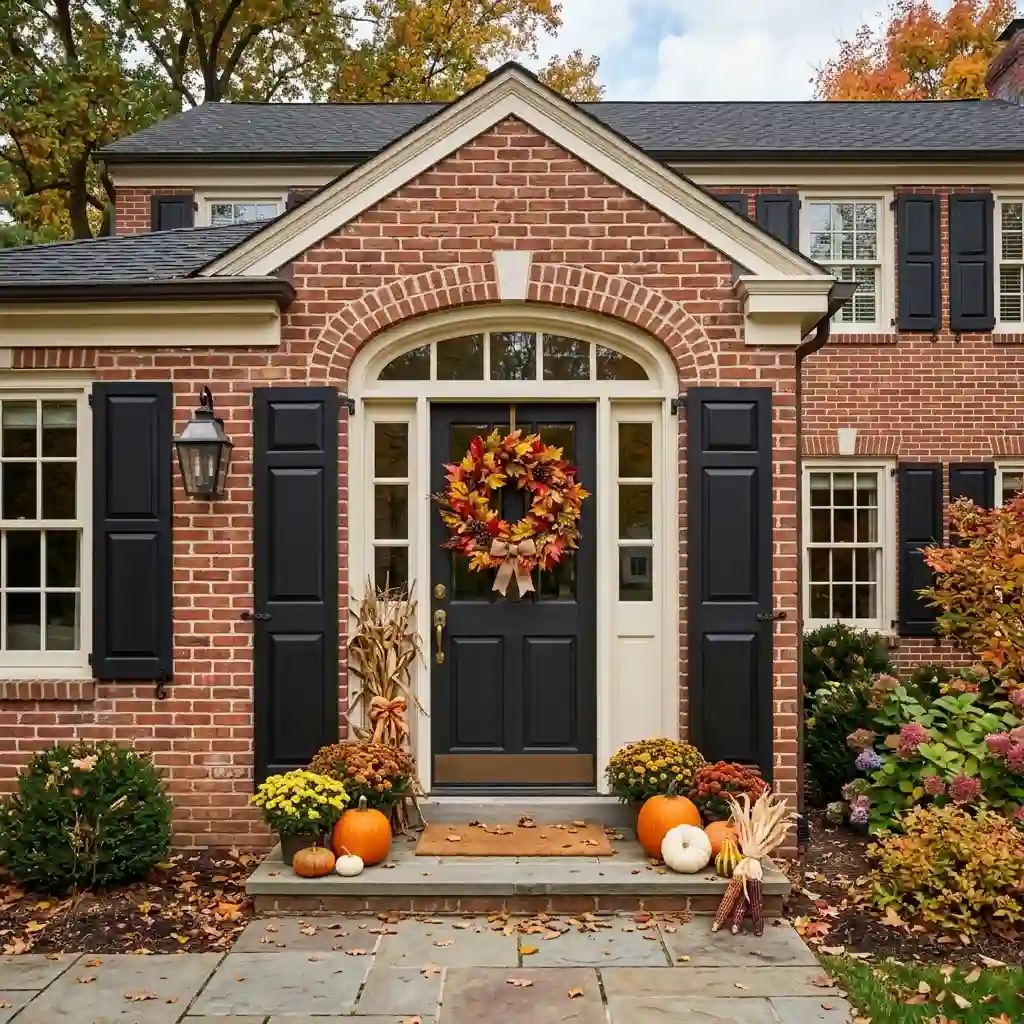
A leaf wreath wins on traditional, colonial, or classic brick homes, where a black or white painted door calls for one clear, finished statement rather than several small pieces — the dense coverage looks intentional the moment it goes up. Size it to the door before anything else — our fall wreath for front door guide covers that. A refresh to modern front porch ideas can round out the rest, but the wreath itself carries the season alone.
How Do These Two Wreaths Weather Outdoors?
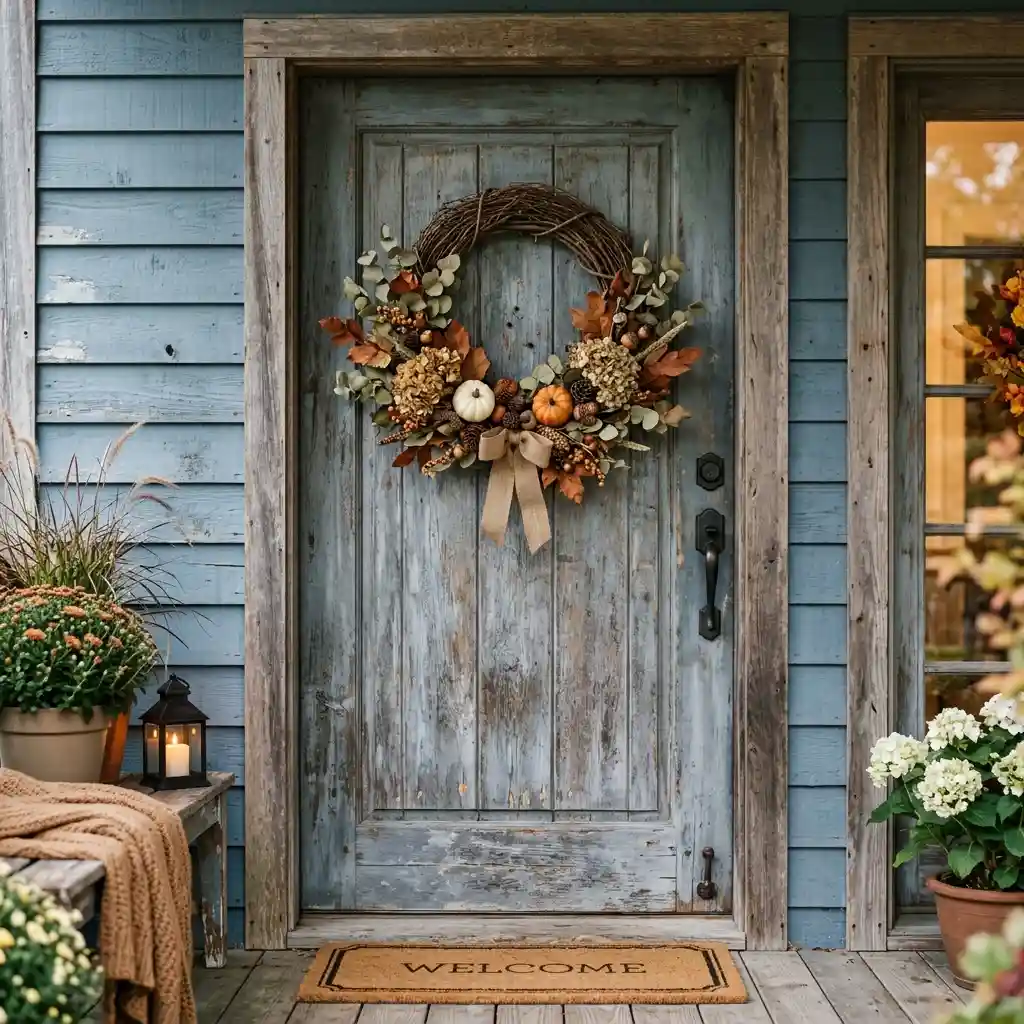
Untreated grapevine left in full sun and rain fades from warm brown to a soft grey within a season or two, though the structure usually holds. Material Note: keeping it under any roofline — a covered porch or the coverage an enclosed porch provides — slows the fading. Faux and preserved leaves differ: high-density polyethylene with built-in UV stabilizers holds color for three to five years outdoors, per manufacturers testing to the ASTM G154 standard, while standard silk fades within one season. Glycerin-preserved leaves need airflow instead — Mississippi State University Extension notes they can weep in high humidity.
Layering and Embellishing a Grapevine Base
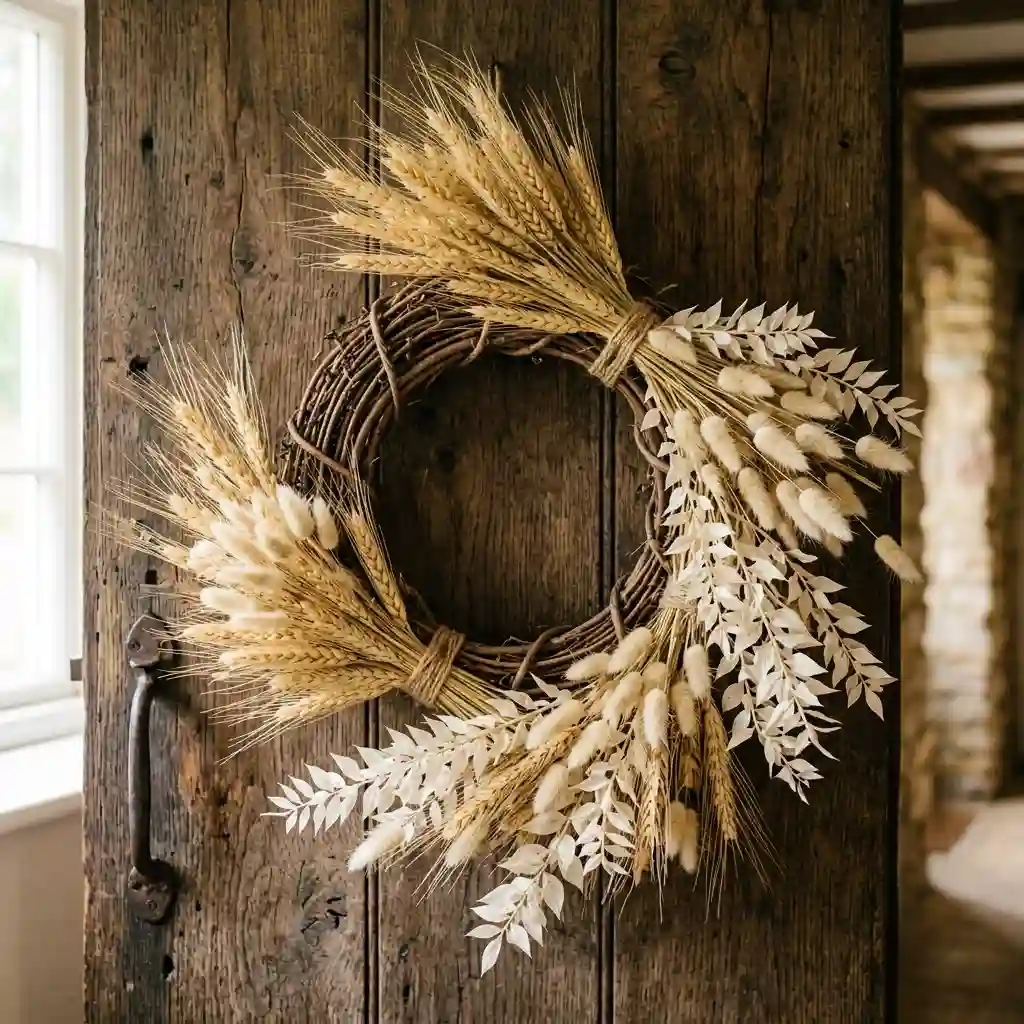
A bare grapevine base takes embellishment well since there is already texture to build on. Wire a few stems of dried wheat or pampas grass at one lower corner rather than spacing them evenly — an off-center cluster looks foraged. Designer Tip: tuck stems and ribbon ends into the vine itself instead of wiring them to the front. This is the easiest wreath to build yourself — our DIY fall wreath guide covers the bundling and wiring, and our DIY ideas archive covers other reusable-base projects.
Styling a Leaf-Covered Wreath
A leaf wreath is already the busiest element in the wreath world, so it needs less added, not more — one cluster of berry picks or a few small pinecones at the bottom third adds contrast without competing. Skip a second ribbon color or an oversized bow. Keep any accent in the same warm family as the leaves — ochre, burgundy, warm cream — so the exterior decor around the door looks like one palette.
Mistakes That Flatten Either Wreath Style
- A fully leaf-covered wreath on a porch already carrying pumpkins and a patterned rug crowds the entry — grapevine fits better there.
- Skipping the drying step on a DIY grapevine base leaves it soft and sagging within weeks; a week of airflow fixes this.
- Untreated silk leaves on a south- or west-facing door fade before Thanksgiving; UV-stabilized faux material solves it.
- A glycerin-preserved wreath sealed in plastic traps moisture and invites mold; a breathable bag works better.
- Mixing a bare grapevine ring with dense faux leaves muddies both looks; pick one construction and keep it clear.
- Hanging either style beside a warm light fixture invites fading and, with dried material, real fire risk. Safety Note: keep wreaths at least 12 inches from any heat source.
The Price Gap Between Fall Leaf and Grapevine Wreaths
A bare grapevine base costs far less than a fully leaf-covered wreath, since most of the price pays for the labor of covering it completely.
| Project | Estimated Cost | Impact Level |
|---|---|---|
| Plain grapevine wreath base, 18-24 in | $12-$25 | Medium |
| Fully leaf-covered faux wreath, 20-24 in | $35-$70 | High |
| Grapevine base plus DIY dried florals and ribbon | $30-$60 | High |
Best First Upgrade: A plain grapevine base is the cheapest way to test the look before committing to a leaf-covered piece.
Skip for Now: A glycerin-preserved wreath for an exposed, humid entry until you have a covered spot to hang it.
Once the season turns, the same porch carries into cozy winter front porch decor with an evergreen swap instead.
Which Style Wins for Most Fall Porches?
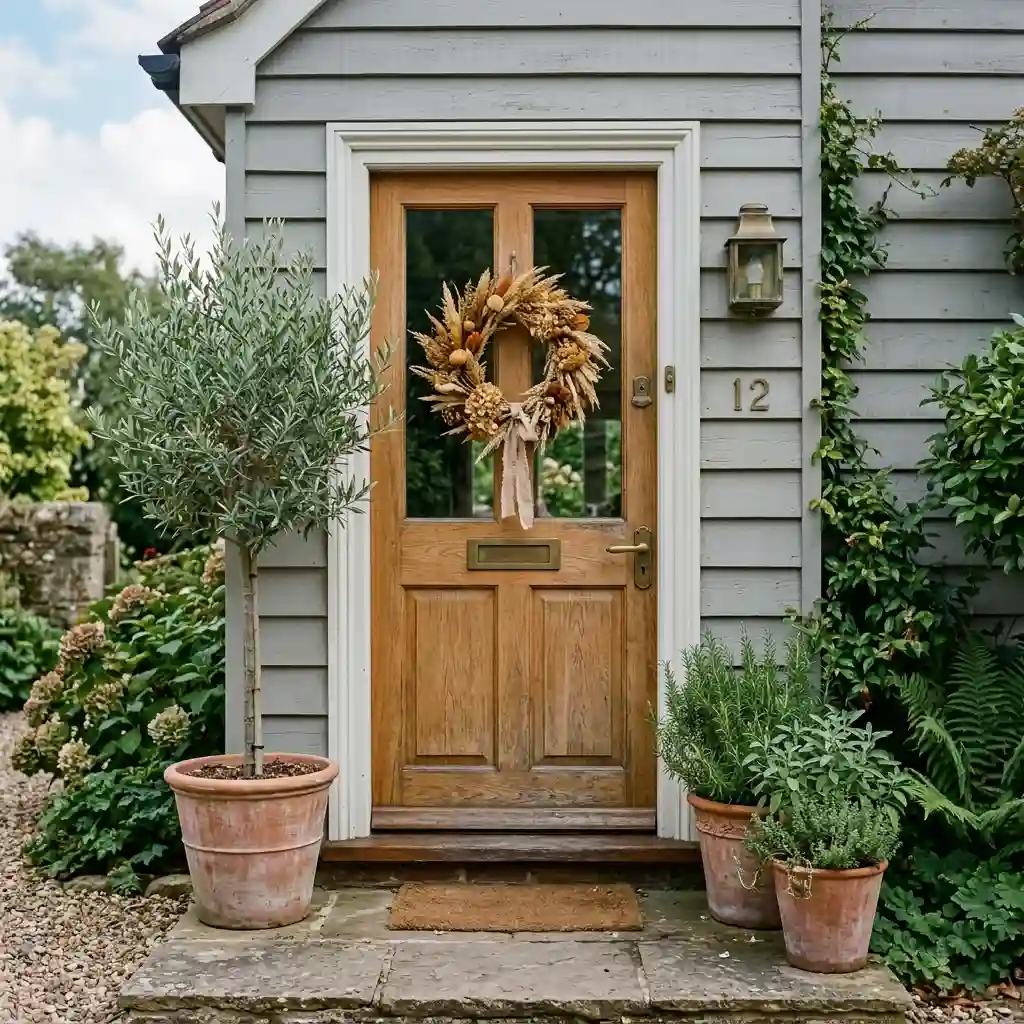
Designer’s Verdict: A plain grapevine base wins for most fall porches — it costs less, restyles every season, and works whether your entry is rustic, coastal, or modern farmhouse. Save the fully leaf-covered wreath for a traditional or colonial door that wants one finished statement.
Browse more seasonal decorating ideas if you’re planning the rest of the year’s changes.
Frequently Asked Questions
Conclusion
Decide the base first — bare grapevine or fully covered leaf — and cost and durability follow from there. Editorial field note: a plain grapevine base swapped with new dried florals each September has outlasted three leaf-covered wreaths on the same porch, since only the ring itself has to survive the weather. Start with fall leaf and grapevine wreaths that match your porch, and our home decor inspiration has more seasonal styling to build around it.
Next Steps
- Decide whether your porch wants an airy woven look or a dense, fully covered wreath before you shop or build.
- Check your door’s sun exposure and pick UV-treated faux material or a shaded spot for preserved leaves.
- Cure a DIY grapevine base for a full week before adding any florals or ribbon.
- Store whichever style you choose in a breathable bag, not sealed plastic, between seasons.