The Most Wasted Cabinet in Your Bathroom
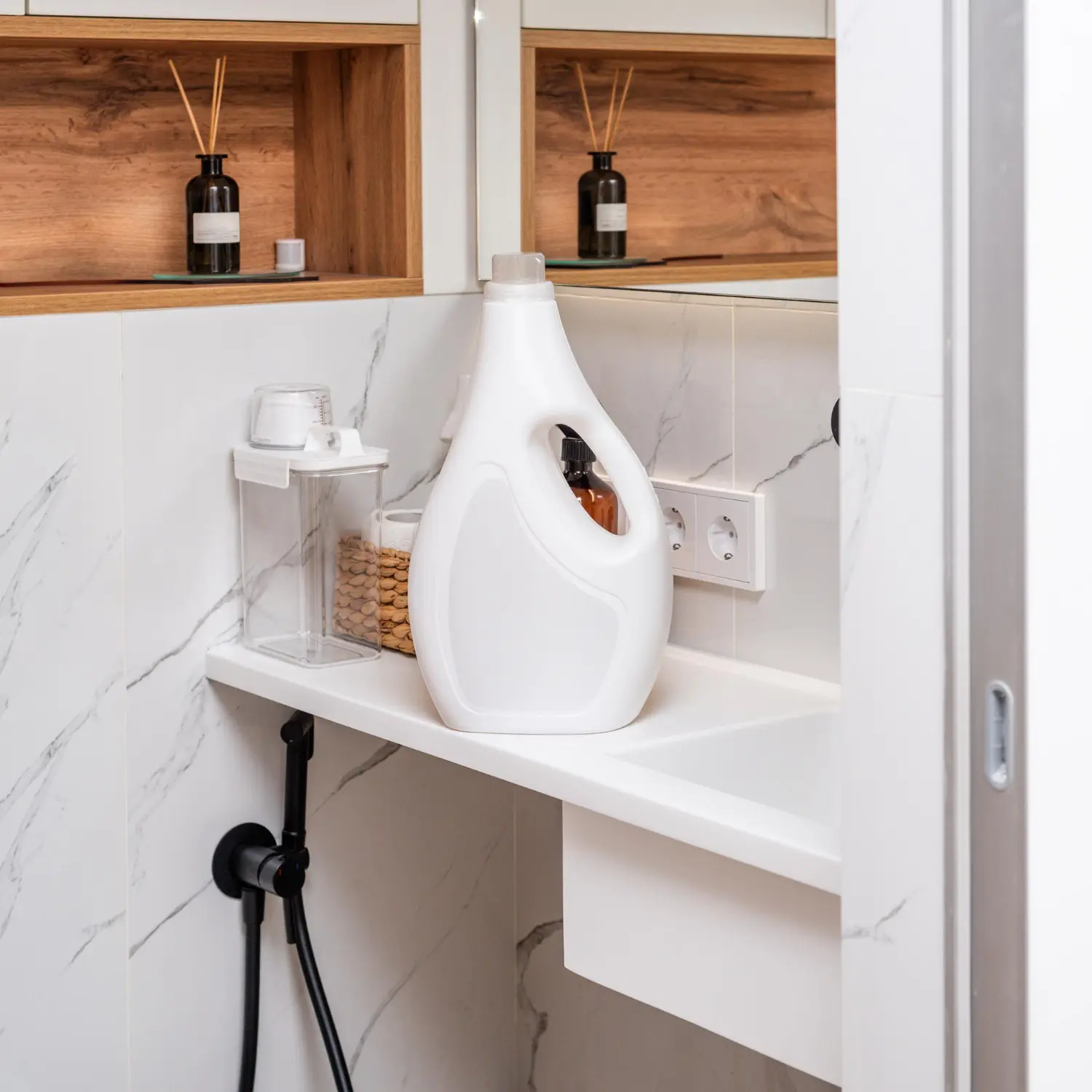
Most advice tells you the cabinet under your sink is too small. That is almost never the real problem. The space is dark, it has a curved P-trap pipe running through the middle, and half-empty bottles get dumped in a pile. The cabinet is not short on room. It is short on structure.
Looking for more ideas? Explore our full guide to Bathroom Storage & Organization Ideas.
Good under-sink organization is not about buying more bins. It is about giving the space a plan: work around the plumbing, go vertical, sort items into zones by how you use them, and use the door and the dead corners. Do that, and a “tiny” cabinet suddenly holds twice as much and looks calm every time you open it.
Editorial field note: A sink cabinet crammed with loose bottles usually hides three duplicates of the same thing. Pull everything out first, and the real issue shows up fast. It was never too little space. It was no system. Group the bottles by use, and half of them leave the cabinet for good.
This guide walks through the moves that actually work, what they cost, and where people go wrong. If you are refreshing the whole room, start with our home decor inspiration. For projects beyond the bathroom, these organization tips and projects help with the rest of the house. Bookmark this guide for quick reference.
| Quick Takeaways | |
|---|---|
| Structure | Zone by how often you use an item, not by bottle. |
| Plumbing | Pick organizers that clear the P-trap, not fight it. |
| Vertical | Two-tier and stackable shelves double the usable height. |
| The Door | The cabinet door is a free second wall of storage. |
| Safety | Keep medicine and cardboard out of the damp cabinet. |
Why “Just Cram It In” Always Fails
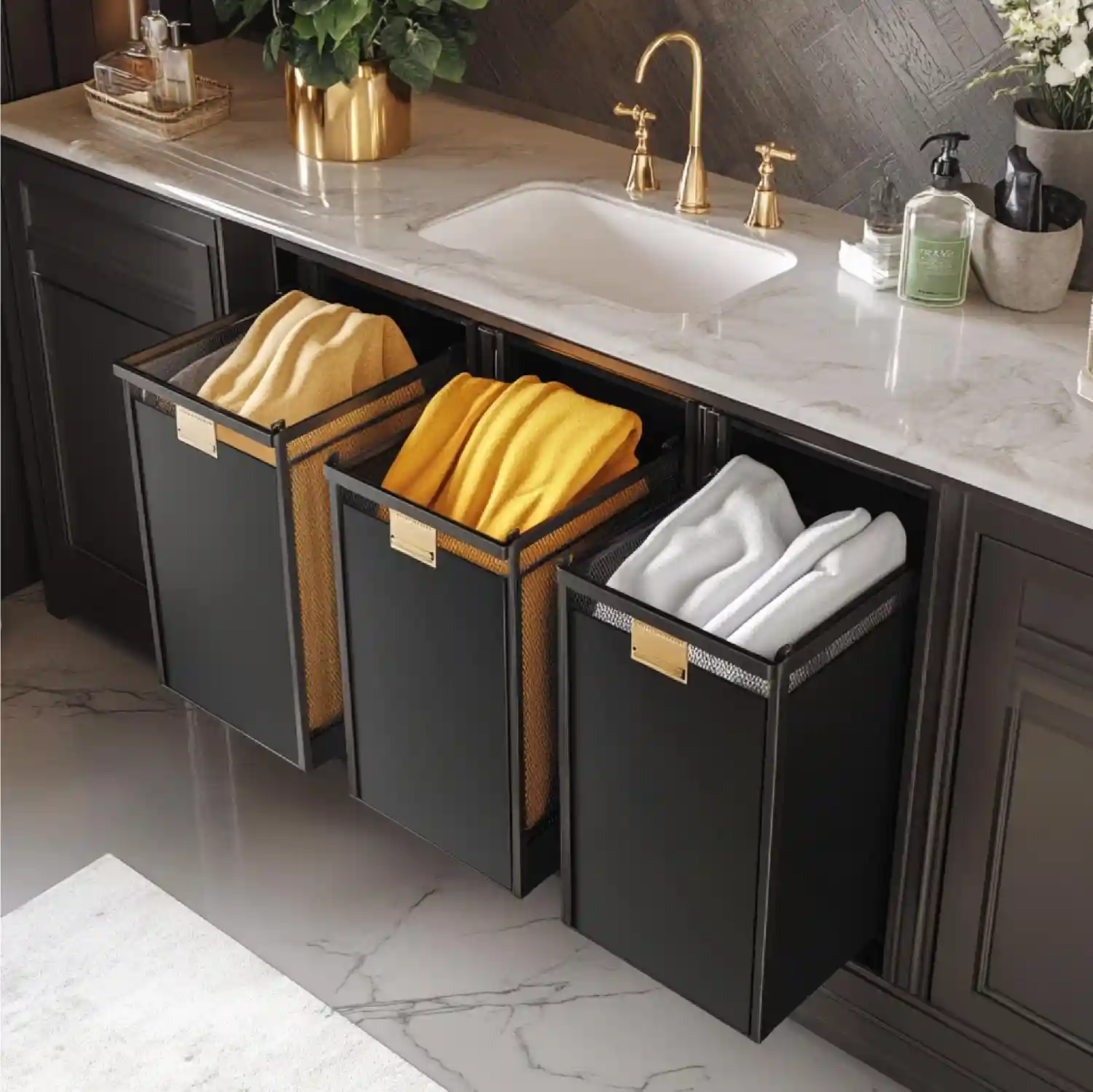
The single giant caddy shoved around the pipe is the classic mistake. It fills the cabinet floor, wastes all the height above it, and buries whatever sits in the back. You end up buying a third bottle of face wash because you cannot see the first two.
Professional organizers start the opposite way. They empty the whole cabinet first, so you can see every item at once and toss the duplicates. Only then do you add containers. A pile has no zones and no vertical layers. Structure fixes both. The cabinet is a small closet, and closets work when you build up and sort by use.
Work With the Plumbing, Not Against It
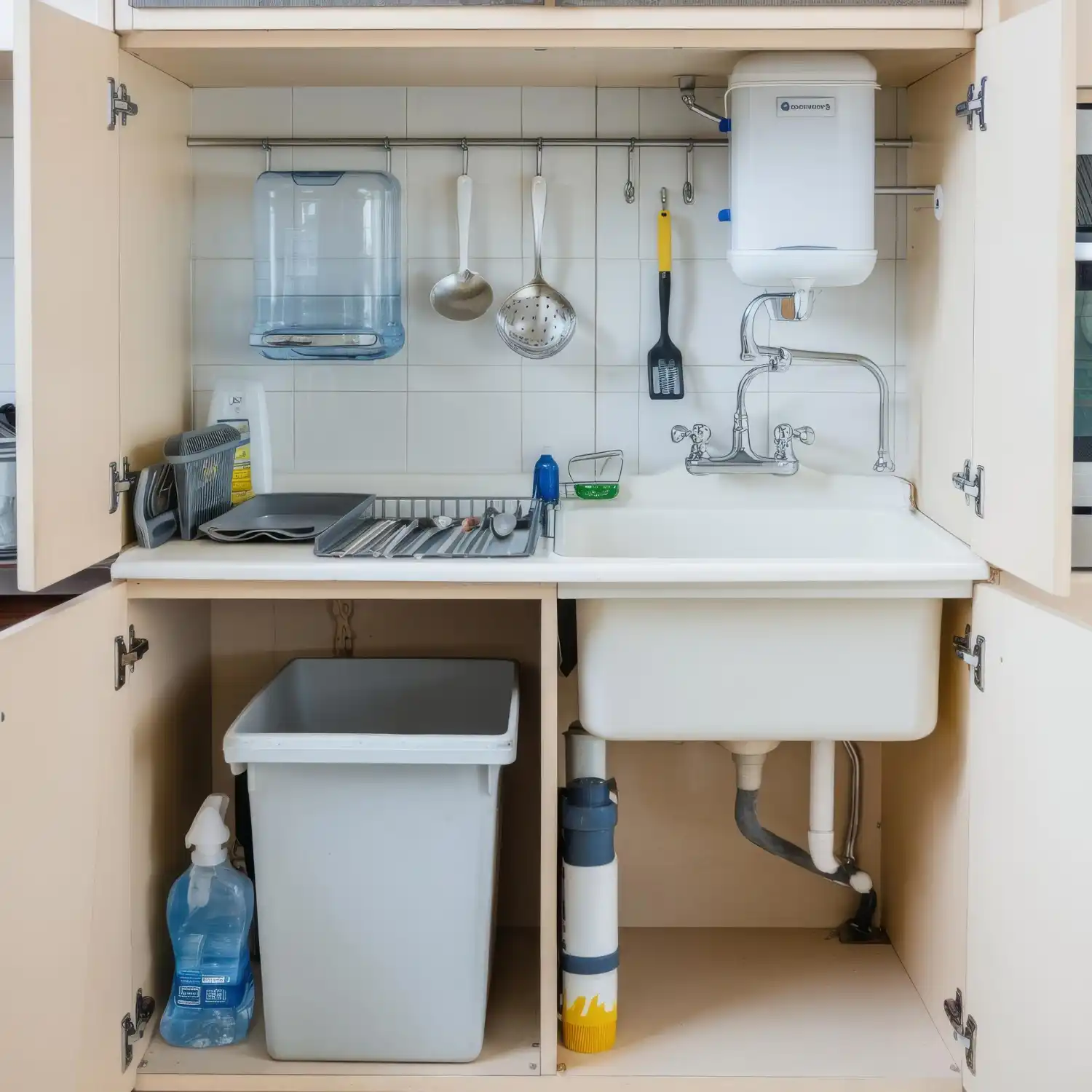
The P-trap pipe is the reason most flat organizers fail. It sits in the middle of the cabinet and blocks a straight shelf. The rising trend is buying organizers shaped to notch around the pipe, so you get a clean second tier of storage instead of one crowded floor. Every move below clears or wraps the plumbing on purpose. For more on styling the room these fixes live in, browse our bathroom design ideas.
If you ever spot water stains, a musty smell, or a warped cabinet floor, stop and check for a leak. Call a plumber before you store anything. Dry cabinet first, organizers second.
Two-Tier Pull-Out That Clears the P-Trap
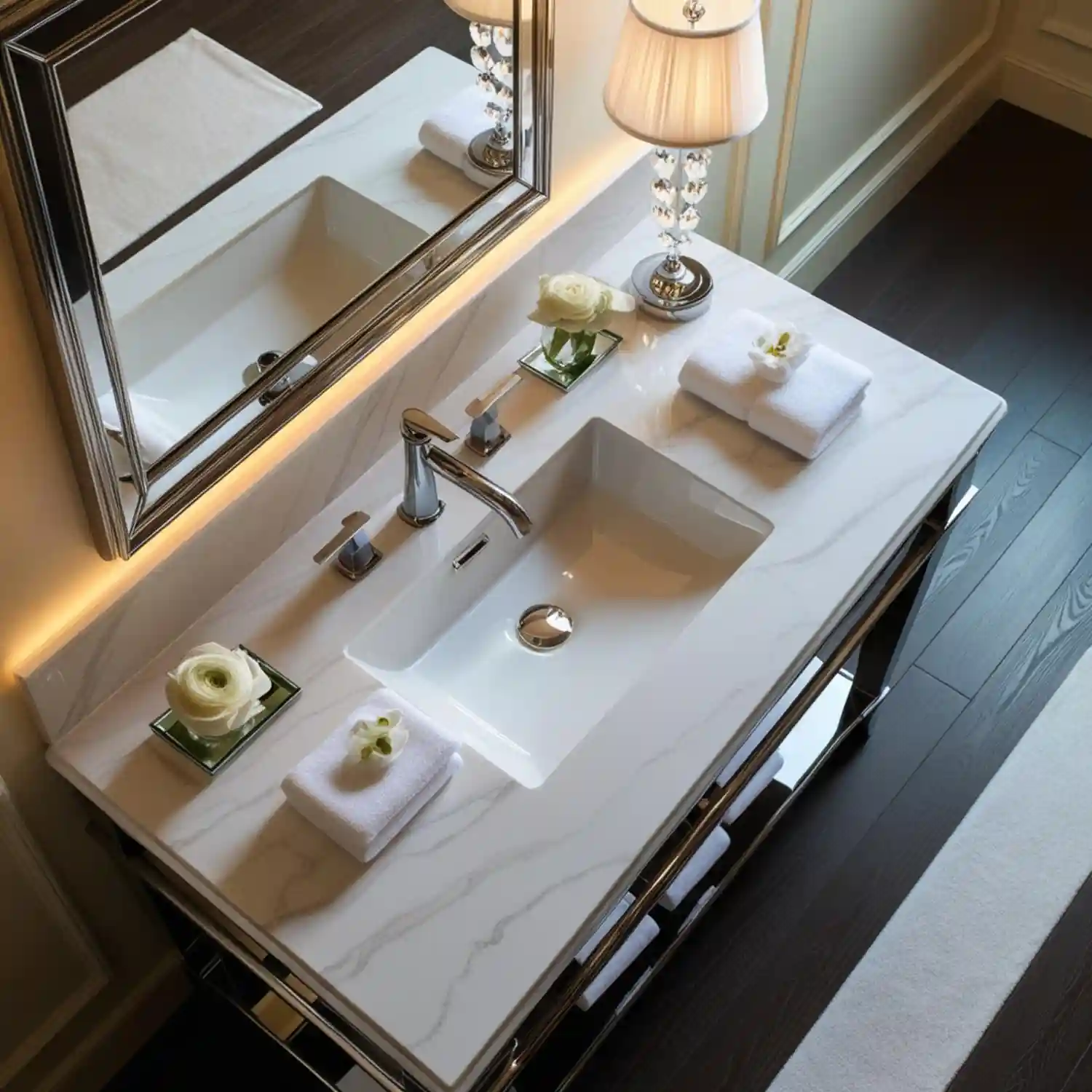
A two-tier pull-out shelf is the workhorse of a smart sink cabinet. It has notched or split shelves that slide together around the drainpipe, so the pipe passes through the gap instead of blocking a tray. The lower level holds tall bottles, and the upper level holds shorter items you reach for daily. Both tiers slide forward, so nothing hides in the back.
DESIGNER TIP: Measure your P-trap before you buy. Note the pipe height off the cabinet floor and how far it sits off center. Most two-tier shelves fit a pipe set 3 to 7 inches off center.
A U-Shaped Shelf That Wraps the Pipe
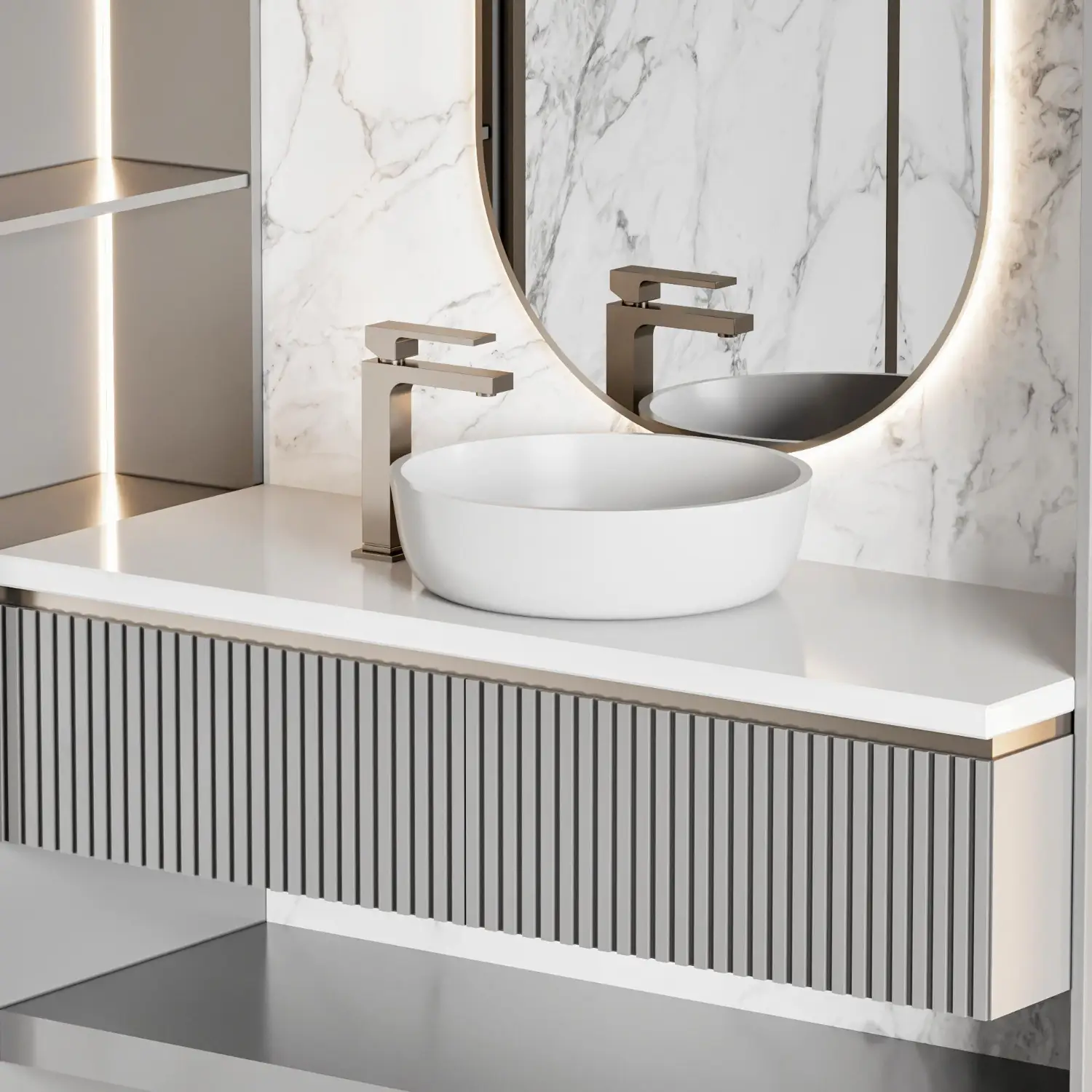
A U-shaped or L-shaped shelf is the low-cost cousin of the pull-out. The shelf has a notch cut out of the back, so it slides around the pipe and creates a second level above the cabinet floor. Many models expand from about 15 to 25 inches wide, so one shelf fits most standard vanities. It roughly doubles your usable space for the price of a coffee.
Expandable, Stackable Shelving
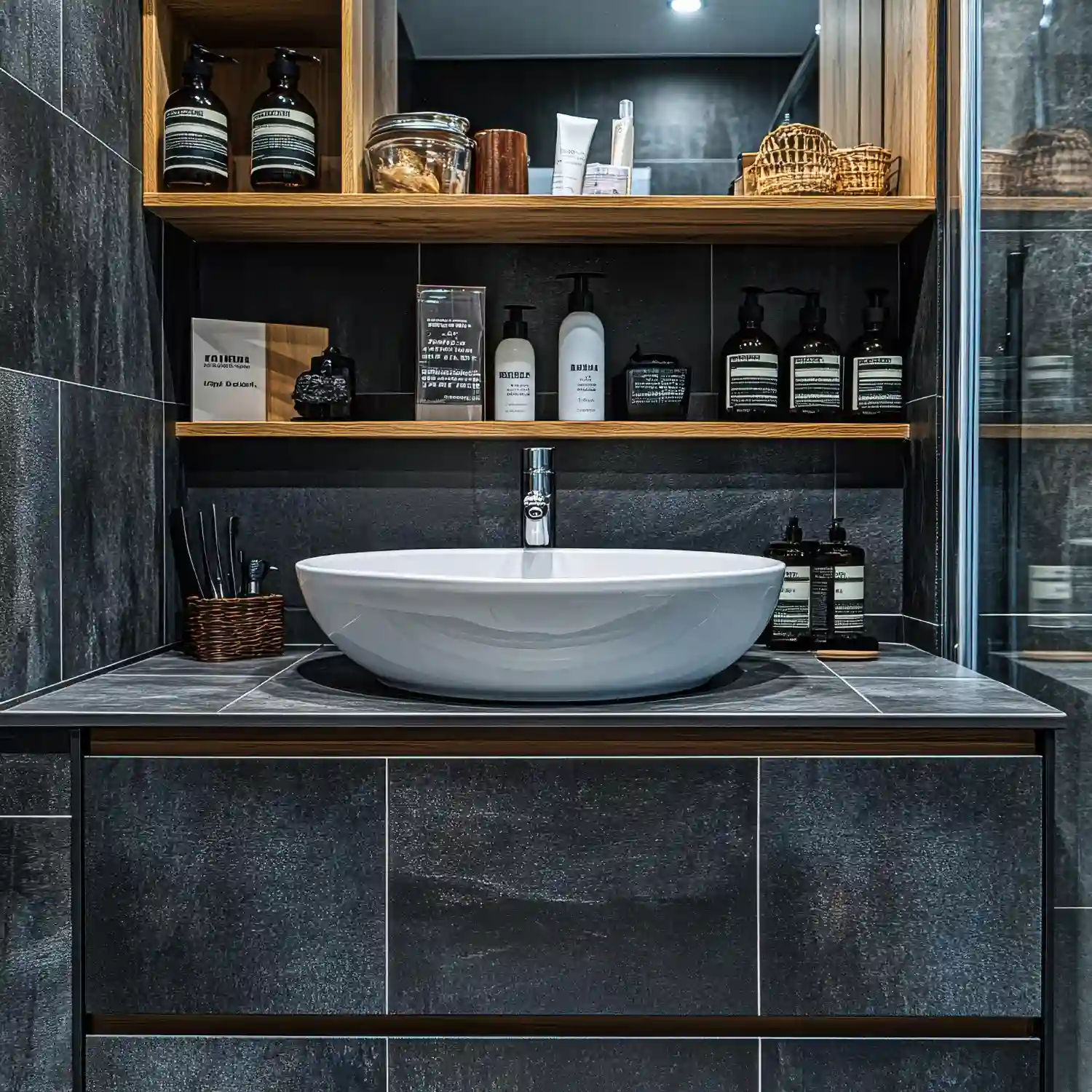
Stackable metal or plastic shelves solve the same height problem in a modular way. You add one shelf now and a second later as your needs grow. The legs sit on either side of the pipe, and the open frame lets you slide bins underneath. Stackable shelving is the flexible pick for renters, since it needs no drilling and moves with you.
A Tension Rod for Spray Bottles
A tension rod is the cheapest upgrade on this list. You wedge a standard spring-loaded rod across the top of the cabinet and hang spray bottles by their trigger handles. The bottles float above the floor, which frees the entire cabinet base for bins and taller items. A tension rod costs only a few dollars and takes about a minute to fit.
Contain and Zone by How You Use It
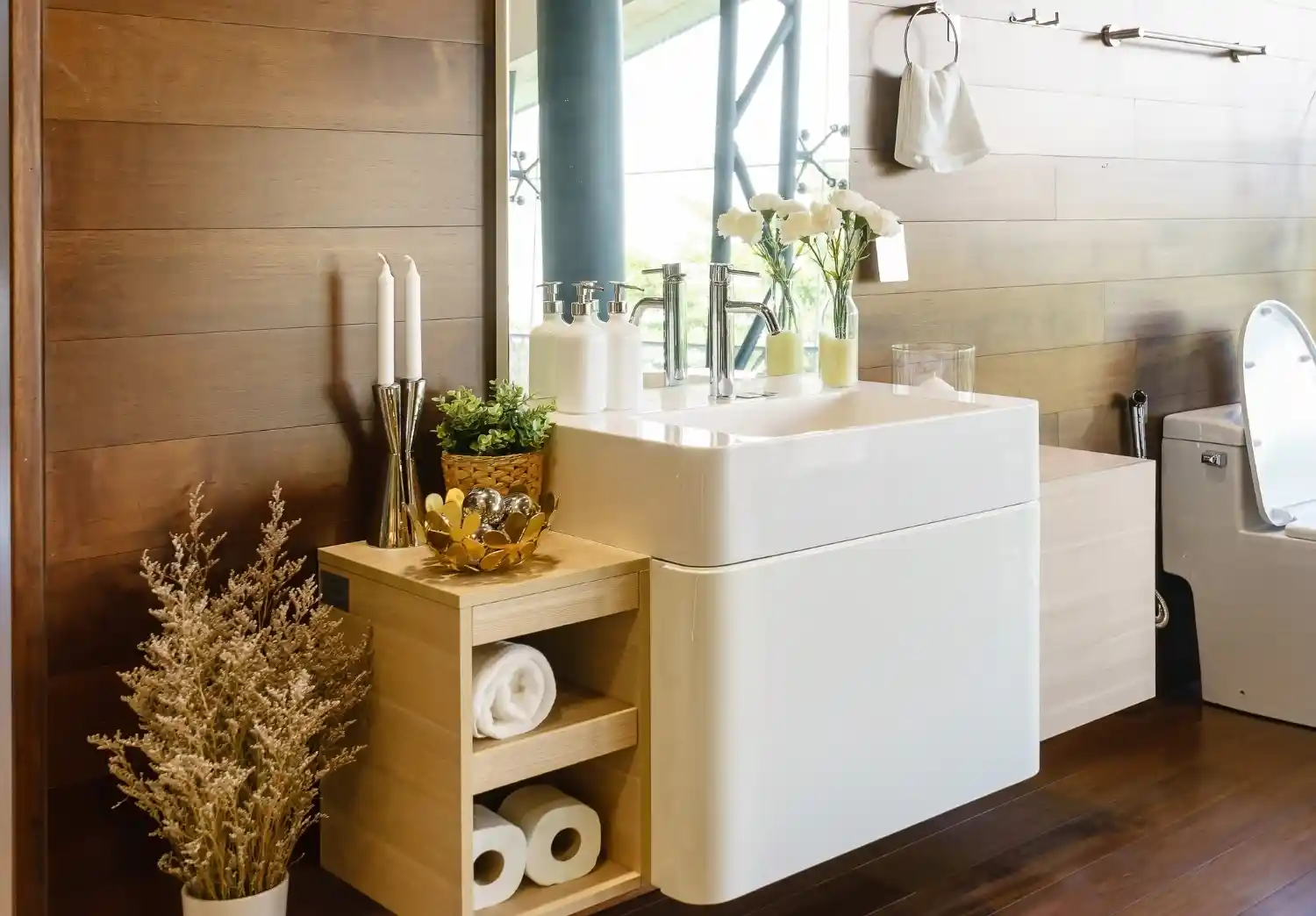
Containers only help when they follow a plan. The rule is simple: group by how often you use something, then give each group its own home. Under-sink organization clicks when daily items sit up front and at eye line, backups sit low and behind, and nothing floats loose. Clear, labeled containers have quietly replaced the single plastic caddy in almost every good “after” photo. The same zone-by-use habit keeps bedroom storage stylish, not cluttered.
Clear Stackable Bins
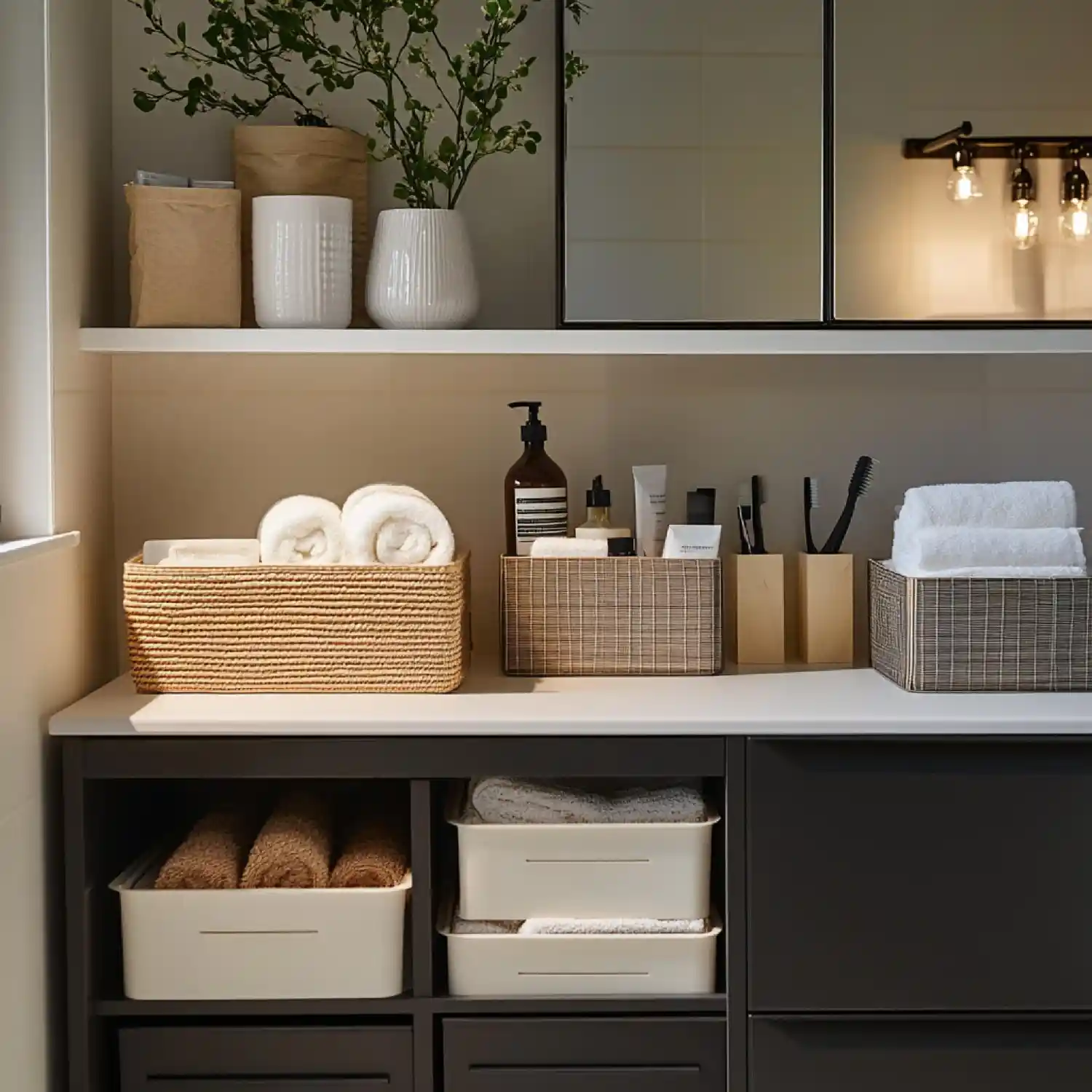
Clear bins are the backbone of the zone system. You can see what is inside without opening a lid, and a handled bin lets you pull a whole category out at once instead of digging. Group by job: one bin for hair, one for skin, one for cleaning. Stack the backups and keep the daily bin in front.
DESIGNER TIP: Fill each clear bin only about two-thirds full. A little empty space lets you pull it out and read the labels at a glance, instead of unpacking the whole thing.
A Turntable for the Deep Corners
A turntable, or lazy Susan, rescues the back corners where things vanish. You spin it to reach the item you want, so the far side of the cabinet stops being a graveyard for old bottles. Organizers use turntables for toiletries, lotions, and daily sprays because a quick spin beats a deep reach. Pick a diameter that clears the pipe and still turns freely.
Drawer Dividers and Slide-Out Drawers
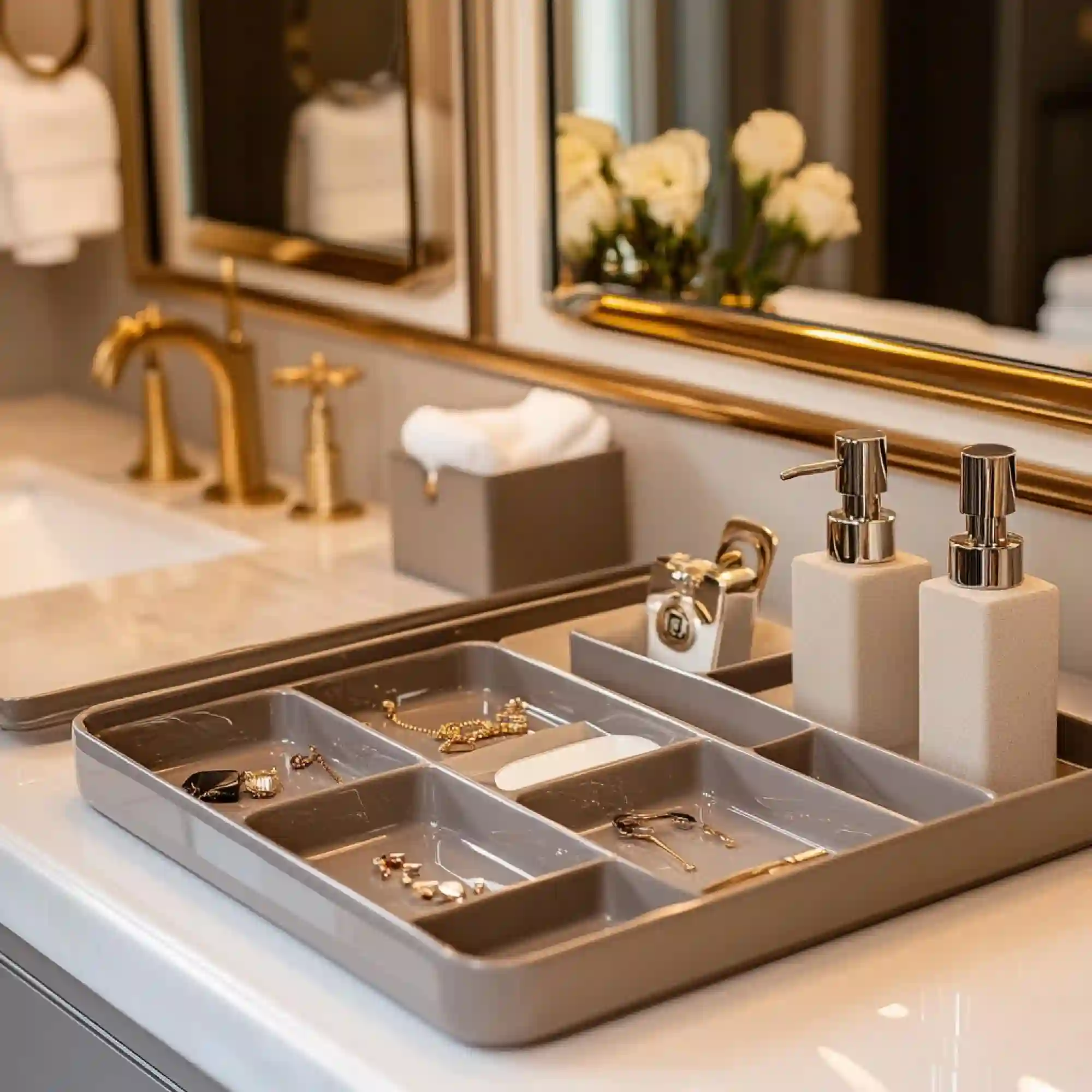
Small items like cotton swabs, hair ties, and travel tubes disappear in an open cabinet. A slide-out drawer or a shallow divided tray keeps them sorted and pulls forward for easy reach. Drawer dividers turn one deep drawer into four tidy lanes. This is the fix for the “junk drawer of the bathroom” problem under the sink.
Label Your Restock Zones
Labels are what make a setup stay organized after week one. Mark each bin and shelf with its zone, so anyone in the house returns an item to the right spot. This is the heart of the “under-sink restock” look you see online: a labeled, zoned cabinet that resets in seconds. The same labeling habit runs through good sewing room organization tips and any small, busy space. Labels also make it obvious when a zone is running low.
One caution for your zones. The cabinet under the sink is warm and damp, so medicines and paper boxes do not belong there. Medicines keep best in a cool, dry place away from the sink, and cardboard warps and grows mold in humidity. Store those elsewhere and save the cabinet for bottles and tools.
Use the Doors and the Dead Space
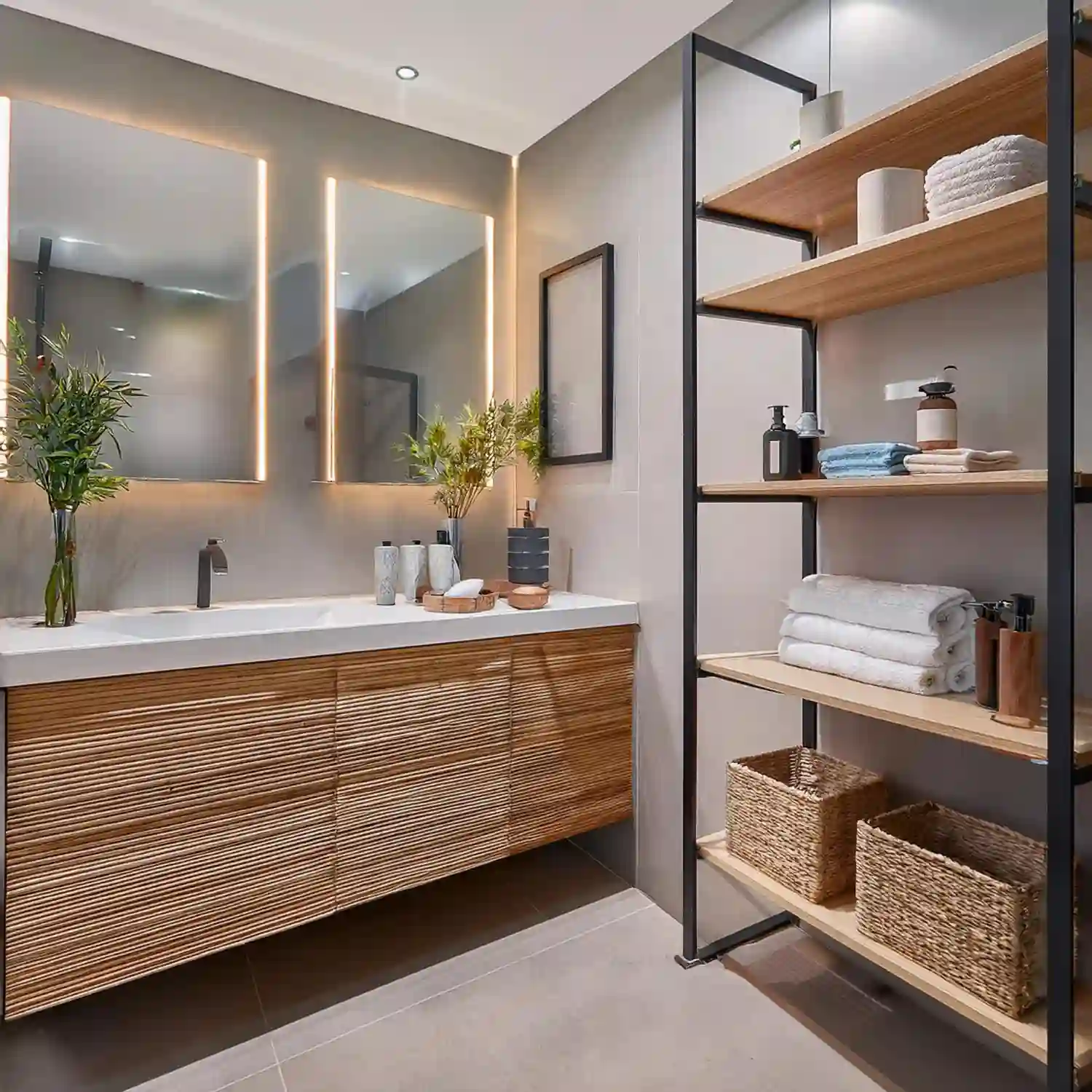
The cabinet door is the most ignored surface in the whole bathroom. It is a free vertical wall, and the dead space above the pipe and along the sides adds up too. If you have no cabinet at all, the space beside a pedestal sink still has options. Smart storage here is really about claiming every surface, not just the floor, and the same mindset drives most space-saving ideas for tight rooms.
Over-the-Door Caddies and Baskets
A caddy or wire basket that hooks over the top of the cabinet door holds flat, light items: hair tools, brushes, extra rolls, small sprays. The door swings free, and the basket keeps daily items right at hand. Match the basket finish to your room. Woven baskets suit a relaxed boho bathroom, while matte black wire fits a modern look.
Adhesive Hooks for Tools and the Hair Dryer
Adhesive hooks turn bare inside walls into hanging storage. Stick them to the cabinet side or door and hang a hair dryer by its cord loop, a flat iron, or a small brush. Hooks cost almost nothing and need no drilling, so they are a safe pick for renters. Press them onto a clean, dry surface and let them cure before you load them.
A Slim Rolling Cart When There’s No Cabinet
A pedestal sink or wall-hung basin leaves you no cabinet, but the wall beside it is usable. A slim rolling cart, about 6 to 12 inches wide, tucks into that gap and rolls out when you need it. Each tier becomes a zone, just like a cabinet shelf. This same trick works in a small bathroom with no storage or a tight rental.
What’s Fading Out
The old way of doing this is on its way out, and for good reason. These habits waste the space and always slide back into a mess.
The single giant caddy is fading first. It fills the floor and ignores all the height above it. The “just cram it in” pile is going too, along with opaque tubs you cannot see into and mismatched bottles standing loose. So is treating the cabinet as a dumping ground for medicine, cleaning refills, and cardboard boxes that swell in the damp.
Signs This Is Catching On
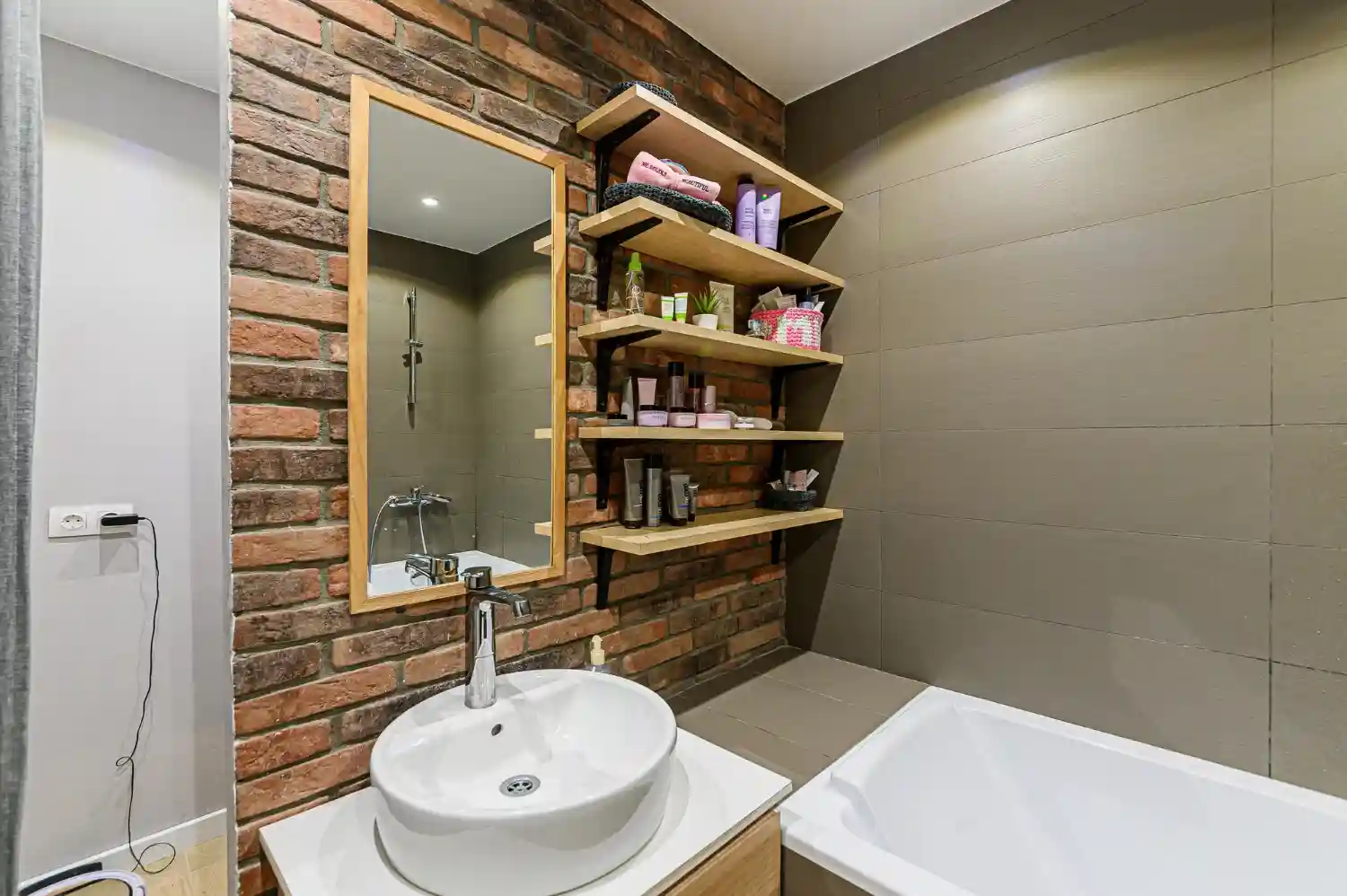
Under-sink organization is having a real moment, and the shift is easy to spot.
Pinterest and TikTok are full of “bathroom restock” and under-sink reset videos, and the bathroom organization tag pulls in a huge share of home-content views. Retailers now sell two-tier organizers shaped to notch around the P-trap, a product that barely existed a few years ago. Professional organizers treat the sink cabinet as its own project with a clear method: empty, group, contain, and zone. And in nearly every “after” photo, clear labeled containers and a turntable have replaced the lone plastic caddy. For more of where bathrooms are heading, see these bathroom design trends for 2026.
Where Under-Sink Setups Go Wrong
Most failed cabinets share the same few missteps. Each one has an easy swap.
Instead of buying bins before you empty the cabinet, Try pulling everything out first and grouping by use, so you buy only what fits.
Instead of one giant caddy shoved around the pipe, Try a two-tier shelf that clears the P-trap and adds a full second level.
Instead of stacking bottles flat on the floor, Try going vertical with a shelf, a turntable, and a tension rod for the sprays.
Instead of storing medicine and cardboard in the damp cabinet, Try a cool, dry drawer elsewhere and keep the cabinet for bottles and tools.
What Under-Sink Organizers Cost
Organizing under the sink is one of the cheapest upgrades in the house. A basic reset runs under $35, and even a full kit stays under $160. The table below shows real product ranges for the organizers in this guide, not install or plumbing work.
| Project | Estimated Cost | Impact Level |
|---|---|---|
| Starter reset: tension rod plus 2-3 clear bins | $15-$35 | High |
| Two-tier expandable pull-out shelf | $30-$60 | Very High |
| Turntable, drawer dividers, and labels | $25-$55 | Medium |
| Full kit: pull-out, door caddy, slim rolling cart | $90-$160 | Very High |
Best First Upgrade: A two-tier pull-out shelf that clears the P-trap, since it doubles the usable space in one move.
Skip for Now: A pricey custom cabinet insert before you have emptied and sorted what you actually own.
The Bottom Line
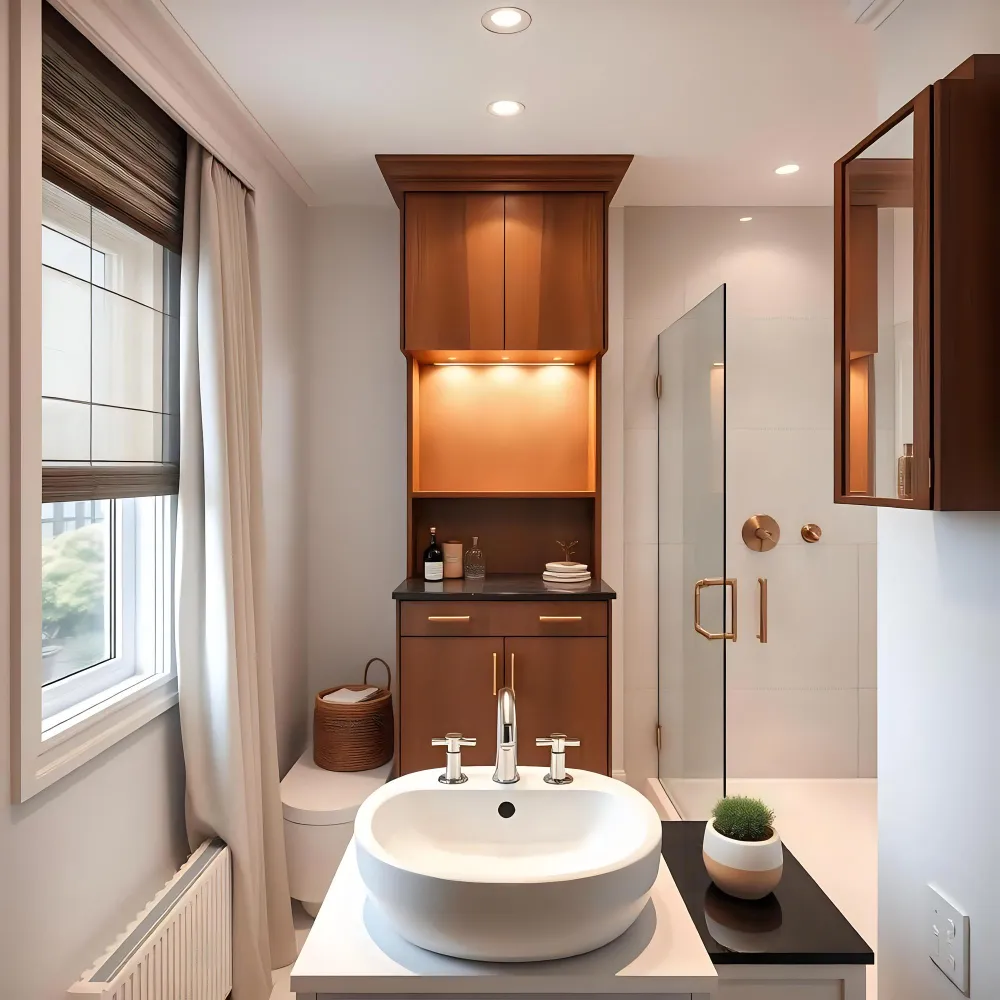
Under-sink organization will keep growing because it is cheap, it fixes a daily annoyance, and the results photograph well. The staying power is real, not a passing look. The lone plastic caddy is done, and the structure-first cabinet is here to stay.
The Pick: If you buy one thing, make it a two-tier pull-out shelf that notches around the pipe. It is the single move that turns a crammed pile into a calm, restock-ready cabinet. Everything else, from bins to labels, builds on that second tier. The same zone-and-vertical logic scales up to bigger cabinets, as our laundry room cabinet storage ideas show. It even works at whole-room scale in these basement living and storage ideas.
Frequently Asked Questions
Conclusion
The cabinet under your sink was never too small. It just needed structure, so give it height, zones, and a plan that works around the pipe. Smart under-sink organization turns the messiest spot in the bathroom into the calmest. Explore ideas for every room in the house to carry the same calm through your whole home, or browse our full home decor inspiration for more.
Editorial field note: A vanity cabinet with a single caddy and a loose pile of bottles reads as chaos every time the door opens. Add one two-tier shelf, three labeled bins, and a turntable, and the same cabinet holds more and looks settled. The change takes an afternoon, and it sticks.
Next Steps
- Empty the entire cabinet and sort every item into keep, toss, and store-elsewhere piles.
- Measure your P-trap height and off-center offset, then buy a two-tier pull-out or U-shaped shelf to match.
- Add clear handled bins, a turntable, and labels to zone items by how often you use them.
- Claim the door and side walls with an over-the-door caddy and a couple of adhesive hooks.