TL;DR
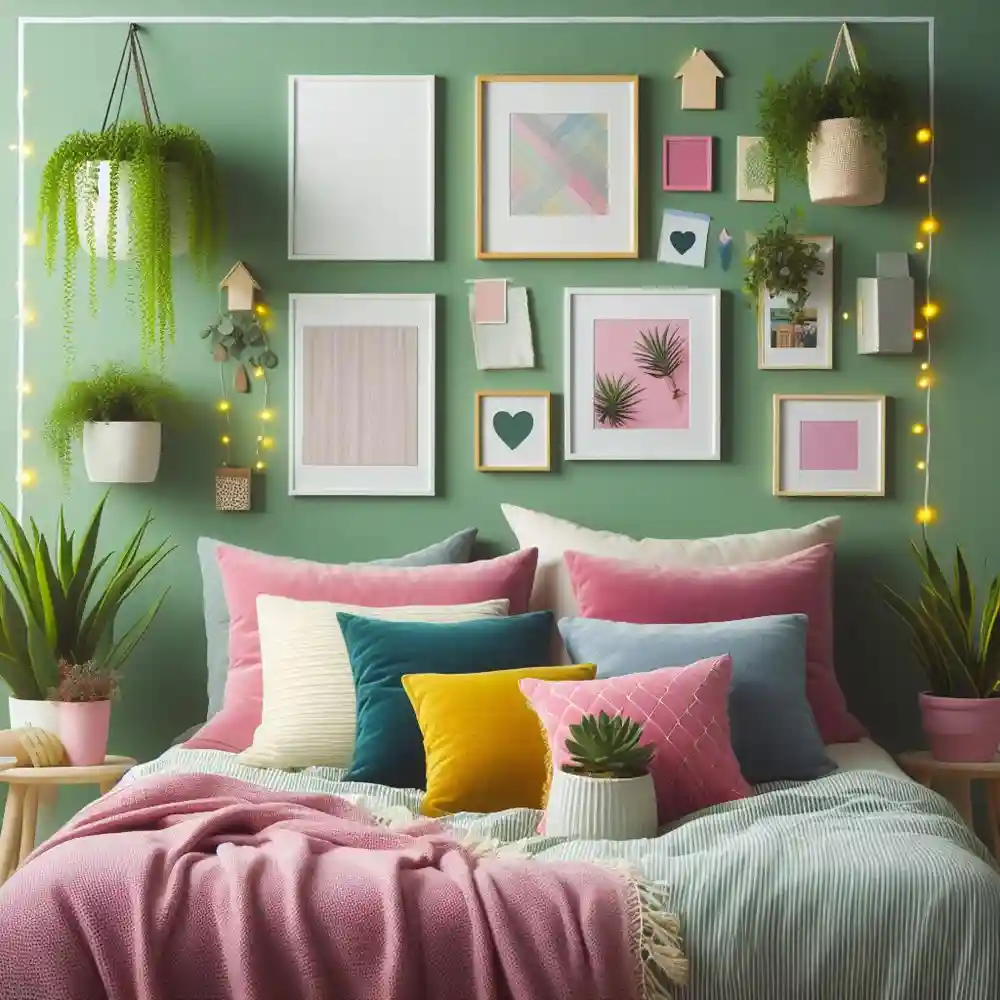
- What you are buying: The mount, not the print. Frameless, peel-and-stick, repositionable — the photo comes along with it.
- The premium: A tile costs several times what the same image costs printed at the same size. That gap is the price of not drilling.
- Worth it when: You rent, the wall cannot be drilled, or the arrangement will change. Otherwise it usually is not.
- The catch: Adhesive mounts fail on textured walls, fresh paint and bathrooms — none of which appears in the marketing.
- Never buy at list: Discounting is structural in this category. The list price is close to a fiction.
What Are You Actually Buying With Photo Tiles?
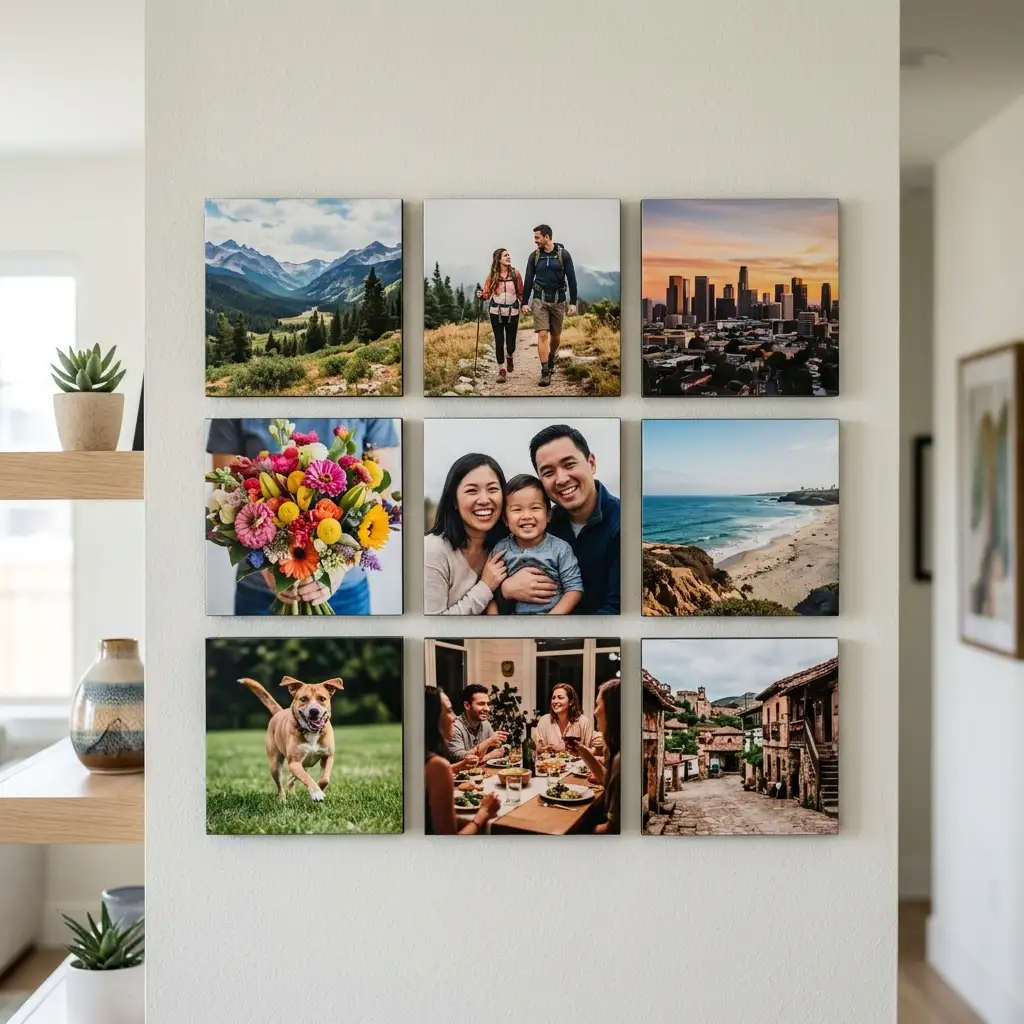
An 8-inch square photo tile lists at somewhere around fifteen dollars. The same image printed 8 by 8 inches at a normal photo lab costs a fraction of that, and the paper is often better. Nothing about the picture explains the gap.
Part of our guide to wall decor, this post covers the commercial end of it.
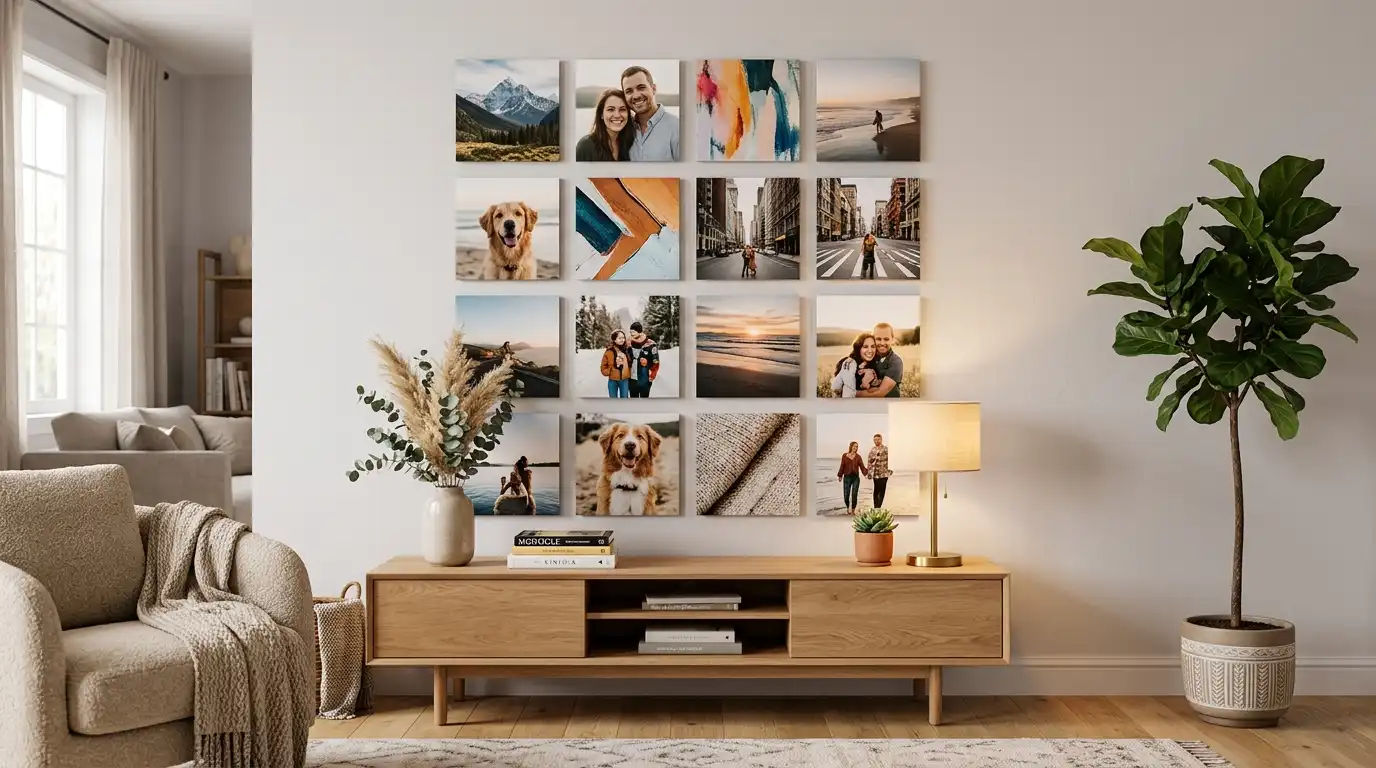
Here is the direct answer. With photo tiles you are buying a mounting system and the print is bundled in. The product is a rigid frameless panel with an adhesive or magnetic backing that holds without hardware and comes off again. That is a useful thing to sell. It is just not a print, and pricing it against prints is how people end up feeling cheated.
Which reframes the decision. The question is not whether they are overpriced — measured against a photo print they always will be. It is whether the no-nail mount is worth the premium in your particular room, and for a lot of people it plainly is.
Editorial field note: A rented hallway with nine tiles up for two years, moved three times during that period, is a case where the maths works easily. The same nine images in a permanent arrangement in an owned house is where the premium starts looking hard to justify.
Where the Money Goes
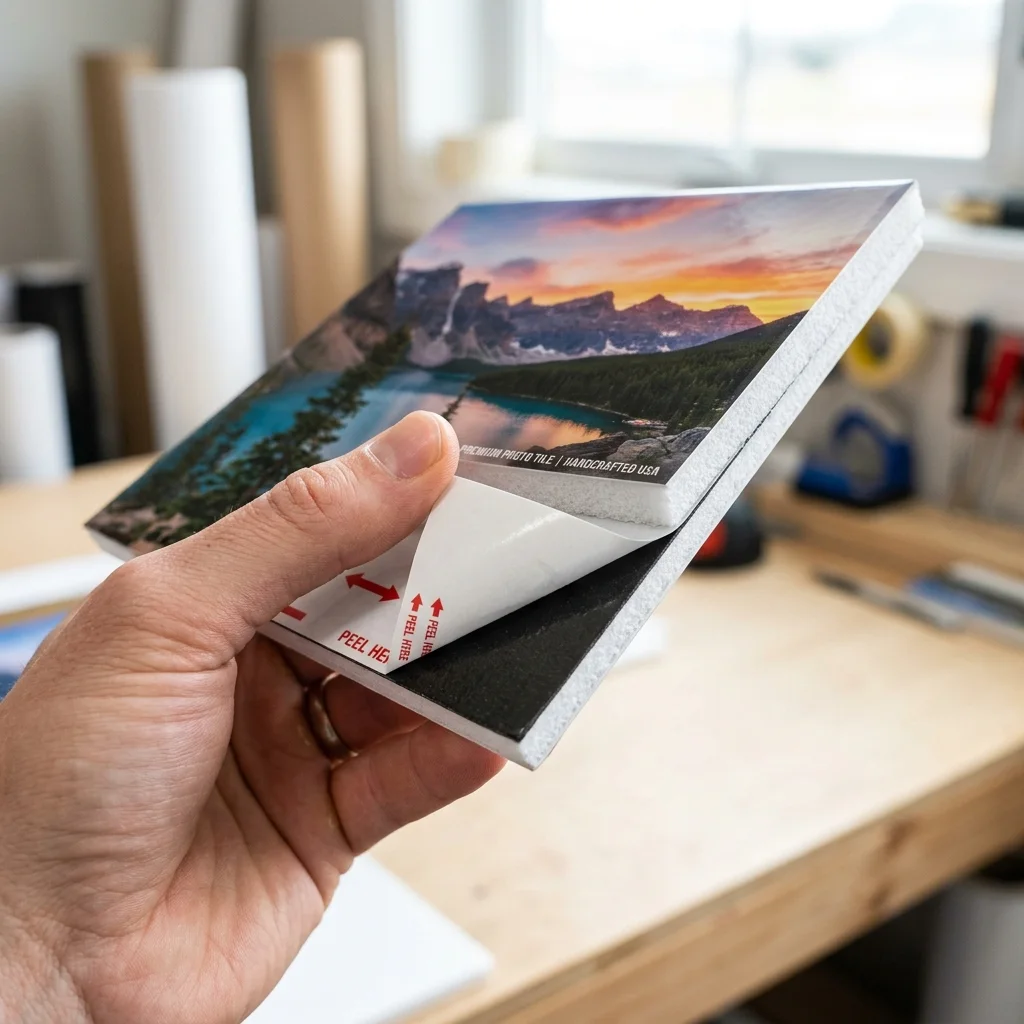
Break the price into its parts and the decision gets easier. A photo tile is three things: a print, a rigid substrate, and a mounting system. The print is the cheapest component by a wide margin.
The substrate is a foam or composite board, cut square and edge-finished so it looks acceptable from the side. That costs real money but not much of it. The mount is the actual product — a restickable adhesive or two-part magnetic system engineered to hold weight, release cleanly, and survive repeated repositioning. That is where the development cost sits.
Then there is the part nobody itemises: acquisition. This category is sold almost entirely through paid social, so the cost of getting you to the checkout is baked into the tile.
Compare by cost per square inch rather than by unit price, because unit price hides size differences. An 8 by 8 tile is 64 square inches. A 16 by 20 print is 320 square inches — five times the area. If the tile is fifteen dollars and the print is twelve, the tile is costing you roughly six times more per square inch of wall covered. That ratio survives every promotion, which is why it is the number to think in.
| Quick Takeaways | |
|---|---|
| The product | A frameless rigid panel plus a no-nail mount. The print is the cheap part. |
| Compare by | Cost per square inch, not price per tile. Unit price hides how small a tile is. |
| Buy when | You rent, cannot drill, or expect the arrangement to change. |
| Skip when | You own the wall, it is flat drywall, and the layout is permanent. |
| Pricing | Never order at list. Discounting in this category is constant and steep. |
The List Price Is Almost Never the Price

This category runs on structural discounting, and it is worth understanding before you order anything. List prices exist mainly to make the discount look large. Sets, bundles, first-order codes and seasonal promotions move the real price a long way from the sticker, and they run more or less continuously.
Two consequences follow. First, never order at list — if no offer is running, wait, because there will be one. Second, the per-tile price only means something inside a set. Brands price a single tile high and a bundle of nine much lower per unit, so ordering three is the worst value in the range.
It also makes published price comparisons unreliable, including this one. Any figure you read is a snapshot of one promotional cycle. The cost-per-square-inch ratio between a tile and a plain print is far more stable than either number, so decide on the ratio and treat the headline price as noise.
DESIGNER TIP: Build the whole arrangement in one order. Beyond the bundle pricing, tiles from separate batches can differ slightly in colour, which shows immediately when they hang side by side.
What the Adhesive Mount Actually Does — and Where It Fails
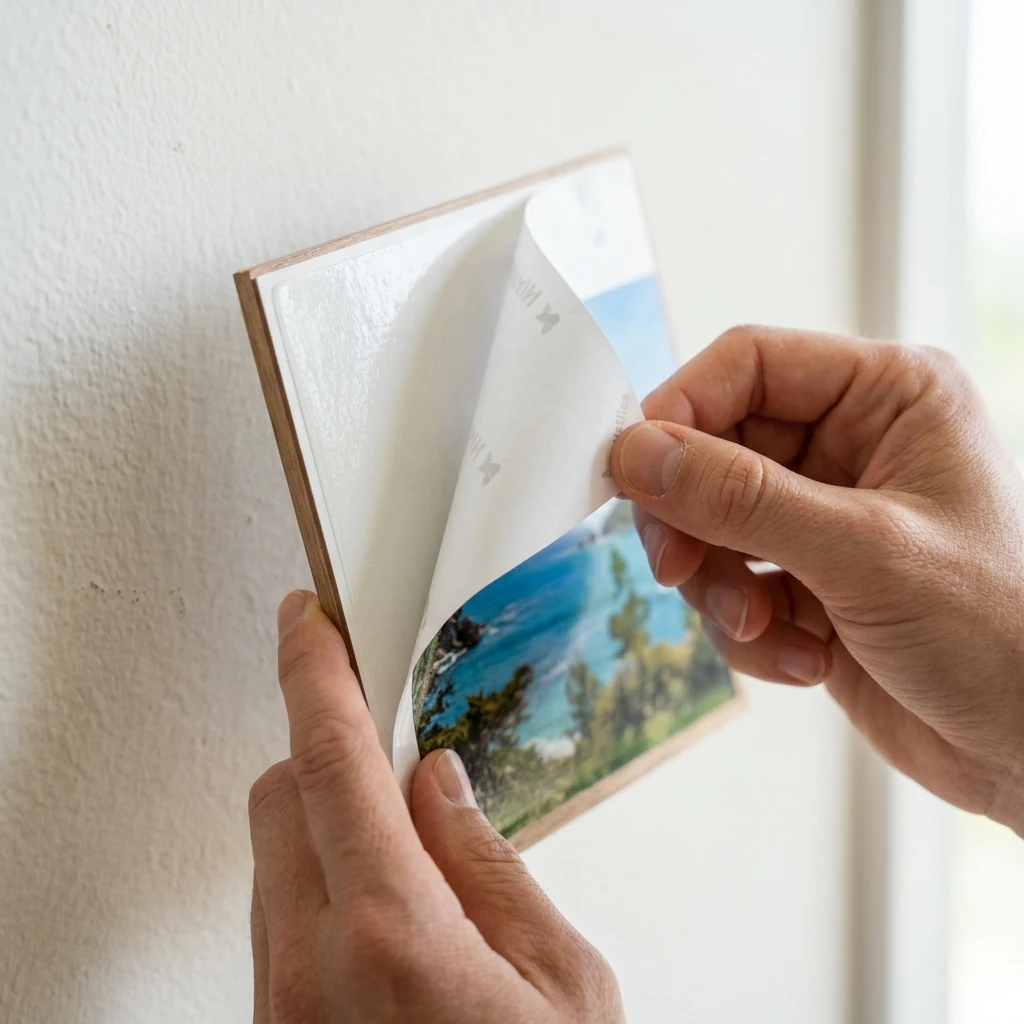
The mount is the reason to buy, so it deserves scrutiny. Mixtiles states on its own site that its tiles are “designed to be repositioned multiple times without any damage” and leave no marks. In the common case — flat, cured, painted drywall — that holds up well, and the ability to move a tile after it is up is genuinely useful.
The marketing does not mention the conditions where it does not hold up. Those conditions are ordinary, and they are the single biggest cause of disappointment with this product.
The Walls It Will Not Hold
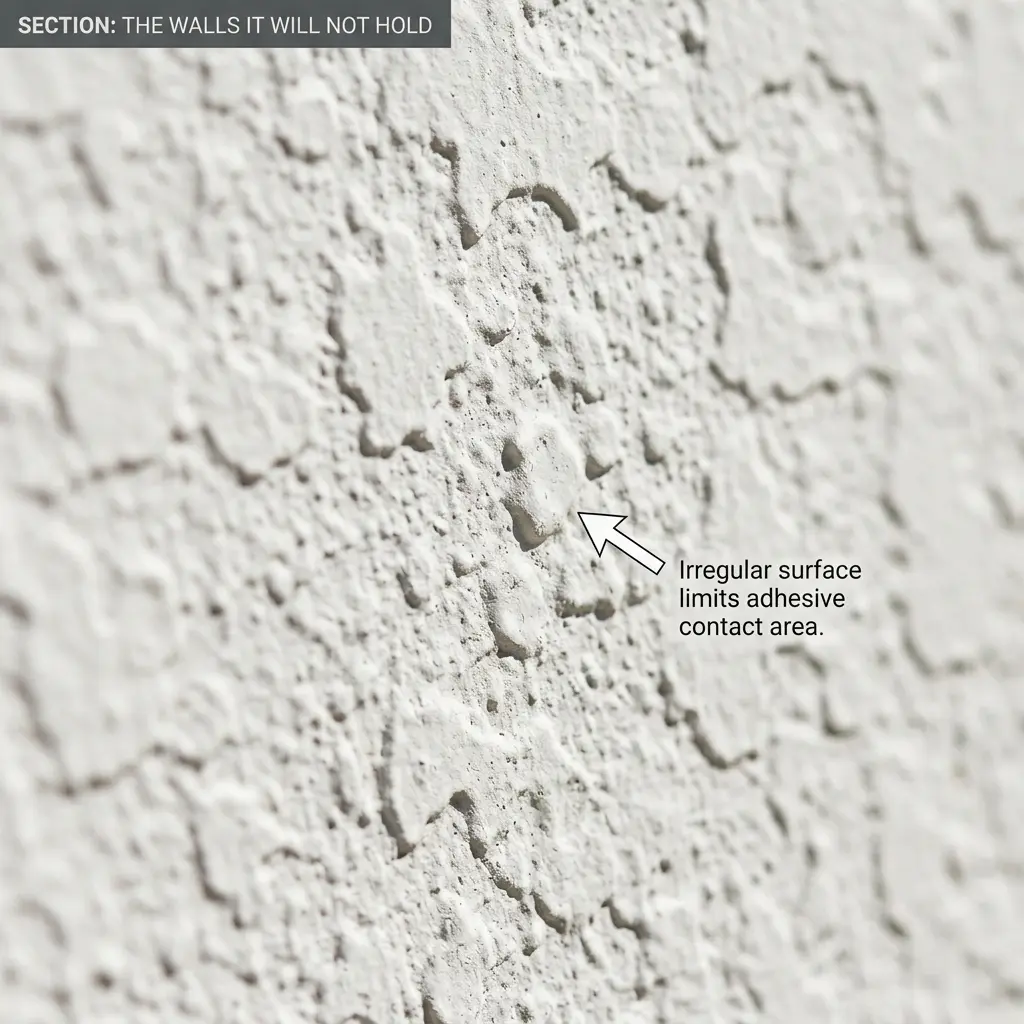
Textured walls are the main failure. Knockdown, orange peel, popcorn and heavy skip-trowel finishes give the adhesive far less contact area than flat drywall, and tiles that seem fine on day one drop off weeks later. If you can feel obvious relief when you run a palm across the wall, treat adhesive mounting as unreliable.
Fresh paint is the second. Latex paint continues curing for weeks after it feels dry to the touch, and adhesive applied to uncured paint bonds to a surface that is still moving. That is the most common cause of paint lifting on removal.
Wallpaper, limewash and chalky matte finishes are the third group. Each has a surface layer weaker than the adhesive, so when the tile comes off it can bring the layer with it. Bathrooms belong here too, since humidity swings work at any adhesive bond over time — our bathroom wall decor ideas cover what does survive that room.
What “No Damage” Really Means
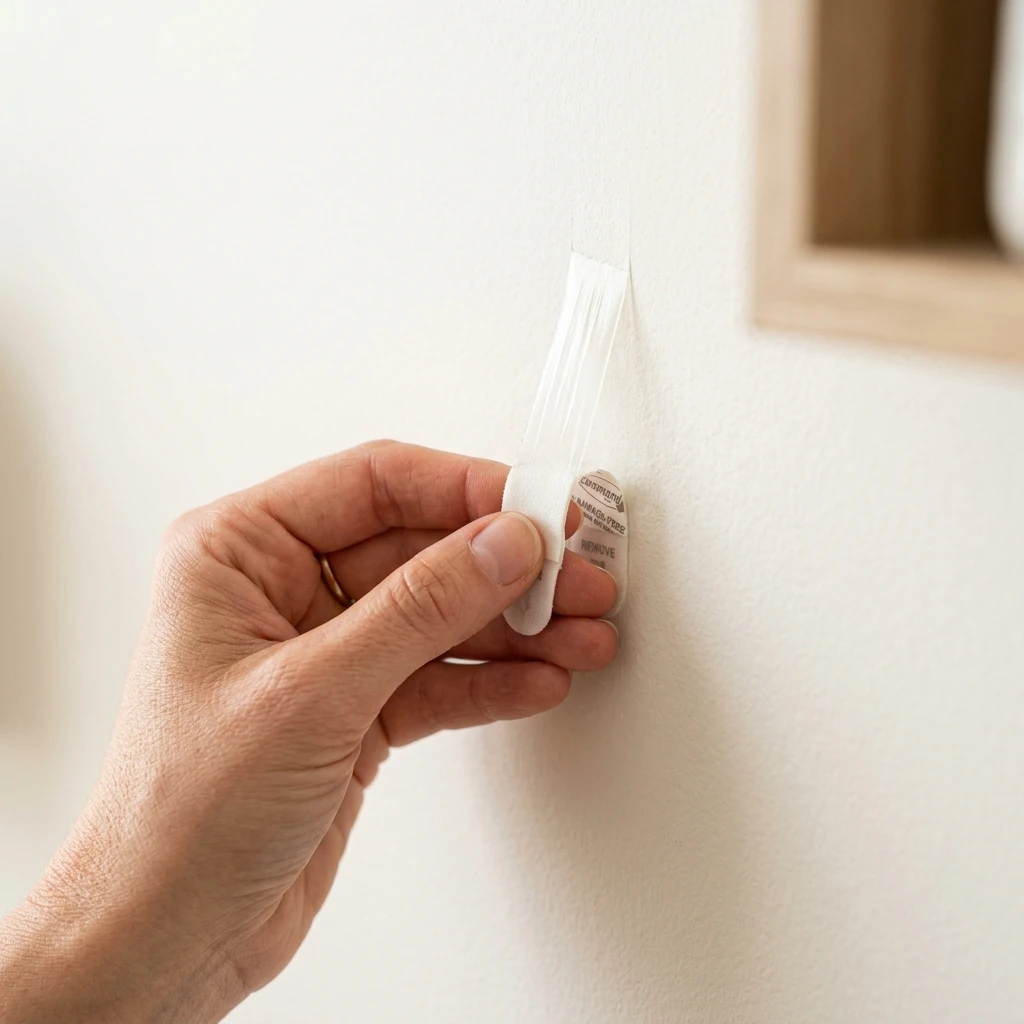
No-damage claims across this whole category mean the adhesive is engineered to release rather than tear. It does not mean removal is risk-free, because the outcome depends on your wall as much as on the product.
Removal technique decides most of it. Pull slowly and low, close to the wall surface, rather than yanking outward — pulling away from the wall concentrates force on the paint layer and is what lifts it. Warming the adhesive gently with a hairdryer first makes a real difference on a tile that has been up a long time.
The honest position is that damage-free removal is likely on sound, well-cured, flat paint and genuinely uncertain on anything else. If losing a patch of paint would cost you a deposit, test one tile in a hidden spot and leave it a month before committing to nine. Our rental bedroom ideas guide covers the wider set of reversible choices worth making.
The Alternatives, Sorted by What You Need
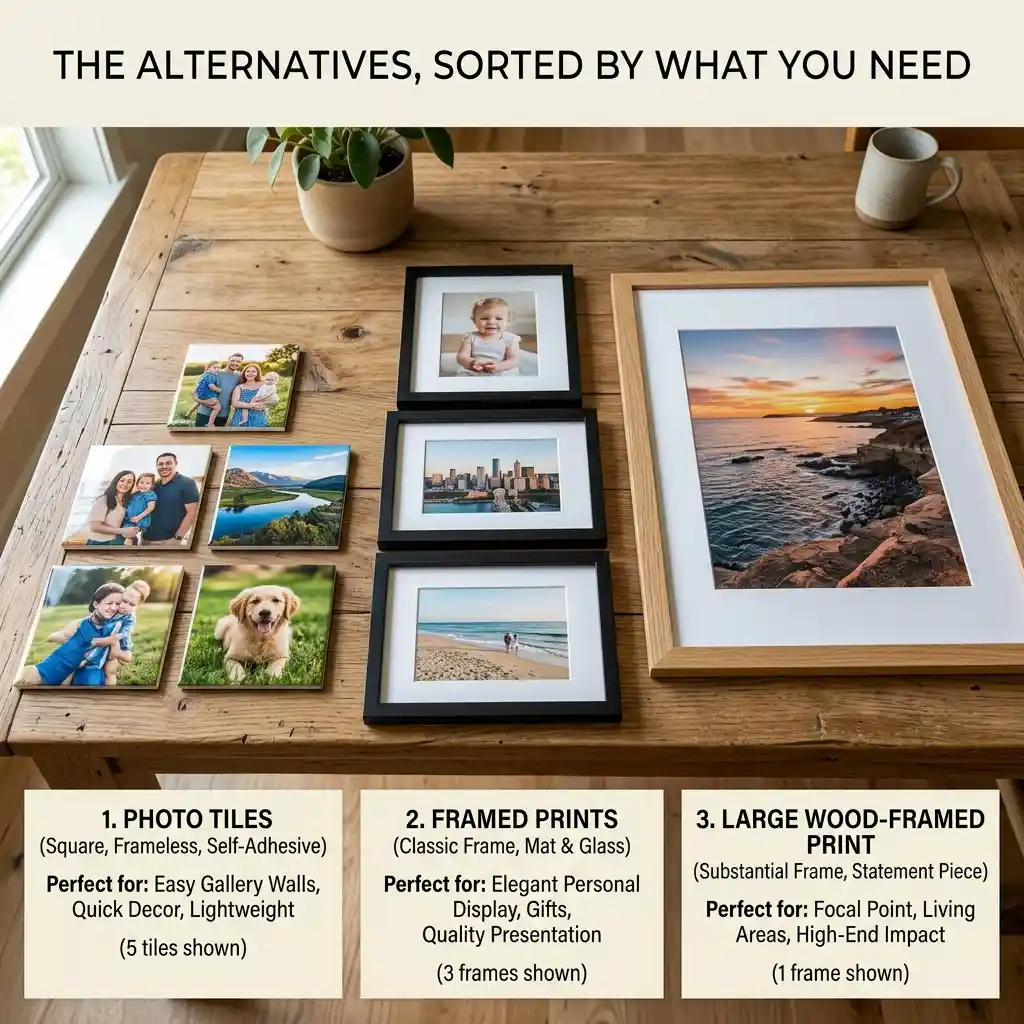
Ranking these brands against each other is not useful, because they are not competing for the same job. Sort them by what you actually need instead.
If You Need the No-Nail Mount
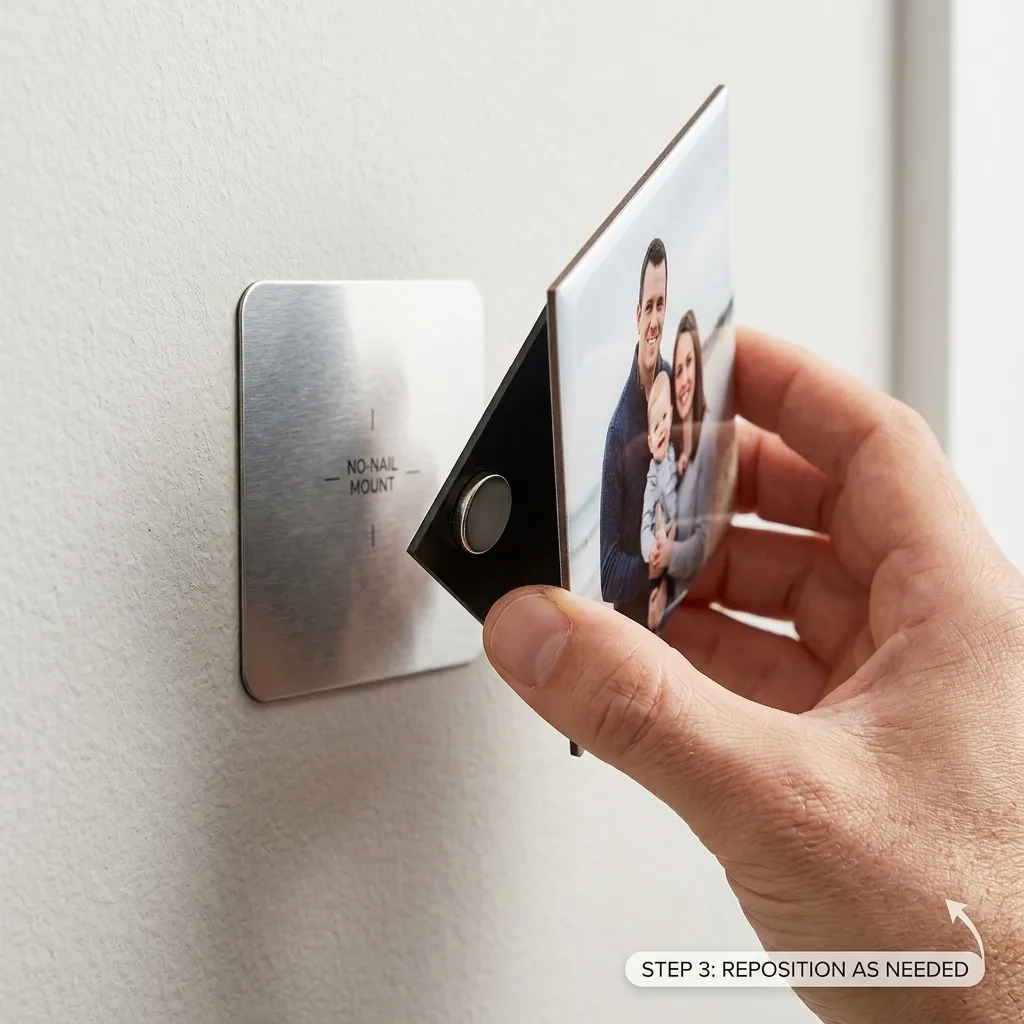
Stay inside the category, but shop the mount rather than the brand. Two-part magnetic systems — a plate that sticks to the wall and a tile that snaps onto it — reposition better than one-piece adhesive and are worth seeking out if you expect to move things.
Retail-collected tiles are the cheapest route in. Several photo services let you order online and pick up locally, which removes shipping and lets you see a sample before ordering nine.
The rest of the no-nail field matters too: adhesive strips rated well above the framed weight hang an ordinary frame with no holes, and a picture ledge on two anchors carries a whole row. Both leave you owning normal prints rather than proprietary panels.
If You Want the Best Print for the Money
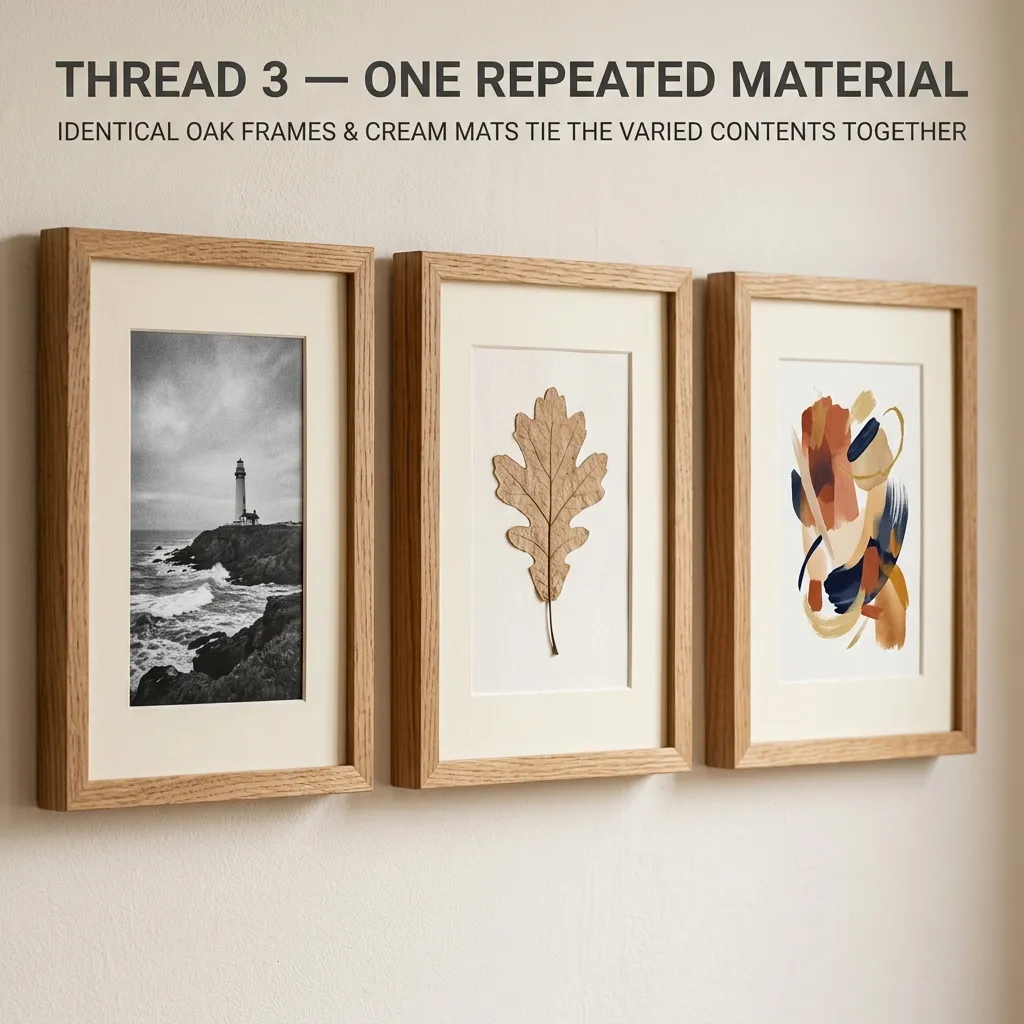
A conventional photo lab wins on print quality per dollar and is not close. Order prints on a decent paper, put them in inexpensive frames, and you will spend a fraction of tile pricing for a visibly better image with a real mat and real glass.
The trade is holes in the wall and an afternoon of measuring. If neither of those is a problem for you, this is the correct answer and everything else on this list is a compromise.
Print quality does depend on the file you upload rather than the service. Phone photos enlarge less far than people expect, and the resolution ceiling is worth checking before you order anything large. If you are short of images worth printing, our spring wall art ideas are a cheap way to fill the gaps.
If You Want Something Bigger
Tiles are small by design, and the format stops working above about a foot square. For anything genuinely large, wood-framed print services are the closer comparison.
Smallwoods is the best-known of these. Its framed prints run $69 to $139 across sizes from 8 by 10 up to a 44 by 22 panoramic, on canvas-textured board in a real wood frame, with hanging hardware included. Custom sizes start lower, around $39.
Run the per-square-inch comparison here as well and the picture inverts. A 25 by 17 print is 425 square inches for around a hundred dollars; nine 8-inch tiles cover 576 square inches for a comparable sum but arrive as nine small objects rather than one substantial one. Above a sofa, one large piece usually does more than nine small ones — a point our living room wall decor ideas return to repeatedly.
If You Are Willing to Hang It Yourself
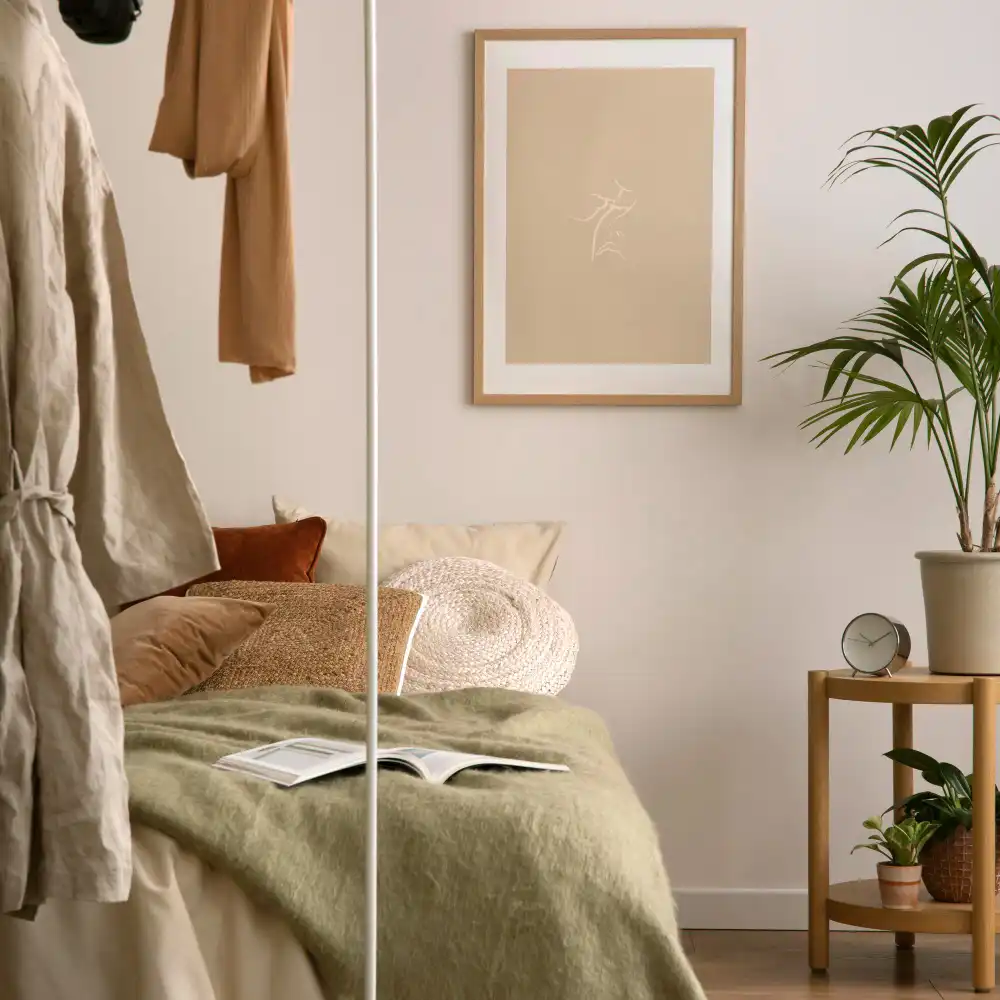
The cheapest credible route is prints from a photo lab in ready-made frames, hung conventionally. For the price of three or four tiles you can fill a whole wall, and you end up with frames you can reuse for years and reglaze cheaply.
The work is real and worth naming: measuring, marking, drilling, and patching later if you change your mind. That labour is precisely what the tile companies are selling you out of, and whether it is worth the premium depends entirely on how you value an afternoon.
| Feature | Photo tiles | Prints in frames |
|---|---|---|
| Cost per square inch | Highest in the category | Lowest by a wide margin |
| Wall damage | None if conditions are right | Holes, patchable |
| Repositioning | Easy, repeatedly | Requires re-drilling |
| Print and finish quality | Adequate, frameless | Better paper, mat and glass |
| Largest practical size | About a foot square | Effectively unlimited |
| Time to install | Minutes | An afternoon |
Why Are Photo Tiles Everywhere Right Now?
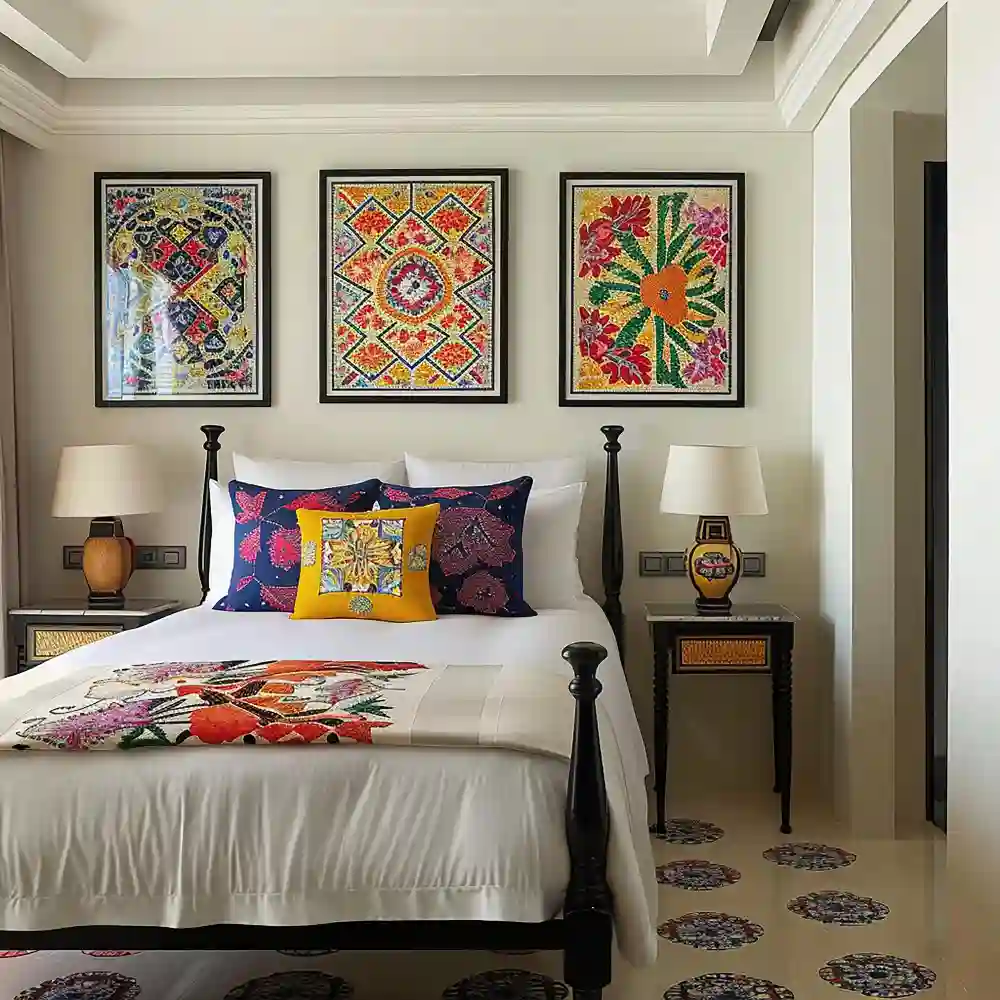
The category did not grow because the product improved. It grew because it fits how people now buy decor, and because a whole generation of renters and students needed something a lease would allow — our dorm room ideas sit squarely in that market.
Signs This Is Catching On:
- Renting for longer has made reversibility a purchase criterion rather than an afterthought, and no-nail mounting sells directly into that.
- Phone photo libraries are enormous and almost entirely unprinted, so anything that turns a camera roll into an object has a very large addressable market.
- The whole category is optimised for paid social, where a tile going up in seconds demonstrates far better than a framing process does.
- Two-part magnetic mounts have replaced one-piece adhesive across much of the category, making repositioning a headline feature rather than a caveat.
None of that makes it a bad product. It does explain why it is priced as a decor brand rather than as a print service, and why the marketing emphasises the seconds-to-hang moment over what you are holding afterwards. Plenty of other wall treatments answer the same blank-wall problem, and our decor and styling ideas cover them.
Where People Get This Wrong
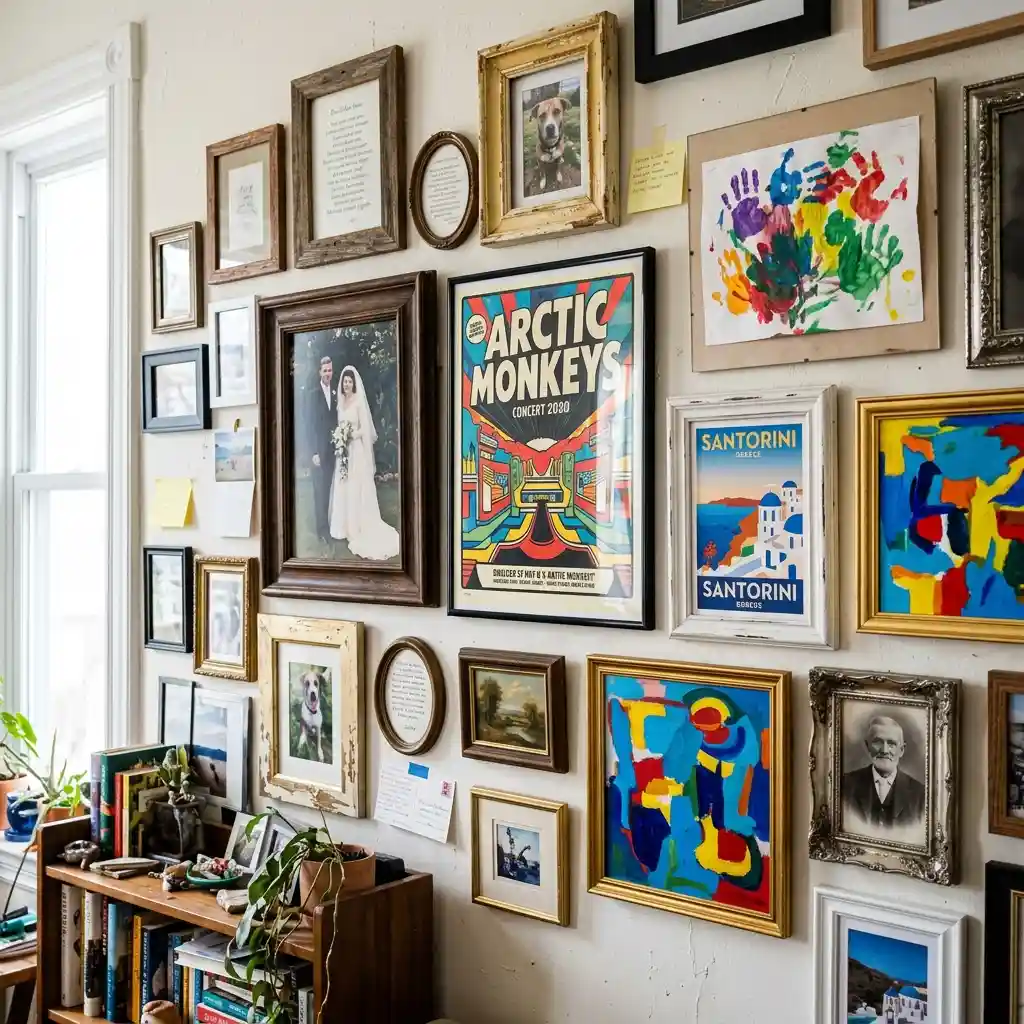
Instead of comparing a tile’s price to a print’s price, Try comparing cost per square inch of wall covered. Unit price makes tiles look close to prints when they are several times dearer for the same coverage.
Instead of ordering at list because a promotion ended, Try waiting. Discounting here is continuous, so paying full price is a choice rather than a necessity.
Instead of assuming no-damage means guaranteed, Try testing one tile in a hidden spot for a month. That is cheap insurance if a lost patch of paint would cost you a deposit.
Instead of buying tiles for a permanent arrangement in a house you own, Try prints and frames. The repositionable mount is the entire premium, and paying for it never to move is the commonest way people overspend.
Photo Tile Buying Checklist
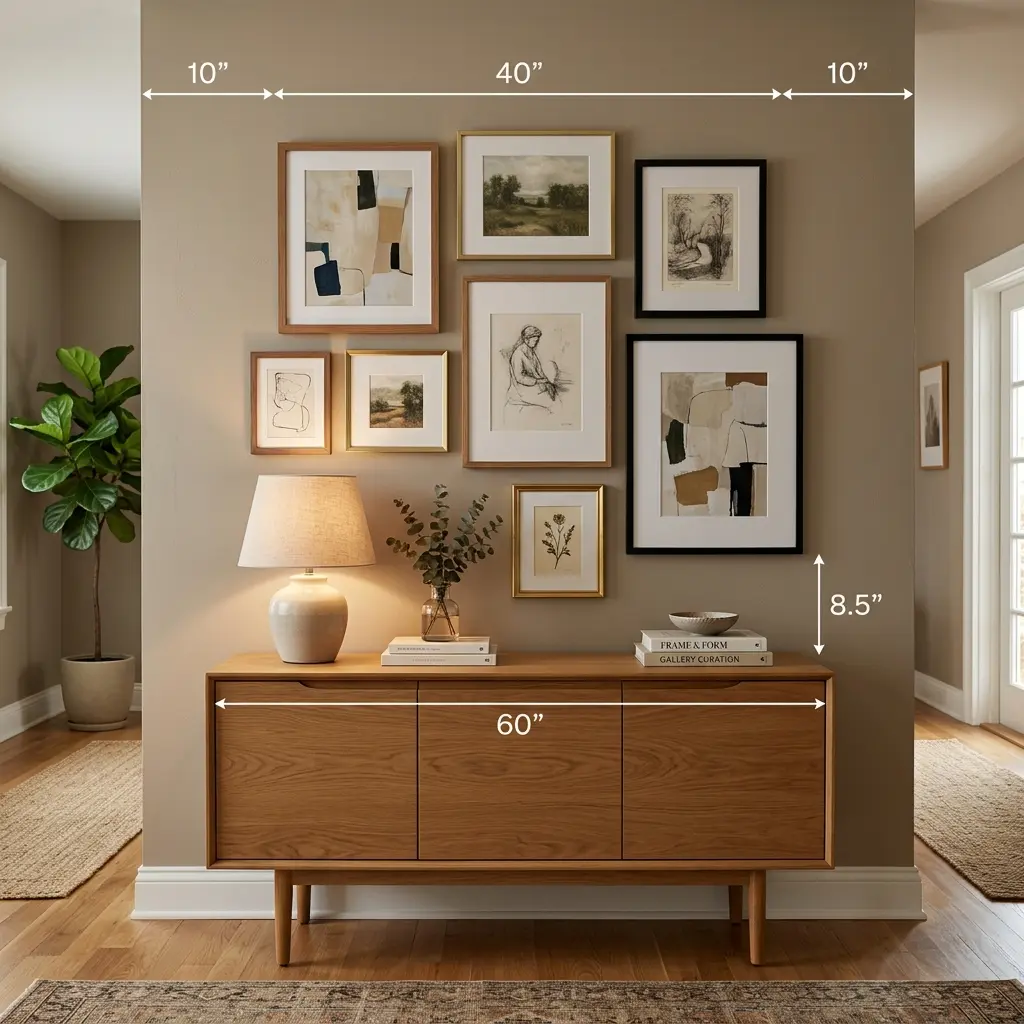
Before you order:
- Run a palm across the wall — obvious texture means adhesive mounting is unreliable and you should stop here.
- Check when the wall was last painted, and allow several weeks of cure time before sticking anything to it.
- Work out cost per square inch for the tile and for a plain print at the same coverage, then decide if the gap is worth it.
- Confirm whether the mount is one-piece adhesive or a two-part magnetic system, since only the second repositions well.
- Order the whole arrangement in one batch so colour is consistent and bundle pricing applies.
- Wait for an active promotion rather than ordering at list.
- If a lost paint patch would cost you money, test a single tile in a hidden spot first.
The Bottom Line
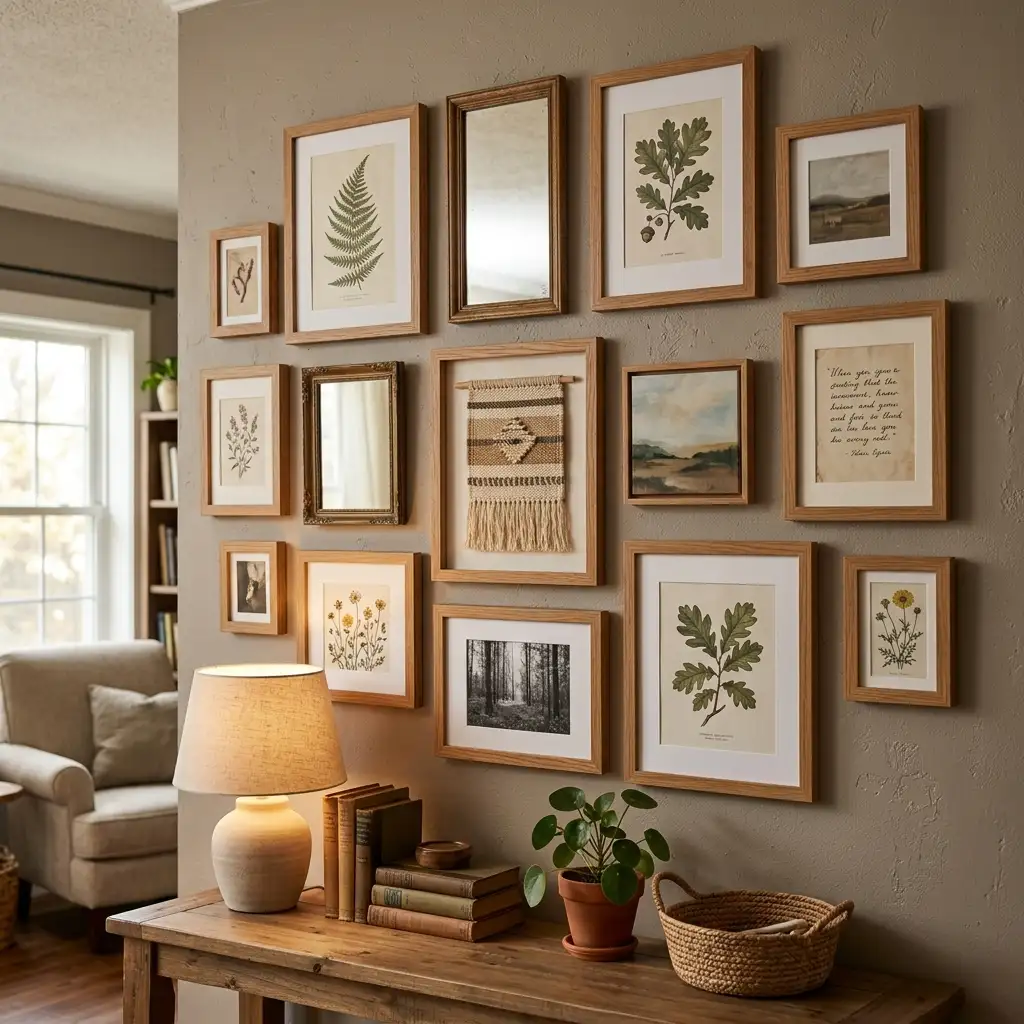
Designer’s Verdict: Photo tiles are a fairly priced mounting system and an expensive way to buy a print, and which of those two things you are actually shopping for settles the decision. If the wall cannot take a nail, the premium buys you something no photo lab sells and it is money well spent. If it can, you are paying a large multiple for the privilege of not using a hammer, and the same budget buys better prints in real frames with room to spare.
The part worth being sceptical about is the pricing theatre rather than the product. Continuous steep discounting off a list price almost nobody pays makes real comparison difficult, and it is why people end up unsure whether they got a good deal. Decide on cost per square inch and ignore the headline number.
If You Rent or Cannot Drill
For a large share of readers this is the whole question, and the answer is more open than it looks.
Adhesive tiles are one option among several. Adhesive strips rated well above the framed weight hang ordinary frames with no holes, which keeps you in normal prints and frames at normal prices. A tension rod or a leaning arrangement on a shelf avoids the wall entirely, and built-in style shelving achieves the same permanently where you are allowed to fix two anchors.
Student housing is the strictest case, since many halls ban adhesives outright rather than just nails. Check the specific policy before ordering, because a banned adhesive is worse than a nail you could have patched.
Where the rules allow anything at all, the calculation shifts back toward frames quickly. Two small anchor holes, patched with filler on move-out, cost a few dollars and take ten minutes. Weigh that against a several-hundred-percent premium before deciding the tiles are the safe option — there are more reversible approaches across our apartment bedroom ideas.
Rental Note: Photograph the wall before anything goes up. It is the cheapest evidence you can have if a deposit deduction is ever disputed.
What It Costs Either Way
Costs below cover a nine-piece arrangement, since that is the size most people are pricing.
| Project | Estimated Cost | Impact Level |
|---|---|---|
| Nine photo lab prints in ready-made frames | $60–$150 | Very High |
| Nine 8-inch photo tiles, bought on promotion | $90–$180 | High |
| One large wood-framed print instead of the group | $69–$139 | Very High |
At the budget end, prints in ready-made frames cover more wall than any other option here and leave money over. In the middle, a promotional tile order lands close to frame pricing while removing the drilling, which is a fair trade for renters. At the upper end, a single large framed print costs about the same as nine tiles and usually looks more considered above a sofa or bed. Our guide to wall decor above the bed covers where one large piece beats a group.
Best First Upgrade: Buy fewer, larger pieces. Nine small squares is the format the tile brands sell, not the arrangement that suits most walls.
Skip for Now: A partial order to test the look. Colour can vary between batches, so a second order later may not match the first.
Frequently Asked Questions
Conclusion
The useful thing to hold onto is that photo tiles are priced as a mounting system rather than as a print, so the only question that matters is whether you need the mount — everything else follows from the answer. Work out cost per square inch, be honest about whether your wall can take a nail, and the decision stops being difficult. There is more on filling a wall well across our home decor inspiration.
Next Steps
- Run a palm across the wall you have in mind and check for texture, then find out when it was last painted.
- Work out cost per square inch for a tile and for a plain print at the same coverage, and compare the two numbers rather than the unit prices.
- Decide whether you need repositioning at all — if the arrangement is permanent and the wall is yours, price frames instead.
- If you go ahead, wait for an active promotion and order the whole set in one batch.