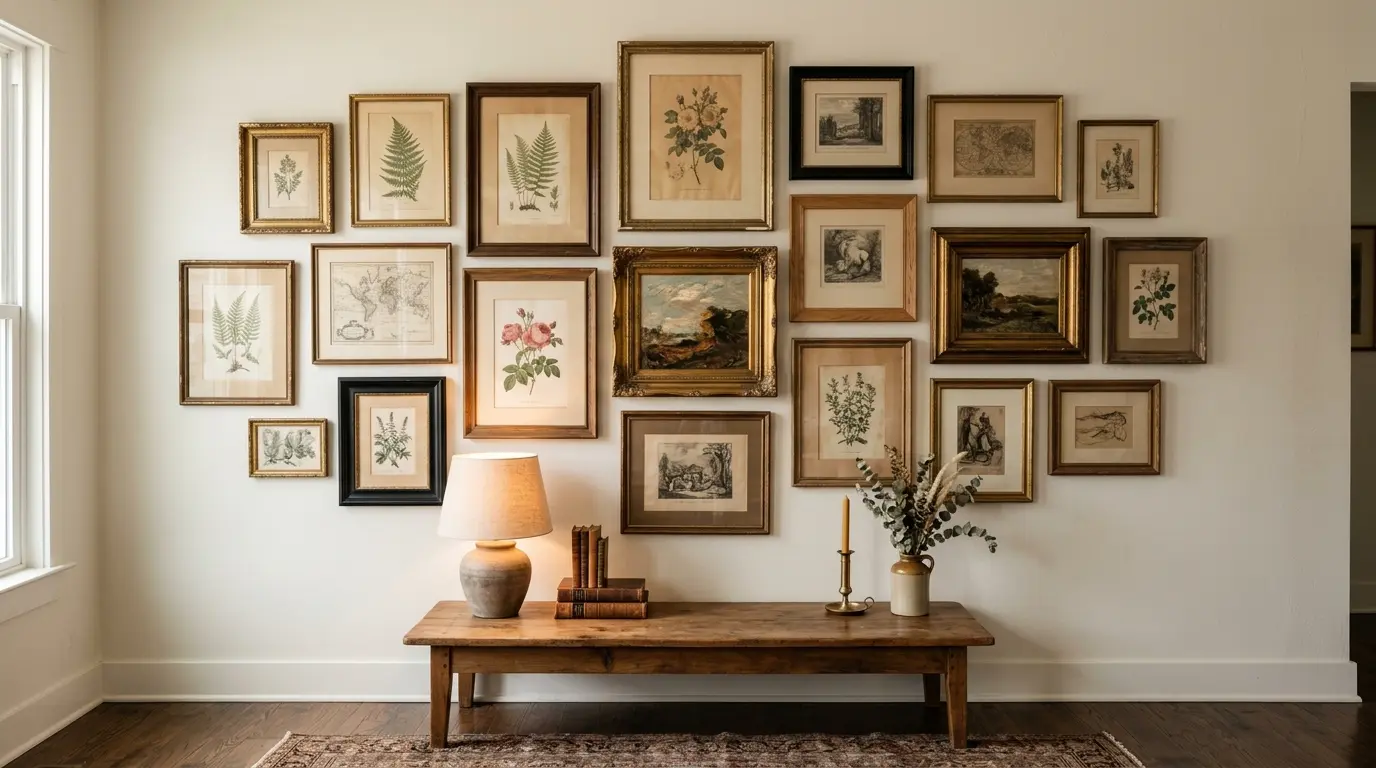
TL;DR
- Buy the frame, and treat whatever is inside it as a bonus. Thrift stores price the object, not the art.
- Spread the pieces across at least three decades. One era reads as a themed room; several read as a collection.
- The thing that ties an era-spread wall together is paper tone and patina, not matching frames.
- A 10x magnifier settles the original-or-reproduction question in about four seconds.
- Assume any painted or gilded frame made before 1978 contains lead. Wet-clean it, never sand it.
Why Does a Thrifted Gallery Wall Look Better Than a Bought One?
Why does a wall of secondhand frames read as expensive when a matched set from a homeware shop reads as filler? The pieces are cheaper, older, and often in worse condition. The wall still wins.
Part of our guide to wall decor, this post covers the version you assemble rather than order.
The answer is time. A bought set arrived on one truck and shows it — same finish, same profile, same age. A thrifted wall carries evidence of having been gathered, and the eye reads that evidence as a history rather than a purchase. That is the whole effect, and it is the only thing a matched set cannot buy.
Which means the good vintage gallery wall ideas are really sourcing strategies. You are not choosing art so much as accumulating objects and letting the wall assemble itself over months. That is slower than a shopping cart and considerably cheaper, and it suits a living room better than almost anything you can buy new — our living room wall decor ideas cover where a wall like this sits best.
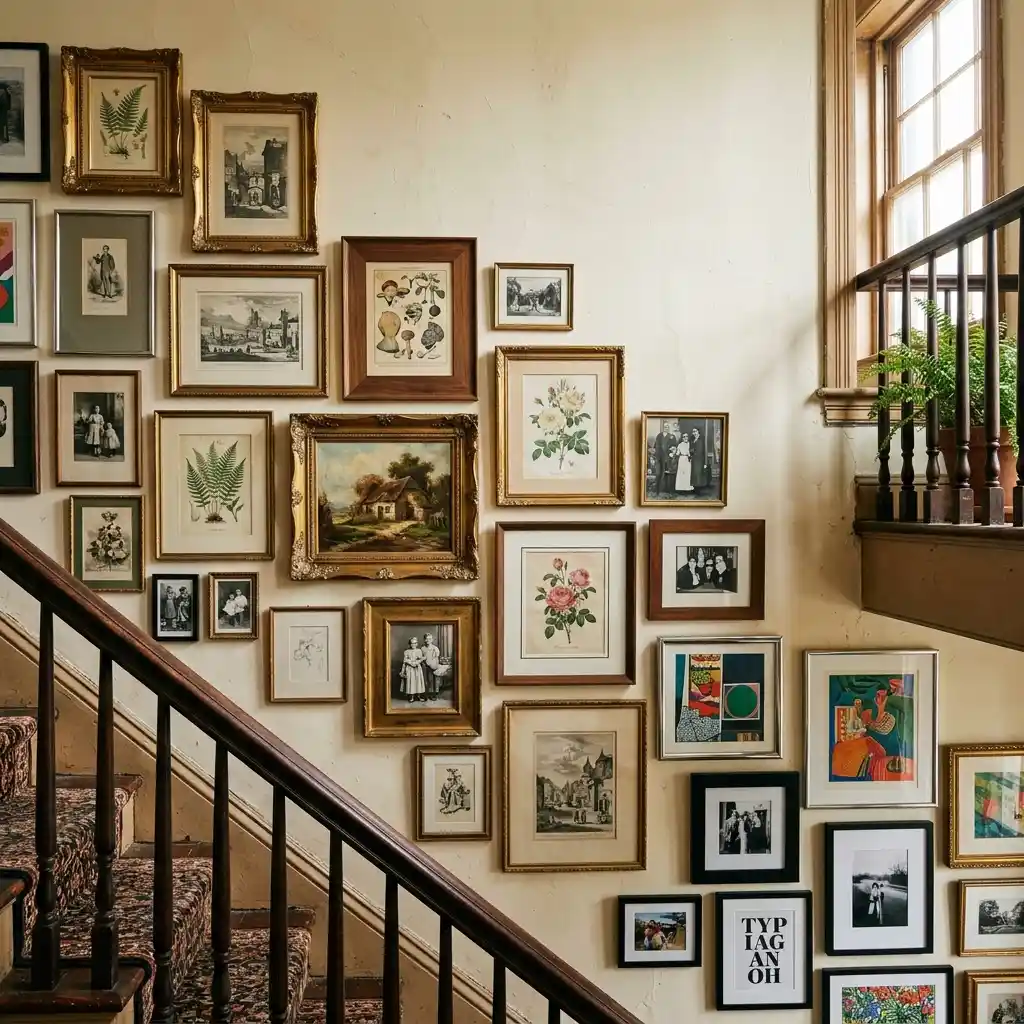
Editorial field note: A stairwell hung with nine thrifted frames from four different decades usually looks better than the same wall hung with nine matched black frames — even when several of the thrifted pieces hold prints nobody would choose on purpose. The mismatch is the point.
✦ Free for readers
500+ Original Home Decor Images, Yours to Keep.
Curated room by room, high‑resolution and royalty‑free — created in‑house by 101HomeDecor, not stock. No attribution needed.
Free forever · about one email a month
Where the Good Frames Actually Are

Thrift stores price a framed picture as one object, and they price it on the frame. A solid wood frame with a chipped gilt edge and a bad watercolour inside costs what the frame is worth to them, which is usually a few dollars. The picture comes along for free whether you want it or not.
That pricing quirk is the entire economics of this look. Five sources are worth knowing, in rough order of yield.
Charity and thrift shops carry the volume and the lowest prices, and they restock constantly, so frequent short visits beat long ones. Estate sales are where the genuinely old material surfaces, especially on the final discount day. Auction box lots sell mixed frames by the crate, the cheapest per-frame route if you can collect them. Framing shops sometimes sell offcuts and customer abandons at a fraction of retail. The best source is a relative’s attic, where pieces come with a story attached.
DESIGNER TIP: In a thrift shop, turn the frame over before you look at the front. A paper dust cover, wire fittings, and a stamped framer’s label mean somebody paid to have it framed properly, which is a far better signal of quality than whatever is showing on the other side.
| Quick Takeaways | |
|---|---|
| Eras | Aim for pieces from three or more decades. A single period reads as a set. |
| Shopping | Buy the frame first. Judge the art second, and be willing to discard it. |
| Unifier | Warm, aged paper tone does the connecting work that matching frames do elsewhere. |
| Authenticity | A 10x magnifier tells you original from reproduction. Regular dot grids mean printed. |
| Safety | Treat any pre-1978 painted or gilded frame as lead-bearing. Wet-clean, never sand. |
Why Is Everyone Buying Other People’s Art Again?
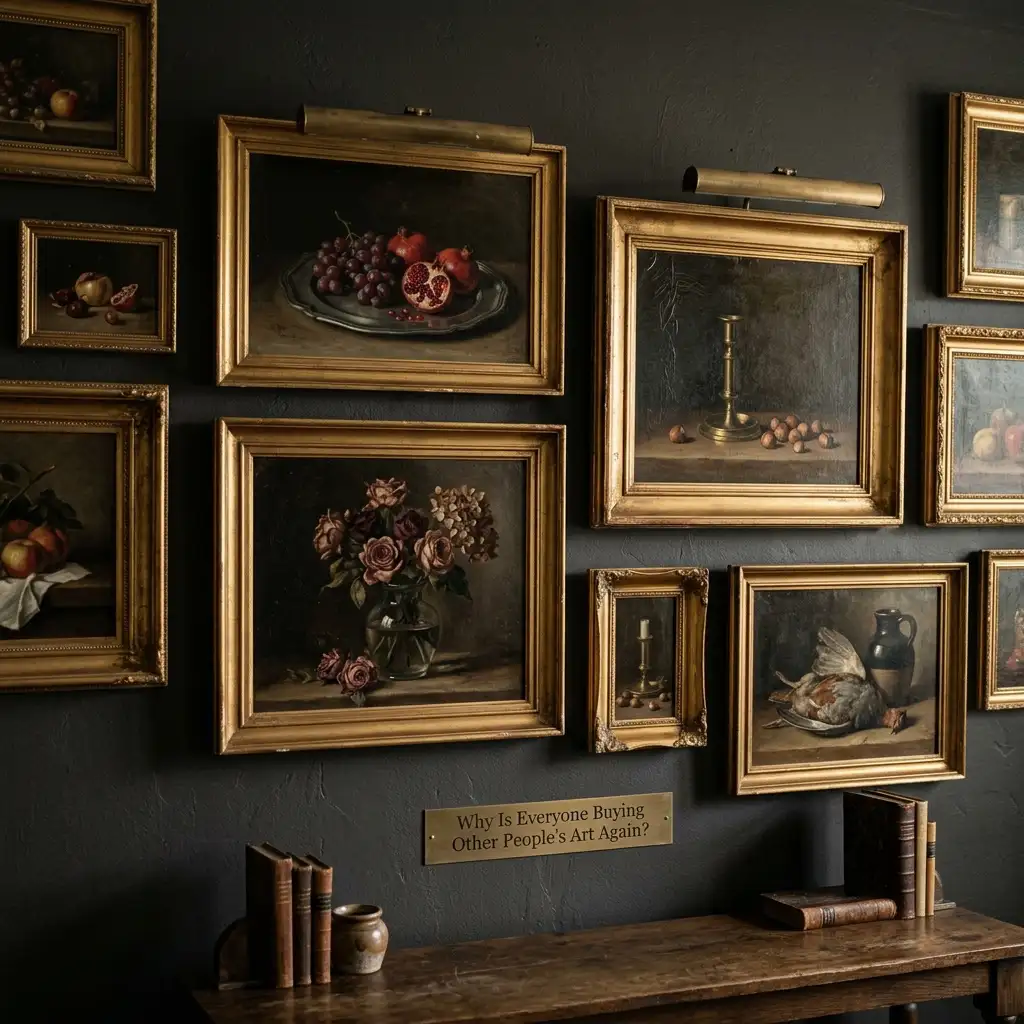
Secondhand sourcing has moved from a budget tactic to a stated preference, and wall art is where it shows most clearly. Buying somebody else’s framed picture used to signal that you could not afford a new one. It now signals the opposite.
Signs This Is Catching On:
- Vintage still-life oils — fruit, florals, dim backgrounds — have gone from unsellable to the most competitive category on the thrift rack.
- Small collected objects are back in favour: figurines, trinket dishes, jewellery boxes and clocks, grouped rather than displayed alone.
- Decorative plates have returned as wall material, driving the plate wall back into ordinary homes.
- Chrome and silver frames are being picked up again after two decades of warm brass and matte black dominating.
The underlying shift is that machine-perfect finishes stopped reading as premium. When everything available is flawless, the flaw becomes the luxury — and a scratched gilt frame with a soft, yellowed mat is the cheapest flaw you can buy. Vintage sourcing is doing to walls what it already did to furniture, and the vintage bathroom revival shows the same instinct working on a whole room.
The Decade Spread — One Era Is a Theme, Three Is a Collection
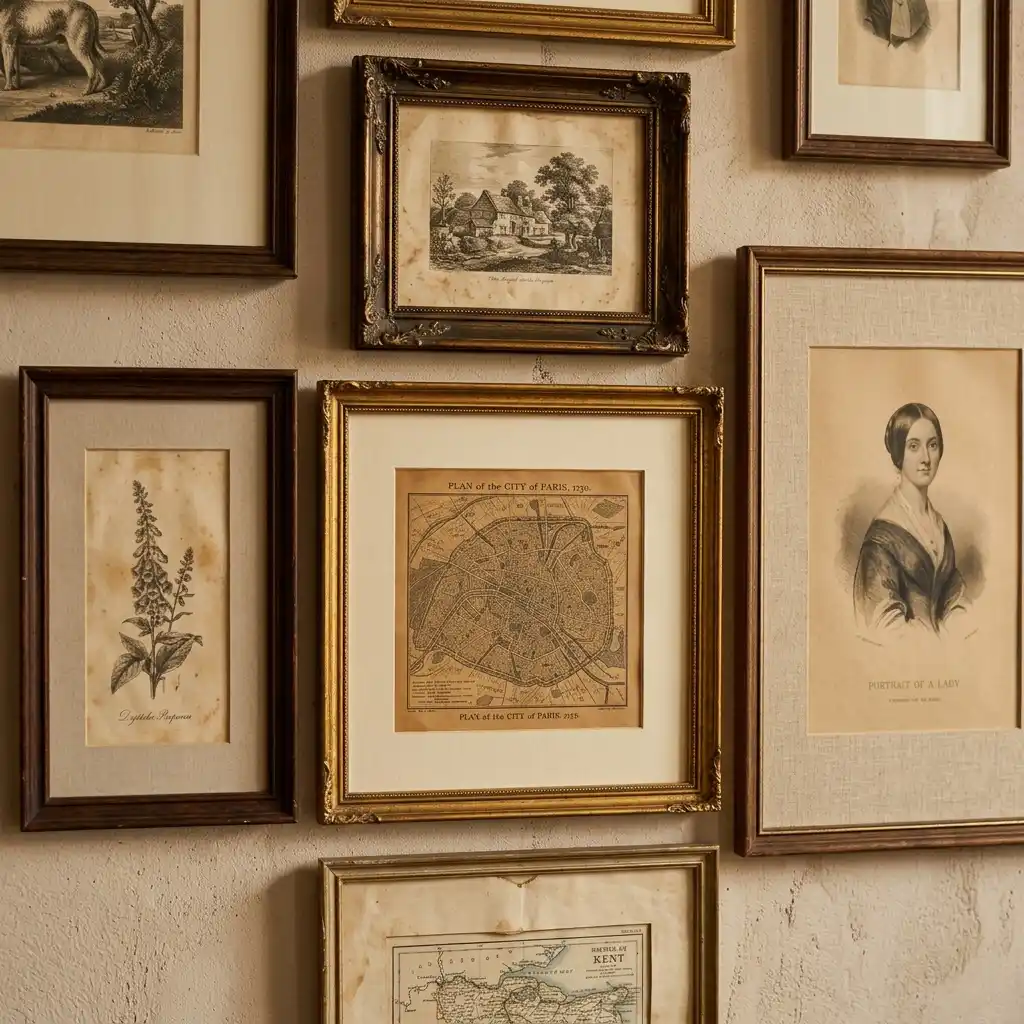
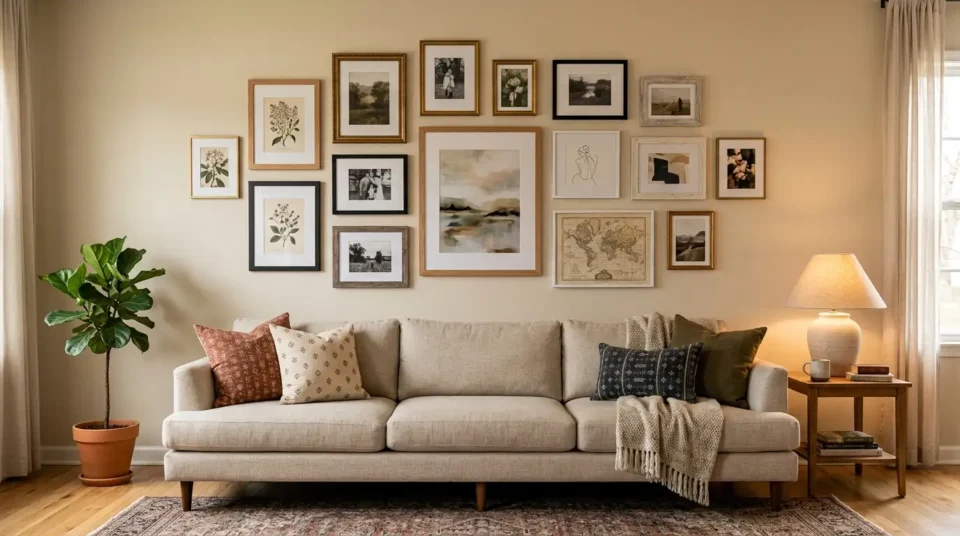
Here is the rule that separates a collected wall from a costume. Every piece coming from the same period does not read as vintage — it reads as set dressing. A wall of nothing but 1970s prints looks like a themed restaurant. A wall holding an 1890s engraving, a 1940s botanical, a 1970s abstract and a 2020s print of your own reads as a household that accumulated things. Botanicals are the easiest subject to find across several decades, and our spring wall art ideas are a way to seed that category with new pieces while you hunt for old ones.
This is where vintage gallery wall ideas depart from the general advice. Most gallery walls succeed by finding one thing every piece shares and letting the rest vary. A vintage wall inverts part of that: the age is the variable you deliberately spread, and something else has to carry the connection.
How Many Eras Do You Actually Need?
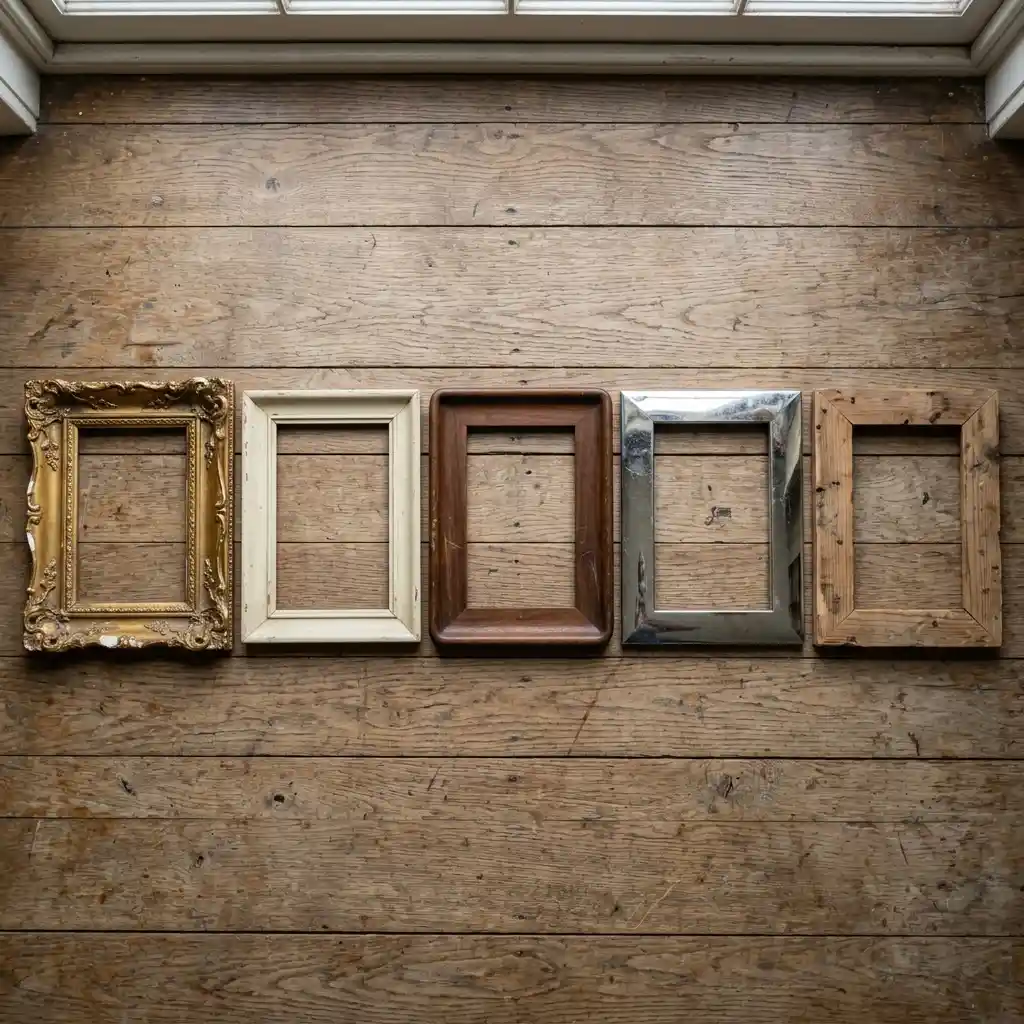
Three decades is the working minimum and there is no real ceiling. Below three, the eye groups the pieces as a single period and the collected effect disappears. Above three, every additional era adds credibility rather than noise, because genuine collections are never tidy.
You do not need to date anything precisely. Rough banding is enough: pre-war, mid-century, seventies and eighties, and modern. Aim to have at least one piece from three of those four bands, and let the rest fall where they fall.
Roughly a third of the wall needs to be genuinely old for the effect to hold. The remainder can be reproductions, new prints, or your own photographs without anyone noticing — a few authentically aged pieces carry the reading for the whole group.
What Ties an Era-Spread Wall Together?
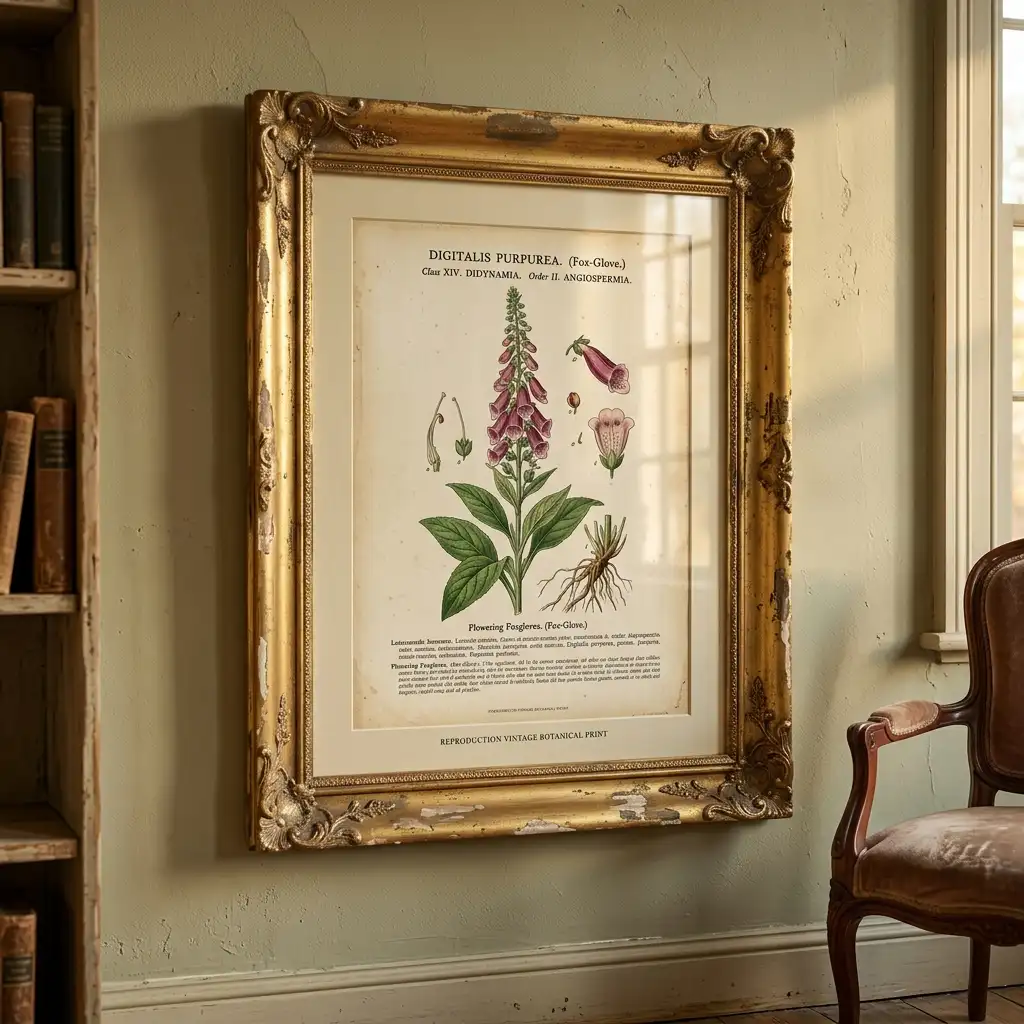
Paper tone does the work. Old paper yellows toward warm cream, soft buff and pale tobacco, and that shared warmth connects an engraving to an abstract to a photograph far more effectively than any frame rule could. It is the one property nearly everything old has in common.
This is also why a bright white modern mat is the single most damaging thing you can put on a vintage wall. Pure white next to aged paper makes the old piece look dirty rather than aged, and the whole group loses its warmth. Warm cream, oatmeal and soft buff mats keep it intact — the same warm-neutral logic that carries a cottagecore bedroom, where aged paper tones sit against soft linens rather than fighting them.
Frames themselves are the exception to the usual restraint. The general advice to hold a gallery wall to two frame finishes does not apply here — five different finishes across nine frames is normal on a genuinely collected wall, and enforcing consistency is what makes a thrifted wall look bought.
How Do You Tell a Real Antique Print From a Reproduction?
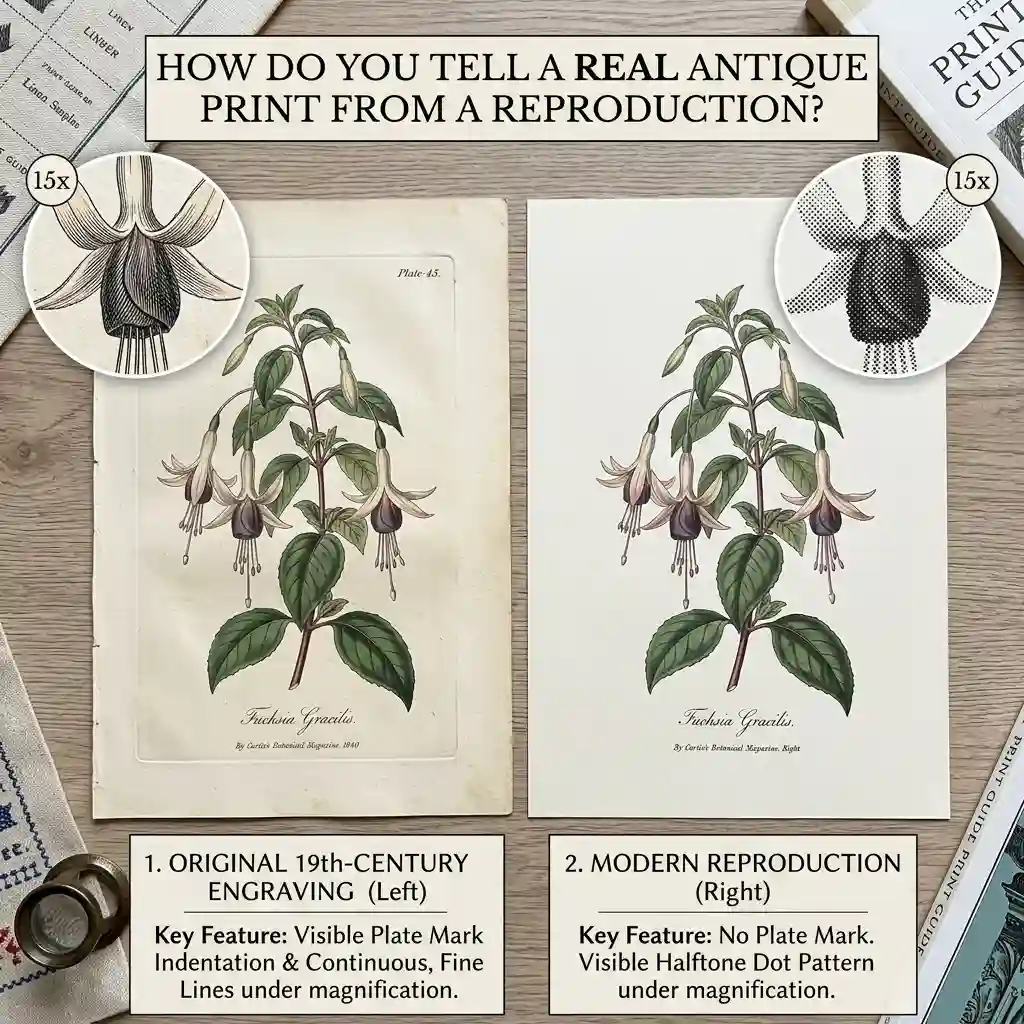
This matters less for looks than for money. A reproduction hung in a good frame is visually indistinguishable from three feet away. But knowing which is which stops you overpaying at an antiques fair and tells you which pieces deserve the better glass.
The Magnifier Test
A 10x loupe or magnifier settles it in seconds. Specialist dealers use exactly this check — Boston Rare Maps’ guidance on spotting reproductions notes that most reproductions are made by a dot-matrix or halftone process, so seeing a field of tiny regular dots under magnification means you are holding a printed copy.
Original engravings and etchings show solid, continuous lines under the same magnifier, with no dot structure at all. Early halftone printing does exist, but its dots are visibly irregular compared with the perfectly uniform mechanical grid of a modern reproduction.
A plate mark is the second tell. Intaglio prints — engravings, etchings, mezzotints — are pressed into damp paper by a metal plate, which leaves a shallow embossed rectangle just outside the image. Run a finger across the margin and you can feel it. Fake plate marks exist but are usually too crisp and too even.
When a Reproduction Is the Right Call
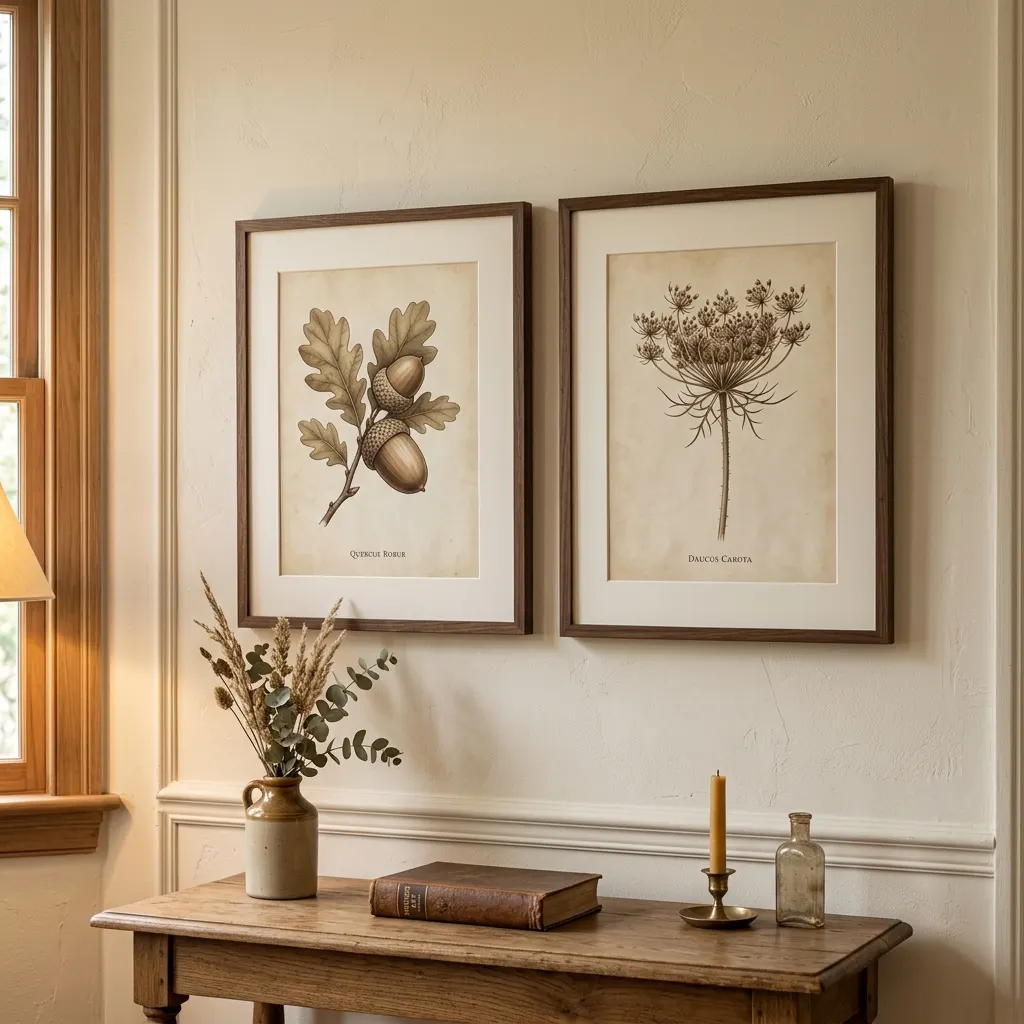
Most of your wall should be reproductions, and there is no shame in it. A genuine antique print in decent condition runs into real money, and hanging one in direct sun is an expensive way to watch it fade.
Buy authenticity for the two or three pieces that carry the wall — the largest, the ones at eye level, the ones people stand close to. Fill the rest with good reproductions, and put the reproductions where light is strongest, since they cost nothing to replace.
Where the room’s palette is doing the heavy lifting, reproductions matter even less. A dark academia bedroom built on deep green and warm walnut absorbs printed botanicals happily, because the room reads as period before anything reaches the wall.
What to Do With a Frame Once You Get It Home
Assume everything you bring home is dirty and possibly worse. A secondhand frame has spent years somewhere you know nothing about, so the first hour is about making it safe rather than pretty.
Take the back off outdoors or in a garage. Old backing boards hold dust, insect casings and occasionally mould, and none of that belongs in a bedroom. Discard acidic cardboard backing and replace it with acid-free board, which costs a few dollars and stops the new contents browning from behind. If you do this often enough to want a dedicated corner for it, our vintage craft room ideas cover setting one up.
Clean It, Don’t Restore It
Patina is the product. Rubbed gilt showing red bole underneath, a softened corner, a hairline crack in the gesso — those are the details that separate an old frame from a new one pretending. Strip them off and you have paid thrift prices for something that now looks like a reproduction.
Safety Note: Minnesota’s Department of Health advises treating vintage items as lead-bearing unless you know otherwise, and specifically says not to dry scrape or sand them — use water to control dust, wash your hands afterwards, and keep children and pregnant women away from the work. Painted and gilded frames made before the 1978 consumer ban are exactly the category this covers.
So the whole cleaning routine is a damp cloth and mild soap, worked gently, then dried. Glass comes out and gets washed separately. Anything flaking gets left alone or sealed rather than scraped, and a frame in genuinely bad condition is a frame to walk away from in the shop.
What a Vintage Gallery Wall Costs
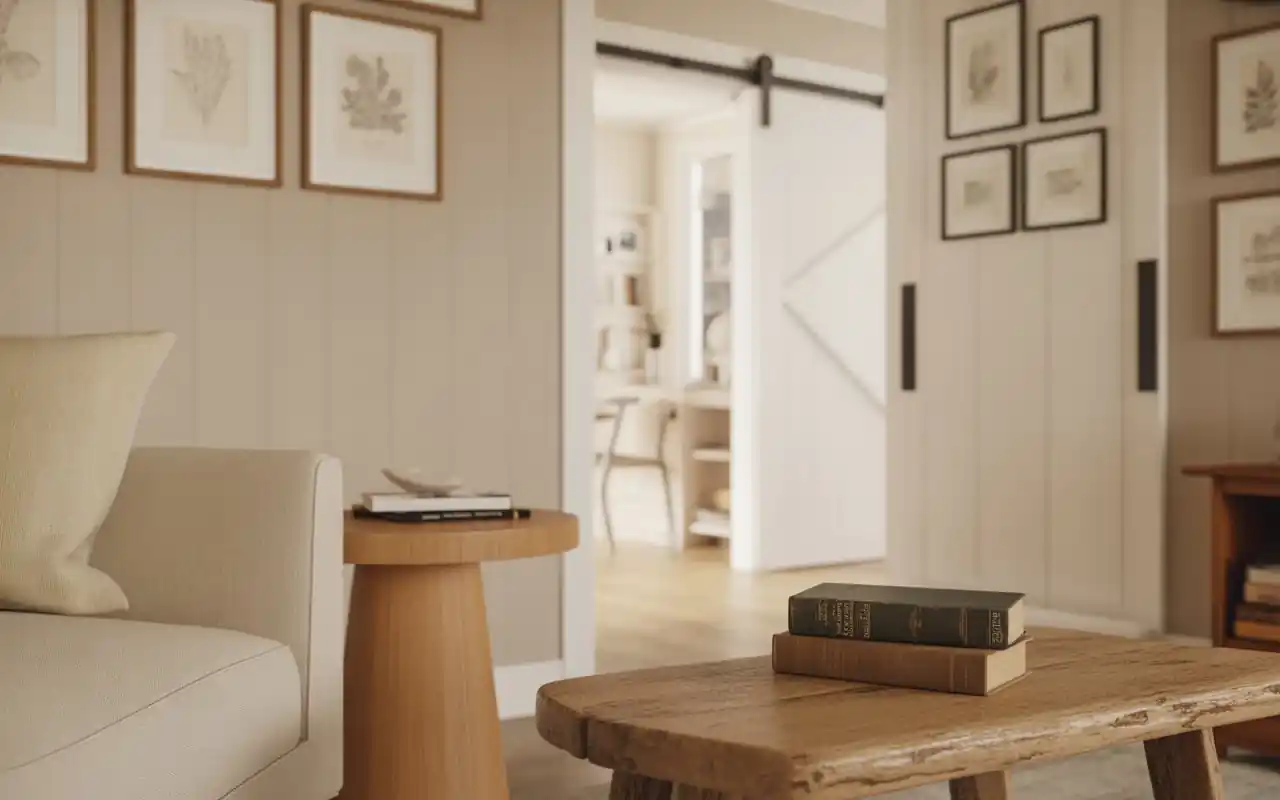
Sourcing secondhand moves the cost from the art to your time, and the numbers below reflect what these pieces actually sell for rather than what a framing shop would charge.
| Project | Estimated Cost | Impact Level |
|---|---|---|
| Thrift store framed pictures, per piece | $3–$15 | Very High |
| Estate sale or auction box lot, several frames together | $20–$75 | Very High |
| Acid-free backing board and replacement glass, per frame | $8–$30 | Medium |
| Genuine antique print, small and unsigned | $40–$200 | High |
At the low end, a whole nine-piece wall of thrifted frames is achievable for under $100 if you are patient across a few months. In the middle, budgeting around $30 a frame for replacement glass and acid-free board on the pieces you care about is money well spent. At the top, one genuine antique print at $150 anchors the wall and does more for it than five more thrift finds would.
Best First Upgrade: Replace the mats. Swapping bright white mats for warm cream on three or four pieces costs very little and fixes the most common reason a thrifted wall looks off.
Skip for Now: Professional reframing. It routinely costs more than the piece, and on a wall built from thrift finds the polish it buys works against the effect.
Where Thrifted Walls Go Wrong
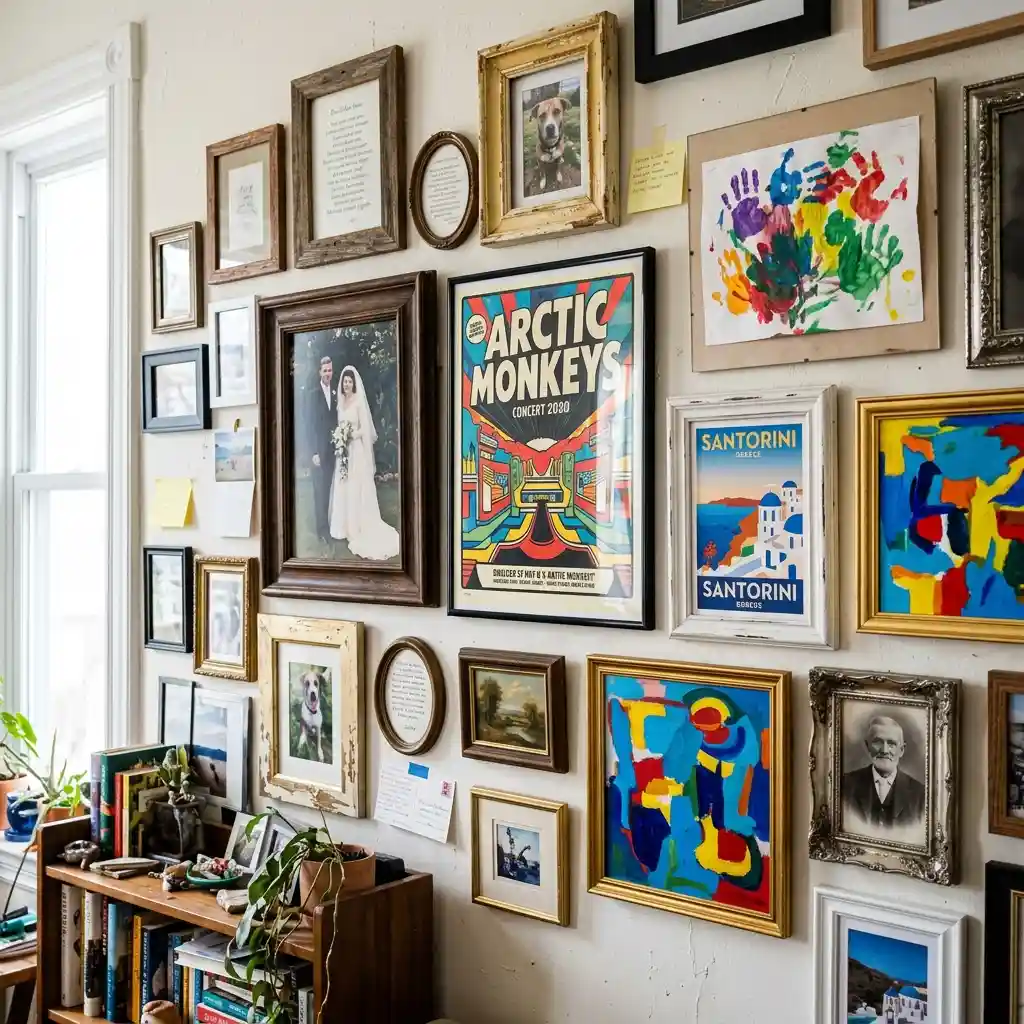
❌ Shopping for the picture and tolerating the frame → ✅ Reverse it. Judge the frame first, and be genuinely willing to bin what is inside it.
❌ Buying everything from one decade because you like that decade → ✅ Force a spread across at least three periods, even if one of them is not to your taste.
❌ Stripping, sanding or regilding a worn frame → ✅ Wet-clean it and leave the wear. The patina is the reason you bought it, and sanding old paint is a health risk as well as an aesthetic one.
❌ Putting aged prints behind bright white mats → ✅ Switch to warm cream or oatmeal so the old paper reads as warm rather than grubby.
The Bottom Line
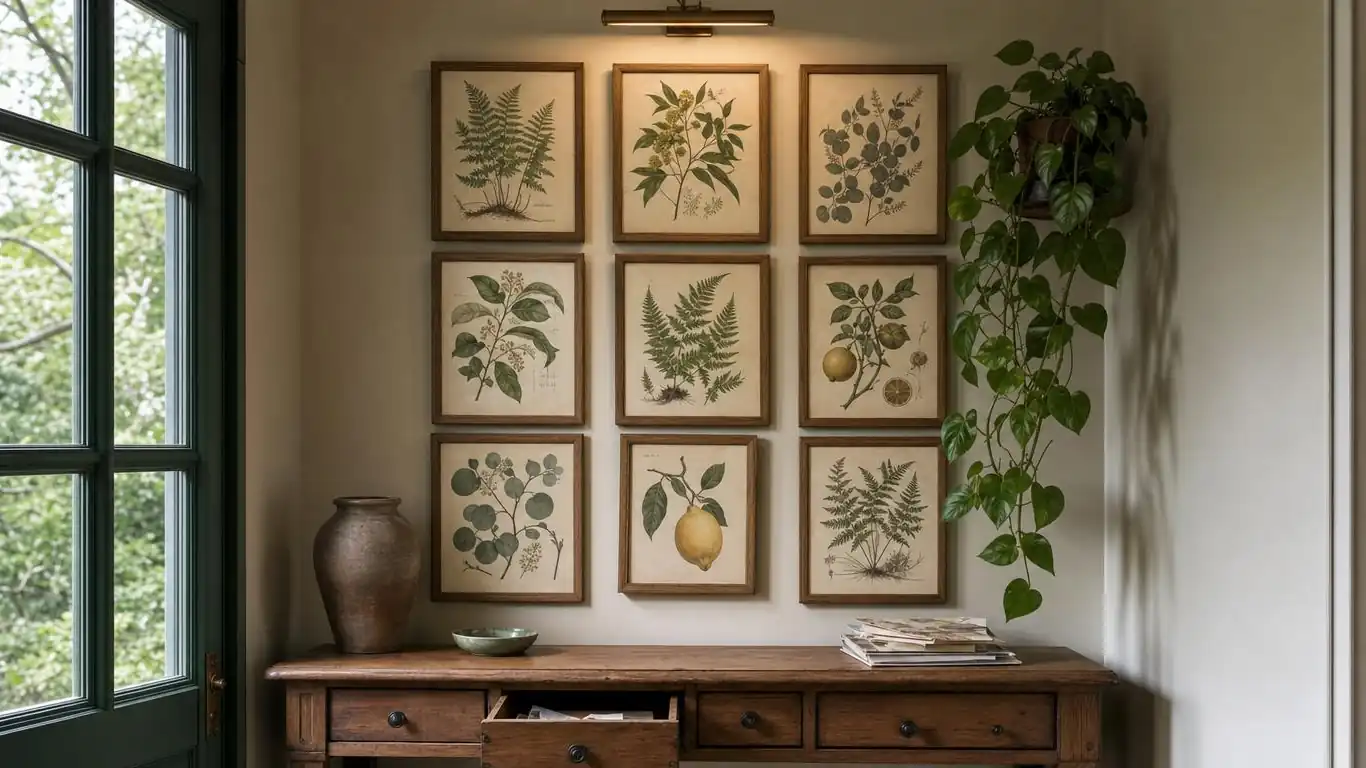
Designer’s Verdict: The thrifted, era-spread wall is the version of this look with real staying power, because it is the only one that cannot be mass-produced. A homeware chain can sell you nine matching frames and a set of prints, and it can sell you frames distressed to look old — but it cannot sell you four decades of genuine wear arriving from four different places. That is what the eye is actually responding to, and it stays true regardless of which period happens to be fashionable.
The version to be sceptical of is the pre-distressed vintage-look frame set. Uniform artificial wear is the giveaway: real wear happens at corners and edges where hands and walls touched, and it differs on every piece. A set that arrives evenly scuffed reads as costume from across the room, and it costs more than the real thing.
Where else a blank wall can go is a broader question than one wall treatment, and our decor and styling ideas cover the alternatives worth weighing first.
KEY TAKEAWAY: A third of the wall needs to be genuinely old for the whole group to read as collected — buy authenticity for the two or three pieces people stand closest to, and fill everything else with reproductions.
If You Are Starting From Nothing

A collected wall takes months, which is a genuine problem if you have a blank wall now and no collection at all.
Start with a picture ledge instead of hooks. Frames lean rather than hang, nothing needs measuring, and the arrangement absorbs each new find without fresh holes — the same logic behind built-in style shelving but at a fraction of the commitment. It also lets you live with a half-finished wall without it looking unfinished.
Then buy in one category first. Nine random thrift finds take a year to hang together; nine botanical prints across four decades work immediately, and botanicals are among the easiest old material to find cheaply. Pick a category that is common on the secondhand market rather than one you would have to hunt.
Textiles fill space faster than frames do, and a single old embroidered panel or small rug covers as much wall as three frames. Our guide to wall hanging craft ideas covers making one when the thrift rack is not cooperating.
Rental Note: A picture ledge needs two anchors rather than nine holes, which is usually the difference between a deposit conversation and no conversation at all.
Vintage Gallery Wall Checklist
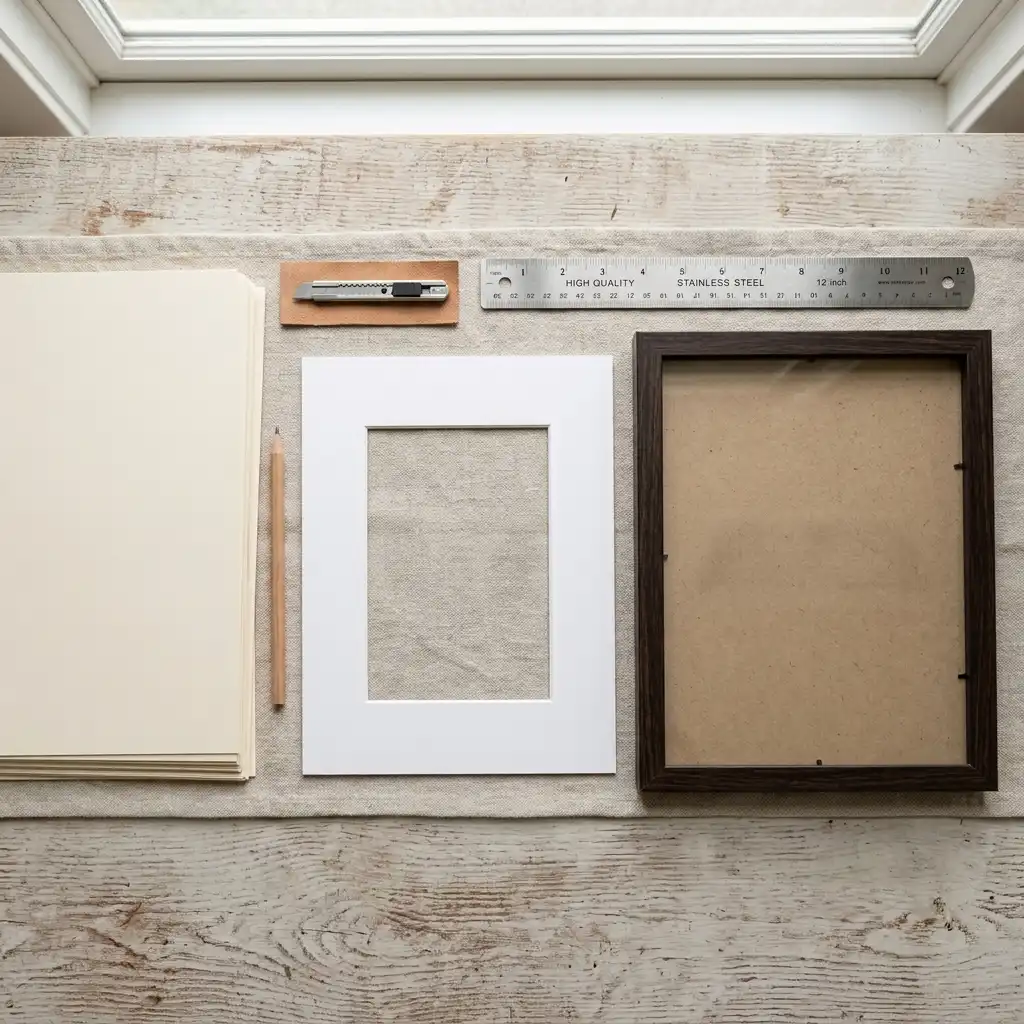
Take this list to the thrift shop:
- Turn every frame over first and look for a framer’s label, wire fittings and a paper dust cover.
- Check the corners for splits and the gesso for flaking — flaking means walk away rather than negotiate.
- Carry a 10x magnifier and use it on anything priced above about $30.
- Feel the margin for a plate mark before believing a print is an original engraving.
- Count the decades already on your wall and buy against the gap, not toward your favourite period.
- Check the mat colour against the paper — anything bright white is a swap, and price that in.
- Plan to open and clean everything outdoors before it comes inside.
Frequently Asked Questions
Conclusion
The first move is not choosing a wall or a layout — it is going somewhere that sells other people’s frames and coming back with three, whatever happens to be inside them. Vintage gallery wall ideas only work once you have material to arrange, and material accumulates faster than most people expect once you are shopping frames instead of pictures. Browse more home decor inspiration when you are ready to place what you find.