The Fall Table Got Quieter, and It Got More Expensive
Most fall table guides are shopping lists. Add the mini pumpkins. Add the leaf garland, the plaid runner, the acorn place cards, the little sign at every seat. Follow the whole list and you get a table that is full, obviously autumn, and somehow still looks like the seasonal aisle it came from.
Looking for more ideas? Explore our full guide to Fall Tablescape Ideas.
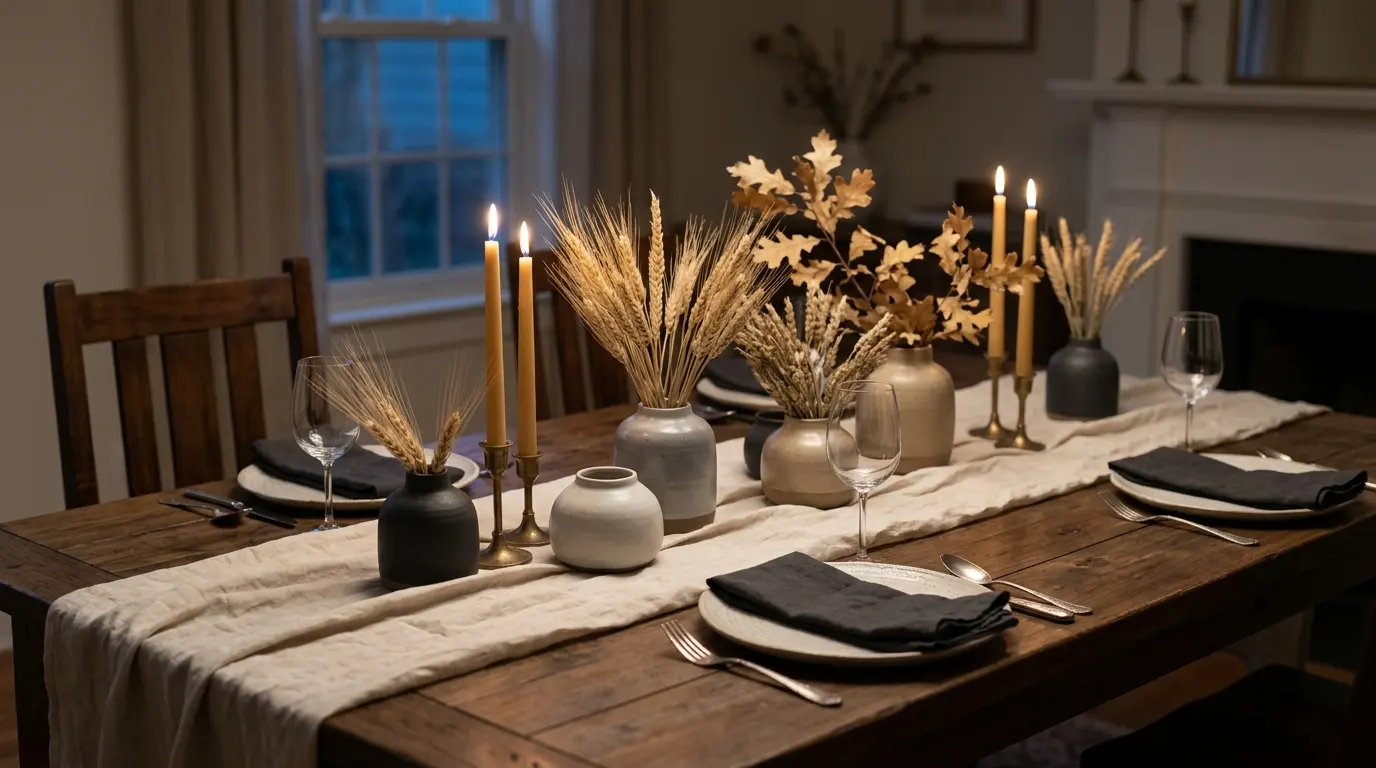
An elegant fall tablescape is built by subtraction. It holds three colors at most, one low group of objects down the center, and real candlelight instead of the ceiling fixture. Everything else comes off. The polish is not in the objects — it is in the bare table between them, and in the fact that every person seated can still see the person opposite.
That makes a table different from a mantel or a porch, where more objects usually help. A dining table is used. People eat off it, pass dishes across it, and look at each other over it. Our home decor and styling ideas cover the rooms around it; this one is only about the narrow strip down the middle of the table.
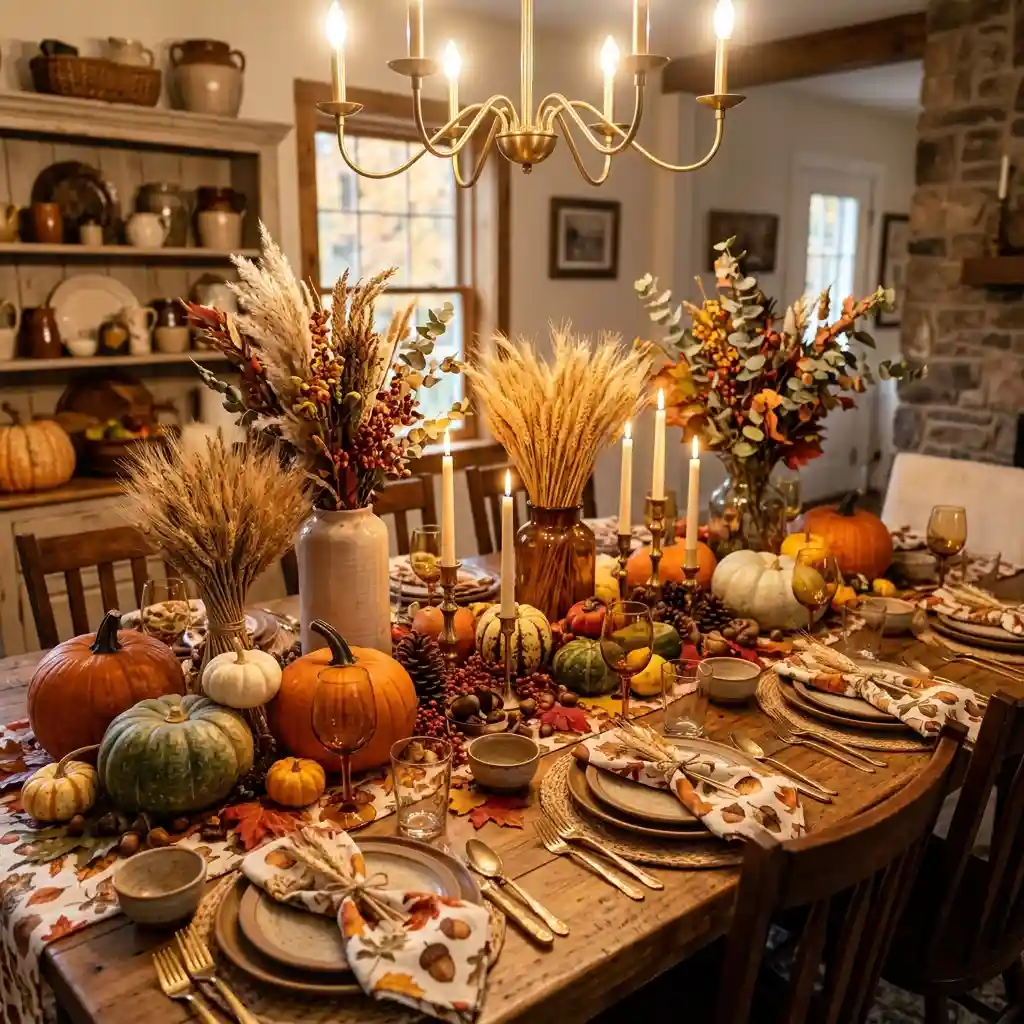
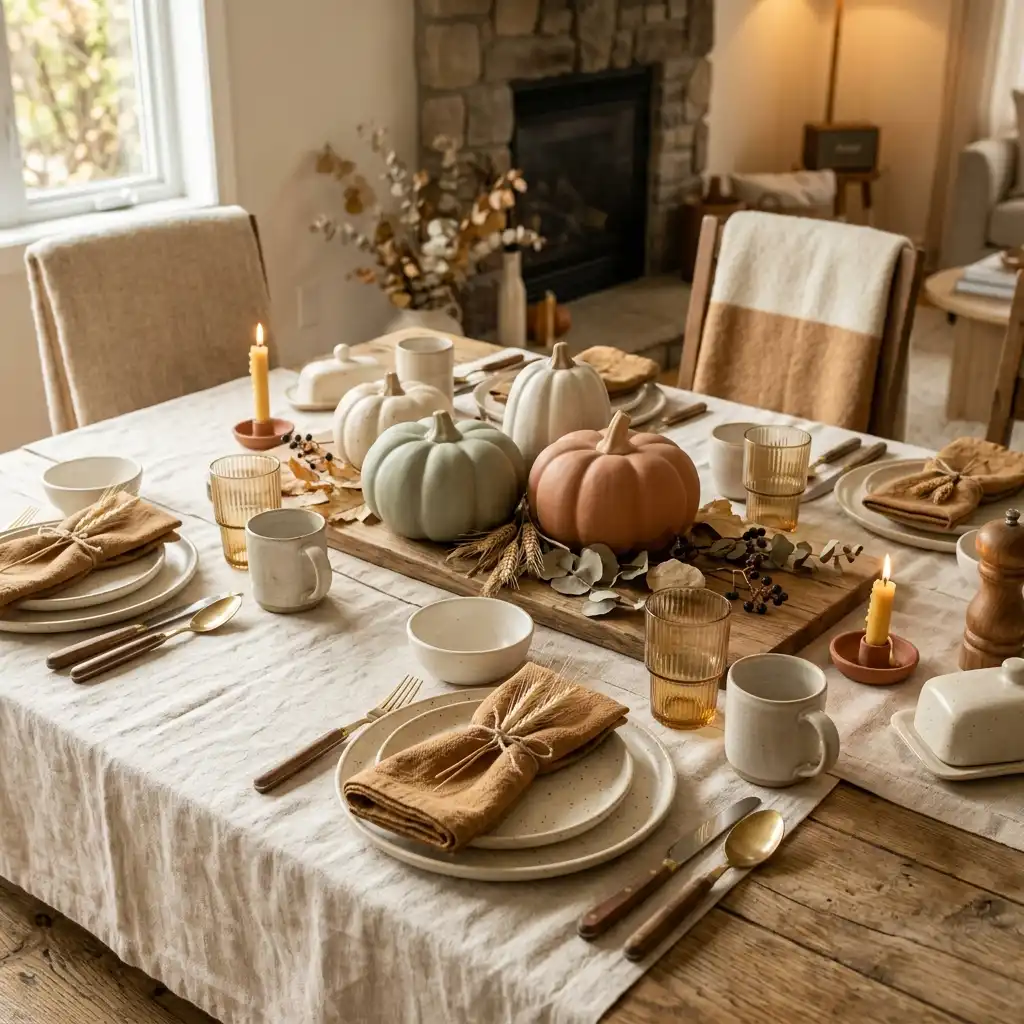
Editorial field note: A table carrying a plaid runner, six small orange pumpkins, printed napkins and one tall dried arrangement looks busiest from the only place that matters — a seated guest’s eye level. Take the runner off, keep three pumpkins in cream and dusty green, and swap the tall arrangement for two low bowls. The same table looks settled before anything new is bought.
If you are working through the whole house this season, these creative fall and autumn decor ideas set the wider order. The table is usually the last zone people do and the first one guests photograph.
✦ Free for readers
500+ Original Home Decor Images, Yours to Keep.
Curated room by room, high‑resolution and royalty‑free — created in‑house by 101HomeDecor, not stock. No attribution needed.
Free forever · about one email a month
The Elegant Fall Table Checklist
- Cap the color count at three, and let one of the three be cream or bone.
- Count metals as colors: pick one finish and repeat it at least three times.
- Check every object for print — anything imitating a material it is not comes off.
- Keep the decor inside the middle third of the table so the surface frames it on both sides.
- Buy unscented tapers or plain beeswax, and move the scented candle to the hallway.
- Step back at the end and remove the last thing you added.
KEY TAKEAWAY: An elegant fall tablescape starts with the space you protect, not the objects you add.
Why Abundance Stopped Looking Expensive
The overflowing harvest table came from a stretch of years when seasonal decor was cheap, printed and bought by the armful. Abundance was the point. A table was supposed to look like a cornucopia had tipped over on it, and the more gourds, gingham and glitter it held, the more festive it counted as.
That look aged badly for one plain reason. Most of it was printed to imitate something else — molded resin standing in for stoneware, polyester leaves standing in for dried ones, a photo of plaid on a length of cotton. Real materials next to imitation ones make the imitation obvious. Strip the imitations out and a modest table starts to look expensive without a single new purchase.
Signs This Is Catching On:
- Fall 2026 trend roundups now put creamy neutrals, caramel and warm beige where gray and stark white sat five years ago.
- Floral trend notes for 2026 lead with dried and foraged botanicals in copper and amber tones rather than fresh orange blooms.
- Tabletop styling advice has moved the color onto a single bold napkin, with the rest of the table left muted.
- Retail fall assortments now carry ceramic and glass pumpkins in cream, sage and slate alongside the traditional orange foam.
None of that is a rule you have to follow. It does explain why the same three objects that looked generous in 2019 look cluttered now. You can see the wider seasonal shift across all our fall decorating ideas, and the table is where it shows first.
What an Elegant Fall Tablescape Actually Looks Like
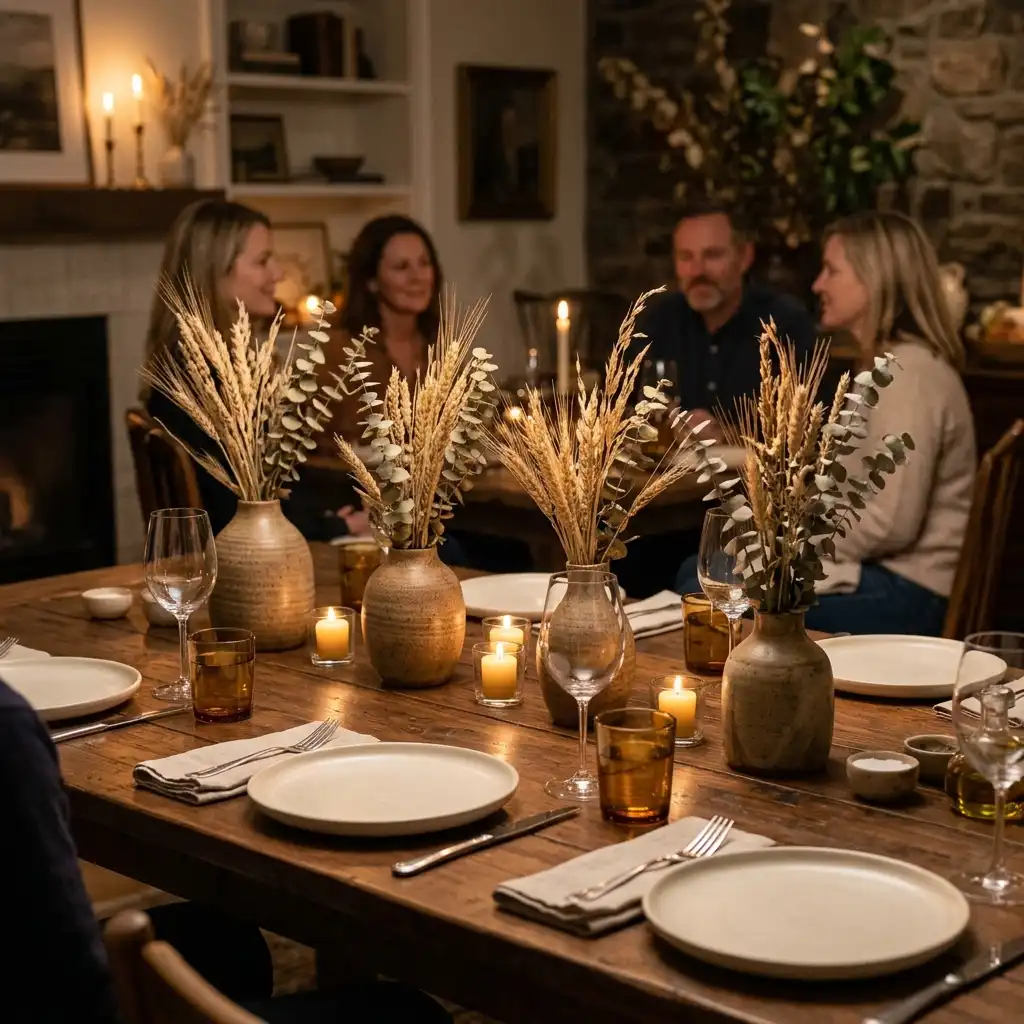
Picture the finished thing before the shopping. There is a bare or lightly covered table. There is a line of three to five small vessels running down the middle, none of them tall. There are candles at two heights. There is one warm color repeated in the napkins, and a lot of empty linen. It looks like less than you expected, and that is the whole point.
The four decisions below carry almost all of the result. Get the palette, the materials, the proportion and the light right, and the specific objects barely matter.
Three Colors, and One of Them Is Almost White
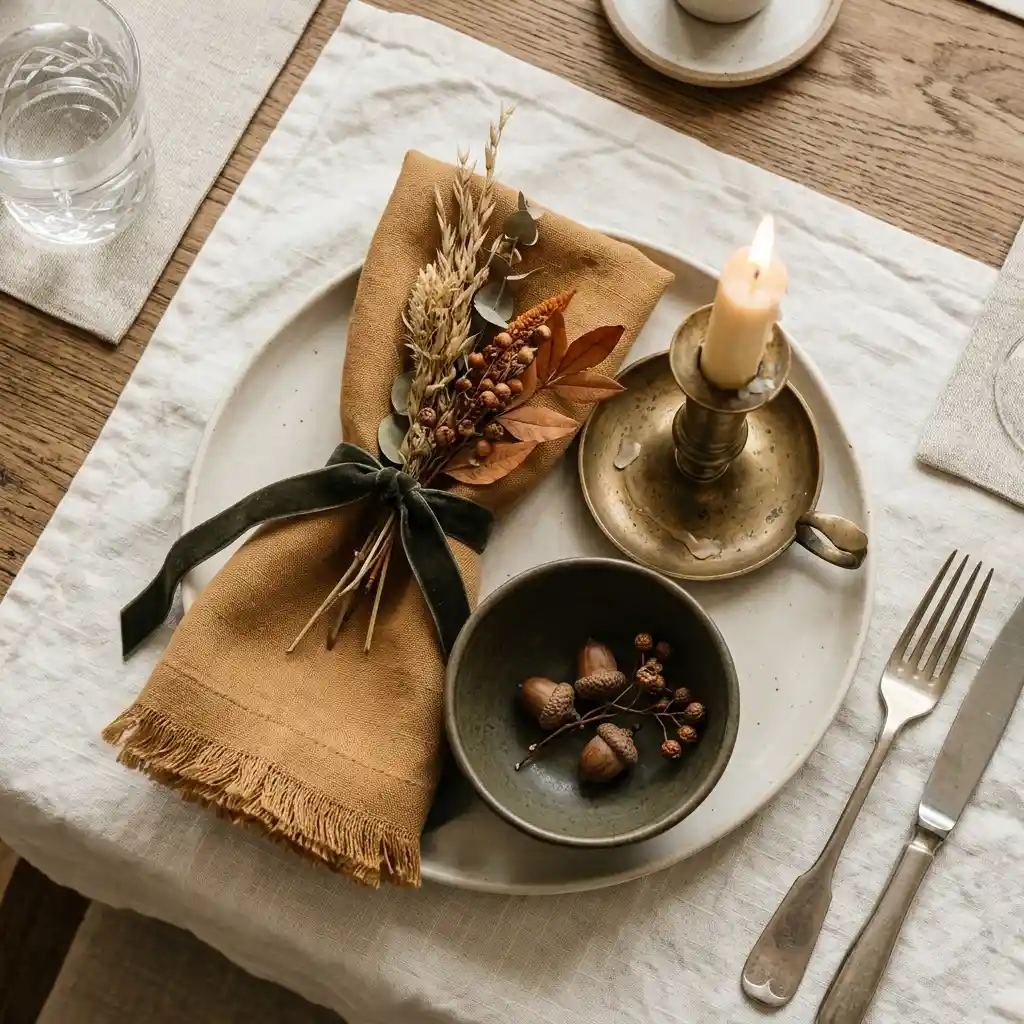
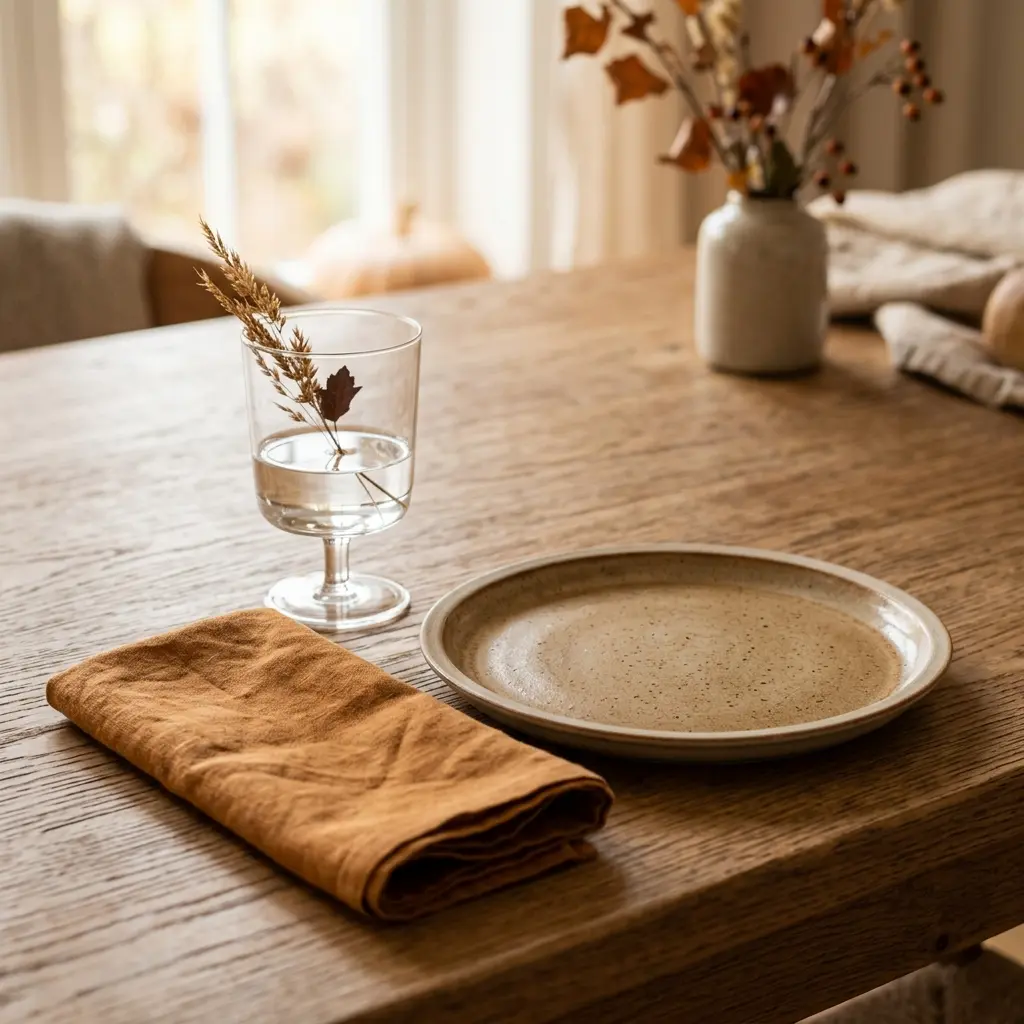
An elegant fall table runs on three tones and stops there. Start with a near-white base — bone, warm cream or oatmeal — on the linen and the plates, because it gives the eye somewhere to rest. Add one mid warm tone that carries the season: camel, caramel, dried-wheat gold or muted clay. Finish with one deep grounding tone in small amounts, such as charcoal, deep olive or oxblood.
Metal counts as a color, so pick one finish and repeat it three times. Aged brass, unlacquered brass or matte black all work, as long as only one of them appears. Mixing brass candlesticks with chrome flatware and a copper bowl gives you five colors on a table that can hold three, which is why so many carefully chosen tables still look busy.
The Materials That Do the Heavy Lifting
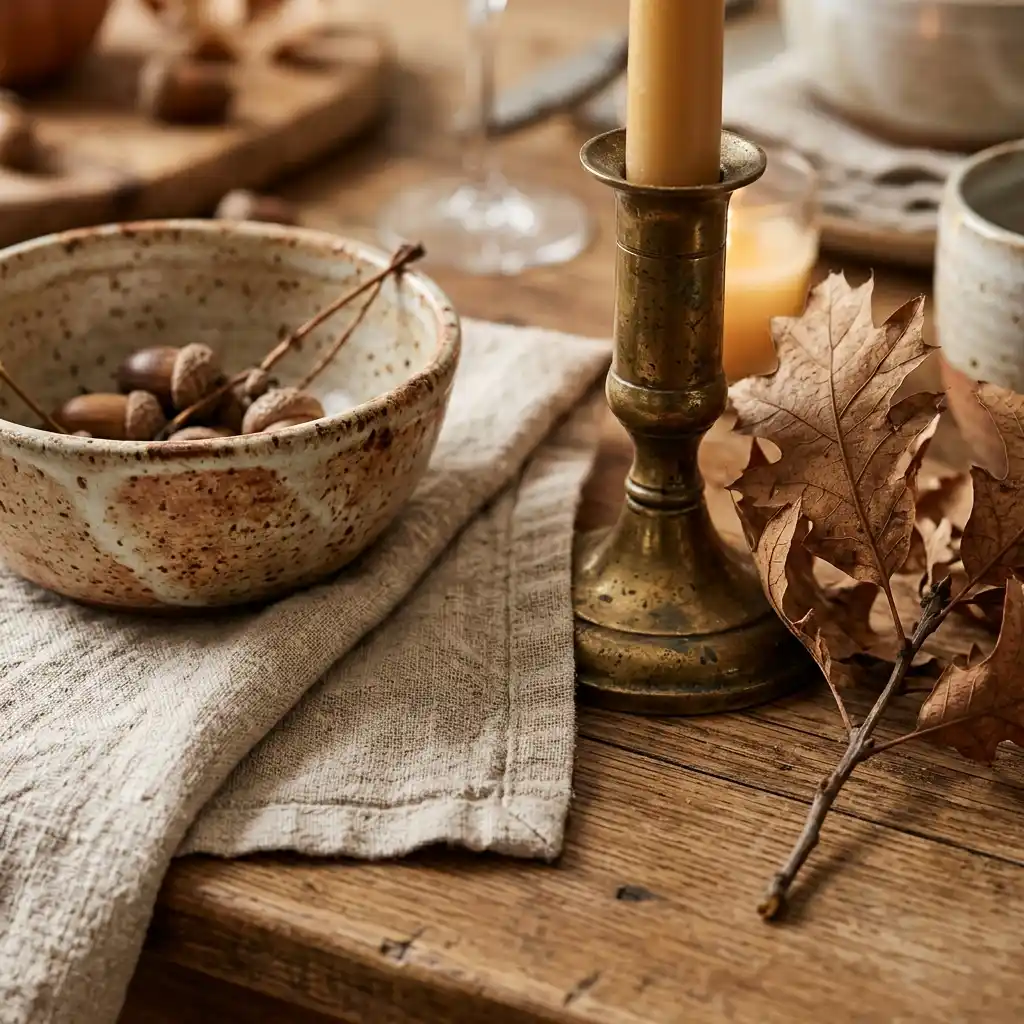
Four materials carry a fall table: washed linen, glazed stoneware, real metal and dried plant matter. Glazed stoneware has a hard, slightly uneven surface that catches candlelight in a way flat ceramic does not. Washed linen creases instead of wrinkling, so it looks better an hour into dinner than cotton does. Dried wheat, oak leaf and eucalyptus hold their shape for months and cost a fraction of fresh stems.
The list of things to leave out is shorter and more useful. Printed themed textiles, molded resin gourds, plastic leaf garland, glitter and anything with a word on it all look like filler at close range. Material Note: dried stems shed and grow brittle over a season, so keep them out of walkways and replace them once they start dropping.
How Much Bare Table Should Be Left Showing
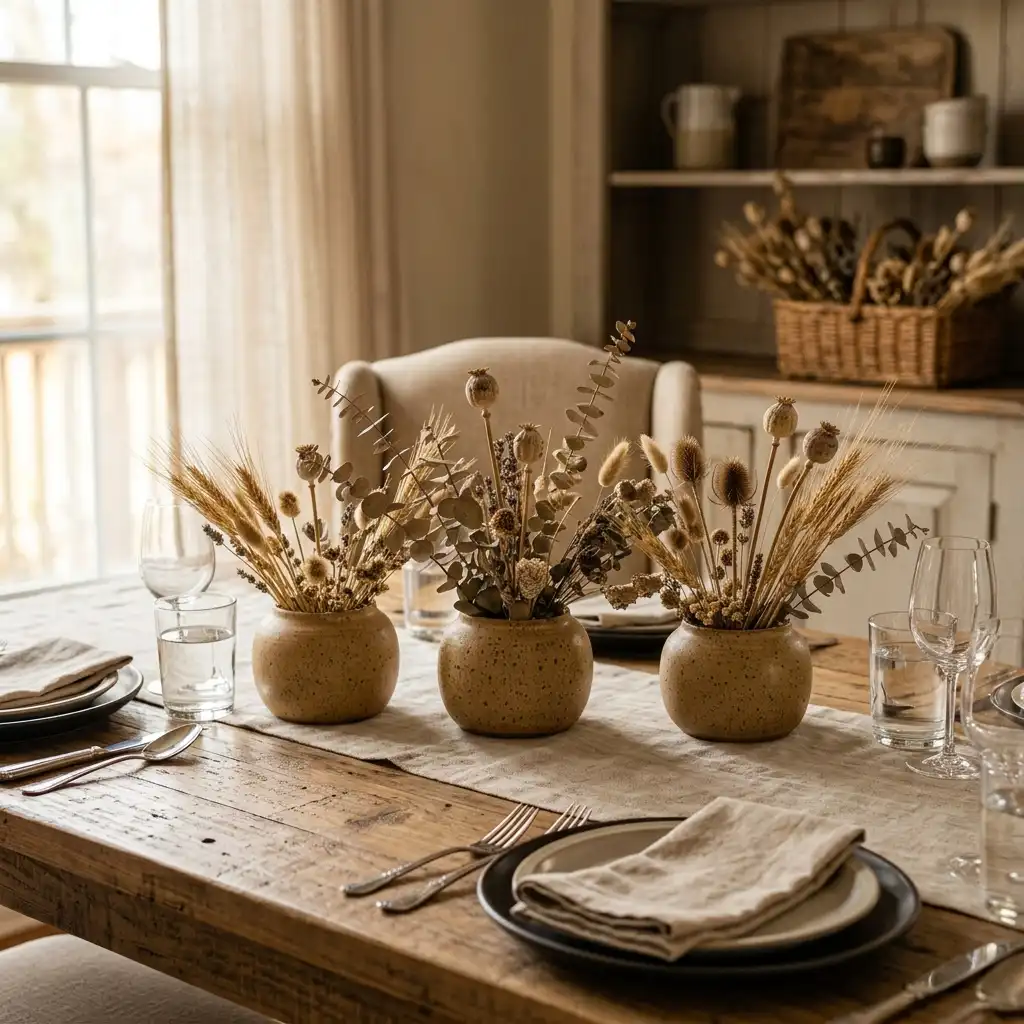
Elegance on a table is measured in empty surface, not in objects. Designer Rule of Thumb: leave at least half the table visible once everything is placed. That single test settles most arguments about how much is too much, and it explains why a nearly bare table with two good candlesticks looks more expensive than a loaded one.
Width is where people overshoot. Keep the decor inside the middle third of the table — roughly 15 inches on a 42-inch table, 20 inches on a 60-inch one — so linen or bare wood frames it on both long sides. Height follows the same logic from a seated position: anything between 12 and 24 inches tall lands at eye level, so stay below that band or lift the piece above it on a slim stem. The same approach carries into December, which is why these winter centerpieces for table arrangements look related rather than replaced.
Real Candlelight, Nothing Scented
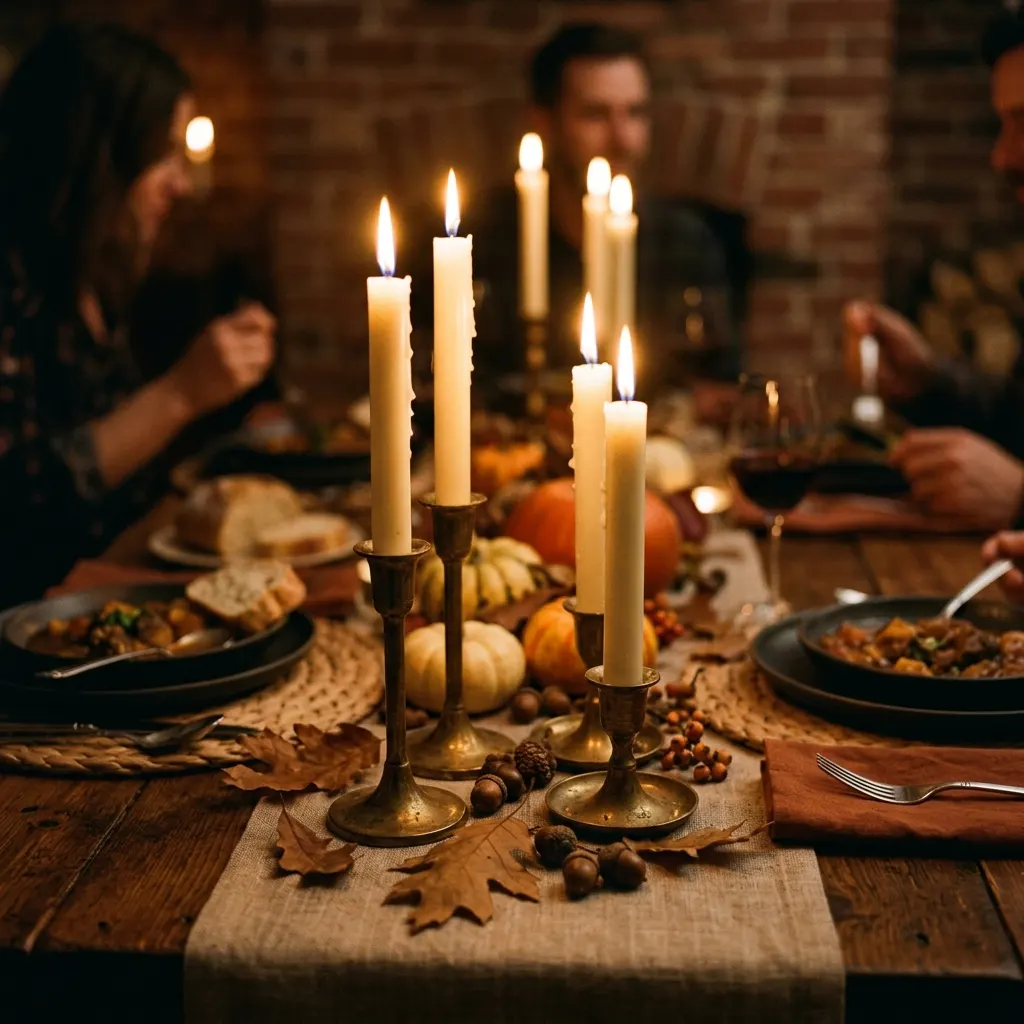
Candlelight does the work that orange used to do. A taper burns at roughly one inch per hour, so a standard 10-inch candle covers a long dinner with room to spare. Vary the holders rather than the candles — a pair of short 4-inch holders beside a pair of 8-inch ones lifts the flames onto two levels instead of one flat row. Then switch the ceiling fixture off completely and let a lamp at 2700K light the rest of the room.
Keep them unscented. Source Note: Homes & Gardens quotes a senior perfumer advising unscented tapers on the dining table, with scented candles kept to hallways and other rooms, because smell carries most of what we taste. Safety Note: dried wheat and oak leaf are brittle and catch easily, so keep every stem at least a hand’s width from an open flame and never leave lit tapers unattended.
DESIGNER TIP: Trim each taper wick to about a quarter inch before guests arrive. Untrimmed wicks smoke, and candle smoke sitting over a table is the fastest way to make a careful setting feel neglected.
How Do You Set an Elegant Fall Table in Five Moves?
- Clear the table completely, down to bare wood. Every good version of this starts from empty, because you cannot judge spacing around objects that are already there.
- Decide the linen. Bare wood with cloth napkins is the easiest elegant answer. If you want a runner, choose one 14 to 16 inches wide so several inches of table stay visible on both long edges — a runner that reaches the edges covers the material you paid for.
- Set the seats before the decor. Give each person a clear 24 inches of table edge, then place plates, glasses and flatware. Now you can see exactly how much middle is genuinely free.
- Build the low group inside the middle third. Three to five vessels, nothing over 12 inches, and enough space between them that the table still shows through the run.
- Add candles last, then remove one thing. The final object you added is almost always the one to take off. If those pieces earn their keep, most of them carry straight through to Christmas table settings in a few weeks with a change of napkin.
DESIGNER TIP: Photograph the finished table from a seated position, not standing over it. Overhead is the one angle nobody at dinner will ever see, and it hides exactly the sightline problems a low camera catches.
Round Tables, Mismatched Plates and Kids at the Table
A round table shows the palette more plainly than a rectangle does, because every guest sees the whole surface at once. That makes the three-color cap stricter rather than looser. Put the season into the napkins and the candle holders, and leave the plates plain — a round table with four patterned plates never looks calm, whatever sits in the middle of it.
Mismatched plates are fine as long as they share a tone. Cream, bone and oatmeal ceramics from three different sets still hold together as one table; a single blue-rimmed plate breaks the whole scheme. The same goes for borrowed or rented dinnerware at a bigger gathering, where matching the tone matters far more than matching the pattern.
Where children eat at the table, swap wax tapers for battery LED ones, keep dried stems out of arm’s reach, and choose stoneware over glass — an elegant fall tablescape survives a knocked elbow far better when nothing on it shatters. There are more seasonal versions of the same approach across our seasonal decorating ideas.
What Makes a Fall Table Look Cheap
The most common failure is a fourth color. Three tones hold together; add a fourth and the table stops looking planned and starts looking collected. Count the metals too, because chrome flatware beside brass candlesticks and a copper bowl uses up all three slots before a single stem is placed.
Buying a whole seasonal collection is the second. Matching plates, napkins, runner and centerpiece from one range look like a shop display rather than a table someone set, because nothing in the group has a different age or origin. Take one or two pieces from the range and put them next to things you already own.
Shiny new metal is the third, and it is a quiet one. Gold-tone plastic chargers and bright polished holders catch light in a hard, even way that real metal never does. Unlacquered brass darkens with handling, so an inherited candlestick looks better under candlelight than a boxed set at twice the price.
Printed seasonal textiles are the fourth. A napkin printed with leaves, a runner printed with plaid, a placemat printed to look like wood — each one is a picture of a material rather than the material, and at arm’s length that shows. Plain linen in caramel or olive costs about the same and never dates.
Layer stacking is the last. Charger, placemat, plate, bowl, napkin ring, place card and a tied sprig at every seat is seven decisions where two would do, and the effect is fussy rather than formal. Keep the plate and the napkin, drop the rest, and spend the difference on better linen.
What an Elegant Fall Table Costs
Most of this is cheaper than the bin of seasonal decor it replaces, because the spend moves from many small printed items to a few plain ones you reuse. On a budget, eight unscented tapers and six washed linen napkins are enough to change the whole table for well under $100. In the mid range, three glazed stoneware vessels and a bundle of dried wheat or preserved oak leaf add the low group for roughly another $70 to $150. At the premium end, a full reset with a linen runner, six stoneware salad plates and a pair of aged brass candlesticks runs into the low hundreds and lasts for years.
| Project | Estimated Cost | Impact Level |
|---|---|---|
| 8 unscented tapers plus 6 washed linen napkins | $45–$90 | High |
| Low group: 3 glazed stoneware vessels plus dried wheat or oak leaf stems | $70–$150 | Very High |
| Full reset: linen runner, 6 stoneware salad plates, 2 aged brass candlesticks | $220–$450 | Medium |
Best First Upgrade: Cloth napkins in one warm tone plus unscented tapers, because they change the whole table for the price of a single decorative pumpkin.
Skip for Now: Chargers, place cards and seasonal printed placemats — they add layers and cost without changing how the table looks from a seat.
The same plates, candlesticks and linen carry into December with nothing more than a napkin change, which is how they end up cheaper per use than a bin of seasonal filler. Our cozy winter decor ideas pick up the same pieces after Thanksgiving.
What I’d Set This November
Designer’s Verdict: The low group wins — three small stoneware vessels down the middle third, two pairs of unscented tapers at different heights, cloth napkins in caramel, and nothing else on the table.
It wins on staying power. Warm neutrals move far more slowly than seasonal color does, so cream linen, stoneware and brass still look current several autumns from now, while a plaid-and-orange scheme dates the moment the trend turns. Every piece in that list also works outside fall, which is the real test of whether decor was worth buying. For the December version of the same palette logic, these winter tablescape ideas swap the tones and keep the structure.
Related table and seasonal ideas:
- 15 Spring Tablescapes Ideas to Brighten Your Next Seasonal Brunch
- 15 Refreshing Spring Tablescape Aesthetic Ideas for Any Occasion
- 12 Romantic Natural Valentine’s Day Table Settings for a Cozy Dinner
- 11 Romantic Valentine’s Tablescape Ideas That Look Designer-Made
- 12 Fall Bedroom Refresh Ideas for a Cozy, Layered Seasonal Look
Frequently Asked Questions
Conclusion
The shopping-list version of fall decorating promised that a full table would look generous, and it mostly just looks busy from a chair. An elegant fall tablescape does the opposite: three colors, one low group, real candlelight, and half the table left bare. Everything else in our home decor inspiration works the same way once the table is set.