A Fall Centerpiece Is the Only Decoration You Build Three Times
How many autumn centerpieces do you actually build in one season? Most people build three. There is the early-September version made while it is still 80 degrees outside, the October one with pumpkins in it, and the late-November one that has to look right beside a turkey. That rebuild cycle is what separates fall centerpiece ideas from every other piece of seasonal decor, and almost nobody shops for it that way.
A wreath goes up once. A mantel garland goes up once. The table is the only surface that gets emptied and refilled while the season is still running.
Looking for more ideas? Explore our full guide to Fall Tablescape Ideas.
So the useful advice is not which pumpkins to buy. It is this: spend your money on the container and treat everything inside it as consumable. One good low bowl, wooden trough, or woven tray costs $40 to $120, comes back out every autumn for a decade, and does the work that makes a $20 handful of dried wheat look considered.
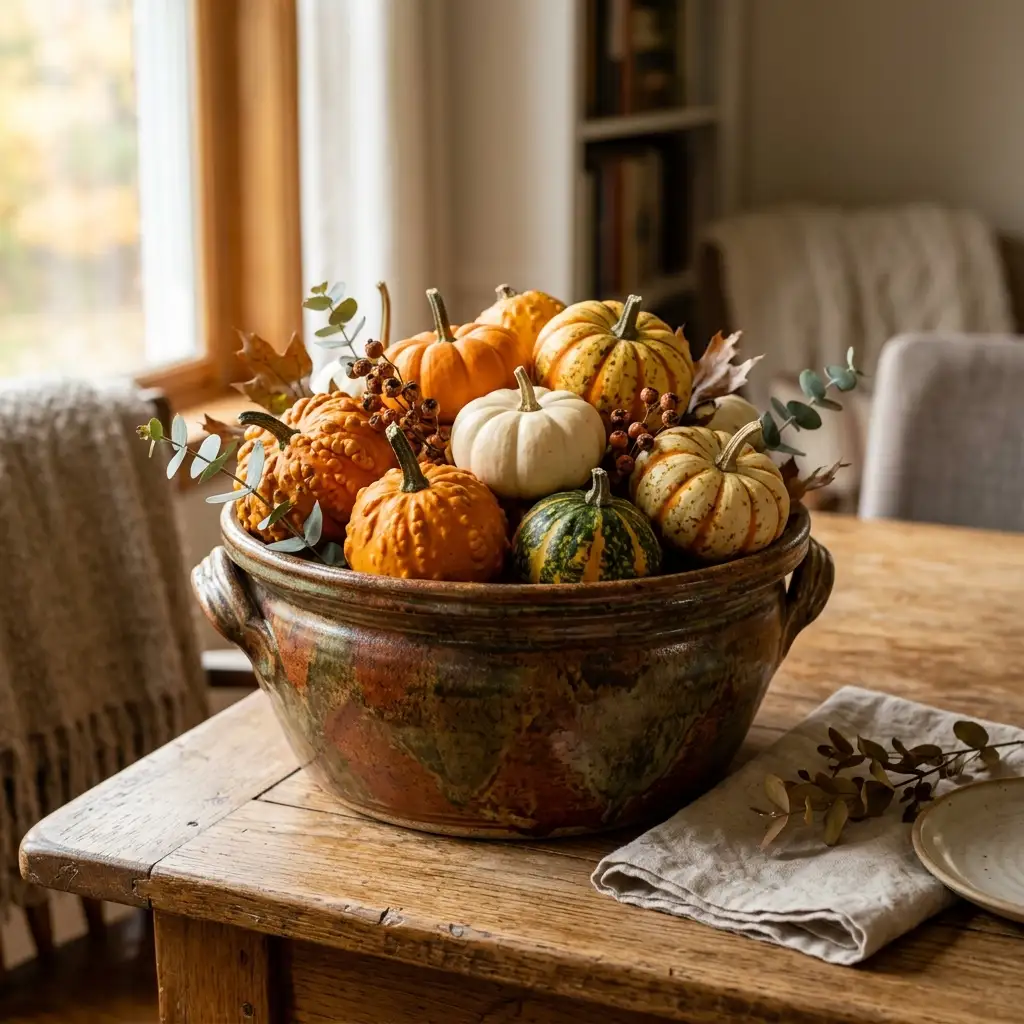
Editorial field note: two tables can hold identical grocery-store pumpkins and dried stems. The one where those objects sit inside a heavy glazed stoneware bowl looks bought; the one where they sit loose on bare wood looks scattered. Nothing changed except the container.
If you are working through the rest of the house this season, the broader set of creative fall and autumn decor ideas covers the porch, mantel, and rooms. This post stays on the middle of the table.
Buy the Vessel, Rent the Filler
The autumn tabletop aisle is built to sell you the opposite. Filler is cheap, seasonal, and gets a new print every year, so that is what sits at eye level in October. The containers are further back and cost four times as much.
Run the arithmetic across a decade and it flips. A $90 stoneware bowl used for ten autumns costs $9 a year. Ten years of pre-made faux arrangements at $35 each costs $350, and none of them survive being stored in a bin. The container is the only part of a fall table centerpiece that appreciates in usefulness, which is the same buy-once logic running through our home decor inspiration.
Signs This Is Catching On:
Autumn tabletop ranges now lead with empty vessels — troughs, footed bowls, low compotes — where the same pages used to open with a finished faux arrangement.
Dried and preserved stems are sold loose by the bunch far more than they were five years ago, which only makes sense if shoppers already own something to put them in.
Storage-friendly is now a selling point on seasonal decor, and a stackable bowl stores in a way a pre-built arrangement never has.
One Container, Four Fills, September to December
The same vessel carries four different looks without being replaced. In early September it holds green — eucalyptus, olive branches, a few pears. In October it takes small uncarved pumpkins and gourds. Through November it holds dried wheat, seeded branches, and a pair of tapers beside it. In December the pumpkins come out and evergreen goes in.
That is four centerpieces from one purchase. It also means the shape has to be neutral enough to read as autumn in October and as winter in December, which rules out anything with leaves, acorns, or a pumpkin silhouette molded into it.
Why Does One Bowl Look Expensive and Another Look Cheap?
Weight is the tell. A heavy piece sits still when someone reaches past it, and the eye picks that up immediately. Glazed stoneware, oiled walnut or oak, cast aged brass, and tight-woven rattan all have it. Thin plated metal, plastic-lined baskets, and lightweight resin do not, and they announce themselves the moment anyone touches the table.
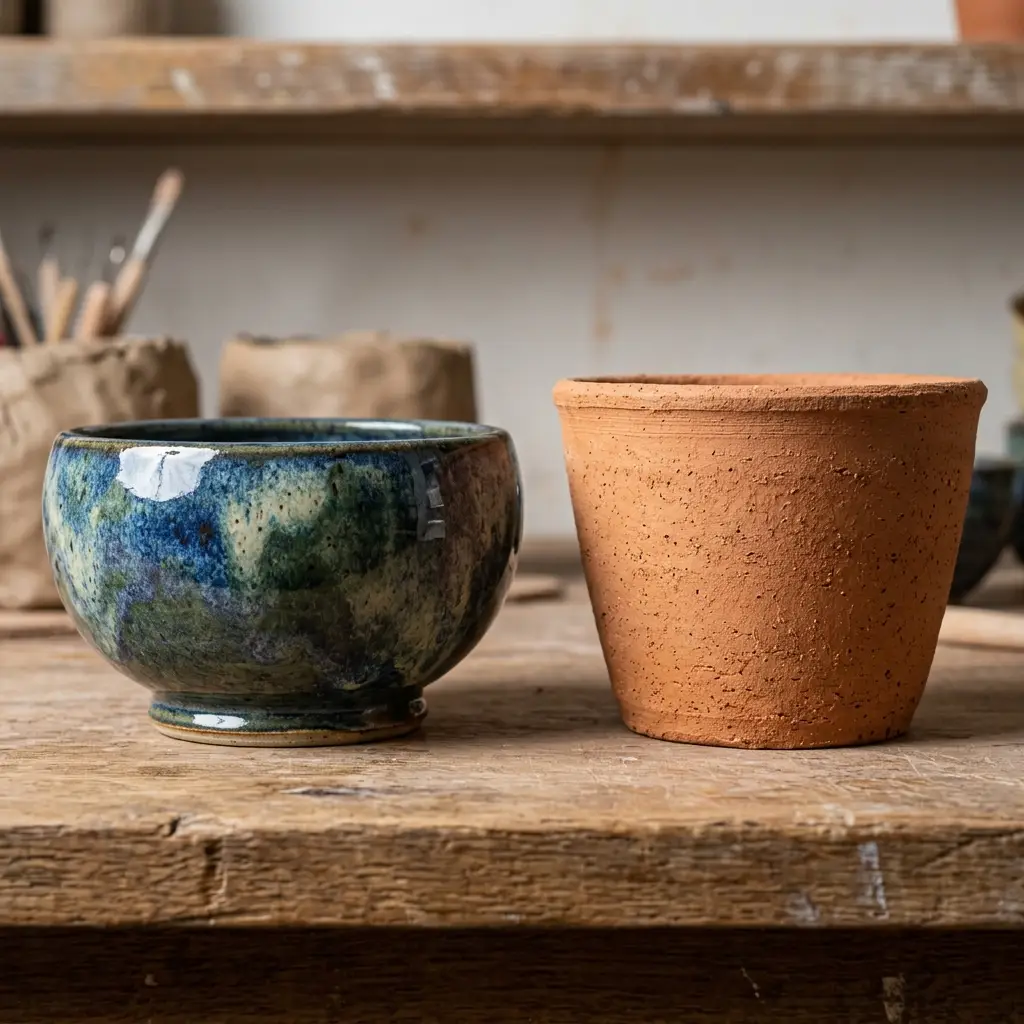
Material Note: glazed stoneware and sealed hardwood both hold water without seeping, while raw terracotta and unsealed wood will mark a table if you ever add fresh stems — line those with a shallow glass dish instead.
Scratches matter too. Wood and brass improve as they collect marks; a glossy lacquer or a printed finish only looks worse. Buy the material that ages in your favor.
Which Vessel Shape Fits Your Surface?
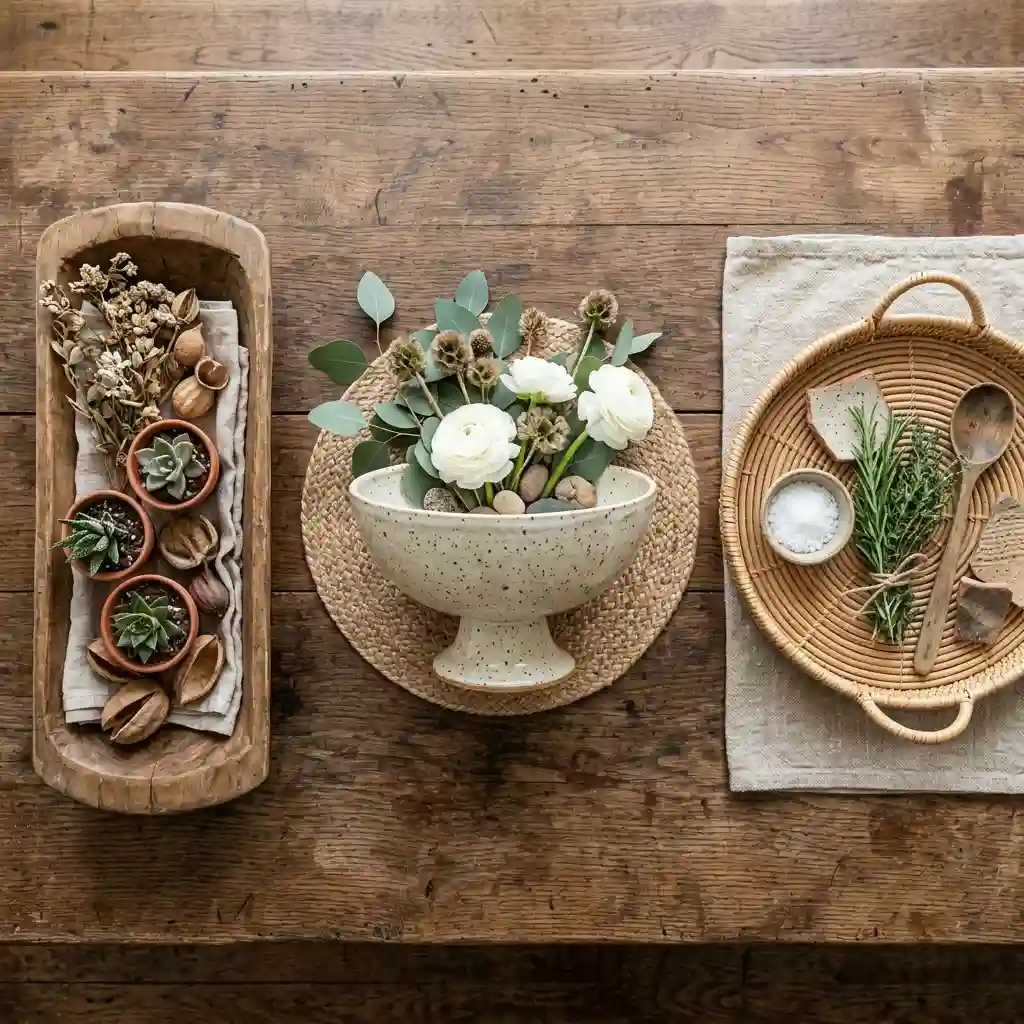
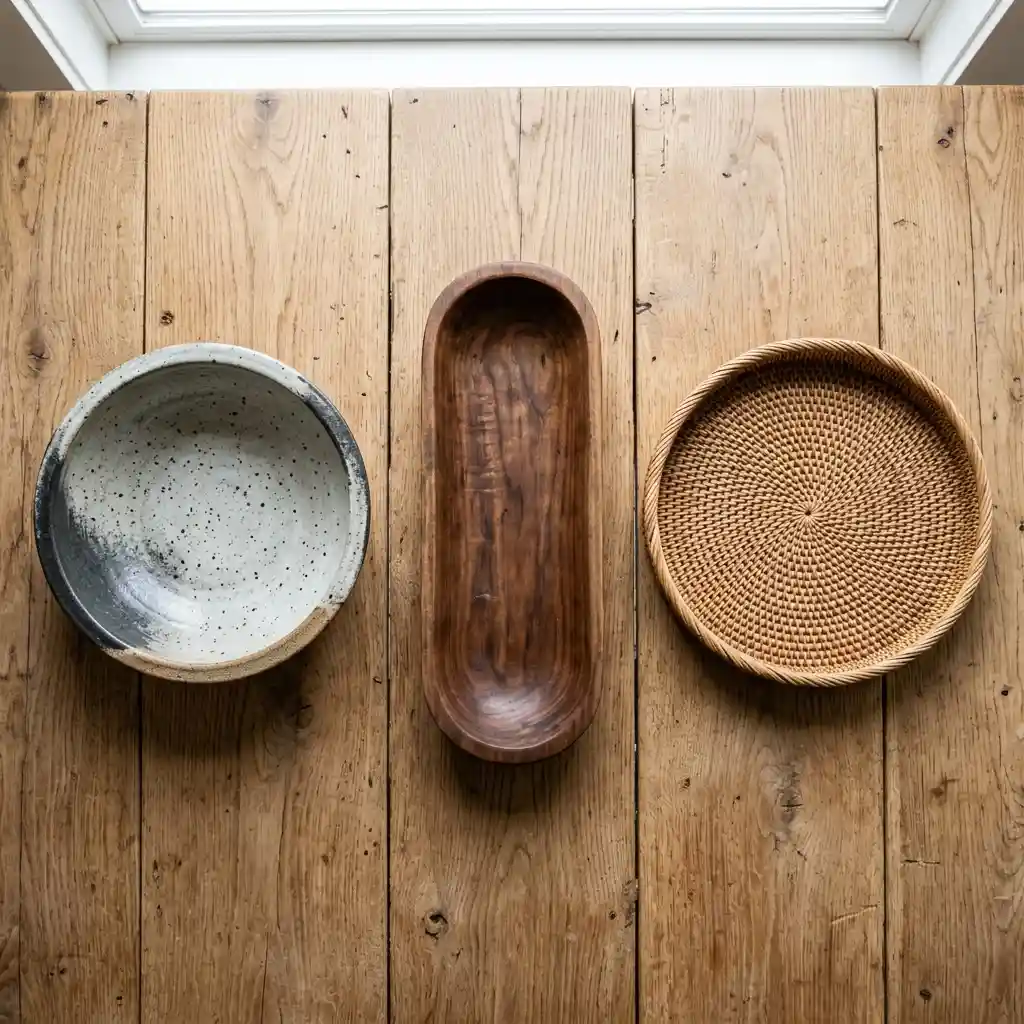
Shape is decided by the surface underneath, not by taste. A long vessel on a round table leaves two awkward crescents of empty wood. A round bowl on a six-foot rectangular table looks stranded. Three shapes cover almost every surface in a house, and most homes need two of them.
The Long Trough or Board — Rectangular Dining Tables
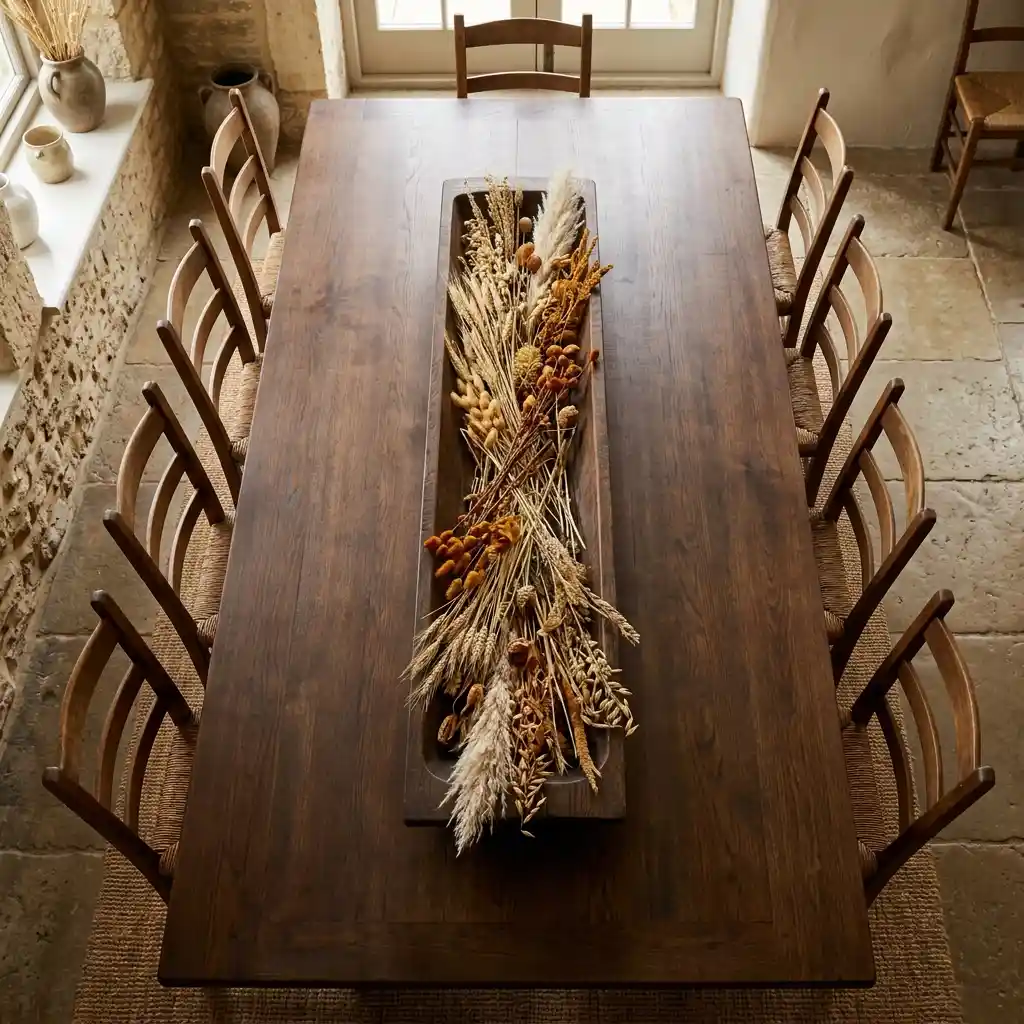
A rectangular dining table wants a line, so the vessel should be a long wooden trough, a narrow ceramic planter, or an oiled serving board. Aim for roughly half to two-thirds of the table length and about one-third of its width — on a common 40-inch-wide table, that is a 12 to 14-inch vessel.
Length is what stops the display creeping sideways into the plates. It also gives dried stems somewhere to lie flat instead of standing up in a vase. Table proportions drive this more than anything, which is why the shape of your dining table should be settled before you shop for a centerpiece at all.
The Low Footed Bowl — Round and Square Tables
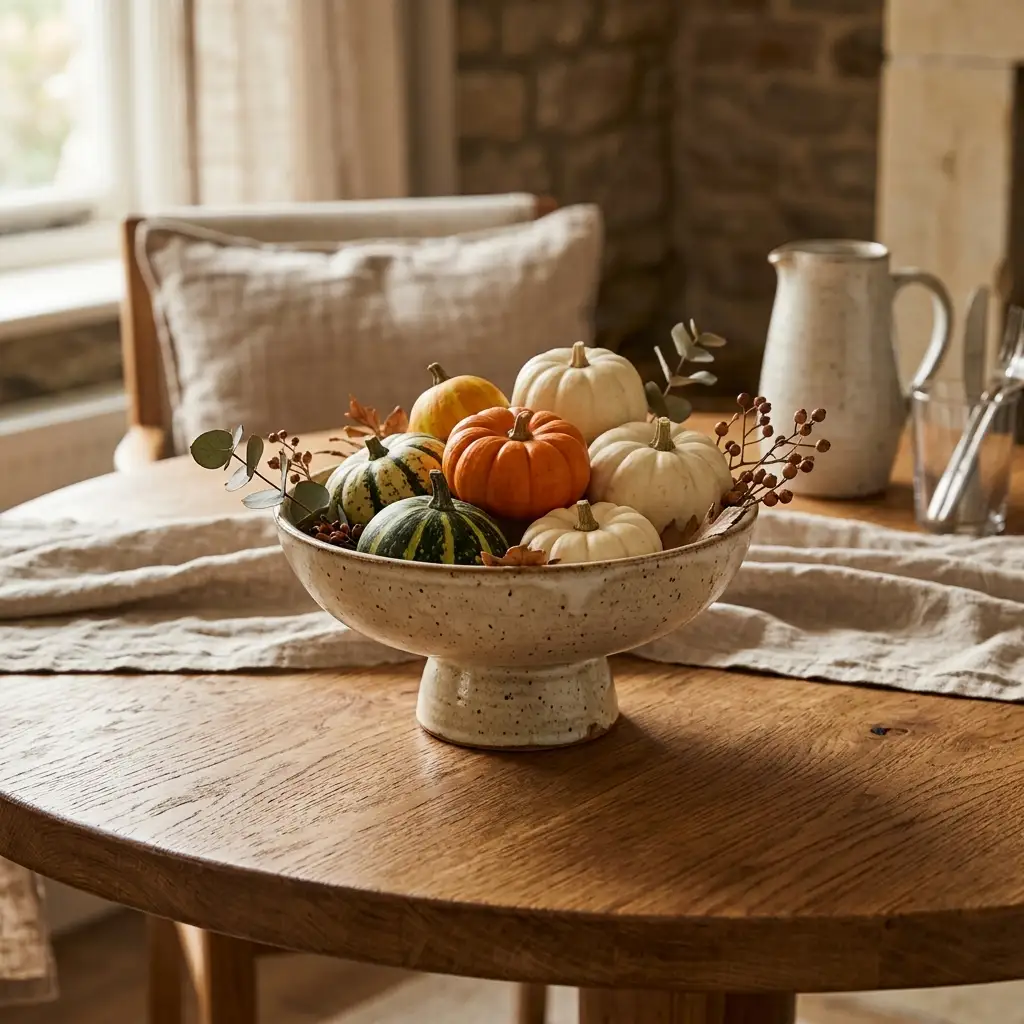
A round surface wants a round vessel, and the best one is a low footed bowl — a compote — around 10 to 12 inches across and 5 to 7 inches tall. The foot lifts it just enough to look composed without crossing into the seated eyeline, which on a dining table sits somewhere between 12 and 24 inches up.
The foot is doing more work than it looks. It creates a shadow line under the bowl, so the piece reads as one object rather than a mound of stems sitting on wood. It also gives you a rim to grip, which matters on a shape that is otherwise awkward to lift with one hand.
The Shallow Basket or Tray — Islands, Consoles, Sideboards
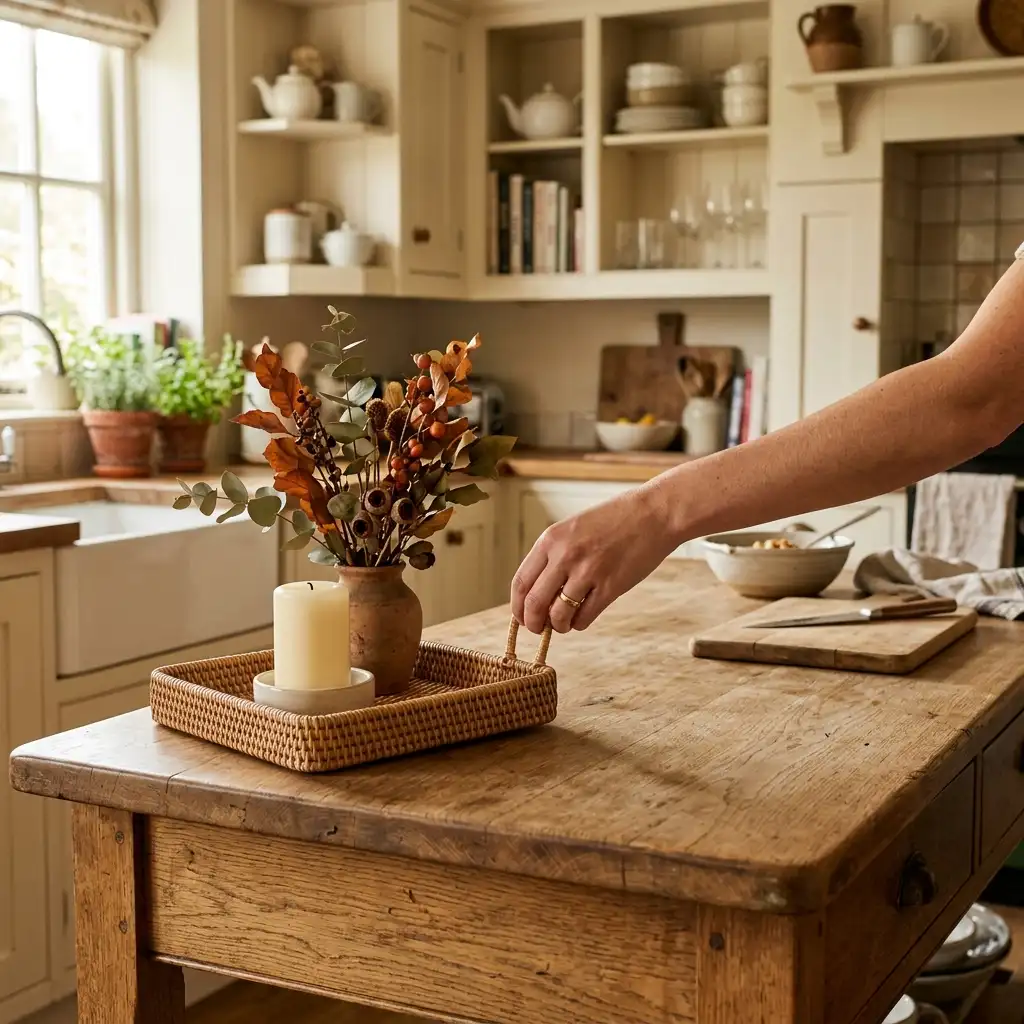
Kitchen islands, hall consoles, and sideboards all need a vessel with a raised edge, because those surfaces get bumped and wiped constantly. A shallow rattan basket, a rimmed wooden tray, or a low ceramic dish keeps everything contained and lets you lift the whole arrangement off in one motion when the surface is needed.
Keep it to about 18 inches long on a console and no more than a third of the depth on an island. An island is a work surface first, so the centerpiece has to be something you can move with one hand while holding a pan in the other.
The Fall Refill Calendar: When Should You Change the Fill?
Fall runs about fourteen weeks, and the material that looks right in week one looks wrong by week ten. Three refills cover it. Each one costs $15 to $25 and takes about ten minutes, and the vessel never changes.
Early September: Green, Before Anything Turns
Early September is still summer in most of the country, so a table full of orange looks premature. Fill the vessel with green instead — preserved eucalyptus, olive branches, or a few stems of bay laurel, with three or four green pears or small apples tucked in low.
This is the refill that buys you six extra weeks of season. It reads autumnal without committing to harvest colors, and it costs almost nothing because greenery is the cheapest thing in the store in September.
October: Uncarved Pumpkins and Gourds
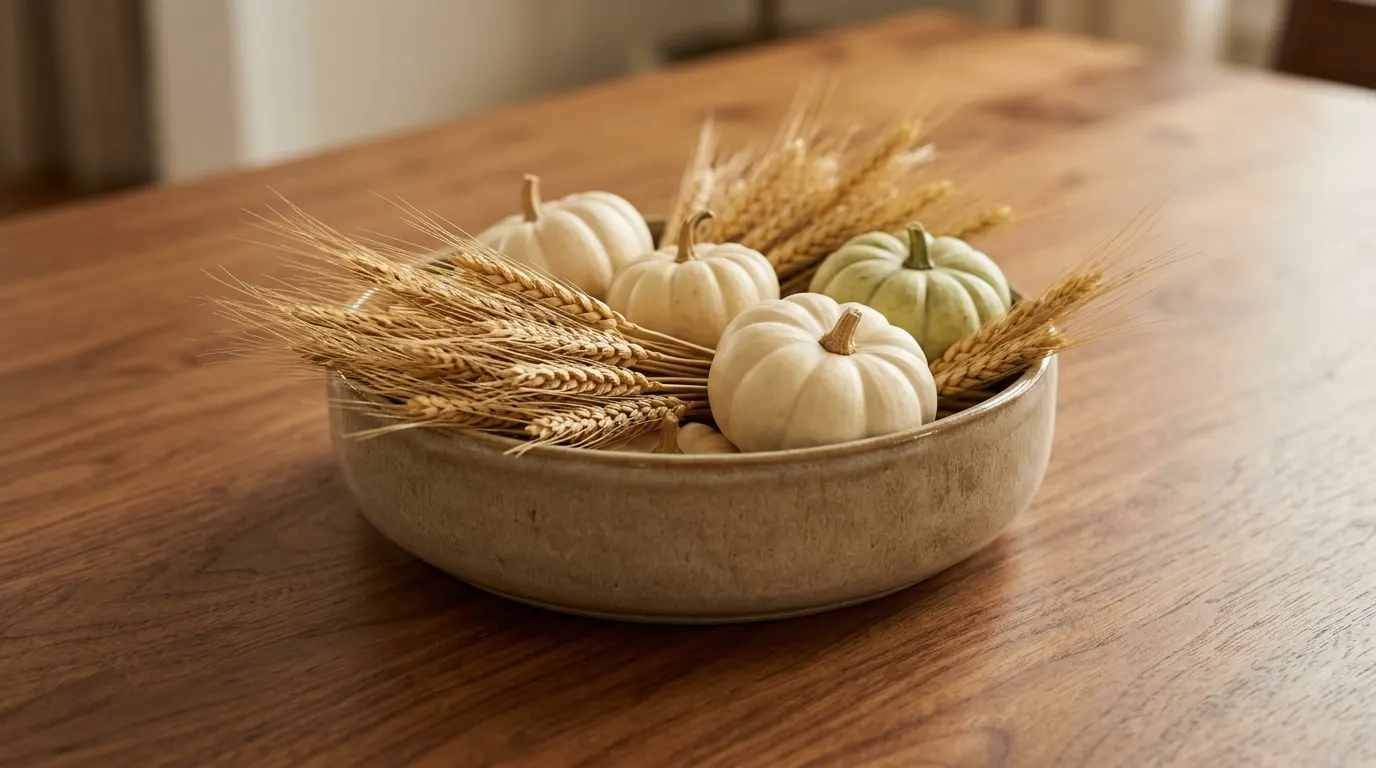
October is the pumpkin window. Use small uncarved ones — bone-white Baby Boo, pale green Jarrahdale, warm ochre gourds — grouped in odd numbers inside the vessel rather than lined up on the table. Carving belongs to Halloween; a fall centerpiece uses whole fruit only.
Material Note: whole pumpkins keep longest at 50 to 55°F with moderate humidity, and Penn State Extension’s guidance on storing pumpkins and winter squash explains why a 70-degree dining room shortens that considerably. Expect a few weeks indoors, keep them off any bowl of ripening apples or pears, and swap to ceramic or wooden pumpkins if you want one setup that lasts the whole season.
Late November: Dried Wheat, Brass, and Candlelight
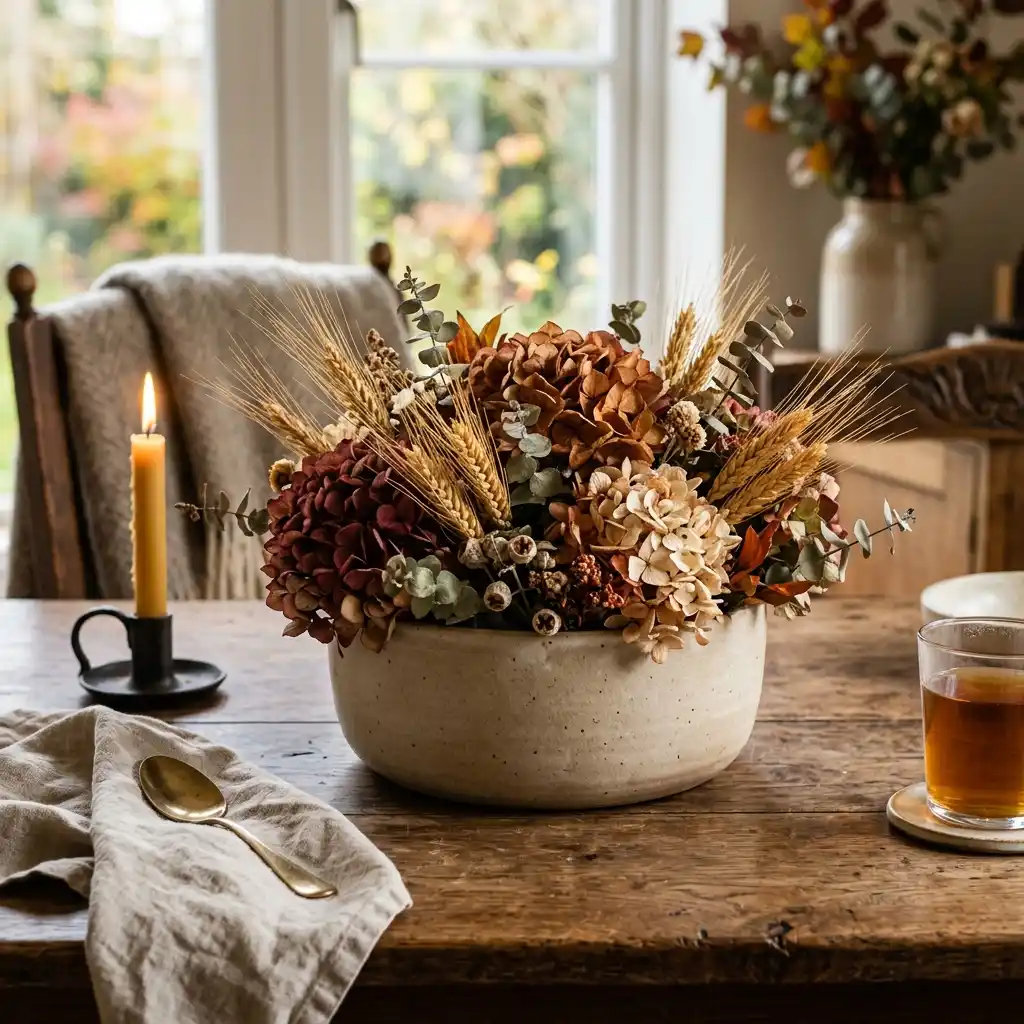
By late November the green has faded and the pumpkins have gone soft. This refill is dried and warm: wheat, seeded eucalyptus, dried hydrangea heads in cream and dusty rose, plus a pair of unscented cream tapers in brass holders set beside the vessel rather than in it.
Safety Note: the U.S. Fire Administration advises keeping candles at least 12 inches from anything that can burn, and dried wheat is exactly that. Keep the flames outside the arrangement, never arching over it, and put them out when you leave the room.
Fall Centerpiece Buying Checklist
- Measure the surface first, then buy a vessel about one-third of its width.
- Choose glazed stoneware, oiled hardwood, cast brass, or tight-woven rattan over plated metal or resin.
- Reject anything with leaves, acorns, or pumpkins molded into it — it can only be used eight weeks a year.
- Pick a piece heavy enough that it does not slide when someone reaches across.
- Confirm it stores flat or nests, because it will spend ten months in a bin.
- Budget $15 to $25 per refill and plan for three refills across the season.
- Keep dried filler and paper elements at least 12 inches from any open flame.
KEY TAKEAWAY: Judge a fall centerpiece by how many different fills its container can take, not by how good it looks the day you buy it.
No Dining Table? Style the Island or the Sideboard Instead
Plenty of homes have no formal dining table, and a fall centerpiece still belongs on whatever surface people gather around. Pick the one people actually stand at. In most open-plan homes that is the kitchen island, and the trade is that you get a big audience in exchange for a surface that gets wiped down daily — so the arrangement has to tolerate being picked up and put back several times a week.
A sideboard or hall console is the calmer choice. Nothing competes for that surface, so the arrangement can stay put for the full season and hold taller dried stems without anyone needing to see past it.
Small apartments get the best return of all from a single vessel, because it can move: island in September, dining table in November, sideboard in December. That portability is the whole argument for a bowl or tray over a fixed arrangement, and it suits the same surface-swapping logic behind these creative small apartment ideas.
Where Fall Centerpiece Ideas Go Wrong
Instead of buying a pre-made faux arrangement, Try buying an empty vessel for the same money and filling it with $18 of loose dried stems — the arrangement locks you into one look, the vessel gives you four.
Instead of choosing a container with acorns, leaves, or a pumpkin shape molded into it, Try a plain glazed bowl or plain wooden trough that carries straight through to December and back out again in spring.
Instead of standing stems upright in a tall vase, Try laying them flat along a low trough — upright stems land in the 12-to-24-inch band where seated faces are, and flat ones stay comfortably below it.
Instead of leaving real pumpkins in place for the full fourteen weeks, Try treating them as an October-only refill — a heated room runs far warmer than the 50 to 55°F that keeps whole pumpkins firm, so they soften weeks before the season ends.
Instead of filling the vessel to the brim, Try leaving the rim visible on all sides — a container packed until it disappears stops being a container and becomes a pile.
What Should a Fall Centerpiece Cost?
The whole setup runs about $75 to $290 in year one, then $45 to $75 a year after that, because only the filler gets replaced. The budget version is a wooden serving board you already own plus three refills; the premium version is a heavy glazed compote or a solid walnut trough that will outlast several sofas.
| Project | Estimated Cost | Impact Level |
|---|---|---|
| Rimmed rattan tray or basic wooden serving board | $18-$40 | High |
| Three seasonal refills: greenery, pumpkins, dried stems | $45-$75 | Very High |
| Pair of solid brass or stoneware taper holders with tapers | $40-$95 | Medium |
| Heavy glazed stoneware compote or solid walnut trough | $85-$180 | High |
Best First Upgrade: the vessel. A $90 bowl makes $18 of grocery-store filler look composed, and no amount of expensive filler rescues a cheap container.
Skip for Now: pre-made faux arrangements and anything sold as a complete centerpiece kit. They cost the most per season and can only ever be one thing.
The One Piece Still Worth Buying in Five Years
Designer’s Verdict: a plain heavy compote in glazed stoneware is the single best fall centerpiece purchase, because it takes greenery, pumpkins, dried wheat, and December evergreen without ever looking seasonal itself.
That December handoff is the real test. Pull the dried wheat out in the first week of the month, drop in cedar and a few dried orange slices, and the same bowl is doing winter work — the same continuity you see in these winter centerpieces for table arrangements. By late December it holds evergreen and candles, and in April it takes tulips. A vessel that only works eight weeks a year was never worth buying.
Related Seasonal Table Ideas:
- 15 Winter Tablescape Ideas That Make Your Home Feel Extra Cozy
- 15 Stunning Christmas Table Settings Your Guests Will Adore
- 15 Spring Tablescapes Ideas to Brighten Your Next Seasonal Brunch
- 15 Cozy Winter Decor Ideas to Keep Your Home Warm and Stylish
- 12 Fall Bedroom Refresh Ideas for a Cozy, Layered Seasonal Look
- 12 Romantic Natural Valentine’s Day Table Settings for a Cozy Dinner
- Browse all our fall decorating ideas
- More seasonal decorating inspiration
Frequently Asked Questions
Conclusion
A year from now you will have thrown out three rounds of dried wheat and be perfectly happy about it, because the bowl they sat in will still be earning its shelf space. That is the whole argument behind these fall centerpiece ideas — buy the container properly once, and every autumn after that costs about twenty dollars. Our seasonal decorating guides follow the same order in every other room.