Start With the Walk, Not the Statement Piece
Almost every outdoor Halloween guide, including plenty of advice this site has given in other seasons, tells you to start with one statement piece and build around it. That order is wrong, and it is why so many yards photograph brilliantly from the road and then feel empty the moment you walk in. The statement piece is the easiest thing to get right and the least of what the display needs.
The reason is that a yard gets read three separate times. A car slows at the corner and the driver gets about three seconds. A group of kids turns onto your front walk and gets eight. Then someone stands on your top step, close enough to touch the door, and stays there while the bowl comes out. Before any of the Halloween layer goes on, our fall porch decor guide covers the base the whole season sits on.
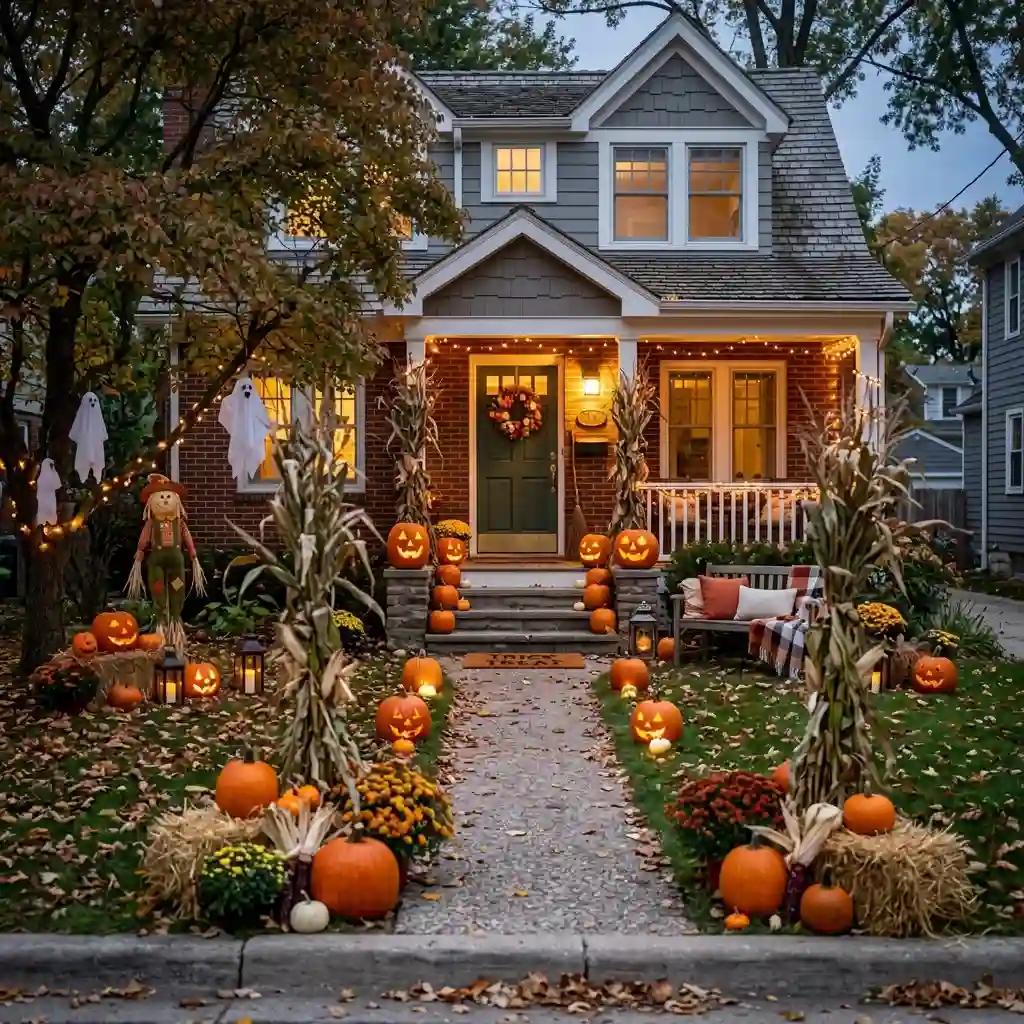
Looking for more ideas? Explore our full guide to Halloween Ideas.
Outdoor Halloween decorations work best when you build them as three zones instead of one pile. Zone one is the street read: one large shape and one light source, seen from a moving car. Zone two is the walk-up, the five to eight seconds someone spends on your path. Zone three is the doorstep, where detail finally survives, and the wreath and garland decisions that land there are covered in our Halloween wreath and garland guide. Most yards buy hard for zone one and leave zone two empty. Which objects you buy for each zone follows from your Halloween decor style.
Halloween now sits on top of autumn rather than replacing it. If your porch is already dressed with creative fall and autumn decor ideas, the spooky layer goes over that harvest base — you are adding a second act, not rebuilding the set. The year-round front porch layout underneath both is what decides how much room the seasonal layer actually has.
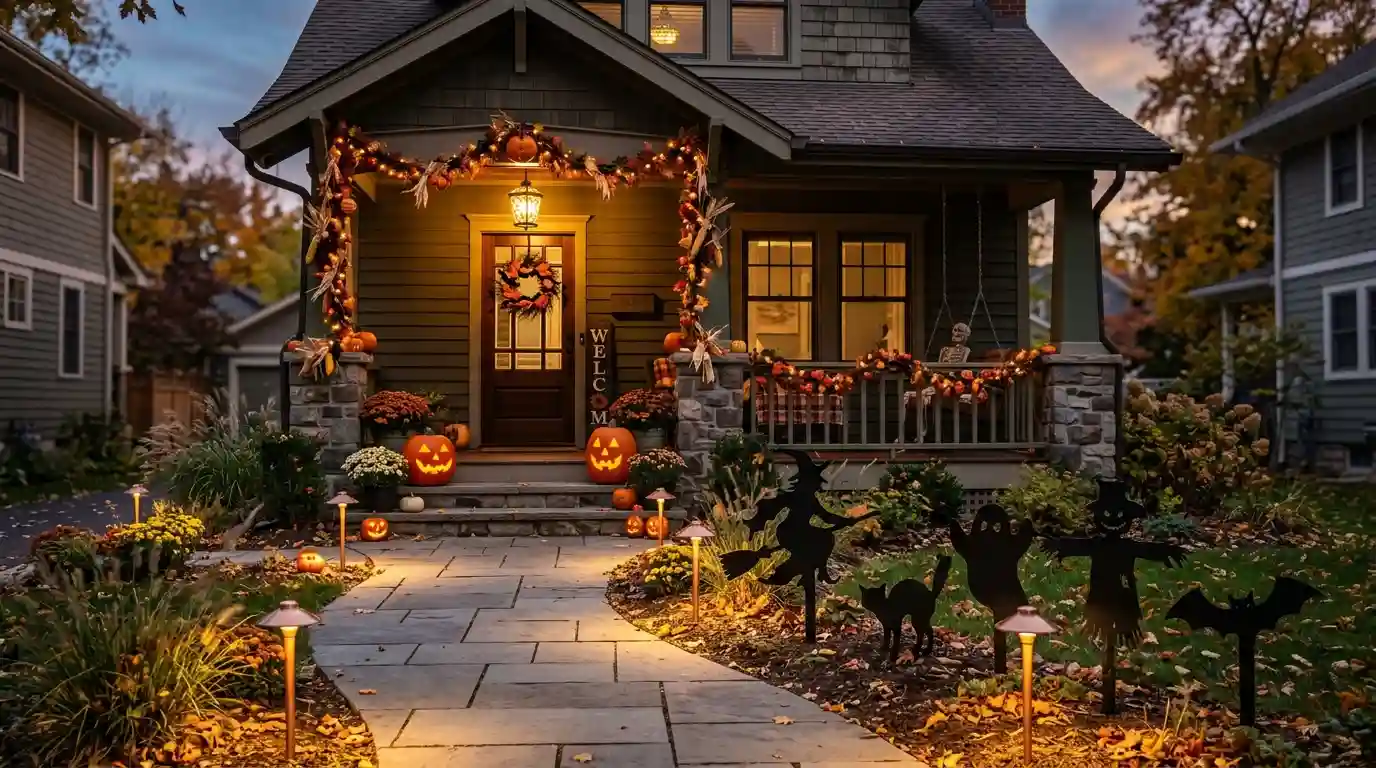
Editorial field note: A front yard holding one twelve-foot figure and nothing else photographs beautifully from across the street and then falls apart on approach. The walk turns into a dark corridor with a lit shape behind it. Adding six low path lights and five staked silhouettes along that same walk costs a fraction of the big prop and doubles the time the display holds attention. The centerpiece never changed. The middle did. That gap is the most common problem in home Halloween displays, and it shows up as a scale problem rather than a budget one across the rest of our home decor inspiration.
What Does a Three-Zone Halloween Yard Look Like?
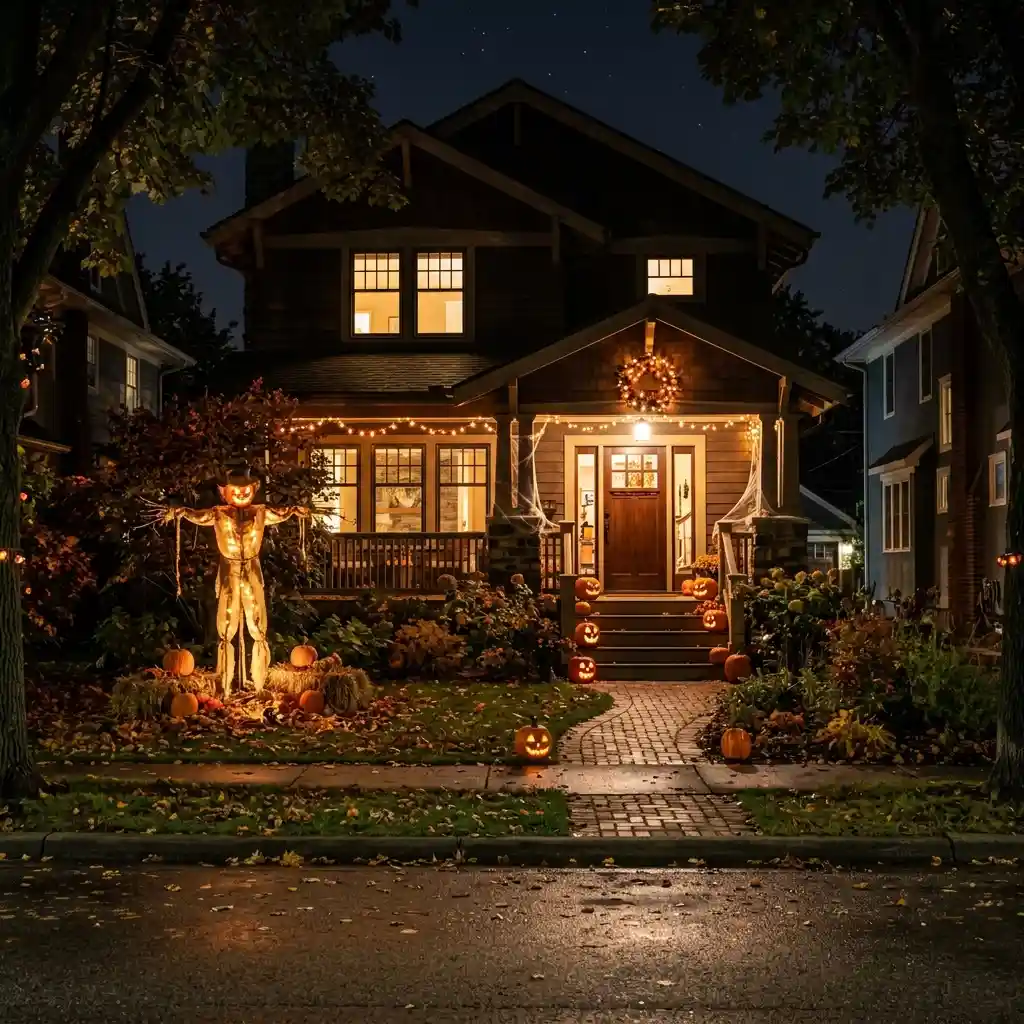
The three zones are defined by speed and distance, not by taste. Each one gives the viewer a different amount of time and a different amount of light, so each one needs different objects. Name the zone before you buy the object and most decisions answer themselves.
Zone One — the Street Read Is One Shape and One Light
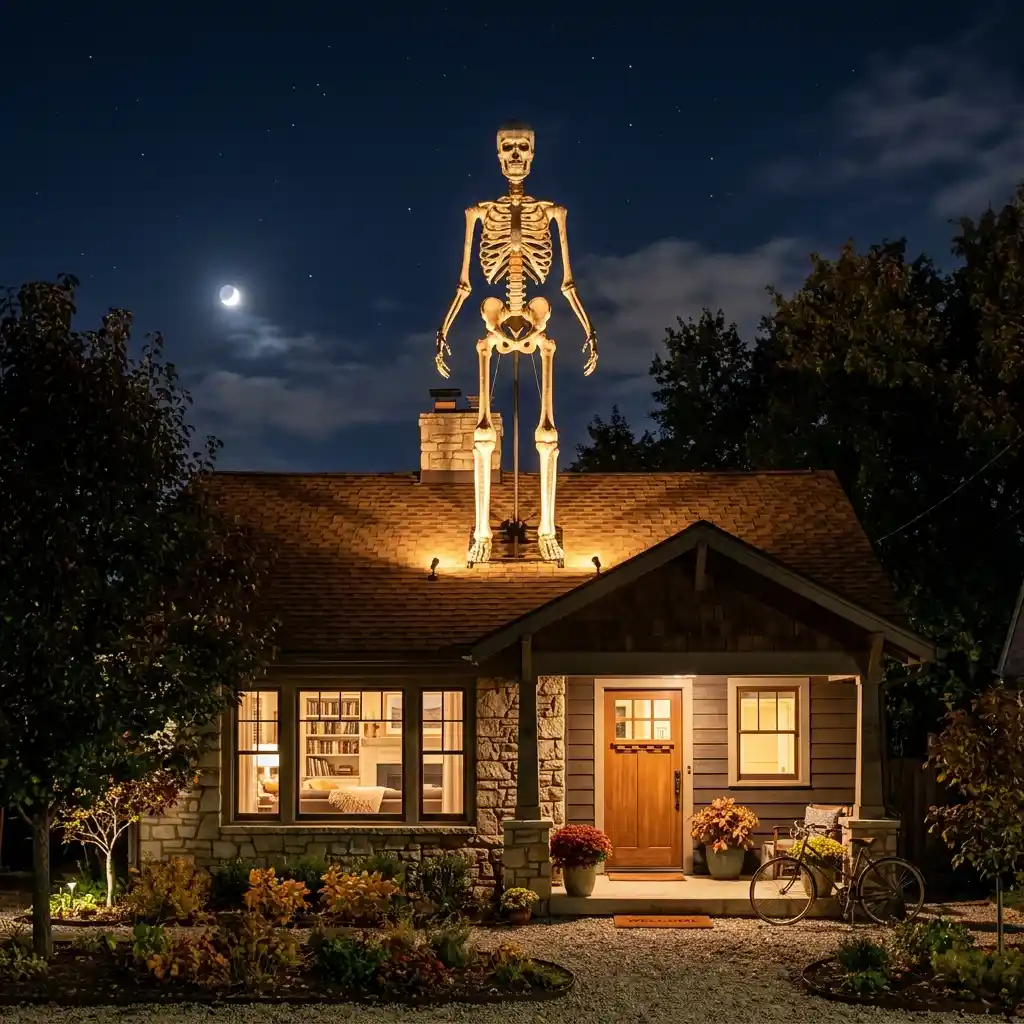
A car at 25 mph covers roughly 37 feet every second, so the drive-by read lasts two to four seconds. Detail does not exist at that speed. Silhouette and light are the only two things that register, which is why one tall figure beats a scattering of small props every time.
Height is what makes a silhouette work, and the number that matters is your own roofline. A single-story eave usually sits around nine to ten feet, so a ten to twelve-foot prop breaks that line and lands against open sky. Anything shorter sits against siding and vanishes into the house. Designer Rule of Thumb: measure to your gutter, then buy taller than it — that one comparison explains why oversized yard figures took over the category. The same street-first logic drives ordinary curb appeal too, which is the whole idea behind these ranch style home exterior updates.
Zone Two — the Walk Is Where Most Yards Go Silent
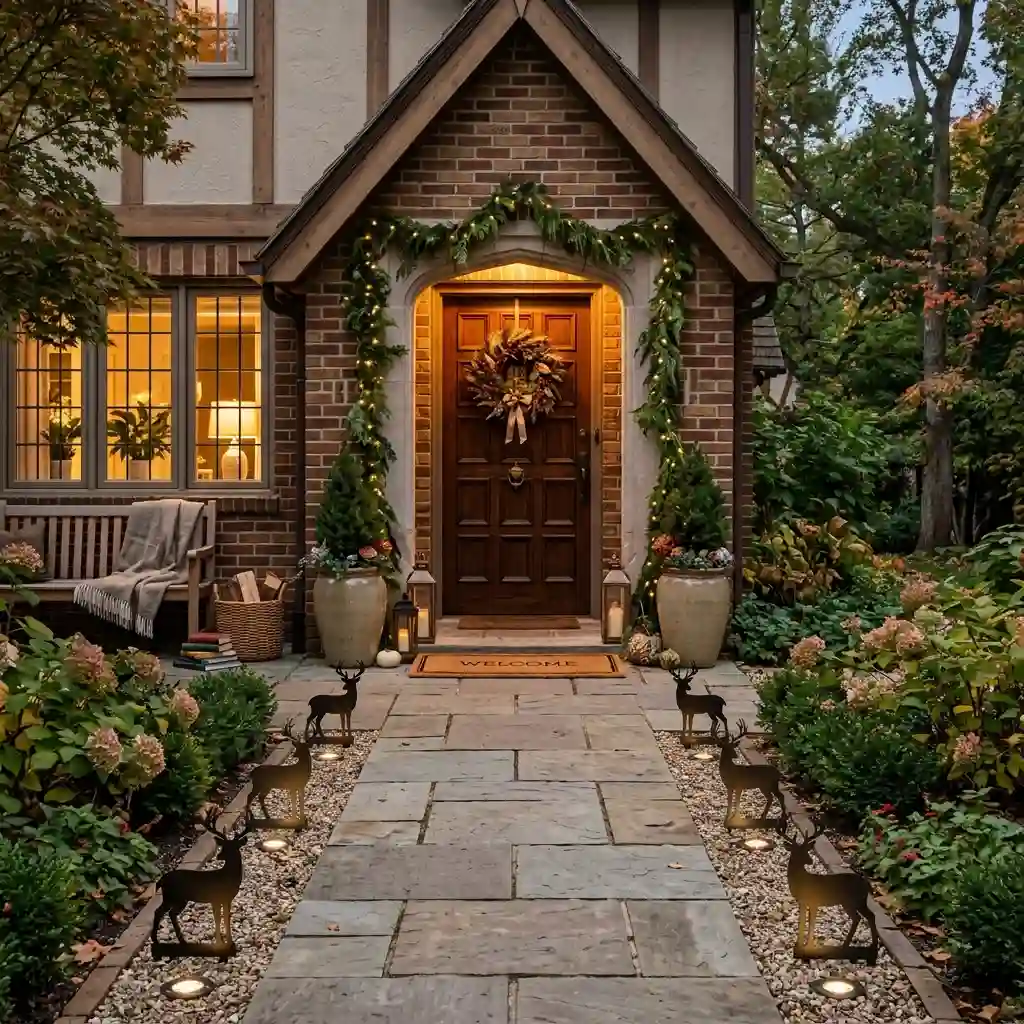
A typical front walk runs 15 to 25 feet from sidewalk to step. At a normal walking pace of about three feet per second, that is five to eight seconds of continuous, unhurried looking. It is the longest single look anyone gives the outside of your house all year, and in most yards it is completely undecorated.
Zone two rewards repetition and near-ground light. Five to seven matching stakes spaced three to four feet apart turn a bare path into a corridor. Low light aimed along the ground picks up texture that a floodlight flattens. Motion-triggered pieces belong here and almost nowhere else, because a sensor only pays off when someone is close enough and slow enough to set it off.
Safety Note: Keep at least 36 inches of clear walking width and run every cord along the edge of the path, never across it. The American Academy of Pediatrics advises homeowners to remove tripping hazards from the porch and yard and to keep candlelit pumpkins off any path where visitors pass close by.
Zone Three — the Doorstep Is the Only Place Detail Survives
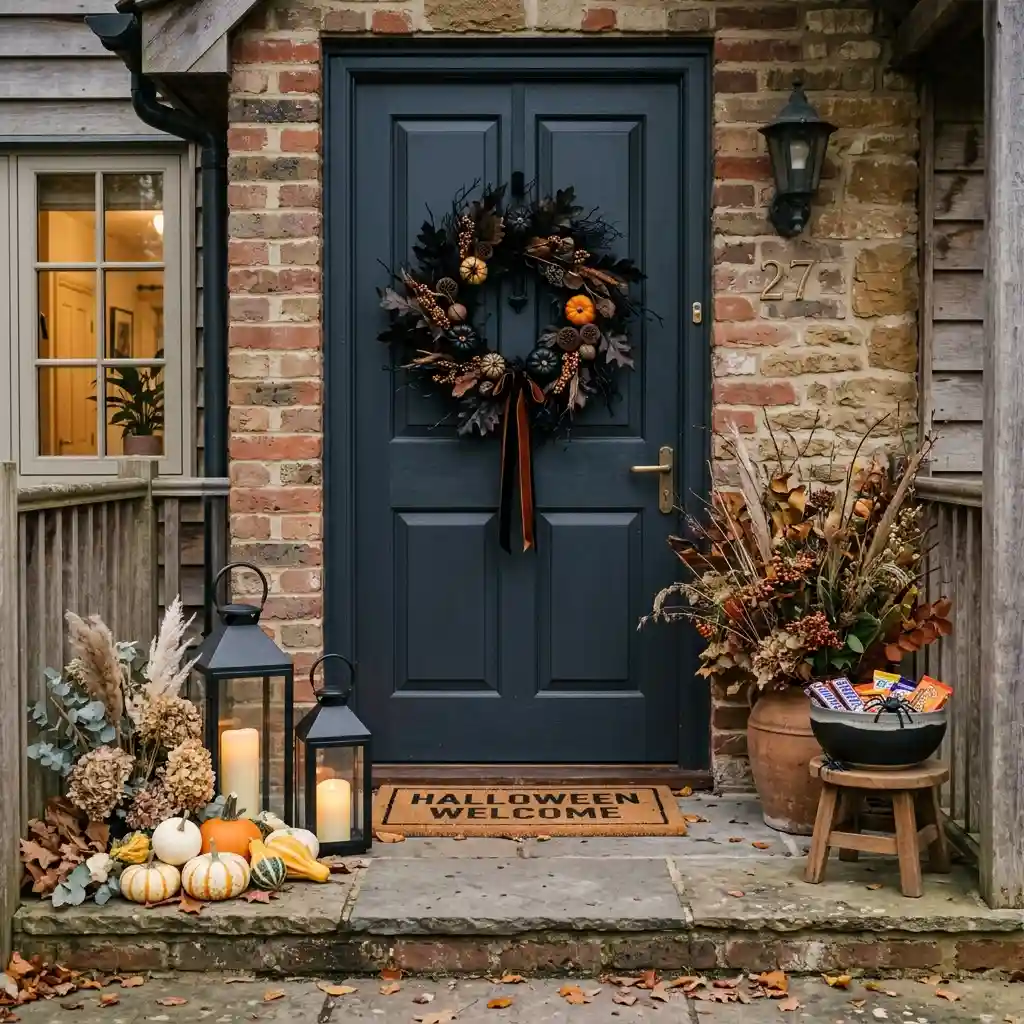
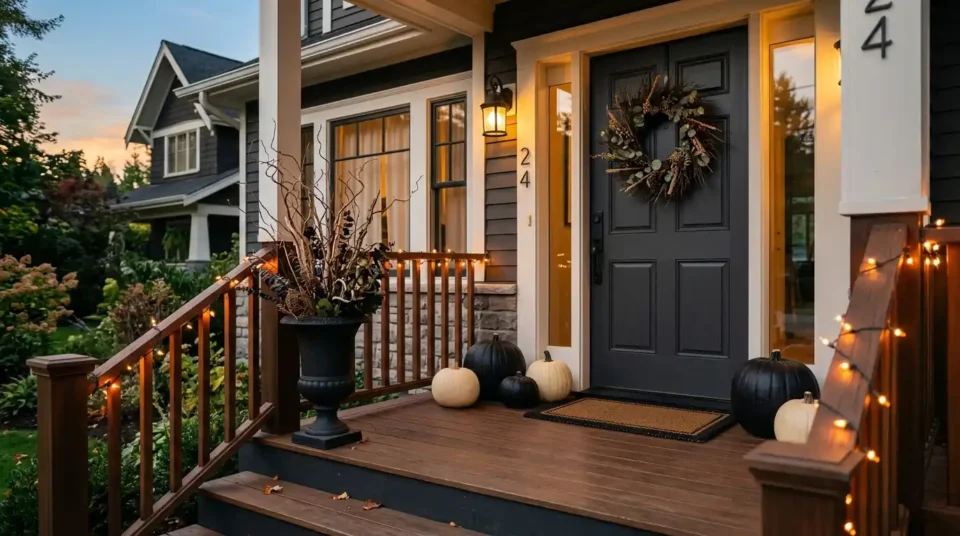
The doorstep is the one place a visitor stands still. At arm’s length, under a porch light, texture and material quality carry everything — matte black metal, real dried stems, aged brass, weathered wood. Plastic that looked fine from the sidewalk stops looking fine here.
Spend the detail budget on the last four feet. A wreath, a mat, two lanterns and a bowl do more visible work than any mid-yard prop, because every single visitor sees them from eighteen inches away. Seasonal entry styling follows the same close-range rules all year, which is why these spring entryway decor ideas translate directly once you swap the palette.
The Front Yard Turned Into Something People Walk Into
Halloween displays used to be a doorstep gesture: a pumpkin, a paper bat, a bowl of candy. They are now staged scenes people deliberately walk into, and the shift is being pushed by what stores actually stock rather than by taste.
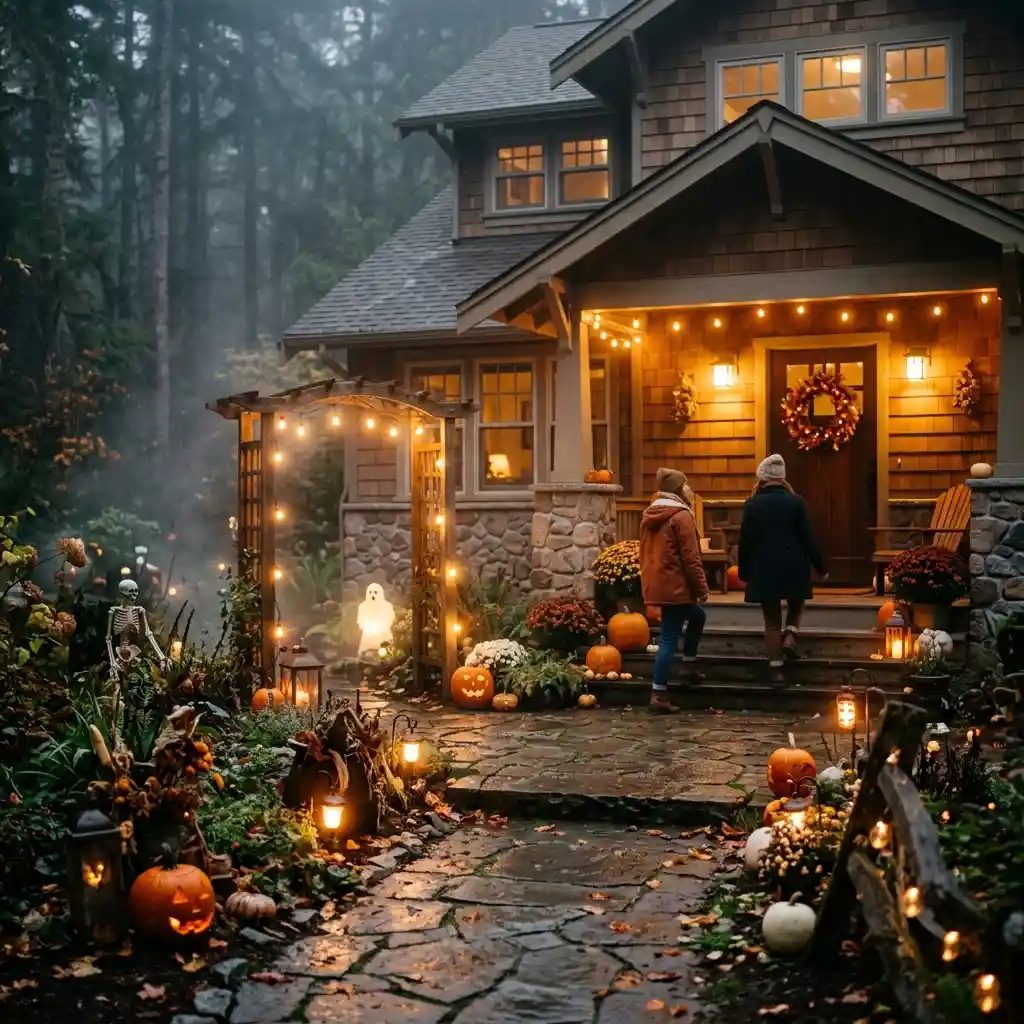
Signs This Is Catching On:
Oversized yard figures moved from specialty Halloween shops into mainstream home-improvement aisles. The flagship versions now ship with app control, recorded audio and animated eyes — features that only pay off when someone is close enough to trigger and hear them.
Motion sensors, fog and projection have become standard price-point features rather than premium add-ons. All three are approach technologies. None of them do anything for a car going past.
Households now leave displays out for five or six weeks instead of one night, so the yard stops being a single photo and becomes a route people pass repeatedly.
Photo behavior changed too. Neighbors walk up to houses to film them, which turns the front path into the shot rather than the way to the shot.
That is a genuine change in what the yard is for. The street-read layer is still the hook, but it is no longer the whole job — the same logic that turned windows into a lit backdrop in December, as with these Christmas window decor ideas, is now running through October.
How Do You Build the Middle Zone?
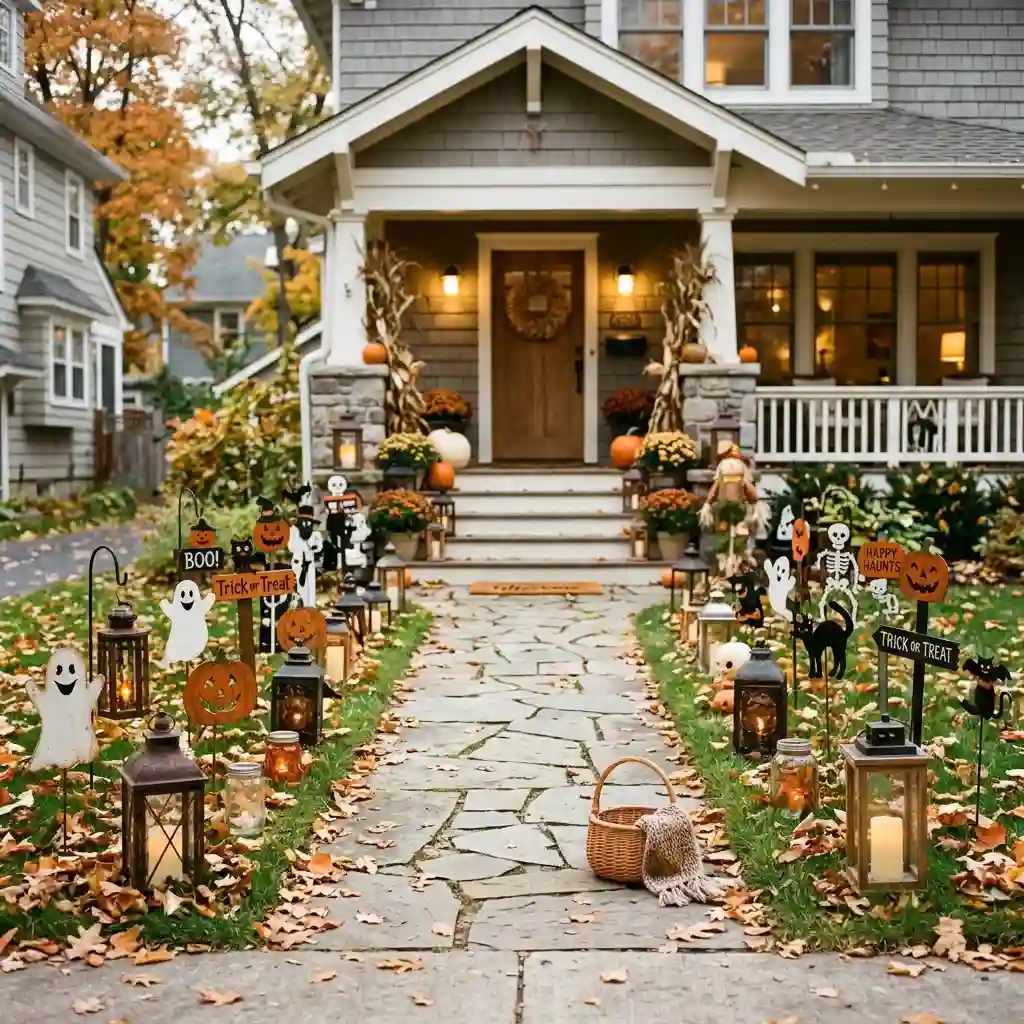
Four moves fill the gap between the curb and the door. Work them in order. Each one is cheap next to a statement prop, and the first two change more than people expect.
How Many Repeats Does a Front Walk Need?
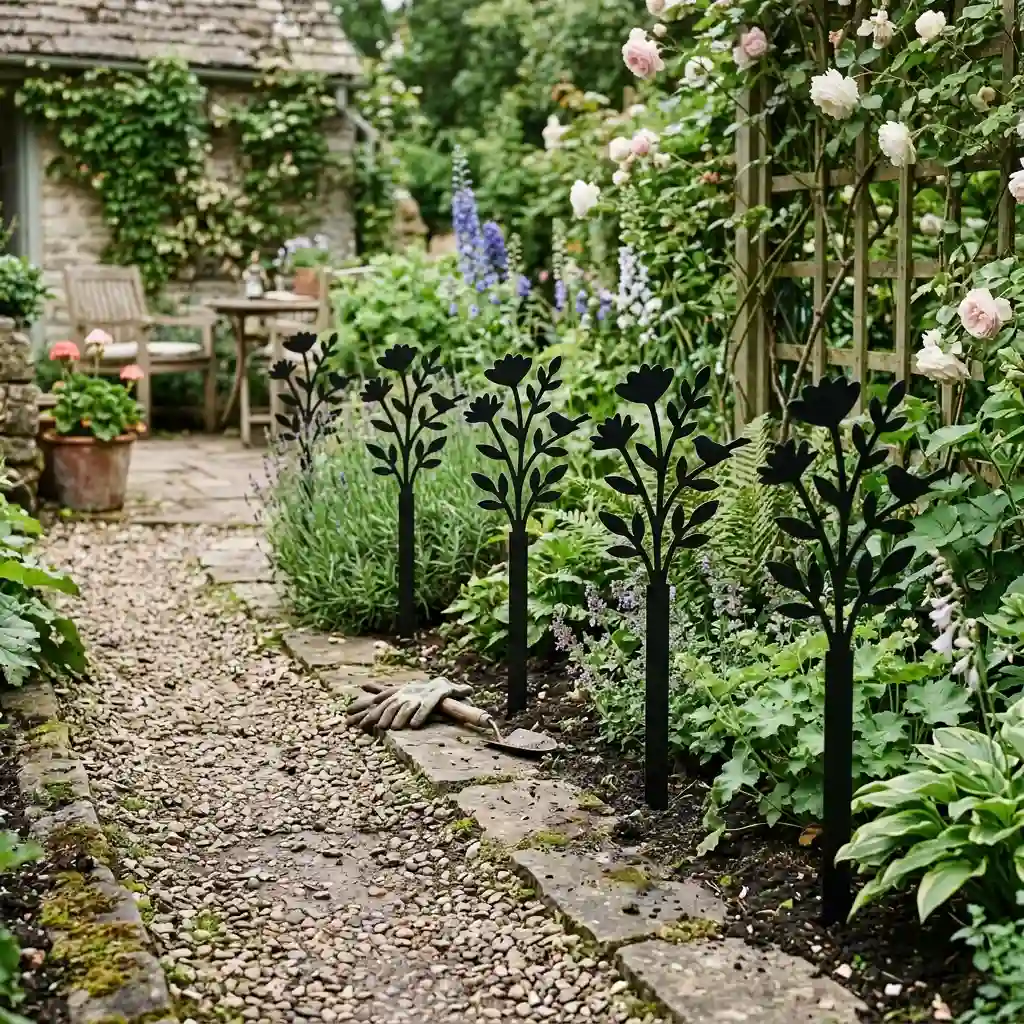
Repetition is what makes a path read as designed rather than as leftovers. Pick one shape — a stake silhouette, a lantern, a low tombstone, a cluster of dried corn stalks — and repeat it five or seven times down one side of the walk. Odd numbers stop the arrangement from looking like a store display.
Space the repeats three to four feet apart and alternate sides only if your walk is wider than four feet. Matching objects at regular spacing look like a decision. Four different props in a row look like whatever was on sale.
Where Should Halloween Yard Lights Actually Point?
A light aimed at the viewer destroys everything behind it. Bright floods pointed out toward the street shrink the pupils of anyone walking in, so the props between the light and the guest turn into flat black cutouts. It is the most common lighting error in a Halloween yard and it costs nothing to fix.
Point every fixture down or away from the approach. Stake lights washing the ground, uplights tucked behind a shrub, and a single low source under a tall figure all read well on approach and on camera. Six to eight low path lights on a dusk-to-dawn timer will do more for the walk than a second large prop.
DESIGNER TIP: Photograph your own yard at night with night mode switched off and the exposure dragged down one notch. Your phone’s night mode brightens everything and lies about what a person actually sees — the darker, uglier photo is the honest one.
Put the Motion Pieces Where People Slow Down
Motion-triggered props belong at the point where a visitor is already slowing: the last third of the walk, the bottom of the steps, or beside the gate. A sensor fired from 30 feet away startles nobody, because the sound arrives before the viewer is paying attention.
Set the trigger distance to the shortest usable range and keep the piece slightly off the path rather than on it. A prop that jumps out into a 36-inch walkway is a trip hazard in the dark, and small children take the path faster than adults do.
Anchor It Before You Style It
Tall props and inflatables are sails. Drive stakes at roughly a 45-degree angle leaning away from the figure so the tether pulls against soil rather than lifting straight out, and put the weight low — sandbags on both sides of the base stop the lateral tipping that gusts cause.
Material Note: Stakes hold in compacted soil and pull straight out of loose topsoil, fresh mulch, and saturated ground, so re-check every anchor after heavy rain. Placement helps as much as hardware: setting a tall piece where a fence, hedge or garage wall breaks the wind cuts the load on it, which is one more argument for the kind of solid boundary in these backyard privacy fence ideas. On a sloped front yard, anchor on the uphill side and expect to reset after storms, because water moves soil downhill and loosens the low stake first.
KEY TAKEAWAY: Path lighting and five repeating stakes will improve a Halloween yard more than a second large prop, at roughly a quarter of the cost.
What the Walk-Up Exposes
Each of these passes the drive-by test and fails the walk-up. That is exactly why they survive year after year — the person who set the yard up has usually only ever looked at it from the street.
❌ A statement piece at the curb and a wreath on the door, with 20 feet of nothing between → ✅ Move a quarter of the prop budget into that gap and buy time, not objects.
❌ Floodlights aimed out at the street so the house “shows up” → ✅ Turn them around, wash the ground or the wall, and let arriving eyes stay adjusted to the dark.
❌ Fog machines, cords and candlelit pumpkins creeping into the walking width → ✅ Keep the route clear and lit, and set anything that glows off to the side.
That third one is worth a moment. Halloween is the one night of the year when large numbers of children move through yards after dark, and a JAMA Pediatrics analysis of four decades of crash data found pedestrian deaths rise 43% on Halloween compared with the same evening a week either side. A dark, cluttered path is the part of your display with real consequences.
What Does Each Layer of the Yard Cost?
Outdoor Halloween decorations are one of the few decorating projects where the cheapest layer does the most work. The ranges below reflect typical big-box and garden-center pricing for the pieces described.
| Project | Estimated Cost | Impact Level |
|---|---|---|
| Path lighting — 6 to 8 low stake lights plus a dusk-to-dawn timer | $40–$95 | Very High |
| Middle-zone repeats — set of 5 to 7 matching weather-rated stakes or lanterns | $55–$150 | High |
| One approach piece — motion-triggered prop, fog machine, or window projector | $70–$220 | Medium |
| Street statement piece — 10 to 12-foot figure or large inflatable, plus anchor kit | $250–$600 | Medium |
Best First Upgrade: Path lighting. It is the cheapest line on the table, it fixes the zone most yards ignore, and it keeps working every other month of the year.
Skip for Now: The second statement piece. Buy it in the November clearance, when large props routinely drop by half and you already know where the yard needs it.
Yard Walk-Through Checklist
- Walk your own path from the sidewalk after dark before buying anything, and note where you stop seeing things.
- Measure to your gutter, then choose a street piece taller than that line so it lands against sky.
- Set 5 to 7 matching repeats three to four feet apart along one side of the walk.
- Aim every light down or sideways, never back toward the person walking in.
- Keep 36 inches of clear path with all cords running along the edge.
- Stake tall pieces at 45 degrees into compacted soil and re-check the anchors after rain.
The Height Race Is Nearly Over
The walk-through display is not a passing fad, because the hardware that drives it only functions at close range. Sensors, sound, fog and projection are built for approach, and manufacturers keep pushing those features down into cheaper price points. That direction does not reverse.
What will settle is the arms race on height. Neighborhoods that spent three seasons buying taller figures are already running out of roofline to beat, and the interesting yards are shifting from one giant object toward a route that holds attention. The pieces worth keeping are the ones that work at three feet as well as thirty, which is the whole argument behind a classy outdoor Halloween scheme.
Designer’s Verdict: Build the middle of your yard first and treat the giant prop as the last purchase, not the first — a lit, populated walk-up outperforms a taller silhouette every October and costs far less to store.
Frequently Asked Questions
Conclusion
A year from now you will not remember which giant figure stood in the yard, but you will remember whether people slowed down on the way to the door. Outdoor Halloween decorations earn their keep in that middle zone, where light and repetition buy you eight seconds of attention that no single prop can. There is more seasonal styling in our home decorating ideas when you are ready to plan the rest of the year around the same walk-up.