TL;DR
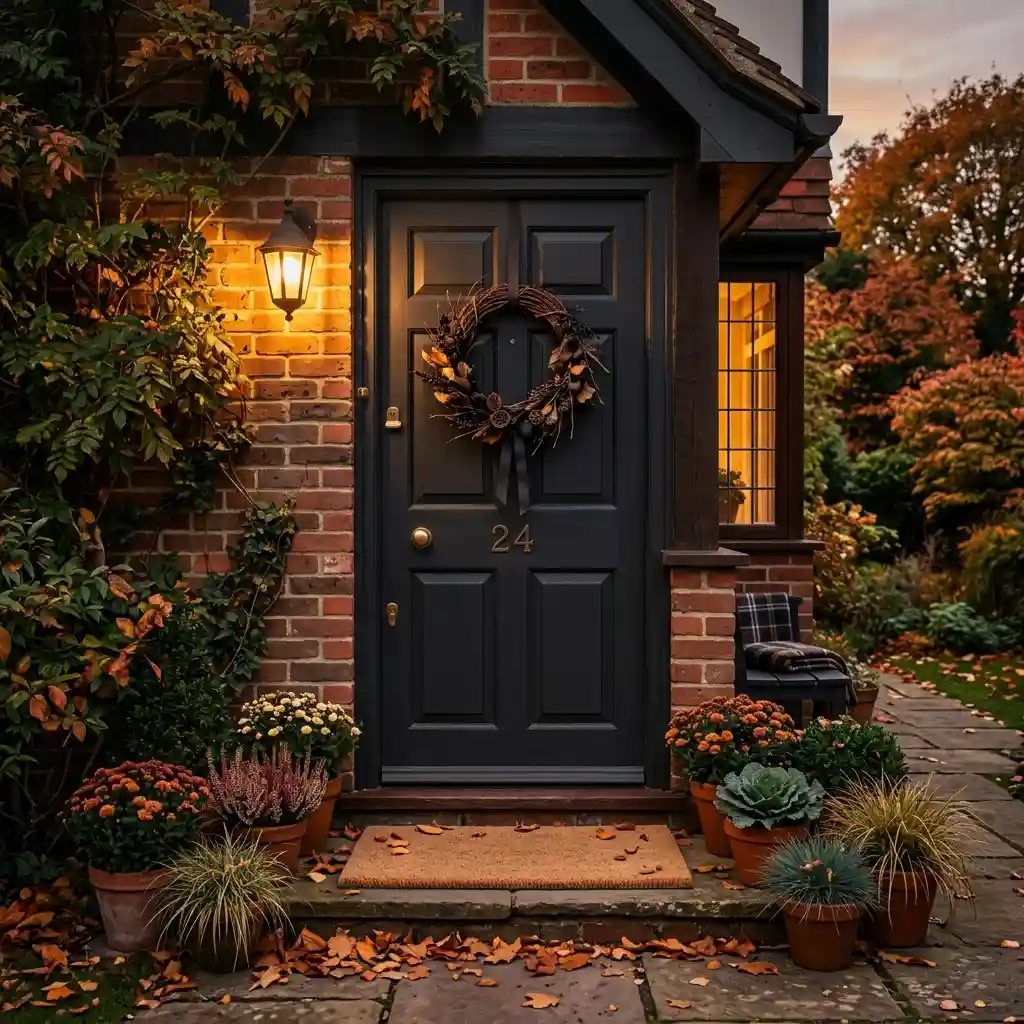
Classy outdoor Halloween decor is decided before you shop. Read three fixed things about your own facade — masonry or siding, warm or cool undertone, and where the elevation repeats itself — then build the base layer in plants, buy every flanking item as a matching pair, and hold the spooky pieces until the final ten days of October.
The Same Decor Looks Rich on One House and Cheap on the Next
Why does two hundred dollars of Halloween decor look expensive in front of one house and like a clearance bin in front of the next? Same pieces, same budget, same care taken putting them out. The difference is almost never the objects.
Classy outdoor Halloween decor is decided by the house standing behind it. An indoor vignette can ignore the room around it; a facade cannot. Everything you put out is seen together with your brick or siding, your base color, your roofline and your beds — so elegant outdoors means matching what the house already is, not importing a look you liked in a photo.

A wrought-iron and stone scheme in front of a limestone Georgian looks inevitable. The identical scheme in front of a cream vinyl ranch looks like a costume the house is wearing.
This page covers the three things your house has already decided, why plastic behaves differently outdoors, the planting layer that does most of the work, and what the whole thing costs. If you are working on the rest of the house too, our full home decor library covers every room and surface.
The porch vignette and the door itself are separate jobs with their own rules. For the yard, the walk-up and the doorstep as one plan, our outdoor Halloween decorating guide is the wider starting point.
Your House Has Already Made Three Decisions for You
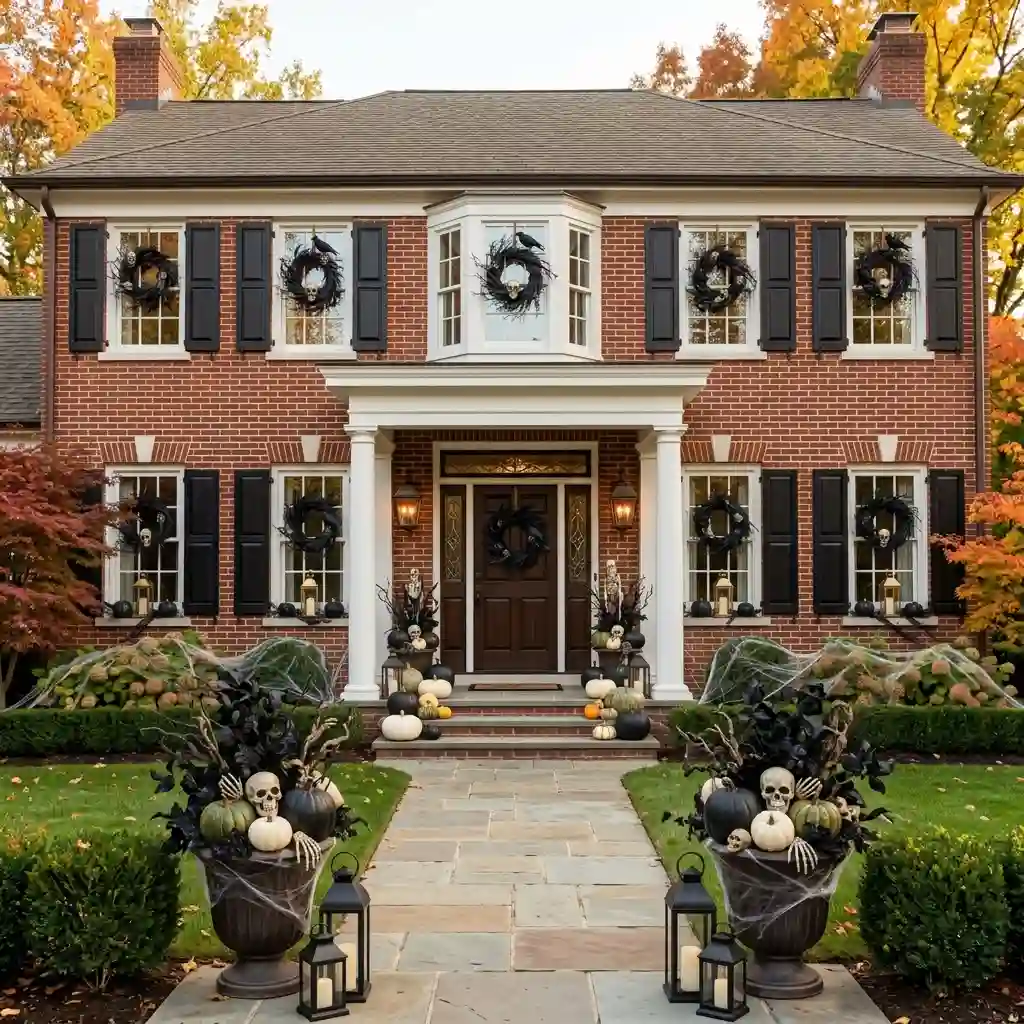
Stand at the curb and read your own facade before you buy anything. Three properties are fixed, you cannot change them for October, and every good decision downstream follows from them: what the front is made of, whether its base color runs warm or cool, and where the elevation repeats itself.
Getting these wrong is the single most common reason a careful, expensive display still looks off. Getting them right is free.
Is the Front Masonry or Siding?
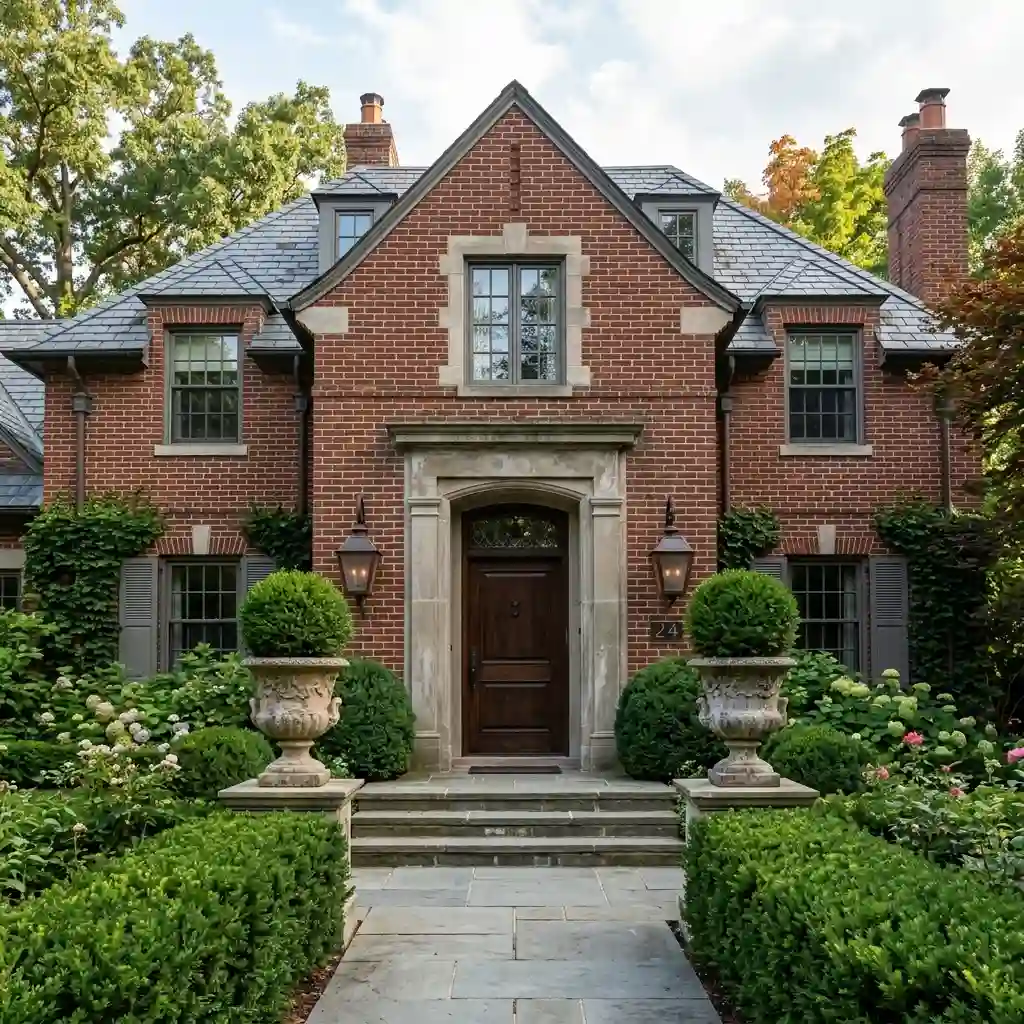
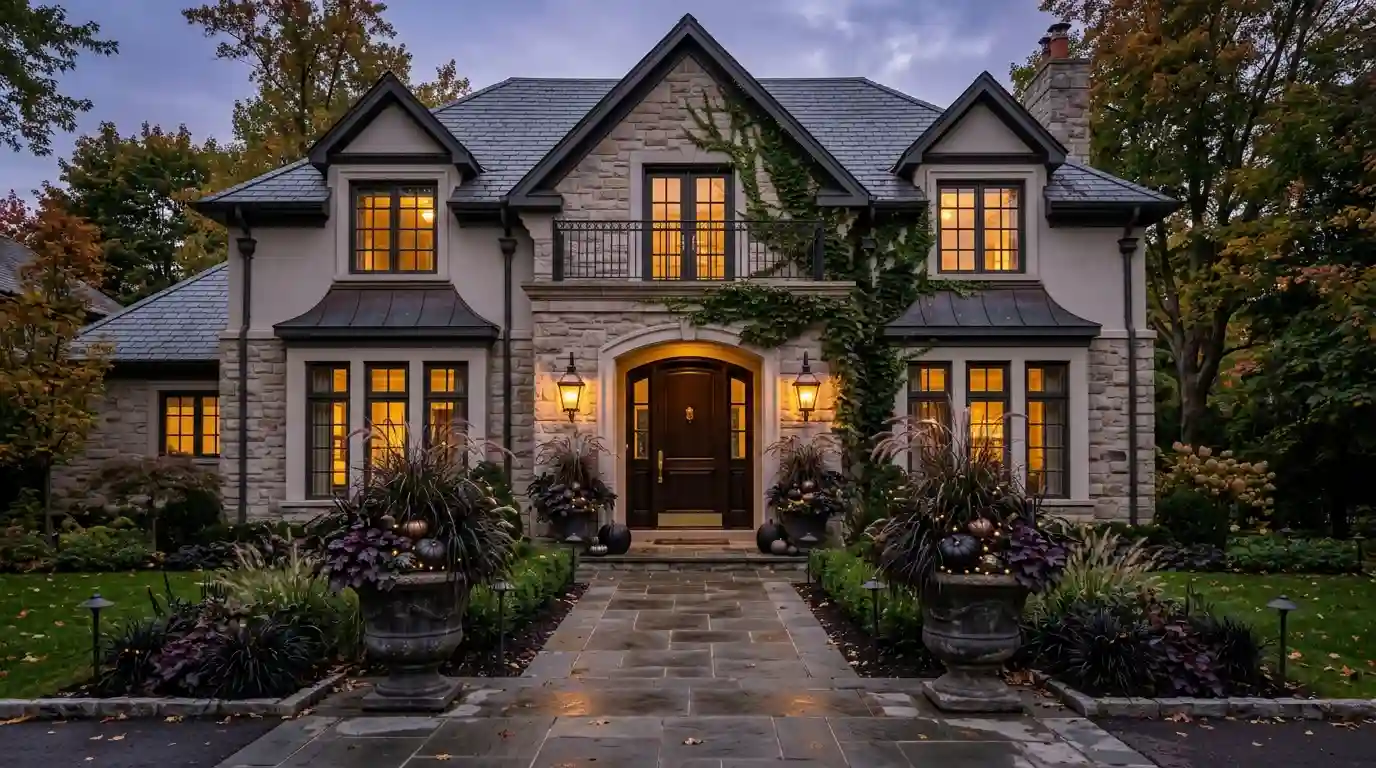
Masonry fronts — brick, stone, stucco, cast concrete — carry weight, texture and shadow on their own, so they hold heavy, dark, sculptural objects without strain. Iron, cast stone, aged bronze, dark timber and dense evergreen all belong here.
Siding fronts — vinyl, fiber cement, painted clapboard — are flat, light and machine-uniform. Heavy gothic pieces fight them, because the house has no visual weight to answer with. Siding does far better with crisp, lighter-scale material: painted wood, black metal in slim profiles, glass, and a lot more plant matter. Our ranch style home exterior ideas cover the same principle outside October.
Is Your Base Color Warm or Cool?
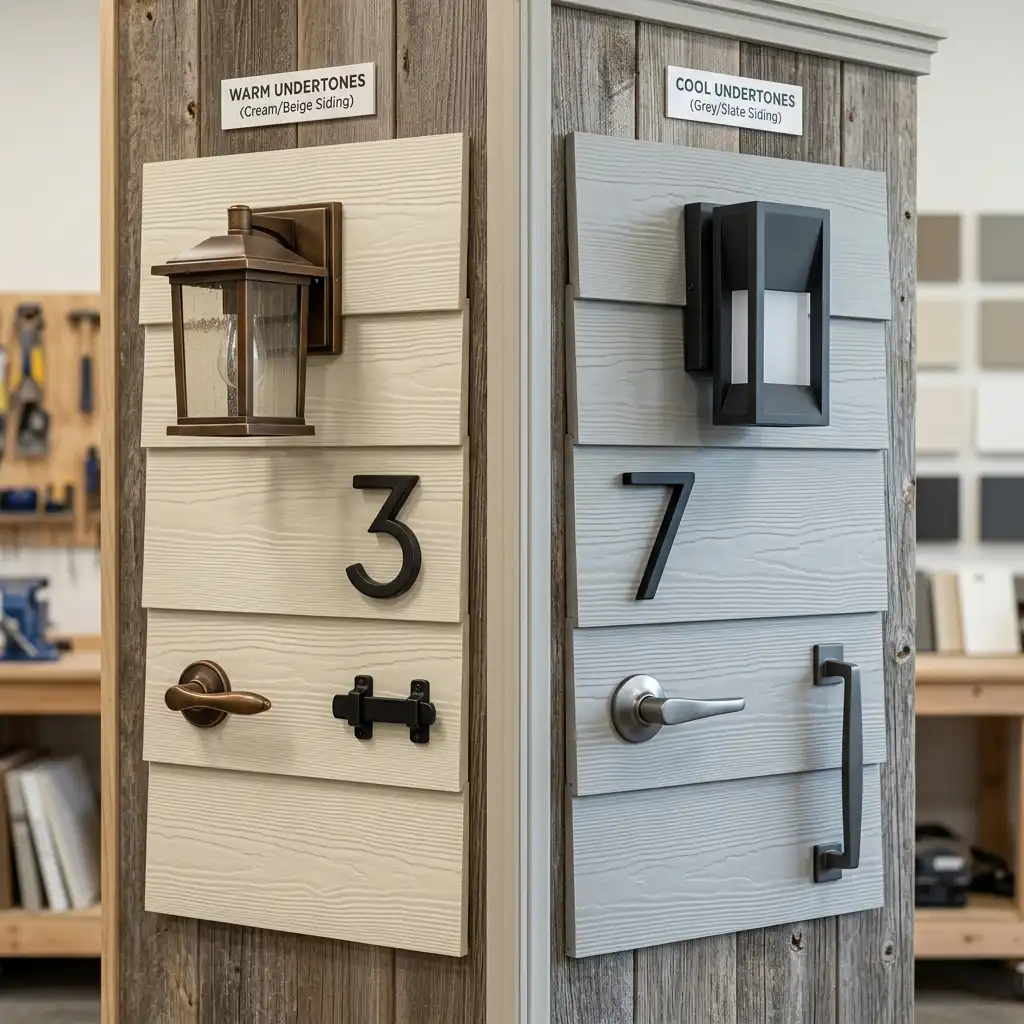
Every facade has an undertone, and it decides which blacks and neutrals will look deliberate rather than accidental. Warm-based houses — red brick, tan stucco, cream siding, honey-toned stone — take soft black, bronze, aged brass, deep burgundy and dried-plant browns. A cool blue-black next to warm brick looks like a mismatch even when nobody can name why.
Cool-based houses — grey siding, white trim, slate, blue-grey stone — take true black, charcoal, pewter, silvered wood and clean white. Test it against the trim, not the wall, since trim is the color your eye actually compares against.
Where Is the House’s Own Rhythm?
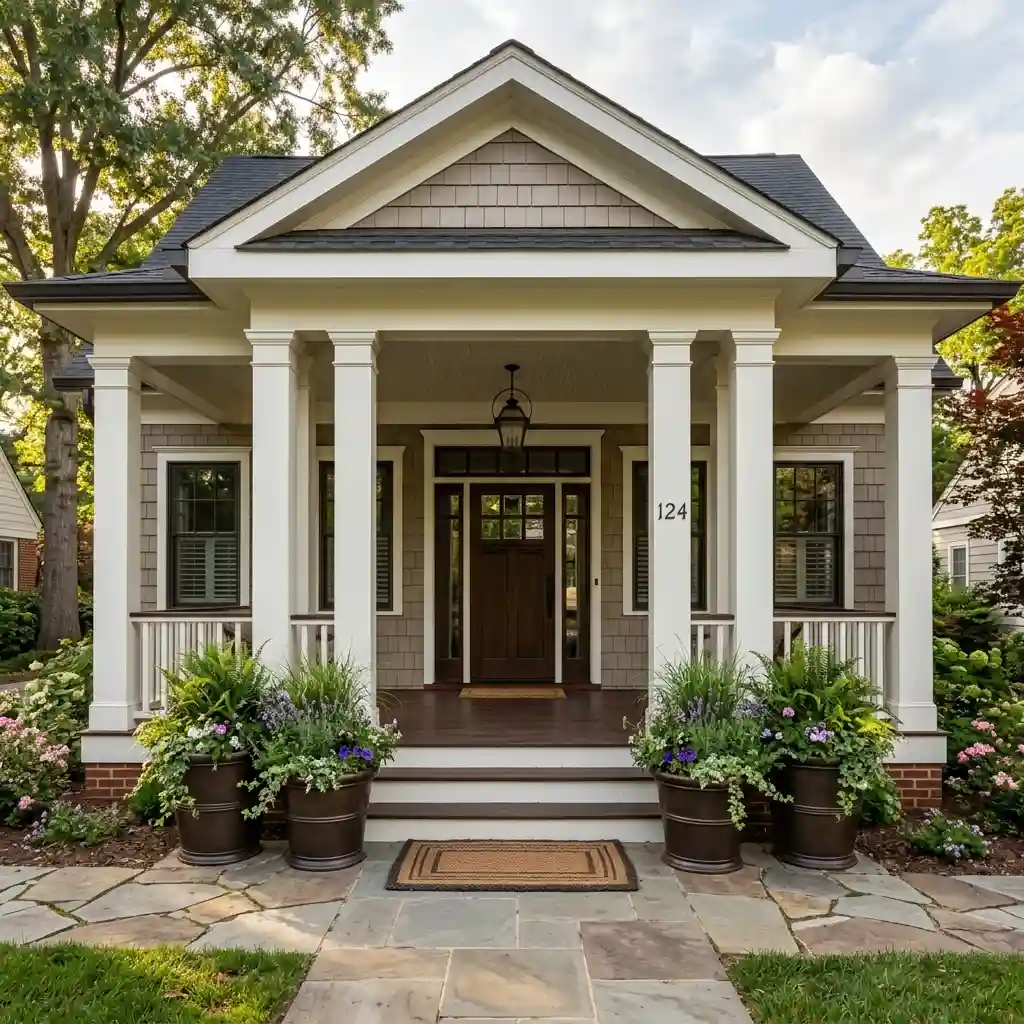
Most house fronts repeat themselves: two windows either side of a door, a pair of columns, evenly spaced porch posts, a set of steps. That repetition is a grid the house is already using, and elegant decor lands on it rather than ignoring it.
Objects placed on the rhythm look installed. The same objects placed between the rhythm look dropped. Find the module — the spacing between two columns, the width of the door, the gap between window bays — and let that spacing decide where things go. Curb appeal works the same way year-round, which our ranch style home updates cover in more depth.
Why Does Halloween Plastic Look Worse Outdoors?

Because outdoors is the only place your decor gets hours of direct, unfiltered daylight, every day, for six straight weeks. Indoors it never happens. A piece that photographs beautifully lit from below at nine at night is under a spotlight at eleven in the morning, and daylight is unforgiving in a way lamplight simply is not.
That changes the buying test. The question is not whether something looks good in the aisle or in a night photo — it is whether it survives being stared at in full sun by a neighbor walking a dog.
The Four Tells You Only See in Daylight
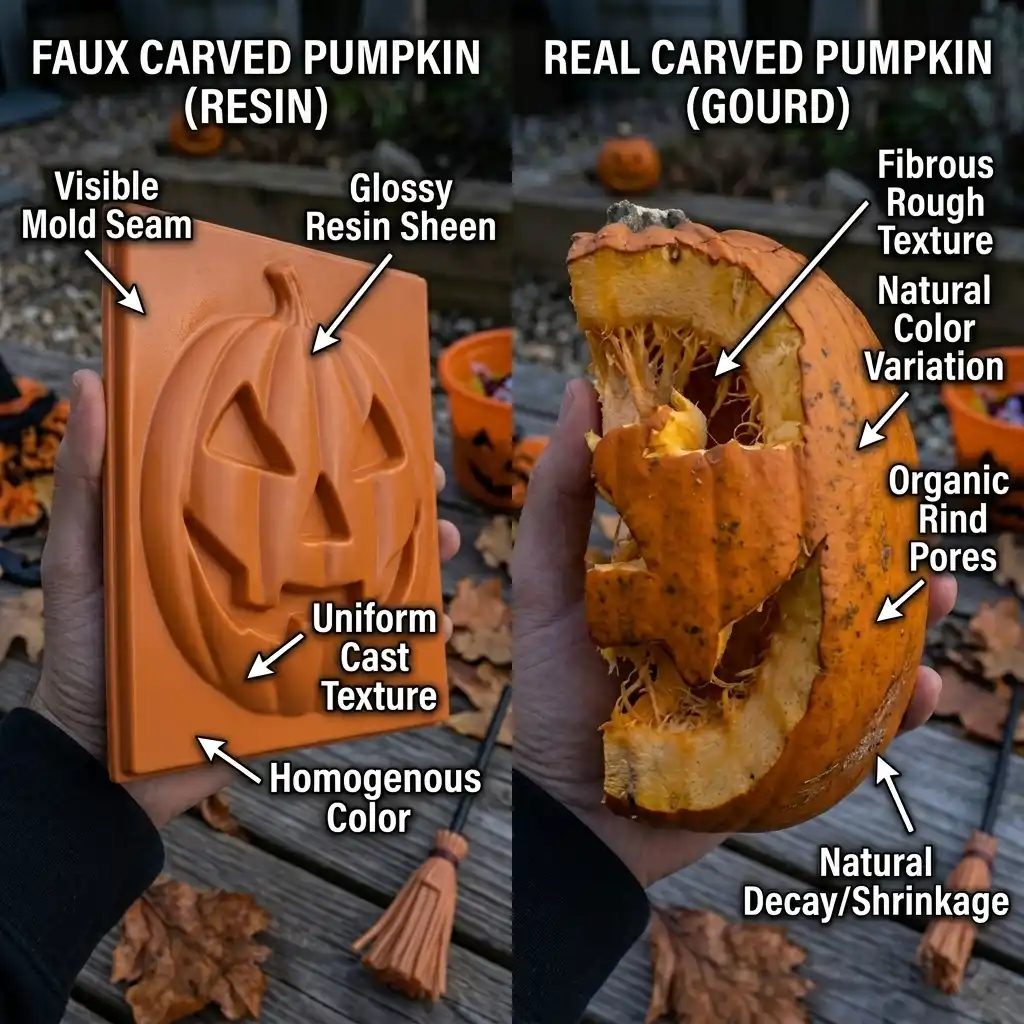
Four things give a cheap piece away outdoors, and all four are invisible after dark. The mold seam, that fine raised line running down the side of anything injection-molded or blow-molded. The sheen, a plastic gloss that no real stone, iron or wood ever has. Printed texture, where wood grain or stone is a photograph on a smooth surface rather than something you could feel. And flat, uniform color, since every natural material varies across its own surface and plastic does not.
Designer Rule of Thumb: hold the piece in the store and look at it edge-on in the brightest light you can find. If you can see the seam or the shine from arm’s length, it will be visible from the sidewalk.
The Expensive Version Is Mostly Plants
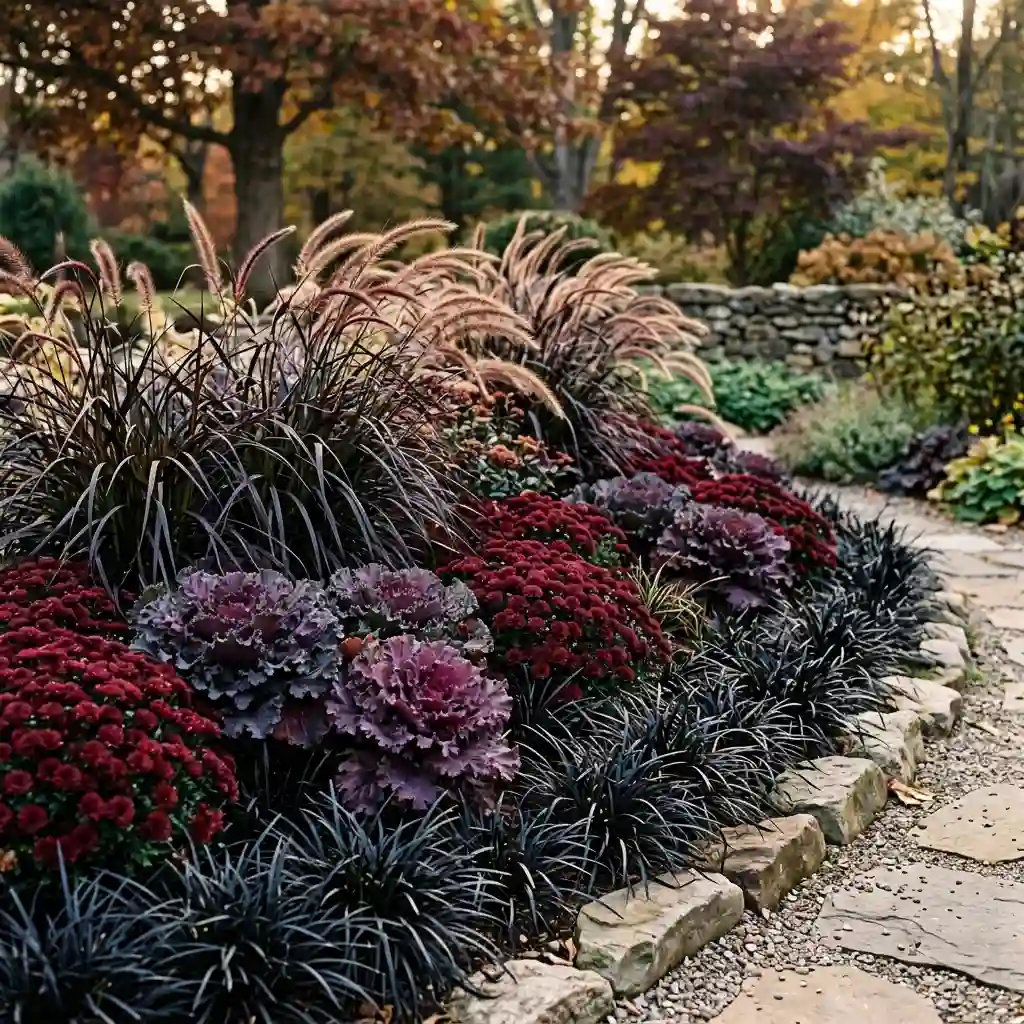
Walk past the houses that get this right and count the actual Halloween products. There are usually two or three. The rest is planting — dark foliage, ornamental grasses, dried seedheads and bare woody stems, arranged in the beds and containers the house already had.
That is the real trade secret of classy outdoor Halloween decor, and it costs less than the prop route. Source Note: Missouri Botanical Garden describes black mondo grass as possibly having the blackest foliage of any perennial, in arching six to eight-inch clumps that color best in sun — a genuinely black plant costs about what one plastic tombstone does and comes back next year.
Build the base from purple fountain grass, dark heuchera, near-black ornamental peppers, deep burgundy mums and ornamental kale, then let two real props sit inside it. Climate Note: Wisconsin Horticulture notes that ornamental cabbage and kale color up vividly below 50°F and survive to about 5°F once acclimated, so they get better as October runs rather than worse. Our garden ideas archive covers the planting side in general.
Buy in Pairs, Not in Singles
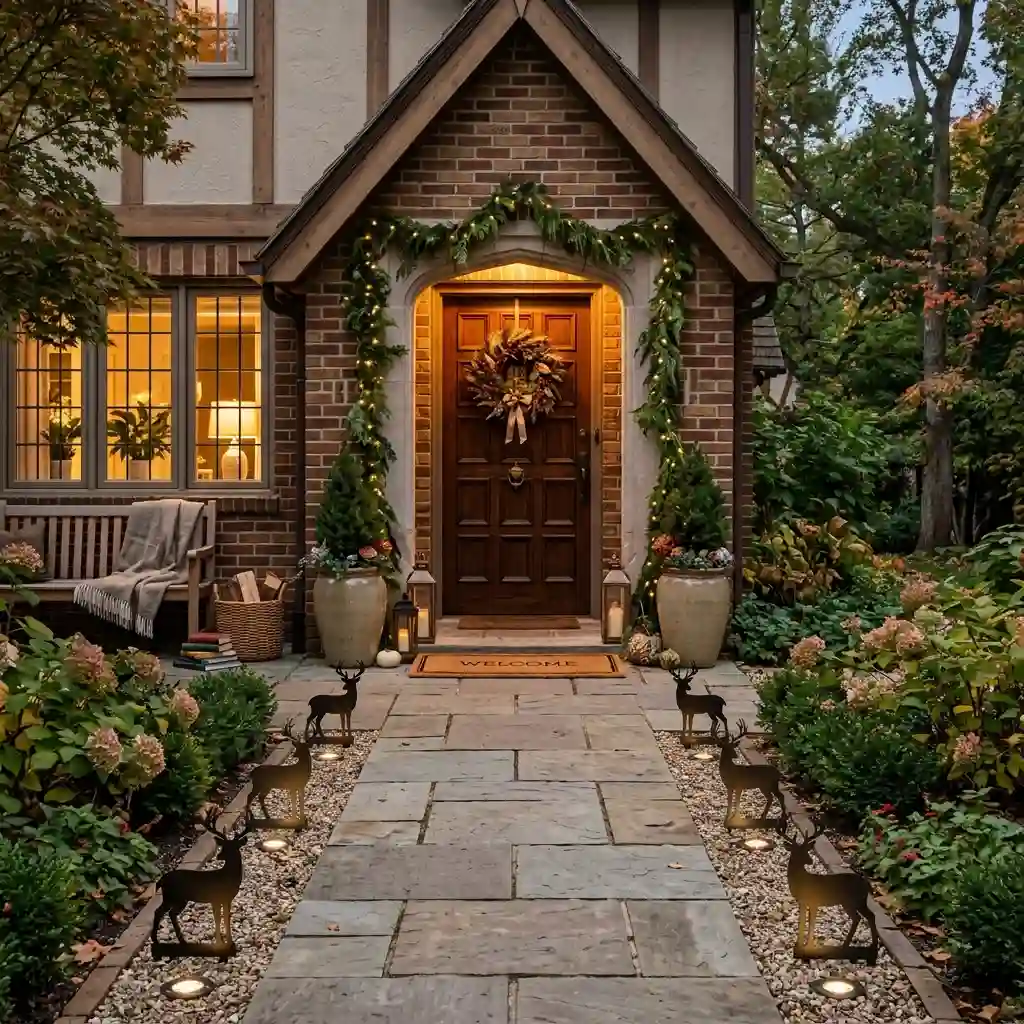
Halloween is merchandised as singles — one witch, one skull, one lantern — and singles are exactly what a symmetrical facade cannot absorb. A single object on a symmetrical front elevation looks like an accident, because the house has trained the eye to expect a matching one opposite. The same logic governs the porch furniture and planters underneath it all year, which our front porch decor ideas cover in detail.
DESIGNER TIP: buy the pair from the same shelf on the same day. Two containers of the same model bought a year apart almost always differ slightly in glaze or finish, and a near-match reads worse than no match at all.
Pairs are the cheapest upgrade available in this whole category. Two matching containers flanking the steps, two identical lanterns on the wall, two clipped forms either side of the path. The pair does not need to be expensive or elaborate; it needs to be identical and to sit on the rhythm you found earlier. Where the facade is genuinely asymmetric — a side entry, an offset door — repeat the object along a line instead, and keep the count odd. A planted, layered approach like our secret garden ideas works the same way with greenery.
How Do You Keep It Elegant for Six Full Weeks?
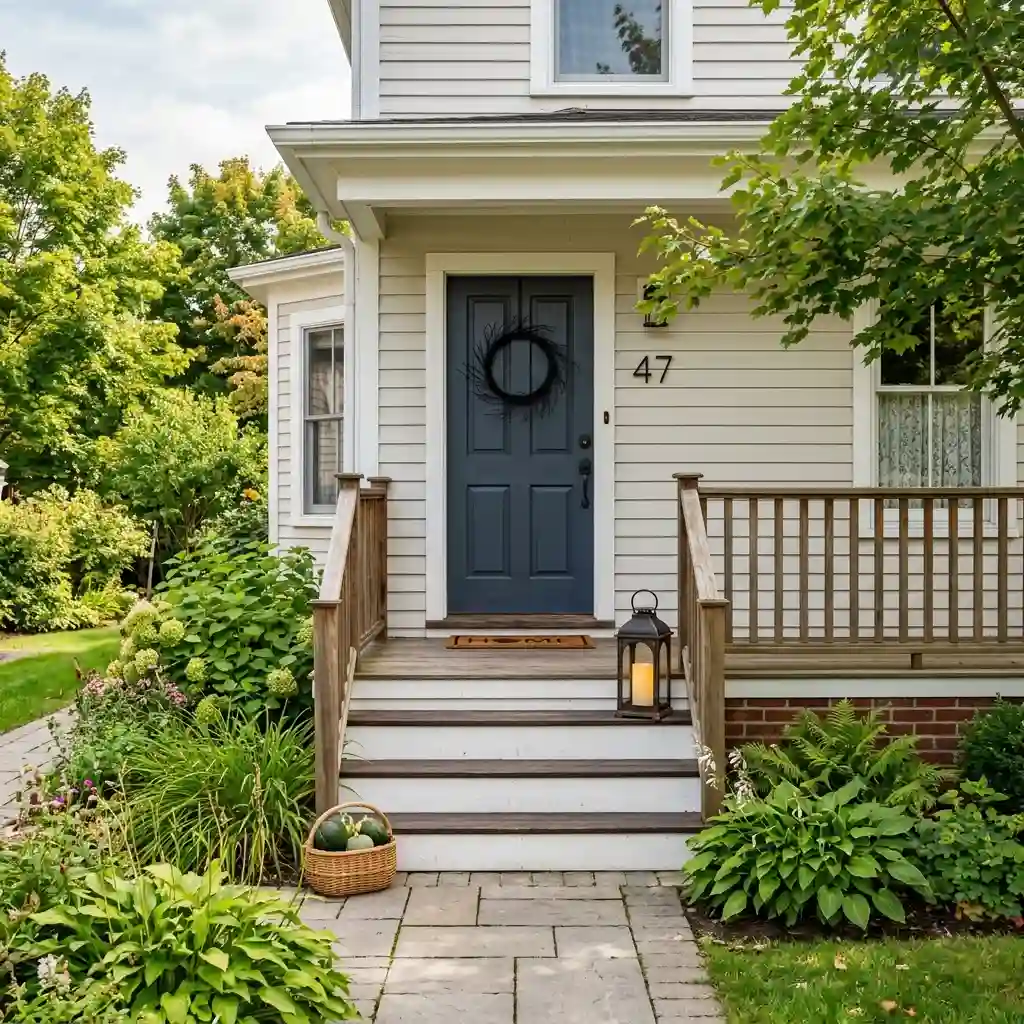
Build it in two stages, and hold the second one back. The base layer goes out in mid-September and is entirely plants, containers, natural material and lighting — it reads as good autumn landscaping and nothing else. Anyone can look at it and see a well-kept house, not a decorated one.
The spooky layer is small, and it goes on in the last week or ten days: two or three real Halloween objects placed into the base you already built. That is the whole trick behind why these houses look restrained. They are not holding back on Halloween night — they simply spent five of the six weeks not announcing it. Not overdoing it is far easier when a date decides it for you, which our minimalist decorating ideas collection applies to interiors in much the same way.
The Quiet Halloween House Is Having a Moment
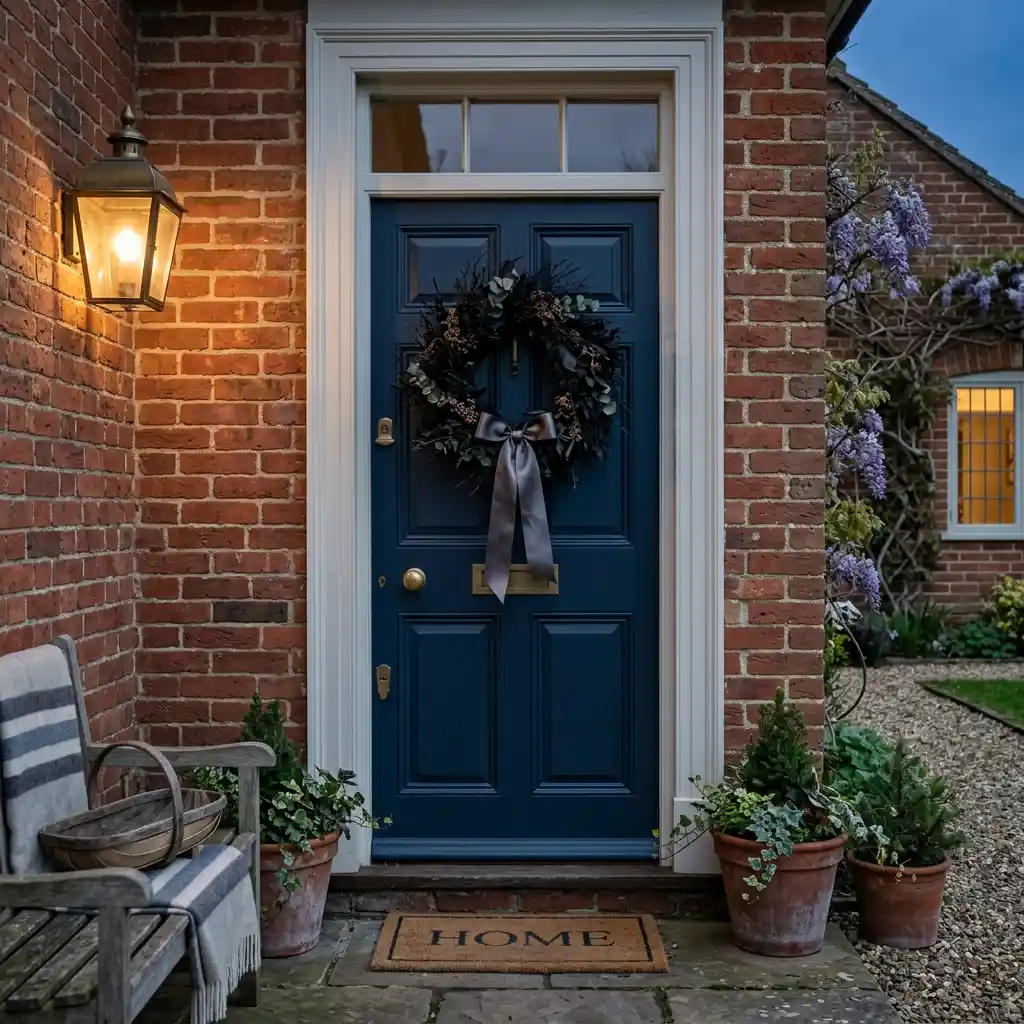
For twenty years the outdoor competition ran in one direction: bigger, louder, more animated. A visible counter-move has formed against it, and it is not a small niche.
Signs This Is Catching On:
Retailers now run a separate elegant line — black, bone, smoked glass, aged metal — alongside the novelty aisle, and sell it in matched sets rather than as single novelty items.
Garden centers increasingly merchandise Halloween beside the autumn planting benches rather than in a walled-off seasonal aisle, which is exactly where the plant-led version of this gets bought.
The habit of leaving displays up until Thanksgiving rewards decor that is not obviously Halloween. A scheme that works as autumn landscaping for five weeks earns far more from the same spend than one that only makes sense on October 31.
Seasonal exteriors keep stretching further in both directions on the calendar. Our seasonal decorating archive covers the rest of that year.
| Quick Takeaways | |
|---|---|
| Material | Masonry holds heavy iron and stone; siding wants slim metal and plants. |
| Undertone | Warm brick takes soft black and bronze; grey siding takes true black. |
| Rhythm | Place objects on the facade’s own spacing, in pairs, not between it. |
| Daylight | Seams, sheen and printed texture only show in sun — buy for that light. |
Read Your Own House First
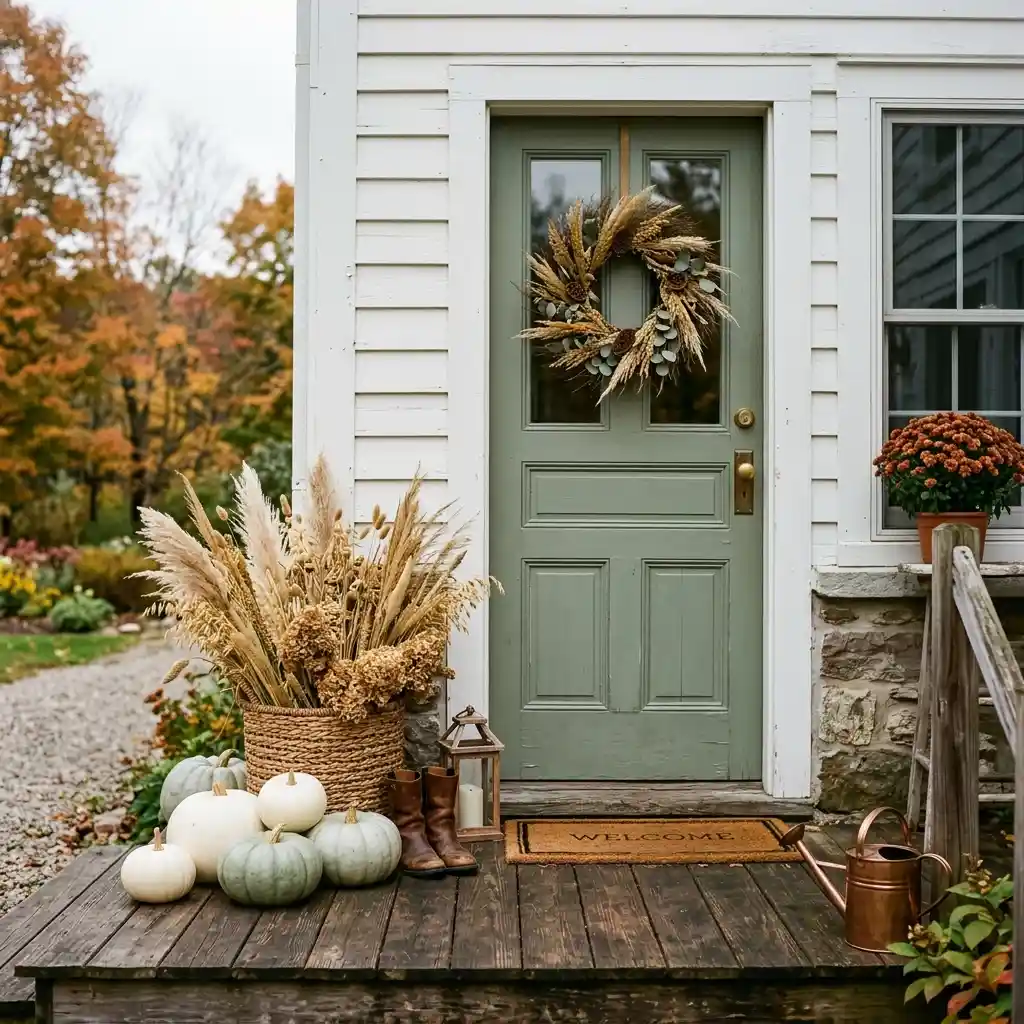
Twenty minutes at the curb decides most of this, and it happens before any shopping.
- Photograph the front of your house in midday sun and look at the photo, not the house.
- Write down three words: masonry or siding, warm or cool, symmetric or offset.
- Measure one module — door width, or the gap between two columns — and use it as your spacing.
- Pick the two or three props first, then build everything else around them in plants.
- Buy every wall-mounted or step-flanking item as a pair, never as a single.
- Set a date in the last ten days of October for the spooky layer and put nothing scary out before it.
KEY TAKEAWAY: Buy for the house you actually own, not the house in the photograph you saved.
Where Elegant Slips Back Into Ordinary
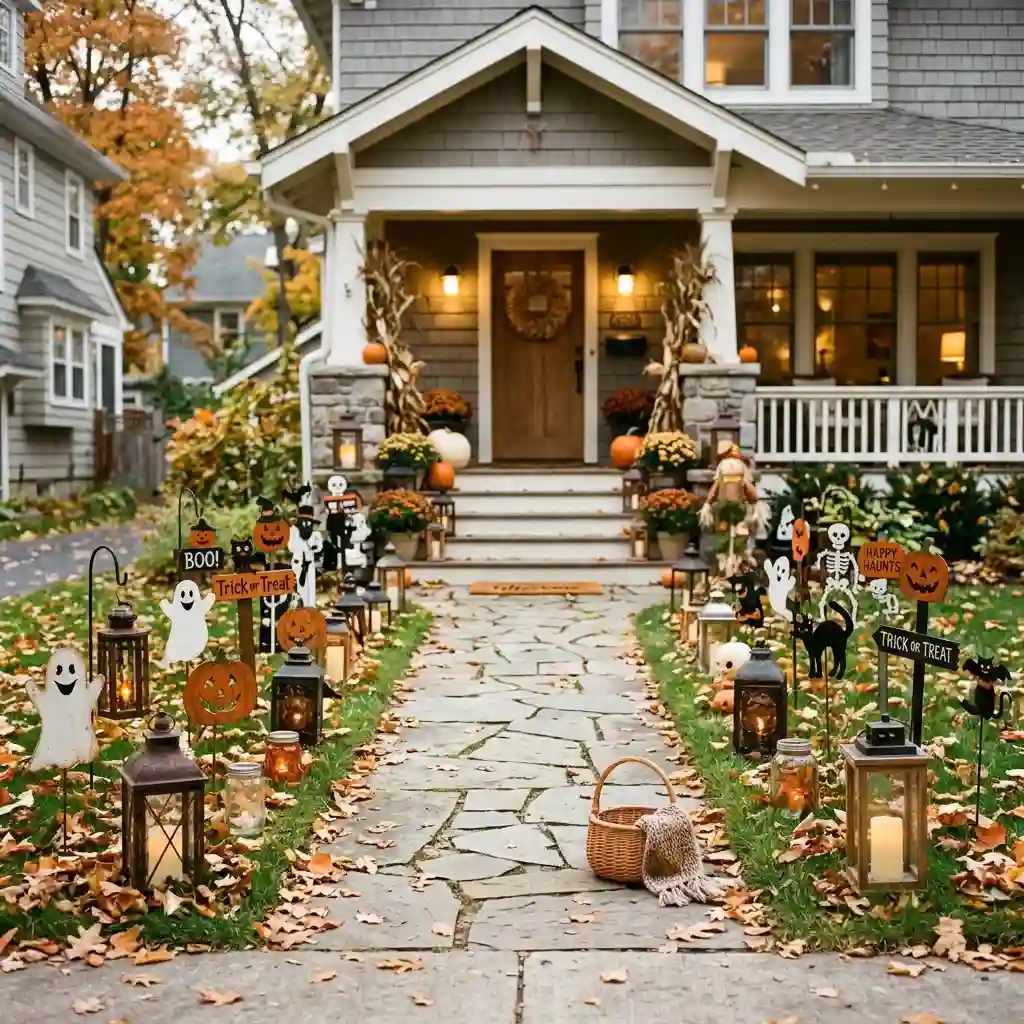
❌ Using inflatables anywhere in an elegant scheme → ✅ Choose one solid object at the same scale; a balloon cannot be made to look like anything but a balloon.
❌ Bringing in molded-plastic orange → ✅ Use real pumpkins if you want orange, since their color varies across the skin while molded plastic is flat and uniformly saturated.
❌ Decorating a facade with ragged beds and an unclipped lawn edge → ✅ Tidy the setting first, because untidy surroundings make good decor look cheap far faster than the reverse.
❌ Leaving the manufacturing on show — price stickers, zip ties, the molded base plate, a visible power brick → ✅ Cut, hide or bury every one of them; this is what separates expensive-looking from expensive.
❌ Adding one more piece every weekend → ✅ Decide the final object count on day one, because a tight scheme almost always dies by slow accretion rather than by one bad decision.
Costing an Elegant Front Elevation

Plant-led schemes price differently from prop-led ones, and the gap widens the longer you keep them.
| Project | Estimated Cost | Impact Level |
|---|---|---|
| Tidy-up pass only — edge the beds, clip the lawn line, clear the containers | $0-$30 | High |
| Planting base — dark foliage, grasses, kale and mums for two containers and one bed | $60-$130 | Very High |
| One matched pair of good containers or lanterns | $90-$220 | High |
| Two or three real props in stone, iron or aged metal | $120-$300 | Medium |
Best First Upgrade: The planting base. It costs less than one good prop, it is the layer that actually looks expensive, and a fair share of it is perennial and returns next year.
Skip for Now: A large statement prop bought before the pair and the planting exist. A single expensive object standing in an untidy, unplanted front garden looks worse than nothing, not better.
Most of this spend is not seasonal at all. Containers, grasses and perennials carry straight through, and several overlap with our cheap backyard ideas.
What About a Plain Vinyl-Sided House?
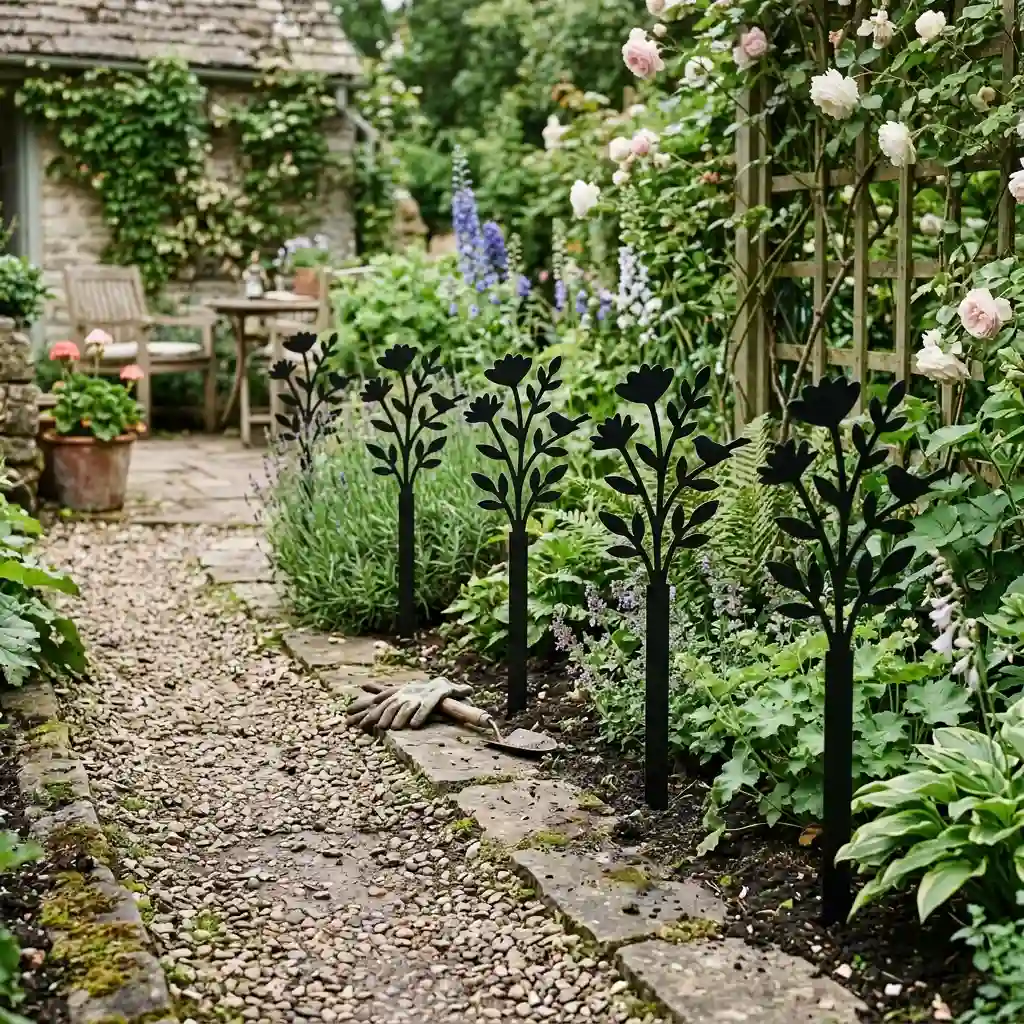
Plain is an advantage here, not a handicap. A flat, light, uniform facade is effectively a blank backdrop, and blank backdrops make simple dark shapes look sharp — the same silhouette that gets lost against busy brick stays crisp against smooth siding.
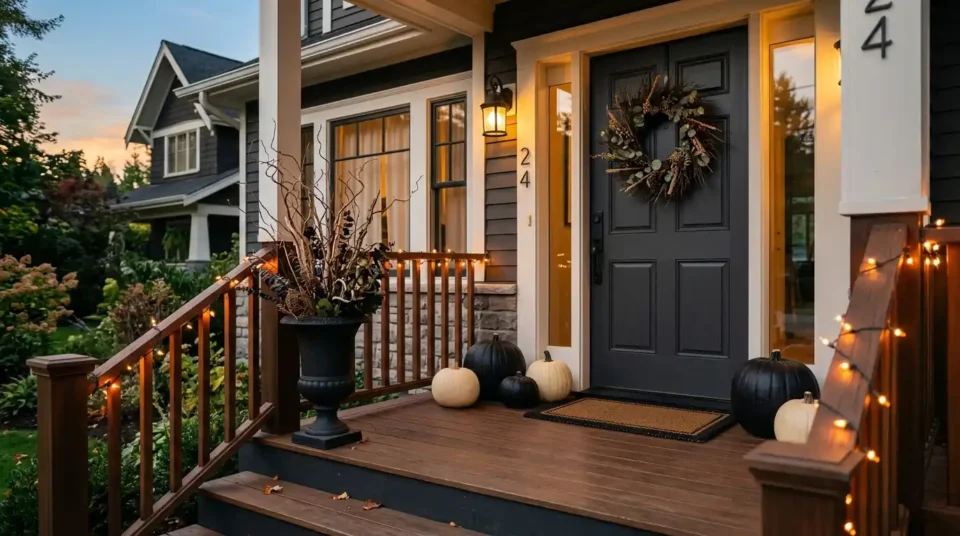
Work with less, not more. One pair of tall dark containers at the steps, one clipped or grass-filled form each side, and one good prop is a complete scheme on a modest house, and it will beat a bigger budget spent on ornament the facade cannot support. If the entry itself feels thin year-round, our modern front porch ideas fix the underlying structure the seasonal layer sits on.
Rental Note: keep everything freestanding and container-based — no fixings into siding, no staking near a shared boundary, and check whether your lease or HOA restricts front-of-property displays before you commit to a pair of anything heavy.
For entry-level pieces that cross between seasons, our spring front porch decor ideas cover the containers and lanterns this scheme reuses in March.
Is the Quiet Version Worth Giving Things Up For?
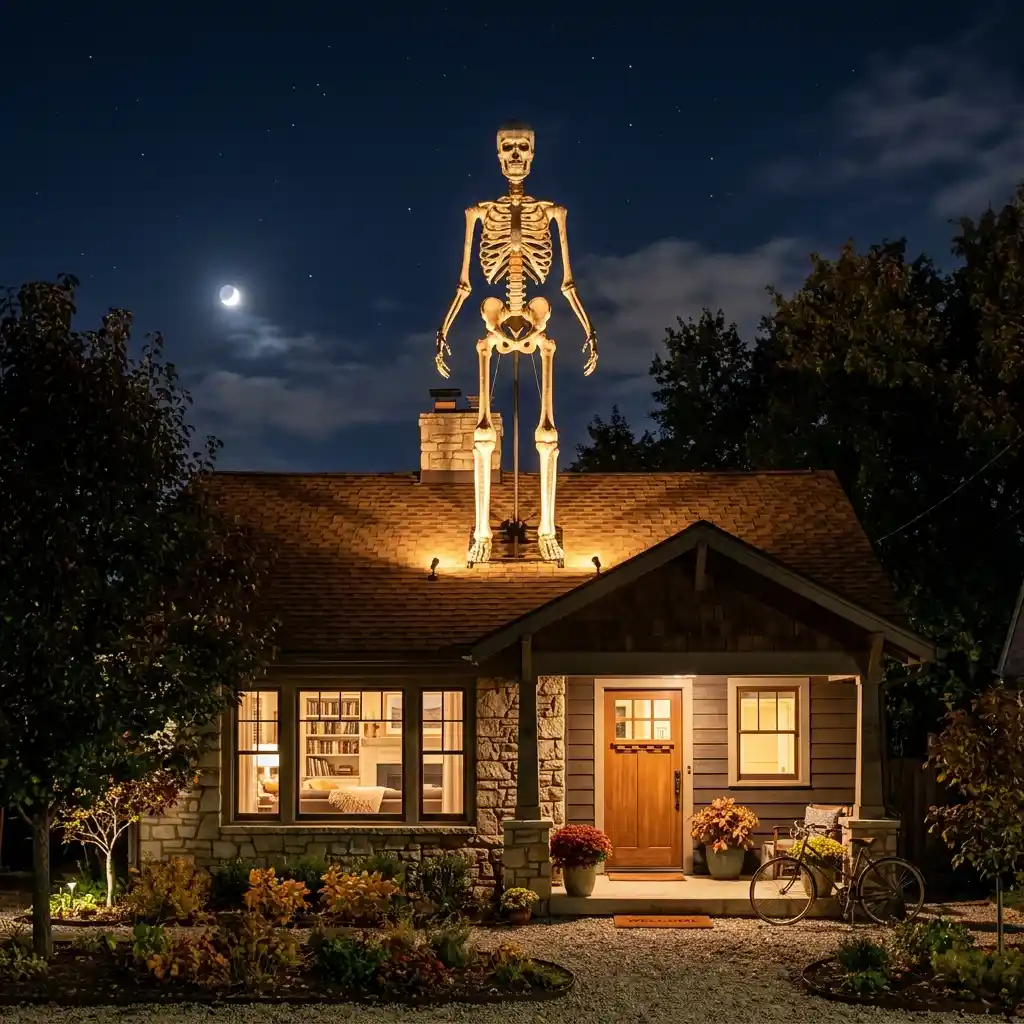
For most houses, yes — but only if you accept what it gives up. An elegant front will never be the house children point at. It will be the one adults comment on, the one that photographs well without any staging, and the one that still looks intentional on November 3 when everyone else’s has become clutter.
The value is in the reuse. Containers, lanterns, grasses and perennials all keep working, which is why the plant-led route costs less across three seasons than the prop-led route costs across one. That base slides directly into our creative fall and autumn decor ideas once the two spooky pieces come in on November 1.
Frequently Asked Questions
Conclusion
The one thing worth taking from all of this is that classy outdoor Halloween decor is a reading exercise before it is a shopping one — spend twenty minutes at the curb identifying your house’s material, undertone and rhythm, and the rest of the decisions make themselves. Editorial field note: a front garden with tidy bed edges, two matching planted containers and three good objects consistently looks more expensive than the same house with twelve unmatched pieces and a ragged lawn line. Start at the curb, then browse more seasonal styling in our home decor inspiration library.
Next Steps
- Photograph the front of your house in midday sun and write down three words — masonry or siding, warm or cool, symmetric or offset.
- Measure one module, such as the door width or the gap between two columns, and use it as the spacing for everything you place.
- Build the base layer in plants first — dark foliage, ornamental grasses, kale and burgundy mums in the containers you already own.
- Buy every step-flanking or wall-mounted item as a matching pair rather than as a single.
- Set a date in the last ten days of October and put no spooky pieces out before it.