Cheap Fall Decor Goes Wrong in Two Places, and Price Is Neither
Buy fewer, better pieces. That line sits in almost every autumn decorating guide, including plenty published here, and for a first fall budget it is the wrong order of operations. Better pieces are what you earn once you know which spots in your home actually get looked at closely.
Budget fall decor works when you split the money by viewing distance rather than by room. Anything people stand within four feet of — the entry table, the kitchen counter, the seat of a sofa — earns one piece in a real material. Anything read from ten feet or more, like a high shelf, a porch rail or the top of a cabinet, can be the cheapest version on the shelf and nobody will know.
Looking for more ideas? Explore our full guide to DIY Fall Decor.
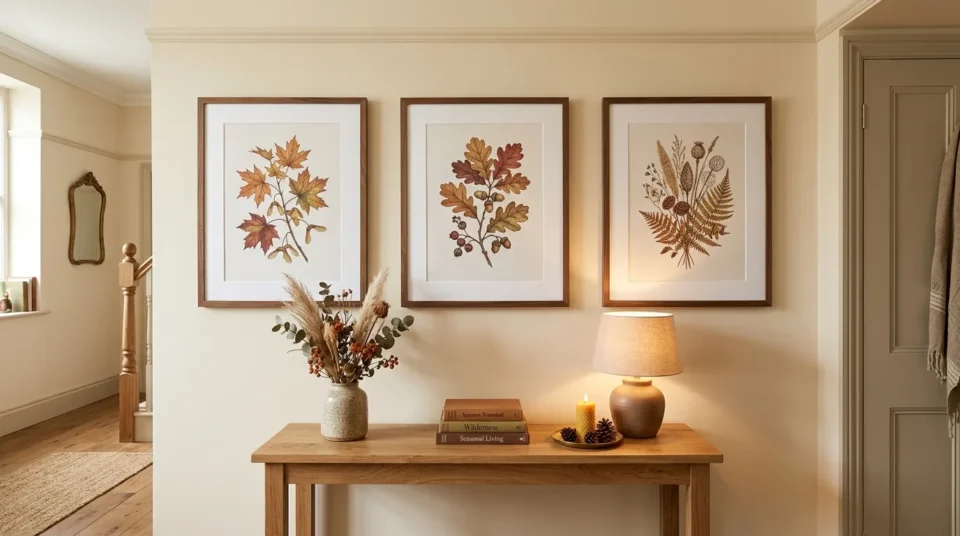
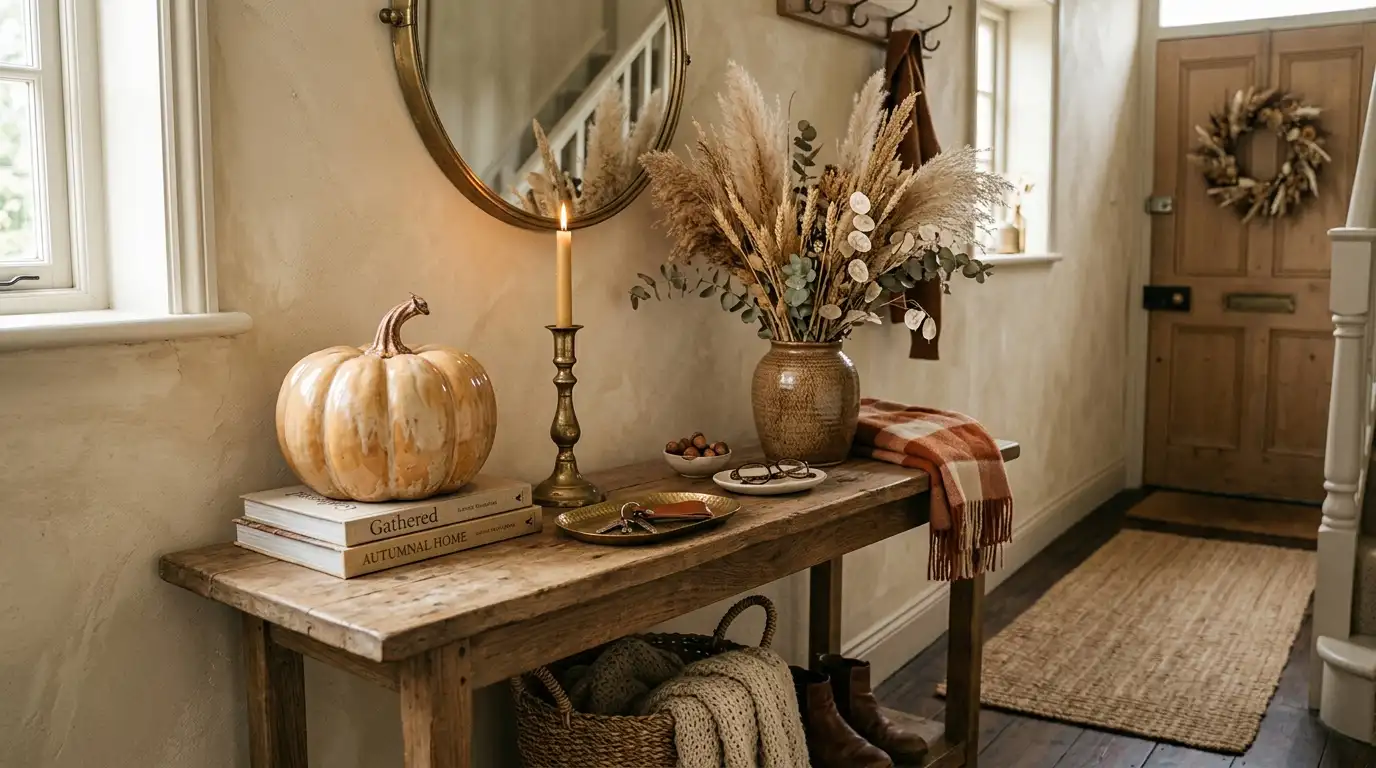
A hallway console holding a $9 resin pumpkin reads as plastic from the doorway, because everyone who passes it comes within arm’s length. Move that same pumpkin to the top of a kitchen cabinet, put a $30 glazed ceramic one on the console instead, and the hallway looks finished. Same money, different order.
The second failure is arithmetic. Most people compare price tags, and the number that actually decides whether a fall budget was well spent is price divided by autumns. A $9 piece rebought every October stops being the cheap option somewhere in its fifth year.
Neither fix costs anything. Our home decor inspiration leans on that same split all year, and autumn is where it pays fastest. What follows walks the distance rule, the arithmetic and the buying calendar in that order. Together they decide roughly how far a hundred dollars stretches in October. Most of the work happens before you add anything to a basket. For the whole-house version first, these creative fall and autumn decor ideas cover every room at once.
Set the Budget Before You Open a Single Tab
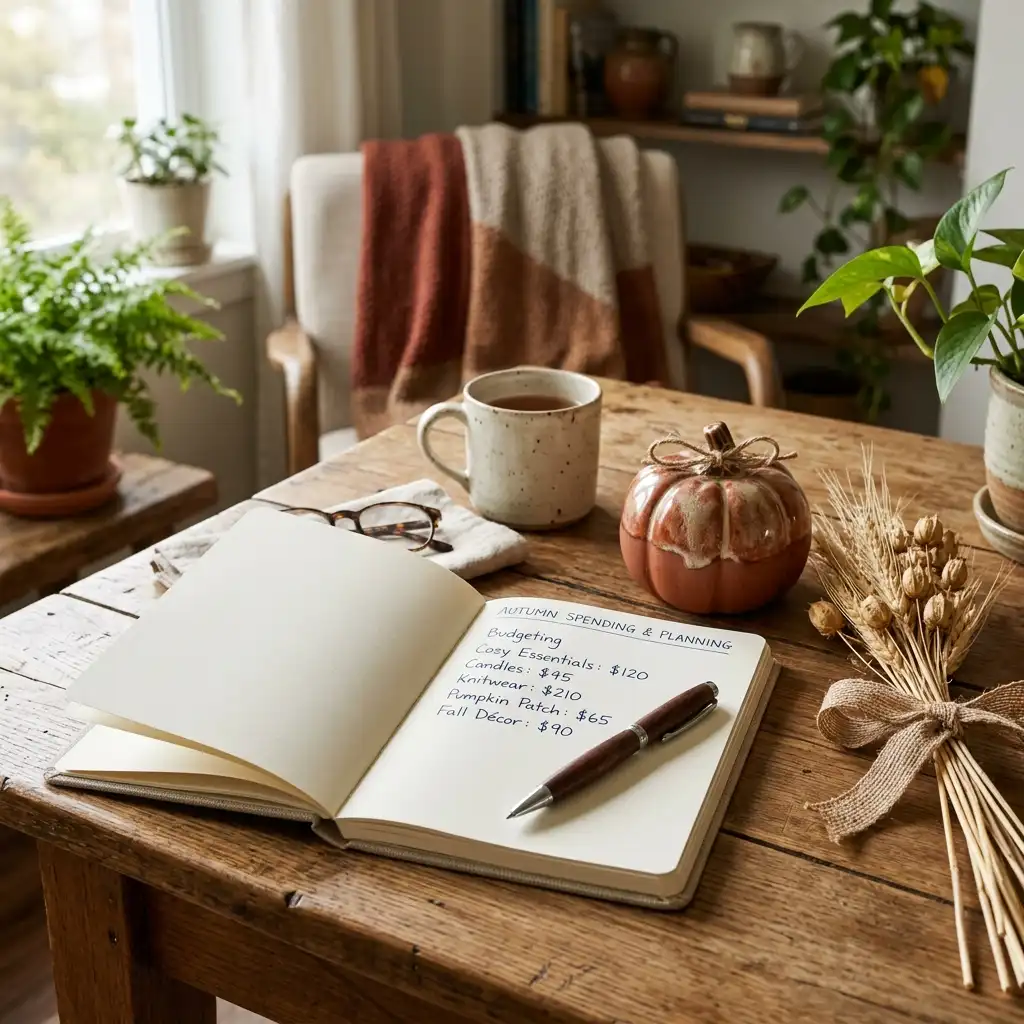
- Walk the house and mark the two surfaces people come within four feet of most days.
- Give each of those one object in glazed stoneware, oiled wood or solid cast brass.
- Send the cheapest pieces above shoulder height, where texture stops registering.
- Divide every price you are considering by the number of autumns it will survive.
- Buy short-life filler like stems, gourds and garland in small amounts, never in bulk.
- Diary the first week of November to restock long-life pieces at post-season prices.
- Keep foam, glitter and hot-glued pieces out of the long-life column entirely.
KEY TAKEAWAY: A fall budget is an allocation problem before it is a shopping problem, so decide where the money lands before you decide what to buy.
Why Is Everyone Suddenly Dividing Price by Use?
Cost per use has moved from a thrifty habit into something retailers and researchers now measure directly. Lisa Eckmann and Lucia Reisch, writing in Psychology & Marketing, describe cost per wear as a usage-based unit price — a garment’s price divided by the number of times it is expected to be worn — and found that showing shoppers that figure consistently increased their preference for higher-quality items over cheaper ones.
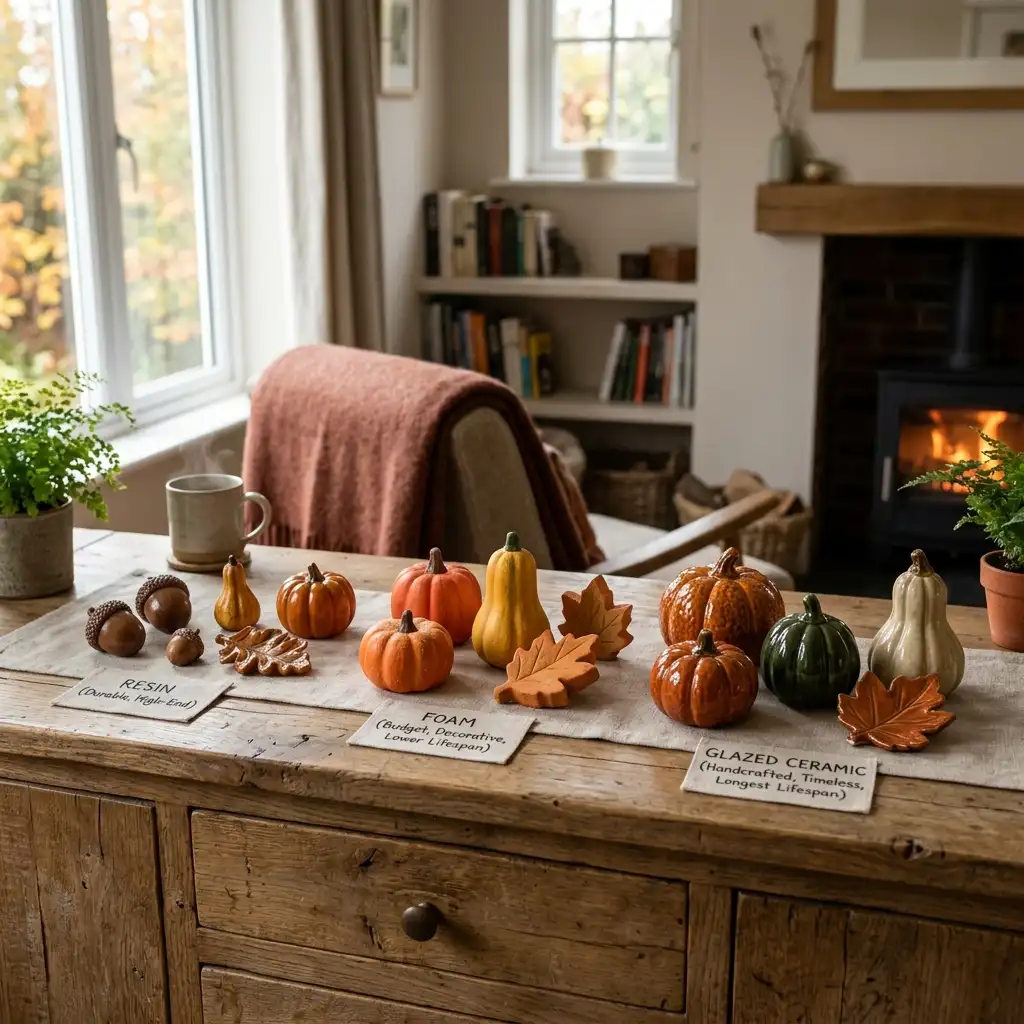
Seasonal decor sits in exactly the same trap as clothing. A fall object gets used for roughly twelve weeks a year, so its real cost depends entirely on how many Septembers it comes back out of the cupboard. Price alone hides that completely.
Signs This Is Catching On:
- Fall ranges now land in shops in July and are already discounted before Halloween arrives, which stretches the buying window from two weeks to four months.
- Shoppers increasingly post storage photos of last year’s pieces rather than haul photos of new ones.
- Unit pricing has trained people to read cost in smaller pieces. Source Note: Illinois Extension explains that “the unit price shows how much you are paying per unit of the item,” and that a lower unit price still is not automatically the right decision for you.
The same reasoning behind these budget decorating ideas applies here — the cheap option and the good-value option are frequently not the same object.
How Close Will Anyone Actually Stand to It?
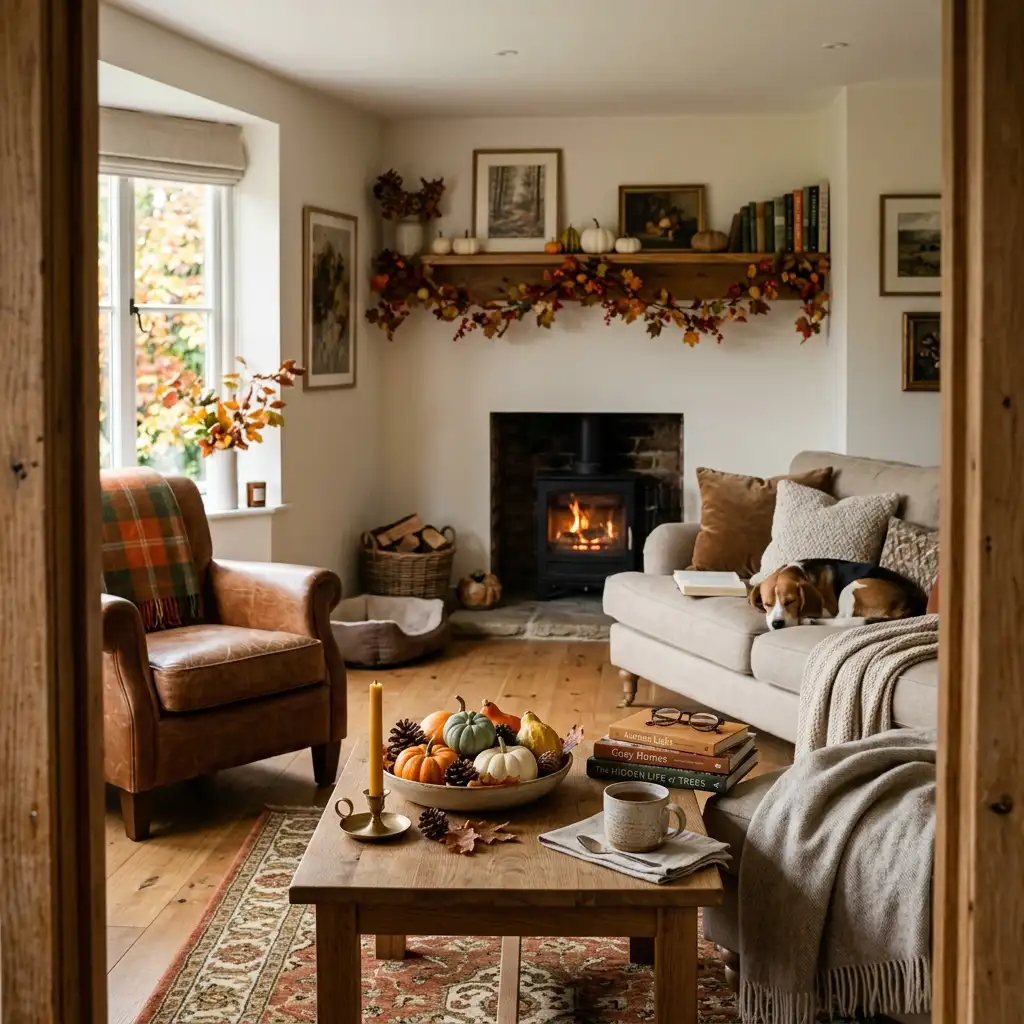
Viewing distance decides how much material quality a person can actually detect. Up close, the eye reads surface: glaze, grain, weave, weight and the small irregularities that separate a fired ceramic from a molded resin copy. From across a room, all of that disappears and only three things survive — shape, scale and color.
This is why one $12 gourd can look convincing on a high shelf and obviously plastic on the table you eat at. Nothing about the object changed. The distance did.
The Under-Four-Foot Zone Reads Material
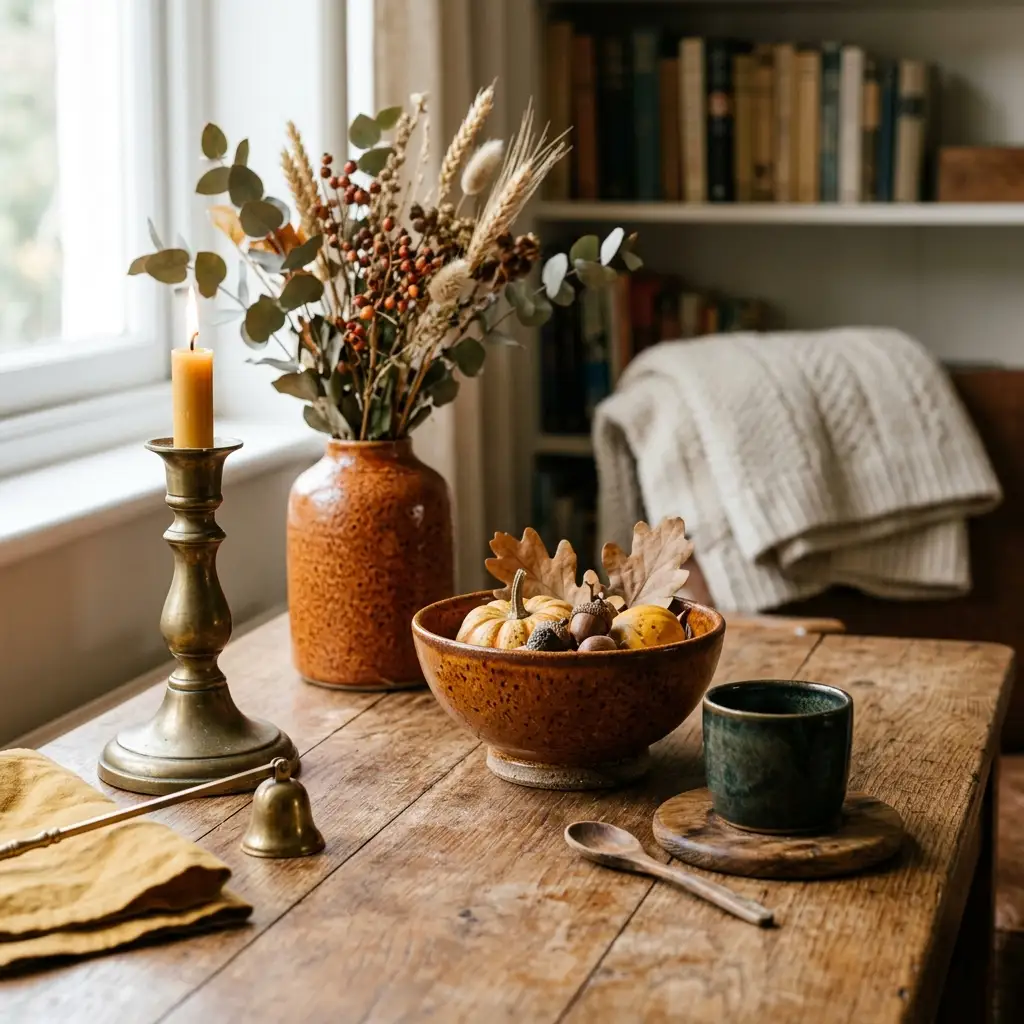
Close range is anywhere a person stands, sits or reaches within about four feet. That includes the entry console you drop keys on, the kitchen counter you lean against, the dining table you eat at and the arm of the chair you use every evening. In those spots the eye has time and light, and molded seams, printed grain and hollow weight all announce themselves.
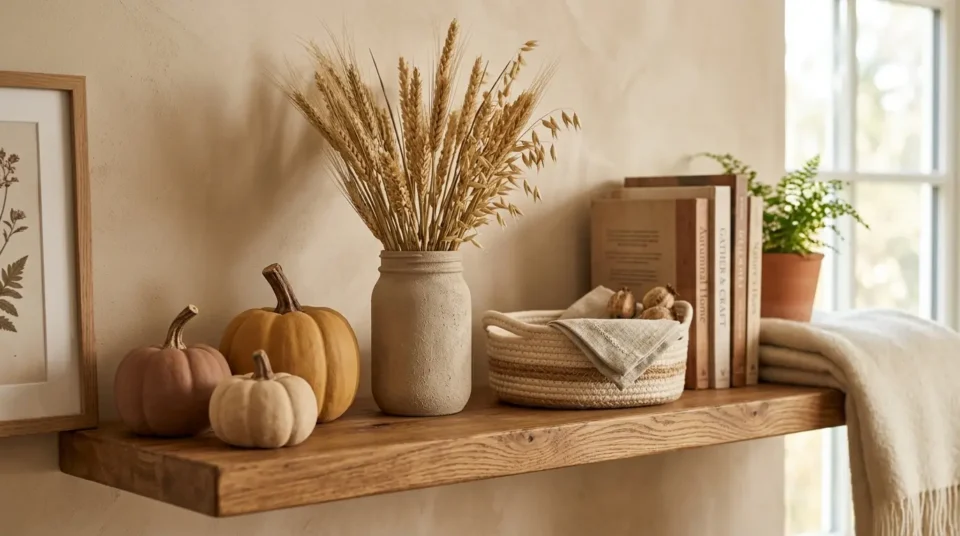
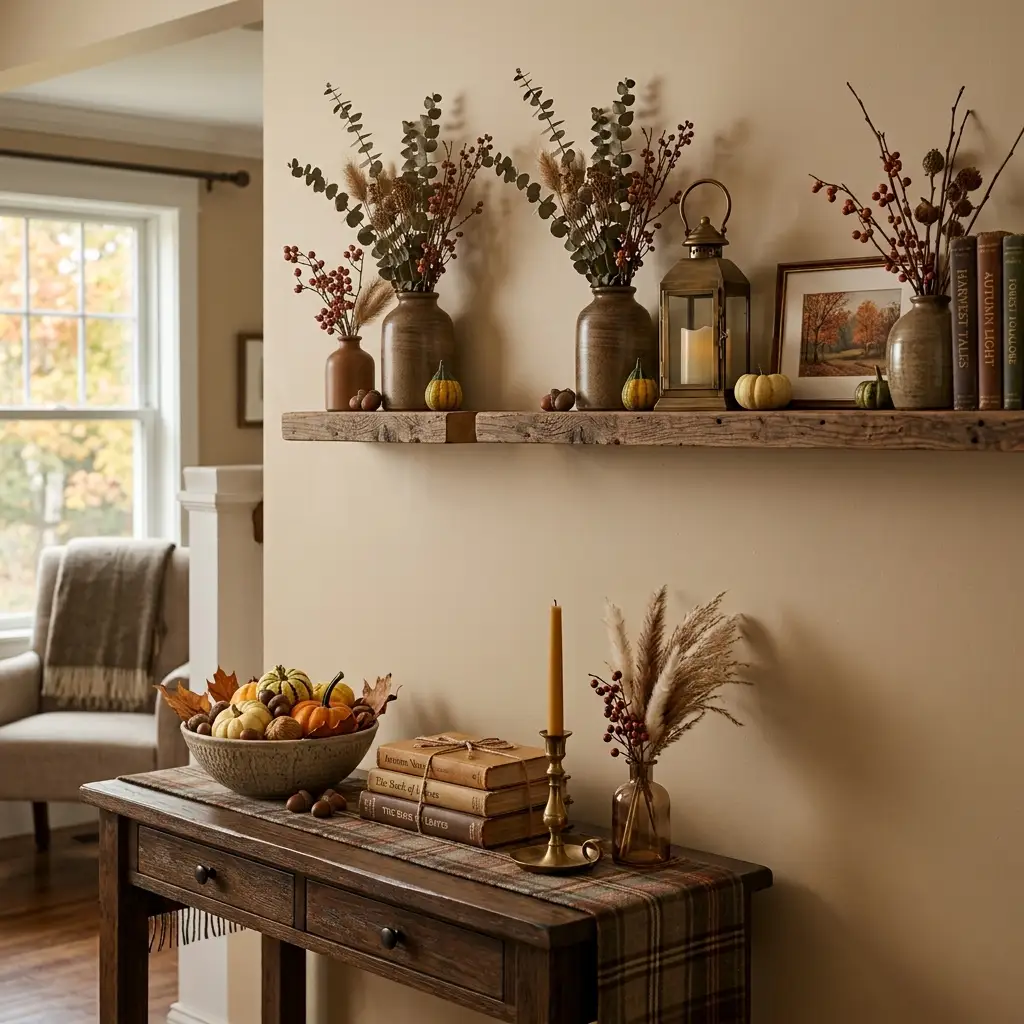
Give each close-range surface exactly one honest object. Glazed stoneware, oiled oak or walnut, solid brass and real dried stems all hold up under inspection at $25 to $60. That is the same logic behind these ways to decorate a small living room on a budget, where a few reachable surfaces carry the whole room.
The Ten-Foot Zone Reads Only Shape and Color
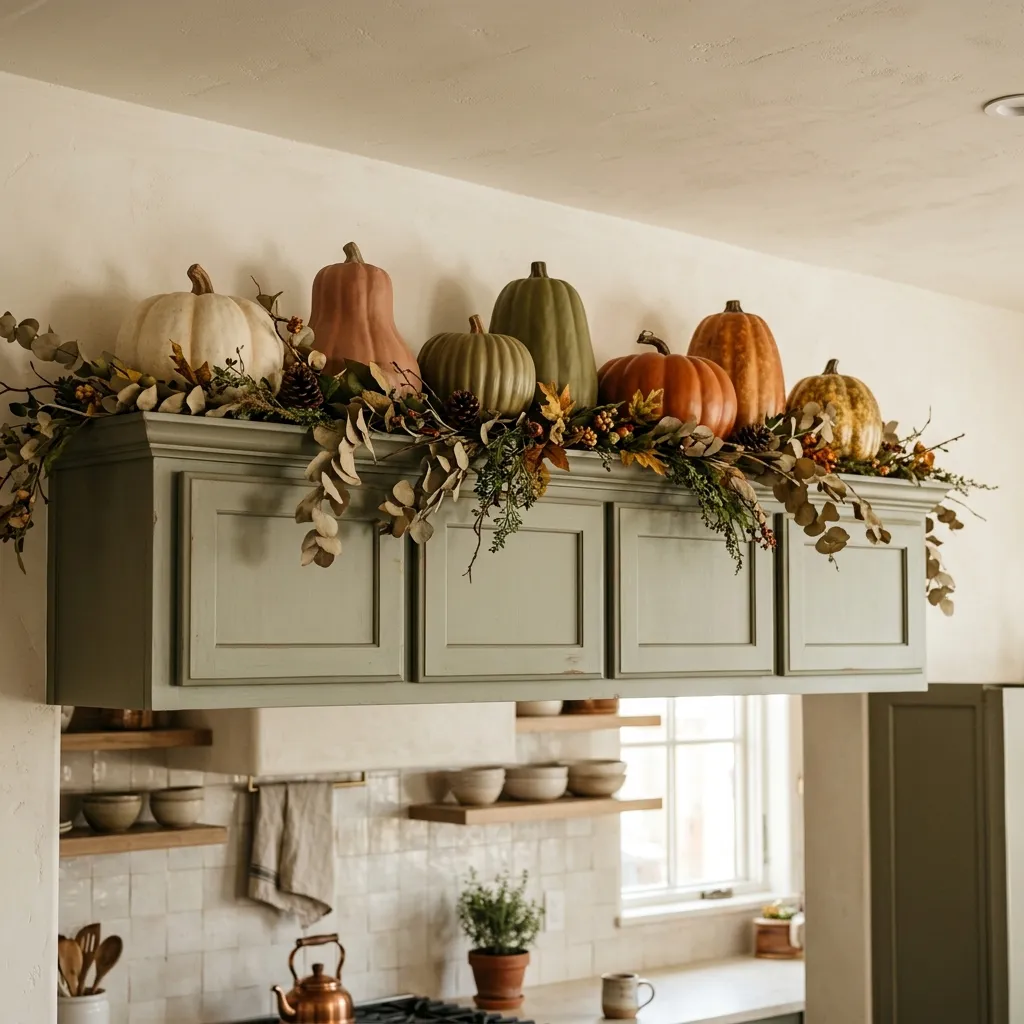
Long range starts around ten feet: the top of kitchen cabinets, a stair landing, a bookcase above eye level, a porch rail seen from the pavement, a mantel viewed from the sofa. At that distance a resin gourd and a hand-thrown ceramic one are the same object. Buy the resin one.
Scale matters far more than material out here. A single large silhouette reads clearly from ten feet while five small pieces turn into visual noise, which is the same rule that makes these cheap backyard ideas work on a small outdoor budget. Go bigger and cheaper, not smaller and nicer.
Which Two Spots in Your Home Are Close-Range?
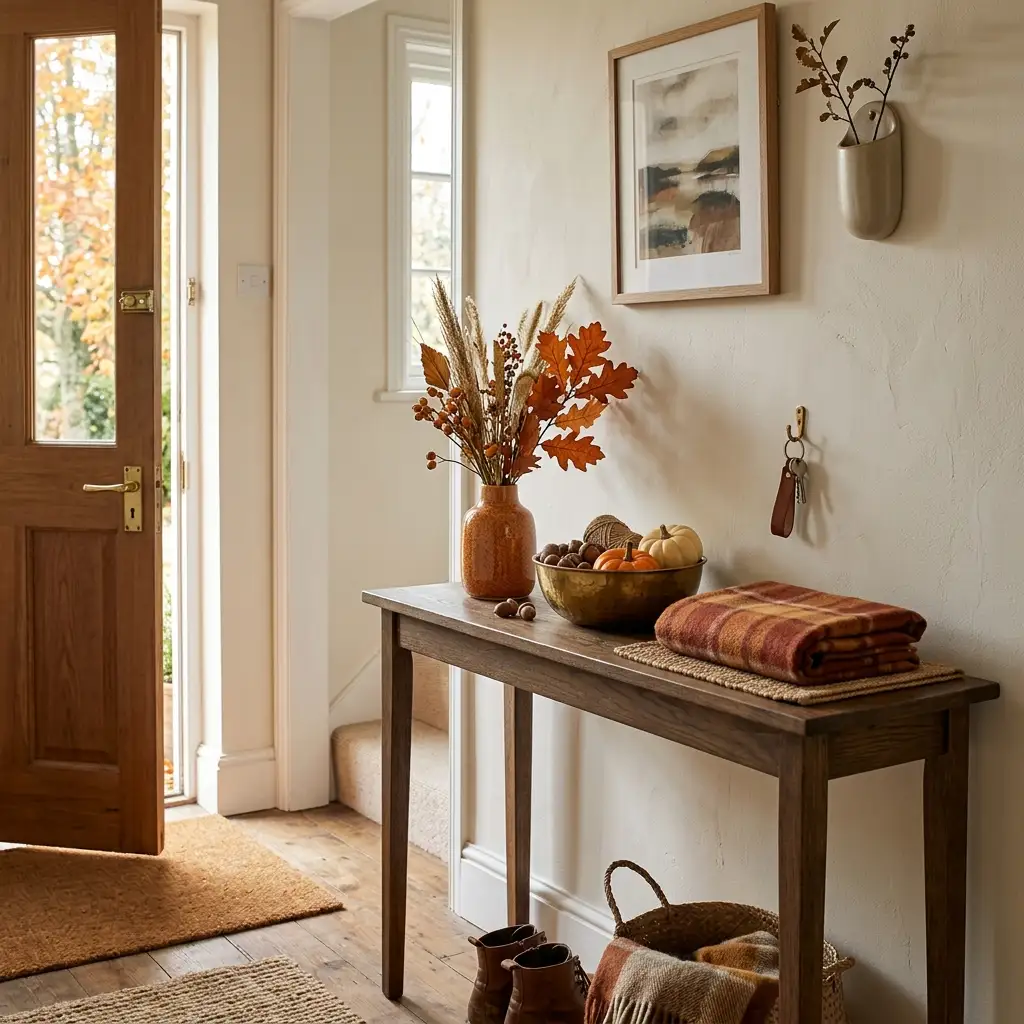
Most homes have between two and four genuine close-range surfaces, and people usually cannot name them without walking around. Do the walk. Stand where you actually stand — inside the front door, at the counter where the kettle lives, at the end of the sofa you always take — and note what sits within arm’s reach.
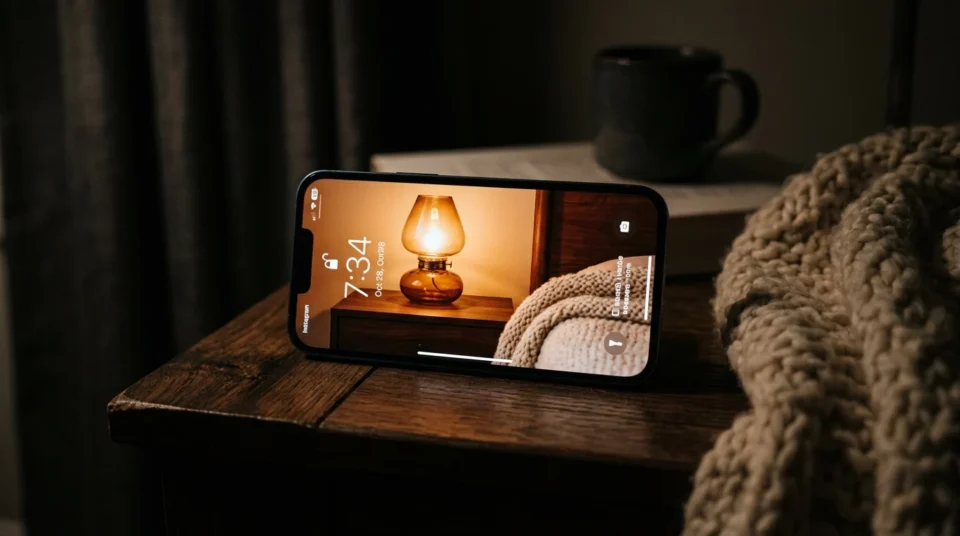
Bedrooms are the surface people most often forget, because the nightstand sits about eighteen inches from a face for eight hours a night. These fall bedroom refresh ideas work that surface properly. Designer Tip: if a surface gets touched daily, it is close-range regardless of how far away it looks when you walk past.
What Does Eight Autumns Do to a Price Tag?
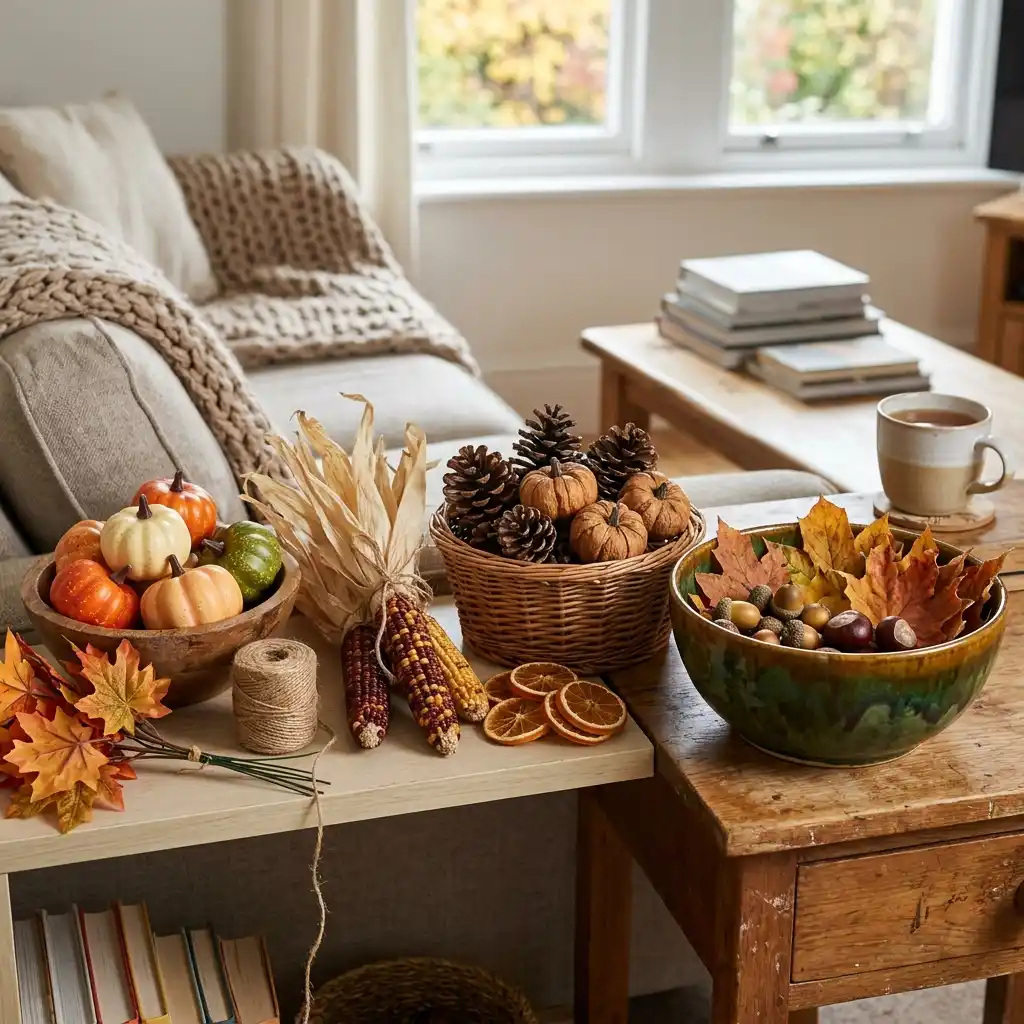
Cost per autumn is the price divided by the number of seasons a piece will realistically survive. A $9 foam pumpkin that cracks after one October costs $9 an autumn. A $40 glazed ceramic one still in service eight years later costs $5 an autumn, and it looked better every one of those years.
Run that arithmetic across a whole storage box and the ranking flips. Six $9 pieces rebought every year cost $54 a season, forever. Two $45 pieces bought once cost $90 and then nothing, so they pass break-even partway through the second autumn.
Which Materials Actually Earn a Second Decade?
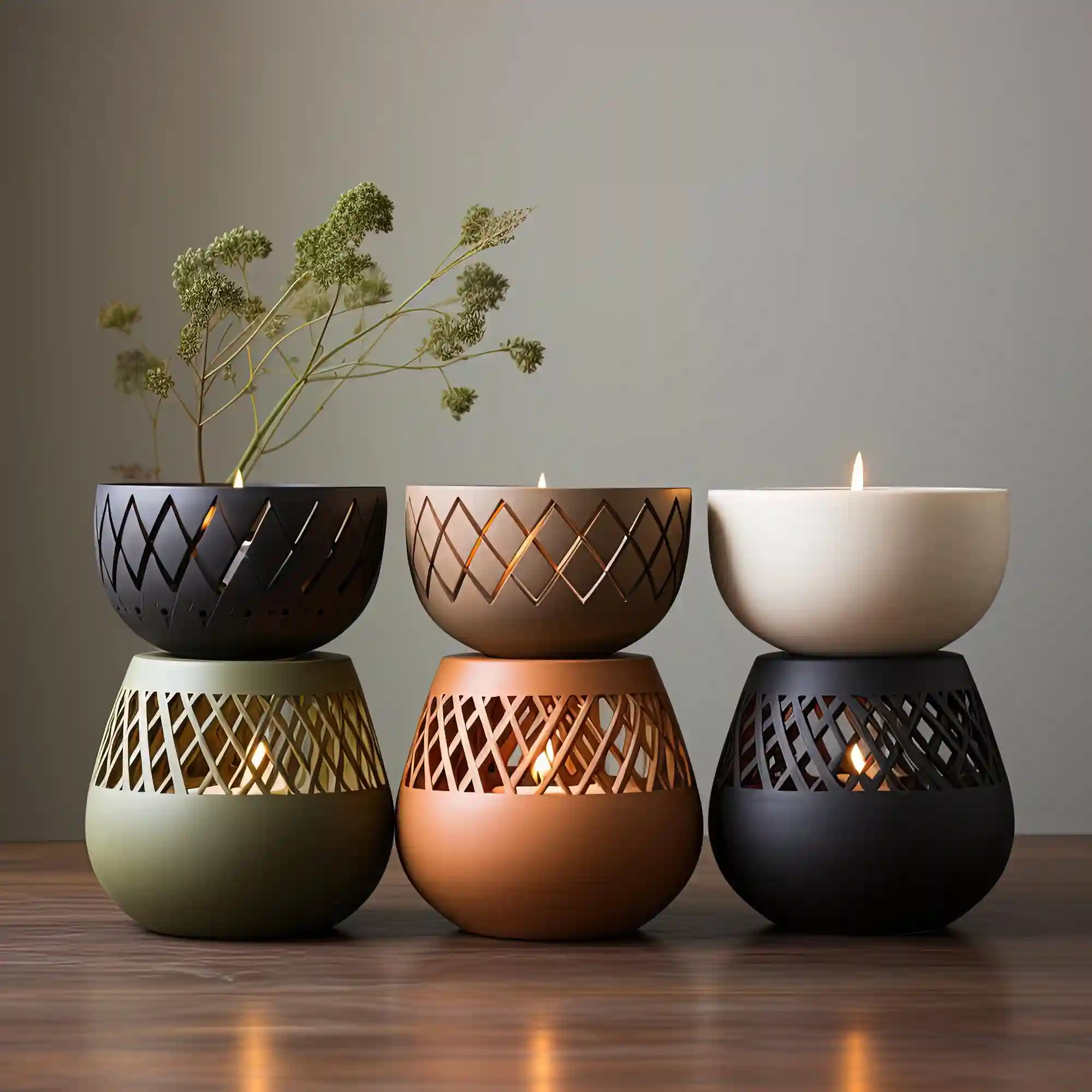
Fired and glazed ceramic, solid wood, cast metal, glass and natural fiber all survive storage and handling without changing. Their failure mode is breakage, not degradation, so a piece that makes it through one winter in a cupboard will usually make it through ten.
Source Note: the International Wool Textiles Organisation notes that a single wool fibre can be bent back on itself more than 20,000 times without breaking, compared with about 3,000 bends for cotton and 2,000 for silk — which is why wool pieces stay in service for decades rather than seasons. Rule of Thumb: if you cannot picture the object still being fine in 2036, price it as one-season filler and spend accordingly.
What Actually Breaks Fall Decor Between Seasons?
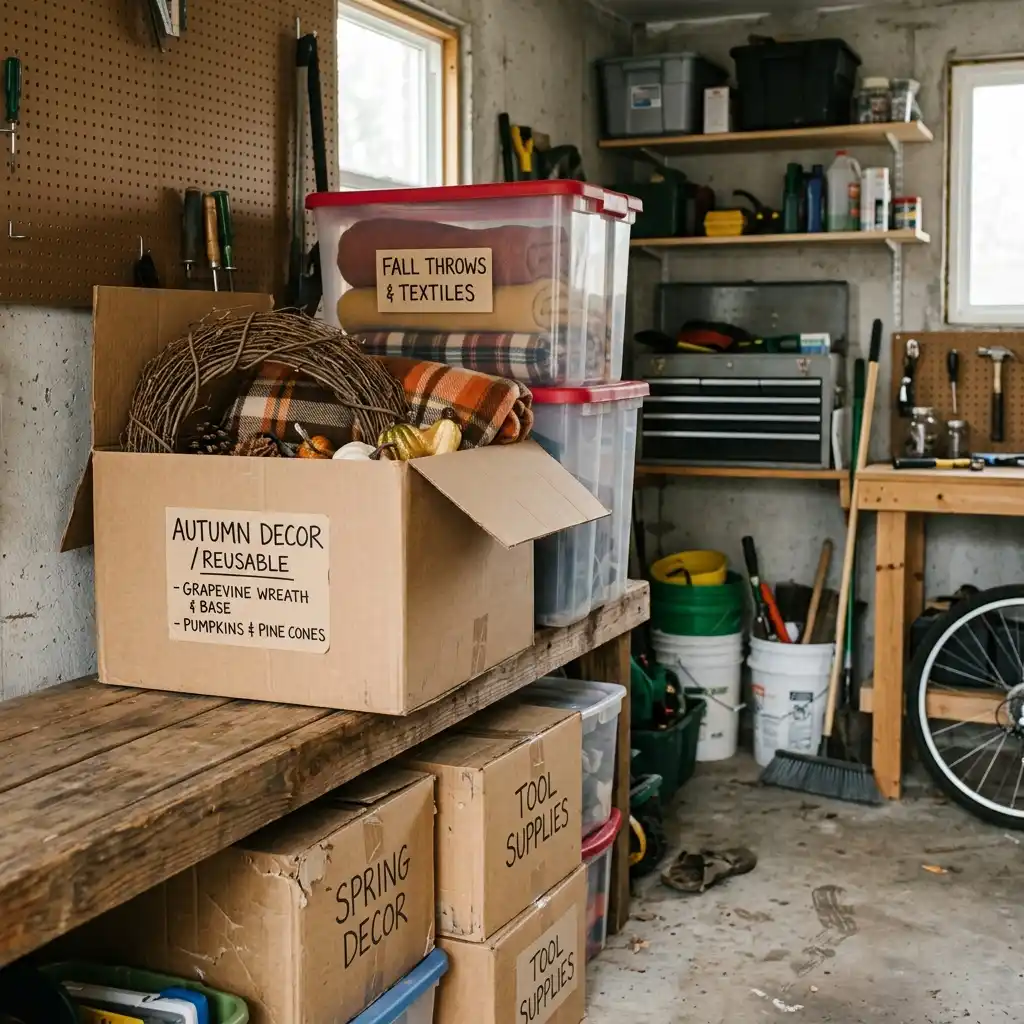
Four failures account for most of it, and none of them happen in the shop. Material Note: foam and EVA gourds dent permanently under any weight and never recover the shape, so they need a top shelf in the cupboard rather than the bottom of the box. Hot-glued seams on faux garlands and stem bundles let go in warm loft air, which is why the piece arrives in two halves next September.
Wire is the quiet one. Faux stems packed flat take a permanent bend at the point of pressure, and a bent stem never hangs straight again. Loose glitter is the fourth and least dramatic: it sheds onto every surface stored beside it and cannot be put back on the object it came from.
A Fall Budget Runs on a Backwards Calendar
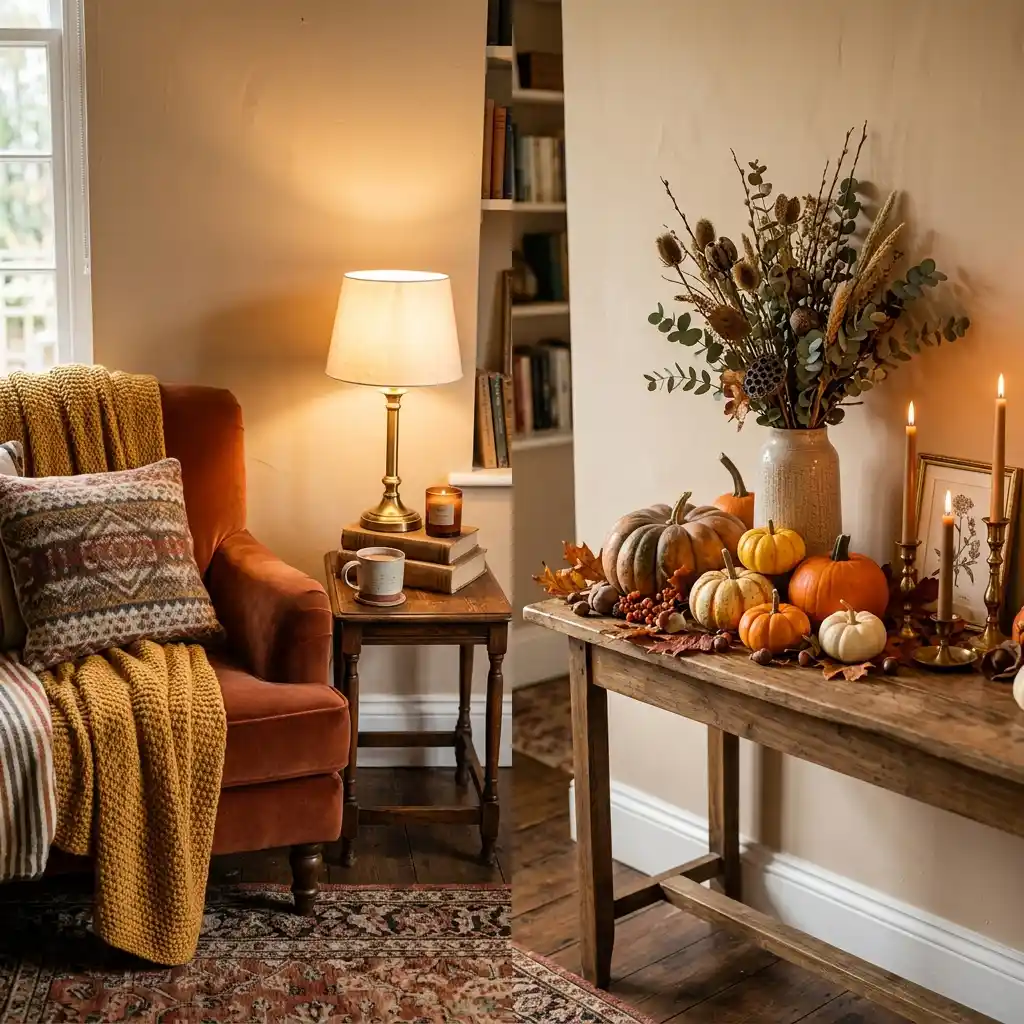
Fall decor has the widest price swing of any seasonal category, because the selling window is long and the sell-through deadline is hard. Ranges arrive in stores in July at full price, peak in mid-September when demand is highest, and get cleared aggressively once shops need the floor space for winter stock.
That gives a small budget an obvious move: buy the long-life half a year early. Rule of Thumb: the first two weeks of November are the cheapest fortnight of the fall calendar, and the pieces still on the shelf then — ceramics, wood, brass, neutral textiles — are exactly the ones worth keeping for a decade.
The short-life half works the opposite way. Fresh stems, real gourds and anything you will genuinely throw away in December should be bought in season and in small amounts, because there is nothing to store. The same one-year-ahead habit is what makes these cozy winter decor ideas so much cheaper the second time around.
What Do You Already Own That Reads as Autumn?
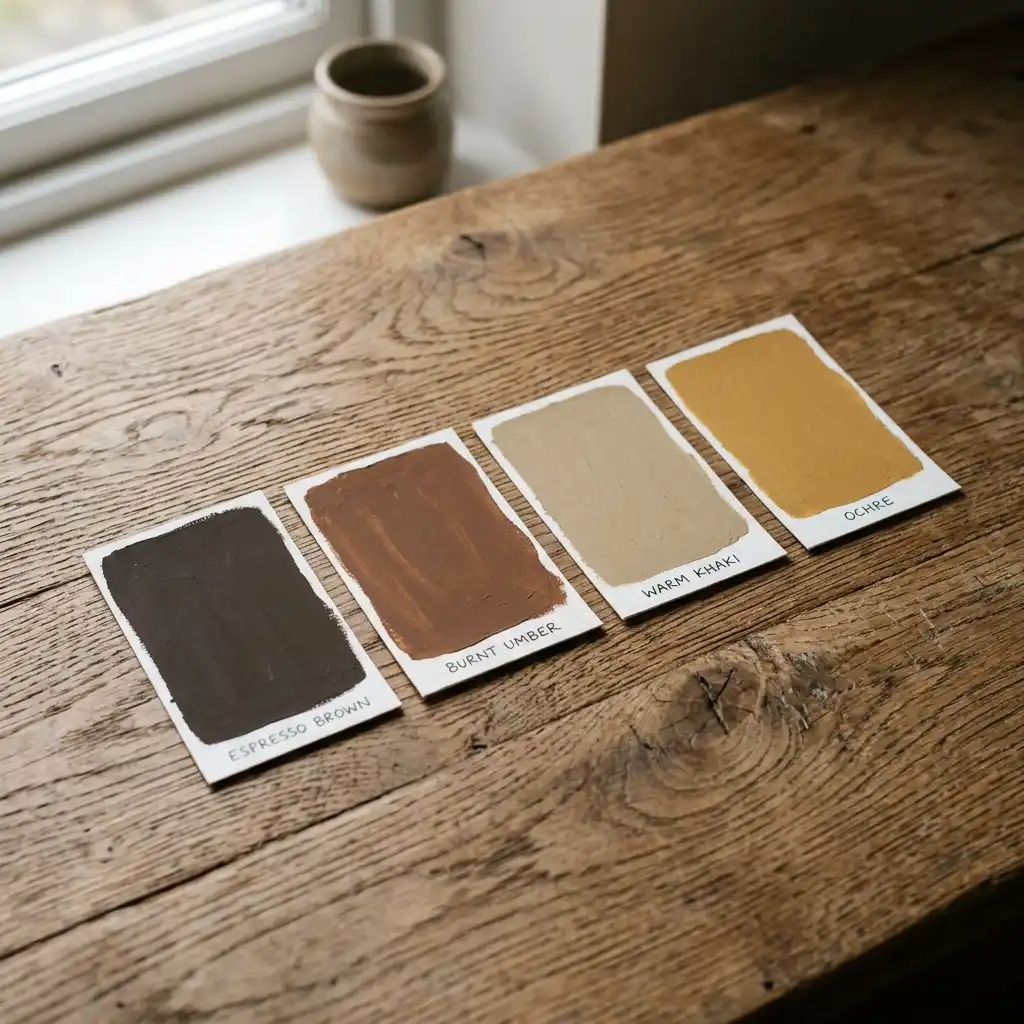
The free column is bigger than most people expect, because autumn is a palette before it is a set of objects. Warm browns, rust, ochre, olive, cream and soft black already exist in a normal house — leather-bound books, a wooden chopping board, brass candlesticks, amber or smoked glass, terracotta plant pots, a caramel leather bag. Those same warm materials are the backbone of most cozy decor ideas, which is why the free version of budget fall decor works at all.
Pull those objects from wherever they currently live and group them on your two close-range surfaces. Three items in three related warm tones read as one considered autumn vignette, and moving them costs nothing at all. Repeat one of the three tones somewhere else in the sightline and the whole room follows.
Cuttings do the rest. Bare branches, seed heads, oak and beech leaves and dried grasses cost nothing and carry real texture, which is the same reuse instinct behind these spring upcycling crafts.
Three Buys That Carry the Whole Season

Spend in this order and a small budget lands where it shows. For more options at each step, browse all our fall decorating ideas.
- One close-range object in a real material for your busiest surface, at $25 to $60. This is the piece people stand over, so it does all the quality work on its own.
- One large-silhouette piece for the long-range spot that bothers you most — a cabinet top, a landing, a porch corner — at $12 to $30. Buy for size, not for finish.
- One neutral textile in a warm tone that stays out until December, at $30 to $70. It is the only purchase here that changes how the room feels rather than how it looks, and it carries straight through into winter tablescape ideas once autumn is over.
Everything after those three is decoration on decoration. Stop, live with it for a week, and see whether you still want more.
Four Ways to Spend $100 and Have Nothing to Show
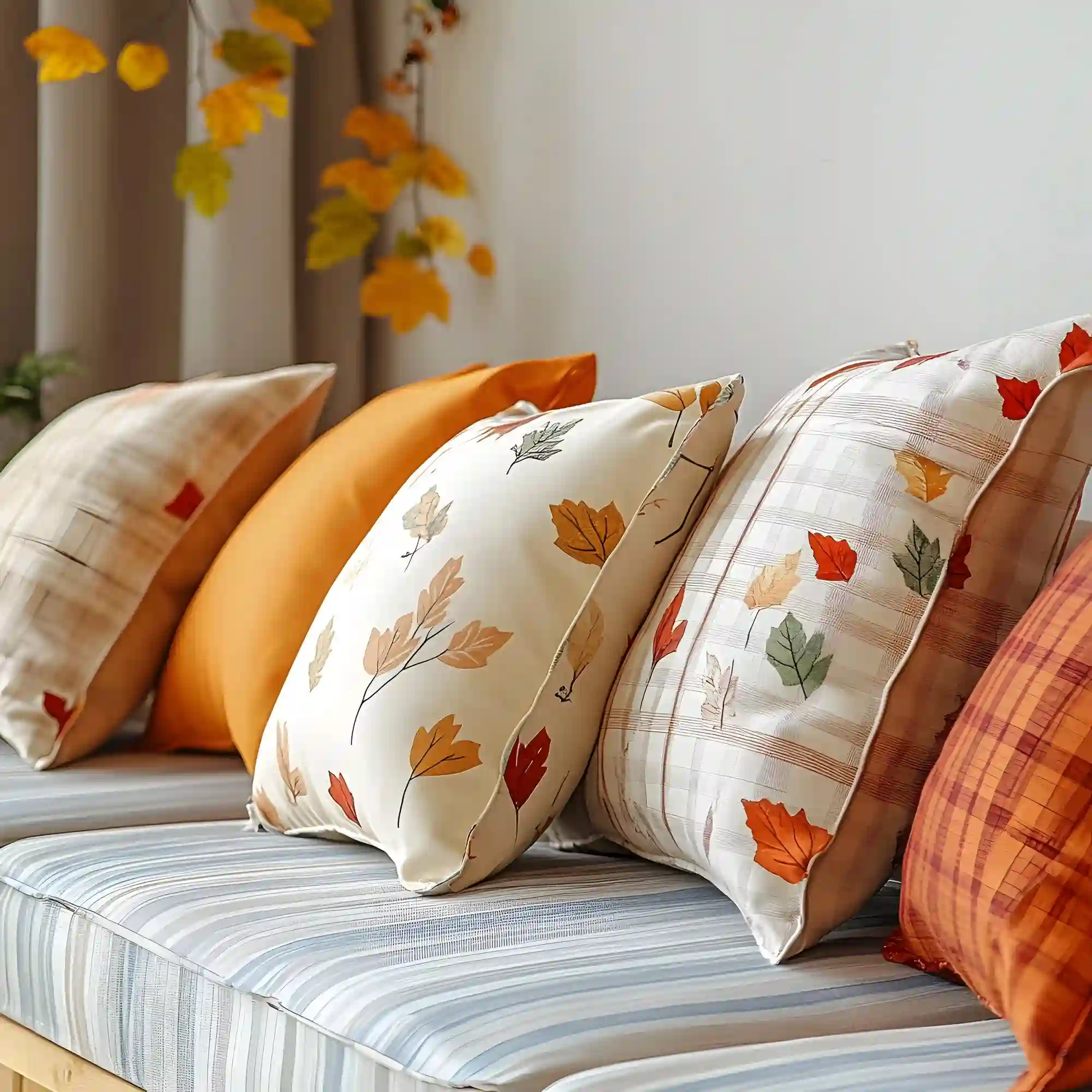
The most expensive habit is putting the best piece where nobody stands. The hand-glazed bowl ends up on top of the cabinets at nine feet, while the plastic gourds sit on the table people eat at. Swapping those two positions costs nothing and improves both spots the same afternoon.
Shopping in mid-September is the second, and it is a pure timing tax. That fortnight carries the highest prices of the whole fall calendar, and it is usually when people buy the pieces they intended to keep for years. Push the keepers to November and let September money go only on things that were never going to last.
Counting the receipt instead of the autumns costs more than either. Nine pieces at $9 each, replaced every October, come to $324 across four years; two pieces at $40 bought once come to $80 and are still in service. The division takes ten seconds and belongs before the purchase, not after the third replacement.
Starting with the cheap half is the quiet one. The $12 of filler gets bought in August because it is affordable, the money is gone by the time anyone reaches the console, and the surface everyone actually stands over is still bare in October. Fund the close-range spots first, and let the filler take whatever is left.
Three Budgets: $60, $150 and $400
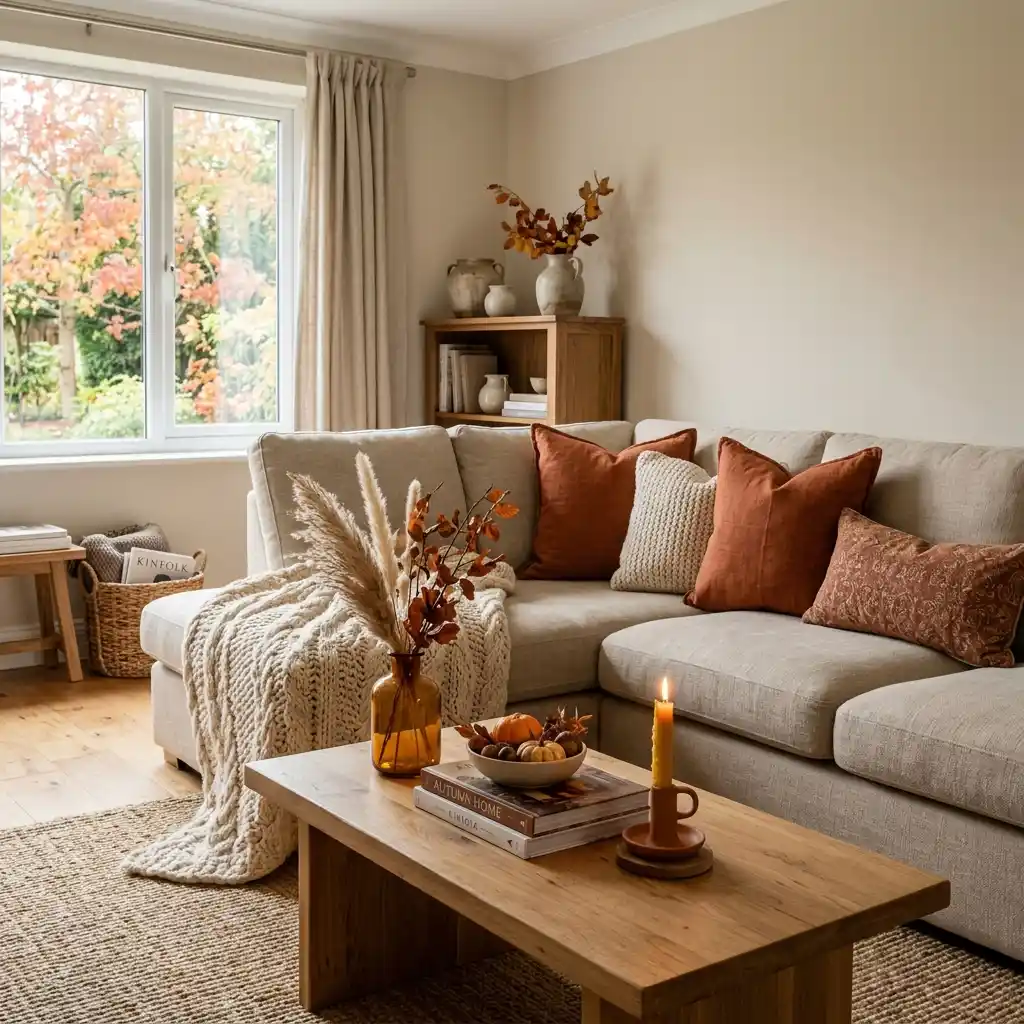
Fall costs whatever you decide the close-range half is worth, and the ranges below assume you already own the furniture and lamps.
| Project | Estimated Cost | Impact Level |
|---|---|---|
| Long-range filler — resin gourds, faux stems, one garland for a high shelf | $12-$35 | Medium |
| One close-range object in glazed ceramic, oiled wood or cast brass | $25-$60 | Very High |
| Post-season restock bought in the first week of November for next autumn | $20-$50 | High |
| One warm neutral textile that stays out from September to December | $30-$70 | High |
| One decade piece you will still be setting out in 2036 | $90-$220 | Medium |
Best First Upgrade: The walk that identifies which surfaces are genuinely close-range. It costs nothing and it redirects every dollar spent after it.
Skip for Now: A second long-range piece before the first close-range one is funded. Distance is exactly where cheap becomes invisible, so that money buys the least visible improvement available in the house.
What If This Is Your First Fall and You Own Nothing?
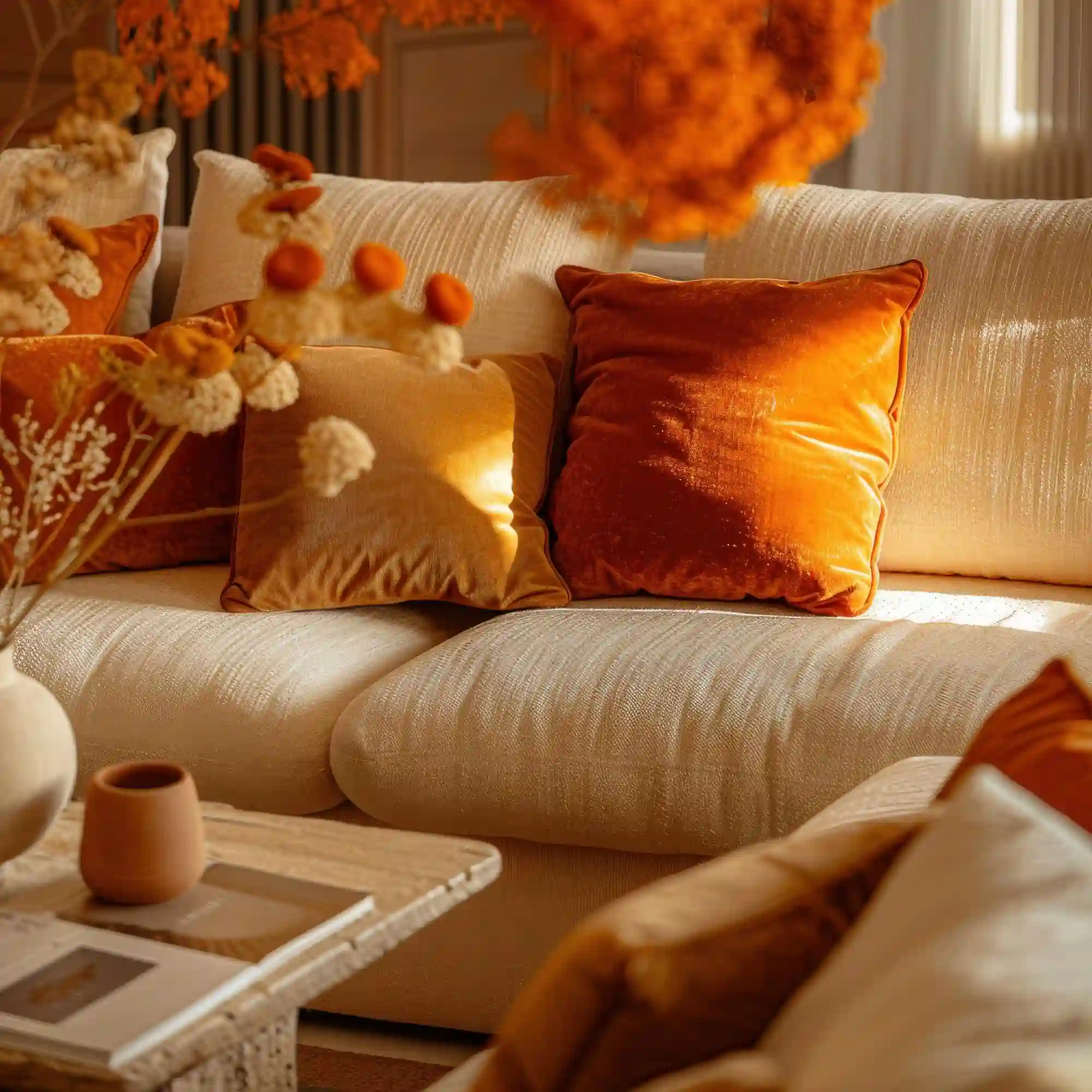
Starting from zero changes the order, not the rule. Spend the first $40 on one close-range object and nothing else, then live with it for a fortnight. A single good piece on the surface you use most does more than eight cheap ones spread thin. If you are still deciding how far to take the season, browse every seasonal decorating guide before committing money to one.
Small homes make the split easier rather than harder. When a flat has only two surfaces in total, both are close-range, so the whole budget goes into real material and the long-range column simply does not exist. That concentration is what makes these creative small apartment ideas work on very little money.
The Half I’d Buy Cheap Every Time
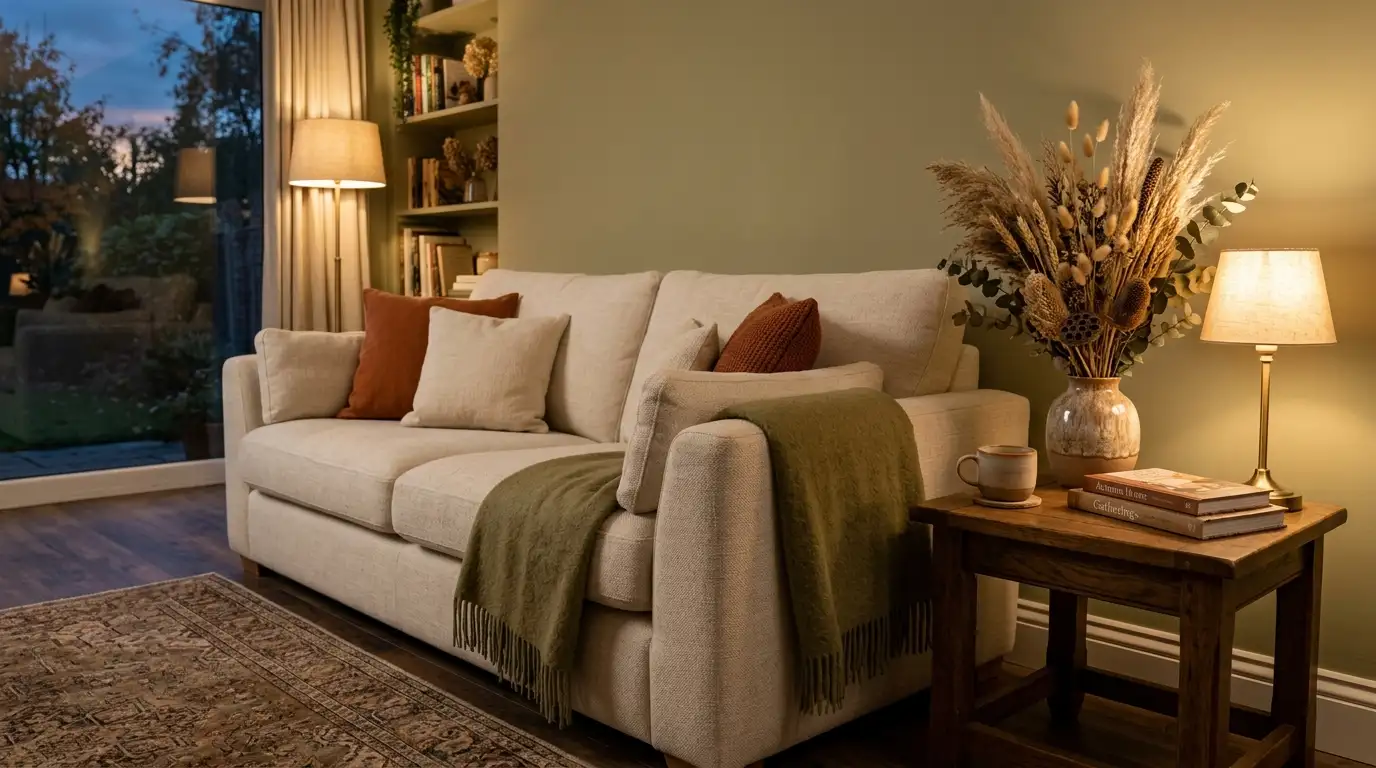
The long-range half, without hesitation. Nothing above shoulder height or beyond ten feet has ever justified real money, because the eye cannot collect the information that makes an expensive object look expensive at that distance. Put the cheapest thing you own up there and spend the difference on the one surface your guests actually lean over.
Frequently Asked Questions
Conclusion
Do the walk before you do the shopping. Mark the two surfaces people come within four feet of, put your one honest object on each, and let every other spot in the house take the cheapest thing on the shelf — that single decision does more for budget fall decor than doubling what you spend. There are more warm-season ideas across our home decorating guides when you are ready for the rest of the house.