How Many Pumpkins Does a Front Porch Actually Need?
Three. Maybe seven on a deep porch. The instinct every September is to buy a truckload and line both step edges, and that is exactly what makes an entry look busy instead of finished.
Looking for more ideas? Explore our full guide to Fall Porch Decor.
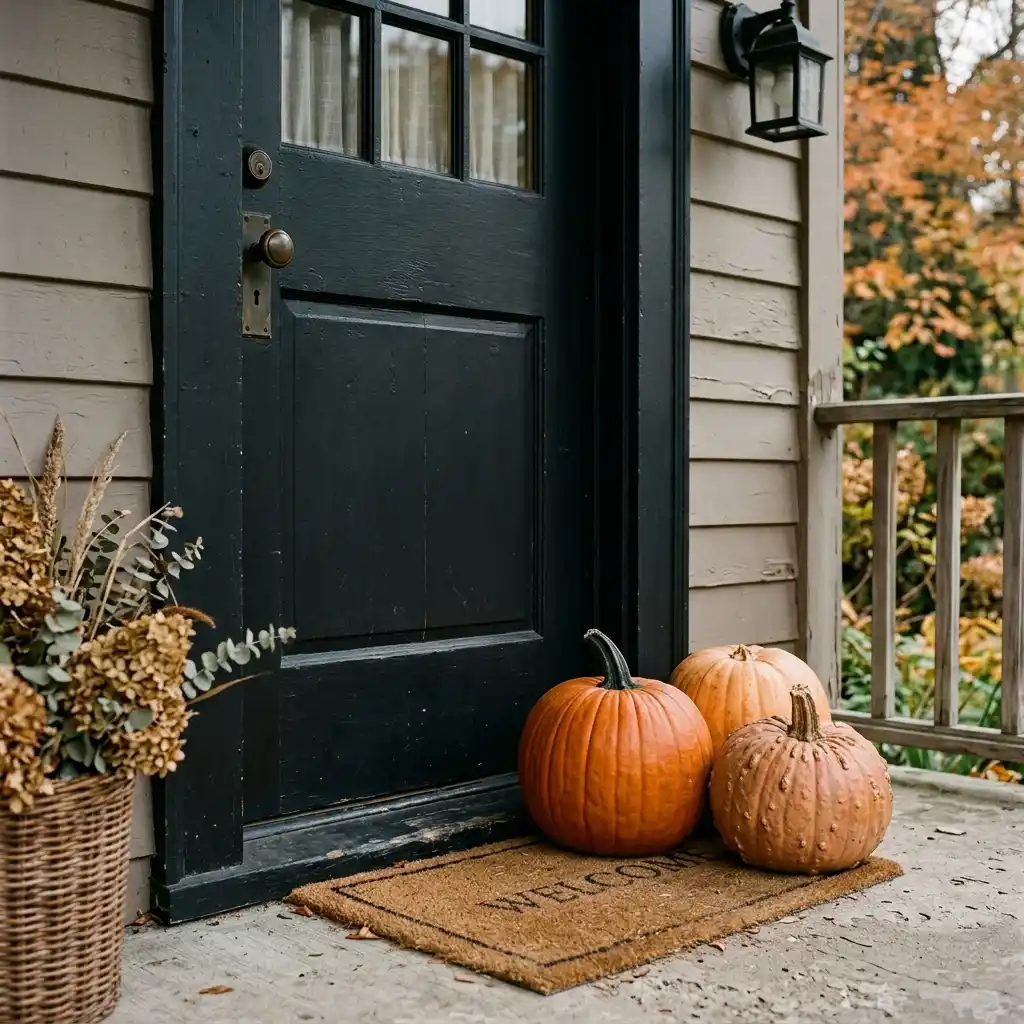
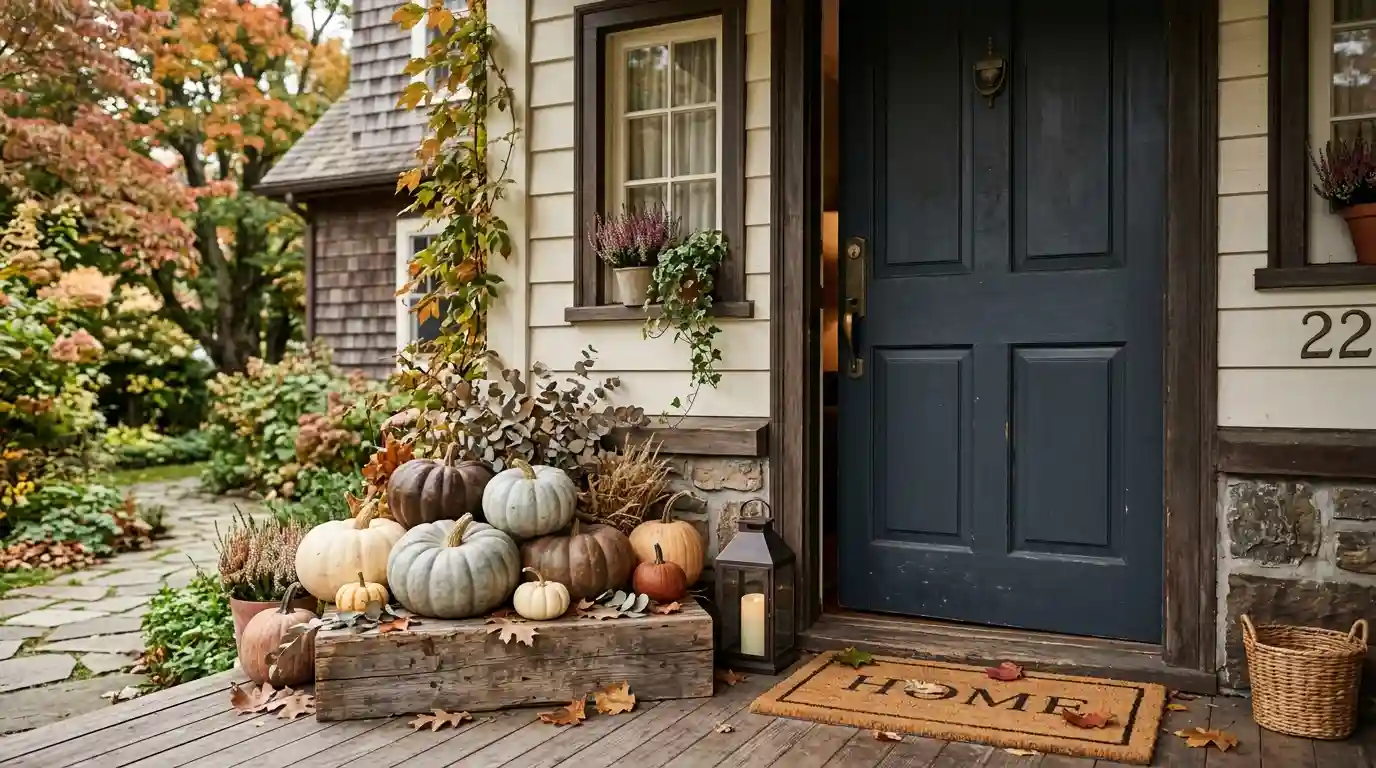
A fall porch pumpkin display works best as two odd-numbered clusters of uncarved pumpkins in three muted tones — cream, blue-grey and deep umber — set tight against the door and raised off damp ground. Whole, unblemished pumpkins keep for two to six months in cool storage, while carved ones soften within days. Group them, lift them, and skip the knife.
If you have ever bought a dozen pumpkins and still felt like the porch looked unfinished, the count was never the problem. The arrangement was. Most of our home decor inspiration starts from the same place — fewer pieces, better placed.
Editorial field note: A wide porch with eleven small orange pumpkins spaced evenly along both step edges looks scattered from the sidewalk. Pull those same eleven into two groups beside the door — one large, one small — and the entry gains a clear focal point instead of a border.
This guide covers the palette that is replacing orange-on-orange, five porch setups you can build in an afternoon, the grouping rules that make three pumpkins look planned, and how to keep the whole thing upright through Thanksgiving. For the wider seasonal picture, these fall and autumn decor ideas cover the rest of the house.
Fall Porch Pumpkin Display Checklist
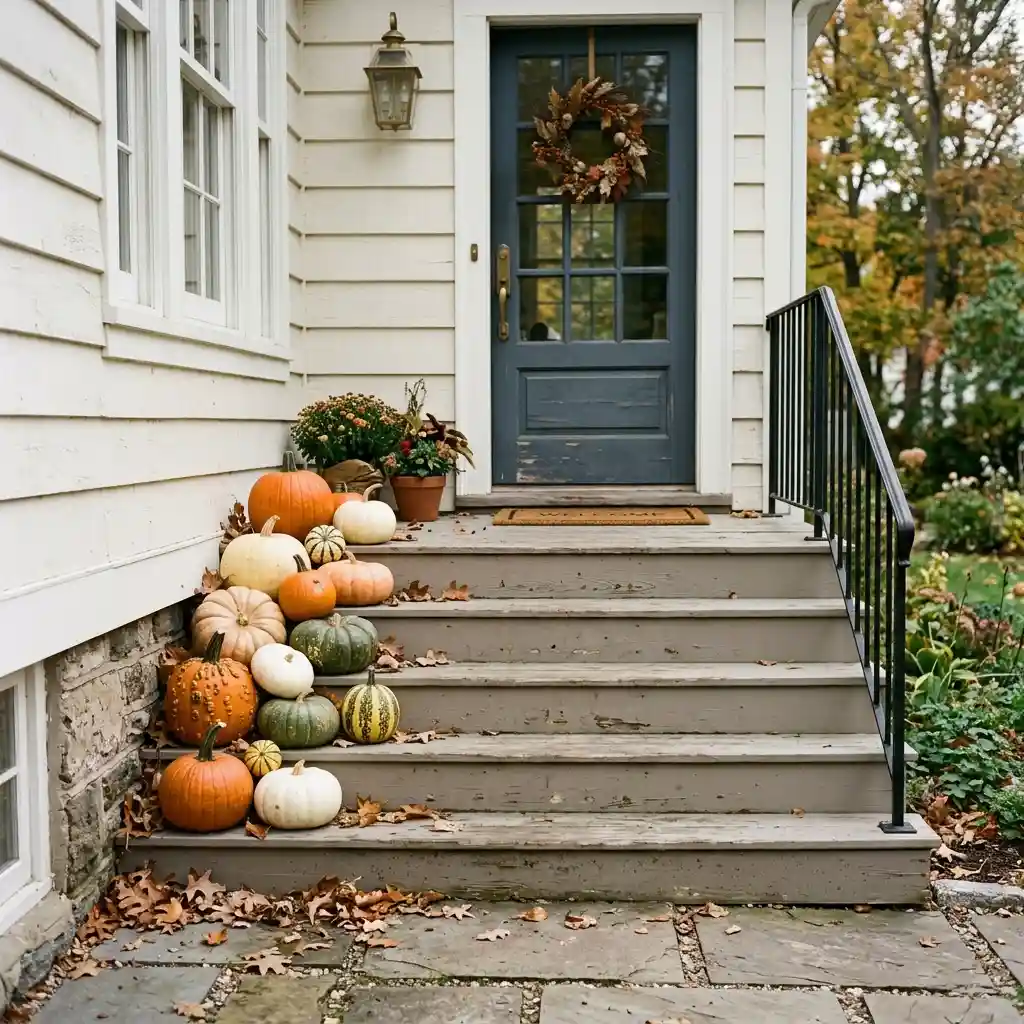
Run through this before you spend anything at the farm stand.
- Measure the flat zone beside your door — most entries hold one cluster, not two.
- Buy the largest pumpkin first, then size two more down from it.
- Keep the palette to three tones and repeat each tone at least twice.
- Raise every pumpkin on a crate, riser or slate offcut, never bare concrete.
- Add one hardy mum or a dried grass bundle for height behind the group.
- Leave at least half the step width clear so the path still works in the dark.
KEY TAKEAWAY: A porch that looks styled usually has fewer pumpkins in tighter groups, not more pumpkins spread wider.
What Changed About the Way Porches Use Pumpkins?
The orange pyramid on the front steps came out of one supply reality: for years, the only pumpkin most people could buy was a field-grown jack-o’-lantern. Heirloom varieties were a farm-stand curiosity. Now they sit in stacks at ordinary garden centers, and a porch can carry three colors for the same money it used to spend on one.
The second shift is functional. Carving is a Halloween job with a short clock on it, and a cut pumpkin turns soft fast. Uncarved styling gives the same visual payoff across three months instead of one week, which suits how people actually decorate — early September through Thanksgiving. Carving content belongs with the rest of the Halloween decorating ideas; this look stays whole.
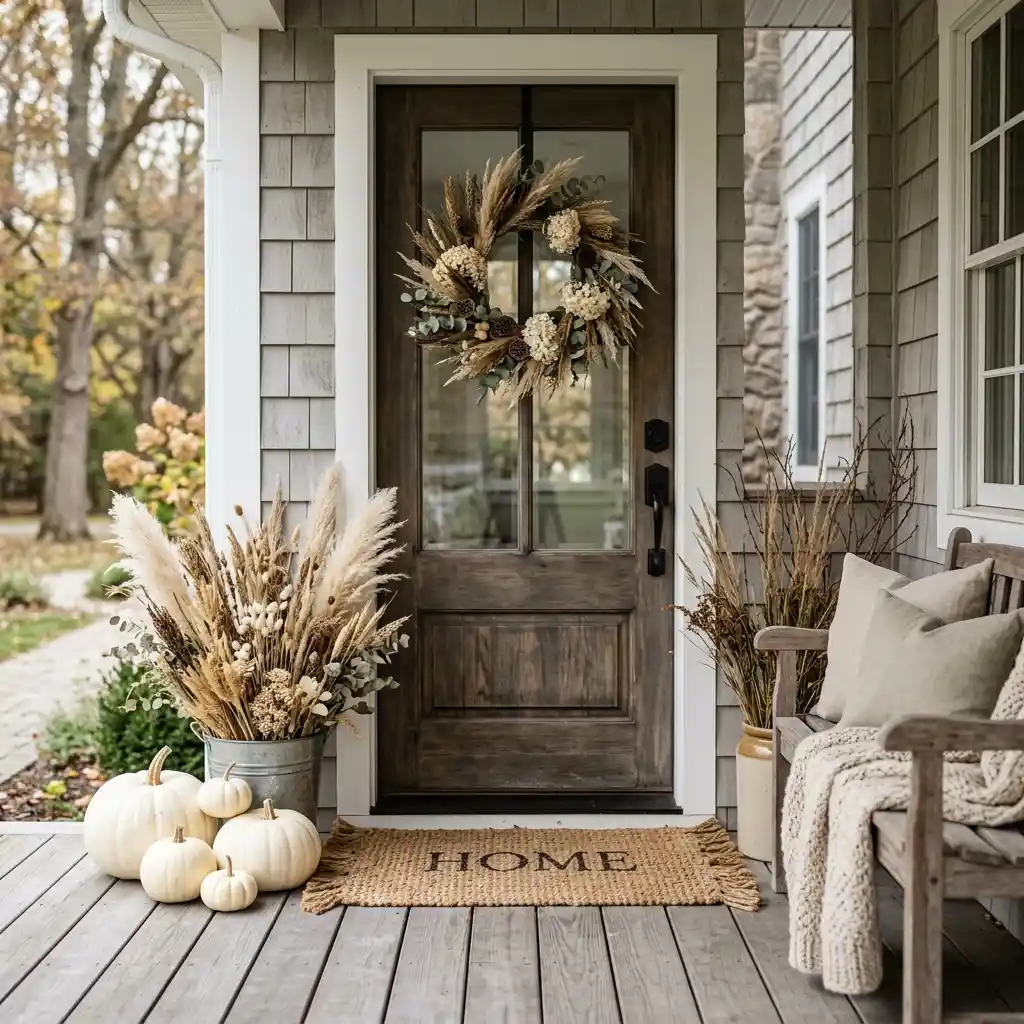
Signs This Is Catching On:
- Farm stands and garden centers now sell heirloom pumpkins by name — Lumina, Jarrahdale, Cinderella — beside the plain jack-o’-lantern bins.
- Fall search phrasing leans toward white pumpkin decor and elegant, neutral autumn porches alongside the classic orange terms.
- Retail fall ranges lead with cream ceramics, dried stems and umber textiles rather than the orange-and-black mix that used to fill the aisle.
Browse the rest of our fall decorating ideas if you want to see how the same palette works indoors.
What Does the New Pumpkin Palette Look Like?
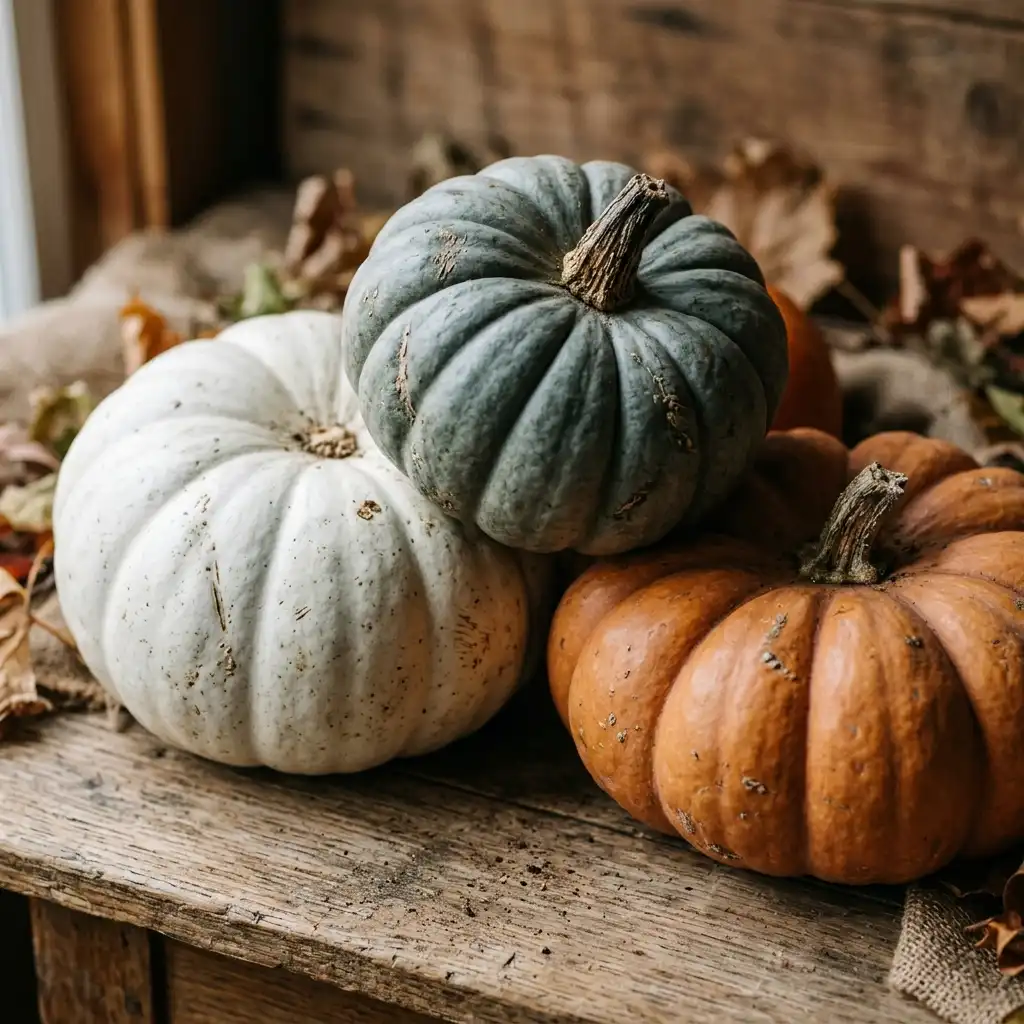
Three tones, three sizes, one repeat of each. That is the whole formula.
Lumina pumpkins are smooth and chalky white at roughly 5 to 12 pounds. Jarrahdale is blue-grey with deep ribs and runs heavier, around 6 to 18 pounds. Cinderella — the flattened, heavily grooved French heirloom also sold as Rouge Vif d’Étampes — brings the warm orange back without the flat pumpkin-patch tone. Add one bumpy warty gourd in green or bronze and the group stops looking like a store display.
Match the palette to your door, not to the season. A cream and blue-grey group sharpens against a black or forest-green door. Against grey stone, keep one orange piece in the mix or the whole thing looks washed out. Warm brick already carries orange, so lean cream and umber there. The same logic drives these modern front porch ideas for exterior color.
*Designer Tip: Set your largest pumpkin on the hinge side of the door rather than the handle side. The door swings away from it, so nobody kicks the group on the way in.*
Five Porch Setups You Can Build in an Afternoon
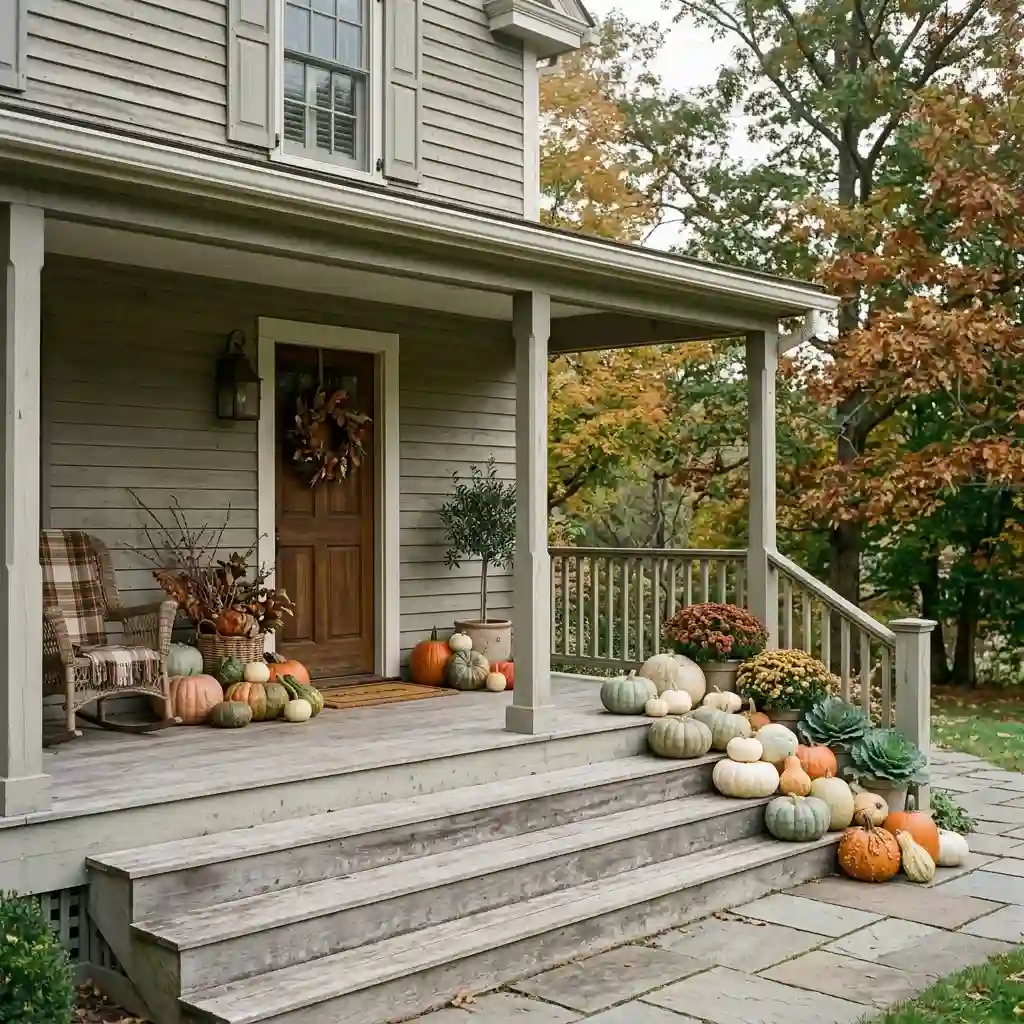
Each one below is a complete look — palette, anchor piece and one material cue. Pick the one that matches your porch depth. If the furniture, lighting and doormat layer still needs sorting first, these front porch decor ideas handle that groundwork.
The Three-Tone Doorstep Cluster
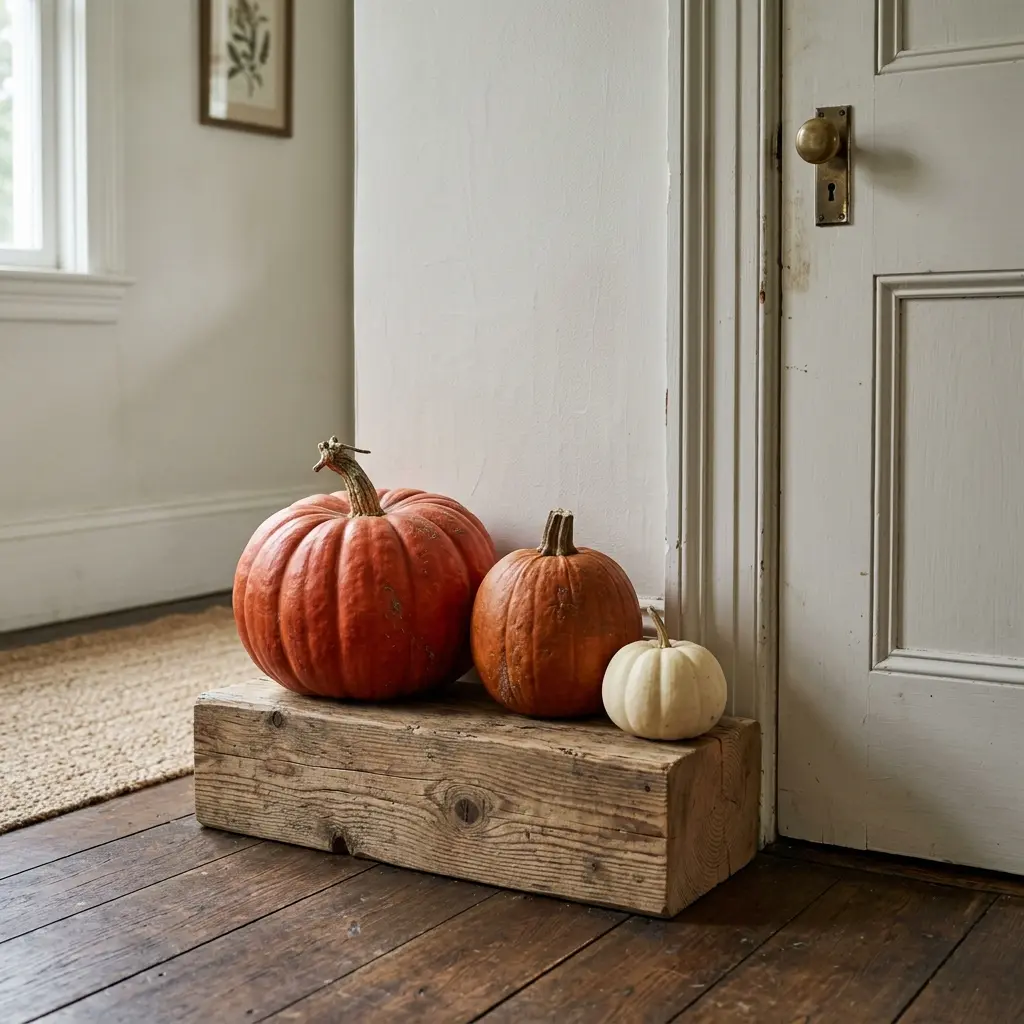
One large Jarrahdale, one mid-size Lumina, one small warty gourd, pushed together so the edges touch. Sit them directly beside the door frame on a low timber riser, with a single hardy mum in a terracotta pot just behind. The touching edges matter — a gap of even four inches makes three pumpkins look like three separate objects. Works on porches as narrow as three feet, and it is the cheapest version on this list.
The Stair-Step Ladder
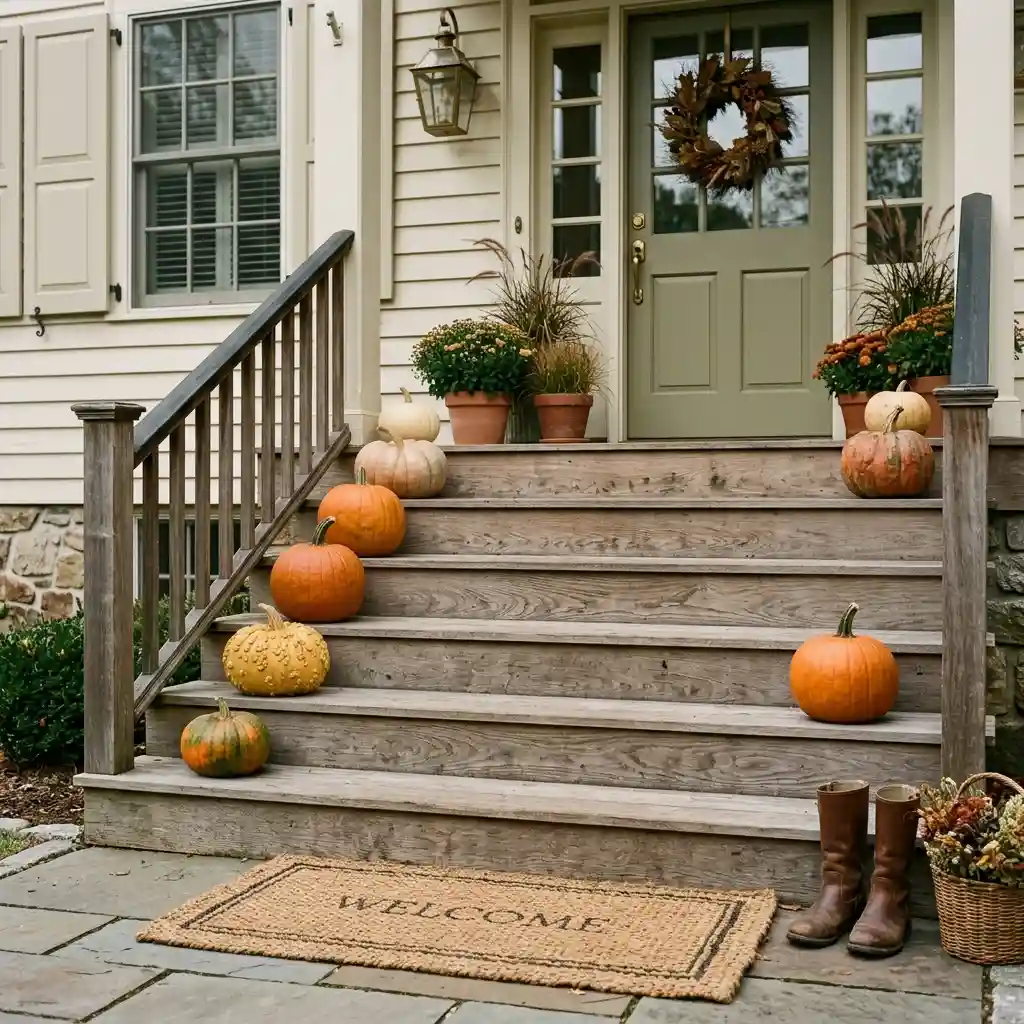
Place one pumpkin per tread on alternating sides of the steps, largest at the bottom, smallest at the top. Keep the color running in the same order down the flight — cream, umber, cream, umber — so the eye follows the line. Add a jute doormat at the base to close the sequence. This suits a straight run of four or more steps and needs a clear handrail side for safe footing.
The Crate and Grass Corner
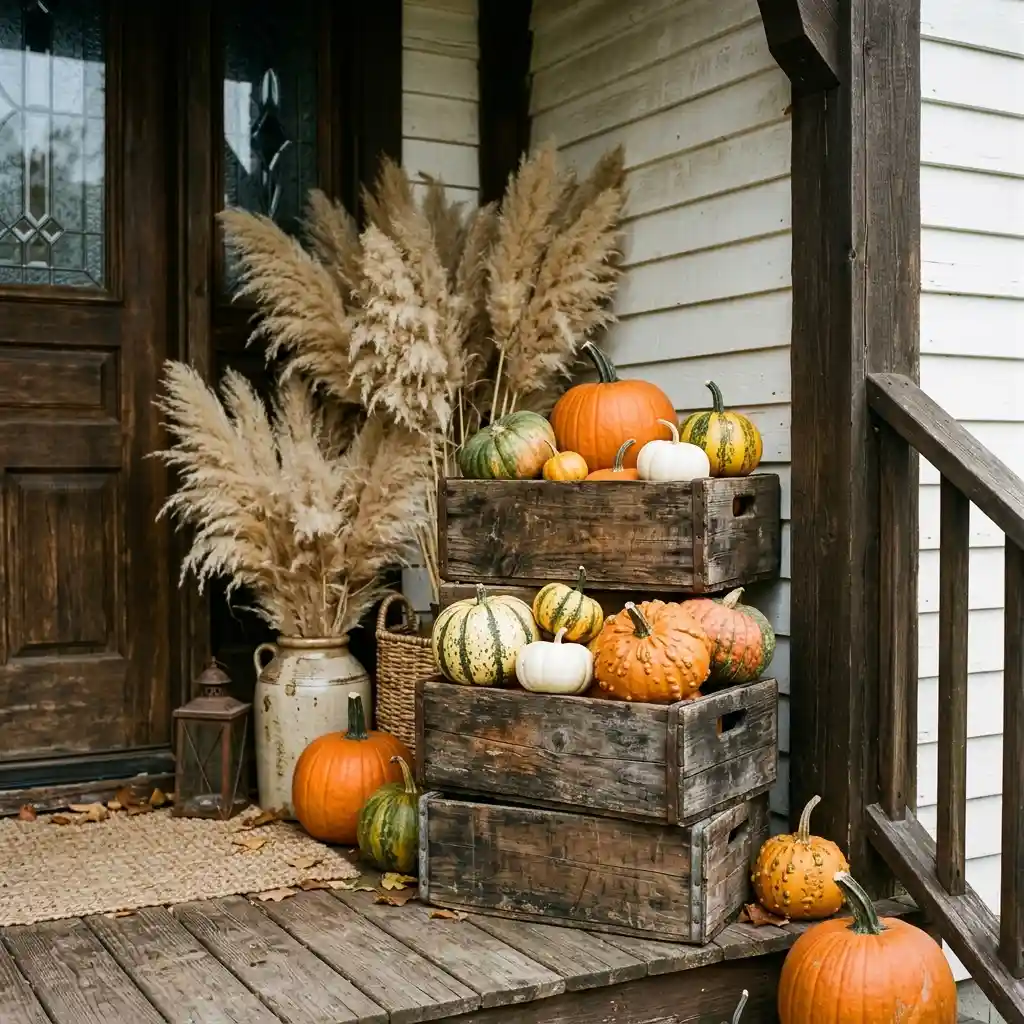
Stack two weathered wooden crates at different heights in the porch corner, then set pumpkins on top and at the base. Fill the gap behind with dried pampas or ornamental grass bundles for height. The crates do the real work here: they lift the pumpkins into the sightline and keep them off wet boards. Deep porches and wraparounds take this best, and the crates store flat for next year.
The All-Cream Minimal Entry
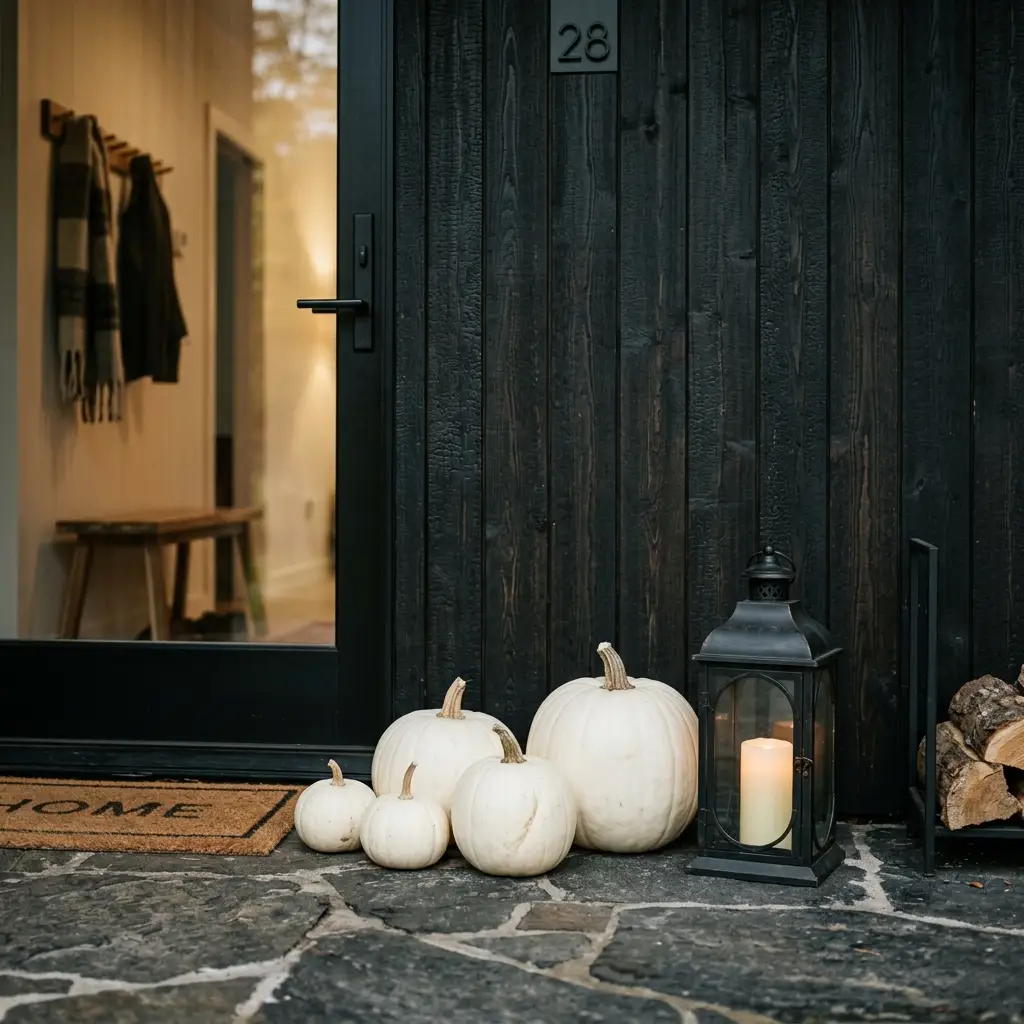
Five white pumpkins in five sizes, nothing else but a black iron lantern and a linen-textured doormat. The look lives or dies on size contrast, so the largest should be at least three times the smallest. Cream looks calm against dark cladding and modern black window frames. Skip mums entirely with this one — flowers pull it back toward a traditional harvest porch and blur the point.
The Wheelbarrow and Hay Bale Corner
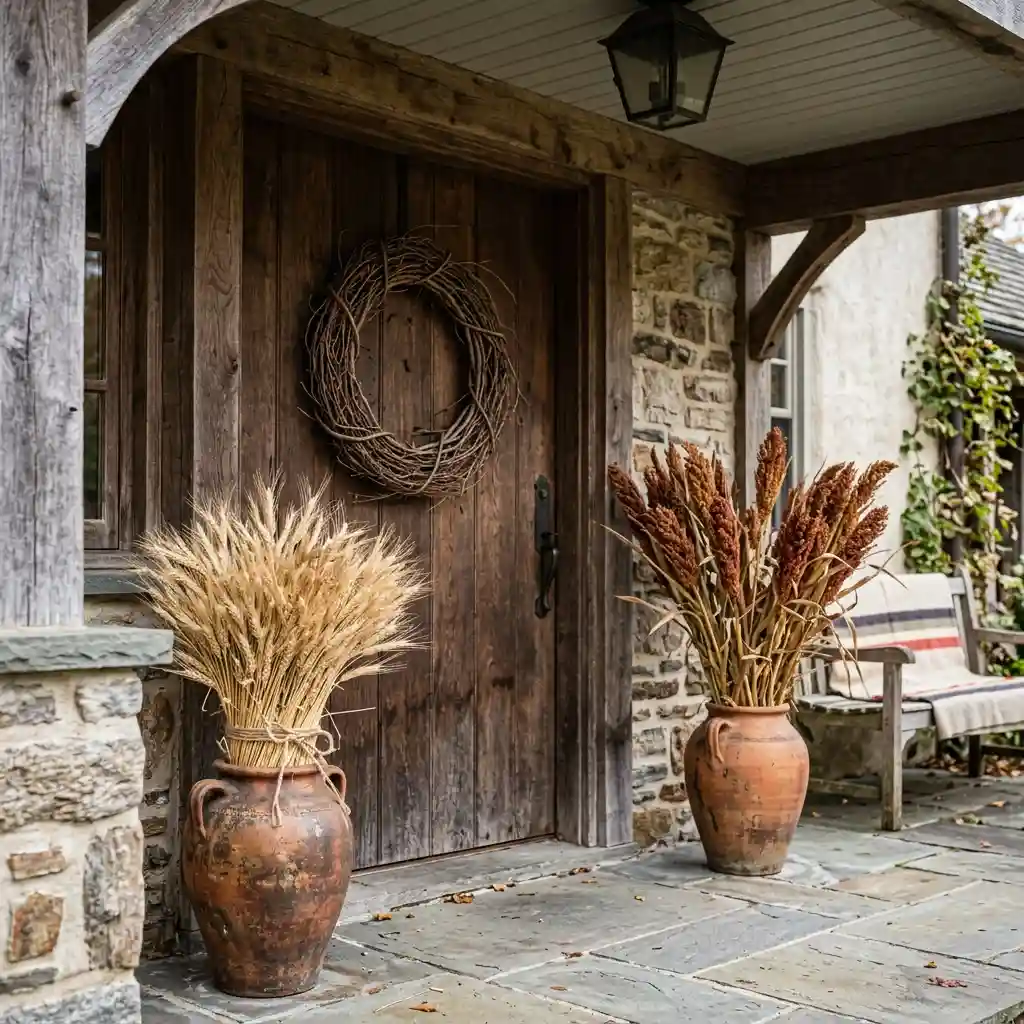
A vintage metal wheelbarrow or galvanized tub, tipped slightly forward, spilling six to eight small pumpkins onto a single straw bale. Add cornstalks lashed to a porch post for vertical weight. This is the most rustic option and needs real depth — at least six feet from door to step edge — or it swallows the entry. Safety Note: keep straw, cornstalks and dried grasses well clear of open flame and use battery LED candles in outdoor lanterns.
How Long Will Pumpkins Last on a Porch?
Longer than most people expect, and far longer uncarved. A fall porch pumpkin display usually fails on rot rather than on styling, which makes this the section worth reading twice. Whole, unblemished pumpkins store for two to six months depending on variety, and Illinois Extension advises keeping them in a single row off the floor so air circulates underneath. That single instruction is also the best styling rule on this page — crates and risers keep the group dry and put it at eye level at the same time.
Source Note: Oregon State University Extension recommends curing squash and pumpkins at 80–85°F for five to seven days, then storing at 50–55°F with 50–70% relative humidity.
Material Note: An uncut rind is the pumpkin’s own weather seal, so a carved face is what turns a two-month display into a five-day one.
Climate Note: Pumpkins deteriorate quickly below 50°F, so move the group under cover before the first hard frost in northern zones.
Wipe rain off the shoulders after a storm and turn each pumpkin a quarter-turn every week or two, since soft spots start underneath where you cannot see them. Keep the group out of direct afternoon sun on south-facing porches. When the last pumpkin finally goes, the same crates and lanterns carry straight into these cozy winter front porch ideas with evergreen swapped in.
Small Porch or Apartment Landing? Start Here
A four-foot landing cannot hold a cluster and a mum and a doormat. Pick two of the three.
The version that works: one mid-size pumpkin, one small one, both on a single 12-inch riser tucked against the wall on the hinge side. Skip the hay bale and the wheelbarrow entirely. A narrow rectangular doormat in jute or coir does the rest of the seasonal work without taking floor space.
Renters get an easier ride here than with most exterior projects, since nothing is fixed to the building. Rental Note: use a freestanding riser or crate rather than anything screwed to the porch, and keep the doorway clear of the swing path. If you want the fall palette to carry indoors, these fall bedroom refresh ideas use the same cream and umber layering. More exterior styling sits in our outdoor and exterior decor ideas.
What to Skip This Season
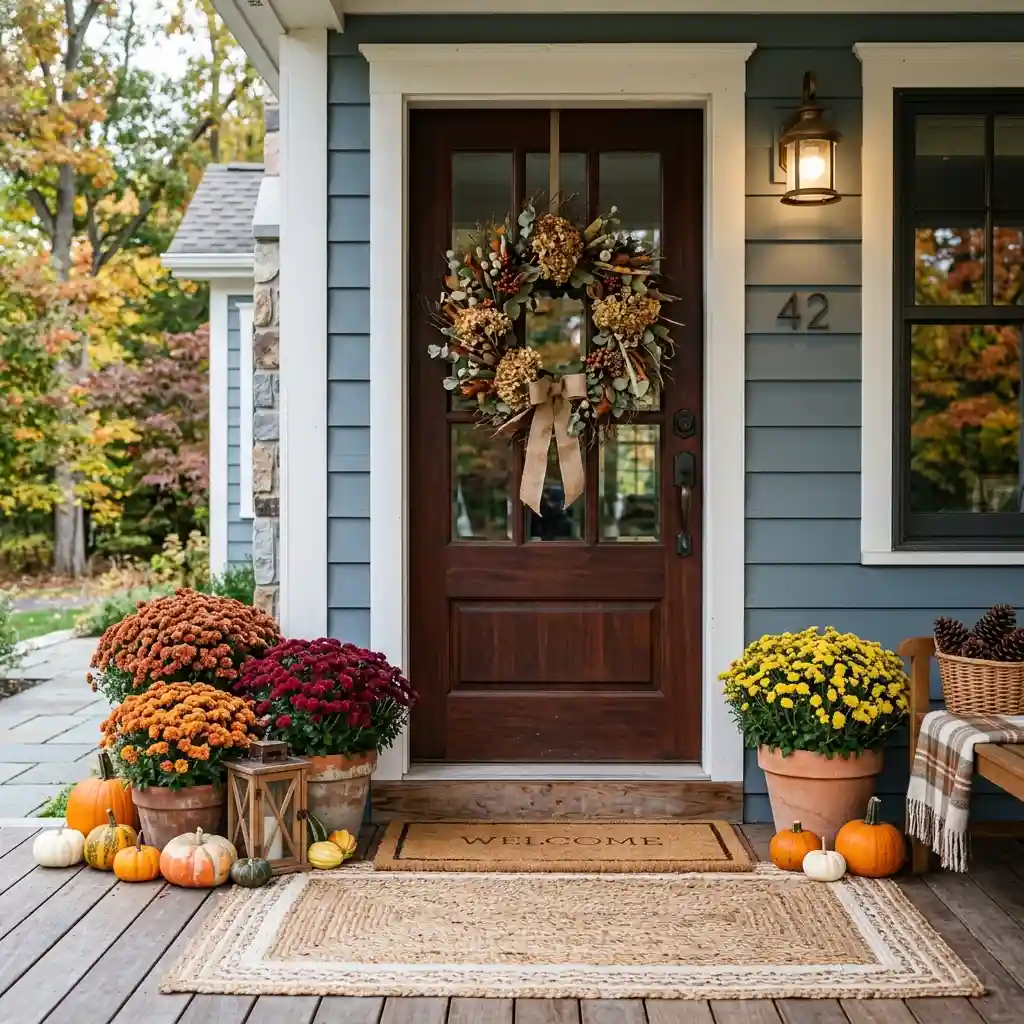
❌ Lining single pumpkins along both step edges → ✅ Pull them into two clusters at the door and leave the steps clear.
❌ Buying every pumpkin in the same orange and the same size → ✅ Mix three sizes and three tones, repeating each tone twice.
❌ Setting pumpkins straight onto damp concrete or a wet doormat → ✅ Raise them on a crate, riser or slate offcut so air moves underneath.
What a Pumpkin Porch Costs to Fill
Most of this budget goes on things that rot. The trick is spending on the pieces that do not.
| Project | Estimated Cost | Impact Level |
|---|---|---|
| Three uncarved pumpkins in mixed sizes | $18–$45 | High |
| Pair of hardy mums in 8-inch pots | $20–$40 | Medium |
| Wooden crate or timber riser to lift the group | $35–$90 | High |
| Reusable dried grass bundles and faux stems | $70–$160 | Very High |
On a tight budget, $30 buys three farm-stand pumpkins and a bag of straw, and that alone changes the entry. The mid-range version adds a $50 crate and two mums, landing near $120 and lasting the full season. The premium route spends $160 on dried grasses and quality faux stems that return every autumn, which drops the real yearly cost below the cheap version by year three.
Best First Upgrade: A wooden crate or riser — it lifts the pumpkins into view and keeps them dry, and it works again next year.
Skip for Now: Oversized inflatable or resin pumpkins. They cost more than real heirlooms and date the porch immediately.
Will This Look Still Feel Right Next Fall?
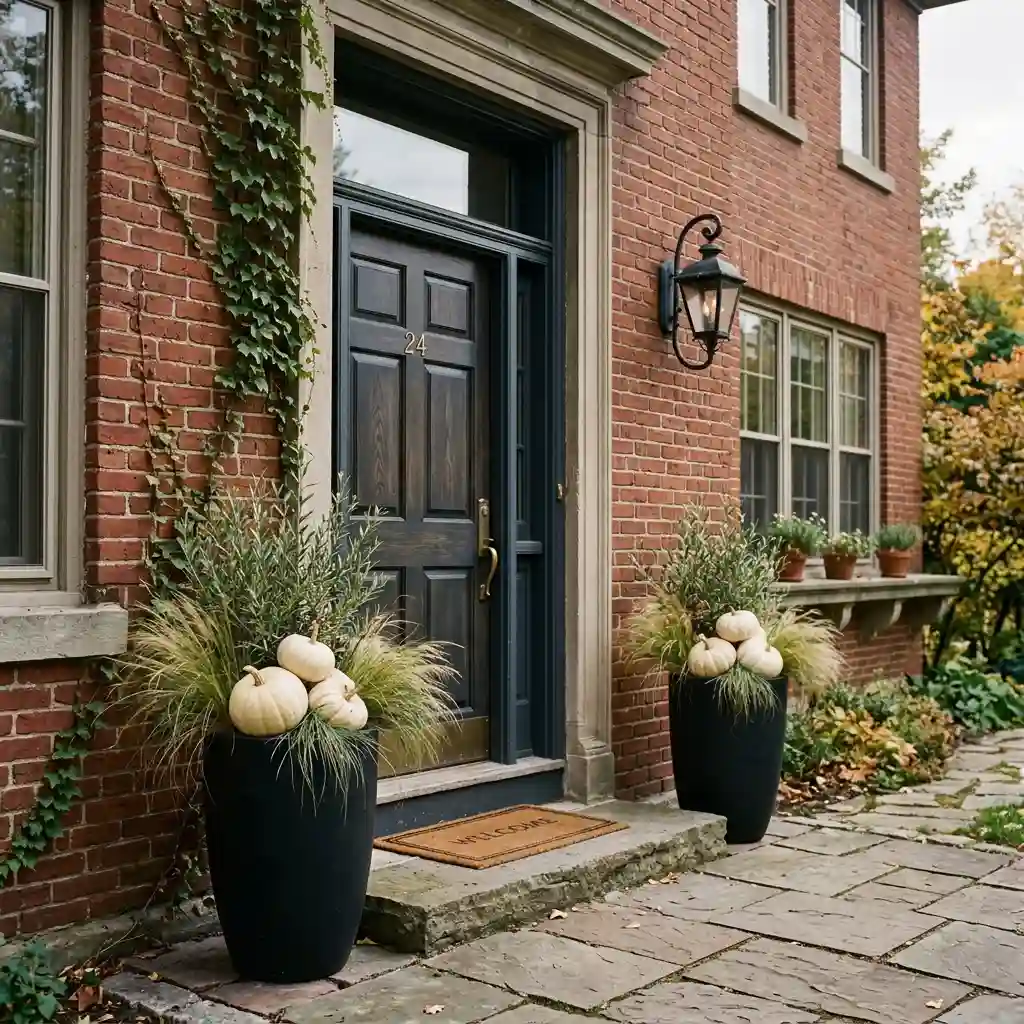
Muted palettes have staying power for a boring reason: they are cheaper to keep. Cream, blue-grey and umber sit beside almost any door color, so the display does not need rebuying when you repaint. Bright orange-and-black schemes have to be replaced when the trend turns. The same thinking runs through our cozy decor ideas more broadly.
Designer’s Verdict: The three-tone doorstep cluster wins — it costs the least, works on the narrowest porch, and it is the only setup here that still looks planned when two of the three pumpkins have gone soft and been removed.
Frequently Asked Questions
Conclusion
The number was never the problem. A fall porch pumpkin display looks finished when three clear sizes sit in one lifted group, in tones that agree with the door — and that same group is the one still standing in late November. Editorial field note: three pumpkins on a crate beside a single mum looks calmer than eleven spread along the steps, takes about ten minutes to set up, and costs less; browse more home decor inspiration when you are ready to carry that palette indoors, or see the rest of our seasonal decorating ideas.
Next Steps
- Measure the flat area beside your door and decide whether it holds one cluster or two before you buy anything.
- Choose your largest pumpkin first at the farm stand, then pick two smaller ones in different tones to size down from it.
- Put a crate, bench or timber riser in place so every pumpkin sits off the concrete from day one.