TL;DR
- Focus on gender-neutral palettes like warm greige or soft sage for long-term versatility.
- Prioritize multi-functional furniture, such as dressers that double as changing stations.
- Layered lighting with dimmable options is essential for late-night routines and mood.
- Use vertical storage and wall-mounted shelves to keep floor space clear and safe.
Creating a Serene Environment with Nursery Room Inspiration
Nursery room inspiration is most effective when it balances the needs of the infant with the aesthetic of the modern home. To achieve a high-end look, focus on a layout that separates the sleep area from the changing and feeding zones. A serene atmosphere is built on a foundation of neutral tones and natural materials. By incorporating a refined interior style into your nursery, you ensure the space feels like a cohesive part of your overall home design rather than an isolated play area.
When planning your layout, consider the principles often used in very small guest bedroom ideas to maximize every square foot without sacrificing comfort. Effective design requires a mix of soft textiles, like linen and low-pile rugs, paired with sturdy, elegant furniture. This approach creates a timeless environment that remains stylish even as the nursery transitions into a toddler room. Using soft oak accents and matte black hardware can elevate the visual appeal significantly. Bookmark this guide for quick reference.
KEY TAKEAWAY: A successful nursery design prioritizes a neutral base and a zoned layout to ensure both functional ease and a sophisticated aesthetic.
25 Nursery Room Inspiration Ideas
A nursery should feel calm, safe, and beautiful for baby and parents alike. These twenty-five ideas — soft foundations, natural textures, and soothing color — span every style to help you design a space you’ll both love.
1. Soft Greige Foundations
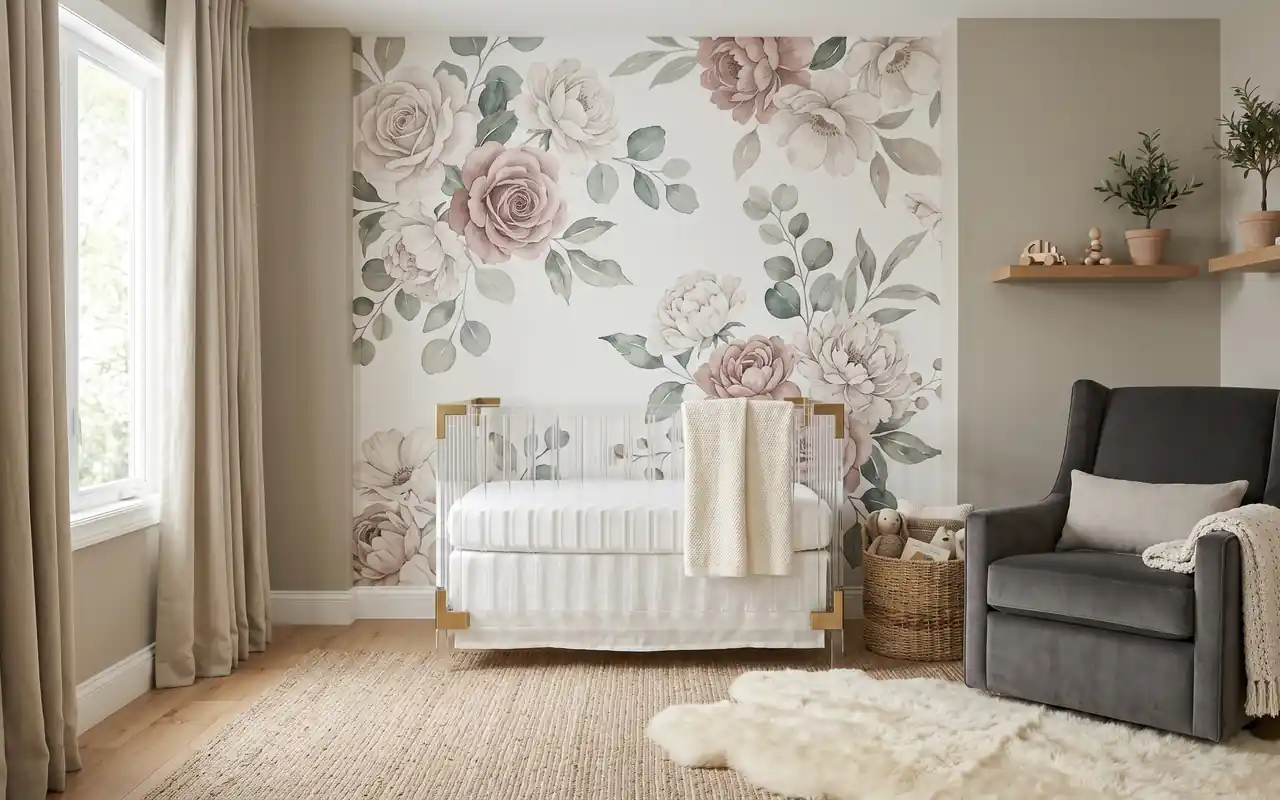
Warm greige is a perfect neutral for modern nursery room inspiration. It provides a more sophisticated backdrop than traditional pastels and works beautifully with both cool slate and warm wood accents. This color reflects natural light during the day while feeling cozy and enclosed during evening hours. Use a matte finish for the walls to avoid glare, ensuring the environment stays calm for the baby. To take the pared-back look even further, this guide to timeless minimalist nursery decor keeps the room elegant for years.
2. Acrylic Crib Designs
Acrylic cribs offer a sleek, transparent look that makes a room feel more open. Because the slats are clear, the crib doesn’t block sightlines, which is vital for making a small nursery appear larger. This modern choice pairs well with brushed brass hardware and high-end linen bedding. It creates a futuristic yet elegant focal point that is remarkably easy to clean and maintain over time.
3. Large-Scale Floral Murals
A statement wall featuring oversized floral illustrations adds a sense of whimsy without feeling childish. Choose a mural with muted tones like dusty rose or sage green to keep the energy low. This provides a stunning backdrop for the crib. When selecting art, you can pull from spring wall art ideas to find nature-inspired themes that feel fresh and editorial rather than overly juvenile.
4. Layered Natural Fiber Rugs
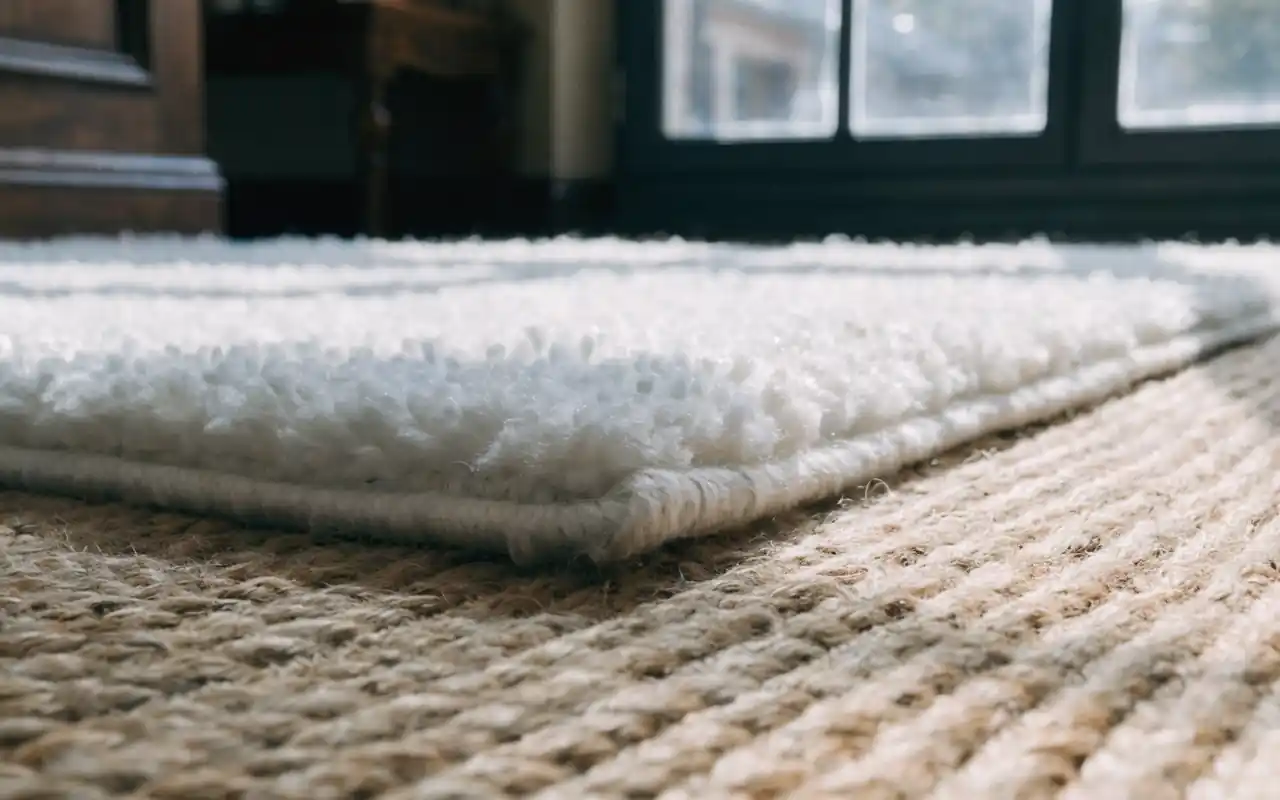
Start with a large jute rug to ground the room and layer a plush, low-pile rug on top for softness. This combination provides a textured, high-end look while ensuring there is a comfortable spot for tummy time. Natural fibers add an organic element to the nursery that balances out the sleek surfaces of modern furniture. Choose a top rug in a cream or off-white tone to keep the space bright.
DESIGNER TIP: Use a non-slip pad between layered rugs to prevent bunching, which is a major safety hazard in a nursery.
5. Moody Sage Accent Walls
If you prefer color over neutrals, a moody sage green accent wall provides a peaceful and grounding effect. This tone pairs exceptionally well with soft oak accents and cream-colored gliders. Sage is a versatile color that grows with the child, making it a sustainable choice for parents. It serves as a great bridge between a traditional nursery and a more elegant spring bedroom decor style.
6. Floor-to-Ceiling Blackout Drapes
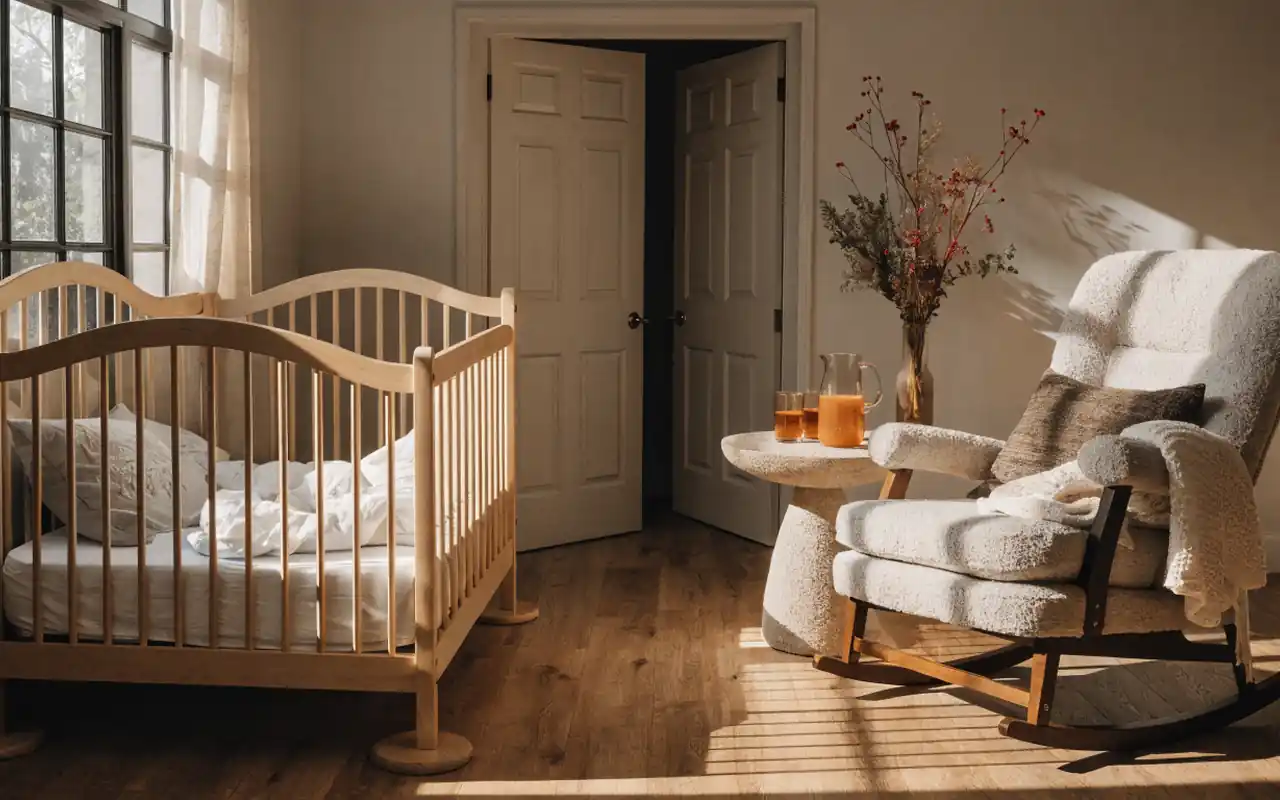
High-quality sleep is the priority for any new parent. Install heavy linen drapes with a blackout lining that hang from the ceiling to the floor. This adds height to the room and provides a luxurious, editorial feel. Choose a neutral color that matches the walls to create a seamless, wraparound look. The thick fabric also helps with sound insulation, keeping the room quiet and undisturbed.
7. Floating Corner Bookshelves
Utilize unused corners by installing slim, floating bookshelves. This turns a child’s book collection into a piece of vertical art. It’s an excellent way to save floor space, a tactic often seen in creative small apartment ideas where every inch counts. Arrange books by color for a rainbow effect or keep them monochromatic for a more understated, high-end aesthetic.
8. Vintage Dresser as a Changer
Repurposing a vintage mid-century modern dresser as a changing table adds character and history to the nursery. Add a removable changing tray on top to ensure the piece can transition into a standard dresser as the child gets older. The rich wood tones of a vintage piece provide a beautiful contrast to modern cribs and soft textiles, making the room feel curated.
9. Woven Texture Accents
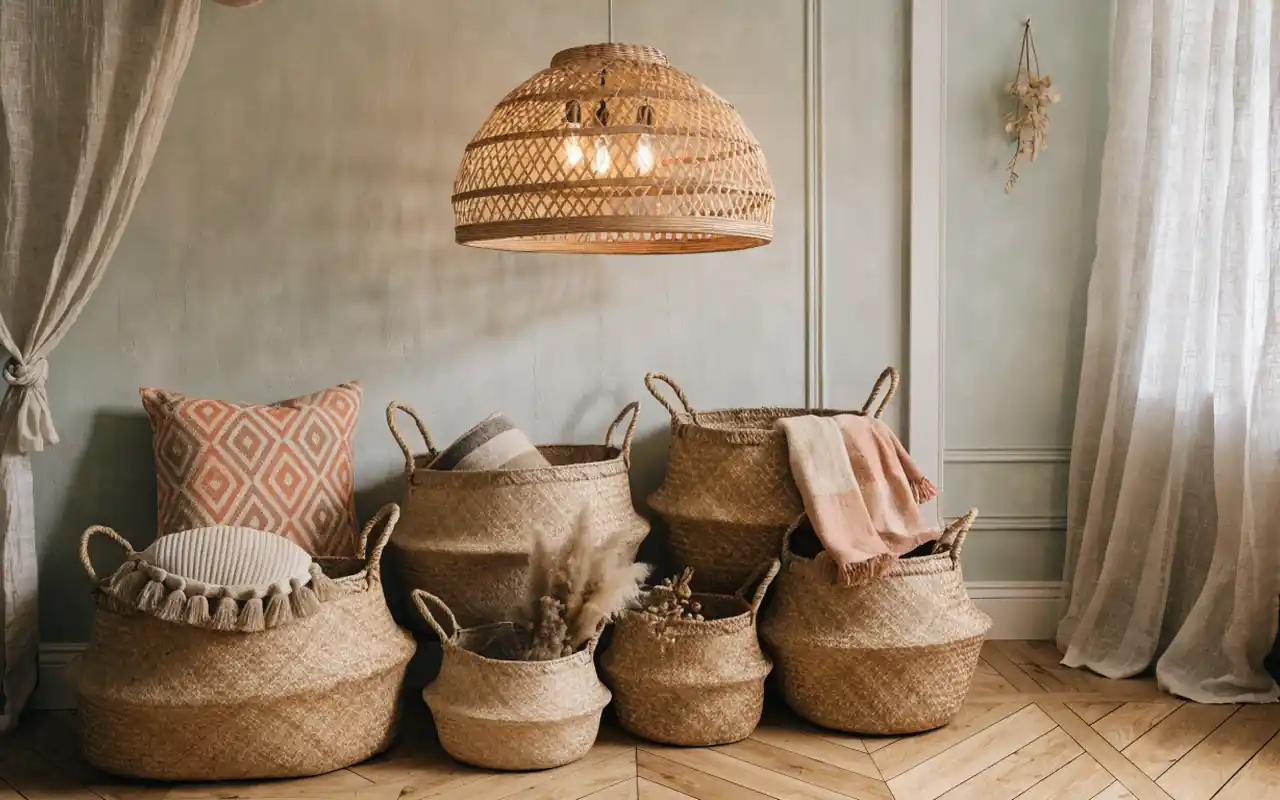
Incorporate woven textures through baskets, wall hangings, and light fixtures. Rattan or seagrass elements provide a warm, organic feel that is essential for a cozy nursery. For a unique touch, explore wall hanging craft ideas to find handmade pieces that add tactile interest to the walls. These organic materials prevent the room from feeling too sterile or manufactured.
DESIGNER TIP: Install a dimmer switch for your main overhead light to allow for soft illumination during middle-of-the-night feedings.
10. Statement Pendant Lighting
Replace a standard flush-mount light with an oversized woven pendant or a modern brass chandelier. A statement light fixture anchors the room and serves as a major design element. Choose a warm-toned bulb to create a soft, inviting glow. This adds a level of sophistication that elevates the entire nursery room inspiration, making the space feel like a professionally designed suite.
11. Montessori Floor Beds
For an older nursery or toddler transition, a Montessori floor bed encourages independence and safety. Use a low-profile frame in a natural wood finish. This layout allows the child to move freely and explore their environment in a controlled way. Surround the bed with soft textures and low-pile rugs to ensure the floor-level space feels warm and inviting.
12. Celestial Ceiling Murals
Paint or apply a wallpaper mural of stars or a subtle moon phase to the ceiling. This gives the baby something beautiful to look at while lying in the crib. A dark navy ceiling with gold accents can create a “jewelry box” effect that feels incredibly high-end and modern. It adds a magical element to the room without cluttering the walls.
13. Velvet Performance Gliders
Choose a nursery glider upholstered in performance velvet. This fabric is incredibly soft but durable enough to withstand spills and frequent cleaning. A deep charcoal or forest green glider adds a pop of sophisticated color to a neutral room. The rich texture of velvet provides a luxurious spot for feeding and bonding with your little one.
14. Mirrored Wall Details
A large, round mirror hung over the changing table reflects light and makes a small nursery feel significantly larger. Mirrors are a classic tool for a small bedroom refresh because they add depth and brightness. Choose a frame in brushed brass or matte black to coordinate with your other room hardware for a cohesive, polished look.
DESIGNER TIP: Ensure all mirrors and heavy wall decor are securely anchored to the studs to prevent accidents as the baby becomes mobile.
15. Minimalist Mobile Arts
Swap the traditional plastic mobile for a handcrafted wooden or felt version. Minimalist mobiles with simple geometric shapes or natural elements like clouds and birds provide gentle visual stimulation without being overwhelming. This small detail reinforces the editorial, high-end feel of the room. Position it high enough to be out of reach but close enough for the baby to enjoy.
16. Built-In Closet Organization
Transform a standard closet into a high-functioning storage zone with built-in shelves and double hanging rods. This keeps baby clothes, blankets, and diapers organized and out of sight. A clean, organized closet allows the rest of the room to remain a peaceful, clutter-free sanctuary. Use matching woven bins to categorize smaller items like socks and accessories.
17. Geometric Accent Paint
Use painter’s tape to create a simple geometric mountain range or a large circle behind the crib. This budget-friendly idea creates a custom look without the commitment of wallpaper. Use two shades of the same color for a subtle, sophisticated effect. This draws the eye to the main focal point of the room while adding a modern architectural detail.
18. Canopy Reading Nooks
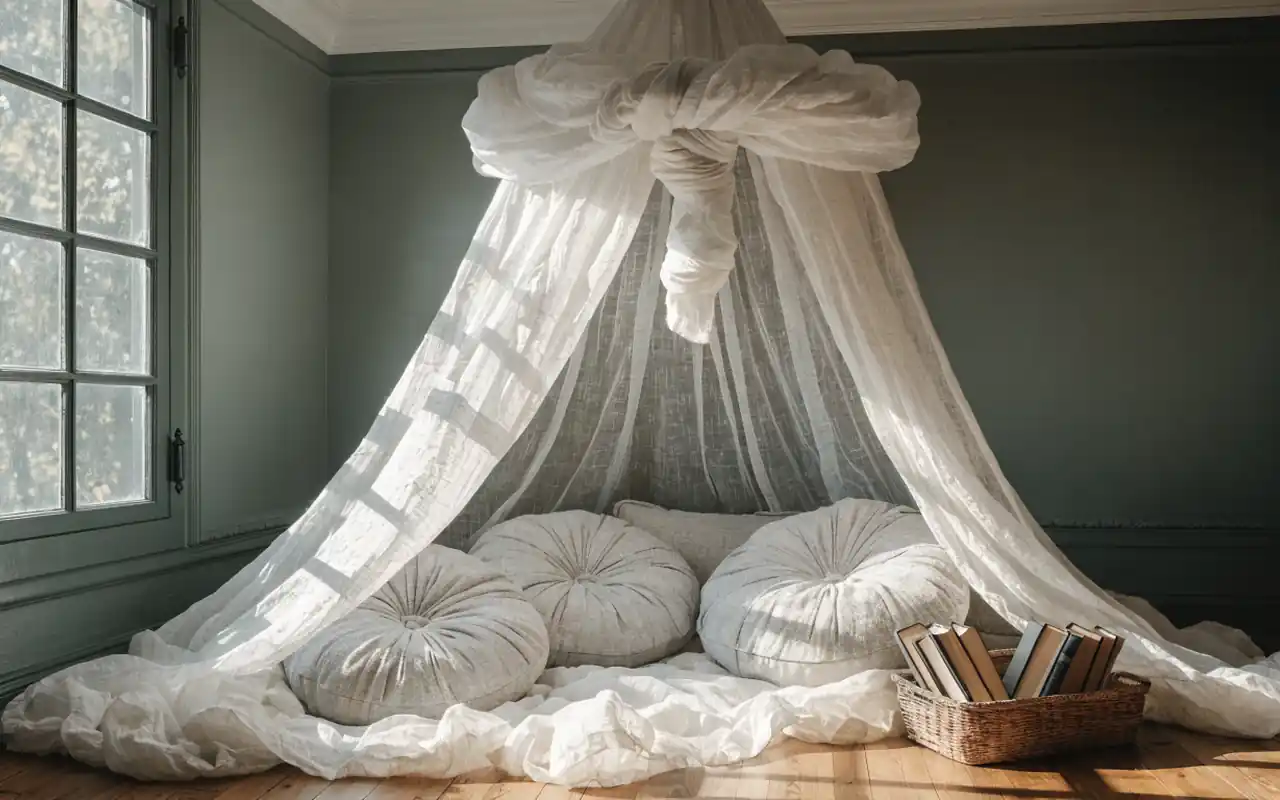
A sheer linen canopy draped in a corner creates a magical space for story time. Place a few floor cushions and a small basket of books underneath to define the zone. This creates a “room within a room” that feels private and cozy. It’s an easy way to add vertical interest and soft texture to a nursery layout.
19. Brass Hardware Upgrades
Elevate standard nursery furniture by swapping out the handles and knobs for brushed brass hardware. This simple change can make a budget-friendly dresser look like a high-end designer piece. Match the hardware to your light fixtures and curtain rods to create a coordinated, professional-grade interior. It’s one of the fastest ways to add a touch of luxury.
20. Textured Wallpaper Panels
If a full room of wallpaper feels too much, apply a textured grasscloth or a subtle pattern to just the upper half of the walls. Separate it from the bottom half with a simple chair rail. This adds traditional charm and architectural depth to the nursery. Textured surfaces absorb sound, making the room feel quieter and more serene for sleep.
21. Acrylic Wall Shelves
Clear acrylic “picture ledge” shelves allow the books to be the star of the show. These shelves disappear against the wall, creating a clean and modern look. They are perfect for displaying thin board books or small framed art pieces. This minimalist approach prevents the walls from looking too heavy, especially in smaller nursery footprints.
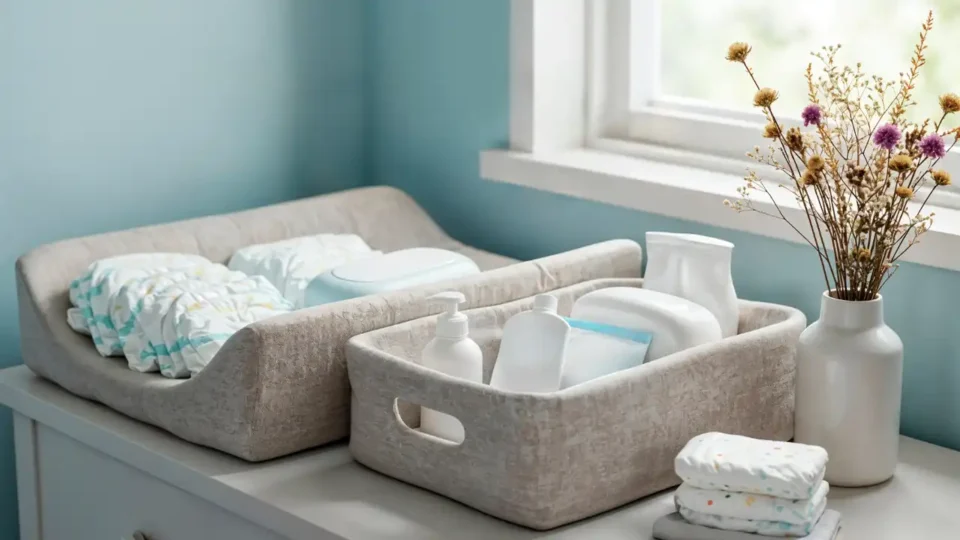
22. Upholstered Changing Pads
Swap the standard plastic changing pad for one with a high-quality quilted or linen cover. This small detail adds comfort for the baby and a layer of luxury to the changing station. Choose a fabric that matches your drapes or glider to maintain the room’s color story. It turns a functional necessity into a stylish accessory.
23. Indoor Greenery
A safe, non-toxic plant like a Snake Plant or a Fiddle Leaf Fig adds life and fresh air to the nursery. Place it on a high shelf or in a heavy planter in the corner. Greenery adds an organic texture that softens the room’s edges. It provides a natural pop of color that pairs beautifully with neutral and earthy tones.
24. Personalized Name Signs
A custom-made wood or wire name sign over the crib adds a personal touch. Choose a font that is modern and clean to keep the look editorial. This serves as a beautiful focal point for photos and makes the space feel uniquely theirs. Use a finish that coordinates with your wood accents, like soft oak or walnut.
25. Contrast Trim and Doors
Paint the baseboards, window trim, and doors a contrasting color like a soft mushroom or a deep slate. This high-end design trick adds character and frames the room beautifully. It breaks up the monotony of white walls and makes the architectural features of the room stand out.
KEY TAKEAWAY: Combining custom organizational tools with high-end textures and personalized details creates a nursery that is both highly functional and visually stunning.
Choosing the Right Color Palette for a Nursery
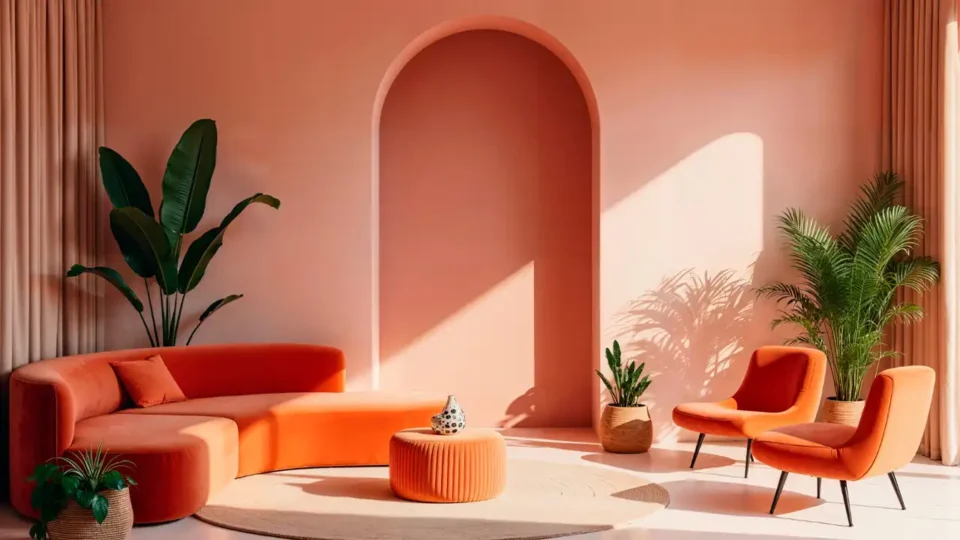
The color palette is the most influential factor in your nursery room inspiration. While traditional blue and pink are always options, modern designs lean toward gender-neutral earth tones that offer longevity. Shades like terracotta, sage, and sand create a grounded environment that is easy to update with accessories. These colors promote a sense of calm and are less likely to overstimulate a newborn during the first few months.
When selecting your palette, consider the “60-30-10” rule: 60% of the room in a dominant neutral, 30% in a secondary color (like your accent wall or drapes), and 10% in an accent tone (like your hardware or pillows). This balance ensures the room feels designed and intentional. Always test paint samples in different lighting throughout the day, as a soft grey can quickly turn purple or blue depending on the window’s orientation.
KEY TAKEAWAY: Stick to a balanced earth-tone palette to create a calming, long-lasting environment that is easy to refresh as your child grows.
Common Nursery Design Mistakes to Avoid
- MISTAKE: Neglecting Blackout Options → FIX: Use high-quality linen blackout drapes to ensure a dark sleep environment.
- MISTAKE: Over-the-Top Themes → FIX: Choose a sophisticated color palette and add “theme” elements through easily swappable art.
- MISTAKE: Cluttered Floor Space → FIX: Use vertical storage and woven baskets to keep toys and gear tucked away.
- MISTAKE: Harsh Lighting → FIX: Install dimmable lamps and avoid bright overhead bulbs during evening routines.
KEY TAKEAWAY: Avoiding heavy themes and harsh lighting ensures the nursery remains a flexible and peaceful space for both baby and parent.
Budget & Cost
Designing a stylish nursery doesn’t require a limitless budget. By prioritizing high-impact items and using smart DIY upgrades, you can achieve an editorial look for less.
| Project | Estimated Cost | Impact Level |
|---|---|---|
| Crib & Mattress | $300–$800 | High |
| Designer Glider | $400–$1,000 | High |
| Paint & Supplies | $50–$150 | High |
| Custom Hardware | $40–$100 | Medium |
KEY TAKEAWAY: Focus your spending on the crib and glider, as these are the most functional and visually dominant pieces in the room.
Decisions & Layout Challenges
One of the biggest challenges in nursery room inspiration is arranging the furniture in a way that feels open but efficient. If you are dealing with a tight footprint, you may need to decide between a large glider or a full-size dresser. In these cases, many parents opt for a smaller rocker to ensure there is enough room for the crib. This is a common decision-making process for those seeking high-end aesthetic solutions in limited spaces.
Layout also involves safety. Avoid placing the crib directly under a window or near heavy furniture that could be climbed. If the room is unusually shaped, consider custom built-in shelving to make the most of awkward niches. These layout decisions set the foundation for a room that is safe, easy to navigate, and visually pleasing.
KEY TAKEAWAY: Prioritize safety and flow by keeping the crib away from windows and choosing furniture that fits the room’s scale.
Frequently Asked Questions
Conclusion
Transforming your nursery room inspiration into a reality is an exciting step in preparing for a new arrival. By focusing on a serene color palette, investing in versatile furniture, and adding high-end textures, you create a space that is as beautiful as it is functional. A well-designed nursery provides the perfect backdrop for those precious early moments, ensuring you have everything you need within reach in a stylish environment.
Designing a thoughtful utility or living space is a key part of improving your home. When each room is crafted with care and intention, the entire house feels more cohesive and peaceful. Start with a solid layout plan and a neutral base, then layer in the personality and charm that will make this room a favorite for years to come.