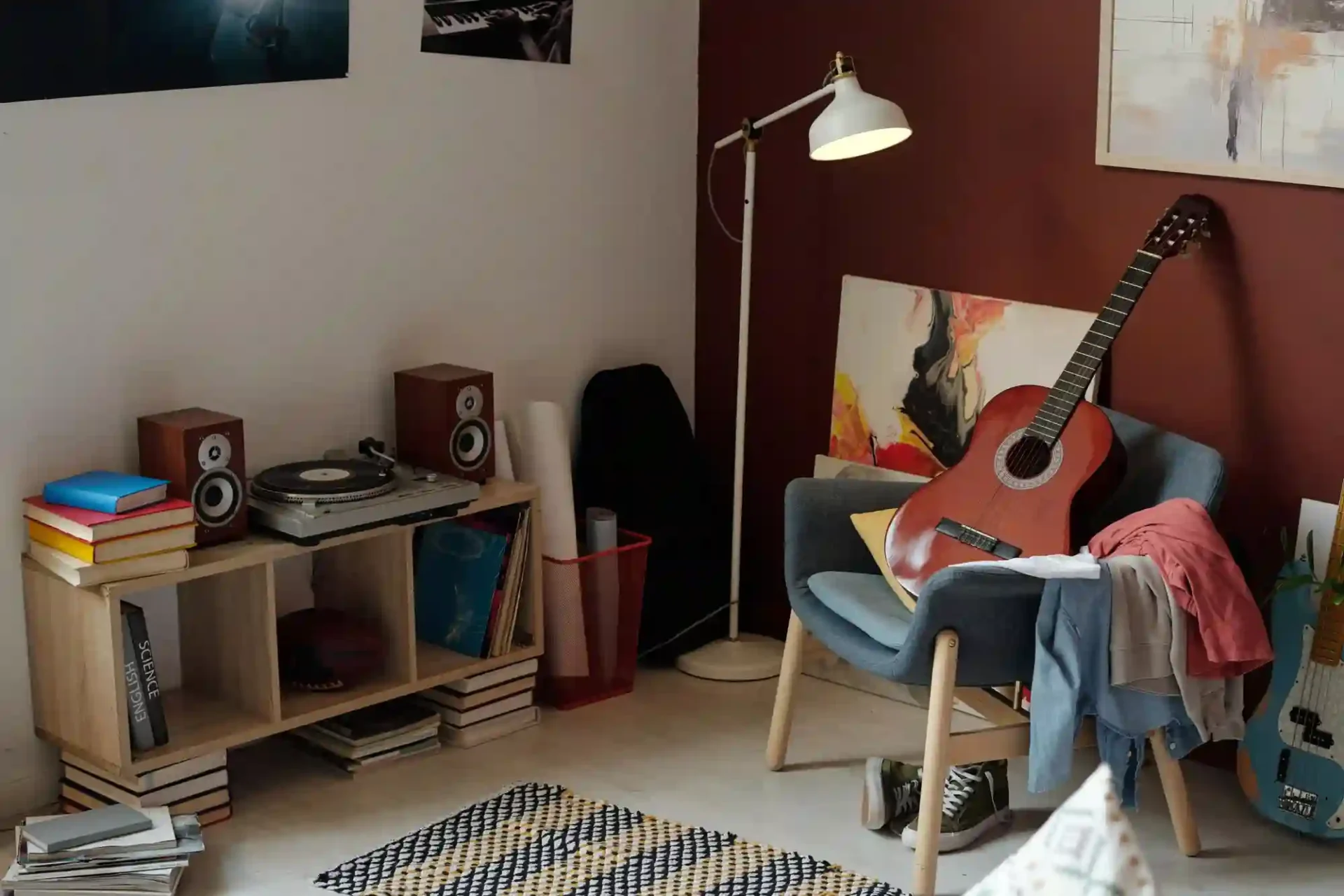
Why Do Most Home Music Man Caves Look Great and Sound Terrible?
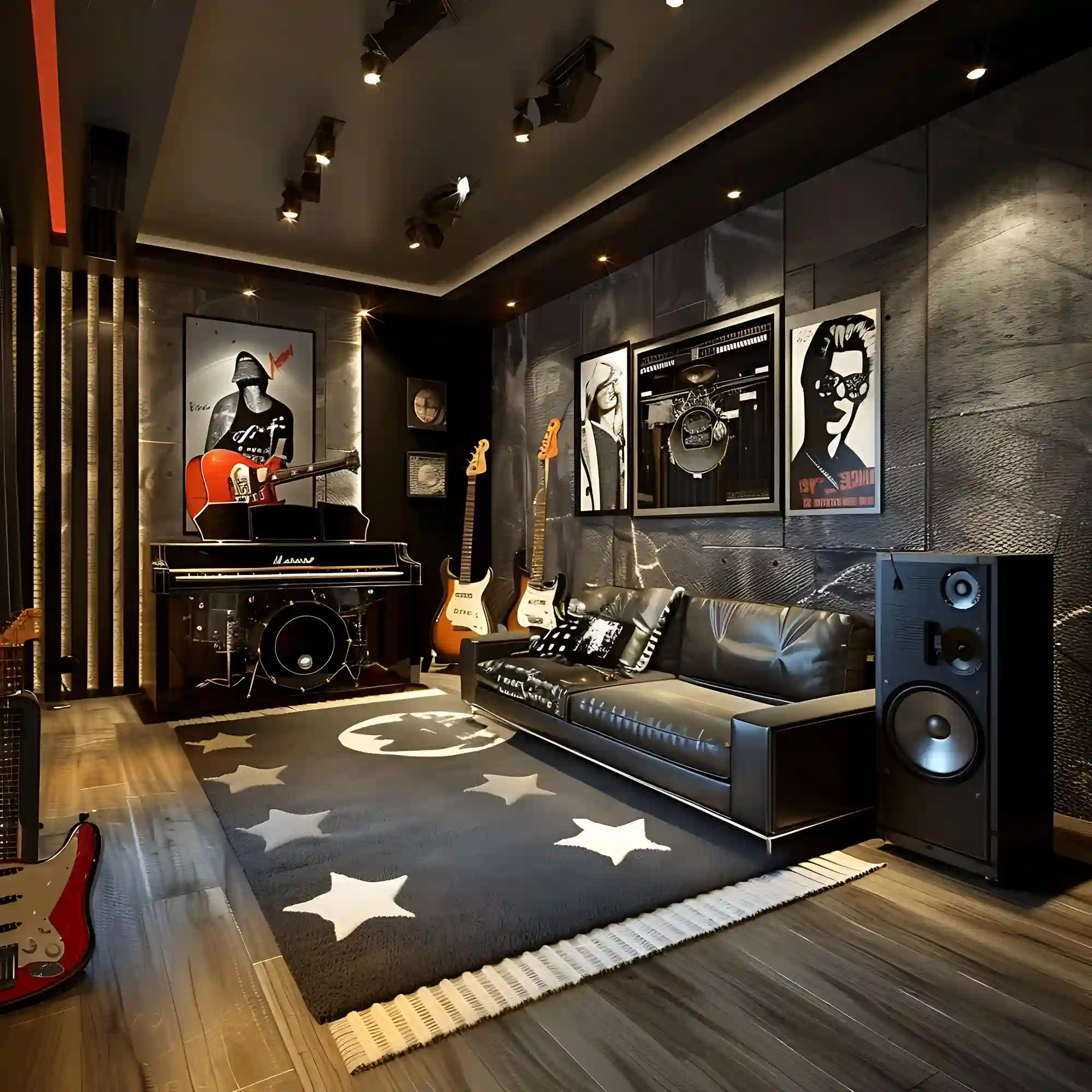
Walk into most home music setups and the first thing you notice is not the gear. It is the echo bouncing off bare drywall like a locker room.
If you have ever plugged in a new microphone and wondered why the room still sounds thin, you are not alone.
Music man cave ideas work best when acoustics come before decor. Treating room corners, first-reflection points, and the entry door fixes most of the harshness in a small home studio, and it costs less than most people expect. Start with sound control, then layer in gear display, lighting, and comfort on top of it.
This guide covers 12 music man cave ideas built around that order. See the full man cave theme guide for other setups.
Editorial field note: a home studio with bare walls and one overhead bulb almost always feels harsh, even with good gear. Two corner bass traps and one warm lamp soften it within an afternoon.
For more room-by-room planning, visit 101 Home Decor. Bookmark this guide for quick reference.
Music Man Cave Setup Checklist
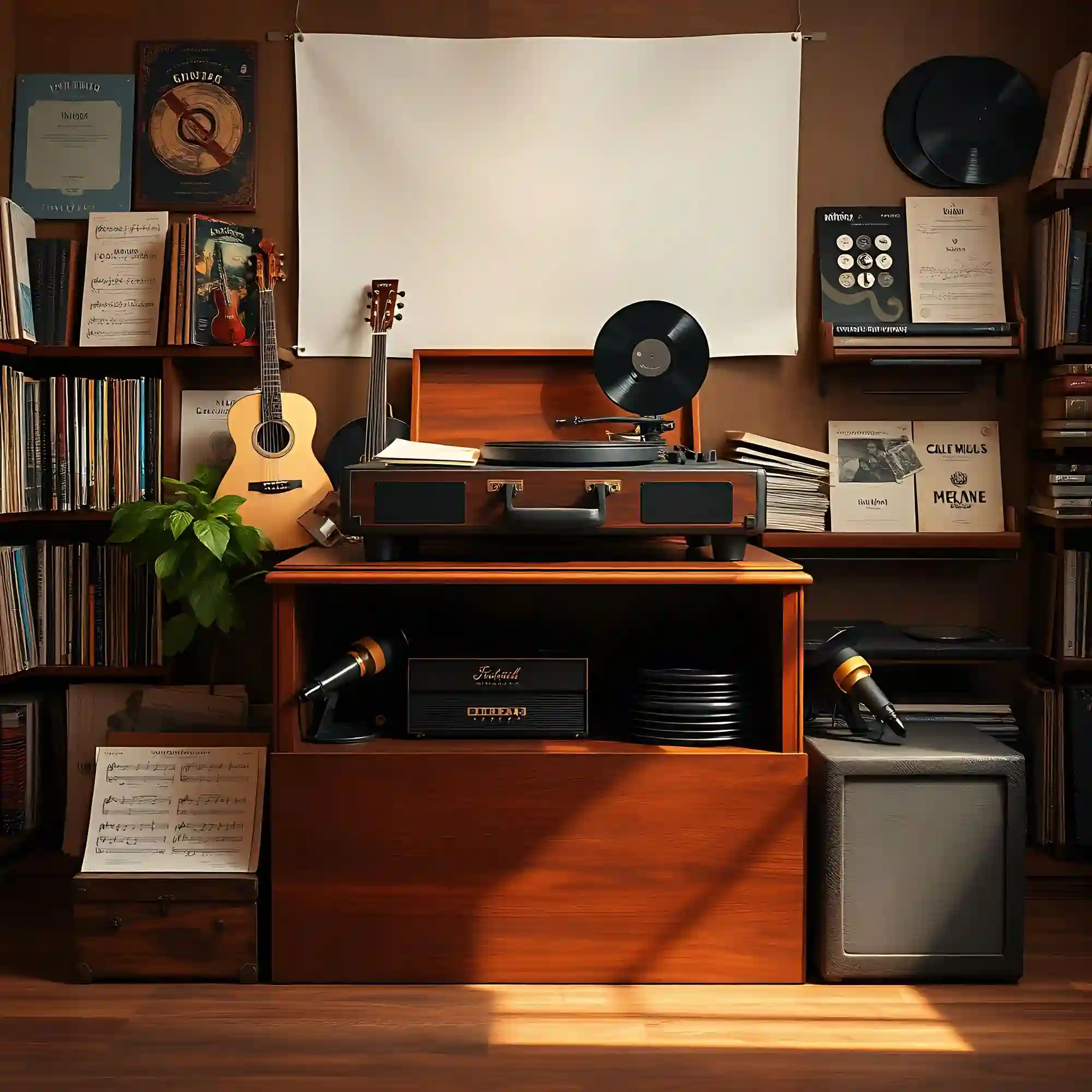
Work through this list first. It pairs well with the broader planning advice in 25 man cave ideas for the ultimate personal sanctuary.
- Find both first-reflection points with the mirror trick before buying panels.
- Add two corner bass traps in the room’s most-used corner pair.
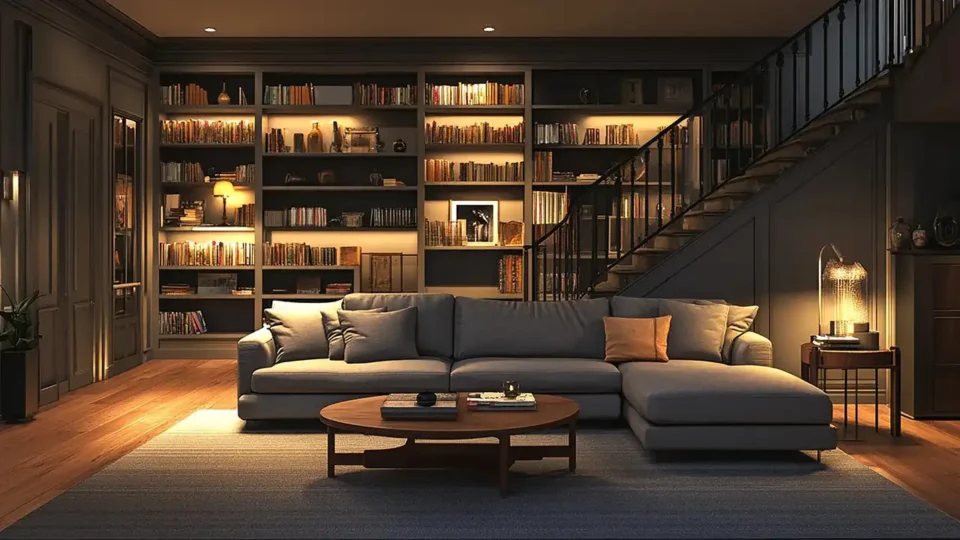
- Lay an 8-by-10-foot rug and hang heavy 280-to-300gsm curtains over bare walls.
- Fit a solid-core door with a sweep and weatherstripping before treating any walls.
- Set studio monitors on isolation pads at ear height, angled toward the listening chair.
- Keep amps and pedalboards on wall-mounted display, not stacked on the floor.
- Layer warm 2700K ambient light with one brighter task lamp near the desk.
KEY TAKEAWAY: A music man cave sounds better the moment corners, reflections, and the door get treated, before any new gear arrives.
12 Music Man Cave Ideas Built Around Better Sound
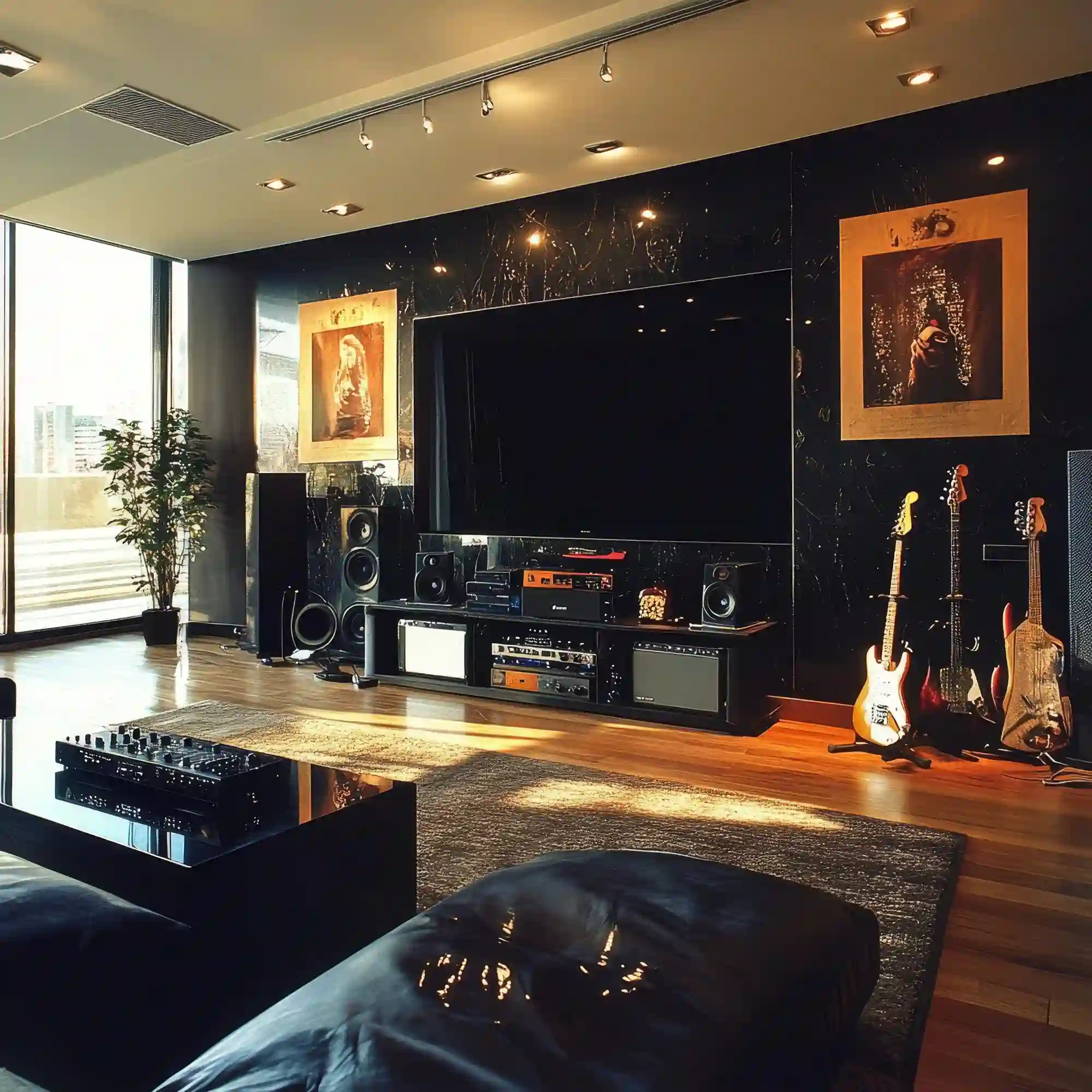
These 12 music man cave ideas start with the room’s biggest sound problems, then move into gear display and comfort. The first four tackle corners, reflections, and airborne noise. The next four turn instruments and monitors into decor. The final four bring in seating, lighting, and finishing touches for long sessions. Each idea names a specific material, size, or placement rule you can act on this weekend.
1. Corner Bass Trap Lounge Corner
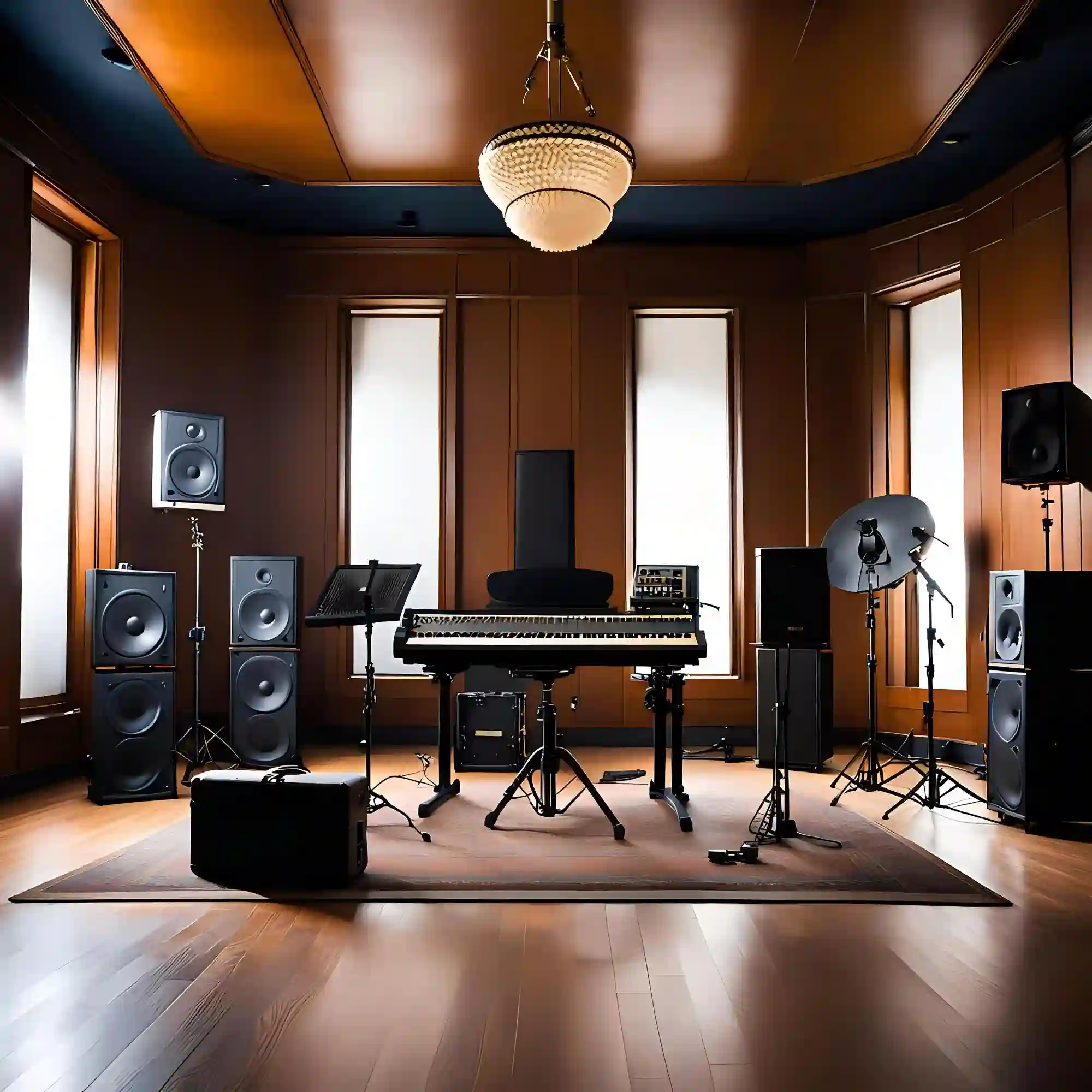
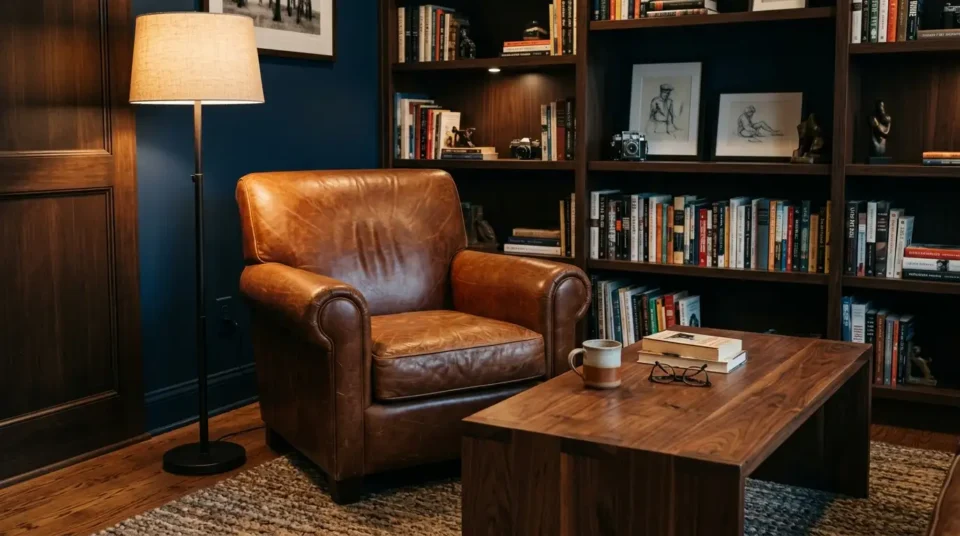
Bass frequencies gather in room corners because long sound waves need distance to dissipate, and a small studio rarely has enough of it. Two floor-to-ceiling corner bass traps, roughly 24 inches wide and wrapped in charcoal fabric, solve most of that buildup fast. Pair them with a cognac leather armchair and a brass floor lamp so the traps look like furniture, not foam. Source Note: GIK Acoustics explains that bass energy concentrates where walls meet, so corner traps work better than panels spread across a flat wall. Start here first; it is the single highest-impact fix in a small room.
2. First-Reflection Acoustic Panel Gallery Wall
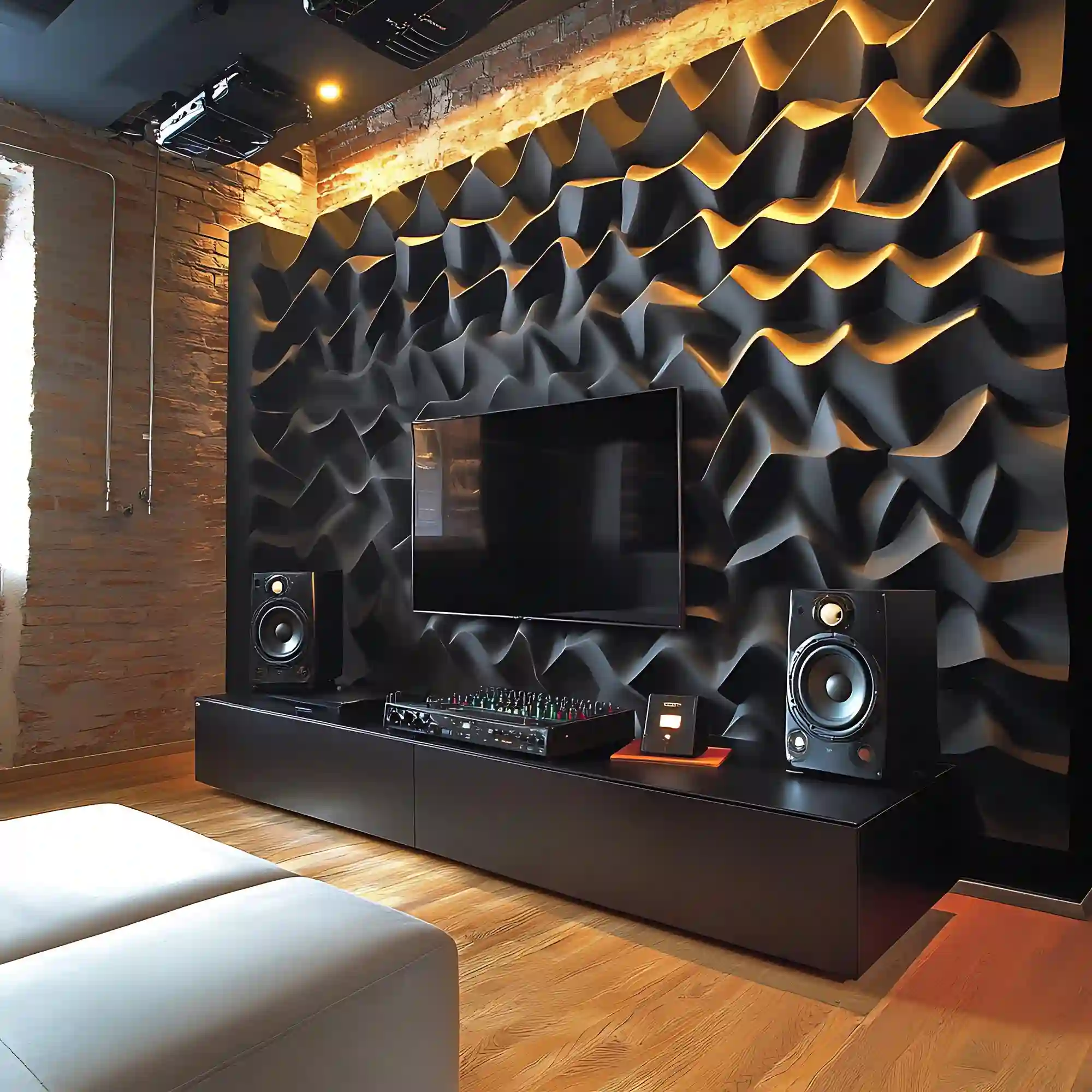
Sound bounces off the wall beside each speaker before it reaches your ears, and that early reflection blurs clarity more than most people expect. Sit in the listening chair and slide a mirror along the side wall until you spot the speaker — that mark is the first-reflection point. Mount a 2-inch acoustic panel there, then frame two more in walnut trim and hang them at ear height like a gallery wall. Absorption panels run $35 to $55 each for a 24-by-24-inch size, so a full setup rarely tops $200.
3. Layered Rug and Curtain Sound Softening
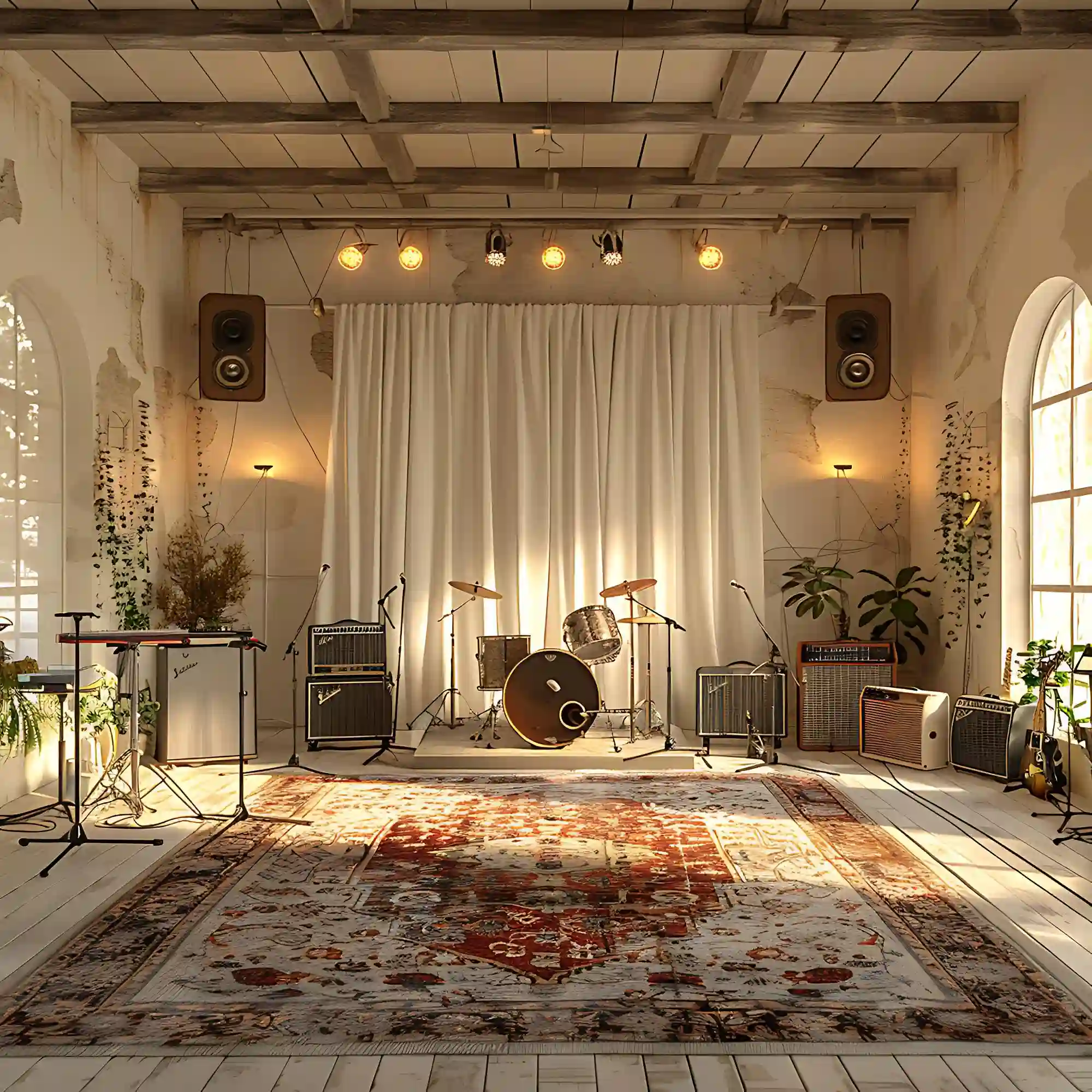
A bare floor and bare windows bounce sound around a room and make every note feel harsh. An 8-by-10-foot wool or jute rug over hardwood absorbs footstep noise and softens the low end underfoot. Floor-to-ceiling curtains in a heavy 280-to-300gsm fabric catch mid and high frequencies bouncing off glass and drywall. Choose a warm terracotta rug, then match curtains in cream linen or charcoal velvet. This combination costs far less than wall panels and still cuts echo fast.
4. Solid-Core Door and Vestibule Entry
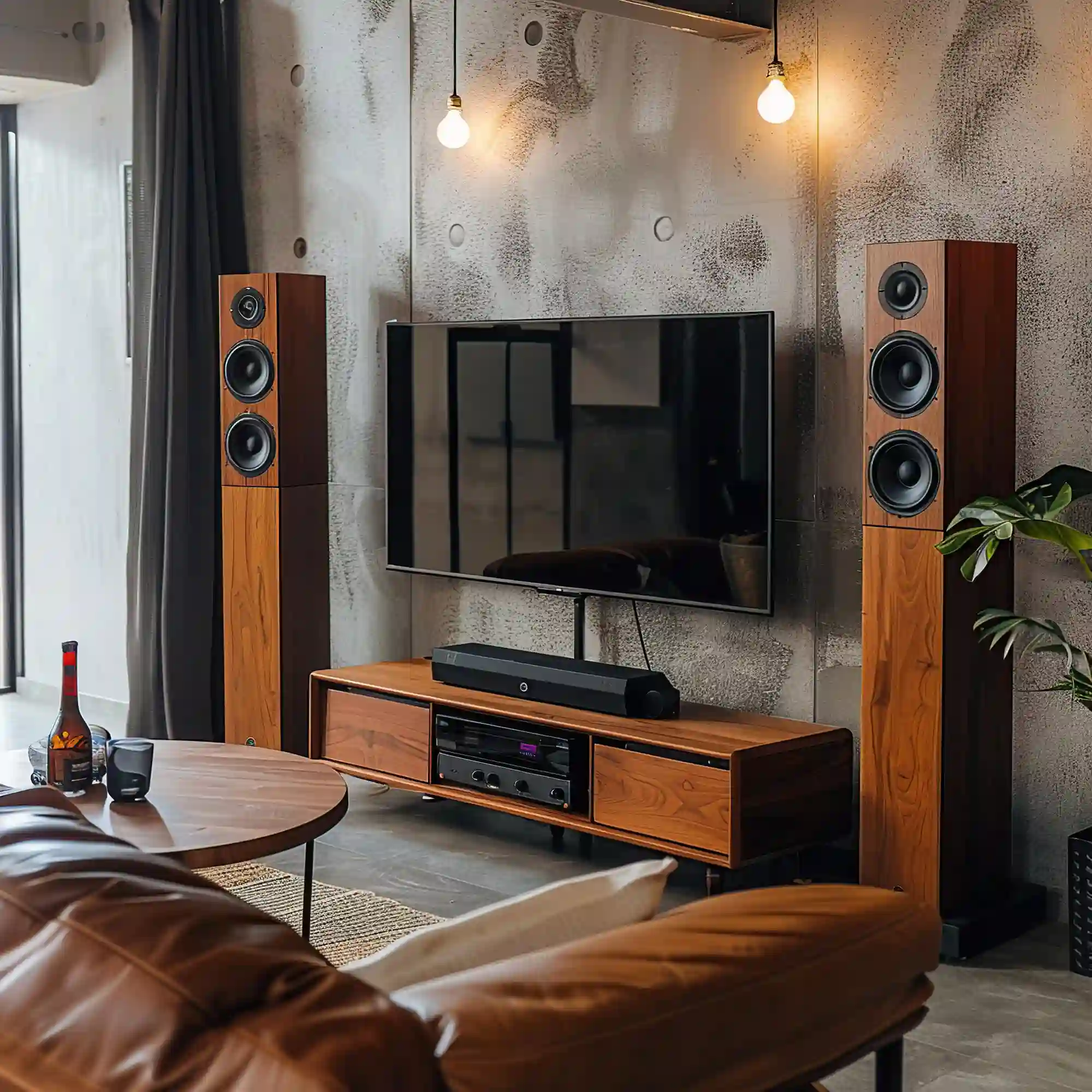
A hollow-core door with a gap underneath leaks almost as much sound as leaving it open, since sound behaves like water and escapes through the smallest gap. Swap it for a solid-core door, add a door sweep, and seal the frame with weatherstripping. Style the small entry as a mini vestibule — a narrow console table, a woven basket for cables, and one wall hook for headphones. Treating the door first is one of the highest-return fixes in any studio.
5. Floating Isolation Platform for Studio Monitors
Studio monitors resting directly on a desk transfer vibration into the wood, which muddies bass response and makes mixing decisions harder. Set each monitor on a foam isolation pad or a cone-style stand, angled toward the listening chair at ear height. A floating shelf below keeps cables tidy and doubles as a ledge for a small mixer. Isolation pads cost $20 to $40 a pair, one of the cheapest upgrades that changes how a mix translates.
6. Vertical Guitar Gallery Wall
A guitar left in its case rarely gets played, but a wall-mounted guitar hanger turns it into the room’s focal art. Space matte-black hangers 24 inches apart on a charcoal or deep-navy wall, and add a slim LED strip behind the top row for a backlit effect. Mix finishes — sunburst acoustic, black electric, natural-wood bass — so the wall looks like a curated collection, not a music store display. This works well as a man cave music room ideas centerpiece; guests notice it before the desk.
7. Vinyl and Turntable Listening Corner
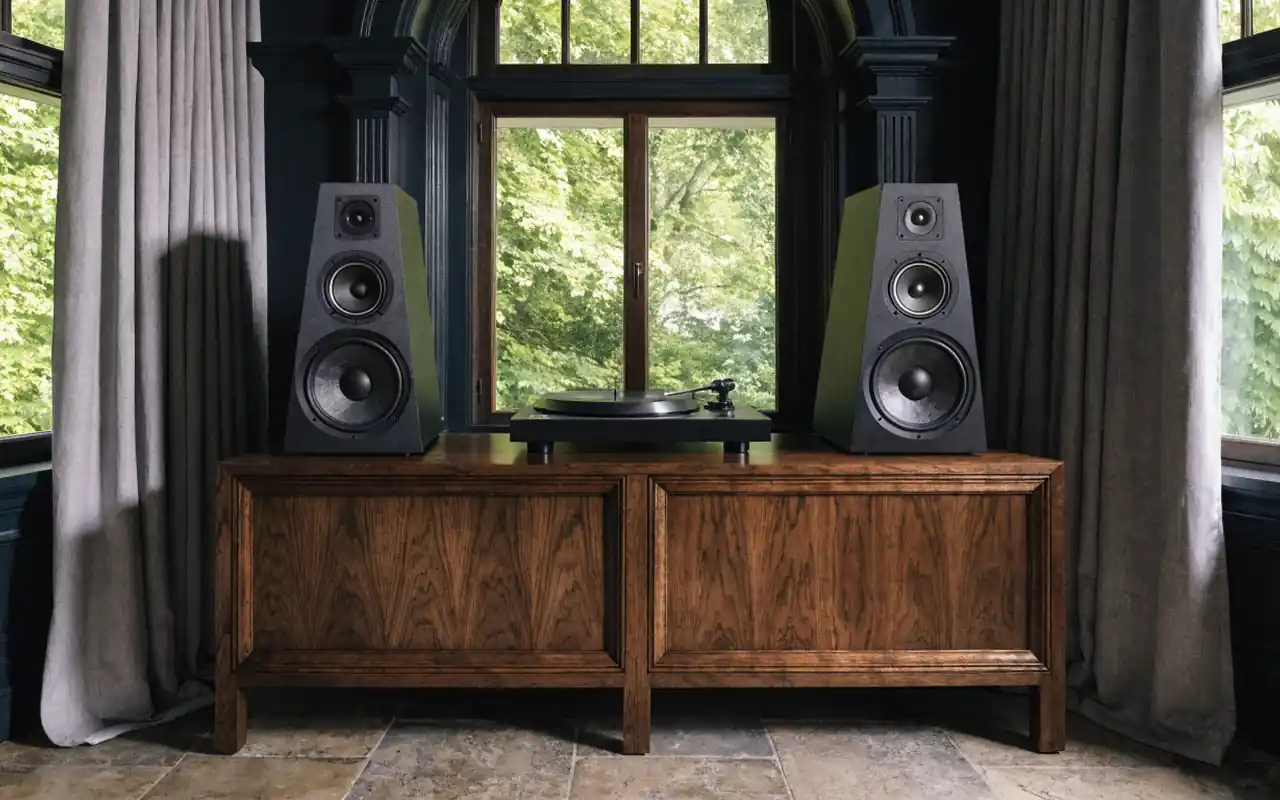
A dedicated listening corner gives vinyl a reason to stay out of storage. Place the turntable on a low walnut console, add two facing lounge chairs, and store records upright in closed cubes to keep sunlight off the sleeves. Warm amber lighting and a wool-blend rug round out a mid-century palette distinct from the desk-and-monitor side. Keep the turntable a few feet from the speakers; that distance reduces the low rumble a needle can pick up from nearby bass.
8. Modular Mixing Desk Command Center
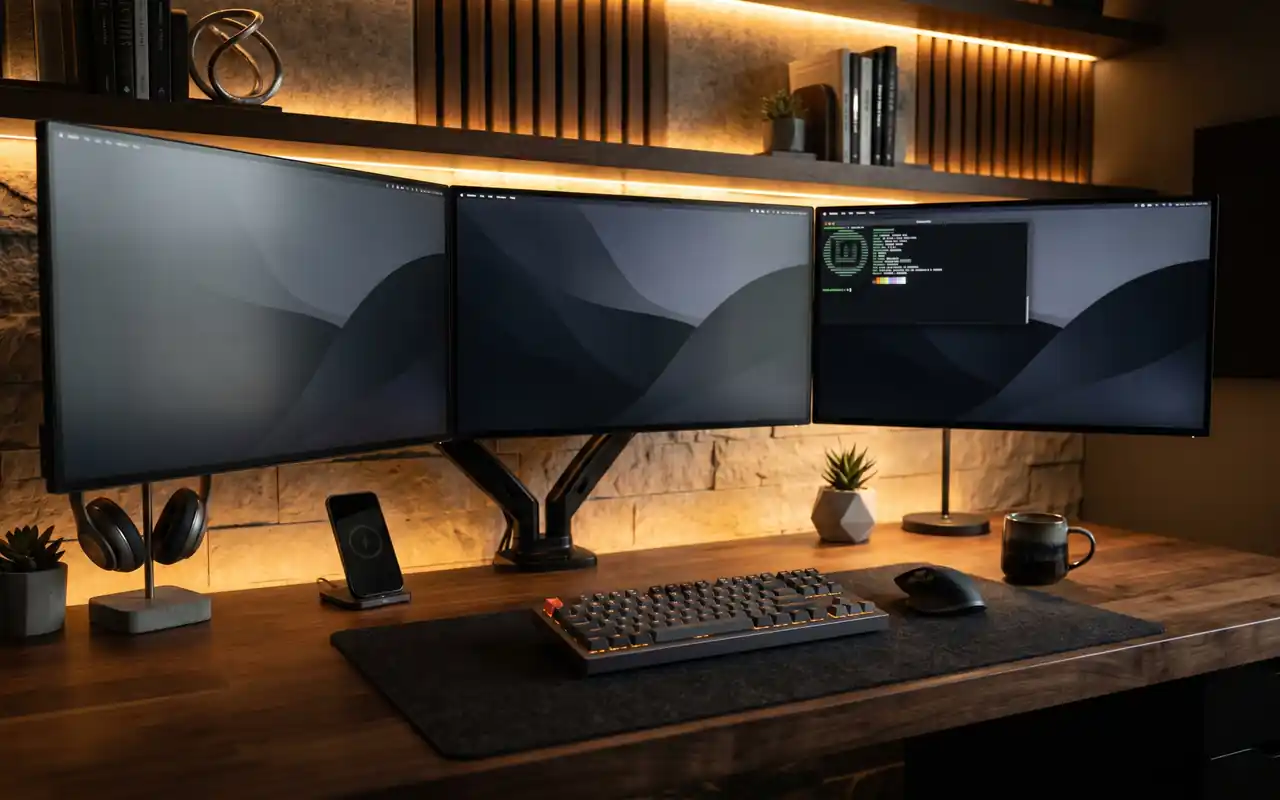
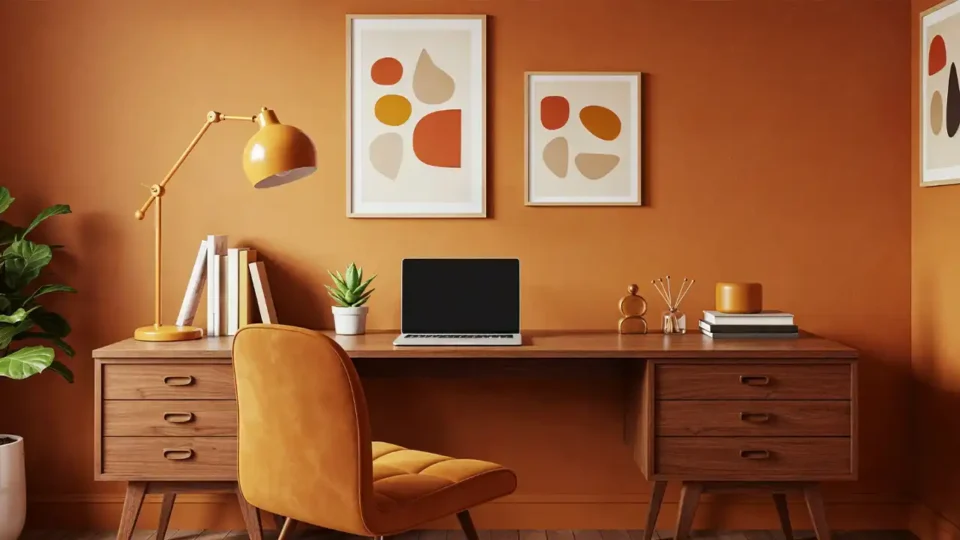
A slim L-shaped desk gives a mixing setup room to grow without swallowing the floor. Pick a 60-to-72-inch-wide surface, an adjustable studio chair, and a monitor arm that frees up space for a controller. Route cables through a closed channel underneath so the desk stays clean during long sessions. Just as a dedicated golf simulator room earns its keep through daily use, a real mixing desk earns its floor space once it becomes an actual workstation, not a spare table.
9. Closet Vocal Booth Nook
A shallow closet can double as a basic vocal booth without structural work. Line the back and side walls with acoustic foam panels or moving blankets, hang a heavy curtain across the opening instead of a door, and add a portable reflection filter behind the microphone. This will not fully isolate sound, but it reduces reflections on vocal takes. Climate Note: keep the closet ventilated; a sealed foam-lined space traps heat and humidity fast.
10. Amp and Pedalboard Display Shelf
An open floating shelf turns amps and pedalboards into part of the room’s design instead of floor clutter. Mount one shelf around 40 inches high for a head-and-cab display, and a lower shelf near 20 inches for the pedalboard, then run a warm LED strip beneath each. Keep gear off a single overloaded outlet strip; use one surge-protected strip rated for the combined wattage instead. Safety Note: never daisy-chain power strips behind gear — it is a common fire risk in home studios.
11. Warm Lounge Seating Zone for Breaks and Playback
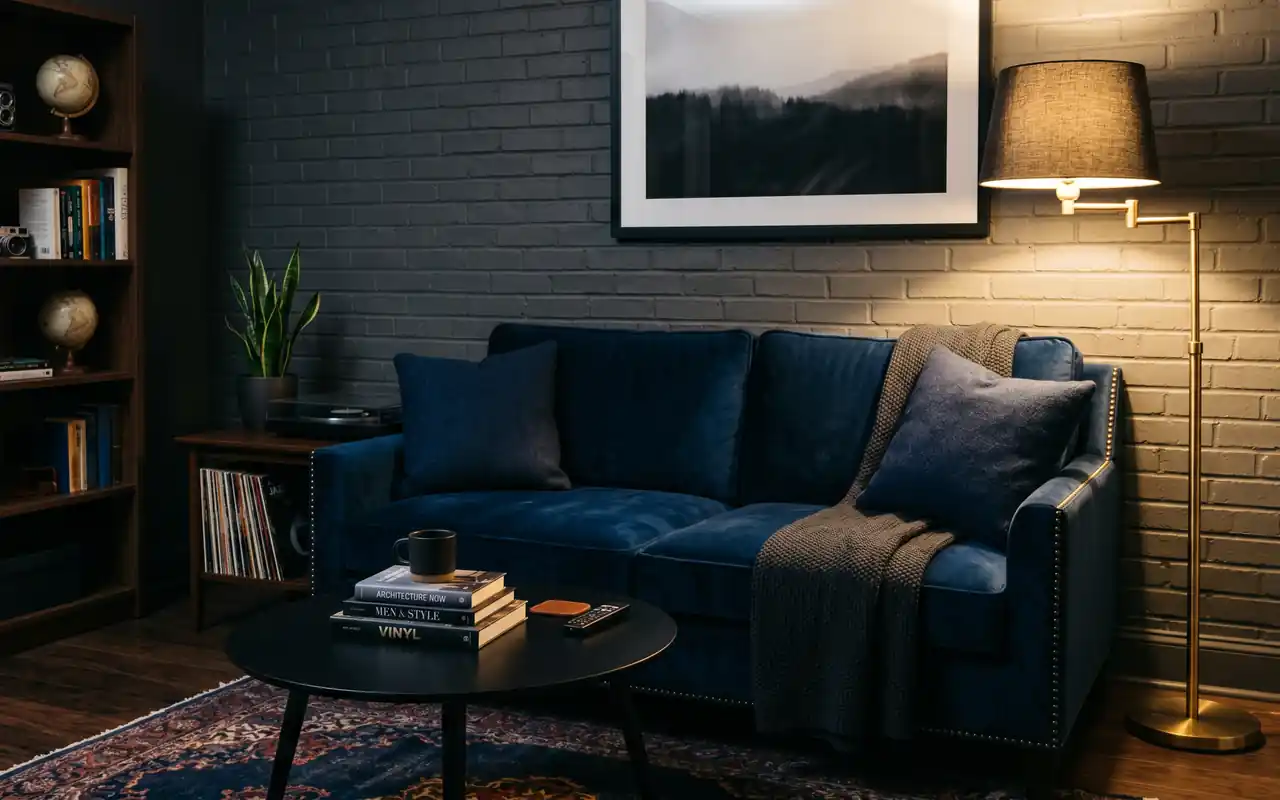
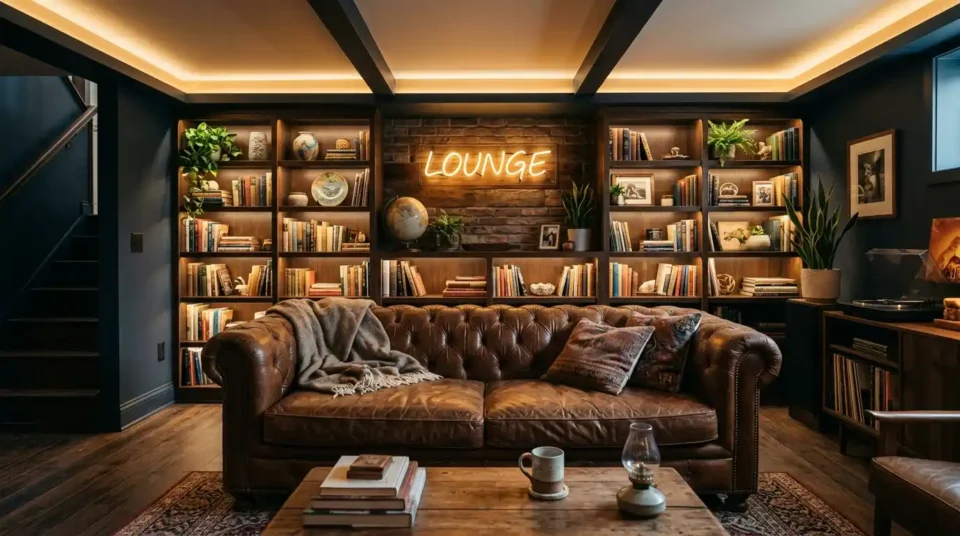
Long sessions need a spot that is not the desk chair. A cognac leather sofa or a boucle loveseat, paired with a low walnut coffee table, gives the room a place to sit back and listen to a rough mix. Layer in a floor lamp at 2700K and a knit throw for late-night sessions. Borrow from the material choices in these classy man cave ideas — leather, brass, and dark wood feel put together without competing with the gear on display.
12. Dimmable Mood Lighting and LED Accent Wall
Overhead lighting alone makes a music room feel clinical, closer to a garage than a studio. Layer three sources: recessed dimmable downlights at 2700K for ambient light, a brass swing-arm lamp for task lighting, and a color-changing LED strip behind a slatted wood accent wall for late-night mood. Keep the accent color muted, deep amber or soft violet, rather than full rainbow cycling, so the room looks calm on camera.
Why Does Acoustic Treatment Matter More Than Buying More Gear?
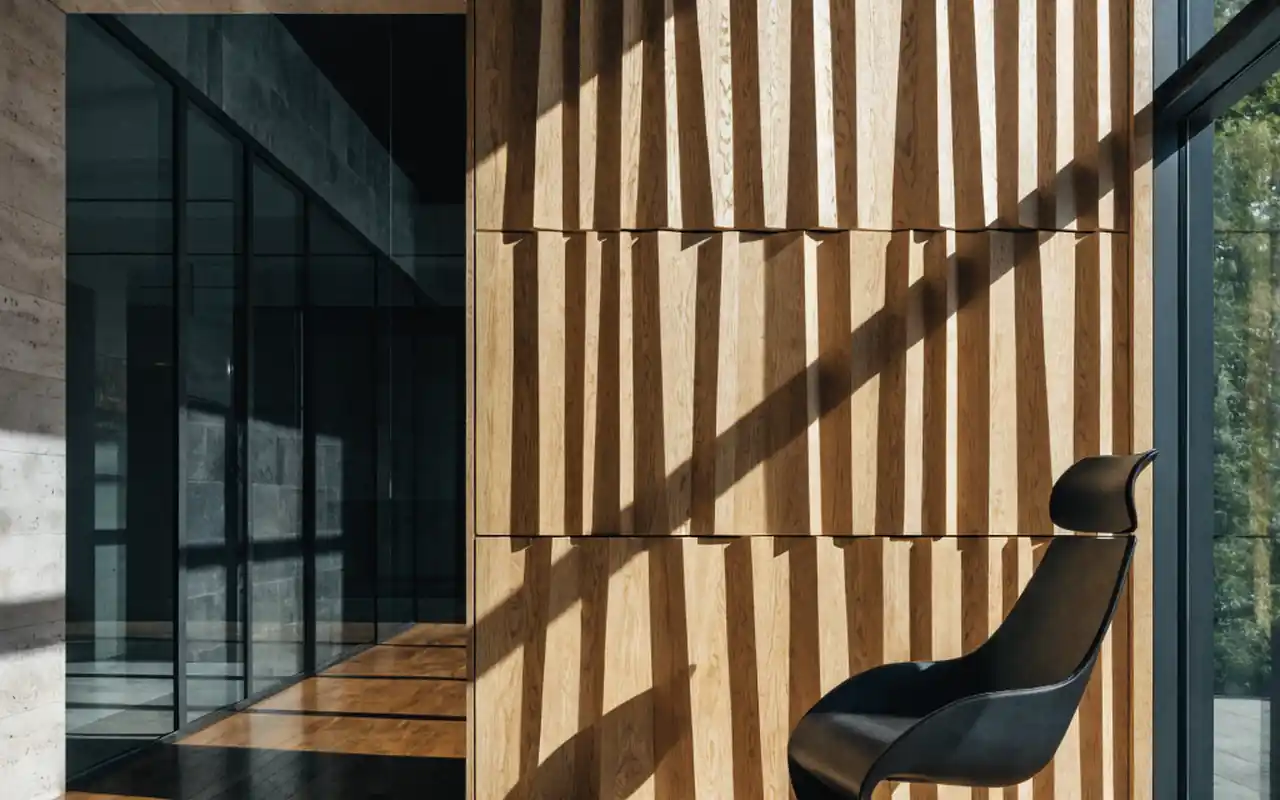
Absorption is not the same thing as soundproofing, and mixing up the two wastes money fast. Soundproofing blocks sound from moving between rooms using mass and sealed gaps. Absorption improves sound quality inside the room by soaking up echo with soft, porous material. Source Note: Acoustic Geometry notes that most home studios need absorption inside the room and isolation at its boundaries.
A $3,000 microphone in an untreated room still sounds worse than a $150 microphone in a treated one. Room reflections are baked into every recording, and no post-production fully undoes them.
What Kills the Sound in a Music Man Cave?
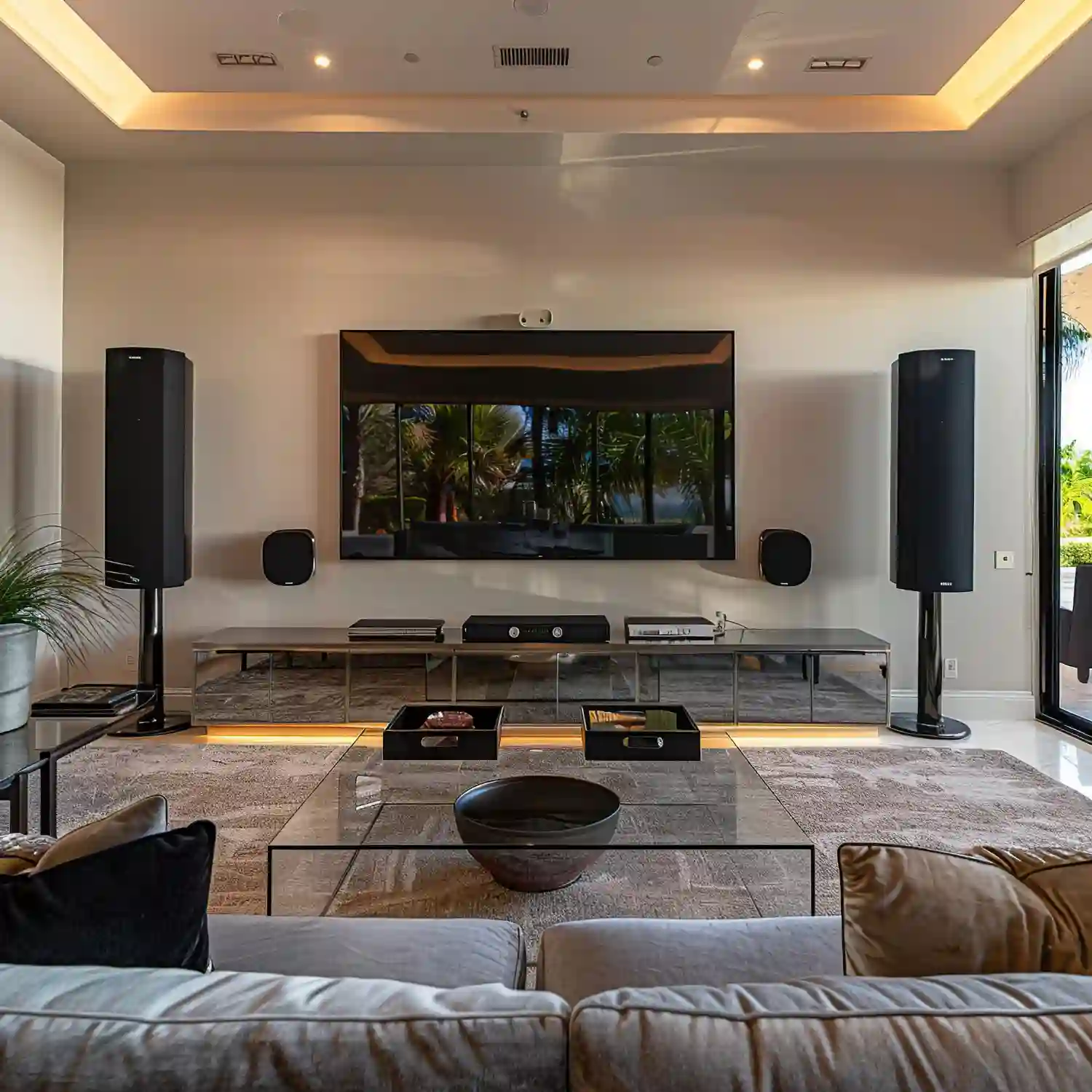
Buying expensive monitors before treating the room rarely pays off. A $1,200 pair of monitors in an untreated corner still sounds worse than a modest pair in a treated one.
Skipping the door is another common shortcut. A gap under an interior door leaks sound almost as effectively as leaving it open, wasting the rest of the treatment budget.
Covering every wall in foam panels looks dramatic but rarely helps. Over-treating a small room makes vocals sound flat; most home studios only need absorption on 20 to 30 percent of wall area.
Running extension cords across the walkway creates a trip hazard. Safety Note: keep cords along the baseboard, and never run a power extension across an open floor path.
For more room-specific troubleshooting, browse the Man Cave archive.
What Does a Music Man Cave Cost?
These planning ranges assume a finished, dry room with existing power in place. Materials and room size can shift the total either way.
| Project | Estimated Cost | Impact Level |
|---|---|---|
| Corner bass traps, rug, and curtains | $250-$600 | High |
| First-reflection panels, isolation pads, and door sweep | $400-$900 | High |
| New desk, chair, monitor arm, and lighting | $800-$2,000 | Medium |
| Full room refresh: seating, display shelving, and accent wall | $2,000-$5,000+ | Medium |
Best First Upgrade: Corner bass traps and a rug — the cheapest fixes with the biggest audible difference.
Skip for Now: A full vocal booth or premium diffusers until basic absorption is in place.
Which Room Should You Turn Into a Music Man Cave?
A below-grade basement often makes the best starting point, since concrete and soil contact block more outside noise than an above-ground room manages alone. These basement man cave ideas cover the moisture checks worth running first.
A garage works nearly as well once the door gets sealed and insulated. These garage man cave ideas cover flooring and storage choices that suit a music setup too.
A small spare bedroom can still work with wall-mounted storage instead of floor pieces, following these small man cave ideas.
A shared desk-and-music setup works too, if the mixing desk doubles as a workspace by day. These man cave office ideas cover lighting zones that ease the switch between work and recording.
The man cave ideas by room and location guide compares every location side by side, and the broader Rooms collection covers every other room type.
Frequently Asked Questions
Conclusion
Music man cave ideas succeed when the room’s sound gets solved before the decor does. Editorial field note: the same charcoal-and-walnut palette that looks good in photos also sounds quieter once corners, reflections, and the door get treated first, and the room simply feels calmer to sit in. Start with one corner bass trap pair this week, then visit 101 Home Decor for more room-by-room guides.
Next Steps
- Find both first-reflection points with the mirror trick before buying any panels.
- Add two corner bass traps and an 8-by-10 rug this week.
- Fit a solid-core door with a sweep and weatherstripping.
- Set studio monitors on isolation pads before your next mixing session.