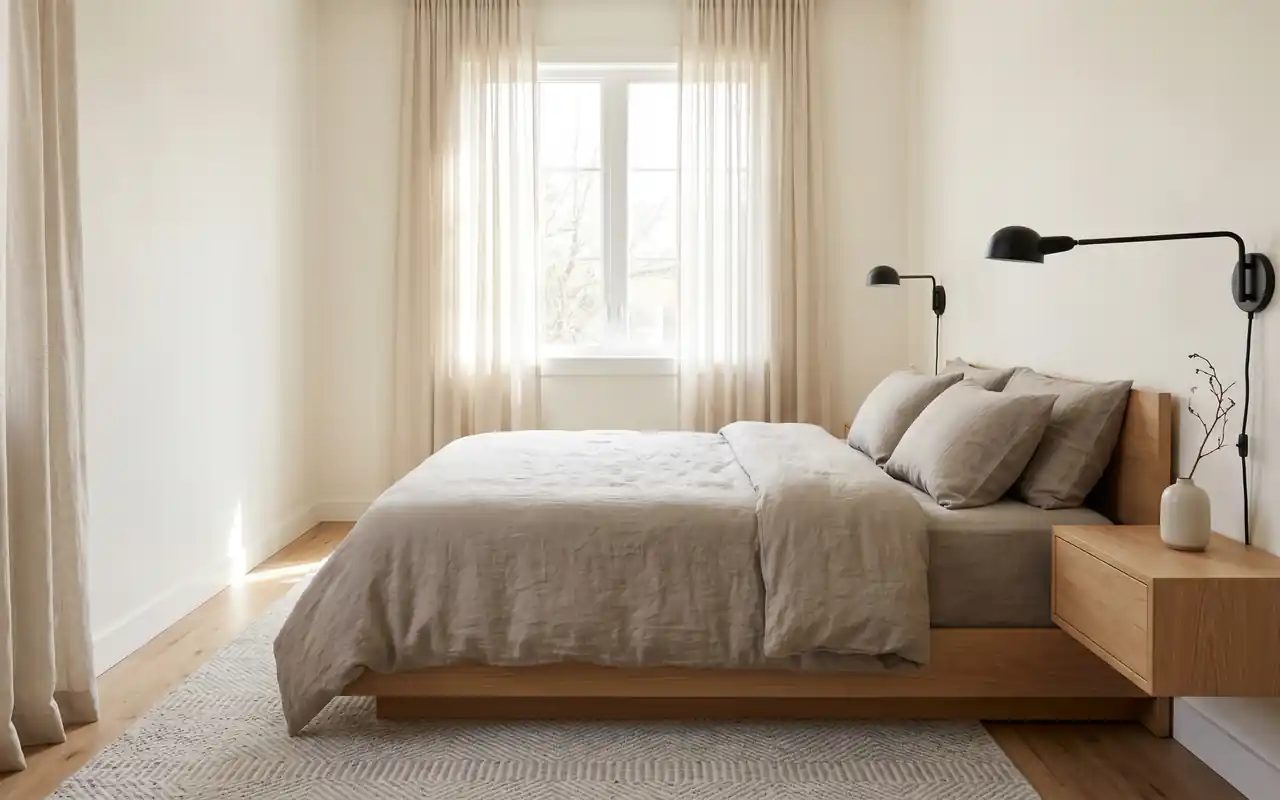
Prefer a warmer, layered feel over stark minimalism? Our cozy aesthetic small bedroom ideas soften the same small-space rules.
TL;DR
- Use low-profile platform beds with built-in storage to eliminate bulky dressers from your floor plan.
- Paint walls in soft white or warm greige tones to bounce natural light and expand the room visually.
- Swap table lamps for brushed brass plug-in wall sconces to completely clear off your nightstands.
- Stick to a cohesive, neutral color palette to reduce visual noise and promote a deeply restful environment.
Designing a Calm, Clutter-Free Retreat
The most effective approach to executing minimalist small bedroom ideas is to strictly limit your color palette to warm neutrals, prioritize multi-functional furniture, and relentlessly clear all flat surfaces. By choosing a sleek upholstered bed with hidden drawers and swapping table lamps for wall-mounted sconces, you immediately create necessary visual breathing room in a tight space. A true minimalist approach does not mean your room has to feel cold or sterile; rather, it dictates that every single item must earn its keep both functionally and visually. Minimalism starts with editing the layout — our complete small-bedroom guide covers how to clear the floor before you style.
To build a solid foundation, explore the 101HomeDecor homepage for essential design principles on maximizing small footprints. Your primary goal is to optimize floor space without sacrificing warmth, relying heavily on rich textures like a linen duvet or a low-pile rug rather than accumulating excessive decor objects. Understanding basic small bedroom layouts to maximize space will give you the precise blueprint you need before purchasing any new minimalist pieces. Bookmark this guide for quick reference.
KEY TAKEAWAY: True bedroom minimalism relies on hidden storage and warm textures, rather than just emptying a room of its personality.
14 Minimalist Small Bedroom Ideas
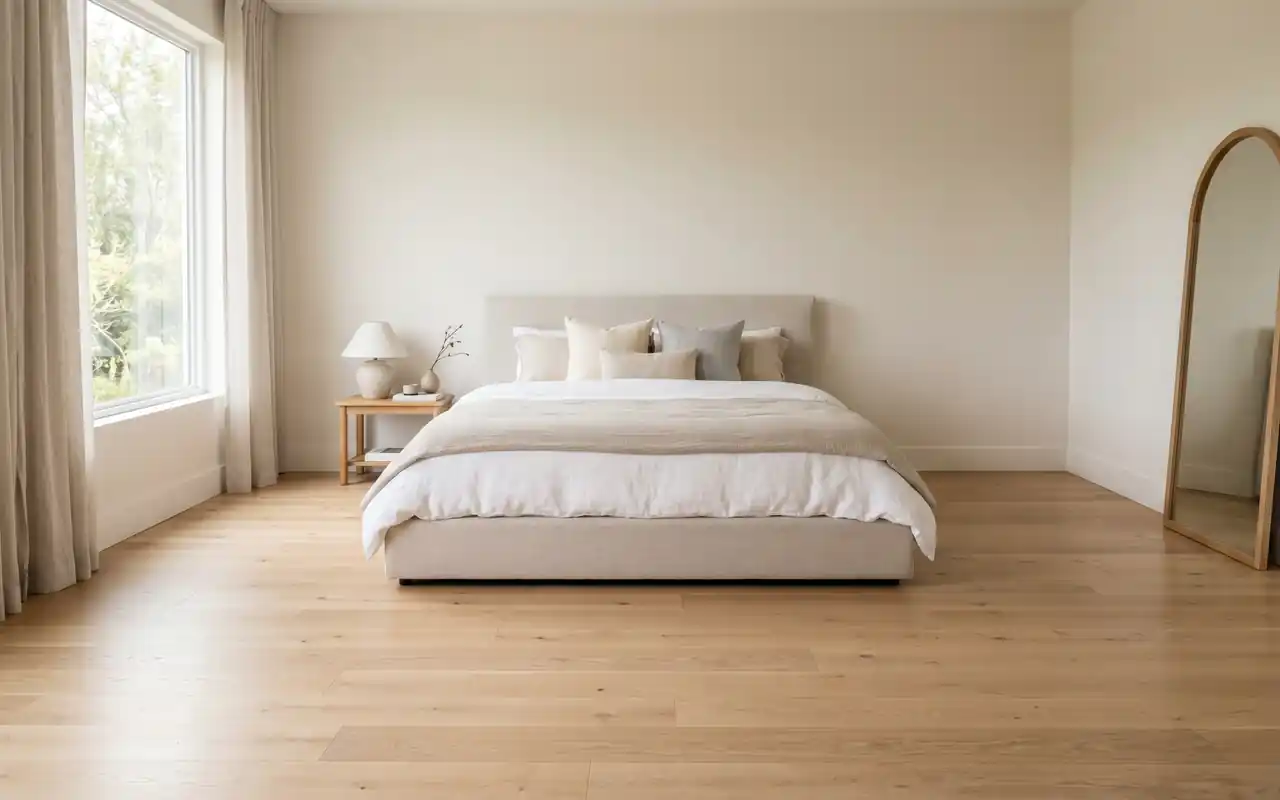
Minimalism makes a small bedroom feel calm and intentional. These fourteen ideas — low storage beds, warm neutrals, and floating nightstands — strip away clutter while keeping the room warm.
1. Choose a Low-Profile Storage Bed
A bulky, traditional bed frame easily overwhelms a tiny layout. Instead, select a low-profile platform bed featuring integrated under-bed storage drawers. This sleek design grounds the room, makes the ceiling feel instantly higher, and completely eliminates the need for a massive, space-consuming dresser. Keep the frame in a light, soft oak finish to maintain an airy aesthetic. Storing off-season clothing and extra linens completely out of sight is the most critical step in maintaining a beautifully decluttered, serene sleeping environment.
2. Mount Plug-In Wall Sconces
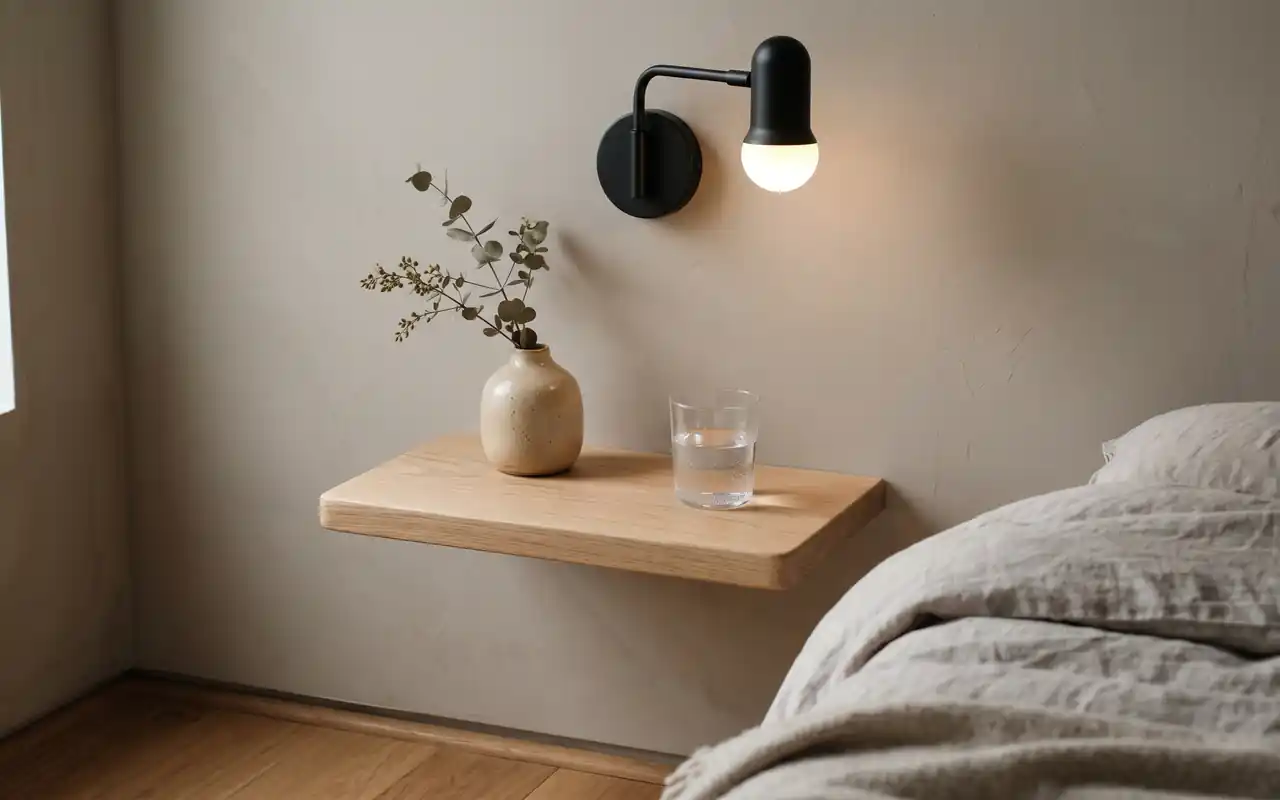
Table lamps consume highly valuable, limited surface area on small bedside tables. Swap them entirely for sleek, matte black or brushed brass plug-in wall sconces. Mounting your lighting directly to the wall instantly frees up room for a glass of water and your current book, creating a perfectly clean, minimalist look. The plug-in feature ensures you skip the expensive electrician fees while still achieving a custom, high-end hotel aesthetic that illuminates your space beautifully without the unnecessary bulk.
3. Stick to a Warm Neutral Palette
A chaotic mix of bright colors creates immense visual noise in tight quarters. Limit your base palette to soft whites, warm greige, and light taupe to bounce natural light and make the walls seamlessly recede. If you crave contrast, review our guide to 15 grey bedroom design ideas for inspiration on layering deeper charcoal tones without shrinking the room. A tight, disciplined color scheme is the absolute backbone of successful minimalism, ensuring the space feels deeply relaxing rather than busy.
4. Install Floating Nightstands
Standard boxy nightstands visually weigh down a room and trap dust in tight corners. Install simple, floating wood shelves right beside your bed instead. Leaving the floor space completely exposed underneath tricks the eye into perceiving a much wider, uninterrupted floor plan. Choose a warm oak or cool slate finish to match your bed frame. This streamlined approach forces you to keep only absolute daily essentials by your bed, naturally preventing the dreaded bedside clutter pile from forming.
DESIGNER TIP: Mount your floating nightstand exactly level with the top of your mattress for a seamless, perfectly tailored look.
5. Use Monochromatic Linen Bedding
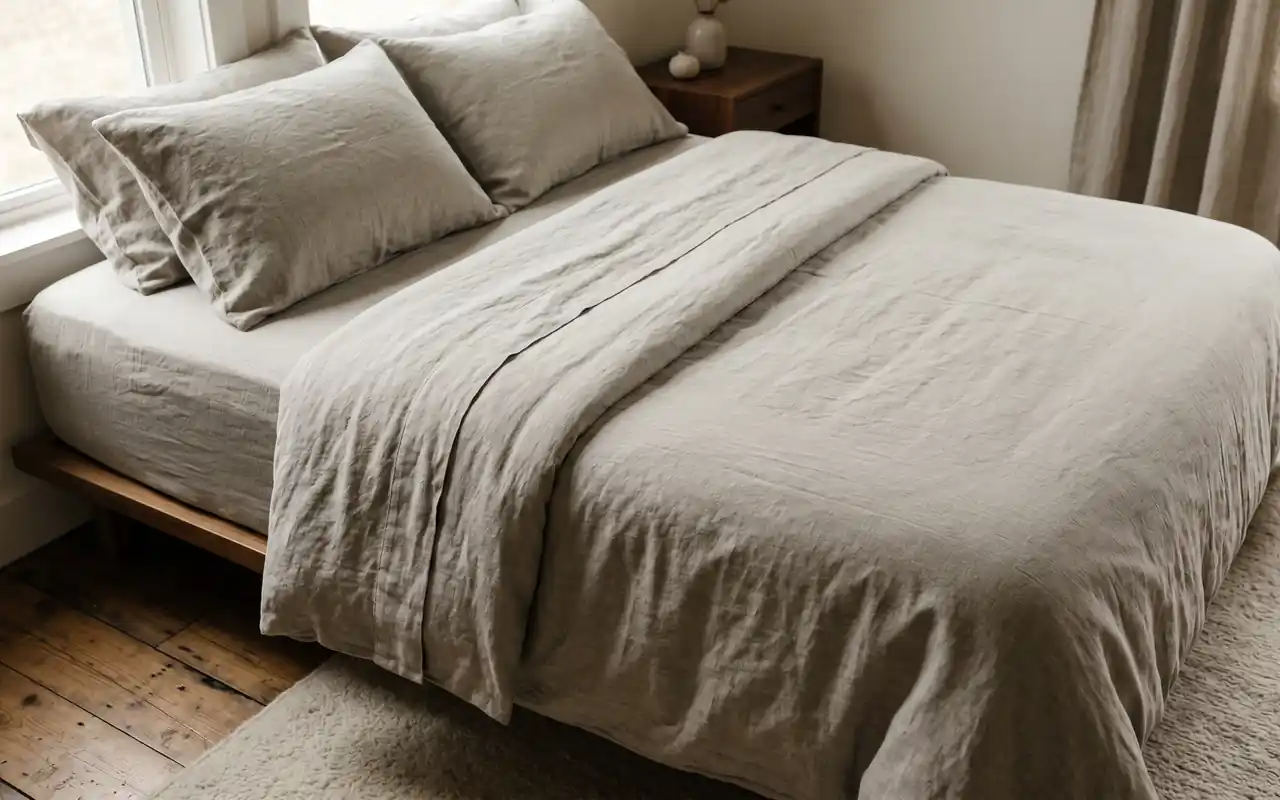
Busy, heavily patterned comforters demand too much attention in a compact space. Opt for solid, monochromatic bedding in highly textured fabrics, like a washed linen duvet in soft greige or crisp white. The organic texture of the linen adds crucial visual warmth and depth to a minimalist room without relying on loud prints. This layered, single-color approach makes the bed look incredibly inviting and high-end, proving that visual simplicity is often the most luxurious design choice you can make.
6. Hang Floor-to-Ceiling Sheer Curtains
Heavy, dark drapes can make a tiny bedroom feel like a suffocating cave. Swap them out for lightweight, unbleached sheer panels hung as close to the ceiling line as structurally possible. Letting the sheer fabric cascade all the way to the floor draws the eye upward, faking the illusion of grand, high ceilings. This simple window treatment filters harsh afternoon sunlight into a soft, diffused glow while maintaining daytime privacy, perfectly complementing a bright, airy minimalist aesthetic.
7. Restrict Surface Decor
The quickest way to ruin a serene minimalist aesthetic is by covering your dresser and nightstands with dozens of tiny trinkets. Apply a strict “rule of three” to your flat surfaces. Display only a single ceramic vase, a small metallic clock, and a sleek catch-all tray for jewelry. If you are struggling with where to put everything else, explore practical small bedroom refresh ideas to find clever ways to hide daily necessities inside attractive, opaque storage boxes.
8. Opt for a Leaning Floor Mirror
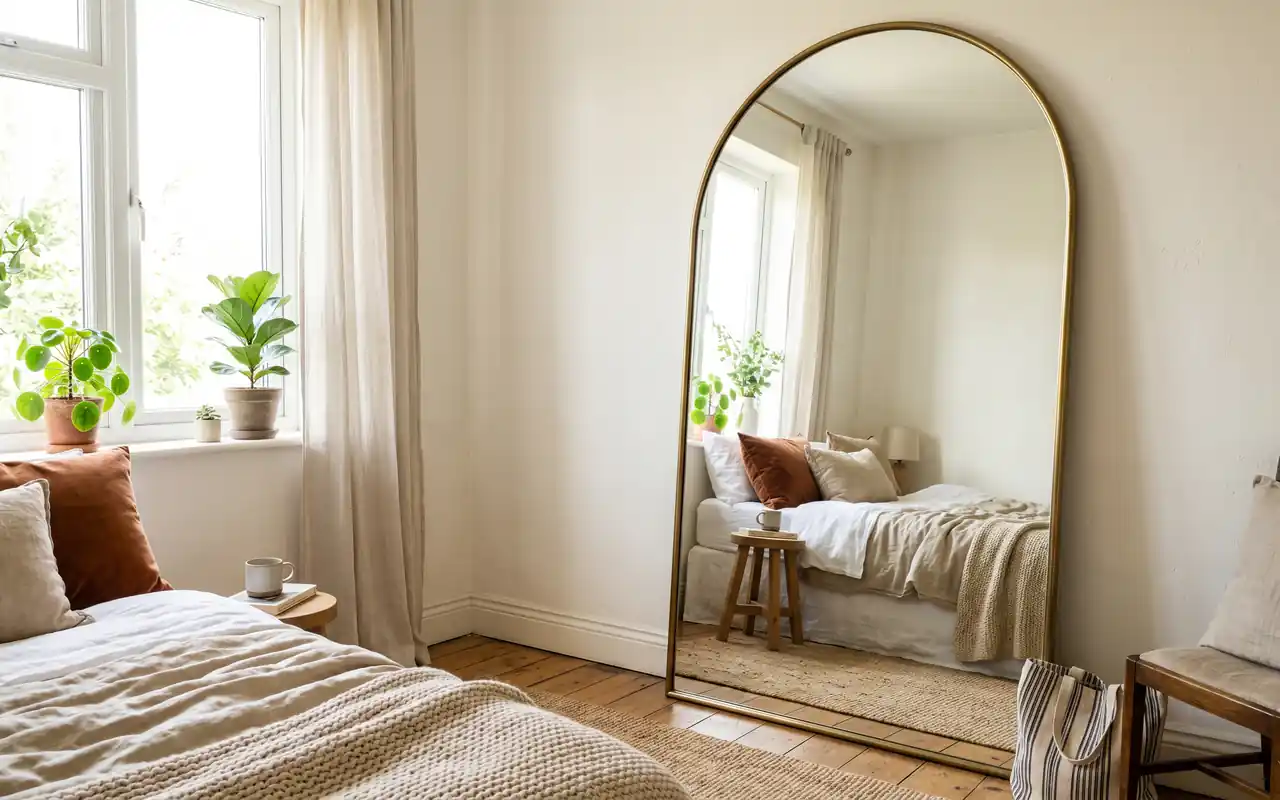
A large mirror is an essential tool for expanding tight layouts. Instead of hanging multiple small, disjointed frames, invest in one oversized, leaning floor mirror with a thin matte black or brass frame. Place it directly opposite your main window to bounce maximum natural light back into the space, essentially doubling the room’s visual depth. The leaning posture feels intentionally relaxed and modern, serving as a highly functional, large-scale piece of minimalist art that requires zero wall damage.
DESIGNER TIP: Angle the floor mirror slightly upward to reflect the ceiling and ambient light fixtures, amplifying the feeling of vertical space.
9. Hide Wires and Cables
Visible, tangled charging cords instantly disrupt the calm atmosphere of a minimalist room. Use adhesive cable clips to route your phone and laptop chargers neatly down the back legs of your nightstand. Alternatively, invest in a sleek, wireless charging pad that blends seamlessly into your tabletop. Keeping your technology completely hidden or highly streamlined is a foundational step in elevating your bedroom from a basic sleeping area to a true, distraction-free minimalist sanctuary.
10. Maximize Vertical Wall Storage
When floor space is practically non-existent, your walls become your best asset. Install a single, long floating shelf high above your bed or doorway to hold decorative storage boxes or trailing pothos plants. Keeping items off the floor is crucial when testing different small bedroom furniture arrangement ideas, as it allows for better foot traffic and a cleaner layout. A high shelf draws the eye upward and provides necessary utility without aggressively crowding your walking path.
11. Choose a Low-Pile Rug
Thick, shaggy rugs can feel overly heavy and trap allergens in a tiny, enclosed space. Anchor your room with a low-pile or flat-weave rug in a subtle, faded geometric pattern or a solid warm neutral tone. A low-profile rug provides necessary softness underfoot while maintaining the crisp, clean lines required for a strict minimalist aesthetic. Ensure the rug is large enough to extend at least 18 inches around the sides and foot of your bed for proper visual scale.
12. Skip the Footboard
Beds with high, solid footboards visually cut a small room directly in half, making the space feel incredibly choppy and confined. Choose a simple platform frame or an upholstered bed with no footboard whatsoever. This allows your eye to travel uninterrupted across the top of the mattress, creating a smooth, elongated sightline. It also prevents you from painfully bumping your shins when navigating tight corners during the middle of the night.
DESIGNER TIP: Tuck your duvet cover firmly under the mattress on all sides to create a tailored, hotel-like finish that emphasizes the sleek lack of a footboard.
13. Use Multi-Functional Seating
A dedicated reading chair is a luxury most tiny rooms simply cannot accommodate. If you absolutely need seating, choose a slender, upholstered storage bench to place at the foot of the bed. This provides a convenient spot to tie your shoes while simultaneously housing bulky winter sweaters or extra blankets inside. Ensuring every single piece of furniture serves at least two highly practical purposes is the golden rule of successfully designing a functional, minimalist space.
14. Embrace Negative Space
The hardest part of minimalist design is learning to leave walls intentionally blank. You do not need to fill every square inch of drywall with art or open shelving. Allowing an entire wall to remain completely bare gives the room necessary visual pauses, making the space feel incredibly calm and intentional. Especially when applying very small guest bedroom ideas, leaving ample negative space ensures your visitors have a serene environment to unpack without feeling visually overwhelmed.
KEY TAKEAWAY: Every minimalist design choice should aim to reduce visual friction and maximize open, breathable space.
Essential Elements of Minimalist Bedroom Decor
Minimalism is not about living in an empty, sterile box; it is fundamentally about intentional curation. The success of any minimalist layout relies heavily on the superior quality of your materials. When you have fewer items in a room, the eye naturally focuses entirely on the details. Upgrading to matte black hardware, solid soft oak accents, and a highly textured linen duvet cover ensures the space feels sophisticated and warm, rather than cheap or unfinished. Every texture must be deliberately chosen to add depth to the neutral palette.
Furthermore, ruthless decluttering is a necessary ongoing maintenance task. To sustain this serene environment, implement a strict “one in, one out” policy for clothing and decor. If you are struggling to achieve this high-end look on a tight timeline, explore clever budget hacks to decorate a small bedroom by focusing your spending heavily on high-impact areas like lighting and quality bedding, rather than blowing your budget on numerous small, distracting accessories that clutter your surfaces.
KEY TAKEAWAY: Investing in a few high-quality, deeply textured materials prevents a minimalist room from feeling cold and uninviting.
Common Minimalist Small Bedroom Mistakes to Avoid
- MISTAKE: Keeping bulky, matching bedroom furniture sets that visually swallow the entire room. → FIX: Break up the heavy set and use a sleek platform bed paired with mismatched, airy floating nightstands.
- MISTAKE: Painting the room a stark, clinical white that makes the space feel like a hospital. → FIX: Warm up the walls using a soft greige or a creamy off-white to bounce light while retaining deep coziness.
- MISTAKE: Using open shelving to store daily items like clothes or paperwork. → FIX: Hide practical, everyday clutter completely behind closed doors or inside opaque, woven storage bins to maintain a clean visual line.
- MISTAKE: Relying on a single overhead “boob” light for the entire room’s illumination. → FIX: Layer your lighting with brushed brass wall sconces and hidden LED strip lights for a soft, ambient glow.
KEY TAKEAWAY: Avoiding heavy furniture sets and harsh lighting is essential to keeping a tiny minimalist room feeling expansive.
Budget & Cost
Executing a high-end minimalist refresh is surprisingly affordable because you are intentionally buying fewer, higher-quality items rather than filling the room with excessive, cheap decor.
| Project | Estimated Cost | Impact Level |
|---|---|---|
| Floating wood nightstands | $40–$90 | High |
| Plug-in matte black sconces | $50–$120 | High |
| Solid linen duvet cover set | $85–$150 | Medium |
| Oversized leaning floor mirror | $100–$250 | High |
KEY TAKEAWAY: Directing your budget toward functional upgrades like floating nightstands and sconces provides the highest visual return on investment.
Decisions & Minimalist Small Bedroom Challenges
The primary challenge in adopting minimalist small bedroom ideas is finding adequate storage for your actual life. Stripping away dressers and bookshelves means you must get incredibly creative with concealed storage. If your closet is tiny, you must utilize the dead space directly under your bed. Investing in rolling under-bed storage bins or a hydraulic lift-up mattress frame allows you to securely hide bulky seasonal items, keeping your main floor area completely unobstructed and visually clean.
Another major hurdle is dealing with awkward, off-center windows or weird architectural niches common in older buildings. Instead of fighting these quirks, use them to your advantage. A small alcove can cleverly house a perfectly fitted floating desk, keeping the rest of the bedroom dedicated strictly to sleep. For more layout inspiration in difficult spaces, review these creative small apartment ideas to see how minimalist principles can adapt to virtually any challenging, asymmetrical footprint.
KEY TAKEAWAY: Embracing hidden storage solutions is the only way to maintain a minimalist aesthetic while living comfortably in a small footprint.
Frequently Asked Questions
Conclusion
Implementing functional minimalist small bedroom ideas is the ultimate way to reclaim your space and your peace of mind. By prioritizing sleek, low-profile furniture, adopting a strict warm neutral color palette, and aggressively hiding your daily clutter, you can transform even the most cramped quarters into a breathable, stylish retreat. A truly minimalist room is a testament to the fact that less design noise brings more relaxation. For ongoing inspiration on elevating your home’s aesthetic, be sure to visit the 101HomeDecor homepage.
More Small Bedroom Ideas
- 10 Smart Small Bedroom Ideas for 2 Sisters That Stop Clutter
- 11 Small Bedroom Ideas With a Single Bed to Maximize Your Space
- 12 Small Bedroom Ideas for Couples That Stop the Clutter Wars
- 12 Very Small Boho Bedroom Ideas to Maximize Your Cozy Space
- 15 Pink Small Bedroom Ideas to Brighten Your Tiny Space
- 15 Simple Small Bedroom Refresh Ideas for a Cozy Makeover
- 15 Small Bedroom Ideas for Teens That Maximize Every Square Inch
- 7 Effortless Very Small Bedroom Ideas That Look Designer-Made
- 9 Small Bedroom Ideas With a King Size Bed That Actually Work
- Best Paint Colors for a Small Bedroom That Make It Feel Bigger