TL;DR
- Size: Buy above eight feet or do not buy at all. Scale is the one thing inflatables do better than anything else at the price.
- Power: A whole season of running costs roughly $2 to $7 in electricity. Neither the bill nor the circuit is your constraint.
- Wind: The manufacturer’s own instruction is to let it deflate and wait, not to reinforce it and hope.
- Hours: It looks like a puddle of nylon for about eighteen hours of every day, so site it for the deflated state as well as the inflated one.
- Storage: Bone dry before it goes in the box, or you open a mildewed bag next September.
Everyone Says They’re Tacky. They Still Outsell Everything Else.
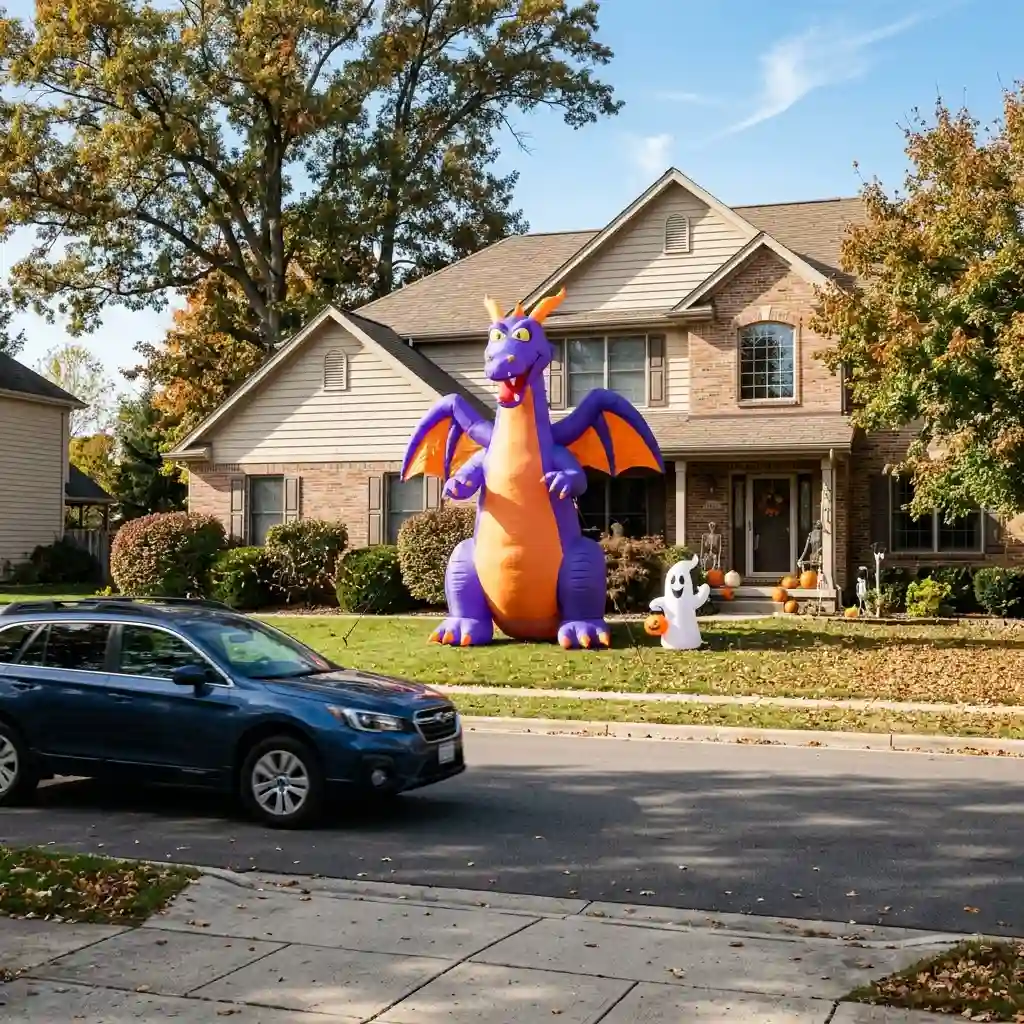
Almost every decorating guide, including a fair share of this site’s own advice on elegant exteriors, tells you to skip inflatables. The material is a balloon, the finish is glossy nylon, and no amount of styling fixes either. All of that is true.
It is also beside the point, because inflatables were never competing on taste. They are competing on being enormous, visible from a moving car, and delightful to a six-year-old — and on that job nothing else at the price comes close. If you have ever felt vaguely told off for owning one, the honest answer is that you and the design guide were grading different exams.
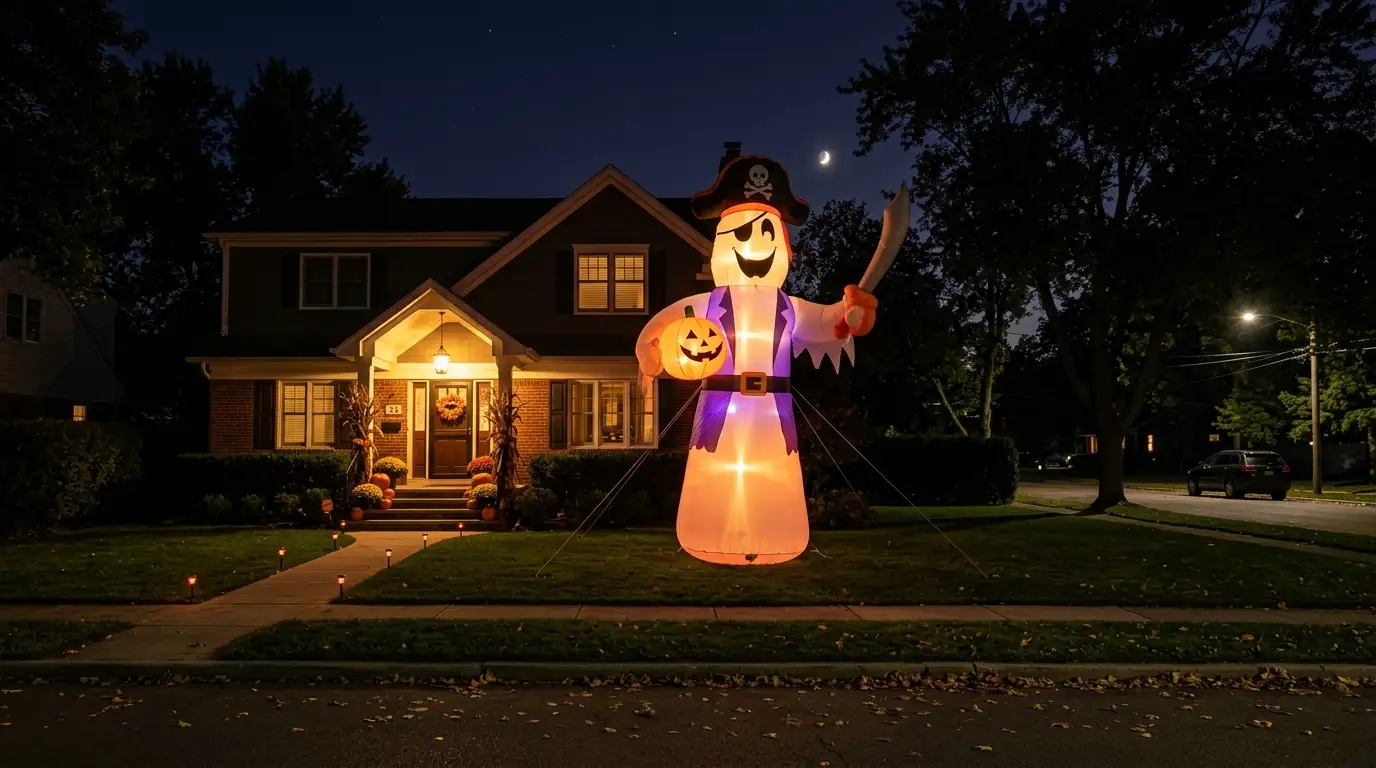
Halloween inflatables earn their place when size is the whole purpose. A twelve-foot figure costs sixty to a hundred dollars inflated and several hundred solid, which is the entire argument for the category. Below about eight feet that argument collapses, and you are left with a fan, a cord and a nylon puddle in exchange for something a rigid prop would do better.
This page covers the size line, what one really costs to run, when to switch it off, why they fail in week three, and the non-inflatable ways to get something big. If you are working through the rest of the house, our complete home decor library covers every room and surface.
For the broader outdoor season and the quieter end of the spectrum, the Halloween decorating archive is the wider starting point.
An Inflatable Is an Appliance, Not an Ornament
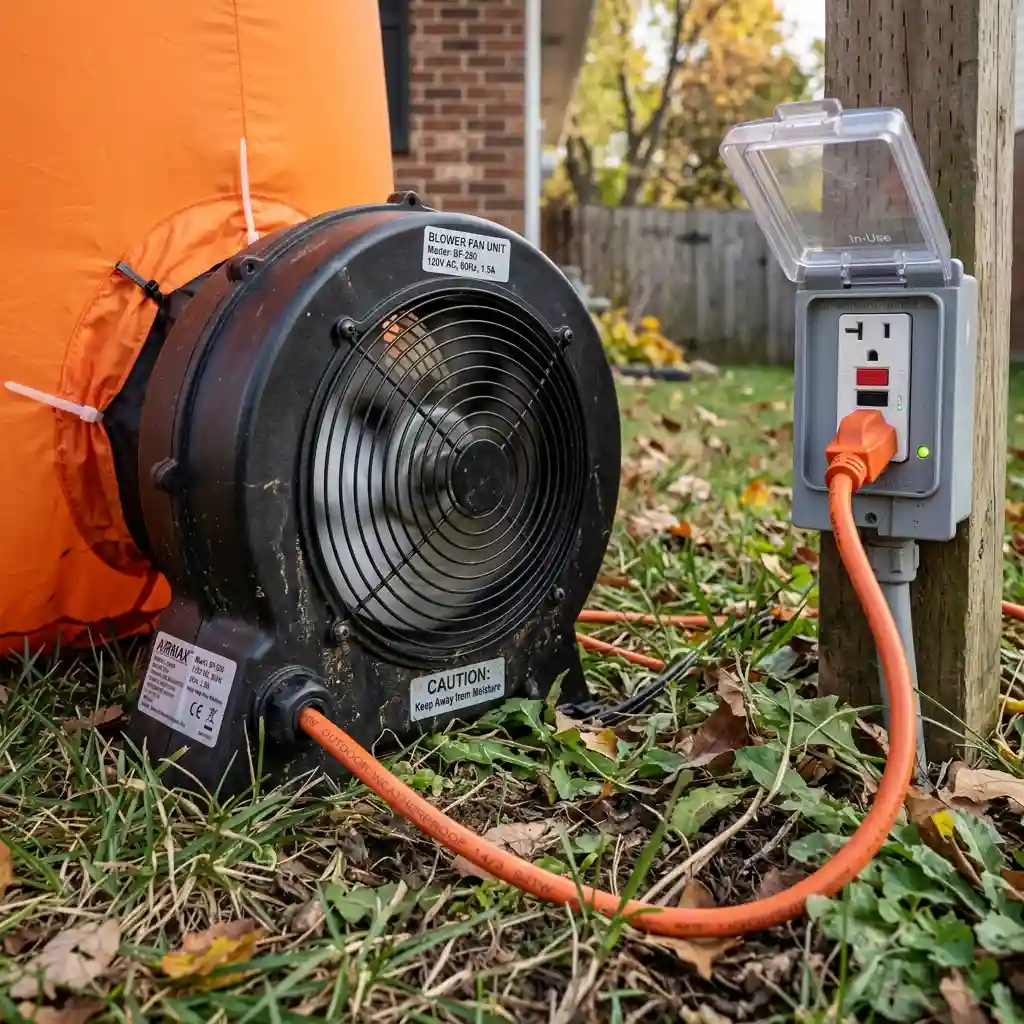
Every other thing you put in a yard is inert. A tombstone, a wreath, a lantern and a skeleton all just sit there. An inflatable is the only decoration with a motor in it, and that single difference drives everything else about owning one.
It means the object exists only while the fan runs. It means a cord has to reach it, a plug has to stay dry, and something has to switch it on and off every day for six weeks. It means there is a moving part that can fail, an intake that can clog, and a seam that can split. Treat it as a small appliance you happen to have installed on the lawn and every decision downstream gets easier. Our outdoor and exterior decor ideas archive covers the permanent layer this one sits on top of.
DESIGNER TIP: put it on a plug-in outdoor timer the day you buy it. Nobody sustains a manual on-and-off routine for forty nights, and the yards that look neglected by mid-October are almost always the ones where somebody stopped bothering.
The Eighteen Hours Nobody Plans For
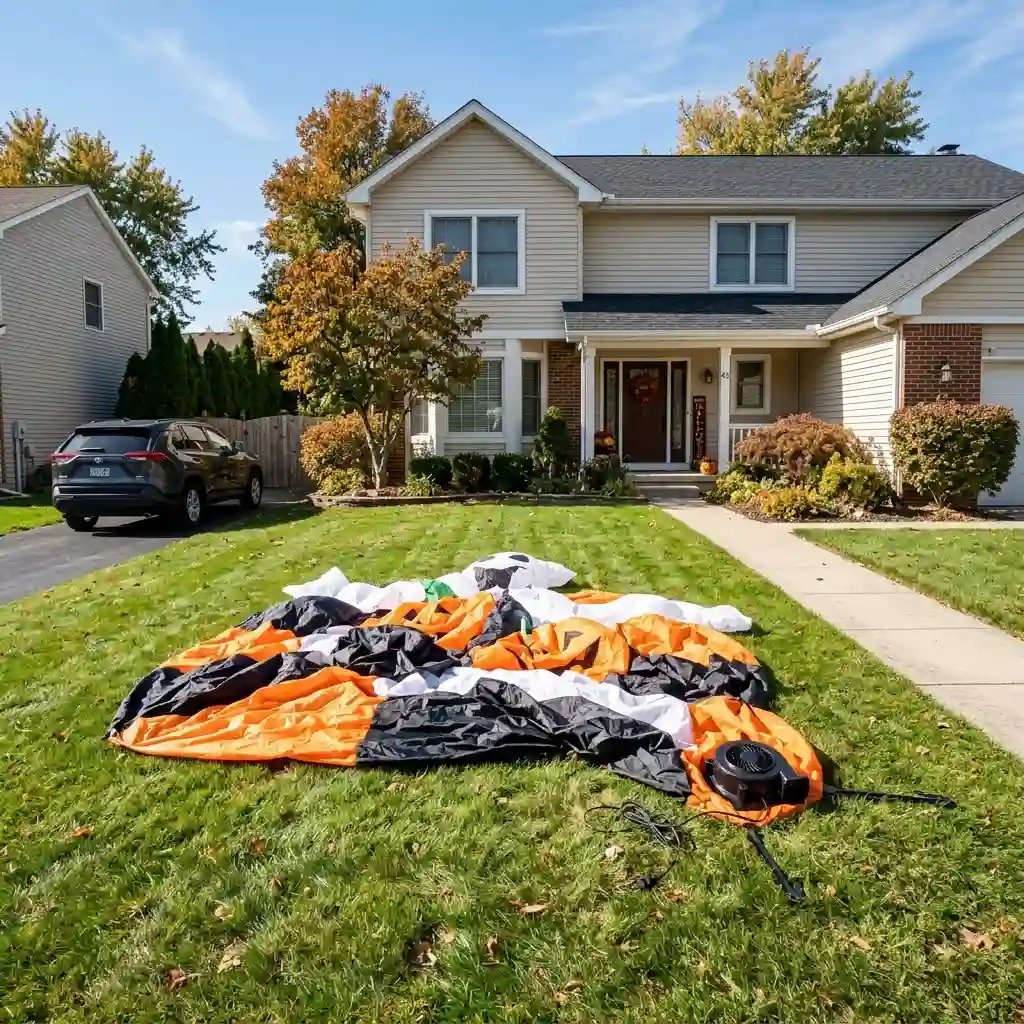
Here is the fact that decides where an inflatable should go, and it appears in almost no buying guide. If you run yours from six in the evening until midnight, it is inflated for six hours and collapsed for eighteen. For three quarters of every day, the thing you bought is a flat sheet of nylon lying on your grass.
Every other decoration looks the same at noon as it does at nine. This one has two completely different appearances, and the ugly one is on display for far longer. So the siting question is not just where it looks good standing up — it is whether the daytime puddle is the first thing you or your neighbours see. Leaving it flat on turf for weeks also marks the grass, which is a separate problem worth knowing about before you pick the spot.
Off to one side, behind a planting bed, or against a fence line all beat dead centre on the front lawn. A low bed of shrubs or grasses is the most forgiving screen of the three, since it hides the collapsed shape at ground level without hiding the inflated one — our garden ideas archive covers building that kind of low planting.
Why Eight Feet Is the Real Buying Line
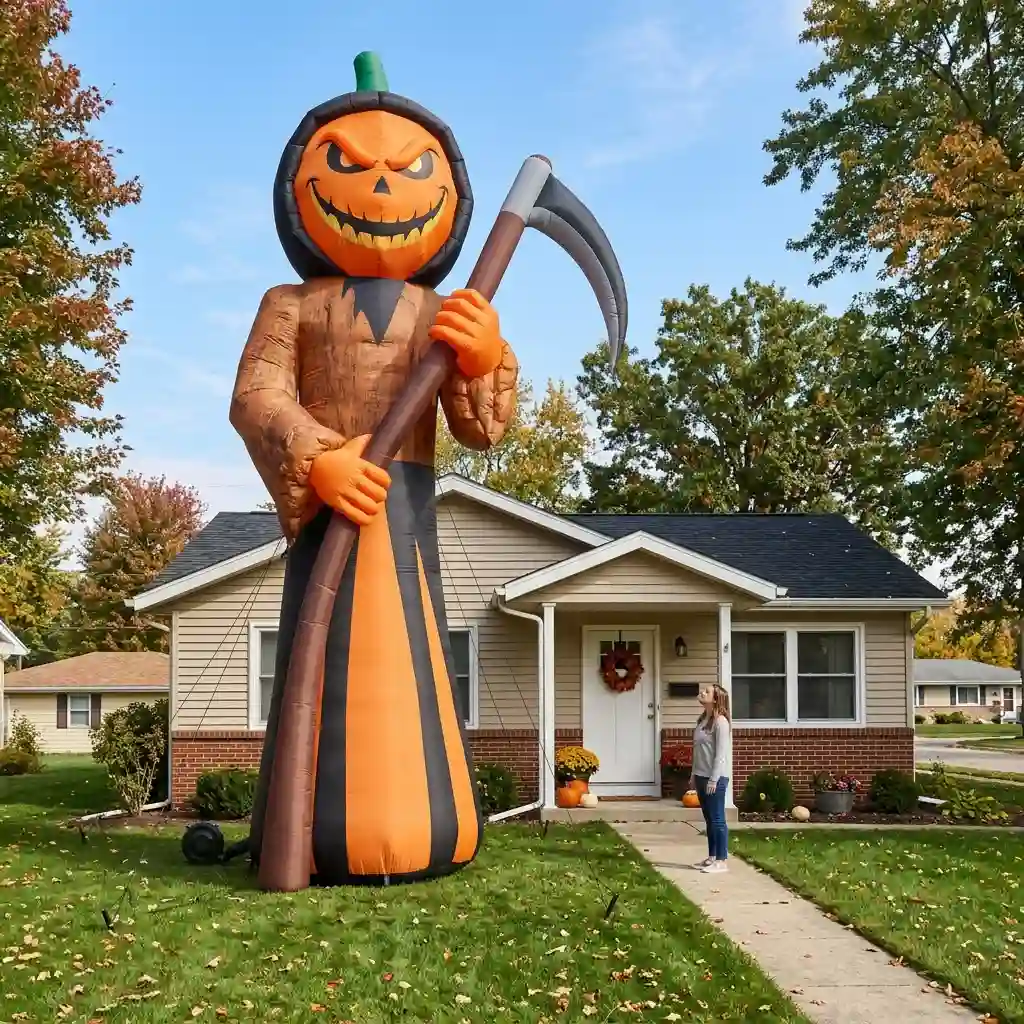
Inflatables have exactly one genuine advantage: they are the cheapest way to make something very large. Air is free and nylon is light, so cost rises far more slowly with size than it does for anything rigid. That advantage only pays out at scale.
A four-foot inflatable is the worst purchase in the whole category. It carries every drawback — the fan, the cord, the deflated hours, the glossy finish — and delivers a size you could have had in solid form, in better materials, with no machine attached. Around eight feet the trade starts making sense, and by ten or twelve it is decisive because the rigid alternatives have become genuinely expensive. If you are choosing between a large inflatable and several small ones, take the single large one every time.
DESIGNER TIP: measure the frontage you are filling before you shop, not the inflatable. A twelve-footer needs roughly eight to ten feet of clear ground around its base once tethers are out, and that footprint, not the height, is what most yards run out of first.
What Does One Cost to Run?
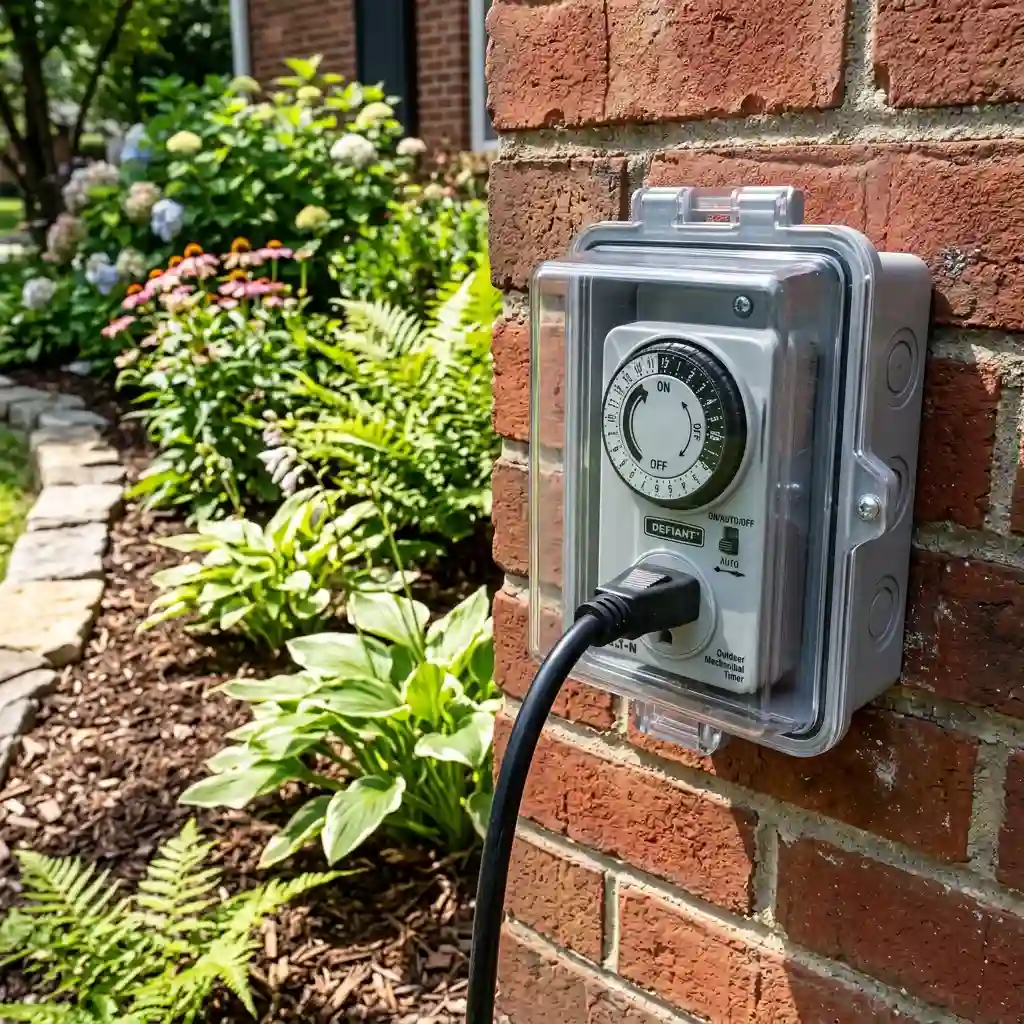
Far less than people assume, and this is worth knowing because the power bill is the objection most often raised and the least deserved. A typical twelve-foot lit model is rated around 44 watts — genuinely less than an old incandescent bulb.
Run that six hours a night for forty nights and you use about eleven kilowatt-hours. Source Note: the U.S. Energy Information Administration puts the average residential electricity price at 18.44 cents per kilowatt-hour as of May 2026, which puts the season’s running cost near two dollars. A big multi-fan display with heavy internal lighting might reach 150 watts and around seven dollars. Neither figure is a reason to do anything differently.
The circuit is not your limit either. A standard 15-amp household circuit carries 1,800 watts, and derated for continuous load it still comfortably runs ten or more of these. What actually runs out is outdoor outlets, safe cord routing, and patience — not amperage.
When Should You Switch It Off?
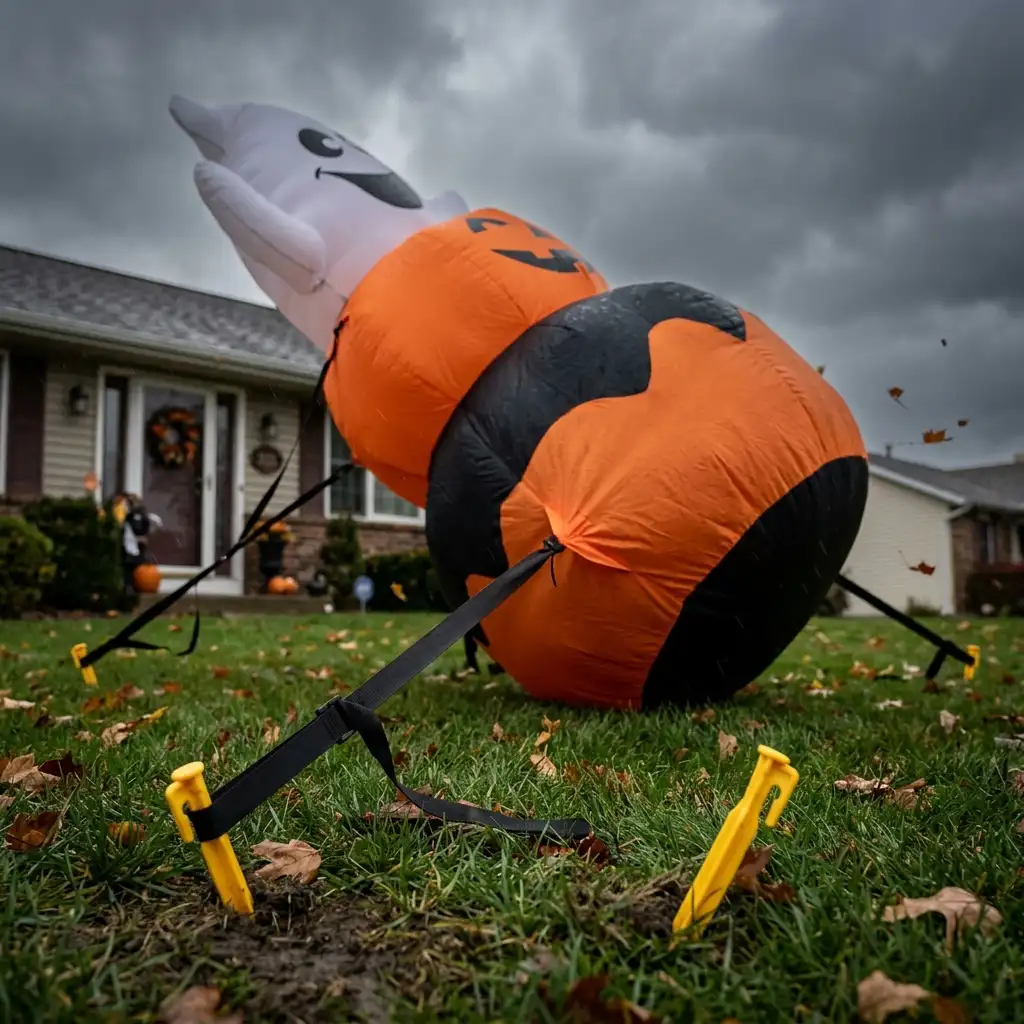
In strong wind, and the manufacturer agrees. Gemmy’s own Airblown instructions say to avoid inflating during unusually strong winds and, if conditions turn, to simply let it deflate and wait for better weather. A deflated inflatable in a gale is safe; an inflated one is a sail tied to your lawn.
Rain is more forgiving than most people expect. The same guidance treats gentle rain or light snow as fine for normal operation, and reserves the warnings for heavy snow, rain and windstorms. Cold has its own quirk: below about 14°F the motor may stop on its own and start again when it warms, which is a design behaviour rather than a fault.
Safety Note: outdoor units must run from a GFCI-protected outlet, per the manufacturer’s instructions — if you do not have one, that is an electrician’s job, not a project.
Why Do Inflatables Fail Mid-Season?
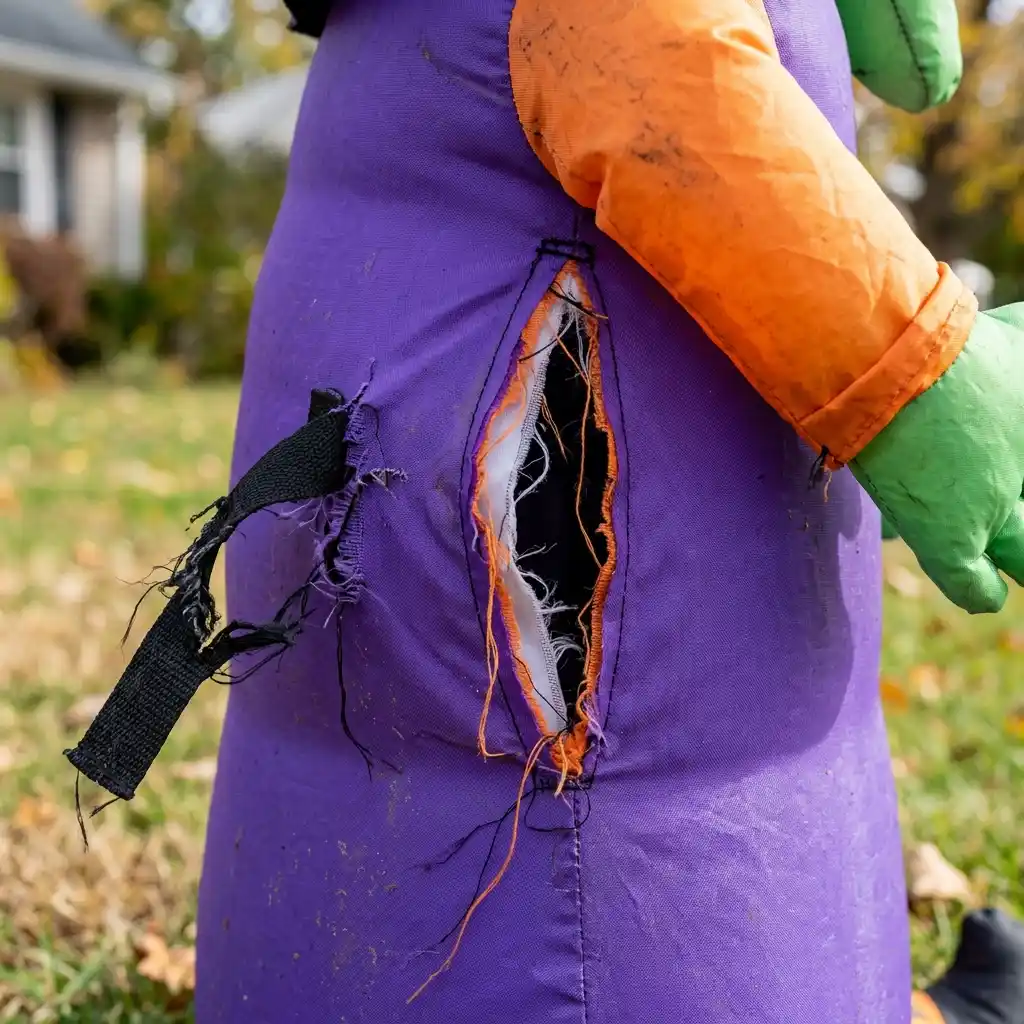
Four failures account for almost all of them, and none is the motor burning out. The intake clogs first — the fan draws air through a mesh panel near the base, and wet leaves, grass clippings or a fold of fabric across it will starve the whole thing until it sags at half height.
Water pooling is the second. A concave section, an armpit or a hat brim collects rain, and once there is a few pounds of water sitting in it the fan cannot lift the shape back up. Tether points are the third: the little webbing loops take every gust the whole body catches, and they tear out of the seam long before the fabric itself wears. The fourth is simply a split seam, usually where a limb meets the body, and a vinyl repair patch handles it if you catch it early.
Material Note: check the intake mesh weekly and after any windy night. A single leaf across it is the most common reason a healthy inflatable looks half-dead.
Where Do Blow-Up Decorations Belong in a Yard?
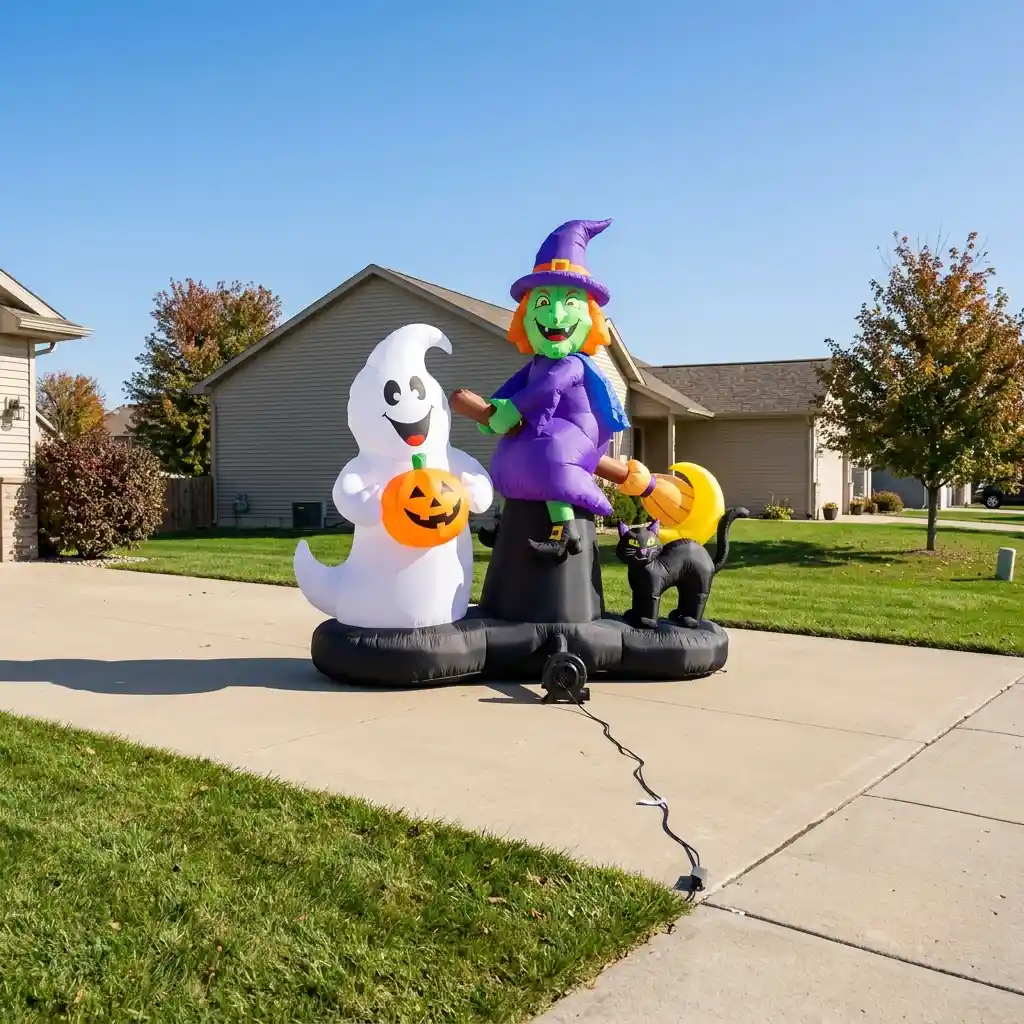
On flat, firm, open ground, and further from the house than instinct suggests. These need level footing because a body sitting on a slope leans, and a leaning inflatable looks broken rather than characterful — worth checking if your front garden falls toward the street, which our sloped backyard ideas cover in general.
Hard surfaces are the underrated option. A driveway edge or a paved area beside the path gives firm anchoring, no turf damage and no mowing conflict, and it sidesteps the mowing schedule entirely. Our simple outdoor patio ideas cover building that kind of surface for permanent use.
Give the base real clearance as well. A tall figure whipping in wind wants nothing brittle within reach — no glass lantern, no potted ceramic, no low branch. A solid boundary behind it also cuts the gust load noticeably, which is one more argument for the kind of structure our privacy fence ideas cover.
The Non-Inflatable Routes to Something Big

Size does not have to come from air, and three alternatives are worth knowing before you commit. A PVC or conduit frame draped in fabric gives you an eight to ten-foot figure that holds its shape day and night, costs very little in materials, and has no motor to fail — the trade is that it needs building and it stores badly.
Hanging is the second and the most underrated. A large flat silhouette suspended from a tree limb reads enormous, moves gently in wind on its own, and disappears into nothing when you take it down. The third is projection, which puts a moving image on a wall or a sheet and stores in a shoebox, though it needs a surface and full darkness to work at all. Our spring backyard decor ideas cover the tree and fence structures these all hang from.
How Do You Store One So It Survives to Next Year?
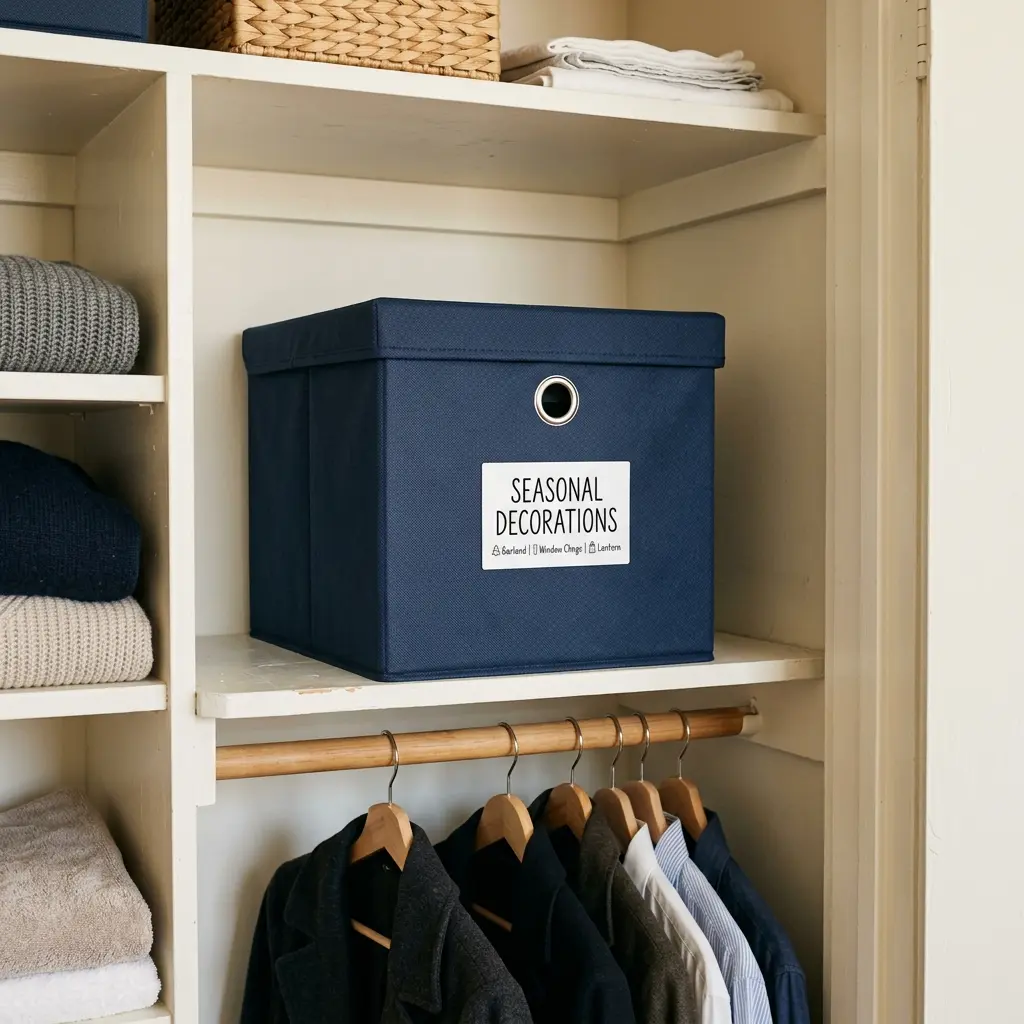
Completely dry, or not at all. This is the single biggest determinant of whether you get five seasons or two out of one, and it is the step everyone rushes on a cold November afternoon.
There is a neat trick for it in the manufacturer’s own instructions: if the unit got soaked while unplugged, plug it back in and let the fan dry it from the inside. Run it until the fabric is dry to the touch everywhere, including the folds around the base, then fold loosely rather than tightly and store somewhere cool and dry. Packing a damp one away is how people open a mildewed, permanently stained bag the following September. A dry indoor space beats a shed or an unheated garage, and our basement living and storage ideas cover making that kind of space usable.
Why the Category Keeps Growing
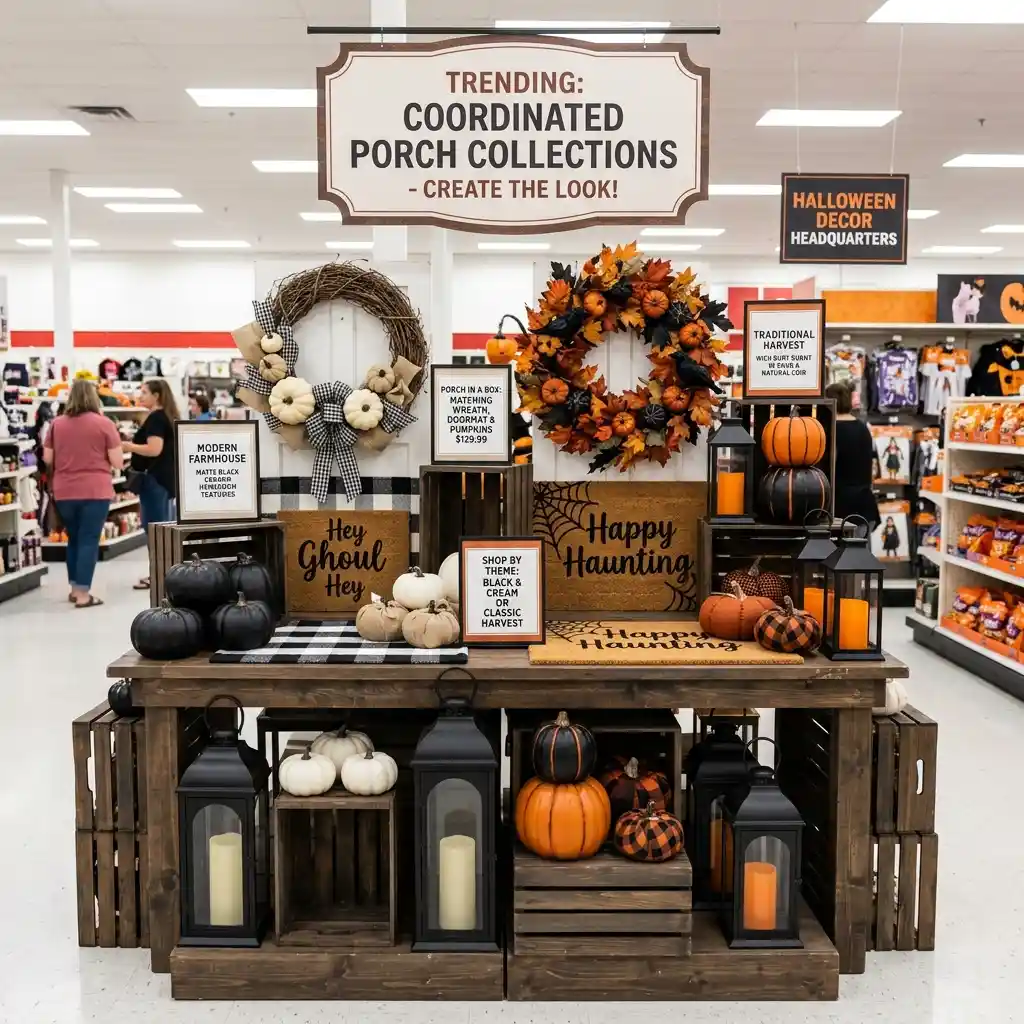
Inflatables get mocked in design coverage and keep expanding in driveways, which is usually a sign that the mocking is measuring the wrong thing.
Signs This Is Catching On:
Sizes have climbed steadily. What used to top out around six feet now routinely runs ten to twenty, and the largest sizes are the ones that sell out first rather than lingering.
The product has shifted from single figures to scenes — multiple characters on one base, with internal lighting sequences and motion built in, sold as a set rather than as an ornament.
Halloween and Christmas increasingly share the same buyer and the same storage box. Households that own one seasonal inflatable overwhelmingly own the other, which is why the same aisle carries both, and why a household with kids treats it as a two-season purchase rather than a one-night one. That same logic runs through our kids Christmas tree ideas.
Seasonal exteriors keep stretching at both ends of the calendar. Our seasonal decorating archive covers the rest of that year.
| Quick Takeaways | |
|---|---|
| Size line | Eight feet minimum; below that a rigid prop wins on every count. |
| Running cost | Roughly $2-$7 of electricity for the whole season. |
| Circuit | A 15-amp circuit runs ten or more; outlets and cords run out first. |
| Wind | Let it deflate and wait — never reinforce and hope. |
| Deflated hours | Site it for the eighteen hours it spends flat, not just the six upright. |
| Storage | Bone dry before folding; run the fan to dry it from inside. |
Check These Before It Comes Out of the Box
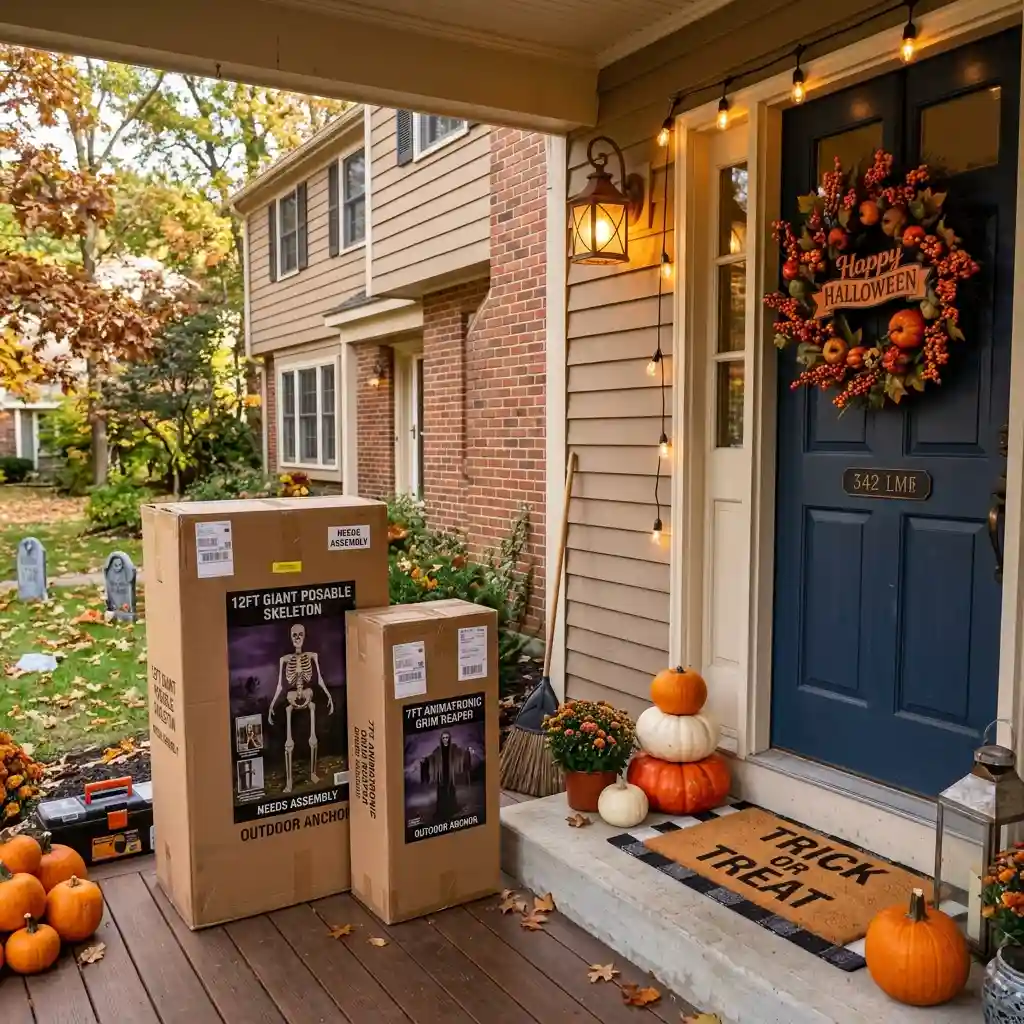
Five minutes here saves the mid-season sag and the mildewed bag.
- Measure eight to ten feet of clear, level ground around the intended base before buying anything tall.
- Confirm you have a GFCI outdoor outlet within safe cord reach of that spot.
- Buy a plug-in outdoor timer at the same time as the inflatable, not later.
- Walk the daytime view and check where the deflated puddle will be seen from.
- Note the intake mesh position at setup so weekly leaf checks take ten seconds.
KEY TAKEAWAY: Decide the size and the spot before the character — an eight-foot figure in the right place beats a four-foot one anywhere.
Where Inflatable Displays Go Wrong

Instead of buying three or four small inflatables because each one is cheap, Try putting the same money into one that is genuinely large, since scale is the only thing this product does better than the alternatives.
Instead of leaving it running around the clock so it always looks good, Try a timer covering the hours people actually pass, because continuous running wears the fan and does nothing for a street that is empty at two in the afternoon.
Instead of tightening the tethers hard against wind, Try switching it off and letting it lie flat, since the webbing loops tear out of the seam long before the fabric gives and a taut inflatable in a gale is a sail.
Instead of packing it away the moment the season ends, Try running the fan until every fold is dry to the touch, because a damp bag in storage is the most common reason a two-year-old inflatable is unusable.
What One Really Costs Over Three Years
Purchase price is only part of it, and the honest accounting favours the larger unit.
| Project | Estimated Cost | Impact Level |
|---|---|---|
| Small inflatable under six feet, plus timer and cord | $40-$75 | Low |
| One eight to twelve-foot lit inflatable, plus timer, outdoor cord and stakes | $95-$175 | Very High |
| Multi-figure animated scene or a twenty-foot unit | $250-$500 | High |
Best First Upgrade: Go up a size rather than up a quantity. The jump from six feet to twelve costs less than a second inflatable and changes the whole street read, while a second small one adds another fan, another cord and another puddle.
Skip for Now: Animated multi-figure scenes in year one. They cost several times a single large unit, have more to go wrong, and most of the motion is lost at the distance these are seen from anyway.
Running costs stay trivial across all three tiers, so the real spending decision is size, not electricity. Broader outdoor budgeting sits in our cheap backyard ideas.
What If You Have No Yard at All?
Then skip the category, honestly. Inflatables need level ground, tether anchorage, cord routing and clearance on all sides, and a balcony or a landing supplies none of those. A tethered nylon body several feet tall on an upper floor is a genuine hazard in wind rather than a styling compromise.
The substitute worth making is a hanging flat silhouette, which delivers the same read-from-a-distance scale with no machine, no footprint and no anchoring problem. Suspended inside a window or from a balcony ceiling it reads large from the street and takes up no floor whatsoever. Our small balcony design ideas cover working within that footprint.
Rental Note: never stake into a lawn you do not own, and check whether your lease or HOA restricts front-of-property displays and running an appliance outdoors overnight before you commit to anything.
Are Halloween Inflatables Worth Buying?

For households with children on the street, yes, provided you buy one large one and site it properly. It is the highest delight-per-dollar object in outdoor decorating, it costs about two dollars of electricity a season, and it lasts five years if you dry it properly. For a household chasing a restrained, architectural exterior, no — nothing about the material will get you there, and the money is better spent elsewhere.
Both answers are correct at the same time, which is the part the arguments about this category usually miss. Decide which yard you are running before you decide what to put in it, and the purchase becomes obvious either way.
If you land on the second answer, the same budget goes further on the permanent layer than on any seasonal object — better lighting, better containers, a better entry. Our front porch decor ideas cover where that money does the most work.