TL;DR
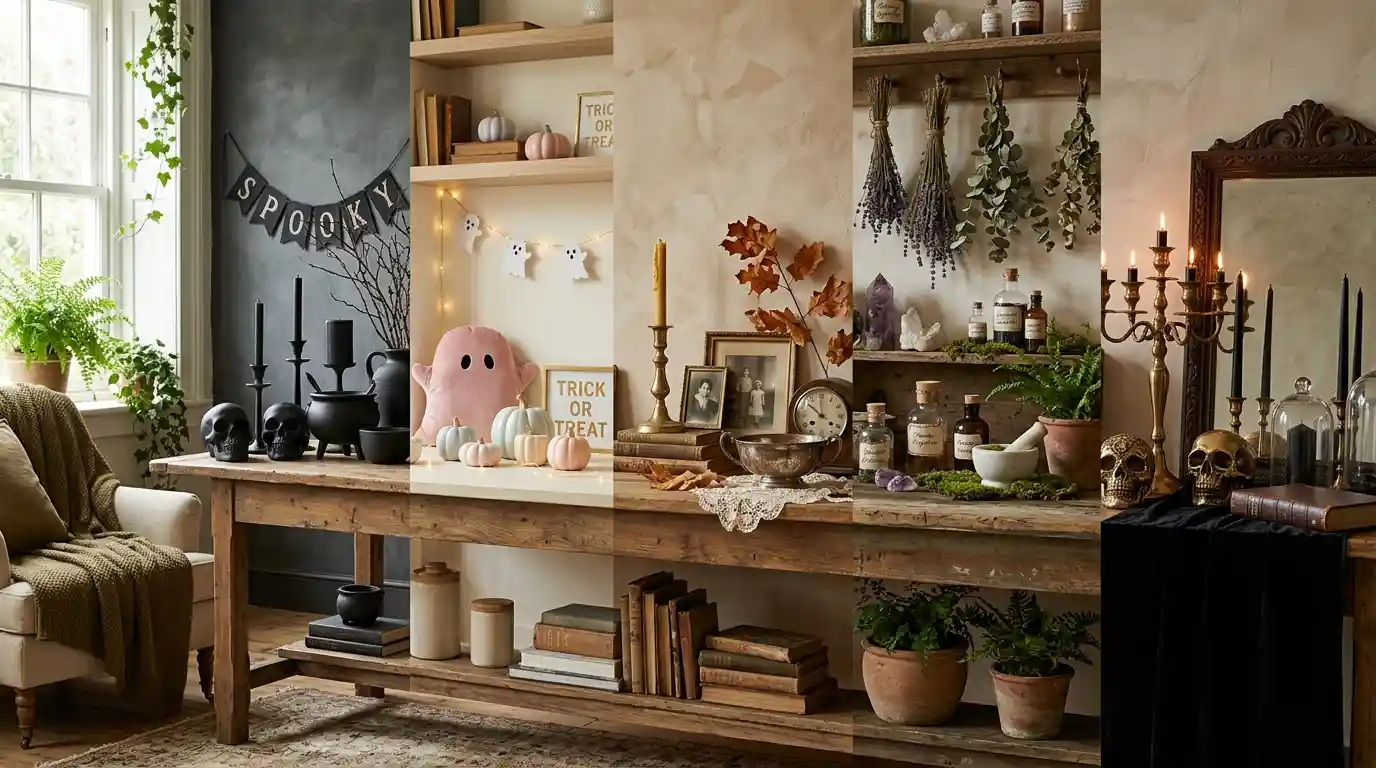
Halloween decorating now runs on five styles — spooky, cute, vintage, witchy and elegant gothic. What separates them is palette and finish, never the objects, since a black cat belongs to all five. Sort what you own by surface, take three colors from the biggest pile, and commit to one lane.
Looking for more ideas? Explore our full guide to Halloween Ideas.
Halloween Decor Styles Split Into Five Lanes
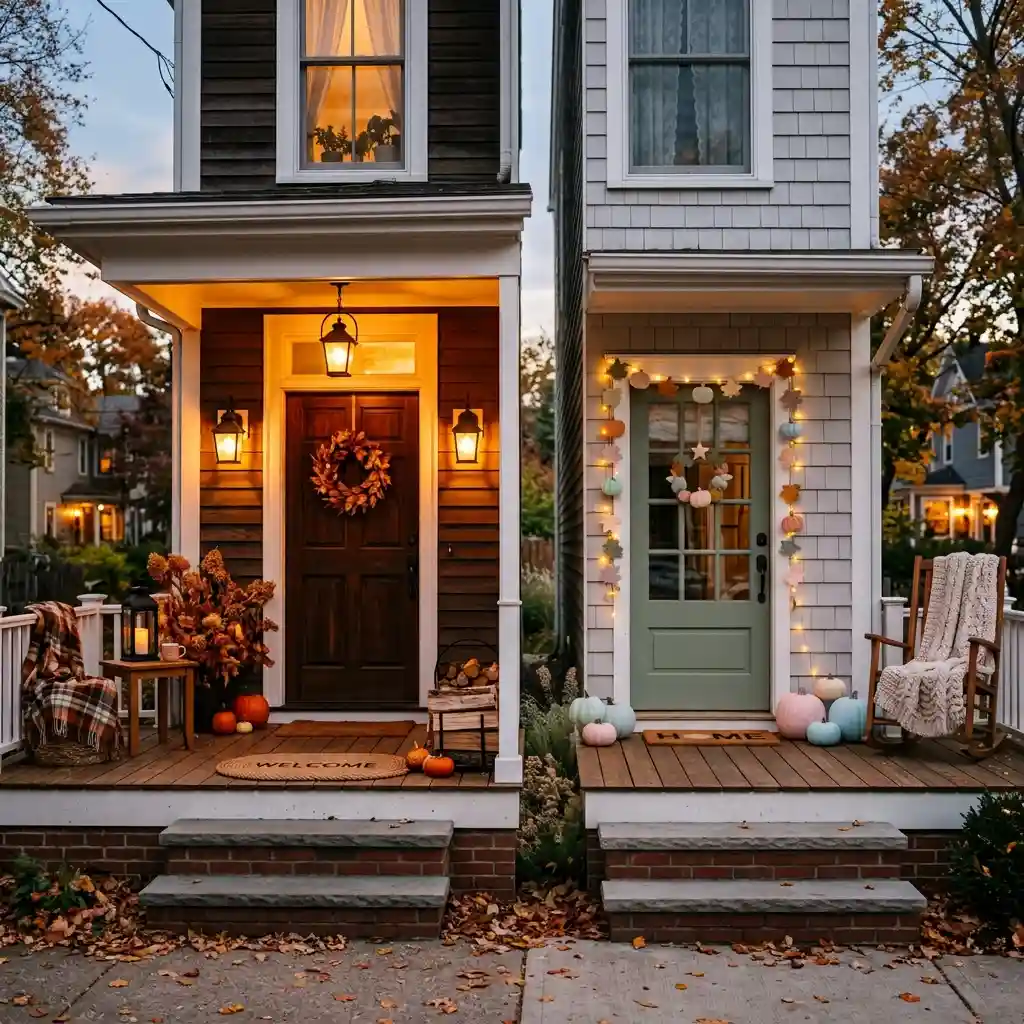
Two houses on the same street can spend the same money and look nothing alike. One porch glows amber behind dried branches and matte black lanterns. The next one carries pastel pumpkins, a felt garland and a smiling ceramic ghost. Neither is wrong. They are simply two different halloween decor styles, and the reason one house looks planned and the other looks messy is almost never the budget.
Halloween decor styles now sort into five looks: spooky, cute, vintage, witchy and elegant gothic. Each one is set by its palette and its finish, not by its objects. A black cat exists in all five. Pick one style, learn its three colors, and let the finish decide what you buy. Mixing two is what makes a house look like a clearance shelf.
Editorial field note: A mantel holding a glazed pastel ghost, a matte black raven and a printed paper garland looks busy with only three objects on it. Remove the two that do not share a surface, keep the third, and add two more from the same family. The shelf goes quiet and the look becomes readable from the doorway, with nothing added to the budget. That editing habit runs through all our home decor inspiration.
September complicates the choice, because most porches are still wearing harvest colors. Your Halloween style has to sit on top of ochre, rust and real pumpkins rather than replace them. Two of the five styles do that easily. Two of them fight it.
What Separates One Halloween Style From Another?
The object is not the style. The finish is. A black cat in glossy injection-molded plastic belongs to no style at all. The same cat in matte-painted resin is spooky. In cream glazed ceramic with a painted smile it is cute. Printed on aged card with halftone dots and a crimped edge, it is vintage. Cast in unlacquered brass, it is witchy.
Sort every Halloween object you own into four finish families instead of into holidays. Matte and dry covers chalky paint, unglazed ceramic, dried stems, cheesecloth and raw cotton. Glossy and soft covers glazed ceramic, enamel, felt and satin ribbon. Printed and aged covers paper die-cuts, litho tin, honeycomb tissue and sepia card. Reflective and deep covers velvet, brass, mercury glass and poured wax.
Matte surfaces absorb light and look older. Glossy surfaces bounce it and look newer. That single difference is why a matte black pumpkin and a shiny plastic one cannot share a shelf, even when they are the same color and the same size. The eye sorts them before it reads either one.
DESIGNER TIP: Photograph your shelf in black and white before you buy anything else. Color hides a finish clash. Greyscale shows it instantly, because matte and glossy separate the moment the hue is gone.
Committing to one finish family is the same move as committing to one look in any other room, which is why the choosing process feels familiar to anyone who has worked through these bedroom aesthetic ideas. The style is a filter, not a shopping list. It tells you what to leave on the shelf at the store.
How Do the Five Halloween Decor Styles Differ?
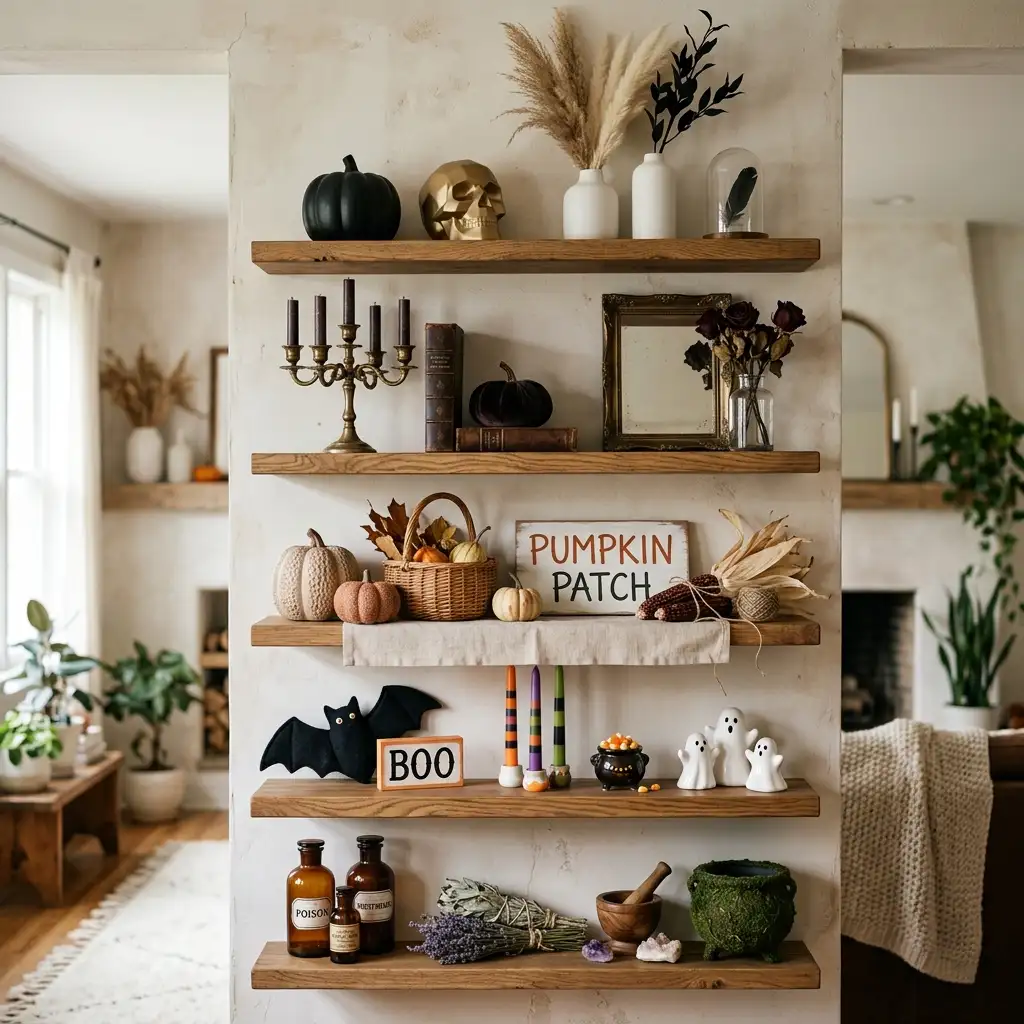
Each style below is described by palette first, finish second, objects last. Read them in that order. Most people shop in reverse, which is exactly how two styles end up in one room.
Spooky Decor: Matte Black, Charcoal and Bone
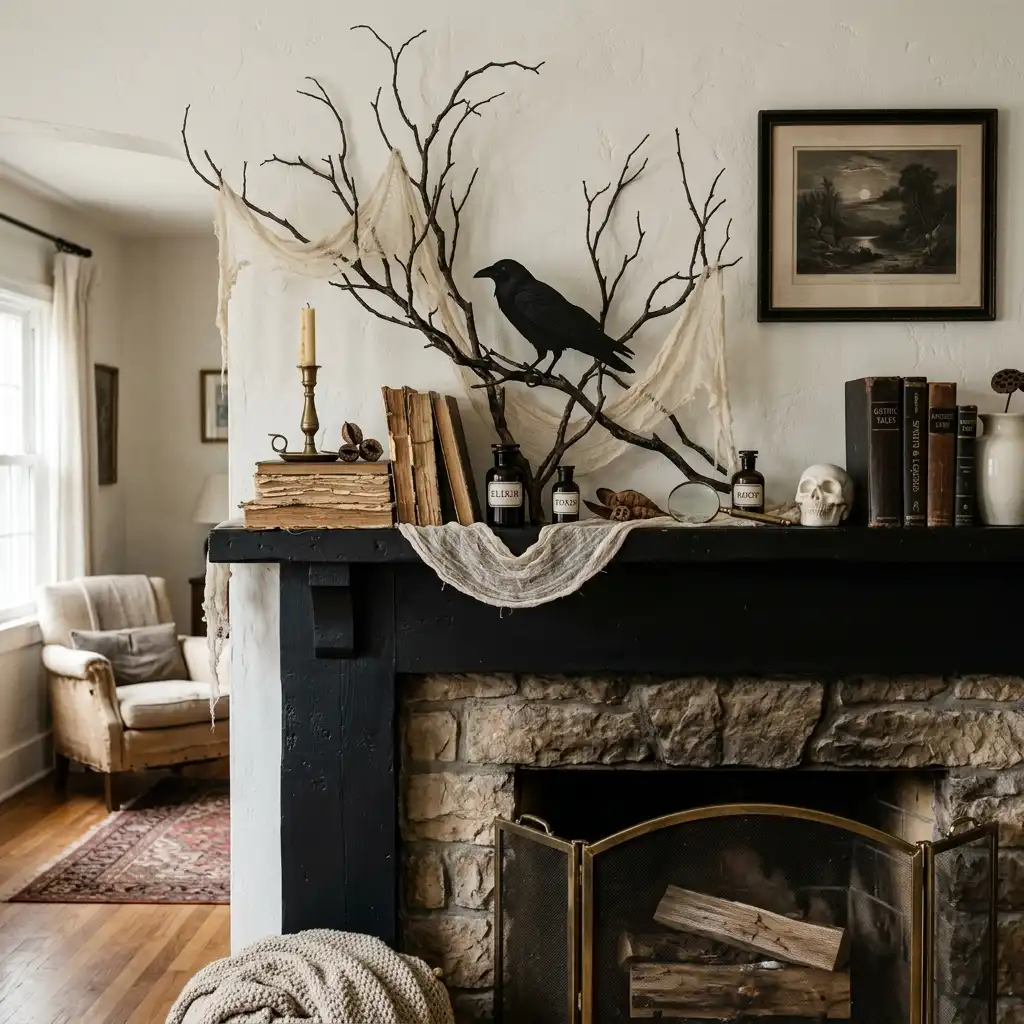
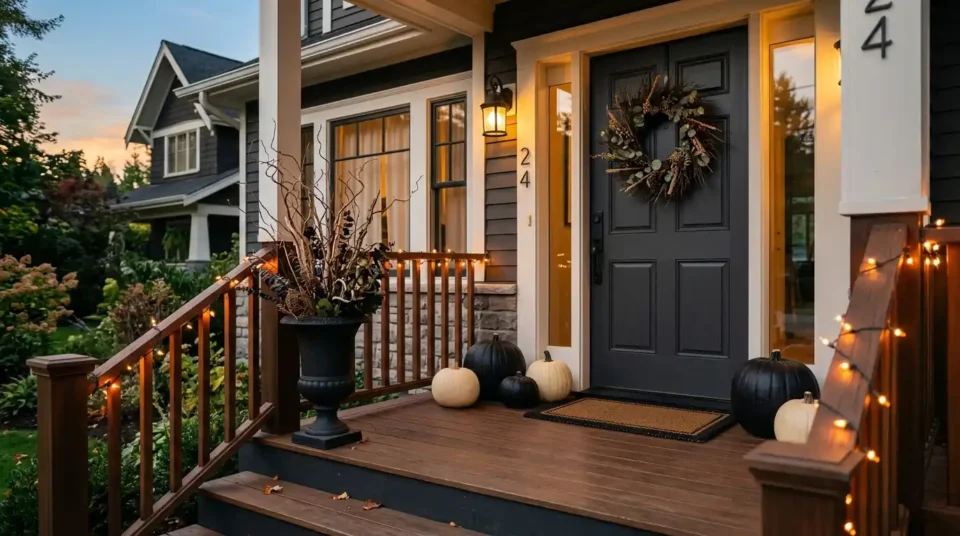
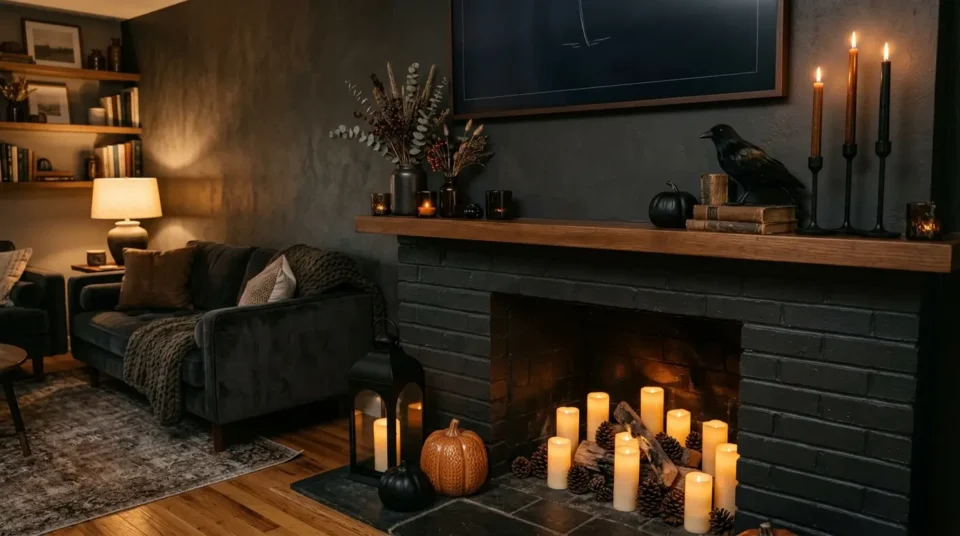
Spooky Halloween decor is built on matte, dry surfaces in matte black, deep charcoal and bone white. Nothing shines. The materials do the work: cheesecloth pulled thin over a mirror, bare branches in a heavy pot, unglazed ceramic, chalk-painted resin, and cobweb texture used sparingly rather than draped over everything.
The motifs are silhouettes rather than faces — a raven shape, a bare tree, a figure cut from black card and taped inside a window. Spooky is atmosphere, not gore. It fails the moment plastic blood or a glossy prop enters, because both break the dry surface rule. The same deep, light-absorbing palette drives these black bedroom ideas, where matte finishes stop a dark room from feeling flat.
Cute Decor: Soft Pink, Cream and Muted Orange
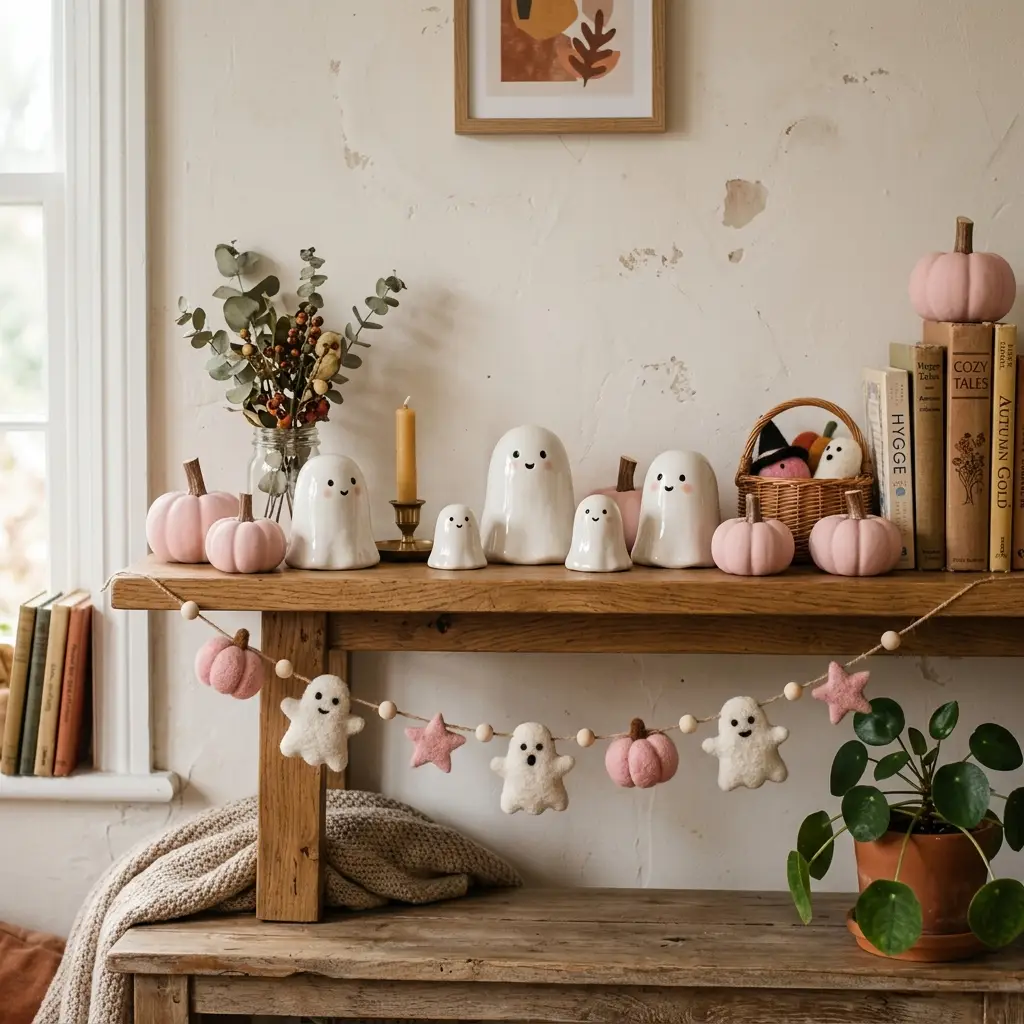
Cute Halloween decor uses glossy and soft finishes in soft pink, warm cream and muted pumpkin orange. Think glazed ceramic ghosts with painted smiles, felt garlands, satin ribbon, painted wood and rounded shapes with no sharp edges. Scale stays small and the object count stays high, which is the opposite of every other style here. What actually makes an object read cute rather than scary — shape, proportion, expression and contrast — is broken down in our guide to cute Halloween decor.
This is the one look that reads best under bright, neutral light rather than low light, because pastels go grey and muddy in a dim room. Cute fails when it meets real texture. Add dried stems or aged brass to a pastel shelf and the whole thing starts to look like leftover spring decor. Keep it with its own kind. The palette logic matches these blush pink bedroom ideas, where pink needs cream nearby to read as a choice rather than an accident.
Vintage Decor: Faded Ochre, Sepia and Soft Black
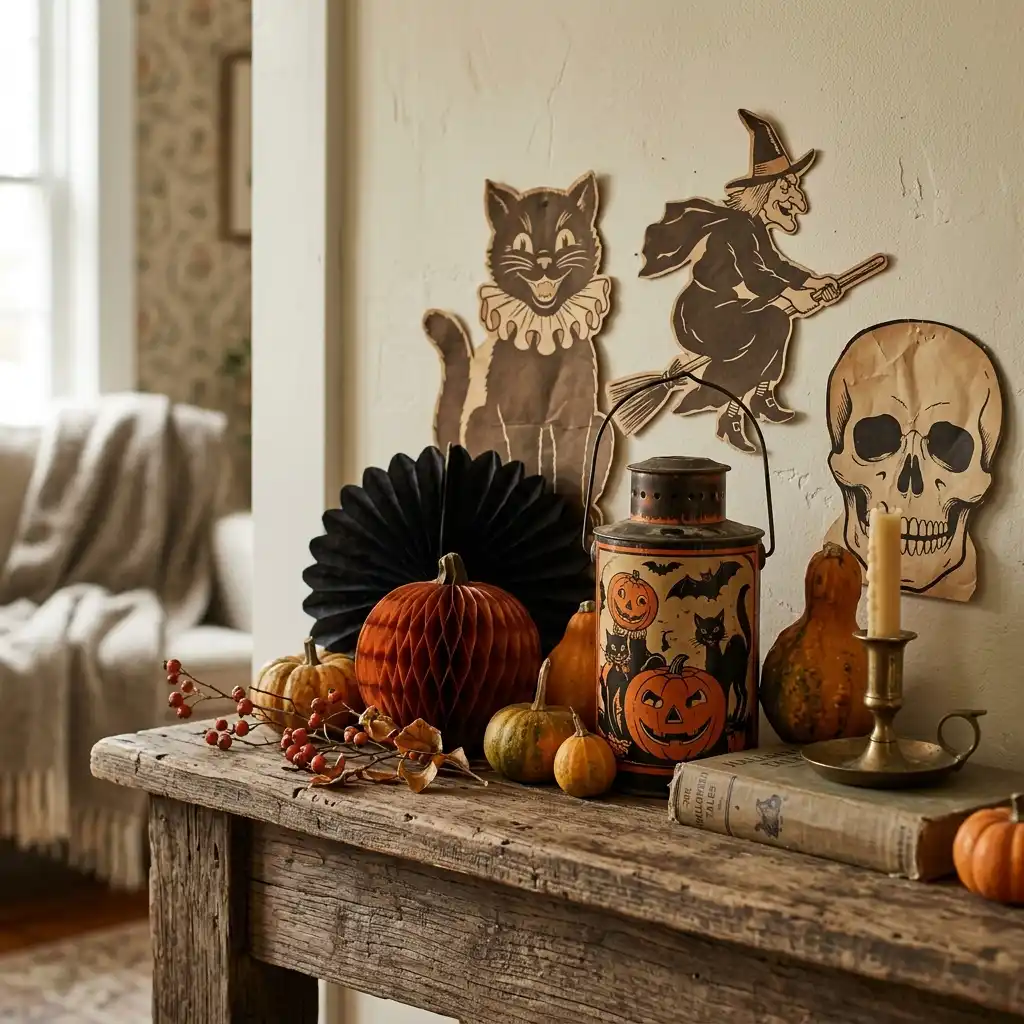
Vintage Halloween decor is printed, not molded. The palette runs faded ochre, sepia cream and a soft black that has clearly aged toward brown. Materials are paper and metal: reproduction die-cuts, honeycomb tissue, litho tin lanterns, checkerboard borders and thick aged card. Grinning paper jack-o’-lanterns, crescent-moon witches and jointed black cats are the recognizable shapes.
The giveaway on a bad reproduction is paper that is too white and ink that is too saturated. Real vintage stock has gone warm and slightly soft. Hold a new die-cut next to a cream envelope — if it looks brighter than the envelope, it will look modern on your wall.
DESIGNER TIP: Buy paper die-cuts in twos and threes from the same print run. Mixed reproduction lines use different paper whites, and the mismatch shows the moment they hang side by side.
Material Note: Paper die-cuts and honeycomb tissue curl and fade in damp air and direct sun, so they belong indoors or under a covered porch.
Witchy Decor: Deep Plum, Olive and Unlacquered Brass
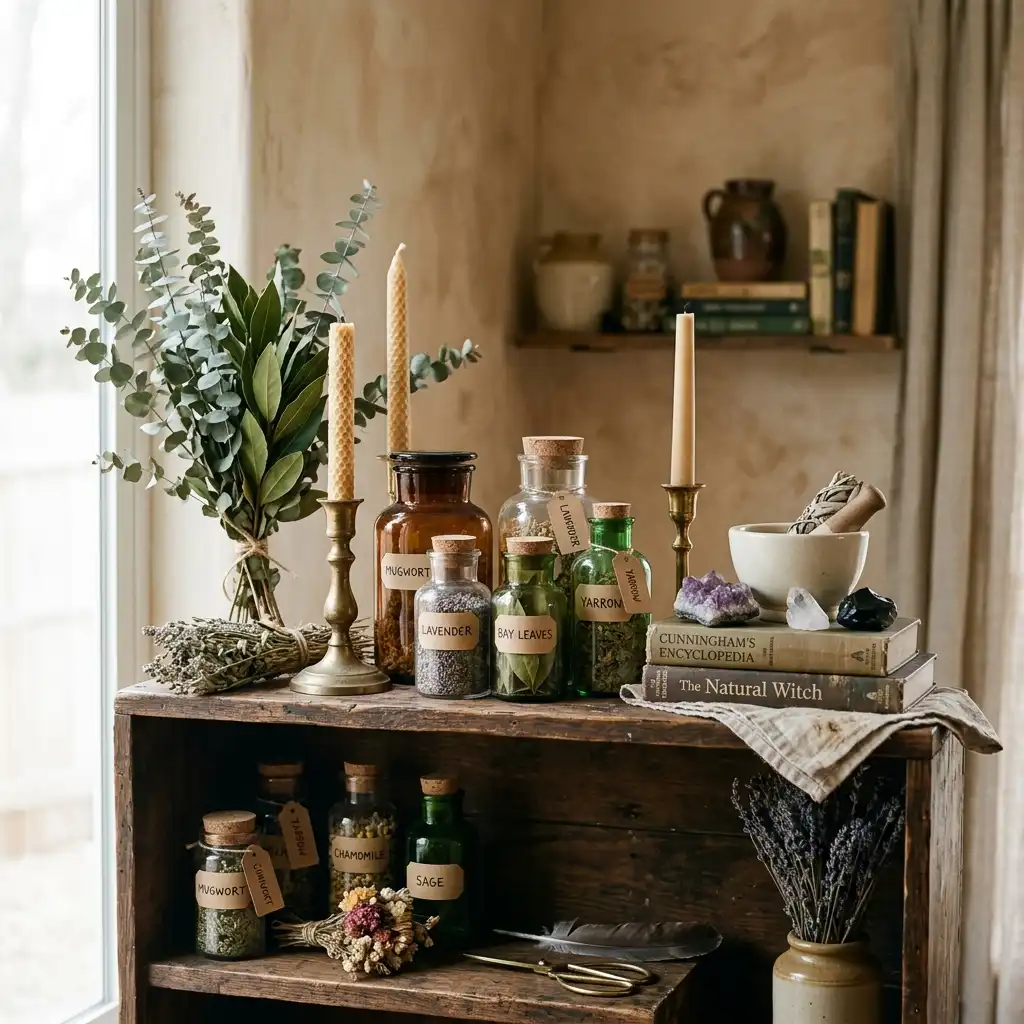
Witchy home decor is the one Halloween style that stays up year-round. The palette is deep plum, olive green and unlacquered brass, with black used as a shadow rather than as the main color. Materials are apothecary glass, dried herbs like eucalyptus and bay, beeswax tapers, cast brass and dark linen. Moon phases and celestial shapes appear more often than anything ghoulish.
Nothing in that list announces a date, which is why a witchy shelf built in September still looks right in February. It fails only when costume props sneak in — a plastic hat, a molded cauldron, a green light inside a jar. Buy the real material or leave the space empty. The dried botanicals and low warm light give it the same grounded feel as these moody boho bedroom ideas.
Safety Note: Keep dried botanicals, cheesecloth and paper well clear of any live flame, and switch to battery tapers on anything left unattended.
Elegant Gothic Decor: Bone, Oxblood and Antique Gold
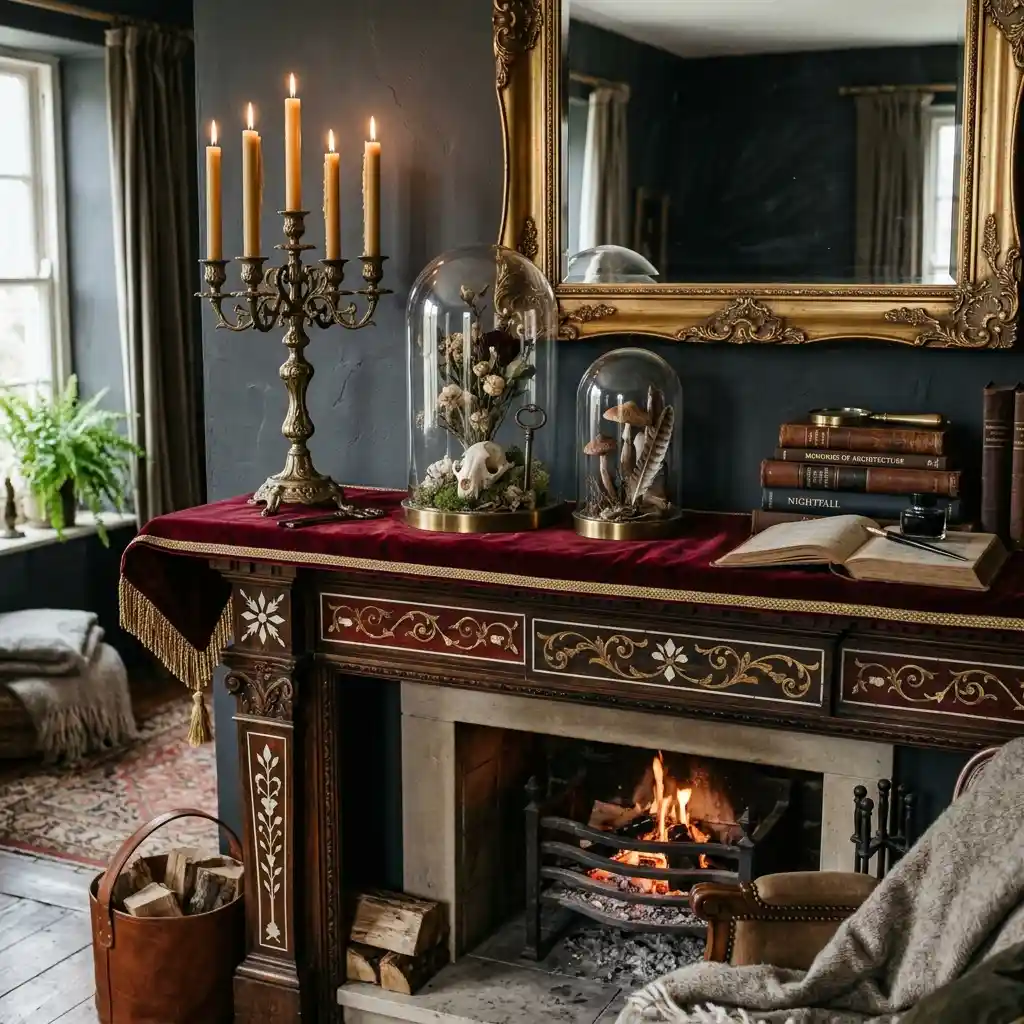
Elegant gothic Halloween decor contains no orange at all. The palette is bone white, oxblood or deep crimson, and antique gold, with black as the base. Finishes are reflective and deep: velvet runners, mercury glass, glass cloches, brass candelabra, black taper candles and matte black painted pumpkins. Dark florals in oxblood — dahlias, ranunculus, dried roses — replace props almost entirely.
This is the most expensive style per object and the cheapest to keep small. Six good pieces on one mantel beat thirty on four surfaces. It fails on a single orange item, and it fails on visible plastic anywhere, because the whole look depends on materials that reflect light honestly.
| Quick Takeaways | |
|---|---|
| Spooky | Matte black, charcoal, bone. Dry surfaces, silhouettes, no shine. |
| Cute | Soft pink, cream, muted orange. Glossy ceramic and felt, bright light. |
| Vintage | Faded ochre, sepia, soft black. Printed paper and tin, never molded. |
| Witchy | Deep plum, olive, brass. Real botanicals and glass, stays up year-round. |
| Elegant gothic | Bone, oxblood, antique gold. Velvet and brass, zero orange. |
Read down the palette column and one row will feel like your house already. That row is your cheapest style, because you own half of it.
Why Did Halloween Split Into Styles?
Halloween used to be one orange-and-black aisle. It is now merchandised the way furniture is merchandised, in named looks with their own palettes, and shoppers pick a lane before they pick a product.
Signs This Is Catching On:
Michaels launched its 2026 Halloween range as six separate named collections rather than one assortment, each with its own palette and motifs — Vintage Spirits in orange, black and folk-art checkerboard; Mischief & Magic in bright pinks and aquas with pastel pumpkins; Hallowed Halls in emerald green and antique brass; Bound by Magic in deep navy and antique gold.
Pastel Halloween moved from a niche idea to a stocked category with its own products, instead of being something people improvised by painting pumpkins.
Emerald green, deep navy and crimson now appear in mainstream Halloween palettes where orange used to be automatic.
Witchy and apothecary-style decor sells outside October, because glass jars, dried botanicals and brass do not read as a holiday.
That last point is the practical one. Two of these halloween decor styles are seasonal purchases and three of them are not, which changes how much you should be willing to spend on each. There is more of this in our Halloween decorating archive as the rest of the cluster fills out.
How Do You Commit to One Style This Season?
Six moves turn a chosen style into a finished surface. Work them in order — the first two cost nothing and decide most of the result.
- Sort what you already own by finish, not by holiday. Empty the bin onto a table and make four piles: matte, glossy, printed, reflective. Whichever pile is biggest is your cheapest style to commit to, because you are already halfway there.
- Take your three colors from the biggest pile, not from a mood board online. A palette you can see on your own table is one you can actually shop against.
- Repaint or retire the outliers. A can of matte black spray costs under $10 and moves a glossy plastic prop straight into the spooky pile. Anything that will not convert goes into a labeled bag for next year, not back on the shelf.
- Buy one spine object at full scale before any small pieces. Every style needs one item large enough to state it from across the room — a three-foot dried branch arrangement, a brass candelabra, an oversized paper die-cut. Small pieces cannot do this job no matter how many you buy.
- Pick one metal and repeat it at least twice. Brass or black iron, not both. Repetition is what makes two objects look like a set rather than two purchases.
- Set the takedown date the day you set the display up. Cute and spooky come down on November 1, because their objects are unmistakably Halloween. Vintage and witchy can stay into late November without looking stranded.
Rental Note: Every style here works without a single nail. Use a tray, a runner or a mantel ledge as the base, and lean paper pieces against the wall instead of hanging them — the same no-damage approach behind these rental bedroom ideas.
Styles are the entry point to the whole season, and the same lane you pick here will steer your porch, your wreath and your table.
Where a Chosen Style Quietly Falls Apart
Objects get picked by motif while the surface is ignored. A black cat, a ghost and a pumpkin each exist in all five styles, so the shape on the box says nothing about whether the piece will fit. Check the finish before the subject and the same $18 object either joins your scheme or stays in the store.
Orange gets treated as the default Halloween color. It belongs to vintage and to spooky, and it does real damage to elegant gothic and to witchy, where the palette runs on oxblood, plum and antique gold. One orange stem in a witchy arrangement drags the whole shelf back toward a generic holiday display.
A second style gets added for the kids and scattered through the first. Four pastel ghosts spread across a matte black scheme do not look playful. They look unfinished. Give the second style its own tray, its own shelf or its own room, and let each one hold together on its own. Our indoor Halloween decor guide shows how far one lane needs to travel through a house.
The chosen style fights the house itself. Red brick and warm oak floors push back hard against cool pastel. Cool grey siding with bright white trim makes sepia vintage look dirty rather than aged. Look hard at the materials you cannot change, then pick the style that sits comfortably beside them.
Your One-Style Halloween Checklist
- Sort every stored piece into four finish piles before buying anything new this season.
- Write your three colors down and shop against that list, not against the store display.
- Buy one full-scale spine object per room before adding any small pieces.
- Repeat one metal at least twice, and leave the second metal out entirely.
- Keep pastel schemes under bright light and matte schemes under low warm light.
- Check any reproduction paper against a cream envelope before buying a full set.
- Set the takedown date now — November 1 for cute and spooky, later for vintage and witchy.
KEY TAKEAWAY: The finish family decides the style, so sorting what you already own by surface is the single cheapest way to land on the look your house can actually carry.
Pricing a Single-Style Halloween
Cost varies more by style than by room, because each look leans on a different material. Spooky is the budget entry at under $55 for a full surface, since chalky paint and dried stems cost almost nothing. Vintage and witchy sit mid-range, in the $45 to $165 band, where reproduction paper and real glass start to add up. Elegant gothic is the premium lane at $120 to $280 for one mantel, because velvet, brass and mercury glass have no cheap version that still looks right. The same style-before-quantity logic shows up across all our seasonal decorating ideas. Ranges below reflect typical craft-store and big-box pricing for the pieces described.
| Project | Estimated Cost | Impact Level |
|---|---|---|
| Spooky reset — matte black spray, cheesecloth, dried branches, one heavy pot | $20–$55 | High |
| Cute set — felt garland, three glazed ceramic ghosts, ribbon, painted wood signs | $35–$80 | Medium |
| Vintage set — reproduction die-cuts, honeycomb tissue, one litho tin lantern | $45–$120 | High |
| Witchy shelf — six apothecary jars, dried botanicals, beeswax tapers, brass holder | $70–$165 | High |
| Elegant gothic mantel — velvet runner, brass candelabra, two cloches, black pumpkins | $120–$280 | Very High |
Best First Upgrade: The spine object in your chosen style — one full-scale piece changes a surface more than six small ones at the same total cost.
Skip for Now: A second style. Buy the missing half of your first lane before starting a second, or you will own two incomplete looks instead of one finished one.
Which Halloween Style Should You Start With?
Vintage is the easiest first commitment for most homes. Paper and tin are the cheapest materials on the table, and the ochre-and-sepia palette layers straight over any creative fall and autumn decor ideas already sitting on the porch. Printed pieces of different subjects still look like one family, because the print treatment unifies them. Spooky is the second-easiest, since a can of matte spray converts things you already own.
Elegant gothic is the hardest to start and the best to build slowly. Buy two good pieces a year — a brass candelabra, then a velvet runner — and skip the filler entirely.
Designer’s Verdict: Start with vintage if you want a finished look this October, and start with witchy if you want decor that earns its shelf space in March as well.
Related Seasonal and Style Ideas:
- 15 Dark Academia Bedroom Ideas for a Moody, Literary Escape
- 12 Cottagecore Bedroom Ideas for a Romantic, Vintage-Inspired Retreat
- 11 Bold Black Christmas Decor Ideas for a Modern Holiday
- 12 Creative Vintage Craft Room Ideas for a Timeless Studio Aesthetic
- 15 Cozy Winter Decor Ideas to Keep Your Home Warm and Stylish
Frequently Asked Questions
Conclusion
A year from now you will still own the brass, the glass and the printed paper, while anything bought in the wrong finish gets quietly replaced next October. Halloween decor styles reward the person who picks one lane and buys slowly inside it, and that same habit carries into every other season in our home decorating ideas.
Next Steps
- Empty your Halloween bin onto one table and sort every piece into four finish piles: matte, glossy, printed and reflective.
- Count the piles and pick the style matching the biggest one — that is your cheapest commitment this season.
- Write your three colors into your phone and shop against that list rather than against store displays.
- Buy one full-scale spine object for the room you are styling before adding any small pieces.
- Set your takedown date now: November 1 for cute and spooky, late November for vintage and witchy.