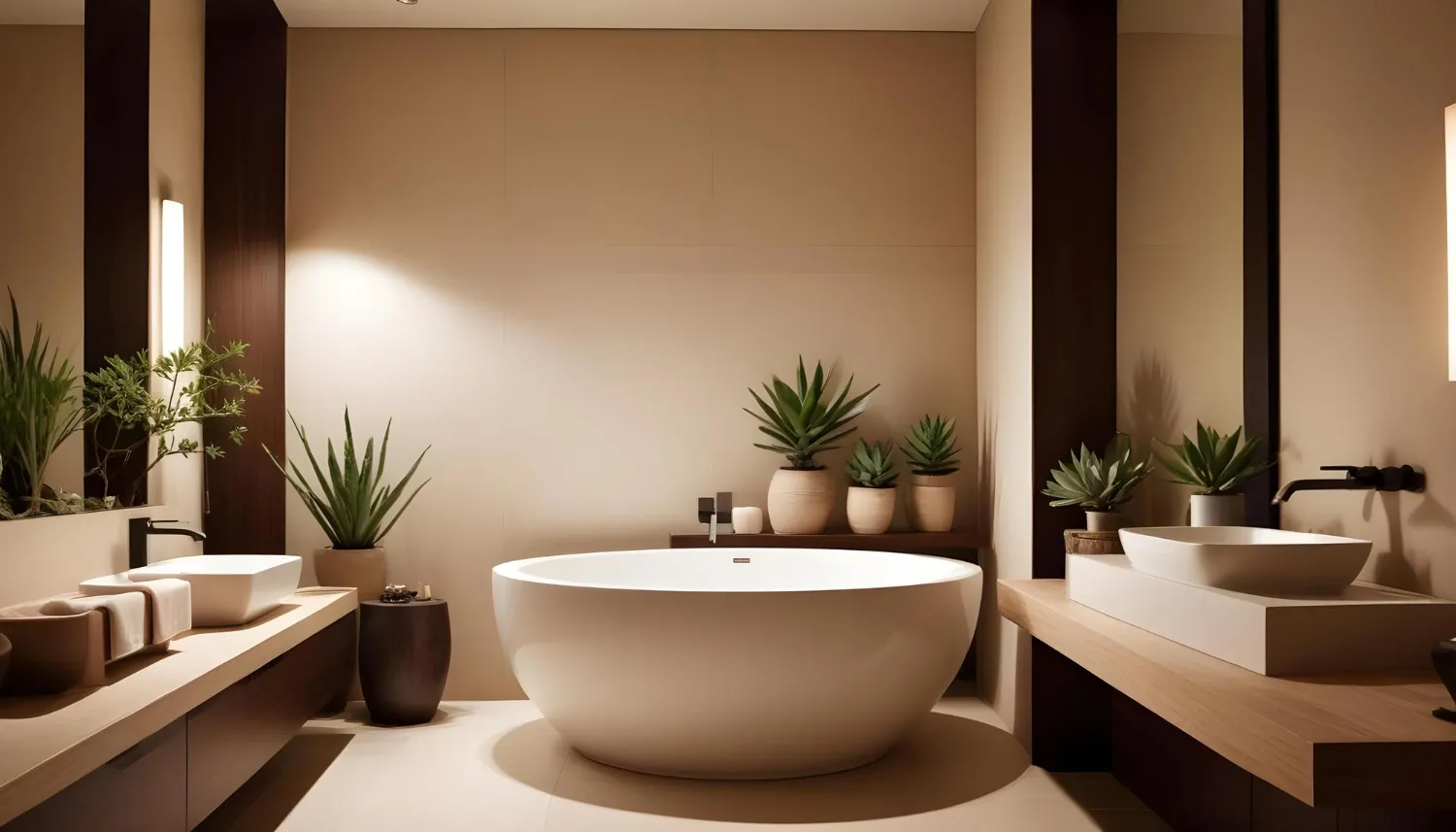
Where Do You Start With a Bathroom Refresh?
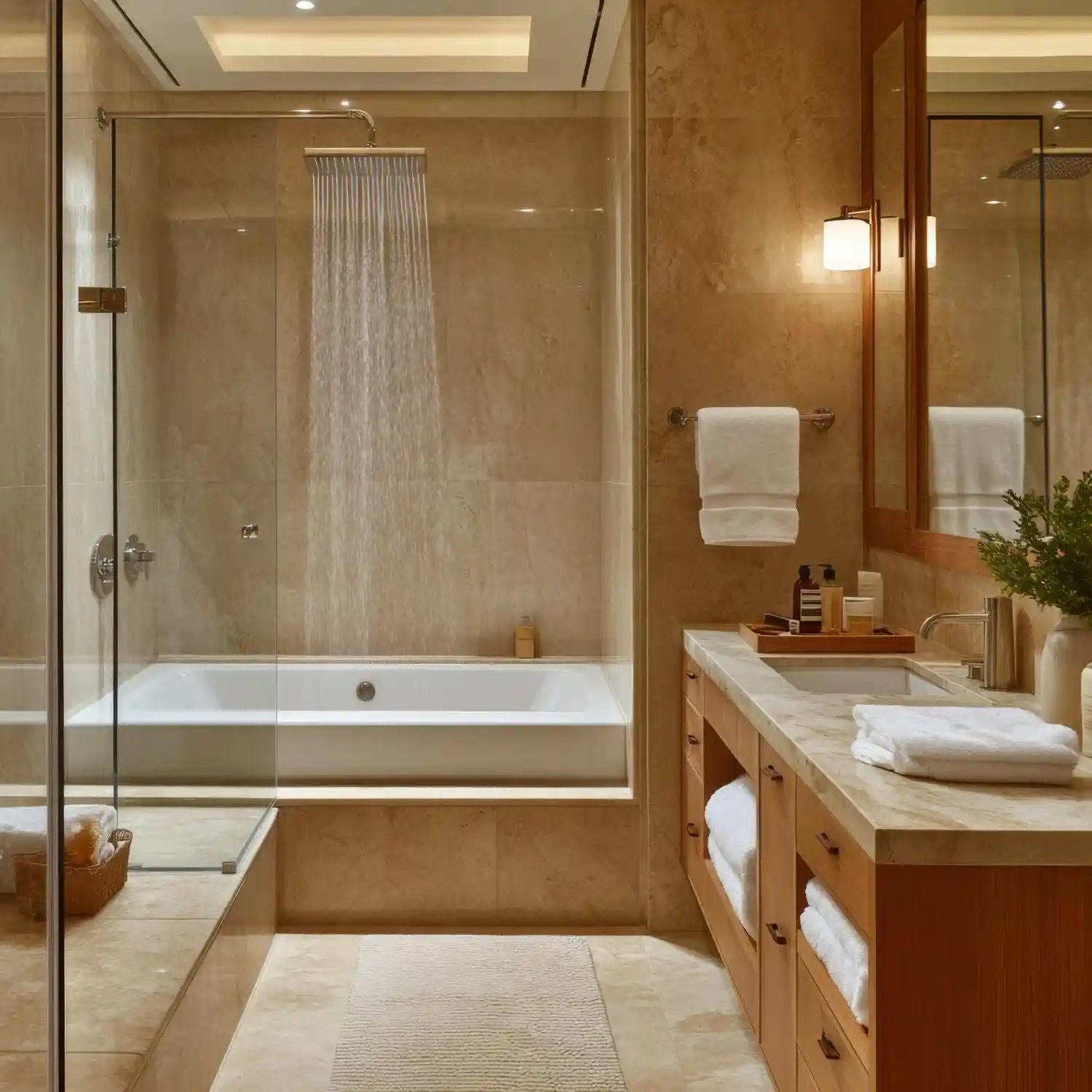
Good bathroom ideas follow a fixed order: color first, then surfaces, then light. The room feels calm or busy long before the towels go up. Most people start with accessories, and that is why so many bathrooms feel unfinished even when they are clean and tidy.
If you have ever stood in a nearly-finished bathroom and thought “something is still off” — you are not alone. The usual culprit is one skipped layer, not a lack of decor.
Editorial field note: A small windowless bathroom with one harsh ceiling light often feels flat and blue-tinted. Swapping that bulb for a warm 2700K light and adding a mirror across from the door softens the whole room. The space looks larger and warmer before a single new item is bought.
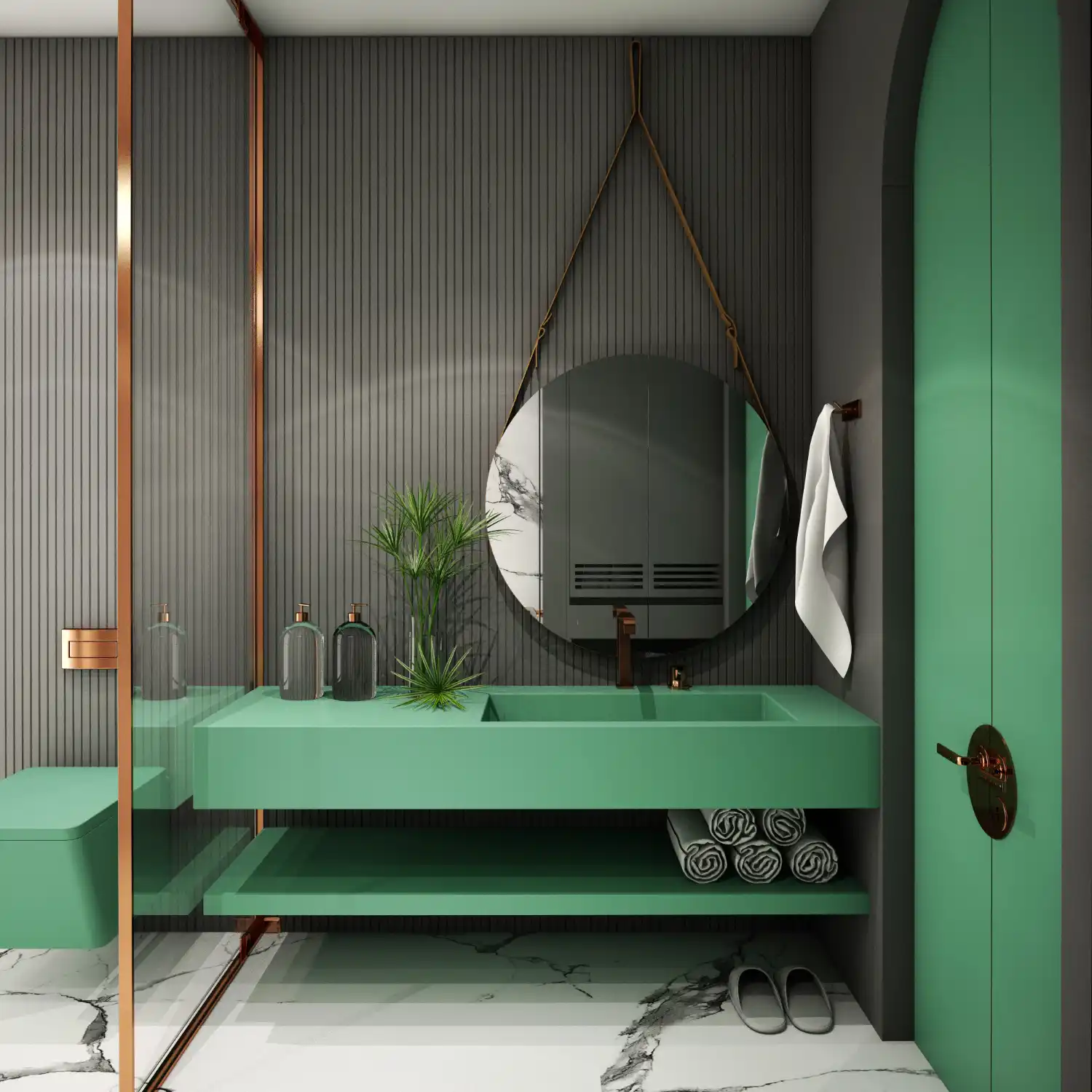
The best bathroom ideas start with three decisions: the palette, the surfaces, and the light. Get those right and the room feels settled before you add a single accessory. Small bathrooms lean on pale color and mirrors. Larger ones can carry deeper tones and more texture. Everything else — vanity, tile, storage — hangs off those first three choices.
This guide is a map. It walks through small-space layouts, styles, colors, tile, storage, and vanities so you can plan the whole room without guessing. If you would rather work in the right order, follow our step-by-step guide to how to decorate a bathroom. You can also lean on our wider home decor inspiration when you move on to other rooms. Every idea here is grouped the way a designer would tackle the room, one layer at a time. To see finished examples, browse all our bathroom ideas any time. Bookmark this guide for quick reference.
| Quick Takeaways | |
|---|---|
| Palette | Pick one main color plus warm white; add a third only as an accent. |
| Surfaces | Tile, paint, and wallpaper set the mood more than any accessory. |
| Light | Use warm 2700-3000K ambient light and CRI 90+ at the mirror. |
| Storage | Wall shelves, a ledge, and closed vanity drawers clear the counter. |
| Style | Choose one look — coastal, farmhouse, modern — and repeat its cues. |
| Budget | Paint, hardware, and a mirror give the biggest change for the least money. |
Small Bathroom Ideas for Tight Footprints
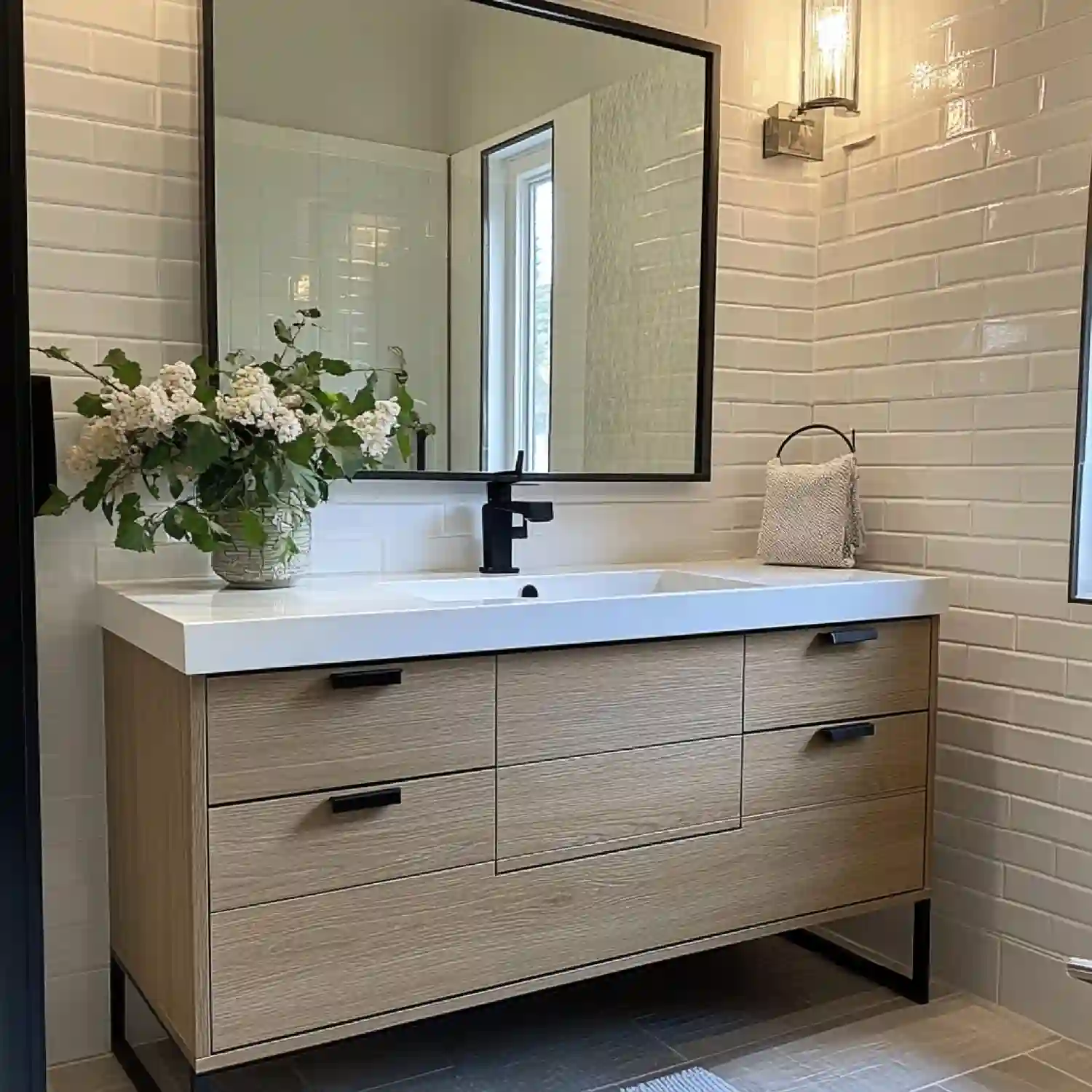
Small bathrooms win on light and reflection, not on cramming in more. A large mirror doubles the sense of space and bounces daylight into dark corners. Pale colors like soft white, warm greige, and light sage push the walls back visually. A wall-hung or floating vanity shows more floor, which makes a tight room feel less boxed in.
Space planning matters even in a decor refresh. The NKBA recommends 30 inches of clear space in front of each fixture, and building code sets a 15-inch minimum from the toilet centerline to any wall or fixture, per the NKBA Bathroom Planning Guidelines. Keep those in mind before you add a bench, a hamper, or a plant stand.
Vertical storage is your friend in a tiny room. An over-the-toilet ledge, a slim wall cabinet, and two floating shelves hold daily items without eating floor space. Glass shower panels also help — a clear panel keeps the sightline open where a curtain would chop the room in half.
DESIGNER TIP: In a small bathroom, run one tile from floor to ceiling on a single wall instead of a busy border. One tall surface reads calm; a stripe of accent tile makes the room feel shorter.
How Do You Choose a Bathroom Style?
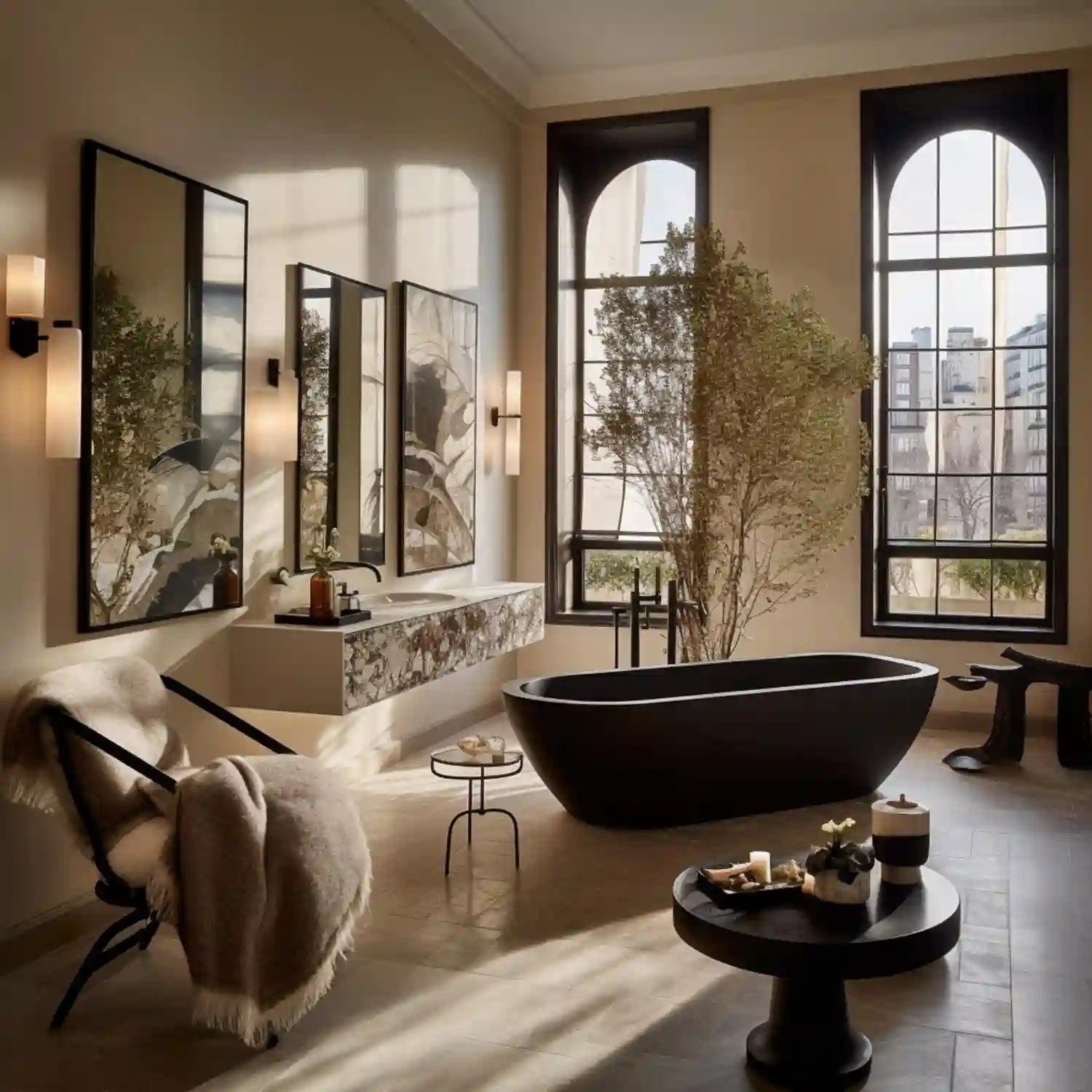
Pick one style and repeat its cues in three places. A bathroom style is a set of matching signals — color, material, and hardware finish — not a single feature. Choose the look first, then let it guide the tile, the vanity, and the fixtures so nothing fights.
Your style choice also sets the mood. Coastal feels light and airy. Farmhouse feels warm and lived-in. Modern feels clean and quiet. Spa feels soft and hushed. Once you name the feeling you want, most decisions get easier.
Farmhouse, Coastal, and Boho Bathrooms
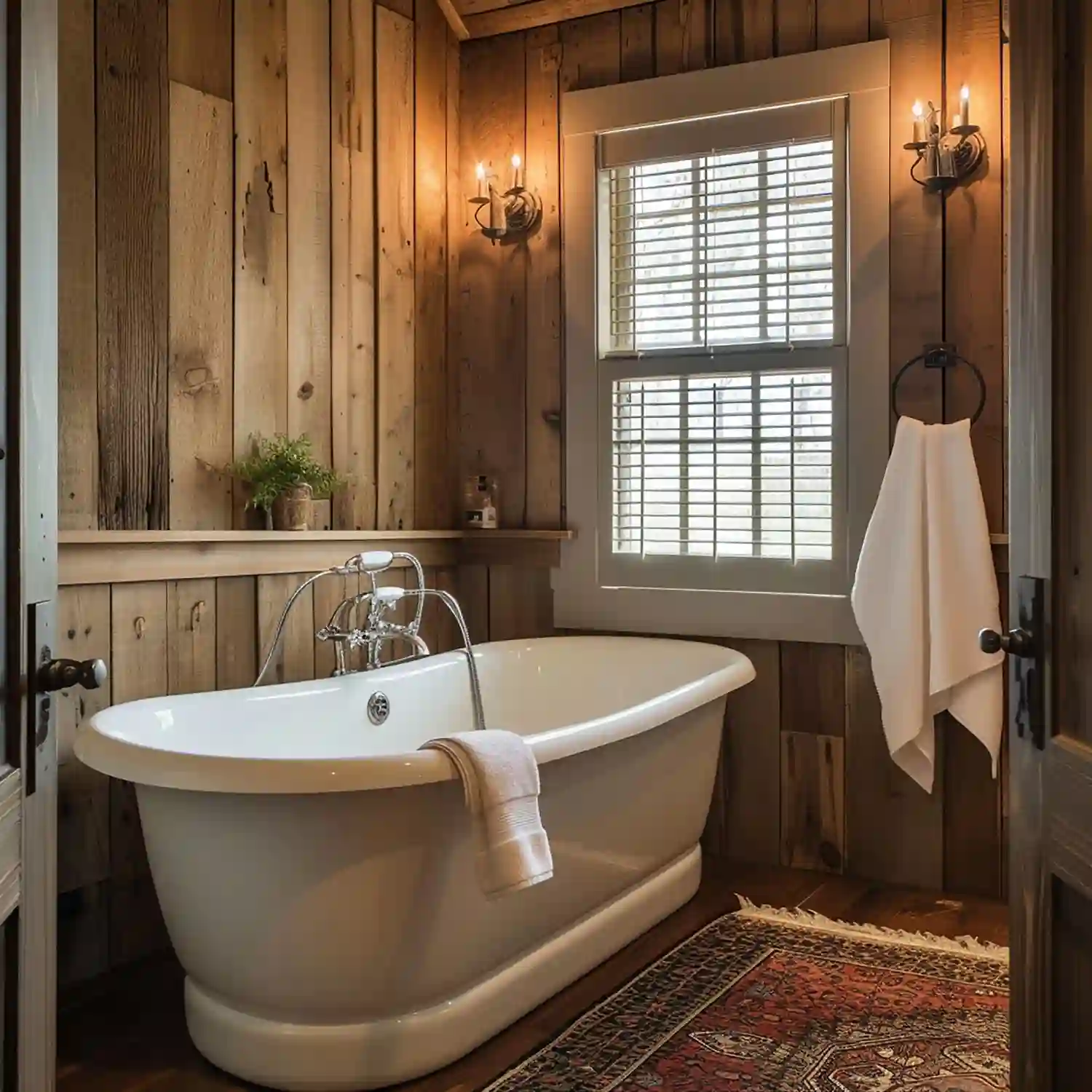
Farmhouse bathrooms mix warm wood, matte black hardware, and shiplap or beadboard walls. Soft whites, warm cream, and a woven basket finish the look. If you want the cozy, rustic version, these farmhouse bathroom ideas show how to layer texture without it feeling like a theme park.
Coastal bathrooms lean on light blue, sandy beige, and natural rattan. Boho bathrooms go warmer and more eclectic — terracotta, layered textiles, trailing plants, and mixed patterns. For a relaxed, collected version of that look, these boho bathroom ideas balance pattern with calm so the room still feels restful.
Modern, Minimalist, and Spa Bathrooms
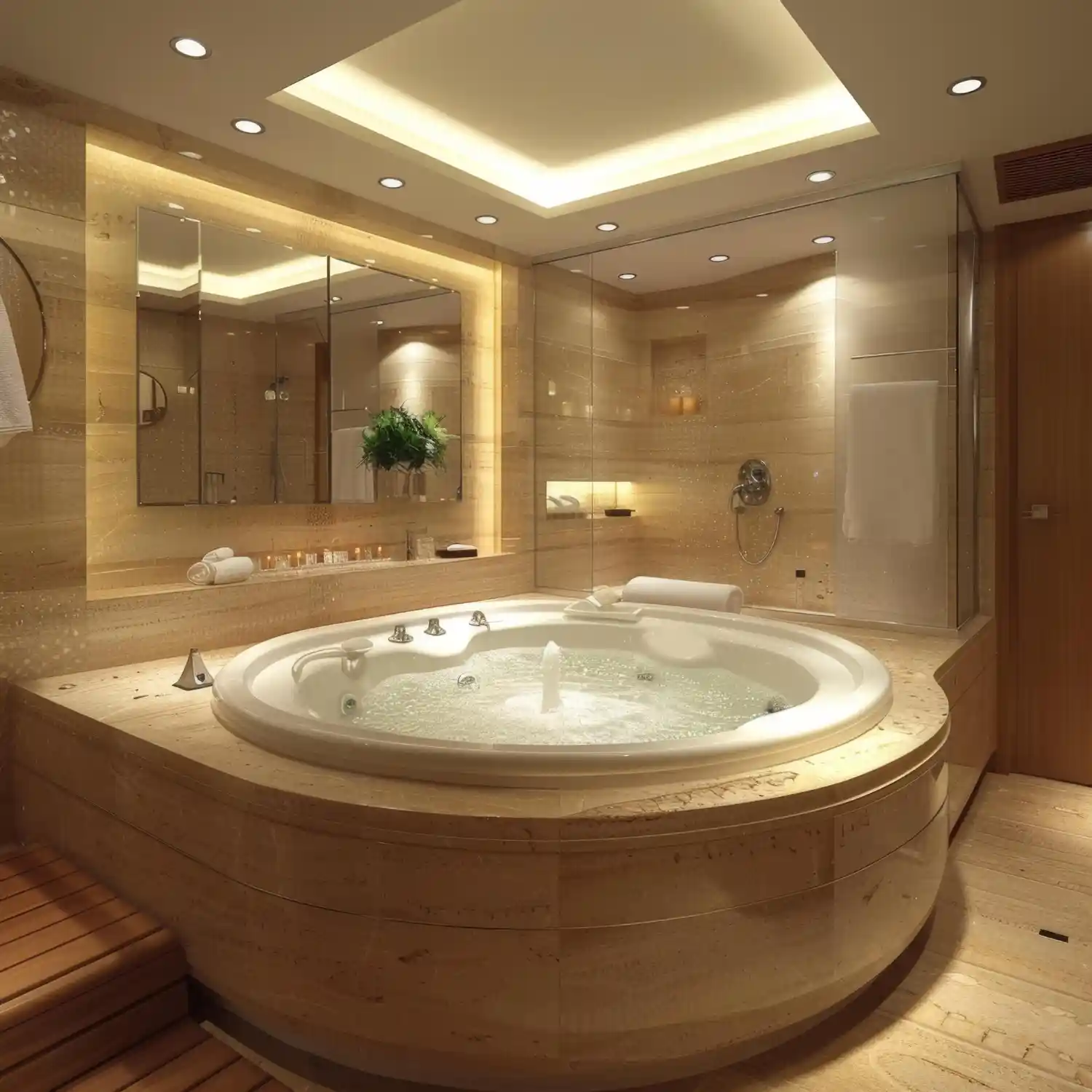
Modern bathrooms use clean lines, large-format tile, and matte black or brushed brass fixtures. Minimalist bathrooms strip it further — closed storage, one or two materials, and nearly bare counters. Both reward quiet color and hidden clutter over bold decor.
Spa bathrooms borrow from both. Soft neutrals, warm wood, natural stone, and low warm lighting make the room feel like a quiet retreat. Fewer visible products and more texture is the whole trick. To see how a pared-back scheme comes together, these minimalist bathroom decor ideas keep the room clean without feeling cold.
Bathroom Color Ideas and Palettes
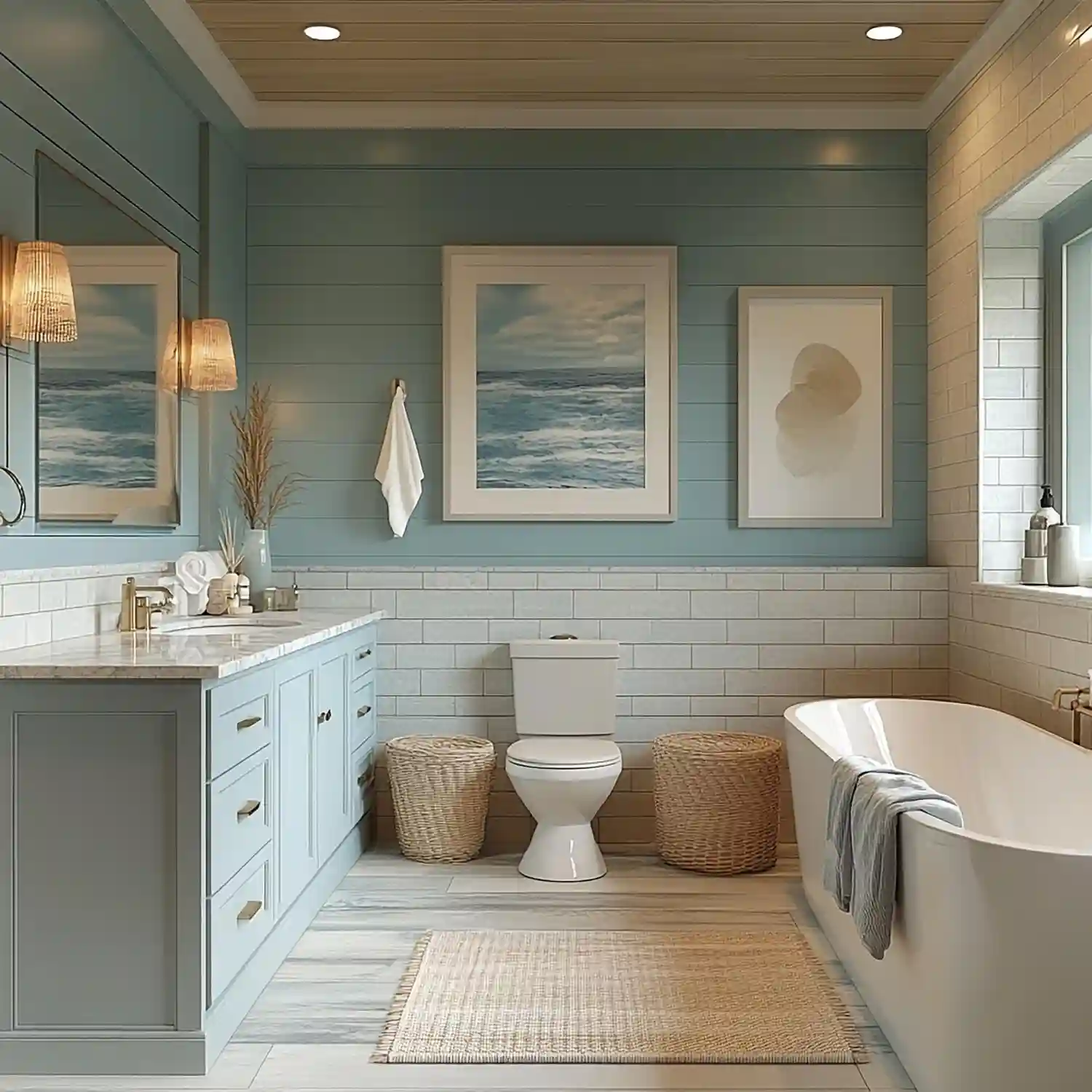
A bathroom palette works best with one main color, warm white, and a single accent. Two-thirds of the room stays neutral, and the accent shows up in tile, a towel, or the vanity. This 60-30-10 split keeps the room from feeling scattered.
Light decides how color reads. A soft blue feels crisp and spa-like in a bright bathroom but can turn cold and clinical in a windowless one. Warm undertones — greige, cream, soft clay — hold up better in low light. For a full color playbook, our black and white bathroom designs show how a two-tone scheme stays timeless in almost any light.
Warm Neutrals, Green, and Moody Shades
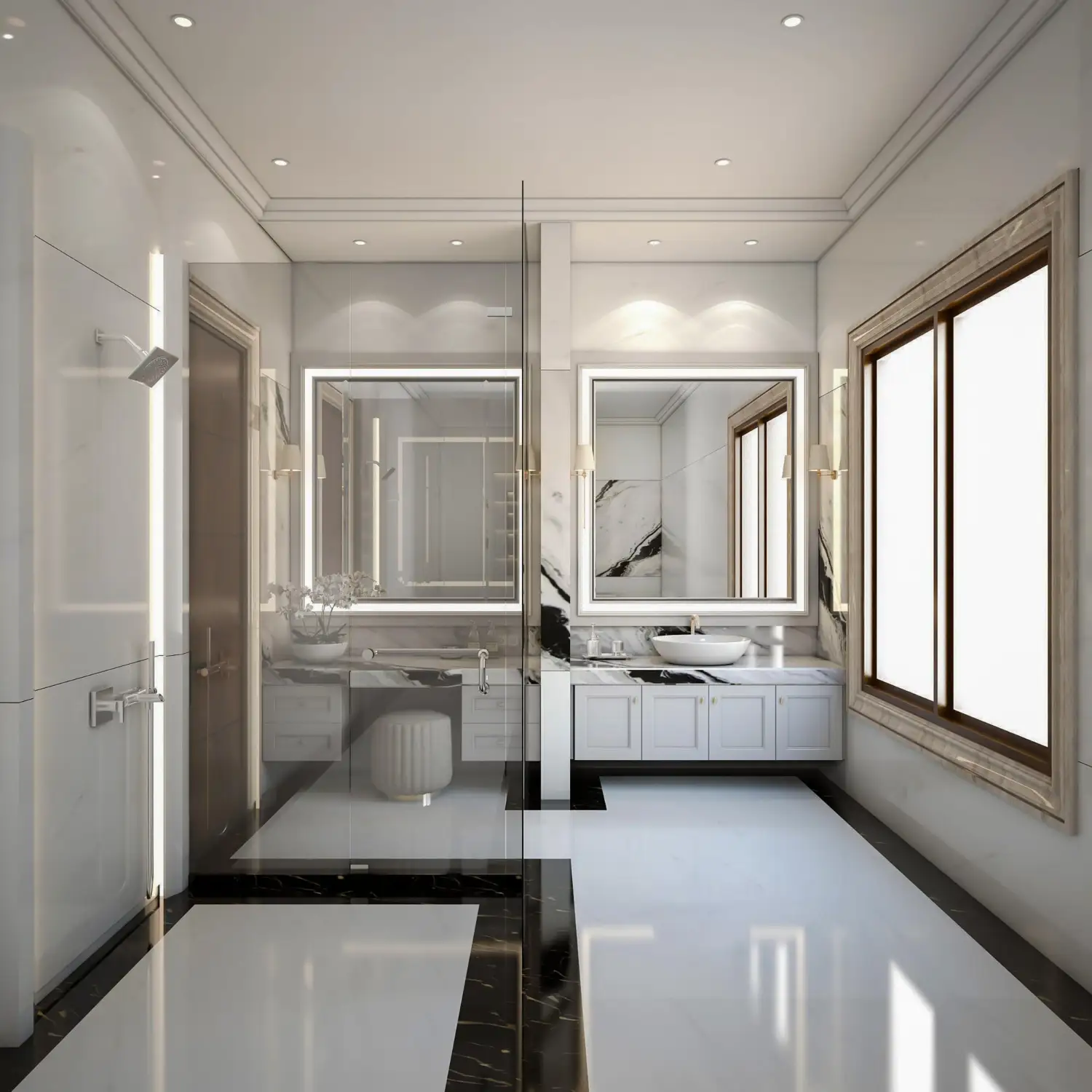
Warm neutrals are the safest bathroom ideas for resale and for calm — off-white, tan, and light brown all look soft and current. Sage and forest green have become the go-to color when people want personality without risk. Green pairs cleanly with warm wood, brass, and cream.
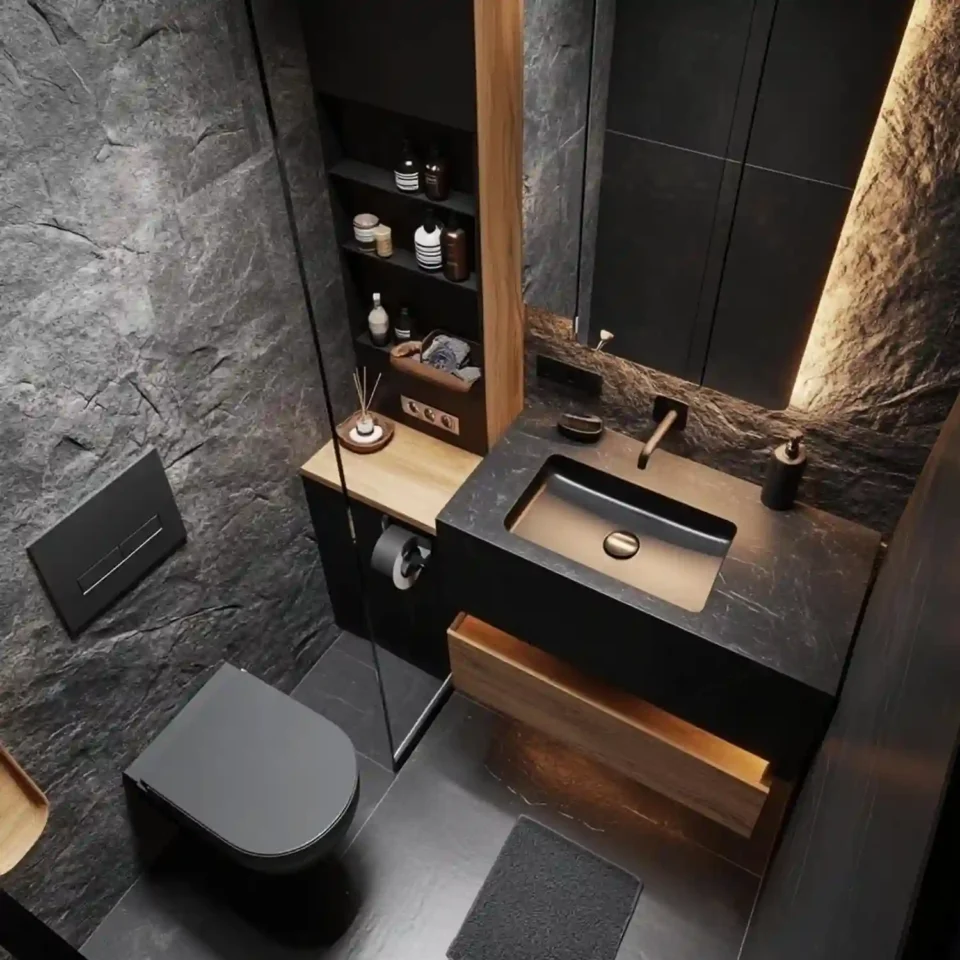
Moody shades — charcoal, deep navy, warm black — work best in bathrooms with good light or a large mirror to lift the darkness. In a bright room they feel rich; in a dim one they can feel heavy. If you love a soft, personal color, these sophisticated pink bathroom designs show one gentle route. For a nature-led scheme instead, these green bathroom ideas take a calmer, grounded path.
What Tile and Wall Ideas Work Best?
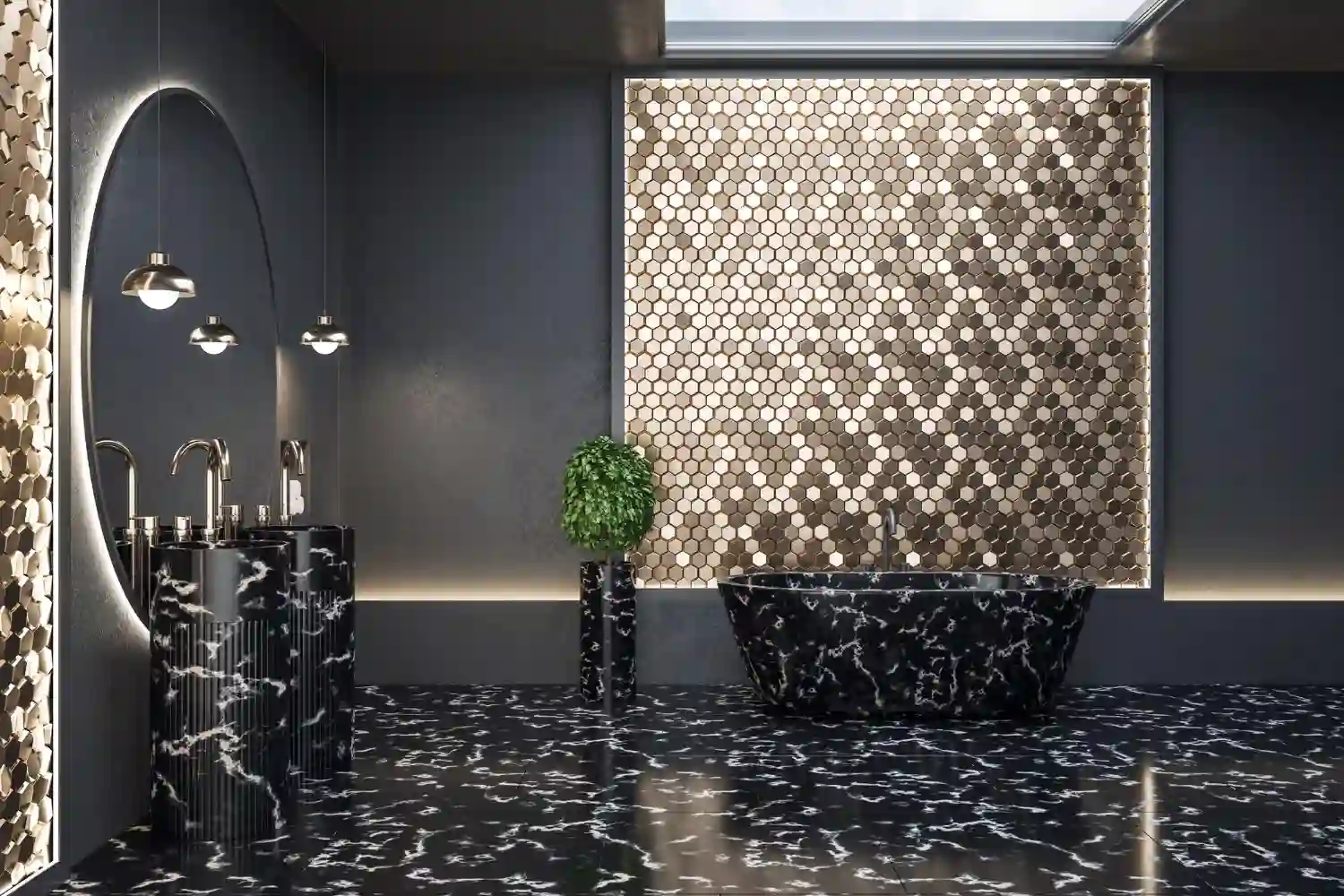
Tile and wall treatments set the mood more than any accessory. Large-format tile makes a small shower feel bigger because there are fewer grout lines to break up the wall. Handmade-look zellige tile adds soft, light-catching texture and has become a favorite for people who want warmth over a flat, uniform finish.
Paint choice matters in a wet room. Material Note: Satin and semi-gloss finishes resist moisture far better than flat paint because their smoother surface sheds water and cleans easily, which lowers the risk of mildew. Always pick a bathroom-rated, mildew-resistant formula whatever sheen you choose.
Tile Patterns, Wallpaper, and Panels
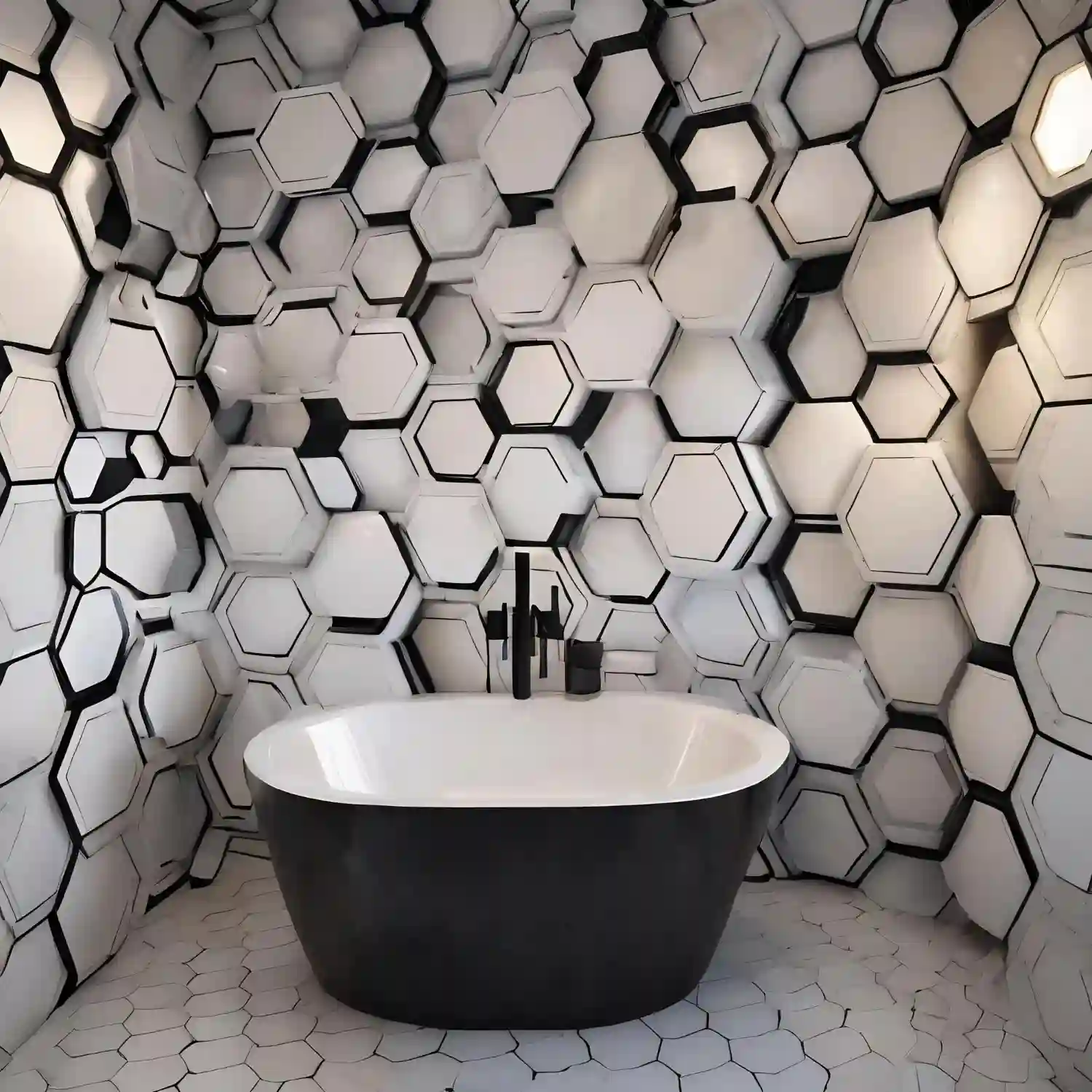
Pattern adds interest without color. A vertical stack, a herringbone lay, or a simple grid changes the whole feel of the same tile. A backsplash is the easiest place to test a pattern — small area, big impact. These bathroom backsplash ideas work for almost any budget and pull the vanity and mirror together.
Wallpaper and wall panels bring softness that tile cannot. Moisture-safe vinyl wallpaper suits the areas away from direct spray, like the wall behind the toilet or above a wainscot. Beadboard and fluted panels add shadow and depth, and they hide wall flaws well in older homes.
How Do You Add Storage Without the Clutter?
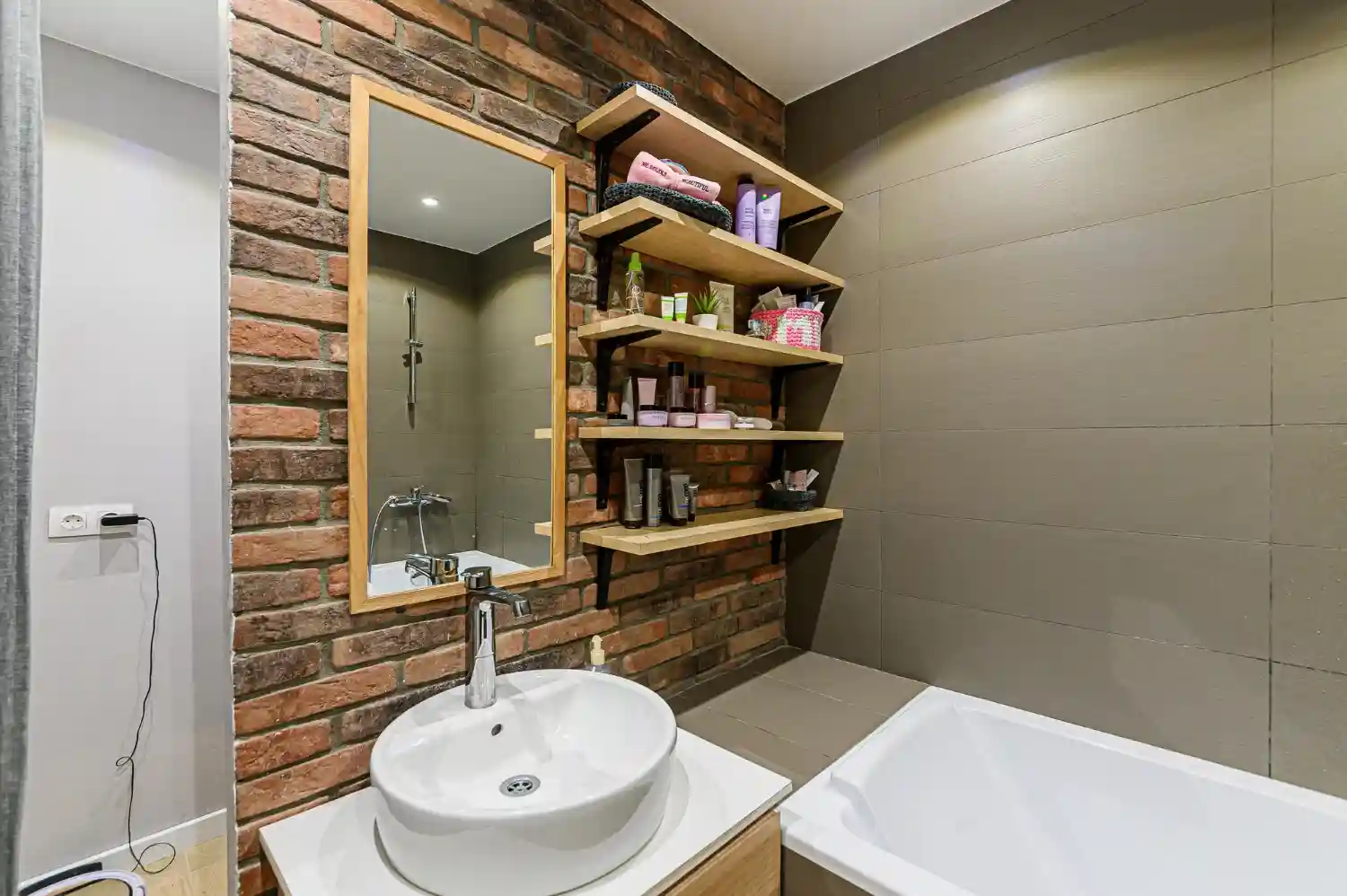
Good bathroom storage hides the daily mess and shows only what looks nice. Closed vanity drawers hold the busy items — bottles, tools, backups. Open shelves then carry the pretty few: folded towels, a plant, one ceramic tray. The split between hidden and shown is what keeps a counter calm.
Zone your storage by how often you reach for things. Daily items belong at arm’s height near the sink. Weekly items go in the vanity. Backups and bulk go up high or under the sink in bins. A single tray on the counter corrals soap, a candle, and hand cream so the surface never looks scattered. Store the busy items behind closed doors and leave only three or four nice pieces on show — that one habit makes any bathroom look styled, with woven baskets and matching jars doing the rest.
Vanities, Mirrors, Lighting, and Fixtures
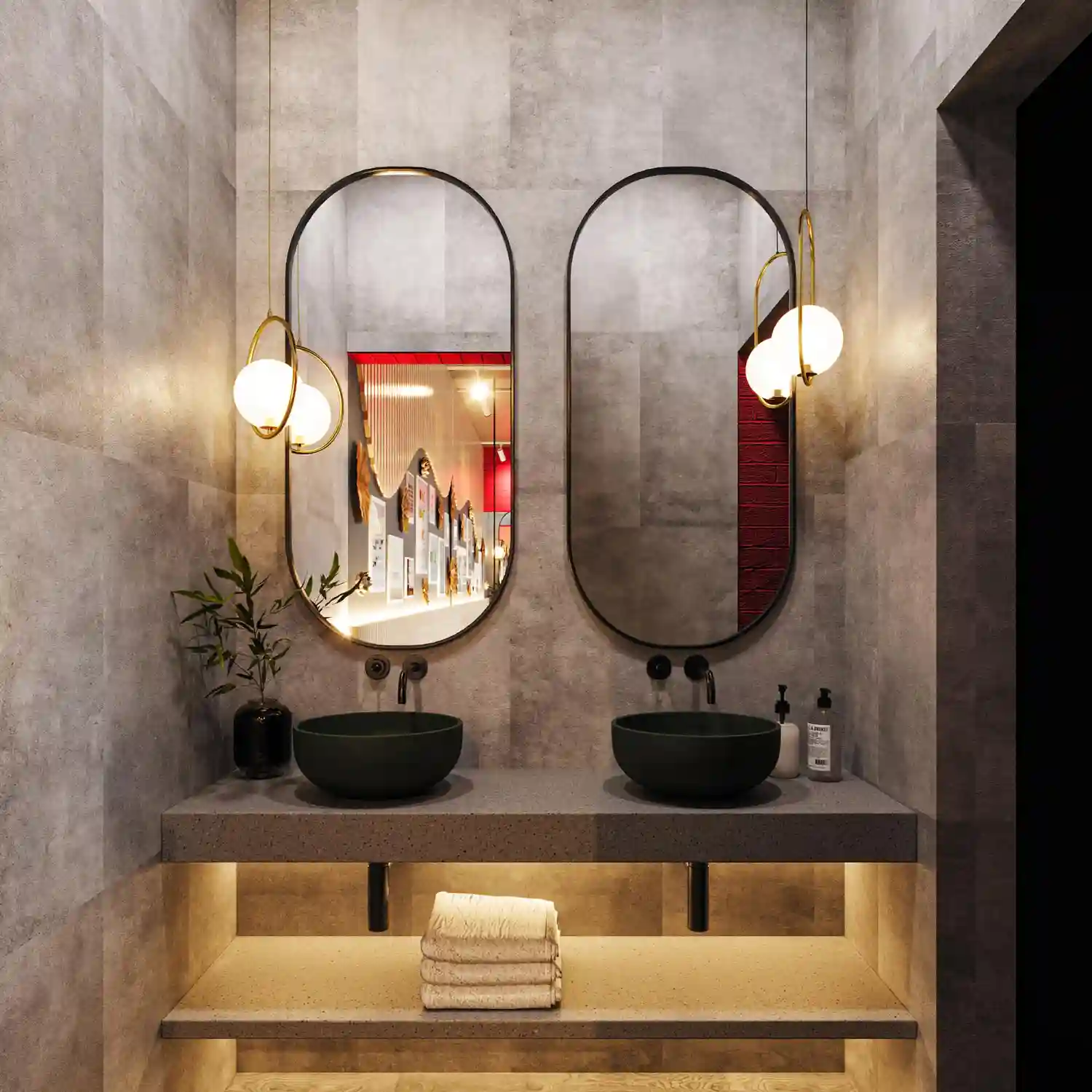
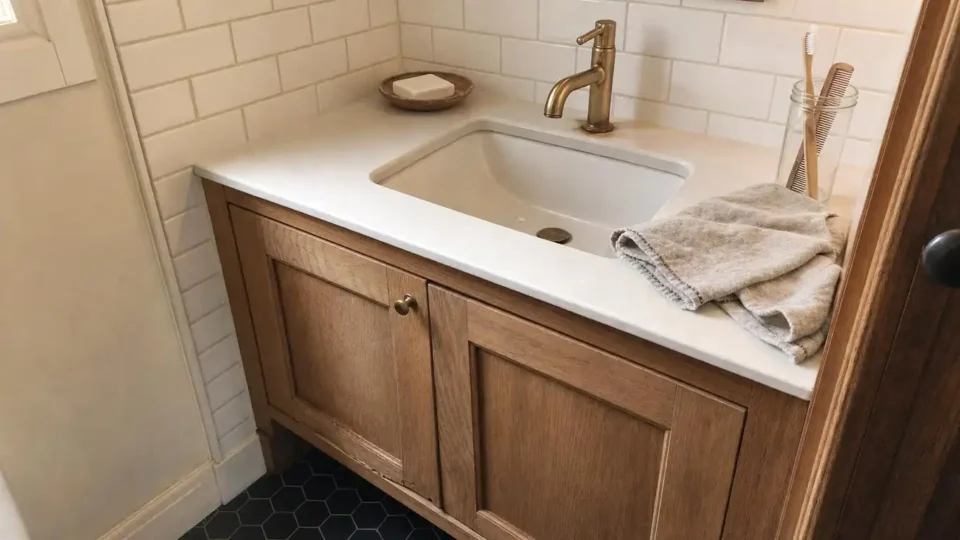
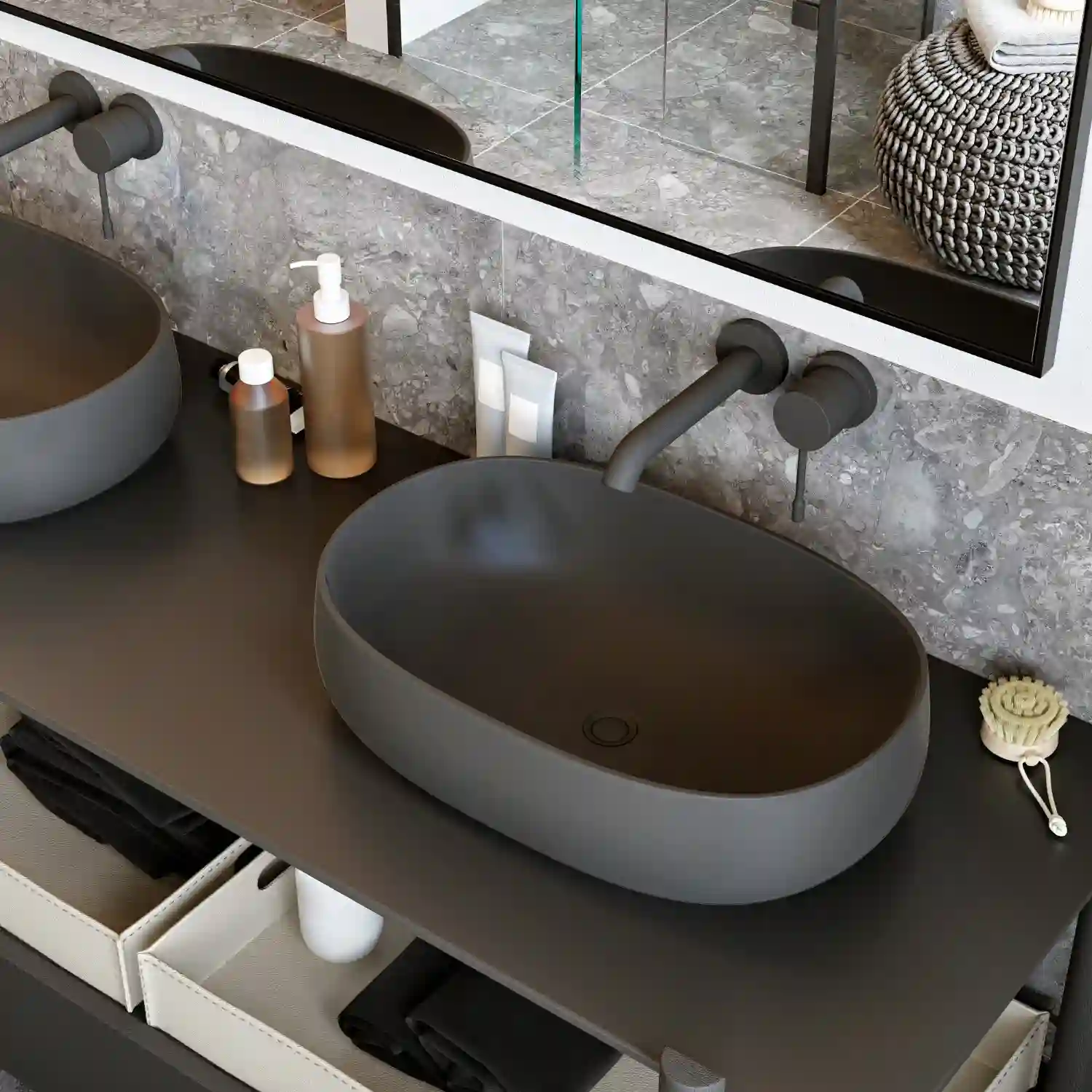
The vanity, mirror, and lighting are the face of the room — get these three right and the bathroom looks designed. Wood-front and fluted vanities now outpace plain painted ones because they add warmth and look more like furniture. A floating vanity shows floor and suits small rooms; a full-size cabinet gives more storage in a family bath.
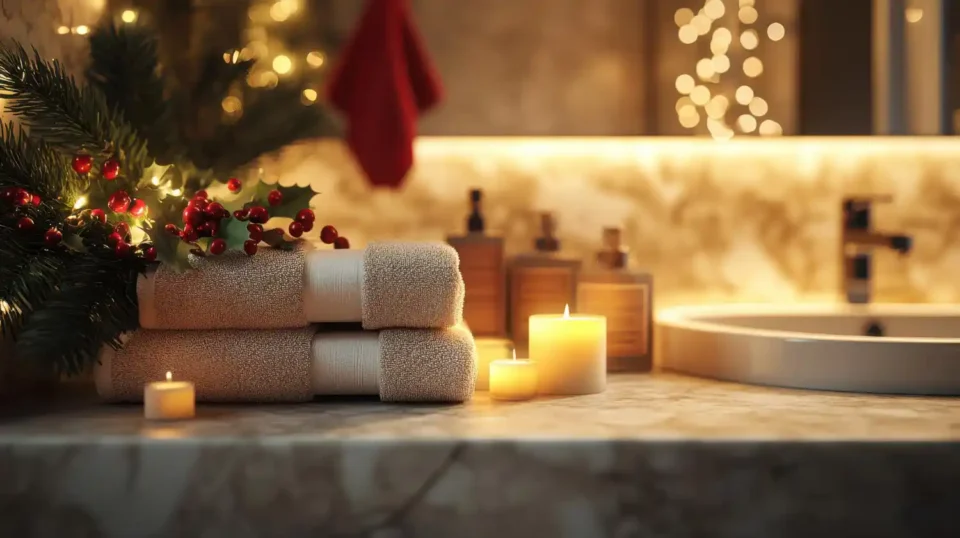
Lighting is the layer people skip most. Designer Rule of Thumb: use warm 2700-3000K light for the room’s ambient glow, then add CRI 90+ light around the mirror so skin tones look true for shaving and makeup. Sconces on either side of the mirror beat a single overhead fixture because they light the face evenly instead of casting shadows. Finish the look by matching your metals — pick brushed brass, matte black, or chrome and repeat it on the faucet, handles, and towel bar.
Bathroom Design Checklist
Use this quick plan before you buy anything, so each choice supports the last.
- Pick one main color plus warm white, and hold the accent to one-third of the room.
- Choose a single style — coastal, farmhouse, modern, or spa — and repeat its cues three times.
- Keep 30 inches of clear floor in front of each fixture where the layout allows.
- Use satin or semi-gloss, mildew-resistant paint on bathroom walls.
- Light the mirror with CRI 90+ sconces and keep the room’s glow at 2700-3000K.
- Split storage into hidden (busy items) and shown (three or four nice pieces).
- Match every metal finish — faucet, handles, and towel bar in one tone.
KEY TAKEAWAY: Plan color, style, and light on paper first; the vanity, tile, and decor fall into place once those three are locked.
What You’ll Spend on a Bathroom Refresh
A decor-level bathroom refresh costs far less than a remodel because you are updating finishes and accessories, not moving plumbing. Paint, hardware, and a new mirror deliver the biggest visible change for the least money. The table below covers decor updates only, not renovation.
| Project | Estimated Cost | Impact Level |
|---|---|---|
| Paint, new hardware, towels, and a tray | $80-$180 | High |
| Statement mirror plus vanity sconces | $150-$450 | High |
| Peel-and-stick or tile backsplash accent | $120-$400 | Medium |
| New vanity, faucet, and full accessory set | $600-$1,500 | Very High |
Best First Upgrade: Repaint in a warm neutral and swap all metal hardware to one finish — the whole room reads new for under $180.
Skip for Now: Hold off on a new vanity until the palette and lighting are set, or you will match the cabinet to a scheme you may still change.
What Most People Get Wrong
Small missteps are what keep a nice bathroom from looking finished. These four are the most common, and each has an easy fix.
- Many people choose paint from a tiny chip under store light. A better approach is to tape a large poster-board swatch by the mirror and check it morning and night, since bathroom light changes the color more than any other room.
- People often light only the ceiling and wonder why the mirror casts shadows. Add sconces or a light bar beside the mirror at face height so the light hits you evenly instead of from above.
- Counters get cluttered because every product lives out in the open. Move the daily bottles into a drawer and leave a single tray with three nice pieces, so the surface always looks calm.
- Mixed metal finishes make a room feel accidental. Pick one finish — brushed brass, matte black, or chrome — and repeat it on the faucet, handles, and towel bar for a pulled-together look.
Where Bathroom Design Is Headed
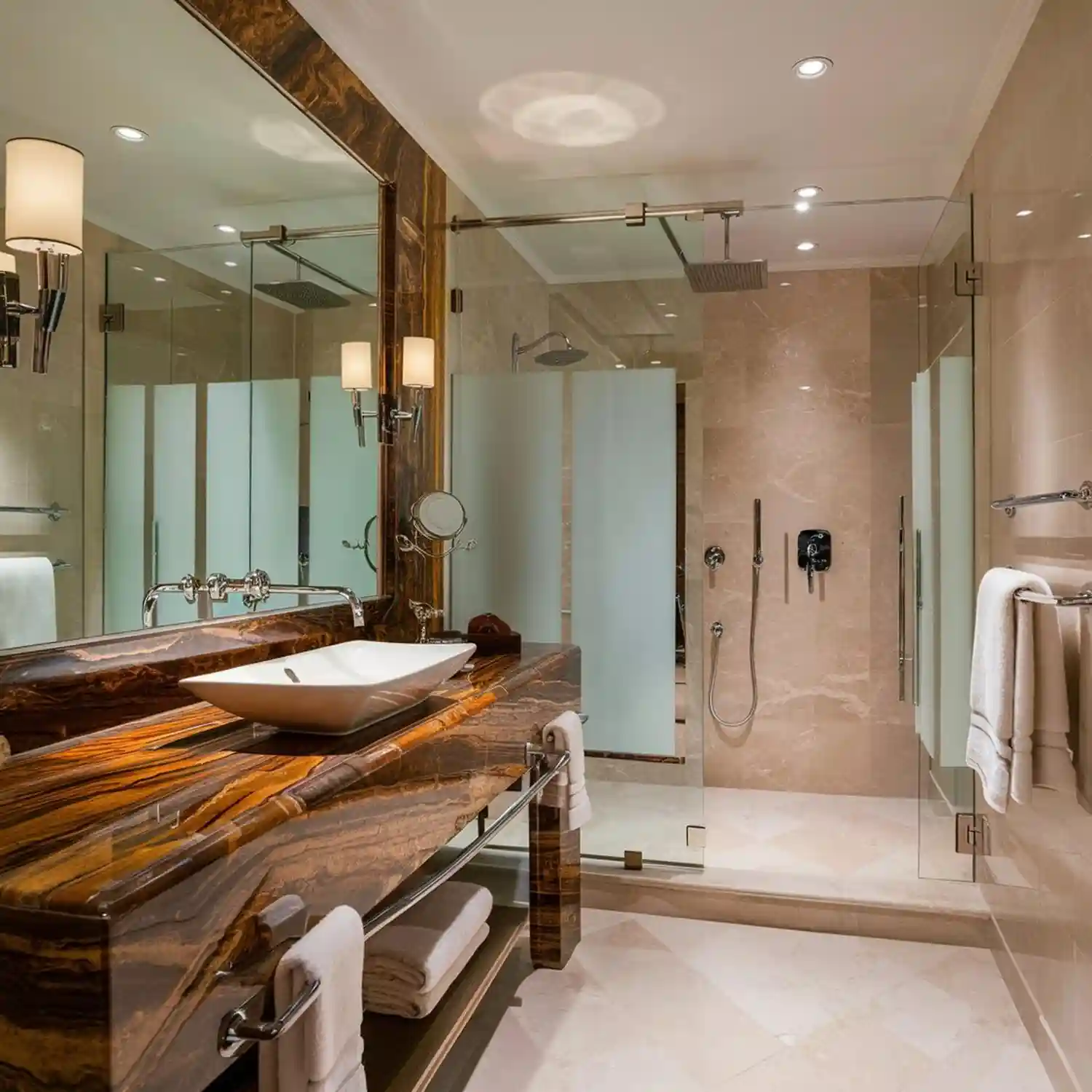
Bathrooms are getting warmer and softer, and the shift is easy to spot. Cool grey is giving way to creamy off-white, tan, and earthy clay. Wood-front vanities are replacing flat painted ones, and handmade-look tile is winning over plain glossy subway tile. The overall direction is a calm, spa-like room that feels more like a boutique hotel than a builder box.
You do not need a remodel to follow it. Warmer paint, a wood or rattan accent, one handmade-look tile detail, and softer lighting move a dated bathroom toward the current mood. For a fuller look at what is rising and fading, our roundup of bathroom design trends for 2026 breaks down the shifts by finish and color. Seasonal touches help too — these spring bathroom decor ideas show how small swaps keep the room feeling fresh through the year.
Frequently Asked Questions
Conclusion
The strongest bathroom ideas are not about buying more — they come from settling color, surfaces, and light before anything else, then letting style and storage follow. Editorial field note: a dated bathroom with cool grey walls and one overhead bulb usually turns the corner the moment the walls go warm and the mirror gets side lighting, long before the vanity is touched. Start with those layers, then explore ideas for every room when the next project calls.
Next Steps
- Name the one feeling you want — calm, warm, bright, or hotel-like — and let it pick your palette.
- Tape a large paint swatch by the mirror and check it in morning and evening light before buying.
- Swap every metal finish to one tone and add two sconces beside the mirror this weekend.
- Split your counter clutter into hidden storage and a single styled tray with three pieces.