TL;DR
- The most effective accent wall faces you when you walk in — the sofa wall or the fireplace wall, not a side wall.
- Limewash paint, dark paint drench, and vertical wood slats work in almost every living room style and hold up longer than most trends.
- One accent wall per room — a second statement wall cancels the focal point and leaves the eye with nowhere to settle.
- Budget starts at $50 for a painted arch. Stone veneer and Venetian plaster run $1,500–$4,000+ professionally installed.
- For renters: a painted arch, gallery wall, or removable peel-and-stick wallpaper are the strongest no-damage options.
Why Does One Accent Wall Change Everything?
Four identical walls make a living room feel resolved but flat. The furniture goes in, the rug goes down, and the room still looks like something is missing. That something is usually a focal point — one wall that earns more attention than the others and gives the room a place to organize itself around.
Living room accent wall ideas work best when the treated wall is the one you see first when entering the room — usually the sofa wall or the fireplace wall. Any surface treatment works: paint, panels, plaster, tile, or built-in shelving. The wall just needs to earn more attention than the other three. One strong focal point makes every furniture decision in the room feel deliberate.
These 13 ideas cover every material, budget, and skill level — from a weekend DIY paint project to a professional tile installation. For a full overview of what shapes a truly luxurious living room, these living room ideas for a luxurious designer look are worth reviewing alongside this guide.
Bookmark this guide for quick reference.
KEY TAKEAWAY: A strong accent wall gives the room a focal point that makes every other design choice feel connected rather than scattered.
| Quick Takeaways | |
|---|---|
| Best Wall | The wall your sofa faces, or the fireplace wall — whichever anchors the seating area naturally. |
| Top Materials | Limewash paint, vertical oak slats, and dark paint drench are the most versatile across styles. |
| Budget Range | DIY paint treatments from $50. Stone veneer or Venetian plaster runs $1,500–$4,000+ installed. |
| Key Rule | One accent wall per room — two statement walls compete and neither creates a clear focal point. |
| Renters | Painted arch, gallery wall, or removable peel-and-stick wallpaper — all reversible with no wall damage. |
Accent Wall Planning Checklist
- Pick the wall you face first when entering the room — that wall gets the most attention and earns the accent treatment.
- Confirm the wall is at least 8 feet wide. Narrower walls lose impact with most material and panel treatments.
- Check for outlets, switches, and HVAC vents before committing to a veneer or full-panel installation.
- Set your budget tier: under $200 for paint, $200–$800 for wallpaper or DIY panels, $1,500+ for professional installation.
- Choose a finish that connects to one existing element in the room — warm oak floor, linen sofa, brass fixtures, or stone.
- Test paint color on an 18-inch wall patch for three days before committing — light changes the color hour by hour.
- For rented spaces, limit to removable wallpaper, peel-and-stick panels, or gallery walls that use standard picture hooks.
KEY TAKEAWAY: Confirming wall location, budget tier, and material fit before buying anything prevents costly reversals after installation.
13 Living Room Accent Wall Ideas
An accent wall adds depth and a focal point without redoing the whole room. These thirteen ideas — limewash, paneling, plaster, and textured wallpaper — span every style and skill level.
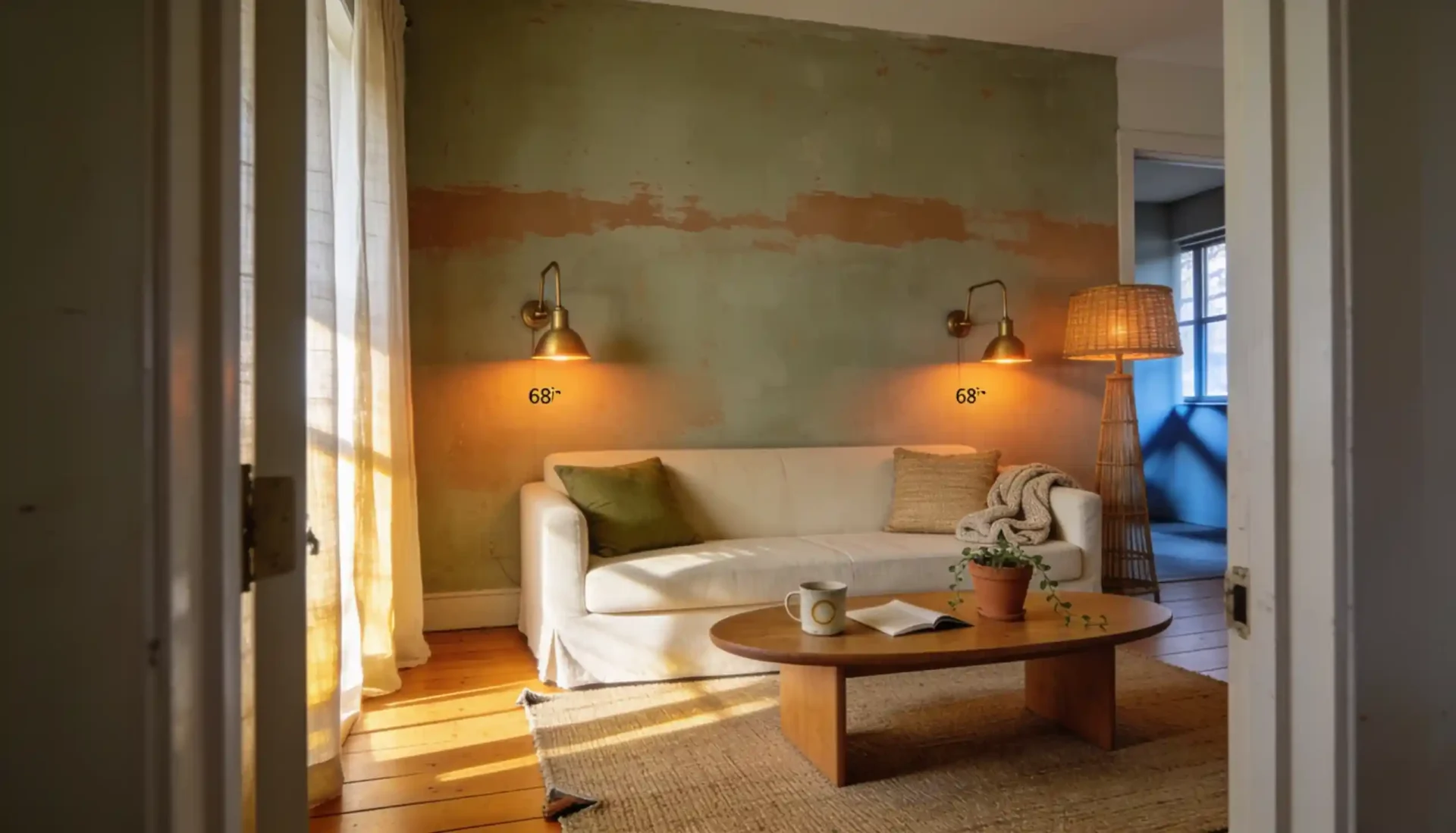
1. Limewash Paint Wall
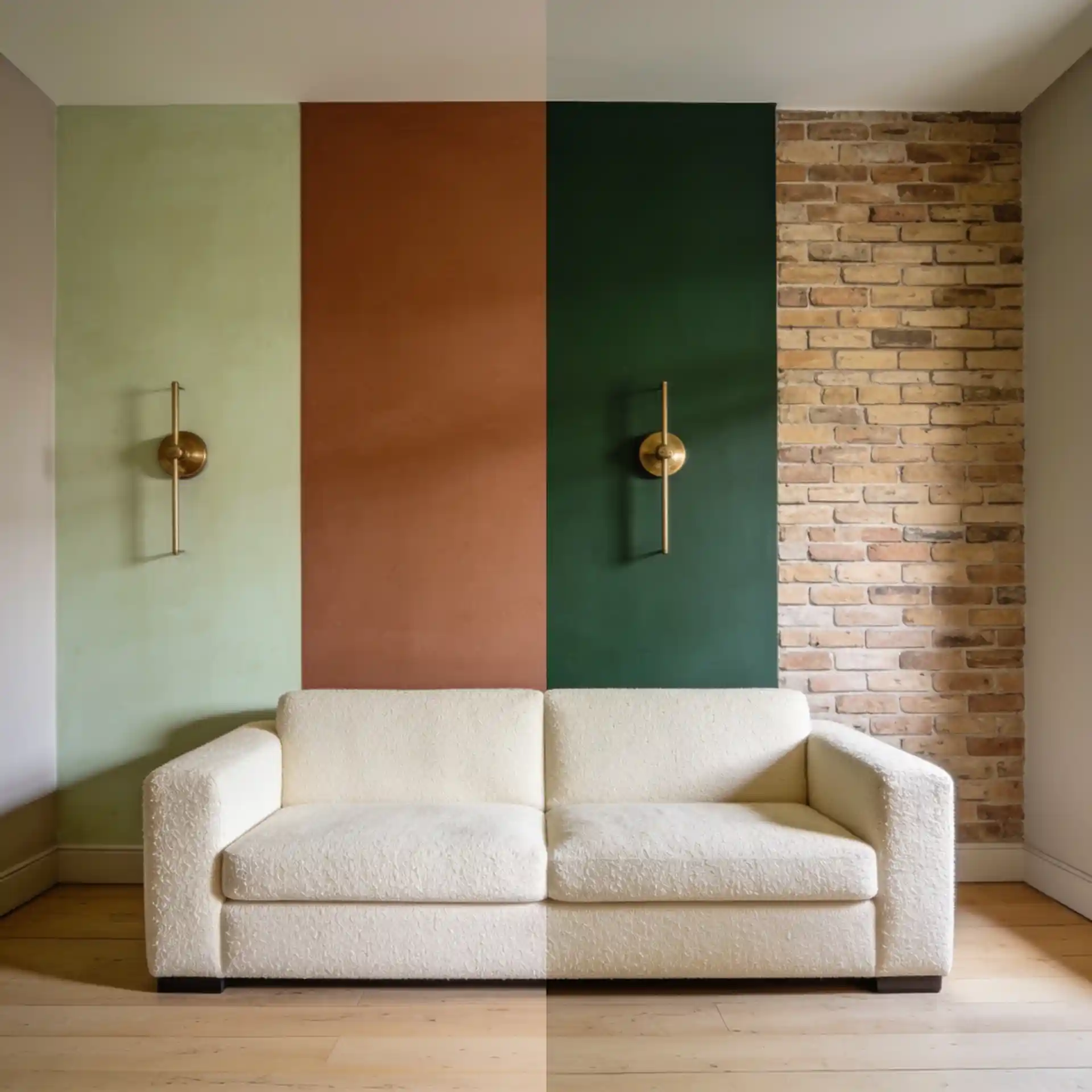
Limewash paint creates layered, organic texture through overlapping semi-transparent coats. The result looks like aged European plaster — mottled, warm, and slightly translucent. It works well in farmhouse, Mediterranean, and earthy modern living rooms. Colors range from warm clay and terracotta to warm cream and dusty white. Portola Paints and Benjamin Moore both offer popular limewash formulas. Designer Rule of Thumb: apply limewash in overlapping X-shaped strokes and leave some base color showing — the natural imperfection creates the effect, not perfect coverage. DIY materials for most accent walls cost $50–$150.
DESIGNER TIP: Two coats applied in opposite directions build the layered depth limewash is known for. A single coat looks painted, not plastered.
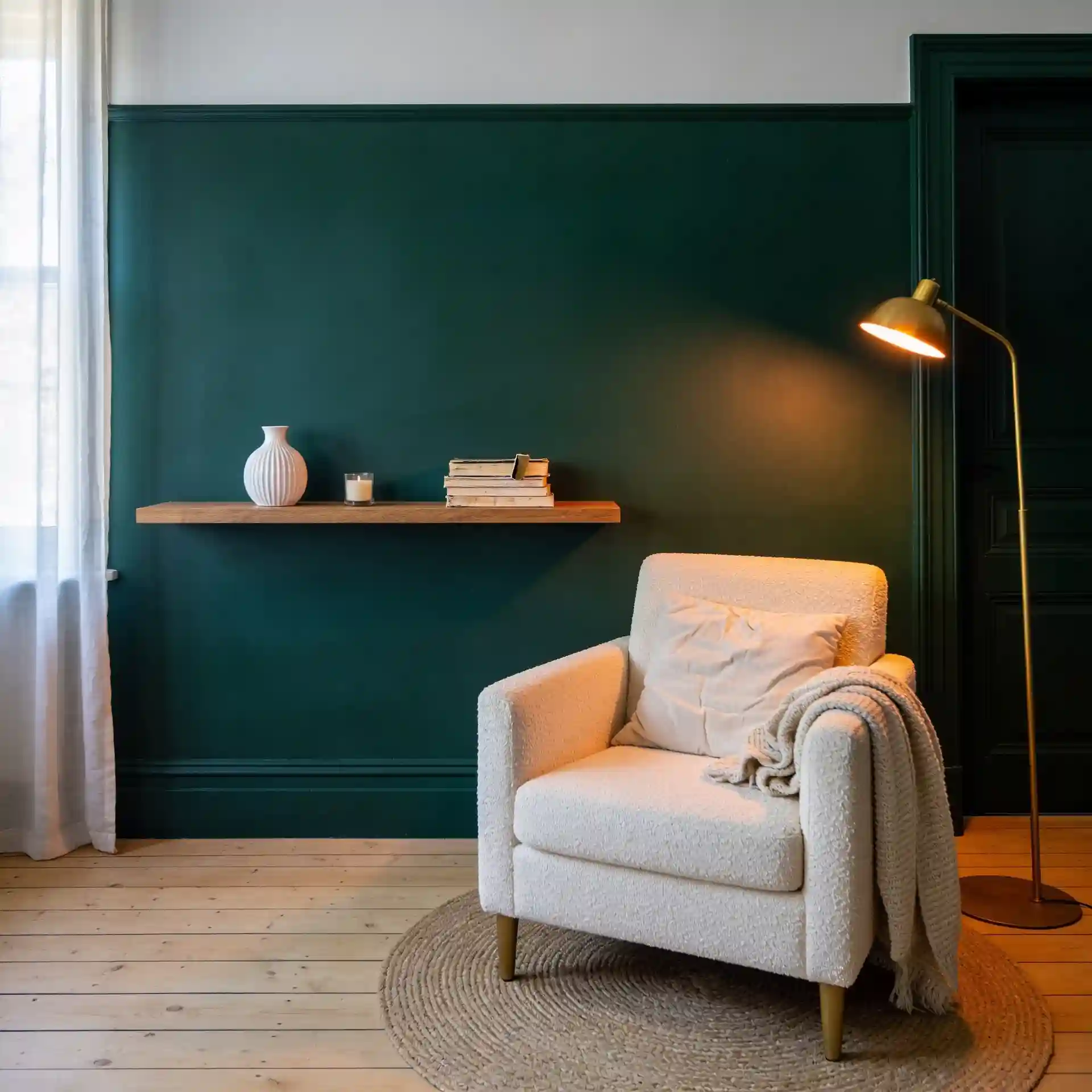
2. Dark Paint Drenched Accent Wall
A single wall in deep charcoal, forest green, or deep navy creates instant drama without renovation. Dark paint reads deeper and richer when the trim on that wall matches the wall color rather than staying white. Painting the trim the same dark tone removes the “painted box” feel and makes the wall look fully architectural. Farrow & Ball Studio Green (No. 93), Hague Blue (No. 30), and Benjamin Moore Black Panther are among the most used shades for this treatment. One quart of premium paint covers most standard accent walls and costs $20–$45.
3. Shiplap Paneling Wall
Horizontal shiplap panels add tactile depth through parallel shadow lines. Painted soft white, warm cream, or a deep moody tone, the joint gaps create surface texture a flat wall can’t match. Shiplap suits coastal, farmhouse, and transitional living rooms. Designer Rule of Thumb: floor-to-ceiling shiplap reads stronger and more architectural than partial-height wainscoting — the full height is what separates it from a dado rail. According to HomeGuide’s 2026 shiplap cost data, installed shiplap runs $15–$30 per square foot including materials and labor.
4. Venetian Plaster Accent Wall
Venetian plaster is a multi-coat lime putty process that produces a polished, marble-like surface. The depth comes from thin layers burnished in opposing directions until a slight sheen develops. It suits classical, modern, and earthy living rooms. Colors lean toward stone tones — warm ivory, muted clay, dusty taupe, or cool grey-white. Material Note: Venetian plaster requires a skilled applicator; DIY attempts on large walls rarely reach the same quality. Professional application typically runs $15–$30 per square foot — around $1,800–$3,600 for a standard 10×12-foot wall.
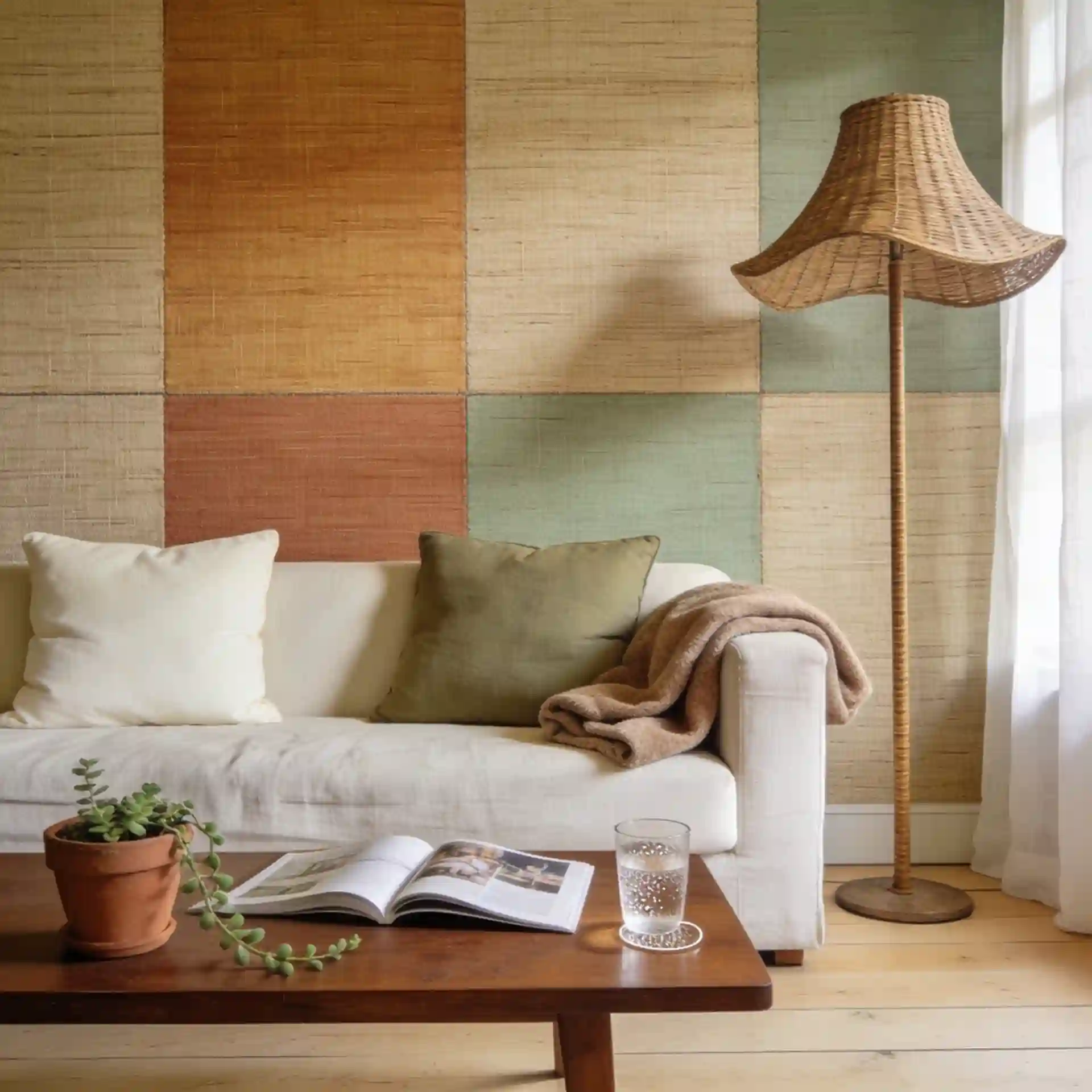
5. Textured Wallpaper Panel
A single wall of patterned or textured wallpaper creates warmth and surface interest that flat paint can’t achieve. Grasscloth in natural jute or sisal tones brings organic warmth to coastal and earthy rooms. Linen-texture wallpaper adds quieter depth. Botanical prints and abstract patterns work in maximalist and contemporary spaces. Material Note: Grasscloth is not moisture-resistant — keep it away from rooms with poor ventilation or high humidity. Peel-and-stick options in linen or geometric patterns run $50–$120 per roll; most living room accent walls need three to five rolls.
6. Vertical Wood Slat Wall
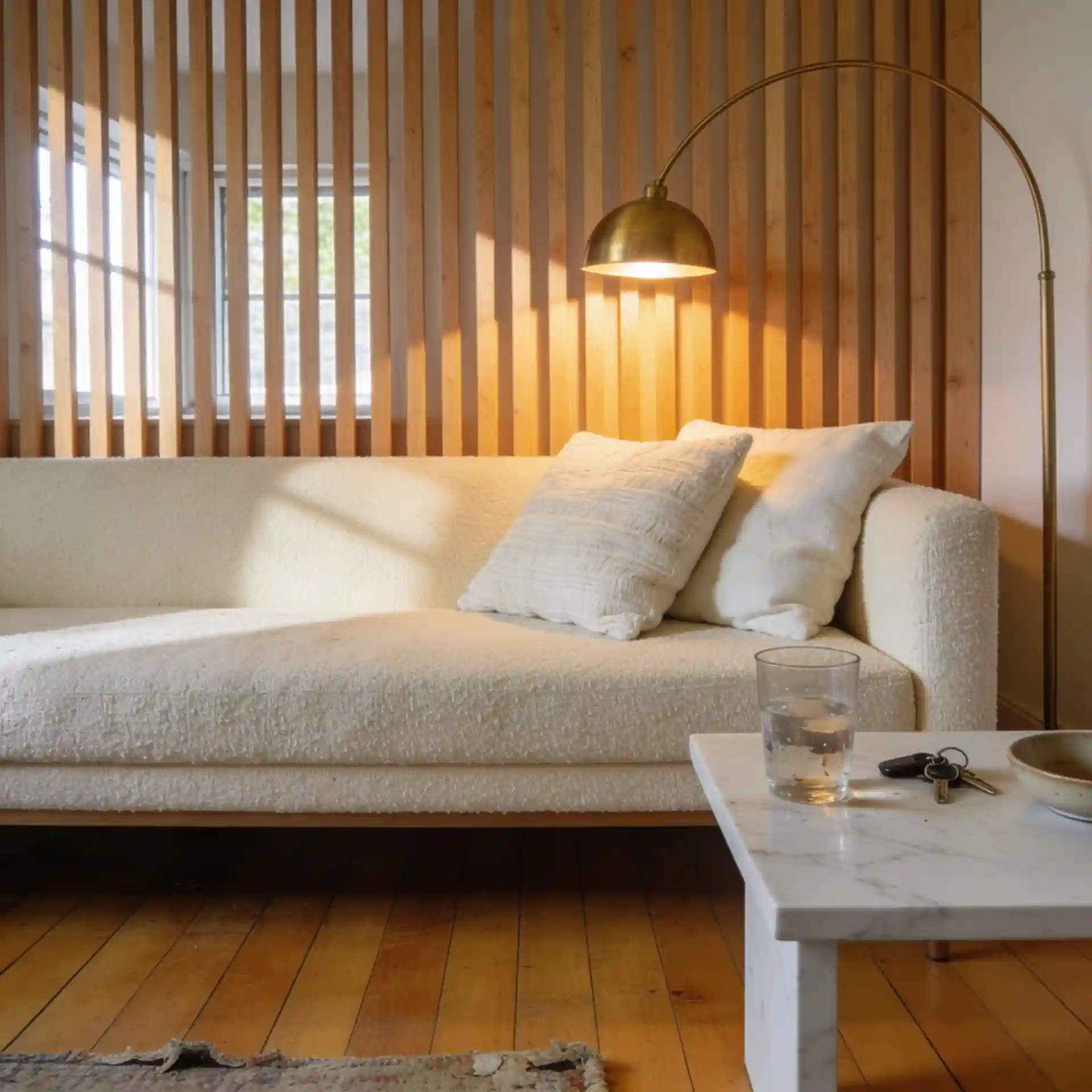
Vertical oak or walnut slat panels create a warm, architectural surface with strong vertical lines and real material depth. Slats can sit tightly spaced for a solid surface or loosely spaced for an open, airy look. They suit mid-century modern, Japandi, and contemporary living rooms best. Designer Rule of Thumb: slat gaps of 1–2 inches create visible shadow lines between each board — gaps wider than 2 inches start to look unfinished rather than intentional. Pre-finished oak slat panels typically run $20–$50 per square foot installed.
7. Gallery Wall with Oversized Art
A gallery wall creates a strong focal feature without touching the wall surface itself. The key is one oversized anchor piece — at least 36×48 inches — with smaller prints, mirrors, and sculptural objects arranged around it. Hang the center of the arrangement at 57–60 inches from the floor: the standard museum hang height that keeps art at natural eye level. A gallery wall is one of the strongest living room accent wall ideas for renters since it requires only standard picture hooks. For small living room ideas, an oversized single canvas can have the same impact as a full gallery without the wall commitment.
DESIGNER TIP: Cut kraft paper templates of every frame and tape them to the wall before placing a single nail. Live with the arrangement for a day first.
8. Fluted Panel Millwork Wall
Fluted or ridged wall panels add sculptural depth through repeating vertical grooves. They suit formal, modern, and contemporary living rooms. Pre-made fluted MDF panels are available at most building supply stores and can be installed with construction adhesive and paint. Safety Note: Heavy MDF panels on large wall sections need proper wall anchors and studs — standard drywall screws pull out under the load of full-height panels. Installed costs typically run $12–$25 per square foot.
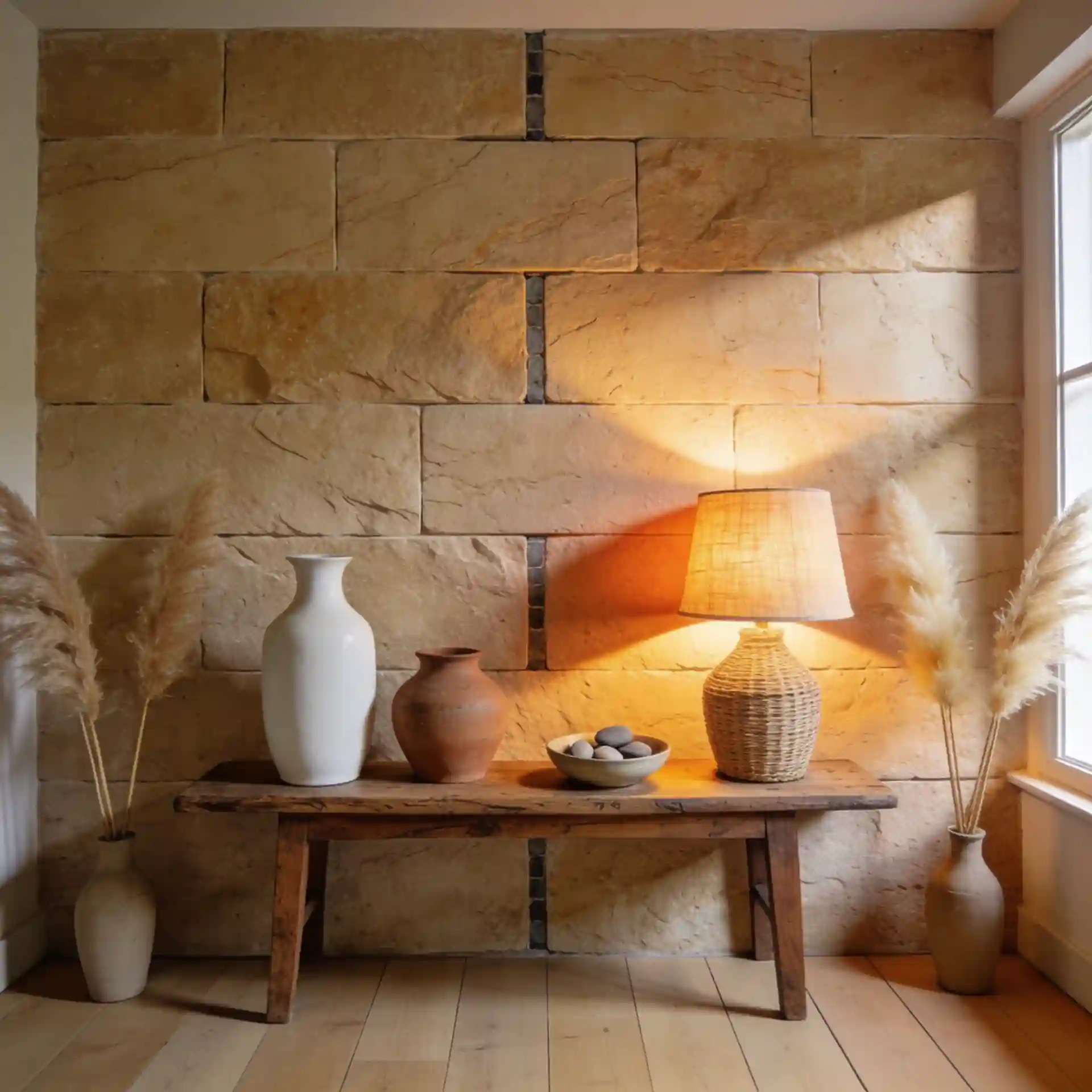
9. Brick or Stone Veneer Wall
Thin brick or natural stone veneer adheres directly to drywall and creates a full-height raw material surface without structural work. It suits farmhouse, industrial, and earthy modern living rooms. Material Note: Thin stone veneer weighs 10–20 lbs per square foot — use construction adhesive formulated for masonry and allow full cure time before placing heavy furniture nearby. Installed cost typically runs $15–$40 per square foot depending on material and complexity. Brick veneer tends to cost less than natural stone veneer at similar dimensions.
10. Zellige or Geometric Tile Feature Wall
Handmade zellige tile — glossy, irregular, and iridescent — shifts color as light moves across it through the day. It works best behind a fireplace, flanking a built-in niche, or anchoring a console table arrangement. Colors range from warm white and pearl to deep cobalt and forest green. A full 8×8-foot tile accent wall typically runs $1,200–$3,000 installed; a smaller 3×4-foot section around a fireplace surround costs $300–$600. The investment is high, but zellige tile is one of the few living room accent wall ideas that looks and feels like permanent material luxury rather than applied decoration.
11. Built-In Shelving Wall
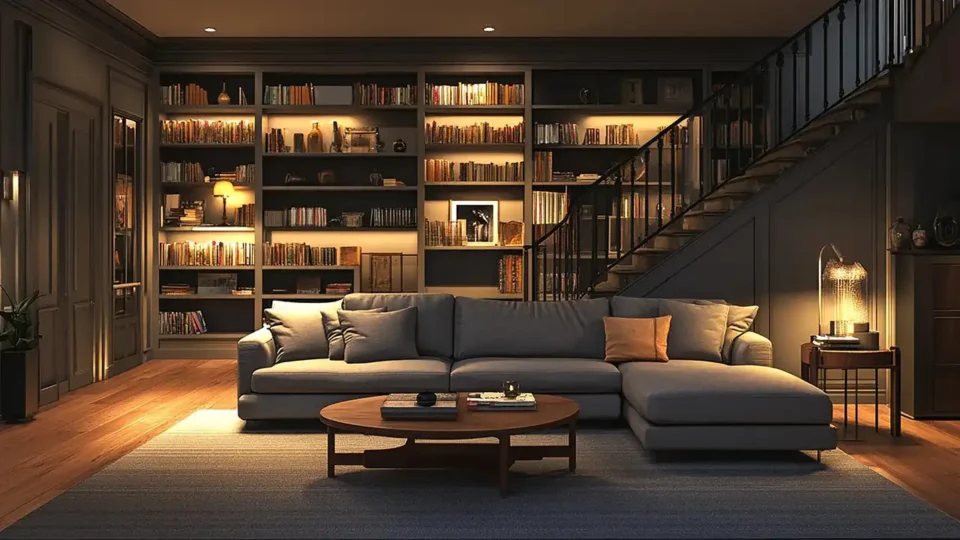
A floor-to-ceiling built-in shelving wall is both a design statement and functional storage. It looks architectural rather than furniture-like when it runs full wall-to-wall and floor-to-ceiling with trim that matches the room. Painting the interior of the shelving bays a contrasting color — warm terracotta, deep navy, or sage green — against soft white face frames adds depth and makes the installation look custom. For living rooms without a fireplace, this is often the strongest accent wall choice available. Professional installation starts around $2,000 for basic designs; custom cabinetry runs $5,000–$15,000+.
12. Painted Arch Feature Wall
A large painted arch is one of the most affordable living room accent wall ideas available. Draw the arch shape with a pencil and string compass, then fill it in with a contrasting paint color. Warm clay, dusty rose, sage green, and deep navy all look strong against a soft white or warm cream base wall. Designer Rule of Thumb: size the arch to at least half the wall height — a small arch on a large wall looks like a paint mistake rather than a design choice. Total cost: one quart of paint, typically $20–$30.
13. Mirrored Wall Installation
A grid of three to five large mirrors — antique-finish framed panels or frameless bronze-tinted glass — expands the room visually and bounces natural light across the space. It works especially well in narrow living rooms that need visual width. Choose warm-tinted or antiqued mirror glass over clear to avoid a commercial look. Safety Note: Heavy mirrors positioned above a sofa need wall anchors rated for the mirror weight — standard picture-hanging hardware alone is not sufficient for mirrors over 15 lbs. Mirror panels run $80–$300 each depending on size and finish; a full wall installation of four panels costs $400–$1,500.
KEY TAKEAWAY: Each of these thirteen treatments works best when it echoes at least one existing material already in the room — floor tone, upholstery, or metal finish.
How to Match the Accent Wall to the Room
The right living room accent wall idea connects to what the room already has. A warm oak floor earns a vertical oak slat wall. A linen sofa earns a grasscloth or limewash backdrop. A brushed brass lighting collection earns a Venetian plaster or fluted panel wall that picks up reflective surfaces. A natural stone hearth earns zellige tile nearby.
When a wall treatment introduces a completely new material family — with no other anchor in the room — it tends to look like a good wall in the wrong room. The test is simple: name one piece of existing furniture or flooring that supports the wall choice. If you can name it, the wall belongs.
For rooms at the smaller end, contrast creates the illusion of space. A dark accent wall paired with three pale surrounding walls adds perceived depth — it doesn’t compress the room. For tiny living room ideas specifically, a single dark or textured wall is often the highest-impact move available. These modern farmhouse living room ideas show how limewash and shiplap work within a warm material context where the wall earns its place.
KEY TAKEAWAY: An accent wall that shares a material or color family with the existing room feels designed; one that introduces an entirely new material feels added.
Mistakes That Wreck the Look
❌ Choosing a side wall → ✅ Use the wall the seating faces — usually the sofa wall or fireplace wall — not the wall to the side or behind the seating.
❌ Using two accent walls → ✅ One accent wall per room. Two statement walls create competing focal points with no resolution — the eye doesn’t know where to settle.
❌ Stopping short of the ceiling → ✅ A treatment that ends below a 10-foot ceiling looks unfinished. Take full material treatments to the ceiling line.
❌ Introducing an isolated color → ✅ Repeat the accent wall color in at least one other element — a throw pillow, a lamp base, or a rug border — to connect it to the room rather than leaving it stranded.
KEY TAKEAWAY: The most common living room accent wall mistake is treating the wall as standalone decoration rather than an integrated part of the room’s material story.
Cost Breakdown
The range for living room accent wall ideas runs from a single quart of paint to a full professional installation — and the most impactful option is rarely the most expensive one.
| Project | Estimated Cost | Impact Level |
|---|---|---|
| Painted arch or DIY limewash paint | $50–$150 | High |
| Peel-and-stick wallpaper or DIY shiplap boards | $150–$600 | High |
| Vertical oak slat panels or fluted MDF (professional install) | $800–$2,500 | Very High |
| Stone veneer, Venetian plaster, or zellige tile (professional) | $1,500–$4,000+ | Very High |
Best First Upgrade: A dark paint drenched accent wall costs under $100, takes one weekend, and transforms the room’s focal point more than almost any other single change.
Skip for Now: Venetian plaster and zellige tile are both high-impact and expensive. Confirm the wall location and proportion with a painted treatment first before committing to a permanent material installation.
KEY TAKEAWAY: A painted treatment first confirms the wall and scale work — before investing in stone veneer or plaster that can’t be easily reversed.
Decisions Worth Making Carefully
A few practical questions are worth settling first. Here’s how to choose an accent wall for a small room, a rental, or a wall interrupted by outlets and switches.
What If My Living Room Is Small?
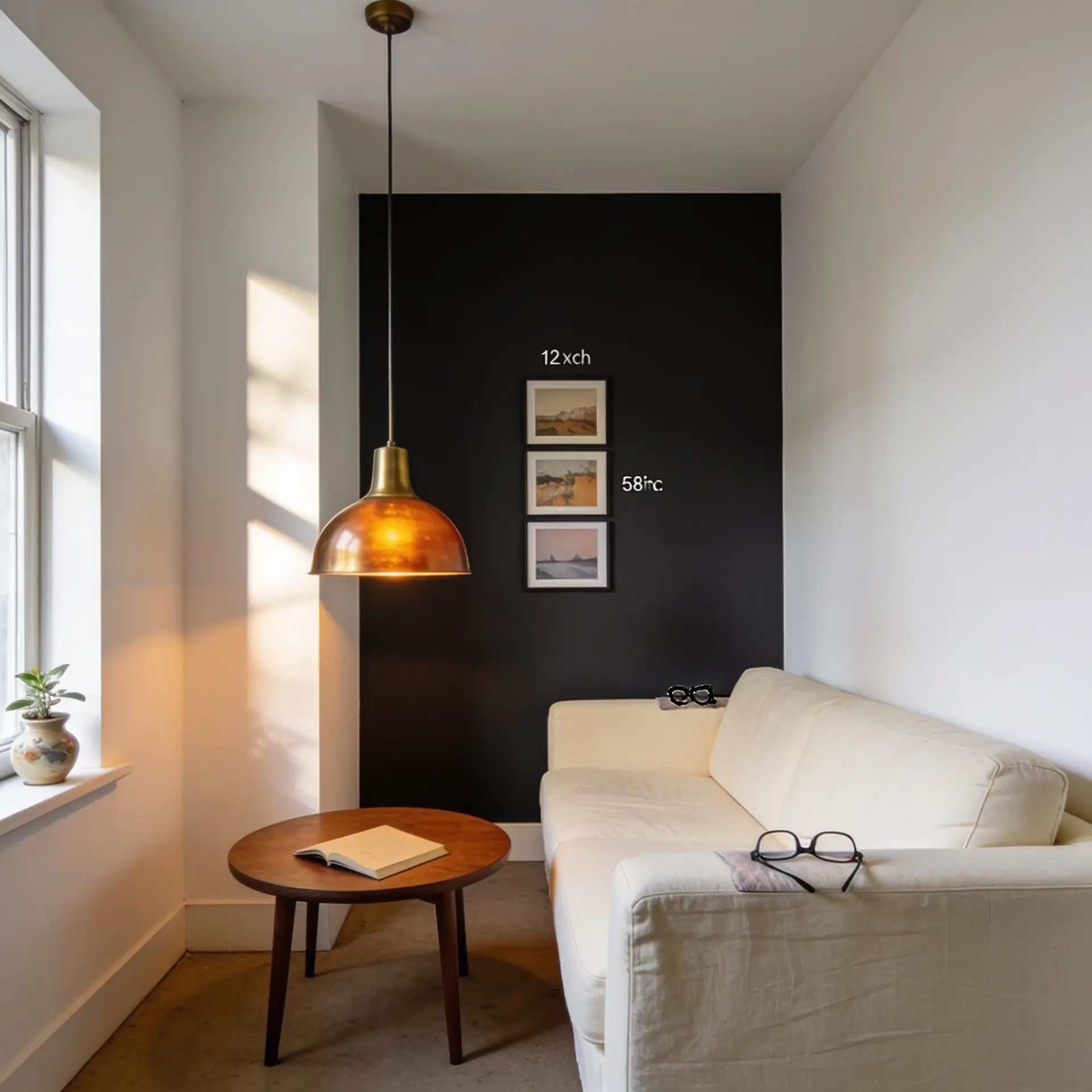
Dark accent walls work well in small living rooms when the three surrounding walls stay pale. The contrast creates depth rather than compression — the dark wall recedes visually, and the room reads as more spacious than it physically is. For small living room decor on a budget, a limewash in warm clay or a dark paint drench in charcoal is often the single highest-impact move available. Avoid mirror walls in very small rooms without good natural light — a mirror wall in a dark room only reflects more darkness.
What If I’m Renting?
Renters have three strong choices: a gallery wall using standard picture hooks, a painted arch (repaints over easily on move-out), or removable peel-and-stick wallpaper rated for wall use. Of the three, the gallery wall is the most flexible — no residue, no painting, and completely changeable. Before applying any treatment, photograph the original wall condition and hold onto paint chips that match the existing base coat for any needed touch-ups at move-out.
What If the Wall Has Outlets and Switches?
Painted and wallpaper treatments work around outlets easily — trim wallpaper to fit the outlet box. Stone veneer and thick panel installations require recessed outlet extenders to bring the outlet face flush with the new surface level. These are standard parts at any hardware store. Safety Note: if adding or moving outlets as part of an accent wall renovation, consult a licensed electrician rather than working on wiring independently.
KEY TAKEAWAY: Small rooms, rented spaces, and walls with outlets each have a workable approach — identify the constraint before choosing the treatment.
Frequently Asked Questions
Conclusion
A living room accent wall works best when it looks like the room was always designed around it — not like something added after the furniture was placed. The wall material should echo something already in the room: the tone of the floor, the texture of the sofa, the finish on the lighting. When that connection exists, the wall settles quietly into the room. When it doesn’t, even an expensive material can look out of place.
These living room accent wall ideas cover the full range from a $30 painted arch to a full zellige tile installation. The principle stays the same across all thirteen: one wall that earns more attention than the others, anchored to the room through at least one shared material. Browse all our living room ideas for more ways to pull the whole space together, or explore our full home decor inspiration for ideas across every room.
Related Living Room Ideas:
- 15 Cozy Moody Farmhouse Living Room Ideas You’ll Want to Copy
- 11 Serene Neutral Coastal Living Room Ideas for a Modern Home
- Moody Mid-Century Modern Living Room: Design Guide for a Sultry Space
- 11 Cozy Farmhouse Living Room Ideas for a Modern Rustic Home
- 17 Boho Coastal Living Room Ideas You’ll Actually Want to Try
- All Rooms Inspiration