TL;DR
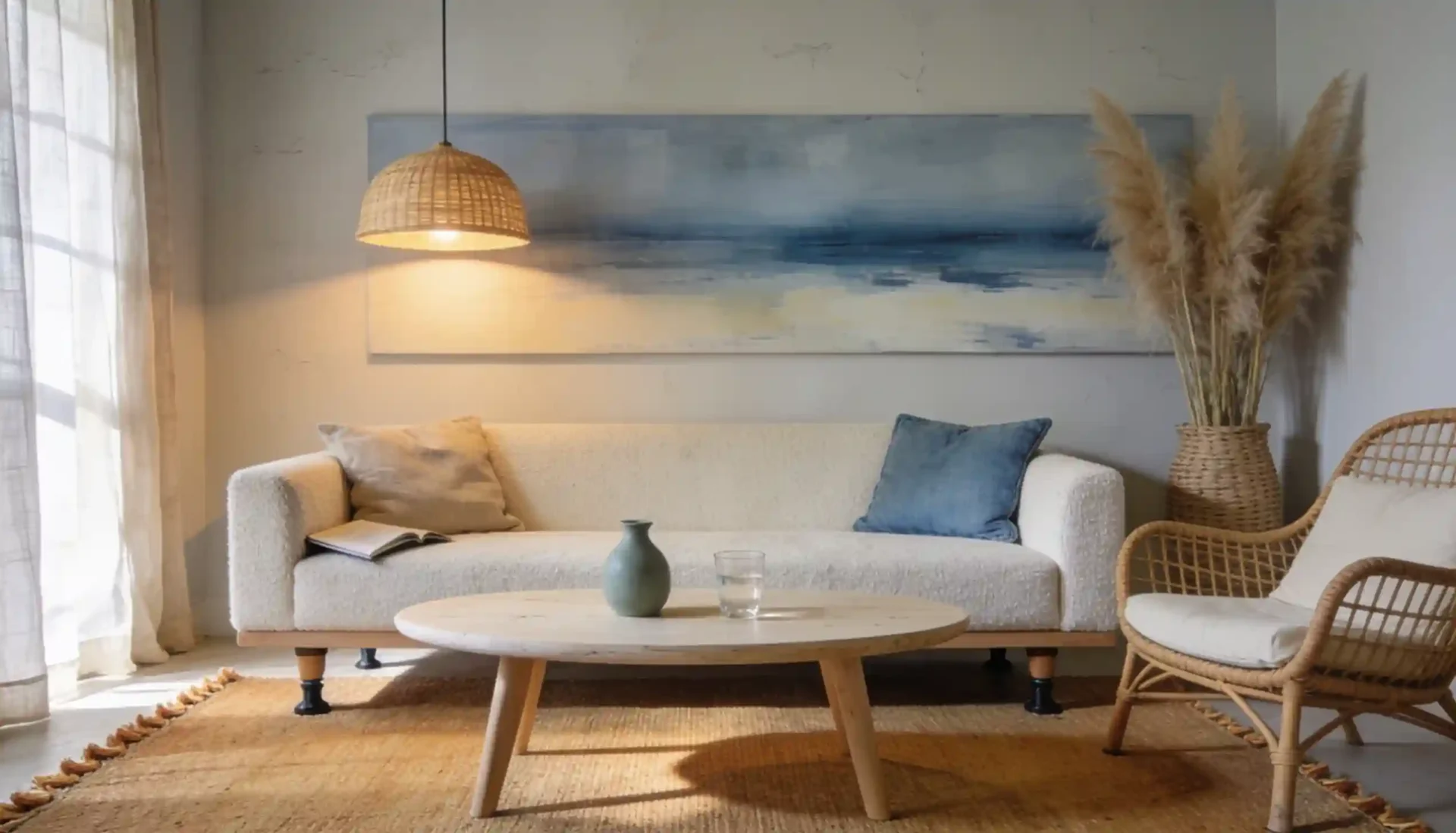
A modern coastal living room is built in three layers: a warm-white or sand-toned base palette, a core of natural fiber and wood furniture, and one or two accent colors — usually navy, sage, or soft aqua — placed through pillows, a throw, or one statement piece. The style skips shells and anchors entirely. Focus on texture, open sightlines, and layered natural light for a room that feels airy and designed, not beach-themed.
What Makes a Modern Coastal Living Room Work?
The most convincing modern coastal living rooms don’t display a single shell. The coastal feel comes from three things working together: a warm-white or sand wall color, a foundation of natural textures like rattan and jute, and one or two accent pieces in navy, sage, or soft aqua. Get those three right and the room looks designed. Miss one and it feels like a themed lobby instead.
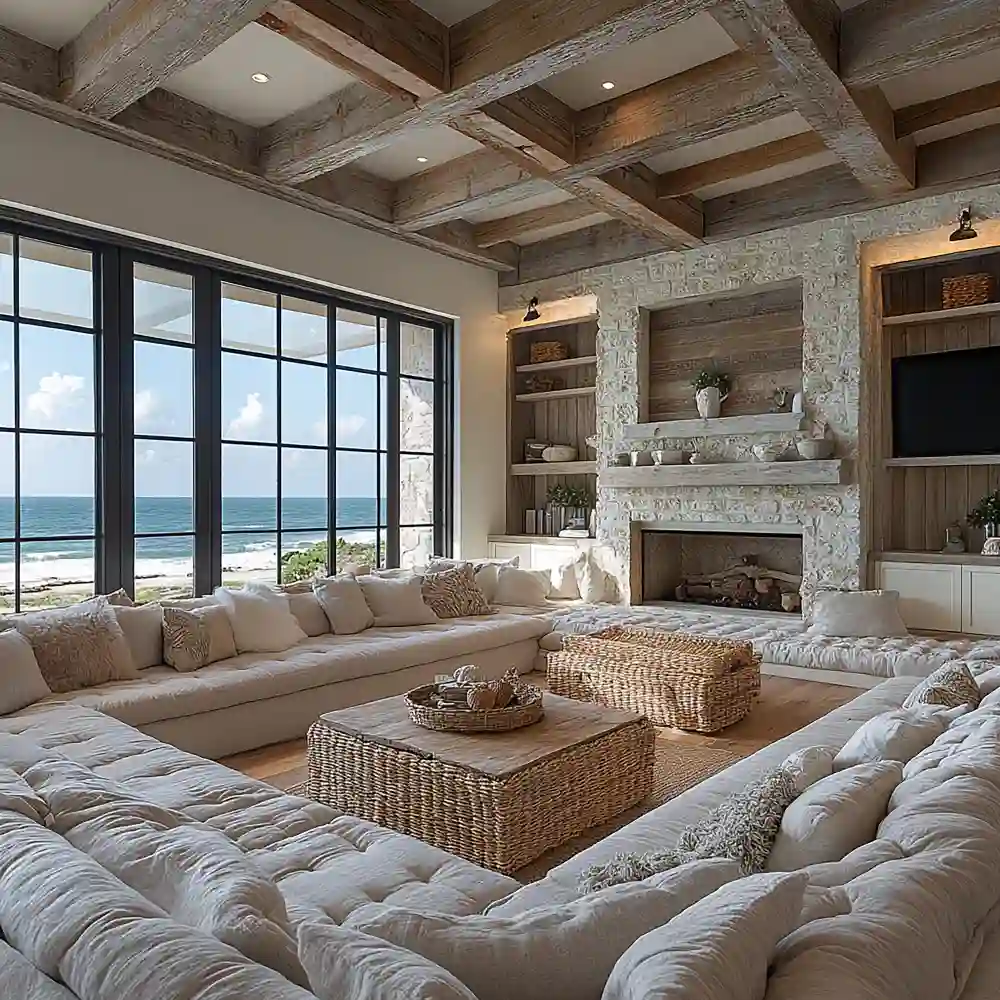
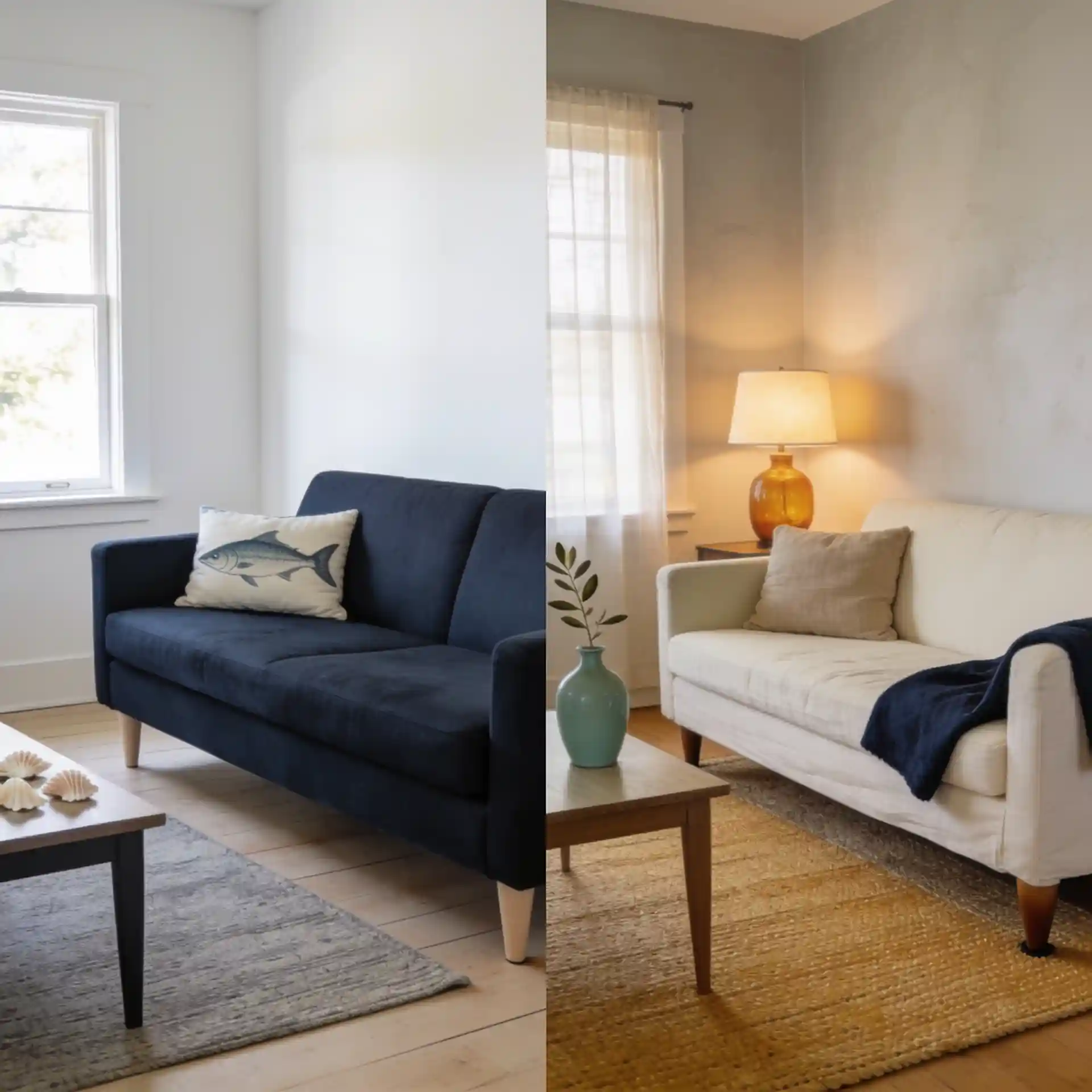
Editorial field note: A bright-white room with a dark navy sofa and a fish-print rug reads as beach-themed — not coastal. Swap the bright white for warm Sherwin-Williams Alabaster, replace the themed rug with a honey jute area rug, and use a cream linen sofa instead of navy upholstery. Let one navy throw pillow carry the accent color. The same room settles into something calm and clearly chosen.
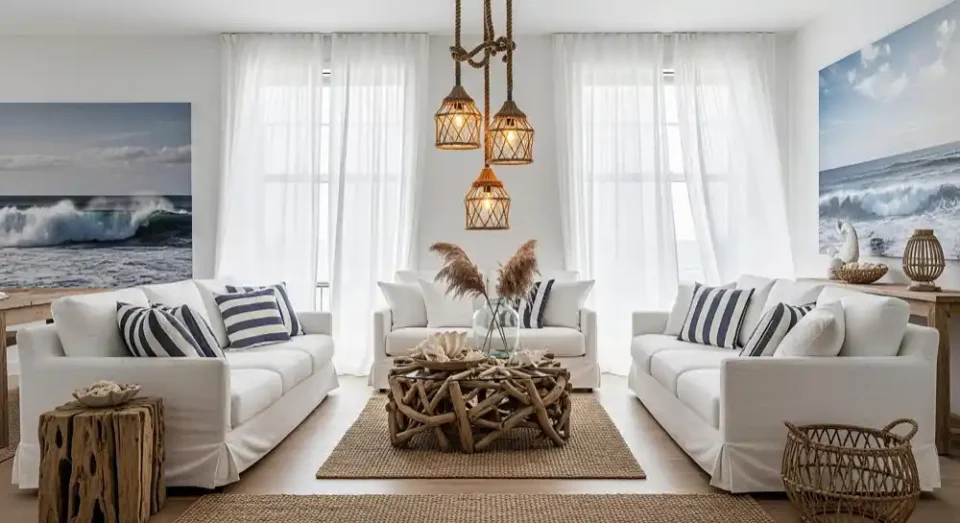
A modern coastal living room pairs a warm-white or sand wall color with natural-fiber textures — jute rugs, rattan chairs, linen upholstery — and light natural wood tones. The style skips obvious beach accessories. The coastal feel comes from the palette, open sightlines, and natural light filtering through sheer curtains. If you love those natural materials but want to drop the coastal cues entirely, our organic modern living room guide leans into wood, stone, and earthy texture instead.
For more home decor inspiration across every style and room, visit 101homedecor.com. For a full living room plan, explore our luxury living room ideas or browse all living room inspiration to see what fits your space. Bookmark this guide for quick reference.
KEY TAKEAWAY: A modern coastal living room is built from palette, texture, and one or two accent colors — not from themed beach accessories.
| Quick Takeaways | |
|---|---|
| Palette | Warm white or sand walls — never bright white |
| Rug | Natural fiber (jute, sisal, or seagrass) sized so front legs of all seating sit on it |
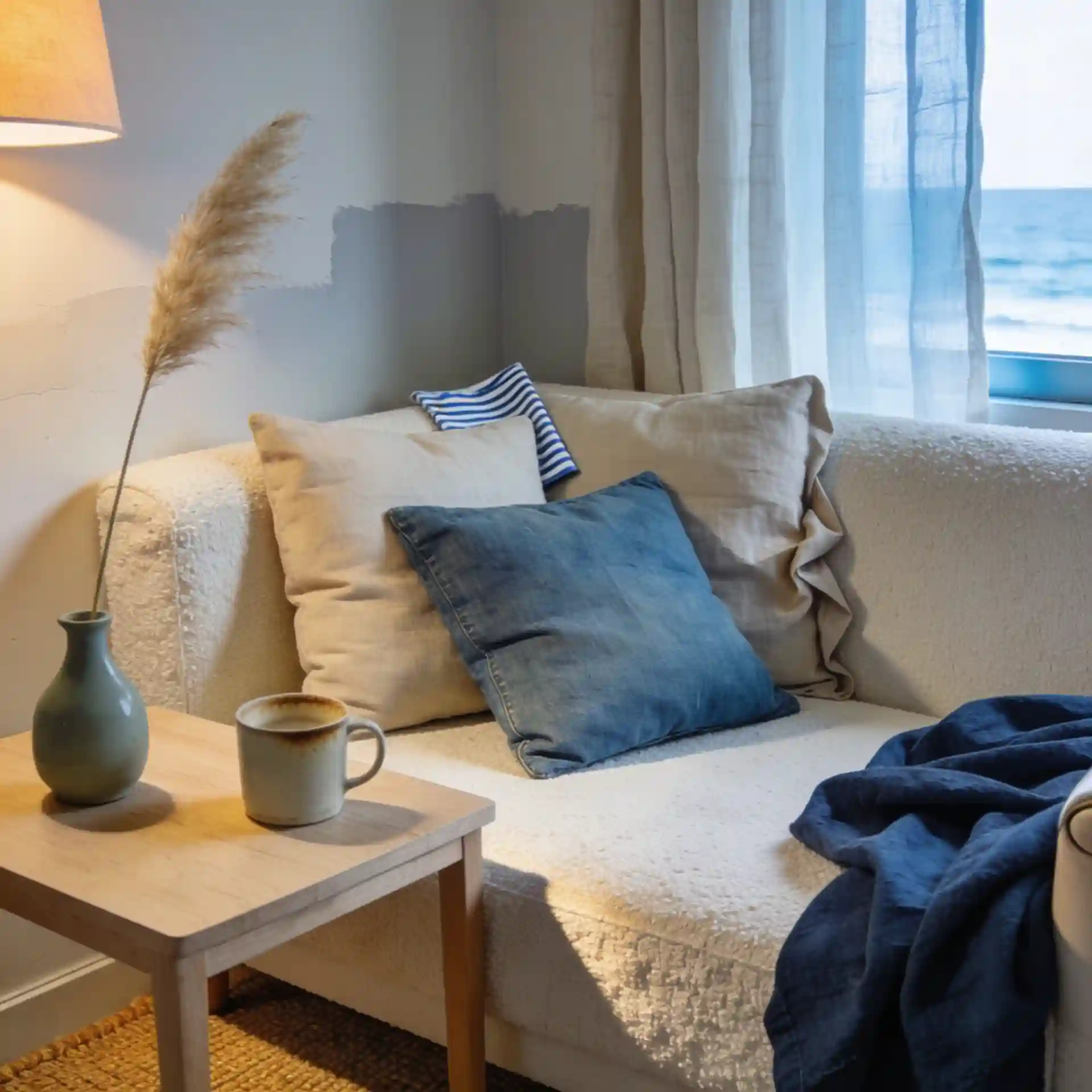
| Upholstery | Low-profile cream linen or bouclé sofa as the anchor piece |
| Accent color | One or two pieces in navy, sage, or soft aqua — no more |
| Light | Sheer linen curtains hung from ceiling height to keep natural light flowing |
Modern Coastal Living Room Checklist
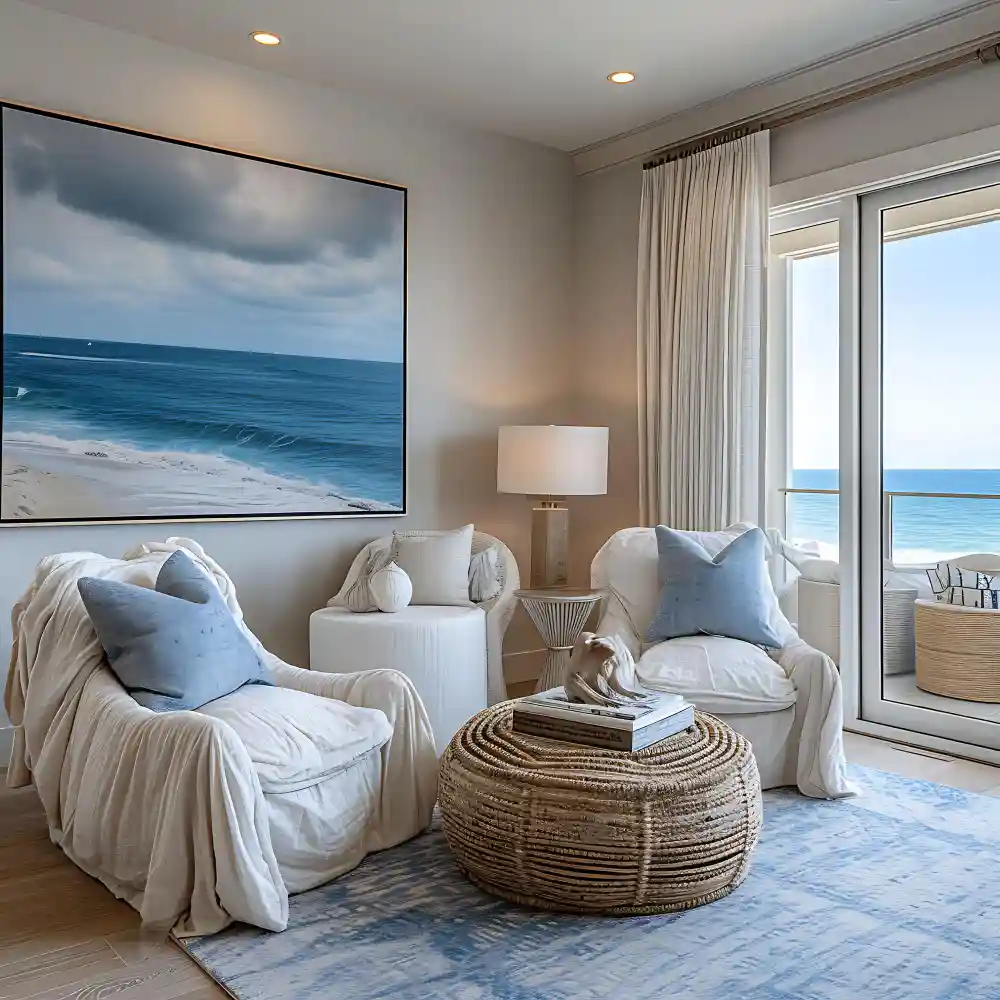
- Paint walls in warm white or sand — Sherwin-Williams Alabaster (SW 7008) or Benjamin Moore Simply White are reliable starting points
- Size the area rug so the front legs of all seating pieces sit on it; an 8 by 10 foot rug is the minimum for most rooms
- Choose a low-profile sofa in cream linen or a linen-look performance fabric; avoid high-back sofas that block light and weigh down the space
- Add a light natural wood coffee table in white oak or an ash finish
- Include one rattan or wicker accent chair with a cream or oat linen cushion
- Hang sheer linen panels from ceiling height and allow them to pool slightly at the floor
- Limit blue, sage, or aqua to one or two pieces — a throw, a pair of cushions, or one ceramic vase
KEY TAKEAWAY: Prioritize palette and natural materials over accessories; the look builds from what you leave out as much as what you add.
The Foundation Layer
These four elements are non-negotiable. The rest of the room builds on top of them.
1. Warm White or Sand Walls — Never Bright White
Wall color is the most important decision in a coastal living room. Bright white reads sharp and cold. Warm whites and sand tones — Sherwin-Williams Alabaster (SW 7008), Benjamin Moore Simply White, or Benjamin Moore White Dove (OC-17) — keep the room airy without the clinical edge.
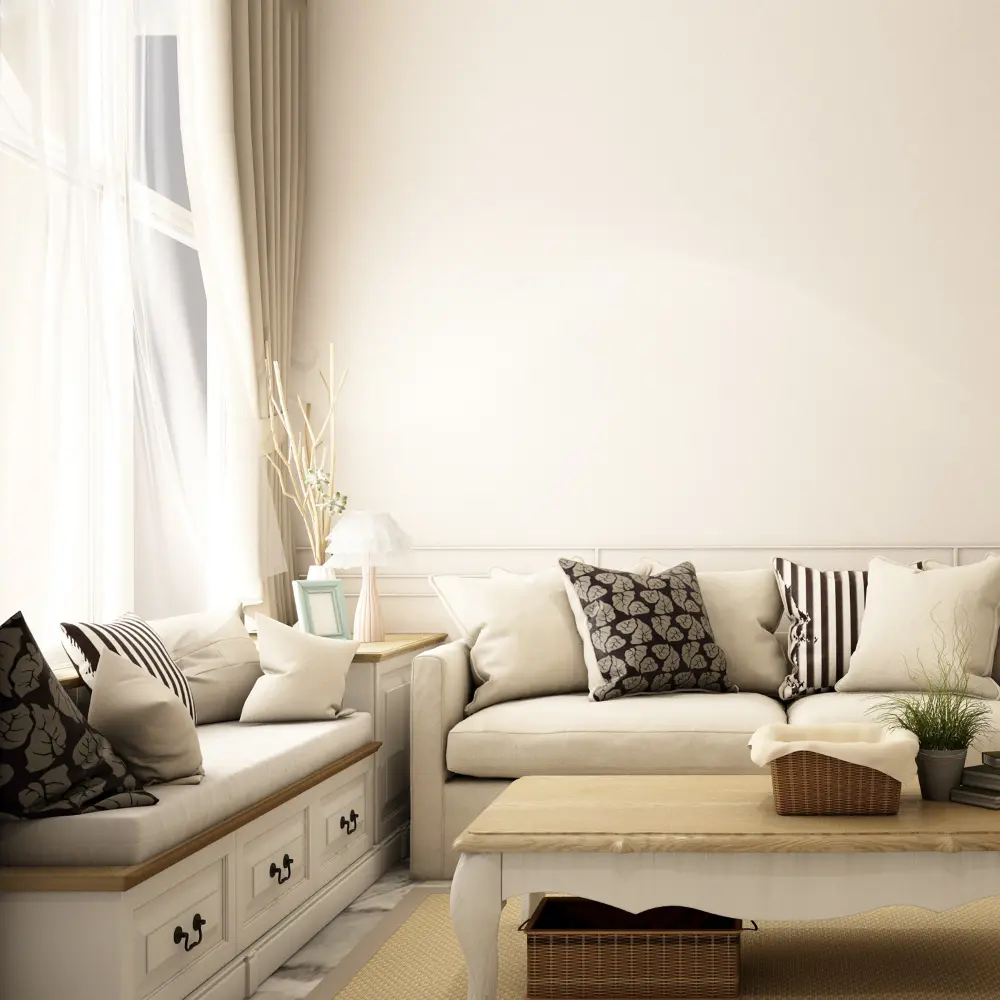
Source Note: According to the Benjamin Moore product page, Simply White carries subtle warm undertones that prevent it from reading stark in rooms with limited natural light — useful in north-facing living rooms.
Warm white works in any light condition. In rooms with strong south or west-facing light, it softens the walls. In rooms with limited light, it prevents the wall from feeling grey. Start here before purchasing any furniture.
2. What Rug Size Works in a Coastal Living Room?
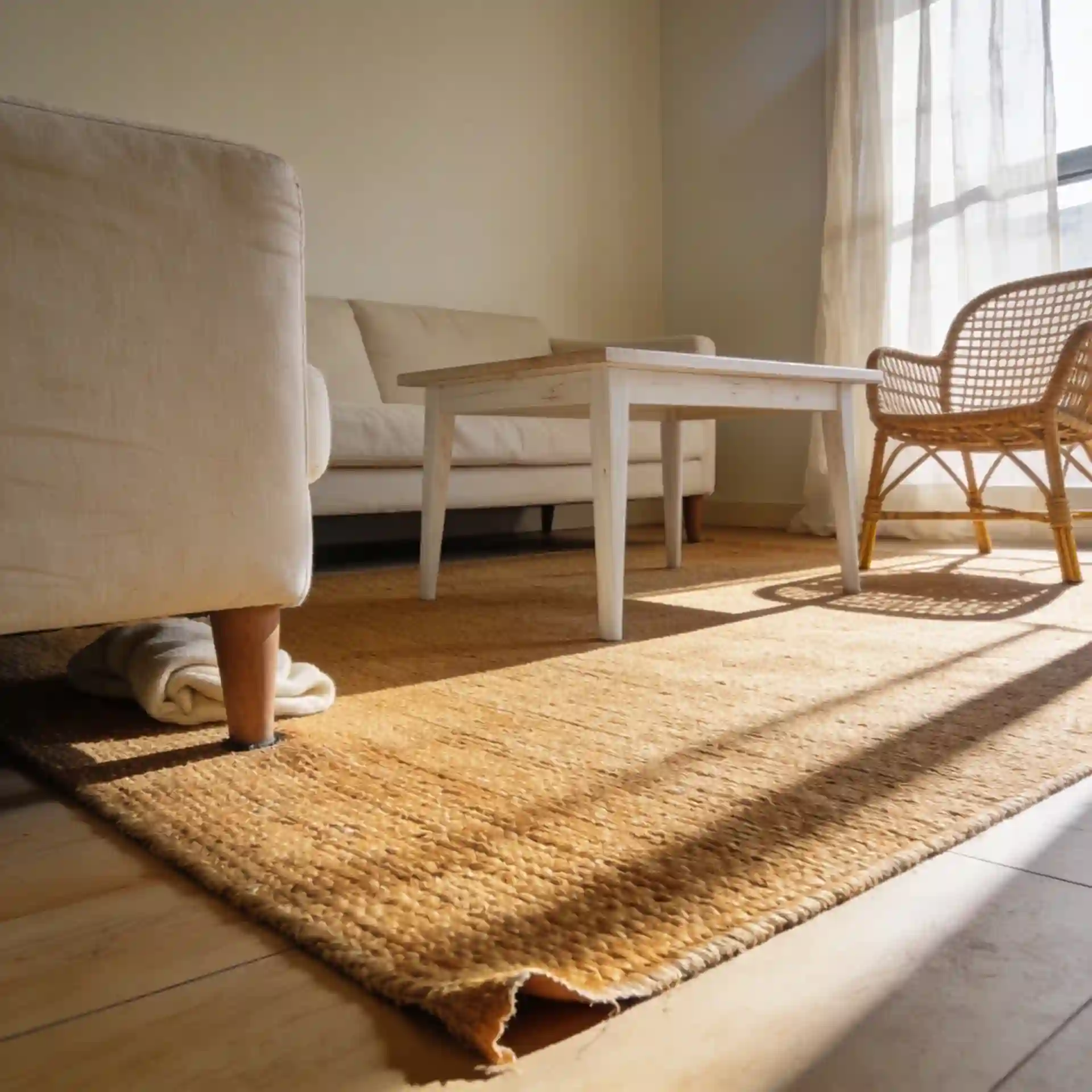
A natural fiber area rug is the floor anchor of every coastal living room. Jute is the softest and most comfortable underfoot. Sisal is the most durable in high-traffic areas. Seagrass is naturally stain-resistant due to its non-porous fibers — the best choice for families with pets or young children.
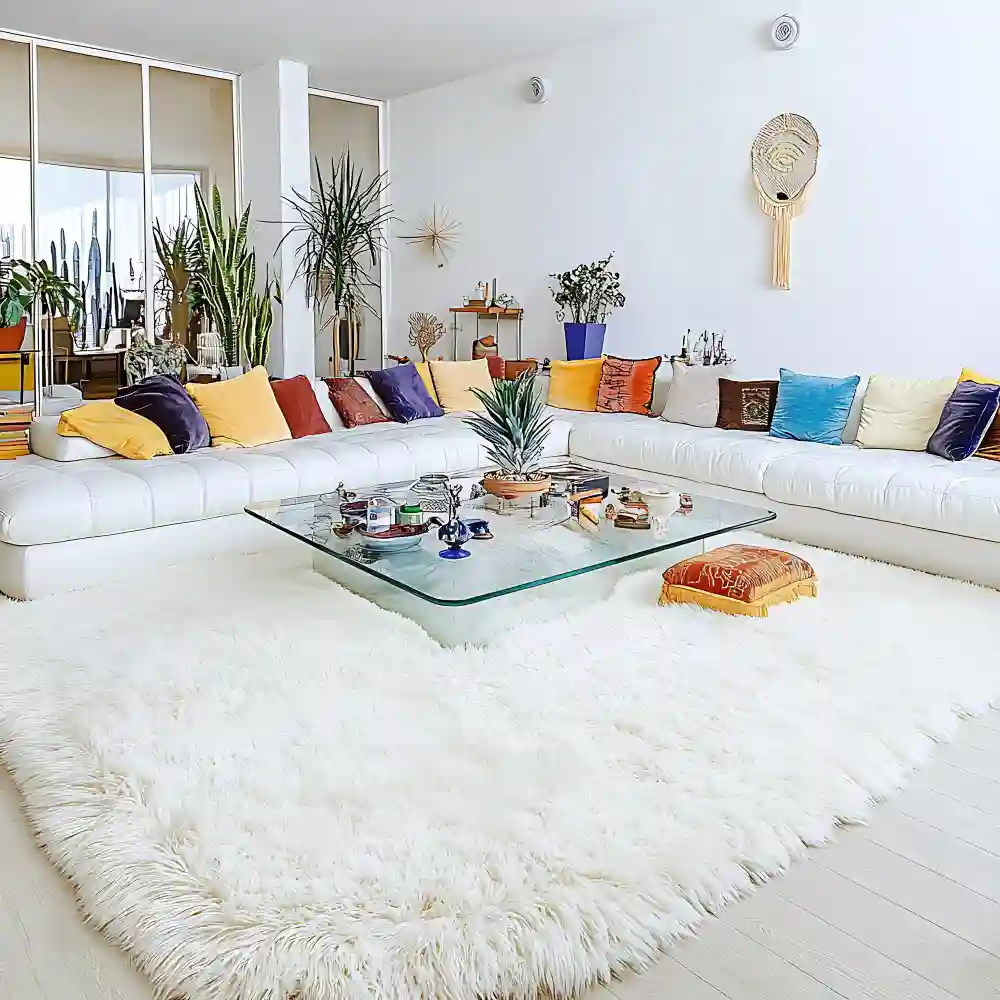
Material Note: Jute rugs shed and flatten more quickly in heavy-use zones; seagrass holds up better under daily wear and resists moisture more effectively.
Sizing matters as much as material. The front legs of all seating pieces should sit on the rug. For most coastal living rooms, an 8 by 10 foot rug is the minimum — a 9 by 12 is better when the layout allows it. A rug that’s too small fragments the floor and leaves the seating area looking unanchored.
3. Which Sofa Works Best for This Style?
A low-profile sofa in cream linen or bouclé is the anchor piece of a modern coastal living room. Low-profile means a seat height around 17 to 18 inches, a back height under 36 inches, and a wide open silhouette. This keeps sightlines clear and the room feeling open.
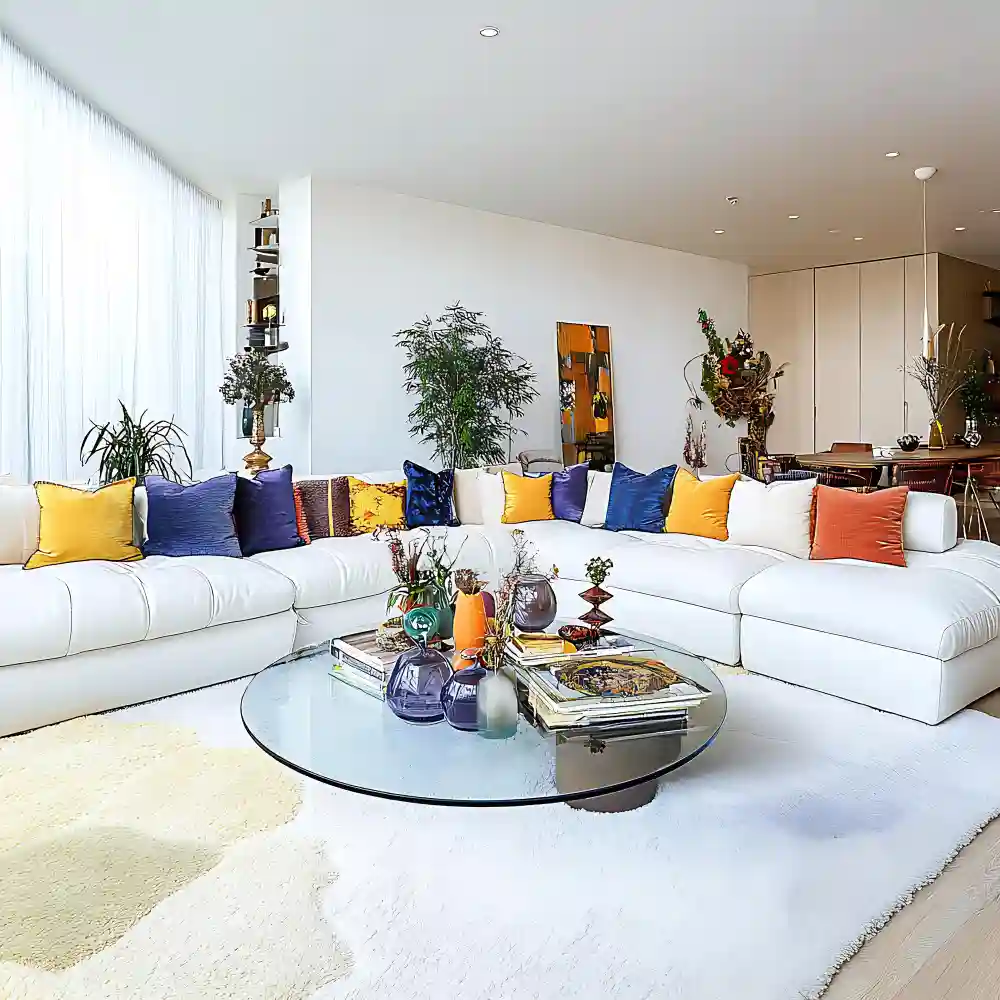
Linen upholstery is the classic coastal fabric — it breathes, softens with washing, and fits the relaxed mood of the style. The trade-off is it wrinkles easily and marks under daily use. Performance fabrics that mimic linen texture are a practical alternative: easier to clean, more resistant to everyday wear, and nearly indistinguishable at a distance.
4. A Light Natural Wood Coffee Table
Light natural wood — white oak, ash, or a driftwood-finish piece — ties the floor and sofa together without adding visual weight. A natural wood coffee table works as the room’s anchor when positioned 16 to 18 inches from the sofa — close enough to reach, far enough to move around comfortably.
Avoid dark wood. It absorbs light and creates visual heaviness that coastal rooms are specifically built to avoid. Round and oval tabletops read softer than rectangles and keep open floor space visible around the seating area.
KEY TAKEAWAY: Wall color, rug, sofa, and coffee table are the four foundational decisions — get these right before adding any accessories.
The Texture Layer
These five ideas are how a modern coastal living room gets its depth. Layered natural textures do more for the coastal look than any single statement piece.
5. Rattan or Wicker Accent Chairs
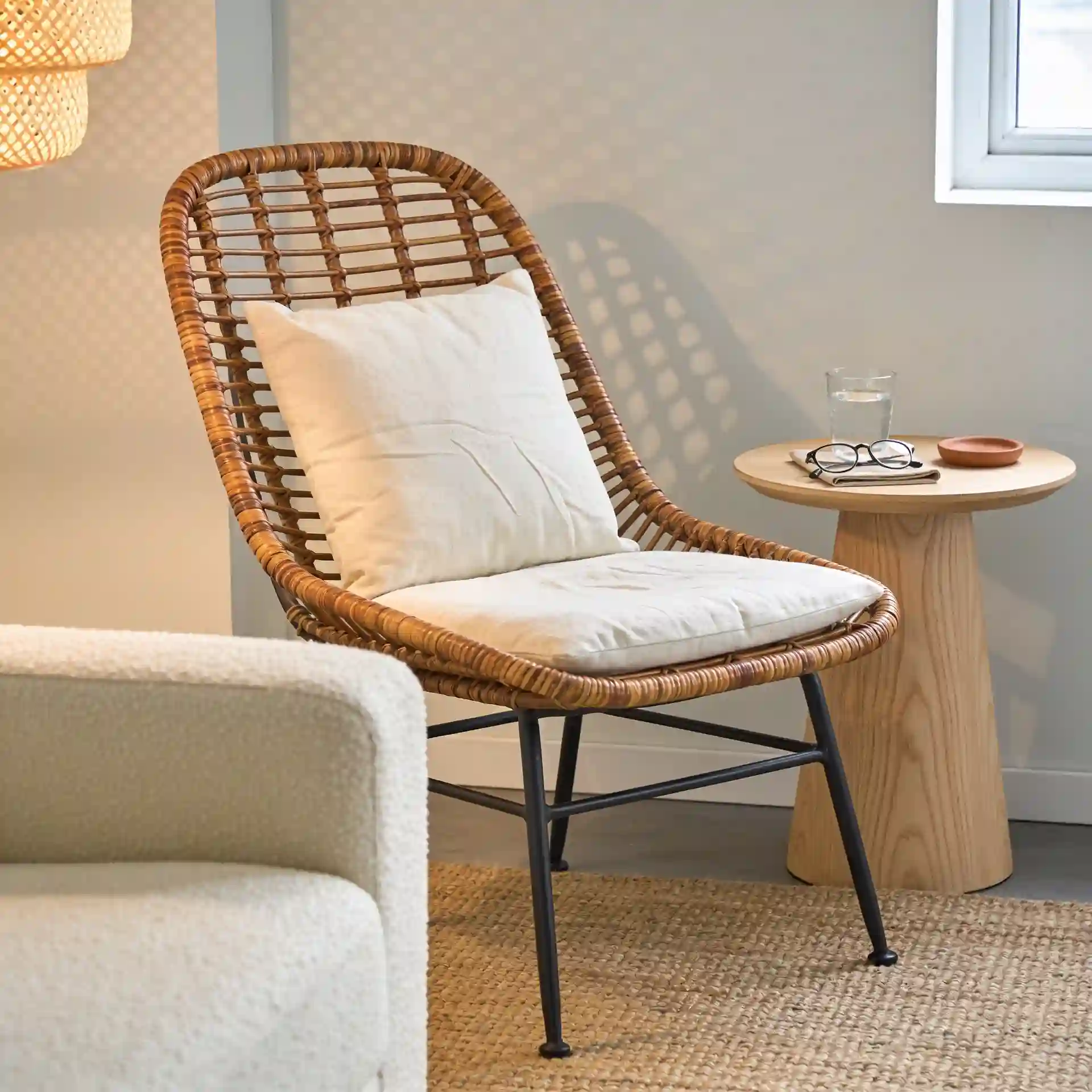
Rattan accent chairs are one of the most recognizable elements of this style. They add natural texture and visual lightness without the weight of upholstered pieces. Pair a rattan chair with a linen or cotton cushion in cream, oat, or warm sand.
One chair adds character. Two create a balanced seating cluster. More than two and the look shifts toward boho. For a room that leans more modern than relaxed, one clean-lined rattan chair is the right call. For more on how rattan and boho-coastal textures combine, see 17 boho coastal living room ideas.
DESIGNER TIP: Match the rattan chair cushion to your sofa color rather than your accent color. Tone-on-tone texture adds depth without disrupting the palette.
6. Sheer Linen Curtains Hung From Ceiling Height
Natural light is the biggest design advantage in a coastal living room. Sheer linen panels let it in while softening the window frame. Hang curtain rods as close to the ceiling as possible — ideally within 4 inches of the ceiling line — and let the panels pool slightly on the floor. This adds perceived height and makes the room feel larger.
Avoid heavy drapes or blackout fabric. They trap light and add visual weight at the window, which works against the airy, open quality the style is built around.
7. Layered Jute and Cotton Throw Pillows
Pillows are the easiest way to build the room’s color story without committing permanently. For a modern coastal living room, start with a neutral base — cream, oat, or warm sand — then add two or three accent cushions in your chosen color: washed navy, sage green, or muted aqua.
Mix textures across the pillows: woven jute covers, brushed cotton, and linen-textured fabrics sit together more naturally than all-matching sets. Vary the sizes too — a mix of 20-inch and 18-inch cushions looks more natural than five identical sizes in a line.
8. A Rattan or Rope Pendant Light
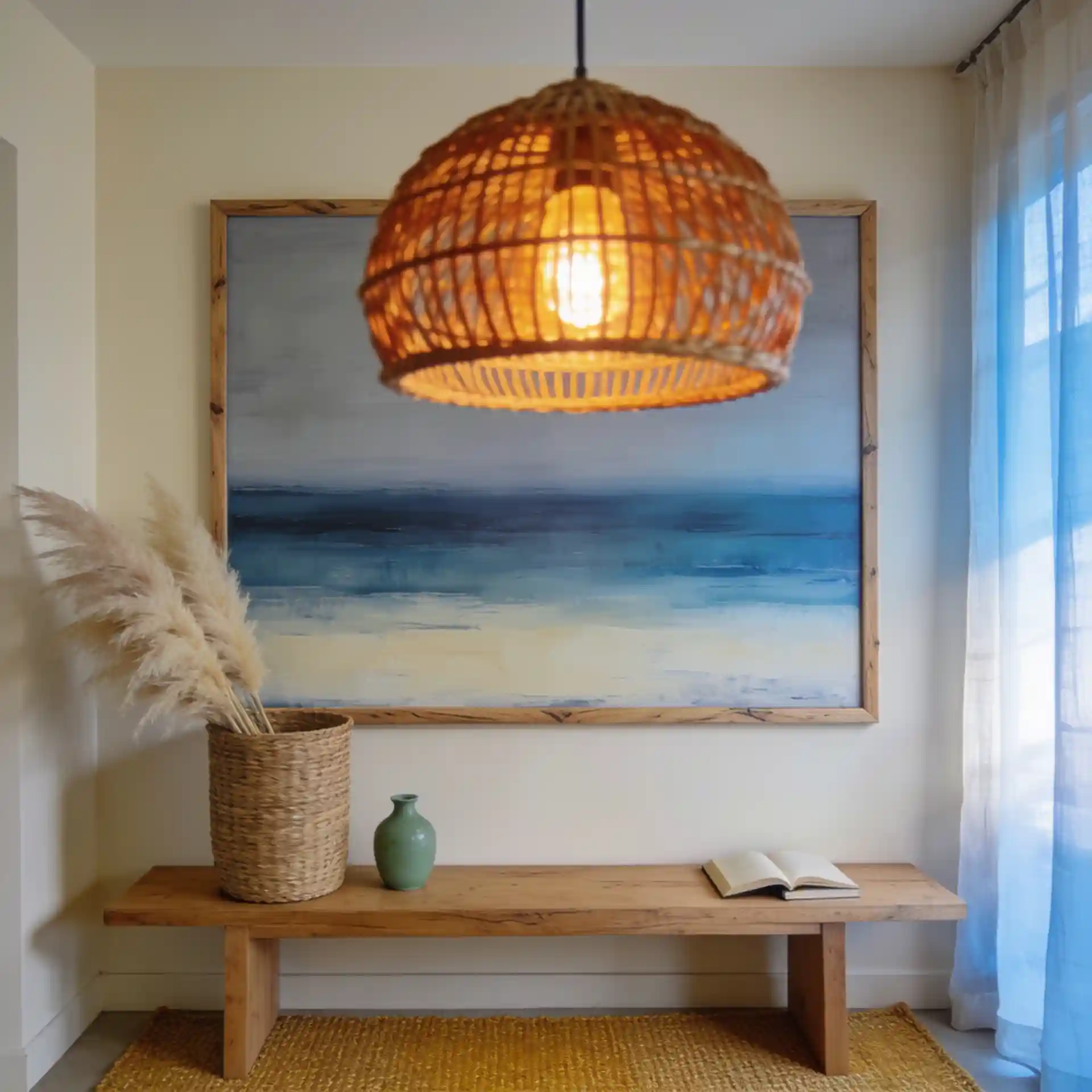
A rattan or rope pendant light is a defining piece for this style. It signals the coastal direction immediately and makes a room feel finished even when other pieces are still being assembled. Rattan and rope pendants diffuse light downward rather than projecting it, which produces a warmer and softer overhead glow than an open metal fixture.
Hang the pendant 7 feet above the finished floor in standard-ceiling rooms. In rooms with 9-foot ceilings or higher, drop it to 7 feet above the floor to keep it within the visual field rather than floating too high.
What Artwork Fits a Modern Coastal Room?
Abstract coastal artwork is the modern approach — horizon lines, blurred ocean photography, organic wave forms, or large-format monochrome prints. Not illustrated fish, vintage nautical maps, or anything with a printed word on it.
One large piece — 30 by 40 inches or bigger — reads stronger on a wall than a cluster of smaller prints. A light wood, driftwood-finish, or thin natural frame keeps the artwork within the coastal palette. For palette and decor inspiration that extends this style, see 11 serene neutral coastal living room ideas.
KEY TAKEAWAY: Natural textures — rattan, jute, linen, rope — do more for the coastal look than any themed accessory.
The Finishing Details
These three ideas separate a well-furnished coastal room from one that feels truly designed.
How Much Blue Should a Coastal Living Room Have?
A modern coastal living room doesn’t need blue everywhere. It needs blue — or sage, or soft aqua — in one or two places: a navy throw on the sofa arm, a sage ceramic vase on the coffee table, or two cushions in washed denim blue. That restraint is what keeps the color feeling chosen rather than imposed.
Source Note: Sherwin-Williams Sea Salt and Benjamin Moore Wythe Blue are among the most-specified coastal accent colors — both carry a subtle grey-green quality that keeps them from reading too bright or too cold in warm-neutral rooms.
The accent color connects the palette without dominating it. More than two or three accent pieces in the same color tips the room toward themed. Keep it to one placement and let the neutral base do the rest.
11. Coastal Botanicals and Pampas Grass
Plants anchor a coastal room in the natural world without adding any clichés. Pampas grass in a tall ceramic or woven basket adds height and natural texture. Olive branches in a simple white or terracotta vessel. A potted fiddle-leaf fig positioned near a window.
Scale matters here. One large botanical statement — a 5-foot pampas arrangement or a tall fiddle-leaf — reads better than five small plants scattered around the room. Concentrate the greenery in one spot and let the rest of the room breathe.
12. A Shiplap or Limewash Accent Wall
A shiplap or limewash accent wall adds texture to a room that’s already calm in palette and material. Limewash paint has a soft, uneven, stone-like surface that photographs well and develops character over time. Shiplap works in rooms with a slight farmhouse or transitional lean.
Paint either one in soft white, warm putty, or the same sand tone as the rest of the walls. Tone-on-tone — same color, different texture — is almost always more convincing than a contrasting accent wall color. It adds depth without disruption.
KEY TAKEAWAY: One accent color, one botanical statement, and one textured wall element are enough to finish the look.
What Most People Get Wrong
❌ Bright white walls → ✅ Use warm white or sand; bright white reads cold and clinical in a coastal room
❌ Themed accessories — shells, anchors, beach signage → ✅ Let the palette and materials create the coastal feel; no literal beach references needed
❌ An undersized area rug → ✅ Front legs of all seating pieces must sit on the rug; an 8 by 10 foot rug is the minimum for most rooms
❌ A dark upholstered sofa → ✅ Choose cream, oat, or warm white; dark upholstery absorbs light and makes coastal rooms feel heavier than intended
KEY TAKEAWAY: Coastal rooms fail most often from bright white paint, themed accessories, and furniture that absorbs instead of reflects light.
What You’ll Spend
A modern coastal living room can be built gradually across most budgets. Warm white paint is the lowest-cost starting point — most rooms run $80–$220 to repaint, and it delivers the highest visible change. A quality natural fiber area rug in the 8 by 10 foot size costs $150–$400 at the budget level and $400–$650 mid-range. If the sofa budget is tight, start with a performance-fabric option in the $900–$1,400 range before investing in full linen upholstery. For smart ways to build the look without overspending, see 10 smart ways to decorate a small living room on a budget.
| Project | Estimated Cost | Impact Level |
|---|---|---|
| Wall paint in warm white (standard room, 2 coats) | $80–$220 | Very High |
| Natural fiber area rug (8×10 ft, jute or seagrass) | $150–$650 | High |
| Rattan accent chair with linen cushion | $200–$900 | High |
| Low-profile linen or bouclé sofa | $900–$2,800 | Very High |
Best First Upgrade: Repaint walls in warm white or sand — it’s the lowest-cost, highest-impact change and resets every other element in the room immediately.
Skip for Now: A shiplap or limewash accent wall is impactful but not the priority; get the palette and major furniture right before adding textured walls.
KEY TAKEAWAY: Start with paint, then the rug, then the sofa — in that order; every other coastal layer builds on top.
What About Small and Open-Plan Coastal Living Rooms?
Small coastal living rooms are well-suited to this style. The coastal palette — light, warm, neutral — already makes rooms feel larger. Scale the sofa down to an apartment-sized or loveseat option and choose a round or oval coffee table to keep traffic flow open. Use a glass or lucite side table where a second solid piece would crowd the floor. Hang a large mirror on the wall opposite the main window — it doubles the apparent natural light without any additional light source.
In open-plan coastal living and dining spaces, define the two zones with area rugs rather than walls. A natural fiber rug under the seating and a different texture — or a slightly larger sisal rug — under the dining table creates two clear moments. Keep the palette the same across both zones. A rattan pendant above the dining table and a rope pendant above the seating area unify the style without making it feel duplicated.
For rooms with a TV on the main wall, keep the coastal materials framing the sides — rattan chair, pampas in one corner, sheer curtains at the window — and use a simple low-slung oak media unit rather than a bulky entertainment center. The natural materials do more when they flank the screen than when they compete with it.
For more ideas on smaller spaces, see small living room ideas that feel luxurious and tiny living room ideas that make space feel bigger. For a coastal palette carried into other rooms, boho coastal bedroom ideas cover the same tones in a bedroom context.
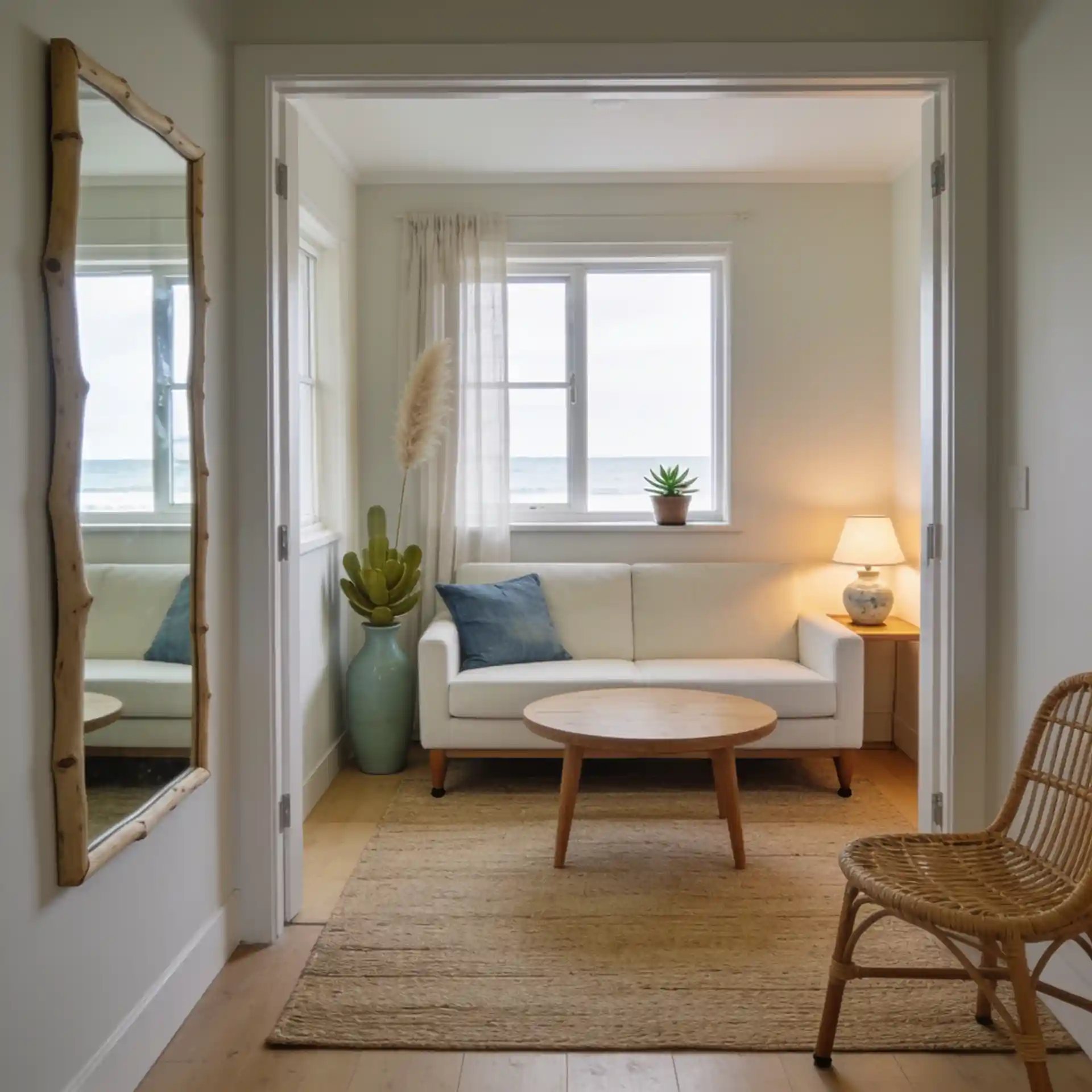
KEY TAKEAWAY: Small, open-plan, and TV-wall coastal rooms all benefit from defined zones, scaled-down furniture, and natural materials at the room’s edges.
Related Coastal Ideas:
Frequently Asked Questions
Conclusion
A modern coastal living room is less about what you add and more about what you leave out. The palette stays warm and neutral. The materials stay natural — rattan, linen, jute, light oak. The accent colors stay restrained: one navy throw, one sage vase, and the coastal story is told without a single shell in sight.
Editorial field note: The coastal rooms that hold up best over time are built from materials that age naturally. A jute rug develops slight wear patterns. A linen sofa softens with use. Rattan gains patina. Nothing looks out of place two years later because nothing was placed there to reference a theme. That is the quieter, more lasting version of the style — and it is the one that actually feels like a home.
For more ideas across every style and space, explore 101homedecor.com.