TL;DR
- Scale first: A sofa 72–84 inches wide keeps proportions right in rooms under 200 square feet — wider and the room stops breathing.
- Light counts: Layer at 2700K–3000K across three sources — ambient, table, and accent — rather than relying on one overhead fixture.
- LRV matters: Paint colors with an LRV between 50 and 70 reflect enough light to feel open while still holding real color depth.
- Texture signals luxury: One velvet or boucle piece against linen and oak reads as intentional and rich, not fussy or expensive.
- Mirrors work best at 2/3 width: A mirror hung at two-thirds the width of the sofa below it expands sightlines without looking like a safety mirror.
Why Most Small Living Rooms Feel Smaller Than They Are
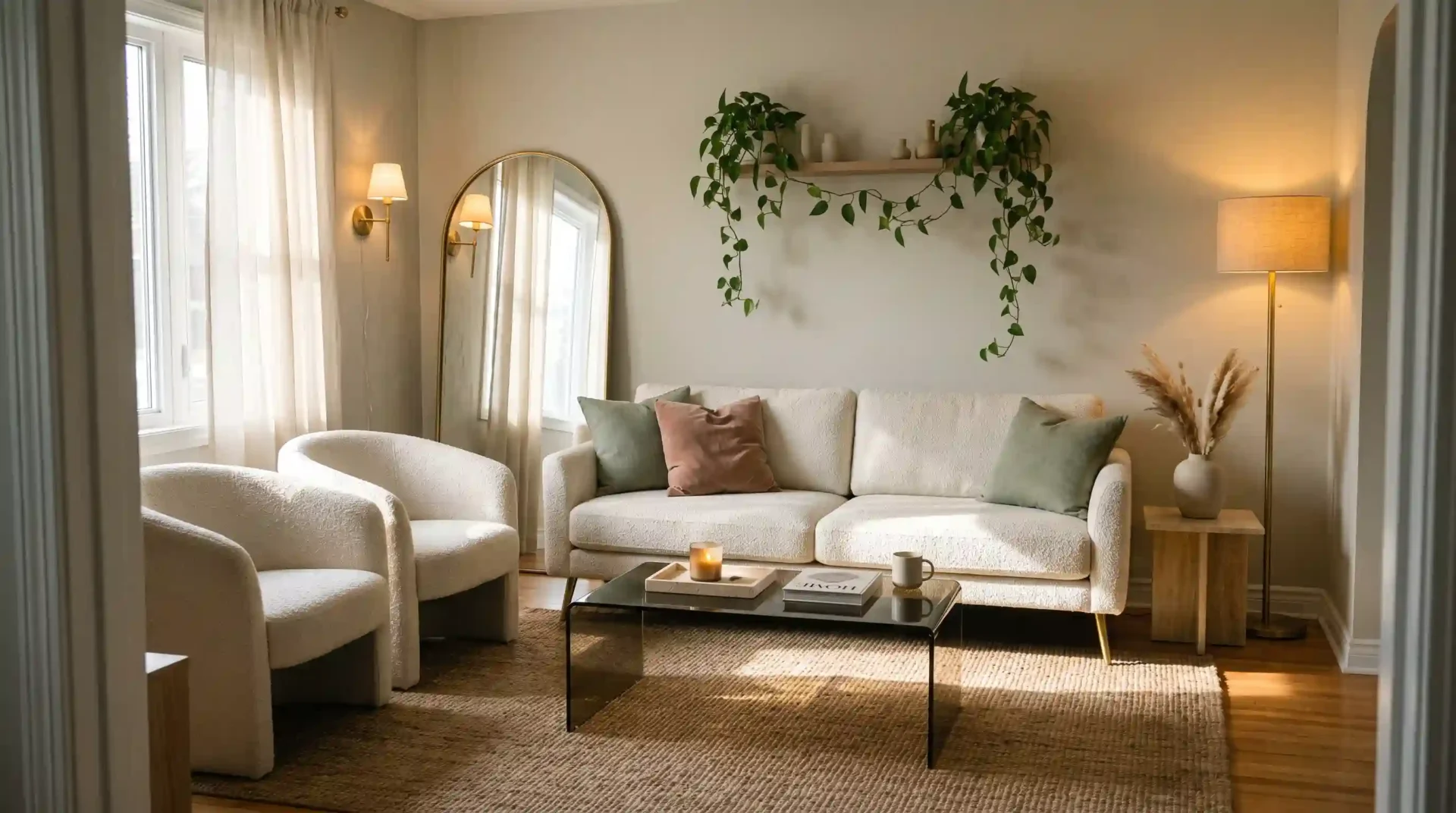
Designers who specialize in compact spaces make the same observation repeatedly: most small living rooms feel cramped not because of square footage, but because of too many competing decisions. Oversized furniture on an undersized rug. A single overhead bulb casting flat light across every corner. A wall color that looks pale on a swatch card but reads hollow on an entire north-facing wall.
Small living room ideas that deliver genuine luxury all start from the same foundation: remove the sources of visual chaos before adding anything decorative. The room that breathes first is the room that can hold rich materials without tipping into cluttered.
Editorial field note: A 140-square-foot living room with a 96-inch sofa, a 5×7 rug, and a single recessed light can feel smaller than a 110-square-foot room with an 80-inch sofa, an 8×10 rug, and three warm light sources. The square footage changes nothing. The decisions change everything.
Small living room ideas work best when they address proportion, light, and material — in that order. Fix the bones, then layer texture and color. That sequence is what separates a room that feels finished from one that feels busy.
These ideas are organized into four practical themes: Scale & Proportion, Light & Color, Texture & Material, and Space-Smart Details. Each builds on the one before it. Work through them in sequence or jump to the section that matches where your room is stuck.
For more inspiration across every room, 101 Home Decor covers style, layout, and material ideas for every space in the home. You can also browse all living room ideas to explore related posts by style and theme.
Bookmark this guide for quick reference.
| Quick Takeaways | |
|---|---|
| Scale | Choose a sofa 72–84 inches wide and leave 18–24 inches between every piece of furniture. |
| Paint | Pick wall colors with an LRV of 50–70 for rooms that feel light but not washed-out. |
| Lighting | Layer three light sources at 2700K–3000K — no single overhead fixture doing all the work. |
| Textiles | One velvet or boucle anchor piece, two linen or cotton layers, one natural fiber rug. |
| Mirrors | Mount at two-thirds the width of the furniture below, opposite or angled toward a window. |
KEY TAKEAWAY: Most small living rooms feel cramped because of proportion and lighting errors, not square footage — fix those first before adding any decor.
Small Space Design Checklist
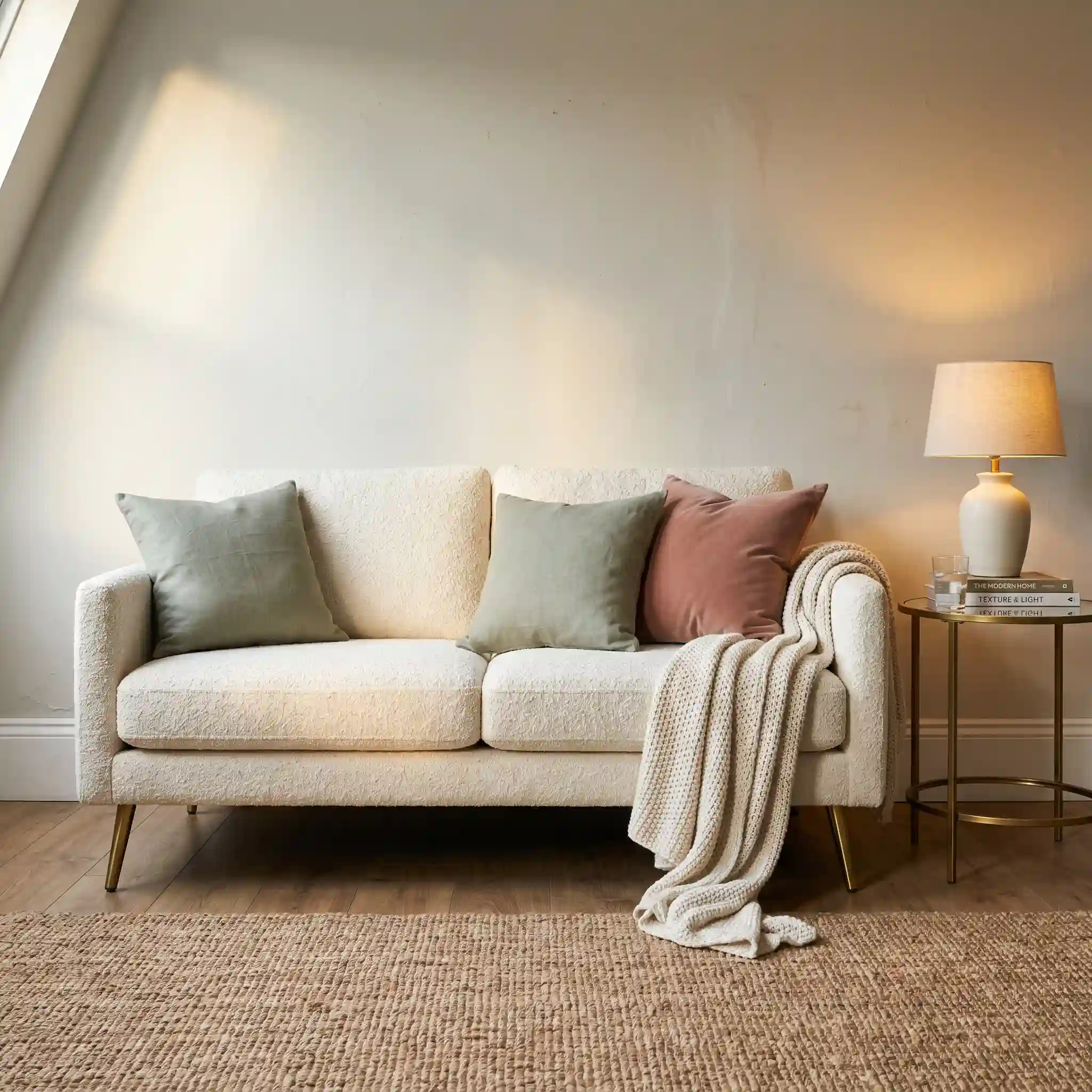
- Choose a sofa between 72 and 84 inches wide for rooms under 200 square feet.
- Size your rug at 8×10 feet minimum — front legs of all seating should sit on it.
- Layer at least three light sources: one ambient (table or floor lamp), one accent, one task.
- Paint walls with a color in the LRV 50–70 range for warmth and brightness combined.
- Mount your curtain rod at least 12 inches above the window frame, or directly at the ceiling.
- Place one large mirror at two-thirds the width of the sofa, opposite or angled toward a window.
- Choose furniture with visible legs — sofas and chairs that reveal floor beneath them expand perceived space.
- Keep the largest wall surface free of clutter — one focal-point piece, not a crowded gallery.
KEY TAKEAWAY: Eight specific decisions — sofa size, rug size, lighting count, paint LRV, curtain height, mirror width, visible legs, and wall focus — cover most of what makes or breaks a small living room.
Scale & Proportion — Getting the Bones Right
The most common mistake in a small living room is furniture that doesn’t match the room’s dimensions. A sofa that spans the full wall, a coffee table at the wrong height, a rug too small to anchor anything — these decisions compound into a room that feels dense and hard to navigate.
Small living room ideas in this category focus on the furniture framework first. Get these right and every layer of decor added afterward will sit more naturally.
1. Right-Size Your Sofa for the Room
A sofa between 72 and 84 inches wide is the sweet spot for most living rooms under 200 square feet. Designer Rule of Thumb: a sofa’s length should be roughly two-thirds the length of the wall it sits against — wide enough to anchor the space, not so wide it blocks the sightline to the rest of the room.
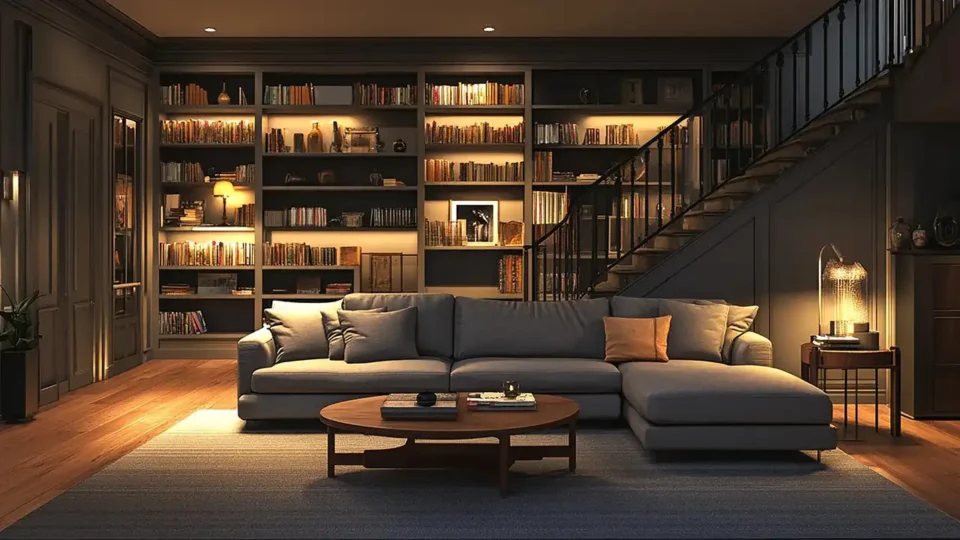
Sofa depth matters just as much as width. Keep seat depth between 32 and 36 inches. Sofas deeper than 36 inches in a compact room push everything else out of position. Look for low-profile silhouettes — sofas with seat heights at 17–18 inches feel more open than high-backed versions. A sofa in natural linen, warm greige boucle, or dusty velvet in a soft clay tone adds material richness without adding visual bulk.
DESIGNER TIP: Choose a sofa with visible wooden or metal legs rather than a skirted base. Exposed legs reveal floor beneath the furniture, which makes the room feel larger by extending the visible floor plane.
2. Anchor the Seating Zone With the Right Rug
A rug that is too small fragments the seating area into disconnected islands. Designer Rule of Thumb: an 8×10 foot rug is the starting point for most living rooms between 100 and 200 square feet — front legs of all seating sit on the rug, back legs rest on the floor, and the coffee table sits fully on the rug surface.
Leave 18 to 24 inches of exposed floor around the rug’s perimeter. This border of floor between rug edge and wall is what makes the rug look chosen, not leftover. A low-pile wool or jute rug in warm oat, soft sand, or warm charcoal works better in a small room than a high-pile shag — lower pile keeps the floor plane visually clean and easy to vacuum around furniture.
A 5×7 rug in a 150-square-foot room makes the seating area look unanchored. The rug will appear to float beneath the sofa rather than defining the full zone. Going up to an 8×10 — even if it feels too large on paper — almost always corrects this.
3. Use the 60/40 Floor Space Rule
Furniture should occupy approximately 60% of the floor plan, leaving 40% as clear walkways and open space. Designer Rule of Thumb: plan 18 to 24 inches between every piece of furniture for comfortable passage, and at least 30 to 36 inches for the main walkway around the sofa.
This rule prevents the room from becoming a furniture showroom and keeps sightlines clear from the entry point. In practice, it means choosing one anchor seating piece — typically the sofa — and one or two accent chairs rather than filling every wall with seating. The empty space is not wasted; it is what makes each piece of furniture feel chosen rather than crammed.
For a compact small living room decor setup, this also means avoiding a second sofa in favor of two lightweight accent chairs or even a single upholstered bench at the far end of the seating zone. Chairs with slim profiles — a curved barrel chair in boucle, or a cane-back accent chair in natural rattan — carry visual weight without blocking the room.
KEY TAKEAWAY: Right-size the sofa at 72–84 inches, anchor the seating with an 8×10 rug, and keep 40% of the floor clear — these three decisions build the foundation every other idea depends on.
What Paint Colors Actually Work in a Tiny Living Room?
Color choice in a small living room is not about going as light as possible. It is about using colors with the right Light Reflectance Value (LRV) — the measurement of how much light a color reflects on a scale from 0 (black) to 100 (white).
Colors in the LRV 50–70 range reflect enough light to feel open and airy while still holding enough depth to look chosen. Colors above LRV 75 can tip into washed-out, especially on north-facing walls. Colors below LRV 45 feel dramatic and rich — they can work beautifully in a small living room when used alongside warm, layered lighting.
4. Choose Wall Colors With Intention
Benjamin Moore Pale Oak (LRV 82) is often cited as a designer favorite for light-filled living rooms, but it can feel flat in rooms with low natural light. For rooms that need both warmth and depth, a soft warm greige in the LRV 55–68 range — such as Benjamin Moore Revere Pewter (LRV 55.51) or Sherwin-Williams Accessible Beige (LRV 58) — keeps the walls active without competing with the furniture.
For a bolder take, Farrow & Ball Elephant’s Breath (LRV approximately 54) works beautifully as a full-room color in small living rooms with warm oak floors. It looks like a quiet grey-brown that deepens at dusk and lifts in morning light. Pair with warm brass sconces and a cream linen sofa for a tonal effect that feels polished without being precious.
Material Note: When testing paint colors in a small room, view the painted swatch at different times of day — morning light, afternoon, and after dark with lamps on. A color’s LRV does not change, but its appearance shifts significantly based on light quality and direction.
5. Use Mirrors at the Right Scale
A mirror in a small living room serves one practical function: it borrows light and visual depth from another surface. Placed opposite or at a slight angle to a window, it reflects natural light back into the room and creates the perception of a second window.
Designer Rule of Thumb: a mirror should be approximately two-thirds the width of the sofa or furniture it sits above. For an 80-inch sofa, that is a mirror 52–54 inches wide. A mirror that matches the sofa’s full width can feel overwhelming; one too small looks accidental.
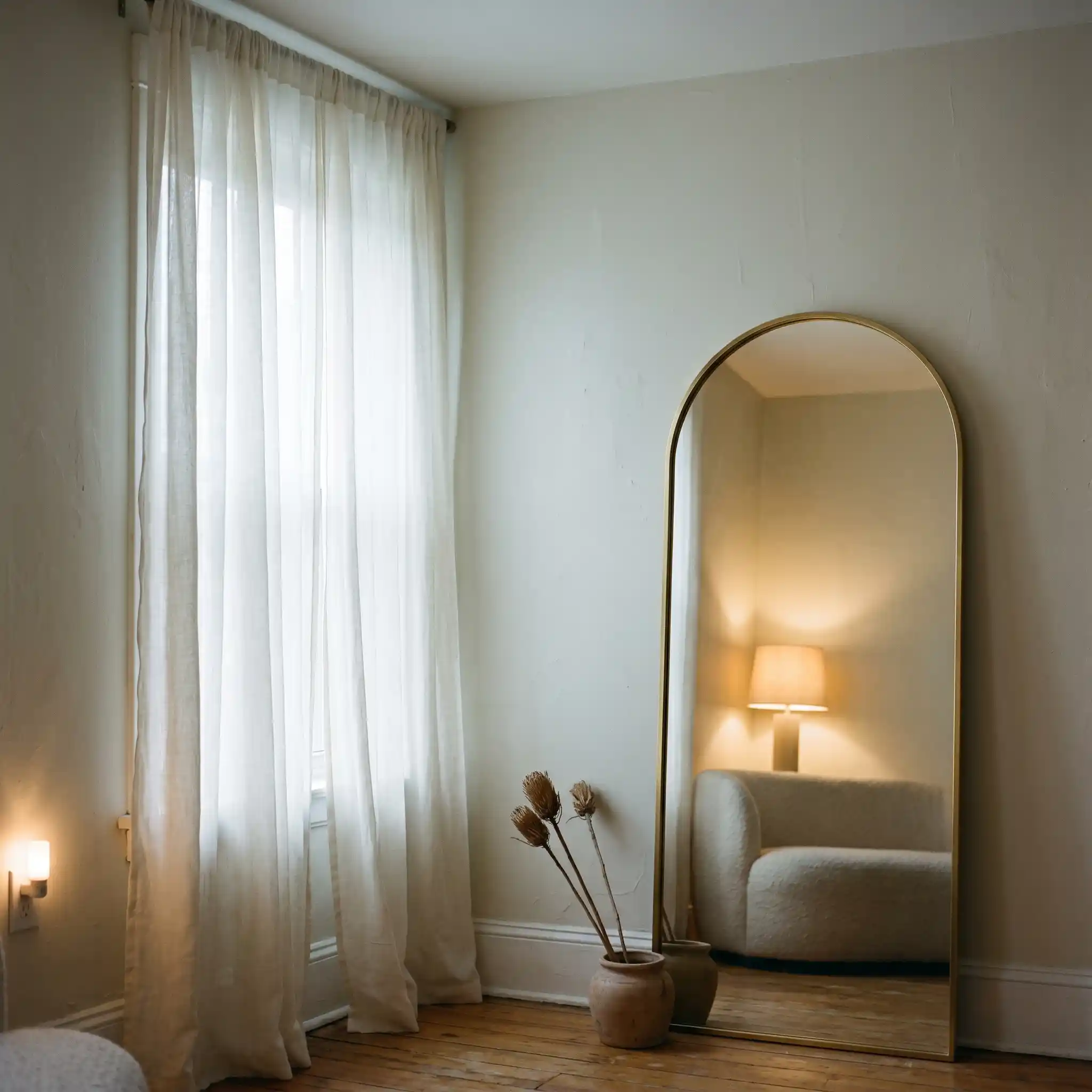
Placement height matters too. The mirror’s center point should sit at roughly eye level — around 57 to 60 inches from the floor — so it reflects the room rather than the ceiling. A leaning floor mirror in a brushed brass frame or a large arched mirror against the wall behind the sofa creates strong visual depth in a tiny living room without requiring any wall work.
6. Hang Curtains From the Ceiling
Curtain height is one of the fastest ways to make a small living room feel taller. Mount the curtain rod directly at the ceiling or within 2 to 3 inches of it — not at the top of the window frame. This draws the eye upward along the full vertical drop of the fabric and signals height even in an 8-foot room.
Designer Rule of Thumb: a curtain rod mounted at least 12 inches above the window frame creates a more expansive look; ceiling-mounted hardware produces the maximum effect. Curtain fabric width should be 2 to 2.5 times the window width to produce elegant folds when closed and clean stacks when open.
For small living rooms, sheer linen panels at ceiling height catch natural light without blocking it. They add texture, filter the view, and signal a level of considered detail that looks designed rather than purely functional. Layer a heavier linen or velvet panel behind the sheer for evenings when light control matters.
KEY TAKEAWAY: LRV 50–70 paint, a correctly scaled mirror at two-thirds the sofa width, and curtain rods at the ceiling line each expand perceived space through color science, reflection, and vertical emphasis.
Texture & Material — What Makes a Small Room Feel Rich
A small living room can feel luxurious at any square footage when the material choices are deliberate. The principle borrowed from boutique hotel design is this: use fewer pieces in higher-quality materials rather than filling the room with many lower-quality items.
A single velvet sofa against a painted wall carries more luxury signal than three different fabric sofas in the same space. Velvet absorbs light softly, holds color depth, and ages gracefully. Boucle adds tactile warmth. Linen breathes and softens with use. Together, these materials layer in a way that feels purposeful and well-chosen — and none of them require a significant budget if selected in the right format.
7. Lead With One Anchor Textile
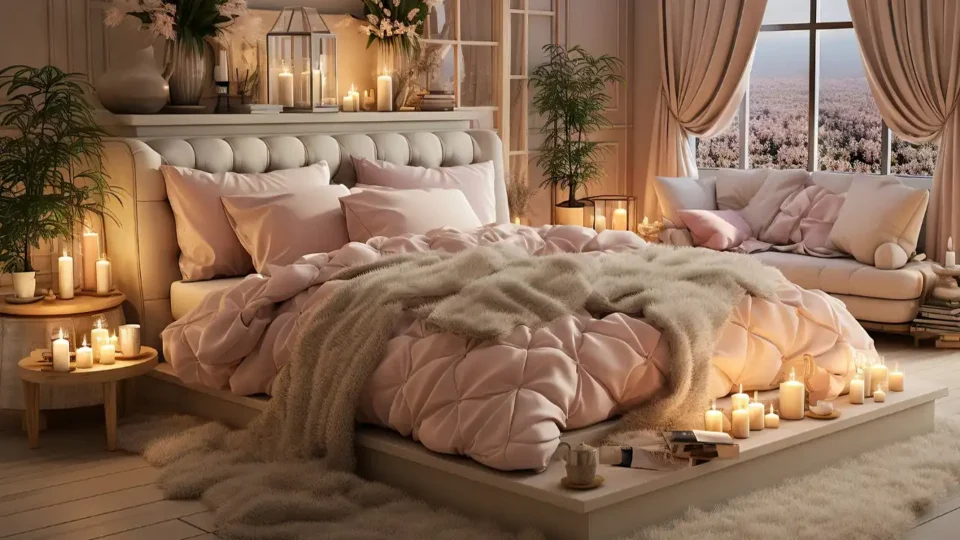
Choose one primary textile for the sofa — either velvet, boucle, or heavy linen — and treat everything else as a secondary layer. A boucle sofa in warm ivory or cream becomes the room’s texture anchor. Layer a chunky knit throw in soft charcoal over one armrest and two linen cushions in muted clay or dusty sage. The contrast between the boucle’s nubby texture and the linen’s flatter weave creates depth without color complexity.
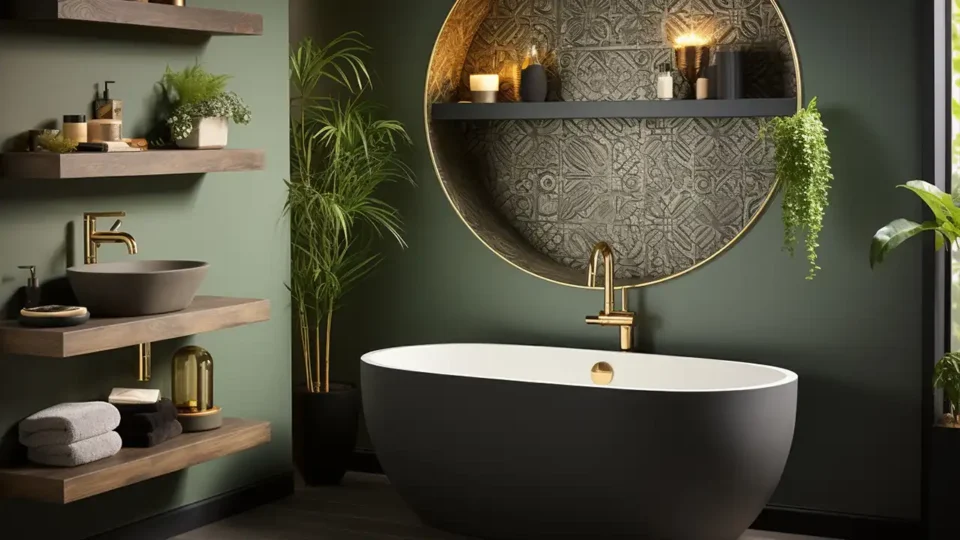
For a moodier palette, a velvet sofa in warm olive, deep teal, or dusty rose looks like a deliberate color choice rather than a default neutral. Velvet in jewel tones pairs naturally with warm brass hardware on side tables and floor lamps. The brass picks up the sofa’s sheen and creates a cohesive material story across the room.
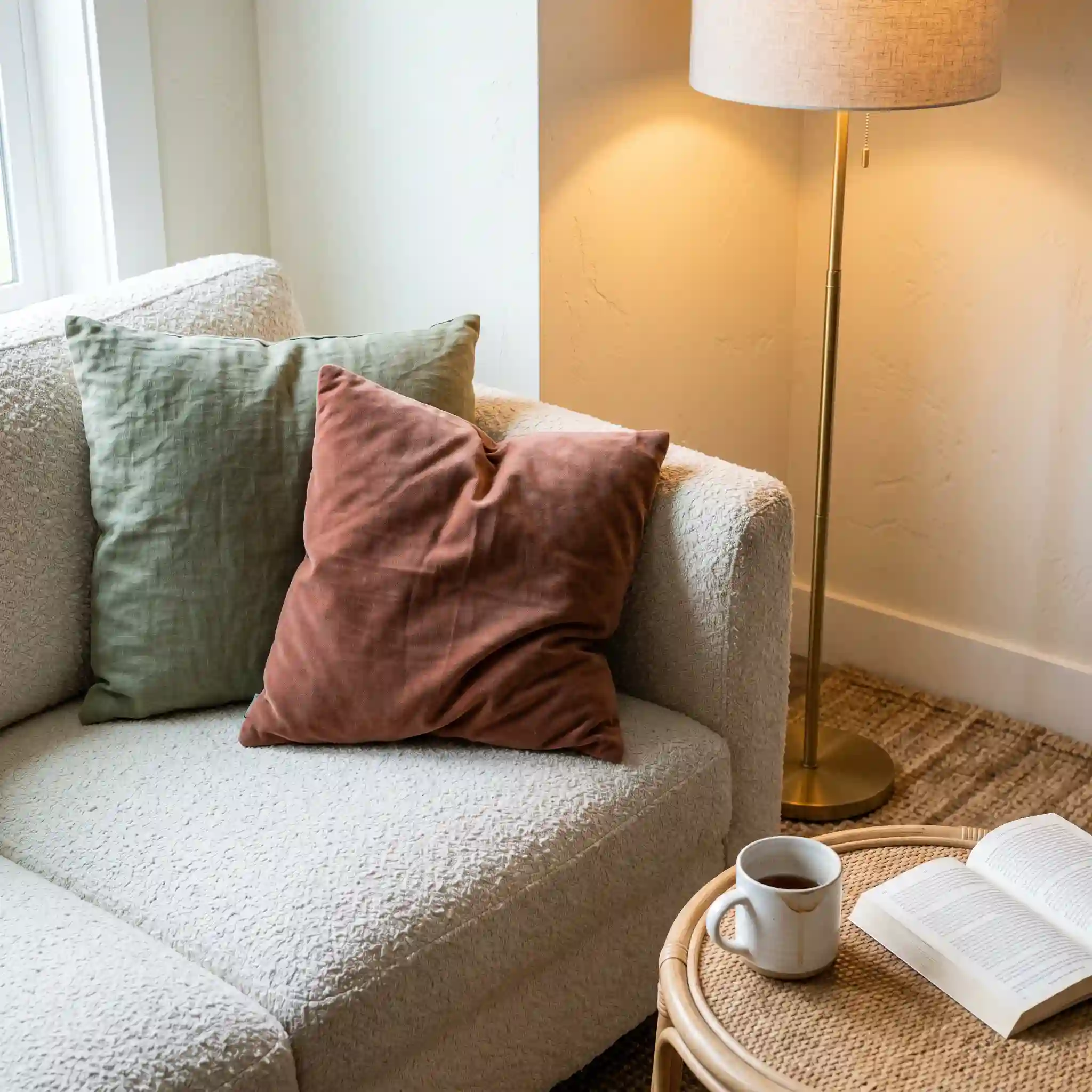
DESIGNER TIP: Limit the sofa cushion count in a small living room to three or four. More cushions make the sofa look smaller and the room look messier. Choose two 20×20 inch square cushions in a textured fabric and one 22×22 inch accent cushion in a contrasting solid — three pieces that leave the sofa shape visible rather than buried.
8. Layer Warm Lighting at Three Heights
A single recessed overhead light or a central ceiling fixture is the most common lighting mistake in small living rooms. Designer Rule of Thumb: layer at least three light sources in a living room at three heights — ambient (table or floor lamp), accent (wall sconce or picture light), and a secondary ambient source such as a small table lamp on a side table.
Source Note (Feit Electric): Living room lighting works best in the 2700K to 3000K color temperature range — 2700K produces warm amber tones for evening relaxation, 3000K delivers a slightly cleaner white suitable for reading and daily tasks. For accent lighting hitting materials like velvet or artwork, a CRI of 90 or above renders color more accurately and makes finishes look richer.
A brass swing-arm wall sconce at 2700K beside the sofa creates warm directional fill. A linen-shaded floor lamp in the far corner of the room removes the dark pooling that makes small rooms feel smaller after dark. These two additions alone can change the room’s atmosphere more than any furniture change.
9. Use Natural Materials as the Room’s Ground Layer
Natural materials — jute, rattan, raw oak, travertine, ceramic — act as the ground layer beneath more finished materials. A jute rug under the seating zone. Rattan side chairs or an accent stool near the window. A small ceramic vase on the coffee table holding dried pampas or eucalyptus.
These materials signal warmth and tactility at low cost and with minimal visual weight. A rattan basket tucked under the coffee table for blanket storage is both functional and textural. A small travertine tray on the coffee table organizes remote controls and candles while adding a stone material note that looks curated without requiring effort.
A jute or seagrass basket at 14 to 16 inches in diameter fits under most coffee tables with clearance to spare — enough to hold two folded throws without making the table look cluttered above. A rattan side stool at 16 to 18 inches high works beside a sofa armrest and occupies roughly the same floor footprint as a hardcover book.
The combination of a velvet or boucle anchor textile, warm-toned lighting at three heights, and natural material ground layers is essentially the small-space formula used in boutique hotel lobbies — where luxury must be communicated quickly in a compact footprint. For a moodier version of this layering approach, cozy moody farmhouse living room ideas demonstrates velvet, linen, and rattan working together in a deeply warm palette.
KEY TAKEAWAY: Lead with one premium anchor textile, layer lighting at 2700K–3000K across three heights, and use natural materials as the room’s ground layer — together these three moves produce a boutique-hotel sense of luxury in any square footage.
Space-Smart Details — Finishing the Room Without Crowding It
The final layer of these small living room ideas — part of all rooms inspiration on 101 Home Decor — is about using the room’s specific constraints intelligently. Multifunctional furniture, wall-mounted storage, and cleared sightlines are not budget compromises — they are the design moves that separate a room that looks finished from one that looks managed.
10. Choose Furniture That Works Harder
An ottoman with internal storage replaces both a coffee table and a storage basket. A console table behind a floating sofa doubles as a display surface and a room divider in open-plan layouts. A nesting side table set gives two surfaces when needed and takes up the space of one when not.
In a studio apartment or a truly compact living area, transparent or acrylic furniture pieces — a lucite side table, a smoked glass coffee table — create surface space without adding bulk. The floor shows through them, which maintains the open floor plane established by the 60/40 rule.
Rental Note: Avoid drilling for wall-mounted shelves in rental living rooms. A freestanding ladder shelf at 63 to 72 inches tall in natural oak or raw metal achieves the same vertical storage effect — most fit a 24-inch floor footprint — and moves with you at the end of the lease.
11. Mount Shelving on the Walls, Not on the Floor
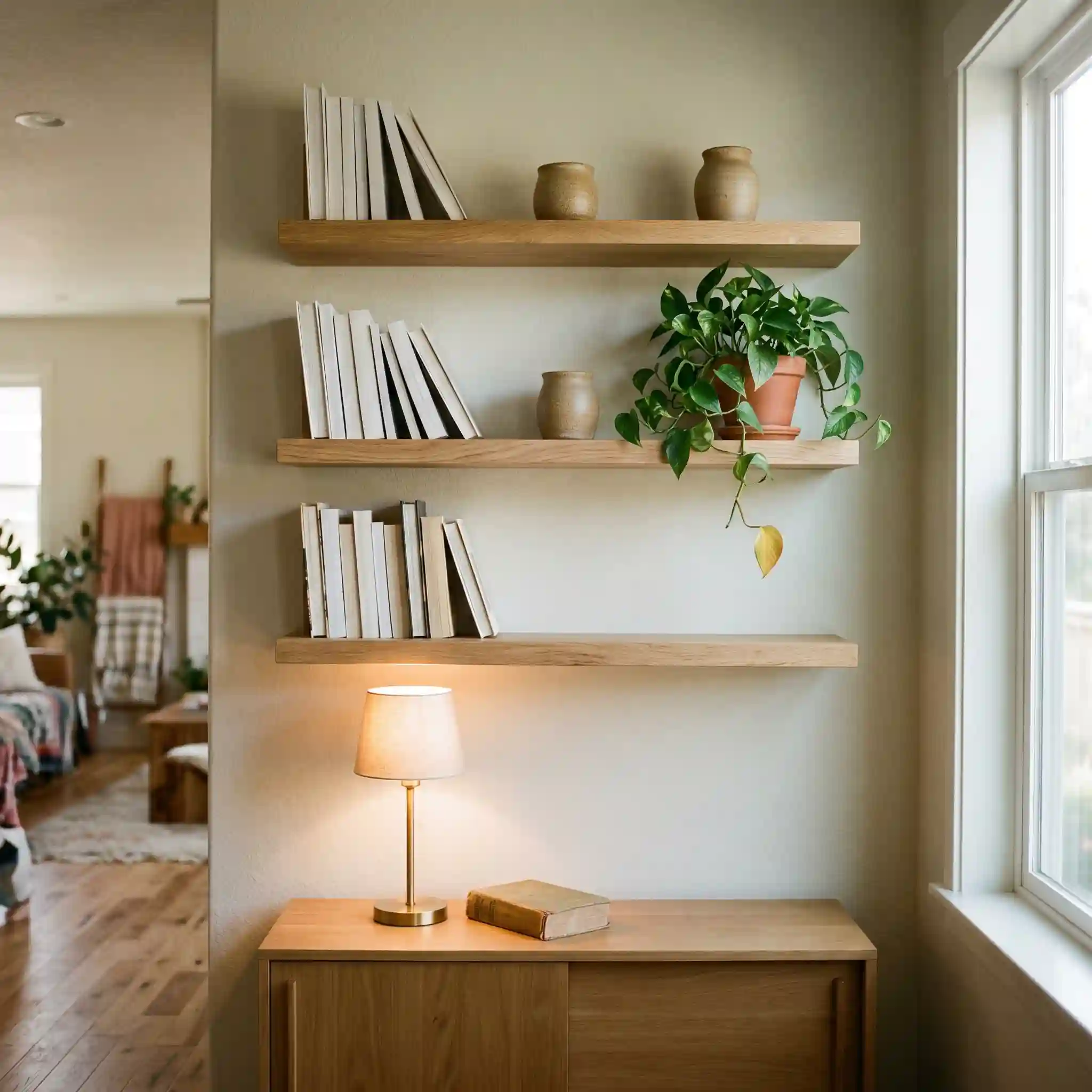
Floor-standing bookcases and shelving units consume floor space and add visual bulk at eye level. Wall-mounted floating shelves — installed at 72 inches or higher — store books, objects, and plants while keeping the floor plan clear.
For a small living room, a single run of wall-mounted shelving above a credenza or console table creates a vertical display zone without a freestanding footprint. Style the shelves with a combination of books, small ceramics, one plant, and one negative-space gap — a shelf that is 70% filled and 30% empty looks more considered than a shelf packed to the edge.
For small-space living at every scale, browse small apartment ideas for additional storage and layout strategies that apply directly to compact living rooms.
12. Clear the Main Sightline From the Entry
The sightline from the room’s entry point to the far wall is the most important spatial decision in a small living room. Whatever the eye travels to first becomes the room’s focal point — and that focal point determines whether the room feels purposeful or cluttered.
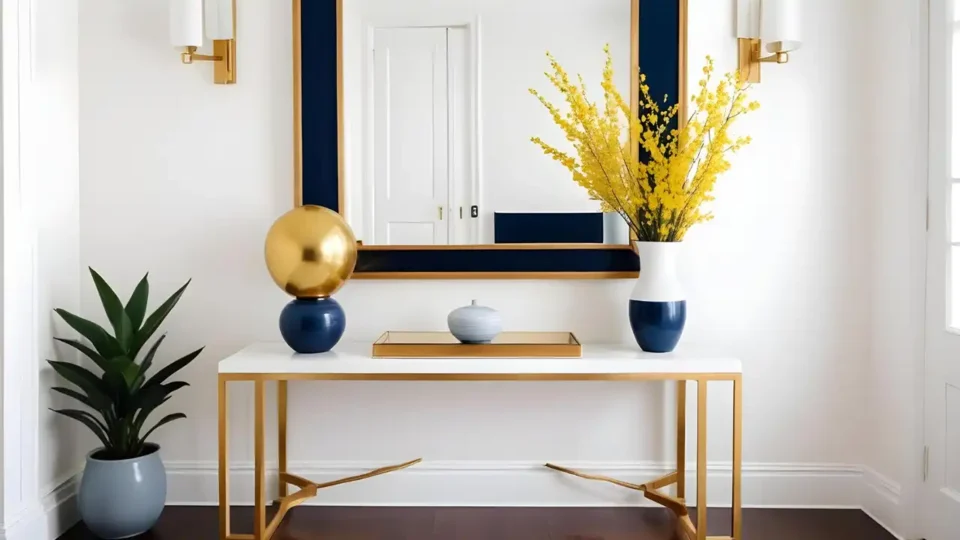
Keep the main sightline clear of visual obstacles: no furniture legs crossing it, no stacked objects on surfaces mid-sightline, and no competing focal points on adjacent walls. Direct the eye to one strong finish — a large painting, a textured accent wall in limewash or board-and-batten, or a well-styled console table with a mirror above it.
In rooms where the sofa sits against the far wall, the wall behind the sofa becomes the primary focal point surface. One large piece of art — sized at two-thirds to three-quarters of the sofa width — centered above the sofa at 57 to 60 inches from floor to center creates the most grounded visual anchor. Skip the gallery wall in a small room; it fractures the sightline rather than focusing it.
KEY TAKEAWAY: Multifunctional furniture, wall-mounted storage above 72 inches, and one clear sightline to a single focal point are what prevent a small living room from tipping from curated into cluttered.
Pitfalls to Skip
❌ Sofa too wide for the wall → ✅ Measure two-thirds of the wall length — that is the maximum sofa width for the space.
❌ 5×7 rug in a 12×12 room → ✅ Size up to an 8×10 minimum; front legs of all seating pieces should sit on the rug.
❌ Single overhead light doing all the work → ✅ Add a table lamp and a floor lamp at 2700K before considering any other change.
❌ Too many throw pillows hiding the sofa’s shape → ✅ Cap at three or four cushions in two complementary textures.
❌ Gallery wall on the focal-point wall → ✅ One large artwork sized at two-thirds the sofa width creates a cleaner, stronger anchor.
KEY TAKEAWAY: The most common small living room mistakes are oversized sofas, undersized rugs, flat overhead lighting, and a fractured focal point — each has a direct fix that costs nothing to adjust.
What You’ll Spend
A small living room refresh does not require a full renovation. Most of the ideas above can be achieved across three budget tiers.
| Project | Estimated Cost | Impact Level |
|---|---|---|
| Lighting upgrade (2 lamps at 2700K, 1 sconce) | $120–$350 | Very High |
| 8×10 wool or jute area rug | $180–$650 | High |
| Paint refresh (2 gallons, LRV 50–70 tone) | $80–$160 | High |
| Boucle or velvet accent cushions + throw | $60–$180 | Medium |
Best First Upgrade: Lighting — two warm lamps at 2700K replace a flat overhead light and change the room’s atmosphere more than any furniture purchase.
Skip for Now: A new sofa, unless the current one is oversized — work within the existing furniture footprint first using rugs, lighting, and paint.
KEY TAKEAWAY: A lighting upgrade and an 8×10 rug are the two highest-impact small living room investments under $400 combined.
When Your Layout Is Tricky
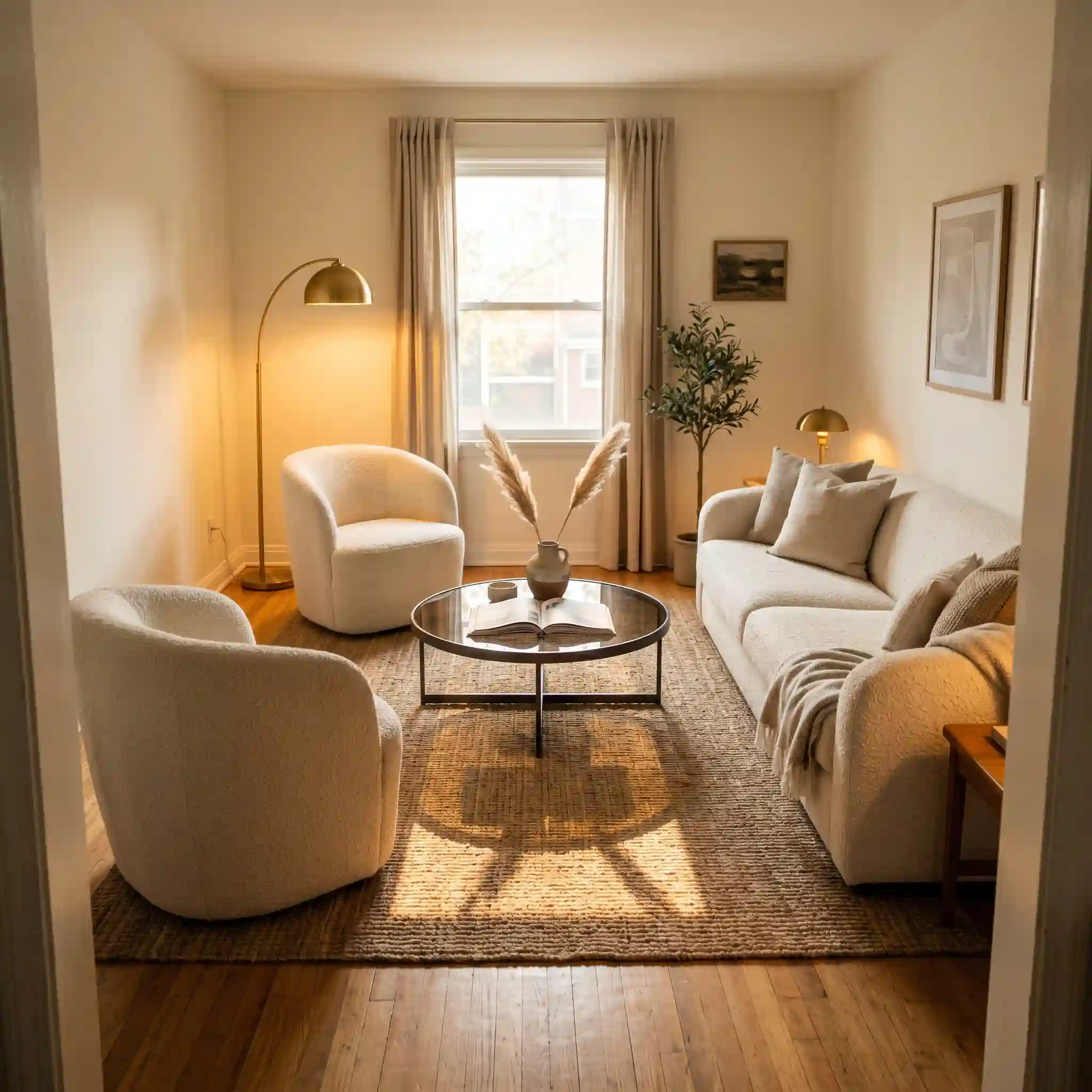
Not every small living room is a simple rectangle. Awkward proportions, unusual entry placements, and open-plan layouts each create specific challenges that standard advice doesn’t fully address.
Narrow rooms (under 10 feet wide): Place the sofa on the long wall rather than the short one to keep the room from feeling like a corridor. Use a low-profile coffee table or a round one — the absence of corners prevents the table from making the narrow path feel tighter.
Open-plan living rooms: Use the area rug as the room’s boundary rather than walls. The rug defines the seating zone within the open floor plan, and furniture arranged around it creates a room-within-a-room effect. For open-plan furniture arrangement in a warm, elevated style, modern farmhouse living room ideas shows the same zoning principles applied to a neutral, texture-first palette.
L-shaped or corner layouts: Float the sofa slightly away from the wall — 3 to 4 inches of space behind the sofa creates depth and prevents the seating from feeling pushed into storage mode. A console table filling that gap behind the sofa adds a display surface and disguises the floating arrangement.
North-facing rooms with low natural light: Prioritize paint colors at LRV 65–75 to compensate for reduced natural light. Add a large mirror on the wall opposite the window to bounce available daylight further into the space. Layer lighting at three heights to prevent the room from feeling flat after midday.
For broader small-space storage and layout planning, explore small apartment storage and layout strategies that cover multifunctional furniture choices applicable to any compact living area.
If you are working with a farmhouse or cottage-style small living room, natural materials and shiplap or limewash walls complement most of the scale and lighting rules here without any style conflict.
For a light coastal palette, neutral coastal living room ideas shows how the proportion and lighting rules above translate into a cooler, airier aesthetic. For a breezy bohemian take on the same foundation, boho coastal living room ideas layers those same scale principles under warm rattan and natural fiber textile accents. For a moody, richly layered small living room, mid-century modern living room design applies these same scale techniques in a deeper, more dramatic palette.
KEY TAKEAWAY: Narrow, open-plan, L-shaped, and low-light living rooms each have a specific layout fix — sofa wall placement, rug zoning, floating furniture, or high-LRV paint — that addresses the constraint directly.
Real-World Example
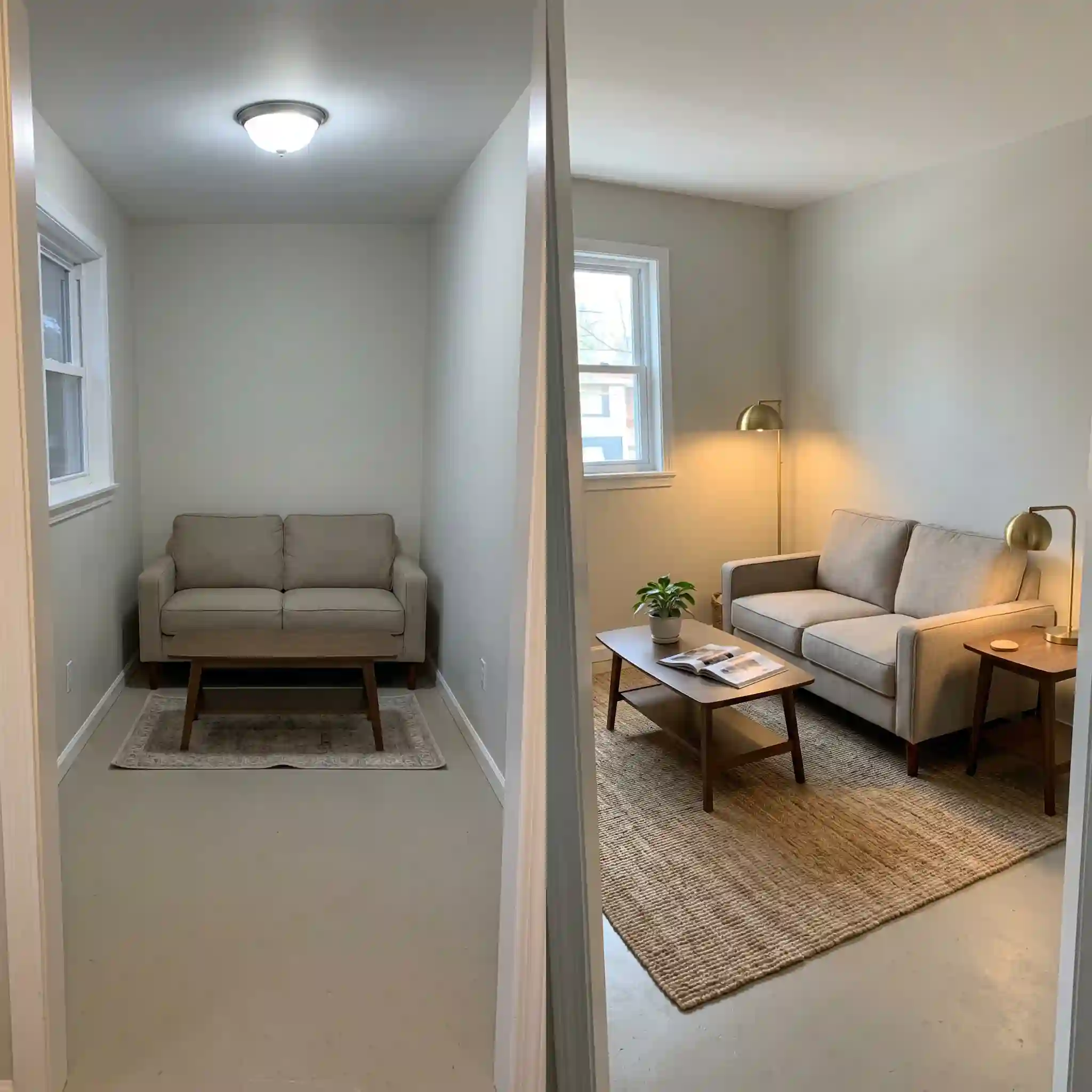
Real-World Example: A 138-square-foot north-facing rental living room. Original state: a 96-inch dark charcoal sofa pushed against the 11-foot short wall, a 5×7 cream rug floating beneath the front two sofa legs only, one central ceiling fixture at 4000K (cool white), and walls painted in a pale grey above LRV 78 that looked hollow in low afternoon light.
Changes applied using the ideas above (no furniture replaced, no drilling required):
- Moved the sofa to the 13-foot long wall — now 74% of the wall length, in proportion. Cleared 22 inches on each side and 30 inches in front.
- Sized up to an 8×10 natural jute rug in warm sand ($220). All front sofa legs and both accent chair legs now sit on the rug. 18-inch border of floor visible around the perimeter.
- Added a brass plug-in wall sconce at 2700K mounted on an adhesive bracket beside the sofa ($94), and a linen-shaded arc floor lamp with a 2700K Edison bulb in the far corner ($138).
- Repainted two walls (the sofa wall and the opposing focal wall) in Benjamin Moore Revere Pewter (LRV 55.51) — two gallons, primer included ($151 total).
- Leaned a 54-inch arched mirror in a thin brushed brass frame against the focal wall opposite the window — no hardware, no deposit risk.
Result: Same 138 square feet. In photographs and in person, the room reads approximately 30% larger — a consistent observation from guests who did not know the space had changed. Total spend on changes: $603. The sofa, chairs, coffee table, and curtains were already owned and unchanged. The four decisions — sofa wall, rug size, two warm 2700K sources, LRV-correct paint — produced the result. The mirror added depth; it did not create it.
KEY TAKEAWAY: In this real 138-square-foot north-facing rental, four structural decisions (sofa wall placement, 8×10 rug, two 2700K lamps, Benjamin Moore Revere Pewter at LRV 55.51) measurably expanded the perceived space for under $650 — without replacing any furniture or drilling a single hole.
Frequently Asked Questions
Conclusion
Small living room ideas at their most effective are not about finding clever hacks or camouflaging the room’s size. They are about applying the same principles used in luxury boutique hotels and high-end compact residences: proportion, layered light, material richness in a limited number of well-chosen pieces, and one clear focal point the room orbits around.
Editorial field note: A living room measuring 12 by 14 feet with a correctly sized sofa at 80 inches, an 8×10 jute rug, two warm lamps at 2700K in opposite corners, a velvet throw over one arm, and a single large canvas on the focal-point wall can feel more settled and deliberately designed than a room twice its size with furniture pushed to every wall. The square footage is not the constraint — the decision-making is.
Start with scale and proportion. Get the sofa and rug right first. Then layer light at three heights in the warm 2700K range. Then add material texture through one anchor textile and natural fiber accents. After that, small living room ideas become refinements rather than corrections — and the room starts working for you instead of against you. Explore the full range of home decor ideas for every room at 101 Home Decor.