TL;DR
- Crib position: A corner or wall-hugging placement keeps sightlines open and frees the floor.
- Color palette: Warm greige, soft sage green, and muted clay suit any baby and make small rooms feel larger.
- Storage: Floating shelves and a dresser-changing combo do two jobs in one floor footprint.
- Furniture: A convertible crib grows from infant to toddler to twin — no re-buy needed.
- Lighting: Wall-mounted sconces or plug-in arc lamps free up every inch of shelf and floor space.
Smart Small Nursery Layouts Start With One Question
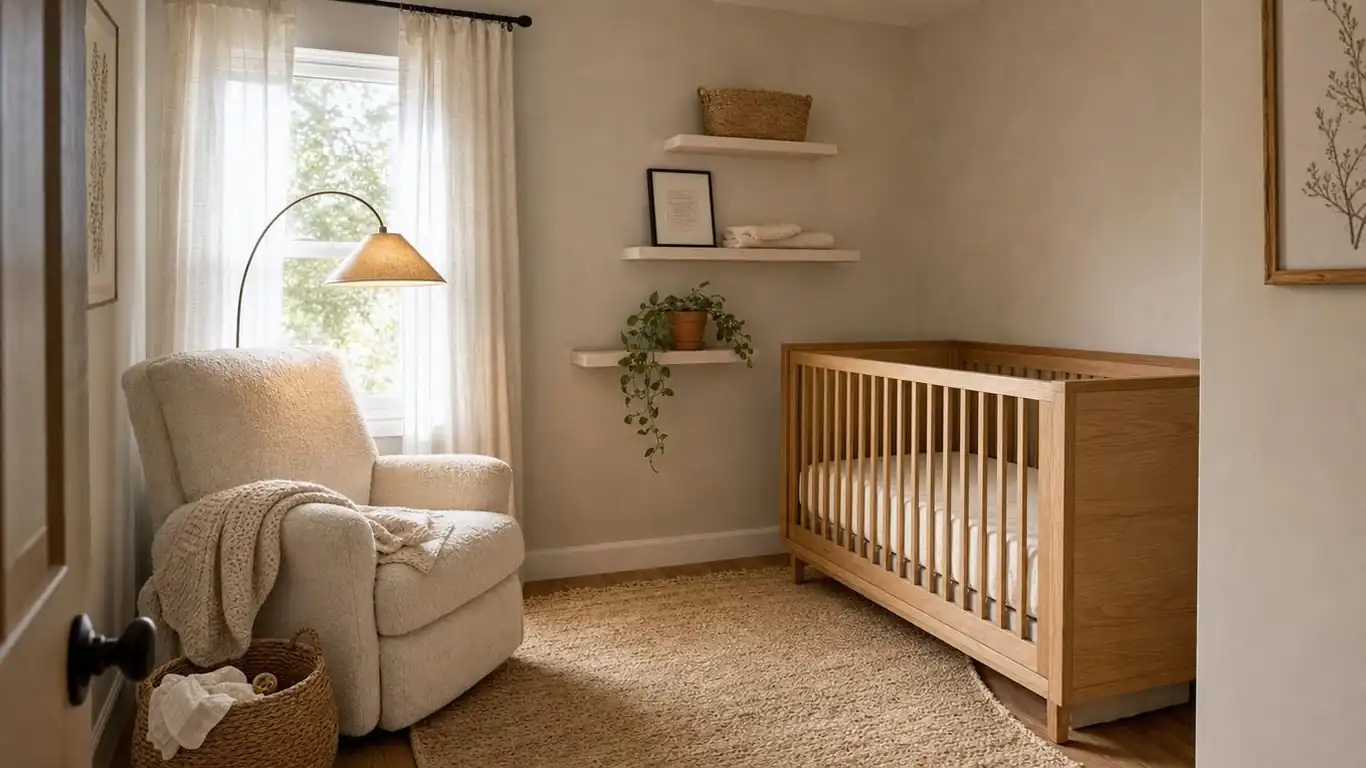
Walk into a room that used to be a home office — roughly 9 by 10 feet — and picture fitting a crib, a dresser, a glider, and a changing station without the room feeling like a storage unit. That was the exact situation a client handed me last spring. She was 36 weeks along, the room was painted rental-white, and there was one centered window on the outer wall.
We made it work. The result was a gender neutral nursery that felt calm, airy, and thought-out — warm greige walls, raw oak furniture, and cream linen accents throughout. Not a single piece was wasted. Every layout choice had a reason.
If you’re staring at a small room and wondering where to start, browse 25 nursery room inspiration ideas you’ll actually want to use to find a direction first. For broader home ideas, our home decor inspiration at 101homedecor.com covers every room. Then come back here for the layout logic.
Bookmark this guide for quick reference.
KEY TAKEAWAY: The right layout solves floor space problems before you buy a single piece of furniture.
| Quick Takeaways | |
|---|---|
| Crib Position | Push it into a corner or against a wall to open up the room’s center. |
| Storage | A dresser-changing combo reduces three pieces of furniture down to one. |
| Color | Warm greige or soft sage green makes a small room feel larger and works for any baby. |
| Lighting | Wall-mounted or arc lamps free up floor and shelf space entirely. |
| Convertibles | A convertible crib buys 3–4 extra years before the room needs rethinking. |
10 Gender Neutral Nursery Layouts for Small Rooms
A small nursery works best when the layout is settled before the decor. These ten arrangements — corner cribs, window-centered dressers, and dual-zone plans — make the most of a tight room for any baby.
1. The Corner Crib Arrangement
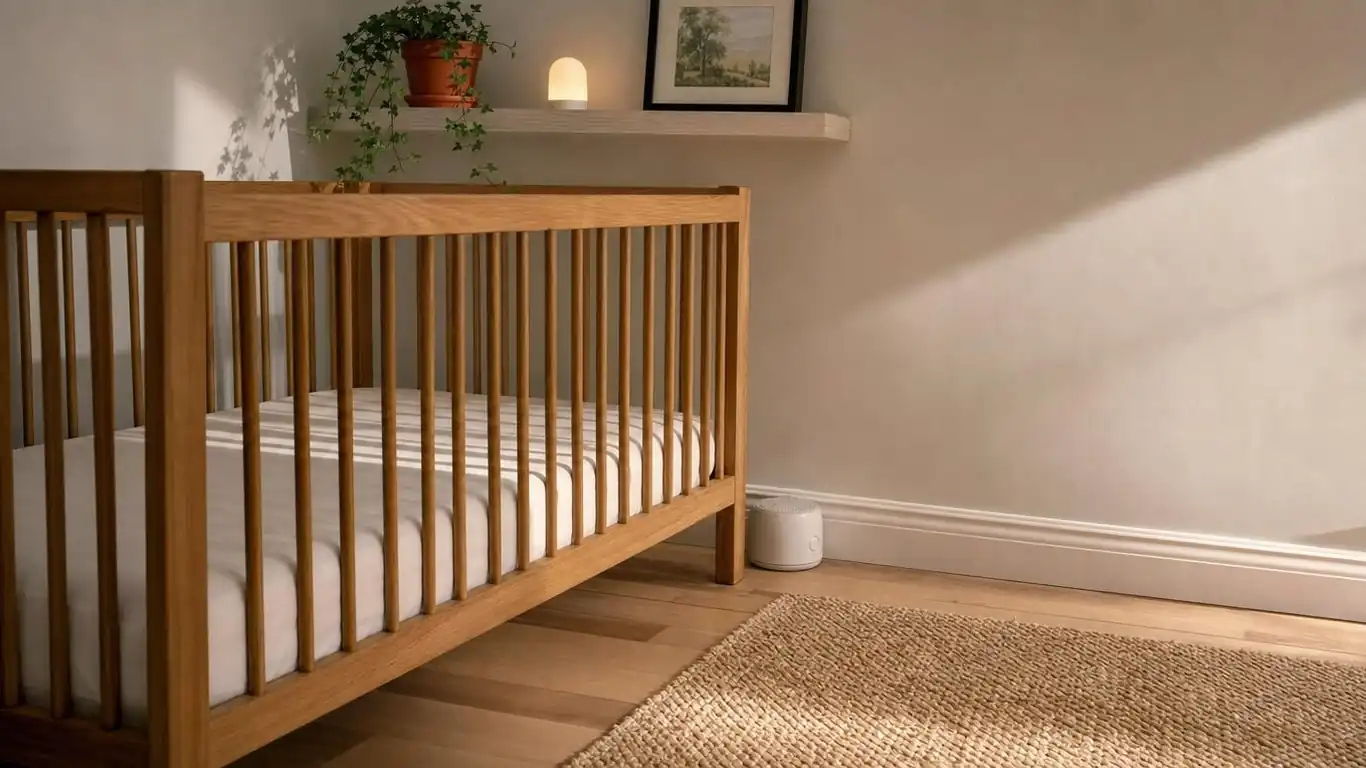
Tuck the crib into a corner so it uses two walls instead of one. This keeps a long stretch of wall free for a dresser and leaves the room’s center open for a glider or a small play mat. Raw oak cribs and matte white cribs both work well here. Wall-mount a single floating shelf 12 inches above the crib for a small plant, a nightlight, and one framed print. A standard crib measures 54 by 30 inches — placing it in the corner saves the equivalent of one wall’s worth of clearance space. The room looks thought-out rather than packed.
DESIGNER TIP: Keep the corner crib at least 12 inches from any exterior wall or window to protect against cold drafts.
2. The Window-Centered Dresser Layout
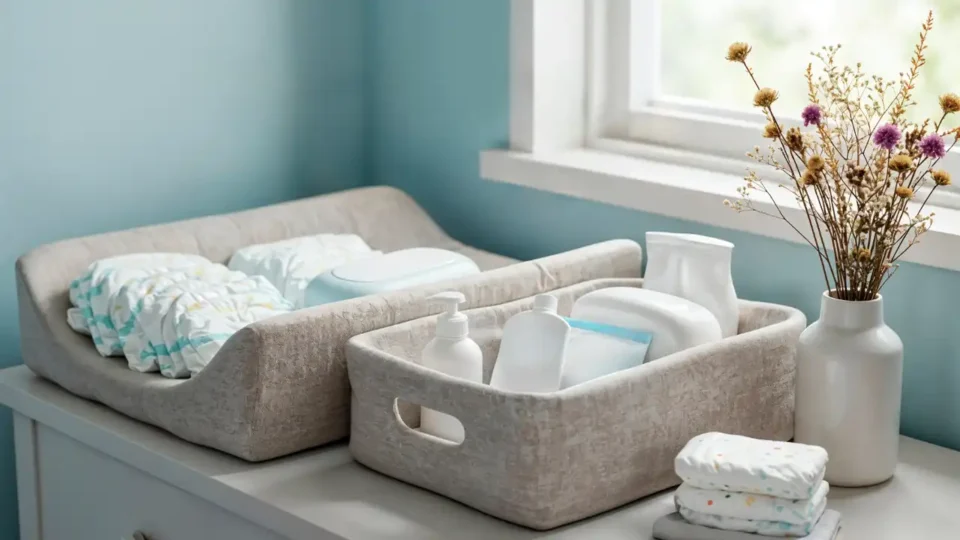
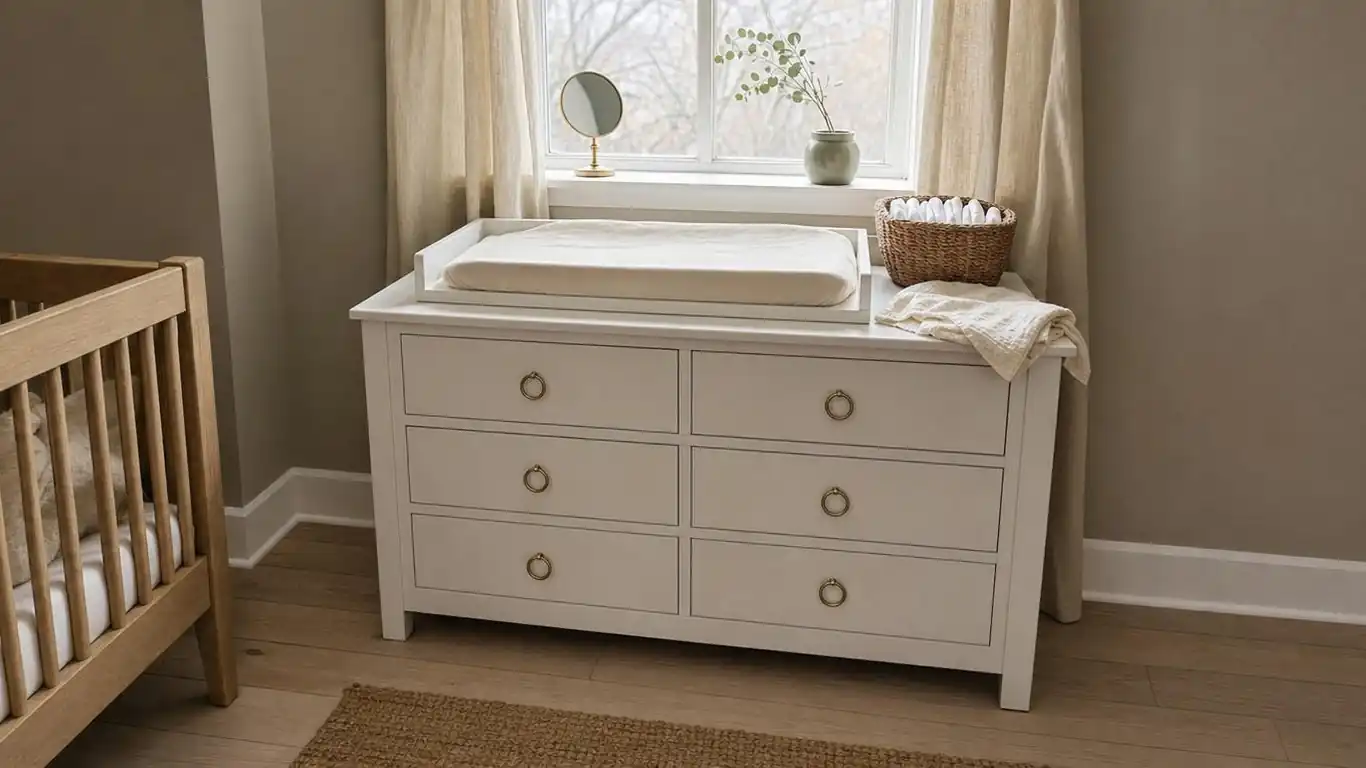
Place the dresser directly under the window, centered on that wall. Put the crib on the opposite wall. Natural daylight hits the dresser surface during diaper changes. The crib stays away from direct sun glare. This arrangement creates clear sightlines across the room and feels instantly more open. Choose a dresser at least 48 inches wide so a changing topper fits without overhang. A changing topper with raised sides costs $40–$80 and turns any flat dresser surface into a safe changing station. Pair it with a soft sheer panel or warm cream linen curtain to diffuse the light without blocking it. Works especially well in east-facing or north-facing rooms.
3. The Floating Shelf Storage Wall
Skip the bookcase entirely. Mount three to four floating shelves on one wall at staggered heights — lowest shelf at 24 inches from the floor, highest at 60 inches. Store baskets, books, and small toys on each level. Keep the floor beneath completely clear. Floating shelves anchored into studs hold 25–40 lbs each — more than enough for books, baskets, and décor. Shelves in soft white or warm cream draw the eye upward and make the ceiling feel higher. Pair them with a compact dresser (under 36 inches wide) and a corner crib. For shelf-first inspiration that applies here, minimalist small bedroom ideas to de-clutter your space show exactly how this principle works across small rooms.
KEY TAKEAWAY: Floating shelves add storage without touching the floor — the key to keeping a small room feeling open.
4. The Dual-Zone Floor Plan
A low three-shelf bookcase set perpendicular to the wall works as a soft room divider. Sleep zone on one side — crib, lamp, white noise machine. Play zone on the other — a soft wool rug in warm cream, a few toys, open floor space. This works best in rooms at least 10 by 10 feet. The bookcase doesn’t need to be tall. A 30-inch-high unit in raw oak or matte white is enough to define the zones without chopping the room in half visually. This layout gives the room a second purpose once your child outgrows daytime naps.
DESIGNER TIP: The bookcase-as-divider idea works equally well in rooms used for two people — small bedroom ideas for couples that stop the clutter wars use this same approach to carve out separate zones.
5. The Convertible Crib-Centered Layout
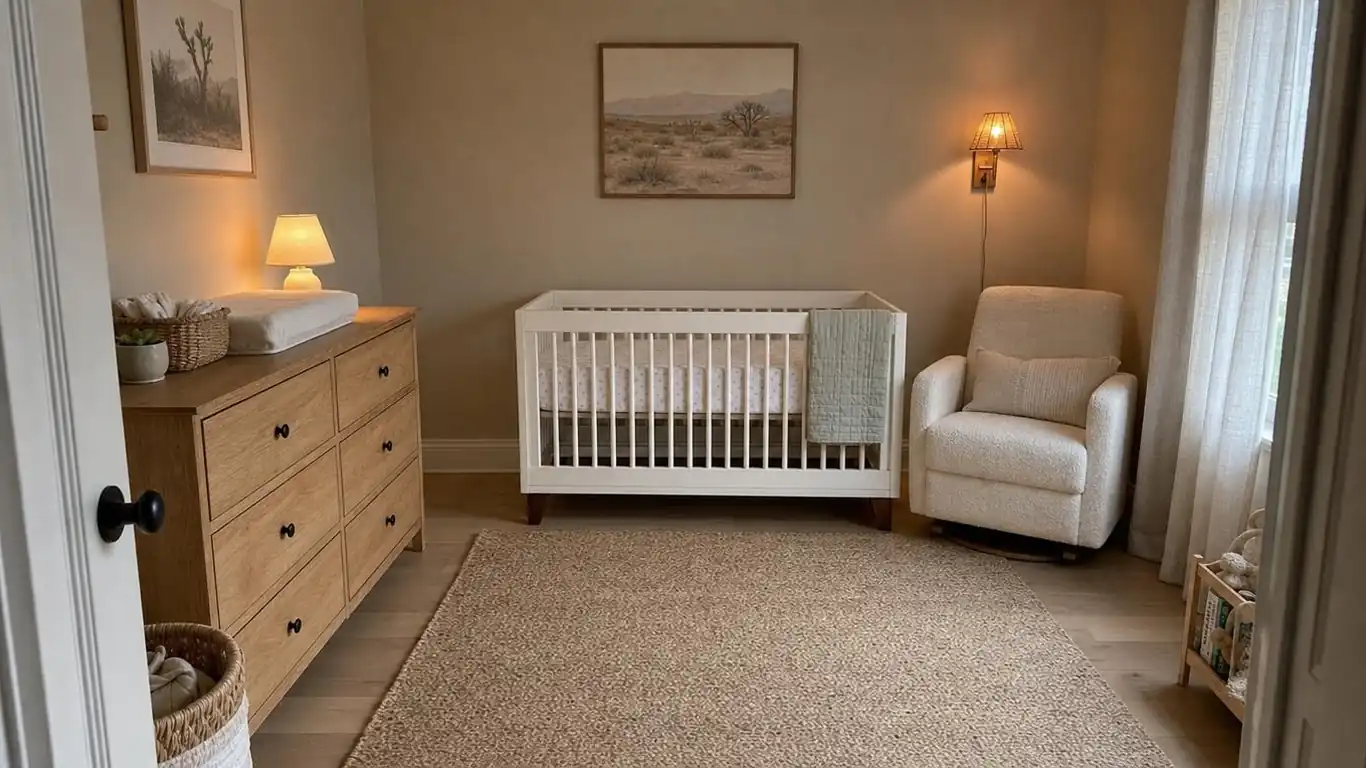
A convertible crib grows from infant crib to toddler bed to full-size bed — no re-buying furniture in two years. Center it on the longest wall and leave 24 inches of clear space on each side. Build the layout outward from that anchor: dresser on the left-side wall, glider in the far corner on the right. This arrangement feels like a proper room rather than a nursery squeezed into a corner. For inspiration on anchoring a gender neutral nursery around the crib as the statement piece, 12 modern boy nursery decor ideas that grow with your child show how this layout principle translates across styles.
KEY TAKEAWAY: A convertible crib centered on the longest wall anchors the room and eliminates early furniture turnover.
6. The Closet-as-Nursery-Station Layout
Remove the closet doors or replace them with a linen curtain panel. Inside, mount a compact wardrobe bar, two floating shelves for folded items, and if the depth allows — at least 24 inches — a fold-down changing station. This moves the bulk of nursery storage off the visible walls and into the closet. The room now feels like a sleeping space, not a storage room. A gender neutral nursery with this layout gains real breathing room. The crib and a glider are all that remains visible on the open walls. Clean, calm, and fully functional.
7. The Reading Nook Corner
Pair a low glider with a plug-in wall sconce at 54 inches height and a floating shelf directly beside it. That corner becomes a calm feeding and reading zone without consuming the floor space a standing lamp and side table would require. A compact glider — under 32 inches wide — upholstered in boucle or washed linen fabric holds up to daily use and wipes down easily. A woven rattan basket on the floor beside it holds a nursing pillow and extra muslin swaddles. This corner adds warmth without adding clutter. For furniture scale ideas in tight rooms, small bedroom ideas with a single bed to maximize your space apply the same compact-piece principles.
DESIGNER TIP: A plug-in sconce at 54 inches replaces a floor lamp and frees up 2 square feet of floor space instantly.
8. The Long-Wall Linear Layout
Line all major pieces along one wall: crib at one end, dresser in the middle, open shelving unit at the other end. The opposite wall stays completely empty. This is the most space-efficient layout possible. It works in rooms as narrow as 8 feet wide. The clear wall gives room for a glider and a small jute rug without crowding. Use matching or tonal finishes — raw oak and soft white, or matte white throughout — so the line of furniture reads as one cohesive unit rather than three separate pieces. Warm greige walls with soft white furniture is the easiest palette to pull off in a gender neutral nursery using this layout.
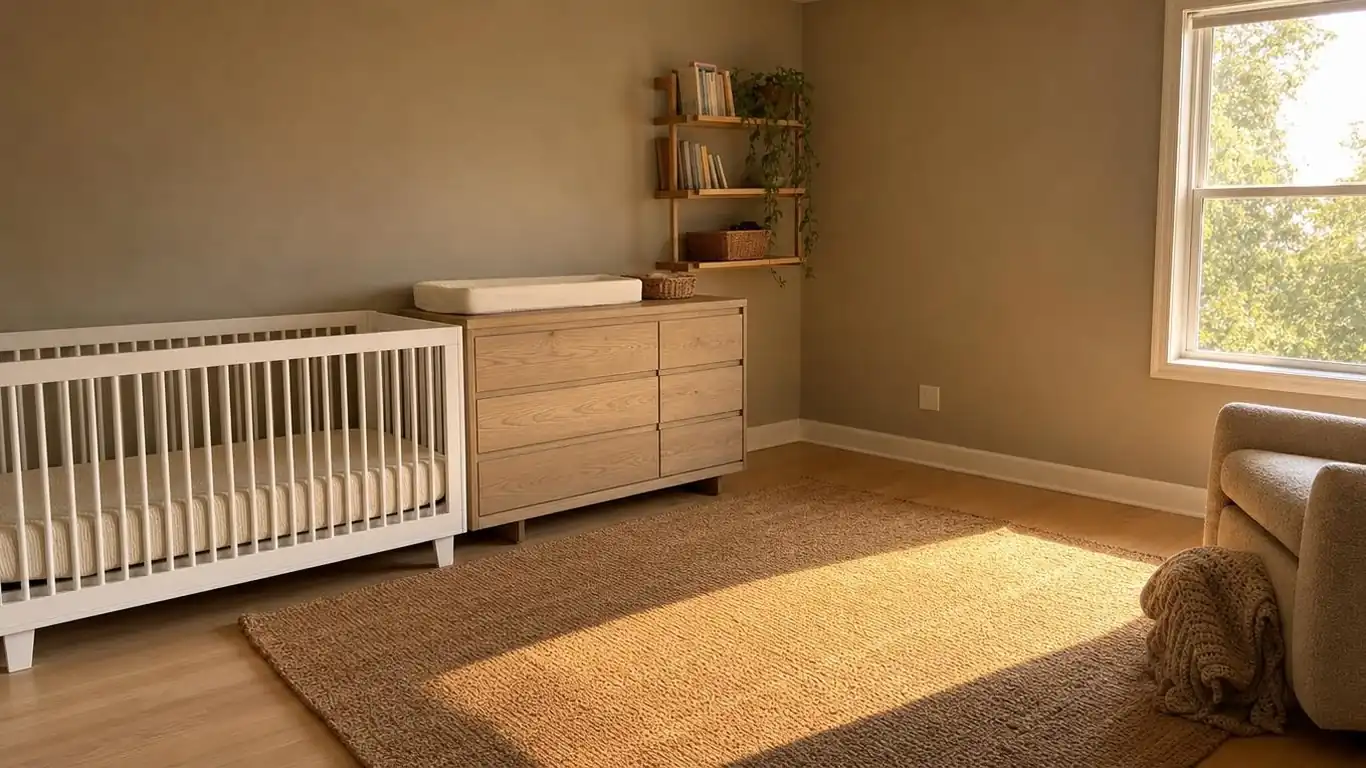
KEY TAKEAWAY: A linear layout along one wall keeps the opposite wall free for flexible daily use.
9. The Double-Duty Dresser Layout
A wide 6-drawer dresser — at least 54 inches wide — with a changing topper replaces both a dresser and a standalone changing table. That removes one piece of furniture from the floor plan entirely. In a 9-by-10-foot room, that matters. Place it on the wall directly opposite the door so it’s the first thing you see when you walk in. Keep the surface simply styled: a small ceramic plant pot, a wicker basket for diapers, and a soft nightlight. Use the dresser as the room’s focal point. 12 functional ways to arrange furniture in very small bedrooms expand on how the dresser-as-anchor principle works in tight floor plans.
DESIGNER TIP: A changing topper with raised sides costs $40–$80 and turns any flat dresser into a safe changing station without buying a dedicated unit.
10. The Monochromatic Palette Plan
A gender neutral nursery gets extra mileage from a single-tone palette. Warm greige walls, raw oak furniture, and cream linen accents read as one unified, calm space. The room appears larger because there’s no visual contrast pulling the eye in different directions. Apply this on top of any of the nine layouts above. Layer texture instead of color: a chunky knit throw over the glider arm, a jute rug on the floor, a woven rattan basket for storage. Avoid pastels and primary colors — they date quickly. Muted sage green, soft clay, and warm wheat make excellent accent tones. Cozy aesthetic small bedroom ideas that feel like a warm hug show how this texture-layering approach translates across small rooms.
Making the Layout Work in the Trickiest Rooms
Some rooms push back. Here’s what to do when standard layouts don’t fit cleanly.
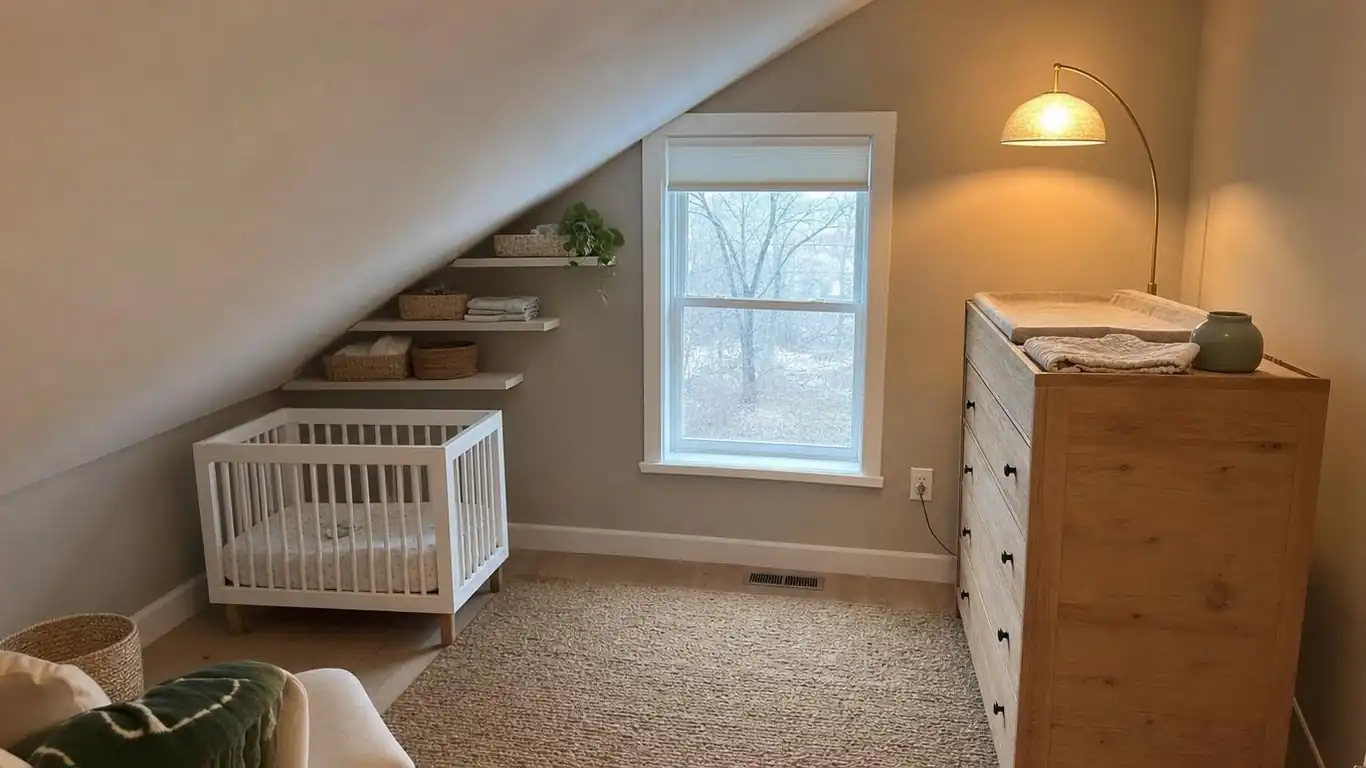
Oddly shaped rooms with slanted ceilings: Put the crib in the lowest-ceiling section. Babies lie flat and don’t need head clearance. Use the taller section for the dresser and shelving.
Rooms with doors that swing inward: A door that opens into the room eats 12–18 inches of usable wall. Move the crib to the wall opposite the door hinge, not the swing side. The open door won’t block access during nighttime checks.
Rooms with a single centered window: Treat that wall as the focal wall. Use it for art or a low shelf — not the crib. Light behind a crib creates glare for the baby. Keep the crib on a side or opposite wall instead.
Very narrow rooms under 8 feet wide: A mini crib is 38 by 24 inches — significantly smaller than a standard crib at 54 by 30 inches. A mini crib paired with a 36-inch-wide dresser leaves enough room to move freely. For proportional guidance on tight room planning, very small bedroom ideas that look designer-made cover the same sightline and scale challenges. The spatial logic in tiny living room ideas that actually make space feel bigger transfers directly to nursery planning.
If budget is also a factor, smart design hacks for decorating a small bedroom on a budget and creative small apartment ideas to make your space feel larger both offer practical workarounds worth reading before you shop.
KEY TAKEAWAY: Identify the room’s fixed obstacles — door swing, window position, ceiling shape — before committing to any layout.
What Most People Get Wrong
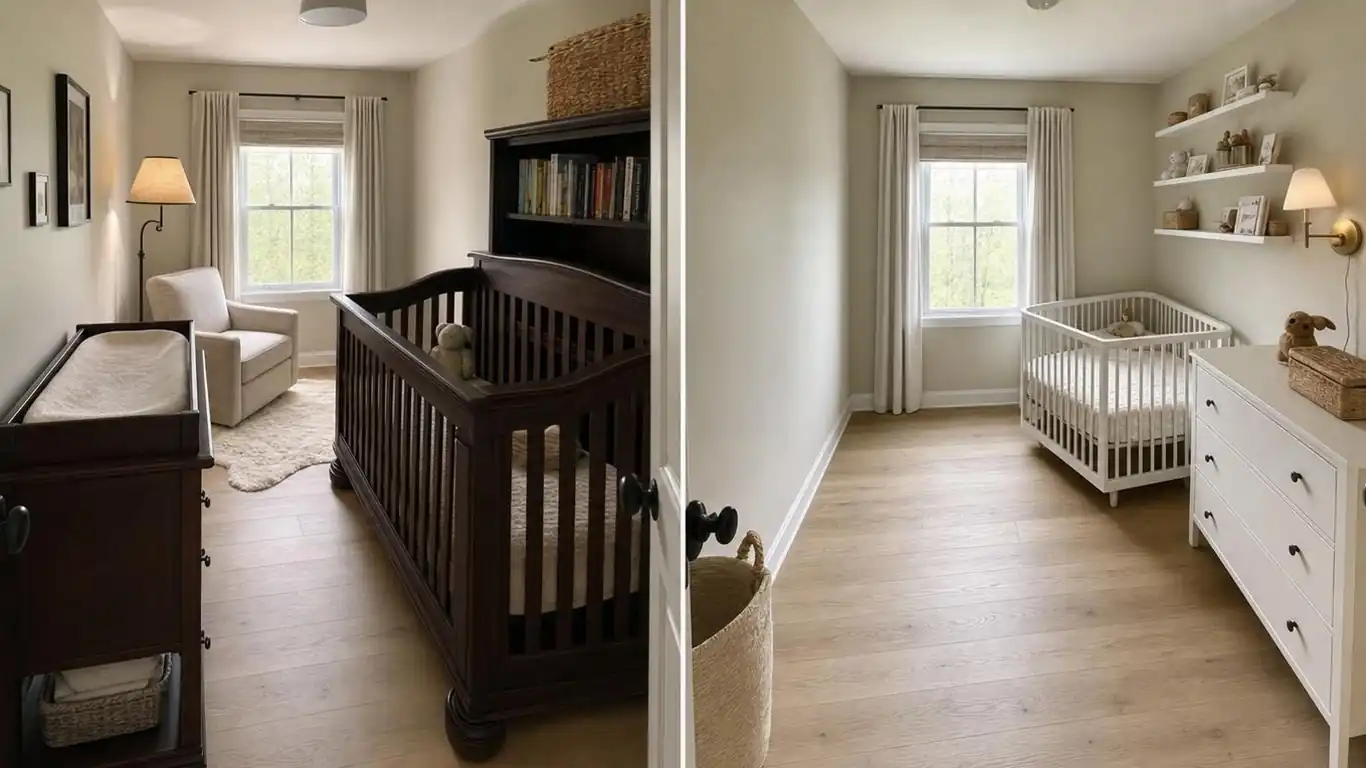
❌ Centering the crib in the room → ✅ Push it against a wall or into a corner to free up the flow space around it.
❌ Buying oversized furniture first → ✅ Measure every piece before purchasing — a dresser 4 inches too wide throws the entire layout off.
❌ Ignoring vertical wall space → ✅ Floating shelves and wall-mounted storage move storage off the floor entirely.
❌ Using dark or bold colors for gender neutrality → ✅ Dark walls shrink small rooms — use warm greige, soft sage, or muted clay at the lightest end of those tones. Sage is the easiest gender-neutral anchor of the three — these sage green nursery ideas build a full palette around it.
KEY TAKEAWAY: The biggest small-room mistake is buying furniture before deciding on a layout.
What You’ll Spend
A well-planned nursery in a small space doesn’t require a large budget. The layouts above work across a wide range of price points.
| Project | Estimated Cost | Impact Level |
|---|---|---|
| Convertible crib (mid-range) | $250–$500 | Very High |
| Wide dresser with changing topper | $180–$380 | High |
| Floating shelves (set of 3) | $40–$90 | High |
| Compact glider (boucle or linen) | $200–$450 | Medium |
Frequently Asked Questions
Conclusion
A gender neutral nursery in a small room works when you solve the layout before you shop. Pick your anchor piece — almost always the crib — and build outward from there. Keep the floor clear. Let the walls carry the storage. Choose a warm, muted palette and let texture do the work that color usually does.
I’ve worked on rooms smaller than 9 by 10 feet that came out feeling genuinely calm and spacious — not because of budget, but because every piece had a place and a job. The layouts above give you that same result. For broader home ideas to complement the nursery, find inspiration across every room at 101homedecor.com. And if you want to take the same spatial thinking into other small rooms, smart small bedroom layouts to maximize your floor space and functional studio apartment layout ideas for studio living both use the same logic in different contexts.