TL;DR
- Choose sage green with a warm grey or olive undertone — not blue — so the room feels calm, not clinical.
- Raw oak and light ash furniture anchor the green without competing with it.
- Layer cream linen, off-white boucle, and cotton swaddles for warmth in the textile layer.
- Brushed brass hardware, rattan lighting, and trailing plants pull the whole palette together.
- Start with four sage accessories before you commit to paint — pillow, basket, throw, one art print.
Why Sage Green Works So Well in a Nursery
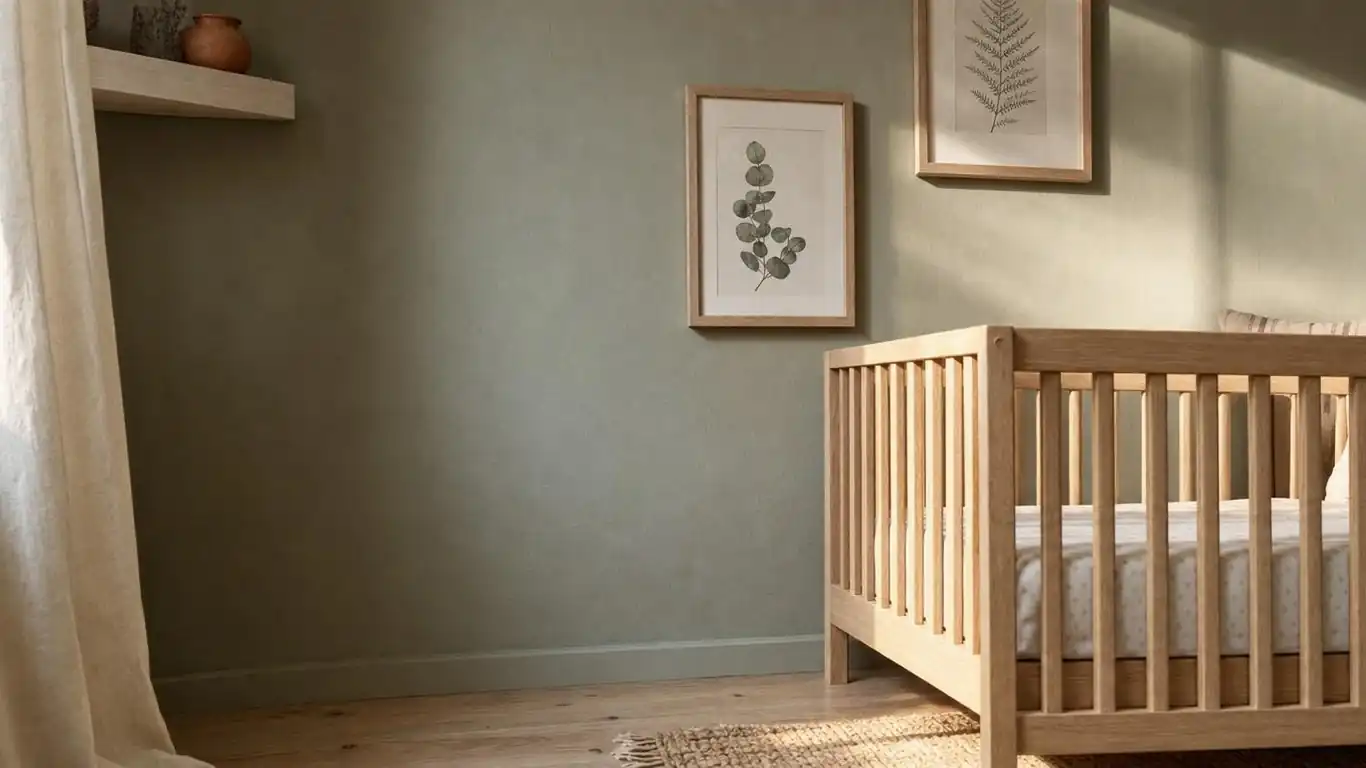
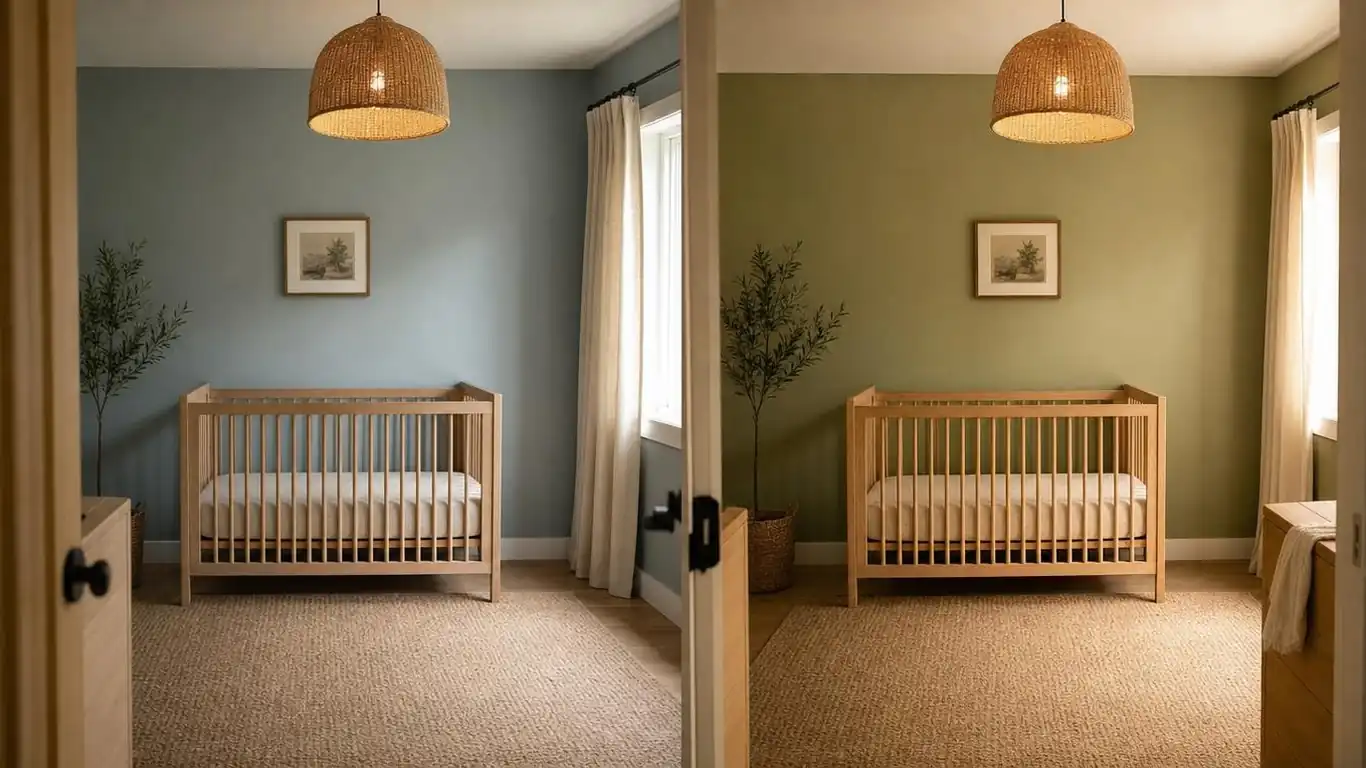
A sage green nursery gets the undertone question right or it gets it wrong. There’s rarely a middle. Why does sage green feel calm and grounded in some rooms and flat and cold in others? Undertone is almost always the answer. A sage with too much blue reads clinical under artificial light — the opposite of what a nursery needs. A sage with a warm grey or olive base reads earthy and settled. That distinction is worth understanding before you pick up a paint pot.
I worked on a sage green nursery in a 1950s bungalow two years ago. The client had already bought a blue-based sage and was deeply disappointed — the room felt cold despite beautiful raw oak furniture. We switched to a warm grey-sage with a slight olive undertone. The oak glowed, the cream linen curtains looked right, and the whole space finally felt like somewhere you’d want to spend a quiet hour at 3am.
Browse 25 nursery room inspiration ideas you’ll actually want to use to find your wider direction before you commit. For home ideas across every room, explore our home decor inspiration at 101homedecor.com. Then come back here for the specific choices that make sage green work.
Bookmark this guide for quick reference.
KEY TAKEAWAY: Choose a sage green with a warm grey or olive undertone — not blue — for a room that feels calm rather than clinical.
| Quick Takeaways | |
|---|---|
| Paint tone | Sage with warm grey or olive base — not blue or yellow — reads calm and grounded. |
| Wood | Raw oak and light ash pair naturally with sage without competing for attention. |
| Textiles | Layer cream linen, off-white boucle, and natural cotton swaddles for warmth. |
| Metals | Brushed brass and antique gold bring out the warmth in sage green. |
| Start small | Introduce sage through throws, baskets, and art first — then decide if walls are right. |
Wall Color and Paint Foundations
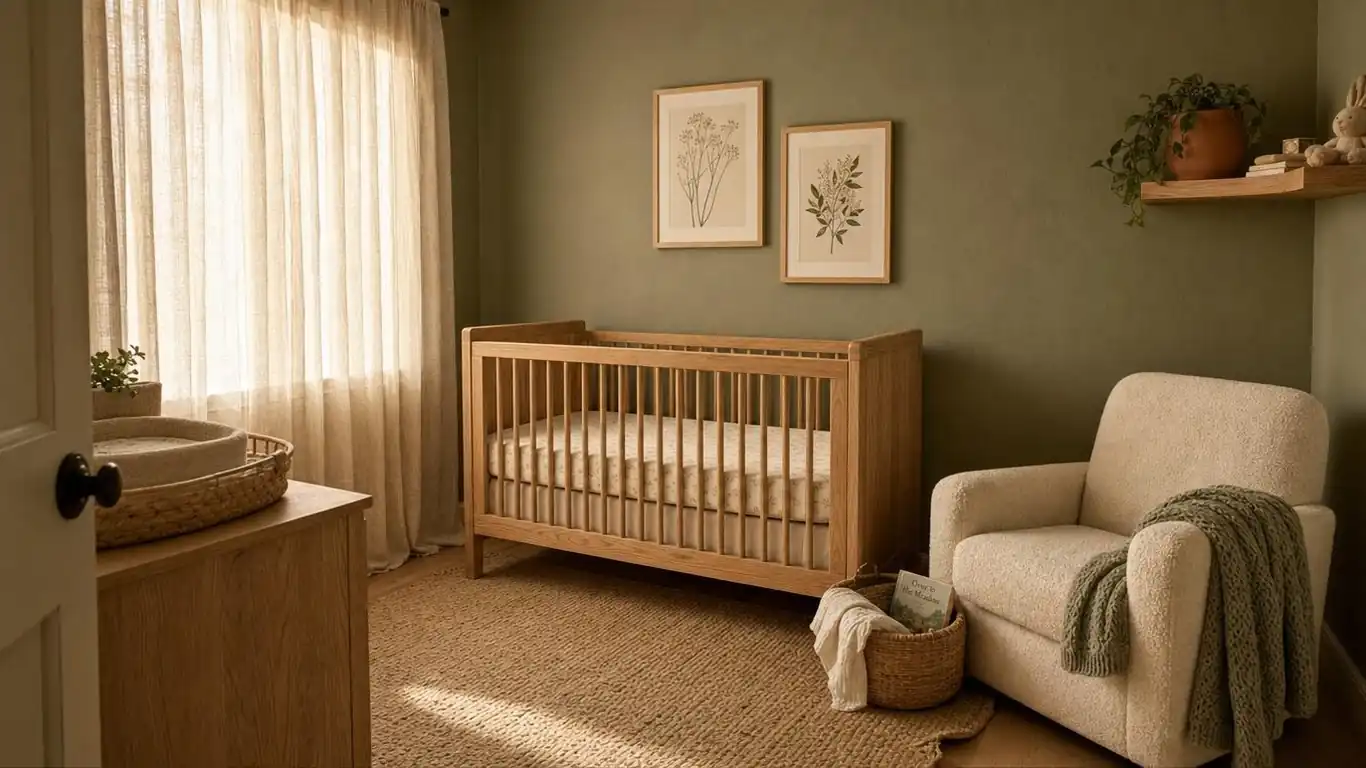
Sage green sets a calm, natural foundation for a nursery. These paint-and-wood choices — soft sage walls, warm cream trim, and raw oak — establish the palette everything else layers onto.
1. Soft Sage Green Walls with Warm Cream Trim
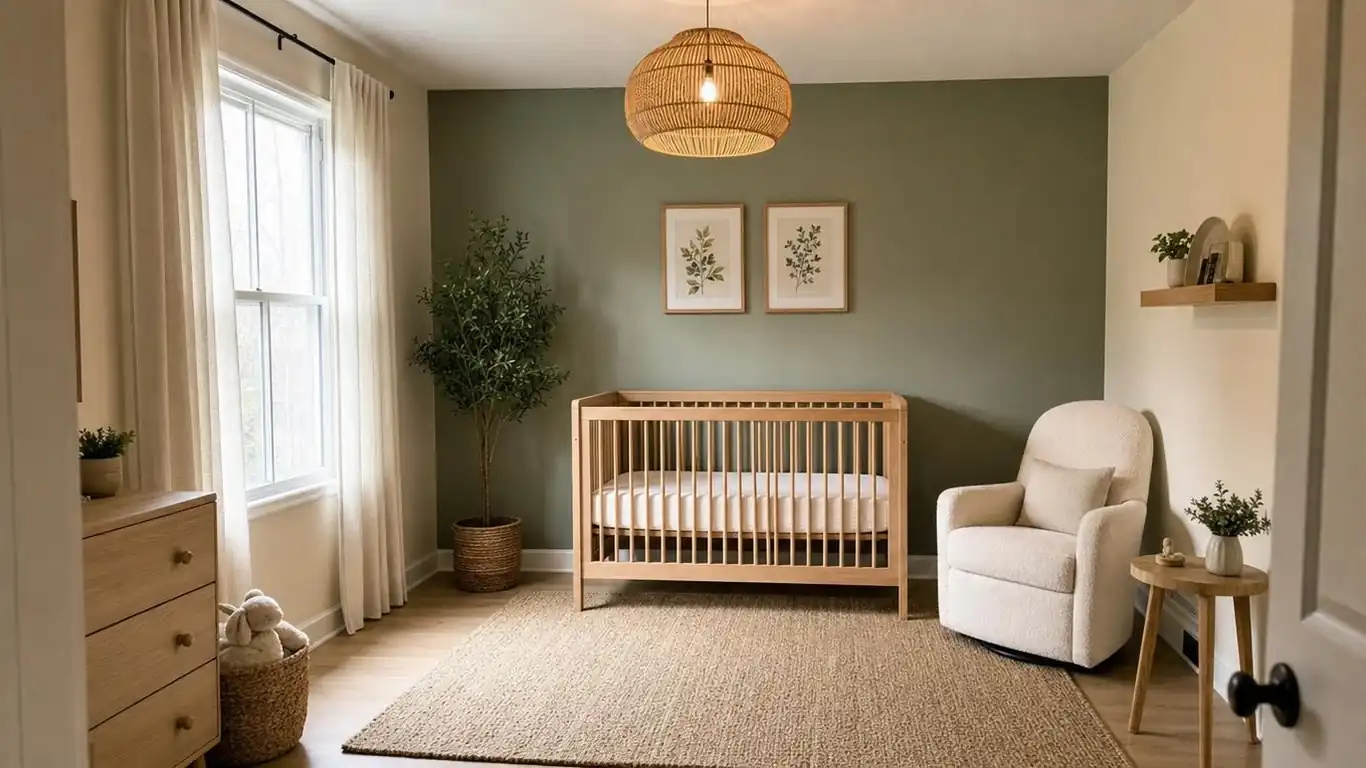
Full sage green walls work best when paired with warm cream or soft white trim — not bright white. Bright white creates too much contrast and makes the sage look flat. Warm cream trim bridges the gap between the green walls and the raw wood and cream textile palette below. Sage green is a muted medium-value color — it absorbs light rather than reflecting it, so rooms with one south or west window need lighter flooring and cream textiles to stay bright. Paint the ceiling in the same soft white as the trim for a calm, enveloping feel. Test any sage paint at 12 by 12 inches in the actual room in both morning and afternoon light before committing to a full pot.
DESIGNER TIP: North-facing rooms with cool light need a sage with the strongest warm undertone you can find — lean further olive than you think you need to.
2. A Single Sage Green Accent Wall
One sage green wall — almost always the wall behind the crib — is enough to anchor the room without overwhelming it. The other three walls stay in soft white or warm cream. This approach is right for north-facing rooms where full green walls would feel dim, and for parents who want the look without a full commitment. A crib centered on the sage wall frames the room naturally. Add two to three framed botanical prints above the crib for balance. Olive green bedroom ideas that create a grounded, calm space show how a single accent wall carries a full green palette across a room — the same logic applies directly to a nursery.
3. Raw Oak and Natural Wood Against Sage
Raw oak and sage green have a natural relationship. Oak’s warm honey-tan tone pulls the warmth out of an olive-based sage and makes both look richer. A raw oak crib, dresser, and floating shelves against sage walls is the most reliable palette combination for a sage green nursery. Avoid dark walnut or stained wood — they fight the lightness of sage and make the room feel heavier than it is. Light ash works as well as oak. The wood should feel like it grew from the same natural world as the color on the walls. For earthy natural palette inspiration that directly parallels this combination, earthy modern bedroom ideas that feel like a warm embrace show how natural wood and muted green tones layer in practice.
4. Warm Cream Linen Curtains
Warm cream linen curtains — floor to ceiling — do two things in a sage nursery. They add softness and visual height. And they bridge between the green walls and the cream bedding below. Choose linen at 150–200gsm weight — heavy enough to drape and diffuse light, light enough to still let brightness through. Full blackout curtains are rarely needed if a separate roller blind handles darkness. The linen layer stays as the decorative layer. Hang the curtain rod 4–6 inches above the window frame and as close to the ceiling as possible to make the room feel taller. For full-height curtain inspiration in calm, muted rooms, minimalist bedroom ideas 2026 that create a calming escape use the same approach across a similar palette.
KEY TAKEAWAY: The right wall color, trim tone, and curtain fabric set the palette for everything that follows in the room.
Textiles, Rugs, and Soft Furnishings
Textiles warm up the sage palette and make the room feel soft. These layers — a wool rug, a bouclé glider, and cream-and-sage bedding — add comfort and texture underfoot and around the crib.
5. A Jute or Wool Rug in Warm Oatmeal
A jute rug in warm oatmeal is the single best floor choice for a sage nursery. Jute is a natural plant fiber — durable, textured, and easy to sweep clean. A 5×7 or 6×9 rug grounds the room without adding visual weight. The oatmeal tone keeps the palette warm while the organic woven texture adds depth without added color. Low-pile wool rugs in warm cream or natural undyed fleece work equally well and feel softer underfoot during nighttime feeds. Avoid high-pile or shag rugs in a nursery — they collect dust and are hard to clean properly. For natural-fiber rug ideas in small calm rooms, cozy aesthetic small bedroom ideas that feel like a warm hug show how a jute or wool rug grounds a muted palette instantly.
6. A Boucle Glider in Off-White or Ivory
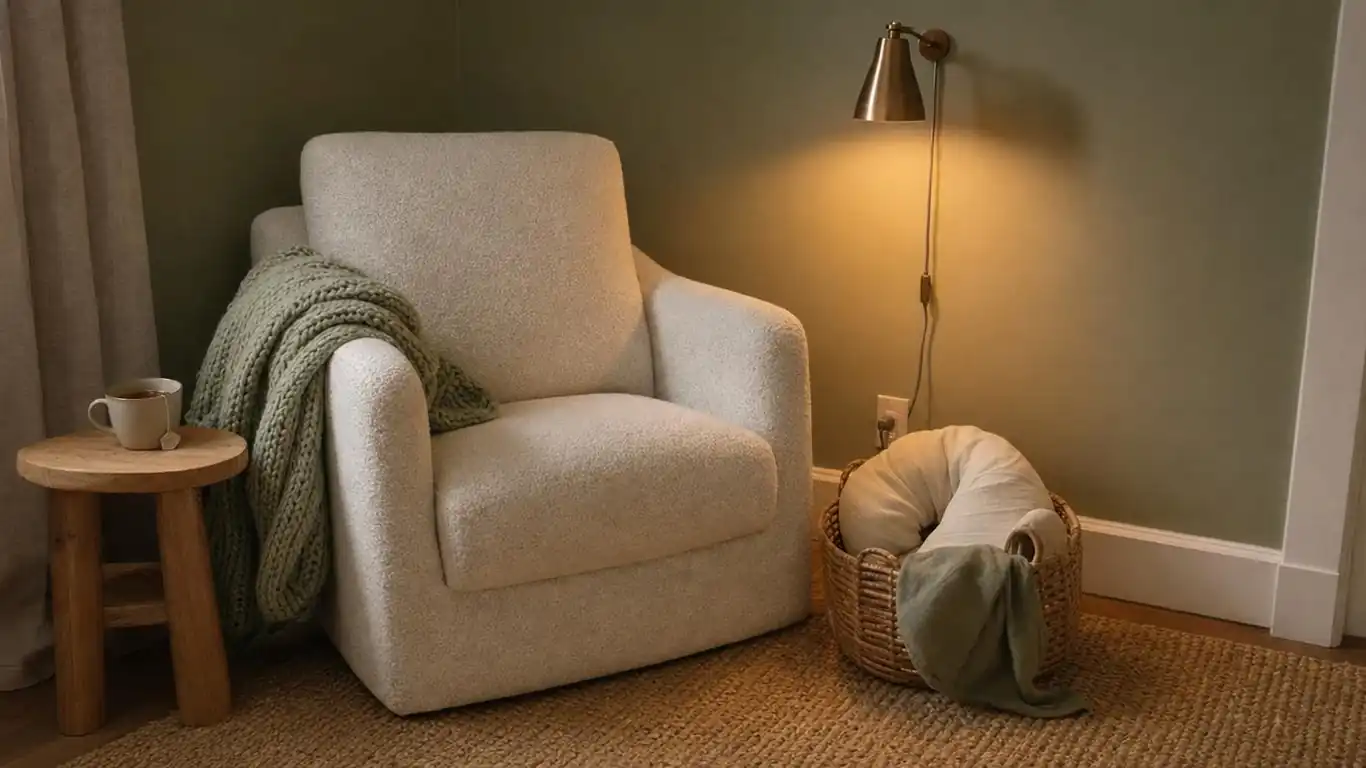
A boucle glider is the most practical nursing chair choice for a sage nursery. Boucle is a looped wool-blend fabric — textured, durable, and easy to spot-clean. Off-white or ivory boucle reads as a soft neutral that sits well against sage walls without competing with them. Keep the glider compact — under 32 inches wide — so it doesn’t crowd the layout. A glider in this palette also works well into toddlerhood and beyond, unlike novelty nursery chairs that date quickly. Pair with a low woven side table or a small footstool in raw oak rather than a full-size side chair. Boho coastal bedroom ideas for a dreamy, relaxing retreat show how textured neutral seating anchors a calm, nature-inspired room — the same principle applies in a nursery.
7. Cream Linen Crib Bedding
A sage green nursery works best with completely neutral crib bedding — cream or soft white cotton or linen fitted sheets only. Patterned or printed crib sheets often fight the wall color. A simple cream fitted sheet at 200 thread count or higher looks clean and feels soft against baby skin. Add a cream linen swaddle blanket folded at the foot of the crib for texture. Keep the crib interior simple — bare is both safer and cleaner-looking. The sage walls do the color work. The bedding stays as the calm neutral foil. Very small boho bedroom ideas to maximize your cozy space use the same simple-neutral bedding approach against a bold accent wall — the logic transfers directly here.
8. Sage and Cream Throws and Swaddles
A chunky knit throw in soft sage green draped over the glider arm adds a practical and visual anchor. At 28–34 inches wide, a nursing throw covers a shoulder without needing to be a full blanket. Pair with cream muslin swaddles in natural cotton — muslin is a loose-weave cotton fabric that breathes well and softens with every wash. Both the sage throw and the cream swaddles serve double duty: used daily and reinforcing the palette naturally without any extra styling effort. A woven rattan basket beside the glider keeps them accessible without cluttering the floor. Simple small bedroom refresh ideas for a cozy makeover show how a single well-chosen textile layer lifts a calm, natural palette without overhauling the room.
KEY TAKEAWAY: Natural-fiber textiles in cream, oatmeal, and sage green do the layering work without adding visual noise to the room.
Lighting, Hardware, and Finishing Touches
Small finishing details tie the sage look together. Brushed brass, woven lighting, and trailing greenery add warmth — and layering sage through accessories first lets you build the palette gradually. And if you are working with a compact room, these gender neutral nursery layouts pair beautifully with a sage palette.
9. Brushed Brass Hardware and Wall Hooks
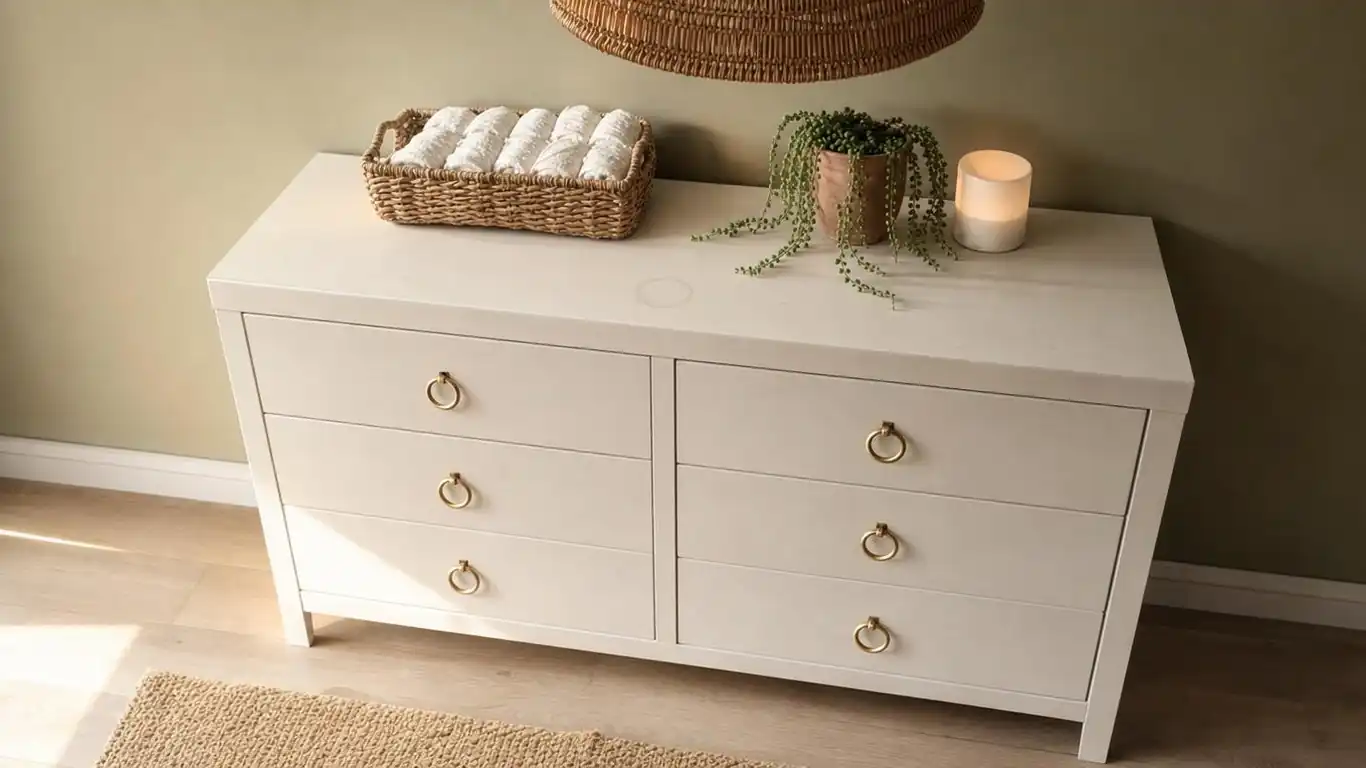
Brushed brass is the right metal for a sage green nursery. It picks up the warmth in the sage’s underlying tone and pairs naturally with raw oak. Replace chrome or nickel hardware on the dresser with brushed brass ring pulls — a swap that costs $20–$50 and changes the feel of the entire room. Add two to three wall-mounted hooks in brushed brass beside the door for hanging bags, a robe, or tomorrow’s outfit. Antique gold tones work similarly — warmer and more muted than bright brass. Avoid matte black, which reads modern-cool and fights the organic warmth of a sage green nursery. For warm metal tones in a natural-materials nursery, 12 modern boy nursery decor ideas that grow with your child show how brushed brass anchors a natural palette.
10. A Rattan Pendant or Woven Flush-Mount Light
A rattan pendant or woven flush-mount is the right overhead light for a sage nursery. Rattan is a natural tropical cane material — lightweight, warm in tone, and organic in feel. A 14–18 inch rattan pendant hung at 7 feet from the floor provides enough ambient light while adding texture overhead. Pair with a warm bulb at 2700K for a soft amber glow that works day and night. If a pendant isn’t possible, a woven flush-mount is easier to install and just as effective. Avoid chrome or glass fixtures — they pull toward a cool tone that works against the sage palette. For woven and rattan fixture ideas in nature-inspired rooms, moody boho bedroom ideas for a dark, dreamy, and cozy retreat show how rattan lighting finishes a warm-toned palette.
11. Trailing Plants and Botanical Wall Art
A trailing pothos or string-of-pearls plant on a high floating shelf adds living texture to a sage nursery without needing floor space. Both plants are low-maintenance and non-toxic to children once established. They trail downward and soften the visual line between shelf and wall. Botanical prints — a pressed eucalyptus stem or a simple leaf study in a raw oak frame — reinforce the nature theme without relying on the walls to do all the work. Keep art small and grouped: three frames at different heights reads better than one large piece. For botanical art ideas that pair with a muted green palette, refreshing spring wall art ideas to brighten your home and spring shelf styling ideas for a modern and airy home refresh both show how natural botanical styling layers in a calm room.
12. Sage Green Through Soft Accessories First
Not ready to commit to paint? Start with four soft accessories. A sage green velvet pillow on the glider. A sage linen storage basket on the floor. A sage knit throw draped over the crib rail. One sage green botanical art print in a simple frame. These four items introduce the color into a cream or white nursery and let you judge whether the palette works under the actual room light. If it works — and it usually does — add the accent wall next, then the full-room paint last. This layered approach builds a sage green nursery gradually without committing to anything that can’t be undone in a weekend. Fresh spring decorating trends to refresh your home this year show how muted nature-inspired tones build from small accessories up to full-room application.
KEY TAKEAWAY: Brushed brass, rattan lighting, and living plants complete the sage green palette without adding visual weight to the room.
Where People Go Off Track
❌ Choosing a blue-based sage green → ✅ Look for sage with a warm grey or olive undertone — blue-based sage reads cold and clinical under artificial light.
❌ Pairing sage walls with bright white trim → ✅ Warm cream or off-white trim bridges sage walls with the warm wood and textile layer below.
❌ Putting sage green everywhere → ✅ A single accent wall or sage through accessories is enough — the color works best as a ground note, not an all-over statement.
❌ Using chrome or nickel hardware → ✅ Swap to brushed brass or antique gold — the warmth difference is immediately visible and the cost is under $50.
KEY TAKEAWAY: The most common sage green mistakes come from the undertone, not the color itself.
Investment Levels
A sage green nursery can be built across a wide budget range. The palette naturally favors affordable natural materials.
| Project | Estimated Cost | Impact Level |
|---|---|---|
| Sage green paint (one room, 2 coats) | $60–$130 | Very High |
| Brushed brass dresser hardware (6 pulls) | $20–$50 | High |
| Rattan pendant or flush-mount light | $45–$120 | High |
| Jute rug 5×7 (natural oatmeal) | $60–$150 | Medium |
Decisions Worth Making Carefully
Two decisions trip people up more than anything else in a sage green nursery.
Accent wall vs. full-room paint: Do the accent wall first. Live with it for two weeks. If it still feels right at 7am on a grey morning, paint the rest of the room. If it feels too much, you’ve only painted one wall. The accent wall test costs a quarter of the full room in both time and paint.
Buying accessories before paint vs. after: Buy the rug and curtains before you finalize the paint color. Hold the fabric swatches against your paint chip in the actual room. A sage green that looks perfect in the hardware store can read muddy next to a warm cream linen or too blue next to a raw oak dresser. The fabric and wood are the true context for the paint, not the paint chip alone.
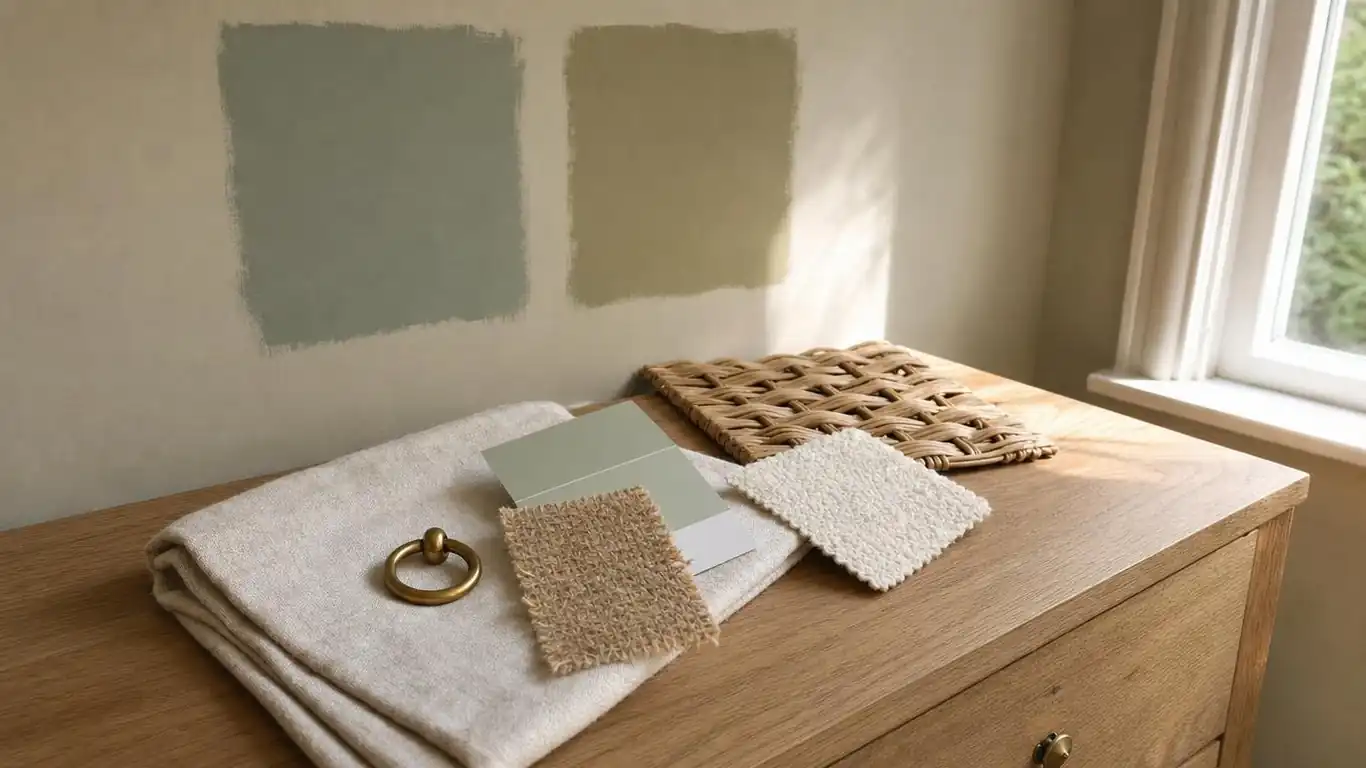
KEY TAKEAWAY: Test the accent wall before the full room, and choose textiles before finalizing the paint color — the fabrics and wood are the real context.
Frequently Asked Questions
Conclusion
A sage green nursery is one of the few design choices that stays right year after year. It doesn’t trend in and out the way bold colors do. It suits any baby, pairs with any style from minimal to Japandi to boho, and it naturally connects with the natural materials that make a nursery feel genuinely calm rather than just decorated.
Two years on from that bungalow project, the client sent me a photo. The room had grown into a toddler’s bedroom. Nothing had been repainted or replaced. The sage walls still looked right. The raw oak still glowed. That’s the real payoff of building around a timeless palette rather than a moment. For more nursery and small room ideas, visit 101homedecor.com and explore what works across every stage of the home. And if you want to pair the palette ideas here with a practical room layout, 12 smart small bedroom layouts to maximize your floor space and 14 minimalist small bedroom ideas to de-clutter your space give you the spatial structure to build around.