TL;DR
- Soft white or warm greige walls — Benjamin Moore White Dove OC-17 or Sherwin-Williams Alabaster SW 7008 — give coastal rooms the right warm base. Not bright white.
- A natural fiber rug at 8×10 feet minimum anchors the seating area; every front sofa and chair leg should sit on it.
- Linen slipcover sofas at 180–260gsm bring the relaxed weight the room needs; pair them with rattan or light oak pieces for natural material layering.
- Layer three light sources at 2700–3000K — a pendant overhead, a floor lamp in the corner, and one or two table lamps near the seating.
- Skip novelty beach accessories. A calm coastal living room earns its feel from palette and materials, not seashells and anchors.
Why Does a Coastal Living Room Feel Calm in Some Homes and Cluttered in Others?
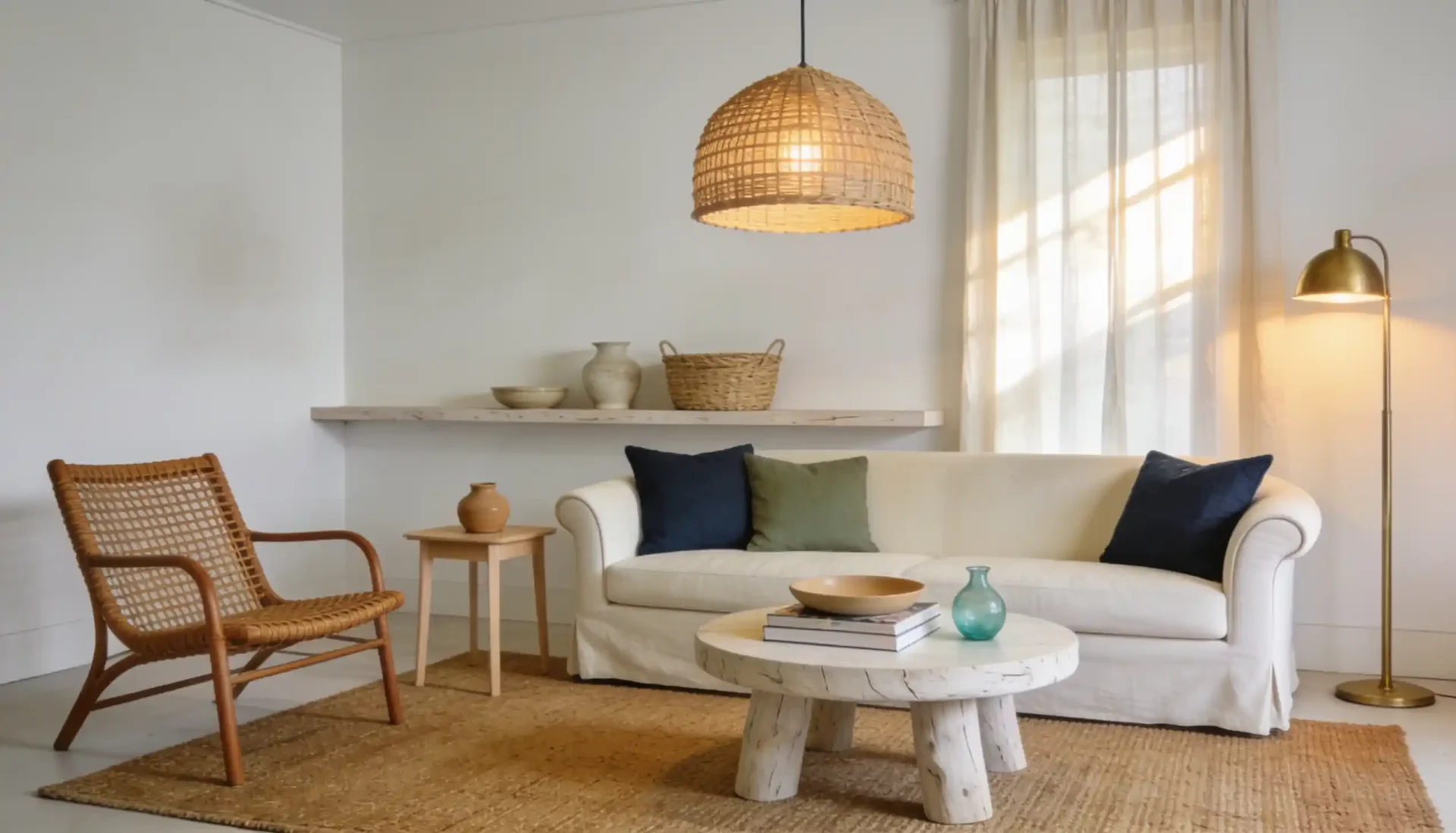
The gap between a calm coastal living room and a cluttered one almost always comes down to material choice, not accessories. Rooms that feel genuinely relaxed use three or four natural materials consistently — linen, jute, rattan, and pale wood — rather than collecting ocean-themed knickknacks. The palette stays soft and warm, not bright or literal.
These coastal living room ideas work for any room size — whether you’re starting fresh or refining what’s already in place. For deeper style context, explore the full coastal living room aesthetic guide. Browse all our home decor inspiration to see how this look extends across the whole home. Bookmark this guide for quick reference.
Editorial field note: A north-facing living room with cool grey walls and scattered navy accessories often feels cold rather than coastal. Repainting in Benjamin Moore White Dove OC-17 and swapping the synthetic rug for an 8×10 jute area rug brings warmth back immediately. The room settles before a single throw pillow is changed.
KEY TAKEAWAY: A coastal living room feels calm when the palette, materials, and restraint do the work — not the accessories.
| Quick Takeaways | |
|---|---|
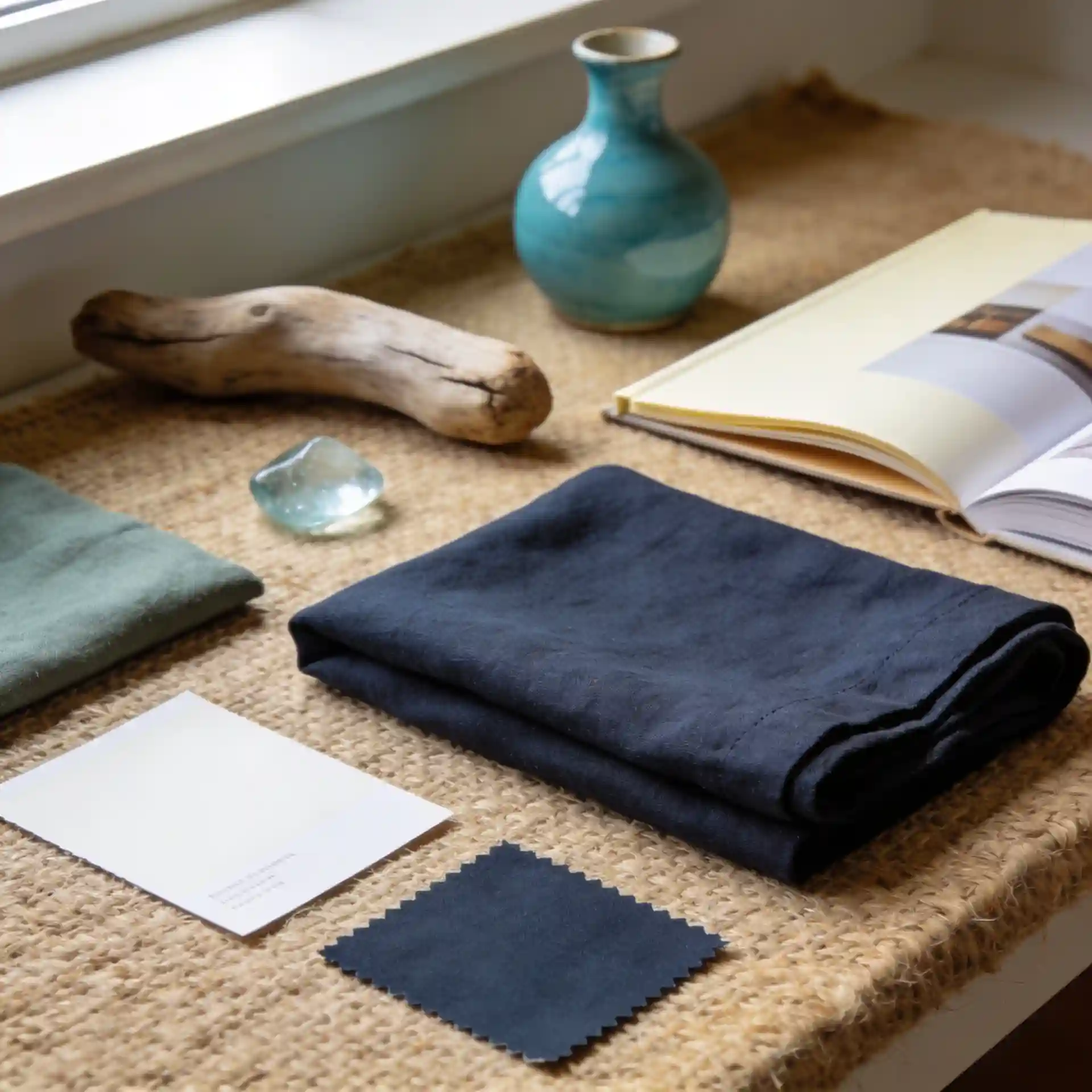
| Color | Soft white or warm greige walls; deep navy or sage as one accent color only. |
| Materials | Linen, jute, rattan, and pale oak — pick three or four and stay consistent throughout. |
| Furniture | Low-profile seating at 16–18 inch seat height; rounded edges read softer than angular frames. |
| Lighting | Three-height layering at 2700–3000K replaces the flat, clinical feel of a single overhead light. |
| Restraint | Fewer, better pieces consistently outperform a room full of coastal-themed accessories. |
Coastal Living Room Checklist
- Choose a wall color from the soft white or warm greige family — test Benjamin Moore White Dove OC-17 or Sherwin-Williams Alabaster SW 7008 on your actual wall before committing.
- Select a natural fiber rug at 8×10 feet or larger so the front legs of all seating pieces sit on it.
- Source a linen or linen-blend sofa at 180–260gsm — lighter weights wrinkle too heavily for slipcover use.
- Limit your accent color to one: deep navy, sage green, or sea glass blue.
- Add rattan or light oak to at least two furniture pieces to layer natural materials across the room.
- Set all light bulbs to 2700–3000K and aim for three distinct light sources at different heights.
- Hang curtain rods 4–6 inches above the window frame with sheer linen panels reaching the floor.
KEY TAKEAWAY: Running through this checklist before buying anything keeps the final look consistent and prevents mismatched purchases.
What Colors Work Best in a Coastal Living Room?
Color is the foundation. Get it wrong and no amount of rattan furniture fixes the problem. Get it right and the room settles into calm before anything else goes in.
1. Soft White or Warm Greige Walls
Soft white walls are the most reliable base for a coastal living room — not bright white, which reads stark and cold under natural light. The best options sit just warm of true white. Benjamin Moore White Dove OC-17 has a subtle warm undertone that holds under both natural light and lamplight without tipping yellow. Sherwin-Williams Alabaster SW 7008 leans slightly creamier and works especially well in rooms that get afternoon sun. Both give the room a clean, airy feel without the cold edge of a pure or grey-based white. Source Note: Benjamin Moore’s coastal palette guidance identifies warm whites as the top-performing base for coastal interiors because they reflect natural light without a blue or grey cast.
2. Deep Navy as an Accent
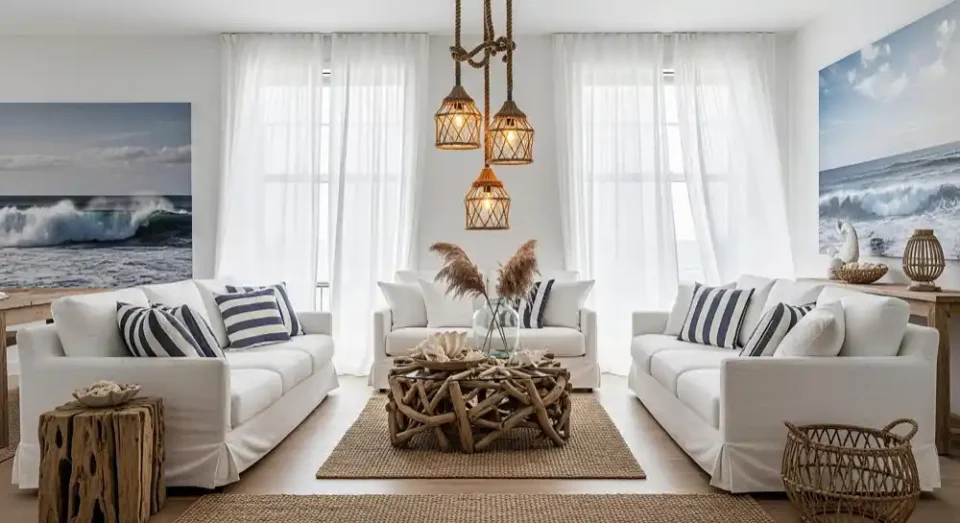
Deep navy is the most grounding accent color in a coastal palette. A single navy linen throw pillow, a pair of navy ceramic table lamps, or one navy-painted lower cabinet adds depth without making the room heavy. Use it in one anchor point per area — not layered across every surface at once. Navy paired with soft white walls and a natural jute rug reads coastal without a single seashell in sight.
3. Sea Glass Blue and Sage for Depth
Sea glass blue and sage green add the third and fourth dimensions that a two-tone coastal palette needs. Sea glass blue — a soft, grayed aqua — works well in ceramics, small art prints, or a textured textile. Sage green suits larger accent pieces because its muted undertone prevents it from competing with the navy. A sage linen accent chair next to a cream sofa creates a quiet, layered color range that reads coastal and calm. For the full palette applied across different room sizes, explore these neutral coastal living room ideas.
KEY TAKEAWAY: Soft white walls, one deep navy anchor, and sage or sea glass as a secondary note — this three-step color system works in almost any coastal room.
Natural Textiles and Materials Worth Investing In
The materials define a coastal living room as much as the color does. Linen, jute, rattan, and pale wood create the relaxed weight the room needs. They also age well — which cheap novelty pieces don’t.
4. A Linen Slipcover Sofa
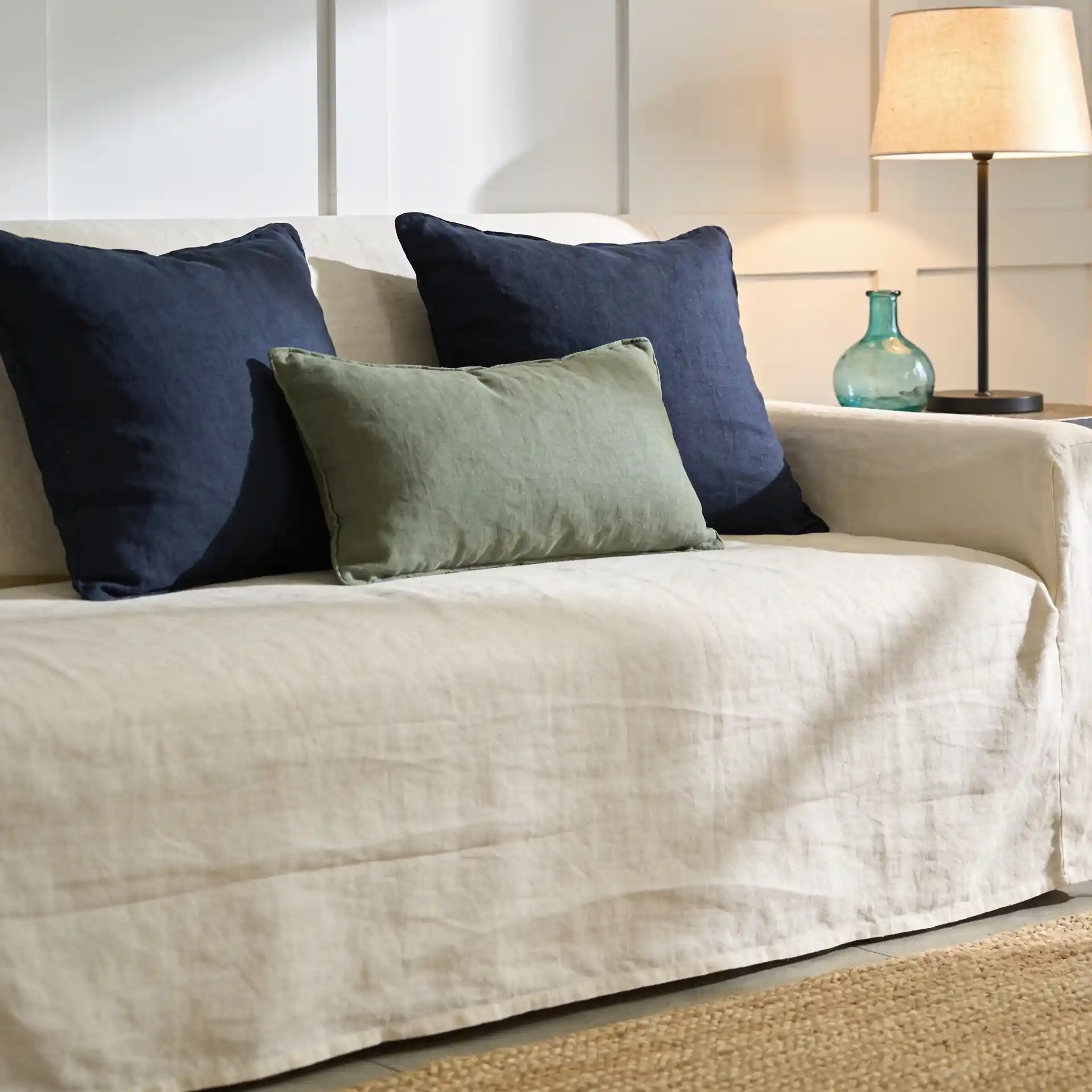
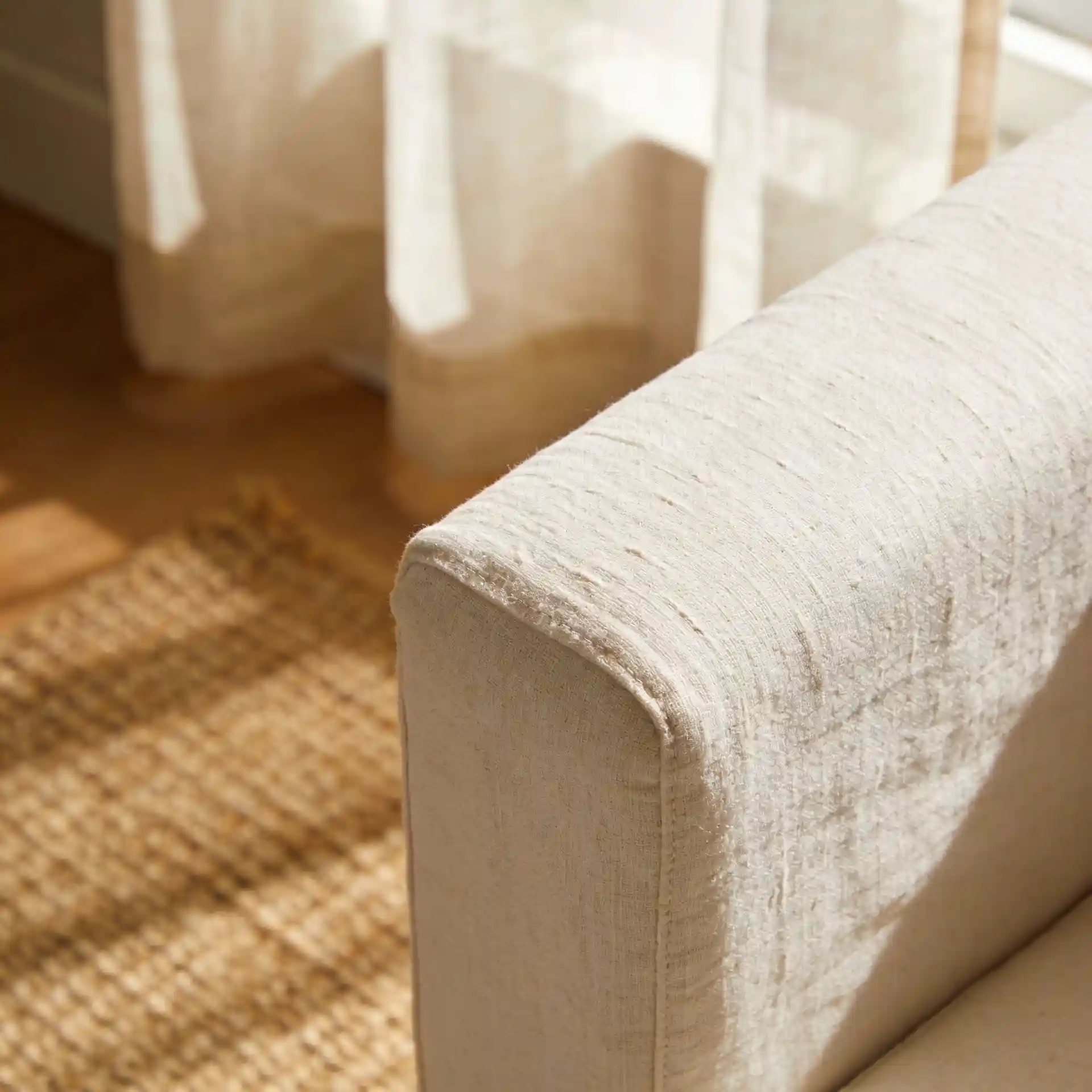
A linen slipcover sofa is the single most valuable furniture piece in a coastal living room. Linen at 180–260gsm has enough body to drape well without looking limp, and the natural slub texture adds visual depth without pattern. Slipcovers allow for easy washing — which matters in a relaxed space that actually gets used. Choose natural undyed linen or warm cream rather than pure white, which shows marks too quickly. A low-profile sofa frame at 32–36 inches depth pairs best with the open, relaxed scale of coastal rooms. Material Note: Linen at 180–260gsm provides the structural weight suited to slipcover use; weights under 150gsm tend to wrinkle heavily after the first wash and hold their shape less consistently.
DESIGNER TIP: Order a fabric swatch before committing to a linen sofa. Linen looks noticeably different under 2700K lamp light than in natural daylight — and most coastal rooms have both happening at the same time.
5. A Natural Fiber Rug — 8×10 Feet or Larger
A natural fiber rug at 8×10 feet is the minimum for most coastal living rooms — anything smaller leaves the furniture looking disconnected. Jute is the softer underfoot choice; sisal is more durable but rougher in texture. Both add the woven warmth coastal rooms need at floor level. The front legs of all seating should sit on the rug — this creates one grounded zone rather than separate furniture islands. Designer Rule of Thumb: go one size larger than what feels right on the floor plan. A rug that looks generous on paper almost always reads correctly in the finished room. Material Note: Jute and sisal are natural plant fibers that absorb moisture — avoid them in high-humidity rooms or near frequent spill zones; always use a non-slip pad on hard flooring.
6. Sheer Linen Curtains at Ceiling Height
Sheer linen curtains hung 4–6 inches above the window frame and reaching the floor add height and softness without blocking light. They filter rather than block — keeping the room bright and airy through the day. Choose undyed or warm cream sheers rather than pure white, which can read slightly yellow under warm lamplight. Use curtain rods at ceiling height rather than just above the frame; this makes windows appear taller without any structural change. Rental Note: Tension rods designed for café curtains fit inside the window recess with no drilling or wall damage — a fully renter-friendly option for ceiling-height panels.
KEY TAKEAWAY: Linen, jute, and sheer panels at ceiling height are the three textile investments with the highest visual return per dollar in a coastal living room.
How Should You Furnish a Coastal Living Room?
These coastal living room ideas for furniture start with scale and material. Low, rounded, and natural-material pieces work together. Angular metal frames or dark wood pull the room away from coastal into something heavier and less cohesive.
7. Low-Profile Rounded Seating
Low-profile seating at a 16–18 inch seat height keeps the room feeling open and relaxed. Rounded edges — curved sofa arms, oval ottoman corners — soften the visual line and reduce the slightly formal feeling that straight-armed furniture creates. A slipcovered sofa with gently curved arms paired with a round or oval coffee table is the most reliable starting combination for a coastal room. For a layered, textured take on coastal seating arrangements, these boho coastal living room ideas show how layering accent chairs and poufs works within the same calm palette.
8. A Rattan and Light Oak Mix
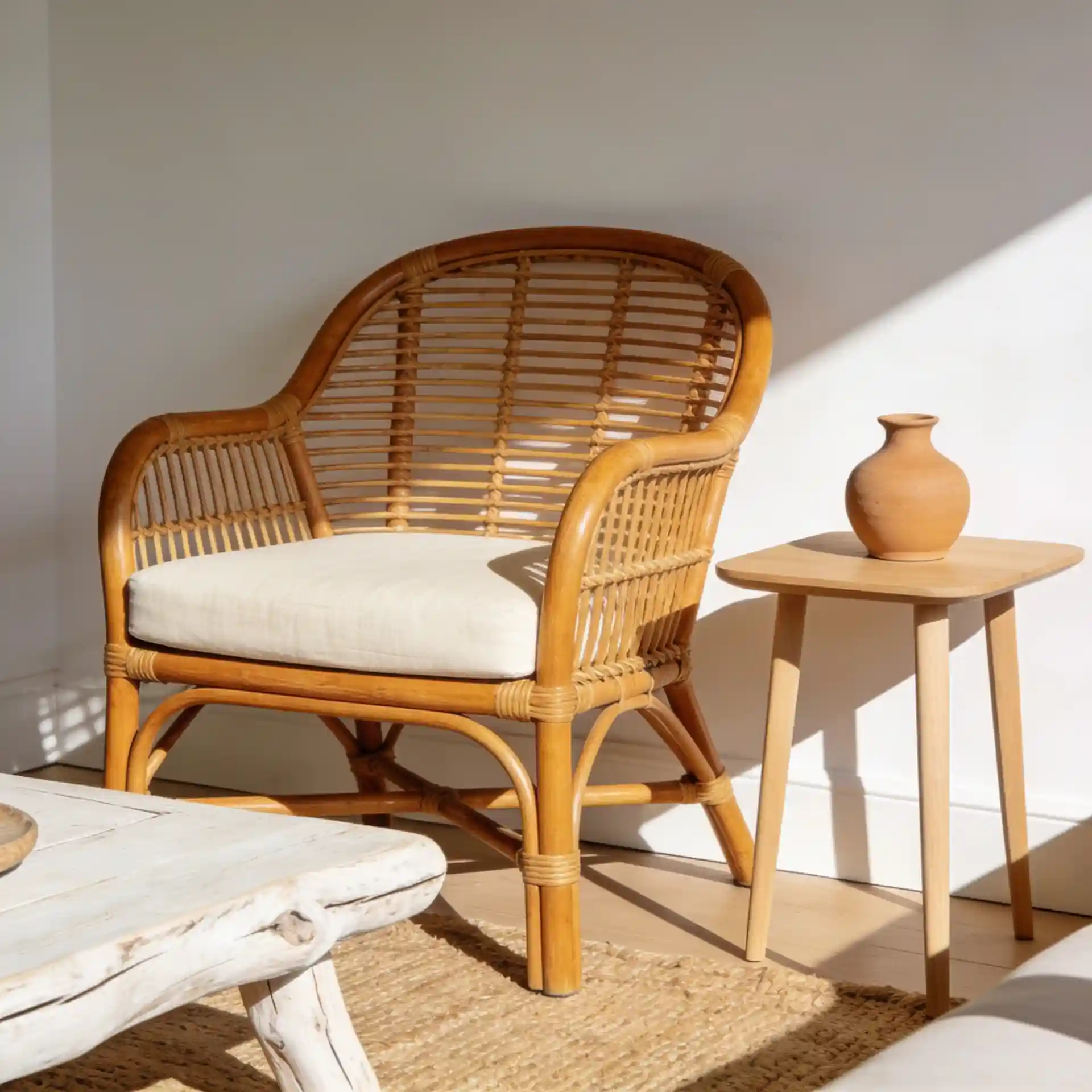
Rattan and light oak make the most natural furniture pairing in a coastal living room. Rattan brings texture and warmth at eye level; light oak grounds the room with solid weight. A rattan accent chair paired with a light oak console or side table creates visual layering without visual confusion. The two materials share the same warm, natural undertone and don’t compete. Both also cross over naturally into farmhouse aesthetics, which is why rooms that blend coastal and farmhouse styles so often work well. For that overlap in furniture and material layering, see these farmhouse living room ideas.
DESIGNER TIP: Place rattan pieces near natural light sources. Rattan takes on a slightly golden quality in afternoon sunlight that no synthetic alternative replicates — a rattan chair near a window earns more than one positioned in the center of the room.
9. A Driftwood or Whitewashed Coffee Table as the Focal Point
A driftwood or whitewashed coffee table anchors the seating area and adds the raw, tactile quality coastal rooms need at floor level. Driftwood finishes — grey-washed, weathered, matte — work best with soft white walls and natural fiber rugs because the tonal range stays consistent throughout. A round or rectangular whitewashed table at 14–16 inch height suits most low-profile sofas. Style the surface simply: a ceramic tray, two or three books, one small object. Coastal rooms work better with clear surface space than with curated arrangements.
KEY TAKEAWAY: Low-profile seating at 16–18 inches, a rattan and light oak mix, and a driftwood coffee table create the furniture layer that makes everything else fall into place.
Lighting and Finishing Touches That Complete the Look
Lighting is the element most coastal living rooms get wrong. A single ceiling light makes the room feel flat and clinical. Three light sources at the right color temperature — placed at different heights — change the feel of the room completely.
10. A Rattan or Rope Pendant
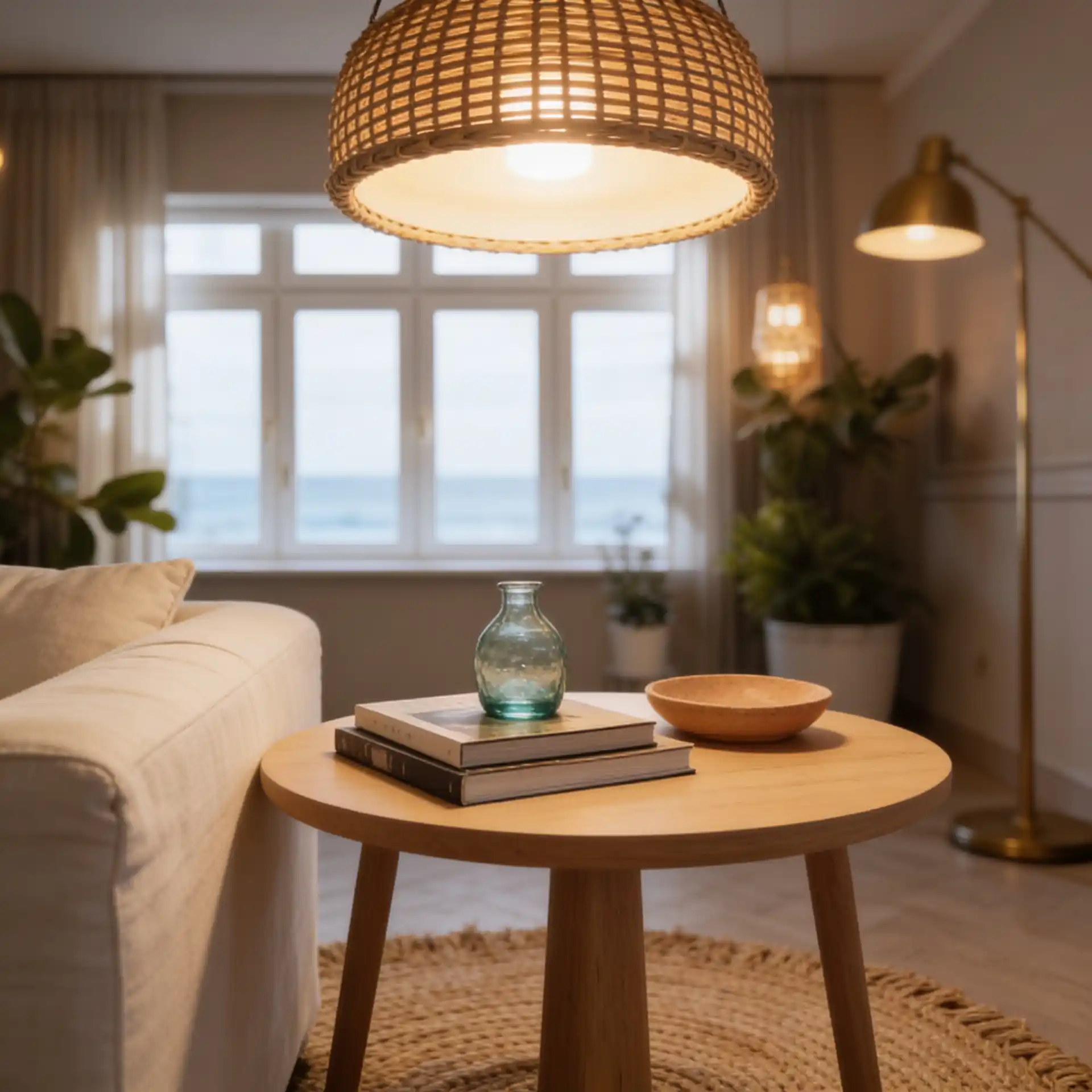
A rattan or rope pendant hung at 7 feet from the floor is the defining overhead fixture for a coastal living room. Rattan pendants at this drop height create a clear focal point without lowering the ceiling visually. Set the bulb to 2700–3000K — warm white, not cool or daylight-balanced — to preserve the soft quality of the palette below. For rooms with standard 8-foot ceilings, aim for 6.5–7 feet of clearance from floor to the bottom of the fixture. Safety Note: Pendant wiring and junction box load capacity should be assessed by a licensed electrician — never assume an existing ceiling mount is rated for a heavier or wider fixture.
11. Sea Glass, Ceramics, and Woven Baskets
Sea glass vessels, unglazed ceramics, and woven baskets are the three finishing-touch categories that complete a coastal living room without overwhelming it. Sea glass in soft aqua, pale amber, and clear works on shelves or windowsills where natural light can pass through it. Unglazed ceramics in sand, warm cream, or muted clay keep the material story consistent. Woven seagrass or rattan baskets double as storage and texture. Browse all living room ideas to see how these finishing details work across different styles and budgets.
12. A Three-Height Lighting Layer
Three-height lighting is the single biggest upgrade in any coastal living room. A pendant or ceiling fixture overhead, a floor lamp at 58–65 inches in a corner, and one or two table lamps at 24–28 inches create the layered warmth that makes the room feel finished. All three sources should run at 2700–3000K. A dimmer switch on the overhead and floor lamp adds atmosphere control without new fixtures. Coastal rooms with layered lighting feel calm in the evening in a way that single overhead light simply never achieves.
DESIGNER TIP: Set every light source in the room to 2700K and keep them consistent. Mixing 2700K and 3000K creates a color-temperature conflict that makes the room feel subtly unsettled — most people can’t name it, but they feel it.
KEY TAKEAWAY: A rattan pendant at 2700–3000K, sea glass and ceramic accessories, and three-height lighting are the finishing details that pull the whole coastal living room together.
What to Avoid
Even a well-planned coastal living room can tip into cliché. These four mistakes appear most often.
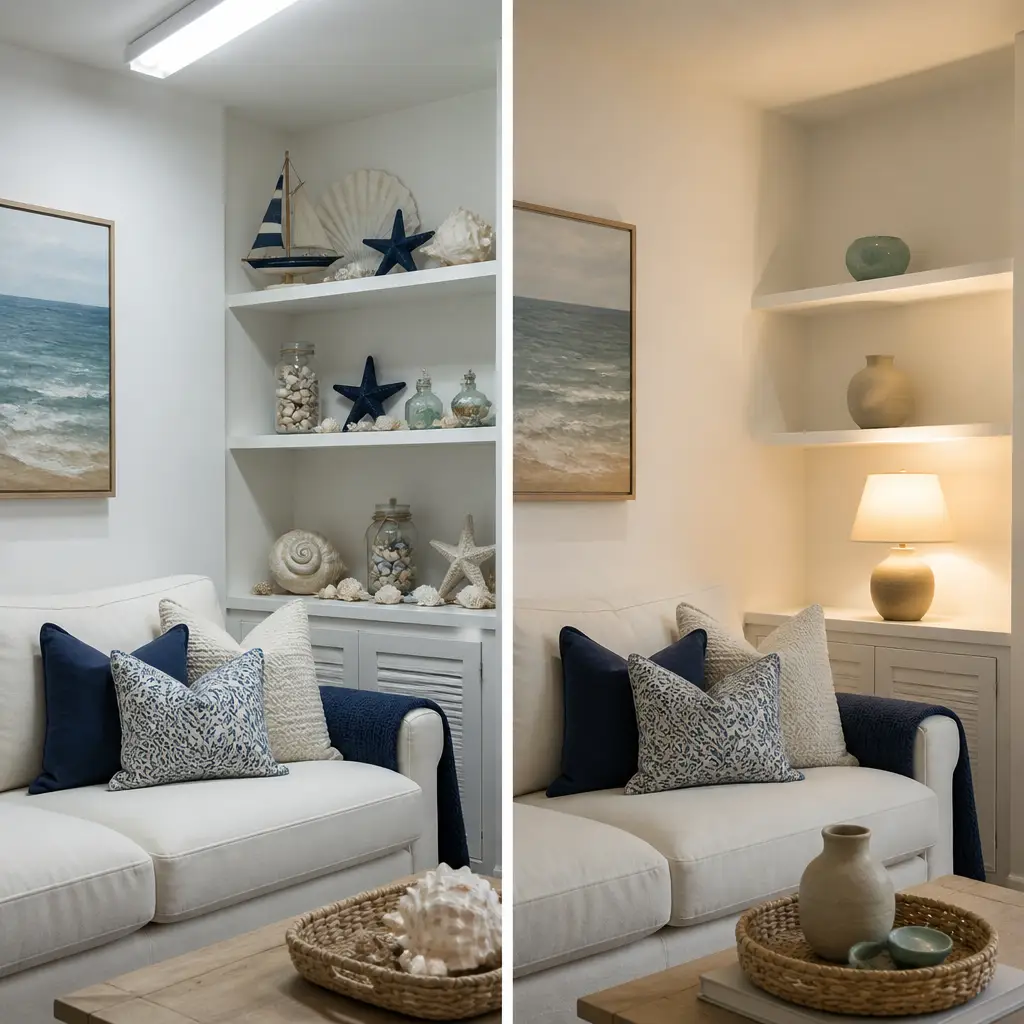
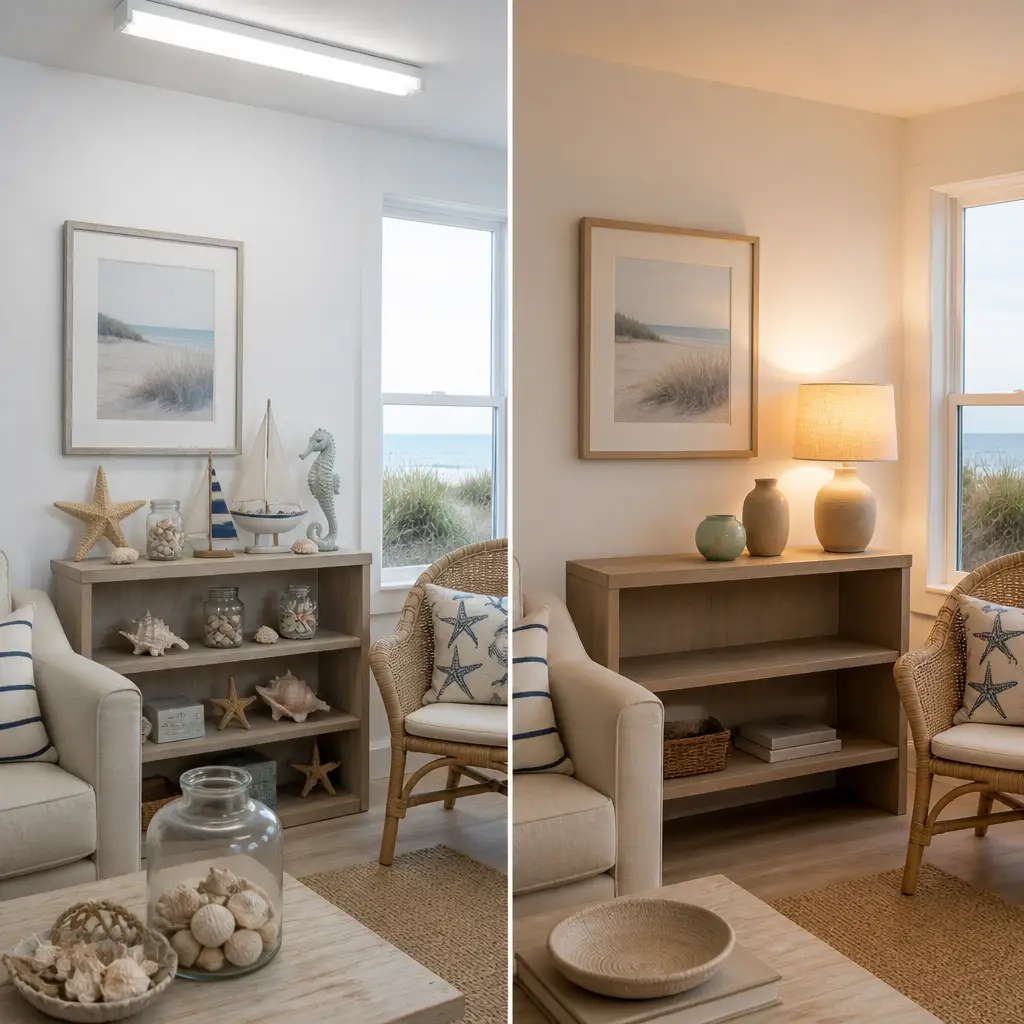
❌ Novelty beach accessories — shells, starfish, anchor art → ✅ Let the palette and natural materials carry the coastal identity. Accessories should be quiet: ceramics, sea glass, simple botanicals.
❌ Bright white walls → ✅ Use soft white (Benjamin Moore White Dove OC-17 or Sherwin-Williams Alabaster SW 7008). True bright white reads cold in natural light and amplifies any cool undertone in adjacent colors.
❌ Undersized rugs → ✅ An 8×10 foot rug is the minimum for most seating areas. A rug with only the coffee table sitting on it makes the furniture look like it’s floating.
❌ Single overhead lighting → ✅ Add at least two additional light sources before spending on anything else. A floor lamp and a table lamp at 2700K transform the room more than any new furniture piece at the same budget.
KEY TAKEAWAY: Avoiding novelty accessories, bright white walls, undersized rugs, and single-source lighting removes the four most common reasons a coastal living room loses its calm.
Price Ranges by Style
Coastal living rooms work at almost any budget — the key is knowing which elements give the most visual return so you can prioritize spending correctly.
| Project | Estimated Cost | Impact Level |
|---|---|---|
| Linen slipcover sofa (mid-range) | $800–$1,600 | Very High |
| Natural fiber jute rug, 8×10 feet | $120–$350 | High |
| Rattan accent chair + light oak side table | $250–$650 | High |
| Three-light layer (pendant + floor lamp + table lamp) | $180–$500 | Very High |
Best First Upgrade: Replace the existing rug with a jute area rug at 8×10 feet. At $120–$350, no single change gives a coastal living room more immediate warmth and texture for the price.
Skip for Now: Novelty coastal accessories — shells, driftwood art, anchor prints. These rarely add to the look and are the hardest purchases to walk back. For more on building the coastal look on a tighter budget, see these small living room decorating ideas on a budget.
KEY TAKEAWAY: The jute rug and three-height lighting layer give the best return for money spent — start there before investing in new furniture.
Special Considerations for Small Coastal Rooms
A coastal living room adapts naturally to smaller spaces because the palette is light and the furniture profile is low. A few adjustments help when square footage is tight.
Keep the sofa to a maximum 88-inch width in rooms under 180 square feet. A loveseat at 52–64 inches paired with two accent chairs gives equivalent seating capacity with less visual mass. Use a round or oval coffee table — it leaves more floor space visible and softens hard corners in a tight arrangement. Hang curtains at ceiling height even in small rooms; the visual lift is worth it regardless of footprint.
In rooms with little natural light, keep deep navy and other accent colors in textiles only. Soft white or warm greige walls reflect available light more effectively than grey or navy-painted surfaces. For specific layout approaches in tighter footprints, these tiny living room ideas cover the scaling rules for rooms under 150 square feet.
Rental Note: Ceiling-height curtains can be hung with tension rods inside the window recess or with removable adhesive hooks near the ceiling — no drilling or wall damage required.
KEY TAKEAWAY: Small coastal rooms benefit from the same palette and materials — just scaled down in sofa width and simplified in accent color use.
Frequently Asked Questions
Conclusion
A coastal living room earns its calm from materials and restraint, not accessories. Soft white walls, a linen slipcover sofa, a jute rug at 8×10 feet, and three-height lighting at 2700–3000K are the decisions that determine whether the room works. Everything else layers on top.
Editorial field note: A living room with navy accent walls and a single cool overhead light can feel clinical even with expensive furniture. Repainting in soft white, adding a jute rug, and replacing that one overhead with three warm sources at 2700K changes the feel of the room before a single piece of furniture is moved. The coastal living room ideas in this guide are built on that same principle — material and light first, accessories second.
For extending the coastal feel into adjacent spaces, these boho coastal bedroom ideas show how the same palette and material language translates into a bedroom setting. Browse all our home decor inspiration to keep building the look room by room.