TL;DR
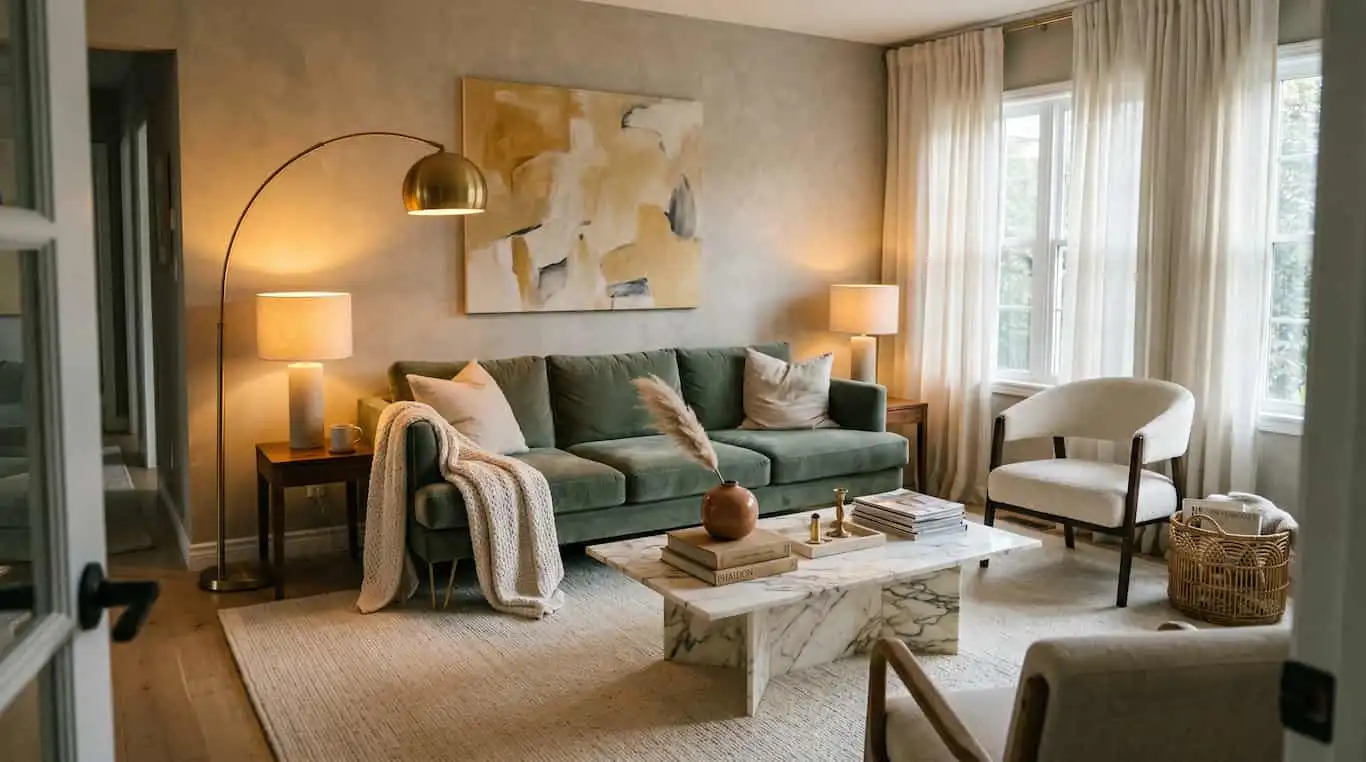
- Luxury comes from intentional material choices — velvet, linen, marble, and brushed brass layered together, not collected randomly over time.
- Lighting is the single highest-impact upgrade. Replace overhead-only setups with three sources at different heights, all running at 2,700K to 3,000K.
- Your rug must be large enough for the front legs of every seating piece to rest on it. Most living rooms need at least an 8 by 10-foot rug.
- One statement piece — a marble coffee table, a sculptural accent chair, or an oversized canvas — gives the room a clear focal point. You need only one.
- Restraint is the finish that ties a luxury living room together. Every surface should have breathing room.
What Does a Luxurious Living Room Actually Look Like?
Walk into a well-designed hotel lobby or a beautifully photographed interior. The first thing you notice isn’t a single piece — it’s the atmosphere. The light feels warm. Every surface has texture. Nothing competes for attention. Luxury living room ideas all chase that same feeling — and it isn’t about price.
A room earns a luxurious look when every element serves a purpose. The sofa isn’t just comfortable — it has a defined silhouette and a fabric that shifts with the light. The rug isn’t just large — it anchors the seating zone and has a pile you can actually feel. The lamp isn’t just functional — it glows rather than blares. That intentionality is what separates a designed room from a furnished one.
Design observation: rooms that feel expensive almost always have fewer objects than rooms that feel cluttered, even when the object quality is similar. Editing is not a secondary skill here — it is the primary one.
Bookmark this guide for quick reference. Find all our living room ideas and guides organized by style and scale at 101homedecor.com, or browse all our rooms inspiration for the full picture across every space in your home.
KEY TAKEAWAY: A luxury living room earns its look through intentionality — every element chosen and placed with purpose, nothing left to chance.
| Quick Takeaways | |
|---|---|
| Seating | Choose a sofa in velvet or linen with a defined silhouette — fabric quality reads as luxury immediately. |
| Lighting | Layer three sources at 2,700K–3,000K: ambient overhead, table lamps, and one floor lamp. |
| Rug | Size up. Front legs of all seating must rest on the rug to create one anchored zone. |
| Details | Brushed brass, travertine, and aged ceramics add warmth without visual noise. |
| Restraint | One styled arrangement per surface, breathing room around each object. |
Why Do These Design Choices Make a Room Feel Expensive?
The logic behind luxury design is straightforward once you see it. High-end interiors use fewer, better materials rather than more variety. Each material is chosen for how it behaves with light. Velvet absorbs light naturally, giving upholstery a deep, dimensional quality that changes throughout the day. Marble reflects light while adding organic veining no two pieces share. Brushed brass adds warmth without the hardness of chrome or polished nickel. Linen weighs between 150 and 250gsm and allows filtered daylight through, creating soft diffused glow rather than blocking or bouncing it. These modern living room ideas apply the same material-first thinking to a cleaner, more current silhouette.
Visual weight describes how heavy or light an object appears to the eye — dark, dense pieces carry more visual weight than light, airy ones. A luxury living room keeps visual weight balanced: a heavy velvet sofa offset by a clear glass side table, a dark accent wall balanced by ivory linen drapes. When the room feels balanced in this way — settled rather than tilted — it reads as designed.
Scale and proportion are the third driver. Furniture sized correctly for the room, a rug that anchors the seating group properly, art hung at eye level, curtains that run ceiling to floor rather than hovering mid-window — these proportional choices signal a designer’s hand even when no designer was involved.
Source Note: 2026 luxury interior research consistently shows that intentional material mixing — rather than spending more — is the primary differentiator between rooms that feel expensive and rooms that don’t.
KEY TAKEAWAY: Luxury reads as expensive because of material behavior, balanced visual weight, and correct scale — not price tags alone.
How Do You Apply Luxury Design in Your Own Living Room?
Luxury in a living room comes from a few deliberate choices, not a big budget. These five moves — distinctive seating, layered light, an anchoring rug, rich textiles, and one statement piece — bring a high-end feel to any space.
Start With Seating That Has a Clear Identity
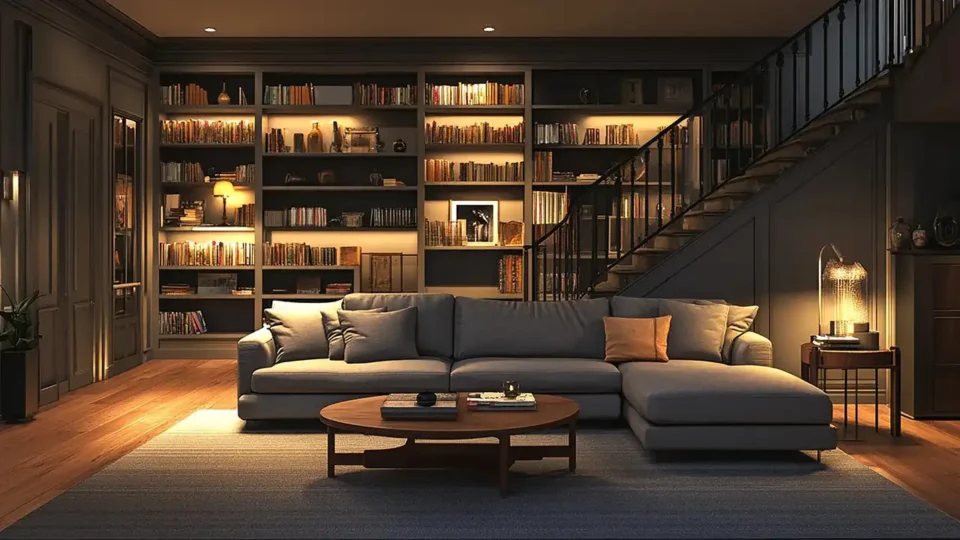
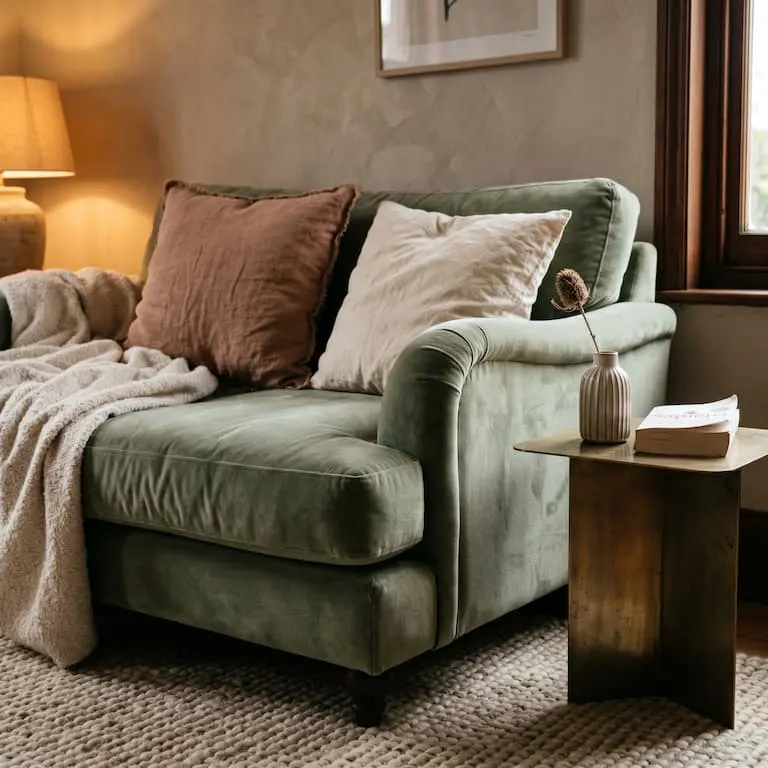
A sofa is the visual anchor of any living room. Luxury living room ideas almost always begin here because nothing else in the room reads before the sofa does. Choose one with a defined silhouette — clean arms, consistent leg height, and a fabric that holds its structure. Velvet and linen are the strongest choices: velvet gives depth and richness; linen gives ease and lightness.
Scale matters more than style. A sofa too small for the room reads as an afterthought. For most living rooms, a sofa between 84 and 96 inches wide fills the space without crowding it. Pair it with one or two accent chairs — boucle or leather work well — rather than a matching loveseat, which dates the look.
DESIGNER TIP: Pair a velvet sofa with one linen accent chair. The contrast in fabric texture reads as intentional rather than accidental — and intentionality is what separates a designed room from a furnished one.
Layer Your Lighting Instead of Relying on One Source
Layered lighting means having at least three light sources at different heights: ambient (overhead or cove), task (floor or table lamps at mid-height), and accent (wall sconces, picture lights, or candles). A room lit only by a single overhead fixture looks flat regardless of how well the furniture is chosen.
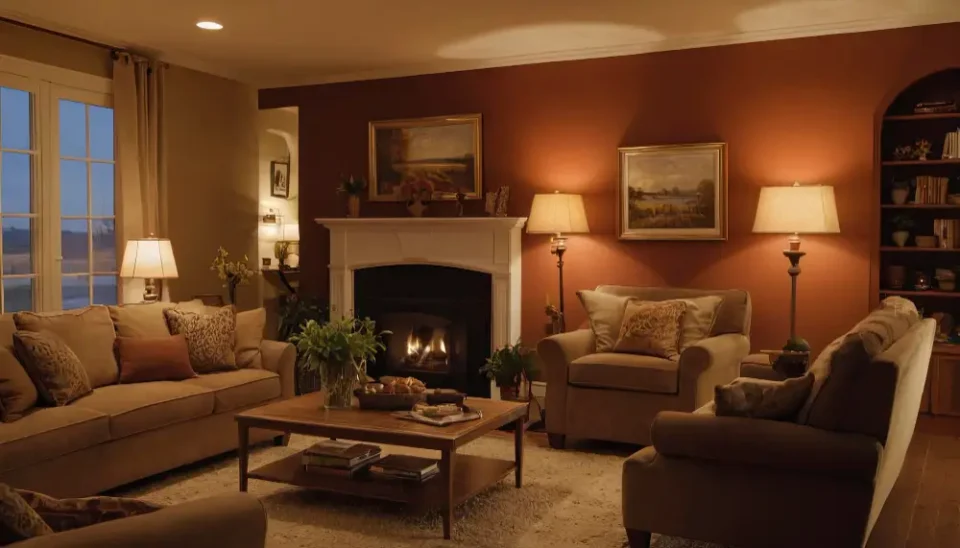
Color temperature is measured in Kelvin. Warm living rooms use bulbs between 2,700K and 3,000K — this range produces the golden, flattering glow associated with high-end interiors and hospitality spaces. Source Note: Lighting designers consistently recommend 2,700K–3,000K as the ideal range for living rooms focused on warmth and relaxation, per color temperature guidance from Any-Lamp.
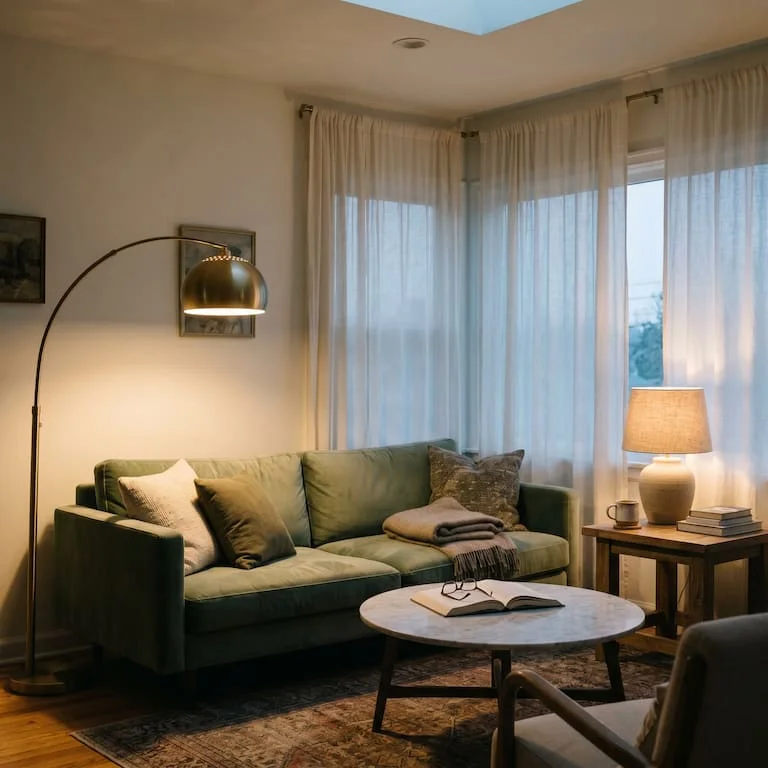
A practical starting setup: one pendant or chandelier for ambient light, two table lamps flanking the sofa on side tables, and one arc or tripod floor lamp positioned to eliminate a dark corner. All bulbs at 2,700K. All fixtures on dimmer switches where possible.
Choose a Rug That Anchors the Seating Area
A rug works as the room’s anchor when the front legs of all seating pieces rest on it. This creates one unified zone rather than furniture islands that drift disconnected across the floor. For a standard living room up to 200 square feet, an 8 by 10-foot rug is the right starting point.
Designer Rule of Thumb: Leave 12–18 inches of bare floor between the rug’s edge and the wall. A rug too close to the wall compresses the seating area. Going too small — a 5 by 7-foot rug in a 150-square-foot room — is the single most common layout mistake in living room design. It fragments the seating zone and makes a tidy room read as cluttered.
For a luxury look, choose a rug with visible texture: hand-knotted wool, cut-pile velvet, or a high-pile boucle. These hold their structure, develop character with use, and register as quality from across the room. For compact rooms where scale decisions matter even more, the guide on 25 tiny living room ideas that actually make space feel bigger covers rug placement and furniture scale in detail.
KEY TAKEAWAY: Rug sizing is the most consistently under-executed detail — front legs on, 12–18 inches from the wall, enough texture to read from a standing distance.
Add Depth Through Textiles
Texture is how luxury living rooms create depth without adding color or visual complexity. Layer three or four distinct textures across the room: a velvet or linen sofa, a chunky knit or boucle throw, wool or cotton cushion covers, and drape panels with real weight.
Curtains deserve particular attention. Drapes hung at ceiling height — even in a room with 8-foot ceilings — make the walls feel taller and the windows feel architectural. Choose a fabric with body: velvet panels in soft charcoal or warm cream, or linen-blend panels in dusty white. Material Note: Linen drapes at 150–250gsm allow filtered daylight through, creating soft diffused glow. Velvet panels at 280–400gsm provide heavier light control and a richer evening look. Choose based on how much natural light the room receives.
Choose One Statement Piece That Does the Work
A statement piece is a single furniture or decor item that carries the room’s visual weight and anchors its personality. A marble coffee table with strong natural veining. An oversized canvas in warm abstract tones. A sculptural accent chair in aged leather. A brass-and-glass pendant light with real form. You need only one.
The most common mistake is trying to have multiple statement pieces. Two strong focal points compete and the room reads busy rather than curated. Choose the element that speaks most clearly to the look you want, then let everything else support it.
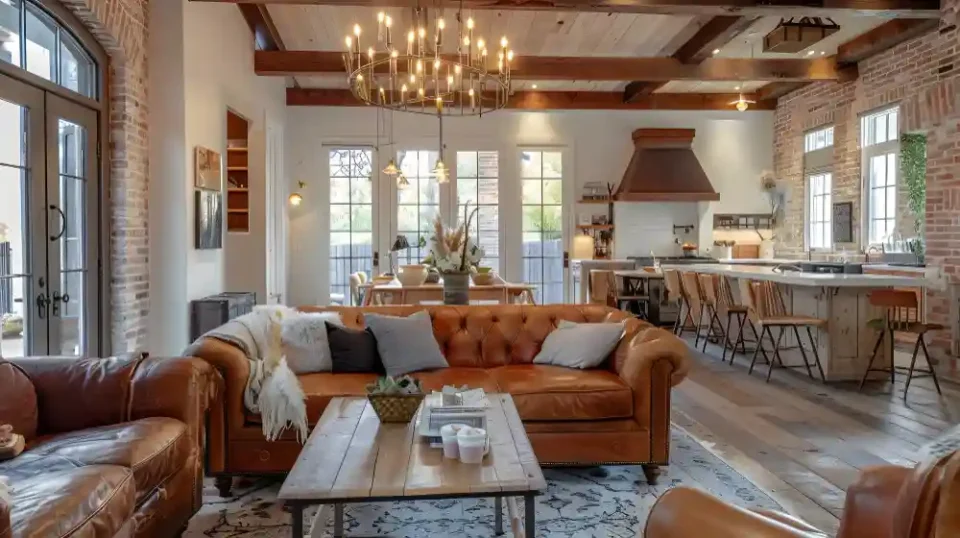
For farmhouse-inflected luxury, a weathered wood and iron coffee table does this work beautifully. For coastal rooms, a bleached rattan or woven seagrass accent chair. For a timeless elevated look, a travertine side table with an aged brass lamp. The full guides on modern farmhouse living room ideas for a warm, elevated home and coastal living room aesthetics for year-round summer show how this principle applies across both styles.
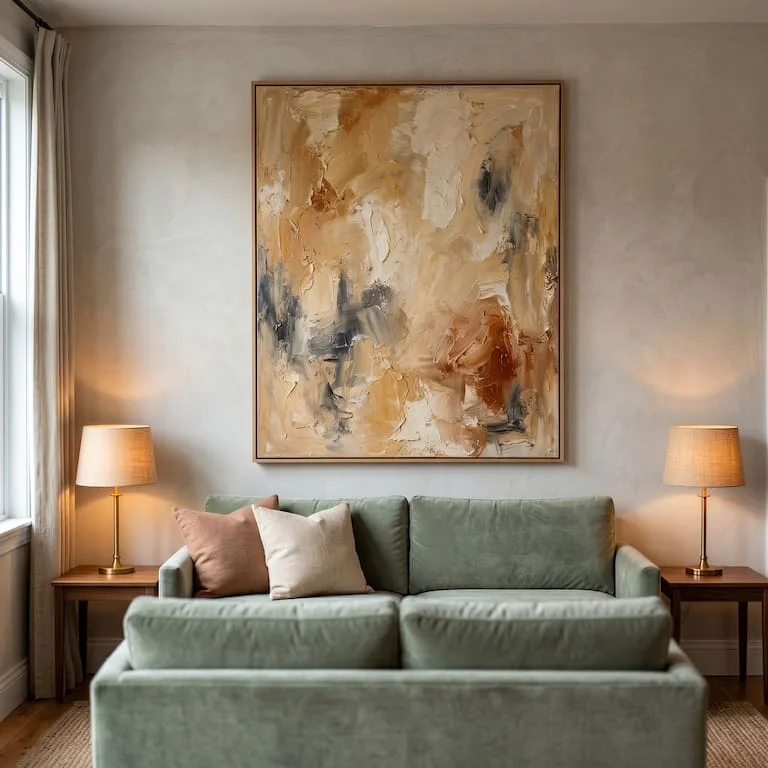
Finish With Details That Show Restraint
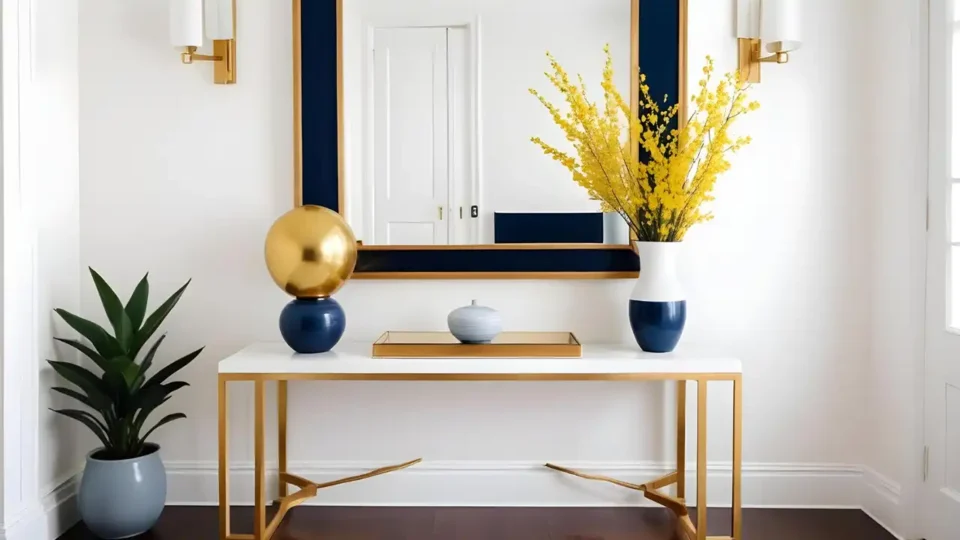
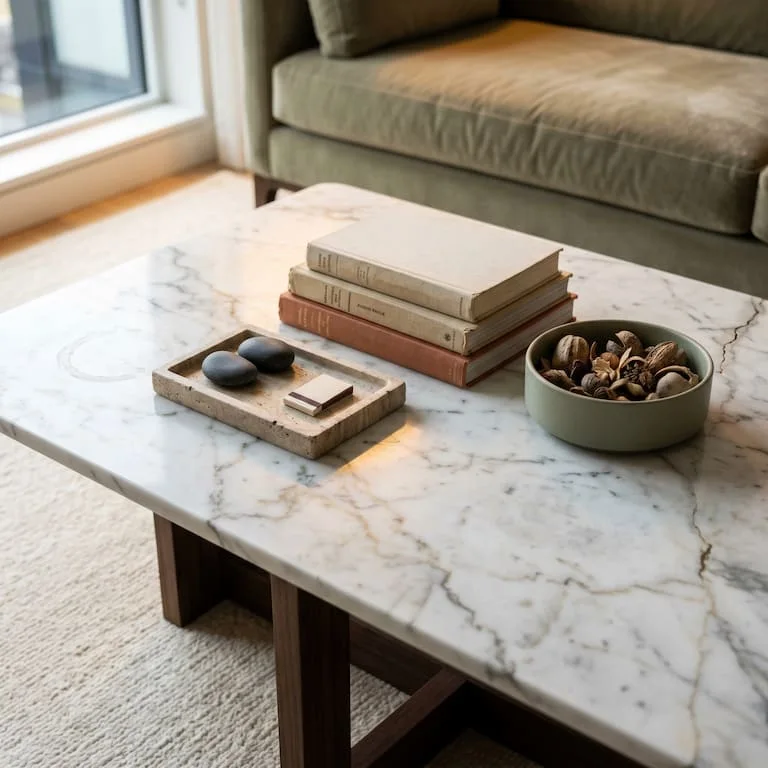
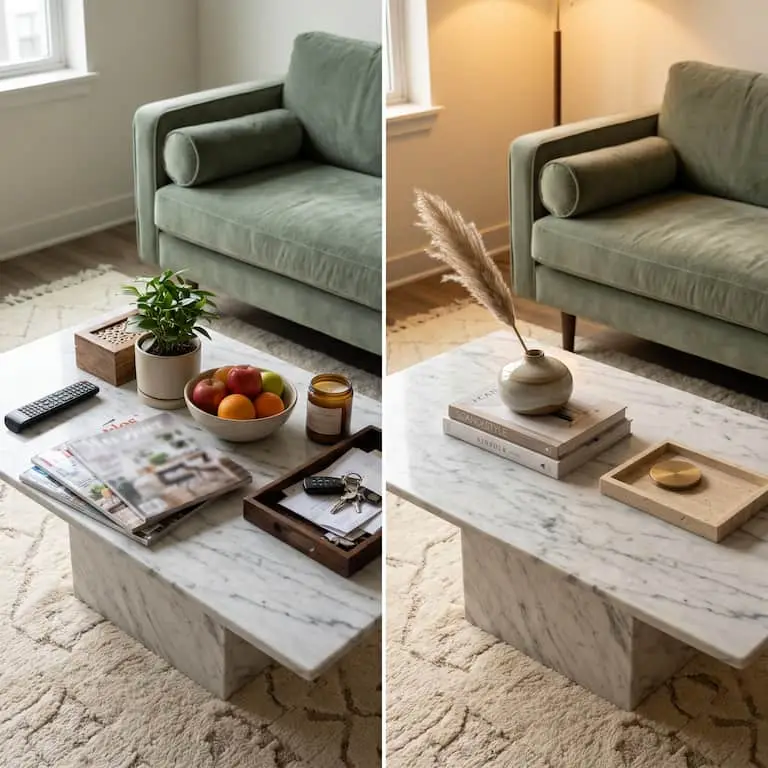
Luxury living room details are the objects on the coffee table, the books on the shelf, the tray on the console table. The rule is one styled arrangement per surface with breathing room around each object.
A coffee table for a luxury look: a low ceramic vase with dried botanicals, two or three design books stacked flat, and a small travertine or marble tray. That’s it. The negative space — the empty area around objects — is what gives each piece room to register.
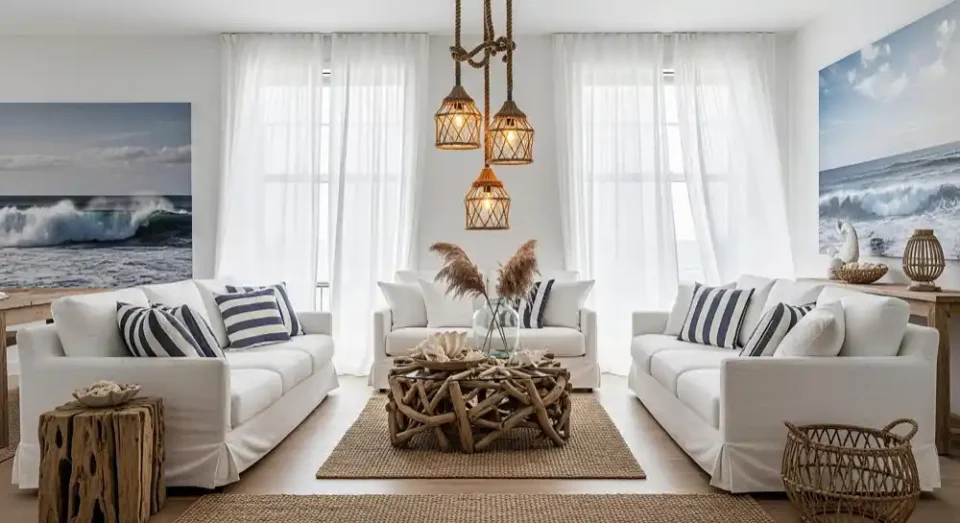
Other details that add without overwhelming: a woven jute or rattan basket for throw storage, a single oversized art piece on the most visible wall, one architectural object like a sculptural bowl or stacked stone bookend. For a neutral coastal living room or a boho coastal style, natural objects — dried grasses, bleached wood, shells grouped in a shallow bowl — do this same work without looking contrived.
KEY TAKEAWAY: Details land when they have breathing room. One arrangement per surface, negative space preserved, nothing placed without a reason.
A Recent Design Observation:
A living room featured in recent research had all the right elements: a sage velvet sofa, a hand-knotted wool rug in warm ivory, brushed brass lighting, a marble coffee table with visible grey veining. The mistake was the surfaces. The coffee table held seven objects. The shelves had no gaps. Removing two-thirds of the objects and regrouping the remainder into a single cohesive tray made the room look twice as luxurious. Nothing new was added — only editing happened. The marble and velvet were always there. They just needed room.
Luxury Missteps to Avoid
❌ Overhead lighting only → ✅ Add at least two floor or table lamps at 2,700K — one at each end of the sofa
❌ A rug that’s too small → ✅ Size up to 8 by 10 at minimum; front legs of all seating must rest on the rug
❌ Multiple statement pieces competing → ✅ Pick one focal element and let everything else support it
❌ Every surface covered → ✅ Leave negative space around every styled arrangement — less always reads as more
KEY TAKEAWAY: Luxury design fails most often from too much, not too little. Editing is the most important skill in the room.
What to Budget For
These luxury living room ideas scale to any budget — the priorities below tell you where spending more pays the most visible return.
| Element | Estimated Cost | Impact Level |
|---|---|---|
| Quality sofa (velvet or linen, clean silhouette) | $800–$2,500 | Very High |
| Area rug (8×10, wool or high-pile) | $300–$1,200 | High |
| Layered lighting (2–3 lamps + dimmable bulbs at 2,700K) | $150–$600 | High |
| Statement piece (marble table, large art, sculptural chair) | $200–$1,500 | Medium |
Best First Upgrade: Replace your rug with one large enough for all front legs to sit on it — this single change carries more visual impact per dollar than any other purchase.
Skip for Now: Decorative pillows and small accessories — styling details only pay off once the foundational pieces (sofa, rug, lighting) are already right.
KEY TAKEAWAY: Spend first on the rug and lighting — they reshape the atmosphere before any furniture upgrade does.
Special Considerations
A couple of common situations call for small adjustments. Here’s how to bring the luxe look to a small living room and to a space where you can’t paint.
What to Do in a Small Living Room
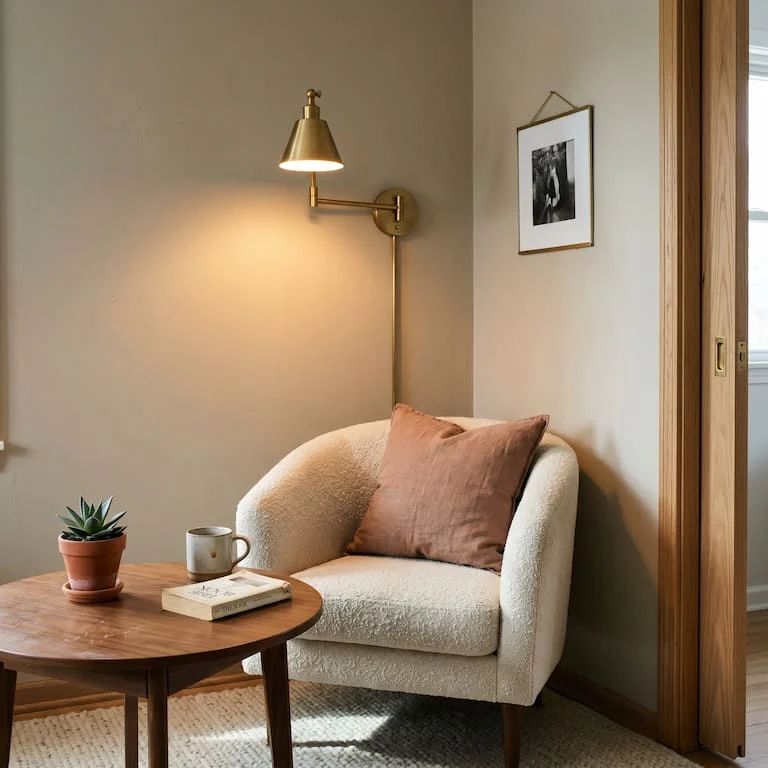
Luxury in a small living room follows the same principles, scaled down. Use fewer pieces with more intention. A single quality boucle armchair and a small marble-topped side table can carry a compact room better than a full sofa suite crammed into a tight space.
Vertical space matters more in smaller rooms. Ceiling-height curtains, a tall narrow shelving unit, and art hung slightly higher than usual all pull the eye upward and make walls feel taller. For practical guidance on making a compact room feel intentional and designed, see 10 smart ways to decorate a small living room on a budget.
What to Do If You Can’t Paint
Three elements shift a room’s atmosphere without touching the walls: lighting (swap overhead fixtures for warm-toned lamps at 2,700K), a correctly sized area rug, and ceiling-height curtains in a fabric with weight. Together these three changes carry significant atmospheric impact.
Rental Note: Plug-in wall sconces, tension-rod curtain systems, and removable adhesive picture rails let renters create a luxury atmosphere without permanent changes to the space.
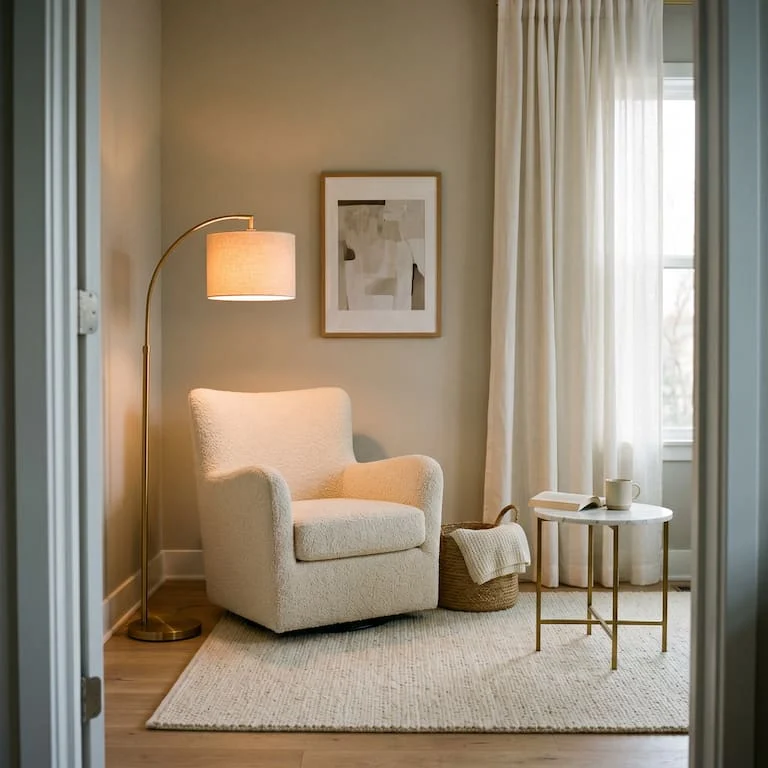
KEY TAKEAWAY: Small spaces and rentals can fully achieve a luxury living room look — the principles scale without compromise.
Frequently Asked Questions
Conclusion
A luxury living room isn’t a collection of expensive pieces. It’s a set of choices that work together — the right scale of furniture, the right layering of materials, the right amount of light at the right warmth, and the discipline to stop adding before the room tips into noise. Luxury living room ideas always come back to this: intention beats accumulation.
The most reliable starting point is to pick one element to do well and build outward from there. A room with one quality sofa, one correctly sized rug, and layered warm lighting already looks designed. From there, you add with restraint — one statement piece, one styled surface, one layer of texture at a time.
Find more styles across 101homedecor.com: from 11 cozy farmhouse living room ideas for a modern rustic home and 15 cozy moody farmhouse living room ideas to moody mid-century modern living room design — the same principles of material, light, and restraint apply in every style.