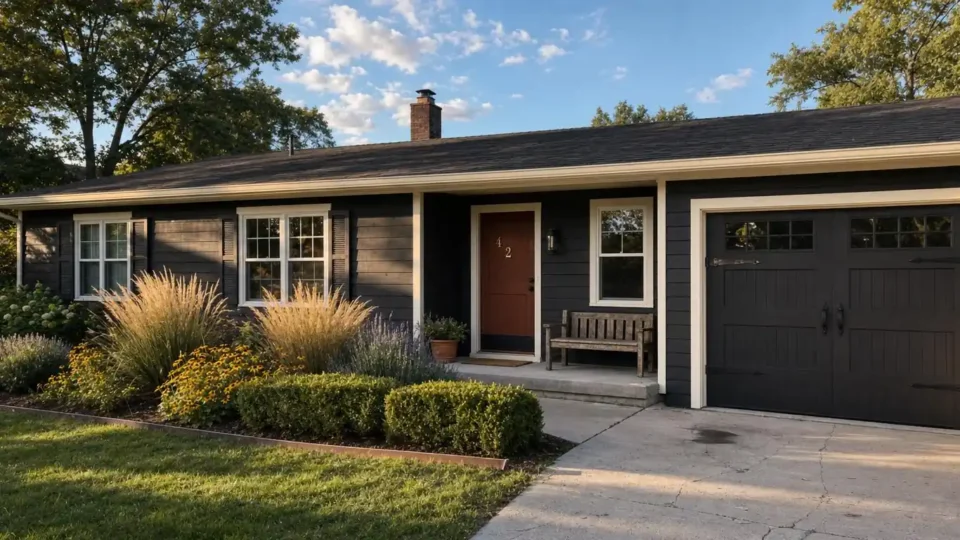
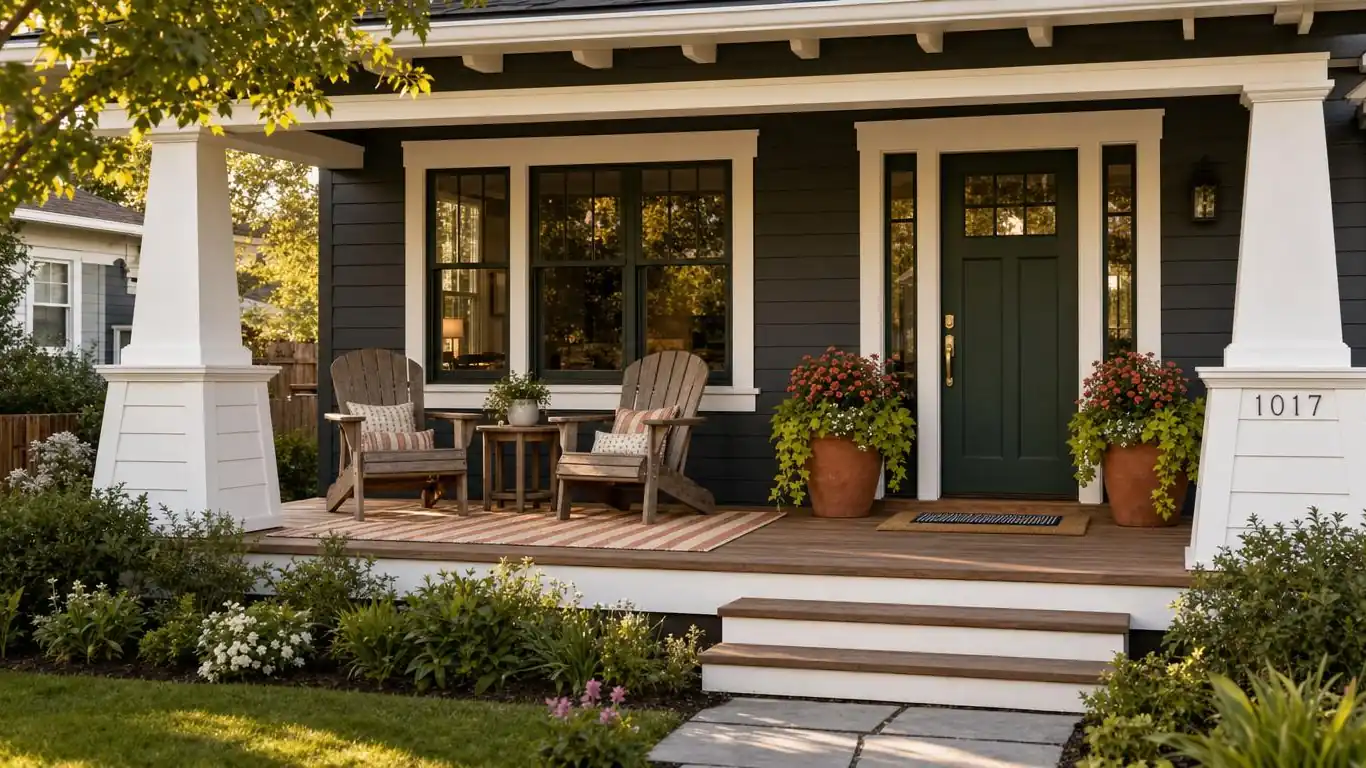
TL;DR
- Warm porch lighting at 2700K–3000K is the highest-impact change on any porch — do this before adding any decor.
- Two large statement planters flanking the front door create symmetry and scale that a single pot never achieves.
- A porch rug, throw pillows, and a seating vignette transform a functional platform into an outdoor room.
- Small threshold details — wreath, doormat, house numbers — do more visual work than most people give them credit for.
- Cohesion comes from choosing one metal finish (matte black or brushed brass) and running it across every visible hardware element.
Why Most Front Porches Fall Short
Front porches sit right at the entrance of a home and still manage to look invisible. They have the builder-grade fixture that came with the house, one pot that may or may not have survived last season, and a doormat that’s been there long enough to forget when it arrived.
The issue isn’t decoration volume — it’s intentionality. A porch that feels welcoming has a few things working at once: the right lighting temperature, a seating area that looks like someone uses it, and greenery at the right scale. When any one of those is missing, the whole picture collapses into background.
I refreshed a bungalow porch in Nashville two summers ago — wide wraparound, great columns, beautiful brick — that still read as completely blank. Three changes fixed it: a matte black lantern with a 2700K bulb replacing the flood light, two 26-inch terracotta planters flanking the door, and a polywood Adirondack pair with a side table. The homeowner told me afterward that neighbors started waving for the first time in six years. These front porch decor ideas cover every porch size, budget, and style. See also 14 spring front porch decor ideas that make your home inviting and 12 modern front porch ideas to refresh your home’s exterior design for seasonal and style-specific inspiration. Start the full outdoor picture at 101homedecor.com.
Bookmark this guide for quick reference.
KEY TAKEAWAY: A porch reads as welcoming when lighting, scale, and a seating area work together — not when any single element is added in isolation.
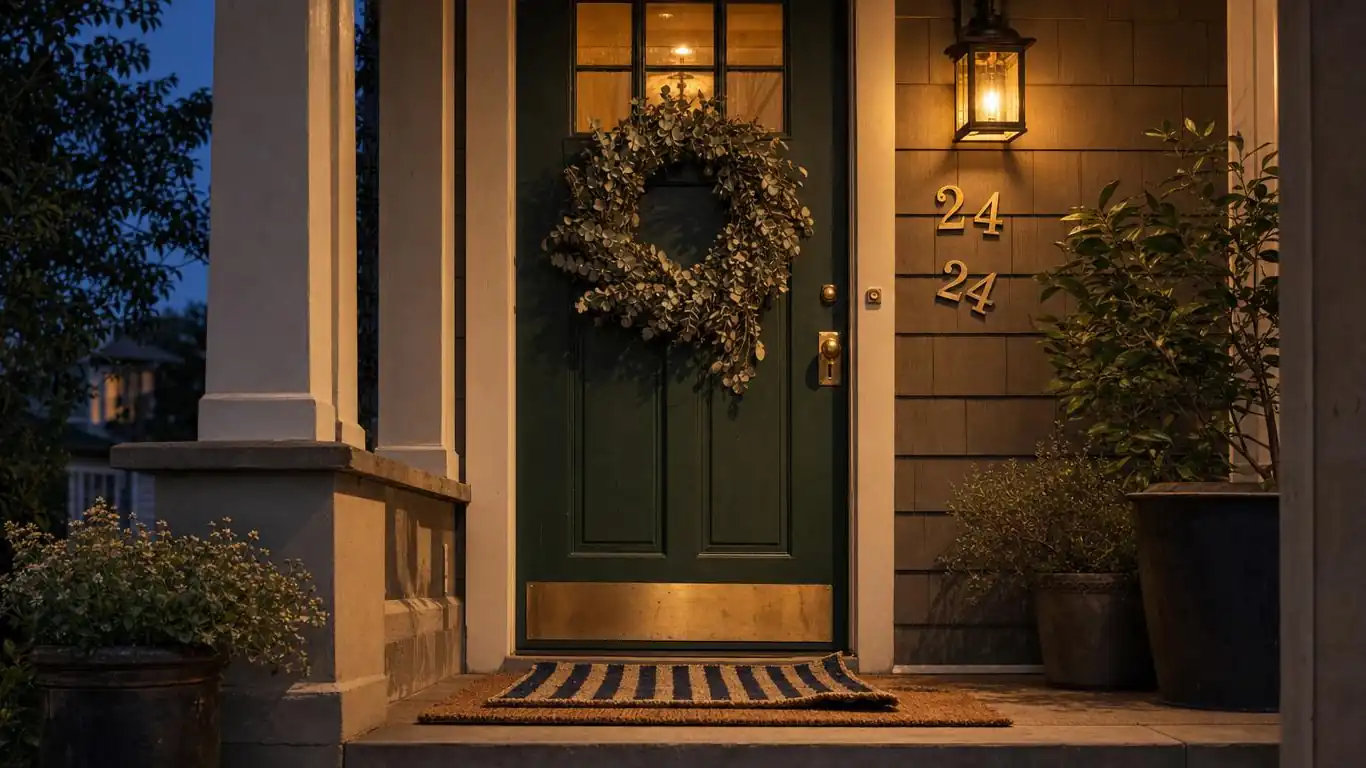
1. Swap the Porch Light for a Warm-Toned Lantern
The porch light is the highest-impact fixture on the front facade — it’s on every evening and visible from the street. Replace any builder-grade fixture with a matte black or brushed brass lantern and pair it with a 2700K warm white bulb. The amber glow reads as welcoming and shelter-signaling in a way cool daylight bulbs never produce. New fixtures start at $45 and the bulb swap costs under $8.
2. Paint the Front Door a Bold, Contrasting Color
A front door in a strong contrasting color is the easiest single focal point a plain facade can have. Deep navy, forest green, terracotta, deep burgundy, and matte black are all strong choices against cream, greige, or charcoal siding. The door color should sit two to three shades deeper than the body, or in clear contrast. A can of exterior-grade door paint runs $25–$45. A proper door repaint takes one afternoon with correct prep.
3. Flank the Door With Two Large Statement Planters
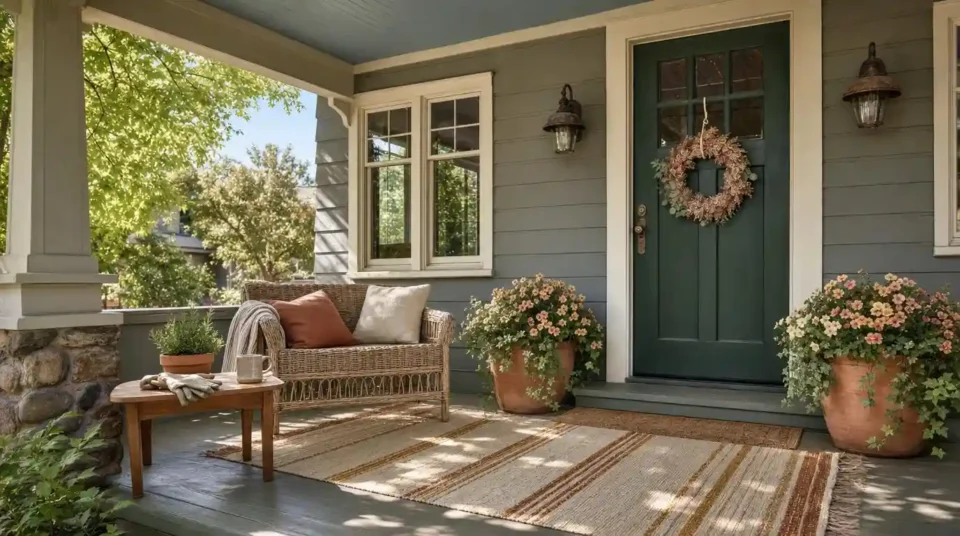
Two matching planters on either side of the front door create instant symmetry and visual weight that a single planter never achieves. Choose planters at least 24 inches tall — anything shorter loses presence at door level. Natural terracotta, brushed concrete, or dark glazed ceramic all weather well. Fill with a thriller-filler-spiller combination: one tall vertical plant in the center, medium-volume filler around it, and trailing stems at the edges. Swap plantings seasonally for a porch that always feels current. Timeless spring porch decor that makes your home feel inviting shows how the same planter structure carries across seasons.
4. Layer an Outdoor Rug Under the Seating Area
An outdoor rug defines a seating zone the same way an indoor rug anchors a living room arrangement. Choose a flat-weave or low-pile outdoor rug in a geometric pattern — chevron, stripe, or grid — and size it generously: the front legs of all seating should sit on the rug. Natural tones in warm cream, terracotta, and navy work across the most exterior palettes. A quality 5×8-foot outdoor rug runs $80–$200 and holds up through most weather conditions.
DESIGNER TIP: On a narrow porch under 8 feet deep, use a wide runner instead of a full rug — it defines the zone without blocking the flow from door to steps.
5. Install a Ceiling Fan With Rattan or Teak Blades
A porch ceiling fan adds function and character at the same time. Rattan-blade fans bring a relaxed coastal texture to standard porch ceilings. Teak-blade fans read more transitional and work on craftsman and colonial porches equally well. Both are rated for damp outdoor locations. A quality outdoor ceiling fan starts at $150–$300 and makes a porch usable on warm evenings when it would otherwise be too hot to sit outside.
6. Hang a Proportional Wreath on the Front Door
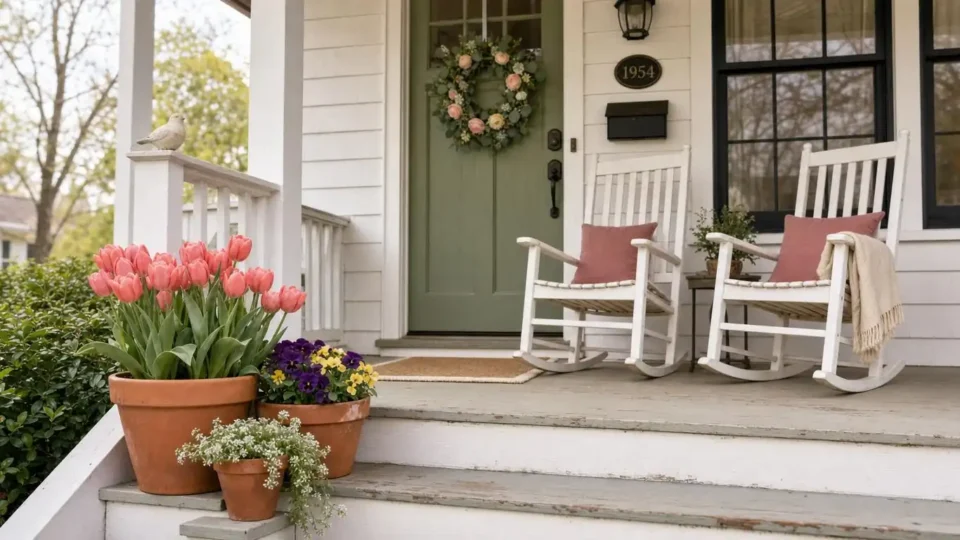
A wreath works when it’s sized proportionally to the door — and almost never works when it’s undersized. For a standard 36-inch door, use a wreath 24–28 inches in diameter. Natural-material wreaths in eucalyptus, cedar, dried citrus, or seasonal botanicals age more honestly than artificial versions and add subtle fragrance. Swap it four times a year to keep the porch reading as current and tended. 12 beautiful spring wreath for front door ideas cover the seasonal rotation in detail.
7. Create a Seating Vignette With an Adirondack Pair
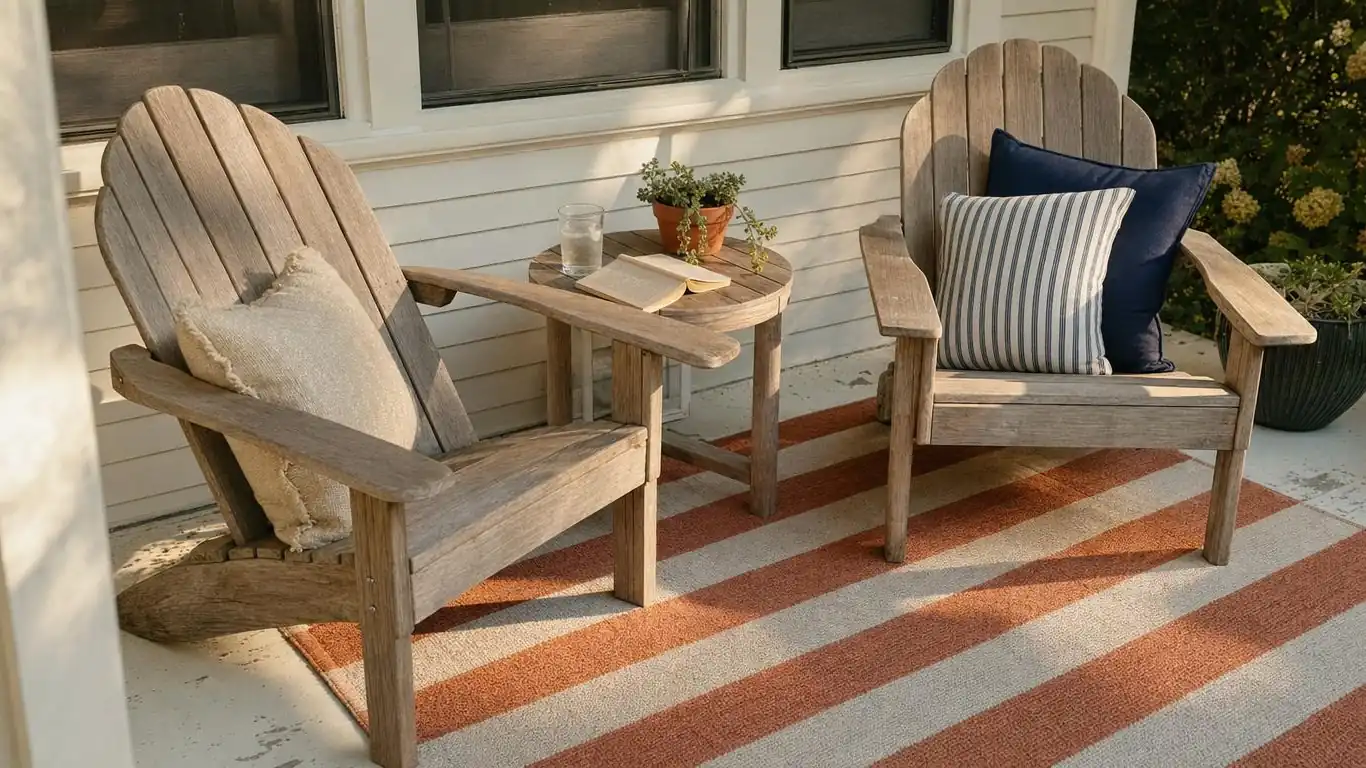
Two Adirondack chairs with a small round side table between them is one of the most reliable porch seating arrangements — it works on porches as narrow as 7 feet and reads instantly as welcoming. Choose solid polywood or teak rather than plastic resin — polywood lasts 20+ years, holds color, and weighs enough to stay put in wind. A quality polywood pair runs $300–$600. Add a small ceramic planter on the side table to complete the vignette.
8. Hang a Porch Swing for a Relaxed, Lived-In Feel
A porch swing signals something chairs don’t. It says “stay a while” in a way no other porch element quite matches. Standard porch swings are 48 or 60 inches wide — a 48-inch swing fits on any porch at least 8 feet wide with clearance on both sides. Always hang from existing ceiling joists, not just the porch ceiling boards. Natural teak or cedar holds up outdoors without staining. Swing prices run $200–$600. For enclosed porch options that expand on this idea, 14 enclosed porch ideas to transform your home into a private retreat cover the full range.
9. Style a Bistro Set on a Small or Narrow Porch
A two-person bistro table with bistro chairs is the right seating formula for any porch under 8 feet wide or 6 feet deep. The round bistro tabletop (24–28 inches in diameter) takes far less floor space than a rectangular table, and the chairs tuck fully under when not in use. Metal bistro sets in matte black or antique bronze weather well and run $150–$300 for the set. Add a small potted herb or cut floral arrangement on the table.
DESIGNER TIP: Bistro chairs with open backs read as less visually heavy than solid-back chairs on a small porch, which keeps the space feeling larger than it is.
10. Add a Side Table Vignette With Lanterns and Botanicals
A small accent table beside a porch chair or swing creates a detail moment that reads as considered up close. The vignette formula: one lantern with a battery pillar candle inside, one small potted plant or cut botanical in a simple vessel, and one organic material — a pinecone cluster or dried seed pod. Keep the table at arm height (18–24 inches) so it functions practically. Brushed brass, natural teak, or matte black side tables work across most exterior palettes.
11. Update House Numbers to Brushed Brass or Matte Black
House numbers are one of the smallest porch details and one of the most noticed — because every visitor has to find them. Standard plastic builder numbers look provisional. Brushed brass individual numbers screwed into the siding or a painted backing board read as finished. Matte black in a clean sans-serif typeface works across modern, transitional, and farmhouse exteriors. A full set of four to five numbers in brushed brass runs $30–$80. Installation takes 20 minutes. For a broader exterior refresh that puts house numbers in context, simple ranch style home interior and exterior updates for better curb appeal are a useful reference.
12. Add Path Lighting From the Driveway to the Porch Steps
Porch lighting that stops at the fixture misses the arrival experience. Path lights along the walkway from the street to the front steps guide the eye and create a welcome sequence the porch fixture alone can’t produce. Low-voltage stake lanterns or solar step lanterns at knee height, spaced 4–6 feet apart, work on flagstone or concrete paths. Choose 2700K warm white rather than cool daylight. A six-light low-voltage path kit runs $80–$150 installed by the homeowner.
13. Install a Window Box Below a Porch Window or Railing
A window box adds planting volume at mid-level — between the floor planters and the door-height wreath. This fills the visual zone most porches leave blank. Mount it below the main porch window or along the top rail of the porch railing, sized to match the window width — a box shorter than the window reads as undersized. Fill with a trailing combination: ivy or sweet potato vine at the edges, compact geranium or zinnia in the center. 11 secret garden ideas to create your own hidden oasis show planting layering principles that apply directly at porch scale.
14. Use Board-and-Batten Paneling on Column Bases or the Porch Ceiling
Board-and-batten applied to the lower half of square porch columns adds architectural detail most factory-built porches don’t have. Pair it with a crisp painted finish in white or warm cream. On a flat porch ceiling, V-groove tongue-and-groove in a soft grey or haint blue adds texture and traditional character. Both are weekend-level DIY projects with materials costing $200–$600 depending on porch size.
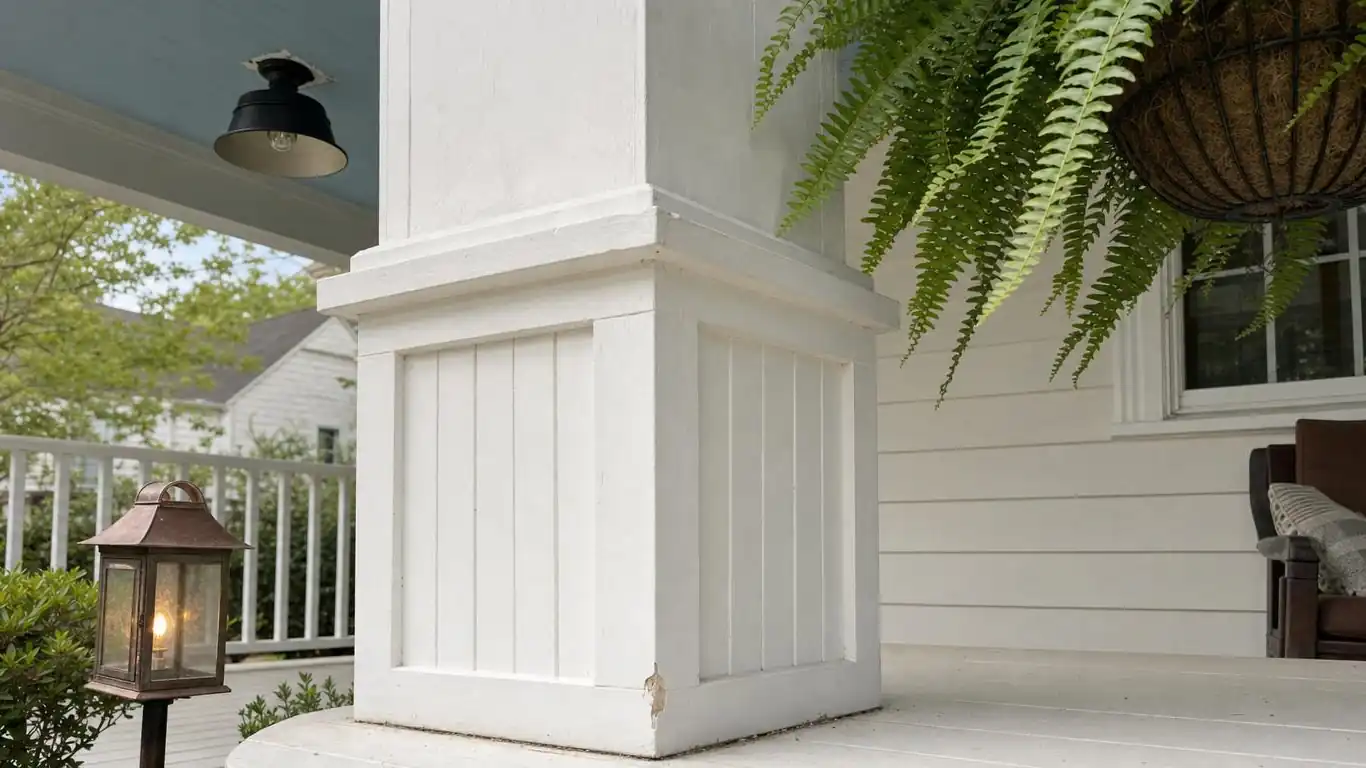
DESIGNER TIP: Paint the porch ceiling haint blue before mounting any fixture or fan — cutting in around a bare ceiling is far easier than working around a mounted fixture and its plate.
15. Hang a Trailing Planter or Boston Fern Beside the Door
A hanging basket at 6–7 feet beside or above the door adds a living element at eye level between the floor planters and the porch ceiling. Boston ferns are the classic choice — they thrive in the indirect light of a covered porch and produce a full, lush trailing form within two to three weeks. Cascade begonias and trailing string-of-pearls work on sunny porches. A quality Boston fern runs $20–$40 at most garden centers from April through September.
16. Layer Throw Pillows in an Outdoor Fabric on Porch Seating
Outdoor throw pillows in a coordinated but non-matching pattern make porch seating look styled rather than just placed. Choose a foundation pillow in a neutral solid — warm cream, soft greige, deep navy — and add one or two patterned pillows in the same color family. Solution-dyed acrylic fabrics (Sunbrella is the most reliable) resist fading and mildew. Two 18-inch outdoor pillows run $40–$80 each at mid-tier retailers. 15 spring patio decor ideas to make your space feel like home extend the outdoor fabric idea to the full patio arrangement.
17. Paint the Porch Ceiling in Haint Blue
Haint blue is a soft blue-grey color traditionally used on porch ceilings across the American South. It works because it visually recedes — making the ceiling feel taller — and reads as sky, extending the outdoor feeling. It also creates strong contrast behind any hanging fixture, plant basket, or swing chain. The color ranges from pale powder blue to deeper slate blue. Benjamin Moore Wythe Blue and Farrow & Ball Mizzle are both popular interpretations that read well on covered porches.
18. Add a Privacy Screen or Trellis With Climbing Plants
A privacy screen or trellis at one end of the porch creates a sense of enclosure that makes sitting there feel like a room rather than an exposed platform. Cedar or powder-coated steel trellis panels hold up outdoors without rotting. Climbing plants — jasmine, climbing roses, star jasmine, or clematis — soften the trellis within one to two seasons and add fragrance. A 4×6-foot cedar trellis panel runs $40–$80. For full privacy fencing ideas that work at the property line, 14 best privacy fence ideas for backyard seclusion and style cover every style and budget.
19. Layer a Second Doormat Inside the First
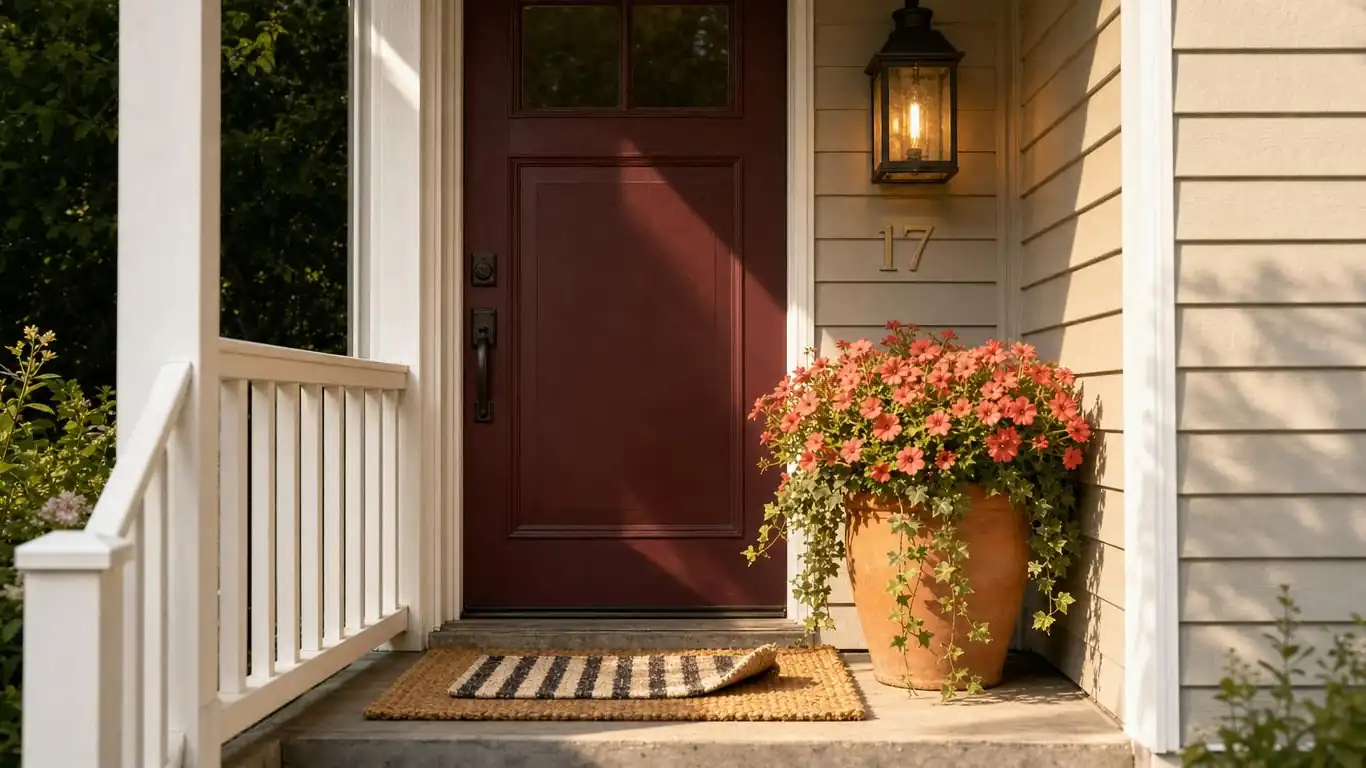
Two doormats layered at the threshold — a larger natural jute or coir base mat topped with a smaller patterned accent mat — read as styled rather than just functional. Choose a 30×48-inch base mat in natural brown or black and a 18×30-inch top mat in a stripe, woven pattern, or graphic print. The layering effect signals considered detail at close range. It’s also one of the lowest-cost porch upgrades — both mats together run $40–$90.
DESIGNER TIP: Replace the layered doormat every season — a worn mat signals neglect faster than almost anything else at the threshold.
20. Style a Side Porch Wall With Weather-Resistant Art
A small gallery arrangement on the covered porch wall — the house wall visible behind seating — adds personal character most porches never develop. Use weather-resistant prints in sealed frames, powder-coated metal wall art, or decorative ceramic tiles. Anchor with one larger central piece (16×20 inches or larger) and surround with two to four smaller pieces in varied sizes. Maintain one consistent metal finish across all frames and hardware. A cohesive three-piece porch wall arrangement runs $80–$200.
21. Add Wicker or Rattan Accent Pieces for Organic Texture
Wicker and rattan bring natural woven texture to a porch without paint, power, or significant installation effort. A rattan side table, a wicker trunk used as a coffee table, or a wicker hanging chair adds a handmade, organic quality that metal and plastic furniture doesn’t replicate. Choose all-weather PE rattan for pieces that stay outdoors through rain — it looks nearly identical to natural rattan and holds up through wet seasons. Quality all-weather rattan pieces start at $100–$300.
KEY TAKEAWAY: The strongest front porch decor ideas share one trait — each element has a clear job to do, and nothing sits on the porch just to fill space.
How These Ideas Work Together
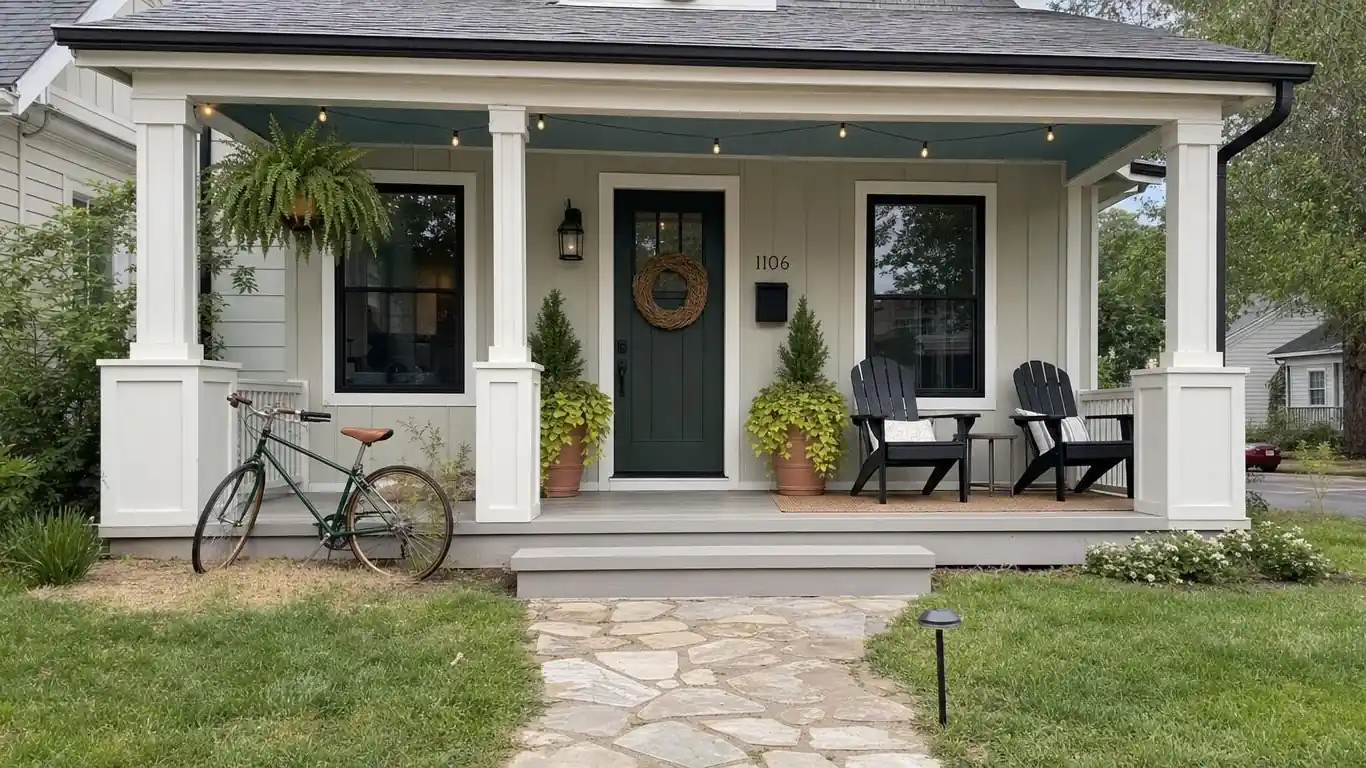
Front porch decor ideas work best when each element is chosen with the others in mind rather than assembled one impulse purchase at a time. The most cohesive porches have three things in common: one consistent metal finish across all hardware and fixtures, a planting scale that matches the facade width, and a seating area that invites people to sit rather than just walk past.
A useful rule: every porch has a primary view and a close-up view. The primary view is what a visitor sees from the sidewalk or driveway — facade color, planting scale, porch light warmth. The close-up view is what they experience walking up and waiting at the door — doormat, wreath, scent, texture detail. Strong porches work at both distances. A porch optimized only for the sidewalk view feels cold and staged up close. One optimized only for close-up detail disappears from the street.
For patio and outdoor sitting areas adjacent to the porch, 15 simple outdoor patio ideas for small and large backyards show how the porch design language can extend naturally through the yard. For homes where the exterior architecture drives the porch style, 16 simple barndominium exterior ideas for a modern farmhouse look offer useful palette and proportion references that apply across architectural styles.
KEY TAKEAWAY: A well-composed porch works at both the sidewalk view (scale, light, planting) and the close-up view (texture, scent, threshold detail) — plan for both distances.
What You’ll Spend
A front porch refresh doesn’t need to be expensive. Most of the highest-impact front porch decor ideas on this list cost under $200 individually. The difference between a $300 refresh and a $2,000 one is mostly furniture and permanent fixtures — the lighting, the ceiling fan, the swing. Seasonal planting and accessories stay affordable if you plan ahead and buy from garden centers rather than specialty retailers.
| Project | Estimated Cost | Impact Level |
|---|---|---|
| Porch light fixture + 2700K bulb swap | $45–$120 | Very High |
| Two large statement planters + plantings | $80–$200 | High |
| Porch seating (Adirondack pair or bistro set) | $150–$600 | High |
| Outdoor rug (5×8 feet) | $80–$200 | Medium |
For budget-conscious upgrades that prioritize the highest-return changes first, 15 cheap backyard ideas to upgrade your space on a budget share useful cost-versus-impact thinking that applies to porch upgrades equally well.
KEY TAKEAWAY: The light fixture swap, door repaint, and two planters together cost under $350 and deliver the most visible change — start there before investing in furniture or permanent features.
When Your Porch Is Especially Small or Large
Very small porch (under 6 feet deep): Skip the rug and full seating. Focus on lighting, door color, one proportional planter beside the door (not two flanking — they crowd a small approach), a correctly sized wreath, and a layered doormat. Two planters on a narrow stoop crowd the approach. One well-filled planter beside the door reads better at this scale.
Wide wraparound porch: Treat it as a series of zones rather than one long space. Create one seating vignette near the door, a secondary seating moment at the far end, and connect them visually with a consistent rug tone or planting rhythm. A single set of furniture spread across a 20-foot wraparound looks sparse. Two separate moments look intentional.
Covered vs. open porch: A covered porch can use upholstered outdoor cushions in heavier-weight solution-dyed fabrics without worrying about daily exposure to direct rain. An open (uncovered) porch needs fully weatherproof materials — powder-coated metal, teak, polywood, and solution-dyed fabrics rated for full sun and rain. For inspiration on making a covered outdoor room work across seasons, 10 smart small sunroom ideas for a cozy and functional tiny space and 15 private small courtyard ideas to transform your outdoor space show how enclosure and shade change outdoor decorating decisions significantly. Homes with a more extended outdoor living zone may also find 17 dreamy backyard hot tub ideas you’ll actually want to use useful for planning the porch within the broader outdoor picture.
KEY TAKEAWAY: Scale every porch decision to the actual depth and width of the space — an oversized rug or undersized planter reads as a mistake from 10 feet away.
Frequently Asked Questions
Conclusion
Front porch decor ideas work when they’re chosen with intention — not assembled from what’s available at the end of the season. The bungalow porch in Nashville that I mentioned at the start wasn’t transformed by a long list of changes. It was transformed by three things done right: a warm lantern, two correctly scaled planters, and a seating area that looked like someone sat there.
That sequence — light first, greenery second, seating third — is the right order for almost every porch regardless of style, size, or budget. Start there. Add the finishing details once those three anchors are in place. For more outdoor and exterior inspiration year-round, browse our full collection of exterior decor ideas and all outdoor design ideas. The front porch is the one part of the home every neighbor, visitor, and passerby experiences — it deserves the same attention you’d give any room inside. Start the broader inspiration journey at 101homedecor.com.