TL;DR
- Palette: The winter cabin exterior aesthetic is anchored in dark tones — charcoal, forest green, deep navy, and warm black — that make warm interior light glow against the facade.
- Entry zone: A covered porch with a statement lantern, a wreath, a stacked wood vignette, and a dark painted door is the single highest-impact change you can make.
- Lighting: Warm-white bulbs at 2700K or lower, placed low and close to the structure, create the amber glow synonymous with the look. Cool-white lighting destroys it.
- Landscaping: Evergreen shrubs, ornamental grasses left standing, birch log bundles, stone pathways, and fire pit areas give the exterior natural depth through bare winter months.
- Works on any home type: Actual log cabins, A-frames, modern farmhouses, and suburban homes can all carry this aesthetic. The siding material matters less than the color palette and entry details.
Why the Winter Cabin Exterior Pulls People In
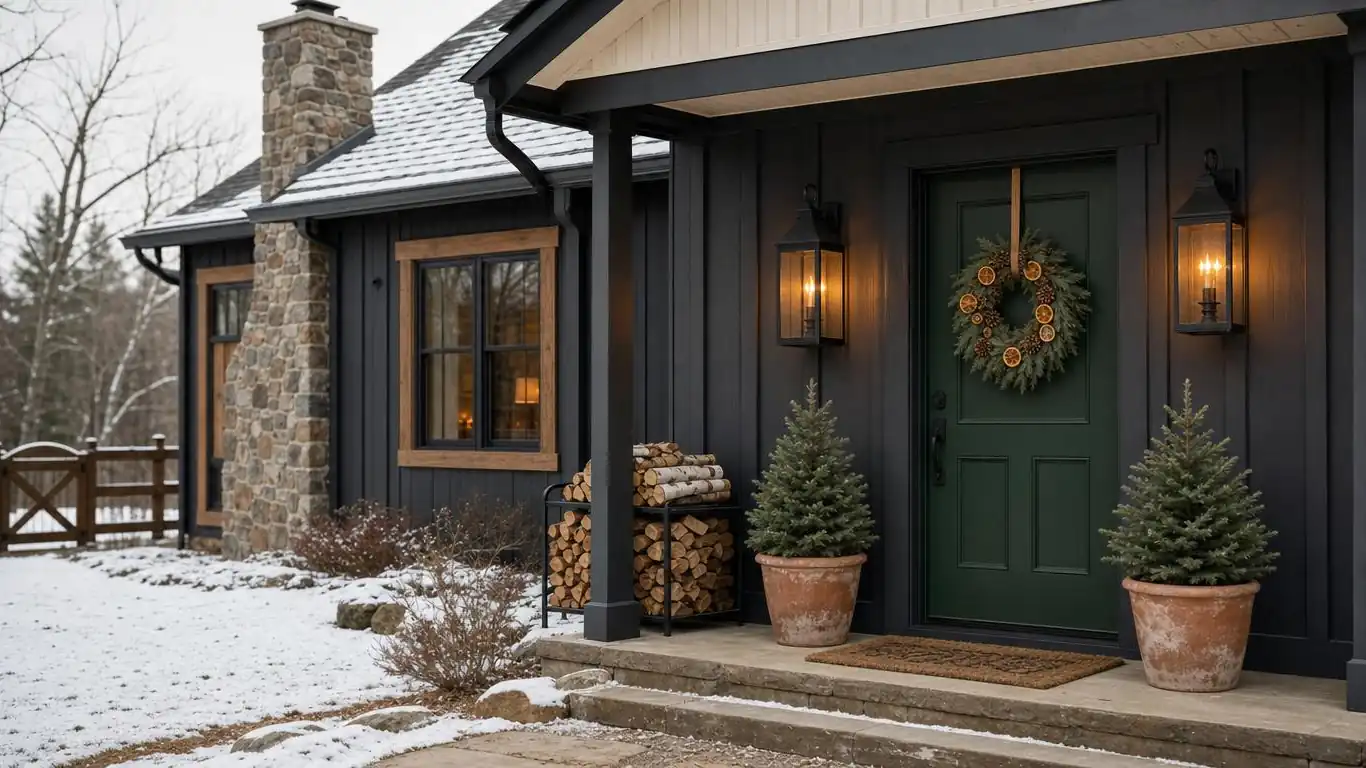
Picture a house at dusk in January. The light is already gone by five o’clock. Most homes turn into dark silhouettes against a grey sky — the beige siding fades, the white trim disappears, and the whole house reads flat. Now picture a different house: deep charcoal board-and-batten siding, a front porch with two oversized black lanterns glowing amber, a wreath of pine and dried orange slices on a nearly-black door, and a neat stack of birch logs beside the entry. That house pulls you toward it. The exterior promises something warm is waiting inside.
That contrast — between winter’s cold grey world and the amber glow of a cabin exterior — is what makes the winter cabin exterior aesthetic so emotionally effective. It doesn’t just look good. It communicates warmth before you’ve even opened the door. Everything in this guide, and across the broader 101homedecor.com library, comes back to this same principle: the exterior is the first room. Explore everything in the Exterior Decor section of the site, or browse the full Outdoor category for related guides.
I worked on a 1940s bungalow last winter whose owners wanted exactly this feeling. Every wall was white with black shutters — clean, but cold. We changed nothing structural. We repainted the siding in deep charcoal, swapped the brass porch sconce for a matte black lantern with Edison bulbs, and added a cedar planter box with evergreen clippings flanking the door. The owners told me later that neighbors they’d never spoken to stopped to compliment the house within two weeks. The look changed the whole block’s mood. And for the interior to match that promise, they later used the ideas in our cozy winter cabin interior aesthetic guide — the exterior and interior are one story.
Bookmark this guide for quick reference.
KEY TAKEAWAY: The winter cabin exterior aesthetic works because dark tones make warm amber light stand out — the contrast creates emotional pull that lighter, neutral facades cannot achieve.
| Quick Takeaways | |
|---|---|
| Siding Color | Dark tones — charcoal, forest green, deep navy — make warm light pop against the facade. |
| Entry Zone | Covered porch, statement lantern, wreath, and stacked wood are the four non-negotiables. |
| Lighting | Warm-white at 2700K or lower only. Cool-white bulbs flatten the entire effect. |
| Landscaping | Evergreens, standing ornamental grasses, and birch log bundles give winter depth. |
| Home Type | Works on log cabins, A-frames, farmhouses, and suburban homes with the right details. |
What Defines the Winter Cabin Exterior Aesthetic
The winter cabin exterior aesthetic is a design approach built on three relationships: dark structure against pale winter sky, warm artificial light against cool natural light, and rough natural materials against refined detail. These three contrasts work together. Remove any one of them and the effect weakens.
Dark siding is the foundation. Charcoal grey, deep forest green, warm black, or natural cedar that has weathered to a silvery tone — these colors absorb the flat grey winter light rather than fighting it. The house reads as grounded, present, and intentional. Board-and-batten is the most iconic siding profile for the look. The vertical lines read tall and structural. Lap siding in dark tones works equally well, especially on farmhouses and older homes. Log cabins have the advantage of natural texture doing the heavy lifting — the horizontal log lines already communicate shelter and warmth. These cozy winter house exterior ideas show how the same dark-and-warm formula translates beyond the cabin look.
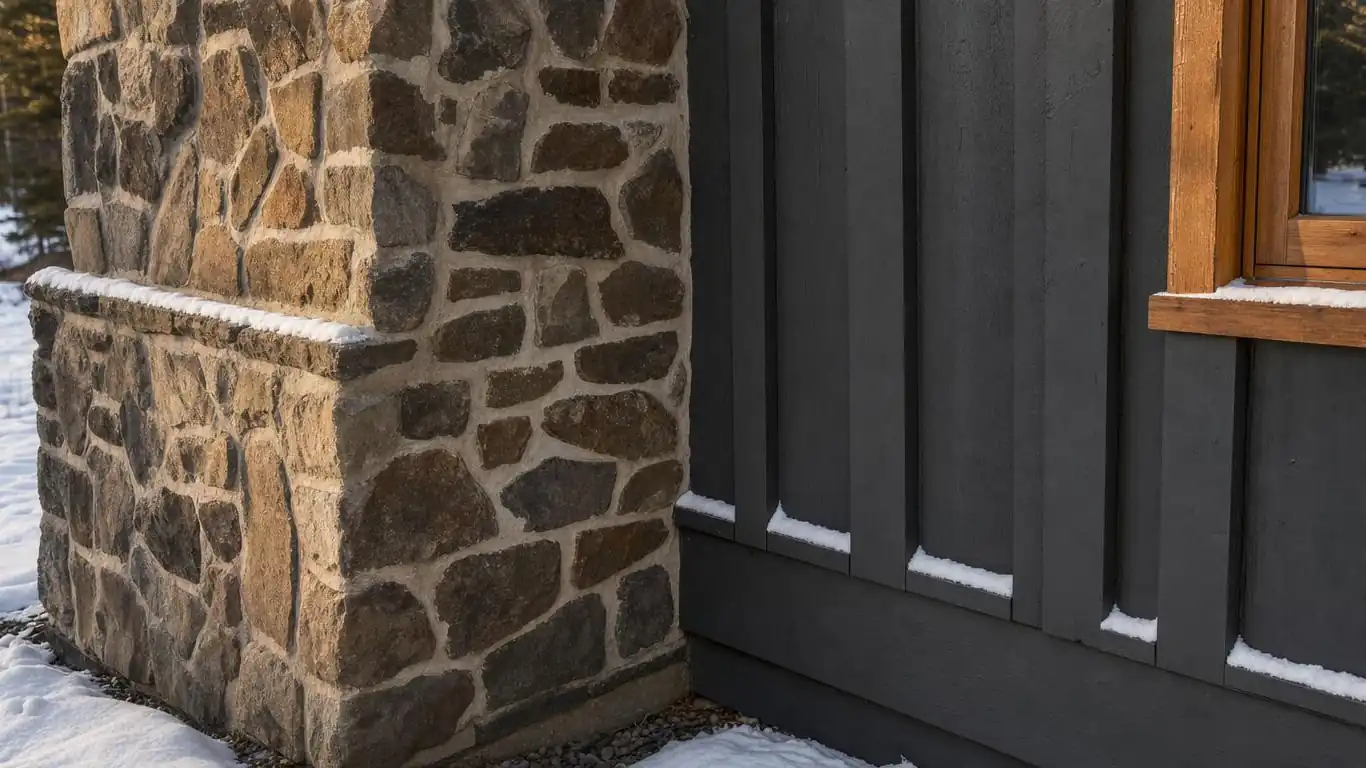
Stone and brick accents add a second material layer. A stone chimney, a brick porch foundation, or stacked fieldstone at the base of exterior columns gives the facade natural weight. Stone is a heat-retaining, long-lasting material that reads as old and solid — exactly the qualities the cabin aesthetic wants to project. Even a few cubic feet of stone at the entry base can shift a modern home’s character meaningfully.
Natural wood is the third material. Cedar shingle accents, a raw timber porch beam, a wood-framed window trim in natural oak — these add warmth the eye craves against dark siding. The combination of dark painted siding with natural wood trim is the most versatile version of the look because it works on new construction without requiring a massive renovation.
Definition-first: The winter cabin exterior aesthetic is a facade approach that combines dark siding tones, warm artificial entry lighting, natural stone or wood accent materials, and seasonal landscaping to create an exterior that reads as sheltering and warm even in cold-weather conditions.
KEY TAKEAWAY: Dark siding, natural stone accents, and raw timber details are the three material pillars of the winter cabin exterior aesthetic — each one strengthens the others when used together.
How to Achieve the Look on Different Home Types
Not every home starts as a log cabin. The winter cabin exterior aesthetic is adaptable, but each home type needs a slightly different approach.
Actual Log Cabins and A-Frames
Log cabins already have the bones. The horizontal log profile communicates warmth and permanence without paint. The job here is mostly about editing and enhancing. Dark stain on existing logs — a deep tobacco brown or aged walnut tone — deepens the richness. Chinking lines in off-white or warm cream add contrast. For A-frames, the steep roofline is the focal point. Dark metal roofing in matte charcoal plays beautifully against snow. Timber-framed porch additions on A-frames create a covered entry zone that the steep profile otherwise lacks.
Modern Farmhouses
Modern farmhouses have board-and-batten siding ready to accept the dark palette. Forest green and deep navy are particularly strong here because they feel fresh rather than merely dark. A covered wrap-around porch is often already part of the architecture. The work is in the details: swapping white trim for natural cedar trim, updating lighting fixtures from brushed nickel to matte black or aged iron, and adding stone column bases at the porch. Check out these barndominium exterior ideas for a modern farmhouse look for a related take on this siding-and-structure combination, or explore ranch style home exterior updates for better curb appeal if your home sits on a single story with a low profile.
Suburban Homes That Want Cabin Character
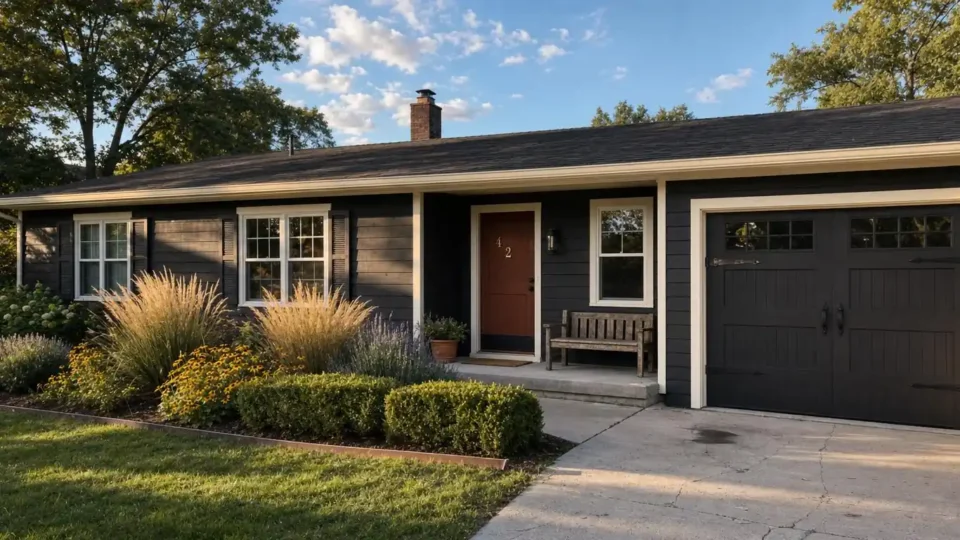
This is the most common situation and the most achievable. A suburban home with standard vinyl or fiber cement siding can carry the winter cabin exterior aesthetic through three changes: paint color, entry lighting, and front porch details. Deep charcoal or warm black paint transforms the silhouette. A matte black lantern-style fixture replaces a standard porch light. A cedar planter box, a pine wreath, and a stacked birch log vignette at the door complete the picture. If the home lacks a covered entry, a simple shed-roof addition over the front door — even just four feet deep — changes the entire character of the facade.
DESIGNER TIP: On suburban homes, apply the dark siding color only to the primary facade if a full repaint feels too committing. A dark painted front and natural cedar or lighter tone on the side walls creates depth and focuses attention on the entry.
KEY TAKEAWAY: Suburban homes achieve the winter cabin exterior aesthetic through paint color, entry lighting upgrades, and a front porch vignette — no structural renovation required.
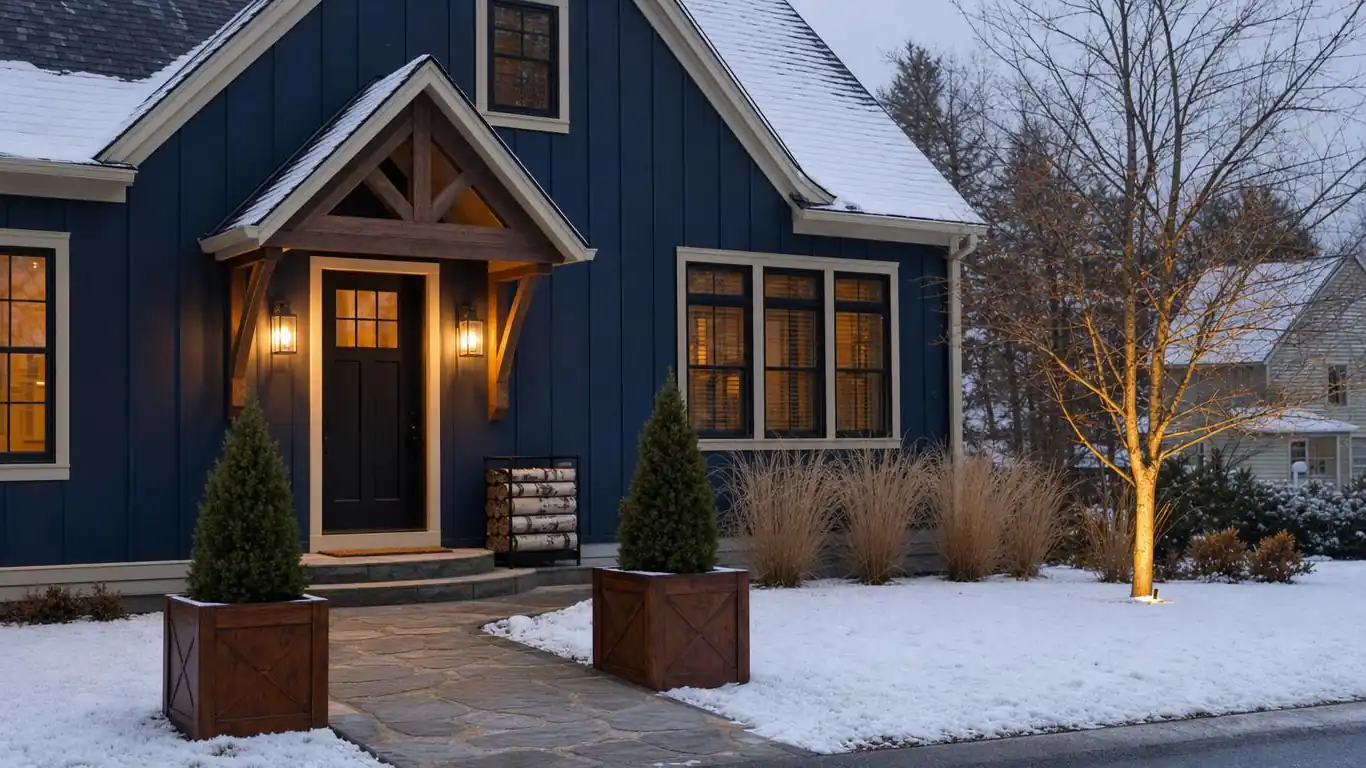
The Entry Zone — Where the Aesthetic Lives or Dies
The front entry is the emotional core of the winter cabin exterior aesthetic. Everything else on the facade — the siding color, the stone accents, the landscaping — sets the stage. The entry is the performance.
A covered porch is the first requirement. A roof overhead creates shelter, frames the door, and gives you a place to hang or position lighting. Without a covered entry, the cabin feeling is hard to achieve. The porch ceiling — even a simple one — should be painted in a warm toned colour, often a soft cream or a warm pine tongue-and-groove. The ceiling color matters because it catches the lantern light and bounces it downward in warm tones.
The front door belongs in a dark, saturated colour with strong character. Matte black, deep forest green, dark navy, or a deep plum-black — these colours work because they hold the line between the dark siding and the glowing interior. Glossy black door paint with a brushed brass handle is the single most common choice in well-executed cabin exteriors. The hardware should be weighty and solid-feeling: an oversized door pull, an aged iron knocker, a ceramic house number in a natural tone.
A winter wreath on the door needs to feel gathered rather than purchased. Pine branches, dried oranges, rosehips, cotton stems, or eucalyptus — materials that read as foraged or seasonal rather than factory-made. A wreath 24 to 30 inches in diameter suits most standard doors. Anything smaller looks underpowered against a dark door.
A stacked wood vignette beside the entry is the detail that signals authentic cabin living. A cord of firewood stacked neatly in a steel or natural wood holder beside the door communicates warmth, readiness, and a life lived close to the seasons. Keep the stack tight and clean — a messy pile reads as neglect rather than character. For modern front porch ideas that refresh your home’s exterior design, or for adding a fully enclosed porch that creates a private retreat, both guides extend this entry zone thinking in complementary directions.
KEY TAKEAWAY: The covered porch, dark door with quality hardware, a gathered wreath, and a stacked wood vignette are the four entry details that convert a plain facade into a winter cabin exterior.
Exterior Lighting Strategy for Winter
Outdoor lighting is where most winter cabin exterior attempts fail. The mistake is nearly always the same: the wrong colour temperature.
Warm white at 2700K is the standard for cabin-aesthetic exterior lighting. At 2700K, bulbs produce amber light that feels close to candlelight — not quite as orange as a fire, but warm enough to glow against dark siding. Drop to 2400K and the glow becomes almost firelight-gold, which works beautifully on porch ceiling pendants. Go above 3000K and the white becomes noticeably cool. At 4000K, the entry looks like a commercial parking lot. Colour temperature is measured in Kelvin — lower numbers are warmer.
Lantern-style wall sconces flanking the front door are the primary light source. Two sconces at roughly 68 to 72 inches from the ground, one on each side of the door, create even fill across the entry. A single overhead pendant at the porch ceiling adds a vertical layer. Choose matte black, aged iron, or oil-rubbed bronze fixtures. Brushed nickel and chrome pull the look toward modern rather than cabin.
Uplighting works strongly for the winter cabin exterior aesthetic. A low-voltage spotlight buried in the soil at the base of a tree — particularly a large conifer or a birch cluster — casts the branches in warm amber and adds dramatic height to the composition. Two to three uplights spread across the front landscape are enough. More than five looks theatrical.
Pathway lighting using low stake-mounted lanterns in matte black keeps the ground plane warm and safe without flooding the landscape with light. Space them 8 to 10 feet apart. Solar stake lanterns have improved enough to be viable, but hardwired low-voltage systems with warm bulbs are more reliable through cold snaps and heavy snow.
String lighting on porch railings or roof edges adds the final layer for winter. Warm white globe strings at 2700K draped along a porch railing or underneath the porch ceiling edge tie the entry to the rest of the exterior composition. For broader cozy winter decor ideas that keep your whole home warm and stylish, lighting strategy is a running theme.
KEY TAKEAWAY: Warm white at 2700K is the correct colour temperature for cabin exterior lighting — lanterns flanking the door, one uplight per tree, and pathway stakes spaced 8 to 10 feet apart create depth without over-brightness.
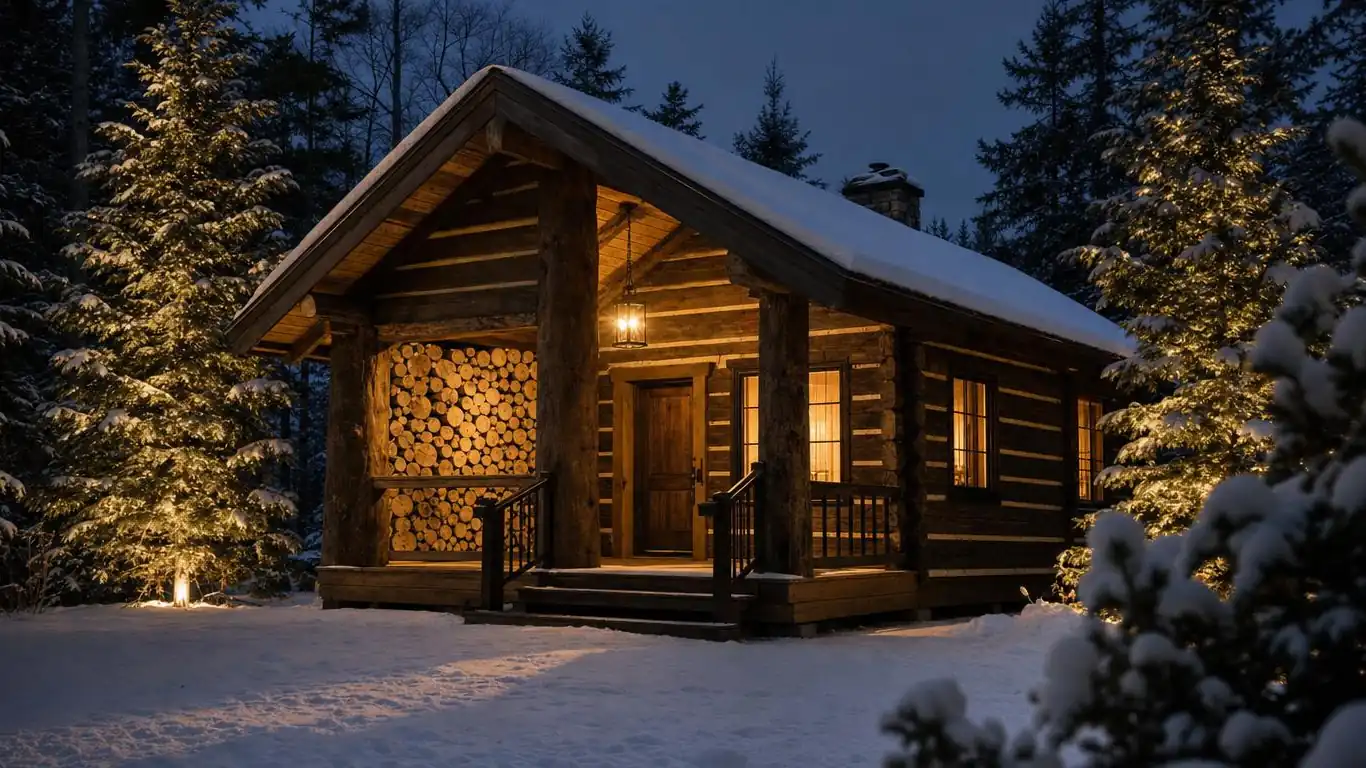
The Dark-Exterior Cabin Colour Palette
The winter cabin exterior aesthetic works within a tight palette of four core tones, each with distinct character.
Charcoal grey is the most versatile. It works on every home type, reads as sophisticated in neighbourhoods where other homes are lighter toned, and ages well in both urban and rural contexts. Farrow & Ball Down Pipe and Benjamin Moore Wrought Iron are the two most commonly referenced shades — both sit at the warm end of the charcoal range, which prevents the house from reading cold or industrial.
Forest green is the most personal and the most surprising. Deep, saturated greens — think bottle green, hunter green, or a dark sage that leans nearly black — feel rooted and organic against snow. They also look alive in a way that grey or black cannot. Forest green exterior siding communicates something about the owner’s relationship to nature in a way the other colours don’t. Farrow & Ball Studio Green and Benjamin Moore Hunter Green are strong references.
Deep navy has a coastal ancestry but reads as cabin-appropriate when paired with natural cedar trim and matte black hardware. Navy siding with unpainted cedar window trim and a black door is a combination that photographs exceptionally well in snow. The blue tone reads cooler in direct sunlight but comes alive at dusk when warm porch lighting warms it.
Warm black is the boldest choice and the one that most fully commits to the dark exterior principle. True warm black — slightly brownish rather than cool blue-black — works because it acts like a void that makes every other element on the facade stand out. The porch light glows brighter against warm black. The wreath colour reads more vivid. The natural wood trim looks richer. Farrow & Ball Off-Black is the standard reference. On smaller homes, warm black is more manageable than on large homes, where it can feel heavy.
Natural cedar left to weather is the fifth option — not paint, but time. Cedar siding weathers to a silvery grey with warm honey undertones in approximately three to five years. The weathered tone sits naturally in the cabin colour family while reading as entirely organic. No paint, no maintenance — just the character of time.
DESIGNER TIP: Pair any dark siding colour with warm cream or aged white trim rather than bright white. Bright white trim against dark siding reads as stark and modern. Warm cream trim reads as aged and considered — closer to a real cabin’s natural material variation.
KEY TAKEAWAY: Charcoal grey, forest green, deep navy, and warm black are the four dark exterior tones that anchor the winter cabin colour palette — each one deepens in character at dusk when warm amber lighting activates the facade.
Landscaping and Natural Materials That Sell the Aesthetic
Landscaping is the frame around the picture. In summer, almost any planting reads as green and alive. In winter, only plants with genuine year-round structure carry the aesthetic.
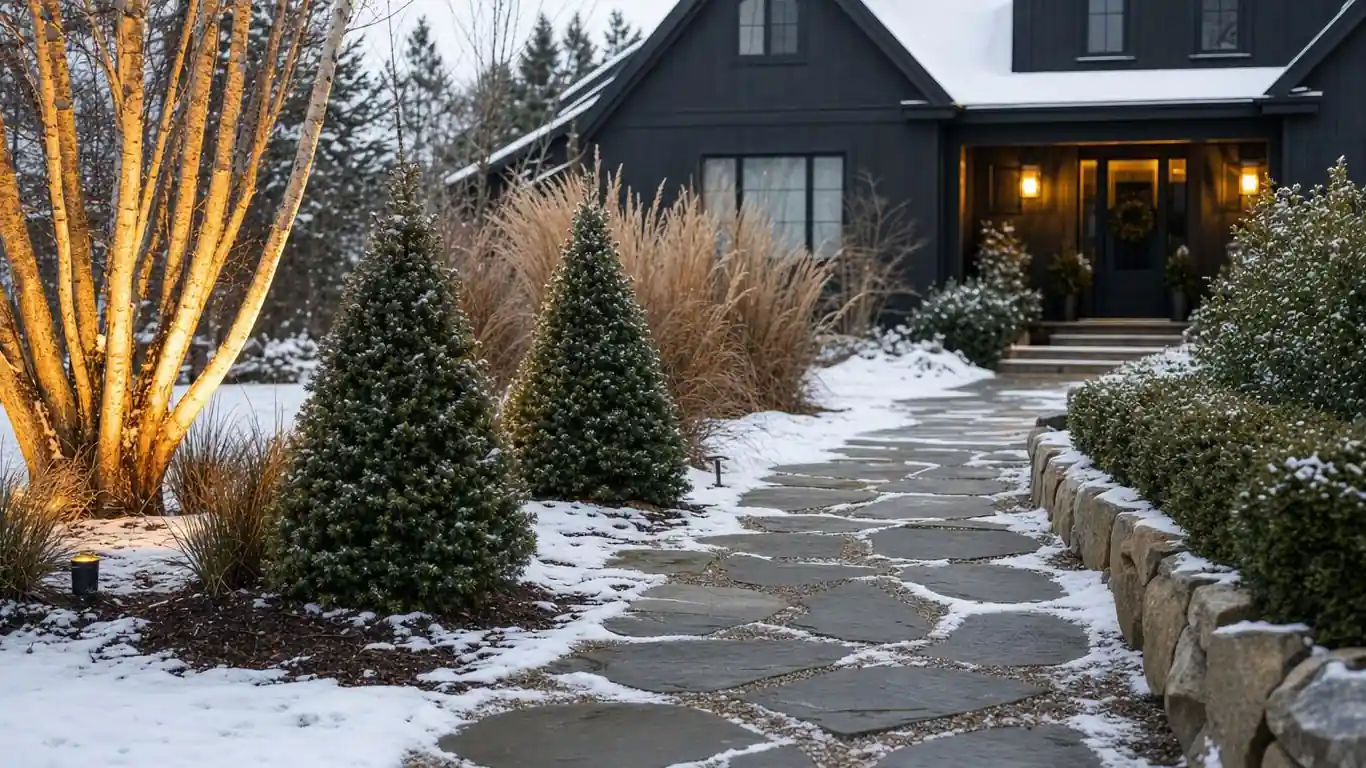
Evergreen shrubs are the backbone of winter cabin landscaping. Boxwood in mounded forms, dwarf Alberta spruce in conical shapes, yew hedging, or arborvitae columns — these maintain form and colour through snow and cold. Place them in odd numbers, grouped close to the foundation and flanking the entry pathway. A pair of cone-shaped evergreens beside the front door is the single most classic winter cabin planting gesture.
Ornamental grasses left standing through winter add movement and texture. Karl Foerster feather reed grass, switchgrass, or muhly grass — left uncut — turn warm bronze and tawny gold in winter. The seed heads catch morning frost. They move in wind. They signal that the garden is alive even when nothing else is visibly growing. Cut them back in early spring, not in autumn.
Birch log bundles are a low-cost landscaping element with outsized effect. A cluster of three to five birch logs, roughly four to five feet tall, placed in a corner of the porch or at the entry pathway edge, adds white vertical accent that contrasts beautifully against dark siding. Birch bark has natural texture — the horizontal lenticel markings read as organic pattern. Bundle them with natural jute twine. Replace any that split or darken after two seasons.
Stone pathways connect the aesthetic from the house to the property edge. Natural flagstone in irregular shapes laid in decomposed granite or compacted gravel — rather than set in concrete — reads as grown rather than installed. Fieldstone borders alongside the path reinforce the natural material story. If budget is a factor, even a single run of stepping stones in natural irregular slate replaces a poured concrete path without difficulty. For ideas on budget-conscious outdoor upgrades, cheap backyard ideas that upgrade your space covers accessible approaches across multiple price points.
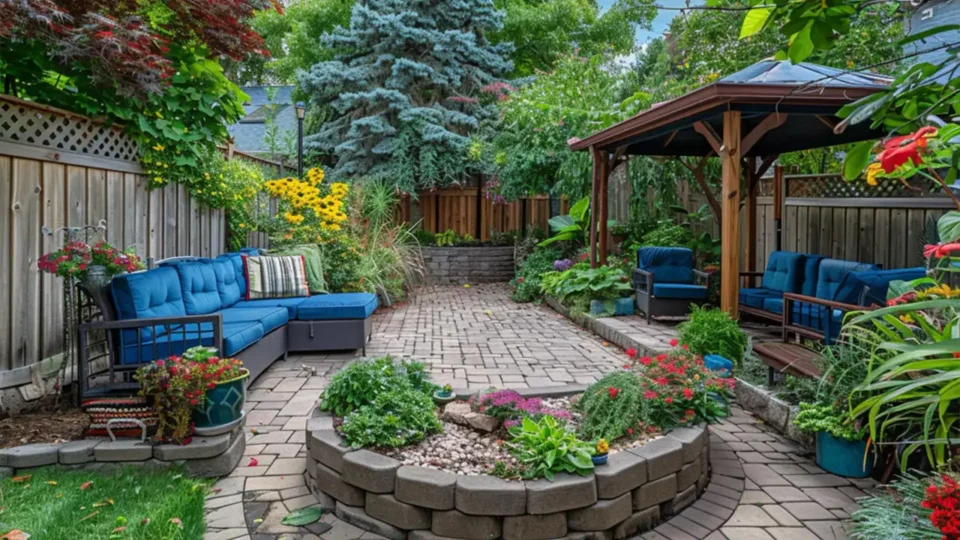
A fire pit area extends the cabin exterior aesthetic beyond the front facade. A simple stone-edged fire pit set on a gravel pad in the side or back yard, surrounded by a pair of Adirondack chairs in a dark stain — forest green or charcoal — completes the picture of a life lived outdoors even in cold months. A dreamy backyard hot tub serves a similar function when privacy and enclosure are priorities, and a privacy fence for backyard seclusion defines the outdoor room that makes both elements feel intentional.
For sloped or challenging sites, modern sloped backyard ideas for landscaping on a hill shows how to work with grade changes rather than against them, and simple outdoor patio ideas for small and large backyards offers grounded starting points regardless of square footage.
KEY TAKEAWAY: Evergreen foundation plantings, standing ornamental grasses, birch log bundles, and natural stone pathways are the four landscaping elements that maintain the winter cabin exterior aesthetic through bare-winter conditions.
What to Avoid
The winter cabin exterior aesthetic has a handful of failure modes that show up repeatedly. Each one drains the warmth the look depends on.
❌ Cool-white or daylight-spectrum exterior lighting → ✅ Replace with 2700K warm white in all lanterns, pathway stakes, and uplights. Cool light turns amber wood tones grey and makes dark siding look cold and institutional.
❌ Bright white trim paired with dark siding → ✅ Use warm cream, aged linen, or natural cedar trim instead. Bright white reads as contemporary contrast — it pulls the look away from cabin and toward modern farmhouse.
❌ Plastic or faux-stone cladding as an accent material → ✅ Use real fieldstone, real brick, or raw timber. Faux stone panels photograph poorly in winter light and lose their effect within five years as the colour fades.
❌ Symmetrical, perfectly matched plantings in identical pots → ✅ Vary pot sizes, plant species, and heights. The cabin aesthetic reads as gathered and organic, not perfectly staged. Matching identical boxwood globes in matching identical white ceramic pots signals a different aesthetic entirely.
❌ Seasonal decorations that overwhelm natural materials → ✅ Let the wreath, the wood stack, and the evergreen plantings do the work. Inflatable lawn decorations, excessive string light coverage, or brightly coloured seasonal flags undercut the restrained, editorial quality the look requires.
KEY TAKEAWAY: Cool-white lighting, bright white trim, faux stone, and over-styled symmetrical planting are the four most common mistakes that flatten the winter cabin exterior aesthetic.
Investment Levels for a Winter Cabin Exterior
The winter cabin exterior aesthetic scales across a wide budget range. The highest-impact changes are not necessarily the most expensive ones.
| Project | Estimated Cost | Impact Level |
|---|---|---|
| Exterior repaint in dark siding colour (professional, average home) | $3,500 – $8,000 | Very High |
| Entry lantern upgrade (pair of matte black wall sconces, installed) | $200 – $600 | High |
| Front door repaint + hardware replacement | $150 – $400 | High |
| Foundation evergreen planting (4–6 shrubs, installed) | $300 – $900 | High |
| Stone pathway (flagstone on gravel base, 25 feet) | $600 – $2,000 | Medium |
| Birch log bundles + entry vignette styling | $40 – $120 | High |
| Low-voltage landscape lighting system (8–10 fixtures) | $400 – $1,200 | High |
| Winter wreath (handcrafted or artisan-sourced) | $40 – $150 | Medium |
The entry lantern, front door, birch vignette, and wreath together cost under $800 in most cases and deliver the majority of the visual impact at the entry zone. The exterior repaint is the single biggest transformation available, but it can be staged across two or three seasons if full-house repainting isn’t immediately feasible.
KEY TAKEAWAY: A dark door repaint, an upgraded entry lantern, birch log bundles, and a handcrafted wreath can collectively transform the entry zone for under $800 — no full repaint required to start.
How the Exterior Connects to the Interior
The winter cabin exterior aesthetic doesn’t end at the front door. The best cabin exteriors work as previews — they promise something, and the interior delivers on that promise.
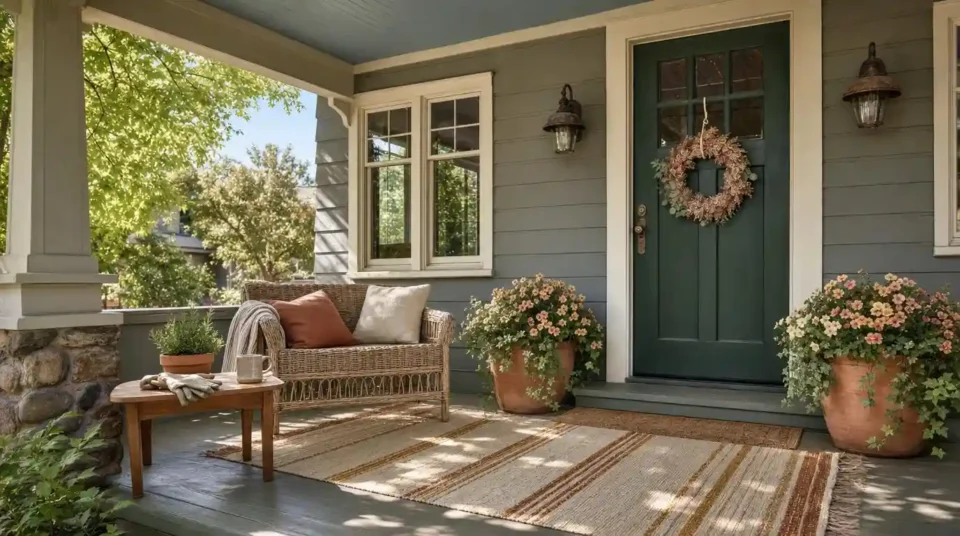
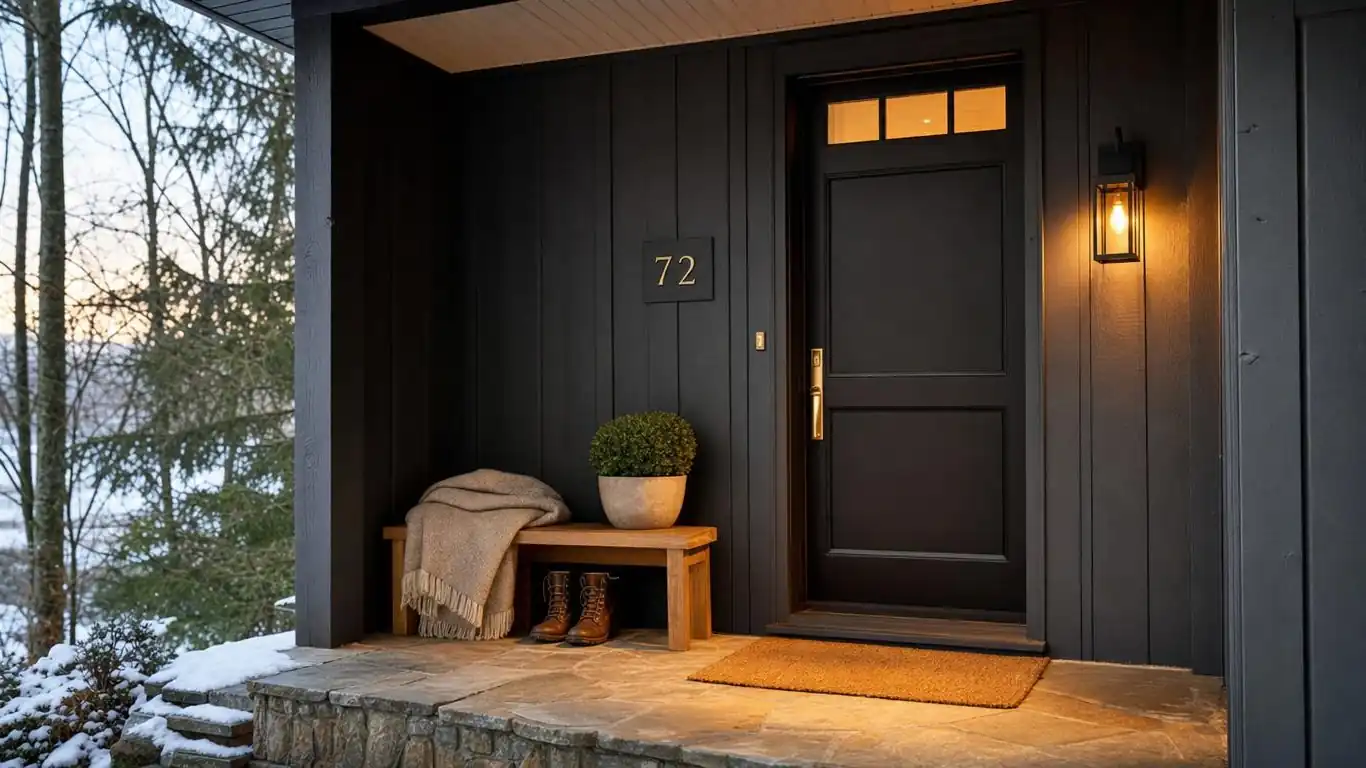
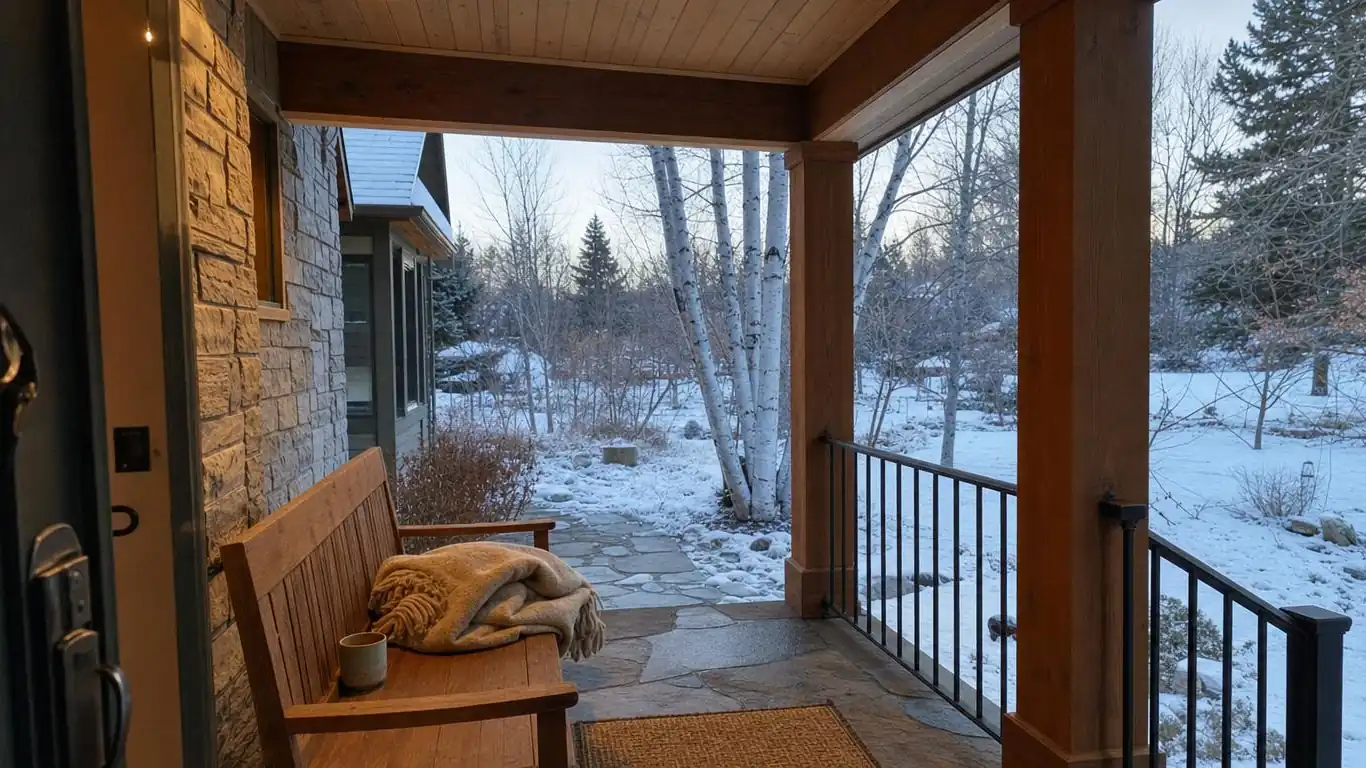
The porch is a transitional zone. It belongs to both spaces. A porch with a weathered jute doormat, a pair of matte black lanterns, potted evergreens in natural terracotta, and a cedar plank bench with a folded wool blanket is already beginning the interior story. By the time a visitor opens the door, they are expecting warmth, natural materials, and a deliberate calm. The interior should meet that expectation immediately — exposed wood beams, a stone fireplace surround, linen or wool textiles, and layered ambient lighting.
The colour palette should carry across the threshold. If the exterior is deep charcoal with natural cedar accents, the interior foyer should introduce the same material conversation — a raw oak console table, a jute runner in natural tones, an aged iron pendant overhead. The transition from outside to inside should feel like the same hand designed both. For cozy farmhouse living room ideas that carry this natural material story indoors, or for a more moody farmhouse living room approach that extends the dark-palette exterior into interior space, both guides sit adjacent to this exterior work.
Small barn house designs for cozy and efficient country living offer a useful reference for how the cabin exterior palette translates into a full interior architecture, and barndominium interior ideas that elevate a floor plan show how the material choices work across larger open-plan spaces.
DESIGNER TIP: Use the same exterior lantern style — matte black, aged iron, or oil-rubbed bronze — inside the home at the entry and first visible room. The continuity of hardware finishes across the threshold signals that the exterior and interior were designed as one.
KEY TAKEAWAY: The porch acts as the transition zone between the winter cabin exterior and interior — keeping the same material palette, hardware finishes, and lighting tone across the threshold creates one coherent living environment.
Seasonal Refreshes — From Winter Into Spring and Back
The winter cabin exterior aesthetic is a full-season attitude, not just a December look. But the specific elements do rotate.
In winter — from late November through February — the aesthetic is at its most fully expressed. The dark siding backdrop is most effective under a grey sky and against snow. The entry wreath is pine-and-foraged-material. The planters hold dwarf conifers, bare birch twigs, and ornamental kale. The stacked wood vignette is at its most practical as well as its most beautiful.
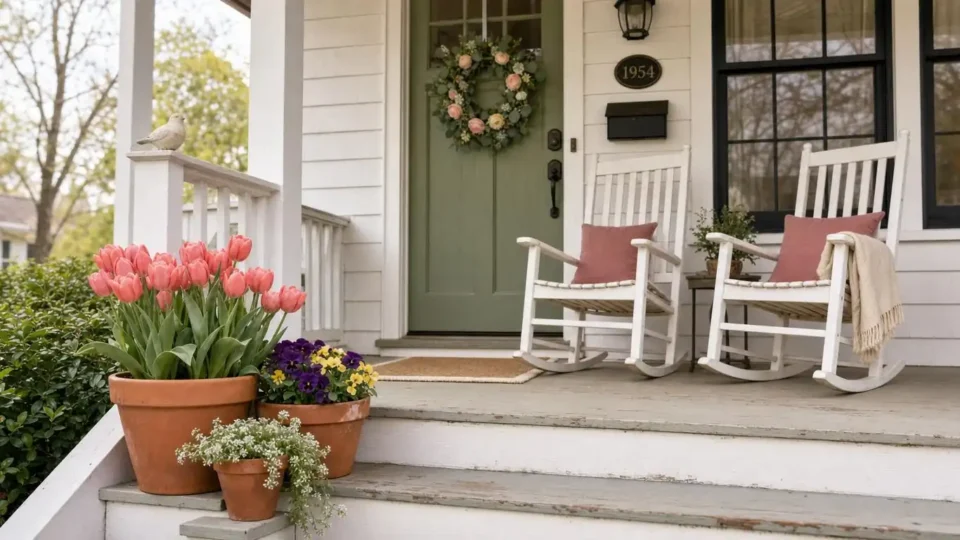
In late winter and early spring — March and April — the seasonal refresh is lighter. The pine wreath gives way to a dried flower or twig wreath. Cedar planter boxes receive a layer of early-season forced bulbs: tulip, hyacinth, or paperwhite. The birch log bundles stay through early spring — they age gracefully. The dark siding and warm lighting remain unchanged year-round because the structural elements don’t shift.
When spring arrives in full, the same entry zone can be refreshed for a completely different season. The stone path that carries snow-dusted character through January is equally beautiful in spring flanked by emerging perennials. The covered porch that held winter lanterns and evergreen pots becomes a spring gathering space. For a full seasonal reset, spring front porch decor ideas that make your home inviting and timeless spring porch decor for a welcoming exterior are the natural next steps — both approach the same porch space from a warmer-season angle.
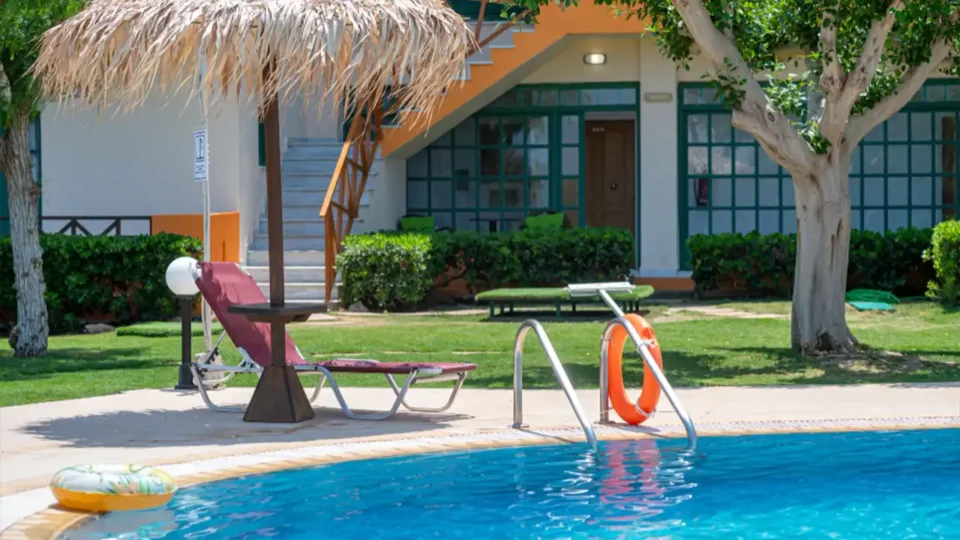
In summer, the dark exterior reads equally strongly. Black or charcoal siding looks especially sharp in summer against green landscaping — the contrast between dark structure and bright green is as effective as the winter contrast between dark structure and pale sky. A modern small pool design integrated into a dark-exterior landscape shows how the aesthetic scales into warmer-season outdoor living without losing its identity.
KEY TAKEAWAY: The structural elements of the winter cabin exterior aesthetic — dark siding, natural stone, matte black hardware — read strongly across all four seasons; only the wreath, planters, and textile accents rotate with the season.
Frequently Asked Questions
Conclusion
The winter cabin exterior aesthetic is one of the few home exterior approaches that gets better when the light is worst. On a grey January afternoon at 4pm, a charcoal siding facade with amber lanterns, a gathered pine wreath, and a tight stack of birch logs becomes the most inviting house on the block. The look works because it leans into what winter is rather than trying to fight it.
Last February, I revisited the bungalow I mentioned at the start of this guide. Three months after the repaint and entry styling, the owners had added uplights to their two front-yard birch trees and replaced the original porch railing with simple black iron. Standing at the street in the early evening, the house glowed. The neighbour across the road had started asking questions about paint colours. That is the nature of the winter cabin exterior aesthetic — it is generous. It lifts not just the home it’s on but the whole street’s sense of what winter could look like. For ongoing inspiration across every exterior and outdoor project, 101homedecor.com keeps the full library current through every season.