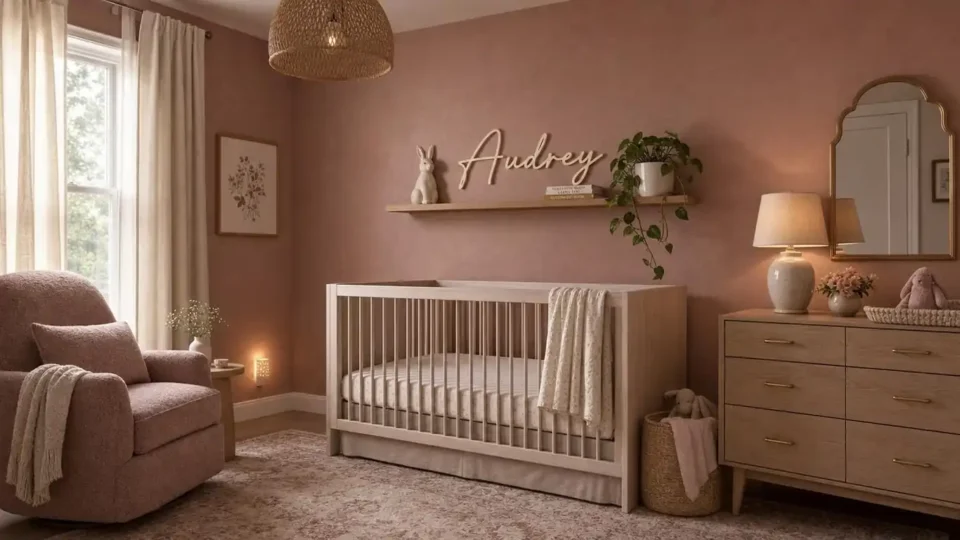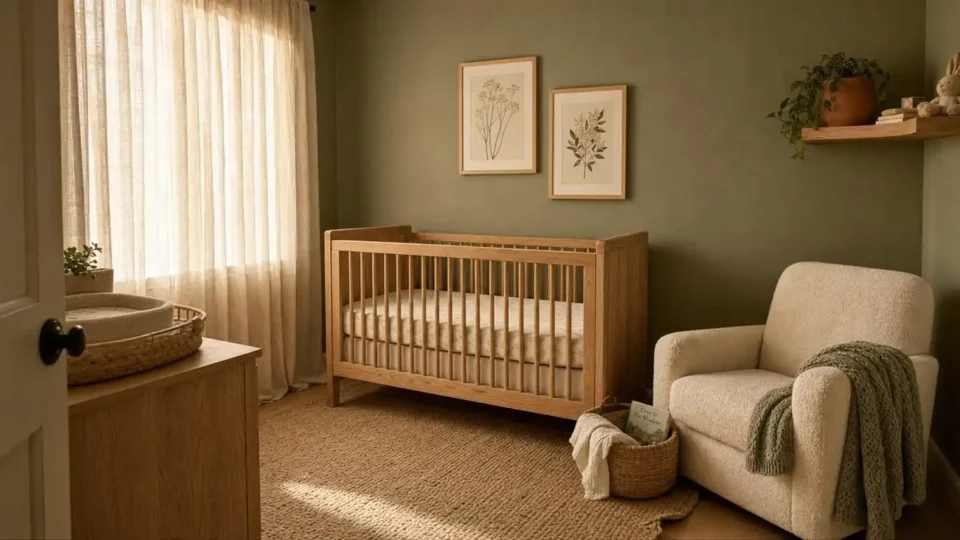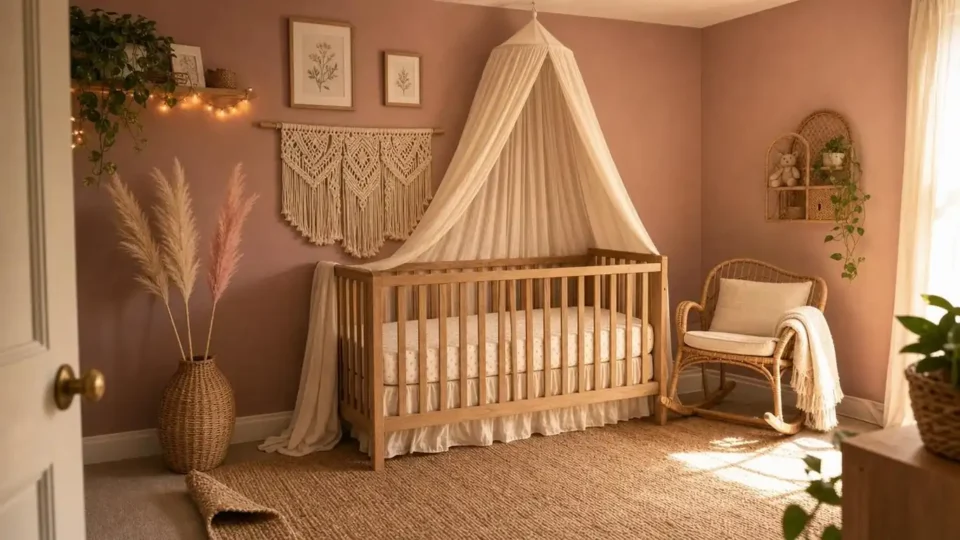
TL;DR
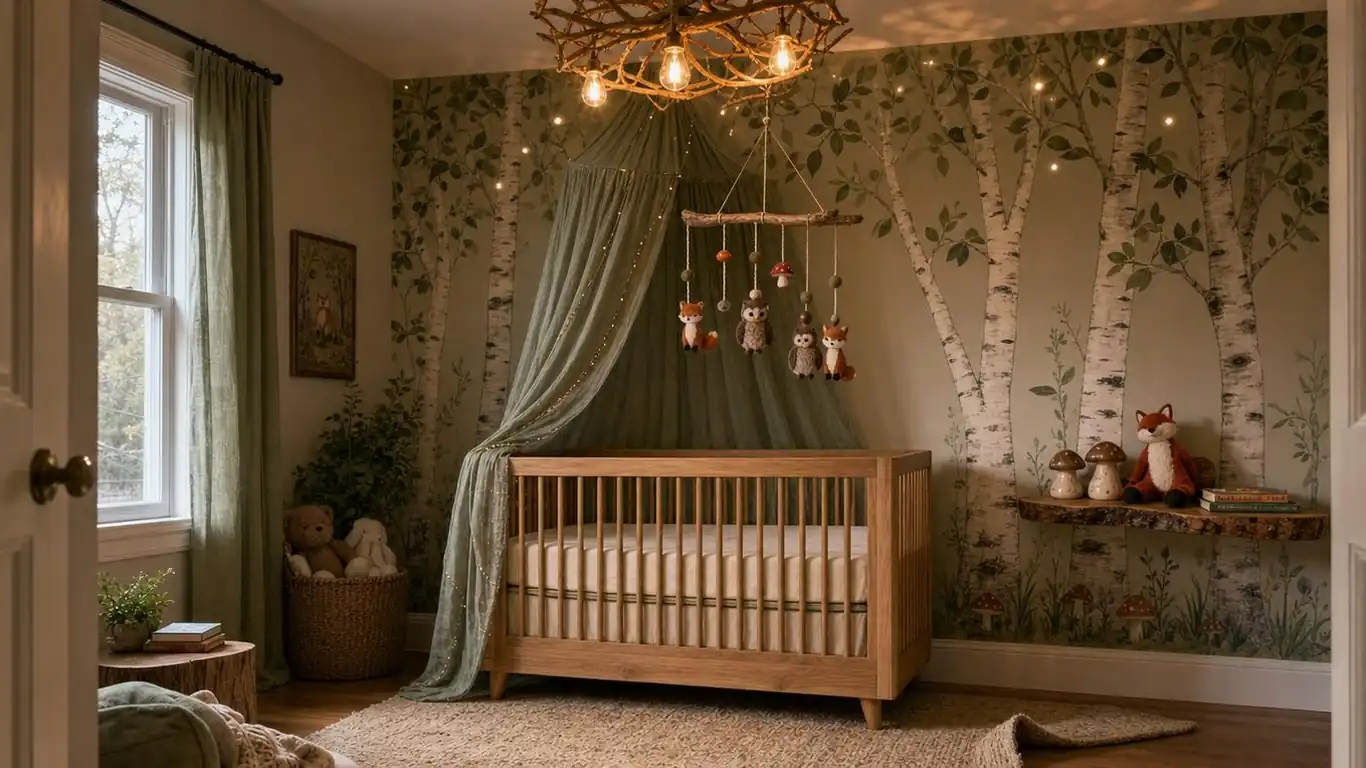
- Theme anchor: Deep forest green, warm mushroom, soft birch white, and muted sage create the palette that makes an enchanted forest nursery feel cohesive and calm.
- Wall treatment: A hand-painted woodland mural or peel-and-stick forest wallpaper is the single biggest impact move in the room.
- Lighting: Layered warm-toned lighting — a branch chandelier, fairy string lights, and a dimmable floor lamp — creates the dappled-light-through-leaves mood.
- Textiles: Linen crib sheets, a jute-trimmed area rug, and a chunky knit throw in soft fern green ground the nature theme in real texture.
- Details: Mushroom plush toys, acorn garlands, woodland animal mobiles, and raw wood shelves carry the story into every corner without turning the room into a cartoon.
Why an Enchanted Forest Nursery Works So Well
Picture a room where the walls feel like the edge of a quiet wood at dusk — soft greens blending into birch bark white, a mobile of felt foxes and owls spinning slowly above the crib, fairy lights glowing like fireflies caught in a canopy of leaves. That is the mood an enchanted forest nursery captures, and it does it without being loud or overwhelming for a newborn.
An enchanted forest nursery works because it balances softness with character. The color palette of deep forest green, warm mushroom brown, and muted sage is naturally calming for babies and genuinely beautiful for parents who have to spend hours in that room. Unlike cartoon-character themes, woodland design grows with the child — a four-year-old still loves a tree mural and fairy lights just as much as a newborn does. Explore our full collection of nursery room inspiration ideas for even more starting points across every style, or browse all our home decor ideas and inspiration to see how forest and nature themes translate across every room in the house.
The best enchanted forest nurseries feel like stepping into a storybook illustration — specific, detailed, and layered with texture. This guide covers 12 ideas that build that world from the walls out. From structural choices like murals and wood paneling to the small finishing details that make a room feel complete, every idea below answers what it is, why it works, and exactly how to do it.
Bookmark this guide for quick reference.
KEY TAKEAWAY: An enchanted forest nursery anchors calm through a nature-inspired palette of forest green, warm wood tones, and muted sage — a theme that stays beautiful well beyond the baby years.
| Quick Takeaways | |
|---|---|
| Palette | Forest green, birch white, warm mushroom, and muted sage work together without effort. |
| Walls | A woodland mural or forest wallpaper is the single highest-impact move. |
| Lighting | Layered warm-toned sources — branch chandelier, fairy lights, floor lamp — mimic dappled canopy light. |
| Textiles | Natural linen, jute, and chunky knit wool in earthy greens ground the theme in real texture. |
| Details | Mushroom plush, acorn garlands, and woodland mobiles carry the story without tipping into cartoon. |
12 Enchanted Forest Nursery Ideas That Build a Real Storybook Room
1. Paint a Full Woodland Mural on the Focal Wall
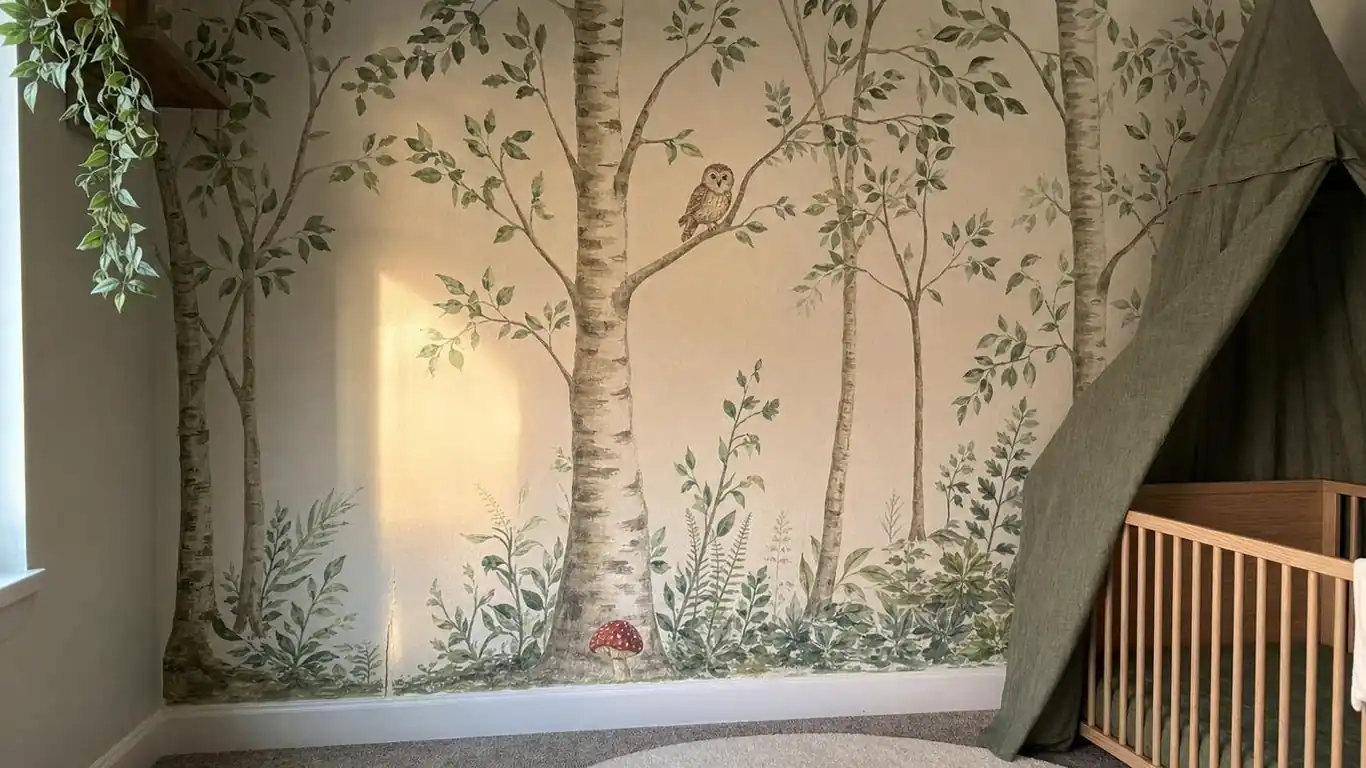
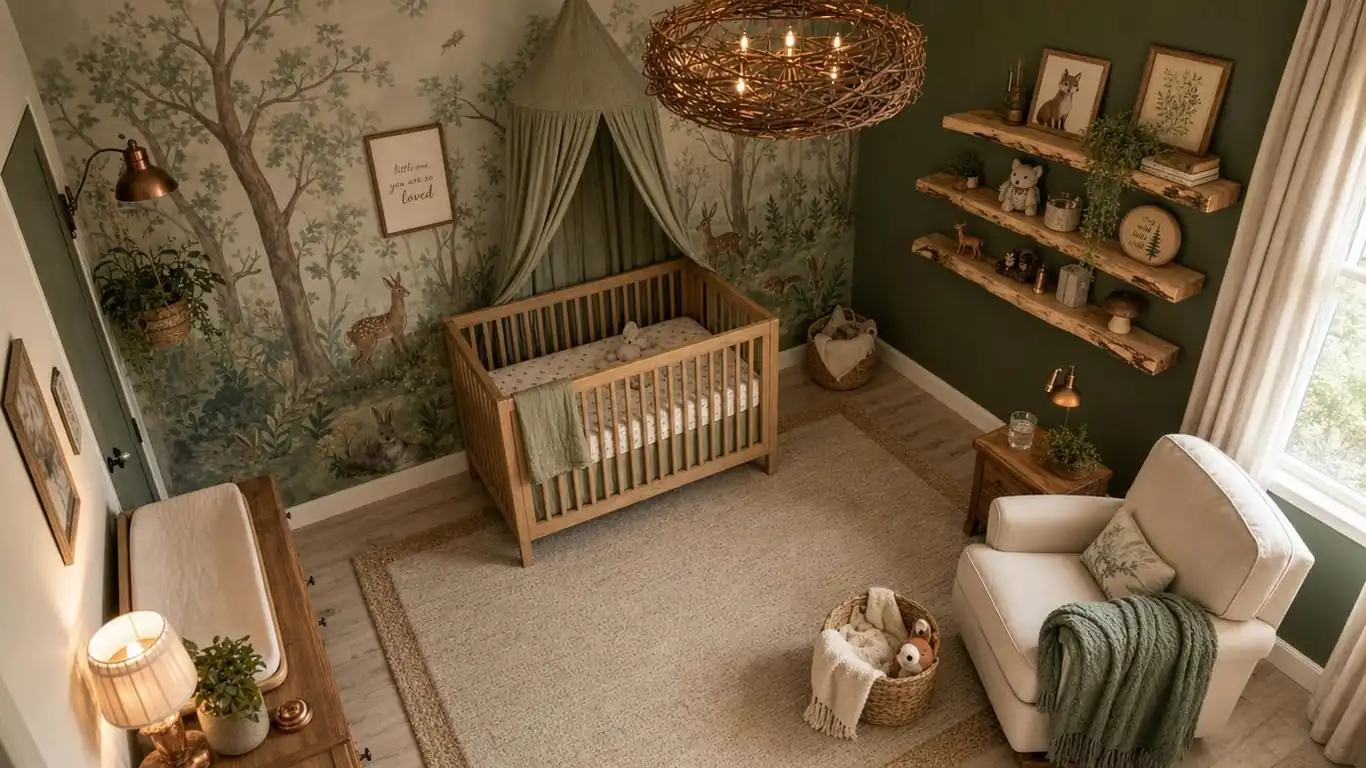
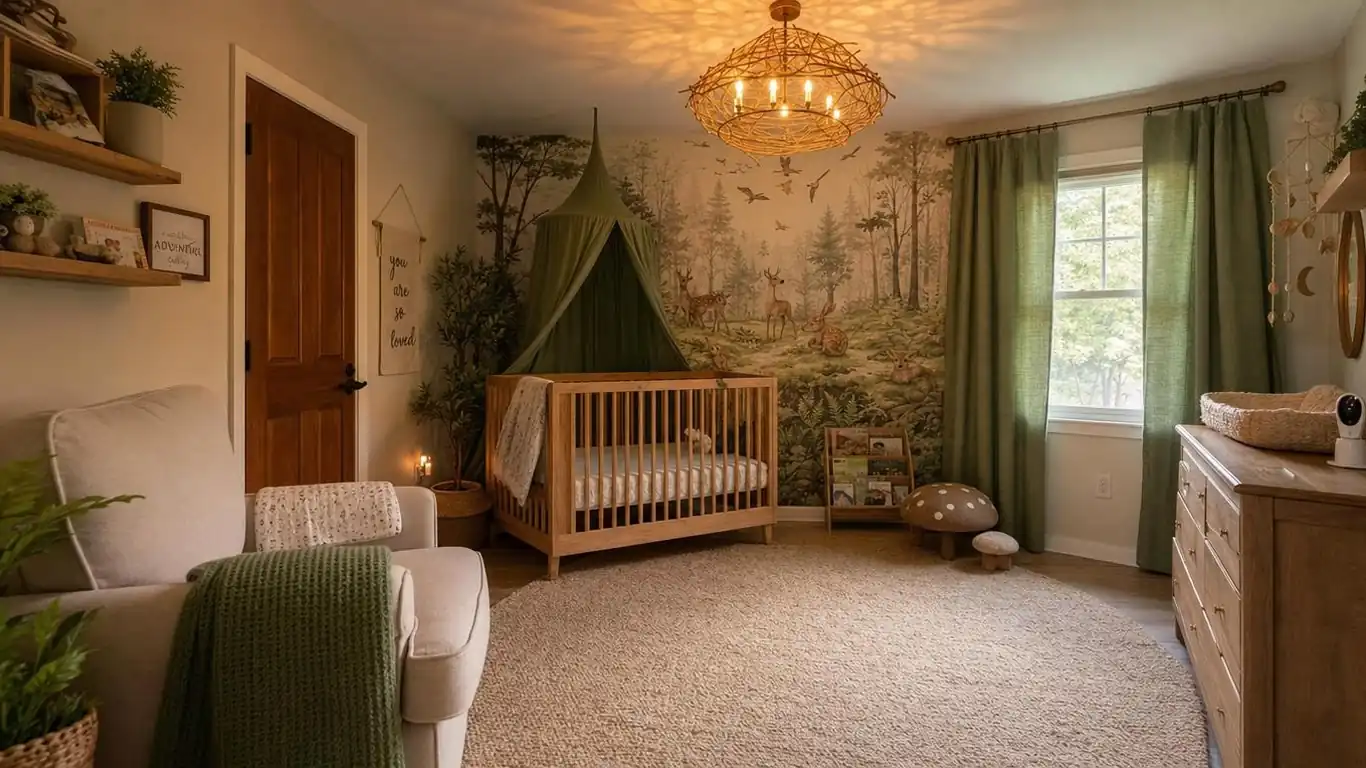
A hand-painted woodland mural turns one wall into the visual anchor the entire room builds around. The best murals for an enchanted forest nursery show tall birch trees with slim trunks in warm cream and grey, leaves painted in overlapping layers of sage green, forest green, and soft olive, and small woodland details tucked in — a mushroom at the base of a tree, a bird perched on a branch, firefly dots near the ceiling. Hire a local mural artist for $300–$700, or use a peel-and-stick forest mural wallpaper for a renter-friendly version at $80–$200. Either way, paint the remaining three walls in soft birch white or warm greige to let the mural breathe.
2. Hang a Branch Chandelier or Twig Pendant Light
Lighting is the mood engine of any enchanted forest nursery. A branch chandelier — made from real driftwood, a resin cast, or a sculptural rattan form — does two things: it fills the ceiling plane and eliminates the sterile overhead fixture that fights the theme. Driftwood branch chandeliers run $150–$400. Pair it with Edison-style bulbs at 2200K for warm amber glow that feels like late-afternoon forest light. The same warm-amber layered-lighting approach used in cozy winter cabin interior aesthetics translates beautifully into a nursery — dimmable warmth at bedtime, brighter fill during feeds. Always add a dimmer switch — a nursery that goes from 2200K warmth at bedtime to slightly brighter during daytime feeds makes the whole space work harder for you.
DESIGNER TIP: Mount the branch chandelier at least 7 feet above the floor, even in a lower-ceilinged room — it draws the eye upward and adds perceived height to the space.
3. Layer Fairy String Lights Along the Ceiling or Canopy
Fairy string lights are not decoration — in an enchanted forest nursery, they are atmosphere. Warm white LED fairy lights draped along the ceiling perimeter or woven through a fabric canopy above the crib create the firefly-in-the-forest effect that photographs beautifully and soothes babies during night feeds. Use lights rated at 2700K or warmer. Copper wire strands disappear into the canopy fabric far better than plastic-coated wire. Budget $20–$50 for a quality set. Wire them through a simple timer so they come on automatically at dusk.
4. Build a Fabric Canopy Over the Crib
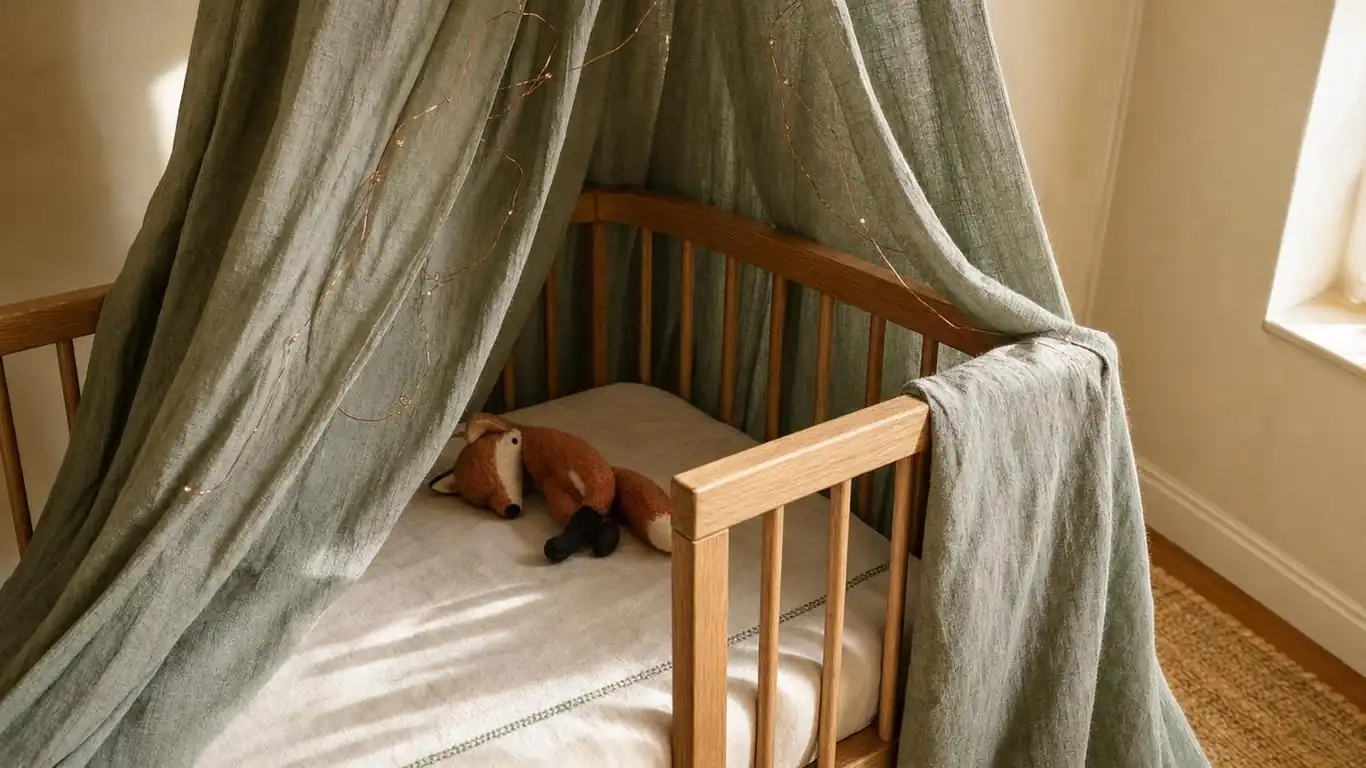
A fabric canopy above the crib is the structural focal point that makes an enchanted forest nursery look magazine-ready. Sheer linen or voile in soft sage green or warm cream, draped from a ceiling hook or a timber dowel rod mounted on the wall, creates a cocoon-like reading nook effect for the baby. The canopy frames the crib visually, adds softness to the ceiling plane, and anchors the woodland theme without requiring a single woodland print on the textile itself. A DIY canopy costs $30–$60 in fabric and hardware. For added depth, layer copper wire fairy lights through the canopy so the two elements work together. The moody boho bedroom uses a similar canopy technique that translates directly into nursery design.
5. Install a Moss Wall Panel or Preserved Greenery Frame
A moss wall panel brings literal nature into the enchanted forest nursery without maintenance or mess. Preserved reindeer moss panels — typically sold in 12×12 inch tiles that mount flat against the wall — hold their color and texture for years without water or sunlight. Arrange a cluster of panels in varied sizes above the dresser or beside the mural wall for a layered, textural effect. Natural green, dark forest green, and chartreuse moss in one arrangement give the eye multiple tones to land on. A set of four 12×12 moss tiles runs $60–$120. This idea pairs exceptionally well with raw wood shelves mounted nearby. For outdoor-meets-indoor inspiration, the secret garden ideas collection has several approaches to preserved greenery that work equally well indoors.
6. Choose a Natural Wood Crib With Spindle or Slatted Detail
The crib is the room’s anchor piece. An enchanted forest nursery benefits most from a crib in warm natural oak or blonde ash wood — the grain and warmth of real wood adds an organic quality that white painted cribs lack. Slatted designs with simple spindles feel light and airy. A convertible crib in warm oak runs $350–$800 and converts to a toddler bed, extending the investment. Pair the natural wood crib with linen crib sheets in soft sage green or warm cream — cotton sateen feels too formal; raw cotton or linen fits the woodland character perfectly. The modern boy nursery decor ideas guide has several natural wood crib options worth considering for this look.
7. Mount Raw Wood Floating Shelves for Display
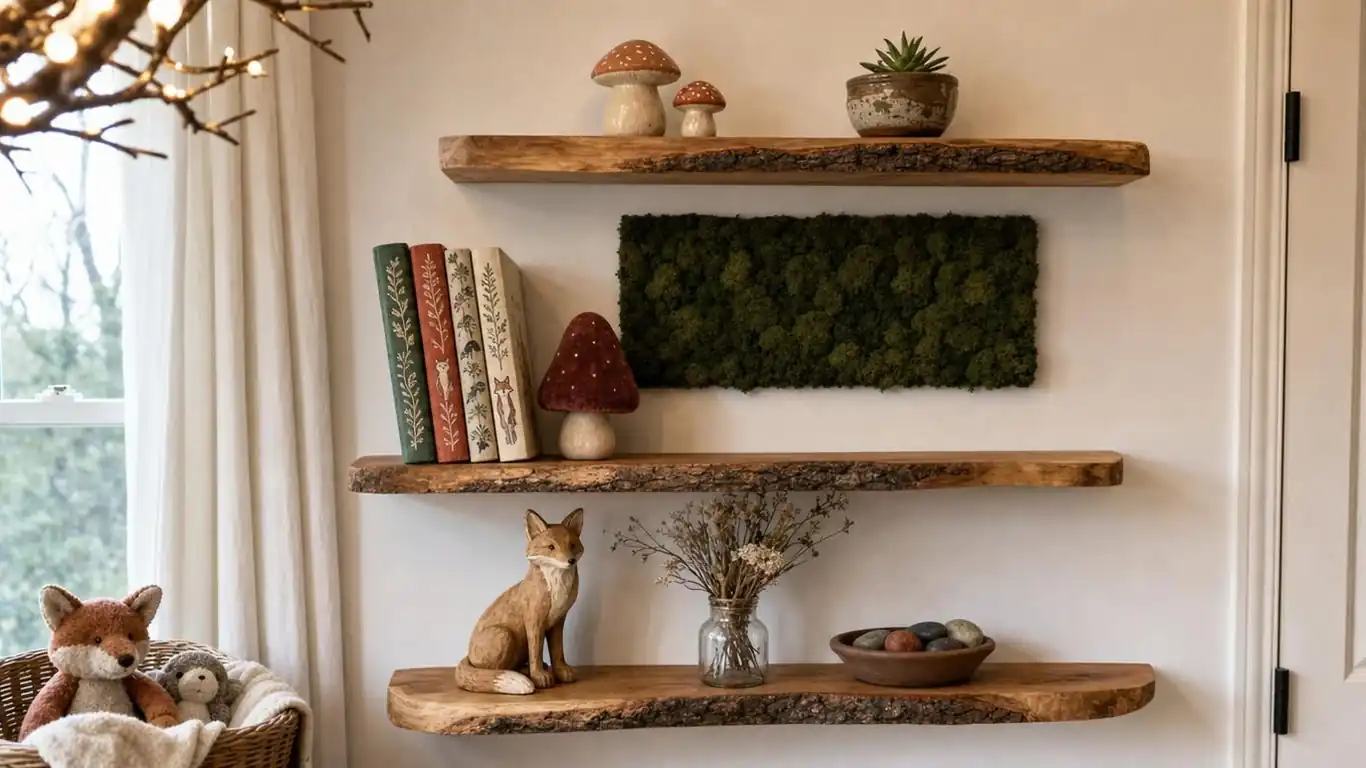
Floating shelves in live-edge oak or raw elm — with the natural bark edge left intact — add an organic sculptural quality to the wall that manufactured shelves never match. Mount three shelves in a staggered arrangement above the dresser or along the mural wall. Use them to display woodland animal figurines in ceramic or hand-carved wood, a row of soft mushroom plush toys, one or two potted succulents, and a small stack of children’s books with illustrated spines facing out. The bark-edged shelf is the design detail that tells visitors the room was thought through, not assembled from a single store’s nursery collection. Live-edge floating shelves run $60–$180 each depending on size.
DESIGNER TIP: Keep shelf displays at odd numbers — three objects, five objects — and vary the height of each item so the eye travels naturally across the arrangement.
8. Add a Woodland Animal Mobile Above the Crib
A handcrafted woodland animal mobile is the ceiling’s focal detail when the fairy lights are off and the room is in daylight. The best mobiles for an enchanted forest nursery use felt foxes, owls, deer, and mushrooms suspended from a driftwood branch or a birch dowel rod on natural linen cord. These are not the spinning plastic type — they hang still, and gentle air movement creates soft, slow rotation that babies find calming. Etsy makers produce beautiful handcrafted woodland mobiles at $60–$150. Hang the mobile at least 30 inches above the crib mattress at its lowest setting, and ensure it is attached to the ceiling with a proper stud anchor, not just a hook in drywall.
9. Use Forest Green or Sage Green on an Accent Wall
Not every enchanted forest nursery needs a full mural — sometimes a single deeply painted wall in forest green or sage green does everything the theme needs. Benjamin Moore’s “Salamander” (a deep, rich forest green) or Farrow & Ball’s “Mizzle” (a soft, mossy sage-green-grey) on one wall, with the remaining three walls in warm cream or birch white, creates an immediate woodland feel at a fraction of the mural cost. The painted accent wall costs $50–$100 in paint and supplies. It works especially well behind the crib as a painted backdrop that frames the natural wood crib and canopy without competing with either. The earthy modern bedroom ideas guide shows how the same deep-green accent wall technique translates into calm, grounded spaces across room types.
10. Layer Natural Textiles — Linen, Jute, and Knit Wool
Texture is what separates a themed room from a genuinely designed one. An enchanted forest nursery needs at least three textile layers: a low-pile jute or natural wool area rug in warm oat or mushroom under the crib and feeding chair, a linen curtain in soft sage green or natural ecru at the window, and a chunky knit throw in warm fern green draped over the glider or rocking chair. These three layers — rug, curtain, throw — create the textural depth that makes the room feel magazine-styled rather than store-bought. Natural linen curtains run $80–$160 a panel. A quality jute-blend nursery rug in a 5×7 foot size runs $120–$250. The cozy aesthetic small bedroom ideas post covers layering linen, jute, and wool textures in a way that applies directly to nursery spaces, and the cozy farmhouse living room ideas guide shows how natural material layering creates warmth across larger rooms too.
11. Style a Mushroom and Toadstool Accent Cluster
Mushrooms are the signature detail of enchanted forest design — they signal the theme without spelling it out the way a “woodland animals” banner would. A mushroom accent cluster on a shelf or floor corner works best when it mixes scales: one large ceramic mushroom sculpture at 8–10 inches tall, two or three velvet mushroom plush toys in red, cream, and forest green, and a small resin toadstool night light at 4 inches. The combination of hard ceramic, soft velvet, and warm light creates a textural group that reads as styled rather than collected. The mushroom toadstool night light — a small glowing resin piece at $20–$40 — doubles as a gentle nightlight for feeds. Find these through Etsy, H&M Home, or West Elm’s seasonal children’s collection.
DESIGNER TIP: The mushroom accent cluster works best placed at the corner of a live-edge shelf grouping — it anchors the display and feels like something discovered, not arranged.
12. Hang a Forest-Themed Gallery Wall With Natural Frames
A gallery wall in natural frames pulls the enchanted forest nursery together in the quieter corners of the room — above the dresser, on the wall beside the door, or on the fourth wall that the mural doesn’t reach. Choose frames in raw birch, light ash, or thin matte black — all three work with the woodland palette. Fill them with botanical prints (pressed fern illustrations, mushroom watercolors, woodland map prints), one or two fabric-panel art pieces in forest green linen, and a single hand-lettered name print in warm ink. A five to seven piece gallery wall costs $80–$200 in frames and prints combined. Space frames 2–3 inches apart for a collected, intentional feel. For gallery wall spacing and arrangement ideas, the spring wall art ideas post covers the exact placement technique that works for any themed nursery wall. If you are refreshing an existing nursery rather than starting fresh, the simple small bedroom refresh ideas guide shows how a targeted gallery wall addition can transform a room without touching the furniture.
KEY TAKEAWAY: An enchanted forest nursery builds its character through layered details — murals, canopies, moss panels, woodland mobiles, and natural textiles — each adding depth without competing for attention.
How Do These Elements Fit Together as One Room?
The enchanted forest nursery works best when you treat it as a story told in layers — structural elements first, then textiles, then small details. The mural or painted accent wall is the backdrop. The natural wood crib and branch chandelier are the furniture-scale anchors. The canopy, curtains, and area rug bring in the textile softness. The mobile, moss panel, and mushroom cluster are the finishing chapters.
Color consistency holds all of it together. Keep the palette to: forest green, warm mushroom brown, birch white, muted sage, and warm cream. Introduce one secondary accent — copper from the fairy lights and branch chandelier, or antique brass from hardware and frames — and repeat it at least three times across the room. A color or finish that appears only once reads as an accident; three times reads as a choice. The minimalist bedroom ideas 2026 post covers this exact principle of palette repetition and intentional accent placement. If you are drawn to the greener end of the woodland palette, the olive green bedroom ideas post shows how the warm, muted end of the green family creates calm rather than energy in a sleep space.
Lighting deserves its own layer of planning. The branch chandelier handles ambient light. The fairy lights handle atmosphere. Add a dimmable floor lamp or a swing-arm sconce beside the feeding chair for task light during night feeds — your eyes will thank you. The full layered-lighting approach used in boho coastal bedroom ideas translates cleanly into nursery spaces that need flexibility across the day and night. For budget-conscious nursery builds, the principles in how to decorate a small bedroom on a budget apply directly — many enchanted forest elements are high-impact and low cost.
KEY TAKEAWAY: Color consistency and lighting layers are the two structural decisions that hold an enchanted forest nursery together as a single cohesive room rather than a collection of separate ideas.
Where People Go Off Track With a Forest Nursery Theme
❌ Going too literal with cartoon woodland → ✅ Choose illustrated art prints and hand-crafted details over licensed character products — the room reads as designed, not themed.
❌ Using cold or bright greens → ✅ Stick to muted, warm-toned greens — sage, forest, olive, fern. Cool neon or lime greens break the calm palette instantly.
❌ Hanging the mobile too low → ✅ Keep the lowest point of the mobile at least 30 inches above the crib mattress at its lowest setting. Safety and aesthetics agree here.
❌ Skipping the dimmer switch → ✅ Install a dimmer on every overhead light in the nursery. Flat bright light at 2 a.m. is brutal — for baby and for you.
KEY TAKEAWAY: The most common enchanted forest nursery mistake is going too literally themed — cartoon woodland products and bright greens both undercut the serene, story-like quality that makes this style genuinely beautiful.
What You’ll Spend
A complete enchanted forest nursery is achievable at several investment levels. The core ideas scale well across budgets.
| Project | Estimated Cost | Impact Level |
|---|---|---|
| Woodland mural (peel-and-stick wallpaper) | $80–$200 | Very High |
| Branch chandelier with dimmer | $150–$450 | High |
| Natural oak crib (convertible) | $350–$800 | High |
| Fabric canopy + fairy lights | $50–$110 | High |
| Live-edge floating shelves (3) | $180–$540 | Medium |
| Moss wall panels (4 tiles) | $60–$120 | Medium |
| Jute area rug (5×7 ft) | $120–$250 | High |
| Woodland mobile + accent details | $80–$200 | Medium |
KEY TAKEAWAY: The highest-impact moves in an enchanted forest nursery — the mural wallpaper, canopy, and fairy lights — together cost under $350, making the theme very achievable at a modest budget.
Special Considerations for Tricky Nursery Rooms
Small nurseries under 100 square feet benefit from the vertical emphasis built into this theme. Tall mural trees that reach the ceiling, a branch chandelier that draws the eye upward, and floating shelves mounted high all make the room feel taller and less boxed-in. Keep the area rug to a 4×6 foot size in small rooms — a 5×7 rug in a tiny nursery eats too much visual floor space. The very small bedroom ideas guide covers vertical design principles that apply directly to small nursery layouts.
Shared nurseries and sibling rooms call for a palette that works for more than one child. The enchanted forest palette — green, warm wood, mushroom brown — reads as gender-neutral and age-spanning. A five-year-old and a newborn can share a room where the mural is forest trees and the textiles are sage linen and warm cream without either child feeling the room is “for the other one.” The small bedroom ideas for 2 sisters post has smart shared-room layout thinking worth reading before planning a dual-occupancy nursery.
Renter-friendly enchanted forest nurseries are entirely achievable. The peel-and-stick mural wallpaper, removable adhesive hooks for the canopy, freestanding shelving, and floor-resting fairy light installations leave zero permanent marks. Every element in this guide has a renter-friendly version. The smart small bedroom layouts guide covers non-permanent fixture approaches that translate directly into nursery design for renters.
KEY TAKEAWAY: Small rooms, shared rooms, and rental spaces all work for an enchanted forest nursery — the vertical emphasis, neutral palette, and largely removable elements make it one of the most adaptable nursery themes available.
Frequently Asked Questions
Conclusion
An enchanted forest nursery is one of the few baby room themes that earns its place on both counts — beautiful enough for parents to genuinely love spending time there, and calm enough for a baby to sleep well in. The palette does the heavy lifting: forest green, warm mushroom, birch white, and muted sage together create a room that feels like being inside a quiet, sun-lit wood rather than inside a decorator’s color scheme.
I worked on a similar project in late 2024 for a client in a 110-square-foot nursery with north-facing light and walls that had been painted stark white for years. We added a peel-and-stick birch tree mural on the focal wall, hung a rattan branch chandelier with a dimmer, draped a sage linen canopy over the natural oak crib, and added three live-edge shelves above the dresser with a small mushroom cluster and a handmade felt mobile. The whole transformation cost under $900. The client told me three months after the baby arrived that she actually looked forward to the 3 a.m. feeds because the room felt so calm and beautiful with just the fairy lights and the dimmed chandelier on. That is what a well-executed enchanted forest nursery does — it makes a hard season feel a little more magical. Browse the full range of nursery decor and inspiration at 101 Home Decor to find even more ideas for building a room your family will love.