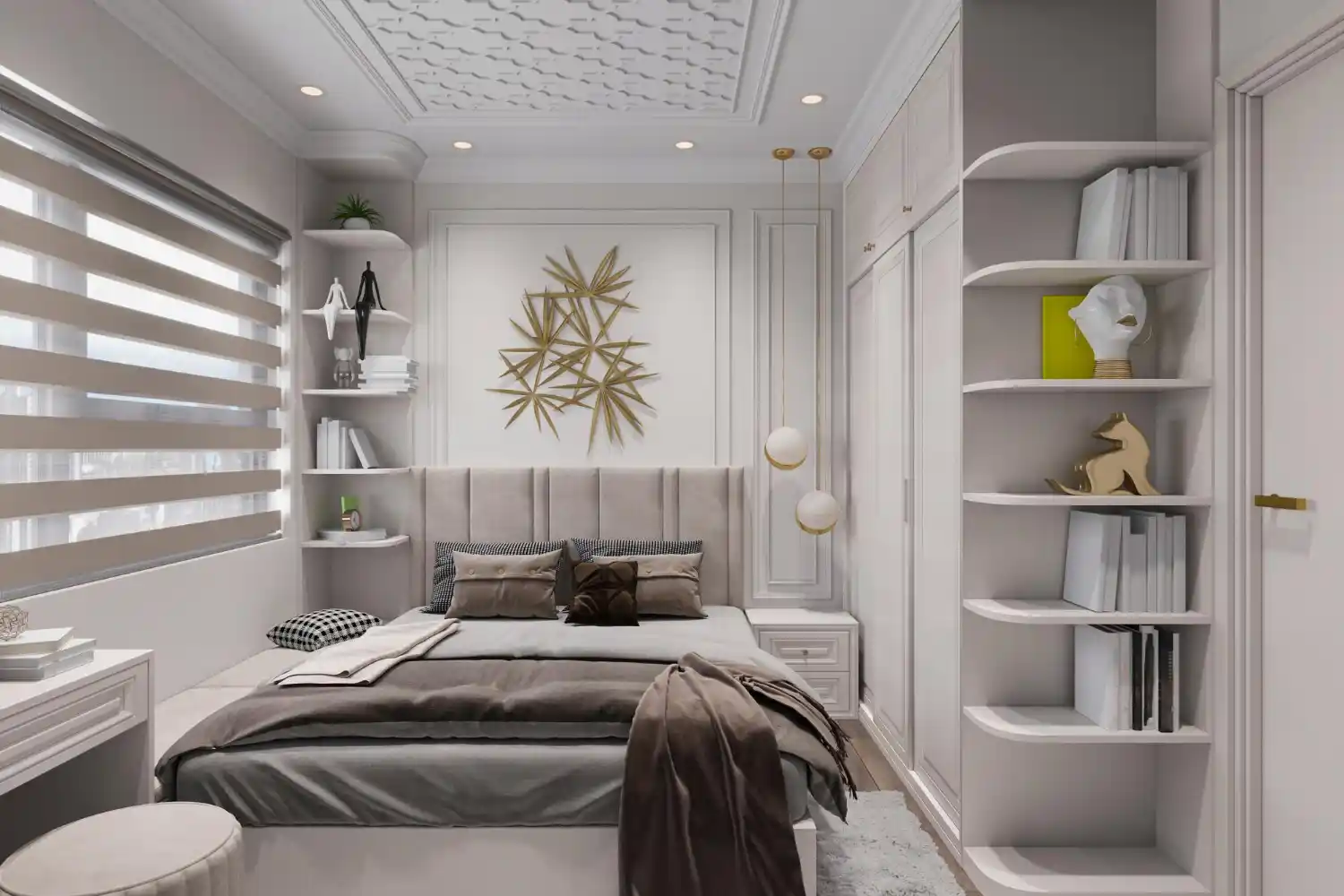
TL;DR
- Layout: Keep one clear 30-inch walkway beside the bed and pull furniture off the busiest wall to open the floor.
- Storage: Go vertical and under-bed first — wall shelves, tall dressers, and 6-9 inch under-bed drawers clear the floor without shrinking the room.
- Style: Use a high-LRV paint color, one large mirror across from the window, and a tight palette to make a tiny room feel bigger.
- By who and bed size: Couples, teens, sisters, guests, single beds, and king beds each need a slightly different plan — we link to all of them below.
- This hub: One starting page that connects to 16 focused small bedroom guides so you can jump straight to your exact room.
How Do You Make a Small Bedroom Feel Bigger?
Why does one small bedroom feel calm and open while another the same size feels cramped and busy? The answer is rarely square footage. It is the order you solve the room in: layout first, then storage, then style. These layouts are one piece of the puzzle — our broader small bedroom ideas guide ties them together with storage and style.
Part of our guide to Bedroom Decorating Ideas.
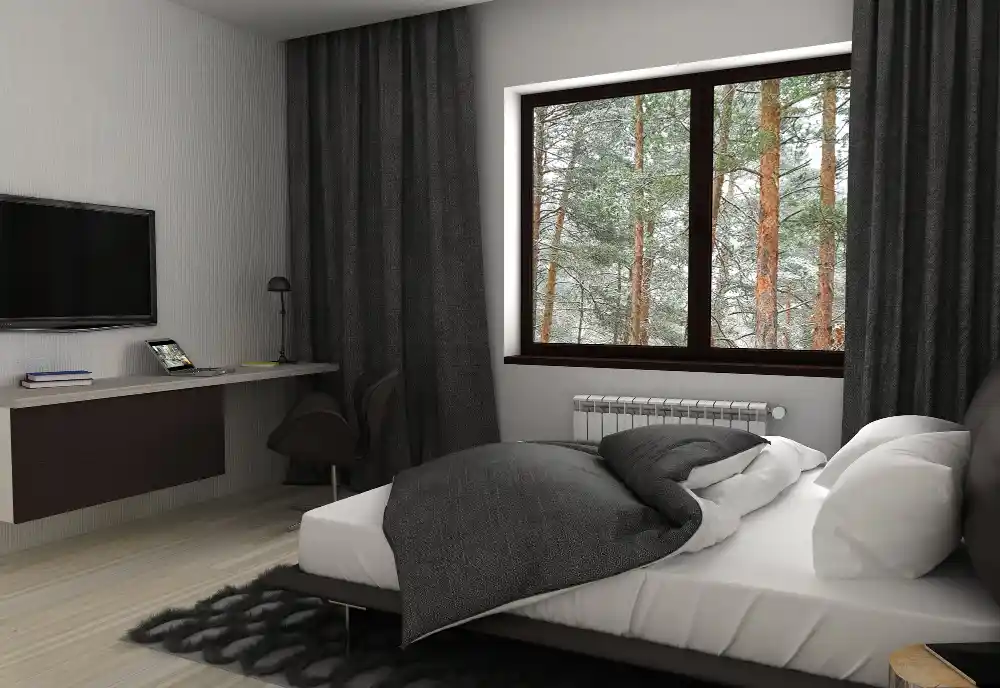
Small bedroom ideas work best when you start with the floor plan, clear the clutter with smart storage, and finish with color, light, and texture. A small bedroom feels bigger when one walkway stays clear, the floor is mostly visible, and the eye lands on a single calm focal point instead of five competing ones. Get those three layers right and a 9-by-10-foot room can feel restful instead of tight.
Editorial field note: A small bedroom with the bed jammed into a corner and a tall dresser by the door often feels blocked the moment you walk in. Floating the bed to the center of the longest wall and swapping the dresser for two slim wall shelves opens the sightline to the window. The room reads larger before a single new thing is bought.
This guide is the starting point for our whole small bedroom library. Below, you will find the core rules for layouts, storage, and style, plus links to 16 focused guides grouped by who sleeps there, bed size, room size, style, and color. Browse all our bedroom ideas for the full collection, or explore more room-by-room design inspiration across the site. You will also find fresh decorating ideas across 101homedecor.com. Bookmark this guide for quick reference.
KEY TAKEAWAY: A small bedroom feels bigger when you solve it in order — layout, then storage, then style — not by adding more pieces.
| Quick Takeaways | |
|---|---|
| Layout | Keep one 30-inch walkway clear; leave 24-36 inches at the foot of the bed. |
| Storage | Use vertical wall shelves and 6-9 inch under-bed drawers before adding floor furniture. |
| Color | Pick a high-LRV white or soft greige to bounce light and open the walls. |
| Light | Add wall sconces or slim lamps so nightstands stay clear and corners stay lit. |
| Mirror | Hang one large mirror across from the window to nearly double the daylight. |
Small Bedroom Planning Checklist
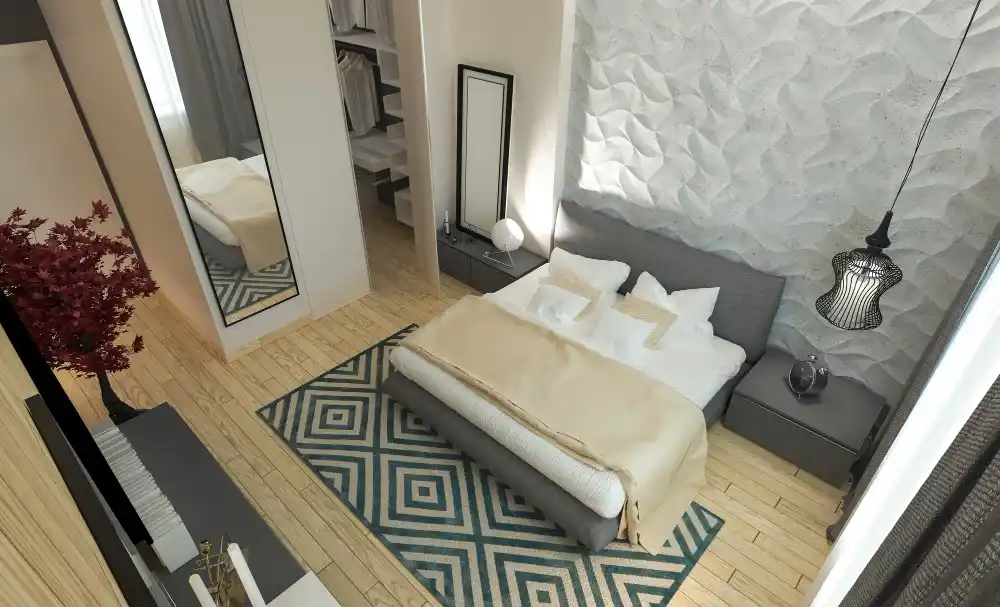
- Measure your mattress first: a queen is 60 by 80 inches, a full is 54 by 75 inches, so you know what the room must hold.
- Leave a 30-inch minimum walkway on the main side of the bed; aim for 30-36 inches on both sides when two people share.
- Keep 24-36 inches clear at the foot of the bed so a dresser or door still opens.
- Mount storage upward: tall narrow dressers and wall shelves free the floor a low chest steals.
- Choose one paint color with a high light reflectance value to keep walls bright.
- Place one large mirror across from the window, not beside it, to spread daylight.
- Pick a tight three-color palette so the small room reads as one calm space.
KEY TAKEAWAY: A small bedroom plan that fixes walkways, vertical storage, paint, and one mirror covers 80 percent of what makes a tiny room work.
Smart Small Bedroom Layouts That Maximize Floor Space
Layout is the first and biggest lever in any small bedroom. The bed is the largest object, so where it sits decides how the rest of the room feels. Push it against the longest unbroken wall and the floor opens up; jam it into a corner and the room often feels boxed in.
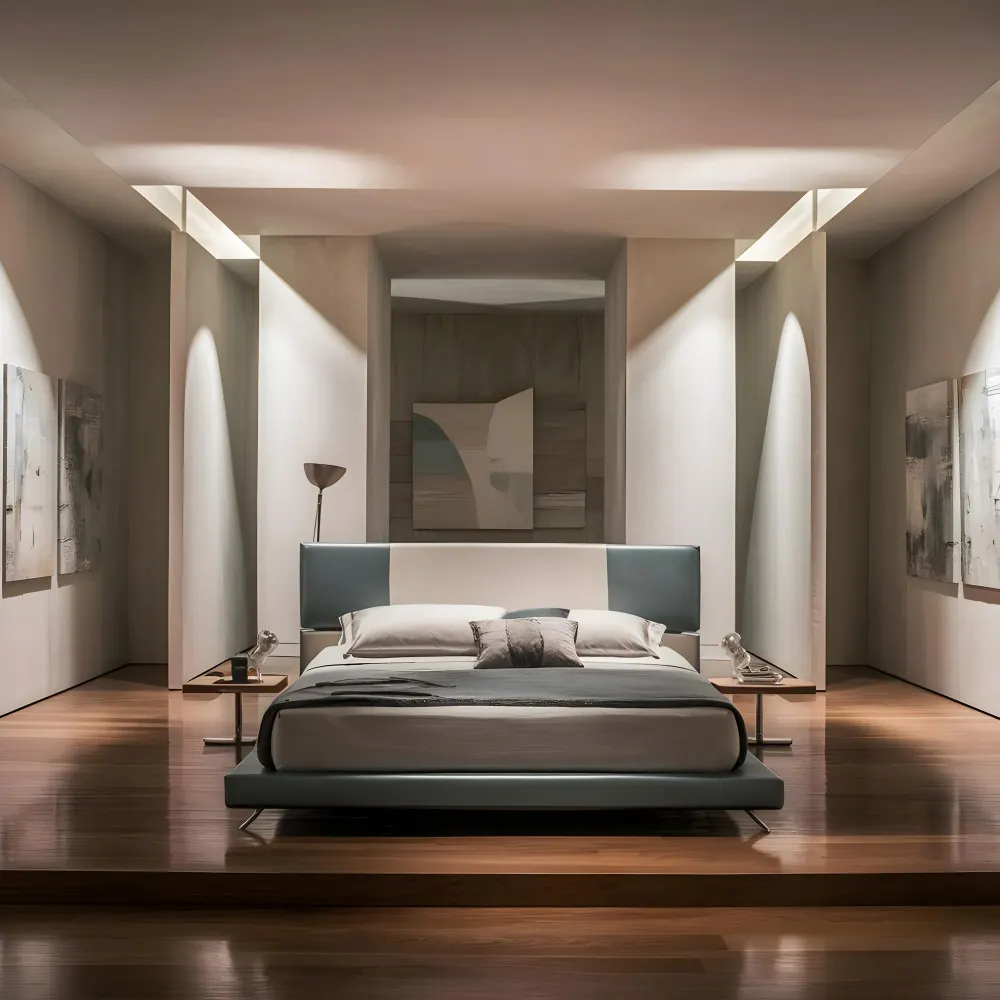
A small bedroom layout works best when one walkway stays at least 30 inches wide. Designers treat 30 inches as the comfortable minimum to pass a bed without turning sideways, and 36 inches as the goal at the foot of the bed where a dresser or closet door swings, per this expert guide to bedroom clearances from Homes & Gardens. Knowing your mattress size before you start matters too: a queen measures 60 by 80 inches and a king 76 by 80 inches, so a king rarely leaves room for two clear walkways in a small space.
DESIGNER TIP: In a very tight room, place one nightstand beside the bed and a wall-mounted shelf or sconce on the other side. You keep both sides functional without two bulky tables eating the walkways.
The right layout also depends on who sleeps there. A shared room needs access on both sides, a single sleeper can push the bed to one wall, and a guest room can flex around a slimmer footprint. These focused guides walk through each case with measured floor plans:
- smart small bedroom layouts that maximize floor space
- functional ways to arrange furniture in very small bedrooms
- a simple small bedroom refresh plan for a cozy makeover
- smart design hacks to decorate a small bedroom on a budget
KEY TAKEAWAY: A small bedroom layout succeeds when the bed sits on the longest wall and at least one 30-inch walkway stays clear.
How Do You Get Enough Storage in a Tiny Bedroom?
Storage is where most small bedrooms either win or fail. The trick is to stop spreading storage across the floor and start sending it up the walls and under the bed. Floor pieces eat the very space that makes a room feel open, so the best small bedroom storage stays vertical or hidden.
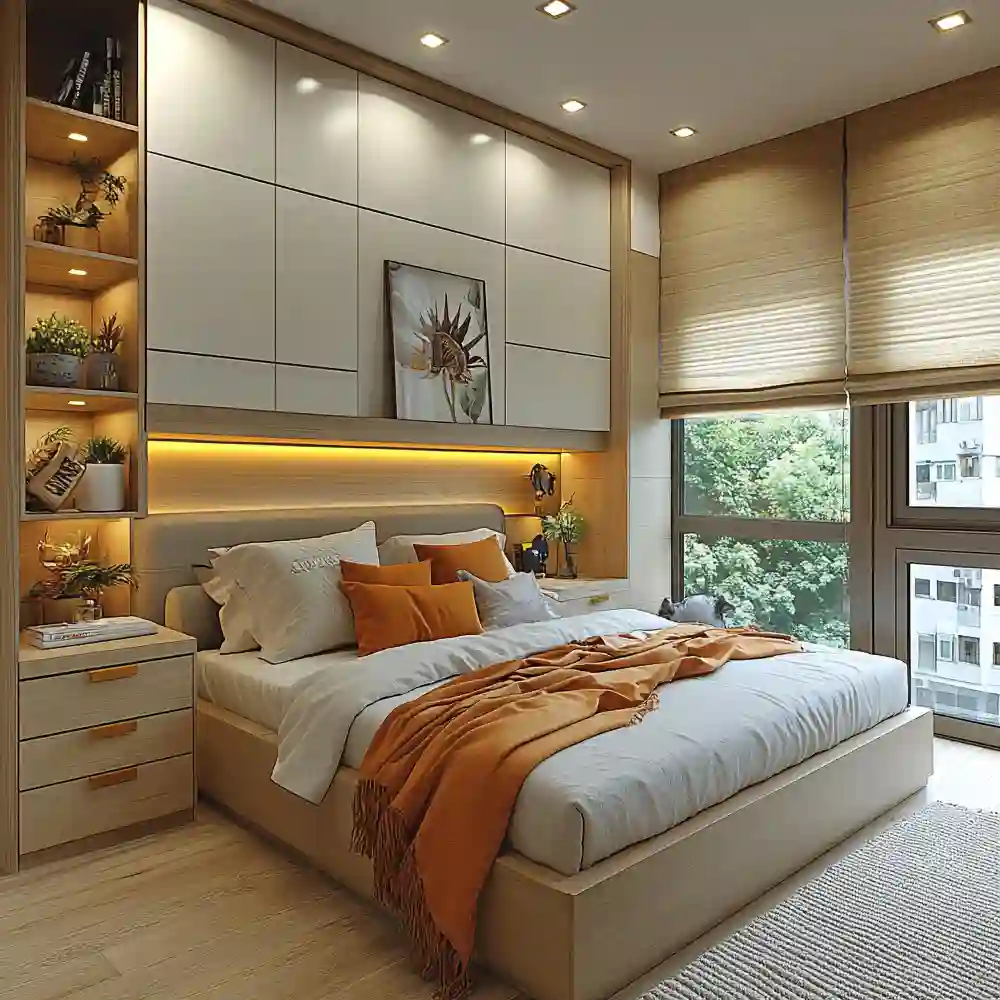
Under-bed storage is the easiest hidden win. A bed frame with 6 to 9 inches of clearance fits rolling drawers or flat bins that swallow off-season clothes and spare bedding. Tall narrow dressers do the same job a wide low chest does, but they take a fraction of the floor. Wall-mounted shelves, hooks, and a slim floating nightstand keep surfaces clear so the room never reads as busy.
DESIGNER TIP: Match your storage to what you actually own. Fold-heavy wardrobes need drawers; hang-heavy wardrobes need a tall rod. Buying the wrong type is why so many small bedrooms still feel cluttered after a storage spree.
A floating nightstand or wall ledge also frees the floor beside the bed, which keeps your walkway honest. For a deeper styling angle on this, our guide to bedroom storage that looks stylish, not cluttered shows how to hide the practical pieces while keeping the room pretty.
KEY TAKEAWAY: Small bedroom storage works best when it goes vertical and under the bed, leaving the floor open and the room feeling larger.
Small Bedroom Ideas by Who Sleeps There
A small bedroom for a couple has different rules than one for a teen or two sisters. Shared rooms need balanced access and double the storage; kids’ and teens’ rooms need flexible, hard-wearing pieces; a guest room needs to feel welcoming without being precious. The layout math changes with each one.
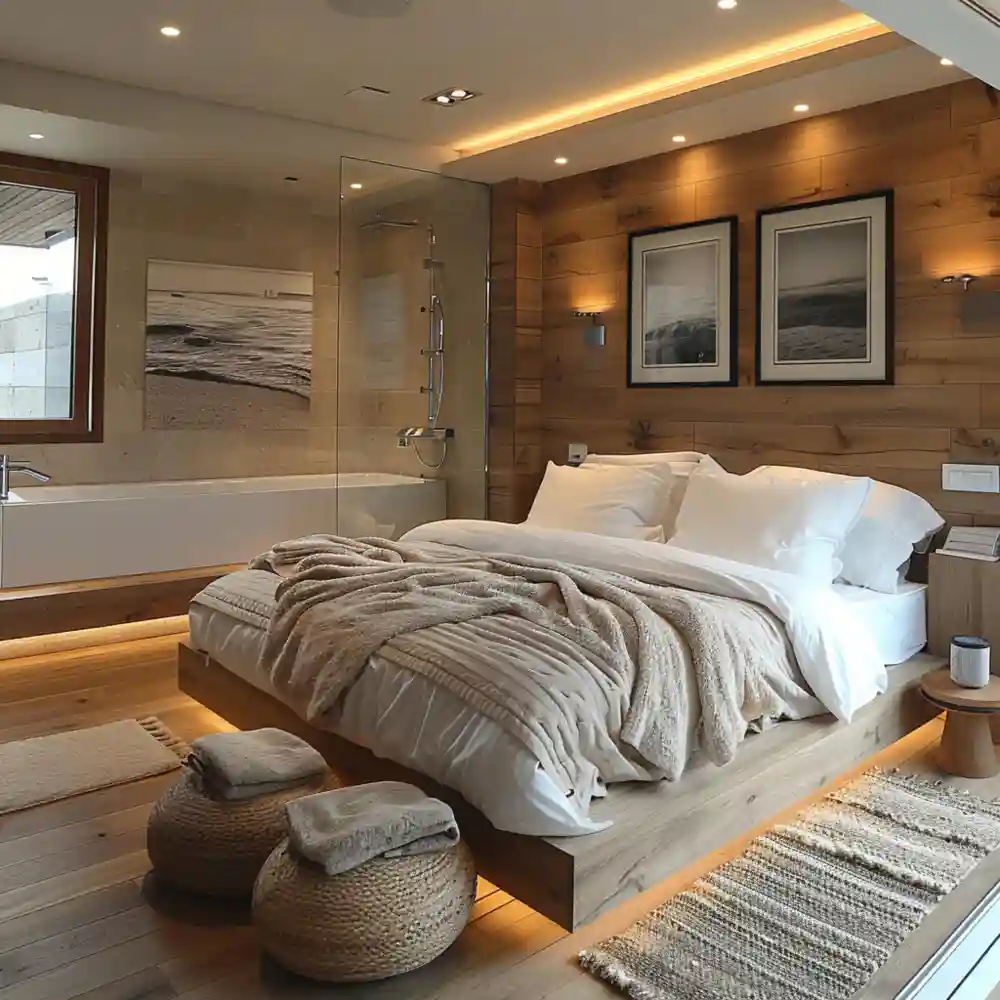
Shared rooms are the toughest because two people need two clear sides. Aim for 30 to 36 inches of walkway on both sides of the bed, and split storage evenly so neither person crowds the other. Teen rooms work better with a desk-and-bed combo and durable surfaces, while a guest room can borrow a narrow bed and a folding luggage rack to stay flexible.
These four guides cover each sleeper in detail:
- small bedroom ideas for couples that stop the clutter wars
- small bedroom ideas for teens that maximize every square inch
- smart small bedroom ideas for 2 sisters that stop clutter
- very small guest bedroom ideas that make narrow rooms feel huge
KEY TAKEAWAY: Who sleeps in a small bedroom decides the layout — shared rooms need two clear sides, while solo and guest rooms can flex around a slimmer footprint.
Small Bedroom Ideas by Bed Size
Bed size is the single biggest space decision in a small room. The mattress dimensions are fixed, so the bed you choose sets how much floor is left for everything else. A twin frees the most space, a queen is the comfortable shared default, and a king is the hardest fit of all.
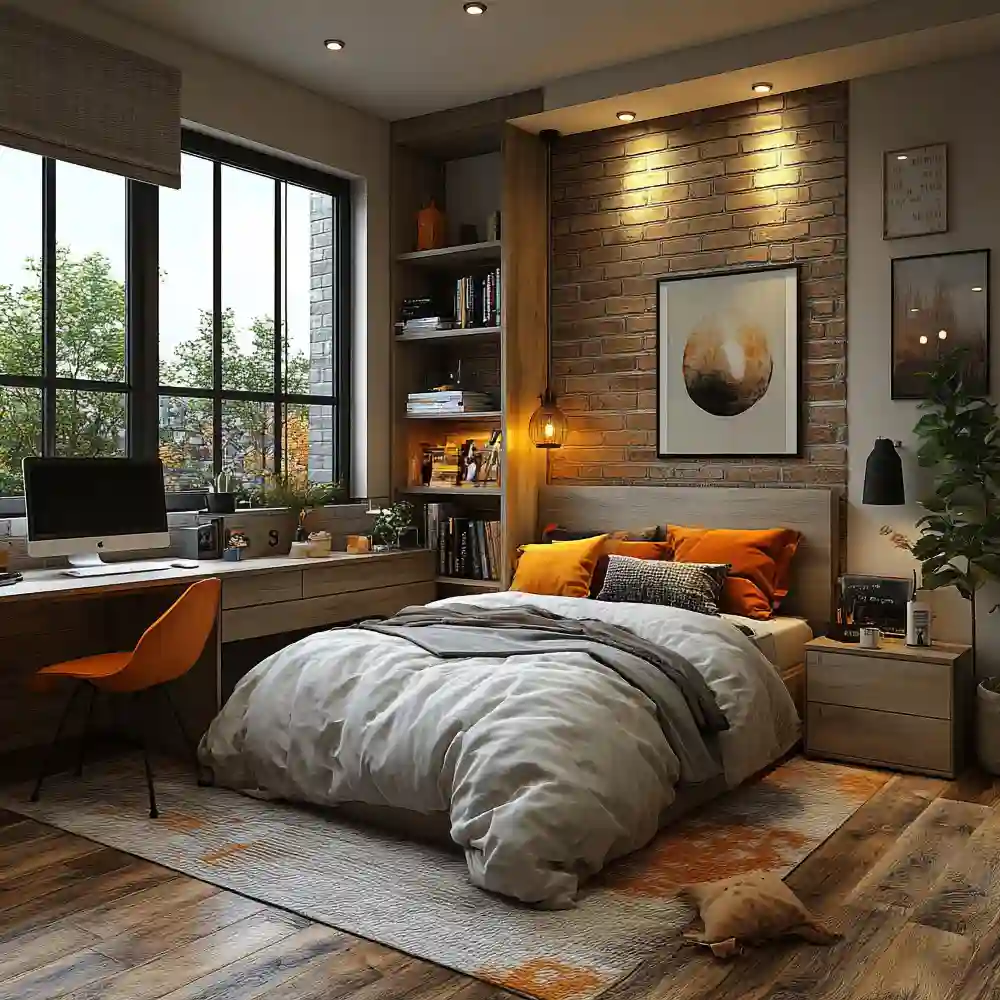
Standard U.S. mattress sizes give you the math: a single (twin) is 38 by 75 inches, a queen is 60 by 80 inches, and a king is 76 by 80 inches, per this mattress size comparison guide from Casper. A king in a small room often means giving up one nightstand or one walkway, so it takes careful planning to make it work. A single bed, by contrast, can free a whole wall for a desk or reading nook.
These two guides solve the hardest bed-size cases:
- small bedroom ideas with a single bed to maximize your space
- small bedroom ideas with a king size bed that actually work
KEY TAKEAWAY: A single bed frees the most floor in a small bedroom, while a king demands trade-offs like one nightstand or a single clear walkway.
Small Bedroom Ideas by Room Size and Style
Once the layout and storage are sorted, style is what makes a small bedroom feel finished. The smaller the room, the more a clear style choice helps, because a tight palette and one consistent look read as calm rather than crowded. A very small room and a cozy or minimalist room are simply different style answers to the same square footage.
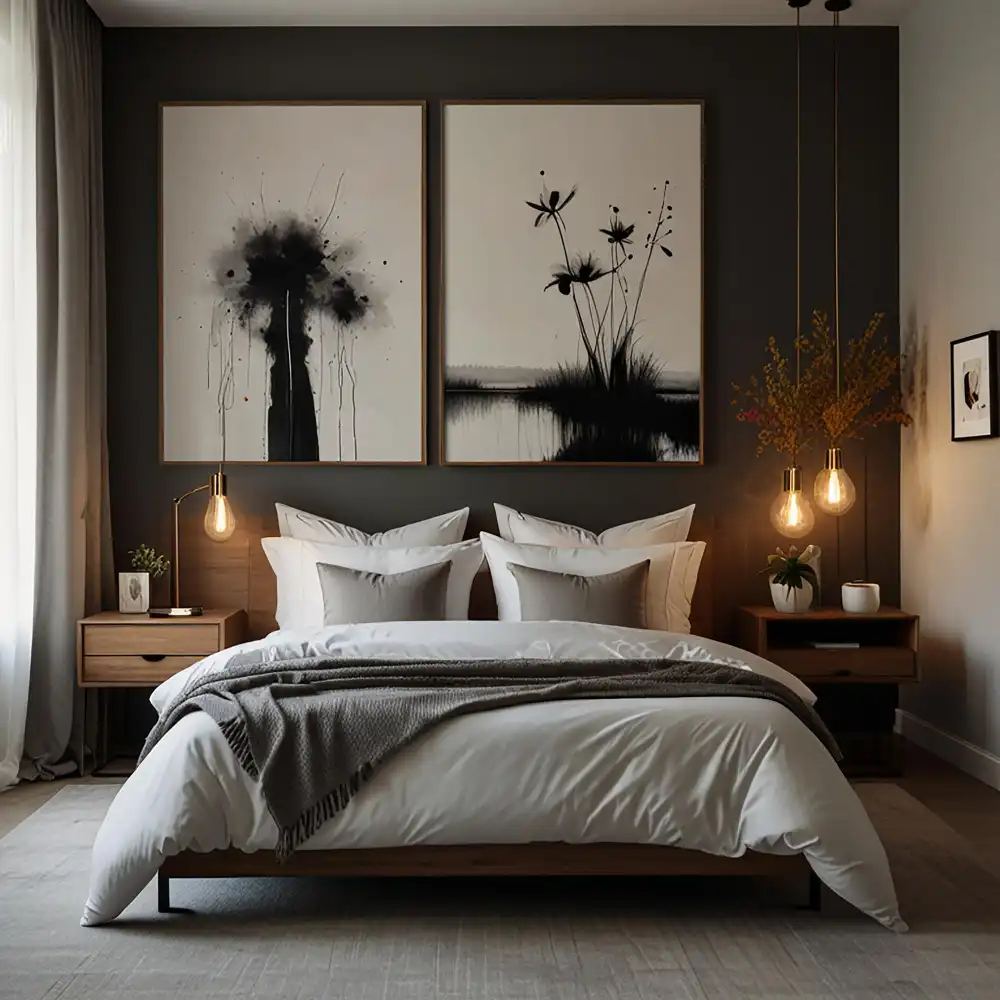
Very small rooms do best with light colors, low-profile furniture, and almost no clutter on surfaces. Cozy rooms layer warm texture — boucle, linen, knit wool — over a soft neutral base. Minimalist rooms strip the room to a bed, one light, and a single piece of art. Boho rooms add pattern and warmth through textiles instead of bulky furniture, which keeps the floor open.
DESIGNER TIP: In a small room, pick one style and commit. Mixing minimalist, boho, and farmhouse in 100 square feet is the fastest way to make a tiny room feel chaotic.
Browse these four style-led guides to find your match:
- effortless very small bedroom ideas that look designer-made
- cozy aesthetic small bedroom ideas that feel like a warm hug
- minimalist small bedroom ideas to de-clutter your space
- very small boho bedroom ideas to maximize your cozy space
KEY TAKEAWAY: A small bedroom feels finished when you commit to one clear style and keep the palette tight, rather than mixing several looks in a tight space.
What Paint Colors and Mirrors Make a Small Bedroom Look Bigger?
Color and light do the heavy lifting once the bones are right. The right paint color and one well-placed mirror can make a small bedroom look noticeably bigger without moving a single wall. This is the cheapest, fastest layer of the whole project.
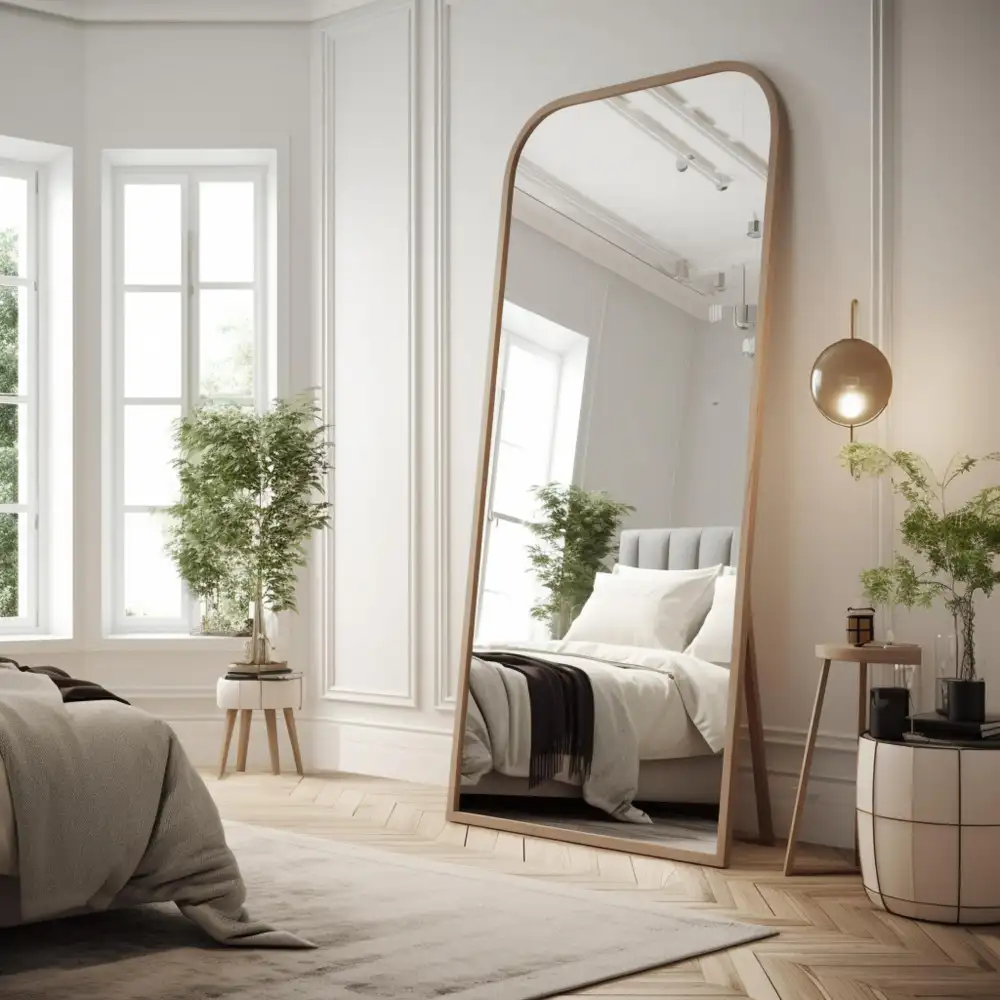
Paint with a high light reflectance value (LRV) bounces more light around the room, which is what makes walls feel like they recede. Colors with an LRV around 65 to 70 or higher start to clearly open up a small space, which is why soft whites and pale greiges read so airy — Benjamin Moore White Dove sits near an LRV of 83, per Kylie M Interiors’ LRV guide. One large mirror placed directly across from the window also helps a great deal.
Designer Rule of Thumb: A mirror hung directly across from the window reflects the daylight and the view back into the room, so a small bedroom feels noticeably brighter and deeper.
Safety Note: Anchor a large mirror into a wall stud or use toggle bolts — standard drywall anchors hold only about 20-25 pounds, so a heavy mirror needs a stud, French cleat, or rated bolt.
Color also covers the popular small-bedroom palettes. A pink room, a paint-led refresh, and a high-contrast scheme are all color decisions. These two color guides go deeper:
- the best paint colors for a small bedroom that make it feel bigger
- pink small bedroom ideas to brighten your tiny space
KEY TAKEAWAY: A high-LRV paint color plus one large mirror across from the window is the cheapest, fastest way to make a small bedroom look bigger.
Where Small Bedrooms Go Wrong
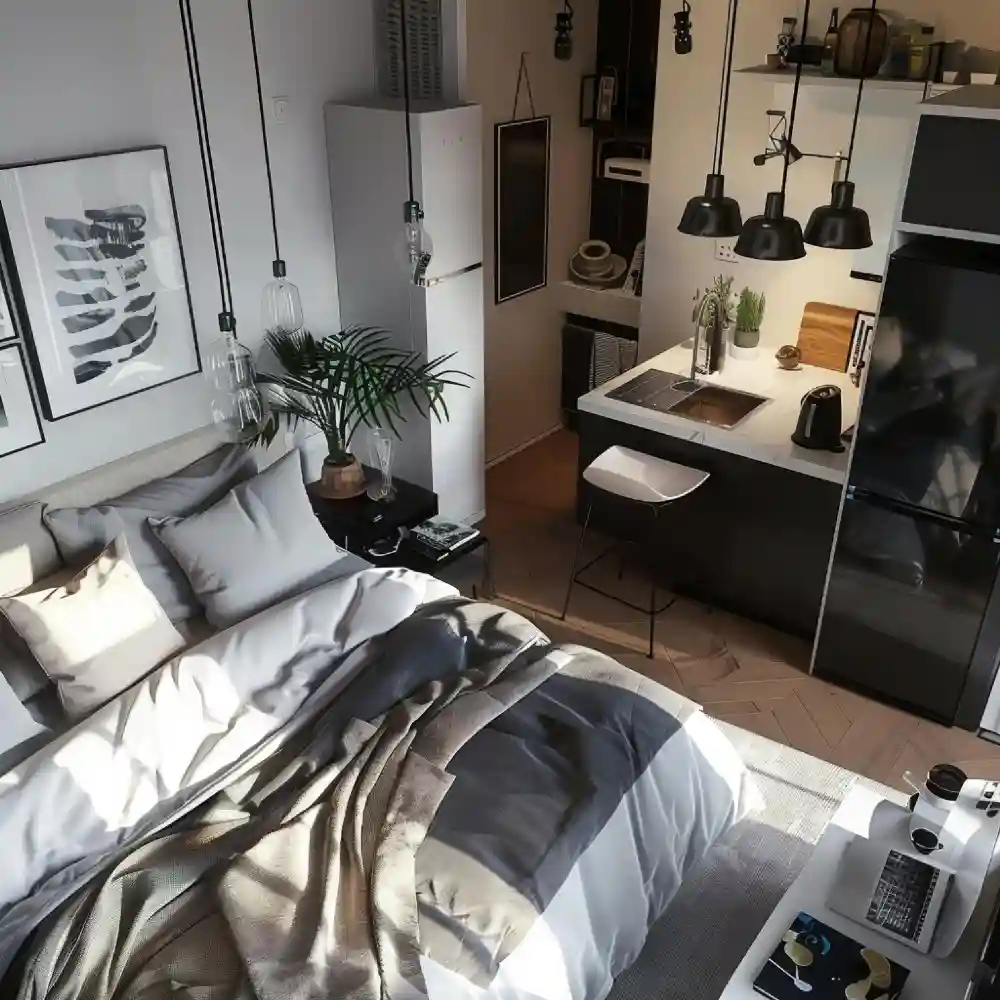
❌ Pushing the bed into a corner to “save space” → ✅ Float it on the longest wall so at least one 30-inch walkway stays clear.
❌ Buying a wide low dresser → ✅ Choose a tall narrow dresser that stores the same in a fraction of the floor.
❌ Relying on one harsh overhead light → ✅ Add a wall sconce and a slim lamp so corners stay lit and nightstands stay clear.
❌ Mixing three styles in one tiny room → ✅ Pick one palette and one look so the small space reads as calm.
KEY TAKEAWAY: Most small bedroom mistakes come from blocking walkways and over-filling the floor — fix those two and the room instantly feels larger.
What You’ll Spend
A small bedroom refresh is one of the most budget-friendly projects in the home because the square footage is low. You can shift the whole feel of the room for under $150, or do a fuller makeover in stages. The numbers below are typical estimate ranges, not fixed quotes.
| Project | Estimated Cost | Impact Level |
|---|---|---|
| One gallon of high-LRV paint plus supplies | $45-$80 | Very High |
| Under-bed rolling drawers and wall shelves | $90-$220 | High |
| Large mirror plus a pair of wall sconces | $180-$400 | High |
| Tall narrow dresser or full storage bed frame | $300-$800 | Medium |
Best First Upgrade: Paint the walls a high-LRV color — it is the cheapest change and instantly makes the room feel brighter and bigger.
Skip for Now: A new king bed frame — in a small room it usually costs the most and steals the most floor space.
KEY TAKEAWAY: A small bedroom refresh starts with paint under $80 and scales up through storage and lighting, so you can spread the cost over time.
Tougher Small Bedroom Questions
Some small bedrooms come with extra constraints: a single window, a slanted ceiling, a shared wall, or a rental you cannot paint. These do not break the layout-storage-style order — they just add one more rule to follow.
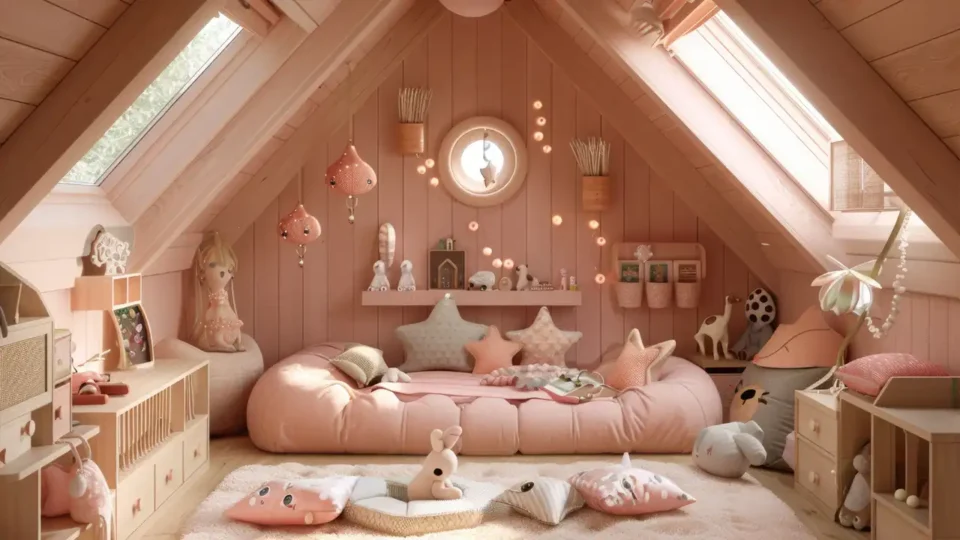
A rental room can use peel-and-stick wallpaper and a large leaning mirror instead of paint and screws. A room with one small window leans harder on a high-LRV color and a mirror to spread what light there is. A shared or attic room may need a low-profile platform bed to keep sightlines open under a sloped roof. Match the fix to the constraint and the room still works.
Rental Note: Use removable peel-and-stick wallpaper, a leaning floor mirror, and command hooks so you get the look without losing a deposit.
KEY TAKEAWAY: Tough small bedrooms — rentals, single-window rooms, sloped ceilings — still follow the same order, with one extra rule matched to the constraint.
Frequently Asked Questions
Conclusion
Small bedroom ideas come down to one habit: solve the room in order. Fix the layout so a walkway stays clear, add storage that climbs the walls and tucks under the bed, then finish with a high-LRV color, one good mirror, and a tight palette. A tiny room handled this way feels calm and open, not cramped.
Editorial field note: A small bedroom packed with a wide dresser, two full nightstands, and a dark accent wall usually feels heavy and closed. Swapping the dresser for under-bed drawers, painting the walls a soft greige, and hanging one mirror across from the window opens the same room without losing a square foot. The change is mostly editing, not buying. Use the 16 guides linked above to go deeper on your exact room, and find more home decor inspiration across the site.
Explore Small Bedroom Ideas
- 10 Smart Design Hacks: How to Decorate a Small Bedroom on a Budget
- 10 Smart Small Bedroom Ideas for 2 Sisters That Stop Clutter
- 11 Small Bedroom Ideas With a Single Bed to Maximize Your Space
- 12 Cozy Aesthetic Small Bedroom Ideas That Feel Like a Warm Hug
- 12 Functional Ways to Arrange Furniture in Very Small Bedrooms
- 12 Small Bedroom Ideas for Couples That Stop the Clutter Wars
- 12 Smart Small Bedroom Layouts to Maximize Your Floor Space
- 12 Very Small Boho Bedroom Ideas to Maximize Your Cozy Space
- 12 Very Small Guest Bedroom Ideas That Make Narrow Rooms Feel Huge
- 14 Minimalist Small Bedroom Ideas to De-Clutter Your Space
- 15 Pink Small Bedroom Ideas to Brighten Your Tiny Space
- 15 Simple Small Bedroom Refresh Ideas for a Cozy Makeover
- 15 Small Bedroom Ideas for Teens That Maximize Every Square Inch
- 7 Effortless Very Small Bedroom Ideas That Look Designer-Made
- 9 Small Bedroom Ideas With a King Size Bed That Actually Work
- Best Paint Colors for a Small Bedroom That Make It Feel Bigger