TL;DR
- Bedroom accent wall ideas start with one wall: the surface behind your bed, which is the natural focal point of a master bedroom.
- This guide gives you 13 ideas across four groups: paint and plaster, wood and millwork, wallpaper, and texture, plus lighting and styling to finish the wall.
- Color-drenching one wall in a deep, calm shade is the breakout look for 2026.
- Expect roughly $40 to $120 for a painted accent wall and $300 to $1,200 for a wood-slat or paneled wall.
- Mount heavy materials like stone veneer or solid paneling into wall studs, since this wall sits right over a sleeping area.
Start With the Wall Behind Your Bed
Walk into any well-designed hotel suite and your eye lands in the same place every time: the wall behind the bed. The best bedroom accent wall ideas all start there, because the headboard sits against it, the lamps frame it, and the whole room organizes around it. That wall is the easiest one to get wrong and the most rewarding one to get right.
Part of our guide to Bedroom Decor & Accent Pieces.
A bedroom accent wall is the wall behind your bed, finished in a color, material, or texture that sets it apart from the other three walls. In a master bedroom it works because the bed is already the focal point, so dressing the wall behind it makes the room look planned instead of plain. Source Note: Design editors at Livingetc point to the headboard wall as the spot the eye is naturally drawn to, which is why it earns the treatment.
If you are styling a full room around this, start with these cozy master bedroom ideas for the warm-neutral base, then come back here for the wall. You can also browse our full collection of home decor inspiration for more rooms. Bookmark this guide for quick reference.
KEY TAKEAWAY: The accent wall in a master bedroom is the wall behind the bed, because the bed is already the room’s natural focal point.
| Quick Takeaways | |
|---|---|
| Which Wall | Always the wall behind the bed, the headboard wall. |
| Paint | One accent wall needs about one gallon or less. |
| Texture | Limewash, wood slats, and plaster add depth paint can’t. |
| Lighting | Frame the wall with 2700K sconces for a warm glow. |
| Safety | Anchor heavy materials into studs over the bed. |
Paint and Plaster Ideas for the Wall Behind Your Bed
Paint and plaster are the fastest, cheapest way to change the wall behind your bed. These bedroom accent wall ideas need a weekend, a gallon or less, and no contractor. One gallon of interior paint covers roughly 350 to 400 square feet, so a single accent wall almost always fits in one can, per Clare’s paint coverage guide. Plan for two coats over a dark or bold color.
1. Color-Drench the Headboard Wall
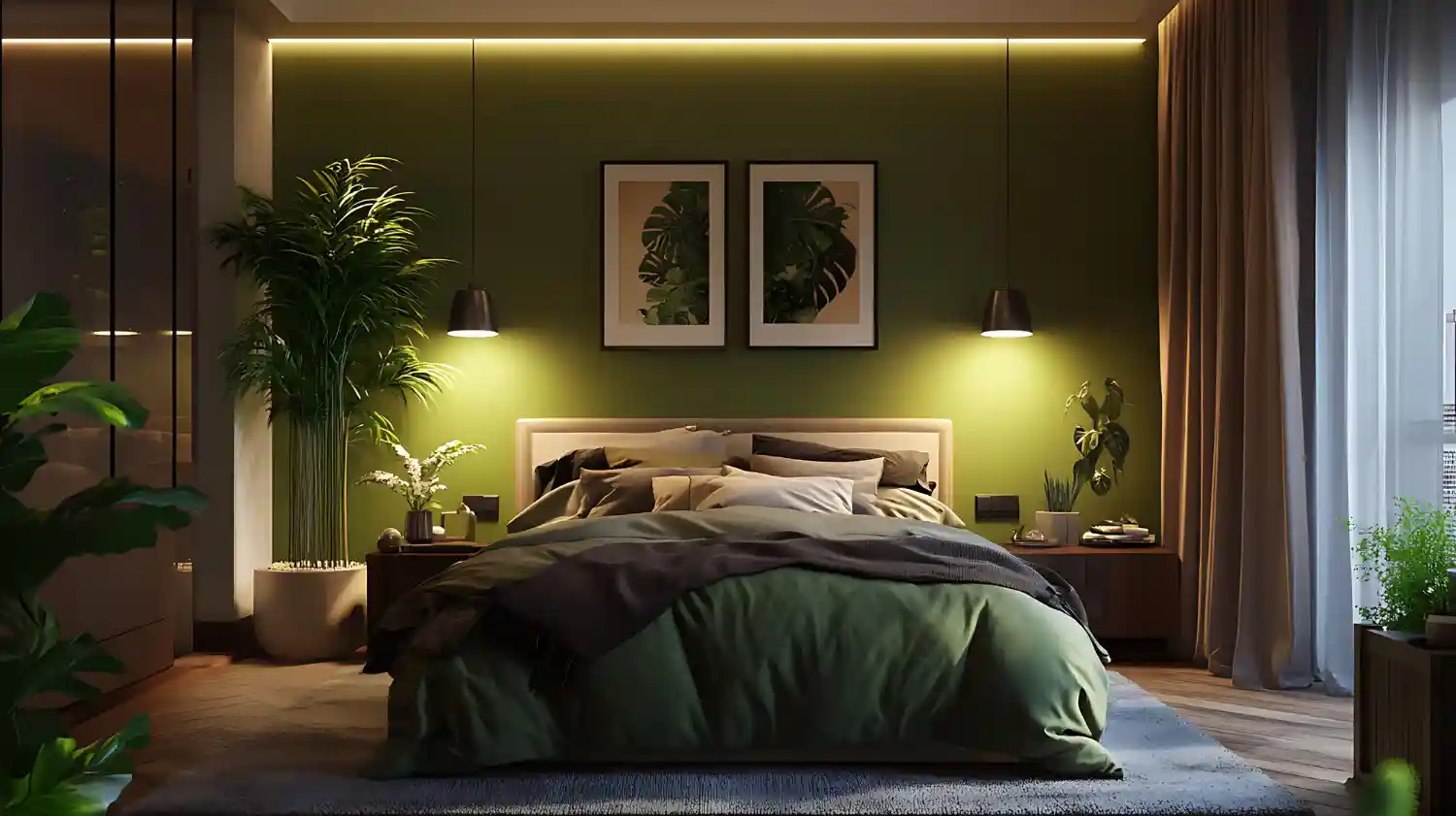
Color-drenching paints the wall, trim, and sometimes the ceiling above the bed in one deep shade. The look wraps the bed in a cocoon and reads as the calmest, most expensive idea on this list. It is the breakout master bedroom look for 2026, as Hunker’s trend coverage notes the space behind the bed is where designers are focusing. Try a muted clay, deep olive, or warm charcoal. Keep bedding one or two shades lighter so the bed still separates from the wall.
2. Two-Tone or Half-Height Paint
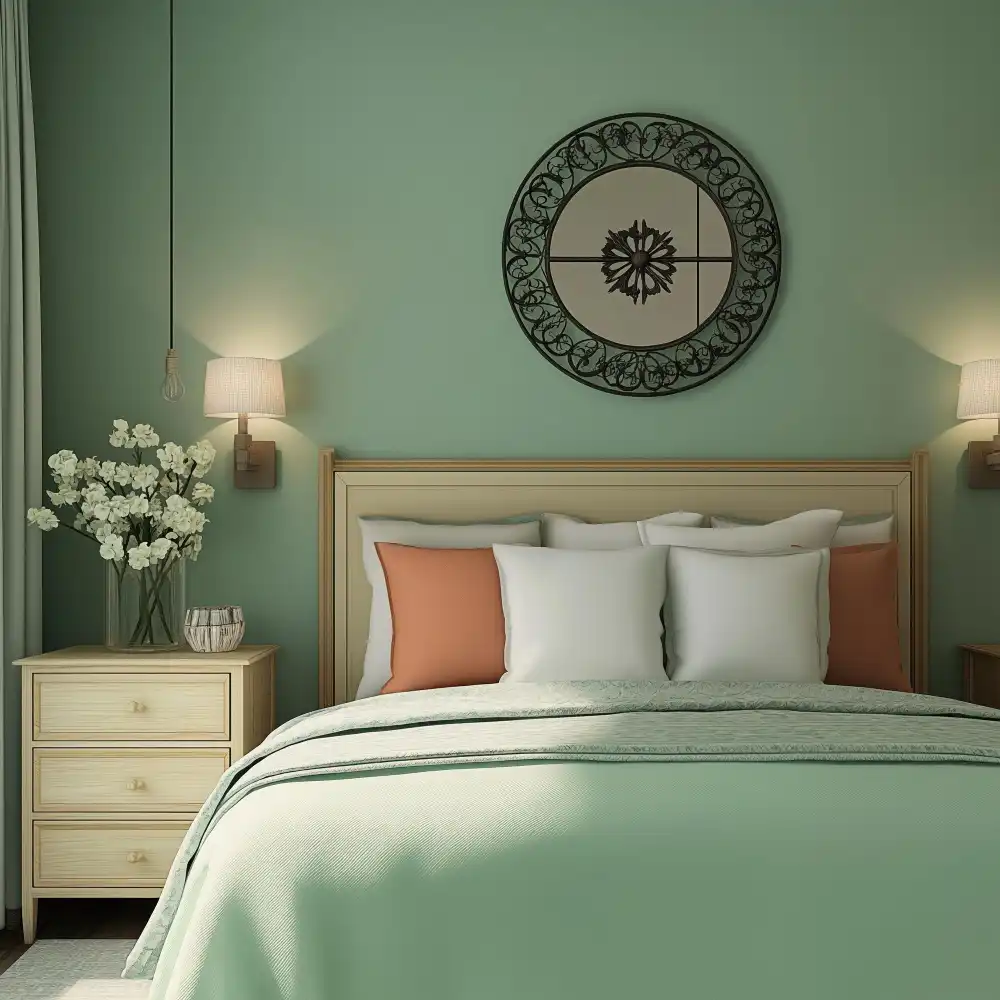
Two-tone paint splits the wall into a darker bottom and a lighter top, usually meeting behind the headboard. The lower band grounds the bed while the upper band keeps the room feeling open. Run the split line at headboard height, around 48 to 54 inches from the floor, so the headboard reads against the darker color. Pair warm greige on top with a deep sage or soft slate below for a quiet, layered look.
DESIGNER TIP: Carry the darker color about three inches past each side of the bed so the band frames the headboard instead of stopping at it.
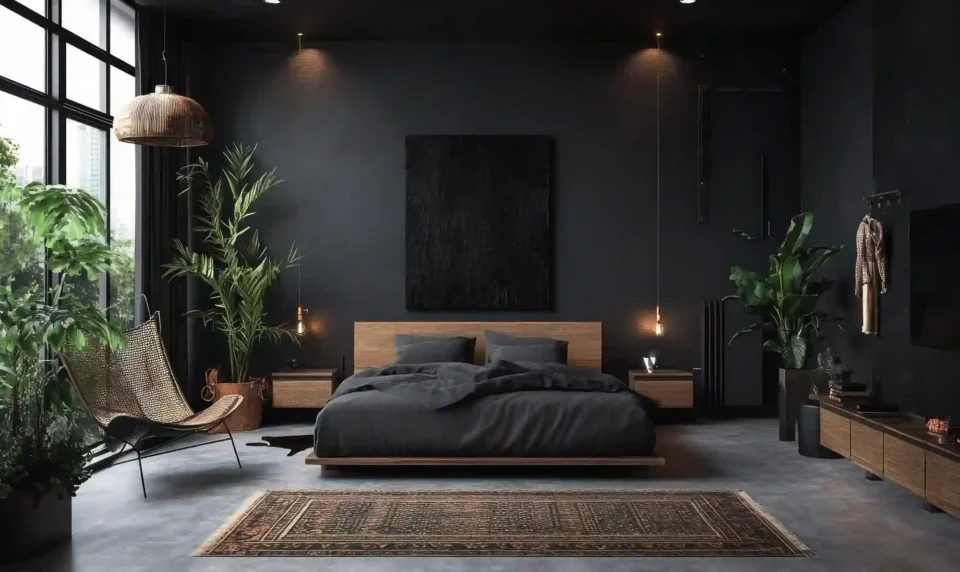
3. A Moody Dark Drench
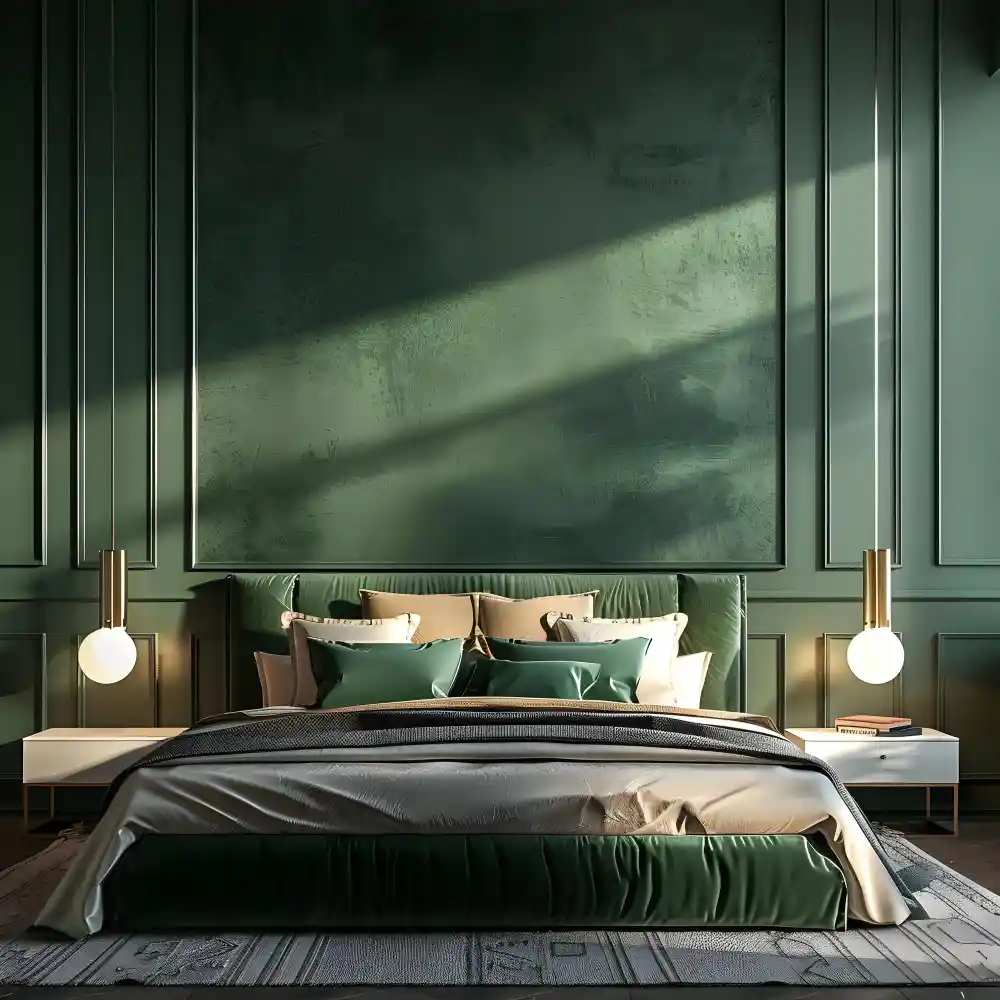
A moody dark wall behind the bed turns a flat room into a retreat. Deep colors like navy, forest green, and charcoal pull the wall back visually and make the bed feel tucked in. Greens, blues, and purples also recede from the eye, which can make a small master feel larger. See more navy blue bedroom ideas for palette pairings, or these grounded olive green bedroom ideas. Balance the dark wall with warm wood nightstands and cream linen bedding.
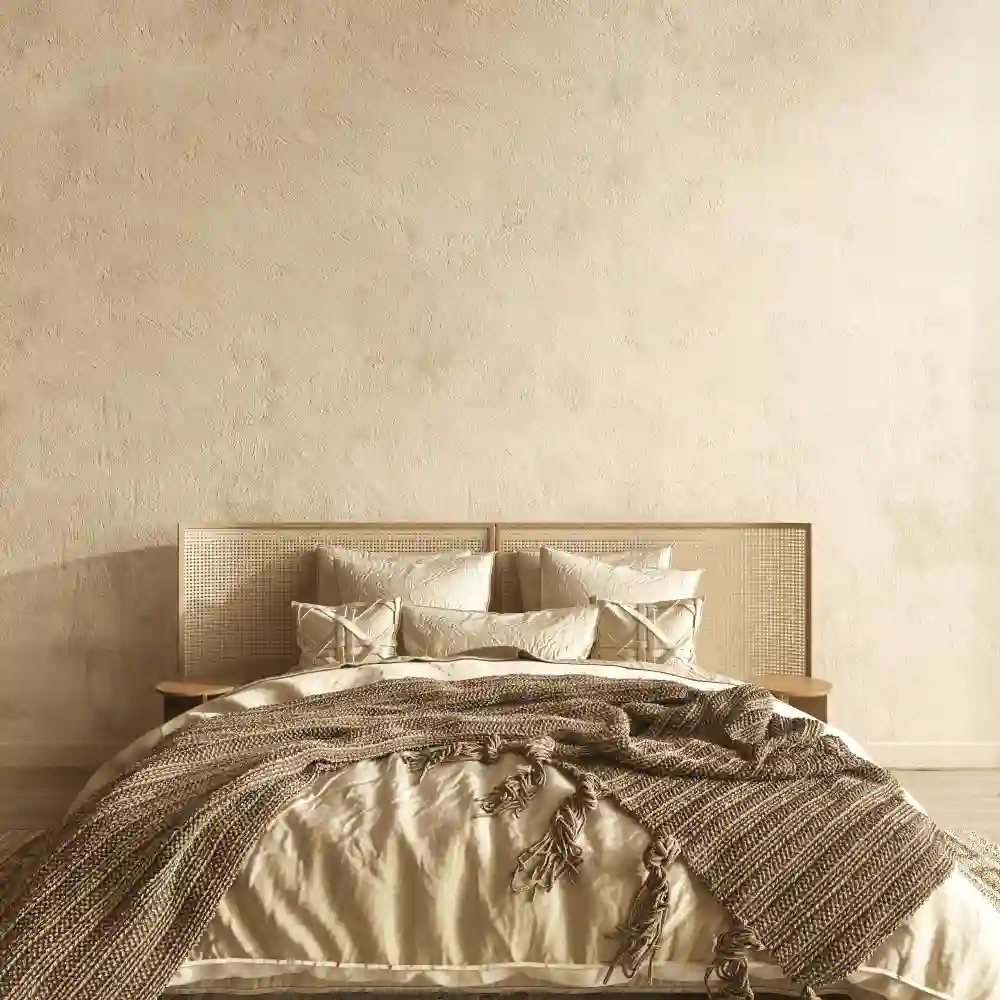
4. A Limewash or Plaster Texture Wall
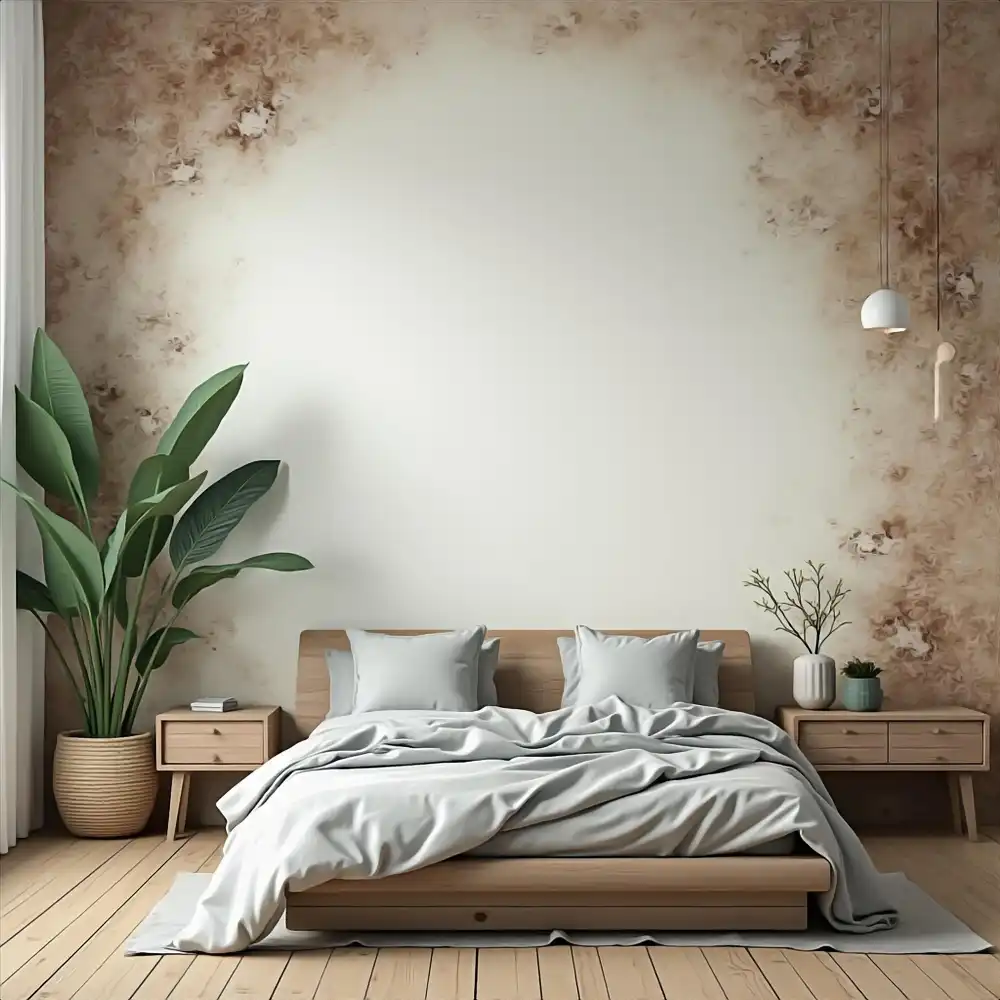
Limewash and Roman plaster add soft, cloudy movement that flat paint can never copy. The finish catches light through the day and gives the wall behind your bed a hand-troweled, old-world depth. Limewash works in muted earth tones: warm white, soft clay, dusty olive, or pale grey. Material Note: Textured and plaster surfaces soak up 25 to 50 percent more paint or wash than smooth drywall, so buy extra. Two thin coats build the chalky, layered look.
KEY TAKEAWAY: A painted or plastered accent wall is the lowest-cost option, fits in about one gallon, and color-drenching one wall is the standout 2026 look.
Wood and Millwork Ideas That Add Real Texture
Wood and millwork add shadow lines and physical depth, so the wall behind your bed looks built rather than just painted. These bedroom accent wall ideas cost more than paint but deliver the biggest texture payoff. They also pair beautifully with a wood or upholstered headboard, so the wall and the bed feel designed together. For the headboard itself, these headboard ideas for a luxurious bedroom pair well with every wood treatment below.
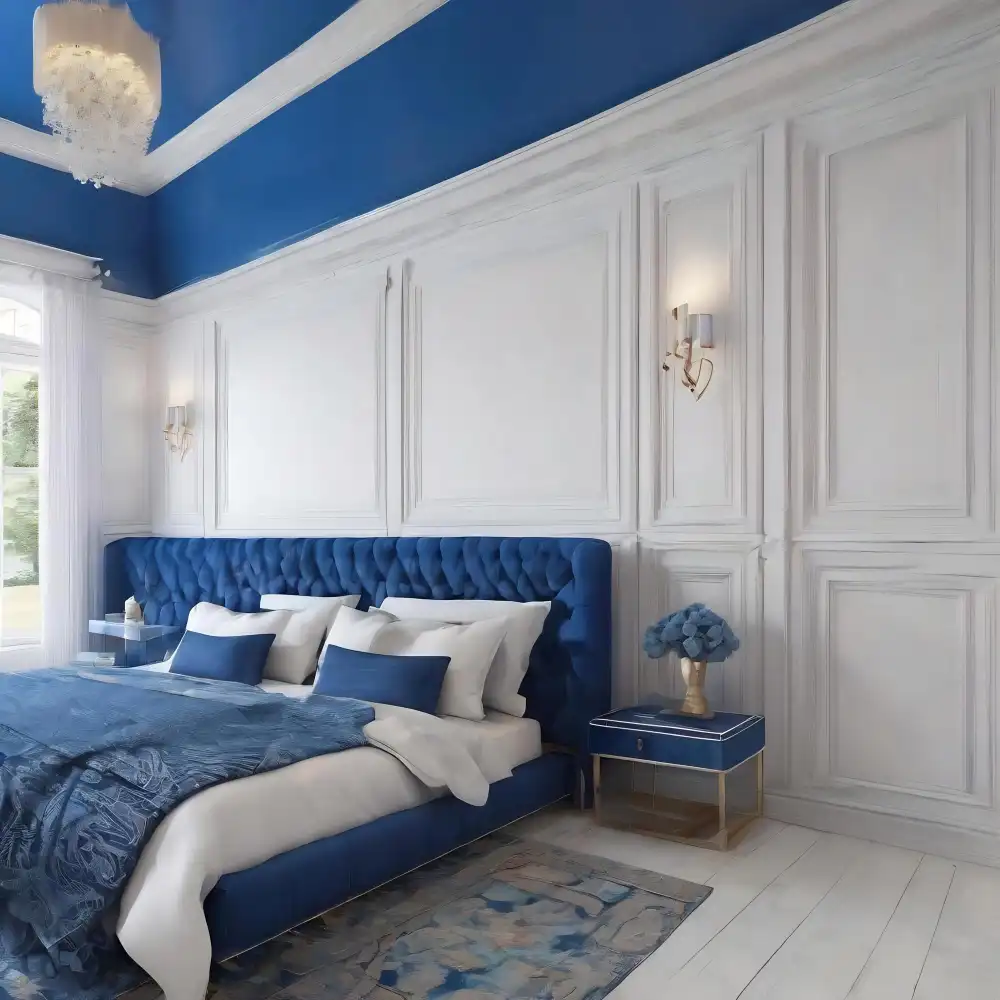
5. Board and Batten Behind the Bed
Board and batten adds vertical or grid-pattern wood strips over the wall, then paint unifies the whole surface in one color. The raised battens throw soft shadows and give a master bedroom a tailored, architectural backdrop. Space vertical battens 12 to 16 inches apart and run them to headboard height or full ceiling height. Paint the whole wall, battens included, in warm white or soft greige for a calm, classic finish.
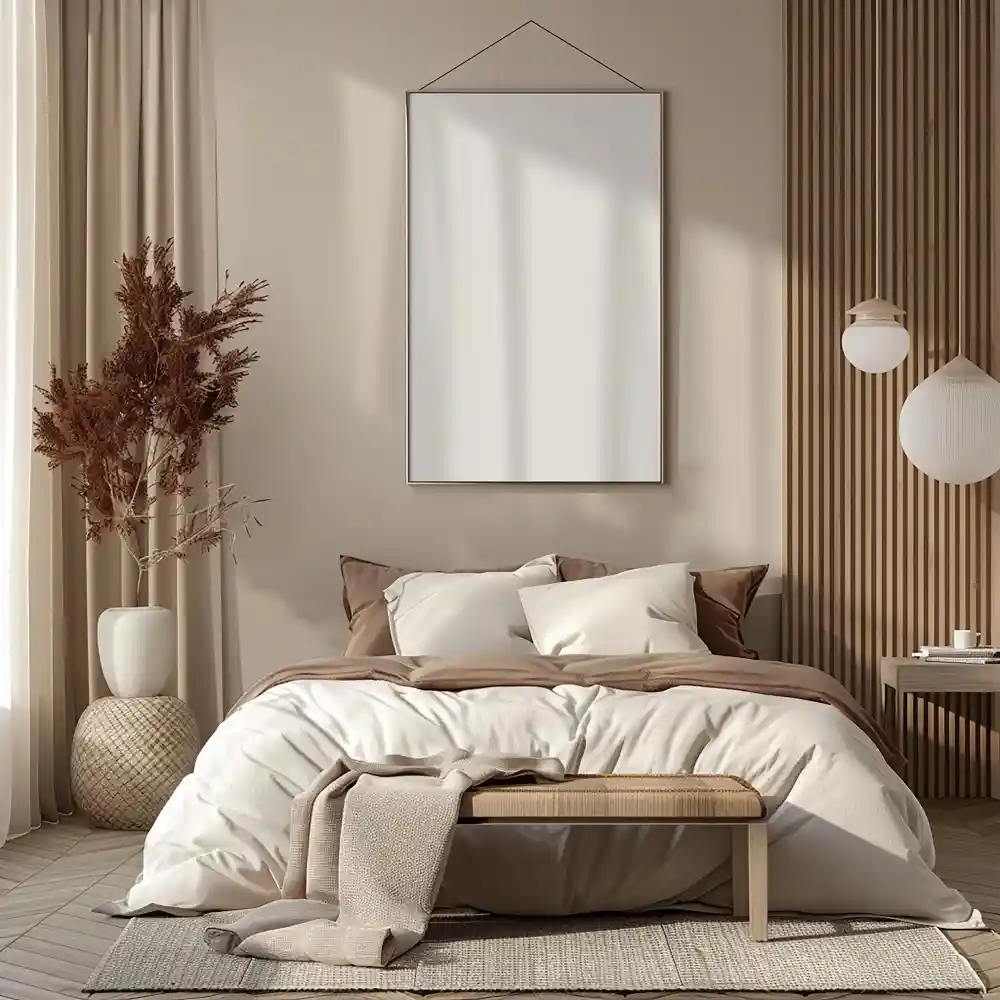
6. A Picture-Frame Molding Grid
Applied picture-frame molding creates a grid of slim rectangles on the wall, an elegant, low-cost nod to old European bedrooms. The frames sit flat against the drywall and read as quiet detail rather than a loud statement. Use a paintable MDF molding and keep the rectangles evenly sized above and beside the bed. Paint the wall and the molding the same soft shade so the grid shows up as shadow, not contrast.
DESIGNER TIP: Lay out the whole grid in painter’s tape on the wall before you cut a single piece of molding, so you can adjust spacing with your eyes, not a calculator.
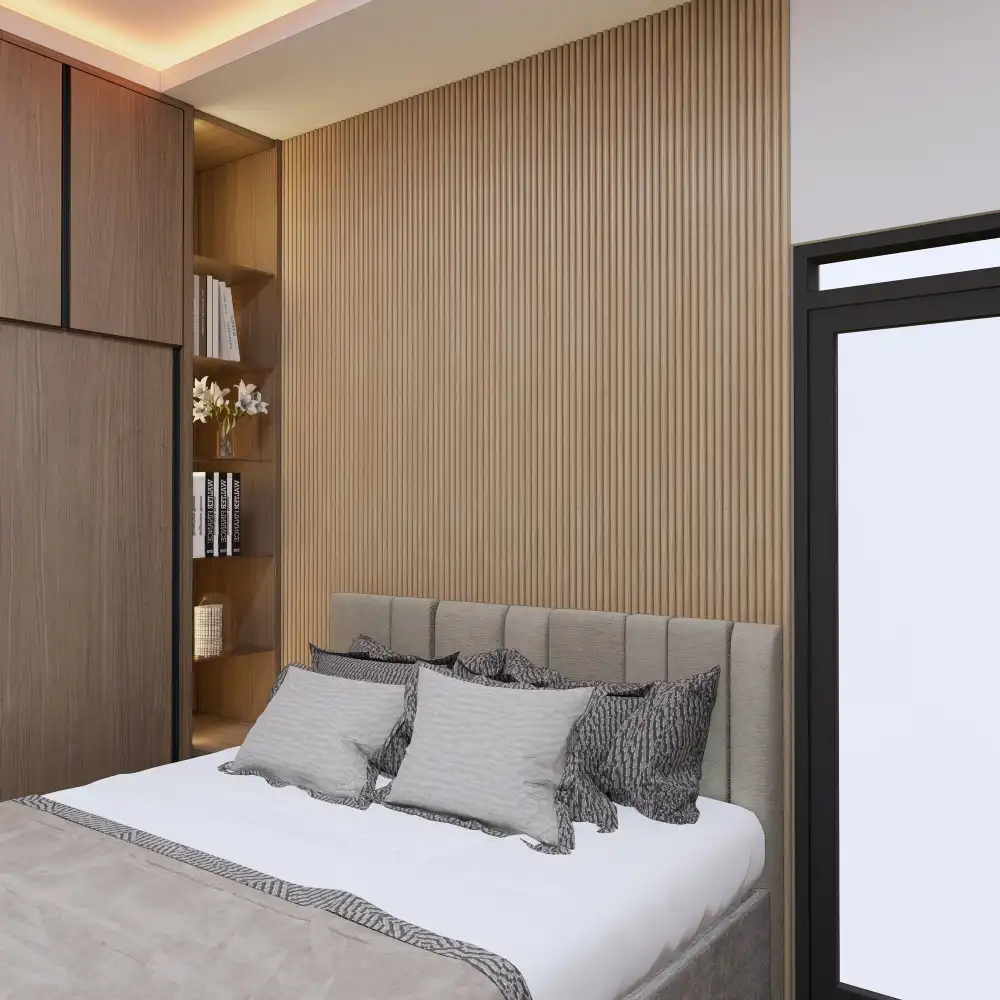
7. A Fluted or Wood-Slat Wall
A fluted or wood-slat wall runs vertical wood strips floor to ceiling for a warm, modern, hotel-suite look. The ridges draw the eye upward, add height, and soften sound in the room. Material Note: Real wood slat panels run roughly $20 to $40 per square foot, while MDF fluted panels start around $5 to $12, based on Andor Willow’s paneling cost data. Choose warm white oak or walnut to match your nightstands, and center the slats behind the bed.
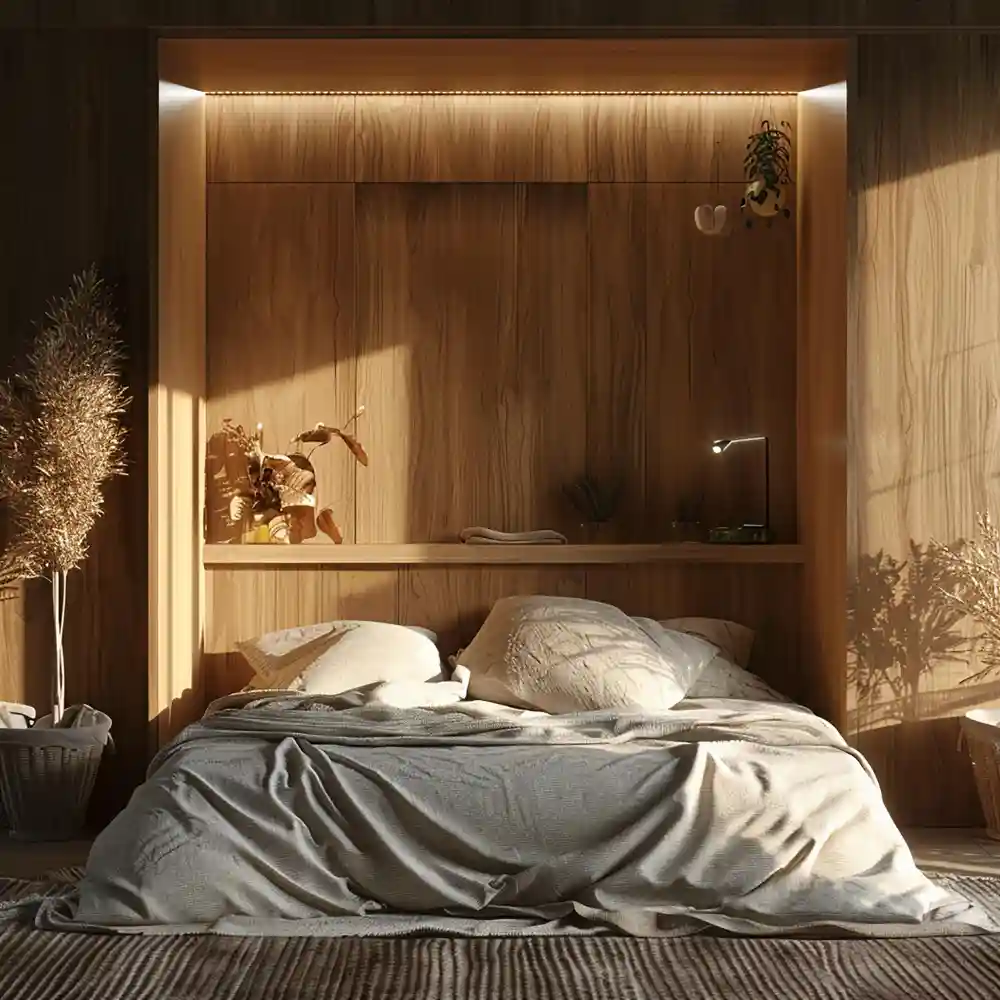
8. A Full Wood-Plank or Shiplap Wall
A full wood-plank or shiplap wall covers the whole surface behind the bed in horizontal or vertical boards. It brings farmhouse warmth and a cabin-like calm that pure paint can’t reach. Run boards horizontally to widen a narrow master, or vertically to lift a low ceiling. Stain the planks in warm oak for a natural look, or paint them warm white for a softer, brighter backdrop that still shows texture.
KEY TAKEAWAY: Wood treatments add shadow and height that paint can’t, with real-wood slat walls running about $20 to $40 per square foot.
Wallpaper, Texture, and Material Ideas
Wallpaper and natural materials bring pattern and tactile depth to the wall behind your bed. These bedroom accent wall ideas range from renter-safe peel-and-stick to permanent stone veneer, so there is an option for every home and lease. This is also where you can add the boldest pattern without overwhelming the room, since only one wall carries it.
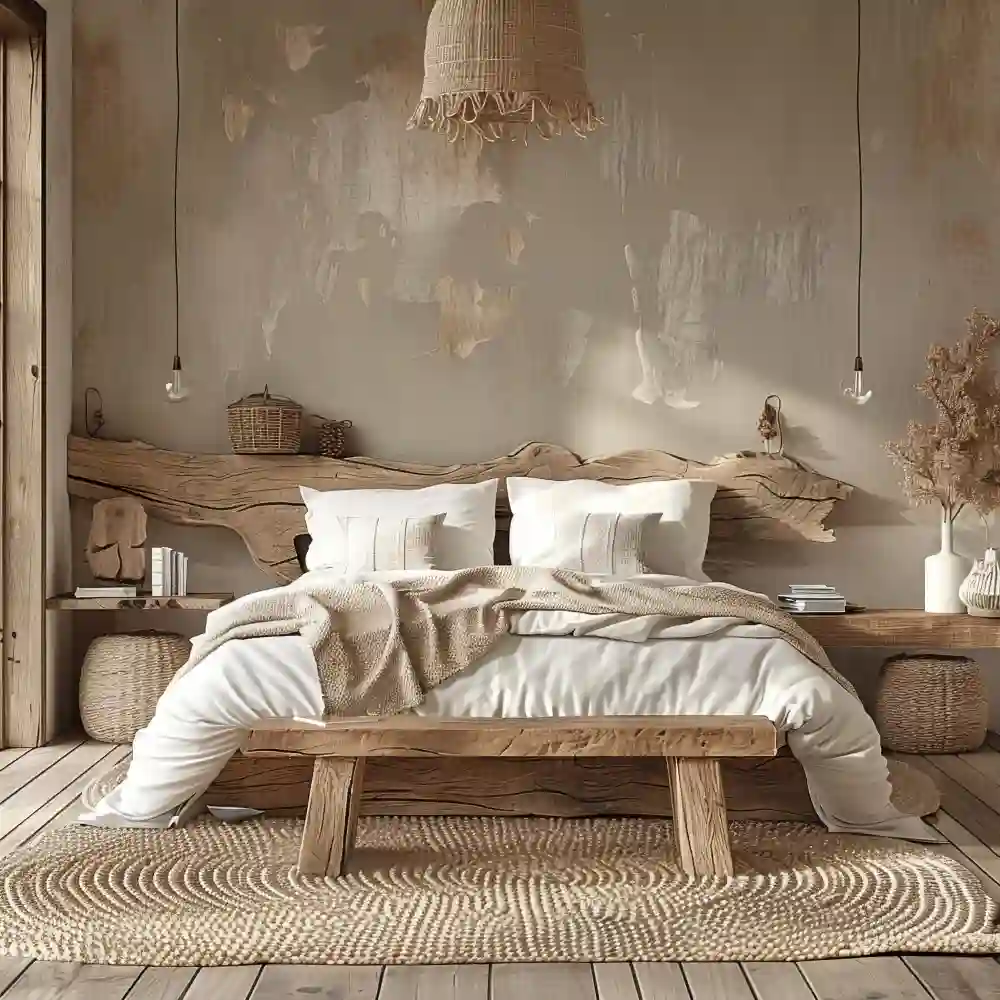
9. A Grasscloth Wallpaper Wall
Grasscloth wallpaper wraps the wall in woven natural fiber, adding subtle texture and a warm, organic feel. Up close it shows the hand-made weave; from the bed it reads as a soft, calm neutral. Choose oatmeal, sand, or warm taupe grasscloth to keep the room restful. Pair it with a linen or cane headboard so the natural materials echo each other and the wall feels layered, not busy.
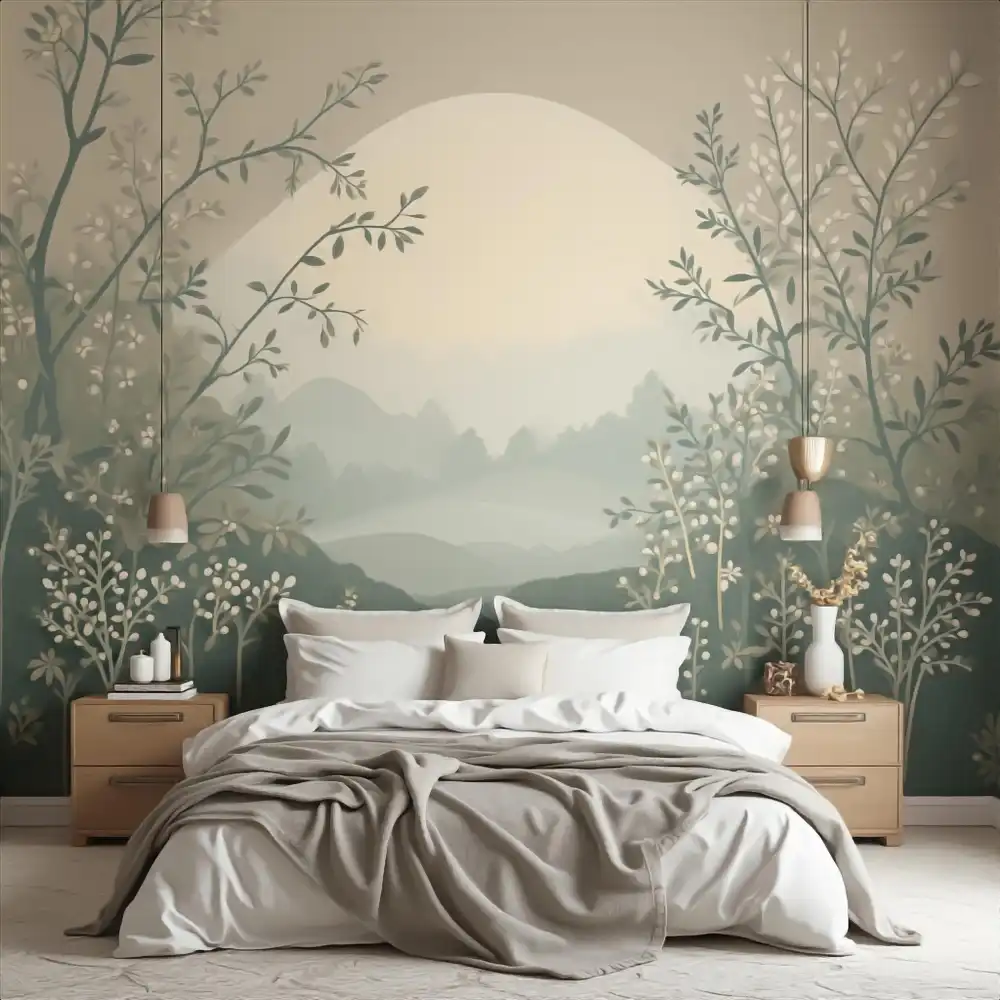
10. A Large-Scale Mural or Patterned Wallpaper
A large-scale mural or patterned wallpaper turns the wall behind your bed into the art itself, so you need almost nothing else above the headboard. Soft landscapes, muted botanicals, and gentle abstracts suit a master bedroom better than sharp, high-contrast prints. Keep the palette calm: sage, blush, washed denim blue, or warm cream. If the wallpaper is busy, let the bedding stay solid and quiet so the room still reads restful.
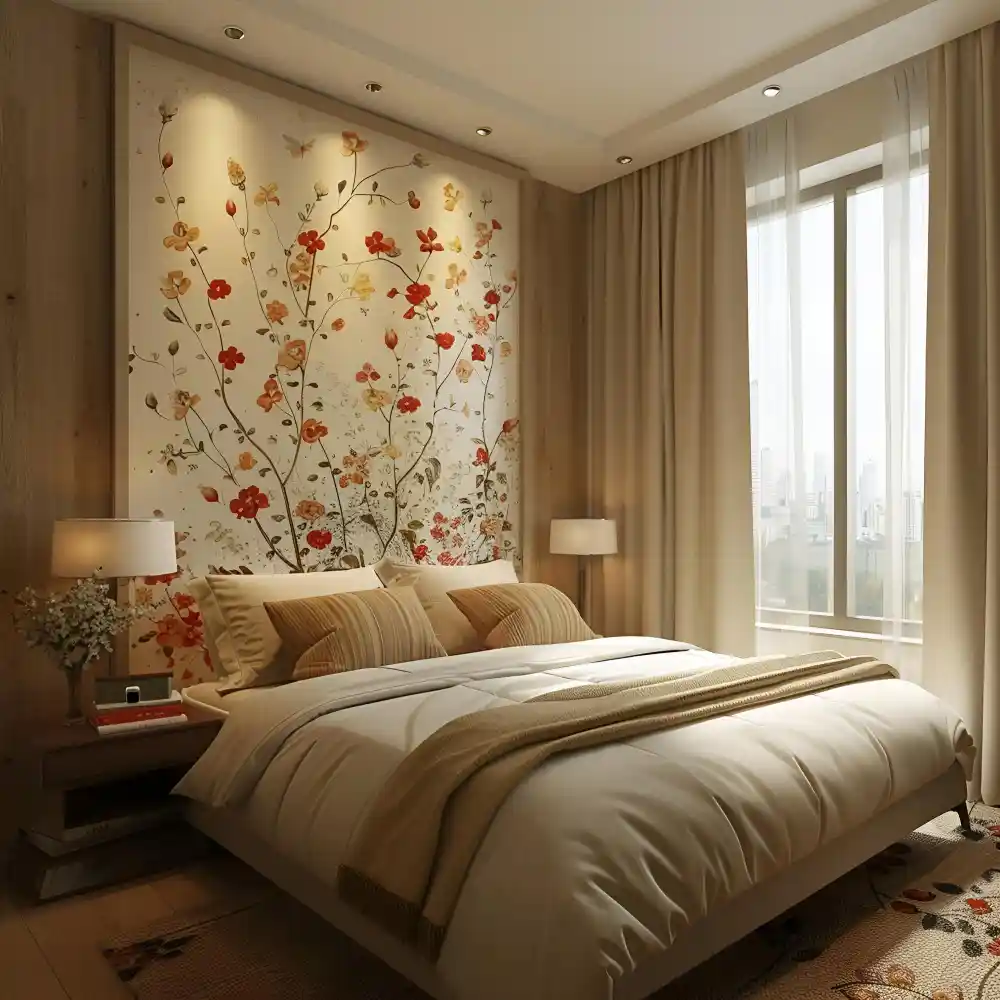
11. Peel-and-Stick Wallpaper for Renters
Peel-and-stick wallpaper gives renters a full accent wall with no paint and no damage. It applies in an afternoon and peels off cleanly when you move out, so your deposit stays safe. Rental Note: Peel-and-stick rolls run about $20 to $45 each and cover roughly 28 to 30 square feet per roll, based on HomeGuide’s 2026 wallpaper cost data. Most accent walls need two to four rolls. Choose a subtle texture or small pattern for a calm, removable backdrop.
12. A Stone or Brick Veneer Wall
Stone or brick veneer adds rugged, natural texture for a grounded, lodge-like master bedroom. The rough surface catches warm light beautifully and gives real weight to the wall behind your bed. Safety Note: Stone veneer is heavy, so it must be anchored into 2×4 wall studs at 16 inches on center, as the International Building Code stone-veneer rules require. This matters more here than anywhere, since the wall sits directly over where you sleep. Keep the stone in warm greys and tans to stay calm.
KEY TAKEAWAY: Wallpaper and material walls range from renter-safe peel-and-stick at about $20 to $45 a roll to permanent stone veneer that must be anchored into studs.
Bedroom Accent Wall Checklist
- Pick the wall behind the bed first, since it is the focal point and frames the headboard.
- Coordinate the wall color with your bedding and headboard, not against them.
- Buy one gallon of paint for a standard accent wall, or two for textured surfaces.
- Choose a calm, deep shade for sleep: sage, deep charcoal, muted clay, or soft slate.
- Add two wall sconces or one picture light at 2700K to warm the wall at night.
- Anchor stone veneer, paneling, or a wall-mounted headboard into studs at 16 inches on center.
- For rentals, use peel-and-stick wallpaper or a fabric panel instead of paint or permanent fixtures.
KEY TAKEAWAY: A good accent wall coordinates with the headboard and bedding, uses about one gallon of paint, and is anchored safely over the bed.
Finishing the Wall With an Upholstered Panel, Shape, and Light
The last group finishes the wall so it feels complete, not just colored. These final looks add softness, a painted shape, and the lighting that makes the whole wall glow at night. Lighting is the step most people skip, and it is the one that separates a flat wall from a finished one.
13. An Upholstered Wall Panel With Integrated Sconces
An upholstered wall panel covers the headboard wall in padded fabric, then wall sconces frame it for warmth and a true hotel-suite effect. Boucle, linen, and velvet panels on a plywood backing soften sound and add a quiet luxury you can feel. Mount the panel into studs, then flank the bed with two sconces using 2700K soft-white bulbs, the warm tone Feit Electric recommends for bedrooms. For more layered options, see these cozy bedroom lighting ideas.
DESIGNER TIP: A painted arch or soft scalloped shape behind the bed is a renter-friendly way to fake a headboard. Paint it about six inches wider than your bed on each side so it frames the pillows.
KEY TAKEAWAY: Frame the finished wall with two 2700K sconces or a picture light, since lighting is what makes an accent wall glow instead of sit flat.
Why Does My Accent Wall Fall Flat?
Most accent wall misses come from the same few habits. A wall that fights the bedding, picks the wrong wall, or skips lighting will look cheap no matter how nice the color is.
❌ Choosing the wrong wall → ✅ Always pick the wall behind the bed, the room’s natural focal point, not a random side wall.
❌ Matching the wall and bedding too closely → ✅ Keep bedding one or two shades lighter so the bed separates from the wall.
❌ Using a cold, harsh color → ✅ Choose calm, warm-leaning shades like sage, muted clay, or soft charcoal for a sleep-friendly room.
❌ Skipping the lighting → ✅ Add 2700K sconces or a picture light so the wall glows warmly at night, not just in daylight.
KEY TAKEAWAY: The biggest accent wall mistakes are picking the wrong wall, matching bedding too closely, and skipping warm lighting.
What an Accent Wall Costs
An accent wall is one of the cheapest high-impact upgrades in a master bedroom, since you only finish one wall. A simple painted wall costs little; wood, stone, and upholstery cost more but add real texture. All figures below are estimates for a standard accent wall and vary by material and room size.
| Project | Estimated Cost | Impact Level |
|---|---|---|
| Painted or color-drenched wall (1 gallon) | $40 – $120 | High |
| Peel-and-stick wallpaper wall (2-4 rolls) | $60 – $180 | High |
| Board and batten or fluted wood wall | $300 – $900 | Very High |
| Stone veneer or upholstered panel wall | $600 – $1,500 | Very High |
Best First Upgrade: Color-drench the wall behind your bed in a calm deep shade, since one gallon and a weekend deliver the biggest change for the lowest cost.
Skip for Now: Hold off on stone veneer until you are sure of the wall, because it is heavy, permanent, and needs stud anchoring.
KEY TAKEAWAY: A painted accent wall runs about $40 to $120, while wood, stone, and upholstered walls climb to $300 to $1,500.
What If Your Master Bedroom Is Tricky?
Not every master is a clean rectangle with a perfect headboard wall. A few common situations change which idea fits best.
If your bed sits under a window, you can still treat that wall. Paint or wallpaper around the window, or run a fabric panel above the headboard only. If you rent, lean on peel-and-stick wallpaper, a painted arch where allowed, or a freestanding upholstered headboard that fakes a finished wall with zero damage. For a small master, choose a receding color like deep green or navy and skip chunky materials that eat floor space. Browse more bedroom design ideas for layout-specific help, or all our room inspiration for other spaces.
Editorial field note: A north-facing master with flat white walls and a low oak bed often feels cold and unfinished. Color-drenching the headboard wall in deep olive and adding two warm 2700K sconces gives the bed a clear anchor. The room looks settled before any furniture moves.
KEY TAKEAWAY: Adapt the wall to your layout: paint around a window, use removable wallpaper for rentals, and pick receding colors in a small master.
Frequently Asked Questions
Conclusion
The wall behind your bed is the one surface that decides whether a master bedroom feels finished or flat. These bedroom accent wall ideas give you a path for any budget and any lease, from a weekend of paint to a custom upholstered panel framed in warm light. Pick the wall, coordinate it with your bedding and headboard, and add a warm glow, and the room falls into place.
Editorial field note: A plain master with three white walls and a bare headboard wall usually reads unfinished, even with nice bedding. Drenching that one wall in muted clay and hanging two warm sconces gives the bed a clear anchor and the room finally looks settled. For more ways to warm up the space, our home decor inspiration is full of room-by-room ideas, and these bedroom wall decor ideas for above the bed pair naturally with any accent wall you choose. If you want the full luxe look, start with these luxury master bedroom ideas, and for a different room try our living room accent wall ideas.
More Bedroom Decor & Accent Pieces
- 12 Chic Vanity Ideas for Bedroom Corners That Save Serious Space
- 17 Dorm Bedding Ideas for a Cozy, Aesthetic College Room
- Bedroom Storage Ideas That Look Stylish, Not Cluttered
- Bedroom Wall Decor Ideas for Above the Bed
- Cozy Bedroom Lighting Ideas for a Warm, Layered Glow
- Headboard Ideas That Make a Bedroom Feel Luxurious
- How to Style a Bed Like a Designer?
- Nightstand Decor Ideas for a Styled Bedroom