TL;DR
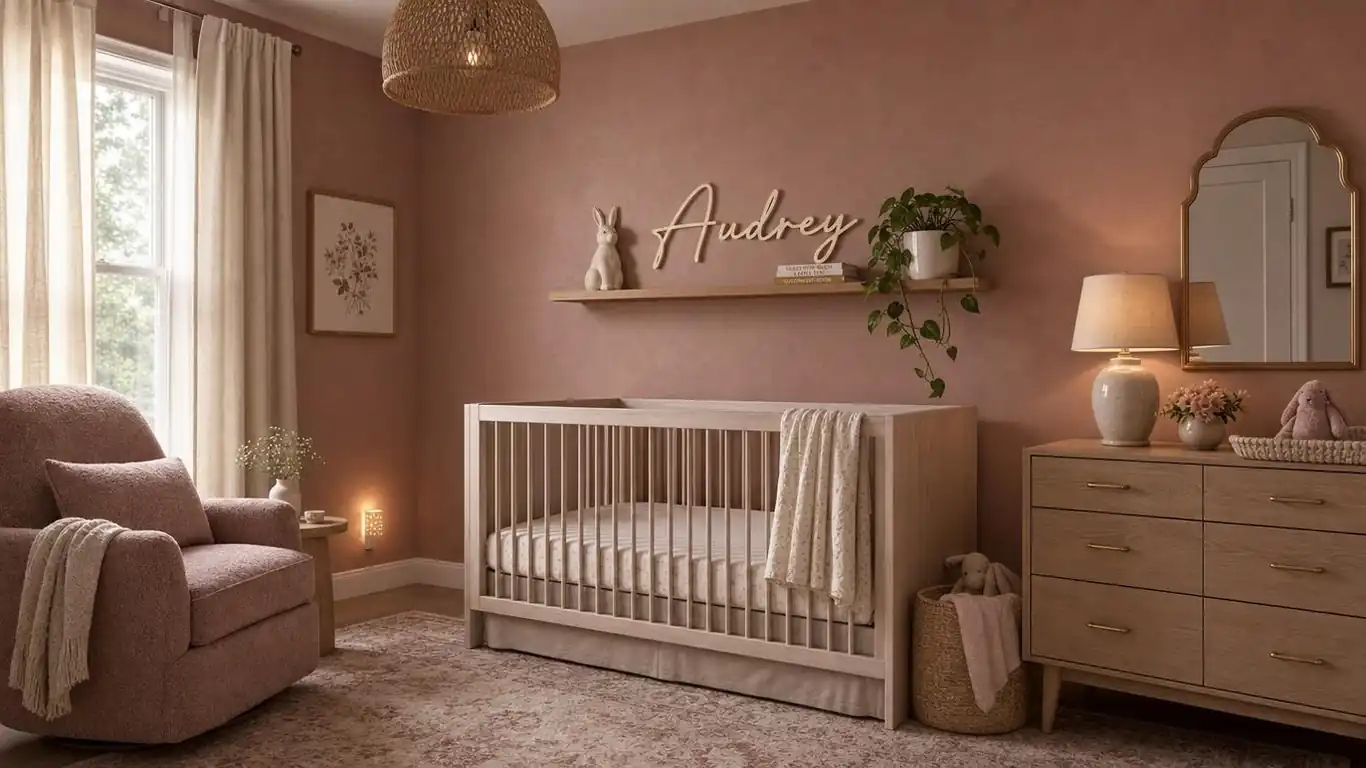
A timeless girl nursery skips the trendy and leans into soft palettes, natural materials, and furniture built to last. Think dusty rose paired with warm cream and raw oak — not hot pink and glitter. Layer linen bedding, a low-pile wool rug, and a curved upholstered glider for a room that feels intentional now and grows quietly with your daughter. The details — brushed brass hardware, a hand-painted mural, a rattan pendant — are what make it feel designed rather than decorated.
Why the “All Pink” Approach Almost Always Ages Badly
Why does one girl nursery feel soft and special ten years later, while another looks dated before the toddler years are over? The answer almost always comes down to a single decision made too early: going all in on one saturated color instead of building a palette.
A girl nursery that ages well starts with a foundation color that has nuance. Dusty rose works where hot pink fails. Soft lavender holds up where bright purple doesn’t. Warm cream walls outlast every trend. The specific tone matters more than the color family. I styled a nursery last spring for a client in a Victorian terraced house — she was convinced she wanted a candy-pink room. We compromised on a Benjamin Moore warm blush called Pale Pink Sands with white trim and warm oak floors, and the result looked like it had always been there. She messaged me six months later to say the room still felt fresh.
A girl nursery is one of the most personal rooms in a home. It deserves a palette that can carry the space for five to seven years, not one that needs repainting after eighteen months. Build the color story first — everything else follows from it.
KEY TAKEAWAY: A girl nursery palette built on muted, nuanced tones outlasts saturated colors by years and requires far less redecorating as the child grows.
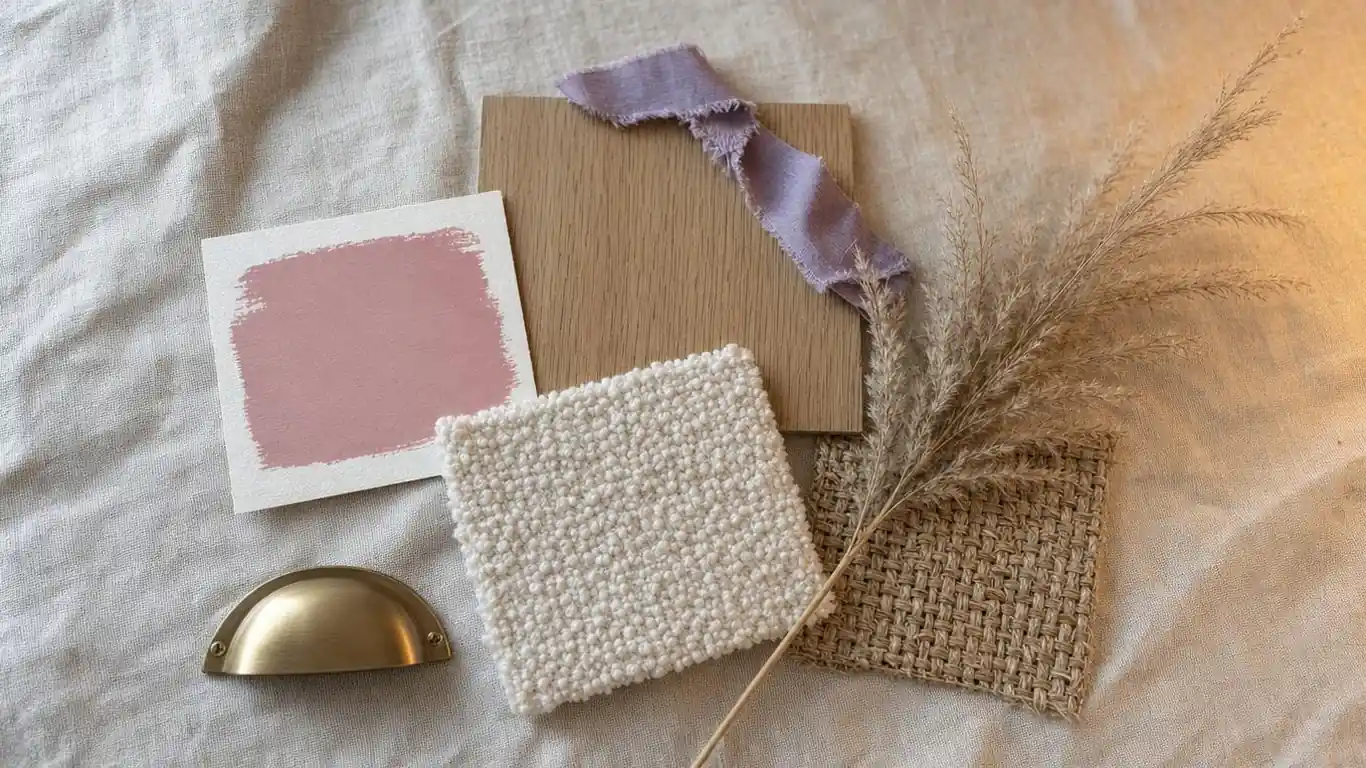
| Category | Timeless Choice | Why It Works |
|---|---|---|
| Wall color | Dusty rose, warm cream, soft sage | Muted tones shift gracefully as the child grows |
| Primary textile | Linen, raw cotton, boucle | Natural materials add warmth without trend dependency |
| Wood tone | Raw oak, light ash | Pale wood stays fresh across design movements |
| Metal finish | Brushed brass, antique gold | Warm metals complement every soft nursery palette |
What Does a Timeless Girl Nursery Actually Look Like?
A timeless girl nursery has three qualities: a restrained palette, natural materials, and furniture with genuine longevity. It does not follow a theme. Themes — woodland creatures, floral botanicals, princess castles — date quickly because they are illustration-driven rather than design-driven. A well-designed girl nursery uses one or two soft patterns at most, and lets the materials and proportions carry the room.
The palette typically centers on one anchor color — dusty rose, warm blush, soft sage, or muted lavender — layered with warm cream or soft white. A secondary accent in brushed brass or antique gold adds warmth without weight. The floor gets a low-pile wool rug in warm ivory or natural jute. Walls stay calm. The visual interest comes from texture: a linen crib skirt, a boucle glider cushion, a hand-knit cotton throw folded over the chair arm.
Furniture choices define the room’s staying power. A convertible crib in raw oak or white ash grows into a toddler bed, then a full bed frame. A wide oak dresser with brushed brass hardware works as a changing station now and a bedroom dresser for the next decade. An upholstered glider in a neutral linen fabric remains useful long after the nursing years end. These are the pieces worth spending on — they carry the room and the child.
For parents exploring 25 nursery room inspiration ideas across different styles, the ones that hold up longest almost always share this material-first approach rather than a theme-first one.
KEY TAKEAWAY: A timeless girl nursery is built around restrained palette, natural materials, and convertible furniture — not a decorative theme.
How Do You Choose the Right Color Palette for a Girl Nursery?
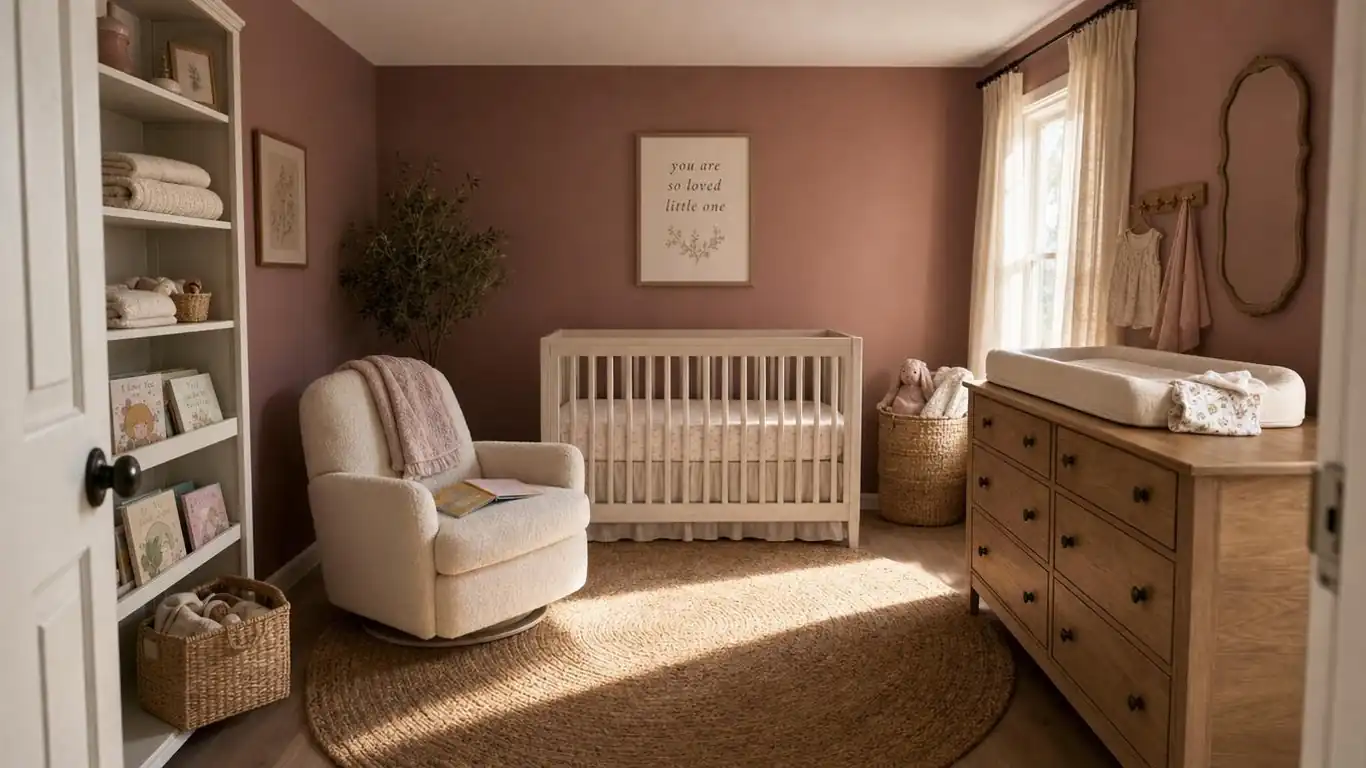
Color is the most permanent decision in any nursery. It takes more effort to repaint than to swap a pillow, so choosing thoughtfully pays off. A girl nursery color palette works best when it has three layers: a dominant wall color, a secondary textile color, and one metal or wood accent tone.
The dominant wall color should be a muted, warm-leaning version of whatever family you love. Dusty rose sits warmer and quieter than blush pink. Soft sage reads as green without demanding attention. Warm cream feels both neutral and feminine without a single pink element in sight. Paint the walls first, then build every other element around them — not the reverse.
Secondary textile colors appear in the crib bedding, the glider cushion, the curtain panels. Warm cream, soft white, and natural linen are the three most reliable choices here. They sit cleanly against any wall color and allow accent accessories — a dusty mauve pillow, a small terracotta ceramic lamp — to read clearly.
The metal or wood accent tone ties the room together. Brushed brass on drawer pulls, a lamp base, and a curtain rod creates a warm through-line across every surface. Raw oak furniture adds that same warmth at a larger scale.
A few palettes that consistently age well:
Dusty Rose and Warm Oak
Dusty rose walls — think a Benjamin Moore or Farrow & Ball soft pink with a grey undertone — paired with raw oak furniture and cream linen bedding. Add brushed brass hardware and a natural jute rug. The room feels feminine without being loud. It photographs beautifully at every age. For a softer, bohemian take on the same palette, these pink boho nursery ideas layer rattan and muted florals.
Soft Sage and Warm Cream
Soft sage walls with a warm cream crib and dresser, white linen curtains, and a natural rattan pendant. This palette skews slightly more gender-neutral while still feeling unmistakably sweet. It is especially well suited to rooms with limited natural light, as the sage keeps the space feeling alive rather than flat.
Warm Cream and Muted Lavender
Warm cream walls with muted lavender accents — a folded throw, a small decorative cushion, a lampshade — feel sophisticated and calm. This works particularly well in larger nurseries where a bolder wall color might overwhelm the space.
DESIGNER TIP: Paint a large test swatch — at least 12 by 12 inches — and live with it for three days before committing. Nursery colors shift dramatically between morning daylight, afternoon shade, and warm lamp glow in the evening feed.
KEY TAKEAWAY: A three-layer palette — dominant wall tone, secondary textile color, one metal or wood accent — gives a girl nursery its timeless visual structure.
Which Furniture Pieces Actually Matter in a Girl Nursery?
A girl nursery needs fewer pieces than most parents buy. The crib and dresser are the two workhorses — everything else is secondary. Choosing both with longevity in mind saves thousands in replacement costs and keeps the room from feeling cluttered as the child grows.
The Convertible Crib
A convertible crib is the single best investment in a girl nursery. A quality convertible in raw oak or white ash converts from a crib to a toddler bed with a conversion rail, then to a full-size bed with an additional conversion kit. Expect to pay $400–$900 for a reliable convertible from brands like Pottery Barn Kids or similar quality-tier options. The crib sets the room’s scale — choose one that is proportional to the room rather than the largest available.
The Dresser as Changing Station
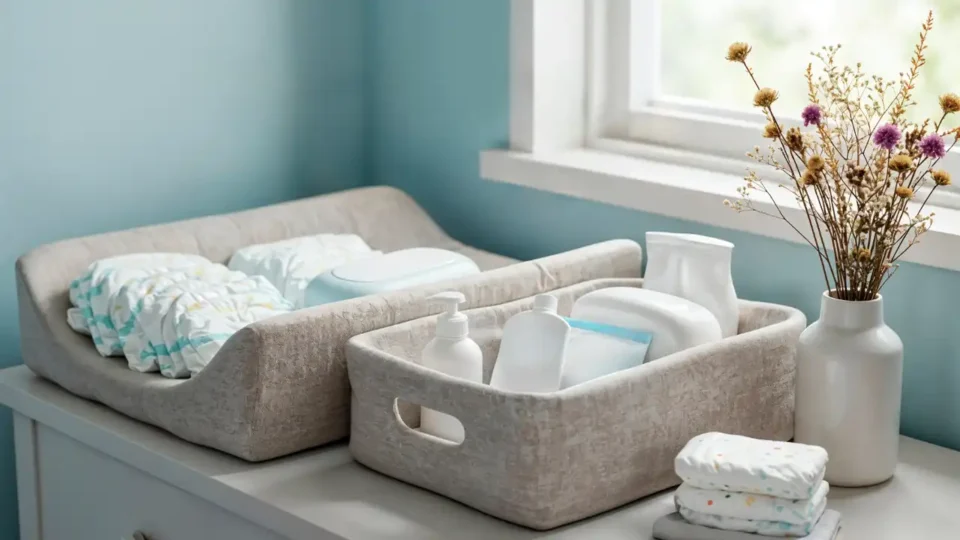
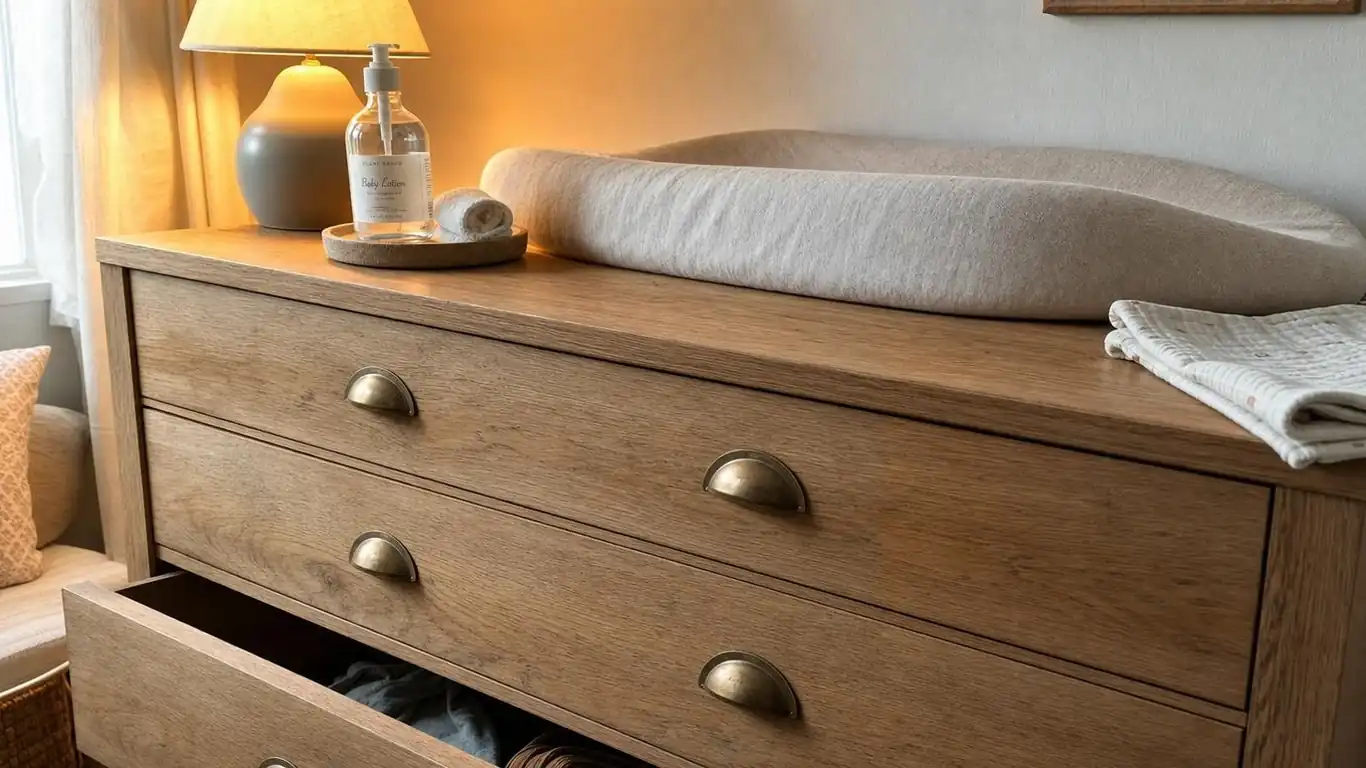
A wide dresser — at least 48 inches across — with a contoured changing topper is more practical than a dedicated changing table. The dresser stays useful for the child’s entire childhood. The changing topper lifts off when no longer needed. Brushed brass or antique gold drawer pulls add the design detail that makes a basic dresser feel considered. Budget $350–$700 for a solid wood dresser that will genuinely last.
The Glider or Nursing Chair
An upholstered glider in a performance linen fabric serves the late-night feeds, the book-reading years, and the bedtime routine conversations throughout childhood. A curved silhouette in warm cream or soft greige fits naturally into any palette. This is worth spending $500–$900 on — a poorly made glider develops squeaks within months.
The Bookshelf and Storage
Open bookshelves at low height give toddlers access to their own books — which matters more than adults expect. A simple Shaker-style bookcase in white ash with three or four shelves works at every age. Add a mix of woven baskets and fabric bins for toy storage at the lower levels. The 12 chic vanity ideas for bedroom corners principle applies here too — furniture that serves multiple functions always earns its floor space.
KEY TAKEAWAY: A convertible crib, wide dresser with changing topper, quality glider, and low open bookshelf are the four pieces that carry a girl nursery through every stage.
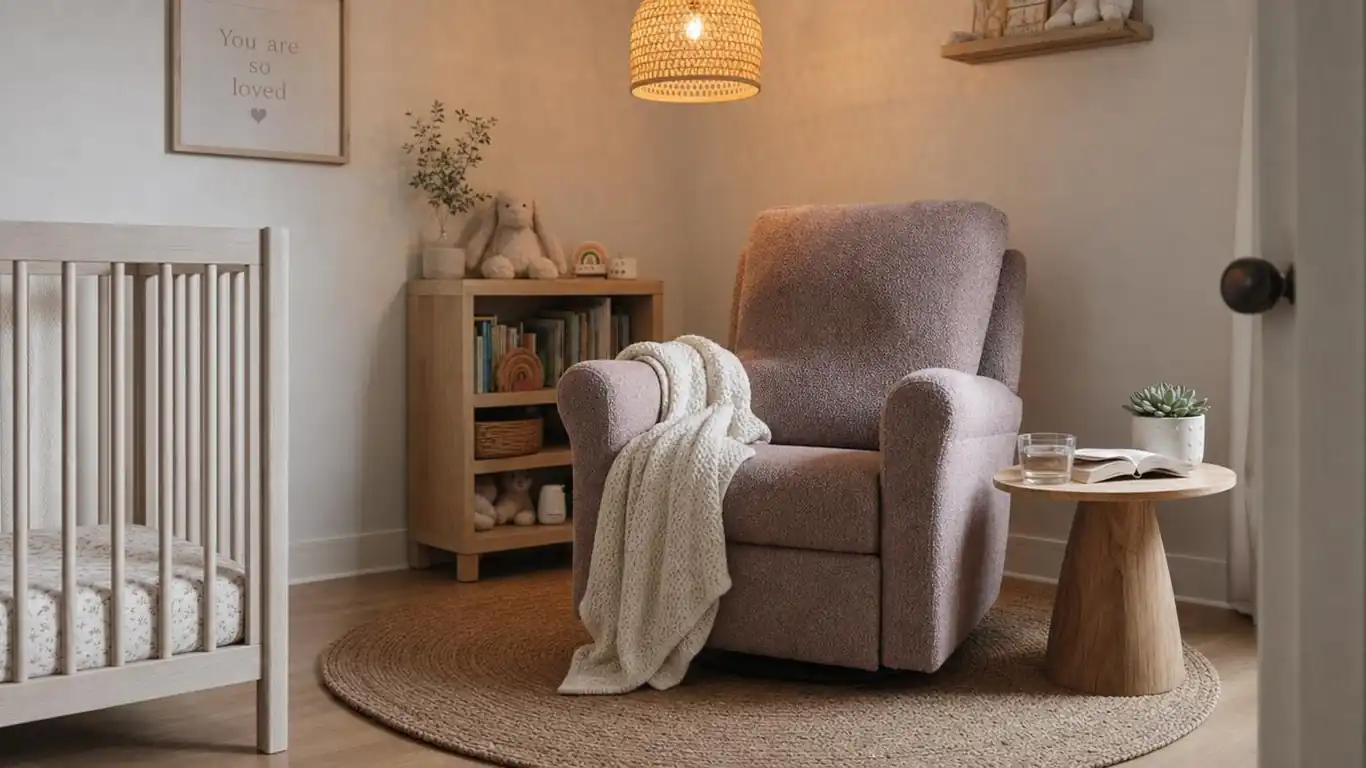
How to Layer Textiles and Decor Without Overdoing It
Textiles are the fastest route to warmth in a girl nursery — and the easiest to overdo. The rooms that feel designed rather than decorated almost always have fewer pieces, chosen more carefully. A girl nursery needs three layers of textile: the crib bedding, the window treatment, and the floor rug. Everything else is accent.
The crib bedding should be as simple as possible for both safety and longevity. A fitted sheet in soft white or warm cream percale, a lightweight cotton or muslin swaddle blanket folded at the foot, and a single decorative pillow placed outside the crib for display only. Avoid quilts, bumpers, and thick comforters inside the crib entirely — they are a safety concern and add visual clutter.
Window treatments in a girl nursery serve two functions: light control for sleep and softness for the room’s overall feel. Linen blackout curtain panels in warm cream or soft white hit both marks. They diffuse morning light while blocking enough to support nap schedules. Floor-length panels — at least 84 inches — elongate the walls and make the ceiling feel higher.
A low-pile wool rug in warm ivory, natural jute, or a pale dusty rose geometric pattern grounds the room without competing with the wall color. Size matters: a 6-by-9-foot rug in a standard nursery creates a cohesive central zone. Going smaller makes the room feel fragmented. For inspiration on how soft textiles transform a room at any scale, see cozy aesthetic small bedroom ideas — the layering logic applies directly to nursery spaces.
Accent decor should be light and intentional. A hand-painted name sign above the crib. A small rattan pendant light over the glider corner. A ceramic table lamp with a warm-toned shade on the dresser. A 12 spring shelf styling ideas approach works well for the bookshelf — alternate books spine-out with small objects: a ceramic rabbit, a stack of two board books, a small trailing plant in a white pot.
DESIGNER TIP: Hang curtain rods 4–6 inches above the window frame and extend 6–8 inches past each side of the window. This makes any nursery window look larger and the room feel taller — a trick that costs nothing and changes everything.
KEY TAKEAWAY: Three textile layers — crib bedding, floor rug, window panels — are all a girl nursery needs; accent decor should be light, specific, and spaced rather than clustered.
What Are the Most Common Girl Nursery Design Mistakes?
A few common missteps can undo an otherwise beautiful nursery. Here are the mistakes worth avoiding — from going too theme-heavy to forgetting a dimmer — so your room stays practical as well as pretty.
Going too theme-heavy too early
A fully themed nursery — woodland animals, floral botanicals, princess castle — looks charming at the baby shower and dated by the toddler years. Themes work better as accent details (a single framed botanical print, a small ceramic mushroom on the shelf) than as a room-wide concept. The modern boy nursery decor ideas approach — materials and palette over theme — translates equally well to girl nurseries.
Choosing a crib based on looks alone
An ornate white-painted crib with curved spindles photographs beautifully and warps badly within two years in a room with normal humidity variation. Solid wood construction with a clear-finished raw oak or white ash matters more than decorative detail. Always check that cribs meet current ASTM and CPSC safety standards before purchasing.
Underestimating storage from the start
Most first-time nursery designers underestimate how much storage a baby requires. Nappies, clothing in four sizes, blankets, swaddles, feeding equipment — all of it needs a home. Build more storage than you think you need in the first pass. The floor stays cleaner and the room stays calmer. For layout ideas that maximize storage without sacrificing style, 12 smart small bedroom layouts offers practical floor-plan thinking that translates well to nursery design.
Skipping a dimmer switch on the overhead light
A nursery without a dimmer switch on the overhead light is a nursery that keeps babies awake during feeds. Install a dimmer before you move furniture in — it is far harder to do afterward. Layer: dimmer overhead, a warm-toned table lamp at dresser height, and a soft plug-in night light for check-ins after midnight.
Forgetting to account for the glider’s footprint
A glider or rocker needs at least 36 inches of clearance in front of it to rock freely. Many parents plan the glider last — and then find it sits awkwardly close to the dresser or blocks the crib entirely. Mark the glider’s footprint on the floor plan before purchasing any other furniture.
KEY TAKEAWAY: The five most common girl nursery mistakes are over-theming, choosing the wrong crib construction, underbuilding storage, skipping a dimmer, and placing the glider without measuring its swing clearance.
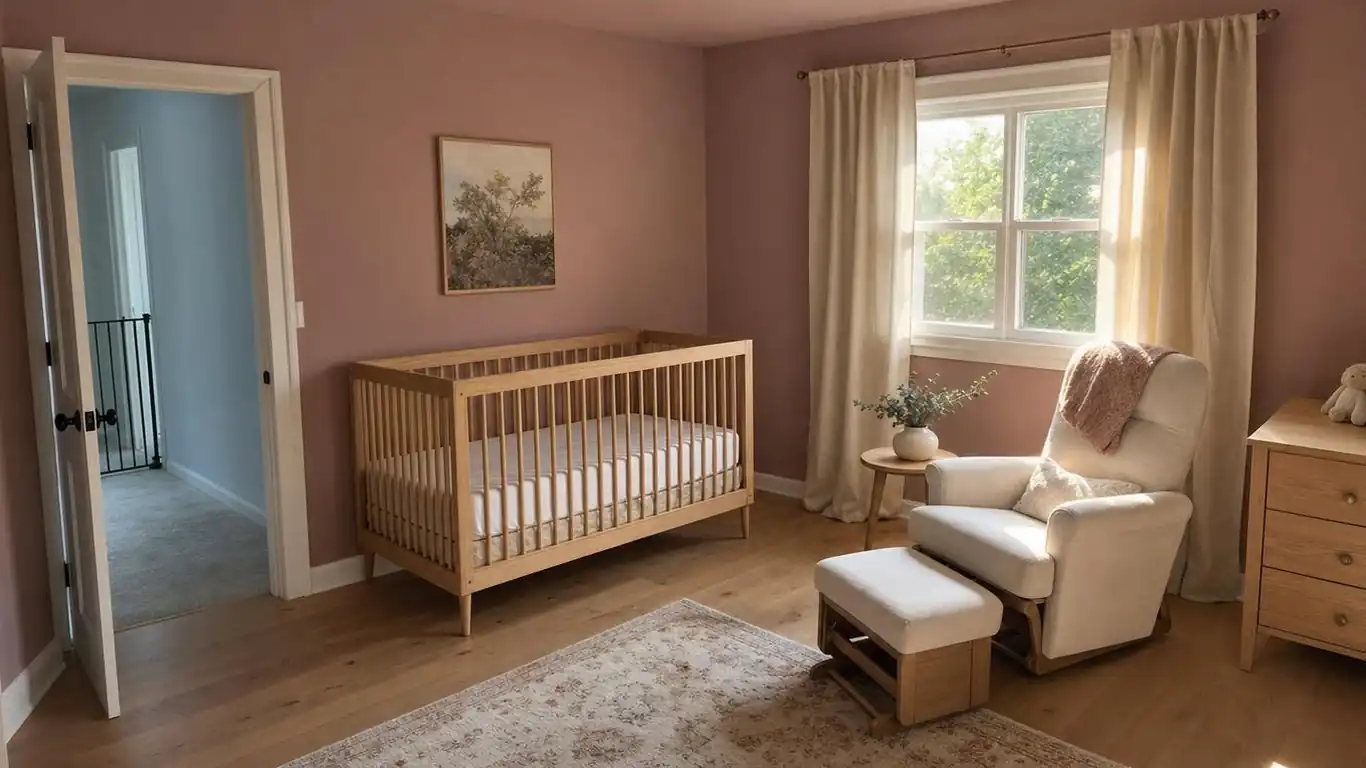
Special Considerations for Small Girl Nurseries
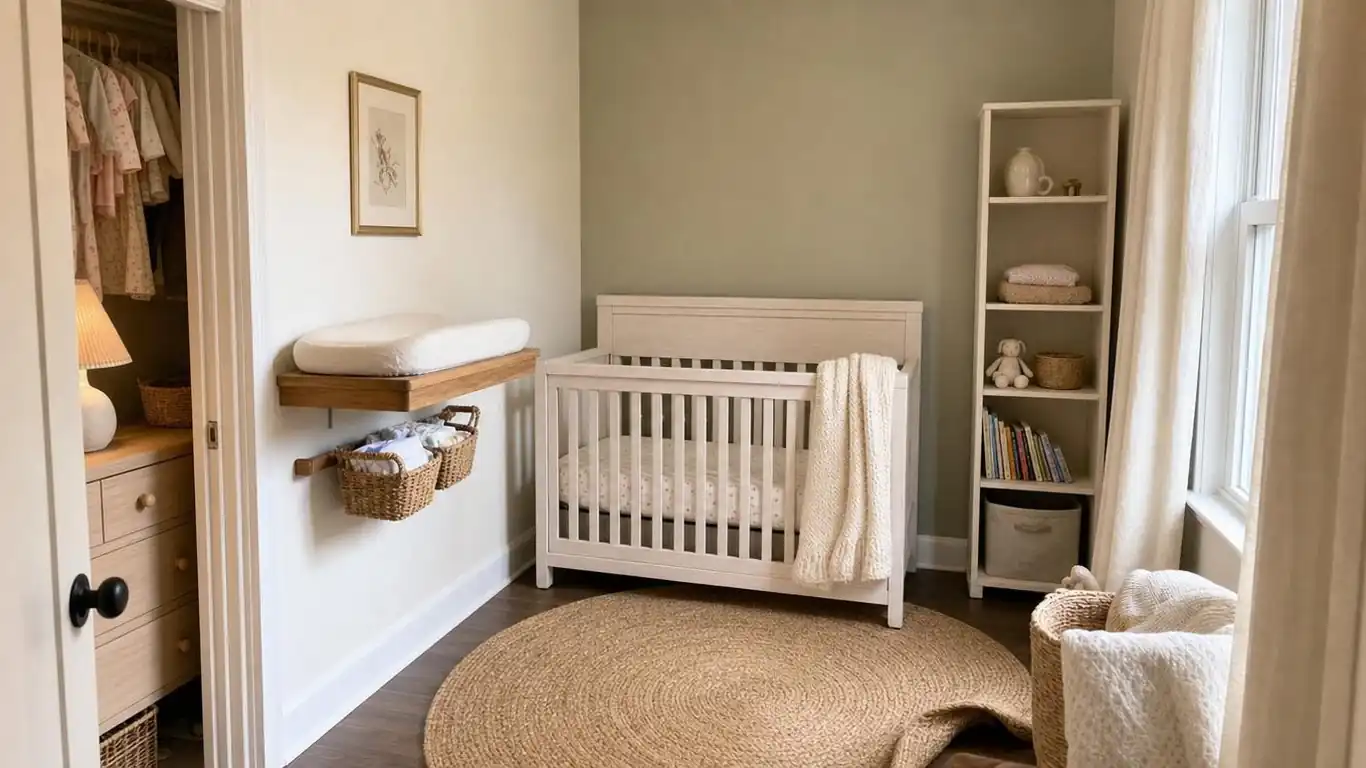
Not every nursery has the luxury of a large footprint. A small girl nursery — under 120 square feet — needs a different approach to furniture placement and storage. The core principle: every piece must do at least two jobs.
A wall-mounted changing shelf replaces the full dresser-with-topper in very tight rooms. It frees the floor for the crib and glider and creates a cleaner visual field. Pair it with a narrow dresser (36 inches wide) placed inside the closet if the closet permits. 7 effortless very small bedroom ideas covers the wall-mounting logic in detail — it applies directly to nursery planning.
Vertical storage matters more in a small nursery than in any other room. A tall bookshelf — 72 inches high — with the upper shelves holding folded textiles and the lower shelves holding accessible books and toys uses the wall height rather than the floor footprint. Paint the shelf the same color as the walls to reduce its visual weight.
Color strategy in a small girl nursery should lean lighter rather than darker. Soft cream or warm white walls with a single accent wall — the wall behind the crib — in dusty rose or soft sage creates focal depth without closing the room in. This approach features prominently in 15 pink small bedroom ideas and the visual logic is identical: light base, one statement surface, everything else calm.
A round rug rather than a rectangular one softens the angles in a tight room and makes the floor space feel more generous than it is. A 5-foot round rug in natural jute or pale wool sits well in nurseries under 120 square feet.
KEY TAKEAWAY: A small girl nursery works best when every piece does two jobs, vertical storage replaces floor storage, and a light base palette with a single accent wall creates depth without crowding.
Frequently Asked Questions
Conclusion
A girl nursery that still feels right five years from now is not an accident. It is the result of a few careful decisions made early: a nuanced palette over a saturated one, natural materials over novelty finishes, furniture built to convert rather than to be replaced. The room does not need to shout femininity to feel warm and sweet. Dusty rose walls, a raw oak crib, a cream linen glider, and one brushed brass pendant do more for the feel of the space than any amount of pink accessories ever could.
I finished a girl nursery project last autumn for a client in a newer-build semi-detached home — a room just 110 square feet with one north-facing window. We used warm cream walls, a white ash convertible crib, a soft dusty mauve boucle glider, and a 5-foot round natural jute rug. The window got floor-length cream linen blackout panels mounted 6 inches above the frame. Three months after we finished, she sent me a photo of her daughter’s first birthday — the room looked exactly as it had on day one, just lived in. That is what a timeless girl nursery should do. For more ideas across room types and styles, 101homedecor.com is a good place to keep exploring.