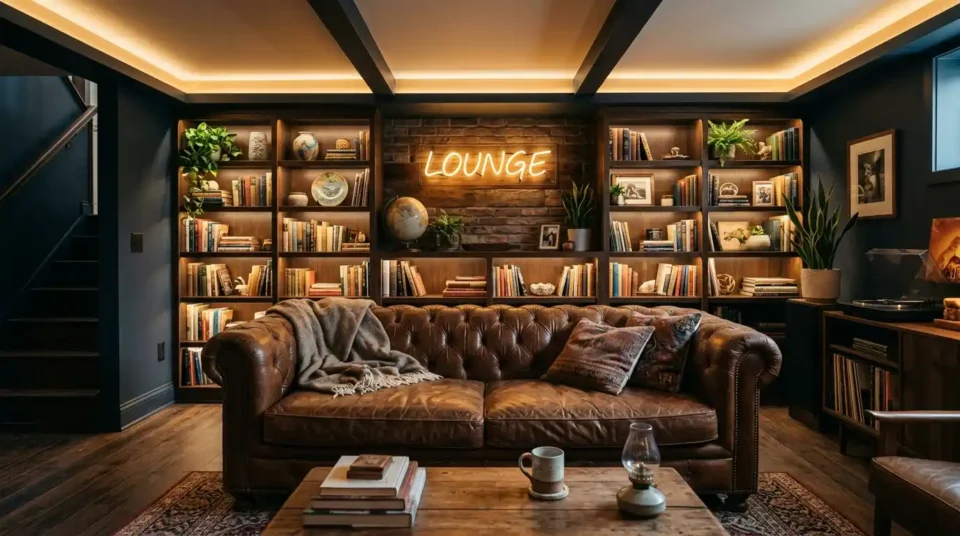
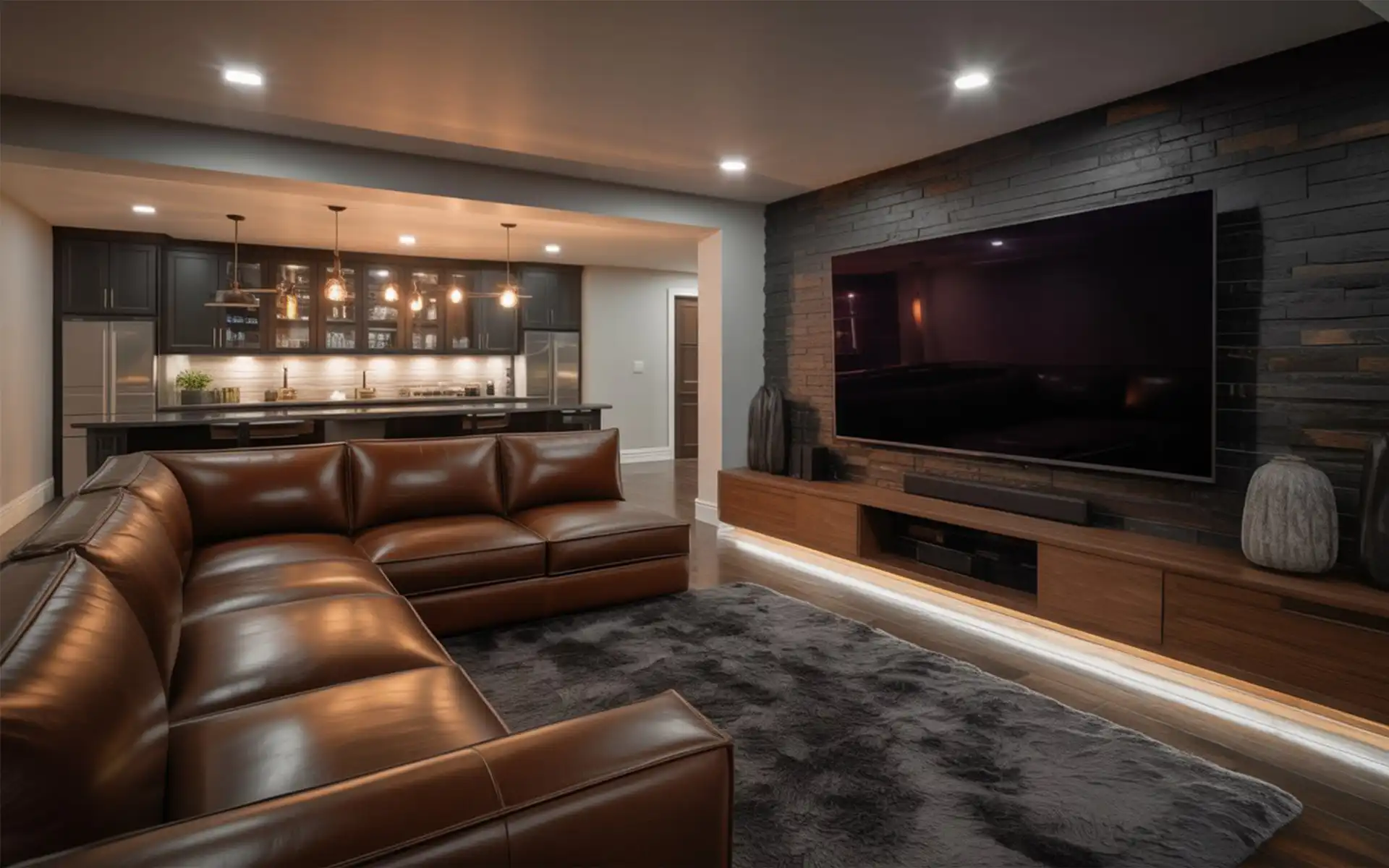
Creating a man cave in the basement is one of the most rewarding home improvement projects. It turns an often-underused, dark area into a personalized sanctuary. Whether you want a quiet place to watch the game or a social hub for friends, the basement provides the perfect “blank canvas” away from the main living areas of the house.
This guide helps homeowners and DIY enthusiasts navigate the design process. We will cover creative themes, layout strategies, and common pitfalls to avoid. From high-end tech setups to budget-friendly decor, you will find actionable inspiration to start your renovation.
Bookmark this guide for quick reference.
Key Takeaway: A successful man cave combines personalized style with practical basement-specific solutions like moisture-proof flooring and tiered lighting.
10 Man Cave Basement Ideas
From an industrial sports bar to a cinematic home theater, these ten builds turn an unused basement into the retreat you actually want to spend time in. Pick the theme that matches how you unwind, then borrow the details that fit your space and budget.
1. The Industrial Sports Bar
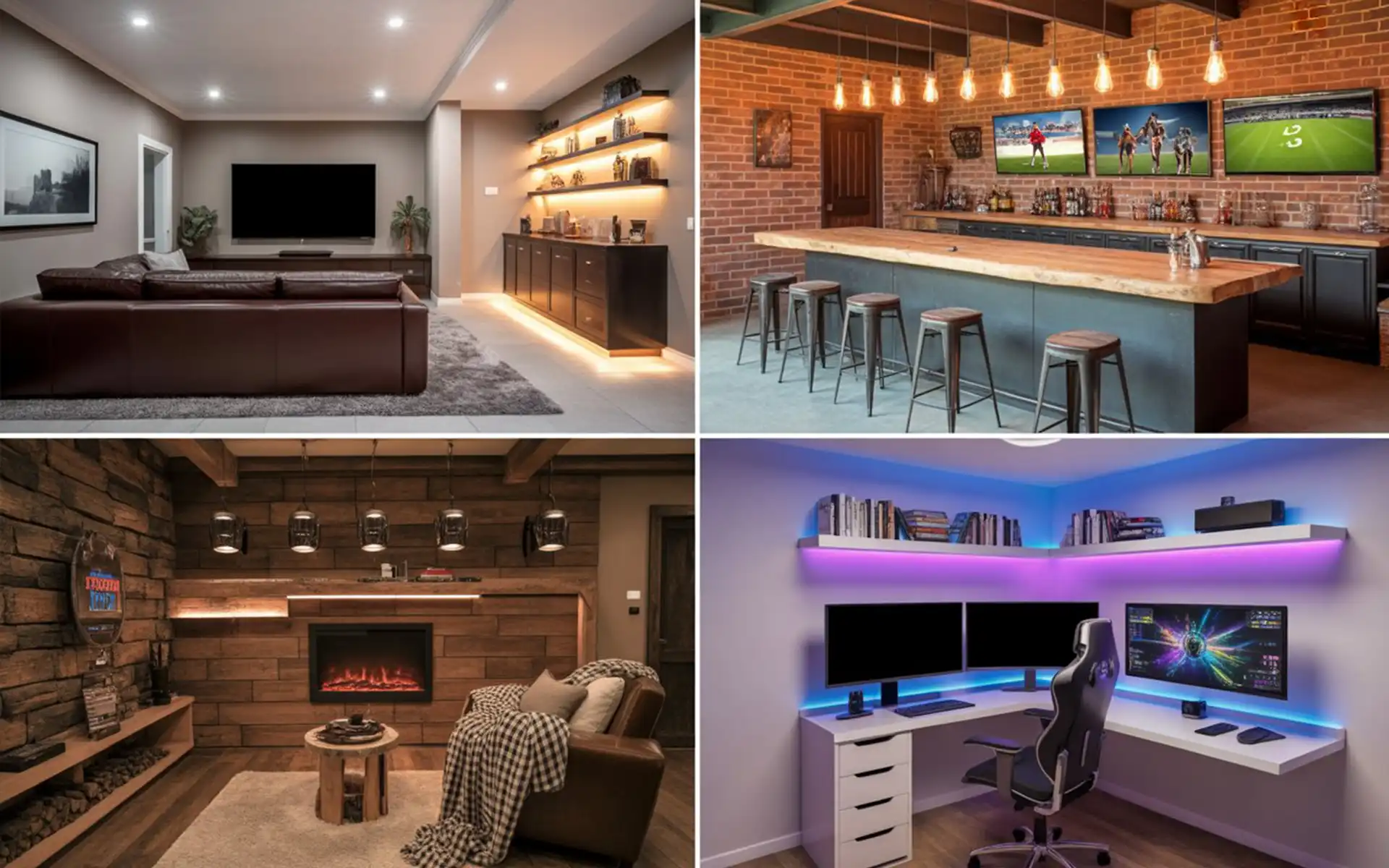
Create a commercial-grade feel using exposed brick wallpaper, matte black fixtures, and a long wooden bar top. Install multiple screens at varying heights so you never miss a play. This look works best with high-back leather stools and cool slate finish accents on the cabinetry.
2. Modern Cinematic Home Theater
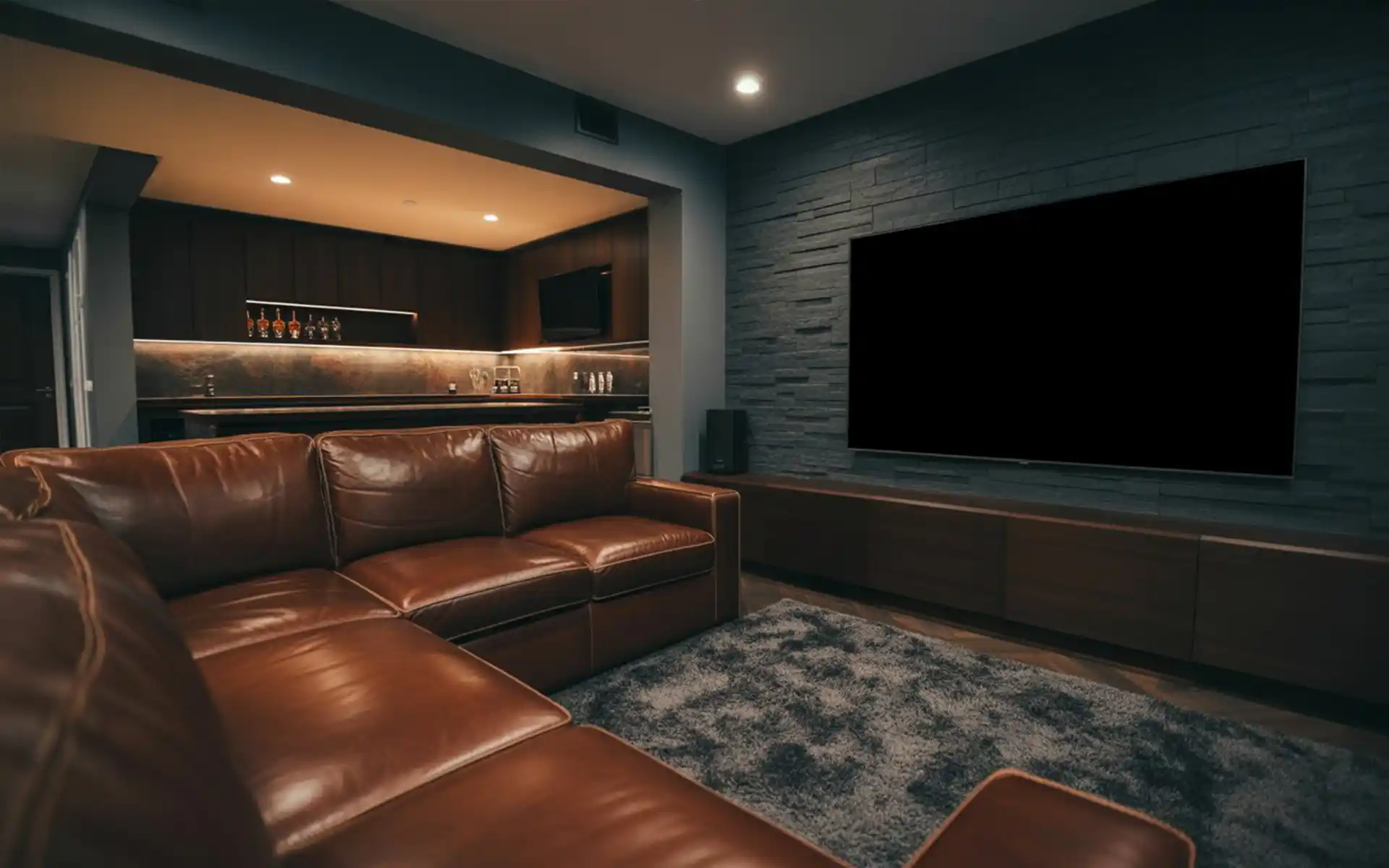
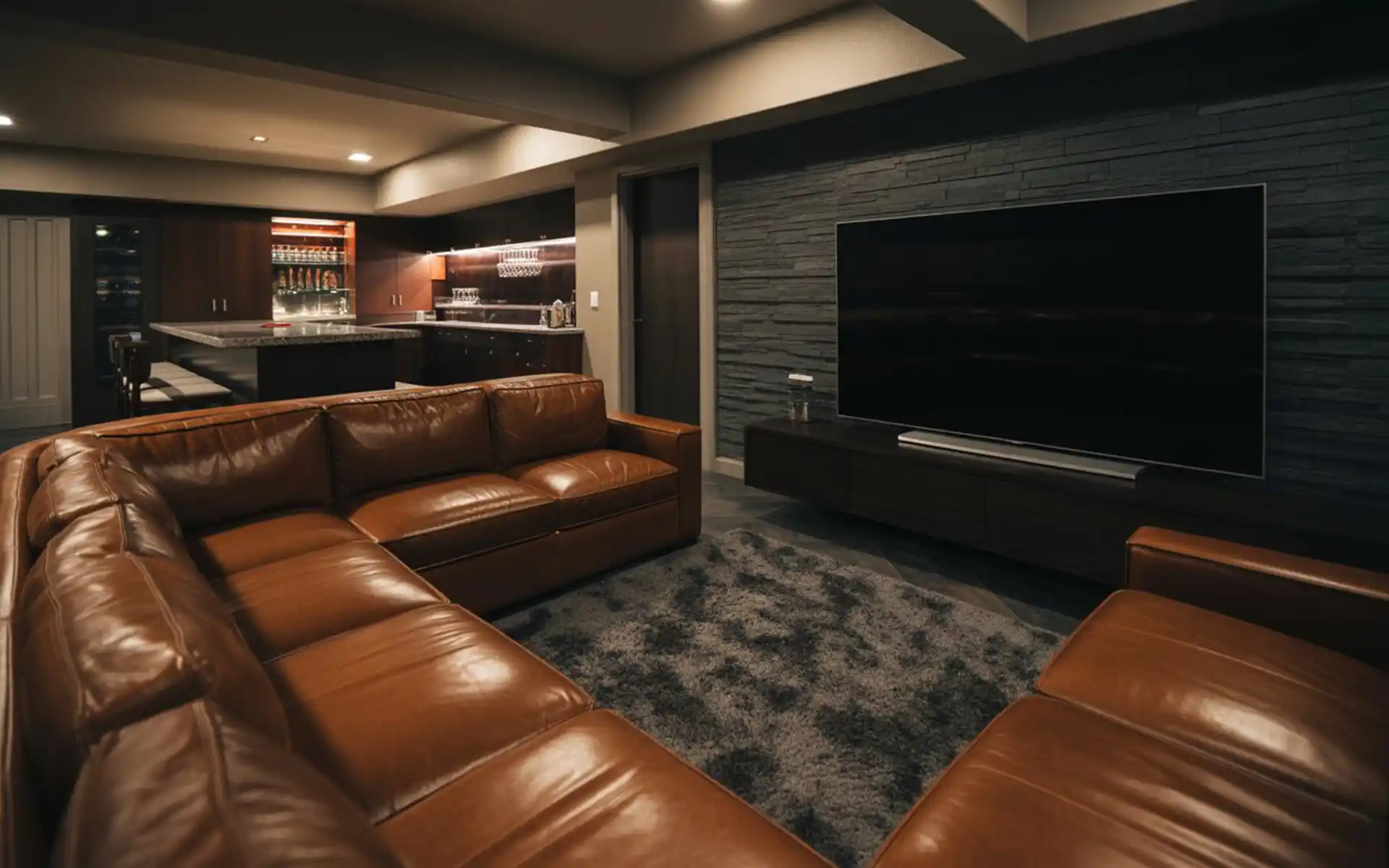
Focus on acoustics by adding plush wall panels and a thick area rug. Use oversized sectional seating or tiered recliner rows to mimic a real movie house. To keep it modern, opt for a dark charcoal palette and hidden LED strip lighting along the baseboards.
3. High-Tech Gaming Command Center
For the serious gamer, design a space with ergonomic chairs and wrap-around desks. Incorporate RGB lighting that can change colors based on the game’s mood. Ensure your cable management is sleek and your internet hardware is hardwired for maximum speed.
Designer Tip: Use floating shelves to display collectibles without cluttering your primary desk surface.
4. Rustic Cabin Retreat
Bring the outdoors in with reclaimed wood accent walls and warm greige tones. A faux-stone fireplace (electric or gas) serves as a cozy focal point. Decorate with plaid textiles and sturdy oak furniture to complete the mountain-lodge aesthetic.
5. The Underground Speakeasy
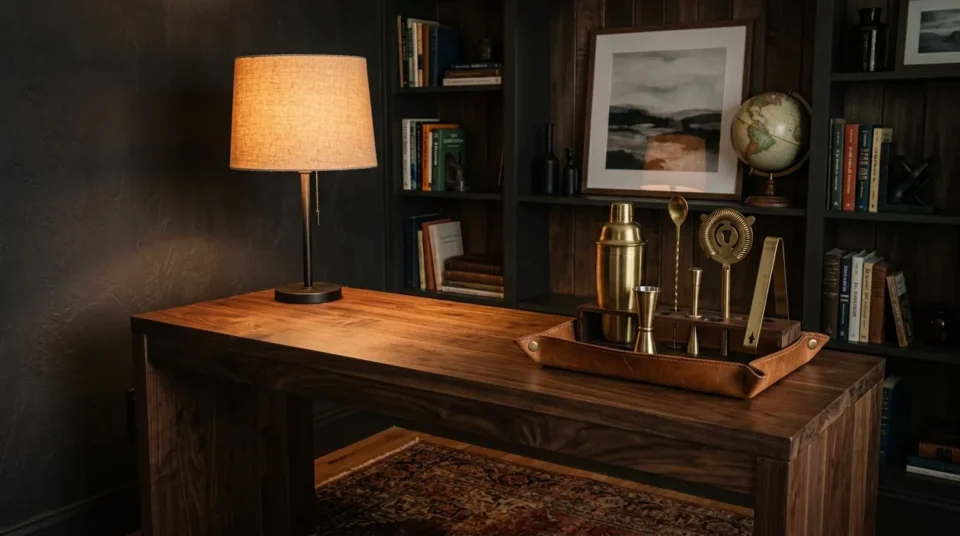
Embrace the windowless nature of a basement by going dark and moody. Use velvet curtains, brass hardware, and dimmable Edison bulbs. A small corner bar with glass shelving and mirrored backsplashes adds a touch of vintage luxury to the room.
6. Multi-Sport Simulator Room
If you have the ceiling height, install a golf or multi-sport simulator. Use high-impact netting and a quality projector. This turns a small corner of the basement into a year-round training facility for golf, soccer, or baseball.
Designer Tip: Always measure your “swing clearance” before committing to a simulator layout to avoid hitting the ceiling.
7. The Ultimate Music Studio
Soundproof the walls with foam tiles or heavy-duty curtains. Create a “live” area for instruments and a “dead” area for recording and mixing. Use soft oak accents for guitar racks and instrument stands to keep the vibe professional yet warm.
8. Classic Billiards and Pub Room
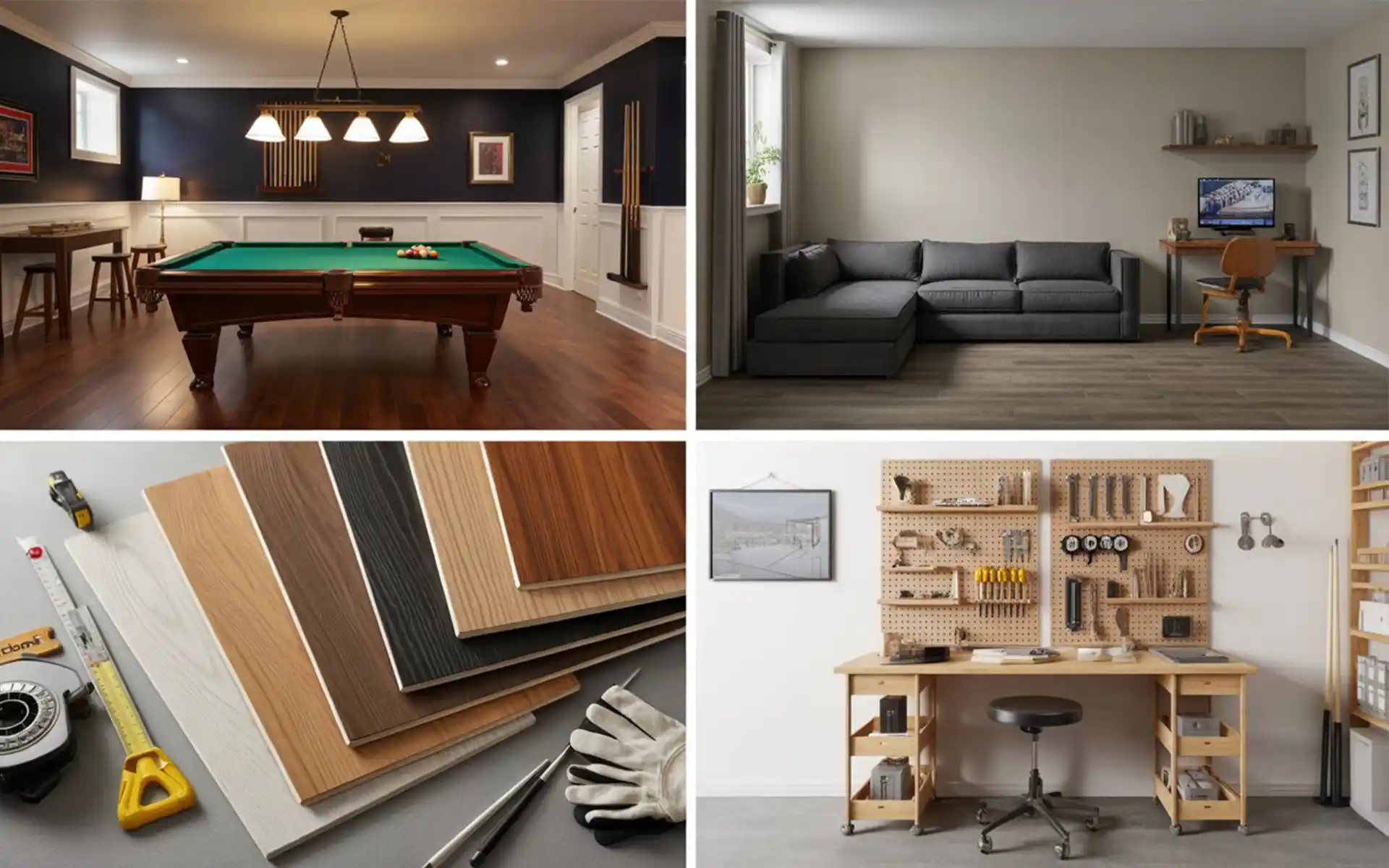
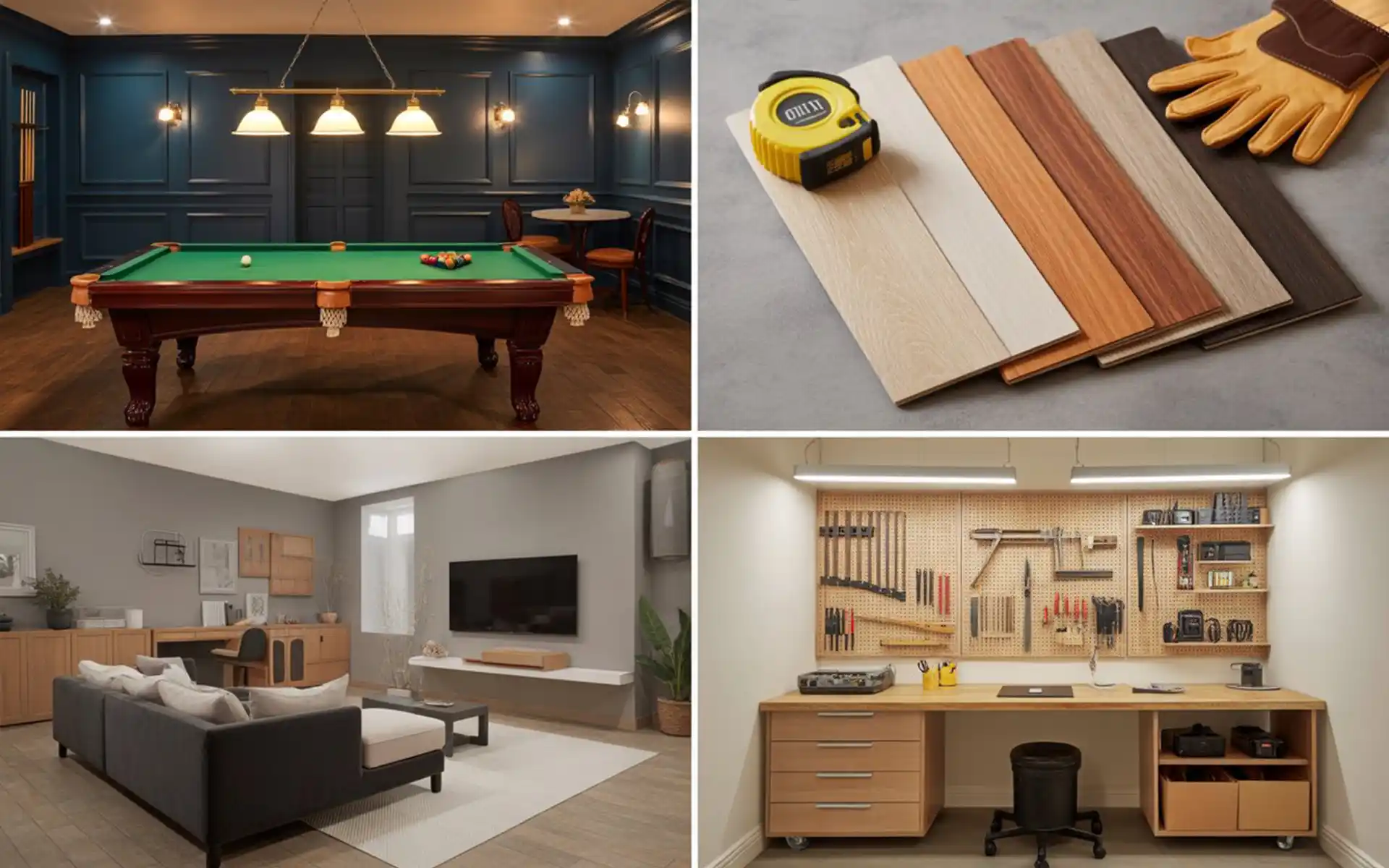
Center the room around a high-quality pool table. Ensure there is at least 5 feet of clearance on all sides for cue movement. Add a few “pub tables” in the corners for drinks and snacks, keeping the main floor open for movement.
9. Indoor Fitness and Power Gym
Ditch the dark “workout corner” for a fully realized gym. Use interlocking rubber floor mats for safety and sound dampening. Large wall-to-wall mirrors help the basement feel twice as large and allow you to check your form during lifts.
Designer Tip: Install a dedicated ventilation fan or a high-powered dehumidifier to keep the gym air fresh and dry.
10. Minimalist Hobby Workshop
For the maker, a clean workshop with pegboard walls and bright task lighting is essential. Use mobile workbenches on casters so you can reconfigure the room based on the project size. Keep the color palette neutral to make finding small parts easier.
Key Takeaway: The best man cave ideas prioritize a single primary activity while leaving enough flexibility for general relaxation.
Planning Your Layout
Before buying furniture, you must consider the physical constraints of a basement. Low ceilings and support pillars are common challenges that dictate where large items like pool tables or sectional sofas can go.
Maximizing Small Basements
If you are working with a tight area, look into small man cave ideas for inspiration on how to scale down pieces without losing functionality. Using “apartment-sized” sofas or wall-mounted TVs saves valuable floor space.
Zoning Your Space
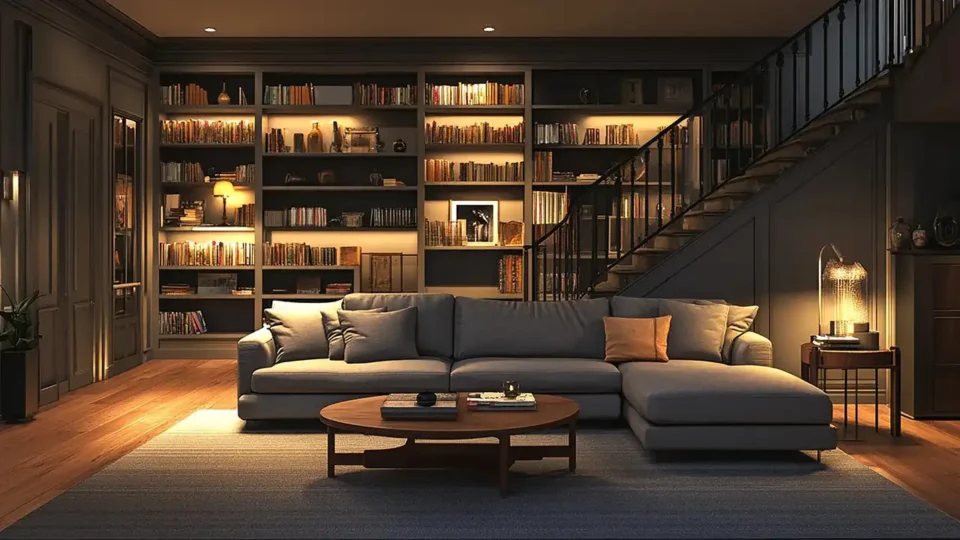
Even in a large open basement, you should create “zones.” Use area rugs to define the lounge area and different flooring or lighting to separate the bar or gym. This prevents the room from feeling like a vast, empty hall.
Key Takeaway: Smart zoning and scaled furniture ensure even a small basement feels like a complete, purposeful retreat.
Essential Features Checklist
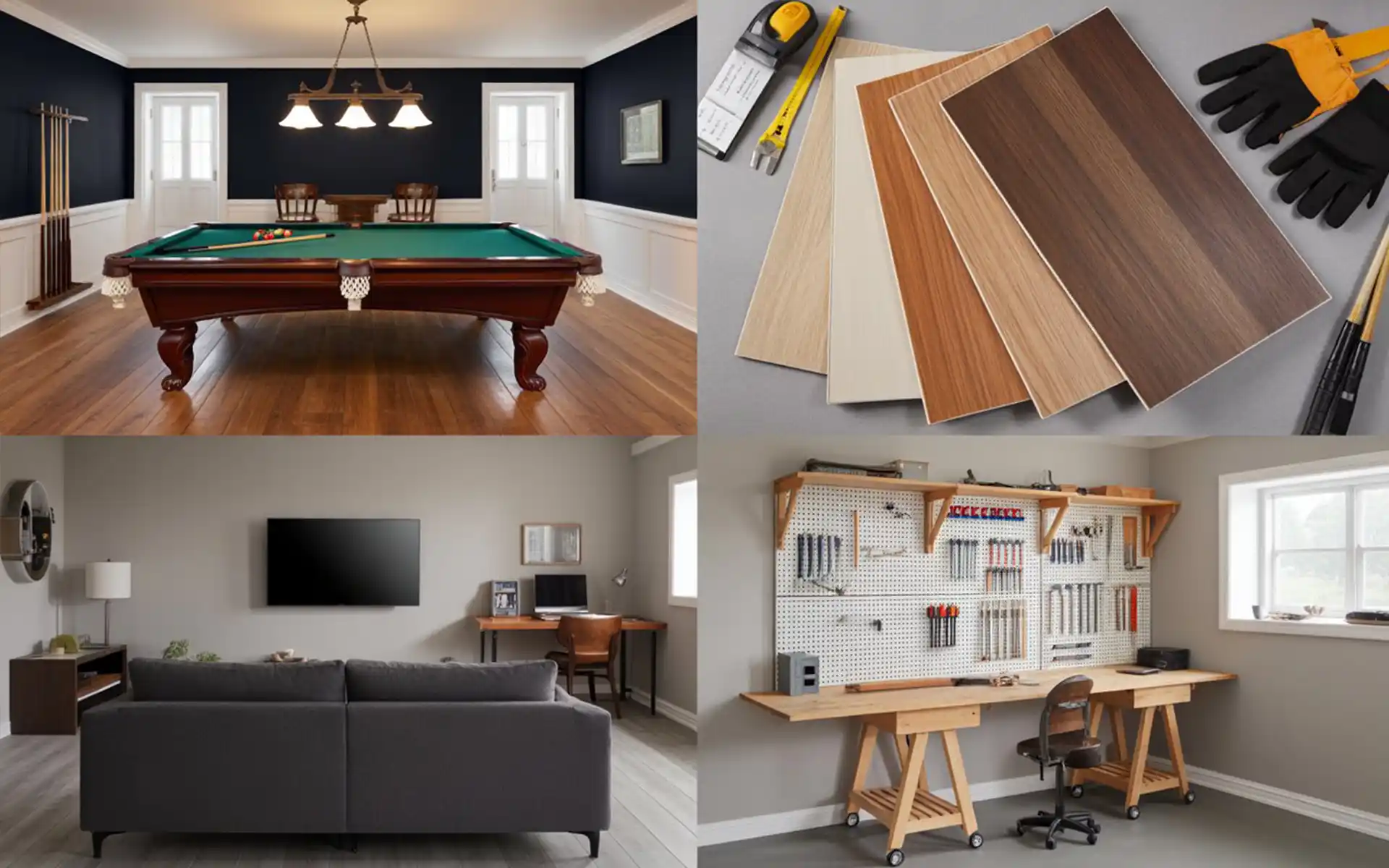
| Feature | Recommended Type | Why It Matters |
|---|---|---|
| Flooring | Luxury Vinyl Plank (LVP) | Water-resistant and durable |
| Lighting | Dimmable Recessed LED | Saves head room and adds mood |
| Climate | Dehumidifier | Prevents musty odors and mold |
| Seating | Performance Fabric | Resists spills and heavy use |
Common Mistakes & Fixes
- ❌ Mistake: Using standard drywall in damp areas. → ✅ Fix: Use moisture-resistant “green board” or specialized basement wall systems.
- ❌ Mistake: Only having one overhead light source. → ✅ Fix: Layer your lighting with floor lamps, sconces, and task lights.
- ❌ Mistake: Forgetting about Wi-Fi signal. → ✅ Fix: Install a mesh Wi-Fi extender to ensure your basement gets full signal for streaming.
- ❌ Mistake: Buying a sofa that won’t fit down the stairs. → ✅ Fix: Measure your stairwell clearance and consider modular seating that arrives in smaller boxes.
Key Takeaway: Technical details like moisture control and stairwell clearance are just as important as the final decor.
Budget & Cost
A basement man cave can range from a simple cosmetic refresh to a full-scale structural renovation.
- Basic Refresh ($500 – $2,000): Paint, new area rug, DIY bar cart, and updated lighting fixtures.
- Mid-Range Remodel ($5,000 – $15,000): New LVP flooring, built-in cabinetry, and mid-tier electronics.
- High-End Transformation ($20,000+): Full soundproofing, custom wet bar with plumbing, and professional theater seating.
The Under-$1,000 Plan
- Deep clean and paint the walls a modern “greige” or navy.
- Install DIY LED strip lighting for an instant mood shift.
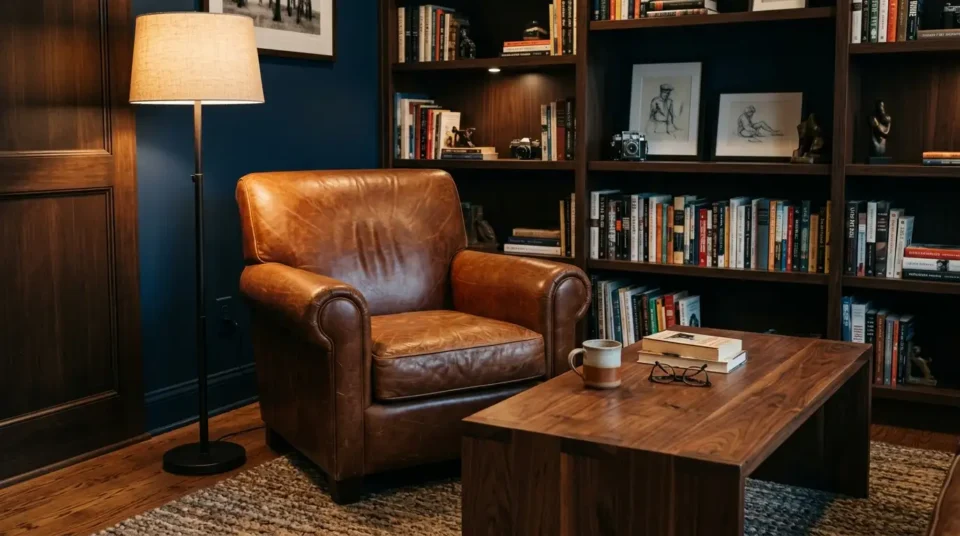
- Shop second-hand for a solid wood coffee table or bar stools.
- Add a large, comfortable area rug to hide cold concrete floors.
Key Takeaway: You don’t need a massive budget to create a man cave; focus on paint, lighting, and comfortable seating first.
Decisions & Edge Cases
Basements come with their own complications. Here’s how to handle the two most common ones — sharing the space with other functions, and working around a low ceiling.
The “Shared Space” Scenario
If the basement must also function as a guest room, incorporate a high-quality sleeper sofa. For more tips on blending styles, check out man cave style ideas to see how neutral tones can bridge the gap between a rugged man cave and a welcoming guest suite.
Dealing with Low Ceilings
Avoid hanging chandeliers or bulky ceiling fans. Stick to recessed “can” lights and paint the ceiling the same color as the walls to blur the boundaries and make the room feel taller.
Key Takeaway: Design flexibility allows your man cave to serve double duty without sacrificing its “hideaway” feel.
FAQ’s
Conclusion
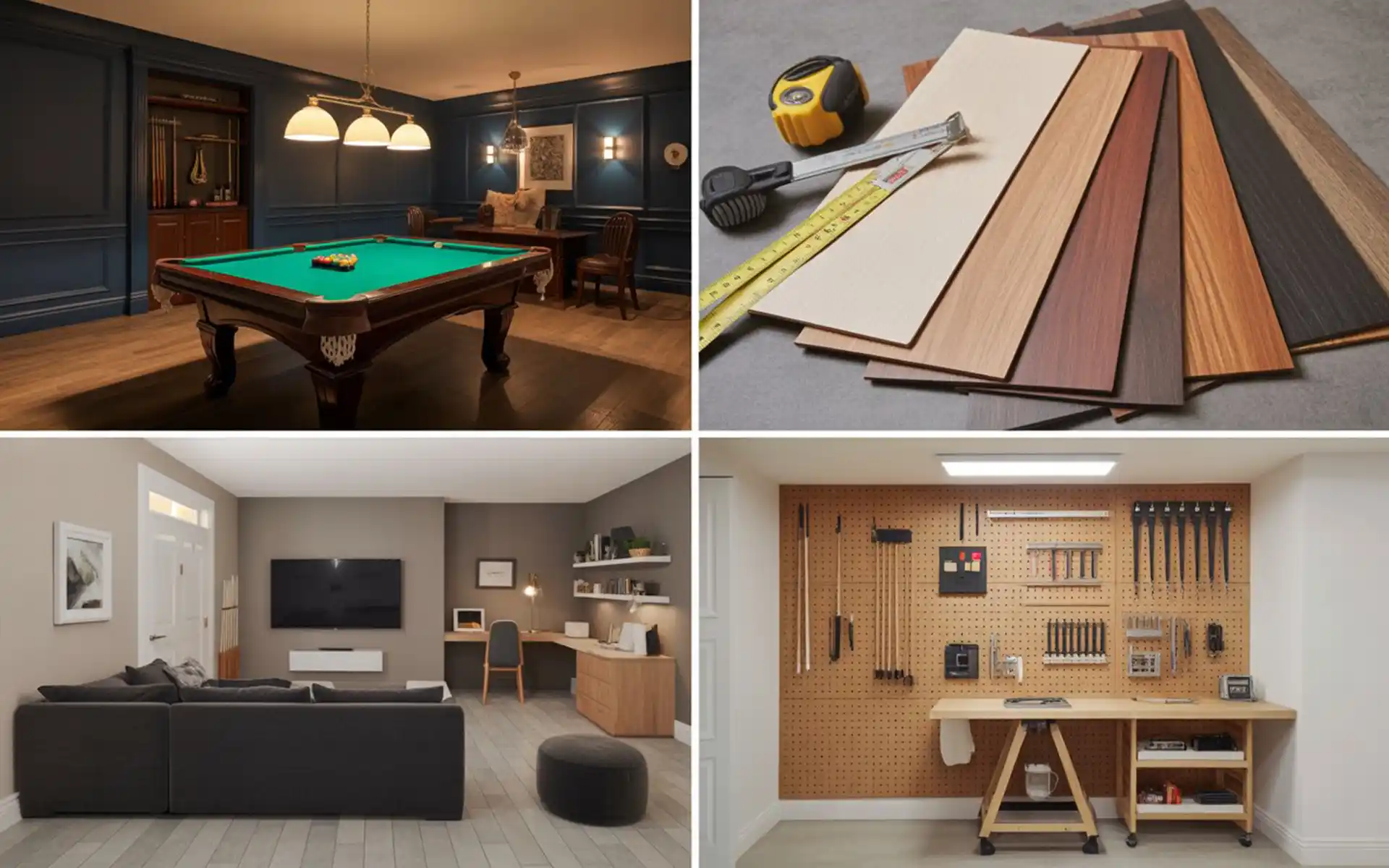
Building the ultimate man cave is about creating a space that reflects your personality and provides a much-needed break from daily stress. By focusing on a clear theme and addressing basement-specific needs like lighting and moisture, you can build a retreat that adds value to your life and your home.
- Measure your space and draw a rough floor plan.
- Choose a primary theme (Sports, Cinema, Gaming).
- Set a realistic budget for electronics vs. furniture.
- Select moisture-friendly materials for the floor and walls.