TL;DR
- Walnut and ash are the go-to wood tones — oil finish beats lacquer for everyday use and aging beautifully.
- Oval tables have replaced rectangular farmhouse tables as the most-requested dining shape.
- Tapered or hairpin legs in brushed brass or matte black reduce visual weight and keep rooms feeling open.
- Mix seating styles rather than buying a matched set — it’s now a deliberate design choice, not a budget move.
The MCM Dining Table Moment
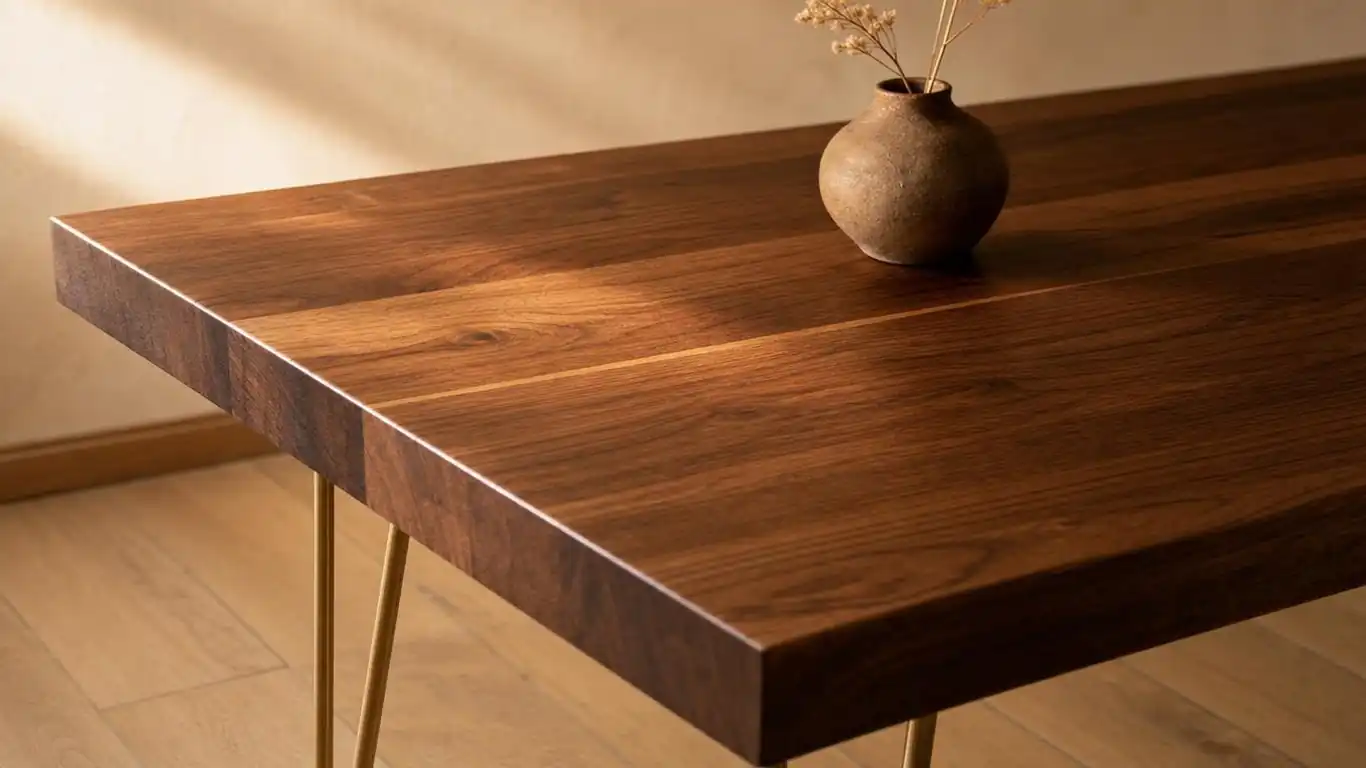
Tapered legs on a walnut dining table reduce visual weight at the floor level by more than any other single design decision. That is not a styling opinion — it is the reason mid century modern dining tables keep reappearing in dining rooms across every price point and every city. The leg pulls the eye down and under. The room opens up. The table earns its place.
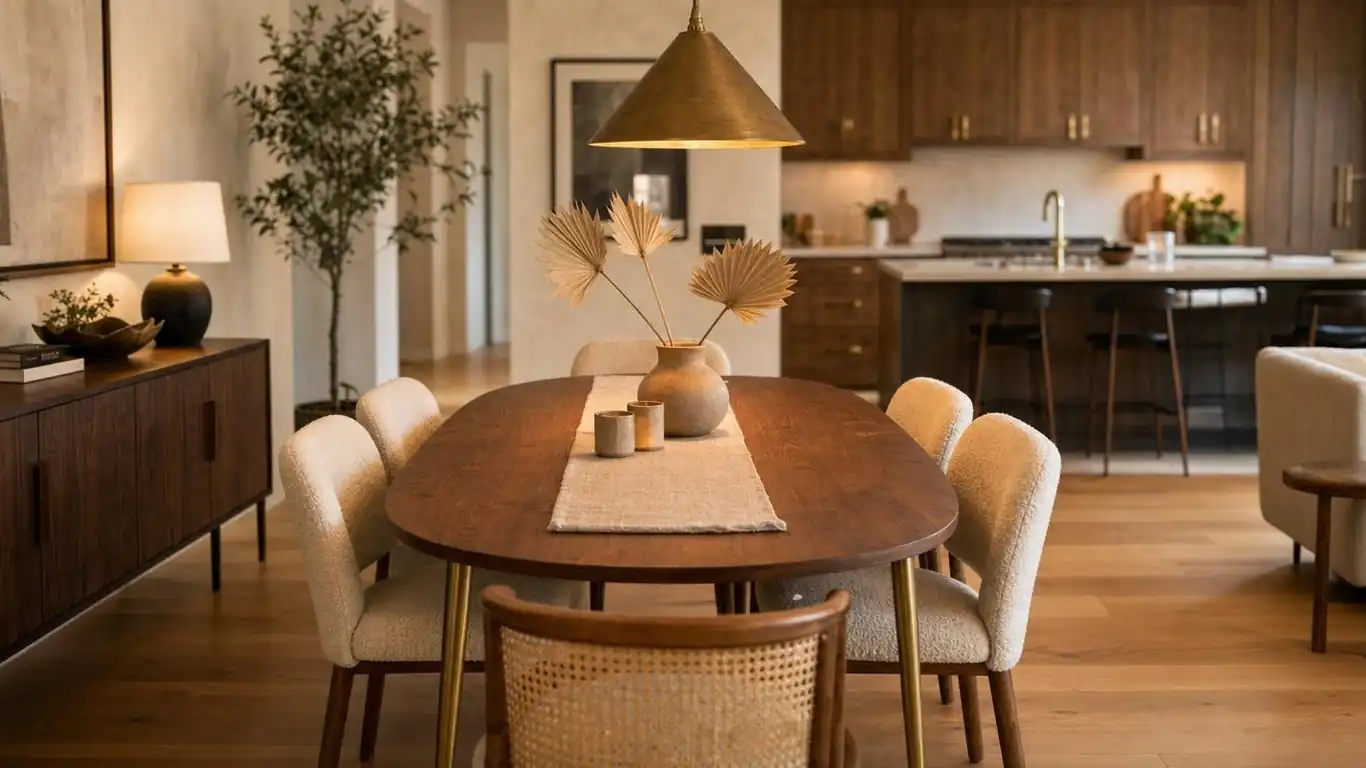
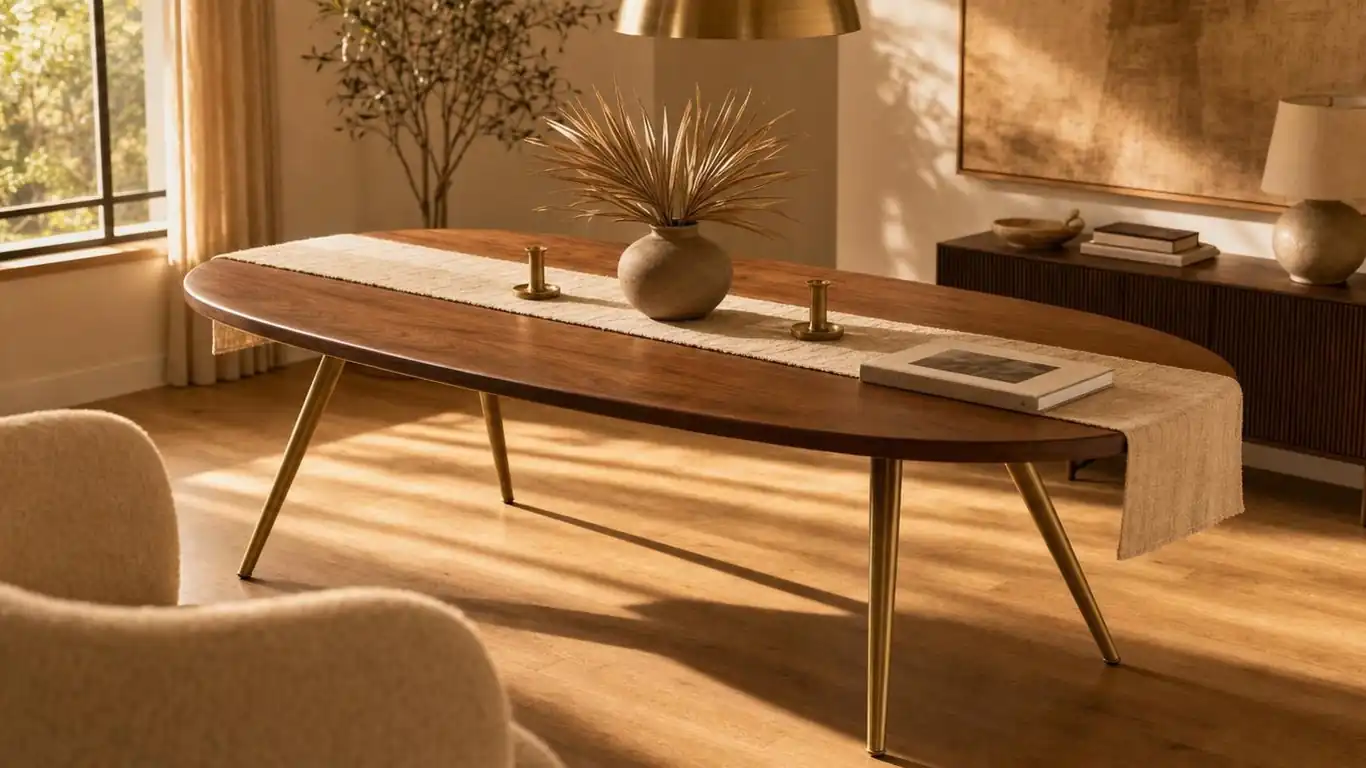
I redesigned a client’s dining room in late 2024 — a couple in a 1960s townhouse with a rectangular lacquered table that had worked fine for years. We swapped it for a 68-inch oval walnut table with brushed brass hairpin legs. The room was exactly the same size it had been the day before. It felt like someone had knocked out a wall. The warm wood grain, the softer oval shape, and the lighter legs shifted the entire feeling of the space in a way that no amount of styling had managed.
Mid century modern dining tables sit at the intersection of warm wood tones, clean geometry, and open-plan living — and that intersection is exactly where dining room design is headed right now. The same instinct drives 11 cozy farmhouse living room ideas toward warmer, more human rooms, and 11 earthy modern bedroom ideas toward natural materials with texture and grain. The dining room is catching up.
This guide covers the materials, shapes, leg finishes, and seating combinations that make the difference between a dining table that just sits there and one that makes the whole room. Browse 101homedecor.com for the full picture across every room in the house. Bookmark this guide for quick reference.
KEY TAKEAWAY: Mid century modern dining tables work because tapered legs, oval shapes, and oil-finish walnut solve visual weight, room scale, and everyday durability at the same time.
Why Mid-Century Modern Dining Tables Are Back
An oval walnut dining table seats six in a room that feels too small for a rectangular one. That single geometry shift is one reason mid century modern dining tables are back at the center of how designers approach the dining room.
For years, the default dining room setup was grey-and-white contemporary — cool tones, lacquered surfaces, matching chairs. That look has aged. Interior designers are now moving toward warmer walnut and ash combinations with oil finishes and mixed seating. West Elm, CB2, and Article have each significantly expanded their MCM dining collections since 2024. The shift is visible across every price point.
Open-plan kitchens changed the stakes. The dining table sits on view from the kitchen and the living room simultaneously. It is no longer background furniture. It is a statement piece — the room’s anchor — and it needs to hold up under that kind of scrutiny.
Tapered legs earned their place in this context. A tapered leg reduces visual weight at the floor level. The eye travels under the table rather than stopping at a chunky pedestal base. In homes where serene neutral coastal living room ideas and warm-minimal aesthetics are already shaping the living room, a heavy dining table base simply reads wrong. Tapered legs let the room breathe. The broader shift toward warm minimalism — the same instinct behind minimalist bedroom ideas for 2026 — has raised expectations for the dining room too.
Search interest in “walnut dining table” and “mid century dining table” has grown consistently. The oval MCM shape has replaced the rectangular farmhouse table as the most-pinned dining format on design platforms. These are not small fluctuations. The trend reflects a genuine reset in how dining rooms are being designed and lived in.
KEY TAKEAWAY: Mid century modern dining tables have returned as statement pieces because open-plan living demands furniture that works from every angle, not just head-on.
What the Best Mid-Century Modern Dining Tables Look Like
Walnut is the dominant wood. Its warm brown tone deepens with age and oil finish rather than peeling or clouding. Ash is the lighter alternative — a warm blond grain that pairs well with warm cream walls and brushed brass hardware. Both woods carry visible grain, which is part of the appeal.
Oil finish is the right choice for either wood. Walnut absorbs light rather than reflecting it. Water rings are almost invisible on an oil-finished surface. A high-gloss lacquer table shows every smudge and water mark under ambient lighting — the opposite of what you want in a dining room that sees daily use.
Legs define the look more than the top does. Tapered solid wood legs in the same walnut or ash as the top are the most classic choice. Splayed legs at a slight angle add visual tension. Hairpin legs in brushed brass or matte black are lighter — hairpin legs weigh roughly 2–4 lbs each, compared to a solid wood turned leg at 6–10 lbs — and they create more daylight under the table. Both leg styles work. The choice comes down to the room’s metal finish palette.
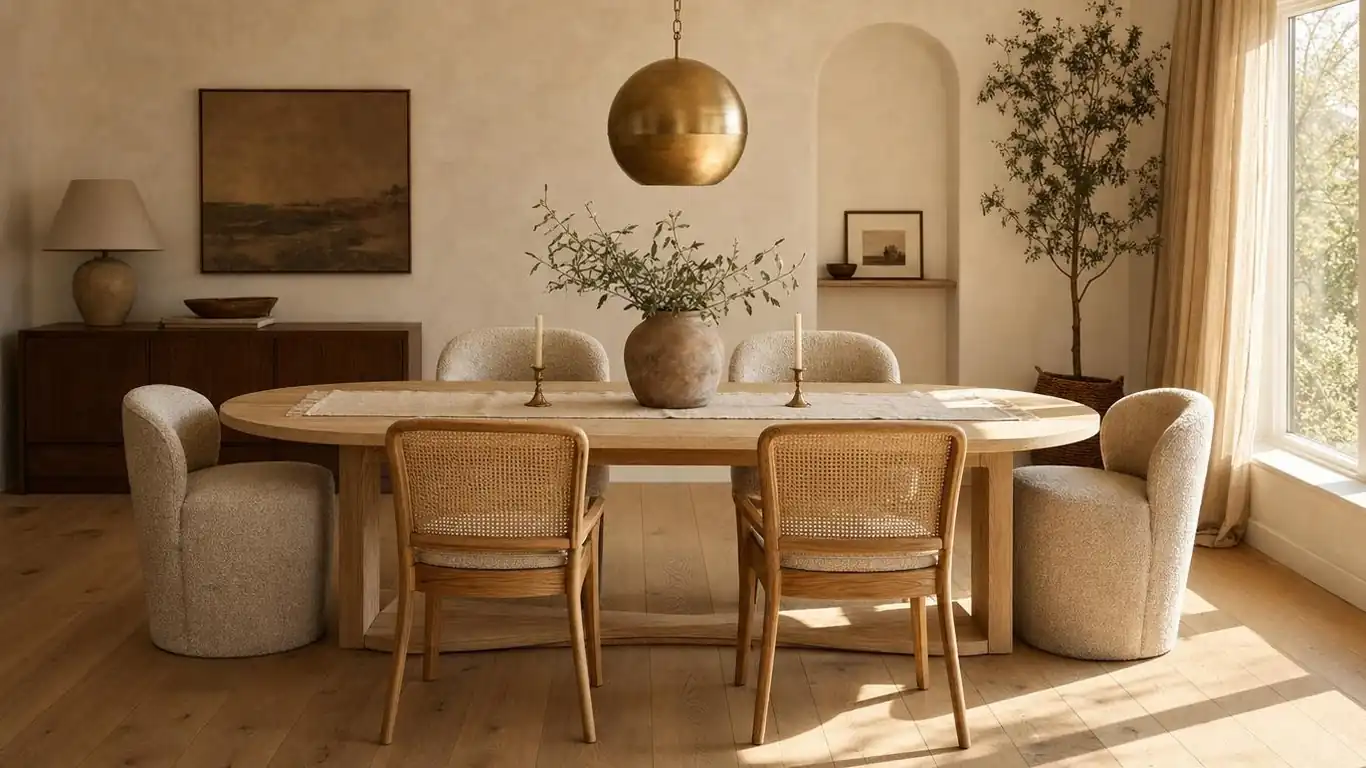
Oval shapes are the smart default. An oval table at 70 inches seats six comfortably and fits rooms under 150 square feet where a 72-inch rectangular table cannot rotate traffic well. The oval edge is softer in family dining rooms — no sharp corners at child height. For households of four, a 60-inch oval is generous. For six, 68–72 inches is the sweet spot.
Scale matters. Allow 28–30 inches of table width per chair and 12–18 inches between seated guests. At those measurements, a 70-inch oval seats six without elbow conflicts.
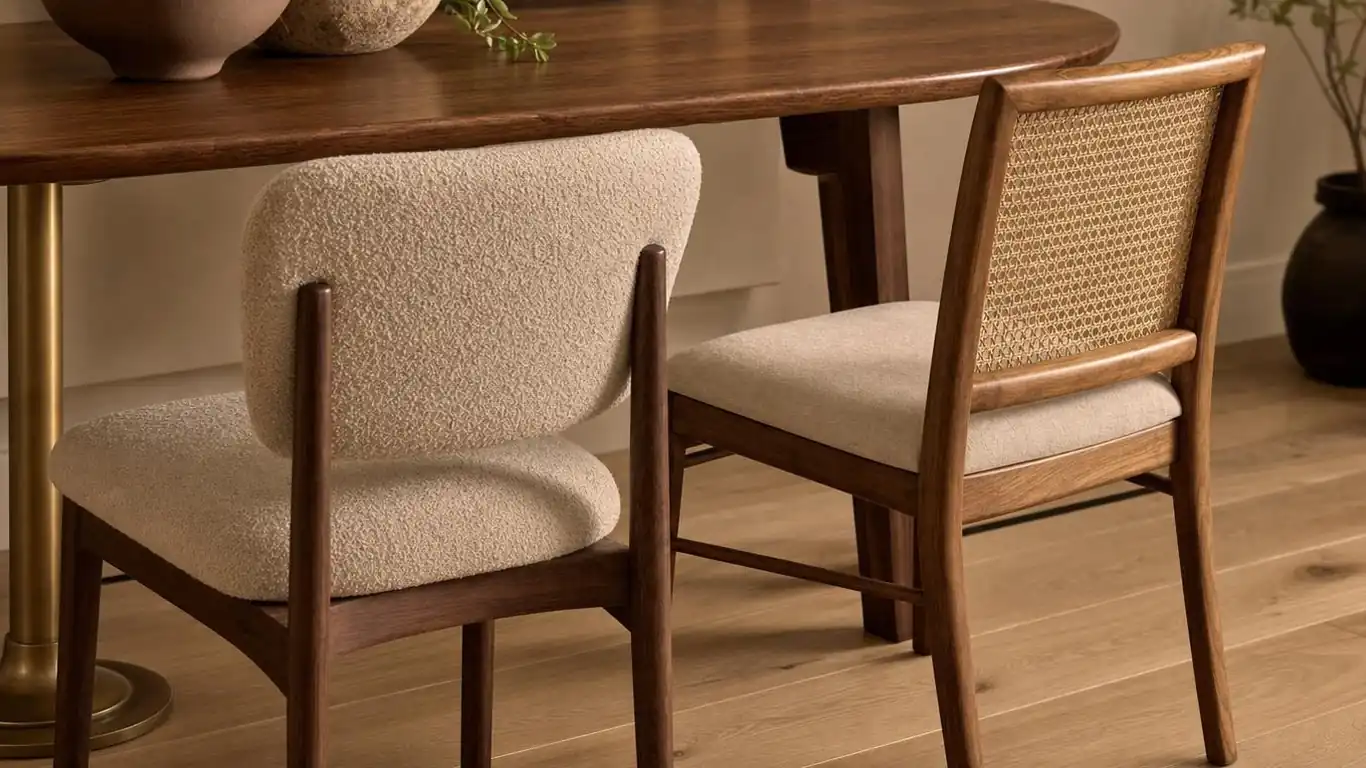
Seating pairings define the character of the whole setup. Fresh spring coffee table decor ideas apply the same logic at a smaller scale — layered styling looks intentional when pieces are varied, not matched. At the dining table, boucle side chairs in warm oatmeal, rattan-back side chairs in natural cane, and tulip chairs in white or warm grey all work. The key is that they share a visual weight and a general warmth of tone. The mix-and-match approach once read as budget compromise. Now it’s a signature of coastal living room aesthetics and high-end interior projects alike.
KEY TAKEAWAY: An oval walnut table with oil finish and tapered or hairpin legs in brushed brass or matte black covers the classic MCM brief for most dining rooms.
How to Choose and Style Your Table
Match leg finish to kitchen hardware. Brushed brass legs work in kitchens where hardware is unlacquered brass. Matte black legs belong in kitchens with black fixtures. A brass-legged table against chrome kitchen hardware creates a low-level tension that’s hard to name but easy to feel. The ideas for what to put on top of kitchen cabinets principle applies here — every element in an open-plan space reads as part of the same composition.
Choose oval over rectangular for rooms under 120 square feet. An oval table at 68 inches fits where a rectangular table at the same length cannot. The rounded ends make it easier to squeeze an extra chair at a gathering. For anyone navigating a compact dining room, creative small apartment ideas make the case clearly: rounded geometry almost always outperforms rectangular in tight square footage.
Check seating math before you order. A pendant hung 30–36 inches above the tabletop reads as part of the table composition rather than floating in the ceiling. A pendant hung 50 inches above the table disconnects from the dining surface entirely. For room scale, follow the same proportion thinking behind functional studio apartment layout ideas — the right scale makes a small room feel considered rather than cramped.
Mix seating rather than buying a set. One bench on the long back wall plus upholstered boucle chairs on the other long side plus two rattan chairs at the short ends creates a collected, non-catalog look. A completely matched dining suite — eight identical chairs and a matching buffet — reads as a furniture showroom floor.
Choose oil-finish walnut over lacquer. Walnut darkens with age and oil finish rather than chipping or yellowing. The surface absorbs knocks instead of broadcasting them. A lacquered table in a daily-use dining room requires constant touch-up after two or three years.
Scale the pendant correctly. Hang it 30–36 inches above the tabletop, centered over the oval. A brushed brass globe or cone pendant in that position pulls the room together without overwhelming the table.
DESIGNER TIP: If your dining room has no natural ceiling anchor point for a pendant, use a plug-in pendant on a hook over the center of the table — it achieves the same visual effect without electrical work.
KEY TAKEAWAY: Matching leg finish to kitchen hardware and choosing oval over rectangular for rooms under 120 square feet are the two decisions that prevent most styling regrets.
What to Skip
MCM dining has real staying power — but there are four versions of it that date quickly.
Matching all-MCM furniture sets. A walnut dining table, walnut credenza, walnut shelving unit, and walnut sideboard in the same finish reads as a furniture package from a catalog, not a designed room. Minimalist small bedroom ideas teach the same editing instinct — restraint means picking the statement piece and supporting it, not repeating it.
High-gloss lacquer finishes. A high-gloss walnut table reflects every overhead light fitting and every smudge. The finish looks sharp in photography and exhausting in daily life. Oil finish or matte satin is the better call for any table that sees real meals.
Mixing MCM with farmhouse benches and industrial pendants simultaneously. MCM pairs well with many styles, but three distinct aesthetics at one table creates noise. A rustic farmhouse bench, a wire-cage industrial pendant, and an MCM walnut table are each good choices in their own context. Together they compete rather than complement. Decorating a small living room on a budget shows how the clearest rooms commit to one direction and edit everything else out.
Oversized rectangular tables in small dining rooms. An 84-inch rectangular table in a room under 150 square feet blocks every traffic path and makes chairs impossible to pull out fully. The table becomes the room. That is not what a statement piece should do.
KEY TAKEAWAY: Skip matched MCM furniture sets, high-gloss lacquer, three-aesthetic mixing, and tables that are too wide for the room — any one of these undoes an otherwise strong dining room.
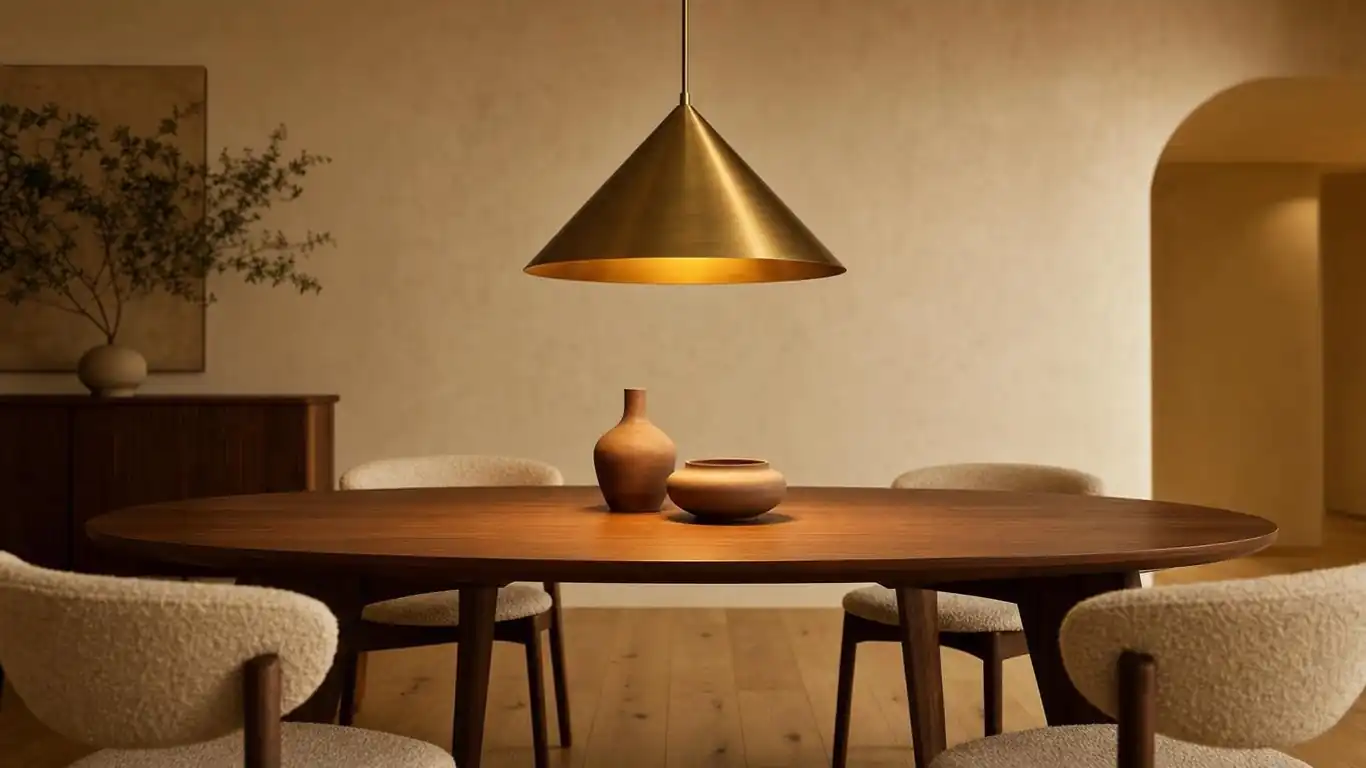
The Pick: An oval walnut table at 68–70 inches, oil finish, with angled solid ash legs in brushed brass or matte black. Pair it with two boucle side chairs in warm oatmeal on one long side, a natural oak bench on the other, and two rattan-back side chairs at the short ends. This combination works in most dining room sizes — 100 to 160 square feet — ages without requiring maintenance, and avoids the matched-set problem entirely. Walnut deepens with time. The mix of seating textures improves with age rather than dating. This table will still look right in ten years. That is the correct measure of staying power for a piece this central to the room.
Frequently Asked Questions
Conclusion
Six months ago I styled a dining room for a couple who had lived with an all-grey contemporary setup for eight years. The table was a 72-inch rectangular lacquered piece in cool grey ash — well made, completely cold. We swapped it for a 68-inch oval walnut table with matte brass hairpin legs and replaced the bench with four mix-and-match chairs: two boucle in warm oatmeal, two rattan-back in natural cane. The husband said it was the first time the room felt like a place he actually wanted to sit after dinner. The wife said she stopped apologising for the dining room when guests arrived. That is what good mid century modern dining tables do — they make a room feel settled and genuinely welcoming rather than styled for appearances.
The principles here are not complicated. Choose the right shape for your floor plan. Match your leg finish to your kitchen hardware. Pick oil finish over lacquer. Mix your seating rather than buying a set. Start with the table and let everything else respond to it. MCM sensibility extends well beyond the dining room — the same warmth and restraint shows up in man cave ideas for the ultimate personal sanctuary and across gathering spaces that are built to be genuinely used. For more inspiration across every room, 101homedecor.com covers the full picture.