TL;DR
- Palette: Anchor walls in deep charcoal, forest green, or warm tobacco brown — not beige.
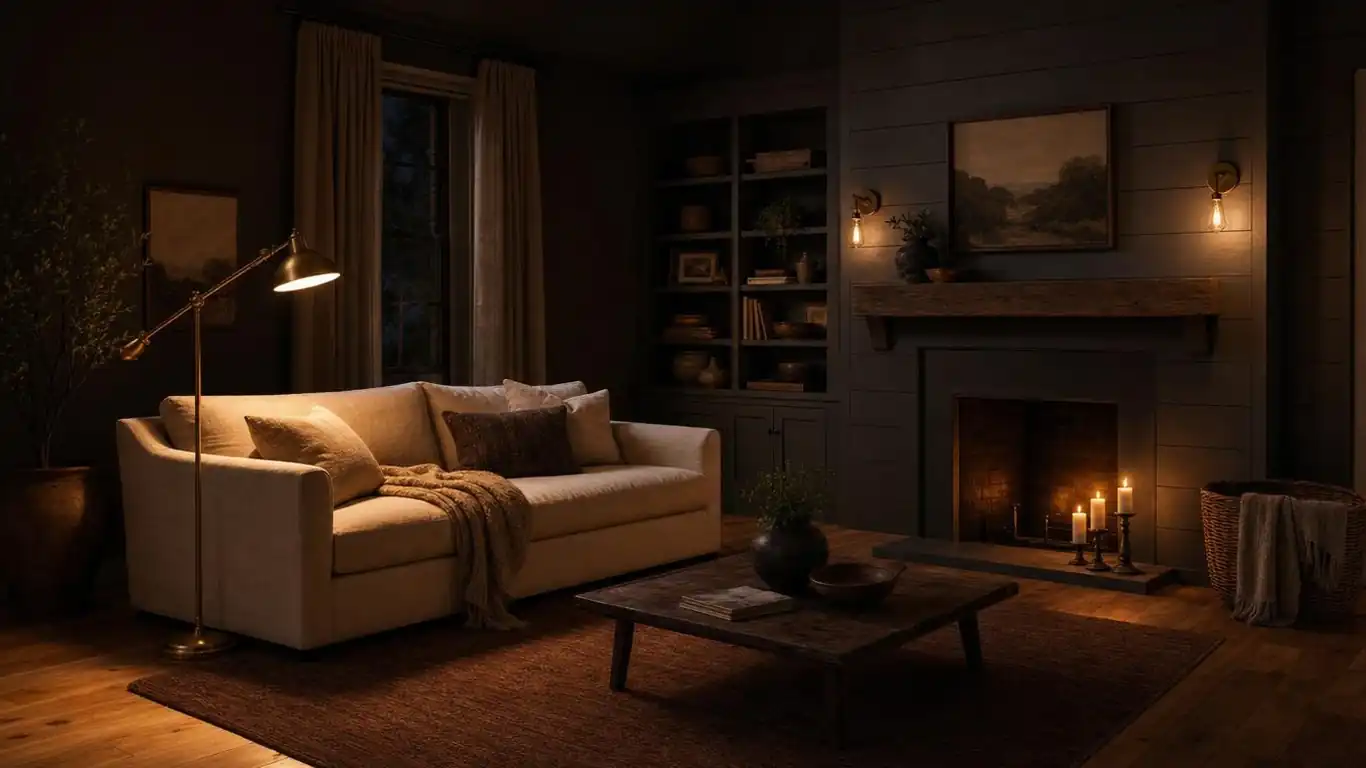
- Lighting: Layer three light sources — a statement pendant, floor lamps, and candles — all warm-toned.
- Textiles: Stack chunky knit throws, velvet cushions, and a low-pile wool rug for touchable depth.
- Wood: Raw or lightly distressed oak and walnut add warmth that painted surfaces never match.
- Fireplace: Make it the room’s focal point with a plaster or shiplap surround and hearth accessories in oil-rubbed bronze.
Why the Moody Farmhouse Look Works So Well
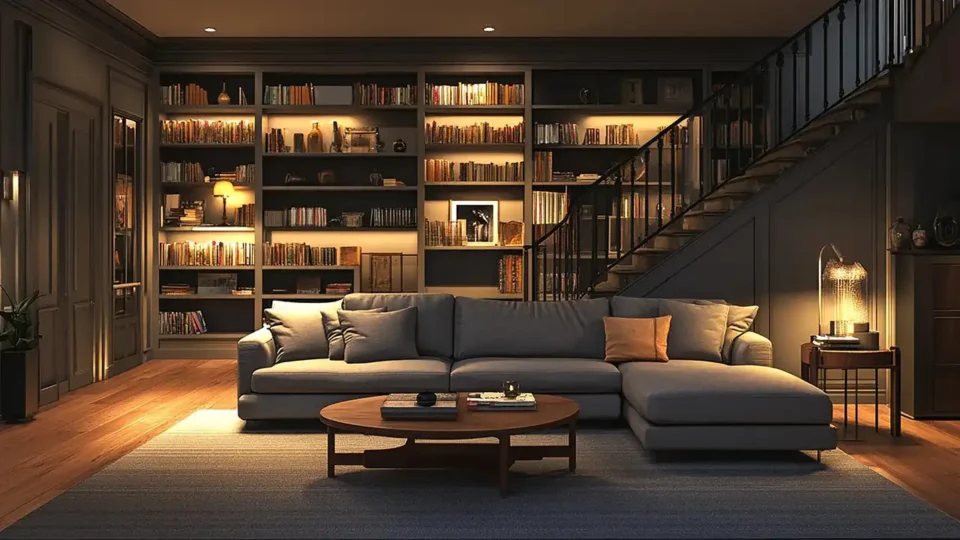
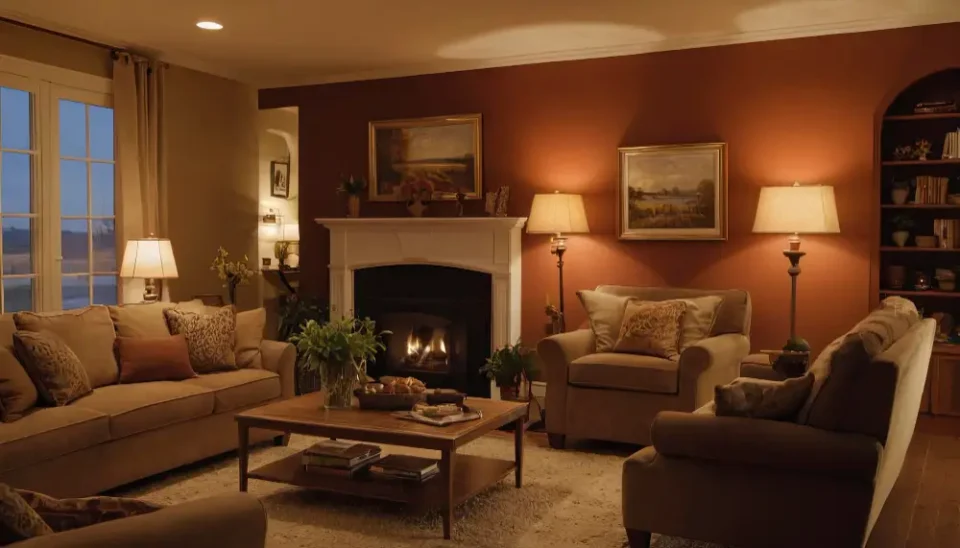
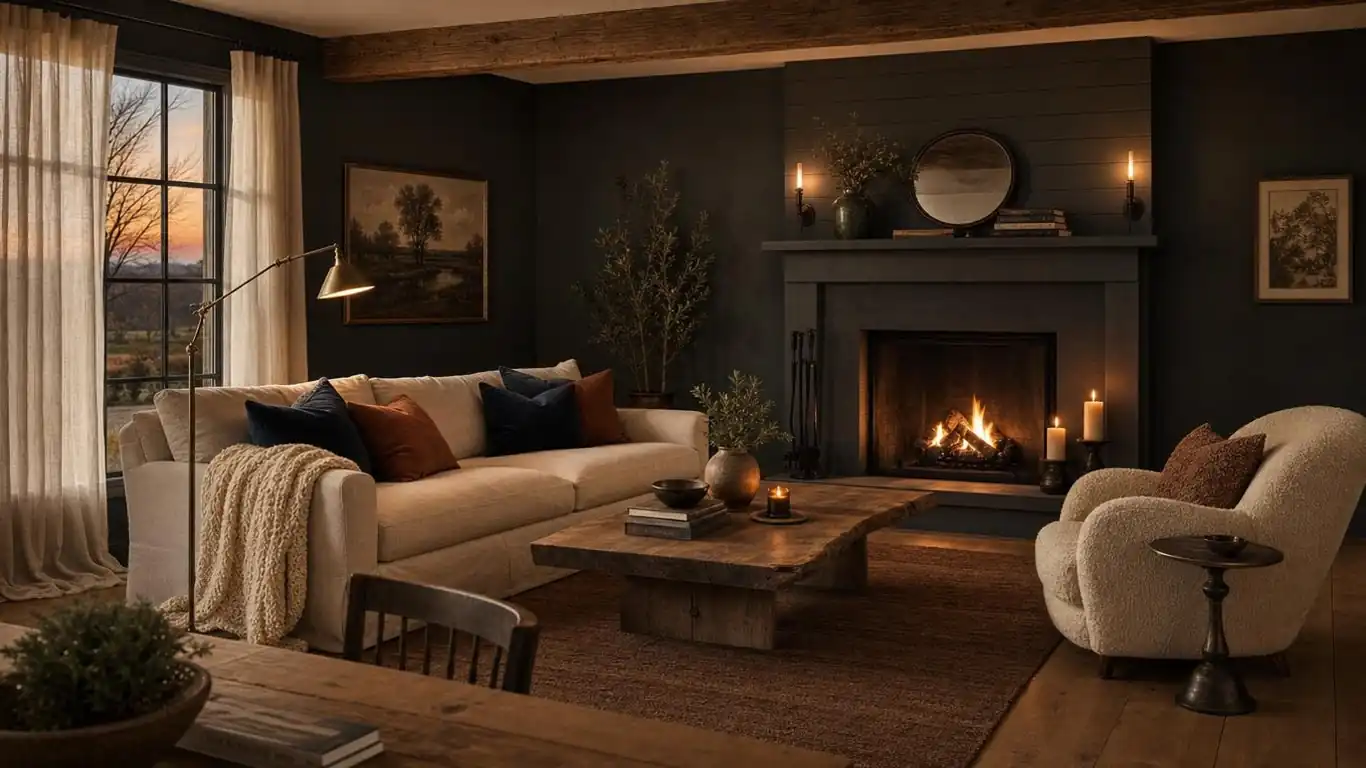
Picture yourself walking into a living room at dusk. The overhead light is off. A brass floor lamp throws a circle of amber glow across a linen sofa. The walls are a deep forest green. A rough-hewn oak beam spans the ceiling. You don’t want to leave. That is the moody farmhouse living room at its best — and it is far easier to achieve than it looks.
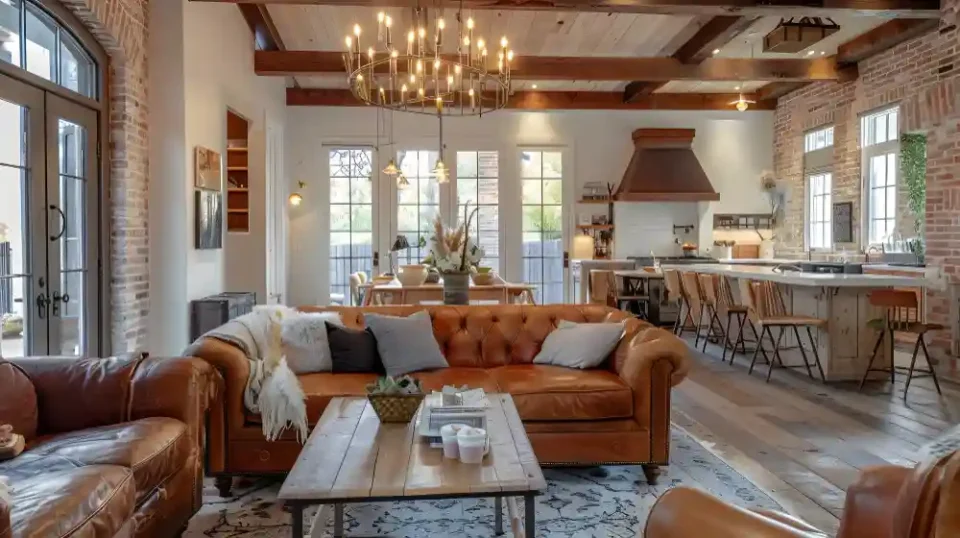
The style sits at the intersection of rustic farmhouse warmth and the richer, darker palette that defines moody interiors. You keep the exposed wood, the woven textures, and the unpretentious furniture of a traditional farmhouse. Then you swap out the whites and creams for deep charcoals, forest greens, warm tobaccos, and dusty navy. The result feels intentional and layered rather than stark.
I worked on a client’s 1940s farmhouse living room last autumn where every wall was painted classic white and the space felt flat despite gorgeous original hardwood floors. We repainted in a deep warm charcoal, added a reclaimed oak mantle, and brought in a velvet sofa in dusty rose. The transformation was immediate. For more starting-point inspiration, browse our cozy farmhouse living room ideas for a modern rustic home — a solid foundation before going darker.
At 101homedecor.com we focus on ideas that work in real rooms, not just on Pinterest. These 15 moody farmhouse ideas are grounded in that same thinking. Bookmark this guide for quick reference.
KEY TAKEAWAY: A cozy moody farmhouse living room works by replacing white farmhouse tones with deep, warm hues while keeping the rustic textures and natural materials that make the style feel grounded.
| Quick Takeaways | |
|---|---|
| Walls | Deep charcoal, forest green, or tobacco brown anchor the moody palette. |
| Textiles | Layer velvet, chunky knit, and linen for multi-dimensional texture. |
| Lighting | Three warm-toned light sources replace overhead-only lighting. |
| Wood | Raw or distressed oak adds warmth that painted surfaces can’t match. |
| Fireplace | The hearth is the room’s anchor — style it fully, not as an afterthought. |
The Palette: Dark Walls and Rich Tones
The palette is where a cozy moody farmhouse living room begins and ends. Get this right and everything else falls into place.
1. Paint Walls in Deep Charcoal or Warm Black
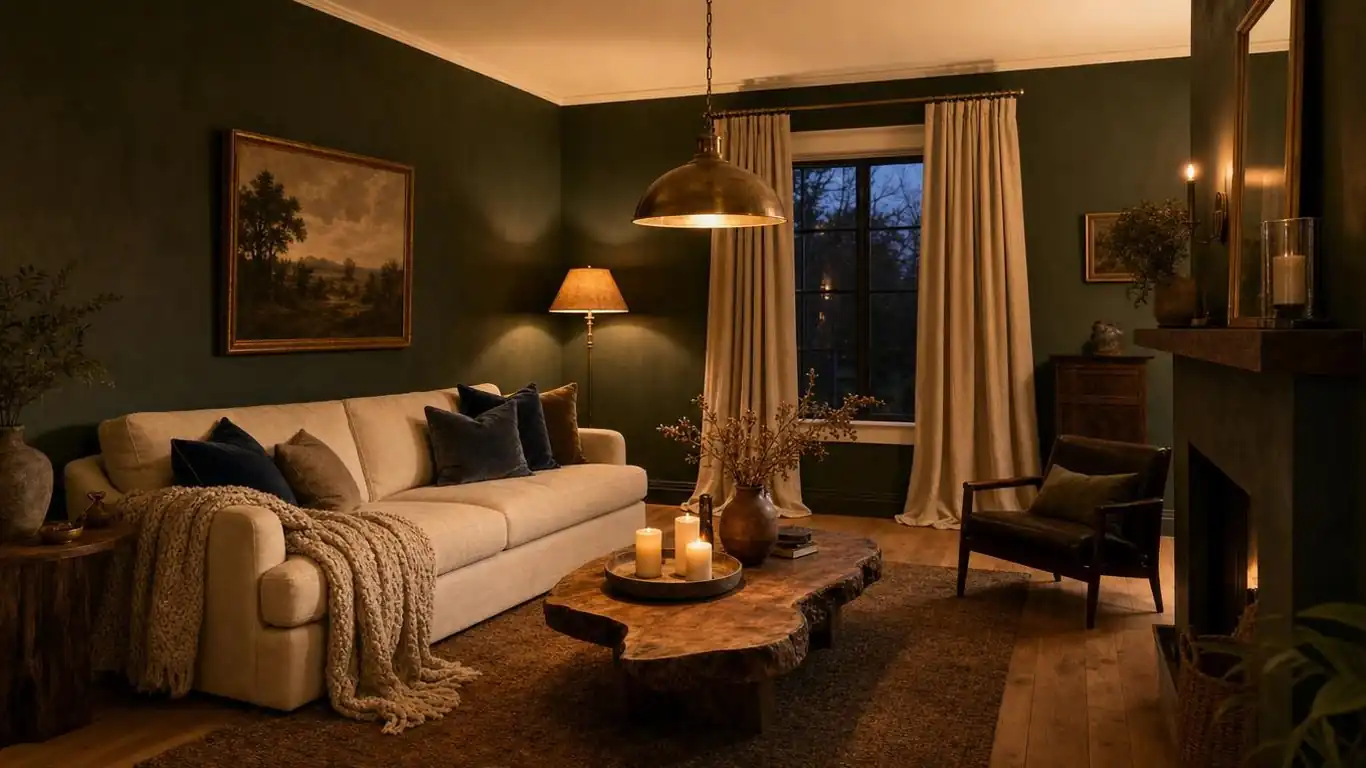
Skip the grey that reads blue under artificial light. Choose a warm-toned charcoal — think Farrow & Ball’s Railings or Sherwin-Williams’ Iron Ore — and paint all four walls, including the ceiling. The enveloping effect is what creates the cozy, cave-like quality. Pair with warm white trim in a semi-gloss finish to stop the room feeling oppressive.
2. Try Forest Green for a Less Expected Moody Tone
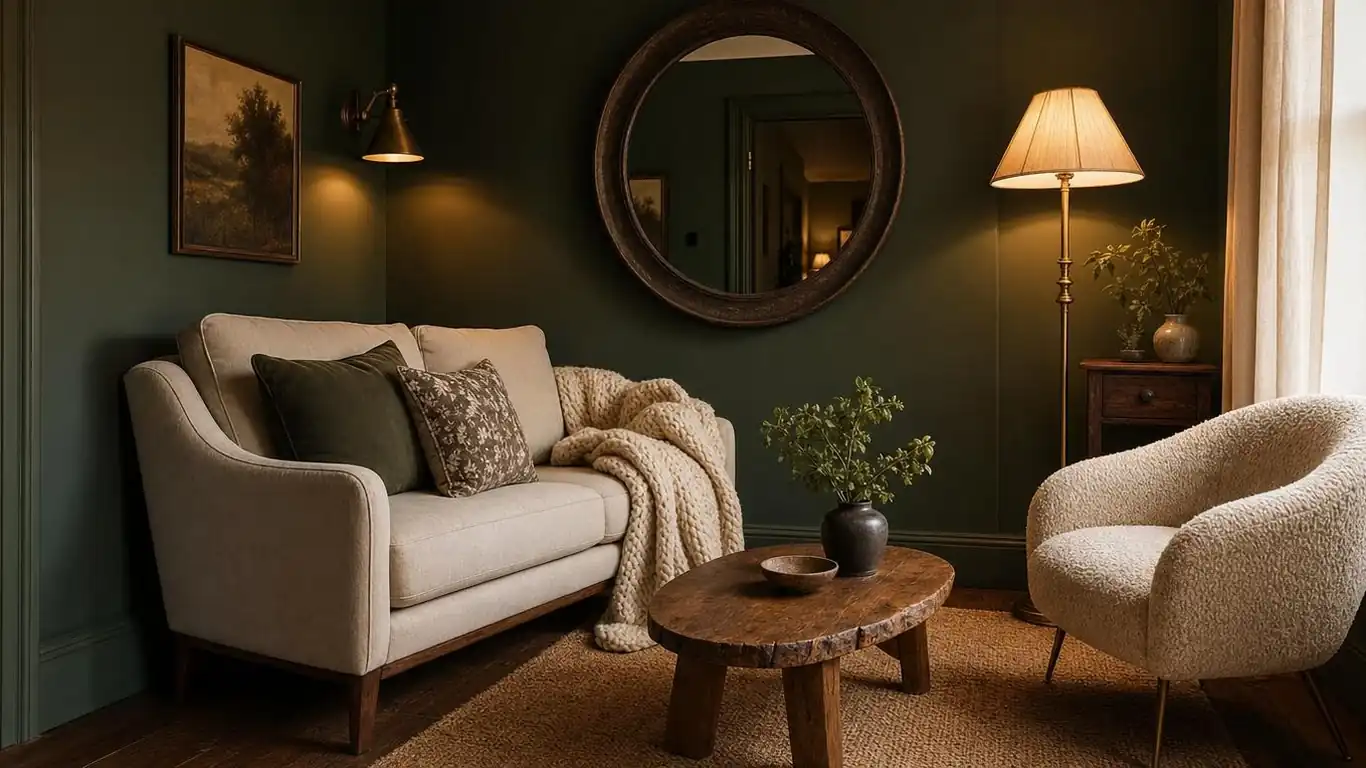
Forest green or deep sage reads warmer than grey and adds a distinctly organic, farmhouse-appropriate character. Benjamin Moore’s Salamander and Farrow & Ball’s Calke Green both hit the right note. Layer with natural linen, raw cotton throws, and brass hardware to keep the palette feeling grounded rather than formal.
3. Use Tobacco Brown or Warm Espresso as an Accent Wall
If full dark walls feel like too much of a commitment, choose one wall — typically the fireplace wall — and paint it in a deep tobacco brown or warm espresso. Leave the remaining walls in a muted cream or warm greige. The contrast creates visual depth and draws the eye to the room’s focal point without darkening the entire space.
DESIGNER TIP: Always test paint swatches in the actual room at night, not just in daylight. Moody tones can shift dramatically under artificial light, and what looks rich at noon may read muddy at 8 p.m.
4. Layer in Dusty Navy Through Soft Furnishings
Dusty navy works beautifully as a secondary palette note in a moody farmhouse room. Introduce it through a velvet sofa, a pair of throw pillows, or a large area rug rather than on walls. This approach lets you shift the palette later without repainting. If you enjoy moody color in the bedroom too, explore these navy blue bedroom ideas for a rich, moody, and calming retreat for more palette direction.
5. Keep Trim and Millwork in Off-White or Warm Cream
Dark walls need contrast anchors. Painting baseboards, door frames, and window trim in a soft white or warm cream prevents the room from reading as uniformly heavy. The contrast also makes the architectural details pop — a major asset in an older farmhouse home where the millwork itself is part of the character.
KEY TAKEAWAY: A moody farmhouse palette works best when anchored in one deep hero tone — charcoal, forest green, or tobacco brown — with warm cream trim providing contrast and breathing room.

Texture and Textiles: The Layers That Make It Feel Cozy
Color creates the mood. Texture makes it feel livable. These ideas focus on layering materials that invite you to stay.
6. Layer a Chunky Knit Throw Over a Velvet or Linen Sofa
A single throw transforms a sofa from furniture to a destination. Choose a chunky ribbed knit in warm cream, oatmeal, or soft terracotta and drape it loosely over one arm. The contrast between the smooth velvet or tightly woven linen of the sofa and the rough, open texture of the knit creates visual warmth before anyone sits down. For bedroom-applicable texture layering, our cozy aesthetic small bedroom ideas that feel like a warm hug uses the same layering logic.
7. Ground the Room With a Low-Pile Wool Rug in Deep Tones
A rug anchors the seating arrangement and adds an immediate layer of warmth underfoot. Choose a low-pile wool in charcoal, warm tobacco, or a muted terracotta. Aim for at least 8×10 feet so the front legs of all seating pieces sit on the rug — this is the single most important sizing rule for living rooms. Jute or sisal rugs also work beautifully in a farmhouse context, though they read slightly more casual than wool.
8. Pile Cushions in Mixed Fabrics: Velvet, Raw Cotton, and Woven Linen
Cushion-stacking is not about volume — it is about material variety. A sofa with three cushions in the same fabric reads flat. A sofa with a velvet lumbar cushion, a raw cotton cover in a muted check, and a woven linen square with fringe edge reads layered and intentional. Keep the color range tight — all within your chosen palette — and let the materials do the differentiating work.
DESIGNER TIP: Pull cushion colors from something already in the room — the rug, the wall color, or the wood tone — rather than introducing an entirely new hue. Moody rooms stay cohesive when the palette is edited, not expanded.
9. Hang Linen or Velvet Drapes That Pool Slightly on the Floor
Curtains in a moody farmhouse room should feel heavy and generous, not crisp. Choose linen or velvet in a tone close to the wall color — within two shades. Mount the rod 4-6 inches above the window frame and let the curtains pool 1-2 inches on the floor. This old-school tailoring trick makes the ceiling feel higher and the room feel more luxurious than the curtain cost warrants. Our piece on earthy modern bedroom ideas that feel like a warm embrace covers a similar draping approach if you want to carry the look through the home.
10. Add a Boucle or Shearling Accent Chair for Tactile Contrast
One chair in a dramatically different texture — boucle, shearling, or leather — creates a focal point within the seating group without adding another color. A cream boucle chair against a deep charcoal wall is one of the most striking and high-end combinations in moody farmhouse design. Balance it with a small side table in dark walnut or oil-rubbed bronze. Leather statements like this are also the backbone of these western farmhouse living room ideas, which push the rustic look in a bolder direction.
KEY TAKEAWAY: Texture variety — velvet, knit, woven linen, boucle — is what separates a genuinely cozy moody farmhouse room from one that just has dark walls and nothing else.
Wood, Stone, and the Architectural Backbone
The structural character of a moody farmhouse living room comes from its natural materials. These ideas address the bones of the space.
11. Install a Reclaimed Wood Beam or Mantle as the Room’s Anchor
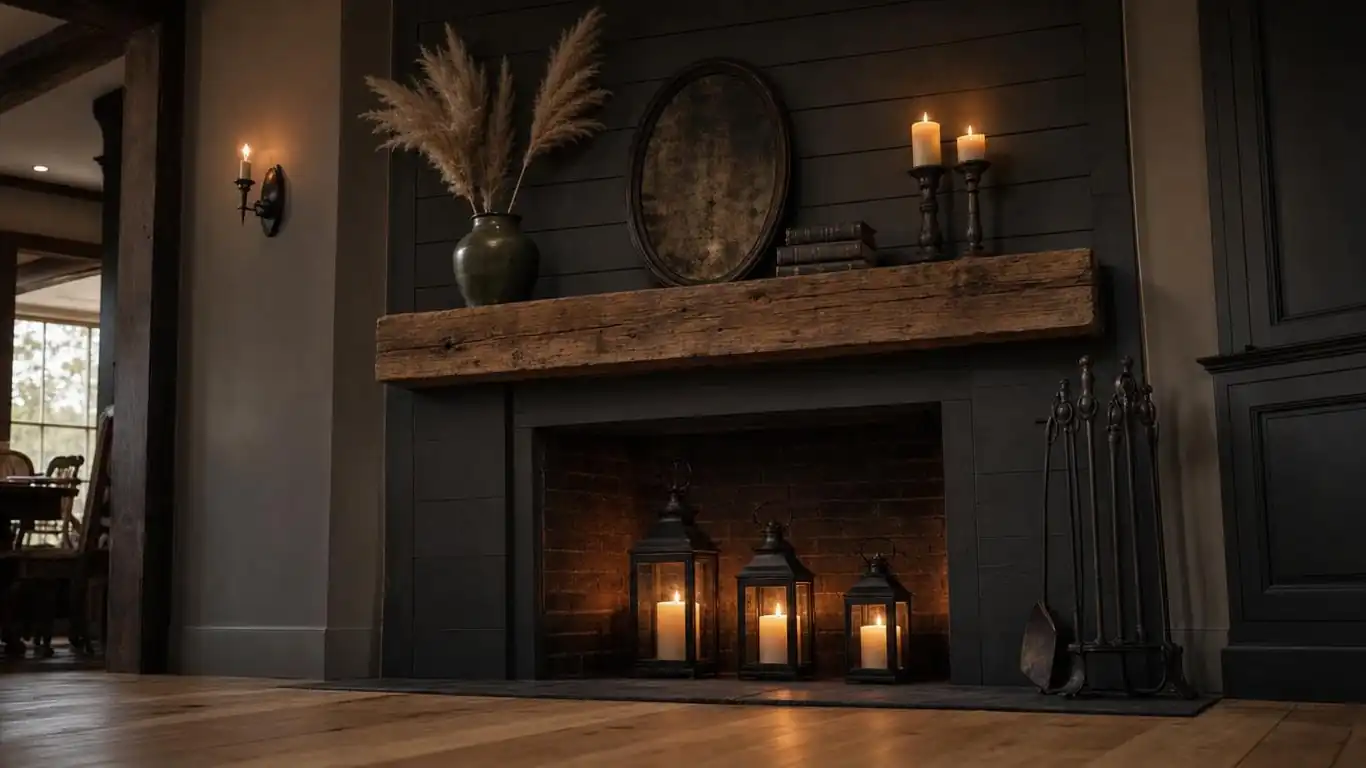
A single reclaimed oak or walnut beam — whether structural or decorative — instantly communicates the farmhouse DNA. If your ceiling allows, a box beam treatment across the main span changes the entire character of the room. At minimum, a rough-hewn reclaimed wood mantle over the fireplace achieves a similar effect at a fraction of the cost. Expect to pay $400-$900 for a quality reclaimed mantle piece from an architectural salvage source.
12. Use Shiplap or Limewash on the Fireplace Wall
Shiplap painted in a deep tone — or left bare in white against dark walls — gives the fireplace wall texture that drywall alone cannot deliver. Limewash plaster is an increasingly popular alternative: the chalky, slightly uneven finish reads as deeply aged and adds incredible depth to a moody palette. Apply limewash in a charcoal or warm clay tone for the most authentic farmhouse effect. This pairs naturally with rustic farmhouse Christmas decor ideas for a warm country home when the seasons change.
13. Choose Dark-Stained Hardwood or Wide-Plank Oak Floors
Floors in a moody farmhouse room should stay warm, not cool. A dark walnut stain or a wide-plank white oak in a medium-warm tone anchors the palette without competing with the walls. If your floors are already hardwood, consider toning rather than full refinishing — a simple oil stain in ebony or dark walnut updates the tone at a fraction of the cost of sanding and restaining from scratch. For an architectural approach to the broader farmhouse aesthetic, simple barndominium ideas for a compact and cozy rural life shows how the materials translate at a larger structural scale.
DESIGNER TIP: In rooms with dark walls and dark floors, keep at least one visual surface light — the ceiling, the trim, or a large area rug in a warm cream. The contrast prevents the room from feeling enclosed rather than intimate.
14. Style the Hearth With Oil-Rubbed Bronze and Ceramic Accessories
A styled hearth reads as finished and intentional. Cluster a set of oil-rubbed bronze fireplace tools on one side, a stack of split logs or a simple log holder on the other, and a small arrangement of pillar candles in varying heights on the mantle. Add a ceramic vase in a matte clay or forest green glaze, a small framed mirror with a dark patina frame, and a single trailing eucalyptus branch for a lived-in but considered look.
15. Add Architectural Interest With Dark-Painted Built-Ins
Painting built-in shelving or cabinetry in the same dark tone as your walls — or in an even deeper shade — makes the room feel custom-finished without custom cabinetry costs. The shelves then become a gallery for curated objects: stacked books with their spines facing out, a collection of dark ceramic vessels, a trailing pothos plant, and one or two framed prints in dark frames. The key is restraint — leave negative space between objects so the shelf breathes. For a room-scale approach to moody dark interiors, moody boho bedroom ideas for a dark, dreamy, and cozy retreat demonstrates how the same dark-painted built-in logic translates to another room of the house.
KEY TAKEAWAY: The architectural backbone of a moody farmhouse living room — beams, shiplap, dark floors, built-ins — does the heavy lifting before a single piece of furniture enters the room.
Lighting: The Element Most People Underestimate
Every moody interior lives or dies by its lighting. These ideas address layering properly.
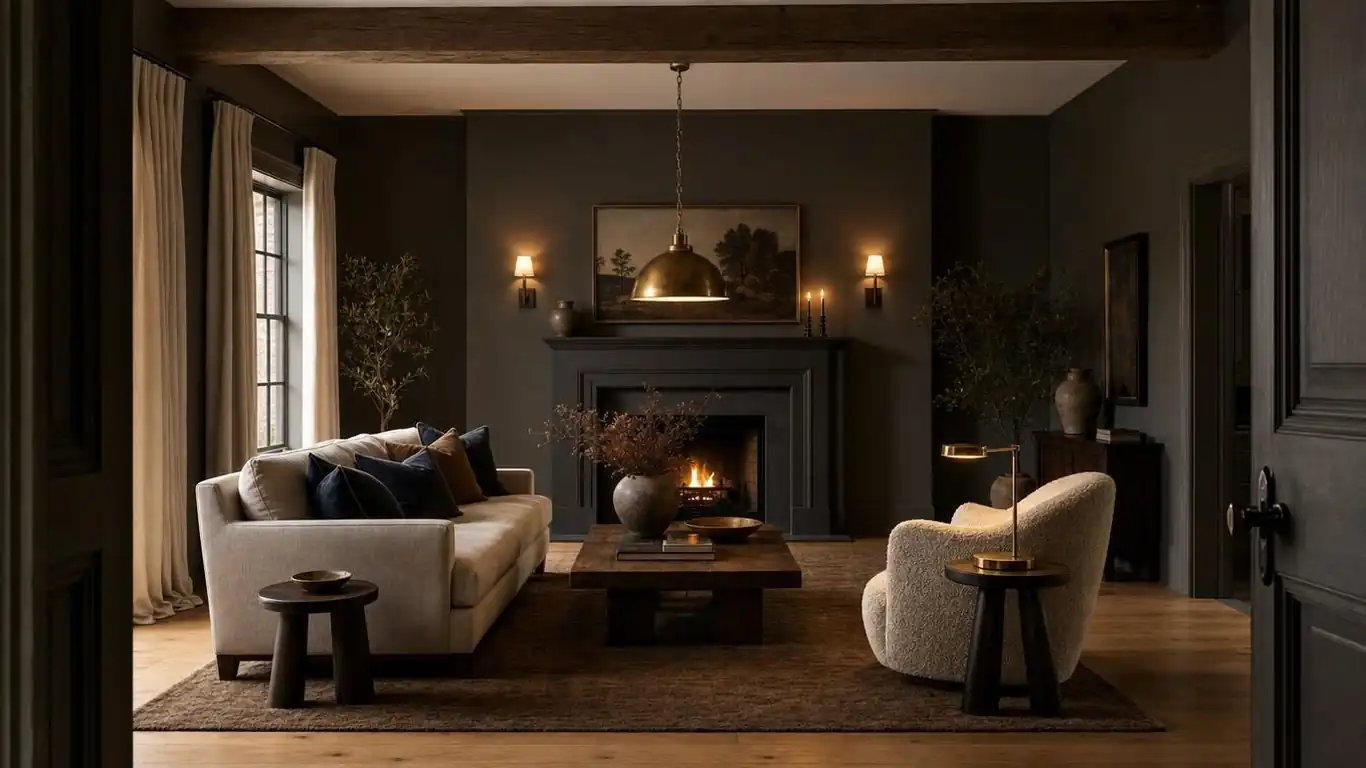
Layer three sources in every moody farmhouse room: ambient, task, and accent. Ambient comes from a statement pendant or semi-flush fixture in aged brass or oil-rubbed bronze — choose a bulb with a color temperature of 2700K or warmer. Task comes from a swing-arm floor lamp beside the reading chair. Accent comes from table lamps, candles on the mantle, and a picture light over the primary art piece. For a different take on living room atmosphere-building that complements this approach, see elegant coastal living room aesthetics for year-round summer — the layered lighting principles translate directly.
Dimmer switches are non-negotiable. A moody room at full brightness loses all its atmosphere. Install dimmers on every overhead circuit, set the room to 40-60% in the evening, and let the lamps do the rest. For a broader understanding of cozy room lighting, our neutral coastal living room ideas for a modern home covers layered lighting from a different palette angle worth reading alongside this guide.
Wall sconces flanking the fireplace or a large piece of art add enormous atmosphere at low cost. Choose a simple swing-arm or candle-arm sconce in an aged brass finish, wire them on a dimmer, and position them at eye level when seated — approximately 54-60 inches from the floor. The warm glow at that height wraps the room rather than bleaching it from above.
For seasonal warmth in the darker months, consider supplementing with candle lanterns in aged metal or ceramic, placed on the floor beside the sofa or in the fireplace during the off-season. Our cozy winter decor ideas to keep your home warm and stylish covers this in more detail alongside other winter-specific atmosphere tricks. In the warmer months, creative fall and autumn decor ideas for a seasonal refresh bridges the seasonal transition without requiring a full palette swap.
KEY TAKEAWAY: Three layered light sources — pendant, floor lamp, and accent candles or sconces — all set to 2700K or warmer and controlled by dimmers, define the moody farmhouse atmosphere more than any other single element.
What Most People Get Wrong
❌ Going too dark with no contrast → ✅ Keep trim, ceiling, or one large rug in a warm cream to prevent the room feeling smaller than it is.
❌ Using cool-toned grey instead of warm charcoal → ✅ Test paint in the actual room at night — cool greys read blue under artificial light and kill the warmth.
❌ Under-sizing the rug → ✅ Use a minimum 8×10 rug so all front furniture legs sit on it; a small rug makes even a large room feel disjointed.
❌ Relying on a single overhead fixture → ✅ Add at least two floor or table lamps and install dimmer switches on all circuits before anything else.
KEY TAKEAWAY: The most common mistakes in moody farmhouse living rooms are cool-toned paint, undersized rugs, and single-source overhead lighting — all of which are easy to fix before spending money on furniture.
Special Considerations
A moody farmhouse look raises a few practical questions. Here’s how to handle low-light rooms, smaller spaces, and a busy family’s day-to-day needs without losing the atmosphere.
What if my living room has very little natural light?
A dark room does not need to avoid a moody palette — it needs a smarter approach to it. Choose a paint tone with warm undertones rather than cool ones. Deep olive greens and warm tobaccos read far friendlier in low-light rooms than blue-grey charcoals. Maximize every window with sheer linen panels that let light pass while maintaining privacy. Then layer artificial lighting more aggressively: five sources instead of three. For a similar challenge handled in a smaller space, decorate a small living room on a budget covers both light management and cost-effective solutions.
Can a moody farmhouse living room work in a smaller space?
Yes — in fact, smaller rooms often benefit more from dark walls because the enveloping effect is more immediate. The key adjustments in a compact room: choose furniture with exposed legs rather than skirted pieces to preserve sightlines, use a single large mirror to bounce light, and keep the ceiling in a slightly lighter tone than the walls. For a connected perspective on small living spaces within a farmhouse structural context, simple barndominium exterior ideas for a modern farmhouse look and modern basement ideas for extra living and storage space show how the moody farmhouse aesthetic scales across different room types.
How do I balance the moody look with a young family’s practical needs?
The moody farmhouse palette is more practical than it looks. Dark walls hide marks better than white. A low-pile wool rug in a dark tone is far more forgiving than a cream one. Velvet actually repels pet hair with a quick swipe of a damp cloth. The real considerations are choosing durable slipcover-ready sofas and avoiding very pale linen as the primary sofa fabric. Also browse cozy winter cabin interior aesthetic ideas for examples of moody rooms that feel warm and family-appropriate simultaneously.
KEY TAKEAWAY: Low natural light, small square footage, and family life are all compatible with the moody farmhouse living room — the adjustments are strategic, not stylistic compromises.
Frequently Asked Questions
Conclusion
A cozy moody farmhouse living room is not about going dark for drama’s sake. It is about choosing tones, materials, and light sources that make the room feel genuinely lived-in and restorative — a space you reach for at the end of a long day. The palette does the emotional work. The textures make it physical. The lighting makes it right.
After completing that 1940s farmhouse project I mentioned, the client told me she spent more time in the living room in the following month than she had in the previous year. That is the real outcome this style delivers — rooms people actually use. Start with one dark wall and one great floor lamp, and the rest follows naturally. For more room-by-room inspiration grounded in the same design thinking, browse the full library at 101homedecor.com.