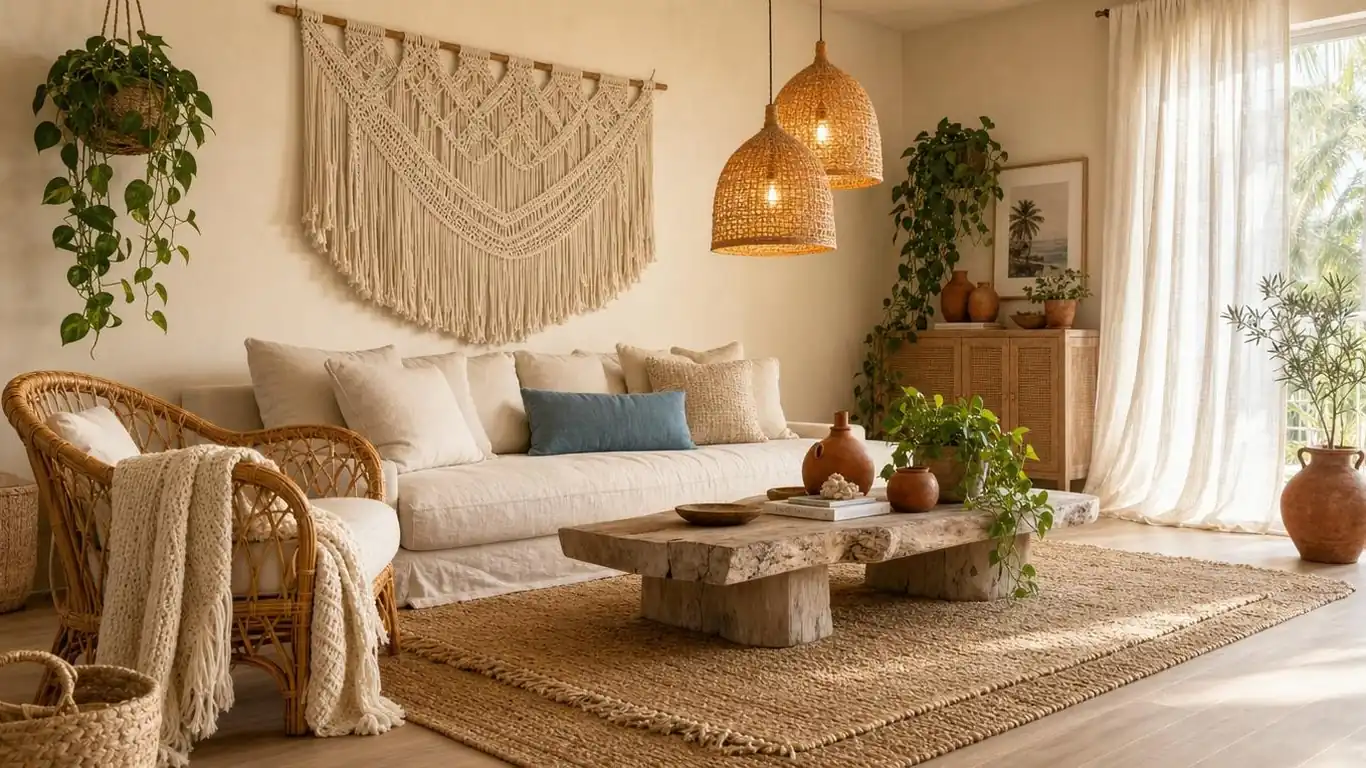
TL;DR
- Texture first: Jute, rattan, linen, and woven seagrass form the foundation — get these right before adding anything else.
- Color anchor: Start with warm cream or sandy white walls, then layer in terracotta and soft ocean blue as accent tones.
- Furniture: A low-profile linen sofa and a raw wood coffee table do more visual work than any other pieces in the room.
- Lighting: Rattan pendant lamps and warm-toned layered lamps replace flat overhead fixtures almost entirely.
- Finishing layers: Trailing plants in terracotta pots, sheer linen curtains, and collected coastal objects complete the look without overdoing it.
Why This Style Combination Works So Well
Walk into a well-done boho coastal living room and the first thing you notice is how unhurried everything feels. Nothing is precious. Rattan chairs sit beside linen-covered sofas. A jute rug softens a worn wood floor. Macramé and ocean pottery share the same shelf. The room doesn’t look decorated — it looks collected.
That ease is the appeal of blending boho and coastal. Bohemian design gives the room its warmth, its layers, and its pattern. Coastal design gives it lightness, a breezy palette, and visual openness. Together they create something neither style achieves alone — a space that reads as both relaxed and considered.
I styled a similar room for a client last year — a bungalow with wood floors, low ceilings, and sun-bleached walls. We started with a single vintage rattan chair and built outward from there. By the end, the space looked like it had evolved over years, not been pulled together in a weekend. For more room-by-room mixing ideas, browse our home decor inspiration to find what resonates. Bookmark this guide for quick reference.
KEY TAKEAWAY: Boho coastal succeeds because both styles share the same material vocabulary — natural fibers, organic textures, and easy, lived-in finishes.
| Quick Takeaways | |
|---|---|
| Texture | Layer jute, rattan, linen, and woven seagrass as the base material palette. |
| Color | Anchor with warm cream walls, then pull in terracotta and soft ocean blue as accents. |
| Furniture | A low-profile linen sofa and raw wood coffee table anchor the room’s entire character. |
| Lighting | Rattan pendants and layered warm-toned lamps replace flat overhead light entirely. |
| Plants | Trailing greenery clustered in terracotta pots is the fastest boho coastal finishing move. |
Anchor the Look With Natural Textures
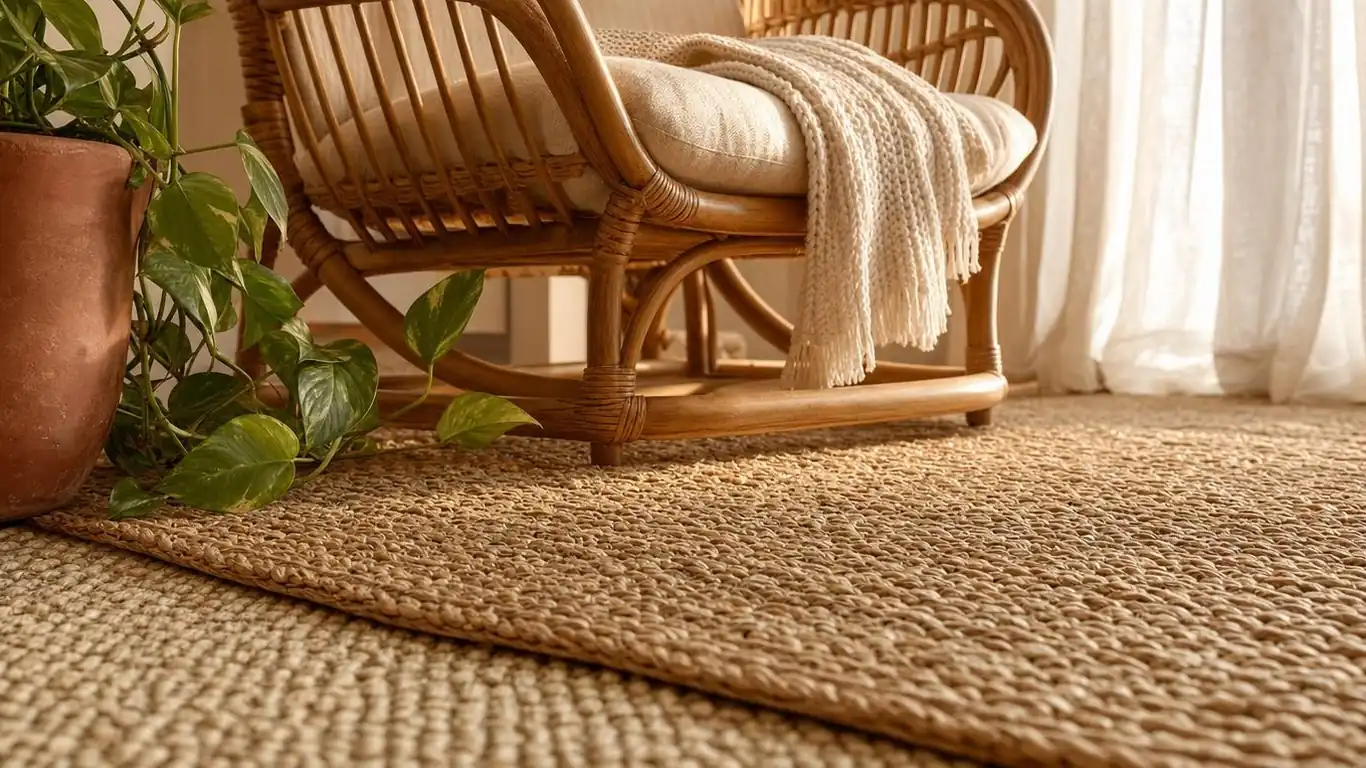
Boho coastal style starts from the ground up with layered natural texture. These first pieces — woven rugs, rattan seating, and macramé — set the organic foundation the rest of the room builds on.
1. Layer a Jute Rug Over Sisal for Instant Ground Depth
A jute rug layered over a sisal base is one of the fastest ways to establish the boho coastal ground plane. Jute reads warm and earthy — the boho side. Sisal reads structured and coastal. Together they create visual interest without introducing color. Size the outer jute rug to at least 8×10 so it fully anchors the sofa and coffee table. Stick to natural undyed tones — printed jute rugs tip the balance too far toward one style and lose the effortless quality this layering technique depends on.
2. Bring in a Rattan or Wicker Accent Chair
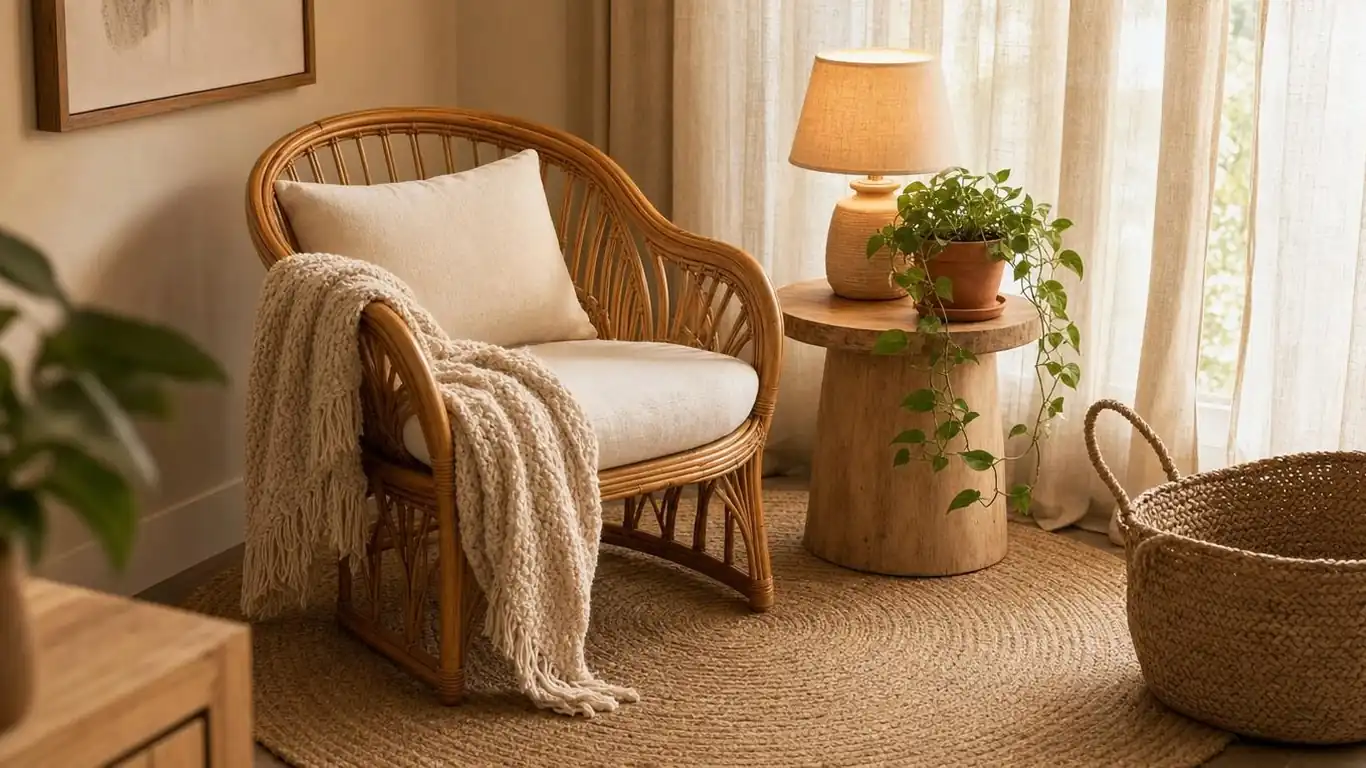
Rattan is doing significant work in boho coastal design right now. A rattan or wicker accent chair brings organic texture without visual weight. Its open weave keeps the room airy — the coastal instinct — while its warm honey or smoked tone feeds the boho layer. Pair it with a cream linen cushion and a chunky knit throw draped loosely over one arm. That combination turns a practical seat into the most characterful piece in the room. Neutral coastal living room ideas show how rattan integrates across different coastal palettes.
3. Hang a Macramé Statement Piece Above the Sofa
A macramé wall hanging above the sofa is the single most identifiable move in boho coastal design. Choose one with varied weave densities — loose fringe at the bottom, tighter knotted patterns above — and size it wide enough to fill at least two-thirds of the sofa length. Natural cream or undyed cotton keeps it clean against almost any wall color. For rooms with board-and-batten or shiplap walls, the texture contrast between macramé and flat painted wood creates an especially striking backdrop that reads coastal and boho simultaneously.
4. Add Woven Seagrass Storage Baskets
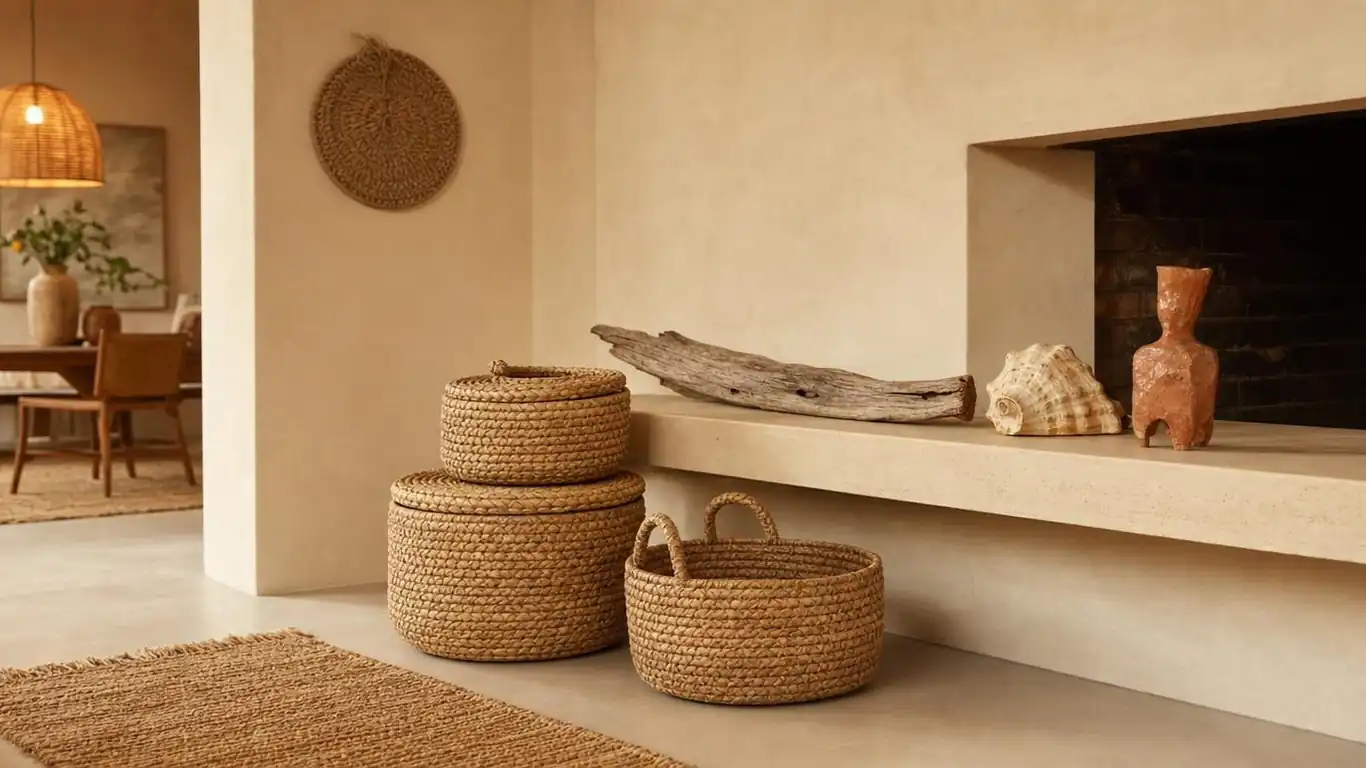
Seagrass baskets are one of the most underrated tools in a boho coastal living room. They pull two duties at once: adding woven texture to the floor or shelving while solving the throw blanket and remote control problem. Stack two round baskets of different sizes near the fireplace or beside the sofa. Add a third handled version for spare pillows. Slight variation in shape and size looks intentional rather than cluttered. See elegant coastal living room aesthetics for how basket styling integrates across a full coastal room scheme.
DESIGNER TIP: When mixing woven textures — jute, rattan, seagrass, macramé — keep all tones within the same natural range: honey, warm beige, undyed cream. They read as a cohesive family rather than a mismatched collection.
KEY TAKEAWAY: Natural woven textures — jute, rattan, seagrass, macramé — are the load-bearing layer of any boho coastal room and should be in place before adding color or pattern.
The Color and Pattern Palette
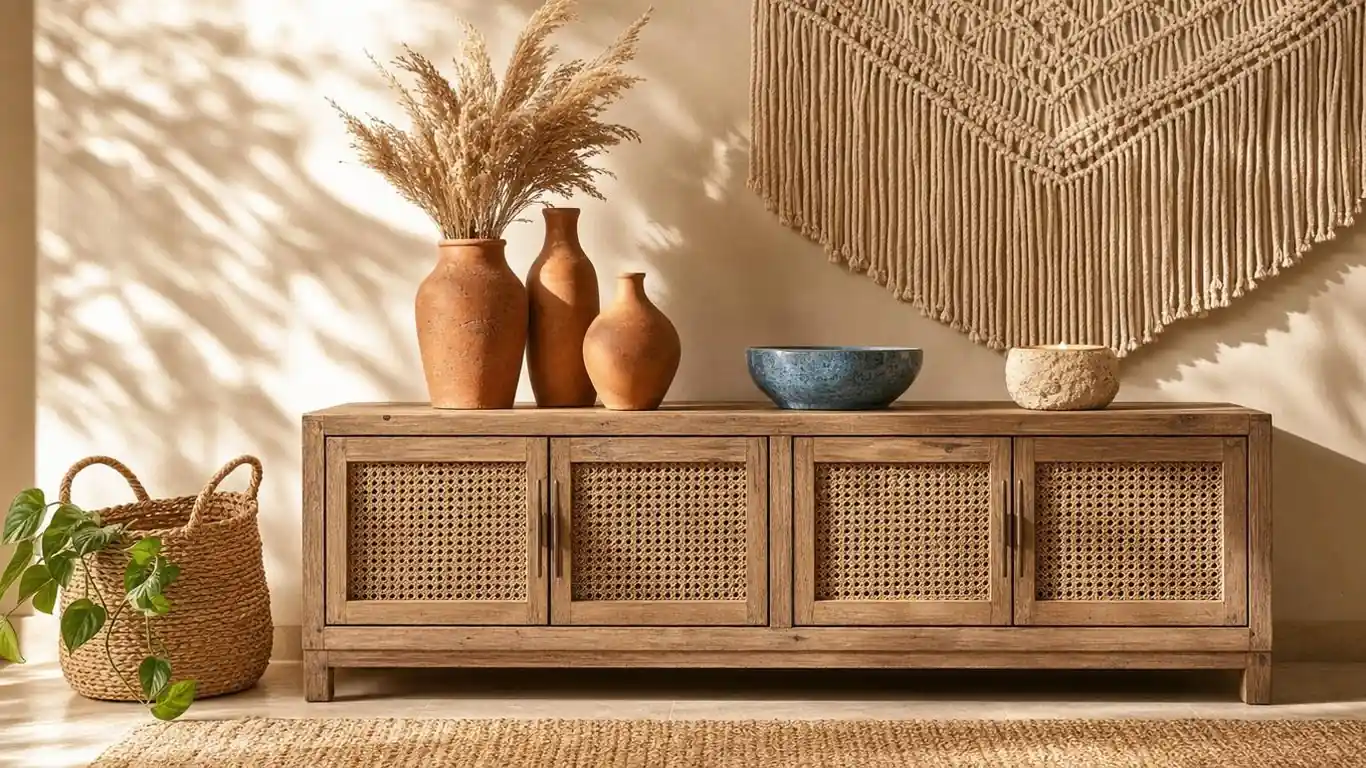
With the textures in place, color and pattern bring the look to life. This palette — sandy neutrals, terracotta against ocean blue, and driftwood tones — keeps the room feeling both boho and coastal.
5. Start With Sandy Cream or Warm White Walls
The color foundation in a boho coastal living room is almost always a warm white or sandy cream on the walls. Cool white tips too far coastal — it starts reading sterile rather than breezy. A yellow-based cream tips too warm and loses the lightness coastal design depends on. The sweet spot is a soft white with a slight warm undertone, or a warm greige. Benjamin Moore’s White Dove and Sherwin-Williams Accessible Beige both work well. These walls let the texture layer do its work without competing for attention.
6. Pull Terracotta Against Soft Ocean Blue
This is the color pairing that makes boho coastal feel current rather than dated. Terracotta — in ceramic vases, pillow covers, or an accent throw — carries the boho warmth. Soft ocean blue — a single lumbar pillow, a painted pottery piece, or a stripe in the rug — provides the coastal anchor. Keep terracotta as the dominant accent and blue as the secondary one. The warmth of terracotta prevents the room from defaulting into a predictable beach-house palette while the blue keeps it clearly coastal. Cozy farmhouse living room ideas apply similar warm-dominant color logic in a rustic context.
7. Mix Boho Stripe Throws With Coastal Print Pillows
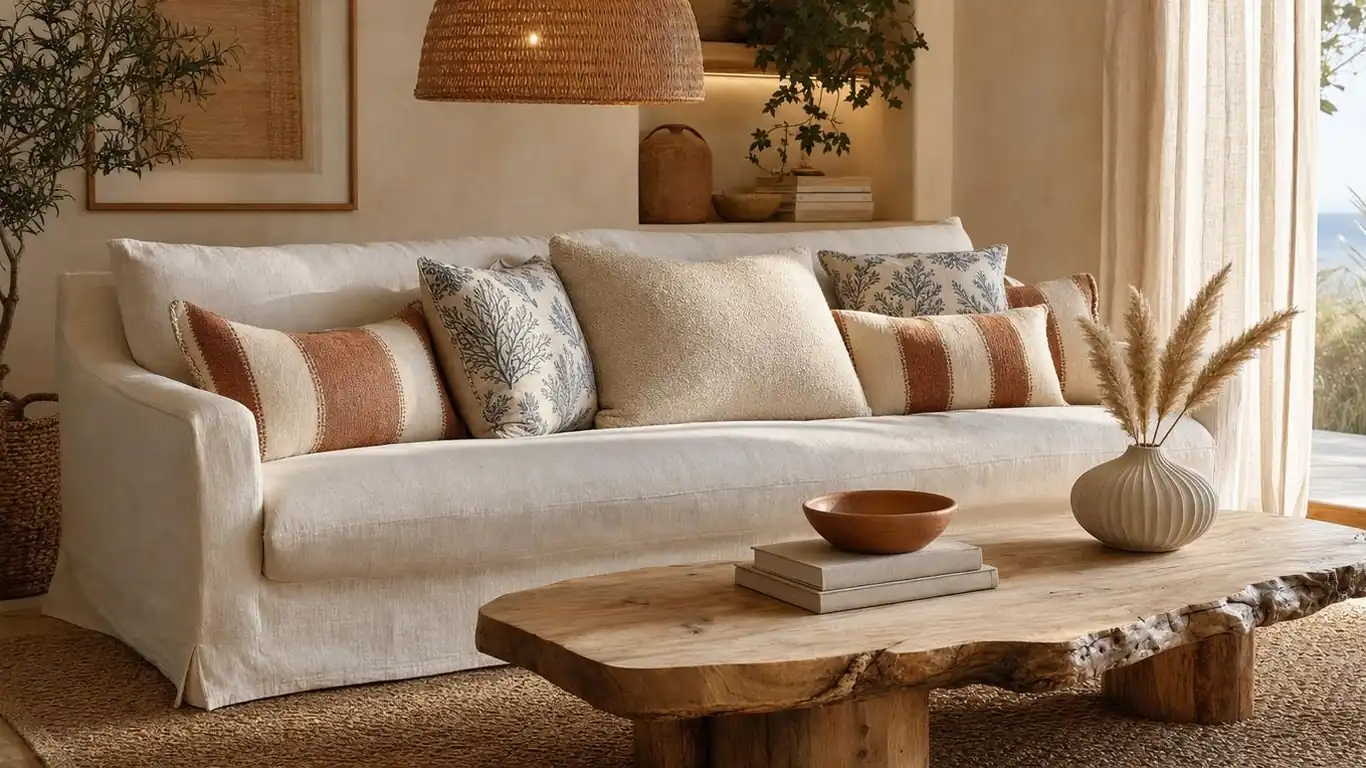
Pattern mixing is where most people lose their nerve or go too far. The key is to vary scale and density, not try to match themes literally. Pair a wide-stripe woven throw in cream and terracotta with a smaller coastal-print square pillow — think abstracted wave forms, sea fan shapes, or subtle shell prints — in the same color family. Anchor both with a solid linen or boucle pillow in warm cream. Three pillow types maximum: one stripe, one print, one plain. The mix reads collected; more than three reads chaotic.
8. Choose Driftwood-Toned Wood for Furniture
Wood tone matters more than most people realize in boho coastal spaces. Driftwood-toned finishes — pale grey-brown, weathered ash, whitewashed oak — read coastal without the obvious beachy cliché. A driftwood-toned media console or sideboard ties natural wood into the room while keeping the palette light and airy. Avoid dark walnut or cherry, which pull the room formal. Raw reclaimed wood or lightly washed oak is the right register. This tone plays naturally with honey rattan and warm cream linen, reinforcing the material cohesion the style depends on.
DESIGNER TIP: Commit to one wood tone family across the room — driftwood, raw oak, or warm honey. Two or three competing wood tones start to pull against each other and lose the cohesion that makes boho coastal feel intentional.
KEY TAKEAWAY: The boho coastal color palette is terracotta-warm at its core, offset by one soft coastal blue — keep the warm tones dominant and the cool accents supporting.
Furniture That Reads Both Boho and Coastal
The right furniture bridges the two styles at once. These pieces — low linen seating, raw-wood tables, and cane or hanging accents — feel relaxed and beachy without leaning too far either way.
9. Choose a Low-Profile Linen Sofa
The sofa is the visual anchor of any living room. In a boho coastal space, low-profile and linen-covered is the right call almost every time. Low profile keeps the room airy — that low floor-to-eye-line proportion is a coastal instinct. Linen upholstery in warm cream or natural flax feeds the boho layer with the right relaxed texture. Avoid tight sectionals with sharp modern lines — they eliminate the ease the style depends on. A slightly loose cushion, a slub in the fabric, a soft arm that doesn’t demand perfect styling: that’s the sofa this room needs.
10. Add a Raw Wood or Live-Edge Coffee Table
The coffee table in a boho coastal room should feel found rather than ordered from a catalog. A raw wood or live-edge slab with natural irregularities — knots, grain variation, unfinished edges — grounds the room with an organic focal point. Style it with a stack of worn design books, a terracotta bowl, a low fluted ceramic vase with dried pampas, and one candle. Don’t over-arrange it. Part of what makes this look succeed is the sense the styling happened naturally over time. For how this furniture pairing carries into other rooms, boho coastal bedroom ideas apply the same raw wood approach throughout.
11. Style a Cane-Panel Sideboard or Media Console
Cane-panel furniture — a sideboard, media console, or bookcase with cane-weave inserts — is one of the cleanest ways to bring boho texture into functional pieces. The open cane weave is visually lightweight and introduces the same woven quality as rattan chairs without the bulk. A sideboard in warm oak with cane-panel doors works beautifully along a blank wall. Style the surface with ceramic objects in varying heights, a trailing plant in a terracotta pot, and one large woven tray. The tray acts as a visual boundary that keeps the arrangement from sprawling.
12. Try a Hanging Rattan Chair or Hammock Seat
A hanging rattan chair or floor-based hammock seat commits fully to the boho coastal identity — it’s the room’s personality piece. If you have a ceiling beam or reinforced joist, a hanging rattan egg chair with a cream cushion becomes the most photographed corner in the space. If the structure isn’t there, a curved hammock chair on a steel floor stand achieves nearly the same effect. Add a small side table and a warm-toned floor lamp beside it and you’ve created a secondary seating zone that the rest of the room gravitates toward. Moody boho bedroom ideas use the hanging chair in a bedroom context for similar effect.
DESIGNER TIP: The hanging chair requires ceiling height of at least 8 feet and a structural load rating of 220 pounds minimum. Have a contractor check the joist before installing — the visual impact is worth the planning step.
KEY TAKEAWAY: Boho coastal furniture should feel organic and slightly unhurried — low profiles, natural materials, and one personality piece that anchors the room’s character.
The Finishing Layers That Tie It Together
The final layers are what make the room feel collected rather than staged. These finishing touches — plants, textured pillows, rattan light, and natural objects — pull the whole look together.
13. Cluster Trailing Plants in Ceramic and Terracotta Pots
Plants are the easiest high-impact finishing move in a boho coastal living room. Cluster three to five at different heights: a tall fiddle-leaf fig in a wide terracotta pot, a trailing pothos in a smaller matte ceramic vessel, and a low succulent grouping in a woven basket. Grouping at varied heights creates a lush, considered effect a single plant can never achieve alone. Mix pot materials — terracotta, matte ceramic, woven seagrass — rather than matching. The variety reads as a collection rather than a purchase. Earthy modern bedroom ideas use the same clustering approach to anchor organic corners in smaller spaces.
14. Layer Throw Pillows in Three Different Textures
The throw pillow formula for boho coastal is texture over color. Start with two lumbar pillows in natural linen. Add two square pillows in a woven stripe or light coastal print. Finish with one large boucle or chunky-knit pillow in warm cream. Three textures — smooth linen, woven pattern, and knit — give the sofa layered depth without requiring any color coordination. This approach also lets you rotate seasonal accents easily: a deep terracotta pillow for autumn, a dusty blue for summer, without replacing the base arrangement. The structure stays; only the accent pieces shift. 14 cozy winter cabin interior aesthetic ideas show the same three-texture pillow logic applied in a darker, warmer palette.
15. Light the Room With Rattan Pendant Lamps
Overhead lighting is the quickest way to flatten the mood in a boho coastal room. Replace a flat ceiling fixture with a rattan or seagrass pendant — or two if the room allows. The woven shade creates a warm, dappled glow almost impossible to replicate with any other fixture type. Hang them low over the coffee table area, or pair them to define a reading corner. Layer with a floor lamp in bamboo or brushed brass and a table lamp with a linen shade. Three sources, all warm-toned, all dimmable. That layering is what makes the room feel intentional after dark rather than just lit.
16. Display Driftwood, Shells, or Coral as Collected Objects
Coastal objects — pale driftwood, large shells, a coral form, smooth river stones — are the element most people get wrong by overdoing. Three or four carefully chosen objects placed as intentional display pieces read as a collector’s eye at work. A surface scattered with fifteen shells reads as a souvenir shop. Pick one hero object per surface and give it space to register. A single large piece of driftwood propped against a wall reads as sculpture. Group it with nothing, or place one ceramic piece beside it. The editing is as important as the selection.
17. Frame Every Window in Sheer Linen Curtains
Window treatment is often the last decision and the one with the most impact on how breezy or heavy the room feels. In a boho coastal living room, sheer linen curtains from ceiling to floor are correct in almost every situation. They filter light without blocking it, keeping the room luminous throughout the day. White or natural flax both work — avoid anything with pattern or heavy structure. Mount the rod as close to the ceiling as possible to maximize perceived height. The pooling floor length adds a relaxed, editorial finish that no short curtain achieves. For budget-conscious curtain approaches, decorating a small living room on a budget covers several low-cost styling options that apply here.
DESIGNER TIP: For rooms where privacy matters, layer the sheers with linen-blend blackout panels in the same natural tone mounted behind them. The double layer reads more substantial than sheers alone in larger rooms and solves the privacy problem without adding visual weight.
KEY TAKEAWAY: Finishing layers — plants, pillows, lighting, collected objects, and curtains — are where the boho coastal look earns its feeling of being gathered over time rather than installed in a day.
Making the Layout Work
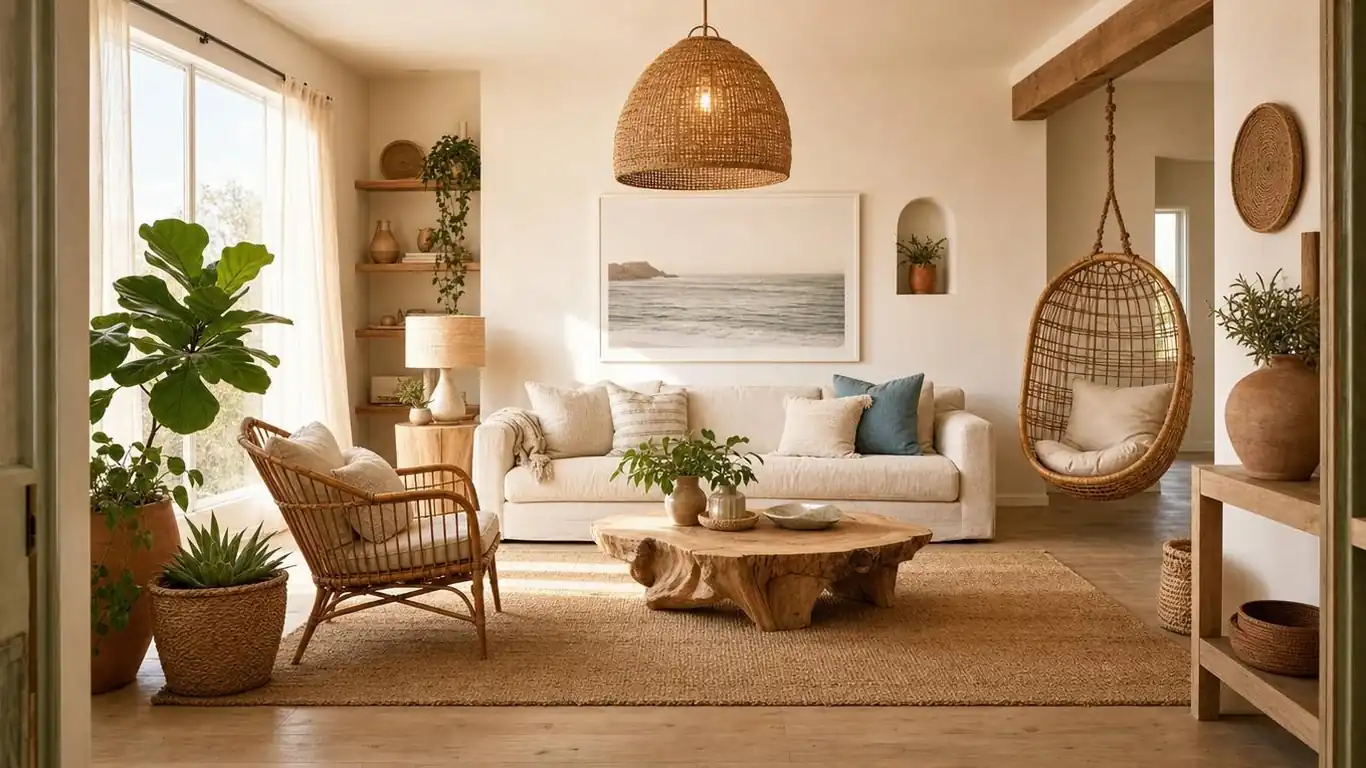
The boho coastal living room works best when it has a single clear focal point and a relaxed traffic flow. Most rooms center on one of three anchors: the fireplace, the media wall, or a large window with a view. Build the sofa arrangement around that anchor first. Then position the rattan accent chair at 90 degrees to the sofa, which creates a natural conversation zone without the rigid symmetry of a formal sitting room setup.
Leave breathing room between pieces. Boho coastal isn’t about filling space — it’s about curating it. Keep at least 24 inches between the sofa and coffee table. The coffee table should sit low enough to reach easily from a seated position. Pendant lamps overhead should hang at least 60 inches from the floor so they don’t cut across sightlines or feel imposing.
For smaller rooms, apply the same principles at a reduced scale. A smaller round jute rug, one rattan chair instead of two, and a narrower live-edge console can deliver the same effect in a room under 200 square feet. The home decor inspiration section carries additional layout ideas across room sizes, and 12 very small boho bedroom ideas show how the same proportional thinking applies in compact footprints.
KEY TAKEAWAY: Anchor the layout to one focal point, maintain 24-inch clearances, and resist filling every corner — the breathing room is as much a part of the style as the furniture.
What to Avoid
❌ Overcrowding with coastal novelty objects → ✅ Choose three to four meaningful coastal pieces and give each one visual space to land.
❌ Cool white walls instead of warm white → ✅ Use a warm greige or soft cream — cool white strips out the warmth that makes the boho layer work.
❌ Competing wood tones across furniture → ✅ Commit to one wood family — driftwood, raw oak, or honey — and repeat it consistently across every wood piece.
❌ Relying on a single overhead light source → ✅ Layer at least three warm-toned sources: a rattan pendant, a floor lamp, and a table lamp with a linen shade.
KEY TAKEAWAY: The most common mistake in boho coastal rooms is treating the two styles as separate themes to alternate between — layer them through the same materials and objects, not in different zones.
What You’ll Spend
Most of the key elements in a boho coastal living room — jute rugs, seagrass baskets, rattan chairs, dried pampas — cost significantly less than equivalent contemporary furniture. The style rewards patience and selective sourcing over full room purchases.
| Project | Estimated Cost | Impact Level |
|---|---|---|
| Jute or sisal rug (8×10) | $120–$350 | Very High |
| Rattan accent chair | $180–$600 | High |
| Rattan pendant lamps (pair) | $80–$250 | Very High |
| Macramé wall hanging | $45–$180 | High |
| Low-profile linen sofa (mid-range) | $800–$2,200 | High |
| Live-edge or raw wood coffee table | $250–$900 | High |
| Sheer linen curtains (per panel) | $30–$90 | Medium |
| Seagrass baskets (set of 3) | $40–$120 | Medium |
KEY TAKEAWAY: The jute rug and rattan pendant lamps deliver the highest visual transformation per dollar — together they often run under $500 and shift the room’s entire register.
When Your Room Is Tricky
Small living rooms: Scale every element down but keep the layering logic intact. A 5×8 jute rug, one rattan chair, a round live-edge side table, and a shorter macramé hanging still deliver the style in a room under 200 square feet. Skip the hanging chair — it eats ceiling height in a compact space.
Rental apartments: Focus on movable elements. A jute rug, a rattan accent chair, a macramé hanging on adhesive strips, and a seagrass basket cluster give you roughly 80 percent of the look with zero permanent changes. Cozy aesthetic small bedroom ideas apply the same portable layering approach in a compact bedroom context.
Rooms with existing furniture: Don’t start over. Add a jute rug and swap throw pillows for linen and woven versions first. Bring in one or two rattan or cane pieces as secondary furniture. Add a plant cluster last. The texture shift alone moves a room significantly toward boho coastal without a full room replacement.
Dark or low-light rooms: Amplify the warm-white palette deliberately. Warm white paint, extra warm-toned lamps, and honey-toned rather than smoked rattan keep the space from feeling heavy. Choose low-light plants — pothos, snake plants, ZZ plants — so the greenery layer stays healthy without requiring direct sunlight.
KEY TAKEAWAY: Boho coastal scales well across every room size and budget — the material logic stays the same even when the individual pieces change.
Frequently Asked Questions
Conclusion
Boho coastal living rooms succeed because both styles lean on the same underlying instinct — bring the outdoors in, keep materials natural, and let the room feel lived-in rather than staged. The ideas in this guide layer from the ground up: start with the jute rug and the rattan pendant, build outward with the sofa and furniture, then finish with plants, curtains, and collected coastal objects.
I’ve seen this style work in everything from a small rented apartment in Austin to a wide-open beachfront home in the Carolinas. The proportions shift and the individual pieces change, but the principle stays consistent: choose natural materials, layer textures deliberately, and leave enough breathing room that the eye has somewhere to rest. Your version doesn’t need to match anyone else’s — it just needs to feel gathered. For more boho design applied to compact spaces, 12 cozy aesthetic small bedroom ideas show how the same material vocabulary carries across rooms.