TL;DR
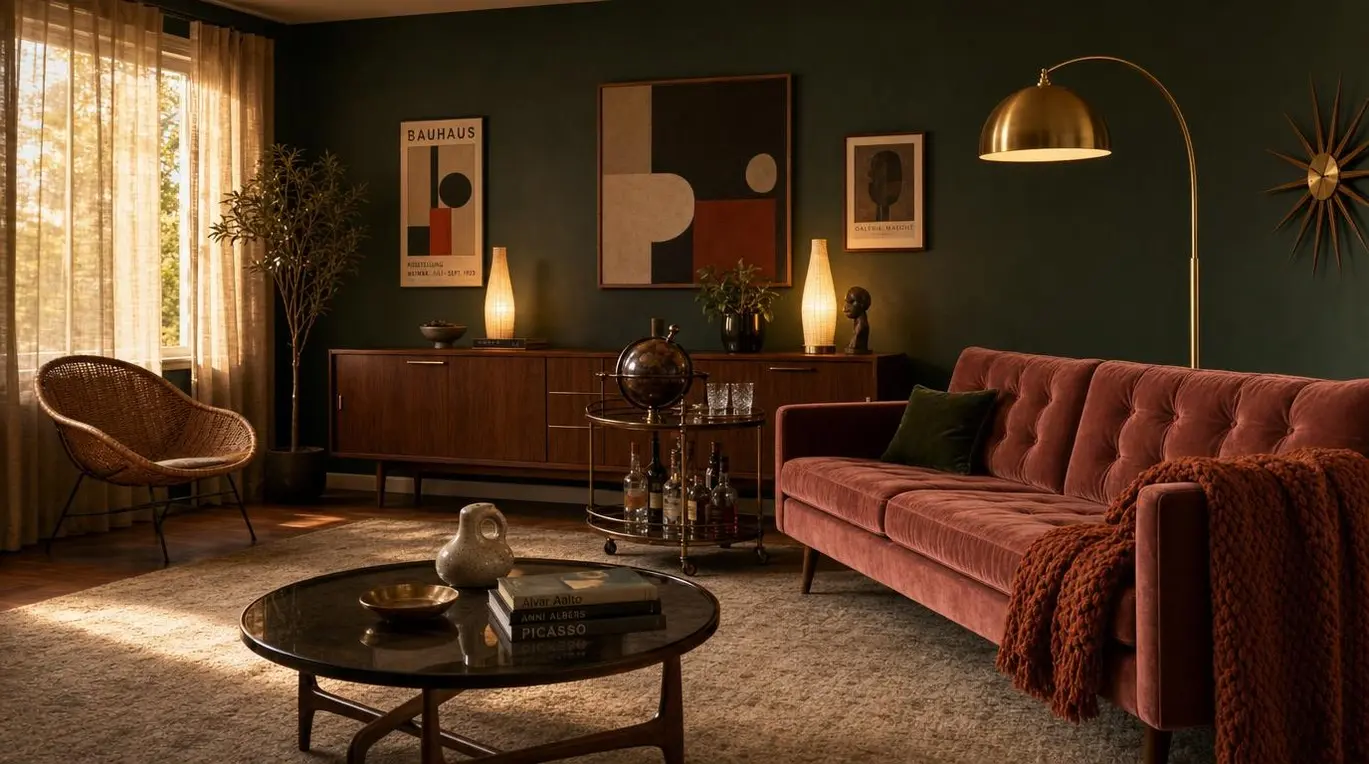
- Palette: Anchor the room in a deep, saturated wall color — forest green, charcoal, or warm terracotta — and let walnut wood tones do the brightening.
- Furniture: Keep silhouettes low, clean, and tapered. A walnut credenza, a tufted velvet sofa, and a sculptural accent chair are your three load-bearing pieces.
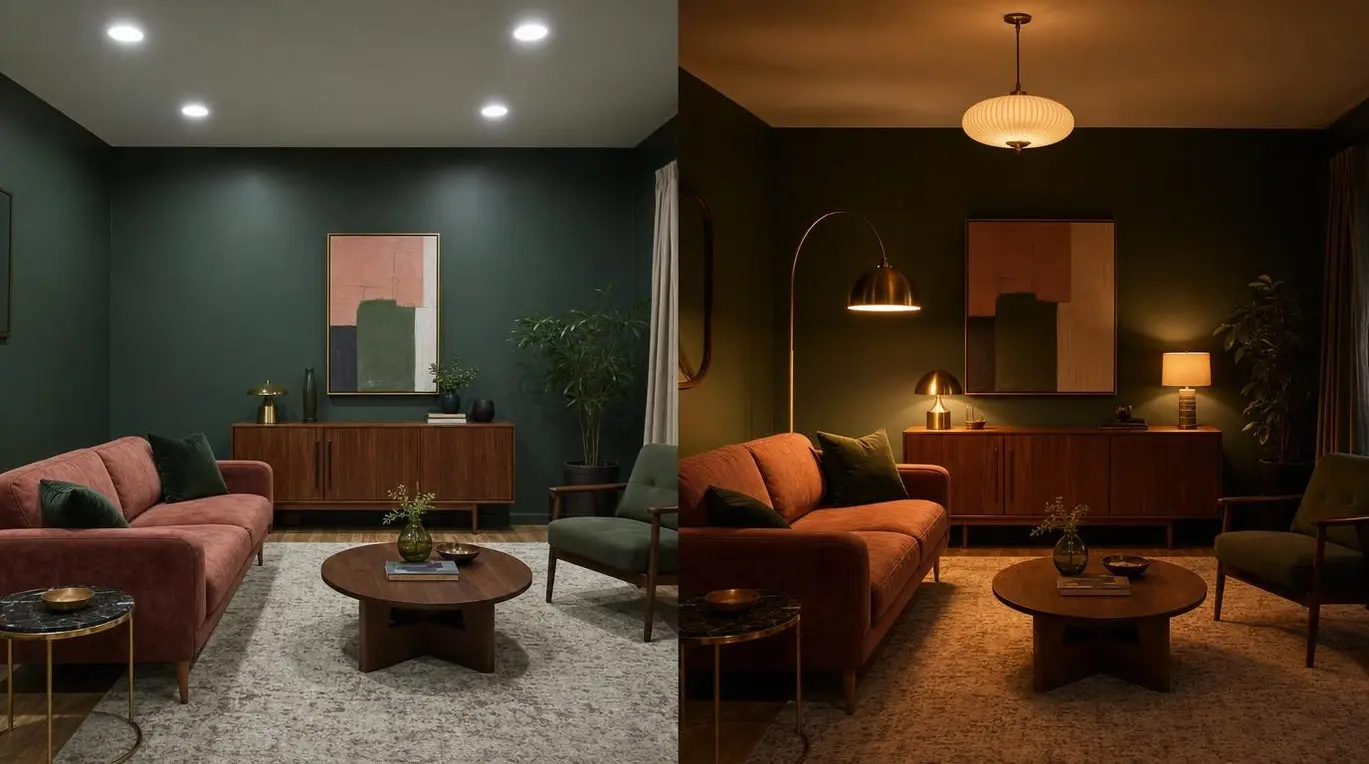
- Lighting: Layer a statement arc floor lamp, a brass pendant, and warm-toned table lamps. Overhead recessed lighting is the enemy of moody MCM.
- Textiles: Velvet, boucle, and raw silk in ochre, dusty rose, or burnt sienna add warmth and contrast against dark walls.
- Common trap: Don’t style the room so dark it loses visual breathing room. Contrast with one light-toned surface — a cream linen throw, a marble side table, a sheer panel.
Why the Moody Version of MCM Works So Well
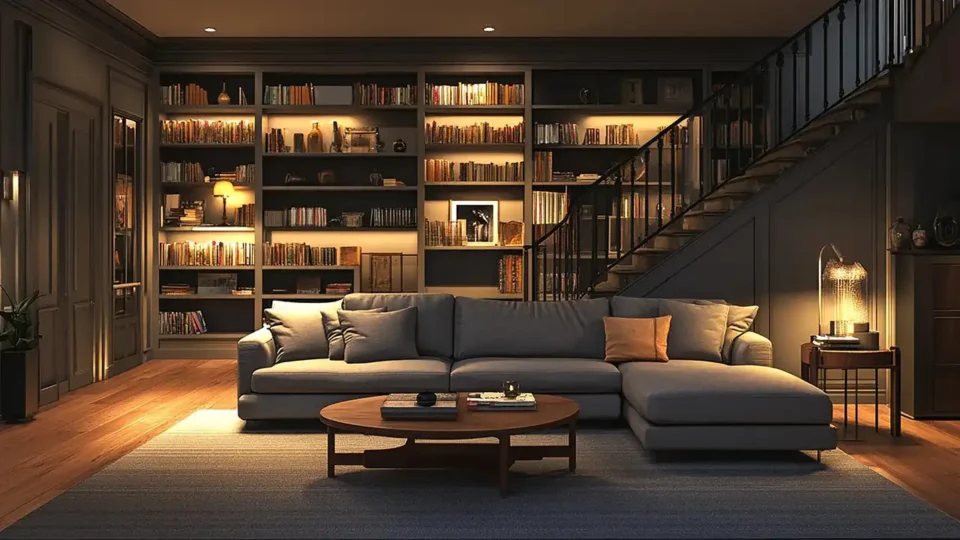
Think about walking into a hotel bar designed in the 1960s — low lighting, a warm amber glow, leather and wood everywhere, and an almost gravitational pull toward the seating. That feeling is what a well-executed moody mid-century modern living room delivers. Not darkness for its own sake. Depth on purpose.
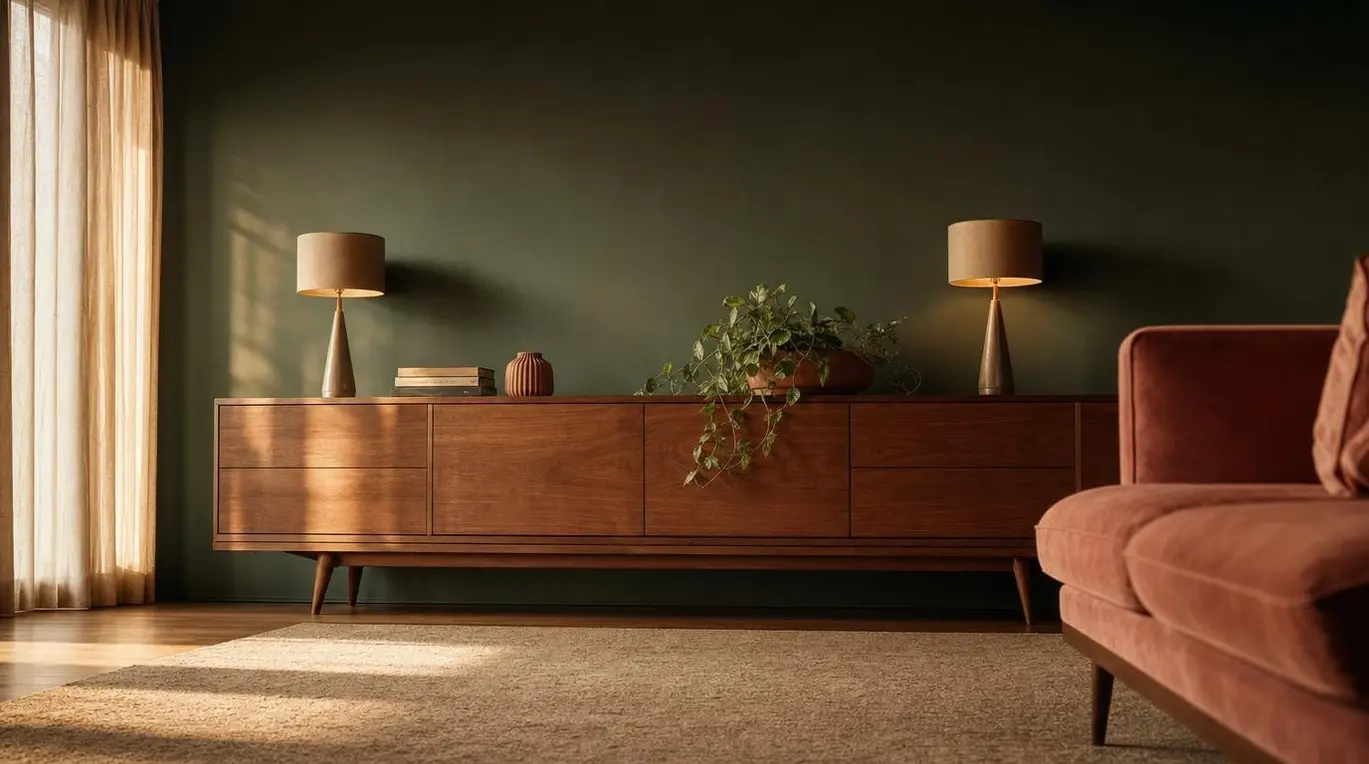
The standard mid-century modern living room tends to be bright: white walls, natural light, clean lines. Beautiful, but it can also feel cold or museum-like in the wrong space. The moody interpretation keeps every structural principle intact — tapered legs, organic shapes, the Bauhaus-informed balance of function and beauty — and swaps the light palette for something richer. Deep forest green, charcoal, or inky navy on the walls turns those clean MCM silhouettes into focal-point sculptures.
I worked on a mid-century modern living room in a narrow Victorian flat a couple of years back. The client wanted the MCM structure but hated how bright and sparse the references looked. We painted the walls in a deep charcoal green and kept every furniture piece in low walnut-toned profile. The space looked twice as wide, not half as bright. The contrast between dark walls and warm wood is what made it work.
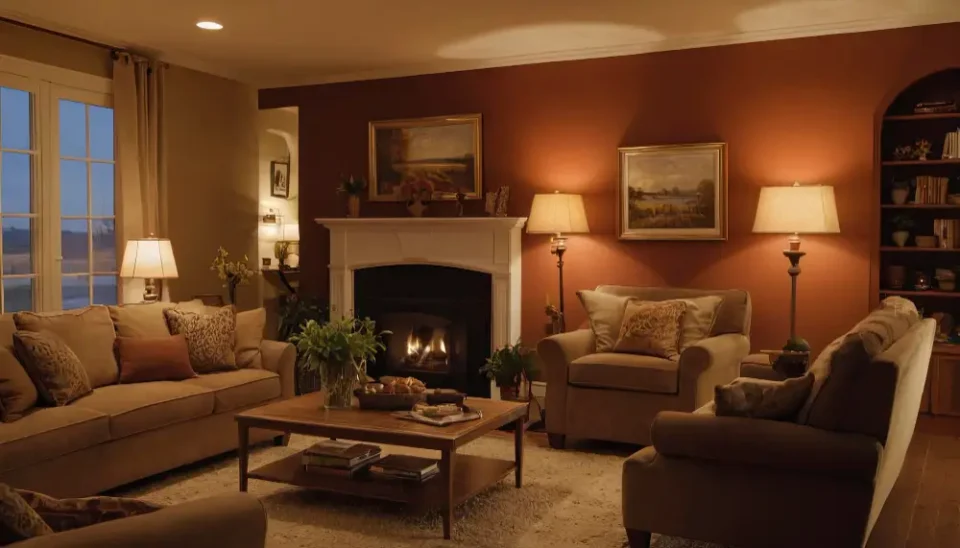
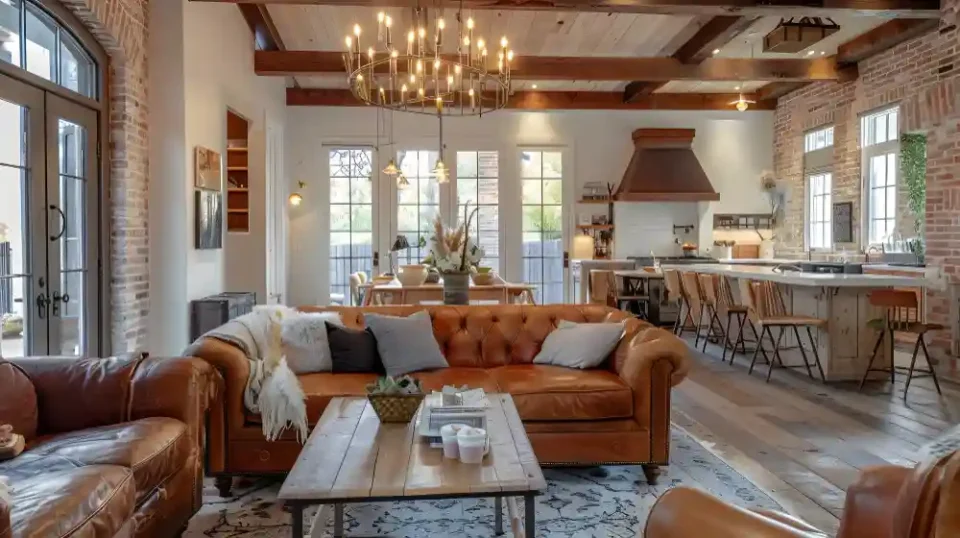
A moody mid-century modern living room succeeds because the style’s inherent restraint prevents it from feeling gothic or oppressive. The clean lines stay clean. The geometry stays readable. The darkness just adds weight and intention. If you are new to this style, browsing the full range of living room and home decor ideas at 101 Home Decor is a useful starting point. For more contrast across living room styles, the 11 Cozy Farmhouse Living Room Ideas for a Modern Rustic Home resource is worth browsing for how opposing palettes create warmth in a similar way.
Bookmark this guide for quick reference.
KEY TAKEAWAY: Moody mid-century modern works because the style’s clean geometry stays readable against dark walls — the darkness adds intention, not heaviness.
| Quick Takeaways | |
|---|---|
| Palette | Deep saturated walls with warm walnut wood tones for contrast. |
| Furniture | Low, tapered silhouettes in walnut, teak, or matte black. |
| Lighting | Layered warm-toned lamps — no overhead recessed lights. |
| Textiles | Velvet and boucle in ochre, dusty rose, or burnt sienna. |
| Contrast | One light-toned surface prevents the room from going too heavy. |
What a Moody Mid-Century Modern Living Room Actually Is
Mid-century modern spans roughly 1945 to 1969. The design movement drew from Bauhaus functionalism, Scandinavian simplicity, and American post-war optimism. It gave us tapered wooden legs, organic curved shapes, low-profile sofas, and a conviction that furniture should look good from every angle.
The moody interpretation is not a subgenre with its own rulebook. It is the same vocabulary applied with a darker palette and more atmospheric lighting. The bones stay identical. A credenza is still a credenza. A tulip side table is still a tulip side table. The change happens in color, contrast, and material warmth. The same vocabulary works in sleeping spaces as well — these mid-century modern bedroom ideas carry the era’s warmth into the bedroom.
Three things define the moody version specifically. First, a deep anchoring wall color — this is the single highest-impact decision in the room. Second, warm-toned wood (walnut, teak, or smoked oak) that reads as a light source against dark walls. Third, statement lighting that creates pools of amber glow rather than even overhead illumination.
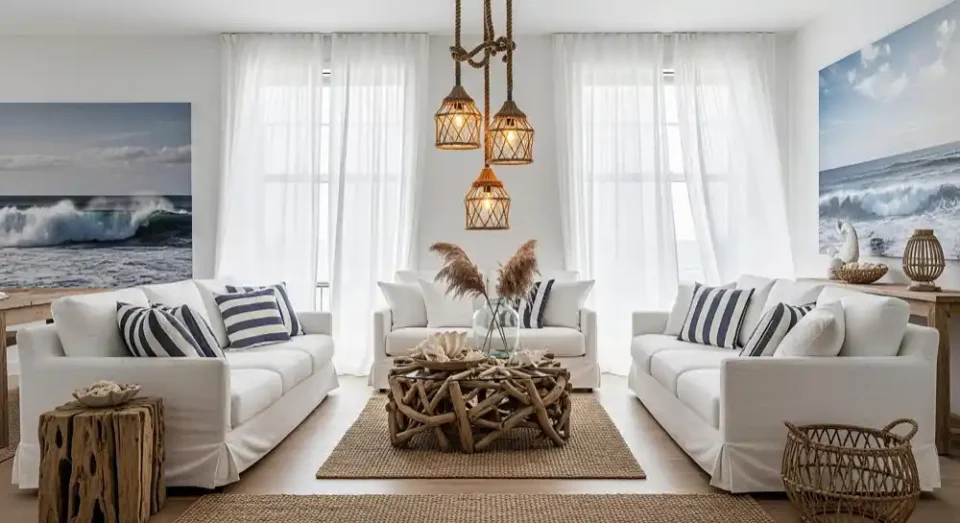
This is a cluster post within a broader universe of living room design. If you are also considering how softer palettes work in the same space, 11 Serene Neutral Coastal Living Room Ideas for a Modern Home shows the opposite end of the spectrum — useful for understanding what you are deliberately moving away from.
KEY TAKEAWAY: A moody mid-century modern living room keeps all the structural principles of the original movement and applies them with a darker palette, warmer wood tones, and atmospheric layered lighting.
Why the Moody MCM Palette Works — The Underlying Principle
Color theory explains why this works so reliably. Dark, saturated walls recede visually. They push the room’s edges back and make furniture — particularly light-toned walnut or teak pieces — appear to float forward. This is the same principle that makes theater stages feel dimensional: dark surround, lit center.
Mid-century modern furniture already has strong sculptural profiles. Tapered legs, organic upholstered curves, the angular geometry of a credenza. Against a light wall, the silhouette competes with the wall for visual authority. Against a dark forest green or deep charcoal, the silhouette wins instantly. Every piece looks more intentional.
The warm wood tone is non-negotiable for this effect. Cool-finish furniture — matte black, chrome, or white — against dark walls creates a harsh contrast that looks more industrial than MCM. Walnut reads warm against dark walls because it sits in the amber-ochre range. It connects visually to the brass hardware and the warm-toned lighting. Those three elements — walnut, brass, warm amber light — form the room’s thermal layer that keeps it from feeling cold.
For rooms where you want that same grounded, warm quality without going fully dark, 11 Earthy Modern Bedroom Ideas That Feel Like a Warm Embrace applies the same thermal palette logic in a bedroom context.
KEY TAKEAWAY: Dark walls make mid-century furniture silhouettes read as sculpture — the walnut-brass-warm light trio is what keeps the room feeling warm rather than cold.
How to Apply the Moody MCM Look in Your Living Room
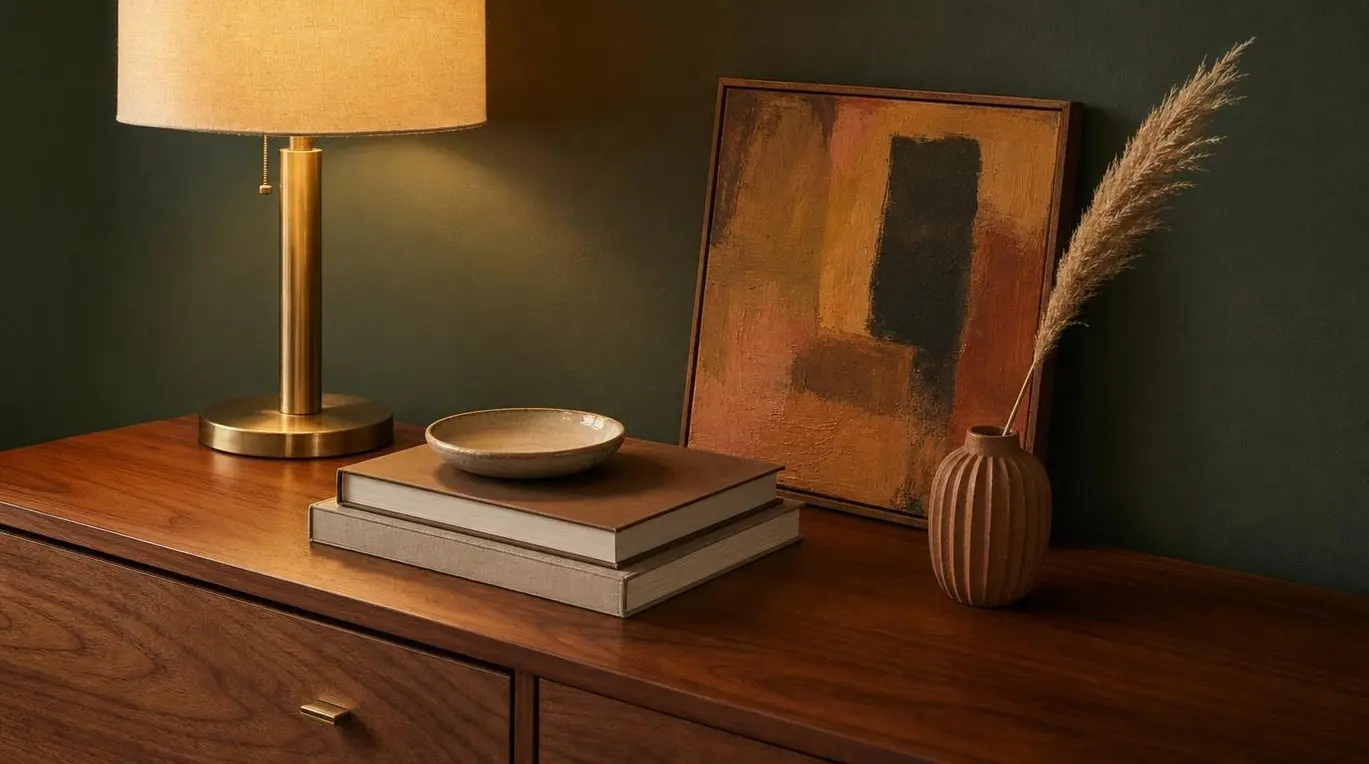
Getting the moody mid-century look right comes down to five decisions. Work through them in order — wall color, signature furniture, layered lighting, contrasting textiles, and a styled focal point — to build the room step by step.
1. Choose the Right Deep Wall Color
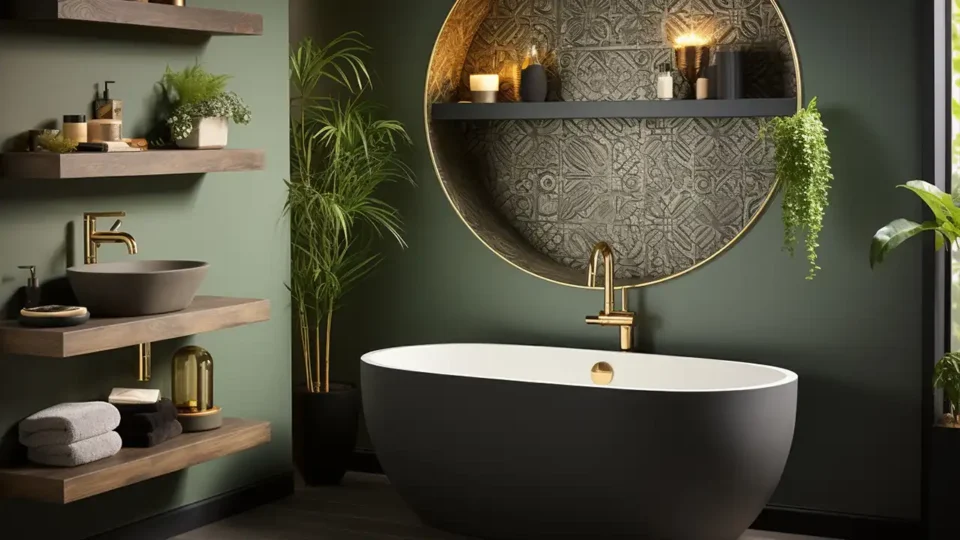
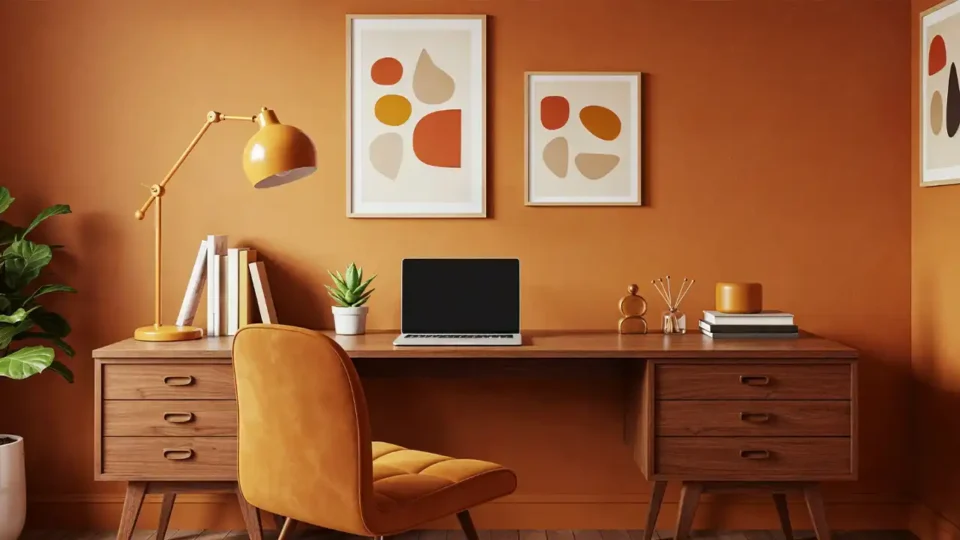
Three colors work reliably for a moody mid-century modern living room. Forest green (think Farrow & Ball’s Studio Green or Sherwin-Williams’ Jasper) is the most versatile — it reads warm or cool depending on the light. Deep charcoal (like Purbeck Stone or Iron Ore) creates maximum furniture contrast and reads as sophisticated rather than harsh. Warm terracotta or burnt sienna adds richness for south-facing rooms where natural light is already abundant.
Avoid navy unless your room gets significant natural light. Navy in a dark room tips from moody into gloomy. One accent wall is a compromise, but full-room saturation is where the effect really lands.
2. Anchor With Three Signature MCM Furniture Pieces
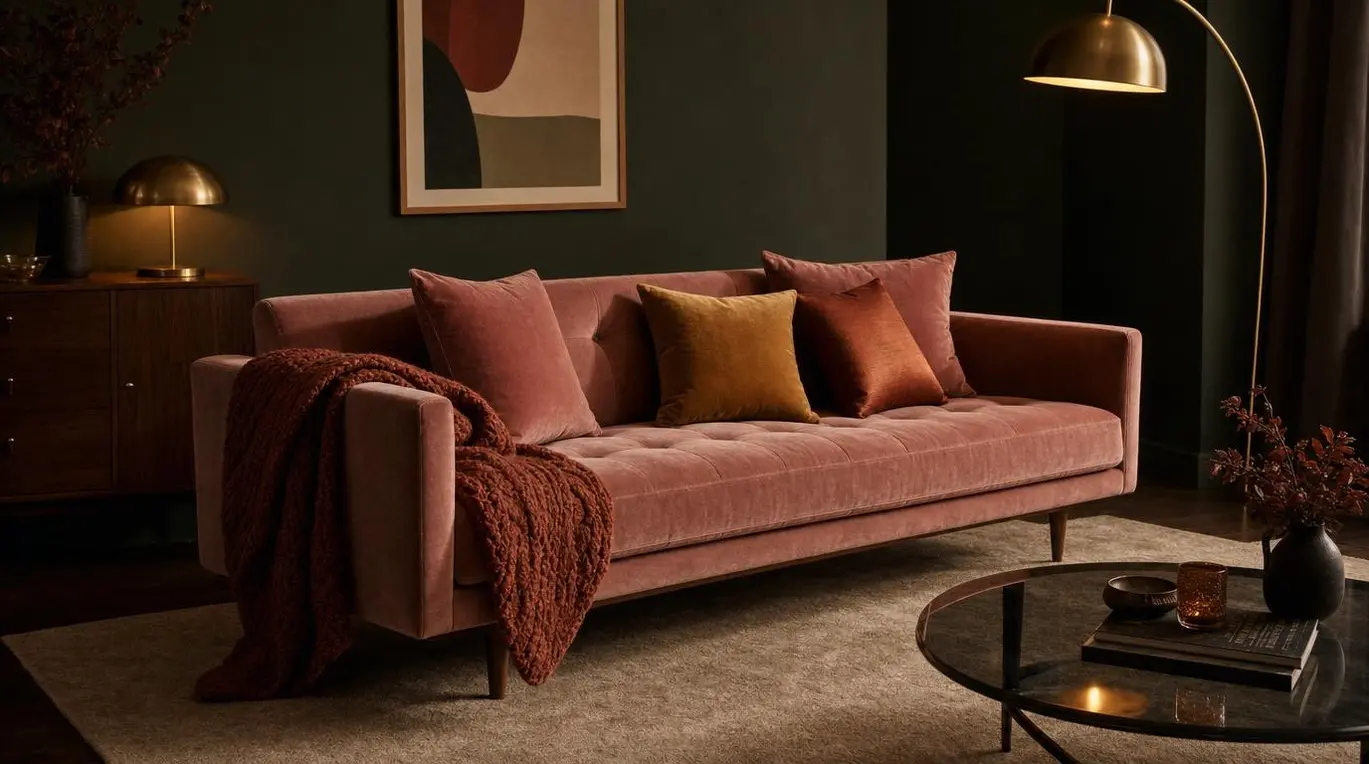
Every moody mid-century modern living room needs three load-bearing pieces. A low-profile sofa with clean lines and no exposed leg bulk — tufted velvet in forest green, dusty rose, or ochre works beautifully against dark walls. A walnut credenza or sideboard along the longest wall, which does double duty as a display surface and a visual grounding element. And one sculptural accent chair — an Eames-style shell chair, a tulip-base chair with an upholstered seat, or a woven rattan piece that introduces organic texture.
The 12 Minimalist Bedroom Ideas 2026 That Create a Calming Escape covers how restraint in furniture selection makes each piece work harder — the same discipline applies to MCM living rooms.
3. Layer Lighting at Three Levels
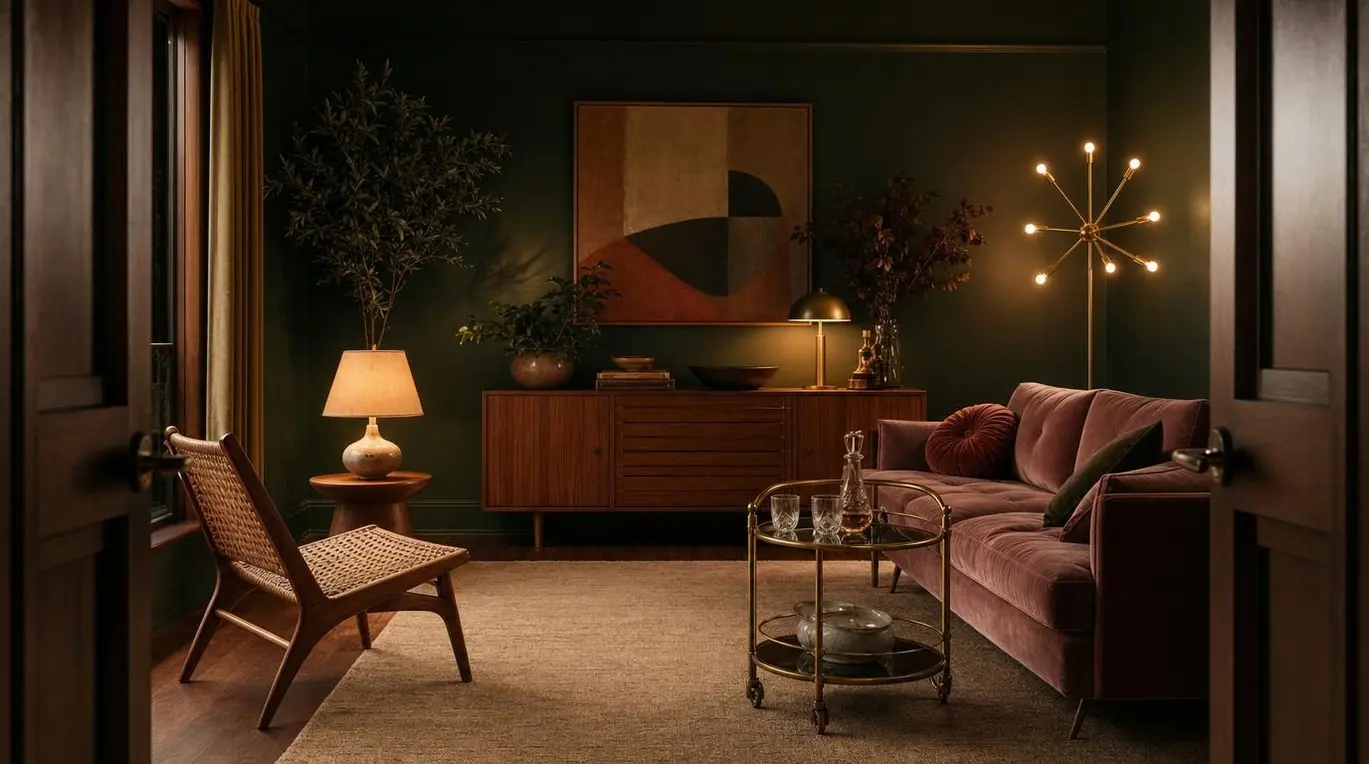
This is where the moody character actually lives. Overhead recessed lighting flattens a dark room and destroys the atmosphere completely. Instead, build three lighting levels. At floor level, a statement arc floor lamp in brushed brass or matte black with a warm-white Edison bulb. At table level, warm-toned ceramic or brass table lamps on the credenza and end tables. At accent level, a slim brass pendant or a cone pendant over a reading corner. Dimmable bulbs throughout are essential — 2700K color temperature is the target.
DESIGNER TIP: A dimmer switch on every lamp circuit is the single most cost-effective investment in a moody MCM room. It transforms the same furniture into three different atmospheres from day to evening to night.
4. Choose Textiles That Contrast Without Competing
Against dark walls, textiles should introduce lightness through color or warmth through texture — not both at once. Velvet in ochre or dusty rose adds color contrast without going bright. Boucle in warm cream or ivory adds textural warmth without reading as stark white. A low-pile rug in warm greige or terracotta anchors the seating area and prevents the dark floor from merging with dark walls.
Layer a chunky wool throw in burnt sienna over the sofa’s arm. Use raw silk cushions in muted clay. Avoid cool-toned textiles — ice blue, mint, cold grey — they fight the thermal quality of the palette. For similar layering principles applied to dark, atmospheric spaces, 9 Moody Boho Bedroom Ideas for a Dark, Dreamy, and Cozy Retreat is a useful reference — the textile layering technique translates across styles.
5. Style the Credenza as a Focal Point Display
The walnut credenza is the MCM living room’s signature anchor piece, and in a moody room it deserves intentional styling. Work in odd numbers: three objects, five at most. A pair of ceramic table lamps with warm-white bulbs. A stack of design books — art monographs, architecture volumes. One medium-sized piece of sculptural art — an abstract oil painting, a ceramic vessel, or a framed vintage print. A single trailing plant in a low terracotta pot adds organic softness.
Keep the credenza surface below the 60% full mark. Breathing room on a dark-room display surface is the difference between editorial and cluttered.
6. Introduce One Light-Toned Contrast Surface
This is the rule that saves moody MCM rooms from going too heavy. Every dark-palette room needs one surface or element that reads significantly lighter. Options: a Carrara marble or travertine coffee table, a cream linen sofa, a light-toned abstract rug, or sheer linen panels on the windows. This light element also plays a practical role — it gives the eye a resting place and prevents the room from feeling claustrophobic.
The 10 Smart Ways to Decorate a Small Living Room on a Budget goes deeper on how contrast elements manage perceived space in compact living rooms — particularly relevant if your moody MCM room is not large.
7. Select Accessories With Authentic MCM DNA
Details authenticate the style. Sputnik-inspired ceiling fixtures or geometric pendant lights. Sunburst or abstract wall art in teak or metal frames. A globe bar cart in brass and smoked glass — genuinely period-appropriate and practically useful. Abstract ceramic sculpture. A low-pile geometric rug with a mid-century print in muted clay, ochre, and forest green. Avoid anything farmhouse-adjacent (shiplap, galvanized metal, mason jars) and anything too rustic — MCM is urban, not rural.
For design inspiration that sits in a different but adjacent aesthetic, the Elegant Coastal Living Room Aesthetics for Year-Round Summer demonstrates how accessory restraint across a cohesive palette reads as intentional design.
KEY TAKEAWAY: The seven pillars — dark wall color, three signature furniture pieces, layered lighting, warm-toned textiles, a styled credenza, one light contrast surface, and authentic MCM accessories — define the look completely.
What to Avoid in a Moody Mid-Century Modern Living Room
❌ All overhead lighting only → ✅ Remove the central fixture or put it on a deep dimmer; build three lower lighting layers with floor and table lamps instead.
❌ Cold metal finishes throughout → ✅ Chrome and brushed nickel fight the warm palette; use brushed brass, antique gold, or matte black hardware and fixtures instead.
❌ Too many patterns at once → ✅ Limit pattern to one surface — the rug or one accent cushion; let texture do the layering work on every other surface.
❌ Oversized or heavy-profile furniture → ✅ Mid-century modern depends on visual lightness through tapered legs and low profiles; bulky sectionals on short block feet break the silhouette entirely.
A note from a project that went sideways: a client once insisted on a dark grey L-shaped sectional with no visible legs against dark walls. The sofa disappeared into the room. We ended up reupholstering the front legs in brushed brass — a small intervention that restored the visual float MCM requires. If you enjoy reading about how dark color choices affect atmosphere across different room types, 11 Navy Blue Bedroom Ideas for a Rich, Moody, and Calming Retreat covers a parallel palette challenge with practical solutions.
KEY TAKEAWAY: The four most common moody MCM mistakes — overhead-only lighting, cold metal finishes, too many patterns, and heavy-profile furniture — all have simple, specific fixes.
Investment Levels
Moody mid-century modern lives across a wide price range. You can execute the palette shift for very little — paint is transformative at low cost — and invest selectively in the pieces that carry the most visual weight.
| Project | Estimated Cost | Impact Level |
|---|---|---|
| Deep wall color (one room, DIY) | $80 – $150 | Very High |
| Walnut credenza or sideboard | $350 – $1,200 | High |
| Tufted velvet sofa (mid-range) | $800 – $2,500 | High |
| Arc floor lamp + table lamp pair (brass) | $150 – $600 | High |
The 10 Smart Design Hacks: How to Decorate a Small Bedroom on a Budget covers smart budget sequencing for dark-palette rooms — start with paint and lighting, then invest in furniture as budget allows.
KEY TAKEAWAY: Paint and lighting deliver the highest visual return per dollar in a moody MCM room — invest there first before touching furniture budgets.
Special Considerations for Tricky Spaces
Not every room starts from a blank slate. Here’s how to adapt the moody MCM look for small spaces, low-light rooms, rentals you can’t paint, and existing warm-toned floors.
Small Living Rooms
Counterintuitively, moody MCM works in small rooms when executed correctly. Dark walls in a small space make the room feel intentional and intimate rather than cramped — provided the furniture scale stays proportional. Use a two-seater sofa rather than a three-seater. Choose a glass-topped coffee table (smoked glass is perfect here) to maintain floor sightlines. Keep the rug to the seating area only, leaving hard floor exposed around the perimeter.
North-Facing Rooms With Limited Natural Light
North-facing rooms that receive cool, indirect light need extra care. Forest green and charcoal will read colder than expected. In these rooms, lean toward warm-toned dark colors: a deep terracotta, warm tobacco brown, or a green with a strong yellow undertone (Olive or Avocado tones rather than true forest green). Compensate with additional warm-toned ambient lighting — 2700K minimum across all sources.
Rental Spaces Where Painting Is Not an Option
Dark wallpaper panels achieve the same effect as paint — peel-and-stick options in grasscloth texture or geometric MCM prints work surprisingly well. Alternatively, create the dark anchor through a large-scale art piece, a deep-toned gallery wall, or heavy velvet drapes in forest green or charcoal that run floor to ceiling. Pair with 15 Classy Man Cave Ideas for a Sophisticated and Refined Sanctuary for dark-atmosphere techniques that don’t require permanent changes.
Rooms With Existing Warm-Toned Wood Floors
If the floor is already warm oak or pine, the palette becomes even richer — but you risk losing the furniture against a busy floor. Use a low-pile rug with enough surface area to define the seating zone clearly, and keep furniture legs in a different finish than the floor (matte black or dark walnut rather than light oak).
KEY TAKEAWAY: Small rooms, north-facing light, rental restrictions, and existing warm floors each have specific tactical adjustments — none of them prevent the moody MCM look from working.
Frequently Asked Questions
Conclusion
A moody mid-century modern living room is one of the most satisfying design projects precisely because the rules are clear. The vocabulary is fixed — tapered legs, walnut, brass, clean geometry — and the moodiness comes from a deliberate palette shift, not structural complexity. Get the wall color right, layer the lighting, and every furniture piece you already know from MCM becomes a stronger version of itself.
After styling the project I mentioned earlier — dark charcoal green walls, walnut credenza, tufted dusty rose velvet sofa — the client said something I have thought about since. She said it was the first room she had lived in that felt like it was designed for evening rather than just tolerating it. That is the gift of a well-executed dark palette: the room improves as the day gets darker. For more home decor inspiration across every room style, explore 101 Home Decor for ideas that span everything from deep moody palettes to bright coastal aesthetics.