TL;DR
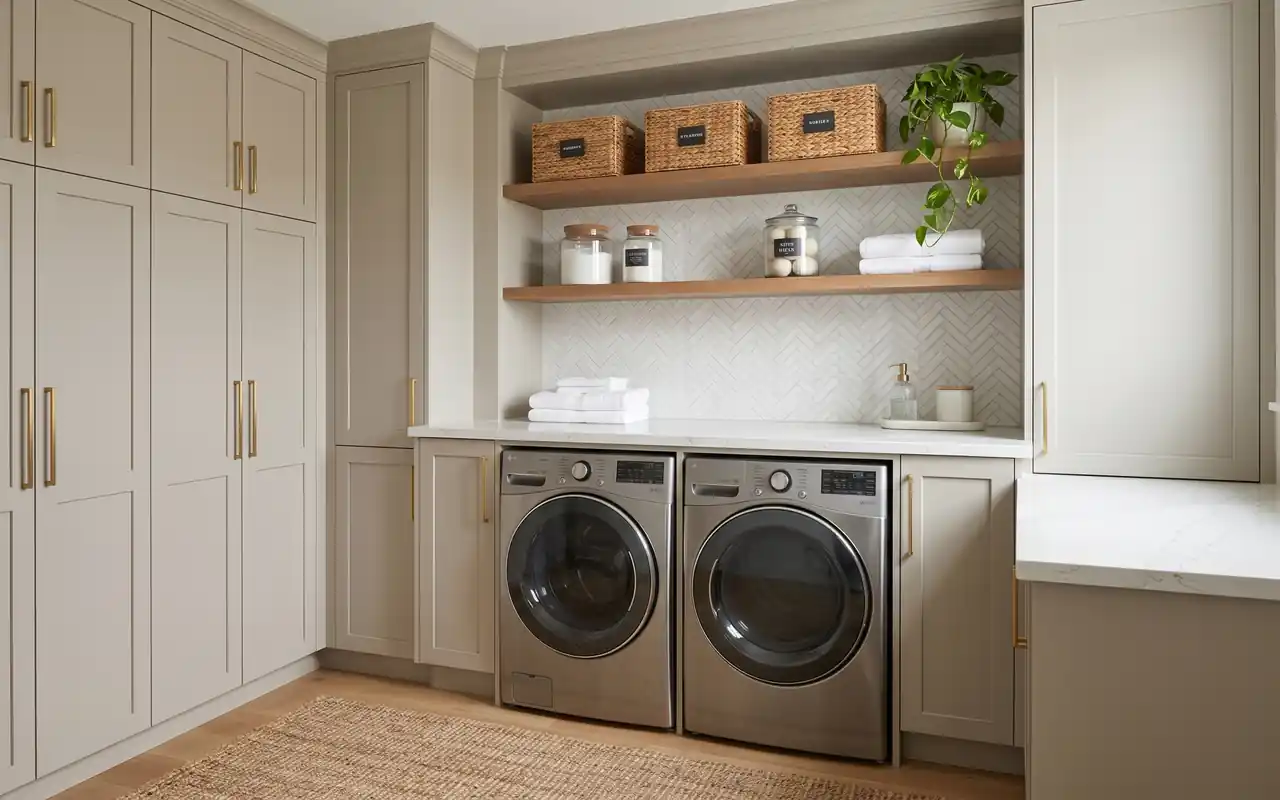
- Floor-to-ceiling cabinetry is the best way to hide bulky cleaning supplies and ironing boards.
- Shaker-style doors in warm greige or soft white offer a timeless, high-end aesthetic.
- Integrated features like tilt-out hampers and pull-out drying racks eliminate floor clutter.
- Mixing open shelving with closed cabinets prevents a small room from feeling boxed in.
Strategic Cabinetry for a Hardworking Utility Room
Laundry room cabinet ideas are the foundation of a clean and efficient home. To create a space that actually works for you, focus on cabinetry that addresses specific storage needs, such as tall slots for mops and deep drawers for heavy detergent bottles. The most effective designs prioritize a mix of closed storage to hide “the mess” and open zones for quick access. Incorporating high-quality home decor inspiration into your utility room ensures the space feels as luxurious as your kitchen or living room.
If you are currently working with limited square footage, you might want to look into tiny laundry room ideas to maximize space to see how specific cabinet depths can impact your workflow. Effective storage isn’t just about the number of cupboards; it’s about the functionality within them. Choosing the right layout allows you to move seamlessly from washing to folding without ever feeling cramped. Bookmark this guide for quick reference.
KEY TAKEAWAY: A successful laundry room cabinet layout balances high-capacity storage with accessible, task-oriented workspaces.
12 Laundry Room Cabinet Ideas
1. Classic Shaker-Style Built-Ins
Shaker cabinets are a top choice for laundry room cabinet ideas because of their clean lines and versatility. They work beautifully in both modern and traditional homes, especially when finished in a soft white or warm greige. These cabinets provide a structured look that hides the visual chaos of cleaning products. Pair them with matte black hardware for a contemporary contrast or brushed brass for a touch of timeless luxury.
2. Floor-to-Ceiling Utility Cabinets
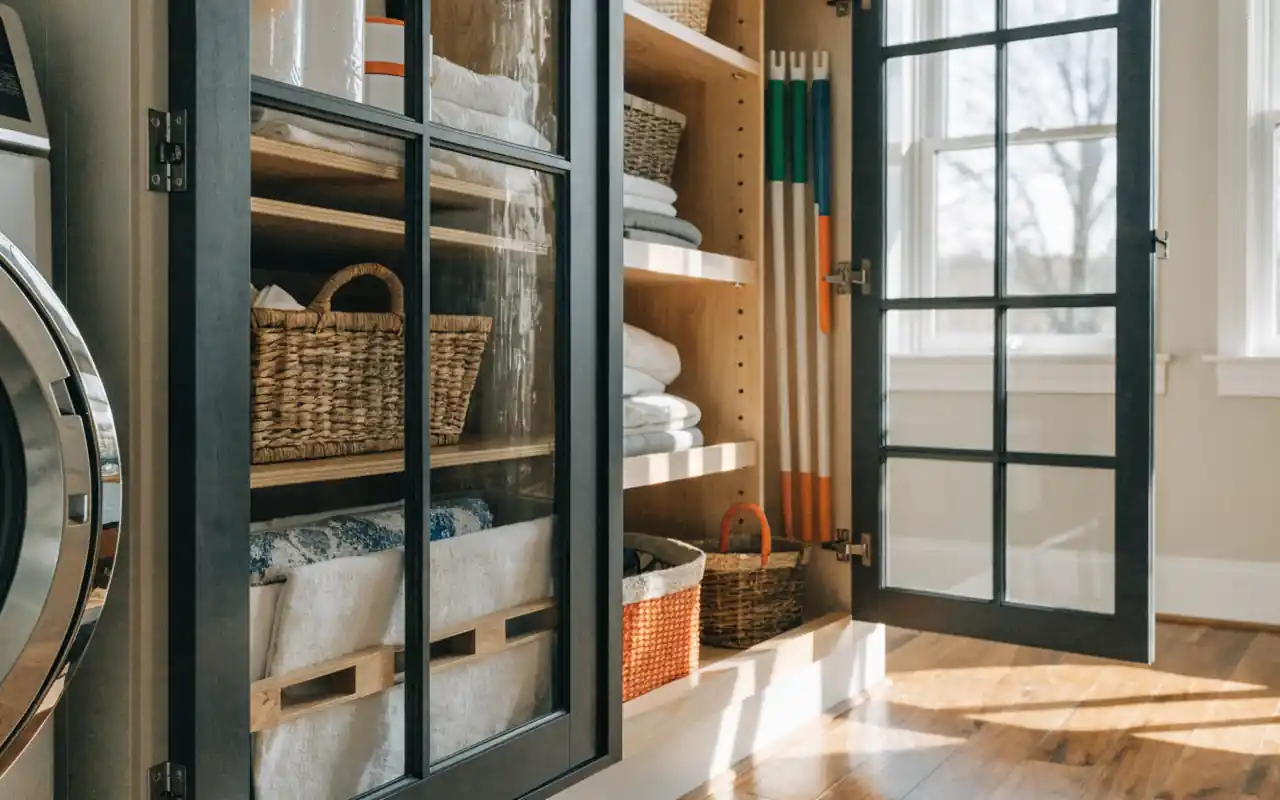
Maximize every vertical inch by installing cabinets that reach all the way to the ceiling. This provides a dedicated home for tall items like ironing boards, steamers, and vacuum cleaners. In a small laundry room optimized for utility, this vertical approach is essential. It keeps heavy equipment off the floor and ensures that your laundry zone remains clear for walking and sorting.
3. Integrated Tilt-Out Hampers
Eliminate the sight of dirty clothes by building hampers directly into your lower cabinetry. A tilt-out design allows you to sort lights and darks effortlessly without taking up valuable floor space. These inserts can be customized with removable linen liners for easy transport to the washer. It is a sleek solution that maintains a high-end, editorial look in your utility room.
4. Open Shelving for Quick Access
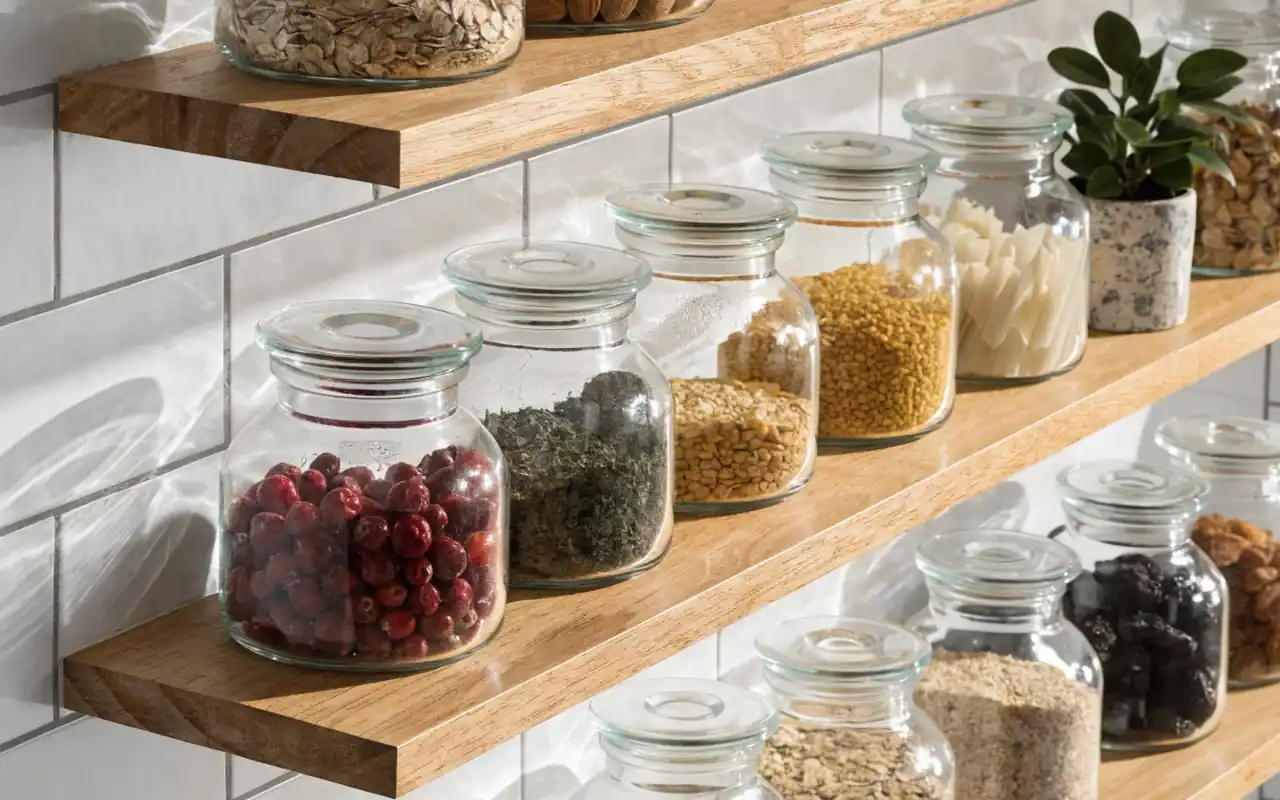
Mixing open shelving with closed cabinets prevents the room from feeling too heavy or enclosed. Use open shelves for items you reach for daily, like detergent pods or clean towels. This is a great place to showcase textured baskets or glass apothecary jars. For a polished look, consider pulling inspiration from bathroom backsplash ideas to create a stylish backdrop behind the shelves.
DESIGNER TIP: Install a hanging rod between two upper cabinets to provide a permanent spot for air-drying shirts right out of the dryer.
5. High-Gloss Modern Cabinetry
For a sleek, urban aesthetic, choose flat-panel cabinets with a high-gloss finish. These surfaces reflect light, which helps windowless laundry rooms feel brighter and more expansive. Use handle-less “push-to-open” doors for a minimalist look that is easy to wipe clean. This style pairs exceptionally well with cool slate countertops and stainless steel appliances.
6. Hidden Pull-Out Drying Drawers
If you have delicate items that cannot go in the dryer, consider installing cabinet drawers with integrated mesh drying racks. These drawers pull out when needed and allow air to circulate around flat-drying sweaters. It’s a specialized organizational tactic similar to sewing room organization tips where every tool has a precise, hidden home.
7. Corner Carousel Cabinets
Don’t let corner space go to waste. A “Lazy Susan” or carousel insert inside a corner cabinet makes it easy to access bulky jugs of detergent or extra cleaning supplies that usually get lost in the back. This maximizes your storage capacity without requiring a larger room footprint. It is a highly functional upgrade for any U-shaped or L-shaped laundry layout.
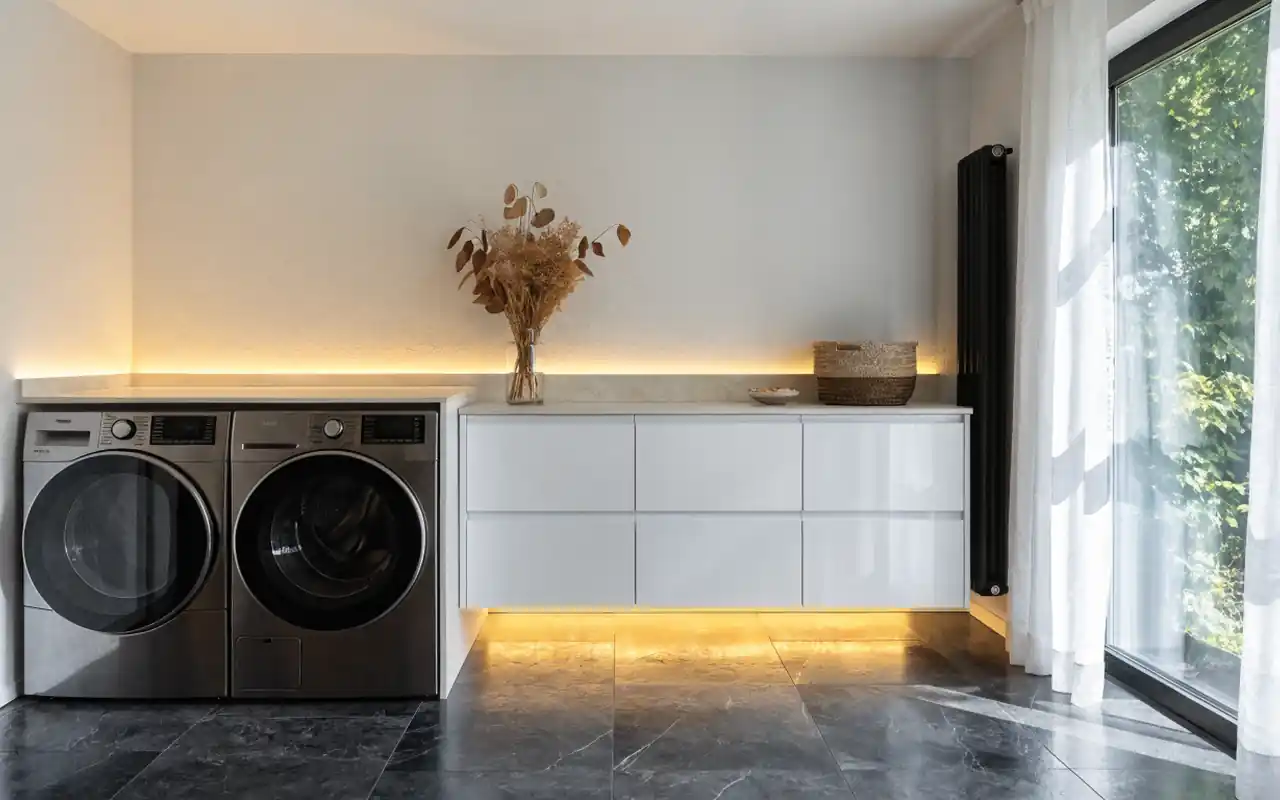
8. Floating Lower Cabinets
Mounting your lower cabinets to the wall so they “hover” above the floor creates a modern, airy feel. This design choice makes it easier to clean the floors and can accommodate small rolling bins underneath for extra sorting. Floating cabinets are a sophisticated architectural detail that signals high-end design expertise.
DESIGNER TIP: Use toe-kick drawers at the very bottom of your base cabinets to store flat items like scrub brushes or extra floor pads.
9. Sliding Barn Door Cabinetry
In narrow laundry rooms where swinging doors might block the walkway, sliding barn-style cabinet doors are a perfect fix. They provide a rustic-chic aesthetic and save space. Use a soft oak finish for the doors to add warmth to the room. This works especially well for covering a stacked washer and dryer unit when they aren’t in use.
10. Glass-Front Upper Cabinets
Glass inserts in your upper cabinets can make a small room feel much deeper. If you’re worried about showing clutter, use frosted or fluted glass for a semi-opaque look. For more styling ideas, check out our guide on what to put on top of kitchen cabinets as many of those decorative principles apply to the tops of your laundry cabinetry too.
11. Custom Cubby Storage
Cubbies are excellent for families who need to sort laundry for multiple people. Assign one cubby per person so clean clothes can be tucked away for easy pickup. You can use baskets that fit perfectly into these slots to keep the look uniform and tidy. It’s a simple system that dramatically reduces the amount of time spent sorting after a wash.
12. Beadboard Door Details
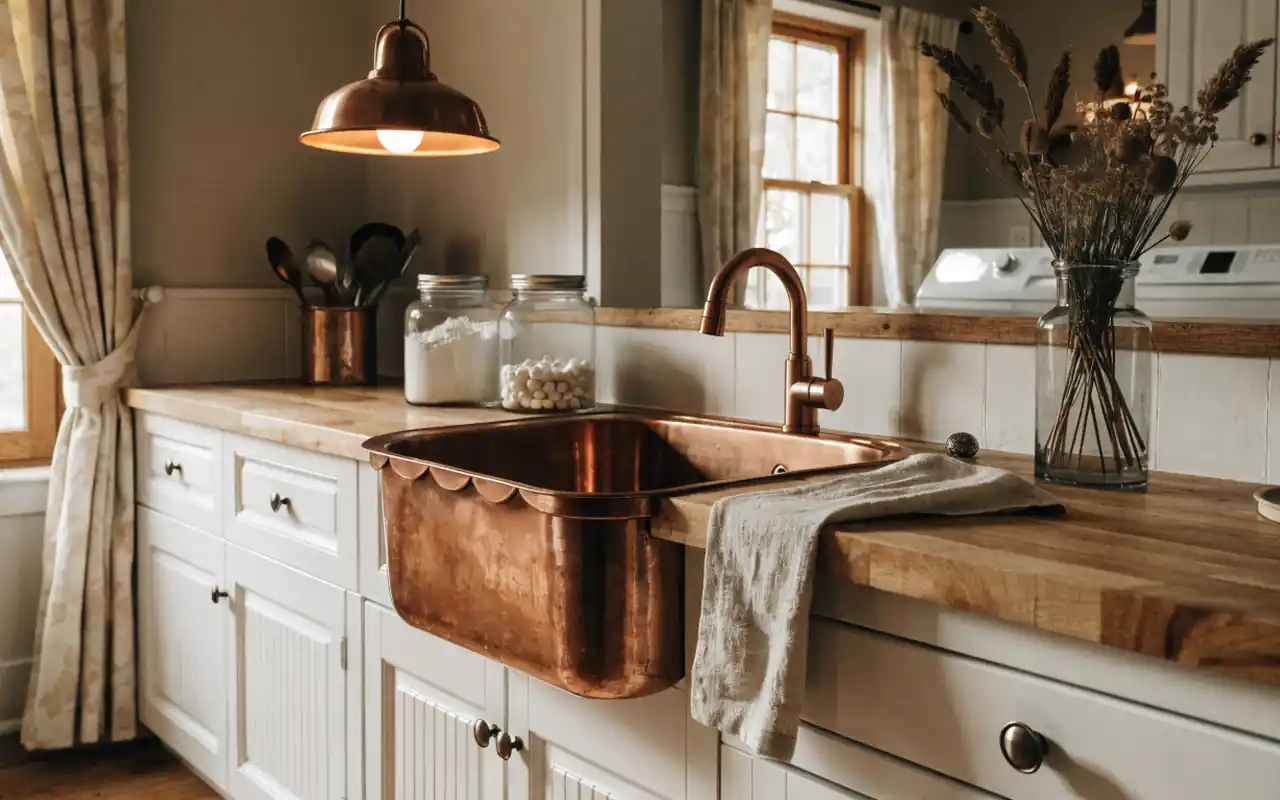
For a cozy, farmhouse-inspired laundry room, choose cabinet doors with beadboard detailing. This adds vertical texture to the room and provides a soft, cottage feel. Pair these cabinets with a butcher block countertop and a farmhouse sink for a classic look that feels both hardworking and inviting.
DESIGNER TIP: Match your cabinet hardware to the finish of your faucet and appliance handles for a completely cohesive, high-end look.
KEY TAKEAWAY: Customizing cabinet interiors with hampers, drying racks, and carousels is the key to a clutter-free and professional laundry room.
Material Selection and Durability
Laundry rooms are high-moisture environments, so cabinet material choice is critical. Opt for moisture-resistant MDF or solid wood with a high-quality finish that won’t warp over time. When planning a larger home project, such as modern basement storage and living, it is important to choose materials that can withstand varying humidity levels.
Surface durability also matters. Choose finishes that are easy to wipe down, as detergent spills and lint are inevitable. Matte finishes are great for hiding fingerprints, while high-gloss surfaces are easier to deep clean. Pair your cabinets with a stone or quartz countertop to create a waterproof workspace that lasts for decades.
KEY TAKEAWAY: Prioritize moisture-resistant materials and easy-to-clean finishes to ensure your laundry cabinetry remains beautiful and functional.
Common Laundry Room Cabinet Mistakes to Avoid
- MISTAKE: Ignoring Vertical Space → FIX: Run cabinets all the way to the ceiling to store seasonal or rarely used items.
- MISTAKE: Using Low-Quality Hardware → FIX: Invest in heavy-duty hinges and soft-close slides to handle frequent use.
- MISTAKE: Forgetting Task Lighting → FIX: Install LED strip lights under upper cabinets to brighten your work surface.
- MISTAKE: Standard Depths Only → FIX: Use shallower cabinets in narrow paths to maintain a comfortable walkway.
KEY TAKEAWAY: Avoiding standard layouts in favor of vertical and task-oriented custom solutions prevents common utility room bottlenecks.
Budget & Cost
Cabinetry is often the largest investment in a laundry room, but you can achieve a custom look by mixing store-bought units with high-end hardware.
| Project | Estimated Cost | Impact Level |
|---|---|---|
| Custom Cabinet Inserts | $150–$400 | High |
| Designer Hardware Swap | $50–$120 | Medium |
| Floating Wall Cabinets | $300–$700 | High |
| Under-Cabinet Lighting | $60–$150 | Medium |
KEY TAKEAWAY: Focus your budget on custom inserts and lighting to see the biggest improvement in daily functionality.
Decisions & Cabinetry Challenges
Choosing the right color for your cabinets can be difficult. While white is a safe choice, deep blues or soft greens can add a sophisticated touch to the room. If your laundry area doubles as a workspace, similar to a productive home office, you may want to choose a neutral tone that promotes focus and calm.
Another challenge is coordinating the cabinet layout with plumbing and venting. Always plan your cabinet locations around the “hookup” zones for your washer and dryer. If you are working in a tight space, custom-built enclosures can hide the pipes and hoses while providing extra storage above the machines.
KEY TAKEAWAY: Align your cabinet layout with your utility hookups early in the design phase to avoid expensive plumbing adjustments later.
Frequently Asked Questions
Conclusion
Thoughtful laundry room cabinet ideas transform a purely utilitarian space into a highly organized and stylish part of the home. By utilizing vertical storage, integrating hidden hampers, and choosing durable materials, you can create a room that makes daily chores feel effortless. Whether you prefer a sleek modern look or a cozy farmhouse vibe, the right cabinetry is the key to a successful utility room.
Taking the time to plan your storage is a fundamental part of improving your home. When every bottle of detergent and every laundry basket has a dedicated home, your entire household runs more smoothly. Start by identifying your biggest storage pain point and tackle it with one of these smart cabinetry solutions today.