Small bedrooms often feel like a puzzle where the pieces don’t quite fit. Whether you are dealing with a tiny guest room or a compact primary suite, the challenge is balancing essential furniture with the need for movement. A cramped room doesn’t just look messy; it can actually disrupt your sleep and morning routine.
This guide helps anyone struggling with limited square footage. We will walk through 12 specific layouts and strategies designed to make your room feel intentional rather than cluttered. By the end, you’ll know exactly where to place your bed, how to handle storage, and which common mistakes to avoid.
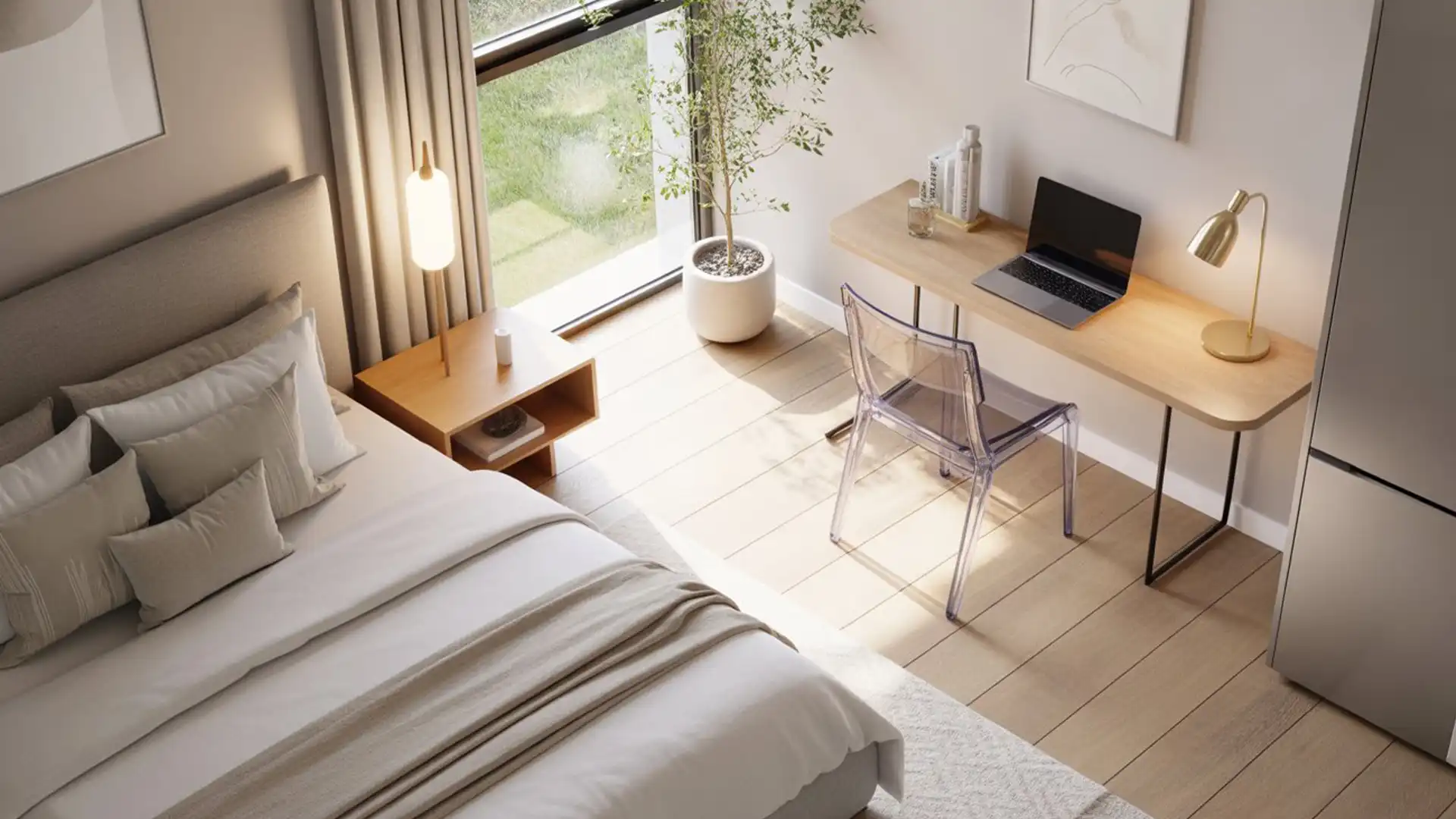
Bookmark this guide for quick reference.
Key Takeaway: Successful small bedroom design relies on prioritizing floor space and choosing furniture that serves more than one purpose.
12 Functional Small Bedroom Furniture Arrangement Ideas
1. The Corner Bed Placement
Pushing the bed into a corner is the ultimate space-saver for narrow rooms. While it means one side of the bed is against the wall, it opens up a large “L” shaped area of floor space. This layout works best in guest rooms or for single sleepers where access to both sides of the bed isn’t a daily necessity.
2. The Floating Bed with Path Clearance
If you have a square room, centering the bed on the main wall while keeping it “floating” (not touching the side walls) allows for two small walkways. To make this work in a tiny space, use ultra-slim nightstands or even floating wall shelves to keep the paths clear for walking.
3. Under-Window Centering
Placing the headboard directly under a window can save wall space elsewhere for tall wardrobes. This creates a natural focal point and uses the window sill as a built-in shelf for books or a glass of water. Ensure you use low-profile headboards to avoid blocking too much natural light.
Designer Tip: Use cool slate finish hardware on furniture to add modern depth without visually weighing down a small room.
4. The Foot-of-the-Bed Desk
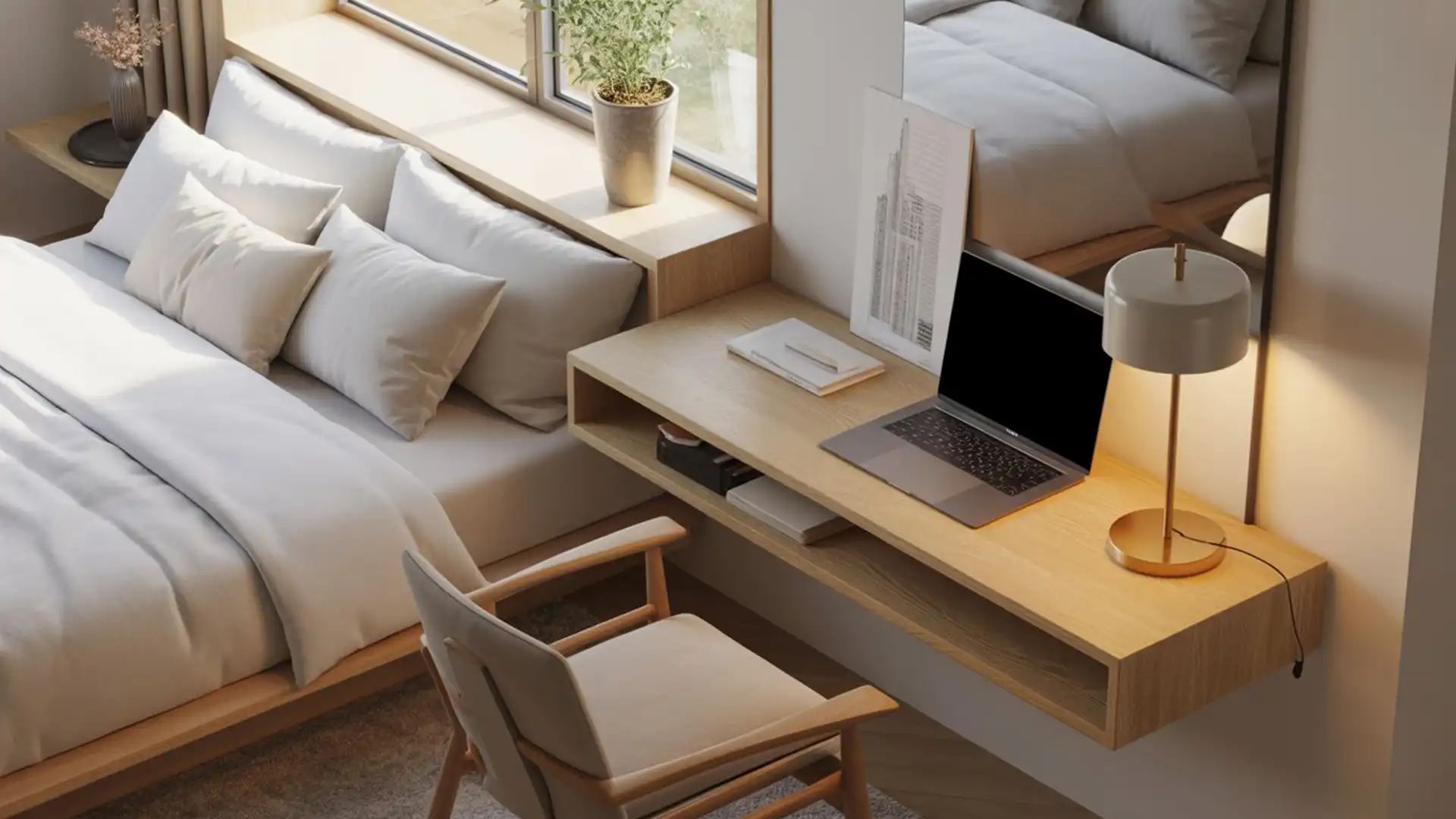
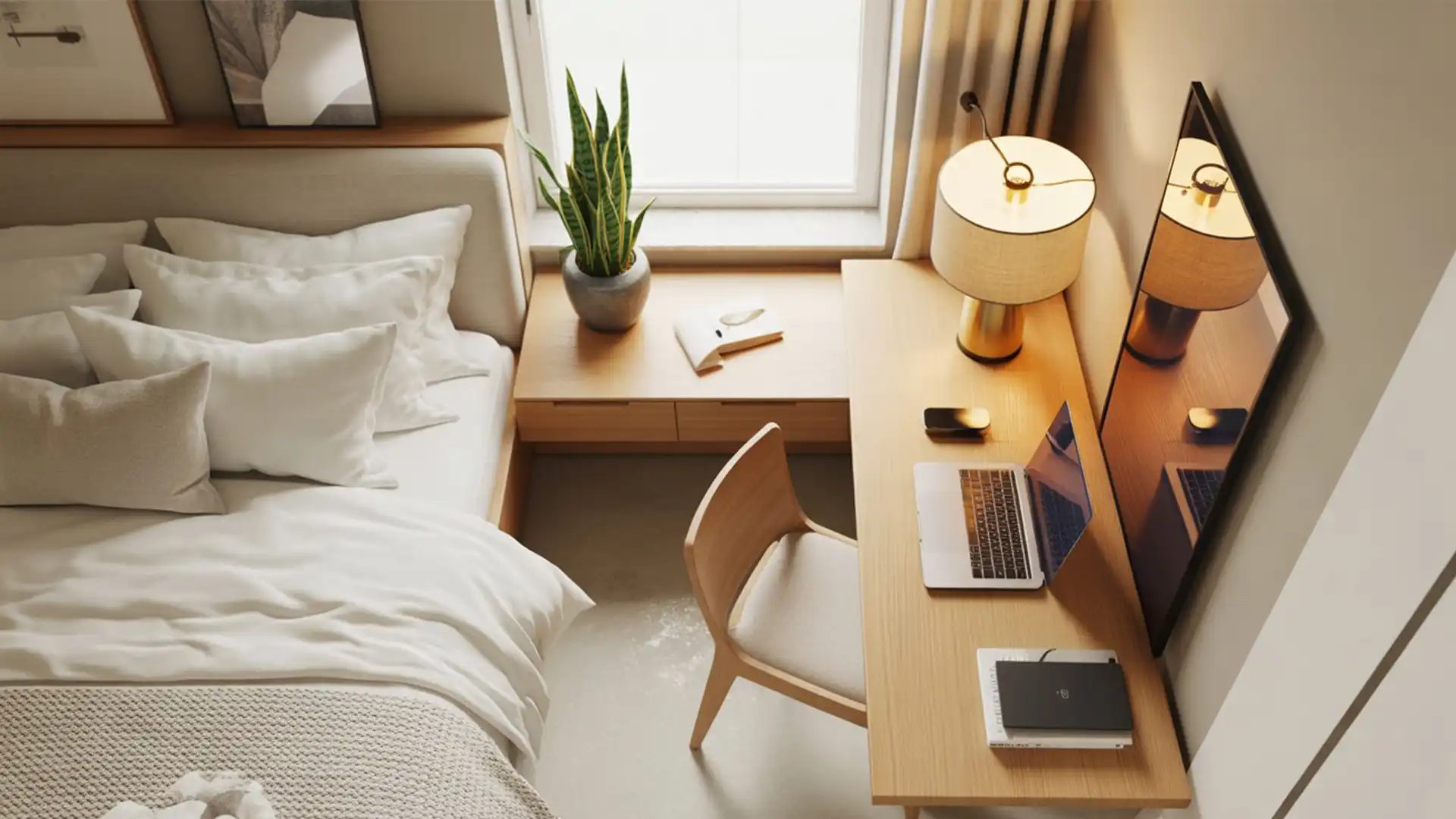
In a very small bedroom that must function as an office, place a slim console table at the foot of the bed. This utilizes the “dead space” at the end of the mattress. It provides a sturdy work surface without requiring an extra wall, keeping the perimeter of the room open.
5. Symmetry with Slim Nightstands
For a balanced look, center the bed and use two matching, high-legged nightstands. This layout is visually calming and works well if you have 15 grey bedroom design ideas in mind, as the symmetry highlights the color palette. Choose “leggy” tables to keep the floor visible.
6. The Vertical Storage Wall
Instead of a wide dresser, install a floor-to-ceiling shelving unit on the wall opposite the bed. This uses vertical real estate to store clothes, books, and decor. By keeping the storage thin and tall, you preserve the precious floor area needed to move around the bed.
7. The Wardrobe Flanking Method
Place two tall, narrow wardrobes on either side of the bed’s headboard. This creates a cozy “niche” for the bed and eliminates the need for a separate closet or bulky dresser elsewhere in the room. It mimics the look of high-end built-in cabinetry at a fraction of the cost.
Designer Tip: Incorporate soft oak accents in your shelving to bring warmth and a natural feel to a compact layout.
8. The Lofted Sleep Space
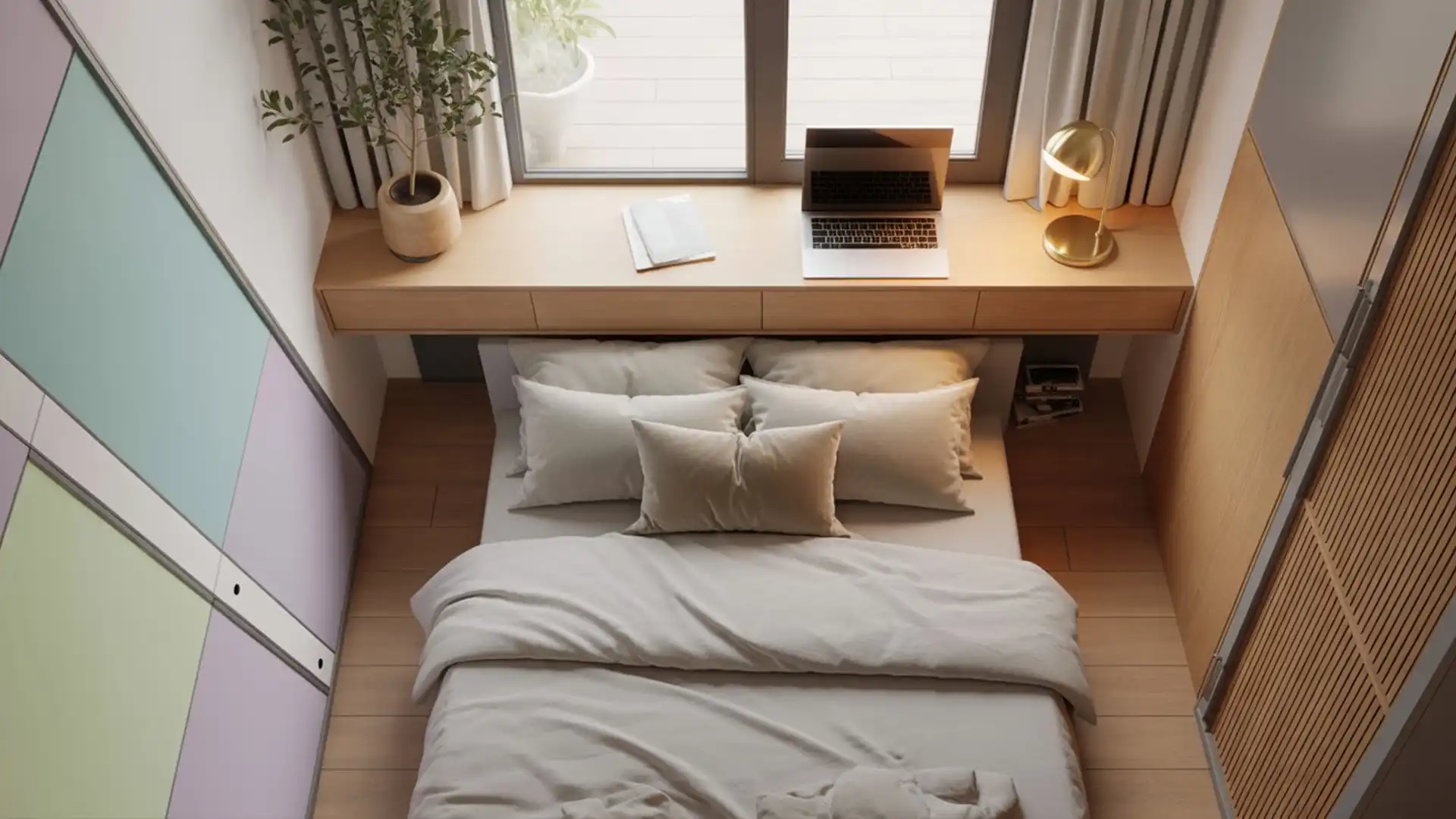
If your ceilings are high enough, a loft bed is the king of small room arrangements. By elevating the mattress, you free up the entire floor below for a full-sized desk, a cozy seating nook, or a massive chest of drawers. This effectively doubles your usable square footage.
9. The Mirror-Backed Layout
Position a large floor-length mirror behind a nightstand or opposite the door. While not a piece of furniture you “sit” on, its placement is a functional arrangement trick. It reflects light and the rest of the room, instantly making a 10×10 space feel like a 10×15.
10. The Wall-Mounted Vanity
In tight corners where a traditional vanity won’t fit, use a wall-mounted flip-down desk. When closed, it’s a slim decorative element; when open, it’s a functional grooming station. Pair it with a small stool that can tuck completely underneath to keep the walkway clear.
11. The Rug Anchor Technique
Place a large area rug about two-thirds of the way under the bed. This defines the “sleeping zone” and prevents the furniture from looking like it’s floating aimlessly. In a small room, a rug that is too small actually makes the space look tinier and more cluttered.
Designer Tip: Opt for warm greige tones in your textiles to create a soft, expansive feel that reflects light beautifully.
12. The Benches-as-Storage Trick
Use a storage ottoman or a narrow bench at the foot of the bed. This provides a place to sit while putting on shoes and hides extra linens or seasonal clothing. It’s a low-profile addition that adds function without blocking the visual “flow” of the room.
Key Takeaway: There is no one-size-fits-all layout, but prioritizing the bed’s position and utilizing vertical space are the most effective ways to regain floor area.
Maximizing Every Square Inch
Smart Furniture Selection
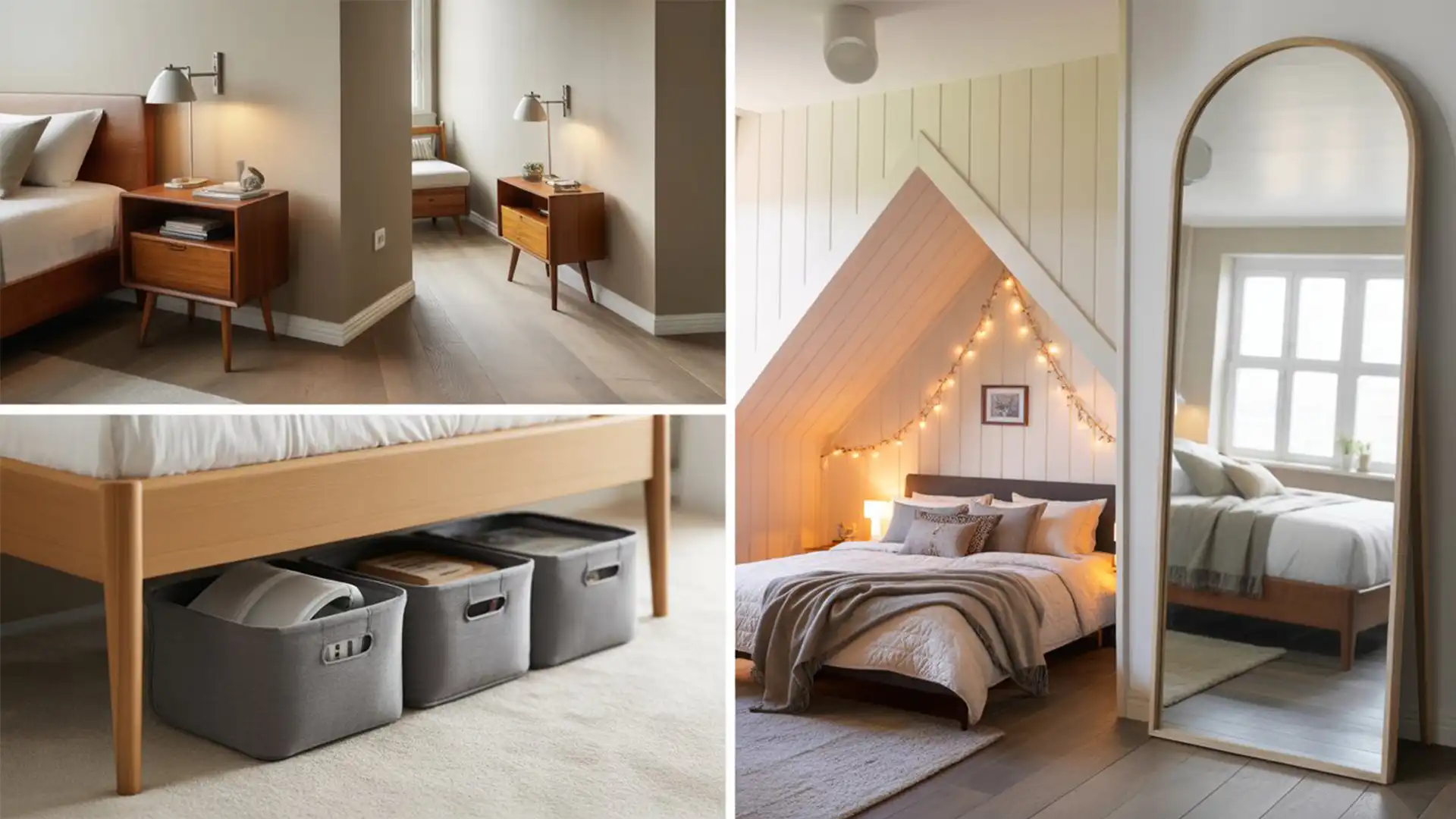
When every inch counts, the type of furniture you buy is just as important as where you put it. Focus on pieces with “high legs.” When you can see the floor extending under a bed or a dresser, your brain perceives the room as being larger. Solid, blocky furniture that sits flush to the floor acts like a visual wall, stopping the eye and making the room feel “stuffed.”
Lighting for Depth
Don’t rely on a single overhead light. This creates harsh shadows that make corners feel smaller. Instead, use wall sconces or clip-on lamps to save space on nightstands. Pointing a small uplight toward a corner can “push” the walls out visually, creating a sense of depth that wasn’t there before.
Key Takeaway: Visual tricks, like seeing under furniture and layered lighting, are just as important as physical placement.
Common Small Bedroom Mistakes to Avoid
- ❌ Over-sized Bed → ✅ Choose a Queen or Full instead of a King to regain 12–18 inches of walkway.
- ❌ Too Many Small Rugs → ✅ Use one large rug to unify the space and make the floor look expansive.
- ❌ Heavy Drapery → ✅ Use recessed blinds or light, airy sheens to keep the window area “light.”
- ❌ Cluttered Nightstands → ✅ Install floating shelves to keep the floor clear and the surface tidy.
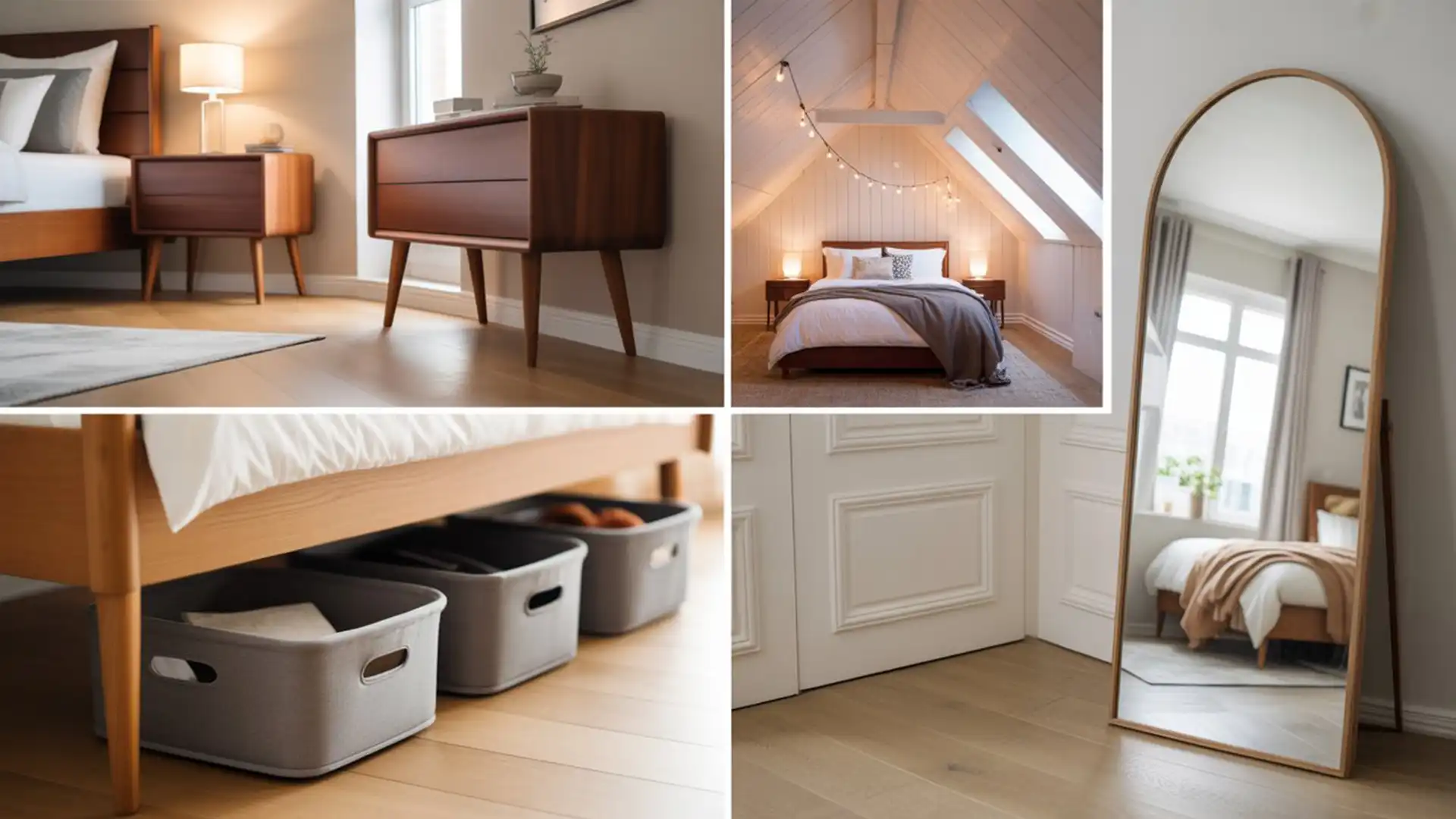
Key Takeaway: Small rooms fail when they are crowded with oversized furniture; scaling down is the fastest way to fix a cramped layout.
Budget & Cost
Creating a functional layout doesn’t require a full renovation. Most of these changes involve smart shopping or simply moving what you already own.
| Item | Estimated Cost | Space Impact |
|---|---|---|
| Floating Wall Shelves | $20 – $50 | High (Clears Floor) |
| Under-bed Storage Bins | $15 – $40 | Medium (Hides Clutter) |
| Wall Sconces (Plug-in) | $30 – $80 | High (Clears Nightstand) |
| Tall Narrow Wardrobe | $150 – $400 | High (Vertical Storage) |
The Under-$100 Space Refresh
- Rearrange the Bed: Move it to the longest wall (Free).
- Add 2 Floating Shelves: Replaces bulky nightstands ($40).
- Install a Large Mirror: Lean it against a wall to double the light ($50).
Key Takeaway: Significant space gains can be achieved for under $100 by focusing on wall-mounted solutions and mirrors.
Decisions & Edge Cases
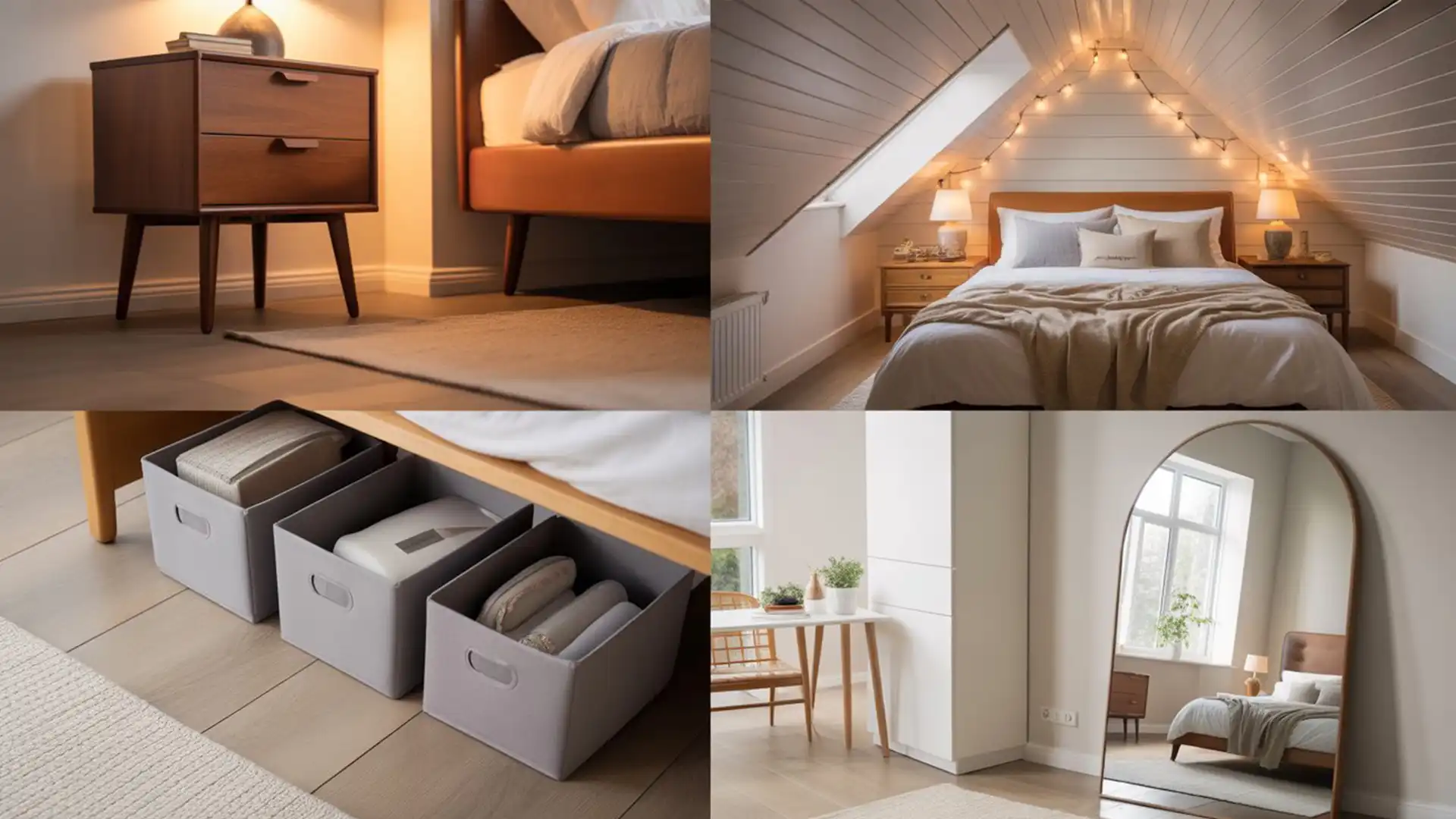
Handling Awkward Sloped Ceilings
In attic bedrooms or rooms with sloped ceilings, place the head of the bed under the lowest part of the ceiling. This leaves the “standing room” areas of the room open for walking and dressing. You won’t mind the low ceiling while you are lying down, but you will appreciate the height elsewhere.
The “No-Closet” Scenario
If your small room lacks a closet, do not buy a massive armoire. Instead, use a combination of a chic, open clothing rack and under-bed drawers. The open rack feels less “heavy” than a wooden box, and the under-bed storage handles the items you don’t want on display.
Key Takeaway: Work with the architectural quirks of your room rather than fighting them; low ceilings are for beds, and high ceilings are for storage.
FAQ’s
Conclusion
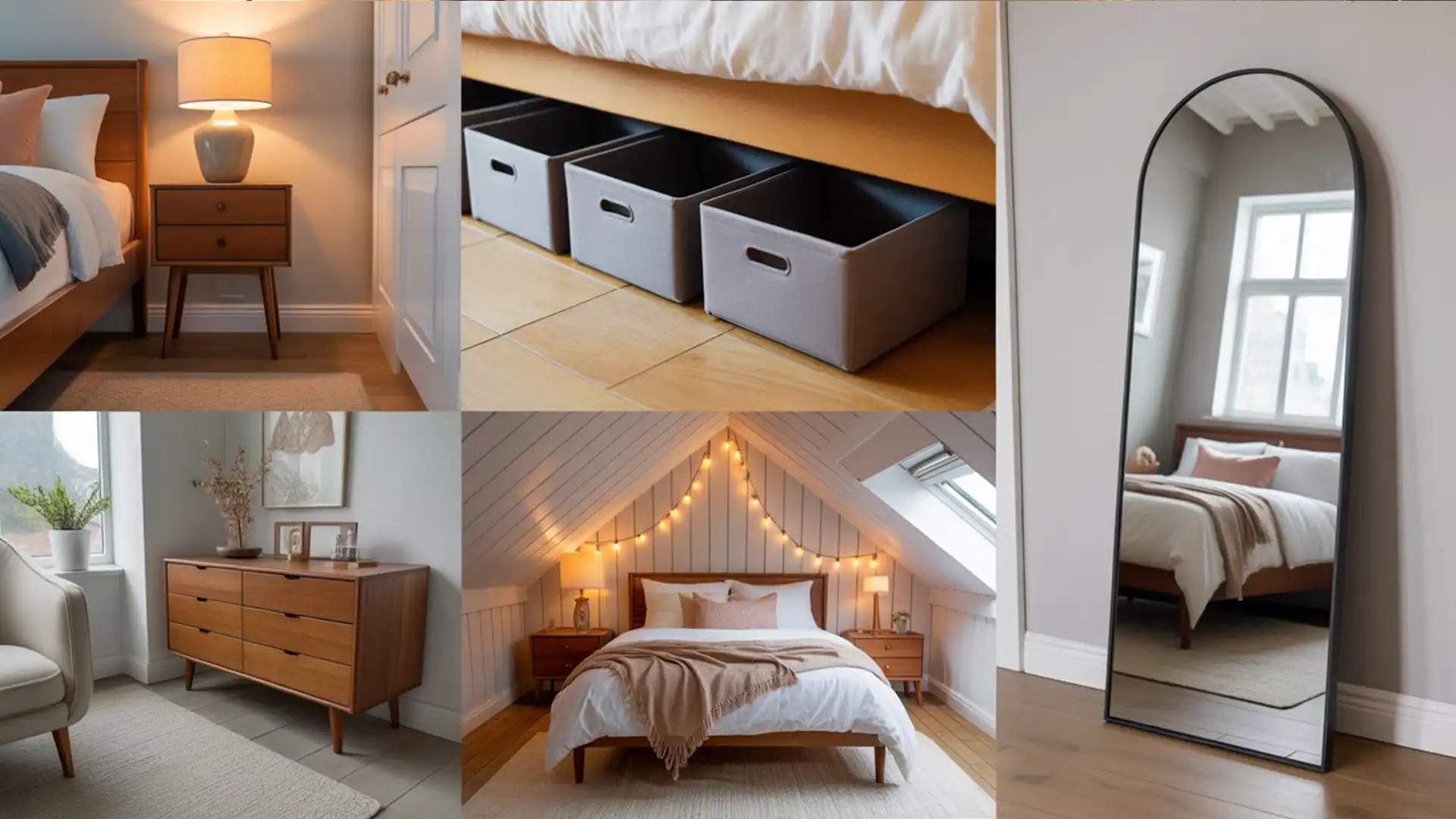
Arranging a small bedroom is about editing. By choosing a smart bed placement and embracing vertical storage, you can turn a cramped “closet-sized” room into a functional sanctuary. Remember to keep the floor visible where possible and choose pieces that work twice as hard.
Next Steps:
- Measure your room’s “clear floor” area.
- Identify one piece of furniture that can be moved to the wall or replaced with a floating version.
- Clear off your nightstands to see if floating shelves would work for you.